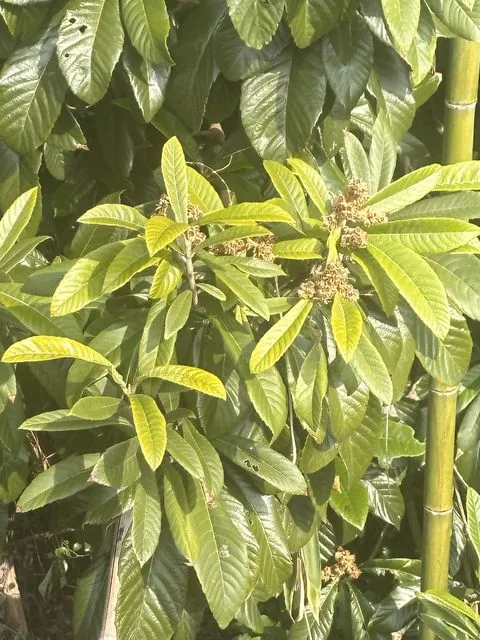
Identidad taxonómica

Scientific name
Rhaphiolepis bibas (Lour.) Galasso & Banfi
Canonical name: The scientific name without its authorship or date, for example Zea mays instead of Zea mays L.
Rhaphiolepis bibas
Authorship: The author or authors credited with publishing the scientific name. It is written after the name, sometimes with the year, for example L. (Linnaeus) in Zea mays L. An author in parentheses first published the name in another genus or rank.
(Lour.) Galasso & Banfi
Kingdom: One of the broadest ranks of biological classification. It groups organisms that share very basic features, for example plants (Plantae), animals (Animalia) or fungi (Fungi).
Plantae
Phylum: Rank below kingdom that groups organisms with a shared general body plan, for example chordates (Chordata), arthropods (Arthropoda) or vascular plants (Tracheophyta). In botany the same rank is also called division.
Tracheophyta
Class: Rank below phylum, for example mammals (Mammalia), birds (Aves), insects (Insecta) or monocot plants such as grasses and orchids (Liliopsida).
Magnoliopsida
Order: Rank below class that groups related families, for example grasses and their relatives (Poales) or bats (Chiroptera).
Rosales
Family: Rank below order that groups related genera. Family names usually end in -aceae in botany (for example Poaceae, the grass family) and in -idae in zoology (for example Felidae, the cat family).
Rosaceae
Genus: Rank that groups closely related species. Its name is the first word of a species' scientific name and starts with a capital letter, for example Zea in Zea mays.
Rhaphiolepis
Specific epithet: The second word of a species' scientific name. On its own it does not name the species: it always goes with the genus, for example mays in Zea mays.
bibas
Taxonomic rank: The level a name occupies in the hierarchy of biological classification, such as kingdom, family, genus, species or subspecies.
species
Taxonomic status: Whether the taxonomic catalogue the record comes from currently accepts this name for the organism, or treats it as a synonym of another accepted name or as doubtful.
accepted name

Photos and conservation status

IUCN Red List category: The extinction-risk category that the International Union for Conservation of Nature (IUCN) assigns to a species on its Red List. EX Extinct: there is no reasonable doubt that the last individual has died. EW Extinct in the wild: it survives only in cultivation, in captivity or as a population far outside its past range. CR Critically endangered, EN Endangered and VU Vulnerable: the three threatened categories, from an extremely high to a high risk of extinction in the wild. NT Near threatened: close to qualifying as threatened. LC Least concern: evaluated and not threatened. DD Data deficient: there is not enough information to assess its risk. NE Not evaluated: not yet assessed against the criteria. It describes the risk of the species worldwide, not its situation in a project's area.
Not evaluated (NE)
Source: IUCN Red List via GBIF, queried on 2026-10-09 08:16.
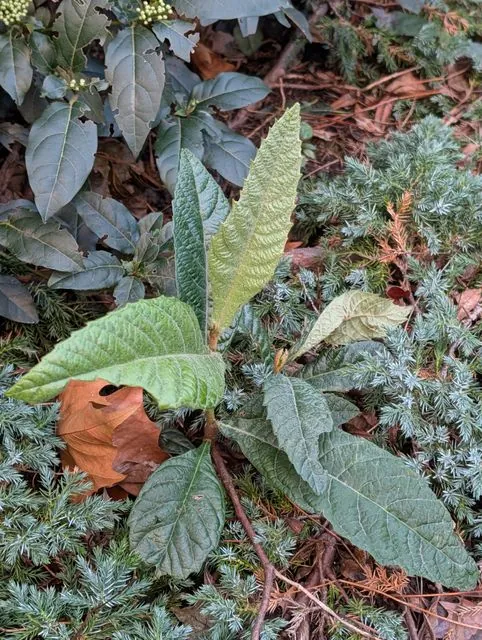
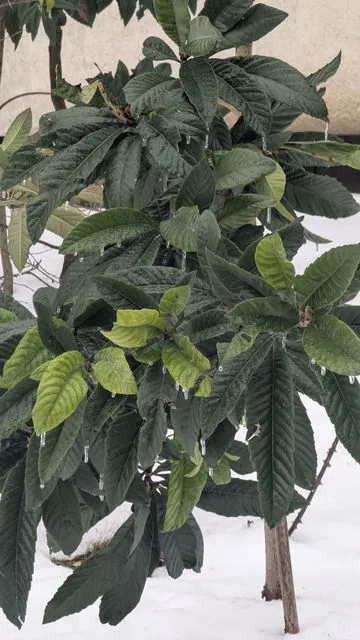
Photo of Rhaphiolepis bibas (Lour.) Galasso & Banfi
Photo: Piermario Maculan · CC0 1.0 · View original image · Original observation
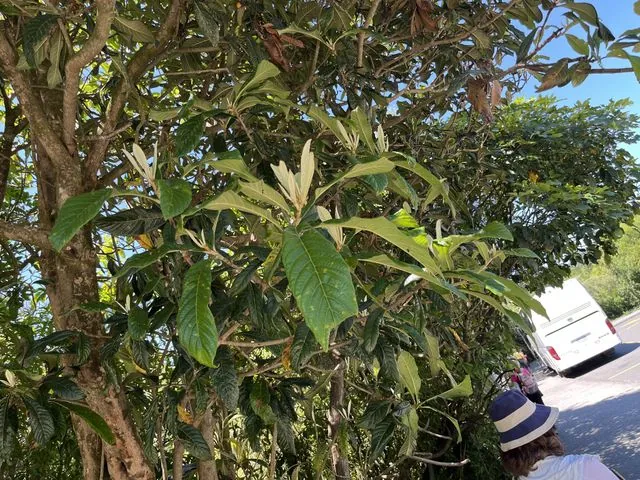
Photo of Rhaphiolepis bibas (Lour.) Galasso & Banfi
Photo: Drumețul Dacic · CC0 1.0 · View original image · Original observation
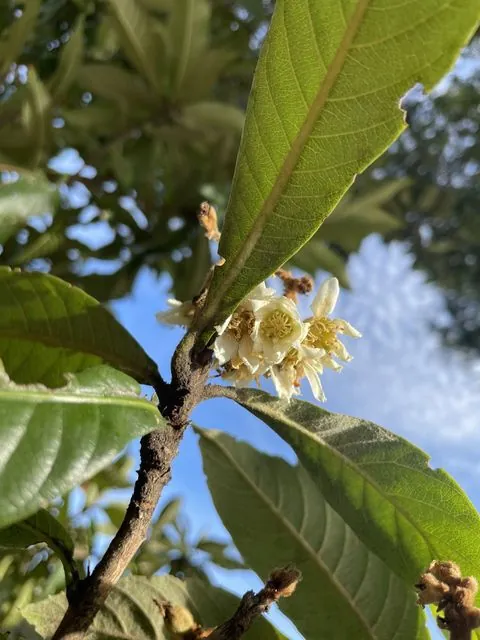
Photo of Rhaphiolepis bibas (Lour.) Galasso & Banfi
Photo: 謝麗霦 · CC BY 4.0 · View original image · Original observation
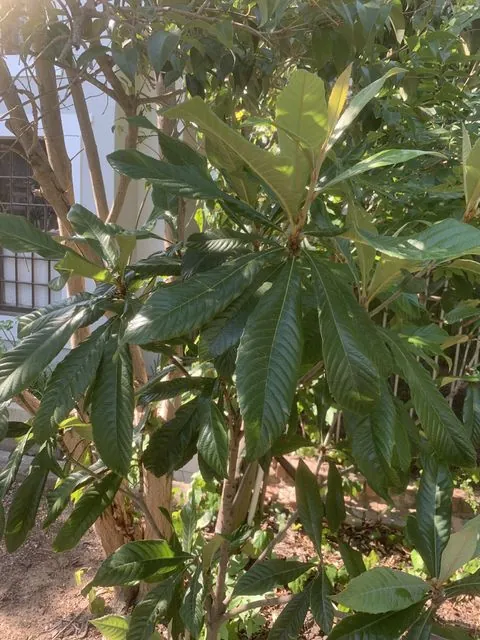
Photo of Rhaphiolepis bibas (Lour.) Galasso & Banfi
Photo: Nathaniel Isabella · CC BY 4.0 · View original image · Original observation
Photo of Rhaphiolepis bibas (Lour.) Galasso & Banfi
Photo: Dave Richardson · CC BY 4.0 · View original image · Original observation
Photo of Rhaphiolepis bibas (Lour.) Galasso & Banfi
Photo: 岸本年郎 · CC BY 4.0 · View original image · Original observation

Research-grade iNaturalist observations via GBIF, CC0 or CC BY licences only, queried on 2026-10-09 08:16.

Interacciones documentadas

GloBI says it is documented somewhere in the world. Biolitica answers whether it could happen here.

A documented interaction means it was recorded somewhere in the world. It does not mean it occurs here.

Types shown: 12 of 15 is a host of × is eaten by × is pollinated by × interacts with (this species is the record's destination) × has its flowers visited by × has as a vector × is visited by × interacts with (this species is the record's origin) × is adjacent to × co-occurs ecologically with × is an arbuscular mycorrhizal host of × has as a pathogen × 3 more types with data for this species

Blocks that do not sit under a navigation concept heading keep the source's own term: no navigation concept has been assigned to them yet.

is a host of 343 organisms

The authority declares no effect on this species for this term: neither that it harms it nor that it benefits it. In the source ontology symbiosis covers mutualism, commensalism and parasitism alike, so this block holds attackers and allies side by side.

Organism Reads as Studies Where it was documented Actions
Quince Leaf Blight Diplocarpon mespili Drepanopezizaceae is a host of 32 not compared
Pseudocercospora eriobotryae Mycosphaerellaceae is a host of 20 not compared
Fusicladium pyracanthae Venturiaceae is a host of 20 not compared
Phyllosticta eriobotryae is a host of 16 no location
Showing 4 of 343, by number of studies See more of this type

is eaten by 232 organisms

This term does declare that the organism harms this species.

Organism Reads as Studies Where it was documented Actions
European Honey Bee Apis mellifera Apidae is eaten by 11 not compared
Red Admiral Vanessa atalanta Nymphalidae is eaten by 6 not compared
Anna's Hummingbird Calypte anna Trochilidae is eaten by 6 not compared
Green Citrus Aphid Aphis spiraecola Aphididae is eaten by 6 not compared
Showing 4 of 232, by number of studies See more of this type

Pollination

is pollinated by 69 organisms

This term declares that the organism benefits this species. «Visits the flowers of» is a different term and a different block: a visitor is not a pollinator, and merging the two is the measured defect that turned ~88 shared «pollinators» into birds and primates.

Organism Reads as Studies Where it was documented Actions
Gestippelde smaragdgroefbij Lasioglossum aeratum Halictidae is pollinated by 2 no location
Andrena afrensis Andrenidae is pollinated by 2 no location
Grote bandgroefbij Lasioglossum majus Halictidae is pollinated by 2 no location
Two-banded Nomad Nomada bifasciata Apidae is pollinated by 2 no location
Showing 4 of 69, by number of studies See more of this type

interacts with 49 organisms

The authority declares no effect on this species for this term: neither that it harms it nor that it benefits it.

Organism Reads as Studies Where it was documented Actions
Egyptian Rousette Rousettus aegyptiacus Pteropodidae interacts with 9 no location
European Honey Bee Apis mellifera Apidae interacts with 8 not compared
Eriobotrya japonica Rosaceae interacts with 3 not compared
Ryukyu Flying Fox Pteropus dasymallus Pteropodidae interacts with 3 no location
Showing 4 of 49, by number of studies See more of this type

Flower visit

has its flowers visited by 41 organisms

The authority declares no effect on this species for this term: neither that it harms it nor that it benefits it. Visiting a flower is not pollinating it. «Pollinates» is a different term and a different block, and merging the two is the measured defect that turned ~88 shared «pollinators» into birds and primates.

Organism Reads as Studies Where it was documented Actions
European Honey Bee Apis mellifera Apidae has its flowers visited by 21 not compared
Asian Hornet Vespa velutina Vespidae has its flowers visited by 7 not compared
Common Eastern Bumble Bee Bombus impatiens Apidae has its flowers visited by 7 not compared
Clavipes Sphinx Aellopos clavipes Sphingidae has its flowers visited by 5 not compared
Showing 4 of 41, by number of studies See more of this type

has as a vector 7 organisms

The authority declares no effect on this species for this term: neither that it harms it nor that it benefits it.

Organism Reads as Studies Where it was documented Actions
Great Fruit-eating Bat Artibeus lituratus Phyllostomidae has as a vector 3 not compared
Fraternal Fruit-eating Bat Artibeus fraterculus Phyllostomidae has as a vector 2 not compared
Jamaica Fruit-eating Bat Artibeus jamaicensis Phyllostomidae has as a vector 1 no location
Bat Chiroptera has as a vector 1 no location Not a modelling unit: the source publishes it at order level.
Showing 4 of 7, by number of studies See more of this type

is visited by 7 organisms

The authority declares no effect on this species for this term: neither that it harms it nor that it benefits it.

Organism Reads as Studies Where it was documented Actions
Egyptian Rousette Rousettus aegyptiacus Pteropodidae is visited by 2 not compared
Northern Citrus Root Weevil Pachnaeus opalus Curculionidae is visited by 1 not compared
Painted Lady Vanessa cardui is visited by 1 not compared
Yellow-throated Warbler (dominica/stoddardi) Setophaga dominica dominica Parulidae is visited by 1 not compared
Showing 4 of 7, by number of studies See more of this type

interacts with 4 organisms

The authority declares no effect on this species for this term: neither that it harms it nor that it benefits it.

Organism Reads as Studies Where it was documented Actions
Eriobotrya japonica Rosaceae interacts with 3 not compared
Aellopos Sphingidae interacts with 1 not compared Not a modelling unit: the source publishes it at genus level.
Spilocaea Venturiaceae interacts with 1 no location Not a modelling unit: the source publishes it at genus level.
no name interacts with 1 no location Not a modelling unit: the source publishes no name for this organism.
Showing 4 of 4, by number of studies

is adjacent to 3 organisms

The authority declares no effect on this species for this term: neither that it harms it nor that it benefits it.

Organism Reads as Studies Where it was documented Actions
Chilicola friesei Colletidae is adjacent to 2 not compared
Lacquered Bracket Ganoderma lucidum is adjacent to 2 no location
Phyllosticta eriobotryae Botryosphaeriaceae is adjacent to 1 no location
Showing 3 of 3, by number of studies

co-occurs ecologically with 3 organisms

The authority declares no effect on this species for this term: neither that it harms it nor that it benefits it.

Organism Reads as Studies Where it was documented Actions
Rhizophagus manihotis Glomeraceae co-occurs ecologically with 1 not compared
Paraglomus occultum Paraglomeraceae co-occurs ecologically with 1 not compared
Entrophospora lamellosa Entrophosporaceae co-occurs ecologically with 1 not compared
Showing 3 of 3, by number of studies

is an arbuscular mycorrhizal host of 3 organisms

The authority declares no effect on this species for this term: neither that it harms it nor that it benefits it.

Organism Reads as Studies Where it was documented Actions
Entrophospora lamellosa Entrophosporaceae is an arbuscular mycorrhizal host of 1 not compared
Rhizophagus manihotis Glomeraceae is an arbuscular mycorrhizal host of 1 not compared
Paraglomus occultum Paraglomeraceae is an arbuscular mycorrhizal host of 1 not compared
Showing 3 of 3, by number of studies

has as a pathogen 2 organisms

This term does declare that the organism harms this species. It is a narrow block, and it cannot be the only one that is read: the most frequent term in the catalogue is the one above, which declares no harm, so much of what a reader would call a pest arrives there instead.

Organism Reads as Studies Where it was documented Actions
Loquat virus A Betaflexiviridae has as a pathogen 1 no location
Pseudomonas syringae Pseudomonadaceae has as a pathogen 1 not compared
Showing 2 of 2, by number of studies

Acompañantes documentados

This agronomic reading comes from a source reserved for internal use, so it is not shown here.

Documented uses and recommendations

Uses and recommendations that a source documents for this species beside a crop, each in its own context. They are the source's statements, not traits of the species and not Biolítica's recommendations, and none of them is a relation between two species.

Among the sources you can read, none documents a use or recommendation of this species beside a crop.