Canonical name: The scientific name without its authorship or date, for example Zea mays instead of Zea mays L. — The scientific name without its authorship or date, for example Zea mays instead of Zea mays L.
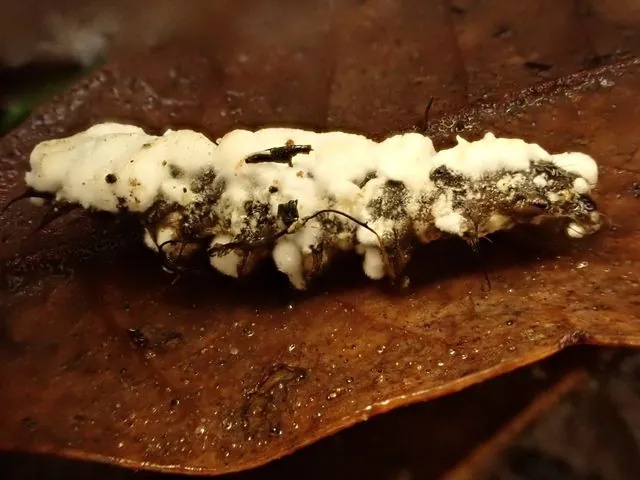
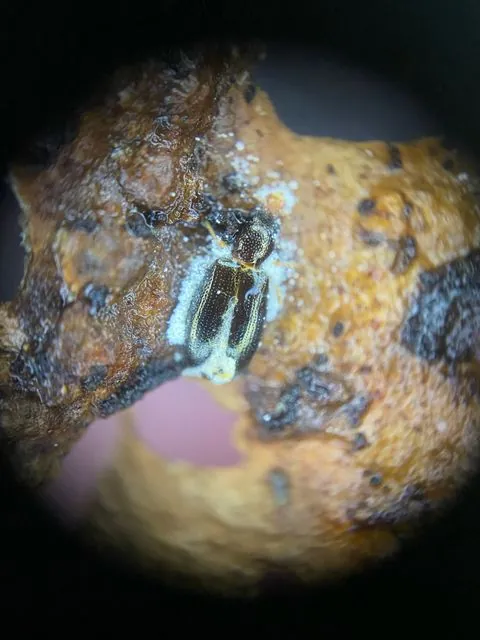
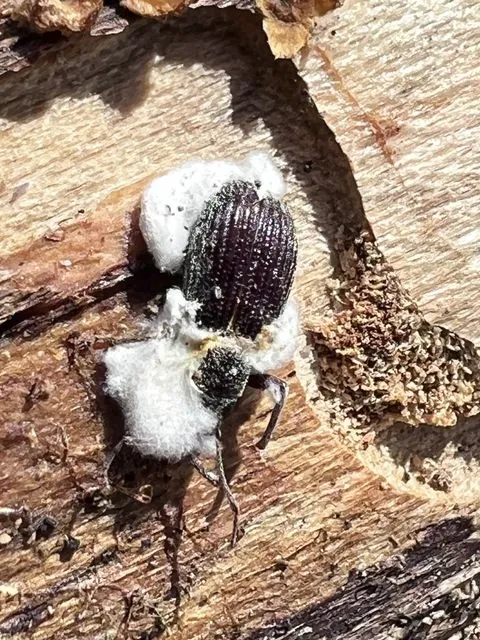
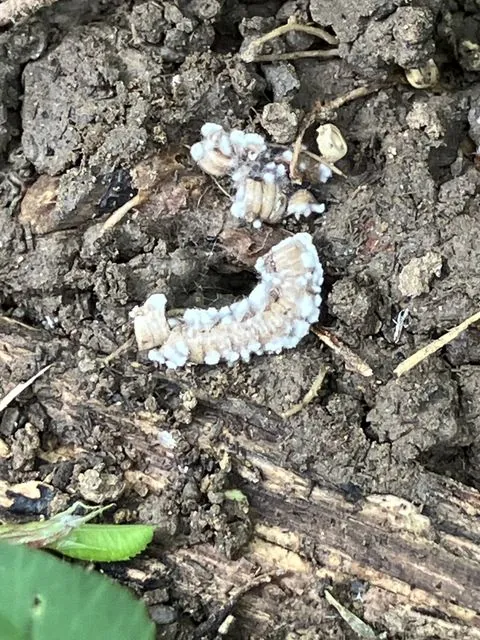
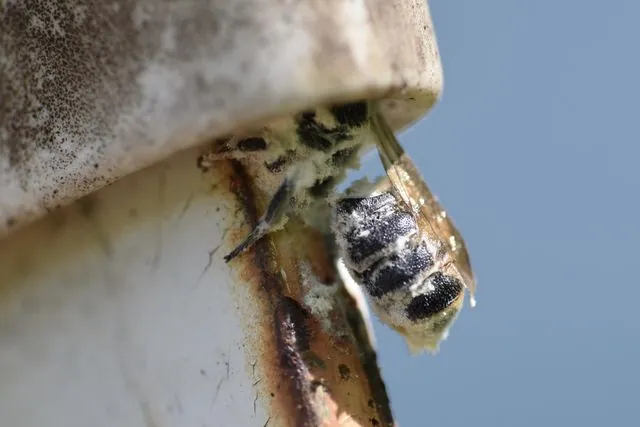
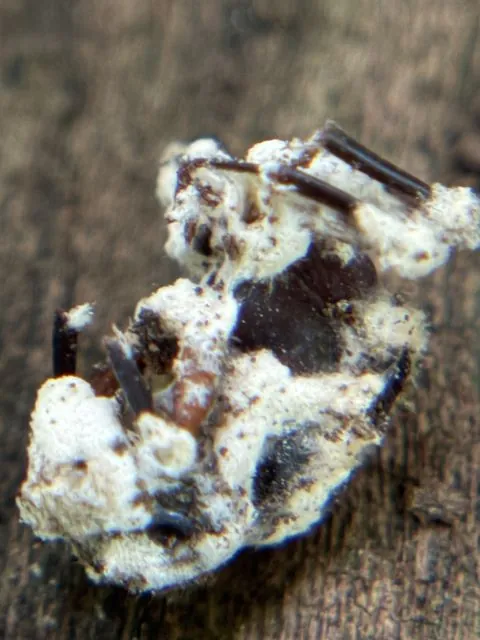
Beauveria bassiana
Authorship: The author or authors credited with publishing the scientific name. It is written after the name, sometimes with the year, for example L. (Linnaeus) in Zea mays L. An author in parentheses first published the name in another genus or rank. — The author or authors credited with publishing the scientific name. It is written after the name, sometimes with the year, for example L. (Linnaeus) in Zea mays L. An author in parentheses first published the name in another genus or rank.
(Bals.-Criv.) Vuill.
Common names
Icing sugar fungusNames in other languages (12)Ungestielter Insektenschimmelpilz, bovéria Bassova, muskardinmögel, vitmykos, Боверия бассиана, セミカビ, ハッキョウキン, 巴氏蠶白僵菌, 球孢虫草, 白きょう病菌, 黄きょう病菌, 백강균
Kingdom: One of the broadest ranks of biological classification. It groups organisms that share very basic features, for example plants (Plantae), animals (Animalia) or fungi (Fungi). — One of the broadest ranks of biological classification. It groups organisms that share very basic features, for example plants (Plantae), animals (Animalia) or fungi (Fungi).
Fungi
Phylum: Rank below kingdom that groups organisms with a shared general body plan, for example chordates (Chordata), arthropods (Arthropoda) or vascular plants (Tracheophyta). In botany the same rank is also called division. — Rank below kingdom that groups organisms with a shared general body plan, for example chordates (Chordata), arthropods (Arthropoda) or vascular plants (Tracheophyta). In botany the same rank is also called division.
Ascomycota
Class: Rank below phylum, for example mammals (Mammalia), birds (Aves), insects (Insecta) or monocot plants such as grasses and orchids (Liliopsida). — Rank below phylum, for example mammals (Mammalia), birds (Aves), insects (Insecta) or monocot plants such as grasses and orchids (Liliopsida).
Sordariomycetes
Order: Rank below class that groups related families, for example grasses and their relatives (Poales) or bats (Chiroptera). — Rank below class that groups related families, for example grasses and their relatives (Poales) or bats (Chiroptera).
Hypocreales
Family: Rank below order that groups related genera. Family names usually end in -aceae in botany (for example Poaceae, the grass family) and in -idae in zoology (for example Felidae, the cat family). — Rank below order that groups related genera. Family names usually end in -aceae in botany (for example Poaceae, the grass family) and in -idae in zoology (for example Felidae, the cat family).
Cordycipitaceae
Genus: Rank that groups closely related species. Its name is the first word of a species' scientific name and starts with a capital letter, for example Zea in Zea mays. — Rank that groups closely related species. Its name is the first word of a species' scientific name and starts with a capital letter, for example Zea in Zea mays.
Beauveria
Specific epithet: The second word of a species' scientific name. On its own it does not name the species: it always goes with the genus, for example mays in Zea mays. — The second word of a species' scientific name. On its own it does not name the species: it always goes with the genus, for example mays in Zea mays.
bassiana
Taxonomic rank: The level a name occupies in the hierarchy of biological classification, such as kingdom, family, genus, species or subspecies. — The level a name occupies in the hierarchy of biological classification, such as kingdom, family, genus, species or subspecies.
species
Reference species
Beauveria bassiana
Taxonomic status: Whether the taxonomic catalogue the record comes from currently accepts this name for the organism, or treats it as a synonym of another accepted name or as doubtful. — Whether the taxonomic catalogue the record comes from currently accepts this name for the organism, or treats it as a synonym of another accepted name or as doubtful.
accepted name
Photos and conservation status
IUCN Red List category: The extinction-risk category that the International Union for Conservation of Nature (IUCN) assigns to a species on its Red List. EX Extinct: there is no reasonable doubt that the last individual has died. EW Extinct in the wild: it survives only in cultivation, in captivity or as a population far outside its past range. CR Critically endangered, EN Endangered and VU Vulnerable: the three threatened categories, from an extremely high to a high risk of extinction in the wild. NT Near threatened: close to qualifying as threatened. LC Least concern: evaluated and not threatened. DD Data deficient: there is not enough information to assess its risk. NE Not evaluated: not yet assessed against the criteria. It describes the risk of the species worldwide, not its situation in a project's area. — The extinction-risk category that the International Union for Conservation of Nature (IUCN) assigns to a species on its Red List. EX Extinct: there is no reasonable doubt that the last individual has died. EW Extinct in the wild: it survives only in cultivation, in captivity or as a population far outside its past range. CR Critically endangered, EN Endangered and VU Vulnerable: the three threatened categories, from an extremely high to a high risk of extinction in the wild. NT Near threatened: close to qualifying as threatened. LC Least concern: evaluated and not threatened. DD Data deficient: there is not enough information to assess its risk. NE Not evaluated: not yet assessed against the criteria. It describes the risk of the species worldwide, not its situation in a project's area.
Not evaluated (NE)
Source: IUCN Red List via GBIF, queried on 2026-10-13 11:21.
Research-grade iNaturalist observations via GBIF, CC0 or CC BY licences only, queried on 2026-10-13 11:21.
Interacciones documentadas
GloBI says it is documented somewhere in the world. Biolitica answers whether it could happen here.
A documented interaction means it was recorded somewhere in the world. It does not mean it occurs here.
Types shown: 12 of 13
is a pathogen of
×
is a symbiont of
×
has as a host
×
interacts with (this species is the record's origin)
×
interacts with (this species is the record's destination)
×
is a parasite of
×
is adjacent to
×
has as a parasite
×
is a parasitoid of
×
preys on
×
is eaten by
×
is preyed upon by
×
1 more type with data for this species
Blocks that do not sit under a navigation concept heading keep the source's own term: no navigation concept has been assigned to them yet.
is a pathogen of
380 organisms
The authority declares no effect on this species for this term: neither that it harms it nor that it benefits it. It is a narrow block, and it cannot be the only one that is read: the most frequent term in the catalogue is the one above, which declares no harm, so much of what a reader would call a pest arrives there instead.
Organism
Reads as
Studies
Where it was documented
Actions
Bird Cherry-oat AphidRhopalosiphum padi
is a pathogen of
5
no location
5 sources · 5 records
@document{3S4NSYFA, Author = {U.S. Department of Agriculture and Agricultural Research Service, Biological Integrated Pest Management Research Unit}, Title = {ARS collection of entomopathogenic fungal cultures (ARSEF)}, Year = {2016}, Publisher = {U.S. Department of Agriculture,…
Published in globalbioticinteractions/aphid-funga
Context: Hungary · no date published
Claim type
Published relationship between two taxa
Version
GloBI 0.11
Reuse
This release publishes no reuse terms for this record.
Hungary · no date publishedWhere it is: line:hash://sha256/021a206a1459bcca7e251c73f5bd180fc3ac342a09c499855fe42e21fc09edcf!/interactions.tsv.gz!/L7089082
@inproceedings{BUMSA3QV, Author = {Abdel-Mallek, Ahmed Y. and Abdel-Rahman, Mohamed A. A. and Omar, Shokry A. and Hamam, Gamal H. A.}, Title = {A comparative abundance of entomopathogenic fungi of cereal aphids in Assiut, Egypt}, Booktitle = {Proceeding 2nd Saudi Science Confere…
Published in globalbioticinteractions/aphid-funga
Context: Egypt · no date published
Claim type
Published relationship between two taxa
Version
GloBI 0.11
Reuse
This release publishes no reuse terms for this record.
Egypt · no date publishedWhere it is: line:hash://sha256/021a206a1459bcca7e251c73f5bd180fc3ac342a09c499855fe42e21fc09edcf!/interactions.tsv.gz!/L7089181
No public URL for this record
@article{HAE525KU, Author = {Feng, Ming-Guang and Johnson, James B. and Kish, Leslie P.}, Title = {Survey of entomopathogenic fungi naturally infecting cereal aphids (Homoptera: Aphididae) of irrigated grain crops in southwestern Idaho}, Journal = {Environmental Entomology}, Yea…
Published in globalbioticinteractions/aphid-funga
Context: United States · no date published
Claim type
Published relationship between two taxa
Version
GloBI 0.11
Reuse
This release publishes no reuse terms for this record.
United States · no date publishedWhere it is: line:hash://sha256/021a206a1459bcca7e251c73f5bd180fc3ac342a09c499855fe42e21fc09edcf!/interactions.tsv.gz!/L7089549
@article{A5C8M2U2, Author = {Feng, Ming-Guang and Chen, Chun and Chen, Bin}, Title = {Wide dispersal of aphid-pathogenic Entomophthorales among aphids relies upon migratory alates}, Journal = {Environmental Microbiology}, Year = {2004}, Number = {5}, Volume = {6}, Pages = {510-6…
Published in globalbioticinteractions/aphid-funga
Context: China · no date published
Claim type
Published relationship between two taxa
Version
GloBI 0.11
Reuse
This release publishes no reuse terms for this record.
China · no date publishedWhere it is: line:hash://sha256/021a206a1459bcca7e251c73f5bd180fc3ac342a09c499855fe42e21fc09edcf!/interactions.tsv.gz!/L7089571
@article{FQ89VN84, Author = {Kenneth, R. and Wallis, G. and Olmert, Y. and Halperin, J.}, Title = {A list of entomogenout fungi of Israel}, Journal = {Israel Journal of Agricultural Research}, Year = {1971}, Number = {2}, Volume = {21}, Pages = {63-66}, Abstract = {Entomogenous …
Published in globalbioticinteractions/aphid-funga
Context: Israel · no date published
Claim type
Published relationship between two taxa
Version
GloBI 0.11
Reuse
This release publishes no reuse terms for this record.
Israel · no date publishedWhere it is: line:hash://sha256/021a206a1459bcca7e251c73f5bd180fc3ac342a09c499855fe42e21fc09edcf!/interactions.tsv.gz!/L7089633
No public URL for this record
A published relationship says these two taxa were documented interacting. It does not say how often, or that it happens in this project's region.
Russian wheat aphidDiuraphis noxia
is a pathogen of
5
no location
5 sources · 6 records
@incollection{A3X7TZRY, Author = {Hopper, Keith Roderick and Coutinot, Dominique and Chen, K. and Mercadier, G. and Halbert, Susan and Kazmer, D. J. and Miller, Ross H. and Pike, Keith S. and Tanigoshi, L. K.}, Editor = {Quissenbery, Sharron S. and Peairs, Frank B.}, Title = {Ex…
Published in globalbioticinteractions/aphid-funga
Record contexts (sample): Kazakhstan · no date published; France · no date published
Claim type
Published relationship between two taxa
Version
GloBI 0.11
Reuse
This release publishes no reuse terms for this record.
Kazakhstan · no date publishedWhere it is: line:hash://sha256/021a206a1459bcca7e251c73f5bd180fc3ac342a09c499855fe42e21fc09edcf!/interactions.tsv.gz!/L7089623
France · no date publishedWhere it is: line:hash://sha256/021a206a1459bcca7e251c73f5bd180fc3ac342a09c499855fe42e21fc09edcf!/interactions.tsv.gz!/L7089624
@document{3S4NSYFA, Author = {U.S. Department of Agriculture and Agricultural Research Service, Biological Integrated Pest Management Research Unit}, Title = {ARS collection of entomopathogenic fungal cultures (ARSEF)}, Year = {2016}, Publisher = {U.S. Department of Agriculture,…
Published in globalbioticinteractions/aphid-funga
Context: Hungary · no date published
Claim type
Published relationship between two taxa
Version
GloBI 0.11
Reuse
This release publishes no reuse terms for this record.
Hungary · no date publishedWhere it is: line:hash://sha256/021a206a1459bcca7e251c73f5bd180fc3ac342a09c499855fe42e21fc09edcf!/interactions.tsv.gz!/L7089086
@article{HAE525KU, Author = {Feng, Ming-Guang and Johnson, James B. and Kish, Leslie P.}, Title = {Survey of entomopathogenic fungi naturally infecting cereal aphids (Homoptera: Aphididae) of irrigated grain crops in southwestern Idaho}, Journal = {Environmental Entomology}, Yea…
Published in globalbioticinteractions/aphid-funga
Context: United States · no date published
Claim type
Published relationship between two taxa
Version
GloBI 0.11
Reuse
This release publishes no reuse terms for this record.
United States · no date publishedWhere it is: line:hash://sha256/021a206a1459bcca7e251c73f5bd180fc3ac342a09c499855fe42e21fc09edcf!/interactions.tsv.gz!/L7089559
@article{YSERNY32, Author = {Hatting, Justin L. and Humber, Richard A. and Poprawski, Tadeusz J. and Miller, Ray M.}, Title = {A survey of fungal pathogens of aphids from South Africa, with special reference to cereal aphids}, Journal = {Biological Control}, Year = {1999}, Numbe…
Published in globalbioticinteractions/aphid-funga
Context: South Africa · no date published
Claim type
Published relationship between two taxa
Version
GloBI 0.11
Reuse
This release publishes no reuse terms for this record.
South Africa · no date publishedWhere it is: line:hash://sha256/021a206a1459bcca7e251c73f5bd180fc3ac342a09c499855fe42e21fc09edcf!/interactions.tsv.gz!/L7089584
@article{JW3UVXYP, Author = {Jandricic, S. E. and Filotas, M. and Sanderson, J. P. and Wraight, Stephen P.}, Title = {Pathogenicity of conidia-based preparations of entomopathogenic fungi against the greenhouse pest aphids <i>Myzus persicae</i>, <i>Aphis gossypii</i>, and <i>Aul…
Published in globalbioticinteractions/aphid-funga
Context: Turkey · no date published
Claim type
Published relationship between two taxa
Version
GloBI 0.11
Reuse
This release publishes no reuse terms for this record.
Turkey · no date publishedWhere it is: line:hash://sha256/021a206a1459bcca7e251c73f5bd180fc3ac342a09c499855fe42e21fc09edcf!/interactions.tsv.gz!/L7089628
A published relationship says these two taxa were documented interacting. It does not say how often, or that it happens in this project's region.
Green Peach AphidMyzus persicaeAphididae
is a pathogen of
4
no location
4 sources · 4 records
@document{3S4NSYFA, Author = {U.S. Department of Agriculture and Agricultural Research Service, Biological Integrated Pest Management Research Unit}, Title = {ARS collection of entomopathogenic fungal cultures (ARSEF)}, Year = {2016}, Publisher = {U.S. Department of Agriculture,…
Published in globalbioticinteractions/aphid-funga
Context: United States · no date published
Claim type
Published relationship between two taxa
Version
GloBI 0.11
Reuse
This release publishes no reuse terms for this record.
United States · no date publishedWhere it is: line:hash://sha256/021a206a1459bcca7e251c73f5bd180fc3ac342a09c499855fe42e21fc09edcf!/interactions.tsv.gz!/L7089068
@incollection{4S6XW9KD, Author = {Börner, Carl Julius Bernhard and Heinze, Kurt}, Editor = {Sorauer, Paul}, Title = {Handbuch der Pflanzenkrankheiten}, Booktitle = {Handbuch der Pflanzenkrankheiten}, Year = {1957}, Pages = {187-199}, Publisher = {Paul Parey}, Address = {Berlin, …
Published in globalbioticinteractions/aphid-funga
Context: Germany · no date published
Claim type
Published relationship between two taxa
Version
GloBI 0.11
Reuse
This release publishes no reuse terms for this record.
Germany · no date publishedWhere it is: line:hash://sha256/021a206a1459bcca7e251c73f5bd180fc3ac342a09c499855fe42e21fc09edcf!/interactions.tsv.gz!/L7089530
No public URL for this record
@article{GBQ34HC3, Author = {Chen, Chun and Feng, Mingguang}, Title = {Evidence for transmission of aphid-pathogenic fungi by migratory flight of <i>Myzus persicae</i> alates}, Journal = {Chinese Science Bulletin (科学通报)}, Year = {2002}, Number = {23}, Volume = {47}, Pages = {198…
Published in globalbioticinteractions/aphid-funga
Context: China · no date published
Claim type
Published relationship between two taxa
Version
GloBI 0.11
Reuse
This release publishes no reuse terms for this record.
China · no date publishedWhere it is: line:hash://sha256/021a206a1459bcca7e251c73f5bd180fc3ac342a09c499855fe42e21fc09edcf!/interactions.tsv.gz!/L7089531
@article{Y9X8LUDY, Author = {Khan, Sehroon and Guo, Lihua and Shi, HuaiXing and Mijit, Mahmut and Qiu, Dewen}, Title = {Bioassay and enzymatic comparison of six entomopathogenic fungal isolates for virulence or toxicity against green peach aphids <i>Myzus persicae</i>}, Journal …
Published in globalbioticinteractions/aphid-funga
Context: Russia · no date published
Claim type
Published relationship between two taxa
Version
GloBI 0.11
Reuse
This release publishes no reuse terms for this record.
Russia · no date publishedWhere it is: line:hash://sha256/021a206a1459bcca7e251c73f5bd180fc3ac342a09c499855fe42e21fc09edcf!/interactions.tsv.gz!/L7089642
A published relationship says these two taxa were documented interacting. It does not say how often, or that it happens in this project's region.
Melon aphidAphis gossypii
is a pathogen of
2
no location
2 sources · 2 records
@document{3S4NSYFA, Author = {U.S. Department of Agriculture and Agricultural Research Service, Biological Integrated Pest Management Research Unit}, Title = {ARS collection of entomopathogenic fungal cultures (ARSEF)}, Year = {2016}, Publisher = {U.S. Department of Agriculture,…
Published in globalbioticinteractions/aphid-funga
Context: United States · no date published
Claim type
Published relationship between two taxa
Version
GloBI 0.11
Reuse
This release publishes no reuse terms for this record.
United States · no date publishedWhere it is: line:hash://sha256/021a206a1459bcca7e251c73f5bd180fc3ac342a09c499855fe42e21fc09edcf!/interactions.tsv.gz!/L7089080
@article{IWQQWH9D, Author = {Herlinda, Siti and Irsan, Chandra and Mayasari, Reka and Septariani, Selly}, Title = {Identification and selection of entomopathogenic fungi as biocontrol agents for <i>Aphis gossypii</i> from South Sumatra}, Journal = {Microbiology Indonesia}, Year …
Published in globalbioticinteractions/aphid-funga
Context: Indonesia · no date published
Claim type
Published relationship between two taxa
Version
GloBI 0.11
Reuse
This release publishes no reuse terms for this record.
Indonesia · no date publishedWhere it is: line:hash://sha256/021a206a1459bcca7e251c73f5bd180fc3ac342a09c499855fe42e21fc09edcf!/interactions.tsv.gz!/L7089616
The authority declares no effect on this species for this term: neither that it harms it nor that it benefits it. In the source ontology symbiosis covers mutualism, commensalism and parasitism alike, so this block holds attackers and allies side by side.
Organism
Reads as
Studies
Where it was documented
Actions
Fagus sylvaticaFagaceae
is a symbiont of
6
not compared
6 sources · 65 records
Khokon, A.M., Schneider, D., Daniel, R. and Polle, A., 2021. Soil Layers Matter: Vertical Stratification of Root-Associated Fungal Assemblages in Temperate Forests Reveals Differences in Habitat Colonization. Microorganisms. doi:10.3390/microorganisms9102131
Published in globalbioticinteractions/globalfungi
Record contexts (sample): Schwäbische Alb · no date published; Hainich-Dün · no date published
Claim type
Published relationship between two taxa
Version
GloBI 0.11
Reuse
This release publishes no reuse terms for this record.
Schwäbische Alb · no date publishedWhere it is: line:hash://sha256/021a206a1459bcca7e251c73f5bd180fc3ac342a09c499855fe42e21fc09edcf!/interactions.tsv.gz!/L20089518
Hainich-Dün · no date publishedWhere it is: line:hash://sha256/021a206a1459bcca7e251c73f5bd180fc3ac342a09c499855fe42e21fc09edcf!/interactions.tsv.gz!/L20089618
Schwäbische Alb · no date publishedWhere it is: line:hash://sha256/021a206a1459bcca7e251c73f5bd180fc3ac342a09c499855fe42e21fc09edcf!/interactions.tsv.gz!/L20089644
And 33 more records of this source, not listed here.
Boeraeve, M., Everts, T., Vandekerkhove, K., De Keersmaeker, L., Van de Kerckhove, P. and Jacquemyn, H., 2021. Partner turnover and changes in ectomycorrhizal fungal communities during the early life stages of European beech (Fagus sylvatica L.).. Mycorrhiza. doi:10.1007/s00572-…
Published in globalbioticinteractions/globalfungi
Record contexts (sample): site Reservaat, Sonian Forest, Belgium · no date published; site Reservaat, Sonian Forest, Belgium · no date published
Claim type
Published relationship between two taxa
Version
GloBI 0.11
Reuse
This release publishes no reuse terms for this record.
site Reservaat, Sonian Forest, Belgium · no date publishedWhere it is: line:hash://sha256/021a206a1459bcca7e251c73f5bd180fc3ac342a09c499855fe42e21fc09edcf!/interactions.tsv.gz!/L19751163
site Reservaat, Sonian Forest, Belgium · no date publishedWhere it is: line:hash://sha256/021a206a1459bcca7e251c73f5bd180fc3ac342a09c499855fe42e21fc09edcf!/interactions.tsv.gz!/L19751169
site Reservaat, Sonian Forest, Belgium · no date publishedWhere it is: line:hash://sha256/021a206a1459bcca7e251c73f5bd180fc3ac342a09c499855fe42e21fc09edcf!/interactions.tsv.gz!/L19751189
And 18 more records of this source, not listed here.
Tanunchai, B., Ji, L., Schroeter, S.A., Wahdan, S.F.M., Hossen, S., Delelegn, Y., Buscot, F., Lehnert, A.S., Alves, E.G., Hilke, I. and Gleixner, G., 2022. FungalTraits vs. FUNGuild: Comparison of ecological functional assignments of leaf‑and needle‑associated fungi across 12 te…
Published in globalbioticinteractions/globalfungi
Record contexts (sample): Thueringen · no date published; Thueringen · no date published
Claim type
Published relationship between two taxa
Version
GloBI 0.11
Reuse
This release publishes no reuse terms for this record.
Thueringen · no date publishedWhere it is: line:hash://sha256/021a206a1459bcca7e251c73f5bd180fc3ac342a09c499855fe42e21fc09edcf!/interactions.tsv.gz!/L20389459
Thueringen · no date publishedWhere it is: line:hash://sha256/021a206a1459bcca7e251c73f5bd180fc3ac342a09c499855fe42e21fc09edcf!/interactions.tsv.gz!/L20389641
Thueringen · no date publishedWhere it is: line:hash://sha256/021a206a1459bcca7e251c73f5bd180fc3ac342a09c499855fe42e21fc09edcf!/interactions.tsv.gz!/L20389863
Odriozola, I., Martinovic, T., Bahnmann, B.D., Ryšánek, D., Mašínová, T., Sedlák, P., Merunková, K., Kohout, P., Tomšovský, M. and Baldrian, P., 2020. Stand age affects fungal community composition in a Central European temperate forest.. Fungal Ecology. doi:10.1016/j.funeco.202…
Published in globalbioticinteractions/globalfungi
Record contexts (sample): Masaryk Forest Krtiny, Brno · no date published; Masaryk Forest Krtiny, Brno · no date published
Claim type
Published relationship between two taxa
Version
GloBI 0.11
Reuse
This release publishes no reuse terms for this record.
Masaryk Forest Krtiny, Brno · no date publishedWhere it is: line:hash://sha256/021a206a1459bcca7e251c73f5bd180fc3ac342a09c499855fe42e21fc09edcf!/interactions.tsv.gz!/L20800280
Masaryk Forest Krtiny, Brno · no date publishedWhere it is: line:hash://sha256/021a206a1459bcca7e251c73f5bd180fc3ac342a09c499855fe42e21fc09edcf!/interactions.tsv.gz!/L20800341
Masaryk Forest Krtiny, Brno · no date publishedWhere it is: line:hash://sha256/021a206a1459bcca7e251c73f5bd180fc3ac342a09c499855fe42e21fc09edcf!/interactions.tsv.gz!/L20800557
Correia, M., Espelta, J. M., Morillo, J. A., Pino, J. and Rodríguez‐Echeverría, S., 2021. Land‐use history alters the diversity, community composition and interaction networks of ectomycorrhizal fungi in beech forests. Journal of Ecology. doi:10.1111/1365-2745.13674
Published in globalbioticinteractions/globalfungi
Context: Virà, Catalonia, NE Spain · no date published
Claim type
Published relationship between two taxa
Version
GloBI 0.11
Reuse
This release publishes no reuse terms for this record.
Virà, Catalonia, NE Spain · no date publishedWhere it is: line:hash://sha256/021a206a1459bcca7e251c73f5bd180fc3ac342a09c499855fe42e21fc09edcf!/interactions.tsv.gz!/L20376584
Purahong, W., Tanunchai, B., Wahdan, S.F.M., Buscot, F. and Schulze, E.D., 2021. Molecular Screening of Microorganisms Associated with Discolored Wood in Dead European Beech Trees Suffered from Extreme Drought Event Using Next Generation Sequencing. Plants. doi:10.3390/plants101…
Published in globalbioticinteractions/globalfungi
Context: Thueringen · no date published
Claim type
Published relationship between two taxa
Version
GloBI 0.11
Reuse
This release publishes no reuse terms for this record.
Thueringen · no date publishedWhere it is: line:hash://sha256/021a206a1459bcca7e251c73f5bd180fc3ac342a09c499855fe42e21fc09edcf!/interactions.tsv.gz!/L21128768
A published relationship says these two taxa were documented interacting. It does not say how often, or that it happens in this project's region.
Soya-beanGlycine maxFabaceae
is a symbiont of
6
not compared
6 sources · 48 records
Zhang, J., Zhang, B., Liu, Y., Guo, Y., Shi, P. and Wei, G., 2018. Distinct large-scale biogeographic patterns of fungal communities in bulk soil and soybean rhizosphere in China.. Science of the Total Environment. doi:10.1016/j.scitotenv.2018.07.016
Published in globalbioticinteractions/globalfungi
Record contexts (sample): Chongqing, China · no date published; Jiamusi, China · no date published
Claim type
Published relationship between two taxa
Version
GloBI 0.11
Reuse
This release publishes no reuse terms for this record.
Chongqing, China · no date publishedWhere it is: line:hash://sha256/021a206a1459bcca7e251c73f5bd180fc3ac342a09c499855fe42e21fc09edcf!/interactions.tsv.gz!/L20817731
Jiamusi, China · no date publishedWhere it is: line:hash://sha256/021a206a1459bcca7e251c73f5bd180fc3ac342a09c499855fe42e21fc09edcf!/interactions.tsv.gz!/L20817733
Nanchang, China · no date publishedWhere it is: line:hash://sha256/021a206a1459bcca7e251c73f5bd180fc3ac342a09c499855fe42e21fc09edcf!/interactions.tsv.gz!/L20817743
And 25 more records of this source, not listed here.
Liu, J., Yao, Q., Li, Y., Zhang, W., Mi, G., Chen, X., Yu, Z. and Wang, G., 2019. Continuous cropping of soybean alters the bulk and rhizospheric soil fungal communities in a Mollisol of Northeast PR China.. Land Degradation & Development. doi:10.1002/ldr.3378
Published in globalbioticinteractions/globalfungi
Record contexts (sample): Heihe Branch of Heilongjiang Academy of Agricultural Sciences in Northeast PR China, Heihe, Heilongjiang Province · no date published; Heihe Branch of Heilongjiang Academy of Agricultural Sciences in Northeast PR China, Heihe, Heilongjiang Province · no date published
Claim type
Published relationship between two taxa
Version
GloBI 0.11
Reuse
This release publishes no reuse terms for this record.
Heihe Branch of Heilongjiang Academy of Agricultural Sciences in Northeast PR China, Heihe, Heilongjiang Province · no date publishedWhere it is: line:hash://sha256/021a206a1459bcca7e251c73f5bd180fc3ac342a09c499855fe42e21fc09edcf!/interactions.tsv.gz!/L20548721
Heihe Branch of Heilongjiang Academy of Agricultural Sciences in Northeast PR China, Heihe, Heilongjiang Province · no date publishedWhere it is: line:hash://sha256/021a206a1459bcca7e251c73f5bd180fc3ac342a09c499855fe42e21fc09edcf!/interactions.tsv.gz!/L20548777
Heihe Branch of Heilongjiang Academy of Agricultural Sciences in Northeast PR China, Heihe, Heilongjiang Province · no date publishedWhere it is: line:hash://sha256/021a206a1459bcca7e251c73f5bd180fc3ac342a09c499855fe42e21fc09edcf!/interactions.tsv.gz!/L20548798
And 8 more records of this source, not listed here.
Liu, Z., Liu, J., Yu, Z., Yao, Q., Li, Y., Liang, A., Zhang, W., Mi, G., Jin, J., Liu, X. and Wang, G., 2020. Long-term continuous cropping of soybean is comparable to crop rotation in mediating microbial abundance, diversity and community composition.. Soil and Tillage Research…
Published in globalbioticinteractions/globalfungi
Record contexts (sample): Heihe Branch of Heilongjiang Academy of Agricultural Sciences, Heilongjiang Province · no date published; Heihe Branch of Heilongjiang Academy of Agricultural Sciences, Heilongjiang Province · no date published
Claim type
Published relationship between two taxa
Version
GloBI 0.11
Reuse
This release publishes no reuse terms for this record.
Heihe Branch of Heilongjiang Academy of Agricultural Sciences, Heilongjiang Province · no date publishedWhere it is: line:hash://sha256/021a206a1459bcca7e251c73f5bd180fc3ac342a09c499855fe42e21fc09edcf!/interactions.tsv.gz!/L21125943
Heihe Branch of Heilongjiang Academy of Agricultural Sciences, Heilongjiang Province · no date publishedWhere it is: line:hash://sha256/021a206a1459bcca7e251c73f5bd180fc3ac342a09c499855fe42e21fc09edcf!/interactions.tsv.gz!/L21125975
Heihe Branch of Heilongjiang Academy of Agricultural Sciences, Heilongjiang Province · no date publishedWhere it is: line:hash://sha256/021a206a1459bcca7e251c73f5bd180fc3ac342a09c499855fe42e21fc09edcf!/interactions.tsv.gz!/L21125999
And 3 more records of this source, not listed here.
Benitez, M. S., Ewing, P. M., Osborne, S. L. and Lehman, R. M., 2021. Rhizosphere microbial communities explain positive effects of diverse crop rotations on maize and soybean performance. Soil Biology and Biochemistry. doi:10.1016/j.soilbio.2021.108309
Published in globalbioticinteractions/globalfungi
Context: Eastern South Dakota Soil and Water Research Farm in Brookings, South Dakota · no date published
Claim type
Published relationship between two taxa
Version
GloBI 0.11
Reuse
This release publishes no reuse terms for this record.
Eastern South Dakota Soil and Water Research Farm in Brookings, South Dakota · no date publishedWhere it is: line:hash://sha256/021a206a1459bcca7e251c73f5bd180fc3ac342a09c499855fe42e21fc09edcf!/interactions.tsv.gz!/L19872590
Dean, S.L., Tobias, T.B., Phippen, W.B., Clayton, A.W., Gruver, J. and Porras-Alfaro, A., 2017. A study of Glycine max (soybean) fungal communities under different agricultural practices.. Plant Gene. doi:10.1016/j.plgene.2016.11.003
Published in globalbioticinteractions/globalfungi
Context: Western Illinois University Agricultural Field Laboratory near Macomb, Illinois, USA · no date published
Claim type
Published relationship between two taxa
Version
GloBI 0.11
Reuse
This release publishes no reuse terms for this record.
Western Illinois University Agricultural Field Laboratory near Macomb, Illinois, USA · no date publishedWhere it is: line:hash://sha256/021a206a1459bcca7e251c73f5bd180fc3ac342a09c499855fe42e21fc09edcf!/interactions.tsv.gz!/L21186226
Bai, L., Sun, H., Zhang, X. and Cai, B., 2018. Next-generation sequencing of root fungal communities in continuous cropping soybean.. Chilean journal of agricultural research. doi:10.4067/S0718-58392018000400528
Published in globalbioticinteractions/globalfungi
Context: Sugar Industry Research Institute Experimental Station, Harbin Institute of Technology, Heilongjiang province · no date published
Claim type
Published relationship between two taxa
Version
GloBI 0.11
Reuse
This release publishes no reuse terms for this record.
Sugar Industry Research Institute Experimental Station, Harbin Institute of Technology, Heilongjiang province · no date publishedWhere it is: line:hash://sha256/021a206a1459bcca7e251c73f5bd180fc3ac342a09c499855fe42e21fc09edcf!/interactions.tsv.gz!/L21194270
A published relationship says these two taxa were documented interacting. It does not say how often, or that it happens in this project's region.
Norway SprucePicea abiesPinaceae
is a symbiont of
5
not compared
5 sources · 12 records
Otsing, E., Anslan, S., Ambrosio, E., Koricheva, J. and Tedersoo, L., 2021. Tree Species Richness and Neighborhood Effects on Ectomycorrhizal Fungal Richness and Community Structure in Boreal Forest. Frontiers in Microbiology. doi:10.3389/fmicb.2021.567961
Published in globalbioticinteractions/globalfungi
Record contexts (sample): North Karelia · no date published; North Karelia · no date published
Claim type
Published relationship between two taxa
Version
GloBI 0.11
Reuse
This release publishes no reuse terms for this record.
North Karelia · no date publishedWhere it is: line:hash://sha256/021a206a1459bcca7e251c73f5bd180fc3ac342a09c499855fe42e21fc09edcf!/interactions.tsv.gz!/L19763595
North Karelia · no date publishedWhere it is: line:hash://sha256/021a206a1459bcca7e251c73f5bd180fc3ac342a09c499855fe42e21fc09edcf!/interactions.tsv.gz!/L19763709
North Karelia · no date publishedWhere it is: line:hash://sha256/021a206a1459bcca7e251c73f5bd180fc3ac342a09c499855fe42e21fc09edcf!/interactions.tsv.gz!/L19763807
And 1 more record of this source, not listed here.
Kovalchuk, A., Mukrimin, M., Zeng, Z., Raffaello, T., Liu, M., Kasanen, R., Sun, H. and Asiegbu, F. O., 2018. Mycobiome analysis of asymptomatic and symptomatic Norway spruce trees naturally infected by the conifer pathogens Heterobasidion spp.. Environmental microbiology report…
Published in globalbioticinteractions/globalfungi
Record contexts (sample): Mäntsälä municipality, Uusimaa region · no date published; Mäntsälä municipality, Uusimaa region · no date published
Claim type
Published relationship between two taxa
Version
GloBI 0.11
Reuse
This release publishes no reuse terms for this record.
Mäntsälä municipality, Uusimaa region · no date publishedWhere it is: line:hash://sha256/021a206a1459bcca7e251c73f5bd180fc3ac342a09c499855fe42e21fc09edcf!/interactions.tsv.gz!/L20783683
Mäntsälä municipality, Uusimaa region · no date publishedWhere it is: line:hash://sha256/021a206a1459bcca7e251c73f5bd180fc3ac342a09c499855fe42e21fc09edcf!/interactions.tsv.gz!/L20783734
Mäntsälä municipality, Uusimaa region · no date publishedWhere it is: line:hash://sha256/021a206a1459bcca7e251c73f5bd180fc3ac342a09c499855fe42e21fc09edcf!/interactions.tsv.gz!/L20784016
Kohout, P., Sudová, R., Brabcová, V., Vosolsobě, S., Baldrian, P. and Albrechtová, J., 2021. Forest microhabitat affects succession of fungal communities on decomposing fine tree roots. Frontiers in Microbiology. doi:10.3389/fmicb.2021.541583
Published in globalbioticinteractions/globalfungi
Record contexts (sample): Bohemian Forest National Park · no date published; Bohemian Forest National Park · no date published
Claim type
Published relationship between two taxa
Version
GloBI 0.11
Reuse
This release publishes no reuse terms for this record.
Bohemian Forest National Park · no date publishedWhere it is: line:hash://sha256/021a206a1459bcca7e251c73f5bd180fc3ac342a09c499855fe42e21fc09edcf!/interactions.tsv.gz!/L20580534
Bohemian Forest National Park · no date publishedWhere it is: line:hash://sha256/021a206a1459bcca7e251c73f5bd180fc3ac342a09c499855fe42e21fc09edcf!/interactions.tsv.gz!/L20580610
Schön, M.E., Nieselt, K. and Garnica, S., 2018. Belowground fungal community diversity and composition associated with Norway spruce along an altitudinal gradient.. PloS one. doi:10.1371/journal.pone.0208493
Published in globalbioticinteractions/globalfungi
Record contexts (sample): Bavarian Alps, north side of Iseler Mountain, Germany · no date published; Bavarian Alps, north side of Iseler Mountain, Germany · no date published
Claim type
Published relationship between two taxa
Version
GloBI 0.11
Reuse
This release publishes no reuse terms for this record.
Bavarian Alps, north side of Iseler Mountain, Germany · no date publishedWhere it is: line:hash://sha256/021a206a1459bcca7e251c73f5bd180fc3ac342a09c499855fe42e21fc09edcf!/interactions.tsv.gz!/L21164830
Bavarian Alps, north side of Iseler Mountain, Germany · no date publishedWhere it is: line:hash://sha256/021a206a1459bcca7e251c73f5bd180fc3ac342a09c499855fe42e21fc09edcf!/interactions.tsv.gz!/L21164843
Merino‐Martín, L., Hernández‐Cáceres, D., Reverchon, F., Angeles‐Alvarez, G., Zhang, G., Dunoyer de Segonzac, D., Dezette, D. and Stokes, A., 2022. Habitat partitioning of soil microbial communities along an elevation gradient: from plant root to landscape scale. Oikos. doi:10.1…
Published in globalbioticinteractions/globalfungi
Context: Chamrousse · no date published
Claim type
Published relationship between two taxa
Version
GloBI 0.11
Reuse
This release publishes no reuse terms for this record.
Chamrousse · no date publishedWhere it is: line:hash://sha256/021a206a1459bcca7e251c73f5bd180fc3ac342a09c499855fe42e21fc09edcf!/interactions.tsv.gz!/L20999735
A published relationship says these two taxa were documented interacting. It does not say how often, or that it happens in this project's region.
Grape-vineVitis viniferaVitaceae
is a symbiont of
5
not compared
5 sources · 53 records
Zhang, S., Wang, Y., Chen, X., Cui, B., Bai, Z. and Zhuang, G., 2020. Variety features differentiate microbiota in the grape leaves.. Canadian Journal of Microbiology. doi:10.1139/cjm-2019-0551
Published in globalbioticinteractions/globalfungi
Record contexts (sample): Huailai County, Hebei Province · no date published; Huailai County, Hebei Province · no date published
Claim type
Published relationship between two taxa
Version
GloBI 0.11
Reuse
This release publishes no reuse terms for this record.
Huailai County, Hebei Province · no date publishedWhere it is: line:hash://sha256/021a206a1459bcca7e251c73f5bd180fc3ac342a09c499855fe42e21fc09edcf!/interactions.tsv.gz!/L20949865
Huailai County, Hebei Province · no date publishedWhere it is: line:hash://sha256/021a206a1459bcca7e251c73f5bd180fc3ac342a09c499855fe42e21fc09edcf!/interactions.tsv.gz!/L20949871
Huailai County, Hebei Province · no date publishedWhere it is: line:hash://sha256/021a206a1459bcca7e251c73f5bd180fc3ac342a09c499855fe42e21fc09edcf!/interactions.tsv.gz!/L20949892
And 23 more records of this source, not listed here.
del Pilar Martínez-Diz, M., Andrés-Sodupe, M., Bujanda, R., Díaz-Losada, E., Eichmeier, A. and Gramaje, D., 2019. Soil-plant compartments affect fungal microbiome diversity and composition in grapevine.. Fungal Ecology. doi:10.1016/j.funeco.2019.07.003
Published in globalbioticinteractions/globalfungi
Record contexts (sample): Haro, La Rioja · no date published; Briones, La Rioja · no date published
Claim type
Published relationship between two taxa
Version
GloBI 0.11
Reuse
This release publishes no reuse terms for this record.
Haro, La Rioja · no date publishedWhere it is: line:hash://sha256/021a206a1459bcca7e251c73f5bd180fc3ac342a09c499855fe42e21fc09edcf!/interactions.tsv.gz!/L19933732
Briones, La Rioja · no date publishedWhere it is: line:hash://sha256/021a206a1459bcca7e251c73f5bd180fc3ac342a09c499855fe42e21fc09edcf!/interactions.tsv.gz!/L19933743
Briones, La Rioja · no date publishedWhere it is: line:hash://sha256/021a206a1459bcca7e251c73f5bd180fc3ac342a09c499855fe42e21fc09edcf!/interactions.tsv.gz!/L19933763
And 17 more records of this source, not listed here.
Si, P., Shao, W., Yu, H., Yang, X., Gao, D., Qiao, X., Wang, Z. and Wu, G., 2018. Rhizosphere Microenvironments of Eight Common Deciduous Fruit Trees Were Shaped by Microbes in Northern China.. Frontiers in Microbiology. doi:10.3389/fmicb.2018.03147
Published in globalbioticinteractions/globalfungi
Record contexts (sample): Xinxiang Integrated Test Base, Zhengzhou Fruit Research Institute, Chinese Academy of Agricultural Sciences · no date published; Xinxiang Integrated Test Base, Zhengzhou Fruit Research Institute, Chinese Academy of Agricultural Sciences · no date published
Claim type
Published relationship between two taxa
Version
GloBI 0.11
Reuse
This release publishes no reuse terms for this record.
Xinxiang Integrated Test Base, Zhengzhou Fruit Research Institute, Chinese Academy of Agricultural Sciences · no date publishedWhere it is: line:hash://sha256/021a206a1459bcca7e251c73f5bd180fc3ac342a09c499855fe42e21fc09edcf!/interactions.tsv.gz!/L21077599
Xinxiang Integrated Test Base, Zhengzhou Fruit Research Institute, Chinese Academy of Agricultural Sciences · no date publishedWhere it is: line:hash://sha256/021a206a1459bcca7e251c73f5bd180fc3ac342a09c499855fe42e21fc09edcf!/interactions.tsv.gz!/L21077629
Xinxiang Integrated Test Base, Zhengzhou Fruit Research Institute, Chinese Academy of Agricultural Sciences · no date publishedWhere it is: line:hash://sha256/021a206a1459bcca7e251c73f5bd180fc3ac342a09c499855fe42e21fc09edcf!/interactions.tsv.gz!/L21077676
Zhu, L., Li, T., Xu, X., Shi, X. and Wang, B., 2021. Succession of Fungal Communities at Different Developmental Stages of Cabernet Sauvignon Grapes From an Organic Vineyard in Xinjiang. Frontiers in Microbiology. doi:10.3389/fmicb.2021.718261
Published in globalbioticinteractions/globalfungi
Record contexts (sample): Xinjiang · no date published; Xinjiang · no date published
Claim type
Published relationship between two taxa
Version
GloBI 0.11
Reuse
This release publishes no reuse terms for this record.
Xinjiang · no date publishedWhere it is: line:hash://sha256/021a206a1459bcca7e251c73f5bd180fc3ac342a09c499855fe42e21fc09edcf!/interactions.tsv.gz!/L21031523
Xinjiang · no date publishedWhere it is: line:hash://sha256/021a206a1459bcca7e251c73f5bd180fc3ac342a09c499855fe42e21fc09edcf!/interactions.tsv.gz!/L21031580
Wassermann B., Korsten L., Berg G., 2021. Plant health and sound vibration: Analyzing implications of the microbiome in grape wine leaves. Pathogens. doi:10.3390/pathogens10010063
Published in globalbioticinteractions/globalfungi
Record contexts (sample): vineyard De Morgenzon, Stellenbosch · no date published; vineyard De Morgenzon, Stellenbosch · no date published
Claim type
Published relationship between two taxa
Version
GloBI 0.11
Reuse
This release publishes no reuse terms for this record.
vineyard De Morgenzon, Stellenbosch · no date publishedWhere it is: line:hash://sha256/021a206a1459bcca7e251c73f5bd180fc3ac342a09c499855fe42e21fc09edcf!/interactions.tsv.gz!/L21163985
vineyard De Morgenzon, Stellenbosch · no date publishedWhere it is: line:hash://sha256/021a206a1459bcca7e251c73f5bd180fc3ac342a09c499855fe42e21fc09edcf!/interactions.tsv.gz!/L21164002
The authority declares no effect on this species for this term: neither that it harms it nor that it benefits it. In the source ontology symbiosis covers mutualism, commensalism and parasitism alike, so this block holds attackers and allies side by side.
Organism
Reads as
Studies
Where it was documented
Actions
Common Pollen BeetleBrassicogethes aeneusNitidulidae
has as a host
75
no location
75 sources · 75 records
http://www.ncbi.nlm.nih.gov/nuccore/295640963
Published in millerse/Wardeh-et-al.-2015
Context: no place published · no date published
Claim type
Published relationship between two taxa
Version
GloBI 0.11
Reuse
This release publishes no reuse terms for this record.
no place published · no date publishedWhere it is: line:hash://sha256/021a206a1459bcca7e251c73f5bd180fc3ac342a09c499855fe42e21fc09edcf!/interactions.tsv.gz!/L205940
This release publishes no reuse terms for this record.
no place published · no date publishedWhere it is: line:hash://sha256/021a206a1459bcca7e251c73f5bd180fc3ac342a09c499855fe42e21fc09edcf!/interactions.tsv.gz!/L227613
This release publishes no reuse terms for this record.
no place published · no date publishedWhere it is: line:hash://sha256/021a206a1459bcca7e251c73f5bd180fc3ac342a09c499855fe42e21fc09edcf!/interactions.tsv.gz!/L241582
This release publishes no reuse terms for this record.
no place published · no date publishedWhere it is: line:hash://sha256/021a206a1459bcca7e251c73f5bd180fc3ac342a09c499855fe42e21fc09edcf!/interactions.tsv.gz!/L252528
This release publishes no reuse terms for this record.
no place published · no date publishedWhere it is: line:hash://sha256/021a206a1459bcca7e251c73f5bd180fc3ac342a09c499855fe42e21fc09edcf!/interactions.tsv.gz!/L261631
This release publishes no reuse terms for this record.
no place published · no date publishedWhere it is: line:hash://sha256/021a206a1459bcca7e251c73f5bd180fc3ac342a09c499855fe42e21fc09edcf!/interactions.tsv.gz!/L269660
This release publishes no reuse terms for this record.
no place published · no date publishedWhere it is: line:hash://sha256/021a206a1459bcca7e251c73f5bd180fc3ac342a09c499855fe42e21fc09edcf!/interactions.tsv.gz!/L276504
This release publishes no reuse terms for this record.
no place published · no date publishedWhere it is: line:hash://sha256/021a206a1459bcca7e251c73f5bd180fc3ac342a09c499855fe42e21fc09edcf!/interactions.tsv.gz!/L282606
And 67 more sources, with fewer records, not listed here.
A published relationship says these two taxa were documented interacting. It does not say how often, or that it happens in this project's region.
Emerald Ash BorerAgrilus planipennisBuprestidae
has as a host
13
no location
13 sources · 13 records
http://www.ncbi.nlm.nih.gov/nuccore/313118296
Published in millerse/Wardeh-et-al.-2015
Context: no place published · no date published
Claim type
Published relationship between two taxa
Version
GloBI 0.11
Reuse
This release publishes no reuse terms for this record.
no place published · no date publishedWhere it is: line:hash://sha256/021a206a1459bcca7e251c73f5bd180fc3ac342a09c499855fe42e21fc09edcf!/interactions.tsv.gz!/L207637
This release publishes no reuse terms for this record.
no place published · no date publishedWhere it is: line:hash://sha256/021a206a1459bcca7e251c73f5bd180fc3ac342a09c499855fe42e21fc09edcf!/interactions.tsv.gz!/L228639
This release publishes no reuse terms for this record.
no place published · no date publishedWhere it is: line:hash://sha256/021a206a1459bcca7e251c73f5bd180fc3ac342a09c499855fe42e21fc09edcf!/interactions.tsv.gz!/L242351
This release publishes no reuse terms for this record.
no place published · no date publishedWhere it is: line:hash://sha256/021a206a1459bcca7e251c73f5bd180fc3ac342a09c499855fe42e21fc09edcf!/interactions.tsv.gz!/L253097
This release publishes no reuse terms for this record.
no place published · no date publishedWhere it is: line:hash://sha256/021a206a1459bcca7e251c73f5bd180fc3ac342a09c499855fe42e21fc09edcf!/interactions.tsv.gz!/L262107
This release publishes no reuse terms for this record.
no place published · no date publishedWhere it is: line:hash://sha256/021a206a1459bcca7e251c73f5bd180fc3ac342a09c499855fe42e21fc09edcf!/interactions.tsv.gz!/L270052
This release publishes no reuse terms for this record.
no place published · no date publishedWhere it is: line:hash://sha256/021a206a1459bcca7e251c73f5bd180fc3ac342a09c499855fe42e21fc09edcf!/interactions.tsv.gz!/L276848
This release publishes no reuse terms for this record.
no place published · no date publishedWhere it is: line:hash://sha256/021a206a1459bcca7e251c73f5bd180fc3ac342a09c499855fe42e21fc09edcf!/interactions.tsv.gz!/L282929
And 5 more sources, with fewer records, not listed here.
A published relationship says these two taxa were documented interacting. It does not say how often, or that it happens in this project's region.
HumanHomo sapiensHominidae
has as a host
10
no location
10 sources · 10 records
http://www.ncbi.nlm.nih.gov/nuccore/4090406
Published in millerse/Wardeh-et-al.-2015
Context: no place published · no date published
Claim type
Published relationship between two taxa
Version
GloBI 0.11
Reuse
This release publishes no reuse terms for this record.
no place published · no date publishedWhere it is: line:hash://sha256/021a206a1459bcca7e251c73f5bd180fc3ac342a09c499855fe42e21fc09edcf!/interactions.tsv.gz!/L211782
This release publishes no reuse terms for this record.
no place published · no date publishedWhere it is: line:hash://sha256/021a206a1459bcca7e251c73f5bd180fc3ac342a09c499855fe42e21fc09edcf!/interactions.tsv.gz!/L216714
This release publishes no reuse terms for this record.
no place published · no date publishedWhere it is: line:hash://sha256/021a206a1459bcca7e251c73f5bd180fc3ac342a09c499855fe42e21fc09edcf!/interactions.tsv.gz!/L230916
This release publishes no reuse terms for this record.
no place published · no date publishedWhere it is: line:hash://sha256/021a206a1459bcca7e251c73f5bd180fc3ac342a09c499855fe42e21fc09edcf!/interactions.tsv.gz!/L237673
This release publishes no reuse terms for this record.
no place published · no date publishedWhere it is: line:hash://sha256/021a206a1459bcca7e251c73f5bd180fc3ac342a09c499855fe42e21fc09edcf!/interactions.tsv.gz!/L243866
This release publishes no reuse terms for this record.
no place published · no date publishedWhere it is: line:hash://sha256/021a206a1459bcca7e251c73f5bd180fc3ac342a09c499855fe42e21fc09edcf!/interactions.tsv.gz!/L245507
This release publishes no reuse terms for this record.
no place published · no date publishedWhere it is: line:hash://sha256/021a206a1459bcca7e251c73f5bd180fc3ac342a09c499855fe42e21fc09edcf!/interactions.tsv.gz!/L256358
This release publishes no reuse terms for this record.
no place published · no date publishedWhere it is: line:hash://sha256/021a206a1459bcca7e251c73f5bd180fc3ac342a09c499855fe42e21fc09edcf!/interactions.tsv.gz!/L265085
And 2 more sources, with fewer records, not listed here.
A published relationship says these two taxa were documented interacting. It does not say how often, or that it happens in this project's region.
Pine ProcessionaryThaumetopoea pityocampaNotodontidae
has as a host
8
no location
8 sources · 8 records
http://www.ncbi.nlm.nih.gov/nuccore/225922011
Published in millerse/Wardeh-et-al.-2015
Context: no place published · no date published
Claim type
Published relationship between two taxa
Version
GloBI 0.11
Reuse
This release publishes no reuse terms for this record.
no place published · no date publishedWhere it is: line:hash://sha256/021a206a1459bcca7e251c73f5bd180fc3ac342a09c499855fe42e21fc09edcf!/interactions.tsv.gz!/L202918
This release publishes no reuse terms for this record.
no place published · no date publishedWhere it is: line:hash://sha256/021a206a1459bcca7e251c73f5bd180fc3ac342a09c499855fe42e21fc09edcf!/interactions.tsv.gz!/L225808
This release publishes no reuse terms for this record.
no place published · no date publishedWhere it is: line:hash://sha256/021a206a1459bcca7e251c73f5bd180fc3ac342a09c499855fe42e21fc09edcf!/interactions.tsv.gz!/L240285
This release publishes no reuse terms for this record.
no place published · no date publishedWhere it is: line:hash://sha256/021a206a1459bcca7e251c73f5bd180fc3ac342a09c499855fe42e21fc09edcf!/interactions.tsv.gz!/L251476
This release publishes no reuse terms for this record.
no place published · no date publishedWhere it is: line:hash://sha256/021a206a1459bcca7e251c73f5bd180fc3ac342a09c499855fe42e21fc09edcf!/interactions.tsv.gz!/L260752
This release publishes no reuse terms for this record.
no place published · no date publishedWhere it is: line:hash://sha256/021a206a1459bcca7e251c73f5bd180fc3ac342a09c499855fe42e21fc09edcf!/interactions.tsv.gz!/L268853
This release publishes no reuse terms for this record.
no place published · no date publishedWhere it is: line:hash://sha256/021a206a1459bcca7e251c73f5bd180fc3ac342a09c499855fe42e21fc09edcf!/interactions.tsv.gz!/L275768
This release publishes no reuse terms for this record.
no place published · no date publishedWhere it is: line:hash://sha256/021a206a1459bcca7e251c73f5bd180fc3ac342a09c499855fe42e21fc09edcf!/interactions.tsv.gz!/L281944
The authority declares no effect on this species for this term: neither that it harms it nor that it benefits it.
Organism
Reads as
Studies
Where it was documented
Actions
Coleoptera
interacts with
3
not compared
Not a modelling unit: the source publishes it at order level.
3 sources · 3 records
https://www.inaturalist.org/observations/10254070
Published in globalbioticinteractions/inaturalist
Context: no place published · Sept. 21, 2017 · Human observation
Claim type
Published relationship between two taxa
Version
GloBI 0.11
Reuse
This release publishes no reuse terms for this record.
no place published · Sept. 21, 2017 · Human observationAs published: 2017-09-21T16:50:06Z · HumanObservationWhere it is: line:hash://sha256/021a206a1459bcca7e251c73f5bd180fc3ac342a09c499855fe42e21fc09edcf!/interactions.tsv.gz!/L4746089
Context: no place published · March 22, 2023 · Human observation
Claim type
Published relationship between two taxa
Version
GloBI 0.11
Reuse
This release publishes no reuse terms for this record.
no place published · March 22, 2023 · Human observationAs published: 2023-03-22T17:40:00Z · HumanObservationWhere it is: line:hash://sha256/021a206a1459bcca7e251c73f5bd180fc3ac342a09c499855fe42e21fc09edcf!/interactions.tsv.gz!/L5337881
Context: no place published · Jan. 25, 2025 · Human observation
Claim type
Published relationship between two taxa
Version
GloBI 0.11
Reuse
This release publishes no reuse terms for this record.
no place published · Jan. 25, 2025 · Human observationAs published: 2025-01-25T19:43:00Z · HumanObservationWhere it is: line:hash://sha256/021a206a1459bcca7e251c73f5bd180fc3ac342a09c499855fe42e21fc09edcf!/interactions.tsv.gz!/L5375217
Context: no place published · May 26, 2024 · Human observation
Claim type
Published relationship between two taxa
Version
GloBI 0.11
Reuse
This release publishes no reuse terms for this record.
no place published · May 26, 2024 · Human observationAs published: 2024-05-26T00:00:00Z · HumanObservationWhere it is: line:hash://sha256/021a206a1459bcca7e251c73f5bd180fc3ac342a09c499855fe42e21fc09edcf!/interactions.tsv.gz!/L4688643
Context: no place published · June 29, 2013 · Human observation
Claim type
Published relationship between two taxa
Version
GloBI 0.11
Reuse
This release publishes no reuse terms for this record.
no place published · June 29, 2013 · Human observationAs published: 2013-06-29T17:25:00Z · HumanObservationWhere it is: line:hash://sha256/021a206a1459bcca7e251c73f5bd180fc3ac342a09c499855fe42e21fc09edcf!/interactions.tsv.gz!/L4742205
Context: no place published · March 2, 2022 · Human observation
Claim type
Published relationship between two taxa
Version
GloBI 0.11
Reuse
This release publishes no reuse terms for this record.
no place published · March 2, 2022 · Human observationAs published: 2022-03-02T23:48:00Z · HumanObservationWhere it is: line:hash://sha256/021a206a1459bcca7e251c73f5bd180fc3ac342a09c499855fe42e21fc09edcf!/interactions.tsv.gz!/L4589666
Context: no place published · Aug. 13, 2022 · Human observation
Claim type
Published relationship between two taxa
Version
GloBI 0.11
Reuse
This release publishes no reuse terms for this record.
no place published · Aug. 13, 2022 · Human observationAs published: 2022-08-13T01:38:00Z · HumanObservationWhere it is: line:hash://sha256/021a206a1459bcca7e251c73f5bd180fc3ac342a09c499855fe42e21fc09edcf!/interactions.tsv.gz!/L4960576
A published relationship says these two taxa were documented interacting. It does not say how often, or that it happens in this project's region.
insectsInsecta
interacts with
2
not compared
Not a modelling unit: the source publishes it at class level.
2 sources · 2 records
A. Thessen. 2014. Species associations extracted from EOL text data objects via text mining. Accessed at <https://github.com/EOL/pseudonitzchia/archive/e5838965a186fba4b7215cd0d179c4526773bad5.zip> on 04 Sep 2026.
Published in EOL/pseudonitzchia
Context: no place published · no date published
Claim type
Published relationship between two taxa
Version
GloBI 0.11
Reuse
This release publishes no reuse terms for this record.
no place published · no date publishedWhere it is: line:hash://sha256/021a206a1459bcca7e251c73f5bd180fc3ac342a09c499855fe42e21fc09edcf!/interactions.tsv.gz!/L1511739
Context: no place published · Dec. 19, 2024 · Human observation
Claim type
Published relationship between two taxa
Version
GloBI 0.11
Reuse
This release publishes no reuse terms for this record.
no place published · Dec. 19, 2024 · Human observationAs published: 2024-12-19T21:23:55Z · HumanObservationWhere it is: line:hash://sha256/021a206a1459bcca7e251c73f5bd180fc3ac342a09c499855fe42e21fc09edcf!/interactions.tsv.gz!/L5330353
Dirlbeck, J., Dirlbekova, O. & Jedlicka, M. (1992) The combined use of mycoinsecticide, parasitoid and chemical stressor in the control of greenhouse whitefly (<i>Trialeurodes vaporariorum</i> Westwood. <i>Ochrana Rostlin</i>, 28(1), 71–77.
Published in urn:lsid:checklistbank.org:dataset:124661
Context: no place published · no date published
Claim type
Published relationship between two taxa
Version
GloBI 0.11
Reuse
This release publishes no reuse terms for this record.
no place published · no date publishedWhere it is: line:hash://sha256/021a206a1459bcca7e251c73f5bd180fc3ac342a09c499855fe42e21fc09edcf!/interactions.tsv.gz!/L1240157
No public URL for this record
Johnson, M.W. & Krugner, R. (2004) Impact of legally compliant organic pesticides on natural enemies. <i>IV California Conference on Biological Control, Berkeley, California, July 13, 14, & 15, 2004</i>, 69–75.
Published in urn:lsid:checklistbank.org:dataset:124661
Context: no place published · no date published
Claim type
Published relationship between two taxa
Version
GloBI 0.11
Reuse
This release publishes no reuse terms for this record.
no place published · no date publishedWhere it is: line:hash://sha256/021a206a1459bcca7e251c73f5bd180fc3ac342a09c499855fe42e21fc09edcf!/interactions.tsv.gz!/L1240159
No public URL for this record
Ludwig, S.W. & Oetting, R.D. (2001) Susceptibility of natural enemies to infection by <i>Beauveria bassiana</i> and impact of insecticides on <i>Iphesius degenerans</i> (Acari: Phytoseiidae). <i>Journal of Agricultural and Urban Entomology</i>, 18(3), 169–178.
Published in urn:lsid:checklistbank.org:dataset:124661
Context: no place published · no date published
Claim type
Published relationship between two taxa
Version
GloBI 0.11
Reuse
This release publishes no reuse terms for this record.
no place published · no date publishedWhere it is: line:hash://sha256/021a206a1459bcca7e251c73f5bd180fc3ac342a09c499855fe42e21fc09edcf!/interactions.tsv.gz!/L1240160
No public URL for this record
Murphy, B.C., Morisawa, T. & Parrella, M.P. (1998) Insect-killing fungi: floriculture's IPM future? <i>GrowerTalks</i>, 61(10), 60,62,64,66,68.
Published in urn:lsid:checklistbank.org:dataset:124661
Context: no place published · no date published
Claim type
Published relationship between two taxa
Version
GloBI 0.11
Reuse
This release publishes no reuse terms for this record.
no place published · no date publishedWhere it is: line:hash://sha256/021a206a1459bcca7e251c73f5bd180fc3ac342a09c499855fe42e21fc09edcf!/interactions.tsv.gz!/L1240162
No public URL for this record
Shipp, J.L., Zhang, Y., Hunt, D.W.A. & Ferguson, G. (2003) Influence of humidity and greenhouse microclimate on the efficacy of <i>Beauveria bassiana</i> (Balsamo) for control of greenhouse arthropod pests. <i>Environmental Entomology</i>, 32(5), 1154–1163.
Published in urn:lsid:checklistbank.org:dataset:124661
Context: no place published · no date published
Claim type
Published relationship between two taxa
Version
GloBI 0.11
Reuse
This release publishes no reuse terms for this record.
no place published · no date publishedWhere it is: line:hash://sha256/021a206a1459bcca7e251c73f5bd180fc3ac342a09c499855fe42e21fc09edcf!/interactions.tsv.gz!/L1240164
No public URL for this record
A published relationship says these two taxa were documented interacting. It does not say how often, or that it happens in this project's region.
@article{83036, author = {Murphy, B.C. and Morisawa, T. and Parrella, M.P.}, booktitle = {GrowerTalks}, pages = {60,62,64,66,68}, title = {Insect-killing fungi: floriculture's IPM future?}, volume = {61(10)}, year = {1998} }
Published in globalbioticinteractions/taxonworks
Record contexts (sample): no place published · no date published; no place published · no date published
Claim type
Published relationship between two taxa
Version
GloBI 0.11
Reuse
This release publishes no reuse terms for this record.
no place published · no date publishedWhere it is: line:hash://sha256/021a206a1459bcca7e251c73f5bd180fc3ac342a09c499855fe42e21fc09edcf!/interactions.tsv.gz!/L6082509
no place published · no date publishedWhere it is: line:hash://sha256/021a206a1459bcca7e251c73f5bd180fc3ac342a09c499855fe42e21fc09edcf!/interactions.tsv.gz!/L6082510
No public URL for this record
@article{73353, author = {Johnson, M.W. and Krugner, R.}, booktitle = {IV California Conference on Biological Control, Berkeley, California, July 13, 14, & 15, 2004}, editor = {Hoddle, M.}, pages = {69-75}, title = {Impact of legally compliant organic pesticides on nat…
Published in globalbioticinteractions/taxonworks
Record contexts (sample): no place published · no date published; no place published · no date published
Claim type
Published relationship between two taxa
Version
GloBI 0.11
Reuse
This release publishes no reuse terms for this record.
no place published · no date publishedWhere it is: line:hash://sha256/021a206a1459bcca7e251c73f5bd180fc3ac342a09c499855fe42e21fc09edcf!/interactions.tsv.gz!/L6106635
no place published · no date publishedWhere it is: line:hash://sha256/021a206a1459bcca7e251c73f5bd180fc3ac342a09c499855fe42e21fc09edcf!/interactions.tsv.gz!/L6106637
No public URL for this record
@article{61234, author = {Dirlbeck, J. and Dirlbekova, O. and Jedlicka, M.}, booktitle = {Ochrana Rostlin}, journal = {Ochrana Rostlin}, pages = {71-77}, title = {The combined use of mycoinsecticide, parasitoid and chemical stressor in the control of greenhouse whitefl…
Published in globalbioticinteractions/taxonworks
Context: no place published · no date published
Claim type
Published relationship between two taxa
Version
GloBI 0.11
Reuse
This release publishes no reuse terms for this record.
no place published · no date publishedWhere it is: line:hash://sha256/021a206a1459bcca7e251c73f5bd180fc3ac342a09c499855fe42e21fc09edcf!/interactions.tsv.gz!/L6062170
No public URL for this record
A published relationship says these two taxa were documented interacting. It does not say how often, or that it happens in this project's region.
Eretmocerus eremicusAphelinidae
interacts with
2
no location
2 sources · 3 records
@article{93592, author = {Shipp, J.L. and Zhang, Y. and Hunt, D.W.A. and Ferguson, G.}, booktitle = {Environmental Entomology}, journal = {Environmental Entomology}, pages = {1154-1163}, title = {Influence of humidity and greenhouse microclimate on the efficacy of <i>B…
Published in globalbioticinteractions/taxonworks
Record contexts (sample): no place published · no date published; no place published · no date published
Claim type
Published relationship between two taxa
Version
GloBI 0.11
Reuse
This release publishes no reuse terms for this record.
no place published · no date publishedWhere it is: line:hash://sha256/021a206a1459bcca7e251c73f5bd180fc3ac342a09c499855fe42e21fc09edcf!/interactions.tsv.gz!/L6104282
no place published · no date publishedWhere it is: line:hash://sha256/021a206a1459bcca7e251c73f5bd180fc3ac342a09c499855fe42e21fc09edcf!/interactions.tsv.gz!/L6104283
No public URL for this record
Shipp, J.L., Zhang, Y., Hunt, D.W.A. & Ferguson, G. (2003) Influence of humidity and greenhouse microclimate on the efficacy of <i>Beauveria bassiana</i> (Balsamo) for control of greenhouse arthropod pests. <i>Environmental Entomology</i>, 32(5), 1154–1163.
Published in urn:lsid:checklistbank.org:dataset:124661
Context: no place published · no date published
Claim type
Published relationship between two taxa
Version
GloBI 0.11
Reuse
This release publishes no reuse terms for this record.
no place published · no date publishedWhere it is: line:hash://sha256/021a206a1459bcca7e251c73f5bd180fc3ac342a09c499855fe42e21fc09edcf!/interactions.tsv.gz!/L1240163
No public URL for this record
A published relationship says these two taxa were documented interacting. It does not say how often, or that it happens in this project's region.
Anagyrus lopeziEncyrtidae
interacts with
2
no location
2 sources · 2 records
Danfa, A. & Valk, H.C.H.G.van der (1999) Laboratory testing of <i>Metarhizum</i> spp. and <i>Beauveria bassiana</i> on sahelian non-target arthropods. <i>Biocontrol Science and Technology</i>, 9(2), 187–198.
Published in urn:lsid:checklistbank.org:dataset:124661
Context: no place published · no date published
Claim type
Published relationship between two taxa
Version
GloBI 0.11
Reuse
This release publishes no reuse terms for this record.
no place published · no date publishedWhere it is: line:hash://sha256/021a206a1459bcca7e251c73f5bd180fc3ac342a09c499855fe42e21fc09edcf!/interactions.tsv.gz!/L1223012
No public URL for this record
@article{59950, author = {Danfa, A. and Valk, H.C.H.G. van der}, booktitle = {Biocontrol Science and Technology}, journal = {Biocontrol Science and Technology}, pages = {187-198}, title = {Laboratory testing of <i>Metarhizum</i> spp. and <i>Beauveria bassiana</i> on sa…
Published in globalbioticinteractions/taxonworks
Context: no place published · no date published
Claim type
Published relationship between two taxa
Version
GloBI 0.11
Reuse
This release publishes no reuse terms for this record.
no place published · no date publishedWhere it is: line:hash://sha256/021a206a1459bcca7e251c73f5bd180fc3ac342a09c499855fe42e21fc09edcf!/interactions.tsv.gz!/L6086502
No public URL for this record
A published relationship says these two taxa were documented interacting. It does not say how often, or that it happens in this project's region.
Context: no place published · Oct. 21, 2022 · Human observation
Claim type
Published relationship between two taxa
Version
GloBI 0.11
Reuse
This release publishes no reuse terms for this record.
no place published · Oct. 21, 2022 · Human observationAs published: 2022-10-21T12:53:00Z · HumanObservationWhere it is: line:hash://sha256/021a206a1459bcca7e251c73f5bd180fc3ac342a09c499855fe42e21fc09edcf!/interactions.tsv.gz!/L5189957
Context: no place published · Nov. 4, 2019 · Human observation
Claim type
Published relationship between two taxa
Version
GloBI 0.11
Reuse
This release publishes no reuse terms for this record.
no place published · Nov. 4, 2019 · Human observationAs published: 2019-11-04T15:00:00Z · HumanObservationWhere it is: line:hash://sha256/021a206a1459bcca7e251c73f5bd180fc3ac342a09c499855fe42e21fc09edcf!/interactions.tsv.gz!/L5226775
Context: no place published · Sept. 26, 2020 · Human observation
Claim type
Published relationship between two taxa
Version
GloBI 0.11
Reuse
This release publishes no reuse terms for this record.
no place published · Sept. 26, 2020 · Human observationAs published: 2020-09-26T13:40:32Z · HumanObservationWhere it is: line:hash://sha256/021a206a1459bcca7e251c73f5bd180fc3ac342a09c499855fe42e21fc09edcf!/interactions.tsv.gz!/L5628465
Context: no place published · Aug. 27, 2025 · Human observation
Claim type
Published relationship between two taxa
Version
GloBI 0.11
Reuse
This release publishes no reuse terms for this record.
no place published · Aug. 27, 2025 · Human observationAs published: 2025-08-27T13:01:00Z · HumanObservationWhere it is: line:hash://sha256/021a206a1459bcca7e251c73f5bd180fc3ac342a09c499855fe42e21fc09edcf!/interactions.tsv.gz!/L4648432
Context: no place published · June 21, 2025 · Human observation
Claim type
Published relationship between two taxa
Version
GloBI 0.11
Reuse
This release publishes no reuse terms for this record.
no place published · June 21, 2025 · Human observationAs published: 2025-06-21T16:46:00Z · HumanObservationWhere it is: line:hash://sha256/021a206a1459bcca7e251c73f5bd180fc3ac342a09c499855fe42e21fc09edcf!/interactions.tsv.gz!/L5632112
Context: no place published · Oct. 10, 2025 · Human observation
Claim type
Published relationship between two taxa
Version
GloBI 0.11
Reuse
This release publishes no reuse terms for this record.
no place published · Oct. 10, 2025 · Human observationAs published: 2025-10-10T18:55:37Z · HumanObservationWhere it is: line:hash://sha256/021a206a1459bcca7e251c73f5bd180fc3ac342a09c499855fe42e21fc09edcf!/interactions.tsv.gz!/L4804336
Context: no place published · April 25, 2026 · Human observation
Claim type
Published relationship between two taxa
Version
GloBI 0.11
Reuse
This release publishes no reuse terms for this record.
no place published · April 25, 2026 · Human observationAs published: 2026-04-25T14:02:58Z · HumanObservationWhere it is: line:hash://sha256/021a206a1459bcca7e251c73f5bd180fc3ac342a09c499855fe42e21fc09edcf!/interactions.tsv.gz!/L5131640
Context: no place published · May 26, 2024 · Human observation
Claim type
Published relationship between two taxa
Version
GloBI 0.11
Reuse
This release publishes no reuse terms for this record.
no place published · May 26, 2024 · Human observationAs published: 2024-05-26T00:00:00Z · HumanObservationWhere it is: line:hash://sha256/021a206a1459bcca7e251c73f5bd180fc3ac342a09c499855fe42e21fc09edcf!/interactions.tsv.gz!/L4688640
Context: no place published · May 26, 2024 · Human observation
Claim type
Published relationship between two taxa
Version
GloBI 0.11
Reuse
This release publishes no reuse terms for this record.
no place published · May 26, 2024 · Human observationAs published: 2024-05-26T00:00:00Z · HumanObservationWhere it is: line:hash://sha256/021a206a1459bcca7e251c73f5bd180fc3ac342a09c499855fe42e21fc09edcf!/interactions.tsv.gz!/L4688644
Context: Manitoba Agricultural College · July 7, 1932 · Preserved specimen
Claim type
Published relationship between two taxa
Version
GloBI 0.11
Reuse
This release publishes no reuse terms for this record.
Manitoba Agricultural College · July 7, 1932 · Preserved specimenAs published: 1932-07-07T00:00:00Z · PreservedSpecimenWhere it is: line:hash://sha256/021a206a1459bcca7e251c73f5bd180fc3ac342a09c499855fe42e21fc09edcf!/interactions.tsv.gz!/L16537499
Context: Winnipeg, e. Manitoba Agricultural College · July 6, 1931 · Preserved specimen
Claim type
Published relationship between two taxa
Version
GloBI 0.11
Reuse
This release publishes no reuse terms for this record.
Winnipeg, e. Manitoba Agricultural College · July 6, 1931 · Preserved specimenAs published: 1931-07-06T00:00:00Z · PreservedSpecimenWhere it is: line:hash://sha256/021a206a1459bcca7e251c73f5bd180fc3ac342a09c499855fe42e21fc09edcf!/interactions.tsv.gz!/L16537500
Context: Retiro · June 30, 1936 · Preserved specimen
Claim type
Published relationship between two taxa
Version
GloBI 0.11
Reuse
This release publishes no reuse terms for this record.
Retiro · June 30, 1936 · Preserved specimenAs published: 1936-06-30T00:00:00Z · PreservedSpecimenWhere it is: line:hash://sha256/021a206a1459bcca7e251c73f5bd180fc3ac342a09c499855fe42e21fc09edcf!/interactions.tsv.gz!/L17989578
Context: Media · Aug. 30, 1952 · Preserved specimen
Claim type
Published relationship between two taxa
Version
GloBI 0.11
Reuse
This release publishes no reuse terms for this record.
Media · Aug. 30, 1952 · Preserved specimenAs published: 1952-08-30T00:00:00Z · PreservedSpecimenWhere it is: line:hash://sha256/021a206a1459bcca7e251c73f5bd180fc3ac342a09c499855fe42e21fc09edcf!/interactions.tsv.gz!/L18172303
Context: Ledges State Park · Aug. 8, 1935 · Preserved specimen
Claim type
Published relationship between two taxa
Version
GloBI 0.11
Reuse
This release publishes no reuse terms for this record.
Ledges State Park · Aug. 8, 1935 · Preserved specimenAs published: 1935-08-08T00:00:00Z · PreservedSpecimenWhere it is: line:hash://sha256/021a206a1459bcca7e251c73f5bd180fc3ac342a09c499855fe42e21fc09edcf!/interactions.tsv.gz!/L17885899
Context: SW entrance, Mount Rainier National Park · July 10, 1948 · Preserved specimen
Claim type
Published relationship between two taxa
Version
GloBI 0.11
Reuse
This release publishes no reuse terms for this record.
SW entrance, Mount Rainier National Park · July 10, 1948 · Preserved specimenAs published: 1948-07-10T00:00:00Z · PreservedSpecimenWhere it is: line:hash://sha256/021a206a1459bcca7e251c73f5bd180fc3ac342a09c499855fe42e21fc09edcf!/interactions.tsv.gz!/L17937982
Published in globalbioticinteractions/natural-history-museum-london-interactions-bank
Context: no place published · no date published
Claim type
Published relationship between two taxa
Version
GloBI 0.11
Reuse
This release publishes no reuse terms for this record.
no place published · no date publishedWhere it is: line:hash://sha256/021a206a1459bcca7e251c73f5bd180fc3ac342a09c499855fe42e21fc09edcf!/interactions.tsv.gz!/L18893052
No public URL for this record
DirlbeDiJe992 via Universal Chalcidoidea Database
Published in globalbioticinteractions/natural-history-museum-london-interactions-bank
Context: no place published · no date published
Claim type
Published relationship between two taxa
Version
GloBI 0.11
Reuse
This release publishes no reuse terms for this record.
no place published · no date publishedWhere it is: line:hash://sha256/021a206a1459bcca7e251c73f5bd180fc3ac342a09c499855fe42e21fc09edcf!/interactions.tsv.gz!/L18895722
No public URL for this record
LudwigOe2001 via Universal Chalcidoidea Database
Published in globalbioticinteractions/natural-history-museum-london-interactions-bank
Context: no place published · no date published
Claim type
Published relationship between two taxa
Version
GloBI 0.11
Reuse
This release publishes no reuse terms for this record.
no place published · no date publishedWhere it is: line:hash://sha256/021a206a1459bcca7e251c73f5bd180fc3ac342a09c499855fe42e21fc09edcf!/interactions.tsv.gz!/L18935552
No public URL for this record
ShippZhHu2003 via Universal Chalcidoidea Database
Published in globalbioticinteractions/natural-history-museum-london-interactions-bank
Context: no place published · no date published
Claim type
Published relationship between two taxa
Version
GloBI 0.11
Reuse
This release publishes no reuse terms for this record.
no place published · no date publishedWhere it is: line:hash://sha256/021a206a1459bcca7e251c73f5bd180fc3ac342a09c499855fe42e21fc09edcf!/interactions.tsv.gz!/L18935906
No public URL for this record
JohnsoKr2004 via Universal Chalcidoidea Database
Published in globalbioticinteractions/natural-history-museum-london-interactions-bank
Context: no place published · no date published
Claim type
Published relationship between two taxa
Version
GloBI 0.11
Reuse
This release publishes no reuse terms for this record.
no place published · no date publishedWhere it is: line:hash://sha256/021a206a1459bcca7e251c73f5bd180fc3ac342a09c499855fe42e21fc09edcf!/interactions.tsv.gz!/L18935910
No public URL for this record
A published relationship says these two taxa were documented interacting. It does not say how often, or that it happens in this project's region.
Parasitoid waspCales noackiCalesidae
has as a parasite
1
no location
1 source · 1 record
SantamCoAl998 via Universal Chalcidoidea Database
Published in globalbioticinteractions/natural-history-museum-london-interactions-bank
Context: no place published · no date published
Claim type
Published relationship between two taxa
Version
GloBI 0.11
Reuse
This release publishes no reuse terms for this record.
no place published · no date publishedWhere it is: line:hash://sha256/021a206a1459bcca7e251c73f5bd180fc3ac342a09c499855fe42e21fc09edcf!/interactions.tsv.gz!/L18921667
No public URL for this record
A published relationship says these two taxa were documented interacting. It does not say how often, or that it happens in this project's region.
WaspTrichogramma chilonisTrichogrammatidae
has as a parasite
1
no location
1 source · 1 record
JalaliSi2003 via Universal Chalcidoidea Database
Published in globalbioticinteractions/natural-history-museum-london-interactions-bank
Context: no place published · no date published
Claim type
Published relationship between two taxa
Version
GloBI 0.11
Reuse
This release publishes no reuse terms for this record.
no place published · no date publishedWhere it is: line:hash://sha256/021a206a1459bcca7e251c73f5bd180fc3ac342a09c499855fe42e21fc09edcf!/interactions.tsv.gz!/L18900881
No public URL for this record
A published relationship says these two taxa were documented interacting. It does not say how often, or that it happens in this project's region.
Anagyrus lopeziEncyrtidae
has as a parasite
1
no location
1 source · 1 record
DanfaVa999 via Universal Chalcidoidea Database
Published in globalbioticinteractions/natural-history-museum-london-interactions-bank
Context: no place published · no date published
Claim type
Published relationship between two taxa
Version
GloBI 0.11
Reuse
This release publishes no reuse terms for this record.
no place published · no date publishedWhere it is: line:hash://sha256/021a206a1459bcca7e251c73f5bd180fc3ac342a09c499855fe42e21fc09edcf!/interactions.tsv.gz!/L18935554
No public URL for this record
A published relationship says these two taxa were documented interacting. It does not say how often, or that it happens in this project's region.
Context: no place published · July 19, 2026 · Human observation
Claim type
Published relationship between two taxa
Version
GloBI 0.11
Reuse
This release publishes no reuse terms for this record.
no place published · July 19, 2026 · Human observationAs published: 2026-07-19T19:42:17Z · HumanObservationWhere it is: line:hash://sha256/021a206a1459bcca7e251c73f5bd180fc3ac342a09c499855fe42e21fc09edcf!/interactions.tsv.gz!/L5374598
Context: no place published · Oct. 23, 2024 · Human observation
Claim type
Published relationship between two taxa
Version
GloBI 0.11
Reuse
This release publishes no reuse terms for this record.
no place published · Oct. 23, 2024 · Human observationAs published: 2024-10-23T21:13:00Z · HumanObservationWhere it is: line:hash://sha256/021a206a1459bcca7e251c73f5bd180fc3ac342a09c499855fe42e21fc09edcf!/interactions.tsv.gz!/L5242737
Context: no place published · Nov. 14, 2021 · Human observation
Claim type
Published relationship between two taxa
Version
GloBI 0.11
Reuse
This release publishes no reuse terms for this record.
no place published · Nov. 14, 2021 · Human observationAs published: 2021-11-14T21:18:58Z · HumanObservationWhere it is: line:hash://sha256/021a206a1459bcca7e251c73f5bd180fc3ac342a09c499855fe42e21fc09edcf!/interactions.tsv.gz!/L4484875
Context: no place published · Sept. 9, 2022 · Human observation
Claim type
Published relationship between two taxa
Version
GloBI 0.11
Reuse
This release publishes no reuse terms for this record.
no place published · Sept. 9, 2022 · Human observationAs published: 2022-09-09T16:55:18Z · HumanObservationWhere it is: line:hash://sha256/021a206a1459bcca7e251c73f5bd180fc3ac342a09c499855fe42e21fc09edcf!/interactions.tsv.gz!/L5047252
Context: no place published · Feb. 5, 2025 · Human observation
Claim type
Published relationship between two taxa
Version
GloBI 0.11
Reuse
This release publishes no reuse terms for this record.
no place published · Feb. 5, 2025 · Human observationAs published: 2025-02-05T03:11:00Z · HumanObservationWhere it is: line:hash://sha256/021a206a1459bcca7e251c73f5bd180fc3ac342a09c499855fe42e21fc09edcf!/interactions.tsv.gz!/L5388594
Context: no place published · Feb. 13, 2026 · Human observation
Claim type
Published relationship between two taxa
Version
GloBI 0.11
Reuse
This release publishes no reuse terms for this record.
no place published · Feb. 13, 2026 · Human observationAs published: 2026-02-13T09:45:00Z · HumanObservationWhere it is: line:hash://sha256/021a206a1459bcca7e251c73f5bd180fc3ac342a09c499855fe42e21fc09edcf!/interactions.tsv.gz!/L5014002
A published relationship says these two taxa were documented interacting. It does not say how often, or that it happens in this project's region.
Showing 2 of 2, by number of studies
is eaten by
1 organism
This term does declare that the organism harms this species.
Organism
Reads as
Studies
Where it was documented
Actions
Lamprosema lateritialisCrambidae
is eaten by
1
no location
1 source · 1 record
Edward Baker; Ian Kitching; George W Beccaloni; Amoret Whitaker; Steen Dupont; Vincent Smith; John S Noyes (2017). NHM Interactions Bank. https://doi.org/10.5519/0060767. Accessed at <https://data.nhm.ac.uk/dataset/82e807f0-6273-4f19-be0a-7f7558442a25/resource/f84ad9f1-bd0c-4811…
Published in globalbioticinteractions/natural-history-museum-london-interactions-bank
Context: no place published · no date published
Claim type
Published relationship between two taxa
Version
GloBI 0.11
Reuse
This release publishes no reuse terms for this record.
no place published · no date publishedWhere it is: line:hash://sha256/021a206a1459bcca7e251c73f5bd180fc3ac342a09c499855fe42e21fc09edcf!/interactions.tsv.gz!/L18744179
Context: no place published · Aug. 1, 2026 · Human observation
Claim type
Published relationship between two taxa
Version
GloBI 0.11
Reuse
This release publishes no reuse terms for this record.
no place published · Aug. 1, 2026 · Human observationAs published: 2026-08-01T03:11:00Z · HumanObservationWhere it is: line:hash://sha256/021a206a1459bcca7e251c73f5bd180fc3ac342a09c499855fe42e21fc09edcf!/interactions.tsv.gz!/L5414919
A published relationship says these two taxa were documented interacting. It does not say how often, or that it happens in this project's region.
Showing 1 of 1, by number of studies
Acompañantes documentados
This agronomic reading comes from a source reserved for internal use, so it is not shown here.
Documented uses and recommendations
Uses and recommendations that a source documents for this species beside a crop, each in its own context. They are the source's statements, not traits of the species and not Biolítica's recommendations, and none of them is a relation between two species.
Among the sources you can read, none documents a use or recommendation of this species beside a crop.