Canonical name: The scientific name without its authorship or date, for example Zea mays instead of Zea mays L. — The scientific name without its authorship or date, for example Zea mays instead of Zea mays L.
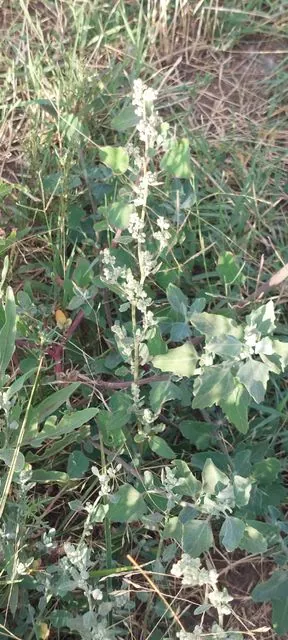
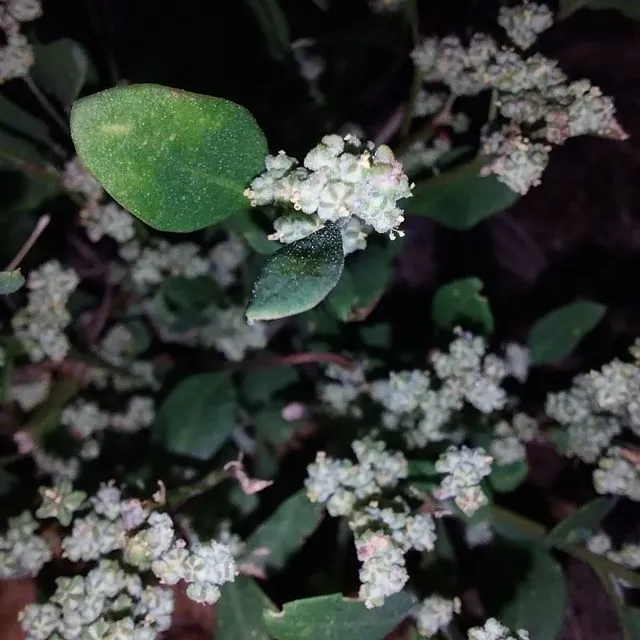
Chenopodium album
Authorship: The author or authors credited with publishing the scientific name. It is written after the name, sometimes with the year, for example L. (Linnaeus) in Zea mays L. An author in parentheses first published the name in another genus or rank. — The author or authors credited with publishing the scientific name. It is written after the name, sometimes with the year, for example L. (Linnaeus) in Zea mays L. An author in parentheses first published the name in another genus or rank.
Kingdom: One of the broadest ranks of biological classification. It groups organisms that share very basic features, for example plants (Plantae), animals (Animalia) or fungi (Fungi). — One of the broadest ranks of biological classification. It groups organisms that share very basic features, for example plants (Plantae), animals (Animalia) or fungi (Fungi).
Plantae
Phylum: Rank below kingdom that groups organisms with a shared general body plan, for example chordates (Chordata), arthropods (Arthropoda) or vascular plants (Tracheophyta). In botany the same rank is also called division. — Rank below kingdom that groups organisms with a shared general body plan, for example chordates (Chordata), arthropods (Arthropoda) or vascular plants (Tracheophyta). In botany the same rank is also called division.
Tracheophyta
Class: Rank below phylum, for example mammals (Mammalia), birds (Aves), insects (Insecta) or monocot plants such as grasses and orchids (Liliopsida). — Rank below phylum, for example mammals (Mammalia), birds (Aves), insects (Insecta) or monocot plants such as grasses and orchids (Liliopsida).
Magnoliopsida
Order: Rank below class that groups related families, for example grasses and their relatives (Poales) or bats (Chiroptera). — Rank below class that groups related families, for example grasses and their relatives (Poales) or bats (Chiroptera).
Caryophyllales
Family: Rank below order that groups related genera. Family names usually end in -aceae in botany (for example Poaceae, the grass family) and in -idae in zoology (for example Felidae, the cat family). — Rank below order that groups related genera. Family names usually end in -aceae in botany (for example Poaceae, the grass family) and in -idae in zoology (for example Felidae, the cat family).
Amaranthaceae
Genus: Rank that groups closely related species. Its name is the first word of a species' scientific name and starts with a capital letter, for example Zea in Zea mays. — Rank that groups closely related species. Its name is the first word of a species' scientific name and starts with a capital letter, for example Zea in Zea mays.
Chenopodium
Specific epithet: The second word of a species' scientific name. On its own it does not name the species: it always goes with the genus, for example mays in Zea mays. — The second word of a species' scientific name. On its own it does not name the species: it always goes with the genus, for example mays in Zea mays.
album
Taxonomic rank: The level a name occupies in the hierarchy of biological classification, such as kingdom, family, genus, species or subspecies. — The level a name occupies in the hierarchy of biological classification, such as kingdom, family, genus, species or subspecies.
species
Reference species
Chenopodium album
Taxonomic status: Whether the taxonomic catalogue the record comes from currently accepts this name for the organism, or treats it as a synonym of another accepted name or as doubtful. — Whether the taxonomic catalogue the record comes from currently accepts this name for the organism, or treats it as a synonym of another accepted name or as doubtful.
accepted name
Photos and conservation status
IUCN Red List category: The extinction-risk category that the International Union for Conservation of Nature (IUCN) assigns to a species on its Red List. EX Extinct: there is no reasonable doubt that the last individual has died. EW Extinct in the wild: it survives only in cultivation, in captivity or as a population far outside its past range. CR Critically endangered, EN Endangered and VU Vulnerable: the three threatened categories, from an extremely high to a high risk of extinction in the wild. NT Near threatened: close to qualifying as threatened. LC Least concern: evaluated and not threatened. DD Data deficient: there is not enough information to assess its risk. NE Not evaluated: not yet assessed against the criteria. It describes the risk of the species worldwide, not its situation in a project's area. — The extinction-risk category that the International Union for Conservation of Nature (IUCN) assigns to a species on its Red List. EX Extinct: there is no reasonable doubt that the last individual has died. EW Extinct in the wild: it survives only in cultivation, in captivity or as a population far outside its past range. CR Critically endangered, EN Endangered and VU Vulnerable: the three threatened categories, from an extremely high to a high risk of extinction in the wild. NT Near threatened: close to qualifying as threatened. LC Least concern: evaluated and not threatened. DD Data deficient: there is not enough information to assess its risk. NE Not evaluated: not yet assessed against the criteria. It describes the risk of the species worldwide, not its situation in a project's area.
Not evaluated (NE)
Source: IUCN Red List via GBIF, queried on 2026-10-09 15:21.
Research-grade iNaturalist observations via GBIF, CC0 or CC BY licences only, queried on 2026-10-09 15:21.
Interacciones documentadas
GloBI says it is documented somewhere in the world. Biolitica answers whether it could happen here.
A documented interaction means it was recorded somewhere in the world. It does not mean it occurs here.
Types shown: 12 of 15
is eaten by
×
interacts with (this species is the record's destination)
×
is a host of
×
interacts with (this species is the record's origin)
×
is visited by
×
is adjacent to
×
has as a parasite
×
is pollinated by
×
has its flowers visited by
×
is a mutualist of
×
co-occurs ecologically with
×
is a parasite of
×
3 more types with data for this species
Blocks that do not sit under a navigation concept heading keep the source's own term: no navigation concept has been assigned to them yet.
is eaten by
234 organisms
This term does declare that the organism harms this species.
Context: no place published · Sept. 7, 2022 · Human observation
Claim type
Published relationship between two taxa
Version
GloBI 0.11
Reuse
This release publishes no reuse terms for this record.
no place published · Sept. 7, 2022 · Human observationAs published: 2022-09-07T01:28:00Z · HumanObservationWhere it is: line:hash://sha256/021a206a1459bcca7e251c73f5bd180fc3ac342a09c499855fe42e21fc09edcf!/interactions.tsv.gz!/L5039926
Context: no place published · Nov. 18, 2022 · Human observation
Claim type
Published relationship between two taxa
Version
GloBI 0.11
Reuse
This release publishes no reuse terms for this record.
no place published · Nov. 18, 2022 · Human observationAs published: 2022-11-18T17:46:00Z · HumanObservationWhere it is: line:hash://sha256/021a206a1459bcca7e251c73f5bd180fc3ac342a09c499855fe42e21fc09edcf!/interactions.tsv.gz!/L5212468
Context: no place published · Nov. 21, 2022 · Human observation
Claim type
Published relationship between two taxa
Version
GloBI 0.11
Reuse
This release publishes no reuse terms for this record.
no place published · Nov. 21, 2022 · Human observationAs published: 2022-11-21T22:42:00Z · HumanObservationWhere it is: line:hash://sha256/021a206a1459bcca7e251c73f5bd180fc3ac342a09c499855fe42e21fc09edcf!/interactions.tsv.gz!/L5216167
Context: no place published · Nov. 22, 2022 · Human observation
Claim type
Published relationship between two taxa
Version
GloBI 0.11
Reuse
This release publishes no reuse terms for this record.
no place published · Nov. 22, 2022 · Human observationAs published: 2022-11-22T17:39:00Z · HumanObservationWhere it is: line:hash://sha256/021a206a1459bcca7e251c73f5bd180fc3ac342a09c499855fe42e21fc09edcf!/interactions.tsv.gz!/L5216454
Context: no place published · Dec. 16, 2022 · Human observation
Claim type
Published relationship between two taxa
Version
GloBI 0.11
Reuse
This release publishes no reuse terms for this record.
no place published · Dec. 16, 2022 · Human observationAs published: 2022-12-16T18:58:00Z · HumanObservationWhere it is: line:hash://sha256/021a206a1459bcca7e251c73f5bd180fc3ac342a09c499855fe42e21fc09edcf!/interactions.tsv.gz!/L5238341
Context: no place published · Dec. 28, 2022 · Human observation
Claim type
Published relationship between two taxa
Version
GloBI 0.11
Reuse
This release publishes no reuse terms for this record.
no place published · Dec. 28, 2022 · Human observationAs published: 2022-12-28T21:50:00Z · HumanObservationWhere it is: line:hash://sha256/021a206a1459bcca7e251c73f5bd180fc3ac342a09c499855fe42e21fc09edcf!/interactions.tsv.gz!/L5249444
Context: no place published · Dec. 29, 2022 · Human observation
Claim type
Published relationship between two taxa
Version
GloBI 0.11
Reuse
This release publishes no reuse terms for this record.
no place published · Dec. 29, 2022 · Human observationAs published: 2022-12-29T17:02:00Z · HumanObservationWhere it is: line:hash://sha256/021a206a1459bcca7e251c73f5bd180fc3ac342a09c499855fe42e21fc09edcf!/interactions.tsv.gz!/L5251340
Context: no place published · Dec. 29, 2022 · Human observation
Claim type
Published relationship between two taxa
Version
GloBI 0.11
Reuse
This release publishes no reuse terms for this record.
no place published · Dec. 29, 2022 · Human observationAs published: 2022-12-29T16:55:00Z · HumanObservationWhere it is: line:hash://sha256/021a206a1459bcca7e251c73f5bd180fc3ac342a09c499855fe42e21fc09edcf!/interactions.tsv.gz!/L5251341
Context: no place published · Dec. 21, 2022 · Human observation
Claim type
Published relationship between two taxa
Version
GloBI 0.11
Reuse
This release publishes no reuse terms for this record.
no place published · Dec. 21, 2022 · Human observationAs published: 2022-12-21T16:30:00Z · HumanObservationWhere it is: line:hash://sha256/021a206a1459bcca7e251c73f5bd180fc3ac342a09c499855fe42e21fc09edcf!/interactions.tsv.gz!/L5243508
Context: no place published · Dec. 21, 2022 · Human observation
Claim type
Published relationship between two taxa
Version
GloBI 0.11
Reuse
This release publishes no reuse terms for this record.
no place published · Dec. 21, 2022 · Human observationAs published: 2022-12-21T16:22:00Z · HumanObservationWhere it is: line:hash://sha256/021a206a1459bcca7e251c73f5bd180fc3ac342a09c499855fe42e21fc09edcf!/interactions.tsv.gz!/L5243510
Context: no place published · Dec. 25, 2022 · Human observation
Claim type
Published relationship between two taxa
Version
GloBI 0.11
Reuse
This release publishes no reuse terms for this record.
no place published · Dec. 25, 2022 · Human observationAs published: 2022-12-25T16:33:00Z · HumanObservationWhere it is: line:hash://sha256/021a206a1459bcca7e251c73f5bd180fc3ac342a09c499855fe42e21fc09edcf!/interactions.tsv.gz!/L5248893
Context: no place published · Dec. 25, 2022 · Human observation
Claim type
Published relationship between two taxa
Version
GloBI 0.11
Reuse
This release publishes no reuse terms for this record.
no place published · Dec. 25, 2022 · Human observationAs published: 2022-12-25T16:32:00Z · HumanObservationWhere it is: line:hash://sha256/021a206a1459bcca7e251c73f5bd180fc3ac342a09c499855fe42e21fc09edcf!/interactions.tsv.gz!/L5248894
Context: no place published · Dec. 27, 2022 · Human observation
Claim type
Published relationship between two taxa
Version
GloBI 0.11
Reuse
This release publishes no reuse terms for this record.
no place published · Dec. 27, 2022 · Human observationAs published: 2022-12-27T17:04:00Z · HumanObservationWhere it is: line:hash://sha256/021a206a1459bcca7e251c73f5bd180fc3ac342a09c499855fe42e21fc09edcf!/interactions.tsv.gz!/L5249445
Context: no place published · Dec. 27, 2022 · Human observation
Claim type
Published relationship between two taxa
Version
GloBI 0.11
Reuse
This release publishes no reuse terms for this record.
no place published · Dec. 27, 2022 · Human observationAs published: 2022-12-27T17:03:00Z · HumanObservationWhere it is: line:hash://sha256/021a206a1459bcca7e251c73f5bd180fc3ac342a09c499855fe42e21fc09edcf!/interactions.tsv.gz!/L5249446
Context: no place published · Dec. 29, 2022 · Human observation
Claim type
Published relationship between two taxa
Version
GloBI 0.11
Reuse
This release publishes no reuse terms for this record.
no place published · Dec. 29, 2022 · Human observationAs published: 2022-12-29T17:04:00Z · HumanObservationWhere it is: line:hash://sha256/021a206a1459bcca7e251c73f5bd180fc3ac342a09c499855fe42e21fc09edcf!/interactions.tsv.gz!/L5251339
Context: no place published · Jan. 7, 2023 · Human observation
Claim type
Published relationship between two taxa
Version
GloBI 0.11
Reuse
This release publishes no reuse terms for this record.
no place published · Jan. 7, 2023 · Human observationAs published: 2023-01-07T00:29:00Z · HumanObservationWhere it is: line:hash://sha256/021a206a1459bcca7e251c73f5bd180fc3ac342a09c499855fe42e21fc09edcf!/interactions.tsv.gz!/L5258567
And 7 more sources, with fewer records, not listed here.
A published relationship says these two taxa were documented interacting. It does not say how often, or that it happens in this project's region.
Black Bean AphidAphis fabaeAphididae
is eaten by
8
no location
8 sources · 8 records
Poelen, J. H. Global Biotic Interactions: Interpreted Data Products. Zenodo https://doi.org/10.5281/zenodo.5708970 (2021).
Published in globalbioticinteractions/trophiCH
Context: Global · Jan. 1, 2021 · Metaanalysis
Claim type
Published relationship between two taxa
Version
GloBI 0.11
Reuse
This release publishes no reuse terms for this record.
Global · Jan. 1, 2021 · MetaanalysisAs published: 2021-01-01T00:00:00Z · MetaanalysisWhere it is: line:hash://sha256/021a206a1459bcca7e251c73f5bd180fc3ac342a09c499855fe42e21fc09edcf!/interactions.tsv.gz!/L21608203
Reji Chacko, M., Albouy, C., Altermatt, F., Brändle, M., Casanelles Abella, J., Boussange, V., Campell, F., Ellis, W. N., Fopp, F., Gossner, M. M., Ho., H., Joss, A., Kipf, P., Neff, F., Petrović, A., Prié, V., Tomanović, Ž., Zimmerli, N., Pellissier, L. (2024). trophiCH v1 - a …
Published in globalbioticinteractions/trophiCH
Context: no place published · no date published
Claim type
Published relationship between two taxa
Version
GloBI 0.11
Reuse
This release publishes no reuse terms for this record.
no place published · no date publishedWhere it is: line:hash://sha256/021a206a1459bcca7e251c73f5bd180fc3ac342a09c499855fe42e21fc09edcf!/interactions.tsv.gz!/L22727346
Ellis, W. N. (2022). Plant Parasites of Europe – leafminers, galls and fungi [Database]. https://bladmineerders.nl/
Published in globalbioticinteractions/trophiCH
Context: Europe · Jan. 1, 2022
Claim type
Published relationship between two taxa
Version
GloBI 0.11
Reuse
This release publishes no reuse terms for this record.
Europe · Jan. 1, 2022As published: 2022-01-01T00:00:00ZWhere it is: line:hash://sha256/021a206a1459bcca7e251c73f5bd180fc3ac342a09c499855fe42e21fc09edcf!/interactions.tsv.gz!/L23288183
Neff, F., Brändle, M., Ambarli, D., Ammer, C., Bauhus, J., Boch, S., Hölzel, N., Klaus, V. H., Kleinebecker, T., Prati, D., Schall, P., Schäfer, D., Schulze, E. D., Seibold, S., Simons, N. K., Weisser, W. W., Pellissier, L., & Gossner, M. M. (2021). Changes in plant-herbivore ne…
Lampel, G., & Meier, W. (2003). Hemiptera: Sternorrhyncha—Aphidina Teil 2. In Hemiptera Sternorrhyncha—Aphidina. Centre suisse de cartographie de la faune.
Published in globalbioticinteractions/trophiCH
Context: Switzerland · Jan. 1, 2005
Claim type
Published relationship between two taxa
Version
GloBI 0.11
Reuse
This release publishes no reuse terms for this record.
Switzerland · Jan. 1, 2005As published: 2005-01-01T00:00:00ZWhere it is: line:hash://sha256/021a206a1459bcca7e251c73f5bd180fc3ac342a09c499855fe42e21fc09edcf!/interactions.tsv.gz!/L23419765
No public URL for this record
Starý, P. (2006). Aphid parasitoids of the Czech Republic (Hymenoptera: Braconidae, Aphidiinae). Academia.
This release publishes no reuse terms for this record.
Czech Republic · Jan. 1, 2006 · Visual observationAs published: 2006-01-01T00:00:00Z · Visual observationWhere it is: line:hash://sha256/021a206a1459bcca7e251c73f5bd180fc3ac342a09c499855fe42e21fc09edcf!/interactions.tsv.gz!/L23446501
No public URL for this record
Vorburger, C., Herzog, J., & Rouchet, R. (2017). Data from: Aphid specialization on different summer hosts is associated with strong genetic differentiation and unequal symbiont communities despite a common mating habitat (Version 1, p. 147574 bytes) [Dataset]. Dryad. https://do…
Published in globalbioticinteractions/trophiCH
Context: Switzerland; France · Jan. 1, 2017 · DNA metabarcoding
Claim type
Published relationship between two taxa
Version
GloBI 0.11
Reuse
This release publishes no reuse terms for this record.
Switzerland; France · Jan. 1, 2017 · DNA metabarcodingAs published: 2017-01-01T00:00:00Z · DNA metabarcodingWhere it is: line:hash://sha256/021a206a1459bcca7e251c73f5bd180fc3ac342a09c499855fe42e21fc09edcf!/interactions.tsv.gz!/L23543455
Vorburger, C., & Rouchet, R. (2016). Data from: Are aphid parasitoids locally adapted to the prevalence of defensive symbionts in their hosts? (Version 1, p. 255724 bytes) [Dataset]. Dryad. https://doi.org/10.5061/DRYAD.F8F8H
Published in globalbioticinteractions/trophiCH
Context: Switzerland; France · Jan. 1, 2016 · DNA metabarcoding
Claim type
Published relationship between two taxa
Version
GloBI 0.11
Reuse
This release publishes no reuse terms for this record.
Switzerland; France · Jan. 1, 2016 · DNA metabarcodingAs published: 2016-01-01T00:00:00Z · DNA metabarcodingWhere it is: line:hash://sha256/021a206a1459bcca7e251c73f5bd180fc3ac342a09c499855fe42e21fc09edcf!/interactions.tsv.gz!/L23543459
A published relationship says these two taxa were documented interacting. It does not say how often, or that it happens in this project's region.
Painted LadyVanessa cardui
is eaten by
6
not compared
6 sources · 6 records
Brian G. Scholtens (Expert)
Published in globalbioticinteractions/hale2024
Context: no place published · no date published
Claim type
Published relationship between two taxa
Version
GloBI 0.11
Reuse
This release publishes no reuse terms for this record.
no place published · no date publishedWhere it is: line:hash://sha256/021a206a1459bcca7e251c73f5bd180fc3ac342a09c499855fe42e21fc09edcf!/interactions.tsv.gz!/L15706568
No public URL for this record
Kayla R. S. Hale (Expert)
Published in globalbioticinteractions/hale2024
Context: no place published · no date published
Claim type
Published relationship between two taxa
Version
GloBI 0.11
Reuse
This release publishes no reuse terms for this record.
no place published · no date publishedWhere it is: line:hash://sha256/021a206a1459bcca7e251c73f5bd180fc3ac342a09c499855fe42e21fc09edcf!/interactions.tsv.gz!/L15713511
No public URL for this record
Jordon Tourville (Expert)
Published in globalbioticinteractions/hale2024
Context: no place published · no date published
Claim type
Published relationship between two taxa
Version
GloBI 0.11
Reuse
This release publishes no reuse terms for this record.
no place published · no date publishedWhere it is: line:hash://sha256/021a206a1459bcca7e251c73f5bd180fc3ac342a09c499855fe42e21fc09edcf!/interactions.tsv.gz!/L15727109
No public URL for this record
Edward Baker; Ian Kitching; George W Beccaloni; Amoret Whitaker; Steen Dupont; Vincent Smith; John S Noyes (2017). NHM Interactions Bank. https://doi.org/10.5519/0060767. Accessed at <https://data.nhm.ac.uk/dataset/82e807f0-6273-4f19-be0a-7f7558442a25/resource/f84ad9f1-bd0c-4811…
Published in globalbioticinteractions/natural-history-museum-london-interactions-bank
Context: no place published · no date published
Claim type
Published relationship between two taxa
Version
GloBI 0.11
Reuse
This release publishes no reuse terms for this record.
no place published · no date publishedWhere it is: line:hash://sha256/021a206a1459bcca7e251c73f5bd180fc3ac342a09c499855fe42e21fc09edcf!/interactions.tsv.gz!/L18735203
Robinson, G.S., Ackery, P.R., Kitching, I.J., Beccaloni, G.W., Hernández, L.M. (2010) HOSTS-A database of the world's lepidopteran hostplants. Natural History Museum, London.
Published in globalbioticinteractions/delrisco2021
Context: Bogotá, Colombia · no date published
Claim type
Published relationship between two taxa
Version
GloBI 0.11
Reuse
This release publishes no reuse terms for this record.
Bogotá, Colombia · no date publishedWhere it is: line:hash://sha256/021a206a1459bcca7e251c73f5bd180fc3ac342a09c499855fe42e21fc09edcf!/interactions.tsv.gz!/L18978583
No public URL for this record
Poelen, J. H. Global Biotic Interactions: Interpreted Data Products. Zenodo https://doi.org/10.5281/zenodo.5708970 (2021).
Published in globalbioticinteractions/trophiCH
Context: Global · Jan. 1, 2021 · Metaanalysis
Claim type
Published relationship between two taxa
Version
GloBI 0.11
Reuse
This release publishes no reuse terms for this record.
Global · Jan. 1, 2021 · MetaanalysisAs published: 2021-01-01T00:00:00Z · MetaanalysisWhere it is: line:hash://sha256/021a206a1459bcca7e251c73f5bd180fc3ac342a09c499855fe42e21fc09edcf!/interactions.tsv.gz!/L21559842
Record contexts (sample): no place published · Aug. 2, 2025 · Human observation; no place published · Aug. 2, 2025 · Human observation
Claim type
Published relationship between two taxa
Version
GloBI 0.11
Reuse
This release publishes no reuse terms for this record.
no place published · Aug. 2, 2025 · Human observationAs published: 2025-08-02T16:18:00Z · HumanObservationWhere it is: line:hash://sha256/021a206a1459bcca7e251c73f5bd180fc3ac342a09c499855fe42e21fc09edcf!/interactions.tsv.gz!/L4562859
no place published · Aug. 2, 2025 · Human observationAs published: 2025-08-02T16:18:00Z · HumanObservationWhere it is: line:hash://sha256/021a206a1459bcca7e251c73f5bd180fc3ac342a09c499855fe42e21fc09edcf!/interactions.tsv.gz!/L4562860
Record contexts (sample): no place published · Aug. 19, 2025 · Human observation; no place published · Aug. 19, 2025 · Human observation
Claim type
Published relationship between two taxa
Version
GloBI 0.11
Reuse
This release publishes no reuse terms for this record.
no place published · Aug. 19, 2025 · Human observationAs published: 2025-08-19T15:46:00Z · HumanObservationWhere it is: line:hash://sha256/021a206a1459bcca7e251c73f5bd180fc3ac342a09c499855fe42e21fc09edcf!/interactions.tsv.gz!/L4613264
no place published · Aug. 19, 2025 · Human observationAs published: 2025-08-19T15:46:00Z · HumanObservationWhere it is: line:hash://sha256/021a206a1459bcca7e251c73f5bd180fc3ac342a09c499855fe42e21fc09edcf!/interactions.tsv.gz!/L4613265
Record contexts (sample): no place published · May 27, 2024 · Human observation; no place published · May 27, 2024 · Human observation
Claim type
Published relationship between two taxa
Version
GloBI 0.11
Reuse
This release publishes no reuse terms for this record.
no place published · May 27, 2024 · Human observationAs published: 2024-05-27T23:10:22Z · HumanObservationWhere it is: line:hash://sha256/021a206a1459bcca7e251c73f5bd180fc3ac342a09c499855fe42e21fc09edcf!/interactions.tsv.gz!/L4689198
no place published · May 27, 2024 · Human observationAs published: 2024-05-27T23:10:22Z · HumanObservationWhere it is: line:hash://sha256/021a206a1459bcca7e251c73f5bd180fc3ac342a09c499855fe42e21fc09edcf!/interactions.tsv.gz!/L4689199
Record contexts (sample): no place published · June 11, 2024 · Human observation; no place published · June 11, 2024 · Human observation
Claim type
Published relationship between two taxa
Version
GloBI 0.11
Reuse
This release publishes no reuse terms for this record.
no place published · June 11, 2024 · Human observationAs published: 2024-06-11T23:38:41Z · HumanObservationWhere it is: line:hash://sha256/021a206a1459bcca7e251c73f5bd180fc3ac342a09c499855fe42e21fc09edcf!/interactions.tsv.gz!/L4744190
no place published · June 11, 2024 · Human observationAs published: 2024-06-11T23:38:41Z · HumanObservationWhere it is: line:hash://sha256/021a206a1459bcca7e251c73f5bd180fc3ac342a09c499855fe42e21fc09edcf!/interactions.tsv.gz!/L4744191
Record contexts (sample): no place published · July 2, 2022 · Human observation; no place published · July 2, 2022 · Human observation
Claim type
Published relationship between two taxa
Version
GloBI 0.11
Reuse
This release publishes no reuse terms for this record.
no place published · July 2, 2022 · Human observationAs published: 2022-07-02T02:20:00Z · HumanObservationWhere it is: line:hash://sha256/021a206a1459bcca7e251c73f5bd180fc3ac342a09c499855fe42e21fc09edcf!/interactions.tsv.gz!/L4813806
no place published · July 2, 2022 · Human observationAs published: 2022-07-02T02:20:00Z · HumanObservationWhere it is: line:hash://sha256/021a206a1459bcca7e251c73f5bd180fc3ac342a09c499855fe42e21fc09edcf!/interactions.tsv.gz!/L4813807
Record contexts (sample): no place published · July 8, 2024 · Human observation; no place published · July 8, 2024 · Human observation
Claim type
Published relationship between two taxa
Version
GloBI 0.11
Reuse
This release publishes no reuse terms for this record.
no place published · July 8, 2024 · Human observationAs published: 2024-07-08T16:05:23Z · HumanObservationWhere it is: line:hash://sha256/021a206a1459bcca7e251c73f5bd180fc3ac342a09c499855fe42e21fc09edcf!/interactions.tsv.gz!/L4849141
no place published · July 8, 2024 · Human observationAs published: 2024-07-08T16:05:23Z · HumanObservationWhere it is: line:hash://sha256/021a206a1459bcca7e251c73f5bd180fc3ac342a09c499855fe42e21fc09edcf!/interactions.tsv.gz!/L4849142
Record contexts (sample): no place published · July 25, 2022 · Human observation; no place published · July 25, 2022 · Human observation
Claim type
Published relationship between two taxa
Version
GloBI 0.11
Reuse
This release publishes no reuse terms for this record.
no place published · July 25, 2022 · Human observationAs published: 2022-07-25T15:30:00Z · HumanObservationWhere it is: line:hash://sha256/021a206a1459bcca7e251c73f5bd180fc3ac342a09c499855fe42e21fc09edcf!/interactions.tsv.gz!/L4897884
no place published · July 25, 2022 · Human observationAs published: 2022-07-25T15:30:00Z · HumanObservationWhere it is: line:hash://sha256/021a206a1459bcca7e251c73f5bd180fc3ac342a09c499855fe42e21fc09edcf!/interactions.tsv.gz!/L4897885
Record contexts (sample): no place published · Aug. 28, 2019 · Human observation; no place published · Aug. 28, 2019 · Human observation
Claim type
Published relationship between two taxa
Version
GloBI 0.11
Reuse
This release publishes no reuse terms for this record.
no place published · Aug. 28, 2019 · Human observationAs published: 2019-08-28T23:54:00Z · HumanObservationWhere it is: line:hash://sha256/021a206a1459bcca7e251c73f5bd180fc3ac342a09c499855fe42e21fc09edcf!/interactions.tsv.gz!/L5140905
no place published · Aug. 28, 2019 · Human observationAs published: 2019-08-28T23:54:00Z · HumanObservationWhere it is: line:hash://sha256/021a206a1459bcca7e251c73f5bd180fc3ac342a09c499855fe42e21fc09edcf!/interactions.tsv.gz!/L5140906
Context: no place published · July 14, 2025 · Human observation
Claim type
Published relationship between two taxa
Version
GloBI 0.11
Reuse
This release publishes no reuse terms for this record.
no place published · July 14, 2025 · Human observationAs published: 2025-07-14T15:37:00Z · HumanObservationWhere it is: line:hash://sha256/021a206a1459bcca7e251c73f5bd180fc3ac342a09c499855fe42e21fc09edcf!/interactions.tsv.gz!/L4529618
Context: no place published · Aug. 6, 2021 · Human observation
Claim type
Published relationship between two taxa
Version
GloBI 0.11
Reuse
This release publishes no reuse terms for this record.
no place published · Aug. 6, 2021 · Human observationAs published: 2021-08-06T14:13:15Z · HumanObservationWhere it is: line:hash://sha256/021a206a1459bcca7e251c73f5bd180fc3ac342a09c499855fe42e21fc09edcf!/interactions.tsv.gz!/L4603878
Context: no place published · May 26, 2024 · Human observation
Claim type
Published relationship between two taxa
Version
GloBI 0.11
Reuse
This release publishes no reuse terms for this record.
no place published · May 26, 2024 · Human observationAs published: 2024-05-26T19:53:00Z · HumanObservationWhere it is: line:hash://sha256/021a206a1459bcca7e251c73f5bd180fc3ac342a09c499855fe42e21fc09edcf!/interactions.tsv.gz!/L4685569
Context: no place published · May 28, 2024 · Human observation
Claim type
Published relationship between two taxa
Version
GloBI 0.11
Reuse
This release publishes no reuse terms for this record.
no place published · May 28, 2024 · Human observationAs published: 2024-05-28T18:46:00Z · HumanObservationWhere it is: line:hash://sha256/021a206a1459bcca7e251c73f5bd180fc3ac342a09c499855fe42e21fc09edcf!/interactions.tsv.gz!/L4695490
Context: no place published · June 1, 2024 · Human observation
Claim type
Published relationship between two taxa
Version
GloBI 0.11
Reuse
This release publishes no reuse terms for this record.
no place published · June 1, 2024 · Human observationAs published: 2024-06-01T15:17:00Z · HumanObservationWhere it is: line:hash://sha256/021a206a1459bcca7e251c73f5bd180fc3ac342a09c499855fe42e21fc09edcf!/interactions.tsv.gz!/L4733854
Context: no place published · June 15, 2024 · Human observation
Claim type
Published relationship between two taxa
Version
GloBI 0.11
Reuse
This release publishes no reuse terms for this record.
no place published · June 15, 2024 · Human observationAs published: 2024-06-15T17:59:00Z · HumanObservationWhere it is: line:hash://sha256/021a206a1459bcca7e251c73f5bd180fc3ac342a09c499855fe42e21fc09edcf!/interactions.tsv.gz!/L4756683
Context: no place published · June 18, 2022 · Human observation
Claim type
Published relationship between two taxa
Version
GloBI 0.11
Reuse
This release publishes no reuse terms for this record.
no place published · June 18, 2022 · Human observationAs published: 2022-06-18T19:43:00Z · HumanObservationWhere it is: line:hash://sha256/021a206a1459bcca7e251c73f5bd180fc3ac342a09c499855fe42e21fc09edcf!/interactions.tsv.gz!/L4776867
Context: no place published · June 20, 2022 · Human observation
Claim type
Published relationship between two taxa
Version
GloBI 0.11
Reuse
This release publishes no reuse terms for this record.
no place published · June 20, 2022 · Human observationAs published: 2022-06-20T21:51:31Z · HumanObservationWhere it is: line:hash://sha256/021a206a1459bcca7e251c73f5bd180fc3ac342a09c499855fe42e21fc09edcf!/interactions.tsv.gz!/L4802878
Context: Rankin Inlet, N.W.T. District of Keewatin. Rankin Inlet. Kudluli · Aug. 16, 1971 · Material sample
Claim type
Published relationship between two taxa
Version
GloBI 0.11
Reuse
This release publishes no reuse terms for this record.
Rankin Inlet, N.W.T. District of Keewatin. Rankin Inlet. Kudluli · Aug. 16, 1971 · Material sampleAs published: 1971-08-16T00:00:00Z · MATERIAL_SAMPLEWhere it is: line:hash://sha256/021a206a1459bcca7e251c73f5bd180fc3ac342a09c499855fe42e21fc09edcf!/interactions.tsv.gz!/L12884218
Context: R.R.Tracks between Glasgow St. & Yorkshire St. · Nov. 7, 2012 · Material sample
Claim type
Published relationship between two taxa
Version
GloBI 0.11
Reuse
This release publishes no reuse terms for this record.
R.R.Tracks between Glasgow St. & Yorkshire St. · Nov. 7, 2012 · Material sampleAs published: 2012-11-07T00:00:00Z · MATERIAL_SAMPLEWhere it is: line:hash://sha256/021a206a1459bcca7e251c73f5bd180fc3ac342a09c499855fe42e21fc09edcf!/interactions.tsv.gz!/L12904556
Context: Regional Municipality of York, King Twp., Jokers Hill West., NW end of plowed area N of E-po · Aug. 28, 2006 · Material sample
Claim type
Published relationship between two taxa
Version
GloBI 0.11
Reuse
This release publishes no reuse terms for this record.
Regional Municipality of York, King Twp., Jokers Hill West., NW end of plowed area N of E-po · Aug. 28, 2006 · Material sampleAs published: 2006-08-28T00:00:00Z · MATERIAL_SAMPLEWhere it is: line:hash://sha256/021a206a1459bcca7e251c73f5bd180fc3ac342a09c499855fe42e21fc09edcf!/interactions.tsv.gz!/L12908318
Context: Churchill, unspecified locality · Aug. 1, 1985 · Material sample
Claim type
Published relationship between two taxa
Version
GloBI 0.11
Reuse
This release publishes no reuse terms for this record.
Churchill, unspecified locality · Aug. 1, 1985 · Material sampleAs published: 1985-08-01T00:00:00Z · MATERIAL_SAMPLEWhere it is: line:hash://sha256/021a206a1459bcca7e251c73f5bd180fc3ac342a09c499855fe42e21fc09edcf!/interactions.tsv.gz!/L12969178
Context: Niagara County, Niagara-on-the-Lake Township, Fields around Traveller`s Stop at intersection of · Nov. 29, 2006 · Material sample
Claim type
Published relationship between two taxa
Version
GloBI 0.11
Reuse
This release publishes no reuse terms for this record.
Niagara County, Niagara-on-the-Lake Township, Fields around Traveller`s Stop at intersection of · Nov. 29, 2006 · Material sampleAs published: 2006-11-29T00:00:00Z · MATERIAL_SAMPLEWhere it is: line:hash://sha256/021a206a1459bcca7e251c73f5bd180fc3ac342a09c499855fe42e21fc09edcf!/interactions.tsv.gz!/L12981705
Context: Norfolk County, Delhi Twp., Vittoria Conservation Area, Picnic Area, stream an · July 18, 2007 · Material sample
Claim type
Published relationship between two taxa
Version
GloBI 0.11
Reuse
This release publishes no reuse terms for this record.
Norfolk County, Delhi Twp., Vittoria Conservation Area, Picnic Area, stream an · July 18, 2007 · Material sampleAs published: 2007-07-18T00:00:00Z · MATERIAL_SAMPLEWhere it is: line:hash://sha256/021a206a1459bcca7e251c73f5bd180fc3ac342a09c499855fe42e21fc09edcf!/interactions.tsv.gz!/L12981847
Context: Wellington County, City of Guelph, OAC Herbarium and BIO Grounds · Sept. 19, 2006 · Material sample
Claim type
Published relationship between two taxa
Version
GloBI 0.11
Reuse
This release publishes no reuse terms for this record.
Wellington County, City of Guelph, OAC Herbarium and BIO Grounds · Sept. 19, 2006 · Material sampleAs published: 2006-09-19T00:00:00Z · MATERIAL_SAMPLEWhere it is: line:hash://sha256/021a206a1459bcca7e251c73f5bd180fc3ac342a09c499855fe42e21fc09edcf!/interactions.tsv.gz!/L12982177
Context: rare Charitable Research Reserve, Blair Flats · Aug. 12, 2015 · Material sample
Claim type
Published relationship between two taxa
Version
GloBI 0.11
Reuse
This release publishes no reuse terms for this record.
rare Charitable Research Reserve, Blair Flats · Aug. 12, 2015 · Material sampleAs published: 2015-08-12T00:00:00Z · MATERIAL_SAMPLEWhere it is: line:hash://sha256/021a206a1459bcca7e251c73f5bd180fc3ac342a09c499855fe42e21fc09edcf!/interactions.tsv.gz!/L12983200
Context: no place published · July 9, 2025 · Human observation
Claim type
Published relationship between two taxa
Version
GloBI 0.11
Reuse
This release publishes no reuse terms for this record.
no place published · July 9, 2025 · Human observationAs published: 2025-07-09T17:46:05Z · HumanObservationWhere it is: line:hash://sha256/021a206a1459bcca7e251c73f5bd180fc3ac342a09c499855fe42e21fc09edcf!/interactions.tsv.gz!/L4450936
Context: no place published · Aug. 6, 2025 · Human observation
Claim type
Published relationship between two taxa
Version
GloBI 0.11
Reuse
This release publishes no reuse terms for this record.
no place published · Aug. 6, 2025 · Human observationAs published: 2025-08-06T00:30:00Z · HumanObservationWhere it is: line:hash://sha256/021a206a1459bcca7e251c73f5bd180fc3ac342a09c499855fe42e21fc09edcf!/interactions.tsv.gz!/L4562687
Context: no place published · Sept. 7, 2018 · Human observation
Claim type
Published relationship between two taxa
Version
GloBI 0.11
Reuse
This release publishes no reuse terms for this record.
no place published · Sept. 7, 2018 · Human observationAs published: 2018-09-07T12:50:44Z · HumanObservationWhere it is: line:hash://sha256/021a206a1459bcca7e251c73f5bd180fc3ac342a09c499855fe42e21fc09edcf!/interactions.tsv.gz!/L4872655
Context: no place published · July 23, 2019 · Human observation
Claim type
Published relationship between two taxa
Version
GloBI 0.11
Reuse
This release publishes no reuse terms for this record.
no place published · July 23, 2019 · Human observationAs published: 2019-07-23T22:15:42Z · HumanObservationWhere it is: line:hash://sha256/021a206a1459bcca7e251c73f5bd180fc3ac342a09c499855fe42e21fc09edcf!/interactions.tsv.gz!/L5089016
Context: no place published · Oct. 10, 2022 · Human observation
Claim type
Published relationship between two taxa
Version
GloBI 0.11
Reuse
This release publishes no reuse terms for this record.
no place published · Oct. 10, 2022 · Human observationAs published: 2022-10-10T15:24:00Z · HumanObservationWhere it is: line:hash://sha256/021a206a1459bcca7e251c73f5bd180fc3ac342a09c499855fe42e21fc09edcf!/interactions.tsv.gz!/L5142726
Context: no place published · Sept. 4, 2019 · Human observation
Claim type
Published relationship between two taxa
Version
GloBI 0.11
Reuse
This release publishes no reuse terms for this record.
no place published · Sept. 4, 2019 · Human observationAs published: 2019-09-04T13:04:52Z · HumanObservationWhere it is: line:hash://sha256/021a206a1459bcca7e251c73f5bd180fc3ac342a09c499855fe42e21fc09edcf!/interactions.tsv.gz!/L5149760
Context: no place published · June 3, 2023 · Human observation
Claim type
Published relationship between two taxa
Version
GloBI 0.11
Reuse
This release publishes no reuse terms for this record.
no place published · June 3, 2023 · Human observationAs published: 2023-06-03T20:42:00Z · HumanObservationWhere it is: line:hash://sha256/021a206a1459bcca7e251c73f5bd180fc3ac342a09c499855fe42e21fc09edcf!/interactions.tsv.gz!/L5485179
Context: Michigan State University campus, Entomology Farm, Collins Rd. · Aug. 17, 2018 · Preserved specimen
Claim type
Published relationship between two taxa
Version
GloBI 0.11
Reuse
This release publishes no reuse terms for this record.
Michigan State University campus, Entomology Farm, Collins Rd. · Aug. 17, 2018 · Preserved specimenAs published: 2018-08-17T00:00:00Z · PreservedSpecimenWhere it is: line:hash://sha256/021a206a1459bcca7e251c73f5bd180fc3ac342a09c499855fe42e21fc09edcf!/interactions.tsv.gz!/L6497533
The authority declares no effect on this species for this term: neither that it harms it nor that it benefits it. In the source ontology symbiosis covers mutualism, commensalism and parasitism alike, so this block holds attackers and allies side by side.
Anonymous. 1960. Index of Plant Diseases in the United States. U.S.D.A. Agric. Handb. 165:1-531
Published in globalbioticinteractions/usda-fungus-host
Record contexts (sample): United States · no date published; United States · no date published
Claim type
Published relationship between two taxa
Version
GloBI 0.11
Reuse
This release publishes no reuse terms for this record.
United States · no date publishedWhere it is: line:hash://sha256/021a206a1459bcca7e251c73f5bd180fc3ac342a09c499855fe42e21fc09edcf!/interactions.tsv.gz!/L3607791
United States · no date publishedWhere it is: line:hash://sha256/021a206a1459bcca7e251c73f5bd180fc3ac342a09c499855fe42e21fc09edcf!/interactions.tsv.gz!/L3607792
United States · no date publishedWhere it is: line:hash://sha256/021a206a1459bcca7e251c73f5bd180fc3ac342a09c499855fe42e21fc09edcf!/interactions.tsv.gz!/L3607804
And 4 more records of this source, not listed here.
Context: Winnipeg, Manitoba Agricultural College · July 5, 1925 · Preserved specimen
Claim type
Published relationship between two taxa
Version
GloBI 0.11
Reuse
This release publishes no reuse terms for this record.
Winnipeg, Manitoba Agricultural College · July 5, 1925 · Preserved specimenAs published: 1925-07-05T00:00:00Z · PreservedSpecimenWhere it is: line:hash://sha256/021a206a1459bcca7e251c73f5bd180fc3ac342a09c499855fe42e21fc09edcf!/interactions.tsv.gz!/L16613970
Context: Woods Holl · Aug. 1, 1881 · Preserved specimen
Claim type
Published relationship between two taxa
Version
GloBI 0.11
Reuse
This release publishes no reuse terms for this record.
Woods Holl · Aug. 1, 1881 · Preserved specimenAs published: 1881-08-01T00:00:00Z · PreservedSpecimenWhere it is: line:hash://sha256/021a206a1459bcca7e251c73f5bd180fc3ac342a09c499855fe42e21fc09edcf!/interactions.tsv.gz!/L16614098
Context: Syracuse · July 9, 1892 · Preserved specimen
Claim type
Published relationship between two taxa
Version
GloBI 0.11
Reuse
This release publishes no reuse terms for this record.
Syracuse · July 9, 1892 · Preserved specimenAs published: 1892-07-09T00:00:00Z · PreservedSpecimenWhere it is: line:hash://sha256/021a206a1459bcca7e251c73f5bd180fc3ac342a09c499855fe42e21fc09edcf!/interactions.tsv.gz!/L16655419
Context: Ann Arbor · July 14, 1892 · Preserved specimen
Claim type
Published relationship between two taxa
Version
GloBI 0.11
Reuse
This release publishes no reuse terms for this record.
Ann Arbor · July 14, 1892 · Preserved specimenAs published: 1892-07-14T00:00:00Z · PreservedSpecimenWhere it is: line:hash://sha256/021a206a1459bcca7e251c73f5bd180fc3ac342a09c499855fe42e21fc09edcf!/interactions.tsv.gz!/L16655420
Context: Alcove · July 19, 1893 · Preserved specimen
Claim type
Published relationship between two taxa
Version
GloBI 0.11
Reuse
This release publishes no reuse terms for this record.
Alcove · July 19, 1893 · Preserved specimenAs published: 1893-07-19T00:00:00Z · PreservedSpecimenWhere it is: line:hash://sha256/021a206a1459bcca7e251c73f5bd180fc3ac342a09c499855fe42e21fc09edcf!/interactions.tsv.gz!/L16667371
And 335 more sources, with fewer records, not listed here.
A published relationship says these two taxa were documented interacting. It does not say how often, or that it happens in this project's region.
Cercospora dubiaMycosphaerellaceae
is a host of
263
not compared
263 sources · 266 records
Anonymous. 1960. Index of Plant Diseases in the United States. U.S.D.A. Agric. Handb. 165:1-531
Published in globalbioticinteractions/usda-fungus-host
Record contexts (sample): United States · no date published; United States · no date published
Claim type
Published relationship between two taxa
Version
GloBI 0.11
Reuse
This release publishes no reuse terms for this record.
United States · no date publishedWhere it is: line:hash://sha256/021a206a1459bcca7e251c73f5bd180fc3ac342a09c499855fe42e21fc09edcf!/interactions.tsv.gz!/L3609381
United States · no date publishedWhere it is: line:hash://sha256/021a206a1459bcca7e251c73f5bd180fc3ac342a09c499855fe42e21fc09edcf!/interactions.tsv.gz!/L3609463
United States · no date publishedWhere it is: line:hash://sha256/021a206a1459bcca7e251c73f5bd180fc3ac342a09c499855fe42e21fc09edcf!/interactions.tsv.gz!/L3609470
No public URL for this record
Shaw, C.G.. 1973. Host fungus index for the Pacific Northwest - I. Hosts. Washington State Univ. Agric. Exp. Sta. Bull. 765:1-121
Published in globalbioticinteractions/usda-fungus-host
Record contexts (sample): United States · no date published; United States · no date published
Claim type
Published relationship between two taxa
Version
GloBI 0.11
Reuse
This release publishes no reuse terms for this record.
United States · no date publishedWhere it is: line:hash://sha256/021a206a1459bcca7e251c73f5bd180fc3ac342a09c499855fe42e21fc09edcf!/interactions.tsv.gz!/L3703695
United States · no date publishedWhere it is: line:hash://sha256/021a206a1459bcca7e251c73f5bd180fc3ac342a09c499855fe42e21fc09edcf!/interactions.tsv.gz!/L3703717
Context: Kentville · Aug. 16, 1951 · Preserved specimen
Claim type
Published relationship between two taxa
Version
GloBI 0.11
Reuse
This release publishes no reuse terms for this record.
Kentville · Aug. 16, 1951 · Preserved specimenAs published: 1951-08-16T00:00:00Z · PreservedSpecimenWhere it is: line:hash://sha256/021a206a1459bcca7e251c73f5bd180fc3ac342a09c499855fe42e21fc09edcf!/interactions.tsv.gz!/L16541231
Context: near Maple · Aug. 24, 1941 · Preserved specimen
Claim type
Published relationship between two taxa
Version
GloBI 0.11
Reuse
This release publishes no reuse terms for this record.
near Maple · Aug. 24, 1941 · Preserved specimenAs published: 1941-08-24T00:00:00Z · PreservedSpecimenWhere it is: line:hash://sha256/021a206a1459bcca7e251c73f5bd180fc3ac342a09c499855fe42e21fc09edcf!/interactions.tsv.gz!/L16541232
Context: Ottawa, Highland Park area · Aug. 19, 1945 · Preserved specimen
Claim type
Published relationship between two taxa
Version
GloBI 0.11
Reuse
This release publishes no reuse terms for this record.
Ottawa, Highland Park area · Aug. 19, 1945 · Preserved specimenAs published: 1945-08-19T00:00:00Z · PreservedSpecimenWhere it is: line:hash://sha256/021a206a1459bcca7e251c73f5bd180fc3ac342a09c499855fe42e21fc09edcf!/interactions.tsv.gz!/L16541234
Context: Winnipeg, e. Manitoba Agricultural College · Sept. 1, 1926 · Preserved specimen
Claim type
Published relationship between two taxa
Version
GloBI 0.11
Reuse
This release publishes no reuse terms for this record.
Winnipeg, e. Manitoba Agricultural College · Sept. 1, 1926 · Preserved specimenAs published: 1926-09-01T00:00:00Z · PreservedSpecimenWhere it is: line:hash://sha256/021a206a1459bcca7e251c73f5bd180fc3ac342a09c499855fe42e21fc09edcf!/interactions.tsv.gz!/L16541236
Context: Winnipeg, University of Manitoba, as Manitoba Agricultural College · Aug. 22, 1927 · Preserved specimen
Claim type
Published relationship between two taxa
Version
GloBI 0.11
Reuse
This release publishes no reuse terms for this record.
Winnipeg, University of Manitoba, as Manitoba Agricultural College · Aug. 22, 1927 · Preserved specimenAs published: 1927-08-22T00:00:00Z · PreservedSpecimenWhere it is: line:hash://sha256/021a206a1459bcca7e251c73f5bd180fc3ac342a09c499855fe42e21fc09edcf!/interactions.tsv.gz!/L16541238
Context: Winnipeg, e. Manitoba Agricultural College · July 29, 1927 · Preserved specimen
Claim type
Published relationship between two taxa
Version
GloBI 0.11
Reuse
This release publishes no reuse terms for this record.
Winnipeg, e. Manitoba Agricultural College · July 29, 1927 · Preserved specimenAs published: 1927-07-29T00:00:00Z · PreservedSpecimenWhere it is: line:hash://sha256/021a206a1459bcca7e251c73f5bd180fc3ac342a09c499855fe42e21fc09edcf!/interactions.tsv.gz!/L16541239
Choi, Y.-J. , Danielsen, S., Lubeck, M., Hong, S.-B., Delhey, R., and Shin, H.-D.. 2010. Morphological and molecular characterization of the causal agent of downy mildew on quinoa (%Chenopodium quinoa%). Mycopathologia 169:403-412
Published in globalbioticinteractions/usda-fungus-host
Record contexts (sample): Germany · no date published; Ireland · no date published
Claim type
Published relationship between two taxa
Version
GloBI 0.11
Reuse
This release publishes no reuse terms for this record.
Germany · no date publishedWhere it is: line:hash://sha256/021a206a1459bcca7e251c73f5bd180fc3ac342a09c499855fe42e21fc09edcf!/interactions.tsv.gz!/L4370152
Ireland · no date publishedWhere it is: line:hash://sha256/021a206a1459bcca7e251c73f5bd180fc3ac342a09c499855fe42e21fc09edcf!/interactions.tsv.gz!/L4370153
Netherlands · no date publishedWhere it is: line:hash://sha256/021a206a1459bcca7e251c73f5bd180fc3ac342a09c499855fe42e21fc09edcf!/interactions.tsv.gz!/L4370154
And 6 more records of this source, not listed here.
No public URL for this record
Choi, Y.-J. , Denchev, C.M., and Shin, H.D.. 2008. Morphological and Molecular Analyses Support the Existence of Host-specific %Peronospora% Species Infecting %Chenopodium%. Mycopathologia 165:155-164
Published in globalbioticinteractions/usda-fungus-host
Record contexts (sample): Korea · no date published; Netherlands · no date published
Claim type
Published relationship between two taxa
Version
GloBI 0.11
Reuse
This release publishes no reuse terms for this record.
Korea · no date publishedWhere it is: line:hash://sha256/021a206a1459bcca7e251c73f5bd180fc3ac342a09c499855fe42e21fc09edcf!/interactions.tsv.gz!/L4350715
Netherlands · no date publishedWhere it is: line:hash://sha256/021a206a1459bcca7e251c73f5bd180fc3ac342a09c499855fe42e21fc09edcf!/interactions.tsv.gz!/L4350716
China · no date publishedWhere it is: line:hash://sha256/021a206a1459bcca7e251c73f5bd180fc3ac342a09c499855fe42e21fc09edcf!/interactions.tsv.gz!/L4350717
And 5 more records of this source, not listed here.
No public URL for this record
Anonymous. 1960. Index of Plant Diseases in the United States. U.S.D.A. Agric. Handb. 165:1-531
Published in globalbioticinteractions/usda-fungus-host
Record contexts (sample): United States · no date published; United States · no date published
Claim type
Published relationship between two taxa
Version
GloBI 0.11
Reuse
This release publishes no reuse terms for this record.
United States · no date publishedWhere it is: line:hash://sha256/021a206a1459bcca7e251c73f5bd180fc3ac342a09c499855fe42e21fc09edcf!/interactions.tsv.gz!/L3656157
United States · no date publishedWhere it is: line:hash://sha256/021a206a1459bcca7e251c73f5bd180fc3ac342a09c499855fe42e21fc09edcf!/interactions.tsv.gz!/L3656159
United States · no date publishedWhere it is: line:hash://sha256/021a206a1459bcca7e251c73f5bd180fc3ac342a09c499855fe42e21fc09edcf!/interactions.tsv.gz!/L3656170
And 4 more records of this source, not listed here.
No public URL for this record
Farr, David F.; Rossman, Amy Y.; Castlebury, Lisa A. (2021). United States National Fungus Collections Fungus-Host Dataset. Ag Data Commons. https://doi.org/10.15482/USDA.ADC/1524414. Accessed at <https://github.com/globalbioticinteractions/usda-fungus-host/archive/47a3882c0c536…
Published in globalbioticinteractions/usda-fungus-host
Record contexts (sample): Poland · no date published; Japan · no date published
Claim type
Published relationship between two taxa
Version
GloBI 0.11
Reuse
This release publishes no reuse terms for this record.
Poland · no date publishedWhere it is: line:hash://sha256/021a206a1459bcca7e251c73f5bd180fc3ac342a09c499855fe42e21fc09edcf!/interactions.tsv.gz!/L3670478
Japan · no date publishedWhere it is: line:hash://sha256/021a206a1459bcca7e251c73f5bd180fc3ac342a09c499855fe42e21fc09edcf!/interactions.tsv.gz!/L3670479
China · no date publishedWhere it is: line:hash://sha256/021a206a1459bcca7e251c73f5bd180fc3ac342a09c499855fe42e21fc09edcf!/interactions.tsv.gz!/L3670482
And 4 more records of this source, not listed here.
Francis, S., and Waterhouse, G.. 1988. List of Peronosporaceae reported from the British Isles. Trans. Brit. Mycol. Soc. 91:1-62
Published in globalbioticinteractions/usda-fungus-host
Record contexts (sample): Ireland · no date published; Scotland · no date published
Claim type
Published relationship between two taxa
Version
GloBI 0.11
Reuse
This release publishes no reuse terms for this record.
Ireland · no date publishedWhere it is: line:hash://sha256/021a206a1459bcca7e251c73f5bd180fc3ac342a09c499855fe42e21fc09edcf!/interactions.tsv.gz!/L3836889
Scotland · no date publishedWhere it is: line:hash://sha256/021a206a1459bcca7e251c73f5bd180fc3ac342a09c499855fe42e21fc09edcf!/interactions.tsv.gz!/L3836890
Wales · no date publishedWhere it is: line:hash://sha256/021a206a1459bcca7e251c73f5bd180fc3ac342a09c499855fe42e21fc09edcf!/interactions.tsv.gz!/L3836891
And 2 more records of this source, not listed here.
No public URL for this record
Shaw, C.G.. 1973. Host fungus index for the Pacific Northwest - I. Hosts. Washington State Univ. Agric. Exp. Sta. Bull. 765:1-121
Published in globalbioticinteractions/usda-fungus-host
Record contexts (sample): United States · no date published; United States · no date published
Claim type
Published relationship between two taxa
Version
GloBI 0.11
Reuse
This release publishes no reuse terms for this record.
United States · no date publishedWhere it is: line:hash://sha256/021a206a1459bcca7e251c73f5bd180fc3ac342a09c499855fe42e21fc09edcf!/interactions.tsv.gz!/L3715640
United States · no date publishedWhere it is: line:hash://sha256/021a206a1459bcca7e251c73f5bd180fc3ac342a09c499855fe42e21fc09edcf!/interactions.tsv.gz!/L3715650
United States · no date publishedWhere it is: line:hash://sha256/021a206a1459bcca7e251c73f5bd180fc3ac342a09c499855fe42e21fc09edcf!/interactions.tsv.gz!/L3715683
And 1 more record of this source, not listed here.
No public URL for this record
Gustavsson, A.. 1991. The genus %Peronospora% in the Iberian Peninsula, especially in Northern Spain and Andorra. Anales Jard. Bot. Madrid 49:1-38
Published in globalbioticinteractions/usda-fungus-host
Record contexts (sample): Andorra · no date published; Spain · no date published
Claim type
Published relationship between two taxa
Version
GloBI 0.11
Reuse
This release publishes no reuse terms for this record.
Andorra · no date publishedWhere it is: line:hash://sha256/021a206a1459bcca7e251c73f5bd180fc3ac342a09c499855fe42e21fc09edcf!/interactions.tsv.gz!/L3851194
Spain · no date publishedWhere it is: line:hash://sha256/021a206a1459bcca7e251c73f5bd180fc3ac342a09c499855fe42e21fc09edcf!/interactions.tsv.gz!/L3851197
Portugal · no date publishedWhere it is: line:hash://sha256/021a206a1459bcca7e251c73f5bd180fc3ac342a09c499855fe42e21fc09edcf!/interactions.tsv.gz!/L3851204
No public URL for this record
Constantinescu, O.. 1991. An annotated list of %Peronospora% names.. Thunbergia 15:1-110
Published in globalbioticinteractions/usda-fungus-host
Record contexts (sample): USSR · no date published; Germany · no date published
Claim type
Published relationship between two taxa
Version
GloBI 0.11
Reuse
This release publishes no reuse terms for this record.
USSR · no date publishedWhere it is: line:hash://sha256/021a206a1459bcca7e251c73f5bd180fc3ac342a09c499855fe42e21fc09edcf!/interactions.tsv.gz!/L3857385
Germany · no date publishedWhere it is: line:hash://sha256/021a206a1459bcca7e251c73f5bd180fc3ac342a09c499855fe42e21fc09edcf!/interactions.tsv.gz!/L3857389
Switzerland · no date publishedWhere it is: line:hash://sha256/021a206a1459bcca7e251c73f5bd180fc3ac342a09c499855fe42e21fc09edcf!/interactions.tsv.gz!/L3857722
No public URL for this record
And 240 more sources, with fewer records, not listed here.
A published relationship says these two taxa were documented interacting. It does not say how often, or that it happens in this project's region.
Passalora dubiaMycosphaerellaceae
is a host of
100
not compared
100 sources · 103 records
Knight, N.L., Vaghefi, N., Kikkert, J.R., and Pethybridge, S.J.. 2019. Alternative hosts of %Cercospora beticola% in field surveys and inoculation trials. Pl. Dis. 103(8):1983-1990
Published in globalbioticinteractions/usda-fungus-host
Record contexts (sample): Iran · no date published; United States · no date published
Claim type
Published relationship between two taxa
Version
GloBI 0.11
Reuse
This release publishes no reuse terms for this record.
Iran · no date publishedWhere it is: line:hash://sha256/021a206a1459bcca7e251c73f5bd180fc3ac342a09c499855fe42e21fc09edcf!/interactions.tsv.gz!/L4288502
United States · no date publishedWhere it is: line:hash://sha256/021a206a1459bcca7e251c73f5bd180fc3ac342a09c499855fe42e21fc09edcf!/interactions.tsv.gz!/L4288503
France · no date publishedWhere it is: line:hash://sha256/021a206a1459bcca7e251c73f5bd180fc3ac342a09c499855fe42e21fc09edcf!/interactions.tsv.gz!/L4288504
No public URL for this record
Crous, P.W., and Braun, U.. 1996. Cercosporoid fungi from South Africa.. Mycotaxon 57:233-321
Published in globalbioticinteractions/usda-fungus-host
Record contexts (sample): South Africa · no date published; South Africa · no date published
Claim type
Published relationship between two taxa
Version
GloBI 0.11
Reuse
This release publishes no reuse terms for this record.
South Africa · no date publishedWhere it is: line:hash://sha256/021a206a1459bcca7e251c73f5bd180fc3ac342a09c499855fe42e21fc09edcf!/interactions.tsv.gz!/L4214155
South Africa · no date publishedWhere it is: line:hash://sha256/021a206a1459bcca7e251c73f5bd180fc3ac342a09c499855fe42e21fc09edcf!/interactions.tsv.gz!/L4214166
Context: Bradford, Holland R. Marsh · Aug. 7, 1930 · Preserved specimen
Claim type
Published relationship between two taxa
Version
GloBI 0.11
Reuse
This release publishes no reuse terms for this record.
Bradford, Holland R. Marsh · Aug. 7, 1930 · Preserved specimenAs published: 1930-08-07T00:00:00Z · PreservedSpecimenWhere it is: line:hash://sha256/021a206a1459bcca7e251c73f5bd180fc3ac342a09c499855fe42e21fc09edcf!/interactions.tsv.gz!/L16497813
Context: "Springwater", south of Orwell · Aug. 22, 1946 · Preserved specimen
Claim type
Published relationship between two taxa
Version
GloBI 0.11
Reuse
This release publishes no reuse terms for this record.
"Springwater", south of Orwell · Aug. 22, 1946 · Preserved specimenAs published: 1946-08-22T00:00:00Z · PreservedSpecimenWhere it is: line:hash://sha256/021a206a1459bcca7e251c73f5bd180fc3ac342a09c499855fe42e21fc09edcf!/interactions.tsv.gz!/L16497814
Context: at or near London · no date published · Preserved specimen
Claim type
Published relationship between two taxa
Version
GloBI 0.11
Reuse
This release publishes no reuse terms for this record.
at or near London · no date published · Preserved specimenAs published: PreservedSpecimenWhere it is: line:hash://sha256/021a206a1459bcca7e251c73f5bd180fc3ac342a09c499855fe42e21fc09edcf!/interactions.tsv.gz!/L16540968
Context: Ventura Land Trust Hayden Preserve. North side of Cañada Larga Road just east of Hwy 33. Eastern part of the preserve near large oak tree a…
Claim type
Published relationship between two taxa
Version
GloBI 0.11
Reuse
This release publishes no reuse terms for this record.
Ventura Land Trust Hayden Preserve. North side of Cañada Larga Road just east of Hwy 33. Eastern part of the preserve near large oak tree and native plant garden. · June 21, 2023 · Preserved specimenAs published: 2023-06-21T00:00:00Z · PreservedSpecimenWhere it is: line:hash://sha256/021a206a1459bcca7e251c73f5bd180fc3ac342a09c499855fe42e21fc09edcf!/interactions.tsv.gz!/L12086471
Context: Ventura Land Trust Hayden Preserve; North side of Cañada Larga Road just east of Hwy 33; Eastern part of reserve, near large oak tree and n…
Claim type
Published relationship between two taxa
Version
GloBI 0.11
Reuse
This release publishes no reuse terms for this record.
Ventura Land Trust Hayden Preserve; North side of Cañada Larga Road just east of Hwy 33; Eastern part of reserve, near large oak tree and native plant garden. · June 21, 2023 · Preserved specimenAs published: 2023-06-21T00:00:00Z · PreservedSpecimenWhere it is: line:hash://sha256/021a206a1459bcca7e251c73f5bd180fc3ac342a09c499855fe42e21fc09edcf!/interactions.tsv.gz!/L12087573
Context: Ventura Land Trust Hayden Preserve. North side of Cañada Larga Road just east of Hwy 33. Eastern part of the preserve near large oak tree a…
Claim type
Published relationship between two taxa
Version
GloBI 0.11
Reuse
This release publishes no reuse terms for this record.
Ventura Land Trust Hayden Preserve. North side of Cañada Larga Road just east of Hwy 33. Eastern part of the preserve near large oak tree and native plant garden. · June 21, 2023 · Preserved specimenAs published: 2023-06-21T00:00:00Z · PreservedSpecimenWhere it is: line:hash://sha256/021a206a1459bcca7e251c73f5bd180fc3ac342a09c499855fe42e21fc09edcf!/interactions.tsv.gz!/L12086468
Context: Ventura Land Trust Hayden Preserve; North side of Cañada Larga Road just east of Hwy 33; Eastern part of reserve, near large oak tree and n…
Claim type
Published relationship between two taxa
Version
GloBI 0.11
Reuse
This release publishes no reuse terms for this record.
Ventura Land Trust Hayden Preserve; North side of Cañada Larga Road just east of Hwy 33; Eastern part of reserve, near large oak tree and native plant garden. · June 21, 2023 · Preserved specimenAs published: 2023-06-21T00:00:00Z · PreservedSpecimenWhere it is: line:hash://sha256/021a206a1459bcca7e251c73f5bd180fc3ac342a09c499855fe42e21fc09edcf!/interactions.tsv.gz!/L12087574
Context: Ventura Land Trust Hayden Preserve. North side of Cañada Larga Road just east of Hwy 33. Eastern part of the preserve near large oak tree a…
Claim type
Published relationship between two taxa
Version
GloBI 0.11
Reuse
This release publishes no reuse terms for this record.
Ventura Land Trust Hayden Preserve. North side of Cañada Larga Road just east of Hwy 33. Eastern part of the preserve near large oak tree and native plant garden. · June 21, 2023 · Preserved specimenAs published: 2023-06-21T00:00:00Z · PreservedSpecimenWhere it is: line:hash://sha256/021a206a1459bcca7e251c73f5bd180fc3ac342a09c499855fe42e21fc09edcf!/interactions.tsv.gz!/L12086470
Context: Ventura Land Trust Hayden Preserve; North side of Cañada Larga Road just east of Hwy 33; Eastern part of reserve, near large oak tree and n…
Claim type
Published relationship between two taxa
Version
GloBI 0.11
Reuse
This release publishes no reuse terms for this record.
Ventura Land Trust Hayden Preserve; North side of Cañada Larga Road just east of Hwy 33; Eastern part of reserve, near large oak tree and native plant garden. · June 21, 2023 · Preserved specimenAs published: 2023-06-21T00:00:00Z · PreservedSpecimenWhere it is: line:hash://sha256/021a206a1459bcca7e251c73f5bd180fc3ac342a09c499855fe42e21fc09edcf!/interactions.tsv.gz!/L12087572
A published relationship says these two taxa were documented interacting. It does not say how often, or that it happens in this project's region.
Bread WheatTriticum aestivumPoaceae
interacts with
2
not compared
2 sources · 2 records
Athanassova, D.P. (1997) Allelochemicals from Chenopodium album L. embryos and their effect on weeds and crop plants. Journal of Allelopathy 2, 189-196.
Published in globalbioticinteractions/delrisco2021
Context: Bogotá, Colombia · no date published
Claim type
Published relationship between two taxa
Version
GloBI 0.11
Reuse
This release publishes no reuse terms for this record.
Bogotá, Colombia · no date publishedWhere it is: line:hash://sha256/021a206a1459bcca7e251c73f5bd180fc3ac342a09c499855fe42e21fc09edcf!/interactions.tsv.gz!/L18980034
Context: no place published · July 14, 2025 · Human observation
Claim type
Published relationship between two taxa
Version
GloBI 0.11
Reuse
This release publishes no reuse terms for this record.
no place published · July 14, 2025 · Human observationAs published: 2025-07-14T18:42:43Z · HumanObservationWhere it is: line:hash://sha256/021a206a1459bcca7e251c73f5bd180fc3ac342a09c499855fe42e21fc09edcf!/interactions.tsv.gz!/L4471175
Context: no place published · Nov. 12, 2025 · Human observation
Claim type
Published relationship between two taxa
Version
GloBI 0.11
Reuse
This release publishes no reuse terms for this record.
no place published · Nov. 12, 2025 · Human observationAs published: 2025-11-12T18:44:58Z · HumanObservationWhere it is: line:hash://sha256/021a206a1459bcca7e251c73f5bd180fc3ac342a09c499855fe42e21fc09edcf!/interactions.tsv.gz!/L4871817
Context: no place published · Aug. 29, 2020 · Human observation
Claim type
Published relationship between two taxa
Version
GloBI 0.11
Reuse
This release publishes no reuse terms for this record.
no place published · Aug. 29, 2020 · Human observationAs published: 2020-08-29T15:36:24Z · HumanObservationWhere it is: line:hash://sha256/021a206a1459bcca7e251c73f5bd180fc3ac342a09c499855fe42e21fc09edcf!/interactions.tsv.gz!/L5577743
Context: no place published · Sept. 2, 2023 · Human observation
Claim type
Published relationship between two taxa
Version
GloBI 0.11
Reuse
This release publishes no reuse terms for this record.
no place published · Sept. 2, 2023 · Human observationAs published: 2023-09-02T06:16:39Z · HumanObservationWhere it is: line:hash://sha256/021a206a1459bcca7e251c73f5bd180fc3ac342a09c499855fe42e21fc09edcf!/interactions.tsv.gz!/L5708943
A published relationship says these two taxa were documented interacting. It does not say how often, or that it happens in this project's region.
Six-spot NebChrysoesthia sexguttellaGelechiidae
is visited by
4
not compared
4 sources · 4 records
https://www.inaturalist.org/observations/15447805
Published in globalbioticinteractions/inaturalist
Context: no place published · Aug. 14, 2018 · Human observation
Claim type
Published relationship between two taxa
Version
GloBI 0.11
Reuse
This release publishes no reuse terms for this record.
no place published · Aug. 14, 2018 · Human observationAs published: 2018-08-14T20:51:00Z · HumanObservationWhere it is: line:hash://sha256/021a206a1459bcca7e251c73f5bd180fc3ac342a09c499855fe42e21fc09edcf!/interactions.tsv.gz!/L4851156
Context: no place published · Sept. 11, 2022 · Human observation
Claim type
Published relationship between two taxa
Version
GloBI 0.11
Reuse
This release publishes no reuse terms for this record.
no place published · Sept. 11, 2022 · Human observationAs published: 2022-09-11T12:47:28Z · HumanObservationWhere it is: line:hash://sha256/021a206a1459bcca7e251c73f5bd180fc3ac342a09c499855fe42e21fc09edcf!/interactions.tsv.gz!/L5061651
Context: no place published · Sept. 25, 2022 · Human observation
Claim type
Published relationship between two taxa
Version
GloBI 0.11
Reuse
This release publishes no reuse terms for this record.
no place published · Sept. 25, 2022 · Human observationAs published: 2022-09-25T14:02:52Z · HumanObservationWhere it is: line:hash://sha256/021a206a1459bcca7e251c73f5bd180fc3ac342a09c499855fe42e21fc09edcf!/interactions.tsv.gz!/L5101156
Context: no place published · Sept. 29, 2024 · Human observation
Claim type
Published relationship between two taxa
Version
GloBI 0.11
Reuse
This release publishes no reuse terms for this record.
no place published · Sept. 29, 2024 · Human observationAs published: 2024-09-29T08:11:59Z · HumanObservationWhere it is: line:hash://sha256/021a206a1459bcca7e251c73f5bd180fc3ac342a09c499855fe42e21fc09edcf!/interactions.tsv.gz!/L5180409
Context: no place published · July 5, 2025 · Human observation
Claim type
Published relationship between two taxa
Version
GloBI 0.11
Reuse
This release publishes no reuse terms for this record.
no place published · July 5, 2025 · Human observationAs published: 2025-07-05T16:50:00Z · HumanObservationWhere it is: line:hash://sha256/021a206a1459bcca7e251c73f5bd180fc3ac342a09c499855fe42e21fc09edcf!/interactions.tsv.gz!/L4436186
Context: no place published · July 21, 2025 · Human observation
Claim type
Published relationship between two taxa
Version
GloBI 0.11
Reuse
This release publishes no reuse terms for this record.
no place published · July 21, 2025 · Human observationAs published: 2025-07-21T19:59:00Z · HumanObservationWhere it is: line:hash://sha256/021a206a1459bcca7e251c73f5bd180fc3ac342a09c499855fe42e21fc09edcf!/interactions.tsv.gz!/L4502914
Context: no place published · Oct. 7, 2022 · Human observation
Claim type
Published relationship between two taxa
Version
GloBI 0.11
Reuse
This release publishes no reuse terms for this record.
no place published · Oct. 7, 2022 · Human observationAs published: 2022-10-07T12:31:00Z · HumanObservationWhere it is: line:hash://sha256/021a206a1459bcca7e251c73f5bd180fc3ac342a09c499855fe42e21fc09edcf!/interactions.tsv.gz!/L5131114
Context: no place published · May 20, 2023 · Human observation
Claim type
Published relationship between two taxa
Version
GloBI 0.11
Reuse
This release publishes no reuse terms for this record.
no place published · May 20, 2023 · Human observationAs published: 2023-05-20T13:29:00Z · HumanObservationWhere it is: line:hash://sha256/021a206a1459bcca7e251c73f5bd180fc3ac342a09c499855fe42e21fc09edcf!/interactions.tsv.gz!/L5454472
Context: London · Sept. 1, 1896 · Preserved specimen
Claim type
Published relationship between two taxa
Version
GloBI 0.11
Reuse
This release publishes no reuse terms for this record.
London · Sept. 1, 1896 · Preserved specimenAs published: 1896-09-01T00:00:00Z · PreservedSpecimenWhere it is: line:hash://sha256/021a206a1459bcca7e251c73f5bd180fc3ac342a09c499855fe42e21fc09edcf!/interactions.tsv.gz!/L17667552
Context: London · Sept. 1, 1896 · Preserved specimen
Claim type
Published relationship between two taxa
Version
GloBI 0.11
Reuse
This release publishes no reuse terms for this record.
London · Sept. 1, 1896 · Preserved specimenAs published: 1896-09-01T00:00:00Z · PreservedSpecimenWhere it is: line:hash://sha256/021a206a1459bcca7e251c73f5bd180fc3ac342a09c499855fe42e21fc09edcf!/interactions.tsv.gz!/L17825176
Context: no place published · Sept. 1, 1896 · Exsiccati
Claim type
Published relationship between two taxa
Version
GloBI 0.11
Reuse
This release publishes no reuse terms for this record.
no place published · Sept. 1, 1896 · ExsiccatiAs published: 1896-09-01T00:00:00Z · ExsiccatiWhere it is: line:hash://sha256/021a206a1459bcca7e251c73f5bd180fc3ac342a09c499855fe42e21fc09edcf!/interactions.tsv.gz!/L18022371
Context: no place published · Sept. 27, 1912 · Exsiccati
Claim type
Published relationship between two taxa
Version
GloBI 0.11
Reuse
This release publishes no reuse terms for this record.
no place published · Sept. 27, 1912 · ExsiccatiAs published: 1912-09-27T00:00:00Z · ExsiccatiWhere it is: line:hash://sha256/021a206a1459bcca7e251c73f5bd180fc3ac342a09c499855fe42e21fc09edcf!/interactions.tsv.gz!/L18027871
Context: no place published · Sept. 10, 1913 · Exsiccati
Claim type
Published relationship between two taxa
Version
GloBI 0.11
Reuse
This release publishes no reuse terms for this record.
no place published · Sept. 10, 1913 · ExsiccatiAs published: 1913-09-10T00:00:00Z · ExsiccatiWhere it is: line:hash://sha256/021a206a1459bcca7e251c73f5bd180fc3ac342a09c499855fe42e21fc09edcf!/interactions.tsv.gz!/L18028467
Context: Newton · no date published · Preserved specimen
Claim type
Published relationship between two taxa
Version
GloBI 0.11
Reuse
This release publishes no reuse terms for this record.
Newton · no date published · Preserved specimenAs published: PreservedSpecimenWhere it is: line:hash://sha256/021a206a1459bcca7e251c73f5bd180fc3ac342a09c499855fe42e21fc09edcf!/interactions.tsv.gz!/L17702763
Context: no place published · Sept. 1, 1892 · Preserved specimen
Claim type
Published relationship between two taxa
Version
GloBI 0.11
Reuse
This release publishes no reuse terms for this record.
no place published · Sept. 1, 1892 · Preserved specimenAs published: 1892-09-01T00:00:00Z · PreservedSpecimenWhere it is: line:hash://sha256/021a206a1459bcca7e251c73f5bd180fc3ac342a09c499855fe42e21fc09edcf!/interactions.tsv.gz!/L17841177
Context: Stockton · May 23, 1905 · Preserved specimen
Claim type
Published relationship between two taxa
Version
GloBI 0.11
Reuse
This release publishes no reuse terms for this record.
Stockton · May 23, 1905 · Preserved specimenAs published: 1905-05-23T00:00:00Z · PreservedSpecimenWhere it is: line:hash://sha256/021a206a1459bcca7e251c73f5bd180fc3ac342a09c499855fe42e21fc09edcf!/interactions.tsv.gz!/L17841188
Context: Camp Point · no date published · Preserved specimen
Claim type
Published relationship between two taxa
Version
GloBI 0.11
Reuse
This release publishes no reuse terms for this record.
Camp Point · no date published · Preserved specimenAs published: PreservedSpecimenWhere it is: line:hash://sha256/021a206a1459bcca7e251c73f5bd180fc3ac342a09c499855fe42e21fc09edcf!/interactions.tsv.gz!/L17876818
Context: no place published · June 26, 1882 · Preserved specimen
Claim type
Published relationship between two taxa
Version
GloBI 0.11
Reuse
This release publishes no reuse terms for this record.
no place published · June 26, 1882 · Preserved specimenAs published: 1882-06-26T00:00:00Z · PreservedSpecimenWhere it is: line:hash://sha256/021a206a1459bcca7e251c73f5bd180fc3ac342a09c499855fe42e21fc09edcf!/interactions.tsv.gz!/L17906524
Context: Ann Arbor · July 1, 1894 · Preserved specimen
Claim type
Published relationship between two taxa
Version
GloBI 0.11
Reuse
This release publishes no reuse terms for this record.
Ann Arbor · July 1, 1894 · Preserved specimenAs published: 1894-07-01T00:00:00Z · PreservedSpecimenWhere it is: line:hash://sha256/021a206a1459bcca7e251c73f5bd180fc3ac342a09c499855fe42e21fc09edcf!/interactions.tsv.gz!/L17906603
Context: Beaver Creek Camp, Little Beaver, Tributaries of South For Cache La Poudre River · July 10, 1896 · Preserved specimen
Claim type
Published relationship between two taxa
Version
GloBI 0.11
Reuse
This release publishes no reuse terms for this record.
Beaver Creek Camp, Little Beaver, Tributaries of South For Cache La Poudre River · July 10, 1896 · Preserved specimenAs published: 1896-07-10T00:00:00Z · PreservedSpecimenWhere it is: line:hash://sha256/021a206a1459bcca7e251c73f5bd180fc3ac342a09c499855fe42e21fc09edcf!/interactions.tsv.gz!/L17906636
Context: no place published · July 3, 1902 · Preserved specimen
Claim type
Published relationship between two taxa
Version
GloBI 0.11
Reuse
This release publishes no reuse terms for this record.
no place published · July 3, 1902 · Preserved specimenAs published: 1902-07-03T00:00:00Z · PreservedSpecimenWhere it is: line:hash://sha256/021a206a1459bcca7e251c73f5bd180fc3ac342a09c499855fe42e21fc09edcf!/interactions.tsv.gz!/L17906638
Context: Forbach, field by Mont Sainte-Croix [Acker am Kreuzberg] · July 4, 1913 · Preserved specimen
Claim type
Published relationship between two taxa
Version
GloBI 0.11
Reuse
This release publishes no reuse terms for this record.
Forbach, field by Mont Sainte-Croix [Acker am Kreuzberg] · July 4, 1913 · Preserved specimenAs published: 1913-07-04T00:00:00Z · PreservedSpecimenWhere it is: line:hash://sha256/021a206a1459bcca7e251c73f5bd180fc3ac342a09c499855fe42e21fc09edcf!/interactions.tsv.gz!/L12321016
No public URL for this record
c7a043bc-7349-4891-98f3-6095d264e32e
Published in globalbioticinteractions/fmnh
Context: Forbach, field by Mont Sainte-Croix [Acker am Kreuzberg] · July 4, 1913 · Preserved specimen
Claim type
Published relationship between two taxa
Version
GloBI 0.11
Reuse
This release publishes no reuse terms for this record.
Forbach, field by Mont Sainte-Croix [Acker am Kreuzberg] · July 4, 1913 · Preserved specimenAs published: 1913-07-04T00:00:00Z · PreservedSpecimenWhere it is: line:hash://sha256/021a206a1459bcca7e251c73f5bd180fc3ac342a09c499855fe42e21fc09edcf!/interactions.tsv.gz!/L12321017
No public URL for this record
2213489f-4e53-4b26-a4b8-750c14288303
Published in globalbioticinteractions/fmnh
Context: Forbach, field by Mont Sainte-Croix [Acker am Kreuzberg] · July 4, 1913 · Preserved specimen
Claim type
Published relationship between two taxa
Version
GloBI 0.11
Reuse
This release publishes no reuse terms for this record.
Forbach, field by Mont Sainte-Croix [Acker am Kreuzberg] · July 4, 1913 · Preserved specimenAs published: 1913-07-04T00:00:00Z · PreservedSpecimenWhere it is: line:hash://sha256/021a206a1459bcca7e251c73f5bd180fc3ac342a09c499855fe42e21fc09edcf!/interactions.tsv.gz!/L12321018
No public URL for this record
a99381f3-0022-4682-bd9a-2c36233bd8cf
Published in globalbioticinteractions/fmnh
Context: Forbach, field by Mont Sainte-Croix [Acker am Kreuzberg] · July 4, 1913 · Preserved specimen
Claim type
Published relationship between two taxa
Version
GloBI 0.11
Reuse
This release publishes no reuse terms for this record.
Forbach, field by Mont Sainte-Croix [Acker am Kreuzberg] · July 4, 1913 · Preserved specimenAs published: 1913-07-04T00:00:00Z · PreservedSpecimenWhere it is: line:hash://sha256/021a206a1459bcca7e251c73f5bd180fc3ac342a09c499855fe42e21fc09edcf!/interactions.tsv.gz!/L12321019
No public URL for this record
ac00aada-6a77-4887-a280-ca5008d0aabc
Published in globalbioticinteractions/fmnh
Context: Forbach, field by Mont Sainte-Croix [Acker am Kreuzberg] · July 4, 1913 · Preserved specimen
Claim type
Published relationship between two taxa
Version
GloBI 0.11
Reuse
This release publishes no reuse terms for this record.
Forbach, field by Mont Sainte-Croix [Acker am Kreuzberg] · July 4, 1913 · Preserved specimenAs published: 1913-07-04T00:00:00Z · PreservedSpecimenWhere it is: line:hash://sha256/021a206a1459bcca7e251c73f5bd180fc3ac342a09c499855fe42e21fc09edcf!/interactions.tsv.gz!/L12321020
Context: Walton · July 11, 1923 · Preserved specimen
Claim type
Published relationship between two taxa
Version
GloBI 0.11
Reuse
This release publishes no reuse terms for this record.
Walton · July 11, 1923 · Preserved specimenAs published: 1923-07-11T00:00:00Z · PreservedSpecimenWhere it is: line:hash://sha256/021a206a1459bcca7e251c73f5bd180fc3ac342a09c499855fe42e21fc09edcf!/interactions.tsv.gz!/L16694593
Context: near Freeville · Aug. 17, 1904 · Preserved specimen
Claim type
Published relationship between two taxa
Version
GloBI 0.11
Reuse
This release publishes no reuse terms for this record.
near Freeville · Aug. 17, 1904 · Preserved specimenAs published: 1904-08-17T00:00:00Z · PreservedSpecimenWhere it is: line:hash://sha256/021a206a1459bcca7e251c73f5bd180fc3ac342a09c499855fe42e21fc09edcf!/interactions.tsv.gz!/L17717304
Context: Ann Arbor · June 30, 1917 · Preserved specimen
Claim type
Published relationship between two taxa
Version
GloBI 0.11
Reuse
This release publishes no reuse terms for this record.
Ann Arbor · June 30, 1917 · Preserved specimenAs published: 1917-06-30T00:00:00Z · PreservedSpecimenWhere it is: line:hash://sha256/021a206a1459bcca7e251c73f5bd180fc3ac342a09c499855fe42e21fc09edcf!/interactions.tsv.gz!/L17992171
Context: Wilmersdorfer · July 1, 1885 · Preserved specimen
Claim type
Published relationship between two taxa
Version
GloBI 0.11
Reuse
This release publishes no reuse terms for this record.
Wilmersdorfer · July 1, 1885 · Preserved specimenAs published: 1885-07-01T00:00:00Z · PreservedSpecimenWhere it is: line:hash://sha256/021a206a1459bcca7e251c73f5bd180fc3ac342a09c499855fe42e21fc09edcf!/interactions.tsv.gz!/L17921068
Context: no place published · July 1, 1917 · Preserved specimen
Claim type
Published relationship between two taxa
Version
GloBI 0.11
Reuse
This release publishes no reuse terms for this record.
no place published · July 1, 1917 · Preserved specimenAs published: 1917-07-01T00:00:00Z · PreservedSpecimenWhere it is: line:hash://sha256/021a206a1459bcca7e251c73f5bd180fc3ac342a09c499855fe42e21fc09edcf!/interactions.tsv.gz!/L18003596
Context: Columbia · June 1, 1887 · Preserved specimen
Claim type
Published relationship between two taxa
Version
GloBI 0.11
Reuse
This release publishes no reuse terms for this record.
Columbia · June 1, 1887 · Preserved specimenAs published: 1887-06-01T00:00:00Z · PreservedSpecimenWhere it is: line:hash://sha256/021a206a1459bcca7e251c73f5bd180fc3ac342a09c499855fe42e21fc09edcf!/interactions.tsv.gz!/L18332113
This term does declare that the organism harms this species.
Organism
Reads as
Studies
Where it was documented
Actions
Asecodes erxiasEulophidae
has as a parasite
2
no location
2 sources · 2 records
PricopCaCi2012 via Universal Chalcidoidea Database
Published in globalbioticinteractions/natural-history-museum-london-interactions-bank
Context: no place published · no date published
Claim type
Published relationship between two taxa
Version
GloBI 0.11
Reuse
This release publishes no reuse terms for this record.
no place published · no date publishedWhere it is: line:hash://sha256/021a206a1459bcca7e251c73f5bd180fc3ac342a09c499855fe42e21fc09edcf!/interactions.tsv.gz!/L18871258
No public URL for this record
Szelen964 via Universal Chalcidoidea Database
Published in globalbioticinteractions/natural-history-museum-london-interactions-bank
Context: no place published · no date published
Claim type
Published relationship between two taxa
Version
GloBI 0.11
Reuse
This release publishes no reuse terms for this record.
no place published · no date publishedWhere it is: line:hash://sha256/021a206a1459bcca7e251c73f5bd180fc3ac342a09c499855fe42e21fc09edcf!/interactions.tsv.gz!/L18912123
No public URL for this record
A published relationship says these two taxa were documented interacting. It does not say how often, or that it happens in this project's region.
Pnigalio soemiusEulophidae
has as a parasite
2
no location
2 sources · 2 records
Hansso987 via Universal Chalcidoidea Database
Published in globalbioticinteractions/natural-history-museum-london-interactions-bank
Context: no place published · no date published
Claim type
Published relationship between two taxa
Version
GloBI 0.11
Reuse
This release publishes no reuse terms for this record.
no place published · no date publishedWhere it is: line:hash://sha256/021a206a1459bcca7e251c73f5bd180fc3ac342a09c499855fe42e21fc09edcf!/interactions.tsv.gz!/L18856544
No public URL for this record
Triggi978 via Universal Chalcidoidea Database
Published in globalbioticinteractions/natural-history-museum-london-interactions-bank
Context: no place published · no date published
Claim type
Published relationship between two taxa
Version
GloBI 0.11
Reuse
This release publishes no reuse terms for this record.
no place published · no date publishedWhere it is: line:hash://sha256/021a206a1459bcca7e251c73f5bd180fc3ac342a09c499855fe42e21fc09edcf!/interactions.tsv.gz!/L18909904
No public URL for this record
A published relationship says these two taxa were documented interacting. It does not say how often, or that it happens in this project's region.
Anaphes ioleMymaridae
has as a parasite
2
no location
2 sources · 2 records
JacksoGr983 via Universal Chalcidoidea Database
Published in globalbioticinteractions/natural-history-museum-london-interactions-bank
Context: no place published · no date published
Claim type
Published relationship between two taxa
Version
GloBI 0.11
Reuse
This release publishes no reuse terms for this record.
no place published · no date publishedWhere it is: line:hash://sha256/021a206a1459bcca7e251c73f5bd180fc3ac342a09c499855fe42e21fc09edcf!/interactions.tsv.gz!/L18878778
No public URL for this record
GordonElFa987 via Universal Chalcidoidea Database
Published in globalbioticinteractions/natural-history-museum-london-interactions-bank
Context: no place published · no date published
Claim type
Published relationship between two taxa
Version
GloBI 0.11
Reuse
This release publishes no reuse terms for this record.
no place published · no date publishedWhere it is: line:hash://sha256/021a206a1459bcca7e251c73f5bd180fc3ac342a09c499855fe42e21fc09edcf!/interactions.tsv.gz!/L18880125
No public URL for this record
A published relationship says these two taxa were documented interacting. It does not say how often, or that it happens in this project's region.
Tamarixia bicolorEulophidae
has as a parasite
2
no location
2 sources · 2 records
Graham991c via Universal Chalcidoidea Database
Published in globalbioticinteractions/natural-history-museum-london-interactions-bank
Context: no place published · no date published
Claim type
Published relationship between two taxa
Version
GloBI 0.11
Reuse
This release publishes no reuse terms for this record.
no place published · no date publishedWhere it is: line:hash://sha256/021a206a1459bcca7e251c73f5bd180fc3ac342a09c499855fe42e21fc09edcf!/interactions.tsv.gz!/L18843856
No public URL for this record
ZuparkQuLa2011 via Universal Chalcidoidea Database
Published in globalbioticinteractions/natural-history-museum-london-interactions-bank
Context: no place published · no date published
Claim type
Published relationship between two taxa
Version
GloBI 0.11
Reuse
This release publishes no reuse terms for this record.
no place published · no date publishedWhere it is: line:hash://sha256/021a206a1459bcca7e251c73f5bd180fc3ac342a09c499855fe42e21fc09edcf!/interactions.tsv.gz!/L18880780
No public URL for this record
A published relationship says these two taxa were documented interacting. It does not say how often, or that it happens in this project's region.
This term declares that the organism benefits this species. «Visits the flowers of» is a different term and a different block: a visitor is not a pollinator, and merging the two is the measured defect that turned ~88 shared «pollinators» into birds and primates.
Organism
Reads as
Studies
Where it was documented
Actions
Small CopperLycaena phlaeasLycaenidae
is pollinated by
1
no location
1 source · 1 record
Poelen, J. H. Global Biotic Interactions: Interpreted Data Products. Zenodo https://doi.org/10.5281/zenodo.5708970 (2021).
Published in globalbioticinteractions/trophiCH
Context: Global · Jan. 1, 2021 · Metaanalysis
Claim type
Published relationship between two taxa
Version
GloBI 0.11
Reuse
This release publishes no reuse terms for this record.
Global · Jan. 1, 2021 · MetaanalysisAs published: 2021-01-01T00:00:00Z · MetaanalysisWhere it is: line:hash://sha256/021a206a1459bcca7e251c73f5bd180fc3ac342a09c499855fe42e21fc09edcf!/interactions.tsv.gz!/L21585276
A published relationship says these two taxa were documented interacting. It does not say how often, or that it happens in this project's region.
Black-tailed AphideaterEupeodes lunigerSyrphidae
is pollinated by
1
not compared
1 source · 1 record
doi:10.3389/fevo.2022.806615
Published in JoseBSL/EuPPollNet
Context: East Leinster (Ireland) · Aug. 5, 2018 · Transect
Claim type
Published relationship between two taxa
Version
GloBI 0.11
Reuse
This release publishes no reuse terms for this record.
East Leinster (Ireland) · Aug. 5, 2018 · TransectAs published: 2018-08-05T00:00:00Z · TransectWhere it is: line:hash://sha256/021a206a1459bcca7e251c73f5bd180fc3ac342a09c499855fe42e21fc09edcf!/interactions.tsv.gz!/L2104889
A published relationship says these two taxa were documented interacting. It does not say how often, or that it happens in this project's region.
Common Flower FlySyrphus ribesiiSyrphidae
is pollinated by
1
no location
1 source · 1 record
Balfour, N. J., Castellanos, M. C., Goulson, D., Philippides, A., & Johnson, C. (2022). DoPI: The Database of Pollinator Interactions. Ecology, 103(11), e3801. https://doi.org/10.1002/ecy.3801
Published in globalbioticinteractions/trophiCH
Context: United Kingdom · Jan. 1, 2022 · Metaanalysis
Claim type
Published relationship between two taxa
Version
GloBI 0.11
Reuse
This release publishes no reuse terms for this record.
United Kingdom · Jan. 1, 2022 · MetaanalysisAs published: 2022-01-01T00:00:00Z · MetaanalysisWhere it is: line:hash://sha256/021a206a1459bcca7e251c73f5bd180fc3ac342a09c499855fe42e21fc09edcf!/interactions.tsv.gz!/L23305289
A published relationship says these two taxa were documented interacting. It does not say how often, or that it happens in this project's region.
Marmalade HoverflyEpisyrphus balteatusSyrphidae
is pollinated by
1
no location
1 source · 1 record
Balfour, N. J., Castellanos, M. C., Goulson, D., Philippides, A., & Johnson, C. (2022). DoPI: The Database of Pollinator Interactions. Ecology, 103(11), e3801. https://doi.org/10.1002/ecy.3801
Published in globalbioticinteractions/trophiCH
Context: United Kingdom · Jan. 1, 2022 · Metaanalysis
Claim type
Published relationship between two taxa
Version
GloBI 0.11
Reuse
This release publishes no reuse terms for this record.
United Kingdom · Jan. 1, 2022 · MetaanalysisAs published: 2022-01-01T00:00:00Z · MetaanalysisWhere it is: line:hash://sha256/021a206a1459bcca7e251c73f5bd180fc3ac342a09c499855fe42e21fc09edcf!/interactions.tsv.gz!/L23306497
The authority declares no effect on this species for this term: neither that it harms it nor that it benefits it. Visiting a flower is not pollinating it. «Pollinates» is a different term and a different block, and merging the two is the measured defect that turned ~88 shared «pollinators» into birds and primates.
Organism
Reads as
Studies
Where it was documented
Actions
Common Flower FlySyrphus ribesiiSyrphidae
has its flowers visited by
1
not compared
1 source · 1 record
G.N. Stone et al., 2017. Dataset: Insect Pollinators Archive. Natural History Museum Data Portal (data.nhm.ac.uk). NHM Portal, doi:10.5519/0062900
Published in globalbioticinteractions/dopi
Context: no place published · Jan. 1, 2011 · DO
Claim type
Published relationship between two taxa
Version
GloBI 0.11
Reuse
This release publishes no reuse terms for this record.
no place published · Jan. 1, 2011 · DOAs published: 2011-01-01T00:00:00Z · DOWhere it is: line:hash://sha256/021a206a1459bcca7e251c73f5bd180fc3ac342a09c499855fe42e21fc09edcf!/interactions.tsv.gz!/L6433870
Context: no place published · Sept. 13, 2022 · Human observation
Claim type
Published relationship between two taxa
Version
GloBI 0.11
Reuse
This release publishes no reuse terms for this record.
no place published · Sept. 13, 2022 · Human observationAs published: 2022-09-13T20:37:32Z · HumanObservationWhere it is: line:hash://sha256/021a206a1459bcca7e251c73f5bd180fc3ac342a09c499855fe42e21fc09edcf!/interactions.tsv.gz!/L5066426
Context: no place published · June 15, 2024 · Human observation
Claim type
Published relationship between two taxa
Version
GloBI 0.11
Reuse
This release publishes no reuse terms for this record.
no place published · June 15, 2024 · Human observationAs published: 2024-06-15T21:13:00Z · HumanObservationWhere it is: line:hash://sha256/021a206a1459bcca7e251c73f5bd180fc3ac342a09c499855fe42e21fc09edcf!/interactions.tsv.gz!/L4756601
Context: no place published · Sept. 17, 2024 · Human observation
Claim type
Published relationship between two taxa
Version
GloBI 0.11
Reuse
This release publishes no reuse terms for this record.
no place published · Sept. 17, 2024 · Human observationAs published: 2024-09-17T16:55:00Z · HumanObservationWhere it is: line:hash://sha256/021a206a1459bcca7e251c73f5bd180fc3ac342a09c499855fe42e21fc09edcf!/interactions.tsv.gz!/L5153113
@article{Ponisio_2017,doi = {10.1111/ele.12821},url = {https://doi.org/10.1111%2Fele.12821},year = 2017,month = {sep},publisher = {Wiley-Blackwell},volume = {20},number = {10},pages = {1261--1272},author = {Lauren C. Ponisio and Marilia P. Gaiarsa and Claire Kremen},editor = {Do…
Published in globalbioticinteractions/mangal
Record contexts (sample): no place published · Jan. 1, 2010 · field capture; no place published · Jan. 1, 2010 · field capture
Claim type
Published relationship between two taxa
Version
GloBI 0.11
Reuse
This release publishes no reuse terms for this record.
no place published · Jan. 1, 2010 · field captureAs published: 2010-01-01T00:00:00Z · field captureWhere it is: line:hash://sha256/021a206a1459bcca7e251c73f5bd180fc3ac342a09c499855fe42e21fc09edcf!/interactions.tsv.gz!/L8223141
no place published · Jan. 1, 2010 · field captureAs published: 2010-01-01T00:00:00Z · field captureWhere it is: line:hash://sha256/021a206a1459bcca7e251c73f5bd180fc3ac342a09c499855fe42e21fc09edcf!/interactions.tsv.gz!/L8224447
no place published · Jan. 1, 2010 · field captureAs published: 2010-01-01T00:00:00Z · field captureWhere it is: line:hash://sha256/021a206a1459bcca7e251c73f5bd180fc3ac342a09c499855fe42e21fc09edcf!/interactions.tsv.gz!/L8225247
And 1 more record of this source, not listed here.
@article{Ponisio_2017,doi = {10.1111/ele.12821},url = {https://doi.org/10.1111%2Fele.12821},year = 2017,month = {sep},publisher = {Wiley-Blackwell},volume = {20},number = {10},pages = {1261--1272},author = {Lauren C. Ponisio and Marilia P. Gaiarsa and Claire Kremen},editor = {Do…
Published in globalbioticinteractions/mangal
Record contexts (sample): no place published · Jan. 1, 2010 · field capture; no place published · Jan. 1, 2010 · field capture
Claim type
Published relationship between two taxa
Version
GloBI 0.11
Reuse
This release publishes no reuse terms for this record.
no place published · Jan. 1, 2010 · field captureAs published: 2010-01-01T00:00:00Z · field captureWhere it is: line:hash://sha256/021a206a1459bcca7e251c73f5bd180fc3ac342a09c499855fe42e21fc09edcf!/interactions.tsv.gz!/L8223118
no place published · Jan. 1, 2010 · field captureAs published: 2010-01-01T00:00:00Z · field captureWhere it is: line:hash://sha256/021a206a1459bcca7e251c73f5bd180fc3ac342a09c499855fe42e21fc09edcf!/interactions.tsv.gz!/L8224375
A published relationship says these two taxa were documented interacting. It does not say how often, or that it happens in this project's region.
Lasioglossum diversopunctatumHalictidae
is a mutualist of
1
no location
1 source · 3 records
@article{Ponisio_2017,doi = {10.1111/ele.12821},url = {https://doi.org/10.1111%2Fele.12821},year = 2017,month = {sep},publisher = {Wiley-Blackwell},volume = {20},number = {10},pages = {1261--1272},author = {Lauren C. Ponisio and Marilia P. Gaiarsa and Claire Kremen},editor = {Do…
Published in globalbioticinteractions/mangal
Record contexts (sample): no place published · Jan. 1, 2013 · field capture; no place published · Jan. 1, 2013 · field capture
Claim type
Published relationship between two taxa
Version
GloBI 0.11
Reuse
This release publishes no reuse terms for this record.
no place published · Jan. 1, 2013 · field captureAs published: 2013-01-01T00:00:00Z · field captureWhere it is: line:hash://sha256/021a206a1459bcca7e251c73f5bd180fc3ac342a09c499855fe42e21fc09edcf!/interactions.tsv.gz!/L8223616
no place published · Jan. 1, 2013 · field captureAs published: 2013-01-01T00:00:00Z · field captureWhere it is: line:hash://sha256/021a206a1459bcca7e251c73f5bd180fc3ac342a09c499855fe42e21fc09edcf!/interactions.tsv.gz!/L8224599
no place published · Jan. 1, 2013 · field captureAs published: 2013-01-01T00:00:00Z · field captureWhere it is: line:hash://sha256/021a206a1459bcca7e251c73f5bd180fc3ac342a09c499855fe42e21fc09edcf!/interactions.tsv.gz!/L8224952
A published relationship says these two taxa were documented interacting. It does not say how often, or that it happens in this project's region.
Exotic StreaktailAllograpta exoticaSyrphidae
is a mutualist of
1
no location
1 source · 1 record
@article{Ponisio_2017,doi = {10.1111/ele.12821},url = {https://doi.org/10.1111%2Fele.12821},year = 2017,month = {sep},publisher = {Wiley-Blackwell},volume = {20},number = {10},pages = {1261--1272},author = {Lauren C. Ponisio and Marilia P. Gaiarsa and Claire Kremen},editor = {Do…
Published in globalbioticinteractions/mangal
Context: no place published · Jan. 1, 2007 · field capture
Claim type
Published relationship between two taxa
Version
GloBI 0.11
Reuse
This release publishes no reuse terms for this record.
no place published · Jan. 1, 2007 · field captureAs published: 2007-01-01T00:00:00Z · field captureWhere it is: line:hash://sha256/021a206a1459bcca7e251c73f5bd180fc3ac342a09c499855fe42e21fc09edcf!/interactions.tsv.gz!/L8225895
A published relationship says these two taxa were documented interacting. It does not say how often, or that it happens in this project's region.
Showing 4 of 4, by number of studies
co-occurs ecologically with
2 organisms
The authority declares no effect on this species for this term: neither that it harms it nor that it benefits it.
Organism
Reads as
Studies
Where it was documented
Actions
Painted LadyVanessa cardui
co-occurs ecologically with
1
not compared
1 source · 1 record
Robinson, G.S., Ackery, P.R., Kitching, I.J., Beccaloni, G.W., Hernández, L.M. (2010) HOSTS-A database of the world's lepidopteran hostplants. Natural History Museum, London.
Published in globalbioticinteractions/delrisco2021
Context: Bogotá, Colombia · no date published
Claim type
Published relationship between two taxa
Version
GloBI 0.11
Reuse
This release publishes no reuse terms for this record.
Bogotá, Colombia · no date publishedWhere it is: line:hash://sha256/021a206a1459bcca7e251c73f5bd180fc3ac342a09c499855fe42e21fc09edcf!/interactions.tsv.gz!/L18978312
No public URL for this record
A published relationship says these two taxa were documented interacting. It does not say how often, or that it happens in this project's region.
Dark Sword-grassAgrotis ipsilonNoctuidae
co-occurs ecologically with
1
not compared
1 source · 1 record
Robinson, G.S., Ackery, P.R., Kitching, I.J., Beccaloni, G.W., Hernández, L.M. (2010) HOSTS-A database of the world's lepidopteran hostplants. Natural History Museum, London.
Published in globalbioticinteractions/delrisco2021
Context: Bogotá, Colombia · no date published
Claim type
Published relationship between two taxa
Version
GloBI 0.11
Reuse
This release publishes no reuse terms for this record.
Bogotá, Colombia · no date publishedWhere it is: line:hash://sha256/021a206a1459bcca7e251c73f5bd180fc3ac342a09c499855fe42e21fc09edcf!/interactions.tsv.gz!/L18978494
No public URL for this record
A published relationship says these two taxa were documented interacting. It does not say how often, or that it happens in this project's region.
Showing 2 of 2, by number of studies
is a parasite of
1 organism
This term declares that the organism benefits this species.
Organism
Reads as
Studies
Where it was documented
Actions
Puccinia aff. coronata ML-2011Pucciniaceae
is a parasite of
1
no location
Not a modelling unit: the source did not resolve a species — the name carries an open-nomenclature qualifier.
1 source · 1 record
Vanderweyen A & Fraiture A (2009) Catalogue des Uredinales de Belgique, 1re partie, Chaconiaceae, Coleosporiaceae, Cronartiaceae, Melampsoraceae, Phragmidiaceae, Pucciniastraceae, Raveneliaceae et Uropyxidaceae. Lejeunia, Revue de Botanique. Page: 11
Published in globalbioticinteractions/uredinales-belgium-checklist
Context: no place published · no date published
Claim type
Published relationship between two taxa
Version
GloBI 0.11
Reuse
This release publishes no reuse terms for this record.
no place published · no date publishedWhere it is: line:hash://sha256/021a206a1459bcca7e251c73f5bd180fc3ac342a09c499855fe42e21fc09edcf!/interactions.tsv.gz!/L8158015
No public URL for this record
A published relationship says these two taxa were documented interacting. It does not say how often, or that it happens in this project's region.
Showing 1 of 1, by number of studies
Acompañantes documentados
This agronomic reading comes from a source reserved for internal use, so it is not shown here.
Documented uses and recommendations
Uses and recommendations that a source documents for this species beside a crop, each in its own context. They are the source's statements, not traits of the species and not Biolítica's recommendations, and none of them is a relation between two species.
Among the sources you can read, none documents a use or recommendation of this species beside a crop.