Canonical name: The scientific name without its authorship or date, for example Zea mays instead of Zea mays L. — The scientific name without its authorship or date, for example Zea mays instead of Zea mays L.
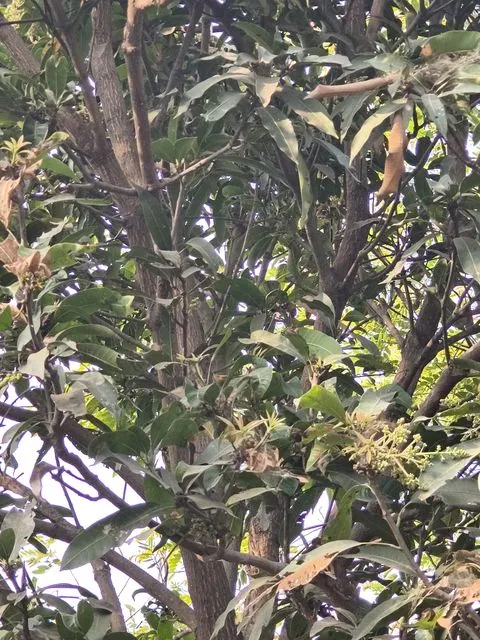
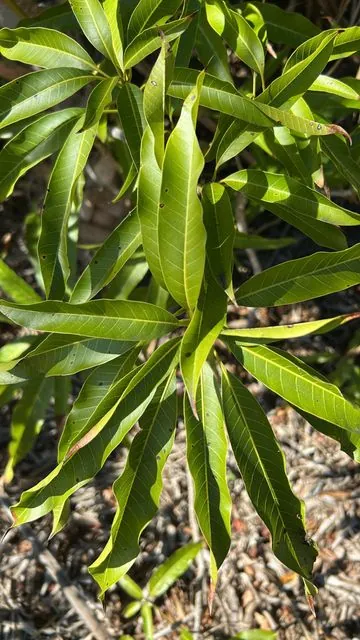
Mangifera indica
Authorship: The author or authors credited with publishing the scientific name. It is written after the name, sometimes with the year, for example L. (Linnaeus) in Zea mays L. An author in parentheses first published the name in another genus or rank. — The author or authors credited with publishing the scientific name. It is written after the name, sometimes with the year, for example L. (Linnaeus) in Zea mays L. An author in parentheses first published the name in another genus or rank.
L.
Common names
Common Indian Mango, Mango, Am, Indian mango, Mango Tree, common mangoNames in other languages (17)Mako, Manga, Mangobaum, Mangopalme, Mangue, Mangueira, Manguier, Manguier d'Inde, Mangue, Manguier d'Inde, Manguier, Manguier, Mangue (fruit), Mempelam, Pauh, Senduduk, amba, vï, vï popa’ä, ប្លៃស្វាយ, ស្វាយ
Kingdom: One of the broadest ranks of biological classification. It groups organisms that share very basic features, for example plants (Plantae), animals (Animalia) or fungi (Fungi). — One of the broadest ranks of biological classification. It groups organisms that share very basic features, for example plants (Plantae), animals (Animalia) or fungi (Fungi).
Plantae
Phylum: Rank below kingdom that groups organisms with a shared general body plan, for example chordates (Chordata), arthropods (Arthropoda) or vascular plants (Tracheophyta). In botany the same rank is also called division. — Rank below kingdom that groups organisms with a shared general body plan, for example chordates (Chordata), arthropods (Arthropoda) or vascular plants (Tracheophyta). In botany the same rank is also called division.
Tracheophyta
Class: Rank below phylum, for example mammals (Mammalia), birds (Aves), insects (Insecta) or monocot plants such as grasses and orchids (Liliopsida). — Rank below phylum, for example mammals (Mammalia), birds (Aves), insects (Insecta) or monocot plants such as grasses and orchids (Liliopsida).
Magnoliopsida
Order: Rank below class that groups related families, for example grasses and their relatives (Poales) or bats (Chiroptera). — Rank below class that groups related families, for example grasses and their relatives (Poales) or bats (Chiroptera).
Sapindales
Family: Rank below order that groups related genera. Family names usually end in -aceae in botany (for example Poaceae, the grass family) and in -idae in zoology (for example Felidae, the cat family). — Rank below order that groups related genera. Family names usually end in -aceae in botany (for example Poaceae, the grass family) and in -idae in zoology (for example Felidae, the cat family).
Anacardiaceae
Genus: Rank that groups closely related species. Its name is the first word of a species' scientific name and starts with a capital letter, for example Zea in Zea mays. — Rank that groups closely related species. Its name is the first word of a species' scientific name and starts with a capital letter, for example Zea in Zea mays.
Mangifera
Specific epithet: The second word of a species' scientific name. On its own it does not name the species: it always goes with the genus, for example mays in Zea mays. — The second word of a species' scientific name. On its own it does not name the species: it always goes with the genus, for example mays in Zea mays.
indica
Taxonomic rank: The level a name occupies in the hierarchy of biological classification, such as kingdom, family, genus, species or subspecies. — The level a name occupies in the hierarchy of biological classification, such as kingdom, family, genus, species or subspecies.
species
Reference species
Mangifera indica
Taxonomic status: Whether the taxonomic catalogue the record comes from currently accepts this name for the organism, or treats it as a synonym of another accepted name or as doubtful. — Whether the taxonomic catalogue the record comes from currently accepts this name for the organism, or treats it as a synonym of another accepted name or as doubtful.
accepted name
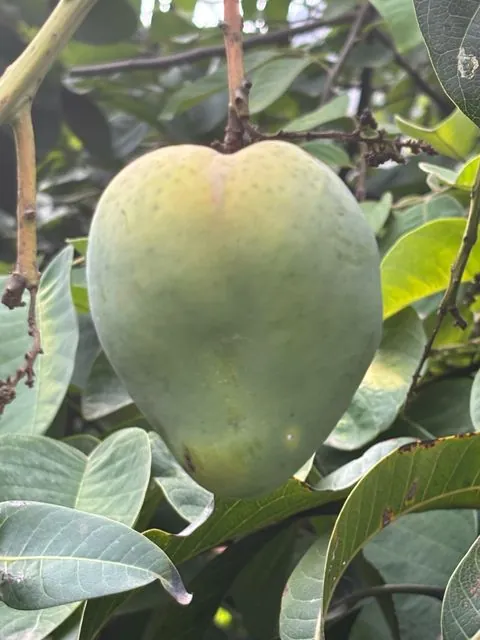
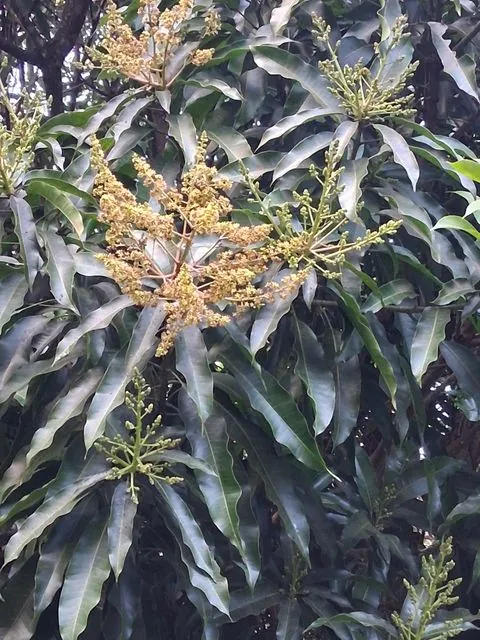
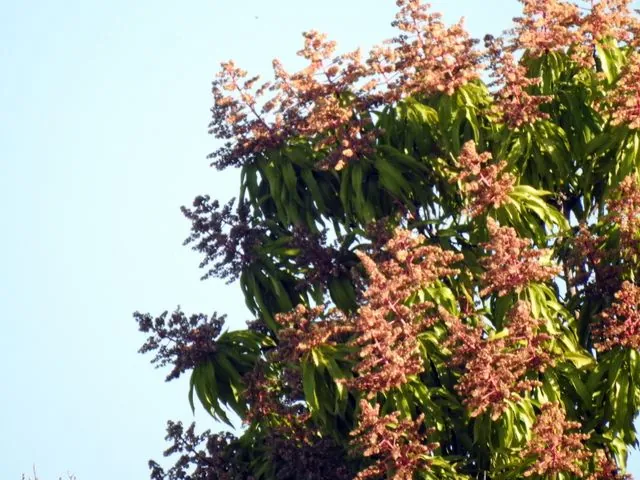
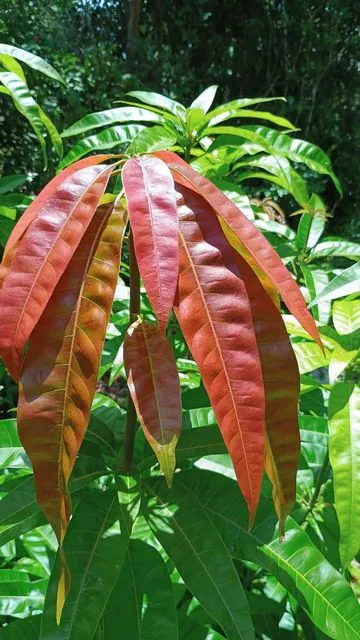
Photos and conservation status
IUCN Red List category: The extinction-risk category that the International Union for Conservation of Nature (IUCN) assigns to a species on its Red List. EX Extinct: there is no reasonable doubt that the last individual has died. EW Extinct in the wild: it survives only in cultivation, in captivity or as a population far outside its past range. CR Critically endangered, EN Endangered and VU Vulnerable: the three threatened categories, from an extremely high to a high risk of extinction in the wild. NT Near threatened: close to qualifying as threatened. LC Least concern: evaluated and not threatened. DD Data deficient: there is not enough information to assess its risk. NE Not evaluated: not yet assessed against the criteria. It describes the risk of the species worldwide, not its situation in a project's area. — The extinction-risk category that the International Union for Conservation of Nature (IUCN) assigns to a species on its Red List. EX Extinct: there is no reasonable doubt that the last individual has died. EW Extinct in the wild: it survives only in cultivation, in captivity or as a population far outside its past range. CR Critically endangered, EN Endangered and VU Vulnerable: the three threatened categories, from an extremely high to a high risk of extinction in the wild. NT Near threatened: close to qualifying as threatened. LC Least concern: evaluated and not threatened. DD Data deficient: there is not enough information to assess its risk. NE Not evaluated: not yet assessed against the criteria. It describes the risk of the species worldwide, not its situation in a project's area.
Data deficient (DD)
Source: IUCN Red List via GBIF, queried on 2026-10-09 06:07.
Research-grade iNaturalist observations via GBIF, CC0 or CC BY licences only, queried on 2026-10-09 06:07.
Interacciones documentadas
GloBI says it is documented somewhere in the world. Biolitica answers whether it could happen here.
A documented interaction means it was recorded somewhere in the world. It does not mean it occurs here.
Types shown: 12 of 17
is a host of
×
is eaten by
×
interacts with (this species is the record's destination)
×
has its flowers visited by
×
has as a parasite
×
is pollinated by
×
is adjacent to
×
is an arbuscular mycorrhizal host of
×
co-occurs ecologically with
×
has as a vector
×
is visited by
×
interacts with (this species is the record's origin)
×
5 more types with data for this species
Blocks that do not sit under a navigation concept heading keep the source's own term: no navigation concept has been assigned to them yet.
is a host of
1229 organisms
The authority declares no effect on this species for this term: neither that it harms it nor that it benefits it. In the source ontology symbiosis covers mutualism, commensalism and parasitism alike, so this block holds attackers and allies side by side.
Spaulding, P.. 1961. Foreign Diseases of Forest Trees of the World. U.S.D.A. Agric. Handb. 197:1-361
Published in globalbioticinteractions/usda-fungus-host
Record contexts (sample): Sierra Leone · no date published; Philippines · no date published
Claim type
Published relationship between two taxa
Version
GloBI 0.11
Reuse
This release publishes no reuse terms for this record.
Sierra Leone · no date publishedWhere it is: line:hash://sha256/021a206a1459bcca7e251c73f5bd180fc3ac342a09c499855fe42e21fc09edcf!/interactions.tsv.gz!/L4111794
Philippines · no date publishedWhere it is: line:hash://sha256/021a206a1459bcca7e251c73f5bd180fc3ac342a09c499855fe42e21fc09edcf!/interactions.tsv.gz!/L4111795
Colombia · no date publishedWhere it is: line:hash://sha256/021a206a1459bcca7e251c73f5bd180fc3ac342a09c499855fe42e21fc09edcf!/interactions.tsv.gz!/L4111796
And 10 more records of this source, not listed here.
No public URL for this record
Stevenson, J.A.. 1975. Fungi of Puerto Rico and the American Virgin Islands. Contr. Reed Herb. 23:743
Published in globalbioticinteractions/usda-fungus-host
Record contexts (sample): Virgin Islands · no date published; Puerto Rico · no date published
Claim type
Published relationship between two taxa
Version
GloBI 0.11
Reuse
This release publishes no reuse terms for this record.
Virgin Islands · no date publishedWhere it is: line:hash://sha256/021a206a1459bcca7e251c73f5bd180fc3ac342a09c499855fe42e21fc09edcf!/interactions.tsv.gz!/L3944298
Puerto Rico · no date publishedWhere it is: line:hash://sha256/021a206a1459bcca7e251c73f5bd180fc3ac342a09c499855fe42e21fc09edcf!/interactions.tsv.gz!/L3944301
No public URL for this record
Sharma, G., Maymon, M., and Freeman, S.. 2017. Epidemiology, pathology and identification of %Colletotrichum% including a novel species associated with avocado (%Persea americana%) anthracnose in Israel. Sci. Rep. 7:15839
Published in globalbioticinteractions/usda-fungus-host
Record contexts (sample): South Africa · no date published; India · no date published
Claim type
Published relationship between two taxa
Version
GloBI 0.11
Reuse
This release publishes no reuse terms for this record.
South Africa · no date publishedWhere it is: line:hash://sha256/021a206a1459bcca7e251c73f5bd180fc3ac342a09c499855fe42e21fc09edcf!/interactions.tsv.gz!/L4201467
India · no date publishedWhere it is: line:hash://sha256/021a206a1459bcca7e251c73f5bd180fc3ac342a09c499855fe42e21fc09edcf!/interactions.tsv.gz!/L4201468
Context: Ottawa · June 6, 1975 · Preserved specimen
Claim type
Published relationship between two taxa
Version
GloBI 0.11
Reuse
This release publishes no reuse terms for this record.
Ottawa · June 6, 1975 · Preserved specimenAs published: 1975-06-06T00:00:00Z · PreservedSpecimenWhere it is: line:hash://sha256/021a206a1459bcca7e251c73f5bd180fc3ac342a09c499855fe42e21fc09edcf!/interactions.tsv.gz!/L16618030
Context: Kona Intercepted Honolulu Hawaii #14031 · Feb. 25, 1955 · Preserved specimen
Claim type
Published relationship between two taxa
Version
GloBI 0.11
Reuse
This release publishes no reuse terms for this record.
Kona Intercepted Honolulu Hawaii #14031 · Feb. 25, 1955 · Preserved specimenAs published: 1955-02-25T00:00:00Z · PreservedSpecimenWhere it is: line:hash://sha256/021a206a1459bcca7e251c73f5bd180fc3ac342a09c499855fe42e21fc09edcf!/interactions.tsv.gz!/L17116436
Context: Santiago de Las Vegas · Feb. 2, 1910 · Preserved specimen
Claim type
Published relationship between two taxa
Version
GloBI 0.11
Reuse
This release publishes no reuse terms for this record.
Santiago de Las Vegas · Feb. 2, 1910 · Preserved specimenAs published: 1910-02-02T00:00:00Z · PreservedSpecimenWhere it is: line:hash://sha256/021a206a1459bcca7e251c73f5bd180fc3ac342a09c499855fe42e21fc09edcf!/interactions.tsv.gz!/L17166689
Context: Wailua Intercepted Hawaii #229 · March 21, 1940 · Preserved specimen
Claim type
Published relationship between two taxa
Version
GloBI 0.11
Reuse
This release publishes no reuse terms for this record.
Wailua Intercepted Hawaii #229 · March 21, 1940 · Preserved specimenAs published: 1940-03-21T00:00:00Z · PreservedSpecimenWhere it is: line:hash://sha256/021a206a1459bcca7e251c73f5bd180fc3ac342a09c499855fe42e21fc09edcf!/interactions.tsv.gz!/L17168385
And 229 more sources, with fewer records, not listed here.
A published relationship says these two taxa were documented interacting. It does not say how often, or that it happens in this project's region.
Meliola mangiferaeMeliolaceae
is a host of
155
not compared
155 sources · 164 records
Spaulding, P.. 1961. Foreign Diseases of Forest Trees of the World. U.S.D.A. Agric. Handb. 197:1-361
Published in globalbioticinteractions/usda-fungus-host
Record contexts (sample): Puerto Rico · no date published; Venezuela · no date published
Claim type
Published relationship between two taxa
Version
GloBI 0.11
Reuse
This release publishes no reuse terms for this record.
Puerto Rico · no date publishedWhere it is: line:hash://sha256/021a206a1459bcca7e251c73f5bd180fc3ac342a09c499855fe42e21fc09edcf!/interactions.tsv.gz!/L4111059
Venezuela · no date publishedWhere it is: line:hash://sha256/021a206a1459bcca7e251c73f5bd180fc3ac342a09c499855fe42e21fc09edcf!/interactions.tsv.gz!/L4111061
Indonesia · no date publishedWhere it is: line:hash://sha256/021a206a1459bcca7e251c73f5bd180fc3ac342a09c499855fe42e21fc09edcf!/interactions.tsv.gz!/L4111062
And 2 more records of this source, not listed here.
No public URL for this record
Dennis, R.W.G.. 1970. Kew Bulletin Additional Series III. Fungus Flora of Venezuela and Adjacent Countries.. Verlag von J. Cramer :531
Published in globalbioticinteractions/usda-fungus-host
Record contexts (sample): Guyana · no date published; Panama · no date published
Claim type
Published relationship between two taxa
Version
GloBI 0.11
Reuse
This release publishes no reuse terms for this record.
Guyana · no date publishedWhere it is: line:hash://sha256/021a206a1459bcca7e251c73f5bd180fc3ac342a09c499855fe42e21fc09edcf!/interactions.tsv.gz!/L3950555
Panama · no date publishedWhere it is: line:hash://sha256/021a206a1459bcca7e251c73f5bd180fc3ac342a09c499855fe42e21fc09edcf!/interactions.tsv.gz!/L3950557
Trinidad and Tobago · no date publishedWhere it is: line:hash://sha256/021a206a1459bcca7e251c73f5bd180fc3ac342a09c499855fe42e21fc09edcf!/interactions.tsv.gz!/L3950558
And 1 more record of this source, not listed here.
No public URL for this record
Stevenson, J.A.. 1975. Fungi of Puerto Rico and the American Virgin Islands. Contr. Reed Herb. 23:743
Published in globalbioticinteractions/usda-fungus-host
Record contexts (sample): Virgin Islands · no date published; Puerto Rico · no date published
Claim type
Published relationship between two taxa
Version
GloBI 0.11
Reuse
This release publishes no reuse terms for this record.
Virgin Islands · no date publishedWhere it is: line:hash://sha256/021a206a1459bcca7e251c73f5bd180fc3ac342a09c499855fe42e21fc09edcf!/interactions.tsv.gz!/L3942765
Puerto Rico · no date publishedWhere it is: line:hash://sha256/021a206a1459bcca7e251c73f5bd180fc3ac342a09c499855fe42e21fc09edcf!/interactions.tsv.gz!/L3942769
No public URL for this record
McGuire Jr., J.U., and Crandall, B.S.. 1967. Survey of insect pests and plant diseases of selected food crops of Mexico, Central America and Panama. Int. Agric. Dev. Serv., ARS, USDA, AID :157
Published in globalbioticinteractions/usda-fungus-host
Record contexts (sample): Panama · no date published; Costa Rica · no date published
Claim type
Published relationship between two taxa
Version
GloBI 0.11
Reuse
This release publishes no reuse terms for this record.
Panama · no date publishedWhere it is: line:hash://sha256/021a206a1459bcca7e251c73f5bd180fc3ac342a09c499855fe42e21fc09edcf!/interactions.tsv.gz!/L4019444
Costa Rica · no date publishedWhere it is: line:hash://sha256/021a206a1459bcca7e251c73f5bd180fc3ac342a09c499855fe42e21fc09edcf!/interactions.tsv.gz!/L4019445
And 147 more sources, with fewer records, not listed here.
A published relationship says these two taxa were documented interacting. It does not say how often, or that it happens in this project's region.
Lasiodiplodia theobromaeBotryosphaeriaceae
is a host of
131
no location
131 sources · 137 records
Burgess, T.I., Tan, Y.P., Garnas, J., Edwards, J., Scarlett, K.A., Shuttleworth, L.A., Daniel, R., Dann, E.K., Parkinson, L.E., Dinh, Q., Shivas, R.G., and Jami, F.. 2019. Current status of the Botryosphaeriaceae in Australia. Australas. Pl. Pathol. 48(1):35-44
Published in globalbioticinteractions/usda-fungus-host
Record contexts (sample): China · no date published; Brazil · no date published
Claim type
Published relationship between two taxa
Version
GloBI 0.11
Reuse
This release publishes no reuse terms for this record.
China · no date publishedWhere it is: line:hash://sha256/021a206a1459bcca7e251c73f5bd180fc3ac342a09c499855fe42e21fc09edcf!/interactions.tsv.gz!/L4270901
Brazil · no date publishedWhere it is: line:hash://sha256/021a206a1459bcca7e251c73f5bd180fc3ac342a09c499855fe42e21fc09edcf!/interactions.tsv.gz!/L4270907
South Africa · no date publishedWhere it is: line:hash://sha256/021a206a1459bcca7e251c73f5bd180fc3ac342a09c499855fe42e21fc09edcf!/interactions.tsv.gz!/L4270908
And 4 more records of this source, not listed here.
No public URL for this record
http://www.ncbi.nlm.nih.gov/nuccore/111608638
Published in millerse/Wardeh-et-al.-2015
Context: no place published · no date published
Claim type
Published relationship between two taxa
Version
GloBI 0.11
Reuse
This release publishes no reuse terms for this record.
no place published · no date publishedWhere it is: line:hash://sha256/021a206a1459bcca7e251c73f5bd180fc3ac342a09c499855fe42e21fc09edcf!/interactions.tsv.gz!/L197545
This release publishes no reuse terms for this record.
no place published · no date publishedWhere it is: line:hash://sha256/021a206a1459bcca7e251c73f5bd180fc3ac342a09c499855fe42e21fc09edcf!/interactions.tsv.gz!/L222534
This release publishes no reuse terms for this record.
no place published · no date publishedWhere it is: line:hash://sha256/021a206a1459bcca7e251c73f5bd180fc3ac342a09c499855fe42e21fc09edcf!/interactions.tsv.gz!/L238797
This release publishes no reuse terms for this record.
no place published · no date publishedWhere it is: line:hash://sha256/021a206a1459bcca7e251c73f5bd180fc3ac342a09c499855fe42e21fc09edcf!/interactions.tsv.gz!/L250311
This release publishes no reuse terms for this record.
no place published · no date publishedWhere it is: line:hash://sha256/021a206a1459bcca7e251c73f5bd180fc3ac342a09c499855fe42e21fc09edcf!/interactions.tsv.gz!/L259830
This release publishes no reuse terms for this record.
no place published · no date publishedWhere it is: line:hash://sha256/021a206a1459bcca7e251c73f5bd180fc3ac342a09c499855fe42e21fc09edcf!/interactions.tsv.gz!/L268067
This release publishes no reuse terms for this record.
no place published · no date publishedWhere it is: line:hash://sha256/021a206a1459bcca7e251c73f5bd180fc3ac342a09c499855fe42e21fc09edcf!/interactions.tsv.gz!/L275624
And 123 more sources, with fewer records, not listed here.
A published relationship says these two taxa were documented interacting. It does not say how often, or that it happens in this project's region.
Elsinoe mangiferae
is a host of
89
not compared
89 sources · 94 records
McGuire Jr., J.U., and Crandall, B.S.. 1967. Survey of insect pests and plant diseases of selected food crops of Mexico, Central America and Panama. Int. Agric. Dev. Serv., ARS, USDA, AID :157
Published in globalbioticinteractions/usda-fungus-host
Record contexts (sample): Panama · no date published; Mexico · no date published
Claim type
Published relationship between two taxa
Version
GloBI 0.11
Reuse
This release publishes no reuse terms for this record.
Panama · no date publishedWhere it is: line:hash://sha256/021a206a1459bcca7e251c73f5bd180fc3ac342a09c499855fe42e21fc09edcf!/interactions.tsv.gz!/L4019618
Mexico · no date publishedWhere it is: line:hash://sha256/021a206a1459bcca7e251c73f5bd180fc3ac342a09c499855fe42e21fc09edcf!/interactions.tsv.gz!/L4019619
Honduras · no date publishedWhere it is: line:hash://sha256/021a206a1459bcca7e251c73f5bd180fc3ac342a09c499855fe42e21fc09edcf!/interactions.tsv.gz!/L4019620
And 3 more records of this source, not listed here.
Context: no place published · April 22, 1984 · Preserved specimen
Claim type
Published relationship between two taxa
Version
GloBI 0.11
Reuse
This release publishes no reuse terms for this record.
no place published · April 22, 1984 · Preserved specimenAs published: 1984-04-22T00:00:00Z · PreservedSpecimenWhere it is: line:hash://sha256/021a206a1459bcca7e251c73f5bd180fc3ac342a09c499855fe42e21fc09edcf!/interactions.tsv.gz!/L17369526
Context: Santiago de Las Vegas Estacion Experimental · Oct. 1, 1942 · Preserved specimen
Claim type
Published relationship between two taxa
Version
GloBI 0.11
Reuse
This release publishes no reuse terms for this record.
Santiago de Las Vegas Estacion Experimental · Oct. 1, 1942 · Preserved specimenAs published: 1942-10-01T00:00:00Z · PreservedSpecimenWhere it is: line:hash://sha256/021a206a1459bcca7e251c73f5bd180fc3ac342a09c499855fe42e21fc09edcf!/interactions.tsv.gz!/L17369527
Context: Santiago de Las Vegas Estacion Experimental · July 23, 1942 · Preserved specimen
Claim type
Published relationship between two taxa
Version
GloBI 0.11
Reuse
This release publishes no reuse terms for this record.
Santiago de Las Vegas Estacion Experimental · July 23, 1942 · Preserved specimenAs published: 1942-07-23T00:00:00Z · PreservedSpecimenWhere it is: line:hash://sha256/021a206a1459bcca7e251c73f5bd180fc3ac342a09c499855fe42e21fc09edcf!/interactions.tsv.gz!/L17369528
Context: Agana · May 24, 1982 · Preserved specimen
Claim type
Published relationship between two taxa
Version
GloBI 0.11
Reuse
This release publishes no reuse terms for this record.
Agana · May 24, 1982 · Preserved specimenAs published: 1982-05-24T00:00:00Z · PreservedSpecimenWhere it is: line:hash://sha256/021a206a1459bcca7e251c73f5bd180fc3ac342a09c499855fe42e21fc09edcf!/interactions.tsv.gz!/L17369529
Context: Homestead · June 16, 1944 · Preserved specimen
Claim type
Published relationship between two taxa
Version
GloBI 0.11
Reuse
This release publishes no reuse terms for this record.
Homestead · June 16, 1944 · Preserved specimenAs published: 1944-06-16T00:00:00Z · PreservedSpecimenWhere it is: line:hash://sha256/021a206a1459bcca7e251c73f5bd180fc3ac342a09c499855fe42e21fc09edcf!/interactions.tsv.gz!/L17369531
Context: Intercepted Hawaii #001869 · July 1, 1970 · Preserved specimen
Claim type
Published relationship between two taxa
Version
GloBI 0.11
Reuse
This release publishes no reuse terms for this record.
Intercepted Hawaii #001869 · July 1, 1970 · Preserved specimenAs published: 1970-07-01T00:00:00Z · PreservedSpecimenWhere it is: line:hash://sha256/021a206a1459bcca7e251c73f5bd180fc3ac342a09c499855fe42e21fc09edcf!/interactions.tsv.gz!/L17369532
This term does declare that the organism harms this species.
Organism
Reads as
Studies
Where it was documented
Actions
Mango leafhopperIdioscopus clypealisCicadellidae
is eaten by
12
not compared
12 sources · 14 records
@article{113696, author = {Gnaneswaran, Raji and Hemachandra, K.S. and Viraktamath, Chandrashekharaswamy A. and Ahangama, D. and Wijayagunasekara, H.N.P. and Wahundeniya, I.}, journal = {Tropical Agricultural Research}, pages = {78-90}, title = {Idioscopus nagpurensis (P…
Published in globalbioticinteractions/taxonworks
Record contexts (sample): no place published · no date published; no place published · no date published
Claim type
Published relationship between two taxa
Version
GloBI 0.11
Reuse
This release publishes no reuse terms for this record.
no place published · no date publishedWhere it is: line:hash://sha256/021a206a1459bcca7e251c73f5bd180fc3ac342a09c499855fe42e21fc09edcf!/interactions.tsv.gz!/L5962371
no place published · no date publishedWhere it is: line:hash://sha256/021a206a1459bcca7e251c73f5bd180fc3ac342a09c499855fe42e21fc09edcf!/interactions.tsv.gz!/L5962373
No public URL for this record
@article{123255, author = {Dwarka and Thakur, Kiran and Panday, Anand Kumar and Thakur, Shobharam}, journal = {The Pharma Innovation Journal}, number = {3}, pages = {724-728}, title = {Study the different species of mango hoppers: A review}, volume = {11}, year = {…
Published in globalbioticinteractions/taxonworks
Record contexts (sample): no place published · no date published; no place published · no date published
Claim type
Published relationship between two taxa
Version
GloBI 0.11
Reuse
This release publishes no reuse terms for this record.
no place published · no date publishedWhere it is: line:hash://sha256/021a206a1459bcca7e251c73f5bd180fc3ac342a09c499855fe42e21fc09edcf!/interactions.tsv.gz!/L5983367
no place published · no date publishedWhere it is: line:hash://sha256/021a206a1459bcca7e251c73f5bd180fc3ac342a09c499855fe42e21fc09edcf!/interactions.tsv.gz!/L5983369
No public URL for this record
ABRS 2009. Australian Faunal Directory. Idioscopus clypealis. Australian Biological Resources StudyNode, Canberra. Accessed at <http://biodiversity.org.au/afd/taxa/988a6f26-603d-484c-8c48-bf068f7a842b> on 04 Sep 2026.
Published in globalbioticinteractions/siad
Context: no place published · no date published
Claim type
Published relationship between two taxa
Version
GloBI 0.11
Reuse
This release publishes no reuse terms for this record.
no place published · no date publishedWhere it is: line:hash://sha256/021a206a1459bcca7e251c73f5bd180fc3ac342a09c499855fe42e21fc09edcf!/interactions.tsv.gz!/L18982714
Context: no place published · March 4, 2024 · Human observation
Claim type
Published relationship between two taxa
Version
GloBI 0.11
Reuse
This release publishes no reuse terms for this record.
no place published · March 4, 2024 · Human observationAs published: 2024-03-04T07:33:00Z · HumanObservationWhere it is: line:hash://sha256/021a206a1459bcca7e251c73f5bd180fc3ac342a09c499855fe42e21fc09edcf!/interactions.tsv.gz!/L4498709
Context: no place published · April 21, 2024 · Human observation
Claim type
Published relationship between two taxa
Version
GloBI 0.11
Reuse
This release publishes no reuse terms for this record.
no place published · April 21, 2024 · Human observationAs published: 2024-04-21T01:22:15Z · HumanObservationWhere it is: line:hash://sha256/021a206a1459bcca7e251c73f5bd180fc3ac342a09c499855fe42e21fc09edcf!/interactions.tsv.gz!/L4578208
Context: no place published · Aug. 5, 2019 · Human observation
Claim type
Published relationship between two taxa
Version
GloBI 0.11
Reuse
This release publishes no reuse terms for this record.
no place published · Aug. 5, 2019 · Human observationAs published: 2019-08-05T00:00:00Z · HumanObservationWhere it is: line:hash://sha256/021a206a1459bcca7e251c73f5bd180fc3ac342a09c499855fe42e21fc09edcf!/interactions.tsv.gz!/L5107210
Context: no place published · Jan. 2, 2023 · Human observation
Claim type
Published relationship between two taxa
Version
GloBI 0.11
Reuse
This release publishes no reuse terms for this record.
no place published · Jan. 2, 2023 · Human observationAs published: 2023-01-02T06:17:00Z · HumanObservationWhere it is: line:hash://sha256/021a206a1459bcca7e251c73f5bd180fc3ac342a09c499855fe42e21fc09edcf!/interactions.tsv.gz!/L5254330
Context: no place published · Jan. 25, 2023 · Human observation
Claim type
Published relationship between two taxa
Version
GloBI 0.11
Reuse
This release publishes no reuse terms for this record.
no place published · Jan. 25, 2023 · Human observationAs published: 2023-01-25T04:42:00Z · HumanObservationWhere it is: line:hash://sha256/021a206a1459bcca7e251c73f5bd180fc3ac342a09c499855fe42e21fc09edcf!/interactions.tsv.gz!/L5275208
And 4 more sources, with fewer records, not listed here.
A published relationship says these two taxa were documented interacting. It does not say how often, or that it happens in this project's region.
Great Fruit-eating BatArtibeus lituratusPhyllostomidae
is eaten by
11
not compared
11 sources · 11 records
Goodwin, G. G. & A. M. Greenhall. 1961. A review of the bats of Trinidad and Tobago. Bulletin of the American Museum of Natural History 122: 187-301.
Published in globalbioticinteractions/batbase
Context: Trinidad and Tobago · no date published
Claim type
Published relationship between two taxa
Version
GloBI 0.11
Reuse
This release publishes no reuse terms for this record.
Trinidad and Tobago · no date publishedWhere it is: line:hash://sha256/021a206a1459bcca7e251c73f5bd180fc3ac342a09c499855fe42e21fc09edcf!/interactions.tsv.gz!/L12438969
No public URL for this record
Greenhall, A. M. 1957. Food preferences by Trinidad fruit bats. Journal of Mammalogy 38: 409-410.
Published in globalbioticinteractions/batbase
Context: Trinidad and Tobago · no date published
Claim type
Published relationship between two taxa
Version
GloBI 0.11
Reuse
This release publishes no reuse terms for this record.
Trinidad and Tobago · no date publishedWhere it is: line:hash://sha256/021a206a1459bcca7e251c73f5bd180fc3ac342a09c499855fe42e21fc09edcf!/interactions.tsv.gz!/L12439222
No public URL for this record
Fernandez, A. B. 1982. Murciélagos de Venezuela II : Phyllostomidae-Stenodermatinae. Revista de la Facultad de Agronomía de la Universidad del Zulia 12: 327-352.
Published in globalbioticinteractions/batbase
Context: Venezuela · no date published
Claim type
Published relationship between two taxa
Version
GloBI 0.11
Reuse
This release publishes no reuse terms for this record.
Venezuela · no date publishedWhere it is: line:hash://sha256/021a206a1459bcca7e251c73f5bd180fc3ac342a09c499855fe42e21fc09edcf!/interactions.tsv.gz!/L12440739
No public URL for this record
Dobat, K. & T. Peikert-Holle. 1985. Blüten und fledermäuse. Blutenbestäubung durch fledermäuse und flughunde (chiropterophilie). pp. 1-370. Waldemar Kramer, Frankfurt am Main, Germany.
Published in globalbioticinteractions/batbase
Context: Costa Rica · no date published
Claim type
Published relationship between two taxa
Version
GloBI 0.11
Reuse
This release publishes no reuse terms for this record.
Costa Rica · no date publishedWhere it is: line:hash://sha256/021a206a1459bcca7e251c73f5bd180fc3ac342a09c499855fe42e21fc09edcf!/interactions.tsv.gz!/L12442348
No public URL for this record
Hayashi 1996
Published in globalbioticinteractions/fricke2020
Context: Brazil · no date published
Claim type
Published relationship between two taxa
Version
GloBI 0.11
Reuse
This release publishes no reuse terms for this record.
Brazil · no date publishedWhere it is: line:hash://sha256/021a206a1459bcca7e251c73f5bd180fc3ac342a09c499855fe42e21fc09edcf!/interactions.tsv.gz!/L13300516
No public URL for this record
Zapata-Mesa 2017
Published in globalbioticinteractions/fricke2020
Context: Colombia · no date published
Claim type
Published relationship between two taxa
Version
GloBI 0.11
Reuse
This release publishes no reuse terms for this record.
Colombia · no date publishedWhere it is: line:hash://sha256/021a206a1459bcca7e251c73f5bd180fc3ac342a09c499855fe42e21fc09edcf!/interactions.tsv.gz!/L13392469
No public URL for this record
Greenhall, A.M. 1957. Food preferences by Trinidad fruit bats. Journal of Mammalogy 38: 409-410
Published in globalbioticinteractions/NeoBat_Interactions
Context: no place published · no date published
Claim type
Published relationship between two taxa
Version
GloBI 0.11
Reuse
This release publishes no reuse terms for this record.
no place published · no date publishedWhere it is: line:hash://sha256/021a206a1459bcca7e251c73f5bd180fc3ac342a09c499855fe42e21fc09edcf!/interactions.tsv.gz!/L24374779
No public URL for this record
Heithaus, E.R, T.H. Fleming & P.A. Opler. 1975. Foraging Patterns and Resource Utilization in Seven Species of Bats in a Seasonal Tropical Forest. Ecology, 56(4): 841-854
Published in globalbioticinteractions/NeoBat_Interactions
Context: no place published · no date published
Claim type
Published relationship between two taxa
Version
GloBI 0.11
Reuse
This release publishes no reuse terms for this record.
no place published · no date publishedWhere it is: line:hash://sha256/021a206a1459bcca7e251c73f5bd180fc3ac342a09c499855fe42e21fc09edcf!/interactions.tsv.gz!/L24374931
No public URL for this record
And 3 more sources, with fewer records, not listed here.
A published relationship says these two taxa were documented interacting. It does not say how often, or that it happens in this project's region.
Mickleburgh, S. P., A. M. Hutson & P. Racey. 1992. Old World Fruit Bats: An Action Plan for their Conservation. International Union for Conservation of Nature and Natural Resources, Gland, Switzerland.
Published in globalbioticinteractions/batbase
Record contexts (sample): Nigeria-Artificial Landscape · no date published; Africa · no date published
Claim type
Published relationship between two taxa
Version
GloBI 0.11
Reuse
This release publishes no reuse terms for this record.
Nigeria-Artificial Landscape · no date publishedWhere it is: line:hash://sha256/021a206a1459bcca7e251c73f5bd180fc3ac342a09c499855fe42e21fc09edcf!/interactions.tsv.gz!/L12452892
Africa · no date publishedWhere it is: line:hash://sha256/021a206a1459bcca7e251c73f5bd180fc3ac342a09c499855fe42e21fc09edcf!/interactions.tsv.gz!/L12452899
Record contexts (sample): no place published · April 1, 2020 · Human observation; no place published · April 1, 2020 · Human observation
Claim type
Published relationship between two taxa
Version
GloBI 0.11
Reuse
This release publishes no reuse terms for this record.
no place published · April 1, 2020 · Human observationAs published: 2020-04-01T18:45:52Z · HumanObservationWhere it is: line:hash://sha256/021a206a1459bcca7e251c73f5bd180fc3ac342a09c499855fe42e21fc09edcf!/interactions.tsv.gz!/L4569359
no place published · April 1, 2020 · Human observationAs published: 2020-04-01T18:45:52Z · HumanObservationWhere it is: line:hash://sha256/021a206a1459bcca7e251c73f5bd180fc3ac342a09c499855fe42e21fc09edcf!/interactions.tsv.gz!/L4569360
Record contexts (sample): no place published · Nov. 8, 2024 · Human observation; no place published · Nov. 8, 2024 · Human observation
Claim type
Published relationship between two taxa
Version
GloBI 0.11
Reuse
This release publishes no reuse terms for this record.
no place published · Nov. 8, 2024 · Human observationAs published: 2024-11-08T20:30:00Z · HumanObservationWhere it is: line:hash://sha256/021a206a1459bcca7e251c73f5bd180fc3ac342a09c499855fe42e21fc09edcf!/interactions.tsv.gz!/L5277194
no place published · Nov. 8, 2024 · Human observationAs published: 2024-11-08T20:30:00Z · HumanObservationWhere it is: line:hash://sha256/021a206a1459bcca7e251c73f5bd180fc3ac342a09c499855fe42e21fc09edcf!/interactions.tsv.gz!/L5277195
Record contexts (sample): no place published · Dec. 2, 2024 · Human observation; no place published · Dec. 2, 2024 · Human observation
Claim type
Published relationship between two taxa
Version
GloBI 0.11
Reuse
This release publishes no reuse terms for this record.
no place published · Dec. 2, 2024 · Human observationAs published: 2024-12-02T20:10:00Z · HumanObservationWhere it is: line:hash://sha256/021a206a1459bcca7e251c73f5bd180fc3ac342a09c499855fe42e21fc09edcf!/interactions.tsv.gz!/L5317875
no place published · Dec. 2, 2024 · Human observationAs published: 2024-12-02T20:10:00Z · HumanObservationWhere it is: line:hash://sha256/021a206a1459bcca7e251c73f5bd180fc3ac342a09c499855fe42e21fc09edcf!/interactions.tsv.gz!/L5317876
Dobat, K. & T. Peikert-Holle. 1985. Blüten und fledermäuse. Blutenbestäubung durch fledermäuse und flughunde (chiropterophilie). pp. 1-370. Waldemar Kramer, Frankfurt am Main, Germany.
Published in globalbioticinteractions/batbase
Context: Unspecified · no date published
Claim type
Published relationship between two taxa
Version
GloBI 0.11
Reuse
This release publishes no reuse terms for this record.
Unspecified · no date publishedWhere it is: line:hash://sha256/021a206a1459bcca7e251c73f5bd180fc3ac342a09c499855fe42e21fc09edcf!/interactions.tsv.gz!/L12442398
No public URL for this record
Richter, H. V. & G. S. Cumming. 2006. Food availability and annual migration of the straw-colored fruit bat (Eidolon helvum). Journal of Zoology (London) 268: 35-44.
Published in globalbioticinteractions/batbase
Context: Kasanka National Park · no date published
Claim type
Published relationship between two taxa
Version
GloBI 0.11
Reuse
This release publishes no reuse terms for this record.
Kasanka National Park · no date publishedWhere it is: line:hash://sha256/021a206a1459bcca7e251c73f5bd180fc3ac342a09c499855fe42e21fc09edcf!/interactions.tsv.gz!/L12443793
No public URL for this record
Thomas, D. W. 1982. The ecology of an African savanna fruit bat community: resource partitioning and role in seed dispersal. Ph.D. Dissertation. University of Aberdeen, Aberdeen, UK.
Published in globalbioticinteractions/batbase
Context: Réserve scientifique de Lamto · no date published
Claim type
Published relationship between two taxa
Version
GloBI 0.11
Reuse
This release publishes no reuse terms for this record.
Réserve scientifique de Lamto · no date publishedWhere it is: line:hash://sha256/021a206a1459bcca7e251c73f5bd180fc3ac342a09c499855fe42e21fc09edcf!/interactions.tsv.gz!/L12451538
No public URL for this record
Engel 2000
Published in globalbioticinteractions/fricke2020
Context: Kenya · no date published
Claim type
Published relationship between two taxa
Version
GloBI 0.11
Reuse
This release publishes no reuse terms for this record.
Kenya · no date publishedWhere it is: line:hash://sha256/021a206a1459bcca7e251c73f5bd180fc3ac342a09c499855fe42e21fc09edcf!/interactions.tsv.gz!/L13331927
No public URL for this record
And 2 more sources, with fewer records, not listed here.
A published relationship says these two taxa were documented interacting. It does not say how often, or that it happens in this project's region.
Goodwin, G. G. & A. M. Greenhall. 1961. A review of the bats of Trinidad and Tobago. Bulletin of the American Museum of Natural History 122: 187-301.
Published in globalbioticinteractions/batbase
Context: Trinidad and Tobago · no date published
Claim type
Published relationship between two taxa
Version
GloBI 0.11
Reuse
This release publishes no reuse terms for this record.
Trinidad and Tobago · no date publishedWhere it is: line:hash://sha256/021a206a1459bcca7e251c73f5bd180fc3ac342a09c499855fe42e21fc09edcf!/interactions.tsv.gz!/L12438999
No public URL for this record
Greenhall, A. M. 1957. Food preferences by Trinidad fruit bats. Journal of Mammalogy 38: 409-410.
Published in globalbioticinteractions/batbase
Context: Trinidad and Tobago · no date published
Claim type
Published relationship between two taxa
Version
GloBI 0.11
Reuse
This release publishes no reuse terms for this record.
Trinidad and Tobago · no date publishedWhere it is: line:hash://sha256/021a206a1459bcca7e251c73f5bd180fc3ac342a09c499855fe42e21fc09edcf!/interactions.tsv.gz!/L12439223
No public URL for this record
Dobat, K. & T. Peikert-Holle. 1985. Blüten und fledermäuse. Blutenbestäubung durch fledermäuse und flughunde (chiropterophilie). pp. 1-370. Waldemar Kramer, Frankfurt am Main, Germany.
Published in globalbioticinteractions/batbase
Context: Costa Rica · no date published
Claim type
Published relationship between two taxa
Version
GloBI 0.11
Reuse
This release publishes no reuse terms for this record.
Costa Rica · no date publishedWhere it is: line:hash://sha256/021a206a1459bcca7e251c73f5bd180fc3ac342a09c499855fe42e21fc09edcf!/interactions.tsv.gz!/L12442370
No public URL for this record
Hayashi 1996
Published in globalbioticinteractions/fricke2020
Context: Brazil · no date published
Claim type
Published relationship between two taxa
Version
GloBI 0.11
Reuse
This release publishes no reuse terms for this record.
Brazil · no date publishedWhere it is: line:hash://sha256/021a206a1459bcca7e251c73f5bd180fc3ac342a09c499855fe42e21fc09edcf!/interactions.tsv.gz!/L13300568
No public URL for this record
Zapata-Mesa 2017
Published in globalbioticinteractions/fricke2020
Context: Colombia · no date published
Claim type
Published relationship between two taxa
Version
GloBI 0.11
Reuse
This release publishes no reuse terms for this record.
Colombia · no date publishedWhere it is: line:hash://sha256/021a206a1459bcca7e251c73f5bd180fc3ac342a09c499855fe42e21fc09edcf!/interactions.tsv.gz!/L13392357
No public URL for this record
Greenhall, A.M. 1957. Food preferences by Trinidad fruit bats. Journal of Mammalogy 38: 409-410
Published in globalbioticinteractions/NeoBat_Interactions
Context: no place published · no date published
Claim type
Published relationship between two taxa
Version
GloBI 0.11
Reuse
This release publishes no reuse terms for this record.
no place published · no date publishedWhere it is: line:hash://sha256/021a206a1459bcca7e251c73f5bd180fc3ac342a09c499855fe42e21fc09edcf!/interactions.tsv.gz!/L24374783
No public URL for this record
Heithaus, E.R, T.H. Fleming & P.A. Opler. 1975. Foraging Patterns and Resource Utilization in Seven Species of Bats in a Seasonal Tropical Forest. Ecology, 56(4): 841-854
Published in globalbioticinteractions/NeoBat_Interactions
Context: no place published · no date published
Claim type
Published relationship between two taxa
Version
GloBI 0.11
Reuse
This release publishes no reuse terms for this record.
no place published · no date publishedWhere it is: line:hash://sha256/021a206a1459bcca7e251c73f5bd180fc3ac342a09c499855fe42e21fc09edcf!/interactions.tsv.gz!/L24374971
No public URL for this record
Goodwin and Greenhall,1961. A review of the bats of Trinidad and Tobago. Bulletin of the American Mu-seum of Natural History, 122:187-302.
Published in globalbioticinteractions/bat-co-roosting-database
Context: no place published · no date published
Claim type
Published relationship between two taxa
Version
GloBI 0.11
Reuse
This release publishes no reuse terms for this record.
no place published · no date publishedWhere it is: line:hash://sha256/021a206a1459bcca7e251c73f5bd180fc3ac342a09c499855fe42e21fc09edcf!/interactions.tsv.gz!/L7059120
No public URL for this record
And 1 more source, with fewer records, not listed here.
A published relationship says these two taxa were documented interacting. It does not say how often, or that it happens in this project's region.
The authority declares no effect on this species for this term: neither that it harms it nor that it benefits it.
Organism
Reads as
Studies
Where it was documented
Actions
Common BaronEuthalia acontheaNymphalidae
interacts with
87
not compared
87 sources · 88 records
https://www.inaturalist.org/observations/9392991
Published in globalbioticinteractions/inaturalist
Record contexts (sample): no place published · Dec. 19, 2017 · Human observation; no place published · Dec. 19, 2017 · Human observation
Claim type
Published relationship between two taxa
Version
GloBI 0.11
Reuse
This release publishes no reuse terms for this record.
no place published · Dec. 19, 2017 · Human observationAs published: 2017-12-19T10:35:50Z · HumanObservationWhere it is: line:hash://sha256/021a206a1459bcca7e251c73f5bd180fc3ac342a09c499855fe42e21fc09edcf!/interactions.tsv.gz!/L4724897
no place published · Dec. 19, 2017 · Human observationAs published: 2017-12-19T10:35:50Z · HumanObservationWhere it is: line:hash://sha256/021a206a1459bcca7e251c73f5bd180fc3ac342a09c499855fe42e21fc09edcf!/interactions.tsv.gz!/L4724898
Context: no place published · July 8, 2025 · Human observation
Claim type
Published relationship between two taxa
Version
GloBI 0.11
Reuse
This release publishes no reuse terms for this record.
no place published · July 8, 2025 · Human observationAs published: 2025-07-08T03:53:08Z · HumanObservationWhere it is: line:hash://sha256/021a206a1459bcca7e251c73f5bd180fc3ac342a09c499855fe42e21fc09edcf!/interactions.tsv.gz!/L4456480
Context: no place published · Dec. 29, 2016 · Human observation
Claim type
Published relationship between two taxa
Version
GloBI 0.11
Reuse
This release publishes no reuse terms for this record.
no place published · Dec. 29, 2016 · Human observationAs published: 2016-12-29T08:55:44Z · HumanObservationWhere it is: line:hash://sha256/021a206a1459bcca7e251c73f5bd180fc3ac342a09c499855fe42e21fc09edcf!/interactions.tsv.gz!/L4475180
Context: no place published · Nov. 15, 2021 · Human observation
Claim type
Published relationship between two taxa
Version
GloBI 0.11
Reuse
This release publishes no reuse terms for this record.
no place published · Nov. 15, 2021 · Human observationAs published: 2021-11-15T04:16:51Z · HumanObservationWhere it is: line:hash://sha256/021a206a1459bcca7e251c73f5bd180fc3ac342a09c499855fe42e21fc09edcf!/interactions.tsv.gz!/L4485242
Context: no place published · Feb. 27, 2024 · Human observation
Claim type
Published relationship between two taxa
Version
GloBI 0.11
Reuse
This release publishes no reuse terms for this record.
no place published · Feb. 27, 2024 · Human observationAs published: 2024-02-27T07:04:47Z · HumanObservationWhere it is: line:hash://sha256/021a206a1459bcca7e251c73f5bd180fc3ac342a09c499855fe42e21fc09edcf!/interactions.tsv.gz!/L4486868
Context: no place published · Nov. 19, 2021 · Human observation
Claim type
Published relationship between two taxa
Version
GloBI 0.11
Reuse
This release publishes no reuse terms for this record.
no place published · Nov. 19, 2021 · Human observationAs published: 2021-11-19T05:48:30Z · HumanObservationWhere it is: line:hash://sha256/021a206a1459bcca7e251c73f5bd180fc3ac342a09c499855fe42e21fc09edcf!/interactions.tsv.gz!/L4488522
Context: no place published · July 18, 2025 · Human observation
Claim type
Published relationship between two taxa
Version
GloBI 0.11
Reuse
This release publishes no reuse terms for this record.
no place published · July 18, 2025 · Human observationAs published: 2025-07-18T17:08:27Z · HumanObservationWhere it is: line:hash://sha256/021a206a1459bcca7e251c73f5bd180fc3ac342a09c499855fe42e21fc09edcf!/interactions.tsv.gz!/L4490273
Context: no place published · Oct. 8, 2023 · Human observation
Claim type
Published relationship between two taxa
Version
GloBI 0.11
Reuse
This release publishes no reuse terms for this record.
no place published · Oct. 8, 2023 · Human observationAs published: 2023-10-08T03:25:58Z · HumanObservationWhere it is: line:hash://sha256/021a206a1459bcca7e251c73f5bd180fc3ac342a09c499855fe42e21fc09edcf!/interactions.tsv.gz!/L4493703
Context: no place published · Nov. 1, 1964 · Preserved specimen
Claim type
Published relationship between two taxa
Version
GloBI 0.11
Reuse
This release publishes no reuse terms for this record.
no place published · Nov. 1, 1964 · Preserved specimenAs published: 1964-11-01T00:00:00Z · PreservedSpecimenWhere it is: line:hash://sha256/021a206a1459bcca7e251c73f5bd180fc3ac342a09c499855fe42e21fc09edcf!/interactions.tsv.gz!/L13156458
Context: no place published · Nov. 1, 1964 · Preserved specimen
Claim type
Published relationship between two taxa
Version
GloBI 0.11
Reuse
This release publishes no reuse terms for this record.
no place published · Nov. 1, 1964 · Preserved specimenAs published: 1964-11-01T00:00:00Z · PreservedSpecimenWhere it is: line:hash://sha256/021a206a1459bcca7e251c73f5bd180fc3ac342a09c499855fe42e21fc09edcf!/interactions.tsv.gz!/L13156461
Context: no place published · Nov. 1, 1964 · Preserved specimen
Claim type
Published relationship between two taxa
Version
GloBI 0.11
Reuse
This release publishes no reuse terms for this record.
no place published · Nov. 1, 1964 · Preserved specimenAs published: 1964-11-01T00:00:00Z · PreservedSpecimenWhere it is: line:hash://sha256/021a206a1459bcca7e251c73f5bd180fc3ac342a09c499855fe42e21fc09edcf!/interactions.tsv.gz!/L13156462
Context: no place published · Nov. 1, 1964 · Preserved specimen
Claim type
Published relationship between two taxa
Version
GloBI 0.11
Reuse
This release publishes no reuse terms for this record.
no place published · Nov. 1, 1964 · Preserved specimenAs published: 1964-11-01T00:00:00Z · PreservedSpecimenWhere it is: line:hash://sha256/021a206a1459bcca7e251c73f5bd180fc3ac342a09c499855fe42e21fc09edcf!/interactions.tsv.gz!/L13156463
Context: no place published · Nov. 1, 1964 · Preserved specimen
Claim type
Published relationship between two taxa
Version
GloBI 0.11
Reuse
This release publishes no reuse terms for this record.
no place published · Nov. 1, 1964 · Preserved specimenAs published: 1964-11-01T00:00:00Z · PreservedSpecimenWhere it is: line:hash://sha256/021a206a1459bcca7e251c73f5bd180fc3ac342a09c499855fe42e21fc09edcf!/interactions.tsv.gz!/L13156464
Context: Homestead · July 17, 2018 · Preserved specimen
Claim type
Published relationship between two taxa
Version
GloBI 0.11
Reuse
This release publishes no reuse terms for this record.
Homestead · July 17, 2018 · Preserved specimenAs published: 2018-07-17T00:00:00Z · PreservedSpecimenWhere it is: line:hash://sha256/021a206a1459bcca7e251c73f5bd180fc3ac342a09c499855fe42e21fc09edcf!/interactions.tsv.gz!/L23925064
Context: Homestead · July 17, 2018 · Preserved specimen
Claim type
Published relationship between two taxa
Version
GloBI 0.11
Reuse
This release publishes no reuse terms for this record.
Homestead · July 17, 2018 · Preserved specimenAs published: 2018-07-17T00:00:00Z · PreservedSpecimenWhere it is: line:hash://sha256/021a206a1459bcca7e251c73f5bd180fc3ac342a09c499855fe42e21fc09edcf!/interactions.tsv.gz!/L23925067
Context: Homestead · July 17, 2018 · Preserved specimen
Claim type
Published relationship between two taxa
Version
GloBI 0.11
Reuse
This release publishes no reuse terms for this record.
Homestead · July 17, 2018 · Preserved specimenAs published: 2018-07-17T00:00:00Z · PreservedSpecimenWhere it is: line:hash://sha256/021a206a1459bcca7e251c73f5bd180fc3ac342a09c499855fe42e21fc09edcf!/interactions.tsv.gz!/L23925068
And 7 more sources, with fewer records, not listed here.
A published relationship says these two taxa were documented interacting. It does not say how often, or that it happens in this project's region.
Indian Flying FoxPteropus giganteusPteropodidae
interacts with
14
no location
14 sources · 14 records
Sudhakaran and Doss, 2012
Published in globalbioticinteractions/aziz2021
Context: India · no date published
Claim type
Published relationship between two taxa
Version
GloBI 0.11
Reuse
This release publishes no reuse terms for this record.
India · no date publishedWhere it is: line:hash://sha256/021a206a1459bcca7e251c73f5bd180fc3ac342a09c499855fe42e21fc09edcf!/interactions.tsv.gz!/L13004711
No public URL for this record
Prasad et al., 2014
Published in globalbioticinteractions/aziz2021
Context: India · no date published
Claim type
Published relationship between two taxa
Version
GloBI 0.11
Reuse
This release publishes no reuse terms for this record.
India · no date publishedWhere it is: line:hash://sha256/021a206a1459bcca7e251c73f5bd180fc3ac342a09c499855fe42e21fc09edcf!/interactions.tsv.gz!/L13006330
No public URL for this record
Tiwari et al,. 2019
Published in globalbioticinteractions/aziz2021
Context: Nepal · no date published
Claim type
Published relationship between two taxa
Version
GloBI 0.11
Reuse
This release publishes no reuse terms for this record.
Nepal · no date publishedWhere it is: line:hash://sha256/021a206a1459bcca7e251c73f5bd180fc3ac342a09c499855fe42e21fc09edcf!/interactions.tsv.gz!/L13006355
No public URL for this record
Vendan and Kaleeswaran, 2011
Published in globalbioticinteractions/aziz2021
Context: India · no date published
Claim type
Published relationship between two taxa
Version
GloBI 0.11
Reuse
This release publishes no reuse terms for this record.
India · no date publishedWhere it is: line:hash://sha256/021a206a1459bcca7e251c73f5bd180fc3ac342a09c499855fe42e21fc09edcf!/interactions.tsv.gz!/L13006376
No public URL for this record
Dookia and Tak, 2004
Published in globalbioticinteractions/aziz2021
Context: India · no date published
Claim type
Published relationship between two taxa
Version
GloBI 0.11
Reuse
This release publishes no reuse terms for this record.
India · no date publishedWhere it is: line:hash://sha256/021a206a1459bcca7e251c73f5bd180fc3ac342a09c499855fe42e21fc09edcf!/interactions.tsv.gz!/L13006392
No public URL for this record
Divakar, 2015
Published in globalbioticinteractions/aziz2021
Context: India · no date published
Claim type
Published relationship between two taxa
Version
GloBI 0.11
Reuse
This release publishes no reuse terms for this record.
India · no date publishedWhere it is: line:hash://sha256/021a206a1459bcca7e251c73f5bd180fc3ac342a09c499855fe42e21fc09edcf!/interactions.tsv.gz!/L13006400
No public URL for this record
Raza and Ilyas, 2018
Published in globalbioticinteractions/aziz2021
Context: India · no date published
Claim type
Published relationship between two taxa
Version
GloBI 0.11
Reuse
This release publishes no reuse terms for this record.
India · no date publishedWhere it is: line:hash://sha256/021a206a1459bcca7e251c73f5bd180fc3ac342a09c499855fe42e21fc09edcf!/interactions.tsv.gz!/L13006407
No public URL for this record
Win and Mya, 2015
Published in globalbioticinteractions/aziz2021
Context: Myanmar · no date published
Claim type
Published relationship between two taxa
Version
GloBI 0.11
Reuse
This release publishes no reuse terms for this record.
Myanmar · no date publishedWhere it is: line:hash://sha256/021a206a1459bcca7e251c73f5bd180fc3ac342a09c499855fe42e21fc09edcf!/interactions.tsv.gz!/L13006425
No public URL for this record
And 6 more sources, with fewer records, not listed here.
A published relationship says these two taxa were documented interacting. It does not say how often, or that it happens in this project's region.
Gyranusoidea tebygiEncyrtidae
interacts with
12
no location
12 sources · 18 records
@article{54659, author = {Boavida, C. and Neuenschwander, P.}, booktitle = {Biocontrol Science and Technology}, journal = {Biocontrol Science and Technology}, pages = {489-508}, title = {Population dynamics and life tables of the mango mealybug, <i>Rastrococcus invaden…
Published in globalbioticinteractions/taxonworks
Record contexts (sample): no place published · no date published; no place published · no date published
Claim type
Published relationship between two taxa
Version
GloBI 0.11
Reuse
This release publishes no reuse terms for this record.
no place published · no date publishedWhere it is: line:hash://sha256/021a206a1459bcca7e251c73f5bd180fc3ac342a09c499855fe42e21fc09edcf!/interactions.tsv.gz!/L6073665
no place published · no date publishedWhere it is: line:hash://sha256/021a206a1459bcca7e251c73f5bd180fc3ac342a09c499855fe42e21fc09edcf!/interactions.tsv.gz!/L6073667
no place published · no date publishedWhere it is: line:hash://sha256/021a206a1459bcca7e251c73f5bd180fc3ac342a09c499855fe42e21fc09edcf!/interactions.tsv.gz!/L6073668
Record contexts (sample): no place published · no date published; no place published · no date published
Claim type
Published relationship between two taxa
Version
GloBI 0.11
Reuse
This release publishes no reuse terms for this record.
no place published · no date publishedWhere it is: line:hash://sha256/021a206a1459bcca7e251c73f5bd180fc3ac342a09c499855fe42e21fc09edcf!/interactions.tsv.gz!/L6055739
no place published · no date publishedWhere it is: line:hash://sha256/021a206a1459bcca7e251c73f5bd180fc3ac342a09c499855fe42e21fc09edcf!/interactions.tsv.gz!/L6055754
No public URL for this record
@article{49546, author = {Agricola, U. and Agounké, D. and Fischer, H.U.}, booktitle = {Mitteilungen der Deutschen Gesellschaft für Allgemeine und Angewandte Entomologie}, journal = {Mitteilungen der Deutschen Gesellschaft für Allgemeine und Angewandte Entomologie}, page…
Published in globalbioticinteractions/taxonworks
Record contexts (sample): no place published · no date published; no place published · no date published
Claim type
Published relationship between two taxa
Version
GloBI 0.11
Reuse
This release publishes no reuse terms for this record.
no place published · no date publishedWhere it is: line:hash://sha256/021a206a1459bcca7e251c73f5bd180fc3ac342a09c499855fe42e21fc09edcf!/interactions.tsv.gz!/L6056464
no place published · no date publishedWhere it is: line:hash://sha256/021a206a1459bcca7e251c73f5bd180fc3ac342a09c499855fe42e21fc09edcf!/interactions.tsv.gz!/L6056470
No public URL for this record
@article{49547, author = {Agricola, U. and Fischer, H.U.}, booktitle = {Bulletin of Entomological Research}, journal = {Bulletin of Entomological Research}, pages = {127-132}, title = {Hyperparasitism in two newly introduced parasitoids, <i>Epidinocarsis lopezi</i> and…
Published in globalbioticinteractions/taxonworks
Record contexts (sample): no place published · no date published; no place published · no date published
Claim type
Published relationship between two taxa
Version
GloBI 0.11
Reuse
This release publishes no reuse terms for this record.
no place published · no date publishedWhere it is: line:hash://sha256/021a206a1459bcca7e251c73f5bd180fc3ac342a09c499855fe42e21fc09edcf!/interactions.tsv.gz!/L6059525
no place published · no date publishedWhere it is: line:hash://sha256/021a206a1459bcca7e251c73f5bd180fc3ac342a09c499855fe42e21fc09edcf!/interactions.tsv.gz!/L6059534
No public URL for this record
@article{54822, author = {Bokonon-Ganta, A.H. and Neuenschwander, P.}, booktitle = {Biocontrol Science and Technology}, journal = {Biocontrol Science and Technology}, pages = {95-107}, title = {Impact of the biological control agent <i>Gyranusoidea tebygi</i> Noyes (Hy…
Published in globalbioticinteractions/taxonworks
Record contexts (sample): no place published · no date published; no place published · no date published
Claim type
Published relationship between two taxa
Version
GloBI 0.11
Reuse
This release publishes no reuse terms for this record.
no place published · no date publishedWhere it is: line:hash://sha256/021a206a1459bcca7e251c73f5bd180fc3ac342a09c499855fe42e21fc09edcf!/interactions.tsv.gz!/L6073266
no place published · no date publishedWhere it is: line:hash://sha256/021a206a1459bcca7e251c73f5bd180fc3ac342a09c499855fe42e21fc09edcf!/interactions.tsv.gz!/L6073269
No public URL for this record
@article{84912, author = {Noyes, J.S.}, booktitle = {Bulletin of Entomological Research}, journal = {Bulletin of Entomological Research}, month = {may}, day = {24}, pages = {313-316}, title = {<i>Gyranusoidea tebygi</i> sp. n. (Hymenoptera: Encyrtidae), a parasitoi…
Published in globalbioticinteractions/taxonworks
Context: no place published · no date published
Claim type
Published relationship between two taxa
Version
GloBI 0.11
Reuse
This release publishes no reuse terms for this record.
no place published · no date publishedWhere it is: line:hash://sha256/021a206a1459bcca7e251c73f5bd180fc3ac342a09c499855fe42e21fc09edcf!/interactions.tsv.gz!/L6045077
No public URL for this record
@article{49545, author = {Agricola, U. and Agounké, D. and Fischer, H.U. and Moore, D.}, journal = {Bulletin of Entomological Research}, month = {nov}, day = {30}, number = {4}, pages = {671–678}, title = {The control of <i>Rastrococcus invadens</i> Williams (Hemip…
Published in globalbioticinteractions/taxonworks
Context: no place published · no date published
Claim type
Published relationship between two taxa
Version
GloBI 0.11
Reuse
This release publishes no reuse terms for this record.
no place published · no date publishedWhere it is: line:hash://sha256/021a206a1459bcca7e251c73f5bd180fc3ac342a09c499855fe42e21fc09edcf!/interactions.tsv.gz!/L6049782
No public URL for this record
@article{54199, author = {Biassangama, A. and Fabres, G. and Mousa, J.B.}, booktitle = {Bulletin de la Société Entomologique de France}, journal = {Bulletin de la Société Entomologique de France}, month = {oct}, day = {21}, pages = {209-211}, title = {Presence of <…
Published in globalbioticinteractions/taxonworks
Context: no place published · no date published
Claim type
Published relationship between two taxa
Version
GloBI 0.11
Reuse
This release publishes no reuse terms for this record.
no place published · no date publishedWhere it is: line:hash://sha256/021a206a1459bcca7e251c73f5bd180fc3ac342a09c499855fe42e21fc09edcf!/interactions.tsv.gz!/L6057717
No public URL for this record
And 4 more sources, with fewer records, not listed here.
A published relationship says these two taxa were documented interacting. It does not say how often, or that it happens in this project's region.
The authority declares no effect on this species for this term: neither that it harms it nor that it benefits it. Visiting a flower is not pollinating it. «Pollinates» is a different term and a different block, and merging the two is the measured defect that turned ~88 shared «pollinators» into birds and primates.
Organism
Reads as
Studies
Where it was documented
Actions
European Honey BeeApis melliferaApidae
has its flowers visited by
8
not compared
8 sources · 18 records
Cyrille, N., Lelièvre, Y., Dumbardon-Martial, E. et al. Wild insect flower visitor assemblages and resource use in tropical gardens: driven by floral offer, modulated by honeybees. Biodivers Conserv 35, 213 (2026). https://doi.org/10.1007/s10531-026-03395-9. Accessed at <https:/…
Published in globalbioticinteractions/cyrille2026
Record contexts (sample): Martinique · no date published; Martinique · no date published
Claim type
Published relationship between two taxa
Version
GloBI 0.11
Reuse
This release publishes no reuse terms for this record.
Martinique · no date publishedWhere it is: line:hash://sha256/021a206a1459bcca7e251c73f5bd180fc3ac342a09c499855fe42e21fc09edcf!/interactions.tsv.gz!/L11493073
Martinique · no date publishedWhere it is: line:hash://sha256/021a206a1459bcca7e251c73f5bd180fc3ac342a09c499855fe42e21fc09edcf!/interactions.tsv.gz!/L11493107
Martinique · 0023-03-03T00:00:00ZAs published: 0023-03-03T00:00:00ZWhere it is: line:hash://sha256/021a206a1459bcca7e251c73f5bd180fc3ac342a09c499855fe42e21fc09edcf!/interactions.tsv.gz!/L11493656
And 3 more records of this source, not listed here.
Records of organisms other than plants having flower visitors are probably errors
Published in globalbioticinteractions/refuted-biotic-interactions-by-eol
Record contexts (sample): no place published · no date published; no place published · no date published
Claim type
Published relationship between two taxa
Version
GloBI 0.11
Reuse
This release publishes no reuse terms for this record.
no place published · no date publishedWhere it is: line:hash://sha256/021a206a1459bcca7e251c73f5bd180fc3ac342a09c499855fe42e21fc09edcf!/refuted-interactions.tsv.gz!/L19593
no place published · no date publishedWhere it is: line:hash://sha256/021a206a1459bcca7e251c73f5bd180fc3ac342a09c499855fe42e21fc09edcf!/refuted-interactions.tsv.gz!/L19622
no place published · no date publishedWhere it is: line:hash://sha256/021a206a1459bcca7e251c73f5bd180fc3ac342a09c499855fe42e21fc09edcf!/refuted-interactions.tsv.gz!/L19677
And 3 more records of this source, not listed here.
Context: no place published · Jan. 21, 2025 · Human observation
Claim type
Published relationship between two taxa
Version
GloBI 0.11
Reuse
This release publishes no reuse terms for this record.
no place published · Jan. 21, 2025 · Human observationAs published: 2025-01-21T22:50:37Z · HumanObservationWhere it is: line:hash://sha256/021a206a1459bcca7e251c73f5bd180fc3ac342a09c499855fe42e21fc09edcf!/interactions.tsv.gz!/L5371596
Context: no place published · Aug. 1, 2026 · Human observation
Claim type
Published relationship between two taxa
Version
GloBI 0.11
Reuse
This release publishes no reuse terms for this record.
no place published · Aug. 1, 2026 · Human observationAs published: 2026-08-01T11:59:04Z · HumanObservationWhere it is: line:hash://sha256/021a206a1459bcca7e251c73f5bd180fc3ac342a09c499855fe42e21fc09edcf!/interactions.tsv.gz!/L5413862
Context: no place published · Aug. 2, 2026 · Human observation
Claim type
Published relationship between two taxa
Version
GloBI 0.11
Reuse
This release publishes no reuse terms for this record.
no place published · Aug. 2, 2026 · Human observationAs published: 2026-08-02T11:54:19Z · HumanObservationWhere it is: line:hash://sha256/021a206a1459bcca7e251c73f5bd180fc3ac342a09c499855fe42e21fc09edcf!/interactions.tsv.gz!/L5415156
Context: no place published · Aug. 2, 2026 · Human observation
Claim type
Published relationship between two taxa
Version
GloBI 0.11
Reuse
This release publishes no reuse terms for this record.
no place published · Aug. 2, 2026 · Human observationAs published: 2026-08-02T19:10:47Z · HumanObservationWhere it is: line:hash://sha256/021a206a1459bcca7e251c73f5bd180fc3ac342a09c499855fe42e21fc09edcf!/interactions.tsv.gz!/L5418552
Context: no place published · Feb. 15, 2021 · Human observation
Claim type
Published relationship between two taxa
Version
GloBI 0.11
Reuse
This release publishes no reuse terms for this record.
no place published · Feb. 15, 2021 · Human observationAs published: 2021-02-15T21:49:21Z · HumanObservationWhere it is: line:hash://sha256/021a206a1459bcca7e251c73f5bd180fc3ac342a09c499855fe42e21fc09edcf!/interactions.tsv.gz!/L5706031
Vandame R, Mérida J, Sagot P, Madrigal González D, Bedolla García B Y, González-Vanegas P A, Cultid-Medina C A, Barrios J M (2023). Potential host plant records recovered from ECOAB wild bee collection, Mexico. Version 1.10. Comisión nacional para el conocimiento y uso de la bio…
Published in globalbioticinteractions/ecoab-host-plant
A published relationship says these two taxa were documented interacting. It does not say how often, or that it happens in this project's region.
Dark Flower ScarabEuphoria sepulcralisCetoniidae
has its flowers visited by
3
not compared
3 sources · 3 records
https://www.inaturalist.org/observations/20842780
Published in globalbioticinteractions/inaturalist
Context: no place published · Feb. 27, 2019 · Human observation
Claim type
Published relationship between two taxa
Version
GloBI 0.11
Reuse
This release publishes no reuse terms for this record.
no place published · Feb. 27, 2019 · Human observationAs published: 2019-02-27T00:00:00Z · HumanObservationWhere it is: line:hash://sha256/021a206a1459bcca7e251c73f5bd180fc3ac342a09c499855fe42e21fc09edcf!/interactions.tsv.gz!/L4954052
Context: no place published · Feb. 20, 2021 · Human observation
Claim type
Published relationship between two taxa
Version
GloBI 0.11
Reuse
This release publishes no reuse terms for this record.
no place published · Feb. 20, 2021 · Human observationAs published: 2021-02-20T19:57:03Z · HumanObservationWhere it is: line:hash://sha256/021a206a1459bcca7e251c73f5bd180fc3ac342a09c499855fe42e21fc09edcf!/interactions.tsv.gz!/L5708102
Context: no place published · Feb. 22, 2021 · Human observation
Claim type
Published relationship between two taxa
Version
GloBI 0.11
Reuse
This release publishes no reuse terms for this record.
no place published · Feb. 22, 2021 · Human observationAs published: 2021-02-22T17:12:55Z · HumanObservationWhere it is: line:hash://sha256/021a206a1459bcca7e251c73f5bd180fc3ac342a09c499855fe42e21fc09edcf!/interactions.tsv.gz!/L5708446
A published relationship says these two taxa were documented interacting. It does not say how often, or that it happens in this project's region.
Long-legged FliesDolichopodidaeDolichopodidae
has its flowers visited by
2
no location
Not a modelling unit: the source publishes it at family level.
2 sources · 3 records
Records of organisms other than plants having flower visitors are probably errors
Published in globalbioticinteractions/refuted-biotic-interactions-by-eol
Record contexts (sample): no place published · no date published; no place published · no date published
Claim type
Published relationship between two taxa
Version
GloBI 0.11
Reuse
This release publishes no reuse terms for this record.
no place published · no date publishedWhere it is: line:hash://sha256/021a206a1459bcca7e251c73f5bd180fc3ac342a09c499855fe42e21fc09edcf!/refuted-interactions.tsv.gz!/L20432
no place published · no date publishedWhere it is: line:hash://sha256/021a206a1459bcca7e251c73f5bd180fc3ac342a09c499855fe42e21fc09edcf!/refuted-interactions.tsv.gz!/L344518
No public URL for this record
African Pollinators Initiative. (2007). Crops, browse and pollinators in Africa: an initial stock-taking. Food and Agriculture Organization of the United Nations.
Published in globalbioticinteractions/kalro2023
Context: Dodowa,Greater accra &Cape coast -Central regions · no date published
Claim type
Published relationship between two taxa
Version
GloBI 0.11
Reuse
This release publishes no reuse terms for this record.
Dodowa,Greater accra &Cape coast -Central regions · no date publishedWhere it is: line:hash://sha256/021a206a1459bcca7e251c73f5bd180fc3ac342a09c499855fe42e21fc09edcf!/interactions.tsv.gz!/L7054593
No public URL for this record
A published relationship says these two taxa were documented interacting. It does not say how often, or that it happens in this project's region.
Hornets, Paper Wasps, Potter Wasps, And AlliesVespidaeVespidae
has its flowers visited by
2
no location
Not a modelling unit: the source publishes it at family level.
2 sources · 2 records
African Pollinators Initiative. (2007). Crops, browse and pollinators in Africa: an initial stock-taking. Food and Agriculture Organization of the United Nations.
Published in globalbioticinteractions/kalro2023
Context: Dodowa,Greater accra &Cape coast -Central regions · no date published
Claim type
Published relationship between two taxa
Version
GloBI 0.11
Reuse
This release publishes no reuse terms for this record.
Dodowa,Greater accra &Cape coast -Central regions · no date publishedWhere it is: line:hash://sha256/021a206a1459bcca7e251c73f5bd180fc3ac342a09c499855fe42e21fc09edcf!/interactions.tsv.gz!/L7054688
No public URL for this record
Records of organisms other than plants having flower visitors are probably errors
Published in globalbioticinteractions/refuted-biotic-interactions-by-eol
Context: no place published · no date published
Claim type
Published relationship between two taxa
Version
GloBI 0.11
Reuse
This release publishes no reuse terms for this record.
no place published · no date publishedWhere it is: line:hash://sha256/021a206a1459bcca7e251c73f5bd180fc3ac342a09c499855fe42e21fc09edcf!/refuted-interactions.tsv.gz!/L344547
No public URL for this record
A published relationship says these two taxa were documented interacting. It does not say how often, or that it happens in this project's region.
This term does declare that the organism harms this species.
Organism
Reads as
Studies
Where it was documented
Actions
Gyranusoidea tebygiEncyrtidae
has as a parasite
15
no location
15 sources · 15 records
NoyesHa994 via Universal Chalcidoidea Database
Published in globalbioticinteractions/natural-history-museum-london-interactions-bank
Context: no place published · no date published
Claim type
Published relationship between two taxa
Version
GloBI 0.11
Reuse
This release publishes no reuse terms for this record.
no place published · no date publishedWhere it is: line:hash://sha256/021a206a1459bcca7e251c73f5bd180fc3ac342a09c499855fe42e21fc09edcf!/interactions.tsv.gz!/L18796650
No public URL for this record
CIBC989 via Universal Chalcidoidea Database
Published in globalbioticinteractions/natural-history-museum-london-interactions-bank
Context: no place published · no date published
Claim type
Published relationship between two taxa
Version
GloBI 0.11
Reuse
This release publishes no reuse terms for this record.
no place published · no date publishedWhere it is: line:hash://sha256/021a206a1459bcca7e251c73f5bd180fc3ac342a09c499855fe42e21fc09edcf!/interactions.tsv.gz!/L18861944
No public URL for this record
CIBC990 via Universal Chalcidoidea Database
Published in globalbioticinteractions/natural-history-museum-london-interactions-bank
Context: no place published · no date published
Claim type
Published relationship between two taxa
Version
GloBI 0.11
Reuse
This release publishes no reuse terms for this record.
no place published · no date publishedWhere it is: line:hash://sha256/021a206a1459bcca7e251c73f5bd180fc3ac342a09c499855fe42e21fc09edcf!/interactions.tsv.gz!/L18861981
No public URL for this record
AgricoFi991 via Universal Chalcidoidea Database
Published in globalbioticinteractions/natural-history-museum-london-interactions-bank
Context: no place published · no date published
Claim type
Published relationship between two taxa
Version
GloBI 0.11
Reuse
This release publishes no reuse terms for this record.
no place published · no date publishedWhere it is: line:hash://sha256/021a206a1459bcca7e251c73f5bd180fc3ac342a09c499855fe42e21fc09edcf!/interactions.tsv.gz!/L18884699
No public URL for this record
Noyes988c via Universal Chalcidoidea Database
Published in globalbioticinteractions/natural-history-museum-london-interactions-bank
Context: no place published · no date published
Claim type
Published relationship between two taxa
Version
GloBI 0.11
Reuse
This release publishes no reuse terms for this record.
no place published · no date publishedWhere it is: line:hash://sha256/021a206a1459bcca7e251c73f5bd180fc3ac342a09c499855fe42e21fc09edcf!/interactions.tsv.gz!/L18897784
No public URL for this record
BiassaFaMo991 via Universal Chalcidoidea Database
Published in globalbioticinteractions/natural-history-museum-london-interactions-bank
Context: no place published · no date published
Claim type
Published relationship between two taxa
Version
GloBI 0.11
Reuse
This release publishes no reuse terms for this record.
no place published · no date publishedWhere it is: line:hash://sha256/021a206a1459bcca7e251c73f5bd180fc3ac342a09c499855fe42e21fc09edcf!/interactions.tsv.gz!/L18897792
No public URL for this record
NeuensBoBo994 via Universal Chalcidoidea Database
Published in globalbioticinteractions/natural-history-museum-london-interactions-bank
Context: no place published · no date published
Claim type
Published relationship between two taxa
Version
GloBI 0.11
Reuse
This release publishes no reuse terms for this record.
no place published · no date publishedWhere it is: line:hash://sha256/021a206a1459bcca7e251c73f5bd180fc3ac342a09c499855fe42e21fc09edcf!/interactions.tsv.gz!/L18897813
No public URL for this record
BokonoNeGr2002 via Universal Chalcidoidea Database
Published in globalbioticinteractions/natural-history-museum-london-interactions-bank
Context: no place published · no date published
Claim type
Published relationship between two taxa
Version
GloBI 0.11
Reuse
This release publishes no reuse terms for this record.
no place published · no date publishedWhere it is: line:hash://sha256/021a206a1459bcca7e251c73f5bd180fc3ac342a09c499855fe42e21fc09edcf!/interactions.tsv.gz!/L18897831
No public URL for this record
And 7 more sources, with fewer records, not listed here.
A published relationship says these two taxa were documented interacting. It does not say how often, or that it happens in this project's region.
Closterocerus pulcherrimusEulophidae
has as a parasite
8
no location
8 sources · 8 records
Boucek988c via Universal Chalcidoidea Database
Published in globalbioticinteractions/natural-history-museum-london-interactions-bank
Context: no place published · no date published
Claim type
Published relationship between two taxa
Version
GloBI 0.11
Reuse
This release publishes no reuse terms for this record.
no place published · no date publishedWhere it is: line:hash://sha256/021a206a1459bcca7e251c73f5bd180fc3ac342a09c499855fe42e21fc09edcf!/interactions.tsv.gz!/L18828367
No public URL for this record
CIBC987 via Universal Chalcidoidea Database
Published in globalbioticinteractions/natural-history-museum-london-interactions-bank
Context: no place published · no date published
Claim type
Published relationship between two taxa
Version
GloBI 0.11
Reuse
This release publishes no reuse terms for this record.
no place published · no date publishedWhere it is: line:hash://sha256/021a206a1459bcca7e251c73f5bd180fc3ac342a09c499855fe42e21fc09edcf!/interactions.tsv.gz!/L18862388
No public URL for this record
Kamijo976 via Universal Chalcidoidea Database
Published in globalbioticinteractions/natural-history-museum-london-interactions-bank
Context: no place published · no date published
Claim type
Published relationship between two taxa
Version
GloBI 0.11
Reuse
This release publishes no reuse terms for this record.
no place published · no date publishedWhere it is: line:hash://sha256/021a206a1459bcca7e251c73f5bd180fc3ac342a09c499855fe42e21fc09edcf!/interactions.tsv.gz!/L18871041
No public URL for this record
Boucek986b via Universal Chalcidoidea Database
Published in globalbioticinteractions/natural-history-museum-london-interactions-bank
Context: no place published · no date published
Claim type
Published relationship between two taxa
Version
GloBI 0.11
Reuse
This release publishes no reuse terms for this record.
no place published · no date publishedWhere it is: line:hash://sha256/021a206a1459bcca7e251c73f5bd180fc3ac342a09c499855fe42e21fc09edcf!/interactions.tsv.gz!/L18874146
No public URL for this record
KhanSh981b via Universal Chalcidoidea Database
Published in globalbioticinteractions/natural-history-museum-london-interactions-bank
Context: no place published · no date published
Claim type
Published relationship between two taxa
Version
GloBI 0.11
Reuse
This release publishes no reuse terms for this record.
no place published · no date publishedWhere it is: line:hash://sha256/021a206a1459bcca7e251c73f5bd180fc3ac342a09c499855fe42e21fc09edcf!/interactions.tsv.gz!/L18912635
No public URL for this record
Kerric970b via Universal Chalcidoidea Database
Published in globalbioticinteractions/natural-history-museum-london-interactions-bank
Context: no place published · no date published
Claim type
Published relationship between two taxa
Version
GloBI 0.11
Reuse
This release publishes no reuse terms for this record.
no place published · no date publishedWhere it is: line:hash://sha256/021a206a1459bcca7e251c73f5bd180fc3ac342a09c499855fe42e21fc09edcf!/interactions.tsv.gz!/L18921030
No public URL for this record
BrinkDaMe994 via Universal Chalcidoidea Database
Published in globalbioticinteractions/natural-history-museum-london-interactions-bank
Context: no place published · no date published
Claim type
Published relationship between two taxa
Version
GloBI 0.11
Reuse
This release publishes no reuse terms for this record.
no place published · no date publishedWhere it is: line:hash://sha256/021a206a1459bcca7e251c73f5bd180fc3ac342a09c499855fe42e21fc09edcf!/interactions.tsv.gz!/L18923320
No public URL for this record
JhalaPaSh987 via Universal Chalcidoidea Database
Published in globalbioticinteractions/natural-history-museum-london-interactions-bank
Context: no place published · no date published
Claim type
Published relationship between two taxa
Version
GloBI 0.11
Reuse
This release publishes no reuse terms for this record.
no place published · no date publishedWhere it is: line:hash://sha256/021a206a1459bcca7e251c73f5bd180fc3ac342a09c499855fe42e21fc09edcf!/interactions.tsv.gz!/L18923322
No public URL for this record
A published relationship says these two taxa were documented interacting. It does not say how often, or that it happens in this project's region.
TetrastichusEulophidae
has as a parasite
7
no location
Not a modelling unit: the source publishes it at genus level.
7 sources · 7 records
AgricoFi991 via Universal Chalcidoidea Database
Published in globalbioticinteractions/natural-history-museum-london-interactions-bank
Context: no place published · no date published
Claim type
Published relationship between two taxa
Version
GloBI 0.11
Reuse
This release publishes no reuse terms for this record.
no place published · no date publishedWhere it is: line:hash://sha256/021a206a1459bcca7e251c73f5bd180fc3ac342a09c499855fe42e21fc09edcf!/interactions.tsv.gz!/L18884702
No public URL for this record
BiassaFaMo991 via Universal Chalcidoidea Database
Published in globalbioticinteractions/natural-history-museum-london-interactions-bank
Context: no place published · no date published
Claim type
Published relationship between two taxa
Version
GloBI 0.11
Reuse
This release publishes no reuse terms for this record.
no place published · no date publishedWhere it is: line:hash://sha256/021a206a1459bcca7e251c73f5bd180fc3ac342a09c499855fe42e21fc09edcf!/interactions.tsv.gz!/L18897794
No public URL for this record
RawatJa970 via Universal Chalcidoidea Database
Published in globalbioticinteractions/natural-history-museum-london-interactions-bank
Context: no place published · no date published
Claim type
Published relationship between two taxa
Version
GloBI 0.11
Reuse
This release publishes no reuse terms for this record.
no place published · no date publishedWhere it is: line:hash://sha256/021a206a1459bcca7e251c73f5bd180fc3ac342a09c499855fe42e21fc09edcf!/interactions.tsv.gz!/L18898049
No public URL for this record
Grover987 via Universal Chalcidoidea Database
Published in globalbioticinteractions/natural-history-museum-london-interactions-bank
Context: no place published · no date published
Claim type
Published relationship between two taxa
Version
GloBI 0.11
Reuse
This release publishes no reuse terms for this record.
no place published · no date publishedWhere it is: line:hash://sha256/021a206a1459bcca7e251c73f5bd180fc3ac342a09c499855fe42e21fc09edcf!/interactions.tsv.gz!/L18913123
No public URL for this record
Grover986 via Universal Chalcidoidea Database
Published in globalbioticinteractions/natural-history-museum-london-interactions-bank
Context: no place published · no date published
Claim type
Published relationship between two taxa
Version
GloBI 0.11
Reuse
This release publishes no reuse terms for this record.
no place published · no date publishedWhere it is: line:hash://sha256/021a206a1459bcca7e251c73f5bd180fc3ac342a09c499855fe42e21fc09edcf!/interactions.tsv.gz!/L18913136
No public URL for this record
Kambur987 via Universal Chalcidoidea Database
Published in globalbioticinteractions/natural-history-museum-london-interactions-bank
Context: no place published · no date published
Claim type
Published relationship between two taxa
Version
GloBI 0.11
Reuse
This release publishes no reuse terms for this record.
no place published · no date publishedWhere it is: line:hash://sha256/021a206a1459bcca7e251c73f5bd180fc3ac342a09c499855fe42e21fc09edcf!/interactions.tsv.gz!/L18923281
No public URL for this record
ChouCh990 via Universal Chalcidoidea Database
Published in globalbioticinteractions/natural-history-museum-london-interactions-bank
Context: no place published · no date published
Claim type
Published relationship between two taxa
Version
GloBI 0.11
Reuse
This release publishes no reuse terms for this record.
no place published · no date publishedWhere it is: line:hash://sha256/021a206a1459bcca7e251c73f5bd180fc3ac342a09c499855fe42e21fc09edcf!/interactions.tsv.gz!/L18929071
No public URL for this record
A published relationship says these two taxa were documented interacting. It does not say how often, or that it happens in this project's region.
Anagyrus mangicolaEncyrtidae
has as a parasite
5
no location
5 sources · 5 records
NoyesHa994 via Universal Chalcidoidea Database
Published in globalbioticinteractions/natural-history-museum-london-interactions-bank
Context: no place published · no date published
Claim type
Published relationship between two taxa
Version
GloBI 0.11
Reuse
This release publishes no reuse terms for this record.
no place published · no date publishedWhere it is: line:hash://sha256/021a206a1459bcca7e251c73f5bd180fc3ac342a09c499855fe42e21fc09edcf!/interactions.tsv.gz!/L18796649
No public URL for this record
NeuensBoBo994 via Universal Chalcidoidea Database
Published in globalbioticinteractions/natural-history-museum-london-interactions-bank
Context: no place published · no date published
Claim type
Published relationship between two taxa
Version
GloBI 0.11
Reuse
This release publishes no reuse terms for this record.
no place published · no date publishedWhere it is: line:hash://sha256/021a206a1459bcca7e251c73f5bd180fc3ac342a09c499855fe42e21fc09edcf!/interactions.tsv.gz!/L18897812
No public URL for this record
Noyes990b via Universal Chalcidoidea Database
Published in globalbioticinteractions/natural-history-museum-london-interactions-bank
Context: no place published · no date published
Claim type
Published relationship between two taxa
Version
GloBI 0.11
Reuse
This release publishes no reuse terms for this record.
no place published · no date publishedWhere it is: line:hash://sha256/021a206a1459bcca7e251c73f5bd180fc3ac342a09c499855fe42e21fc09edcf!/interactions.tsv.gz!/L18897817
No public URL for this record
BokonoNeGr2002 via Universal Chalcidoidea Database
Published in globalbioticinteractions/natural-history-museum-london-interactions-bank
Context: no place published · no date published
Claim type
Published relationship between two taxa
Version
GloBI 0.11
Reuse
This release publishes no reuse terms for this record.
no place published · no date publishedWhere it is: line:hash://sha256/021a206a1459bcca7e251c73f5bd180fc3ac342a09c499855fe42e21fc09edcf!/interactions.tsv.gz!/L18897832
No public URL for this record
Boussi996 via Universal Chalcidoidea Database
Published in globalbioticinteractions/natural-history-museum-london-interactions-bank
Context: no place published · no date published
Claim type
Published relationship between two taxa
Version
GloBI 0.11
Reuse
This release publishes no reuse terms for this record.
no place published · no date publishedWhere it is: line:hash://sha256/021a206a1459bcca7e251c73f5bd180fc3ac342a09c499855fe42e21fc09edcf!/interactions.tsv.gz!/L18897840
No public URL for this record
A published relationship says these two taxa were documented interacting. It does not say how often, or that it happens in this project's region.
This term declares that the organism benefits this species. «Visits the flowers of» is a different term and a different block: a visitor is not a pollinator, and merging the two is the measured defect that turned ~88 shared «pollinators» into birds and primates.
Organism
Reads as
Studies
Where it was documented
Actions
European Honey BeeApis melliferaApidae
is pollinated by
5
not compared
5 sources · 24 records
Luisa G. Carvalheiro
Published in ibartomeus/CropPol
Record contexts (sample): no place published · Jan. 1, 2008; no place published · Jan. 1, 2008
Claim type
Published relationship between two taxa
Version
GloBI 0.11
Reuse
This release publishes no reuse terms for this record.
no place published · Jan. 1, 2008As published: 2008-01-01T00:00:00ZWhere it is: line:hash://sha256/021a206a1459bcca7e251c73f5bd180fc3ac342a09c499855fe42e21fc09edcf!/interactions.tsv.gz!/L796583
no place published · Jan. 1, 2008As published: 2008-01-01T00:00:00ZWhere it is: line:hash://sha256/021a206a1459bcca7e251c73f5bd180fc3ac342a09c499855fe42e21fc09edcf!/interactions.tsv.gz!/L796584
no place published · Jan. 1, 2008As published: 2008-01-01T00:00:00ZWhere it is: line:hash://sha256/021a206a1459bcca7e251c73f5bd180fc3ac342a09c499855fe42e21fc09edcf!/interactions.tsv.gz!/L796595
And 5 more records of this source, not listed here.
Record contexts (sample): no place published · Jan. 1, 2016; no place published · Jan. 1, 2016
Claim type
Published relationship between two taxa
Version
GloBI 0.11
Reuse
This release publishes no reuse terms for this record.
no place published · Jan. 1, 2016As published: 2016-01-01T00:00:00ZWhere it is: line:hash://sha256/021a206a1459bcca7e251c73f5bd180fc3ac342a09c499855fe42e21fc09edcf!/interactions.tsv.gz!/L784558
no place published · Jan. 1, 2016As published: 2016-01-01T00:00:00ZWhere it is: line:hash://sha256/021a206a1459bcca7e251c73f5bd180fc3ac342a09c499855fe42e21fc09edcf!/interactions.tsv.gz!/L784564
no place published · Jan. 1, 2016As published: 2016-01-01T00:00:00ZWhere it is: line:hash://sha256/021a206a1459bcca7e251c73f5bd180fc3ac342a09c499855fe42e21fc09edcf!/interactions.tsv.gz!/L784569
And 4 more records of this source, not listed here.
Bryony Willcox, Romina Rader, Andrew Robson, Brad Howlett
Published in ibartomeus/CropPol
Record contexts (sample): no place published · Jan. 1, 2016; no place published · Jan. 1, 2016
Claim type
Published relationship between two taxa
Version
GloBI 0.11
Reuse
This release publishes no reuse terms for this record.
no place published · Jan. 1, 2016As published: 2016-01-01T00:00:00ZWhere it is: line:hash://sha256/021a206a1459bcca7e251c73f5bd180fc3ac342a09c499855fe42e21fc09edcf!/interactions.tsv.gz!/L784721
no place published · Jan. 1, 2016As published: 2016-01-01T00:00:00ZWhere it is: line:hash://sha256/021a206a1459bcca7e251c73f5bd180fc3ac342a09c499855fe42e21fc09edcf!/interactions.tsv.gz!/L784763
no place published · Jan. 1, 2017As published: 2017-01-01T00:00:00ZWhere it is: line:hash://sha256/021a206a1459bcca7e251c73f5bd180fc3ac342a09c499855fe42e21fc09edcf!/interactions.tsv.gz!/L785042
And 1 more record of this source, not listed here.
No public URL for this record
Juliana Hipolito de Sousa, Camila Magalhaes Pigozzo & Blandina Felipe Viana
Published in ibartomeus/CropPol
Record contexts (sample): no place published · Jan. 1, 2005; no place published · Jan. 1, 2005
Claim type
Published relationship between two taxa
Version
GloBI 0.11
Reuse
This release publishes no reuse terms for this record.
no place published · Jan. 1, 2005As published: 2005-01-01T00:00:00ZWhere it is: line:hash://sha256/021a206a1459bcca7e251c73f5bd180fc3ac342a09c499855fe42e21fc09edcf!/interactions.tsv.gz!/L793950
no place published · Jan. 1, 2005As published: 2005-01-01T00:00:00ZWhere it is: line:hash://sha256/021a206a1459bcca7e251c73f5bd180fc3ac342a09c499855fe42e21fc09edcf!/interactions.tsv.gz!/L794018
no place published · Jan. 1, 2005As published: 2005-01-01T00:00:00ZWhere it is: line:hash://sha256/021a206a1459bcca7e251c73f5bd180fc3ac342a09c499855fe42e21fc09edcf!/interactions.tsv.gz!/L794029
And 1 more record of this source, not listed here.
African Pollinators Initiative. (2007). Crops, browse and pollinators in Africa: an initial stock-taking. Food and Agriculture Organization of the United Nations.
Published in globalbioticinteractions/kalro2023
Context: Dodowa,Greater accra &Cape coast -Central regions · no date published
Claim type
Published relationship between two taxa
Version
GloBI 0.11
Reuse
This release publishes no reuse terms for this record.
Dodowa,Greater accra &Cape coast -Central regions · no date publishedWhere it is: line:hash://sha256/021a206a1459bcca7e251c73f5bd180fc3ac342a09c499855fe42e21fc09edcf!/interactions.tsv.gz!/L7054735
No public URL for this record
A published relationship says these two taxa were documented interacting. It does not say how often, or that it happens in this project's region.
Dance-fliesEmpididaeEmpididae
is pollinated by
3
not compared
Not a modelling unit: the source publishes it at family level.
3 sources · 10 records
Juliana Hipolito de Sousa, Camila Magalhaes Pigozzo & Blandina Felipe Viana
Published in ibartomeus/CropPol
Record contexts (sample): no place published · Jan. 1, 2005; no place published · Jan. 1, 2005
Claim type
Published relationship between two taxa
Version
GloBI 0.11
Reuse
This release publishes no reuse terms for this record.
no place published · Jan. 1, 2005As published: 2005-01-01T00:00:00ZWhere it is: line:hash://sha256/021a206a1459bcca7e251c73f5bd180fc3ac342a09c499855fe42e21fc09edcf!/interactions.tsv.gz!/L793973
no place published · Jan. 1, 2005As published: 2005-01-01T00:00:00ZWhere it is: line:hash://sha256/021a206a1459bcca7e251c73f5bd180fc3ac342a09c499855fe42e21fc09edcf!/interactions.tsv.gz!/L793977
no place published · Jan. 1, 2005As published: 2005-01-01T00:00:00ZWhere it is: line:hash://sha256/021a206a1459bcca7e251c73f5bd180fc3ac342a09c499855fe42e21fc09edcf!/interactions.tsv.gz!/L794006
And 2 more records of this source, not listed here.
Record contexts (sample): no place published · Jan. 1, 2008; no place published · Jan. 1, 2008
Claim type
Published relationship between two taxa
Version
GloBI 0.11
Reuse
This release publishes no reuse terms for this record.
no place published · Jan. 1, 2008As published: 2008-01-01T00:00:00ZWhere it is: line:hash://sha256/021a206a1459bcca7e251c73f5bd180fc3ac342a09c499855fe42e21fc09edcf!/interactions.tsv.gz!/L796585
no place published · Jan. 1, 2008As published: 2008-01-01T00:00:00ZWhere it is: line:hash://sha256/021a206a1459bcca7e251c73f5bd180fc3ac342a09c499855fe42e21fc09edcf!/interactions.tsv.gz!/L796603
no place published · Jan. 1, 2008As published: 2008-01-01T00:00:00ZWhere it is: line:hash://sha256/021a206a1459bcca7e251c73f5bd180fc3ac342a09c499855fe42e21fc09edcf!/interactions.tsv.gz!/L796609
And 1 more record of this source, not listed here.
Melin, A., Rouget, M., Midgley, J. J., & Donaldson, J. S. (2014). Pollination ecosystem services in South African agricultural systems. South African Journal of Science, 110(11-12), 01-09.
Published in globalbioticinteractions/kalro2023
Context: South Africa · no date published
Claim type
Published relationship between two taxa
Version
GloBI 0.11
Reuse
This release publishes no reuse terms for this record.
South Africa · no date publishedWhere it is: line:hash://sha256/021a206a1459bcca7e251c73f5bd180fc3ac342a09c499855fe42e21fc09edcf!/interactions.tsv.gz!/L7054368
A published relationship says these two taxa were documented interacting. It does not say how often, or that it happens in this project's region.
Hover FliesSyrphiniSyrphidae
is pollinated by
2
not compared
Not a modelling unit: the source publishes it at tribe level.
2 sources · 5 records
Bryony Willcox, Romina Rader, Andrew Robson, Brad Howlett
Published in ibartomeus/CropPol
Record contexts (sample): no place published · Jan. 1, 2016; no place published · Jan. 1, 2016
Claim type
Published relationship between two taxa
Version
GloBI 0.11
Reuse
This release publishes no reuse terms for this record.
no place published · Jan. 1, 2016As published: 2016-01-01T00:00:00ZWhere it is: line:hash://sha256/021a206a1459bcca7e251c73f5bd180fc3ac342a09c499855fe42e21fc09edcf!/interactions.tsv.gz!/L784706
no place published · Jan. 1, 2016As published: 2016-01-01T00:00:00ZWhere it is: line:hash://sha256/021a206a1459bcca7e251c73f5bd180fc3ac342a09c499855fe42e21fc09edcf!/interactions.tsv.gz!/L784778
no place published · Jan. 1, 2017As published: 2017-01-01T00:00:00ZWhere it is: line:hash://sha256/021a206a1459bcca7e251c73f5bd180fc3ac342a09c499855fe42e21fc09edcf!/interactions.tsv.gz!/L785046
And 1 more record of this source, not listed here.
No public URL for this record
Luisa G. Carvalheiro
Published in ibartomeus/CropPol
Context: no place published · Jan. 1, 2008
Claim type
Published relationship between two taxa
Version
GloBI 0.11
Reuse
This release publishes no reuse terms for this record.
no place published · Jan. 1, 2008As published: 2008-01-01T00:00:00ZWhere it is: line:hash://sha256/021a206a1459bcca7e251c73f5bd180fc3ac342a09c499855fe42e21fc09edcf!/interactions.tsv.gz!/L796589
A published relationship says these two taxa were documented interacting. It does not say how often, or that it happens in this project's region.
House Flies And AlliesMuscidaeMuscidae
is pollinated by
2
not compared
Not a modelling unit: the source publishes it at family level.
2 sources · 8 records
Juliana Hipolito de Sousa, Camila Magalhaes Pigozzo & Blandina Felipe Viana
Published in ibartomeus/CropPol
Record contexts (sample): no place published · Jan. 1, 2005; no place published · Jan. 1, 2005
Claim type
Published relationship between two taxa
Version
GloBI 0.11
Reuse
This release publishes no reuse terms for this record.
no place published · Jan. 1, 2005As published: 2005-01-01T00:00:00ZWhere it is: line:hash://sha256/021a206a1459bcca7e251c73f5bd180fc3ac342a09c499855fe42e21fc09edcf!/interactions.tsv.gz!/L793978
no place published · Jan. 1, 2005As published: 2005-01-01T00:00:00ZWhere it is: line:hash://sha256/021a206a1459bcca7e251c73f5bd180fc3ac342a09c499855fe42e21fc09edcf!/interactions.tsv.gz!/L794010
no place published · Jan. 1, 2005As published: 2005-01-01T00:00:00ZWhere it is: line:hash://sha256/021a206a1459bcca7e251c73f5bd180fc3ac342a09c499855fe42e21fc09edcf!/interactions.tsv.gz!/L794023
And 2 more records of this source, not listed here.
Record contexts (sample): no place published · Jan. 1, 2009; no place published · Jan. 1, 2009
Claim type
Published relationship between two taxa
Version
GloBI 0.11
Reuse
This release publishes no reuse terms for this record.
no place published · Jan. 1, 2009As published: 2009-01-01T00:00:00ZWhere it is: line:hash://sha256/021a206a1459bcca7e251c73f5bd180fc3ac342a09c499855fe42e21fc09edcf!/interactions.tsv.gz!/L796638
no place published · Jan. 1, 2009As published: 2009-01-01T00:00:00ZWhere it is: line:hash://sha256/021a206a1459bcca7e251c73f5bd180fc3ac342a09c499855fe42e21fc09edcf!/interactions.tsv.gz!/L796644
no place published · Jan. 1, 2009As published: 2009-01-01T00:00:00ZWhere it is: line:hash://sha256/021a206a1459bcca7e251c73f5bd180fc3ac342a09c499855fe42e21fc09edcf!/interactions.tsv.gz!/L796665
A published relationship says these two taxa were documented interacting. It does not say how often, or that it happens in this project's region.
Buttoned rosette lichenPyxine cocoesCaliciaceae
is adjacent to
2
not compared
2 sources · 2 records
548b00ba-2a73-421b-97dd-3d8109d62160
Published in globalbioticinteractions/fmnh
Context: 15 km NNE of Chiai, wayside trees in agricultural area · Oct. 18, 2001 · Preserved specimen
Claim type
Published relationship between two taxa
Version
GloBI 0.11
Reuse
This release publishes no reuse terms for this record.
15 km NNE of Chiai, wayside trees in agricultural area · Oct. 18, 2001 · Preserved specimenAs published: 2001-10-18T00:00:00Z · PreservedSpecimenWhere it is: line:hash://sha256/021a206a1459bcca7e251c73f5bd180fc3ac342a09c499855fe42e21fc09edcf!/interactions.tsv.gz!/L12411458
No public URL for this record
7528f016-c9c5-4e6f-99ef-39488bdd0910
Published in globalbioticinteractions/fmnh
Context: University Campus · Oct. 6, 2001 · Preserved specimen
Claim type
Published relationship between two taxa
Version
GloBI 0.11
Reuse
This release publishes no reuse terms for this record.
University Campus · Oct. 6, 2001 · Preserved specimenAs published: 2001-10-06T00:00:00Z · PreservedSpecimenWhere it is: line:hash://sha256/021a206a1459bcca7e251c73f5bd180fc3ac342a09c499855fe42e21fc09edcf!/interactions.tsv.gz!/L12411461
No public URL for this record
A published relationship says these two taxa were documented interacting. It does not say how often, or that it happens in this project's region.
Pyrenula parvinucleaPyrenulaceae
is adjacent to
2
not compared
2 sources · 2 records
88c7772f-cfe4-44ce-8451-9462f122dc4e
Published in globalbioticinteractions/fmnh
Context: University Campus · Oct. 6, 2001 · Preserved specimen
Claim type
Published relationship between two taxa
Version
GloBI 0.11
Reuse
This release publishes no reuse terms for this record.
University Campus · Oct. 6, 2001 · Preserved specimenAs published: 2001-10-06T00:00:00Z · PreservedSpecimenWhere it is: line:hash://sha256/021a206a1459bcca7e251c73f5bd180fc3ac342a09c499855fe42e21fc09edcf!/interactions.tsv.gz!/L12411376
No public URL for this record
3a18cbe1-fb09-46d5-b64f-da09e432166b
Published in globalbioticinteractions/fmnh
Context: 15 km NNE of Chiai, wayside trees in agricultural area · Oct. 18, 2001 · Preserved specimen
Claim type
Published relationship between two taxa
Version
GloBI 0.11
Reuse
This release publishes no reuse terms for this record.
15 km NNE of Chiai, wayside trees in agricultural area · Oct. 18, 2001 · Preserved specimenAs published: 2001-10-18T00:00:00Z · PreservedSpecimenWhere it is: line:hash://sha256/021a206a1459bcca7e251c73f5bd180fc3ac342a09c499855fe42e21fc09edcf!/interactions.tsv.gz!/L12411378
No public URL for this record
A published relationship says these two taxa were documented interacting. It does not say how often, or that it happens in this project's region.
Wreath LichensCryptotheciaArthoniaceae
is adjacent to
2
not compared
Not a modelling unit: the source publishes it at genus level.
2 sources · 2 records
bbe2368a-ef90-42be-bb09-a154c9085109
Published in globalbioticinteractions/fmnh
Context: 15 km NNE of Chiai, wayside trees in agricultural area · Oct. 18, 2001 · Preserved specimen
Claim type
Published relationship between two taxa
Version
GloBI 0.11
Reuse
This release publishes no reuse terms for this record.
15 km NNE of Chiai, wayside trees in agricultural area · Oct. 18, 2001 · Preserved specimenAs published: 2001-10-18T00:00:00Z · PreservedSpecimenWhere it is: line:hash://sha256/021a206a1459bcca7e251c73f5bd180fc3ac342a09c499855fe42e21fc09edcf!/interactions.tsv.gz!/L12402881
No public URL for this record
c43ad4d4-e0dc-4bf2-ae1b-f605e0d33d21
Published in globalbioticinteractions/fmnh
Context: 15 km NNE of Chiai, wayside trees in agricultural area · Oct. 18, 2001 · Preserved specimen
Claim type
Published relationship between two taxa
Version
GloBI 0.11
Reuse
This release publishes no reuse terms for this record.
15 km NNE of Chiai, wayside trees in agricultural area · Oct. 18, 2001 · Preserved specimenAs published: 2001-10-18T00:00:00Z · PreservedSpecimenWhere it is: line:hash://sha256/021a206a1459bcca7e251c73f5bd180fc3ac342a09c499855fe42e21fc09edcf!/interactions.tsv.gz!/L12402882
No public URL for this record
A published relationship says these two taxa were documented interacting. It does not say how often, or that it happens in this project's region.
The authority declares no effect on this species for this term: neither that it harms it nor that it benefits it.
Organism
Reads as
Studies
Where it was documented
Actions
Rhizophagus intraradicesGlomeraceae
is an arbuscular mycorrhizal host of
2
not compared
2 sources · 148 records
Jiang, S., Hu, X., Kang, Y., Xie, C., An, X., Dong, C., Xu, Y. and Shen, Q., 2020. Arbuscular mycorrhizal fungal communities in the rhizospheric soil of litchi and mango orchards as affected by geographic distance, soil properties and manure input.
Published in globalbioticinteractions/globalamfungi
Record contexts (sample): Asia · Jan. 1, 2018; Asia · Jan. 1, 2018
Claim type
Published relationship between two taxa
Version
GloBI 0.11
Reuse
This release publishes no reuse terms for this record.
Asia · Jan. 1, 2018As published: 2018-01-01T00:00:00ZWhere it is: line:hash://sha256/021a206a1459bcca7e251c73f5bd180fc3ac342a09c499855fe42e21fc09edcf!/interactions.tsv.gz!/L14349652
Asia · Jan. 1, 2018As published: 2018-01-01T00:00:00ZWhere it is: line:hash://sha256/021a206a1459bcca7e251c73f5bd180fc3ac342a09c499855fe42e21fc09edcf!/interactions.tsv.gz!/L14349653
Asia · Jan. 1, 2018As published: 2018-01-01T00:00:00ZWhere it is: line:hash://sha256/021a206a1459bcca7e251c73f5bd180fc3ac342a09c499855fe42e21fc09edcf!/interactions.tsv.gz!/L14349654
And 144 more records of this source, not listed here.
No public URL for this record
S. Pehim Limbu, S.L. Stürmer, G. Zahn, C.A. Aguilar-Trigueros, N. Rogers, & V.B. Chaudhary, Climate-linked biogeography of mycorrhizal fungal spore traits, Proc. Natl. Acad. Sci. U.S.A. 122 (29) e2505059122, https://doi.org/10.1073/pnas.2505059122 (2025). Accessed at <https://gi…
Published in globalbioticinteractions/limbu2025
Context: no place published · no date published
Claim type
Published relationship between two taxa
Version
GloBI 0.11
Reuse
This release publishes no reuse terms for this record.
no place published · no date publishedWhere it is: line:hash://sha256/021a206a1459bcca7e251c73f5bd180fc3ac342a09c499855fe42e21fc09edcf!/interactions.tsv.gz!/L13428232
A published relationship says these two taxa were documented interacting. It does not say how often, or that it happens in this project's region.
Entrophospora lamellosaEntrophosporaceae
is an arbuscular mycorrhizal host of
2
not compared
2 sources · 73 records
Jiang, S., Hu, X., Kang, Y., Xie, C., An, X., Dong, C., Xu, Y. and Shen, Q., 2020. Arbuscular mycorrhizal fungal communities in the rhizospheric soil of litchi and mango orchards as affected by geographic distance, soil properties and manure input.
Published in globalbioticinteractions/globalamfungi
Record contexts (sample): Asia · Jan. 1, 2018; Asia · Jan. 1, 2018
Claim type
Published relationship between two taxa
Version
GloBI 0.11
Reuse
This release publishes no reuse terms for this record.
Asia · Jan. 1, 2018As published: 2018-01-01T00:00:00ZWhere it is: line:hash://sha256/021a206a1459bcca7e251c73f5bd180fc3ac342a09c499855fe42e21fc09edcf!/interactions.tsv.gz!/L14363687
Asia · Jan. 1, 2018As published: 2018-01-01T00:00:00ZWhere it is: line:hash://sha256/021a206a1459bcca7e251c73f5bd180fc3ac342a09c499855fe42e21fc09edcf!/interactions.tsv.gz!/L14363688
Asia · Jan. 1, 2018As published: 2018-01-01T00:00:00ZWhere it is: line:hash://sha256/021a206a1459bcca7e251c73f5bd180fc3ac342a09c499855fe42e21fc09edcf!/interactions.tsv.gz!/L14363689
And 69 more records of this source, not listed here.
No public URL for this record
S. Pehim Limbu, S.L. Stürmer, G. Zahn, C.A. Aguilar-Trigueros, N. Rogers, & V.B. Chaudhary, Climate-linked biogeography of mycorrhizal fungal spore traits, Proc. Natl. Acad. Sci. U.S.A. 122 (29) e2505059122, https://doi.org/10.1073/pnas.2505059122 (2025). Accessed at <https://gi…
Published in globalbioticinteractions/limbu2025
Context: no place published · no date published
Claim type
Published relationship between two taxa
Version
GloBI 0.11
Reuse
This release publishes no reuse terms for this record.
no place published · no date publishedWhere it is: line:hash://sha256/021a206a1459bcca7e251c73f5bd180fc3ac342a09c499855fe42e21fc09edcf!/interactions.tsv.gz!/L13436091
A published relationship says these two taxa were documented interacting. It does not say how often, or that it happens in this project's region.
Acaulospora foveataAcaulosporaceae
is an arbuscular mycorrhizal host of
1
not compared
1 source · 1 record
S. Pehim Limbu, S.L. Stürmer, G. Zahn, C.A. Aguilar-Trigueros, N. Rogers, & V.B. Chaudhary, Climate-linked biogeography of mycorrhizal fungal spore traits, Proc. Natl. Acad. Sci. U.S.A. 122 (29) e2505059122, https://doi.org/10.1073/pnas.2505059122 (2025). Accessed at <https://gi…
Published in globalbioticinteractions/limbu2025
Context: no place published · no date published
Claim type
Published relationship between two taxa
Version
GloBI 0.11
Reuse
This release publishes no reuse terms for this record.
no place published · no date publishedWhere it is: line:hash://sha256/021a206a1459bcca7e251c73f5bd180fc3ac342a09c499855fe42e21fc09edcf!/interactions.tsv.gz!/L13441645
A published relationship says these two taxa were documented interacting. It does not say how often, or that it happens in this project's region.
Glomus pallidumGlomeraceae
is an arbuscular mycorrhizal host of
1
not compared
1 source · 1 record
S. Pehim Limbu, S.L. Stürmer, G. Zahn, C.A. Aguilar-Trigueros, N. Rogers, & V.B. Chaudhary, Climate-linked biogeography of mycorrhizal fungal spore traits, Proc. Natl. Acad. Sci. U.S.A. 122 (29) e2505059122, https://doi.org/10.1073/pnas.2505059122 (2025). Accessed at <https://gi…
Published in globalbioticinteractions/limbu2025
Context: no place published · no date published
Claim type
Published relationship between two taxa
Version
GloBI 0.11
Reuse
This release publishes no reuse terms for this record.
no place published · no date publishedWhere it is: line:hash://sha256/021a206a1459bcca7e251c73f5bd180fc3ac342a09c499855fe42e21fc09edcf!/interactions.tsv.gz!/L13431722
The authority declares no effect on this species for this term: neither that it harms it nor that it benefits it.
Organism
Reads as
Studies
Where it was documented
Actions
Sunda Fruit BatAcerodon macklotiiPteropodidae
co-occurs ecologically with
1
not compared
1 source · 1 record
Kitchener, D. J., et al. 1990. Wild mammals of Lombok Island: Nusa Tenggara, Indonesia: systematics and natural history. Records of the Western Australian Museum, Supplement No. 33.
Published in globalbioticinteractions/batbase
Context: Lombok Island · no date published
Claim type
Published relationship between two taxa
Version
GloBI 0.11
Reuse
This release publishes no reuse terms for this record.
Lombok Island · no date publishedWhere it is: line:hash://sha256/021a206a1459bcca7e251c73f5bd180fc3ac342a09c499855fe42e21fc09edcf!/interactions.tsv.gz!/L12449631
No public URL for this record
A published relationship says these two taxa were documented interacting. It does not say how often, or that it happens in this project's region.
Funneliformis caledoniumGlomeraceae
co-occurs ecologically with
1
not compared
1 source · 10 records
S. Pehim Limbu, S.L. Stürmer, G. Zahn, C.A. Aguilar-Trigueros, N. Rogers, & V.B. Chaudhary, Climate-linked biogeography of mycorrhizal fungal spore traits, Proc. Natl. Acad. Sci. U.S.A. 122 (29) e2505059122, https://doi.org/10.1073/pnas.2505059122 (2025). Accessed at <https://gi…
Published in globalbioticinteractions/limbu2025
Record contexts (sample): no place published · Jan. 1, 2018; no place published · Jan. 1, 2018
Claim type
Published relationship between two taxa
Version
GloBI 0.11
Reuse
This release publishes no reuse terms for this record.
no place published · Jan. 1, 2018As published: 2018-01-01T00:00:00ZWhere it is: line:hash://sha256/021a206a1459bcca7e251c73f5bd180fc3ac342a09c499855fe42e21fc09edcf!/interactions.tsv.gz!/L13415349
no place published · Jan. 1, 2018As published: 2018-01-01T00:00:00ZWhere it is: line:hash://sha256/021a206a1459bcca7e251c73f5bd180fc3ac342a09c499855fe42e21fc09edcf!/interactions.tsv.gz!/L13415351
no place published · Jan. 1, 2018As published: 2018-01-01T00:00:00ZWhere it is: line:hash://sha256/021a206a1459bcca7e251c73f5bd180fc3ac342a09c499855fe42e21fc09edcf!/interactions.tsv.gz!/L13415424
And 7 more records of this source, not listed here.
A published relationship says these two taxa were documented interacting. It does not say how often, or that it happens in this project's region.
Scutellospora projecturataGigasporaceae
co-occurs ecologically with
1
not compared
1 source · 2 records
S. Pehim Limbu, S.L. Stürmer, G. Zahn, C.A. Aguilar-Trigueros, N. Rogers, & V.B. Chaudhary, Climate-linked biogeography of mycorrhizal fungal spore traits, Proc. Natl. Acad. Sci. U.S.A. 122 (29) e2505059122, https://doi.org/10.1073/pnas.2505059122 (2025). Accessed at <https://gi…
Published in globalbioticinteractions/limbu2025
Record contexts (sample): no place published · Jan. 1, 2018; no place published · Jan. 1, 2018
Claim type
Published relationship between two taxa
Version
GloBI 0.11
Reuse
This release publishes no reuse terms for this record.
no place published · Jan. 1, 2018As published: 2018-01-01T00:00:00ZWhere it is: line:hash://sha256/021a206a1459bcca7e251c73f5bd180fc3ac342a09c499855fe42e21fc09edcf!/interactions.tsv.gz!/L13406161
no place published · Jan. 1, 2018As published: 2018-01-01T00:00:00ZWhere it is: line:hash://sha256/021a206a1459bcca7e251c73f5bd180fc3ac342a09c499855fe42e21fc09edcf!/interactions.tsv.gz!/L13406272
A published relationship says these two taxa were documented interacting. It does not say how often, or that it happens in this project's region.
Paraglomus occultumParaglomeraceae
co-occurs ecologically with
1
not compared
1 source · 7 records
S. Pehim Limbu, S.L. Stürmer, G. Zahn, C.A. Aguilar-Trigueros, N. Rogers, & V.B. Chaudhary, Climate-linked biogeography of mycorrhizal fungal spore traits, Proc. Natl. Acad. Sci. U.S.A. 122 (29) e2505059122, https://doi.org/10.1073/pnas.2505059122 (2025). Accessed at <https://gi…
Published in globalbioticinteractions/limbu2025
Record contexts (sample): no place published · Jan. 1, 2018; no place published · Jan. 1, 2018
Claim type
Published relationship between two taxa
Version
GloBI 0.11
Reuse
This release publishes no reuse terms for this record.
no place published · Jan. 1, 2018As published: 2018-01-01T00:00:00ZWhere it is: line:hash://sha256/021a206a1459bcca7e251c73f5bd180fc3ac342a09c499855fe42e21fc09edcf!/interactions.tsv.gz!/L13410160
no place published · Jan. 1, 2018As published: 2018-01-01T00:00:00ZWhere it is: line:hash://sha256/021a206a1459bcca7e251c73f5bd180fc3ac342a09c499855fe42e21fc09edcf!/interactions.tsv.gz!/L13410806
no place published · Jan. 1, 2018As published: 2018-01-01T00:00:00ZWhere it is: line:hash://sha256/021a206a1459bcca7e251c73f5bd180fc3ac342a09c499855fe42e21fc09edcf!/interactions.tsv.gz!/L13410925
And 4 more records of this source, not listed here.
The authority declares no effect on this species for this term: neither that it harms it nor that it benefits it.
Organism
Reads as
Studies
Where it was documented
Actions
Great Fruit-eating BatArtibeus lituratusPhyllostomidae
has as a vector
4
not compared
4 sources · 4 records
Heithaus, E. R., T. H. Fleming & P. A. Opler. 1975. Foraging patterns and resource utilization in seven species of bats in a seasonal tropical forest. Ecology 56: 841-854.
Published in globalbioticinteractions/batbase
Context: Finca La Pacifica, Guanacaste · no date published
Claim type
Published relationship between two taxa
Version
GloBI 0.11
Reuse
This release publishes no reuse terms for this record.
Finca La Pacifica, Guanacaste · no date publishedWhere it is: line:hash://sha256/021a206a1459bcca7e251c73f5bd180fc3ac342a09c499855fe42e21fc09edcf!/interactions.tsv.gz!/L12439378
No public URL for this record
Galetti, M. & L. P. Morellato. 1994. Diet of the large fruit-eating bat Artibeus lituratus in a forest fragment in Brazil. Mammalia 58 (4): 661-665.
Published in globalbioticinteractions/batbase
Context: Brazil-Galetti1994 · no date published
Claim type
Published relationship between two taxa
Version
GloBI 0.11
Reuse
This release publishes no reuse terms for this record.
Brazil-Galetti1994 · no date publishedWhere it is: line:hash://sha256/021a206a1459bcca7e251c73f5bd180fc3ac342a09c499855fe42e21fc09edcf!/interactions.tsv.gz!/L12440956
No public URL for this record
Gardner, A. L. 1977. Feeding habits. In: Biology of bats of the New World family Phyllostomatidae. Part II (R. J. Baker, J. K. Jones & D. C. Carter, eds.). pp. 293-350. The Museum, Texas Tech University Press, Lubbock, USA.
Published in globalbioticinteractions/batbase
Context: Unspecified · no date published
Claim type
Published relationship between two taxa
Version
GloBI 0.11
Reuse
This release publishes no reuse terms for this record.
Unspecified · no date publishedWhere it is: line:hash://sha256/021a206a1459bcca7e251c73f5bd180fc3ac342a09c499855fe42e21fc09edcf!/interactions.tsv.gz!/L12441197
No public URL for this record
Sazima, I., et al. 1994. The fruit bat Artibeus lituratus as a forest and city dweller. Ciência e Cultura 46: 164-168.
Published in globalbioticinteractions/batbase
Context: City of Campinas · no date published
Claim type
Published relationship between two taxa
Version
GloBI 0.11
Reuse
This release publishes no reuse terms for this record.
City of Campinas · no date publishedWhere it is: line:hash://sha256/021a206a1459bcca7e251c73f5bd180fc3ac342a09c499855fe42e21fc09edcf!/interactions.tsv.gz!/L12442647
No public URL for this record
A published relationship says these two taxa were documented interacting. It does not say how often, or that it happens in this project's region.
Heithaus, E. R., T. H. Fleming & P. A. Opler. 1975. Foraging patterns and resource utilization in seven species of bats in a seasonal tropical forest. Ecology 56: 841-854.
Published in globalbioticinteractions/batbase
Context: Finca La Pacifica, Guanacaste · no date published
Claim type
Published relationship between two taxa
Version
GloBI 0.11
Reuse
This release publishes no reuse terms for this record.
Finca La Pacifica, Guanacaste · no date publishedWhere it is: line:hash://sha256/021a206a1459bcca7e251c73f5bd180fc3ac342a09c499855fe42e21fc09edcf!/interactions.tsv.gz!/L12439365
No public URL for this record
Gardner, A. L. 1977. Feeding habits. In: Biology of bats of the New World family Phyllostomatidae. Part II (R. J. Baker, J. K. Jones & D. C. Carter, eds.). pp. 293-350. The Museum, Texas Tech University Press, Lubbock, USA.
Published in globalbioticinteractions/batbase
Context: Guyana · no date published
Claim type
Published relationship between two taxa
Version
GloBI 0.11
Reuse
This release publishes no reuse terms for this record.
Guyana · no date publishedWhere it is: line:hash://sha256/021a206a1459bcca7e251c73f5bd180fc3ac342a09c499855fe42e21fc09edcf!/interactions.tsv.gz!/L12441108
No public URL for this record
Silva-Taboada, G. 1979. Los murciélagos de Cuba. pp. 1-423. Editorial Academia, Havana, Cuba.
Published in globalbioticinteractions/batbase
Context: Cuba · no date published
Claim type
Published relationship between two taxa
Version
GloBI 0.11
Reuse
This release publishes no reuse terms for this record.
Cuba · no date publishedWhere it is: line:hash://sha256/021a206a1459bcca7e251c73f5bd180fc3ac342a09c499855fe42e21fc09edcf!/interactions.tsv.gz!/L12442880
No public URL for this record
A published relationship says these two taxa were documented interacting. It does not say how often, or that it happens in this project's region.
Heithaus, E. R., T. H. Fleming & P. A. Opler. 1975. Foraging patterns and resource utilization in seven species of bats in a seasonal tropical forest. Ecology 56: 841-854.
Published in globalbioticinteractions/batbase
Context: Finca La Pacifica, Guanacaste · no date published
Claim type
Published relationship between two taxa
Version
GloBI 0.11
Reuse
This release publishes no reuse terms for this record.
Finca La Pacifica, Guanacaste · no date publishedWhere it is: line:hash://sha256/021a206a1459bcca7e251c73f5bd180fc3ac342a09c499855fe42e21fc09edcf!/interactions.tsv.gz!/L12439401
No public URL for this record
Gardner, A. L. 1977. Feeding habits. In: Biology of bats of the New World family Phyllostomatidae. Part II (R. J. Baker, J. K. Jones & D. C. Carter, eds.). pp. 293-350. The Museum, Texas Tech University Press, Lubbock, USA.
Published in globalbioticinteractions/batbase
Context: Unspecified · no date published
Claim type
Published relationship between two taxa
Version
GloBI 0.11
Reuse
This release publishes no reuse terms for this record.
Unspecified · no date publishedWhere it is: line:hash://sha256/021a206a1459bcca7e251c73f5bd180fc3ac342a09c499855fe42e21fc09edcf!/interactions.tsv.gz!/L12441261
No public URL for this record
A published relationship says these two taxa were documented interacting. It does not say how often, or that it happens in this project's region.
Pemba Flying FoxPteropus voeltzkowiPteropodidae
has as a vector
1
no location
1 source · 1 record
Entwistle, A. C. & N. Corp. 1997. The diet of Pteropus voeltzkowi, an endangered fruit bat endemic to Pemba Island, Tanzania. African Journal of Ecology 35 (4): 351-360.
Published in globalbioticinteractions/batbase
Context: Pemba Island · no date published
Claim type
Published relationship between two taxa
Version
GloBI 0.11
Reuse
This release publishes no reuse terms for this record.
Pemba Island · no date publishedWhere it is: line:hash://sha256/021a206a1459bcca7e251c73f5bd180fc3ac342a09c499855fe42e21fc09edcf!/interactions.tsv.gz!/L12443943
No public URL for this record
A published relationship says these two taxa were documented interacting. It does not say how often, or that it happens in this project's region.
Context: no place published · April 1, 2026 · Human observation
Claim type
Published relationship between two taxa
Version
GloBI 0.11
Reuse
This release publishes no reuse terms for this record.
no place published · April 1, 2026 · Human observationAs published: 2026-04-01T20:29:00Z · HumanObservationWhere it is: line:hash://sha256/021a206a1459bcca7e251c73f5bd180fc3ac342a09c499855fe42e21fc09edcf!/interactions.tsv.gz!/L5078924
Context: no place published · June 21, 2026 · Human observation
Claim type
Published relationship between two taxa
Version
GloBI 0.11
Reuse
This release publishes no reuse terms for this record.
no place published · June 21, 2026 · Human observationAs published: 2026-06-21T18:53:57Z · HumanObservationWhere it is: line:hash://sha256/021a206a1459bcca7e251c73f5bd180fc3ac342a09c499855fe42e21fc09edcf!/interactions.tsv.gz!/L5289530
Context: no place published · July 17, 2026 · Human observation
Claim type
Published relationship between two taxa
Version
GloBI 0.11
Reuse
This release publishes no reuse terms for this record.
no place published · July 17, 2026 · Human observationAs published: 2026-07-17T14:57:08Z · HumanObservationWhere it is: line:hash://sha256/021a206a1459bcca7e251c73f5bd180fc3ac342a09c499855fe42e21fc09edcf!/interactions.tsv.gz!/L5368230
Context: no place published · July 25, 2012 · Human observation
Claim type
Published relationship between two taxa
Version
GloBI 0.11
Reuse
This release publishes no reuse terms for this record.
no place published · July 25, 2012 · Human observationAs published: 2012-07-25T07:59:00Z · HumanObservationWhere it is: line:hash://sha256/021a206a1459bcca7e251c73f5bd180fc3ac342a09c499855fe42e21fc09edcf!/interactions.tsv.gz!/L5603361
Record contexts (sample): no place published · Aug. 29, 2024 · Human observation; no place published · Aug. 29, 2024 · Human observation
Claim type
Published relationship between two taxa
Version
GloBI 0.11
Reuse
This release publishes no reuse terms for this record.
no place published · Aug. 29, 2024 · Human observationAs published: 2024-08-29T03:46:36Z · HumanObservationWhere it is: line:hash://sha256/021a206a1459bcca7e251c73f5bd180fc3ac342a09c499855fe42e21fc09edcf!/interactions.tsv.gz!/L5059855
no place published · Aug. 29, 2024 · Human observationAs published: 2024-08-29T03:46:36Z · HumanObservationWhere it is: line:hash://sha256/021a206a1459bcca7e251c73f5bd180fc3ac342a09c499855fe42e21fc09edcf!/interactions.tsv.gz!/L5059856
Context: no place published · Aug. 27, 2024 · Human observation
Claim type
Published relationship between two taxa
Version
GloBI 0.11
Reuse
This release publishes no reuse terms for this record.
no place published · Aug. 27, 2024 · Human observationAs published: 2024-08-27T12:30:00Z · HumanObservationWhere it is: line:hash://sha256/021a206a1459bcca7e251c73f5bd180fc3ac342a09c499855fe42e21fc09edcf!/interactions.tsv.gz!/L5054577
A published relationship says these two taxa were documented interacting. It does not say how often, or that it happens in this project's region.
Oriental fruit flyBactrocera dorsalisTephritidae
is visited by
1
not compared
1 source · 1 record
https://www.inaturalist.org/observations/14015067
Published in globalbioticinteractions/inaturalist
Context: no place published · June 23, 2015 · Human observation
Claim type
Published relationship between two taxa
Version
GloBI 0.11
Reuse
This release publishes no reuse terms for this record.
no place published · June 23, 2015 · Human observationAs published: 2015-06-23T16:55:00Z · HumanObservationWhere it is: line:hash://sha256/021a206a1459bcca7e251c73f5bd180fc3ac342a09c499855fe42e21fc09edcf!/interactions.tsv.gz!/L4815102
Context: no place published · Aug. 27, 2024 · Human observation
Claim type
Published relationship between two taxa
Version
GloBI 0.11
Reuse
This release publishes no reuse terms for this record.
no place published · Aug. 27, 2024 · Human observationAs published: 2024-08-27T12:34:00Z · HumanObservationWhere it is: line:hash://sha256/021a206a1459bcca7e251c73f5bd180fc3ac342a09c499855fe42e21fc09edcf!/interactions.tsv.gz!/L5054579
The authority declares no effect on this species for this term: neither that it harms it nor that it benefits it.
Organism
Reads as
Studies
Where it was documented
Actions
Mischocyttarus cubensisVespidae
interacts with
1
not compared
1 source · 1 record
Archbold Biological Station Arthropod Collection. http://symbiota4.acis.ufl.edu/scan/portal/content/dwca/ABS-ARTHARCH_DwC-A.zip
Published in millerse/Biological-Station-Arthropod-Collection
Context: Highlands County, Florida, United States · 0003-01-01T00:00:00Z
Claim type
Published relationship between two taxa
Version
GloBI 0.11
Reuse
This release publishes no reuse terms for this record.
Highlands County, Florida, United States · 0003-01-01T00:00:00ZAs published: 0003-01-01T00:00:00ZWhere it is: line:hash://sha256/021a206a1459bcca7e251c73f5bd180fc3ac342a09c499855fe42e21fc09edcf!/interactions.tsv.gz!/L14868
A published relationship says these two taxa were documented interacting. It does not say how often, or that it happens in this project's region.
Typical Weaver AntsOecophylla
interacts with
1
no location
Not a modelling unit: the source publishes it at genus level.
1 source · 1 record
A. Thessen. 2014. Species associations extracted from EOL text data objects via text mining. Accessed at <https://github.com/EOL/pseudonitzchia/archive/e5838965a186fba4b7215cd0d179c4526773bad5.zip> on 04 Sep 2026.
Published in EOL/pseudonitzchia
Context: no place published · no date published
Claim type
Published relationship between two taxa
Version
GloBI 0.11
Reuse
This release publishes no reuse terms for this record.
no place published · no date publishedWhere it is: line:hash://sha256/021a206a1459bcca7e251c73f5bd180fc3ac342a09c499855fe42e21fc09edcf!/interactions.tsv.gz!/L1483359
A published relationship says these two taxa were documented interacting. It does not say how often, or that it happens in this project's region.
TricimbaChloropidae
interacts with
1
not compared
Not a modelling unit: the source publishes it at genus level.
1 source · 1 record
Archbold Biological Station Arthropod Collection. http://symbiota4.acis.ufl.edu/scan/portal/content/dwca/ABS-ARTHARCH_DwC-A.zip
Published in millerse/Biological-Station-Arthropod-Collection
Context: Highlands County, Florida, United States · 0003-01-01T00:00:00Z
Claim type
Published relationship between two taxa
Version
GloBI 0.11
Reuse
This release publishes no reuse terms for this record.
Highlands County, Florida, United States · 0003-01-01T00:00:00ZAs published: 0003-01-01T00:00:00ZWhere it is: line:hash://sha256/021a206a1459bcca7e251c73f5bd180fc3ac342a09c499855fe42e21fc09edcf!/interactions.tsv.gz!/L14746
This agronomic reading comes from a source reserved for internal use, so it is not shown here.
Documented uses and recommendations
Uses and recommendations that a source documents for this species beside a crop, each in its own context. They are the source's statements, not traits of the species and not Biolítica's recommendations, and none of them is a relation between two species.
Among the sources you can read, none documents a use or recommendation of this species beside a crop.