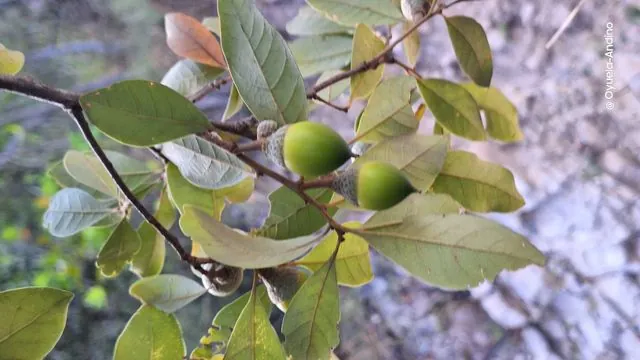
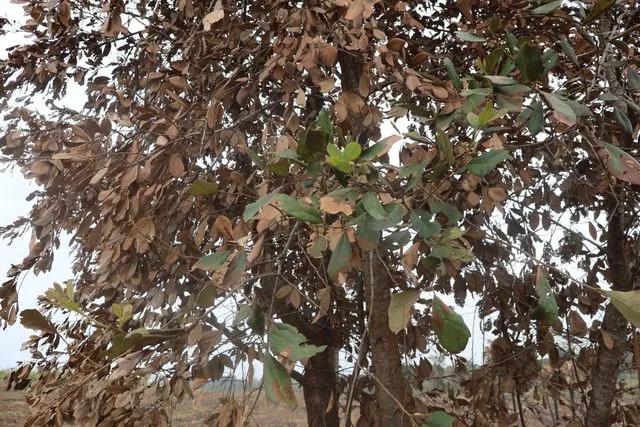
Canonical name: The scientific name without its authorship or date, for example Zea mays instead of Zea mays L. — The scientific name without its authorship or date, for example Zea mays instead of Zea mays L.
Quercus oleoides
Authorship: The author or authors credited with publishing the scientific name. It is written after the name, sometimes with the year, for example L. (Linnaeus) in Zea mays L. An author in parentheses first published the name in another genus or rank. — The author or authors credited with publishing the scientific name. It is written after the name, sometimes with the year, for example L. (Linnaeus) in Zea mays L. An author in parentheses first published the name in another genus or rank.
Schltdl. & Cham.
Common names
olive oak, white oakNames in other languages (11)Encina, Magyaltölgy, dąb oleisty, encinillo, encino, encino curtidor, encino prieto, hojaviushi, roble, roblecito, 橄欖櫟
Kingdom: One of the broadest ranks of biological classification. It groups organisms that share very basic features, for example plants (Plantae), animals (Animalia) or fungi (Fungi). — One of the broadest ranks of biological classification. It groups organisms that share very basic features, for example plants (Plantae), animals (Animalia) or fungi (Fungi).
Plantae
Phylum: Rank below kingdom that groups organisms with a shared general body plan, for example chordates (Chordata), arthropods (Arthropoda) or vascular plants (Tracheophyta). In botany the same rank is also called division. — Rank below kingdom that groups organisms with a shared general body plan, for example chordates (Chordata), arthropods (Arthropoda) or vascular plants (Tracheophyta). In botany the same rank is also called division.
Tracheophyta
Class: Rank below phylum, for example mammals (Mammalia), birds (Aves), insects (Insecta) or monocot plants such as grasses and orchids (Liliopsida). — Rank below phylum, for example mammals (Mammalia), birds (Aves), insects (Insecta) or monocot plants such as grasses and orchids (Liliopsida).
Magnoliopsida
Order: Rank below class that groups related families, for example grasses and their relatives (Poales) or bats (Chiroptera). — Rank below class that groups related families, for example grasses and their relatives (Poales) or bats (Chiroptera).
Fagales
Family: Rank below order that groups related genera. Family names usually end in -aceae in botany (for example Poaceae, the grass family) and in -idae in zoology (for example Felidae, the cat family). — Rank below order that groups related genera. Family names usually end in -aceae in botany (for example Poaceae, the grass family) and in -idae in zoology (for example Felidae, the cat family).
Fagaceae
Genus: Rank that groups closely related species. Its name is the first word of a species' scientific name and starts with a capital letter, for example Zea in Zea mays. — Rank that groups closely related species. Its name is the first word of a species' scientific name and starts with a capital letter, for example Zea in Zea mays.
Quercus
Specific epithet: The second word of a species' scientific name. On its own it does not name the species: it always goes with the genus, for example mays in Zea mays. — The second word of a species' scientific name. On its own it does not name the species: it always goes with the genus, for example mays in Zea mays.
oleoides
Taxonomic rank: The level a name occupies in the hierarchy of biological classification, such as kingdom, family, genus, species or subspecies. — The level a name occupies in the hierarchy of biological classification, such as kingdom, family, genus, species or subspecies.
species
Reference species
Quercus oleoides
Taxonomic status: Whether the taxonomic catalogue the record comes from currently accepts this name for the organism, or treats it as a synonym of another accepted name or as doubtful. — Whether the taxonomic catalogue the record comes from currently accepts this name for the organism, or treats it as a synonym of another accepted name or as doubtful.
accepted name
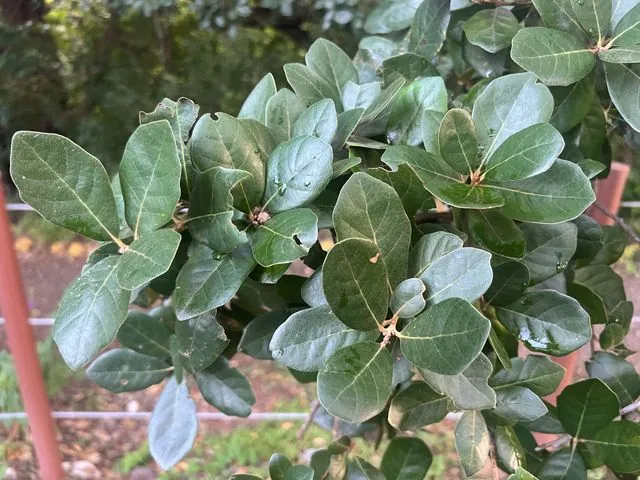
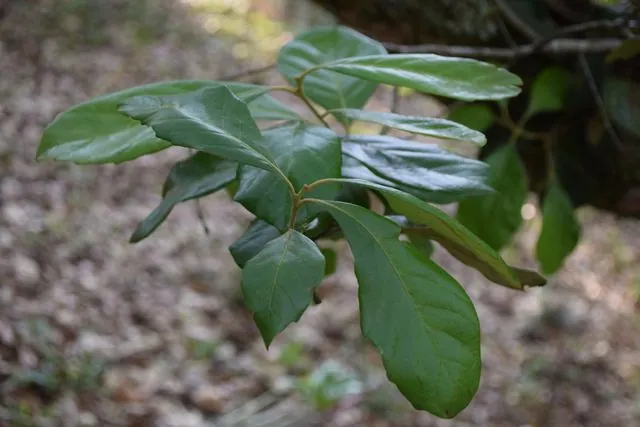
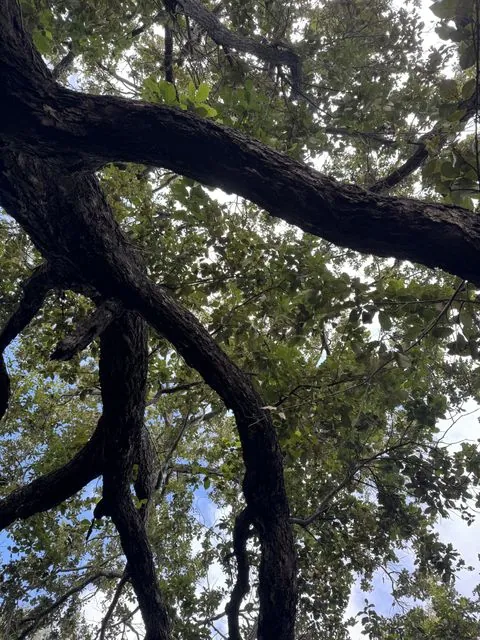
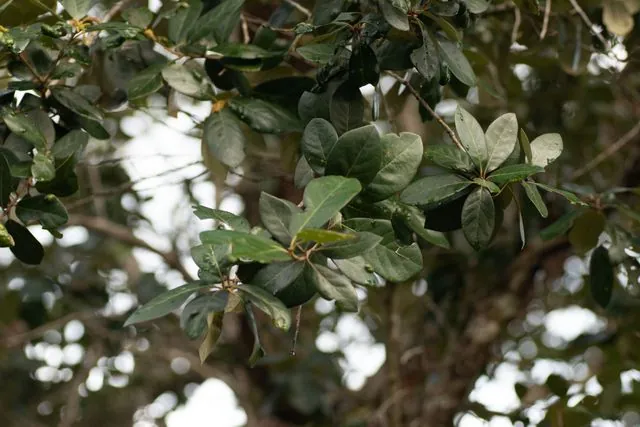
Photos and conservation status
IUCN Red List category: The extinction-risk category that the International Union for Conservation of Nature (IUCN) assigns to a species on its Red List. EX Extinct: there is no reasonable doubt that the last individual has died. EW Extinct in the wild: it survives only in cultivation, in captivity or as a population far outside its past range. CR Critically endangered, EN Endangered and VU Vulnerable: the three threatened categories, from an extremely high to a high risk of extinction in the wild. NT Near threatened: close to qualifying as threatened. LC Least concern: evaluated and not threatened. DD Data deficient: there is not enough information to assess its risk. NE Not evaluated: not yet assessed against the criteria. It describes the risk of the species worldwide, not its situation in a project's area. — The extinction-risk category that the International Union for Conservation of Nature (IUCN) assigns to a species on its Red List. EX Extinct: there is no reasonable doubt that the last individual has died. EW Extinct in the wild: it survives only in cultivation, in captivity or as a population far outside its past range. CR Critically endangered, EN Endangered and VU Vulnerable: the three threatened categories, from an extremely high to a high risk of extinction in the wild. NT Near threatened: close to qualifying as threatened. LC Least concern: evaluated and not threatened. DD Data deficient: there is not enough information to assess its risk. NE Not evaluated: not yet assessed against the criteria. It describes the risk of the species worldwide, not its situation in a project's area.
Near threatened (NT)
Source: IUCN Red List via GBIF, queried on 2026-10-13 11:14.
Desai,N.S., Wilson,A.W., Powers,J.S., Mueller,G.M. and Egerton-Louise,L.M., Ectomycorrhizal diversity and community structure in stands of Quercus oleoides in the seasonally dry tropical forests of Costa Rica. Environmental Research Letters 11:. https://www.ncbi.nlm.nih.gov/nucc…
Published in globalbioticinteractions/maps
Context: no place published · no date published
Claim type
Published relationship between two taxa
Version
GloBI 0.11
Reuse
This release publishes no reuse terms for this record.
no place published · no date publishedWhere it is: line:hash://sha256/021a206a1459bcca7e251c73f5bd180fc3ac342a09c499855fe42e21fc09edcf!/interactions.tsv.gz!/L7283990
Desai,N.S., Wilson,A.W., Powers,J.S., Mueller,G.M. and Egerton-Louise,L.M., Ectomycorrhizal diversity and community structure in stands of Quercus oleoides in the seasonally dry tropical forests of Costa Rica. Environmental Research Letters 11:. https://www.ncbi.nlm.nih.gov/nucc…
Published in globalbioticinteractions/maps
Context: no place published · no date published
Claim type
Published relationship between two taxa
Version
GloBI 0.11
Reuse
This release publishes no reuse terms for this record.
no place published · no date publishedWhere it is: line:hash://sha256/021a206a1459bcca7e251c73f5bd180fc3ac342a09c499855fe42e21fc09edcf!/interactions.tsv.gz!/L7283991
Desai,N.S., Wilson,A.W., Powers,J.S., Mueller,G.M. and Egerton-Louise,L.M., Ectomycorrhizal diversity and community structure in stands of Quercus oleoides in the seasonally dry tropical forests of Costa Rica. Environmental Research Letters 11:. https://www.ncbi.nlm.nih.gov/nucc…
Published in globalbioticinteractions/maps
Context: no place published · no date published
Claim type
Published relationship between two taxa
Version
GloBI 0.11
Reuse
This release publishes no reuse terms for this record.
no place published · no date publishedWhere it is: line:hash://sha256/021a206a1459bcca7e251c73f5bd180fc3ac342a09c499855fe42e21fc09edcf!/interactions.tsv.gz!/L7283992
Desai,N.S., Wilson,A.W., Powers,J.S., Mueller,G.M. and Egerton-Louise,L.M., Ectomycorrhizal diversity and community structure in stands of Quercus oleoides in the seasonally dry tropical forests of Costa Rica. Environmental Research Letters 11:. https://www.ncbi.nlm.nih.gov/nucc…
Published in globalbioticinteractions/maps
Context: no place published · no date published
Claim type
Published relationship between two taxa
Version
GloBI 0.11
Reuse
This release publishes no reuse terms for this record.
no place published · no date publishedWhere it is: line:hash://sha256/021a206a1459bcca7e251c73f5bd180fc3ac342a09c499855fe42e21fc09edcf!/interactions.tsv.gz!/L7283993
Desai,N.S., Wilson,A.W., Powers,J.S., Mueller,G.M. and Egerton-Louise,L.M., Ectomycorrhizal diversity and community structure in stands of Quercus oleoides in the seasonally dry tropical forests of Costa Rica. Environmental Research Letters 11:. https://www.ncbi.nlm.nih.gov/nucc…
Published in globalbioticinteractions/maps
Context: no place published · no date published
Claim type
Published relationship between two taxa
Version
GloBI 0.11
Reuse
This release publishes no reuse terms for this record.
no place published · no date publishedWhere it is: line:hash://sha256/021a206a1459bcca7e251c73f5bd180fc3ac342a09c499855fe42e21fc09edcf!/interactions.tsv.gz!/L7283994
Desai,N.S., Wilson,A.W., Powers,J.S., Mueller,G.M. and Egerton-Louise,L.M., Ectomycorrhizal diversity and community structure in stands of Quercus oleoides in the seasonally dry tropical forests of Costa Rica. Environmental Research Letters 11:. https://www.ncbi.nlm.nih.gov/nucc…
Published in globalbioticinteractions/maps
Context: no place published · no date published
Claim type
Published relationship between two taxa
Version
GloBI 0.11
Reuse
This release publishes no reuse terms for this record.
no place published · no date publishedWhere it is: line:hash://sha256/021a206a1459bcca7e251c73f5bd180fc3ac342a09c499855fe42e21fc09edcf!/interactions.tsv.gz!/L7283995
Desai,N.S., Wilson,A.W., Powers,J.S., Mueller,G.M. and Egerton-Louise,L.M., Ectomycorrhizal diversity and community structure in stands of Quercus oleoides in the seasonally dry tropical forests of Costa Rica. Environmental Research Letters 11:. https://www.ncbi.nlm.nih.gov/nucc…
Published in globalbioticinteractions/maps
Context: no place published · no date published
Claim type
Published relationship between two taxa
Version
GloBI 0.11
Reuse
This release publishes no reuse terms for this record.
no place published · no date publishedWhere it is: line:hash://sha256/021a206a1459bcca7e251c73f5bd180fc3ac342a09c499855fe42e21fc09edcf!/interactions.tsv.gz!/L7283996
Desai,N.S., Wilson,A.W., Powers,J.S., Mueller,G.M. and Egerton-Louise,L.M., Ectomycorrhizal diversity and community structure in stands of Quercus oleoides in the seasonally dry tropical forests of Costa Rica. Environmental Research Letters 11:. https://www.ncbi.nlm.nih.gov/nucc…
Published in globalbioticinteractions/maps
Context: no place published · no date published
Claim type
Published relationship between two taxa
Version
GloBI 0.11
Reuse
This release publishes no reuse terms for this record.
no place published · no date publishedWhere it is: line:hash://sha256/021a206a1459bcca7e251c73f5bd180fc3ac342a09c499855fe42e21fc09edcf!/interactions.tsv.gz!/L7283997
A published relationship says these two taxa were documented interacting. It does not say how often, or that it happens in this project's region.
False TrevalliesLactariusRussulaceae
is an ectomycorrhizal host of
6
not compared
6 sources · 6 records
Desai,N.S., Wilson,A.W., Powers,J.S., Mueller,G.M. and Egerton-Louise,L.M., Ectomycorrhizal diversity and community structure in stands of Quercus oleoides in the seasonally dry tropical forests of Costa Rica. Environmental Research Letters 11:. https://www.ncbi.nlm.nih.gov/nucc…
Published in globalbioticinteractions/maps
Context: no place published · no date published
Claim type
Published relationship between two taxa
Version
GloBI 0.11
Reuse
This release publishes no reuse terms for this record.
no place published · no date publishedWhere it is: line:hash://sha256/021a206a1459bcca7e251c73f5bd180fc3ac342a09c499855fe42e21fc09edcf!/interactions.tsv.gz!/L7283950
Desai,N.S., Wilson,A.W., Powers,J.S., Mueller,G.M. and Egerton-Louise,L.M., Ectomycorrhizal diversity and community structure in stands of Quercus oleoides in the seasonally dry tropical forests of Costa Rica. Environmental Research Letters 11:. https://www.ncbi.nlm.nih.gov/nucc…
Published in globalbioticinteractions/maps
Context: no place published · no date published
Claim type
Published relationship between two taxa
Version
GloBI 0.11
Reuse
This release publishes no reuse terms for this record.
no place published · no date publishedWhere it is: line:hash://sha256/021a206a1459bcca7e251c73f5bd180fc3ac342a09c499855fe42e21fc09edcf!/interactions.tsv.gz!/L7283951
Desai,N.S., Wilson,A.W., Powers,J.S., Mueller,G.M. and Egerton-Louise,L.M., Ectomycorrhizal diversity and community structure in stands of Quercus oleoides in the seasonally dry tropical forests of Costa Rica. Environmental Research Letters 11:. https://www.ncbi.nlm.nih.gov/nucc…
Published in globalbioticinteractions/maps
Context: no place published · no date published
Claim type
Published relationship between two taxa
Version
GloBI 0.11
Reuse
This release publishes no reuse terms for this record.
no place published · no date publishedWhere it is: line:hash://sha256/021a206a1459bcca7e251c73f5bd180fc3ac342a09c499855fe42e21fc09edcf!/interactions.tsv.gz!/L7283952
Desai,N.S., Wilson,A.W., Powers,J.S., Mueller,G.M. and Egerton-Louise,L.M., Ectomycorrhizal diversity and community structure in stands of Quercus oleoides in the seasonally dry tropical forests of Costa Rica. Environmental Research Letters 11:. https://www.ncbi.nlm.nih.gov/nucc…
Published in globalbioticinteractions/maps
Context: no place published · no date published
Claim type
Published relationship between two taxa
Version
GloBI 0.11
Reuse
This release publishes no reuse terms for this record.
no place published · no date publishedWhere it is: line:hash://sha256/021a206a1459bcca7e251c73f5bd180fc3ac342a09c499855fe42e21fc09edcf!/interactions.tsv.gz!/L7283953
Desai,N.S., Wilson,A.W., Powers,J.S., Mueller,G.M. and Egerton-Louise,L.M., Ectomycorrhizal diversity and community structure in stands of Quercus oleoides in the seasonally dry tropical forests of Costa Rica. Environmental Research Letters 11:. https://www.ncbi.nlm.nih.gov/nucc…
Published in globalbioticinteractions/maps
Context: no place published · no date published
Claim type
Published relationship between two taxa
Version
GloBI 0.11
Reuse
This release publishes no reuse terms for this record.
no place published · no date publishedWhere it is: line:hash://sha256/021a206a1459bcca7e251c73f5bd180fc3ac342a09c499855fe42e21fc09edcf!/interactions.tsv.gz!/L7283954
Desai,N.S., Wilson,A.W., Powers,J.S., Mueller,G.M. and Egerton-Louise,L.M., Ectomycorrhizal diversity and community structure in stands of Quercus oleoides in the seasonally dry tropical forests of Costa Rica. Environmental Research Letters 11:. https://www.ncbi.nlm.nih.gov/nucc…
Published in globalbioticinteractions/maps
Context: no place published · no date published
Claim type
Published relationship between two taxa
Version
GloBI 0.11
Reuse
This release publishes no reuse terms for this record.
no place published · no date publishedWhere it is: line:hash://sha256/021a206a1459bcca7e251c73f5bd180fc3ac342a09c499855fe42e21fc09edcf!/interactions.tsv.gz!/L7283955
A published relationship says these two taxa were documented interacting. It does not say how often, or that it happens in this project's region.
Milk White BrittlegillRussula delicaRussulaceae
is an ectomycorrhizal host of
6
not compared
6 sources · 6 records
Desai,N.S., Wilson,A.W., Powers,J.S., Mueller,G.M. and Egerton-Louise,L.M., Ectomycorrhizal diversity and community structure in stands of Quercus oleoides in the seasonally dry tropical forests of Costa Rica. Environmental Research Letters 11:. https://www.ncbi.nlm.nih.gov/nucc…
Published in globalbioticinteractions/maps
Context: no place published · no date published
Claim type
Published relationship between two taxa
Version
GloBI 0.11
Reuse
This release publishes no reuse terms for this record.
no place published · no date publishedWhere it is: line:hash://sha256/021a206a1459bcca7e251c73f5bd180fc3ac342a09c499855fe42e21fc09edcf!/interactions.tsv.gz!/L7283968
Desai,N.S., Wilson,A.W., Powers,J.S., Mueller,G.M. and Egerton-Louise,L.M., Ectomycorrhizal diversity and community structure in stands of Quercus oleoides in the seasonally dry tropical forests of Costa Rica. Environmental Research Letters 11:. https://www.ncbi.nlm.nih.gov/nucc…
Published in globalbioticinteractions/maps
Context: no place published · no date published
Claim type
Published relationship between two taxa
Version
GloBI 0.11
Reuse
This release publishes no reuse terms for this record.
no place published · no date publishedWhere it is: line:hash://sha256/021a206a1459bcca7e251c73f5bd180fc3ac342a09c499855fe42e21fc09edcf!/interactions.tsv.gz!/L7283969
Desai,N.S., Wilson,A.W., Powers,J.S., Mueller,G.M. and Egerton-Louise,L.M., Ectomycorrhizal diversity and community structure in stands of Quercus oleoides in the seasonally dry tropical forests of Costa Rica. Environmental Research Letters 11:. https://www.ncbi.nlm.nih.gov/nucc…
Published in globalbioticinteractions/maps
Context: no place published · no date published
Claim type
Published relationship between two taxa
Version
GloBI 0.11
Reuse
This release publishes no reuse terms for this record.
no place published · no date publishedWhere it is: line:hash://sha256/021a206a1459bcca7e251c73f5bd180fc3ac342a09c499855fe42e21fc09edcf!/interactions.tsv.gz!/L7283970
Desai,N.S., Wilson,A.W., Powers,J.S., Mueller,G.M. and Egerton-Louise,L.M., Ectomycorrhizal diversity and community structure in stands of Quercus oleoides in the seasonally dry tropical forests of Costa Rica. Environmental Research Letters 11:. https://www.ncbi.nlm.nih.gov/nucc…
Published in globalbioticinteractions/maps
Context: no place published · no date published
Claim type
Published relationship between two taxa
Version
GloBI 0.11
Reuse
This release publishes no reuse terms for this record.
no place published · no date publishedWhere it is: line:hash://sha256/021a206a1459bcca7e251c73f5bd180fc3ac342a09c499855fe42e21fc09edcf!/interactions.tsv.gz!/L7283971
Desai,N.S., Wilson,A.W., Powers,J.S., Mueller,G.M. and Egerton-Louise,L.M., Ectomycorrhizal diversity and community structure in stands of Quercus oleoides in the seasonally dry tropical forests of Costa Rica. Environmental Research Letters 11:. https://www.ncbi.nlm.nih.gov/nucc…
Published in globalbioticinteractions/maps
Context: no place published · no date published
Claim type
Published relationship between two taxa
Version
GloBI 0.11
Reuse
This release publishes no reuse terms for this record.
no place published · no date publishedWhere it is: line:hash://sha256/021a206a1459bcca7e251c73f5bd180fc3ac342a09c499855fe42e21fc09edcf!/interactions.tsv.gz!/L7283972
Desai,N.S., Wilson,A.W., Powers,J.S., Mueller,G.M. and Egerton-Louise,L.M., Ectomycorrhizal diversity and community structure in stands of Quercus oleoides in the seasonally dry tropical forests of Costa Rica. Environmental Research Letters 11:. https://www.ncbi.nlm.nih.gov/nucc…
Published in globalbioticinteractions/maps
Context: no place published · no date published
Claim type
Published relationship between two taxa
Version
GloBI 0.11
Reuse
This release publishes no reuse terms for this record.
no place published · no date publishedWhere it is: line:hash://sha256/021a206a1459bcca7e251c73f5bd180fc3ac342a09c499855fe42e21fc09edcf!/interactions.tsv.gz!/L7283973
A published relationship says these two taxa were documented interacting. It does not say how often, or that it happens in this project's region.
Fiber CapsInocybeInocybaceae
is an ectomycorrhizal host of
6
not compared
Not a modelling unit: the source publishes it at genus level.
6 sources · 6 records
Desai,N.S., Wilson,A.W., Powers,J.S., Mueller,G.M. and Egerton-Louise,L.M., Ectomycorrhizal diversity and community structure in stands of Quercus oleoides in the seasonally dry tropical forests of Costa Rica. Environmental Research Letters 11:. https://www.ncbi.nlm.nih.gov/nucc…
Published in globalbioticinteractions/maps
Context: no place published · no date published
Claim type
Published relationship between two taxa
Version
GloBI 0.11
Reuse
This release publishes no reuse terms for this record.
no place published · no date publishedWhere it is: line:hash://sha256/021a206a1459bcca7e251c73f5bd180fc3ac342a09c499855fe42e21fc09edcf!/interactions.tsv.gz!/L7283942
Desai,N.S., Wilson,A.W., Powers,J.S., Mueller,G.M. and Egerton-Louise,L.M., Ectomycorrhizal diversity and community structure in stands of Quercus oleoides in the seasonally dry tropical forests of Costa Rica. Environmental Research Letters 11:. https://www.ncbi.nlm.nih.gov/nucc…
Published in globalbioticinteractions/maps
Context: no place published · no date published
Claim type
Published relationship between two taxa
Version
GloBI 0.11
Reuse
This release publishes no reuse terms for this record.
no place published · no date publishedWhere it is: line:hash://sha256/021a206a1459bcca7e251c73f5bd180fc3ac342a09c499855fe42e21fc09edcf!/interactions.tsv.gz!/L7283943
Desai,N.S., Wilson,A.W., Powers,J.S., Mueller,G.M. and Egerton-Louise,L.M., Ectomycorrhizal diversity and community structure in stands of Quercus oleoides in the seasonally dry tropical forests of Costa Rica. Environmental Research Letters 11:. https://www.ncbi.nlm.nih.gov/nucc…
Published in globalbioticinteractions/maps
Context: no place published · no date published
Claim type
Published relationship between two taxa
Version
GloBI 0.11
Reuse
This release publishes no reuse terms for this record.
no place published · no date publishedWhere it is: line:hash://sha256/021a206a1459bcca7e251c73f5bd180fc3ac342a09c499855fe42e21fc09edcf!/interactions.tsv.gz!/L7283944
Desai,N.S., Wilson,A.W., Powers,J.S., Mueller,G.M. and Egerton-Louise,L.M., Ectomycorrhizal diversity and community structure in stands of Quercus oleoides in the seasonally dry tropical forests of Costa Rica. Environmental Research Letters 11:. https://www.ncbi.nlm.nih.gov/nucc…
Published in globalbioticinteractions/maps
Context: no place published · no date published
Claim type
Published relationship between two taxa
Version
GloBI 0.11
Reuse
This release publishes no reuse terms for this record.
no place published · no date publishedWhere it is: line:hash://sha256/021a206a1459bcca7e251c73f5bd180fc3ac342a09c499855fe42e21fc09edcf!/interactions.tsv.gz!/L7283945
Desai,N.S., Wilson,A.W., Powers,J.S., Mueller,G.M. and Egerton-Louise,L.M., Ectomycorrhizal diversity and community structure in stands of Quercus oleoides in the seasonally dry tropical forests of Costa Rica. Environmental Research Letters 11:. https://www.ncbi.nlm.nih.gov/nucc…
Published in globalbioticinteractions/maps
Context: no place published · no date published
Claim type
Published relationship between two taxa
Version
GloBI 0.11
Reuse
This release publishes no reuse terms for this record.
no place published · no date publishedWhere it is: line:hash://sha256/021a206a1459bcca7e251c73f5bd180fc3ac342a09c499855fe42e21fc09edcf!/interactions.tsv.gz!/L7283946
Desai,N.S., Wilson,A.W., Powers,J.S., Mueller,G.M. and Egerton-Louise,L.M., Ectomycorrhizal diversity and community structure in stands of Quercus oleoides in the seasonally dry tropical forests of Costa Rica. Environmental Research Letters 11:. https://www.ncbi.nlm.nih.gov/nucc…
Published in globalbioticinteractions/maps
Context: no place published · no date published
Claim type
Published relationship between two taxa
Version
GloBI 0.11
Reuse
This release publishes no reuse terms for this record.
no place published · no date publishedWhere it is: line:hash://sha256/021a206a1459bcca7e251c73f5bd180fc3ac342a09c499855fe42e21fc09edcf!/interactions.tsv.gz!/L7283947
The authority declares no effect on this species for this term: neither that it harms it nor that it benefits it. In the source ontology symbiosis covers mutualism, commensalism and parasitism alike, so this block holds attackers and allies side by side.
Context: Area de Conservacion Guanacaste, Sector Santa Rosa, Finca Jenny · Sept. 10, 2004 · Material sample
Claim type
Published relationship between two taxa
Version
GloBI 0.11
Reuse
This release publishes no reuse terms for this record.
Area de Conservacion Guanacaste, Sector Santa Rosa, Finca Jenny · Sept. 10, 2004 · Material sampleAs published: 2004-09-10T00:00:00Z · MATERIAL_SAMPLEWhere it is: line:hash://sha256/021a206a1459bcca7e251c73f5bd180fc3ac342a09c499855fe42e21fc09edcf!/interactions.tsv.gz!/L12912818
Context: Area de Conservacion Guanacaste, Sector Santa Rosa, Aguacaliente · June 8, 2005 · Material sample
Claim type
Published relationship between two taxa
Version
GloBI 0.11
Reuse
This release publishes no reuse terms for this record.
Area de Conservacion Guanacaste, Sector Santa Rosa, Aguacaliente · June 8, 2005 · Material sampleAs published: 2005-06-08T00:00:00Z · MATERIAL_SAMPLEWhere it is: line:hash://sha256/021a206a1459bcca7e251c73f5bd180fc3ac342a09c499855fe42e21fc09edcf!/interactions.tsv.gz!/L12914012
Context: Area de Conservacion Guanacaste, Sector Pocosol, Aguacaliente · Feb. 12, 2006 · Material sample
Claim type
Published relationship between two taxa
Version
GloBI 0.11
Reuse
This release publishes no reuse terms for this record.
Area de Conservacion Guanacaste, Sector Pocosol, Aguacaliente · Feb. 12, 2006 · Material sampleAs published: 2006-02-12T00:00:00Z · MATERIAL_SAMPLEWhere it is: line:hash://sha256/021a206a1459bcca7e251c73f5bd180fc3ac342a09c499855fe42e21fc09edcf!/interactions.tsv.gz!/L12915243
Context: Area de Conservacion Guanacaste, Sector Pocosol, Aguacaliente · Jan. 30, 2006 · Material sample
Claim type
Published relationship between two taxa
Version
GloBI 0.11
Reuse
This release publishes no reuse terms for this record.
Area de Conservacion Guanacaste, Sector Pocosol, Aguacaliente · Jan. 30, 2006 · Material sampleAs published: 2006-01-30T00:00:00Z · MATERIAL_SAMPLEWhere it is: line:hash://sha256/021a206a1459bcca7e251c73f5bd180fc3ac342a09c499855fe42e21fc09edcf!/interactions.tsv.gz!/L12915244
Context: Area de Conservacion Guanacaste, Sector Pocosol, Aguacaliente · Feb. 1, 2006 · Material sample
Claim type
Published relationship between two taxa
Version
GloBI 0.11
Reuse
This release publishes no reuse terms for this record.
Area de Conservacion Guanacaste, Sector Pocosol, Aguacaliente · Feb. 1, 2006 · Material sampleAs published: 2006-02-01T00:00:00Z · MATERIAL_SAMPLEWhere it is: line:hash://sha256/021a206a1459bcca7e251c73f5bd180fc3ac342a09c499855fe42e21fc09edcf!/interactions.tsv.gz!/L12915245
Context: Area de Conservacion Guanacaste, Sector Santa Elena, Entrada Santa Elena · March 19, 2002 · Material sample
Claim type
Published relationship between two taxa
Version
GloBI 0.11
Reuse
This release publishes no reuse terms for this record.
Area de Conservacion Guanacaste, Sector Santa Elena, Entrada Santa Elena · March 19, 2002 · Material sampleAs published: 2002-03-19T00:00:00Z · MATERIAL_SAMPLEWhere it is: line:hash://sha256/021a206a1459bcca7e251c73f5bd180fc3ac342a09c499855fe42e21fc09edcf!/interactions.tsv.gz!/L12916633
Context: Area de Conservacion Guanacaste, Sector Santa Elena, Entrada Santa Elena · March 14, 2002 · Material sample
Claim type
Published relationship between two taxa
Version
GloBI 0.11
Reuse
This release publishes no reuse terms for this record.
Area de Conservacion Guanacaste, Sector Santa Elena, Entrada Santa Elena · March 14, 2002 · Material sampleAs published: 2002-03-14T00:00:00Z · MATERIAL_SAMPLEWhere it is: line:hash://sha256/021a206a1459bcca7e251c73f5bd180fc3ac342a09c499855fe42e21fc09edcf!/interactions.tsv.gz!/L12916634
Context: Area de Conservacion Guanacaste, Sector Santa Elena, Entrada Santa Elena · March 15, 2002 · Material sample
Claim type
Published relationship between two taxa
Version
GloBI 0.11
Reuse
This release publishes no reuse terms for this record.
Area de Conservacion Guanacaste, Sector Santa Elena, Entrada Santa Elena · March 15, 2002 · Material sampleAs published: 2002-03-15T00:00:00Z · MATERIAL_SAMPLEWhere it is: line:hash://sha256/021a206a1459bcca7e251c73f5bd180fc3ac342a09c499855fe42e21fc09edcf!/interactions.tsv.gz!/L12916635
Context: Area de Conservacion Guanacaste, Sector Santa Rosa, Bosque Encino Guacimal · July 5, 2003 · Material sample
Claim type
Published relationship between two taxa
Version
GloBI 0.11
Reuse
This release publishes no reuse terms for this record.
Area de Conservacion Guanacaste, Sector Santa Rosa, Bosque Encino Guacimal · July 5, 2003 · Material sampleAs published: 2003-07-05T00:00:00Z · MATERIAL_SAMPLEWhere it is: line:hash://sha256/021a206a1459bcca7e251c73f5bd180fc3ac342a09c499855fe42e21fc09edcf!/interactions.tsv.gz!/L12940018
Context: Area de Conservacion Guanacaste, Sector Santa Rosa, Las Mesas · July 11, 2007 · Material sample
Claim type
Published relationship between two taxa
Version
GloBI 0.11
Reuse
This release publishes no reuse terms for this record.
Area de Conservacion Guanacaste, Sector Santa Rosa, Las Mesas · July 11, 2007 · Material sampleAs published: 2007-07-11T00:00:00Z · MATERIAL_SAMPLEWhere it is: line:hash://sha256/021a206a1459bcca7e251c73f5bd180fc3ac342a09c499855fe42e21fc09edcf!/interactions.tsv.gz!/L12940048
Context: Area de Conservacion Guanacaste, Sector Santa Rosa, Las Mesas · July 4, 2007 · Material sample
Claim type
Published relationship between two taxa
Version
GloBI 0.11
Reuse
This release publishes no reuse terms for this record.
Area de Conservacion Guanacaste, Sector Santa Rosa, Las Mesas · July 4, 2007 · Material sampleAs published: 2007-07-04T00:00:00Z · MATERIAL_SAMPLEWhere it is: line:hash://sha256/021a206a1459bcca7e251c73f5bd180fc3ac342a09c499855fe42e21fc09edcf!/interactions.tsv.gz!/L12940049
Context: Area de Conservacion Guanacaste, Sector Santa Rosa, Las Mesas · July 13, 2007 · Material sample
Claim type
Published relationship between two taxa
Version
GloBI 0.11
Reuse
This release publishes no reuse terms for this record.
Area de Conservacion Guanacaste, Sector Santa Rosa, Las Mesas · July 13, 2007 · Material sampleAs published: 2007-07-13T00:00:00Z · MATERIAL_SAMPLEWhere it is: line:hash://sha256/021a206a1459bcca7e251c73f5bd180fc3ac342a09c499855fe42e21fc09edcf!/interactions.tsv.gz!/L12940050
Context: Area de Conservacion Guanacaste, Sector Santa Rosa, Las Mesas · July 4, 2007 · Material sample
Claim type
Published relationship between two taxa
Version
GloBI 0.11
Reuse
This release publishes no reuse terms for this record.
Area de Conservacion Guanacaste, Sector Santa Rosa, Las Mesas · July 4, 2007 · Material sampleAs published: 2007-07-04T00:00:00Z · MATERIAL_SAMPLEWhere it is: line:hash://sha256/021a206a1459bcca7e251c73f5bd180fc3ac342a09c499855fe42e21fc09edcf!/interactions.tsv.gz!/L12940051
Context: Area de Conservacion Guanacaste, Sector Santa Rosa, Las Mesas · July 10, 2007 · Material sample
Claim type
Published relationship between two taxa
Version
GloBI 0.11
Reuse
This release publishes no reuse terms for this record.
Area de Conservacion Guanacaste, Sector Santa Rosa, Las Mesas · July 10, 2007 · Material sampleAs published: 2007-07-10T00:00:00Z · MATERIAL_SAMPLEWhere it is: line:hash://sha256/021a206a1459bcca7e251c73f5bd180fc3ac342a09c499855fe42e21fc09edcf!/interactions.tsv.gz!/L12940053
Context: Area de Conservacion Guanacaste, Sector Santa Rosa, Las Mesas · July 5, 2007 · Material sample
Claim type
Published relationship between two taxa
Version
GloBI 0.11
Reuse
This release publishes no reuse terms for this record.
Area de Conservacion Guanacaste, Sector Santa Rosa, Las Mesas · July 5, 2007 · Material sampleAs published: 2007-07-05T00:00:00Z · MATERIAL_SAMPLEWhere it is: line:hash://sha256/021a206a1459bcca7e251c73f5bd180fc3ac342a09c499855fe42e21fc09edcf!/interactions.tsv.gz!/L12940054
Context: Area de Conservacion Guanacaste, Sector Santa Rosa, Las Mesas · July 4, 2007 · Material sample
Claim type
Published relationship between two taxa
Version
GloBI 0.11
Reuse
This release publishes no reuse terms for this record.
Area de Conservacion Guanacaste, Sector Santa Rosa, Las Mesas · July 4, 2007 · Material sampleAs published: 2007-07-04T00:00:00Z · MATERIAL_SAMPLEWhere it is: line:hash://sha256/021a206a1459bcca7e251c73f5bd180fc3ac342a09c499855fe42e21fc09edcf!/interactions.tsv.gz!/L12940055
Context: Area de Conservacion Guanacaste, Sector Santa Rosa, Bosque Encino Guacimal · July 9, 2003 · Material sample
Claim type
Published relationship between two taxa
Version
GloBI 0.11
Reuse
This release publishes no reuse terms for this record.
Area de Conservacion Guanacaste, Sector Santa Rosa, Bosque Encino Guacimal · July 9, 2003 · Material sampleAs published: 2003-07-09T00:00:00Z · MATERIAL_SAMPLEWhere it is: line:hash://sha256/021a206a1459bcca7e251c73f5bd180fc3ac342a09c499855fe42e21fc09edcf!/interactions.tsv.gz!/L12926272
Context: Area de Conservacion Guanacaste, Sector Mundo Nuevo, Punta Plancha · April 13, 2006 · Material sample
Claim type
Published relationship between two taxa
Version
GloBI 0.11
Reuse
This release publishes no reuse terms for this record.
Area de Conservacion Guanacaste, Sector Mundo Nuevo, Punta Plancha · April 13, 2006 · Material sampleAs published: 2006-04-13T00:00:00Z · MATERIAL_SAMPLEWhere it is: line:hash://sha256/021a206a1459bcca7e251c73f5bd180fc3ac342a09c499855fe42e21fc09edcf!/interactions.tsv.gz!/L12926773
Context: Area de Conservacion Guanacaste, Sector Mundo Nuevo, Vado Huacas · Dec. 10, 2005 · Material sample
Claim type
Published relationship between two taxa
Version
GloBI 0.11
Reuse
This release publishes no reuse terms for this record.
Area de Conservacion Guanacaste, Sector Mundo Nuevo, Vado Huacas · Dec. 10, 2005 · Material sampleAs published: 2005-12-10T00:00:00Z · MATERIAL_SAMPLEWhere it is: line:hash://sha256/021a206a1459bcca7e251c73f5bd180fc3ac342a09c499855fe42e21fc09edcf!/interactions.tsv.gz!/L12926931
Context: Area de Conservacion Guanacaste, Sector Mundo Nuevo, Vado Agria · Sept. 17, 2005 · Material sample
Claim type
Published relationship between two taxa
Version
GloBI 0.11
Reuse
This release publishes no reuse terms for this record.
Area de Conservacion Guanacaste, Sector Mundo Nuevo, Vado Agria · Sept. 17, 2005 · Material sampleAs published: 2005-09-17T00:00:00Z · MATERIAL_SAMPLEWhere it is: line:hash://sha256/021a206a1459bcca7e251c73f5bd180fc3ac342a09c499855fe42e21fc09edcf!/interactions.tsv.gz!/L12926932
Context: Area de Conservacion Guanacaste, Sector Mundo Nuevo, Vado Agria · Sept. 17, 2005 · Material sample
Claim type
Published relationship between two taxa
Version
GloBI 0.11
Reuse
This release publishes no reuse terms for this record.
Area de Conservacion Guanacaste, Sector Mundo Nuevo, Vado Agria · Sept. 17, 2005 · Material sampleAs published: 2005-09-17T00:00:00Z · MATERIAL_SAMPLEWhere it is: line:hash://sha256/021a206a1459bcca7e251c73f5bd180fc3ac342a09c499855fe42e21fc09edcf!/interactions.tsv.gz!/L12926933
Context: Area de Conservacion Guanacaste, Sector Mundo Nuevo, Estacion La Perla · April 2, 2008 · Material sample
Claim type
Published relationship between two taxa
Version
GloBI 0.11
Reuse
This release publishes no reuse terms for this record.
Area de Conservacion Guanacaste, Sector Mundo Nuevo, Estacion La Perla · April 2, 2008 · Material sampleAs published: 2008-04-02T00:00:00Z · MATERIAL_SAMPLEWhere it is: line:hash://sha256/021a206a1459bcca7e251c73f5bd180fc3ac342a09c499855fe42e21fc09edcf!/interactions.tsv.gz!/L12936428
Context: Area de Conservacion Guanacaste, Sector Mundo Nuevo, Estacion La Perla · March 30, 2008 · Material sample
Claim type
Published relationship between two taxa
Version
GloBI 0.11
Reuse
This release publishes no reuse terms for this record.
Area de Conservacion Guanacaste, Sector Mundo Nuevo, Estacion La Perla · March 30, 2008 · Material sampleAs published: 2008-03-30T00:00:00Z · MATERIAL_SAMPLEWhere it is: line:hash://sha256/021a206a1459bcca7e251c73f5bd180fc3ac342a09c499855fe42e21fc09edcf!/interactions.tsv.gz!/L12936429
Context: no place published · no date published · Material sample
Claim type
Published relationship between two taxa
Version
GloBI 0.11
Reuse
This release publishes no reuse terms for this record.
no place published · no date published · Material sampleAs published: MATERIAL_SAMPLEWhere it is: line:hash://sha256/021a206a1459bcca7e251c73f5bd180fc3ac342a09c499855fe42e21fc09edcf!/interactions.tsv.gz!/L12818134
Context: no place published · no date published · Material sample
Claim type
Published relationship between two taxa
Version
GloBI 0.11
Reuse
This release publishes no reuse terms for this record.
no place published · no date published · Material sampleAs published: MATERIAL_SAMPLEWhere it is: line:hash://sha256/021a206a1459bcca7e251c73f5bd180fc3ac342a09c499855fe42e21fc09edcf!/interactions.tsv.gz!/L12818152
Context: Area de Conservacion Guanacaste, Sector Santa Rosa, Tanquetas · Aug. 13, 1996 · Material sample
Claim type
Published relationship between two taxa
Version
GloBI 0.11
Reuse
This release publishes no reuse terms for this record.
Area de Conservacion Guanacaste, Sector Santa Rosa, Tanquetas · Aug. 13, 1996 · Material sampleAs published: 1996-08-13T00:00:00Z · MATERIAL_SAMPLEWhere it is: line:hash://sha256/021a206a1459bcca7e251c73f5bd180fc3ac342a09c499855fe42e21fc09edcf!/interactions.tsv.gz!/L12923444
Context: Area de Conservacion Guanacaste, Sector Santa Rosa, Bosque Encino Guacimal · July 28, 1993 · Material sample
Claim type
Published relationship between two taxa
Version
GloBI 0.11
Reuse
This release publishes no reuse terms for this record.
Area de Conservacion Guanacaste, Sector Santa Rosa, Bosque Encino Guacimal · July 28, 1993 · Material sampleAs published: 1993-07-28T00:00:00Z · MATERIAL_SAMPLEWhere it is: line:hash://sha256/021a206a1459bcca7e251c73f5bd180fc3ac342a09c499855fe42e21fc09edcf!/interactions.tsv.gz!/L12923471
Context: Area de Conservacion Guanacaste, Sector Mundo Nuevo, Vado Agria · Oct. 12, 2005 · Material sample
Claim type
Published relationship between two taxa
Version
GloBI 0.11
Reuse
This release publishes no reuse terms for this record.
Area de Conservacion Guanacaste, Sector Mundo Nuevo, Vado Agria · Oct. 12, 2005 · Material sampleAs published: 2005-10-12T00:00:00Z · MATERIAL_SAMPLEWhere it is: line:hash://sha256/021a206a1459bcca7e251c73f5bd180fc3ac342a09c499855fe42e21fc09edcf!/interactions.tsv.gz!/L12923752
Context: Area de Conservacion Guanacaste, Sector Mundo Nuevo, Punta Plancha · July 13, 2010 · Material sample
Claim type
Published relationship between two taxa
Version
GloBI 0.11
Reuse
This release publishes no reuse terms for this record.
Area de Conservacion Guanacaste, Sector Mundo Nuevo, Punta Plancha · July 13, 2010 · Material sampleAs published: 2010-07-13T00:00:00Z · MATERIAL_SAMPLEWhere it is: line:hash://sha256/021a206a1459bcca7e251c73f5bd180fc3ac342a09c499855fe42e21fc09edcf!/interactions.tsv.gz!/L12955608
@article{https://doi.org/10.1002/ecy.70049, author = {Fuzessy, Lisieux and Pizo, Marco Aurélio}, title = {NeoFrugivory: A comprehensive database for frugivory interactions and functional traits in the Neotropics}, journal = {Ecology}, volume = {106}, number = {3}, pages = {e7004…
Published in globalbioticinteractions/neofrugivory
Context: no place published · no date published
Claim type
Published relationship between two taxa
Version
GloBI 0.11
Reuse
This release publishes no reuse terms for this record.
no place published · no date publishedWhere it is: line:hash://sha256/021a206a1459bcca7e251c73f5bd180fc3ac342a09c499855fe42e21fc09edcf!/interactions.tsv.gz!/L3087398
Chapman CA, Fedigan LM, 1990. Dietary differences between neighboring Cebus capucinus groups: Local traditions, food availability or responses to food profitability?.
Published in globalbioticinteractions/neofrugivory
Context: Costa Rica · no date published
Claim type
Published relationship between two taxa
Version
GloBI 0.11
Reuse
This release publishes no reuse terms for this record.
Costa Rica · no date publishedWhere it is: line:hash://sha256/021a206a1459bcca7e251c73f5bd180fc3ac342a09c499855fe42e21fc09edcf!/interactions.tsv.gz!/L3096130
No public URL for this record
MacKinnon KC, 2006. Food choice by juvenile Capuchin Monkeys (Cebus capucinus) in a Tropical Dry Forest..
Published in globalbioticinteractions/neofrugivory
Context: Costa Rica · no date published
Claim type
Published relationship between two taxa
Version
GloBI 0.11
Reuse
This release publishes no reuse terms for this record.
Costa Rica · no date publishedWhere it is: line:hash://sha256/021a206a1459bcca7e251c73f5bd180fc3ac342a09c499855fe42e21fc09edcf!/interactions.tsv.gz!/L3096172
No public URL for this record
A published relationship says these two taxa were documented interacting. It does not say how often, or that it happens in this project's region.
Automeris zuganaSaturniidae
is eaten by
1
no location
1 source · 1 record
Edward Baker; Ian Kitching; George W Beccaloni; Amoret Whitaker; Steen Dupont; Vincent Smith; John S Noyes (2017). NHM Interactions Bank. https://doi.org/10.5519/0060767. Accessed at <https://data.nhm.ac.uk/dataset/82e807f0-6273-4f19-be0a-7f7558442a25/resource/f84ad9f1-bd0c-4811…
Published in globalbioticinteractions/natural-history-museum-london-interactions-bank
Context: no place published · no date published
Claim type
Published relationship between two taxa
Version
GloBI 0.11
Reuse
This release publishes no reuse terms for this record.
no place published · no date publishedWhere it is: line:hash://sha256/021a206a1459bcca7e251c73f5bd180fc3ac342a09c499855fe42e21fc09edcf!/interactions.tsv.gz!/L18746185
A published relationship says these two taxa were documented interacting. It does not say how often, or that it happens in this project's region.
Dichomeris santarosensisGelechiidae
is eaten by
1
no location
1 source · 1 record
Edward Baker; Ian Kitching; George W Beccaloni; Amoret Whitaker; Steen Dupont; Vincent Smith; John S Noyes (2017). NHM Interactions Bank. https://doi.org/10.5519/0060767. Accessed at <https://data.nhm.ac.uk/dataset/82e807f0-6273-4f19-be0a-7f7558442a25/resource/f84ad9f1-bd0c-4811…
Published in globalbioticinteractions/natural-history-museum-london-interactions-bank
Context: no place published · no date published
Claim type
Published relationship between two taxa
Version
GloBI 0.11
Reuse
This release publishes no reuse terms for this record.
no place published · no date publishedWhere it is: line:hash://sha256/021a206a1459bcca7e251c73f5bd180fc3ac342a09c499855fe42e21fc09edcf!/interactions.tsv.gz!/L18704012
A published relationship says these two taxa were documented interacting. It does not say how often, or that it happens in this project's region.
Automeris rubrescensSaturniidae
is eaten by
1
no location
1 source · 1 record
Edward Baker; Ian Kitching; George W Beccaloni; Amoret Whitaker; Steen Dupont; Vincent Smith; John S Noyes (2017). NHM Interactions Bank. https://doi.org/10.5519/0060767. Accessed at <https://data.nhm.ac.uk/dataset/82e807f0-6273-4f19-be0a-7f7558442a25/resource/f84ad9f1-bd0c-4811…
Published in globalbioticinteractions/natural-history-museum-london-interactions-bank
Context: no place published · no date published
Claim type
Published relationship between two taxa
Version
GloBI 0.11
Reuse
This release publishes no reuse terms for this record.
no place published · no date publishedWhere it is: line:hash://sha256/021a206a1459bcca7e251c73f5bd180fc3ac342a09c499855fe42e21fc09edcf!/interactions.tsv.gz!/L18746111
The authority declares no effect on this species for this term: neither that it harms it nor that it benefits it.
Organism
Reads as
Studies
Where it was documented
Actions
Omophoita simulansChrysomelidae
interacts with
1
not compared
1 source · 1 record
https://www.inaturalist.org/observations/35947593
Published in globalbioticinteractions/inaturalist
Context: no place published · Nov. 21, 2019 · Human observation
Claim type
Published relationship between two taxa
Version
GloBI 0.11
Reuse
This release publishes no reuse terms for this record.
no place published · Nov. 21, 2019 · Human observationAs published: 2019-11-21T16:42:59Z · HumanObservationWhere it is: line:hash://sha256/021a206a1459bcca7e251c73f5bd180fc3ac342a09c499855fe42e21fc09edcf!/interactions.tsv.gz!/L5233649
Context: no place published · Jan. 29, 2022 · Human observation
Claim type
Published relationship between two taxa
Version
GloBI 0.11
Reuse
This release publishes no reuse terms for this record.
no place published · Jan. 29, 2022 · Human observationAs published: 2022-01-29T21:45:26Z · HumanObservationWhere it is: line:hash://sha256/021a206a1459bcca7e251c73f5bd180fc3ac342a09c499855fe42e21fc09edcf!/interactions.tsv.gz!/L4557577
A published relationship says these two taxa were documented interacting. It does not say how often, or that it happens in this project's region.
Eprhopalotus hansoniEulophidae
interacts with
1
no location
1 source · 1 record
Schauff, M.E. (1991a) The Holarctic genera of Entedoninae (Hymenoptera: Eulophidae). <i>Contributions of the American Entomological Institute</i>, 26(4), 1–109.
Published in urn:lsid:checklistbank.org:dataset:124661
Context: no place published · no date published
Claim type
Published relationship between two taxa
Version
GloBI 0.11
Reuse
This release publishes no reuse terms for this record.
no place published · no date publishedWhere it is: line:hash://sha256/021a206a1459bcca7e251c73f5bd180fc3ac342a09c499855fe42e21fc09edcf!/interactions.tsv.gz!/L1183839
No public URL for this record
A published relationship says these two taxa were documented interacting. It does not say how often, or that it happens in this project's region.
Showing 3 of 3, by number of studies
is adjacent to
1 organism
The authority declares no effect on this species for this term: neither that it harms it nor that it benefits it.
Organism
Reads as
Studies
Where it was documented
Actions
Pine-oak gall rustCronartium quercuumCronartiaceae
Context: no place published · July 27, 1950 · Preserved specimen
Claim type
Published relationship between two taxa
Version
GloBI 0.11
Reuse
This release publishes no reuse terms for this record.
no place published · July 27, 1950 · Preserved specimenAs published: 1950-07-27T00:00:00Z · PreservedSpecimenWhere it is: line:hash://sha256/021a206a1459bcca7e251c73f5bd180fc3ac342a09c499855fe42e21fc09edcf!/interactions.tsv.gz!/L17816673
A published relationship says these two taxa were documented interacting. It does not say how often, or that it happens in this project's region.
Showing 1 of 1, by number of studies
has as a parasite
1 organism
This term does declare that the organism harms this species.
Organism
Reads as
Studies
Where it was documented
Actions
Eprhopalotus hansoniEulophidae
has as a parasite
1
no location
1 source · 1 record
Schauf991 via Universal Chalcidoidea Database
Published in globalbioticinteractions/natural-history-museum-london-interactions-bank
Context: no place published · no date published
Claim type
Published relationship between two taxa
Version
GloBI 0.11
Reuse
This release publishes no reuse terms for this record.
no place published · no date publishedWhere it is: line:hash://sha256/021a206a1459bcca7e251c73f5bd180fc3ac342a09c499855fe42e21fc09edcf!/interactions.tsv.gz!/L18833037
No public URL for this record
A published relationship says these two taxa were documented interacting. It does not say how often, or that it happens in this project's region.
Showing 1 of 1, by number of studies
Acompañantes documentados
This agronomic reading comes from a source reserved for internal use, so it is not shown here.
Documented uses and recommendations
Uses and recommendations that a source documents for this species beside a crop, each in its own context. They are the source's statements, not traits of the species and not Biolítica's recommendations, and none of them is a relation between two species.
Among the sources you can read, none documents a use or recommendation of this species beside a crop.