Canonical name: The scientific name without its authorship or date, for example Zea mays instead of Zea mays L. — The scientific name without its authorship or date, for example Zea mays instead of Zea mays L.
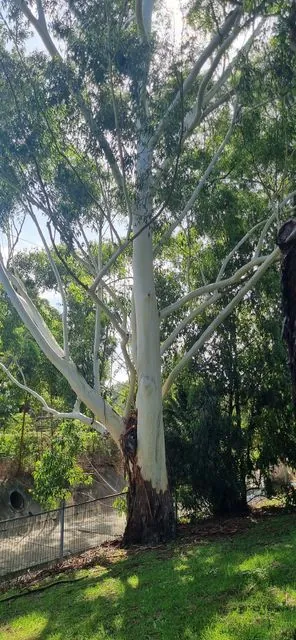
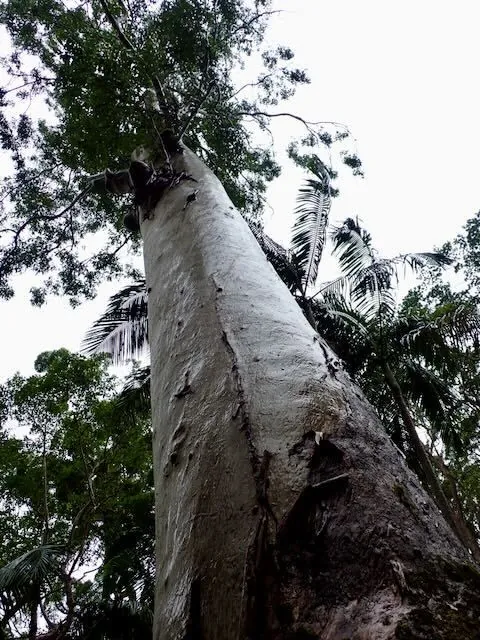
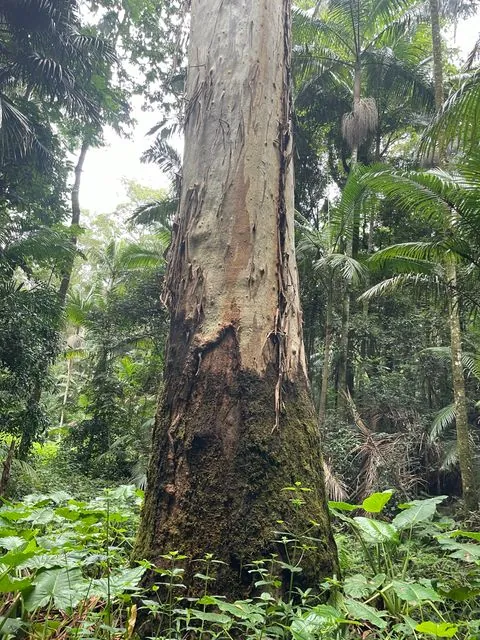
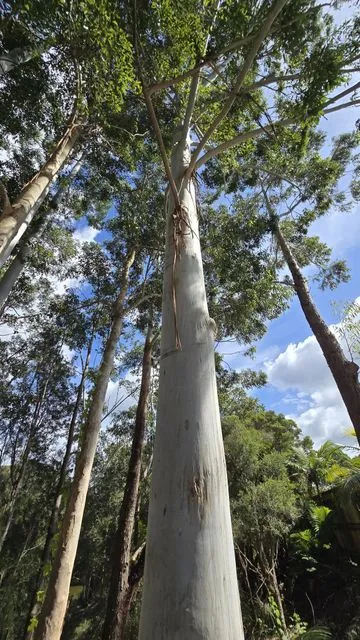
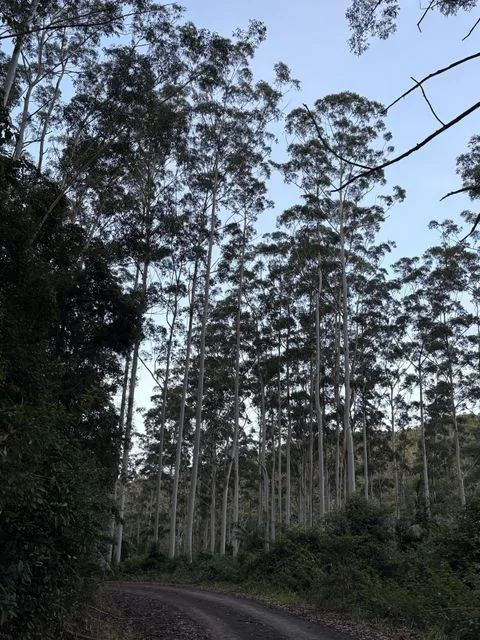
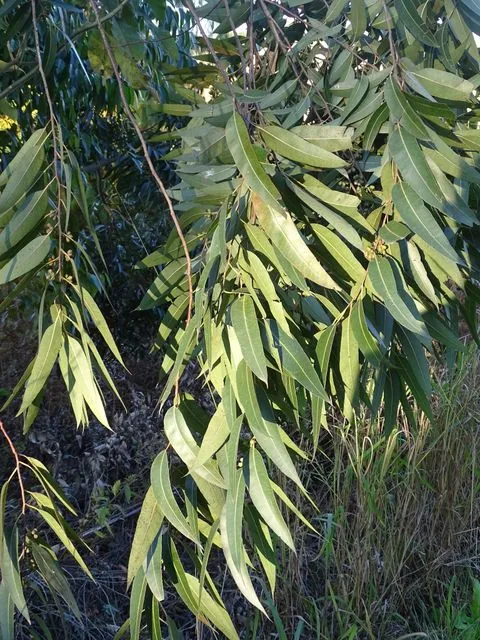
Eucalyptus grandis
Authorship: The author or authors credited with publishing the scientific name. It is written after the name, sometimes with the year, for example L. (Linnaeus) in Zea mays L. An author in parentheses first published the name in another genus or rank. — The author or authors credited with publishing the scientific name. It is written after the name, sometimes with the year, for example L. (Linnaeus) in Zea mays L. An author in parentheses first published the name in another genus or rank.
W.Hill ex Maiden
Common names
Blue Gum, Flooded Gum, Grand Eucalyptus, Rose Gum, flooded-gum, rose-gum, saligna gum, scrub gumNames in other languages (14)Eucalipto-grande, Eucalyptus géant, Toolur, Umdlavuza, da an, eucalipto, eucalipto rosado, eucalipto-branco, eucalipto-rosa, eukaliptus wielki, salignabloekom, ローズガム, 大桉, 巨桉, 玫瑰桉
Kingdom: One of the broadest ranks of biological classification. It groups organisms that share very basic features, for example plants (Plantae), animals (Animalia) or fungi (Fungi). — One of the broadest ranks of biological classification. It groups organisms that share very basic features, for example plants (Plantae), animals (Animalia) or fungi (Fungi).
Plantae
Phylum: Rank below kingdom that groups organisms with a shared general body plan, for example chordates (Chordata), arthropods (Arthropoda) or vascular plants (Tracheophyta). In botany the same rank is also called division. — Rank below kingdom that groups organisms with a shared general body plan, for example chordates (Chordata), arthropods (Arthropoda) or vascular plants (Tracheophyta). In botany the same rank is also called division.
Tracheophyta
Class: Rank below phylum, for example mammals (Mammalia), birds (Aves), insects (Insecta) or monocot plants such as grasses and orchids (Liliopsida). — Rank below phylum, for example mammals (Mammalia), birds (Aves), insects (Insecta) or monocot plants such as grasses and orchids (Liliopsida).
Magnoliopsida
Order: Rank below class that groups related families, for example grasses and their relatives (Poales) or bats (Chiroptera). — Rank below class that groups related families, for example grasses and their relatives (Poales) or bats (Chiroptera).
Myrtales
Family: Rank below order that groups related genera. Family names usually end in -aceae in botany (for example Poaceae, the grass family) and in -idae in zoology (for example Felidae, the cat family). — Rank below order that groups related genera. Family names usually end in -aceae in botany (for example Poaceae, the grass family) and in -idae in zoology (for example Felidae, the cat family).
Myrtaceae
Genus: Rank that groups closely related species. Its name is the first word of a species' scientific name and starts with a capital letter, for example Zea in Zea mays. — Rank that groups closely related species. Its name is the first word of a species' scientific name and starts with a capital letter, for example Zea in Zea mays.
Eucalyptus
Specific epithet: The second word of a species' scientific name. On its own it does not name the species: it always goes with the genus, for example mays in Zea mays. — The second word of a species' scientific name. On its own it does not name the species: it always goes with the genus, for example mays in Zea mays.
grandis
Taxonomic rank: The level a name occupies in the hierarchy of biological classification, such as kingdom, family, genus, species or subspecies. — The level a name occupies in the hierarchy of biological classification, such as kingdom, family, genus, species or subspecies.
species
Reference species
Eucalyptus grandis
Taxonomic status: Whether the taxonomic catalogue the record comes from currently accepts this name for the organism, or treats it as a synonym of another accepted name or as doubtful. — Whether the taxonomic catalogue the record comes from currently accepts this name for the organism, or treats it as a synonym of another accepted name or as doubtful.
accepted name
Photos and conservation status
IUCN Red List category: The extinction-risk category that the International Union for Conservation of Nature (IUCN) assigns to a species on its Red List. EX Extinct: there is no reasonable doubt that the last individual has died. EW Extinct in the wild: it survives only in cultivation, in captivity or as a population far outside its past range. CR Critically endangered, EN Endangered and VU Vulnerable: the three threatened categories, from an extremely high to a high risk of extinction in the wild. NT Near threatened: close to qualifying as threatened. LC Least concern: evaluated and not threatened. DD Data deficient: there is not enough information to assess its risk. NE Not evaluated: not yet assessed against the criteria. It describes the risk of the species worldwide, not its situation in a project's area. — The extinction-risk category that the International Union for Conservation of Nature (IUCN) assigns to a species on its Red List. EX Extinct: there is no reasonable doubt that the last individual has died. EW Extinct in the wild: it survives only in cultivation, in captivity or as a population far outside its past range. CR Critically endangered, EN Endangered and VU Vulnerable: the three threatened categories, from an extremely high to a high risk of extinction in the wild. NT Near threatened: close to qualifying as threatened. LC Least concern: evaluated and not threatened. DD Data deficient: there is not enough information to assess its risk. NE Not evaluated: not yet assessed against the criteria. It describes the risk of the species worldwide, not its situation in a project's area.
Not evaluated (NE)
Source: IUCN Red List via GBIF, queried on 2026-10-13 11:00.
Research-grade iNaturalist observations via GBIF, CC0 or CC BY licences only, queried on 2026-10-13 11:00.
Interacciones documentadas
GloBI says it is documented somewhere in the world. Biolitica answers whether it could happen here.
A documented interaction means it was recorded somewhere in the world. It does not mean it occurs here.
Types shown: 12 of 12
is a symbiont of
×
is a host of
×
interacts with (this species is the record's destination)
×
is an arbuscular mycorrhizal host of
×
has as a host
×
interacts with (this species is the record's origin)
×
is eaten by
×
has as a parasite
×
has as a pathogen
×
is visited by
×
is an ectomycorrhizal host of
×
hasRoost
×
Blocks that do not sit under a navigation concept heading keep the source's own term: no navigation concept has been assigned to them yet.
is a symbiont of
463 organisms
The authority declares no effect on this species for this term: neither that it harms it nor that it benefits it. In the source ontology symbiosis covers mutualism, commensalism and parasitism alike, so this block holds attackers and allies side by side.
Organism
Reads as
Studies
Where it was documented
Actions
Ascomycota sp.
is a symbiont of
3
not compared
Not a modelling unit: the source did not resolve a species — the name carries an open-nomenclature qualifier.
3 sources · 58 records
Robin, A., Pradier, C., Sanguin, H., Mahé, F., Lambais, G.R., de Araujo Pereira, A.P., Germon, A., Santana, M.C., Tisseyre, P., Pablo, A.-L., Heuillard, P., Sauvadet, M., Bouillet, J.-P., Andreote, F.D., Plassard, C., de Moraes Gonçalves, J.L., Cardoso, E.J.B.N., Laclau, J.-P., …
Published in globalbioticinteractions/globalfungi
Record contexts (sample): Itatinga research station of the University of Sao Paulo · no date published; Itatinga research station of the University of Sao Paulo · no date published
Claim type
Published relationship between two taxa
Version
GloBI 0.11
Reuse
This release publishes no reuse terms for this record.
Itatinga research station of the University of Sao Paulo · no date publishedWhere it is: line:hash://sha256/021a206a1459bcca7e251c73f5bd180fc3ac342a09c499855fe42e21fc09edcf!/interactions.tsv.gz!/L20728520
Itatinga research station of the University of Sao Paulo · no date publishedWhere it is: line:hash://sha256/021a206a1459bcca7e251c73f5bd180fc3ac342a09c499855fe42e21fc09edcf!/interactions.tsv.gz!/L20728521
Itatinga research station of the University of Sao Paulo · no date publishedWhere it is: line:hash://sha256/021a206a1459bcca7e251c73f5bd180fc3ac342a09c499855fe42e21fc09edcf!/interactions.tsv.gz!/L20728523
And 53 more records of this source, not listed here.
Franić, I., Prospero, S., Adamson, K., Allan, E., Attorre, F., Auger-Rozenberg, M.A., Augustin, S., Avtzis, D., Baert, W., Barta, M. and Bauters, K., 2022. Worldwide diversity of endophytic fungi and insects associated with dormant tree twigs.. Scientific Data. doi:10.1038/s4159…
Published in globalbioticinteractions/globalfungi
Context: Pretoria · no date published
Claim type
Published relationship between two taxa
Version
GloBI 0.11
Reuse
This release publishes no reuse terms for this record.
Pretoria · no date publishedWhere it is: line:hash://sha256/021a206a1459bcca7e251c73f5bd180fc3ac342a09c499855fe42e21fc09edcf!/interactions.tsv.gz!/L20020908
Kemler, M., Garnas, J., Wingfield, M.J., Gryzenhout, M., Pillay, K.A. and Slippers, B., 2013. Ion Torrent PGM as tool for fungal community analysis: a case study of endophytes in Eucalyptus grandis reveals high taxonomic diversity.. PLoS One. doi:10.1371/journal.pone.0081718
Published in globalbioticinteractions/globalfungi
Context: Mtubatuba, KwaZulu-Natal · no date published
Claim type
Published relationship between two taxa
Version
GloBI 0.11
Reuse
This release publishes no reuse terms for this record.
Mtubatuba, KwaZulu-Natal · no date publishedWhere it is: line:hash://sha256/021a206a1459bcca7e251c73f5bd180fc3ac342a09c499855fe42e21fc09edcf!/interactions.tsv.gz!/L21200257
A published relationship says these two taxa were documented interacting. It does not say how often, or that it happens in this project's region.
fungal sp.
is a symbiont of
3
not compared
Not a modelling unit: the source did not resolve a species — the name carries an open-nomenclature qualifier.
3 sources · 10 records
Robin, A., Pradier, C., Sanguin, H., Mahé, F., Lambais, G.R., de Araujo Pereira, A.P., Germon, A., Santana, M.C., Tisseyre, P., Pablo, A.-L., Heuillard, P., Sauvadet, M., Bouillet, J.-P., Andreote, F.D., Plassard, C., de Moraes Gonçalves, J.L., Cardoso, E.J.B.N., Laclau, J.-P., …
Published in globalbioticinteractions/globalfungi
Record contexts (sample): Itatinga research station of the University of Sao Paulo · no date published; Itatinga research station of the University of Sao Paulo · no date published
Claim type
Published relationship between two taxa
Version
GloBI 0.11
Reuse
This release publishes no reuse terms for this record.
Itatinga research station of the University of Sao Paulo · no date publishedWhere it is: line:hash://sha256/021a206a1459bcca7e251c73f5bd180fc3ac342a09c499855fe42e21fc09edcf!/interactions.tsv.gz!/L20727656
Itatinga research station of the University of Sao Paulo · no date publishedWhere it is: line:hash://sha256/021a206a1459bcca7e251c73f5bd180fc3ac342a09c499855fe42e21fc09edcf!/interactions.tsv.gz!/L20727659
Itatinga research station of the University of Sao Paulo · no date publishedWhere it is: line:hash://sha256/021a206a1459bcca7e251c73f5bd180fc3ac342a09c499855fe42e21fc09edcf!/interactions.tsv.gz!/L20727684
And 5 more records of this source, not listed here.
Franić, I., Prospero, S., Adamson, K., Allan, E., Attorre, F., Auger-Rozenberg, M.A., Augustin, S., Avtzis, D., Baert, W., Barta, M. and Bauters, K., 2022. Worldwide diversity of endophytic fungi and insects associated with dormant tree twigs.. Scientific Data. doi:10.1038/s4159…
Published in globalbioticinteractions/globalfungi
Context: Pretoria · no date published
Claim type
Published relationship between two taxa
Version
GloBI 0.11
Reuse
This release publishes no reuse terms for this record.
Pretoria · no date publishedWhere it is: line:hash://sha256/021a206a1459bcca7e251c73f5bd180fc3ac342a09c499855fe42e21fc09edcf!/interactions.tsv.gz!/L20005923
Kemler, M., Garnas, J., Wingfield, M.J., Gryzenhout, M., Pillay, K.A. and Slippers, B., 2013. Ion Torrent PGM as tool for fungal community analysis: a case study of endophytes in Eucalyptus grandis reveals high taxonomic diversity.. PLoS One. doi:10.1371/journal.pone.0081718
Published in globalbioticinteractions/globalfungi
Context: Mtubatuba, KwaZulu-Natal · no date published
Claim type
Published relationship between two taxa
Version
GloBI 0.11
Reuse
This release publishes no reuse terms for this record.
Mtubatuba, KwaZulu-Natal · no date publishedWhere it is: line:hash://sha256/021a206a1459bcca7e251c73f5bd180fc3ac342a09c499855fe42e21fc09edcf!/interactions.tsv.gz!/L21200173
Robin, A., Pradier, C., Sanguin, H., Mahé, F., Lambais, G.R., de Araujo Pereira, A.P., Germon, A., Santana, M.C., Tisseyre, P., Pablo, A.-L., Heuillard, P., Sauvadet, M., Bouillet, J.-P., Andreote, F.D., Plassard, C., de Moraes Gonçalves, J.L., Cardoso, E.J.B.N., Laclau, J.-P., …
Published in globalbioticinteractions/globalfungi
Record contexts (sample): Itatinga research station of the University of Sao Paulo · no date published; Itatinga research station of the University of Sao Paulo · no date published
Claim type
Published relationship between two taxa
Version
GloBI 0.11
Reuse
This release publishes no reuse terms for this record.
Itatinga research station of the University of Sao Paulo · no date publishedWhere it is: line:hash://sha256/021a206a1459bcca7e251c73f5bd180fc3ac342a09c499855fe42e21fc09edcf!/interactions.tsv.gz!/L20727429
Itatinga research station of the University of Sao Paulo · no date publishedWhere it is: line:hash://sha256/021a206a1459bcca7e251c73f5bd180fc3ac342a09c499855fe42e21fc09edcf!/interactions.tsv.gz!/L20727443
Itatinga research station of the University of Sao Paulo · no date publishedWhere it is: line:hash://sha256/021a206a1459bcca7e251c73f5bd180fc3ac342a09c499855fe42e21fc09edcf!/interactions.tsv.gz!/L20727444
And 6 more records of this source, not listed here.
Franić, I., Prospero, S., Adamson, K., Allan, E., Attorre, F., Auger-Rozenberg, M.A., Augustin, S., Avtzis, D., Baert, W., Barta, M. and Bauters, K., 2022. Worldwide diversity of endophytic fungi and insects associated with dormant tree twigs.. Scientific Data. doi:10.1038/s4159…
Published in globalbioticinteractions/globalfungi
Context: Pretoria · no date published
Claim type
Published relationship between two taxa
Version
GloBI 0.11
Reuse
This release publishes no reuse terms for this record.
Pretoria · no date publishedWhere it is: line:hash://sha256/021a206a1459bcca7e251c73f5bd180fc3ac342a09c499855fe42e21fc09edcf!/interactions.tsv.gz!/L20002575
Kemler, M., Garnas, J., Wingfield, M.J., Gryzenhout, M., Pillay, K.A. and Slippers, B., 2013. Ion Torrent PGM as tool for fungal community analysis: a case study of endophytes in Eucalyptus grandis reveals high taxonomic diversity.. PLoS One. doi:10.1371/journal.pone.0081718
Published in globalbioticinteractions/globalfungi
Context: Mtubatuba, KwaZulu-Natal · no date published
Claim type
Published relationship between two taxa
Version
GloBI 0.11
Reuse
This release publishes no reuse terms for this record.
Mtubatuba, KwaZulu-Natal · no date publishedWhere it is: line:hash://sha256/021a206a1459bcca7e251c73f5bd180fc3ac342a09c499855fe42e21fc09edcf!/interactions.tsv.gz!/L21200156
A published relationship says these two taxa were documented interacting. It does not say how often, or that it happens in this project's region.
Dothideomycetes sp.
is a symbiont of
3
not compared
Not a modelling unit: the source did not resolve a species — the name carries an open-nomenclature qualifier.
3 sources · 40 records
Robin, A., Pradier, C., Sanguin, H., Mahé, F., Lambais, G.R., de Araujo Pereira, A.P., Germon, A., Santana, M.C., Tisseyre, P., Pablo, A.-L., Heuillard, P., Sauvadet, M., Bouillet, J.-P., Andreote, F.D., Plassard, C., de Moraes Gonçalves, J.L., Cardoso, E.J.B.N., Laclau, J.-P., …
Published in globalbioticinteractions/globalfungi
Record contexts (sample): Itatinga research station of the University of Sao Paulo · no date published; Itatinga research station of the University of Sao Paulo · no date published
Claim type
Published relationship between two taxa
Version
GloBI 0.11
Reuse
This release publishes no reuse terms for this record.
Itatinga research station of the University of Sao Paulo · no date publishedWhere it is: line:hash://sha256/021a206a1459bcca7e251c73f5bd180fc3ac342a09c499855fe42e21fc09edcf!/interactions.tsv.gz!/L20727971
Itatinga research station of the University of Sao Paulo · no date publishedWhere it is: line:hash://sha256/021a206a1459bcca7e251c73f5bd180fc3ac342a09c499855fe42e21fc09edcf!/interactions.tsv.gz!/L20727972
Itatinga research station of the University of Sao Paulo · no date publishedWhere it is: line:hash://sha256/021a206a1459bcca7e251c73f5bd180fc3ac342a09c499855fe42e21fc09edcf!/interactions.tsv.gz!/L20727973
And 35 more records of this source, not listed here.
Franić, I., Prospero, S., Adamson, K., Allan, E., Attorre, F., Auger-Rozenberg, M.A., Augustin, S., Avtzis, D., Baert, W., Barta, M. and Bauters, K., 2022. Worldwide diversity of endophytic fungi and insects associated with dormant tree twigs.. Scientific Data. doi:10.1038/s4159…
Published in globalbioticinteractions/globalfungi
Context: Pretoria · no date published
Claim type
Published relationship between two taxa
Version
GloBI 0.11
Reuse
This release publishes no reuse terms for this record.
Pretoria · no date publishedWhere it is: line:hash://sha256/021a206a1459bcca7e251c73f5bd180fc3ac342a09c499855fe42e21fc09edcf!/interactions.tsv.gz!/L20012129
Kemler, M., Garnas, J., Wingfield, M.J., Gryzenhout, M., Pillay, K.A. and Slippers, B., 2013. Ion Torrent PGM as tool for fungal community analysis: a case study of endophytes in Eucalyptus grandis reveals high taxonomic diversity.. PLoS One. doi:10.1371/journal.pone.0081718
Published in globalbioticinteractions/globalfungi
Context: Mtubatuba, KwaZulu-Natal · no date published
Claim type
Published relationship between two taxa
Version
GloBI 0.11
Reuse
This release publishes no reuse terms for this record.
Mtubatuba, KwaZulu-Natal · no date publishedWhere it is: line:hash://sha256/021a206a1459bcca7e251c73f5bd180fc3ac342a09c499855fe42e21fc09edcf!/interactions.tsv.gz!/L21200194
The authority declares no effect on this species for this term: neither that it harms it nor that it benefits it. In the source ontology symbiosis covers mutualism, commensalism and parasitism alike, so this block holds attackers and allies side by side.
Organism
Reads as
Studies
Where it was documented
Actions
TeratosphaeriaTeratosphaeriaceae
is a host of
34
no location
Not a modelling unit: the source publishes it at genus level.
This release publishes no reuse terms for this record.
no place published · no date publishedWhere it is: line:hash://sha256/021a206a1459bcca7e251c73f5bd180fc3ac342a09c499855fe42e21fc09edcf!/interactions.tsv.gz!/L11259665
This release publishes no reuse terms for this record.
no place published · no date publishedWhere it is: line:hash://sha256/021a206a1459bcca7e251c73f5bd180fc3ac342a09c499855fe42e21fc09edcf!/interactions.tsv.gz!/L11259666
This release publishes no reuse terms for this record.
no place published · no date publishedWhere it is: line:hash://sha256/021a206a1459bcca7e251c73f5bd180fc3ac342a09c499855fe42e21fc09edcf!/interactions.tsv.gz!/L11259667
This release publishes no reuse terms for this record.
no place published · no date publishedWhere it is: line:hash://sha256/021a206a1459bcca7e251c73f5bd180fc3ac342a09c499855fe42e21fc09edcf!/interactions.tsv.gz!/L11259668
This release publishes no reuse terms for this record.
no place published · no date publishedWhere it is: line:hash://sha256/021a206a1459bcca7e251c73f5bd180fc3ac342a09c499855fe42e21fc09edcf!/interactions.tsv.gz!/L11259669
This release publishes no reuse terms for this record.
no place published · no date publishedWhere it is: line:hash://sha256/021a206a1459bcca7e251c73f5bd180fc3ac342a09c499855fe42e21fc09edcf!/interactions.tsv.gz!/L11259670
This release publishes no reuse terms for this record.
no place published · no date publishedWhere it is: line:hash://sha256/021a206a1459bcca7e251c73f5bd180fc3ac342a09c499855fe42e21fc09edcf!/interactions.tsv.gz!/L11259671
This release publishes no reuse terms for this record.
no place published · no date publishedWhere it is: line:hash://sha256/021a206a1459bcca7e251c73f5bd180fc3ac342a09c499855fe42e21fc09edcf!/interactions.tsv.gz!/L11259672
Context: no place published · no date published · Material sample
Claim type
Published relationship between two taxa
Version
GloBI 0.11
Reuse
This release publishes no reuse terms for this record.
no place published · no date published · Material sampleAs published: MATERIAL_SAMPLEWhere it is: line:hash://sha256/021a206a1459bcca7e251c73f5bd180fc3ac342a09c499855fe42e21fc09edcf!/interactions.tsv.gz!/L12892457
Slippers, B. , Crous, P.W., Denman, S., Coutinho, T.A., Wingfield, B.D., and Wingfield, M.J.. 2004. Combined multiple gene genealogies and phenotypic characters differentiate several species previously identified as %Botryosphaeria dothidea%. Mycologia 96:83-101
Published in globalbioticinteractions/usda-fungus-host
Context: South Africa · no date published
Claim type
Published relationship between two taxa
Version
GloBI 0.11
Reuse
This release publishes no reuse terms for this record.
South Africa · no date publishedWhere it is: line:hash://sha256/021a206a1459bcca7e251c73f5bd180fc3ac342a09c499855fe42e21fc09edcf!/interactions.tsv.gz!/L4248703
No public URL for this record
Slippers, B. , Fourie, G., Crous, P.W., Coutinho, T.A., Wingfield, B.D., and Wingfield, M.J.. 2004. Multiple gene sequences delimit %Botryosphaeria australis% sp. nov. from %B. lutea%. Mycologia 96:1030-1041
Published in globalbioticinteractions/usda-fungus-host
Context: South Africa · no date published
Claim type
Published relationship between two taxa
Version
GloBI 0.11
Reuse
This release publishes no reuse terms for this record.
South Africa · no date publishedWhere it is: line:hash://sha256/021a206a1459bcca7e251c73f5bd180fc3ac342a09c499855fe42e21fc09edcf!/interactions.tsv.gz!/L4248716
No public URL for this record
Slippers, B. , Johnson, G.I., Crous, P.W., Coutinho, T.A., Wingfield, B.D., and Wingfield, M.J.. 2005. Phylogenetic and morphological re-evaluation of the %Botryosphaeria% species causing diseases of %Mangifera indica%. Mycologia 97:99-110
Published in globalbioticinteractions/usda-fungus-host
Context: South Africa · no date published
Claim type
Published relationship between two taxa
Version
GloBI 0.11
Reuse
This release publishes no reuse terms for this record.
South Africa · no date publishedWhere it is: line:hash://sha256/021a206a1459bcca7e251c73f5bd180fc3ac342a09c499855fe42e21fc09edcf!/interactions.tsv.gz!/L4248732
No public URL for this record
Phillips, A. , Alves, A., Correia, A., and Luque, J.. 2005. Two new species of %Botryosphaeria% with brown, 1-septate ascospores and %Dothiorella% anamorphs. Mycologia 97:513-529
Published in globalbioticinteractions/usda-fungus-host
Context: South Africa · no date published
Claim type
Published relationship between two taxa
Version
GloBI 0.11
Reuse
This release publishes no reuse terms for this record.
South Africa · no date publishedWhere it is: line:hash://sha256/021a206a1459bcca7e251c73f5bd180fc3ac342a09c499855fe42e21fc09edcf!/interactions.tsv.gz!/L4248767
No public URL for this record
Slippers, B. , Summerell, B.A., Crous, P.W., Coutinho, T.A., Wingfield, B.D., and Wingfield, M.J.. 2005. Preliminary studies on %Botryosphaeria% species from southern hemisphere conifers in Australasia and South Africa. Australas. Pl. Pathol. 34:213-220
Published in globalbioticinteractions/usda-fungus-host
Context: South Africa · no date published
Claim type
Published relationship between two taxa
Version
GloBI 0.11
Reuse
This release publishes no reuse terms for this record.
South Africa · no date publishedWhere it is: line:hash://sha256/021a206a1459bcca7e251c73f5bd180fc3ac342a09c499855fe42e21fc09edcf!/interactions.tsv.gz!/L4248783
No public URL for this record
Farr, D.F., Elliott, M., Rossman, A.Y., and Edmonds, R.L.. 2005. %Fusicoccum arbuti% sp. nov. causing cankers on Pacific madrone in western North America with notes on %Fusicoccum dimidiatum,% the correct name for %Scytalidium dimidiatum% and %Nattrassia mangiferae%. Mycologia 9…
Published in globalbioticinteractions/usda-fungus-host
Context: South Africa · no date published
Claim type
Published relationship between two taxa
Version
GloBI 0.11
Reuse
This release publishes no reuse terms for this record.
South Africa · no date publishedWhere it is: line:hash://sha256/021a206a1459bcca7e251c73f5bd180fc3ac342a09c499855fe42e21fc09edcf!/interactions.tsv.gz!/L4248827
No public URL for this record
Barber, P.A., Burgess, T., Hardy, G.E., Slippers, B. , Keane, P.J., and Wingfield, M.J.. 2005. %Botryosphaeria% species from %Eucalyptus% in Australia are pleoanamorphic, producing %Dichomera% synanamorphs in culture. Mycol. Res. 109:1347-1363
Published in globalbioticinteractions/usda-fungus-host
Context: South Africa · no date published
Claim type
Published relationship between two taxa
Version
GloBI 0.11
Reuse
This release publishes no reuse terms for this record.
South Africa · no date publishedWhere it is: line:hash://sha256/021a206a1459bcca7e251c73f5bd180fc3ac342a09c499855fe42e21fc09edcf!/interactions.tsv.gz!/L4248863
No public URL for this record
And 25 more sources, with fewer records, not listed here.
A published relationship says these two taxa were documented interacting. It does not say how often, or that it happens in this project's region.
Chrysoporthe cubensisCryphonectriaceae
is a host of
26
not compared
26 sources · 52 records
Gryzenhout, M. , Myburg, H., van der Merwe, N.A., Wingfield, B.D., and Wingfield, M.J.. 2004. %Chrysoporthe%, a new genus to accommodate %Cryphonectria cubensis%. Stud. Mycol. 50:119-142
Published in globalbioticinteractions/usda-fungus-host
Record contexts (sample): Brazil · no date published; United States · no date published
Claim type
Published relationship between two taxa
Version
GloBI 0.11
Reuse
This release publishes no reuse terms for this record.
Brazil · no date publishedWhere it is: line:hash://sha256/021a206a1459bcca7e251c73f5bd180fc3ac342a09c499855fe42e21fc09edcf!/interactions.tsv.gz!/L4416517
United States · no date publishedWhere it is: line:hash://sha256/021a206a1459bcca7e251c73f5bd180fc3ac342a09c499855fe42e21fc09edcf!/interactions.tsv.gz!/L4416519
India · no date publishedWhere it is: line:hash://sha256/021a206a1459bcca7e251c73f5bd180fc3ac342a09c499855fe42e21fc09edcf!/interactions.tsv.gz!/L4416526
And 2 more records of this source, not listed here.
No public URL for this record
Hodges, C.S.. 1980. The taxonomy of %Diaporthe cubensis%.. Mycologia 72:542-548
Published in globalbioticinteractions/usda-fungus-host
Record contexts (sample): Suriname · no date published; Brazil · no date published
Claim type
Published relationship between two taxa
Version
GloBI 0.11
Reuse
This release publishes no reuse terms for this record.
Suriname · no date publishedWhere it is: line:hash://sha256/021a206a1459bcca7e251c73f5bd180fc3ac342a09c499855fe42e21fc09edcf!/interactions.tsv.gz!/L4325869
Brazil · no date publishedWhere it is: line:hash://sha256/021a206a1459bcca7e251c73f5bd180fc3ac342a09c499855fe42e21fc09edcf!/interactions.tsv.gz!/L4325870
United States · no date publishedWhere it is: line:hash://sha256/021a206a1459bcca7e251c73f5bd180fc3ac342a09c499855fe42e21fc09edcf!/interactions.tsv.gz!/L4325871
And 1 more record of this source, not listed here.
No public URL for this record
Myburg, H., Wingfield, B.D., and Wingfield, M.J.. 1999. Phylogeny of %Cryphonectria cubensis% and allied species inferred from DNA analysis. Mycologia 91:243-250
Published in globalbioticinteractions/usda-fungus-host
Record contexts (sample): Indonesia · no date published; South Africa · no date published
Claim type
Published relationship between two taxa
Version
GloBI 0.11
Reuse
This release publishes no reuse terms for this record.
Indonesia · no date publishedWhere it is: line:hash://sha256/021a206a1459bcca7e251c73f5bd180fc3ac342a09c499855fe42e21fc09edcf!/interactions.tsv.gz!/L4325882
South Africa · no date publishedWhere it is: line:hash://sha256/021a206a1459bcca7e251c73f5bd180fc3ac342a09c499855fe42e21fc09edcf!/interactions.tsv.gz!/L4325883
Australia · no date publishedWhere it is: line:hash://sha256/021a206a1459bcca7e251c73f5bd180fc3ac342a09c499855fe42e21fc09edcf!/interactions.tsv.gz!/L4325884
And 1 more record of this source, not listed here.
No public URL for this record
Gryzenhout, M. , Wingfield, B.D., and Wingfield, M.J.. 2009. Taxonomy, Phylogeny, and Ecology of Bark-Inhabiting and Tree-Pathogenic Fungi in the Cryphonectriaceae. APS Press, St. Paul, Minnesota :119
Published in globalbioticinteractions/usda-fungus-host
Record contexts (sample): South America · no date published; United States · no date published
Claim type
Published relationship between two taxa
Version
GloBI 0.11
Reuse
This release publishes no reuse terms for this record.
South America · no date publishedWhere it is: line:hash://sha256/021a206a1459bcca7e251c73f5bd180fc3ac342a09c499855fe42e21fc09edcf!/interactions.tsv.gz!/L4233364
United States · no date publishedWhere it is: line:hash://sha256/021a206a1459bcca7e251c73f5bd180fc3ac342a09c499855fe42e21fc09edcf!/interactions.tsv.gz!/L4233366
United States · no date publishedWhere it is: line:hash://sha256/021a206a1459bcca7e251c73f5bd180fc3ac342a09c499855fe42e21fc09edcf!/interactions.tsv.gz!/L4233372
No public URL for this record
Myburg, H., Gryzenhout, M. , Wingfield, B.D., and Wingfeld, M.J.. 2003. Conspecificity of %Endothia eugeniae% and %Cryphonectria cubensis%: a re-evaluation based on morphology and DNA sequence data. Mycoscience 44:187-196
Published in globalbioticinteractions/usda-fungus-host
Record contexts (sample): South Africa · no date published; Colombia · no date published
Claim type
Published relationship between two taxa
Version
GloBI 0.11
Reuse
This release publishes no reuse terms for this record.
South Africa · no date publishedWhere it is: line:hash://sha256/021a206a1459bcca7e251c73f5bd180fc3ac342a09c499855fe42e21fc09edcf!/interactions.tsv.gz!/L4285278
Colombia · no date publishedWhere it is: line:hash://sha256/021a206a1459bcca7e251c73f5bd180fc3ac342a09c499855fe42e21fc09edcf!/interactions.tsv.gz!/L4285279
Venezuela · no date publishedWhere it is: line:hash://sha256/021a206a1459bcca7e251c73f5bd180fc3ac342a09c499855fe42e21fc09edcf!/interactions.tsv.gz!/L4285280
No public URL for this record
Myburg, H., Gryzenhout, M. , Heath, R. , Roux, J., Wingfield, B.D., and Wingfield, M.J. 2002. Cryphonectria canker on %Tibouchina% in South Africa. Mycol. Res. 106:1299-1306
Published in globalbioticinteractions/usda-fungus-host
Record contexts (sample): South Africa · no date published; Indonesia · no date published
Claim type
Published relationship between two taxa
Version
GloBI 0.11
Reuse
This release publishes no reuse terms for this record.
South Africa · no date publishedWhere it is: line:hash://sha256/021a206a1459bcca7e251c73f5bd180fc3ac342a09c499855fe42e21fc09edcf!/interactions.tsv.gz!/L4285291
Indonesia · no date publishedWhere it is: line:hash://sha256/021a206a1459bcca7e251c73f5bd180fc3ac342a09c499855fe42e21fc09edcf!/interactions.tsv.gz!/L4285292
Venezuela · no date publishedWhere it is: line:hash://sha256/021a206a1459bcca7e251c73f5bd180fc3ac342a09c499855fe42e21fc09edcf!/interactions.tsv.gz!/L4285293
No public URL for this record
Myburg, H., Gryzenhout, M. , Wingfield, B.D., Stipes, R.J., and Wingfield, M.J.. 2004. Phylogenetic relationships of %Cryphonectria% and %Endothia% species, based on DNA sequence data and morphology. Mycologia 96:990-1001
Published in globalbioticinteractions/usda-fungus-host
Record contexts (sample): Brazil · no date published; Colombia · no date published
Claim type
Published relationship between two taxa
Version
GloBI 0.11
Reuse
This release publishes no reuse terms for this record.
Brazil · no date publishedWhere it is: line:hash://sha256/021a206a1459bcca7e251c73f5bd180fc3ac342a09c499855fe42e21fc09edcf!/interactions.tsv.gz!/L4285308
Colombia · no date publishedWhere it is: line:hash://sha256/021a206a1459bcca7e251c73f5bd180fc3ac342a09c499855fe42e21fc09edcf!/interactions.tsv.gz!/L4285309
South Africa · no date publishedWhere it is: line:hash://sha256/021a206a1459bcca7e251c73f5bd180fc3ac342a09c499855fe42e21fc09edcf!/interactions.tsv.gz!/L4285310
No public URL for this record
Gryzenhout, M. , Rodas, C.A., Mena Portales, J., Clegg, P., Wingfield, B.D., and Wingfield, M.J.. 2006. Novel hosts of the %Eucalyptus% canker pathogen %Chrysoporthe cubensis% and a new %Chrysoporthe% species from Colombia. Mycol. Res. 110:833-845
Published in globalbioticinteractions/usda-fungus-host
Record contexts (sample): Cuba · no date published; Colombia · no date published
Claim type
Published relationship between two taxa
Version
GloBI 0.11
Reuse
This release publishes no reuse terms for this record.
Cuba · no date publishedWhere it is: line:hash://sha256/021a206a1459bcca7e251c73f5bd180fc3ac342a09c499855fe42e21fc09edcf!/interactions.tsv.gz!/L4379444
Colombia · no date publishedWhere it is: line:hash://sha256/021a206a1459bcca7e251c73f5bd180fc3ac342a09c499855fe42e21fc09edcf!/interactions.tsv.gz!/L4379450
Mexico · no date publishedWhere it is: line:hash://sha256/021a206a1459bcca7e251c73f5bd180fc3ac342a09c499855fe42e21fc09edcf!/interactions.tsv.gz!/L4379451
No public URL for this record
And 18 more sources, with fewer records, not listed here.
A published relationship says these two taxa were documented interacting. It does not say how often, or that it happens in this project's region.
Lasiodiplodia rubropurpureaBotryosphaeriaceae
is a host of
26
no location
26 sources · 26 records
Crous, P.W., Muller, M.M., Sanchez, R.M., Giordano, L. , Virginia Bianchinotti, M., Anderson, F.E., and Groenewald, J.Z.. 2015. Resolving %Tiarosporella% spp. allied to Botryosphaeriaceae and Phacidiaceae. Phytotaxa 202(2):73-93
Published in globalbioticinteractions/usda-fungus-host
Context: Australia · no date published
Claim type
Published relationship between two taxa
Version
GloBI 0.11
Reuse
This release publishes no reuse terms for this record.
Australia · no date publishedWhere it is: line:hash://sha256/021a206a1459bcca7e251c73f5bd180fc3ac342a09c499855fe42e21fc09edcf!/interactions.tsv.gz!/L4179177
No public URL for this record
Burgess, T.I., Barber, P.A., Mohali, S. , Pegg, G. , de Beer, W., and Wingfield, M.J.. 2006. Three new %Lasiodiplodia% spp. from the tropics, recognized based on DNA sequence comparisons and morphology. Mycologia 98:423-435
Published in globalbioticinteractions/usda-fungus-host
Context: Australia · no date published
Claim type
Published relationship between two taxa
Version
GloBI 0.11
Reuse
This release publishes no reuse terms for this record.
Australia · no date publishedWhere it is: line:hash://sha256/021a206a1459bcca7e251c73f5bd180fc3ac342a09c499855fe42e21fc09edcf!/interactions.tsv.gz!/L4248941
No public URL for this record
Zhao, J.P., Lu, Q., Liang, J., Decock, C., and Zhang, X.Y.. 2010. %Lasiodiplodia pseudotheobromae%, a new record of pathogenic fungus from some subtropical and tropical trees in southern China. Cryptog. Mycol. 31:431-439
Published in globalbioticinteractions/usda-fungus-host
Context: Australia · no date published
Claim type
Published relationship between two taxa
Version
GloBI 0.11
Reuse
This release publishes no reuse terms for this record.
Australia · no date publishedWhere it is: line:hash://sha256/021a206a1459bcca7e251c73f5bd180fc3ac342a09c499855fe42e21fc09edcf!/interactions.tsv.gz!/L4249059
No public URL for this record
Burgess, T.I., Tan, Y.P., Garnas, J., Edwards, J., Scarlett, K.A., Shuttleworth, L.A., Daniel, R., Dann, E.K., Parkinson, L.E., Dinh, Q., Shivas, R.G., and Jami, F.. 2019. Current status of the Botryosphaeriaceae in Australia. Australas. Pl. Pathol. 48(1):35-44
Published in globalbioticinteractions/usda-fungus-host
Context: Australia · no date published
Claim type
Published relationship between two taxa
Version
GloBI 0.11
Reuse
This release publishes no reuse terms for this record.
Australia · no date publishedWhere it is: line:hash://sha256/021a206a1459bcca7e251c73f5bd180fc3ac342a09c499855fe42e21fc09edcf!/interactions.tsv.gz!/L4270894
No public URL for this record
Dissanayake, A.J., Phillips, A.J.L., Li, X.H., and Hyde, K.D.. 2016. Botryosphaeriaceae: Current status of genera and species. Mycosphere 7(7):1001-1073
Published in globalbioticinteractions/usda-fungus-host
Context: Australia · no date published
Claim type
Published relationship between two taxa
Version
GloBI 0.11
Reuse
This release publishes no reuse terms for this record.
Australia · no date publishedWhere it is: line:hash://sha256/021a206a1459bcca7e251c73f5bd180fc3ac342a09c499855fe42e21fc09edcf!/interactions.tsv.gz!/L4271342
No public URL for this record
Phillips, A.J.L., Alves, A., Pennycook, S.R., Johnston, P.R., Ramaley, A., Akulov, A., and Crous, P.W.. 2008. Resolving the phylogenetic and taxonomic status of dark-spored teleomorph genera in the Botryosphaeriaceae. Persoonia 21:29-55
Published in globalbioticinteractions/usda-fungus-host
Context: Australia · no date published
Claim type
Published relationship between two taxa
Version
GloBI 0.11
Reuse
This release publishes no reuse terms for this record.
Australia · no date publishedWhere it is: line:hash://sha256/021a206a1459bcca7e251c73f5bd180fc3ac342a09c499855fe42e21fc09edcf!/interactions.tsv.gz!/L4271636
No public URL for this record
Phillips, A.J.L., and Alves, A.. 2009. Taxonomy, phylogeny, and epitypification of %Melanops tulasnei%, the type species of %Melanops%. Fung. Diversity 38:155-166
Published in globalbioticinteractions/usda-fungus-host
Context: Australia · no date published
Claim type
Published relationship between two taxa
Version
GloBI 0.11
Reuse
This release publishes no reuse terms for this record.
Australia · no date publishedWhere it is: line:hash://sha256/021a206a1459bcca7e251c73f5bd180fc3ac342a09c499855fe42e21fc09edcf!/interactions.tsv.gz!/L4271714
No public URL for this record
Minnis, A.M., Kennedy, A.H., Grenier, D.B., Palm, M.E., and Rossman, A.Y.. 2012. Phylogeny and taxonomic revision of the %Planistromellaceae% including its coelomycetous anamorphs: contributions towards a monograph of the genus %Kellermania%. Persoonia 29:11-28
Published in globalbioticinteractions/usda-fungus-host
Context: Australia · no date published
Claim type
Published relationship between two taxa
Version
GloBI 0.11
Reuse
This release publishes no reuse terms for this record.
Australia · no date publishedWhere it is: line:hash://sha256/021a206a1459bcca7e251c73f5bd180fc3ac342a09c499855fe42e21fc09edcf!/interactions.tsv.gz!/L4271807
No public URL for this record
And 18 more sources, with fewer records, not listed here.
A published relationship says these two taxa were documented interacting. It does not say how often, or that it happens in this project's region.
Context: Estacion INIA · no date published · Preserved specimen
Claim type
Published relationship between two taxa
Version
GloBI 0.11
Reuse
This release publishes no reuse terms for this record.
Estacion INIA · no date published · Preserved specimenAs published: PreservedSpecimenWhere it is: line:hash://sha256/021a206a1459bcca7e251c73f5bd180fc3ac342a09c499855fe42e21fc09edcf!/interactions.tsv.gz!/L23915165
Context: Estacion INIA · no date published · Preserved specimen
Claim type
Published relationship between two taxa
Version
GloBI 0.11
Reuse
This release publishes no reuse terms for this record.
Estacion INIA · no date published · Preserved specimenAs published: PreservedSpecimenWhere it is: line:hash://sha256/021a206a1459bcca7e251c73f5bd180fc3ac342a09c499855fe42e21fc09edcf!/interactions.tsv.gz!/L23920265
Context: Estacion INIA · no date published · Preserved specimen
Claim type
Published relationship between two taxa
Version
GloBI 0.11
Reuse
This release publishes no reuse terms for this record.
Estacion INIA · no date published · Preserved specimenAs published: PreservedSpecimenWhere it is: line:hash://sha256/021a206a1459bcca7e251c73f5bd180fc3ac342a09c499855fe42e21fc09edcf!/interactions.tsv.gz!/L23920266
Context: Estacion INIA · no date published · Preserved specimen
Claim type
Published relationship between two taxa
Version
GloBI 0.11
Reuse
This release publishes no reuse terms for this record.
Estacion INIA · no date published · Preserved specimenAs published: PreservedSpecimenWhere it is: line:hash://sha256/021a206a1459bcca7e251c73f5bd180fc3ac342a09c499855fe42e21fc09edcf!/interactions.tsv.gz!/L23920267
Context: Estacion INIA · no date published · Preserved specimen
Claim type
Published relationship between two taxa
Version
GloBI 0.11
Reuse
This release publishes no reuse terms for this record.
Estacion INIA · no date published · Preserved specimenAs published: PreservedSpecimenWhere it is: line:hash://sha256/021a206a1459bcca7e251c73f5bd180fc3ac342a09c499855fe42e21fc09edcf!/interactions.tsv.gz!/L23920268
A published relationship says these two taxa were documented interacting. It does not say how often, or that it happens in this project's region.
Trichogramma demoraesiTrichogrammatidae
interacts with
4
no location
4 sources · 4 records
Vieira, J.M., Querino, R.B. & Zucchi, R.A. (2014) On the identity of <i>Trichogramma demoraesi</i> Nagaraja (Hymenoptrea: Trichogrammatidae), with a checklist and key to <i>Trichogramma</i> species associated with <i>Erinnyis ello</i> (L.) (Lepidoptera, Sphingidae) in Brazil…
Published in urn:lsid:checklistbank.org:dataset:124661
Context: no place published · no date published
Claim type
Published relationship between two taxa
Version
GloBI 0.11
Reuse
This release publishes no reuse terms for this record.
no place published · no date publishedWhere it is: line:hash://sha256/021a206a1459bcca7e251c73f5bd180fc3ac342a09c499855fe42e21fc09edcf!/interactions.tsv.gz!/L1260052
No public URL for this record
Nagaraja, H. (1983) Descriptions of new Trichogrammatidae (Hymenoptera) from Brazil. <i>Revista Brasileira de Biología</i>, 43(1), 37–43.
Published in urn:lsid:checklistbank.org:dataset:124661
Context: no place published · no date published
Claim type
Published relationship between two taxa
Version
GloBI 0.11
Reuse
This release publishes no reuse terms for this record.
no place published · no date publishedWhere it is: line:hash://sha256/021a206a1459bcca7e251c73f5bd180fc3ac342a09c499855fe42e21fc09edcf!/interactions.tsv.gz!/L1260498
No public URL for this record
@article{83432, author = {Nagaraja, H.}, booktitle = {Revista Brasileira de Biología}, pages = {37-43}, title = {Descriptions of new Trichogrammatidae (Hymenoptera) from Brazil.}, volume = {43(1)}, year = {1983} }
Published in globalbioticinteractions/taxonworks
Context: no place published · no date published
Claim type
Published relationship between two taxa
Version
GloBI 0.11
Reuse
This release publishes no reuse terms for this record.
no place published · no date publishedWhere it is: line:hash://sha256/021a206a1459bcca7e251c73f5bd180fc3ac342a09c499855fe42e21fc09edcf!/interactions.tsv.gz!/L6031315
No public URL for this record
@article{100370, author = {Vieira, J.M. and Querino, R.B. and Zucchi, R.A.}, booktitle = {Zootaxa}, journal = {Zootaxa}, month = {sep}, day = {29}, pages = {83-89}, title = {On the identity of <i>Trichogramma demoraesi</i> Nagaraja (Hymenoptrea: Trichogrammatidae),…
Published in globalbioticinteractions/taxonworks
Context: no place published · no date published
Claim type
Published relationship between two taxa
Version
GloBI 0.11
Reuse
This release publishes no reuse terms for this record.
no place published · no date publishedWhere it is: line:hash://sha256/021a206a1459bcca7e251c73f5bd180fc3ac342a09c499855fe42e21fc09edcf!/interactions.tsv.gz!/L6126479
No public URL for this record
A published relationship says these two taxa were documented interacting. It does not say how often, or that it happens in this project's region.
TetrastichusEulophidae
interacts with
2
no location
Not a modelling unit: the source publishes it at genus level.
2 sources · 3 records
@article{61960, author = {Du Toit, A.P.}, booktitle = {Plant Protection News}, pages = {6}, title = {Flower centre nectar fly.}, volume = {1988(12)}, year = {1988} }
Published in globalbioticinteractions/taxonworks
Record contexts (sample): no place published · no date published; no place published · no date published
Claim type
Published relationship between two taxa
Version
GloBI 0.11
Reuse
This release publishes no reuse terms for this record.
no place published · no date publishedWhere it is: line:hash://sha256/021a206a1459bcca7e251c73f5bd180fc3ac342a09c499855fe42e21fc09edcf!/interactions.tsv.gz!/L6048781
no place published · no date publishedWhere it is: line:hash://sha256/021a206a1459bcca7e251c73f5bd180fc3ac342a09c499855fe42e21fc09edcf!/interactions.tsv.gz!/L6048783
No public URL for this record
Du Toit, A.P. (1988) Flower centre nectar fly. <i>Plant Protection News</i>, 1988(12), 6.
Published in urn:lsid:checklistbank.org:dataset:124661
Context: no place published · no date published
Claim type
Published relationship between two taxa
Version
GloBI 0.11
Reuse
This release publishes no reuse terms for this record.
no place published · no date publishedWhere it is: line:hash://sha256/021a206a1459bcca7e251c73f5bd180fc3ac342a09c499855fe42e21fc09edcf!/interactions.tsv.gz!/L1258573
No public URL for this record
A published relationship says these two taxa were documented interacting. It does not say how often, or that it happens in this project's region.
Talaromyces wortmanniiTrichocomaceae
interacts with
1
no location
1 source · 1 record
A. Thessen. 2014. Species associations extracted from EOL text data objects via text mining. Accessed at <https://github.com/EOL/pseudonitzchia/archive/e5838965a186fba4b7215cd0d179c4526773bad5.zip> on 04 Sep 2026.
Published in EOL/pseudonitzchia
Context: no place published · no date published
Claim type
Published relationship between two taxa
Version
GloBI 0.11
Reuse
This release publishes no reuse terms for this record.
no place published · no date publishedWhere it is: line:hash://sha256/021a206a1459bcca7e251c73f5bd180fc3ac342a09c499855fe42e21fc09edcf!/interactions.tsv.gz!/L1458792
The authority declares no effect on this species for this term: neither that it harms it nor that it benefits it.
Organism
Reads as
Studies
Where it was documented
Actions
Scutellospora biornataGigasporaceae
is an arbuscular mycorrhizal host of
1
not compared
1 source · 1 record
S. Pehim Limbu, S.L. Stürmer, G. Zahn, C.A. Aguilar-Trigueros, N. Rogers, & V.B. Chaudhary, Climate-linked biogeography of mycorrhizal fungal spore traits, Proc. Natl. Acad. Sci. U.S.A. 122 (29) e2505059122, https://doi.org/10.1073/pnas.2505059122 (2025). Accessed at <https://gi…
Published in globalbioticinteractions/limbu2025
Context: no place published · no date published
Claim type
Published relationship between two taxa
Version
GloBI 0.11
Reuse
This release publishes no reuse terms for this record.
no place published · no date publishedWhere it is: line:hash://sha256/021a206a1459bcca7e251c73f5bd180fc3ac342a09c499855fe42e21fc09edcf!/interactions.tsv.gz!/L13426364
A published relationship says these two taxa were documented interacting. It does not say how often, or that it happens in this project's region.
Acaulospora laevisAcaulosporaceae
is an arbuscular mycorrhizal host of
1
not compared
1 source · 1 record
S. Pehim Limbu, S.L. Stürmer, G. Zahn, C.A. Aguilar-Trigueros, N. Rogers, & V.B. Chaudhary, Climate-linked biogeography of mycorrhizal fungal spore traits, Proc. Natl. Acad. Sci. U.S.A. 122 (29) e2505059122, https://doi.org/10.1073/pnas.2505059122 (2025). Accessed at <https://gi…
Published in globalbioticinteractions/limbu2025
Context: no place published · no date published
Claim type
Published relationship between two taxa
Version
GloBI 0.11
Reuse
This release publishes no reuse terms for this record.
no place published · no date publishedWhere it is: line:hash://sha256/021a206a1459bcca7e251c73f5bd180fc3ac342a09c499855fe42e21fc09edcf!/interactions.tsv.gz!/L13441057
A published relationship says these two taxa were documented interacting. It does not say how often, or that it happens in this project's region.
Dentiscutata heterogamaGigasporaceae
is an arbuscular mycorrhizal host of
1
not compared
1 source · 1 record
S. Pehim Limbu, S.L. Stürmer, G. Zahn, C.A. Aguilar-Trigueros, N. Rogers, & V.B. Chaudhary, Climate-linked biogeography of mycorrhizal fungal spore traits, Proc. Natl. Acad. Sci. U.S.A. 122 (29) e2505059122, https://doi.org/10.1073/pnas.2505059122 (2025). Accessed at <https://gi…
Published in globalbioticinteractions/limbu2025
Context: no place published · no date published
Claim type
Published relationship between two taxa
Version
GloBI 0.11
Reuse
This release publishes no reuse terms for this record.
no place published · no date publishedWhere it is: line:hash://sha256/021a206a1459bcca7e251c73f5bd180fc3ac342a09c499855fe42e21fc09edcf!/interactions.tsv.gz!/L13438513
A published relationship says these two taxa were documented interacting. It does not say how often, or that it happens in this project's region.
Acaulospora tuberculataAcaulosporaceae
is an arbuscular mycorrhizal host of
1
not compared
1 source · 1 record
S. Pehim Limbu, S.L. Stürmer, G. Zahn, C.A. Aguilar-Trigueros, N. Rogers, & V.B. Chaudhary, Climate-linked biogeography of mycorrhizal fungal spore traits, Proc. Natl. Acad. Sci. U.S.A. 122 (29) e2505059122, https://doi.org/10.1073/pnas.2505059122 (2025). Accessed at <https://gi…
Published in globalbioticinteractions/limbu2025
Context: no place published · no date published
Claim type
Published relationship between two taxa
Version
GloBI 0.11
Reuse
This release publishes no reuse terms for this record.
no place published · no date publishedWhere it is: line:hash://sha256/021a206a1459bcca7e251c73f5bd180fc3ac342a09c499855fe42e21fc09edcf!/interactions.tsv.gz!/L13439463
The authority declares no effect on this species for this term: neither that it harms it nor that it benefits it. In the source ontology symbiosis covers mutualism, commensalism and parasitism alike, so this block holds attackers and allies side by side.
Organism
Reads as
Studies
Where it was documented
Actions
Mucor
has as a host
1
no location
Not a modelling unit: the source publishes it at genus level.
1 source · 2 records
Sharma, J.Y. Kerala Forest Research Institute, Division of Forest Pathology, Peechi 680 653, Kerala, India. Personal communication, letter dated March 1985.
Published in millerse/Checklist-of-Micro-Organisms-Associated-With-Tree-Seeds-in-the-World
Record contexts (sample): India · no date published; India · no date published
Claim type
Published relationship between two taxa
Version
GloBI 0.11
Reuse
This release publishes no reuse terms for this record.
India · no date publishedWhere it is: line:hash://sha256/021a206a1459bcca7e251c73f5bd180fc3ac342a09c499855fe42e21fc09edcf!/interactions.tsv.gz!/L158636
India · no date publishedWhere it is: line:hash://sha256/021a206a1459bcca7e251c73f5bd180fc3ac342a09c499855fe42e21fc09edcf!/refuted-interactions.tsv.gz!/L797
No public URL for this record
A published relationship says these two taxa were documented interacting. It does not say how often, or that it happens in this project's region.
Myrothecium roridum
has as a host
Refuted
1
no location
1 source · 1 record
Mathur, S.B. Fungi recorded in seeds of forest tree species at the Danish Government Institute of Seed Pathology, Copenhagen: Institute of Seed Pathology; 1983, 12 pp.
Published in jhammock/Checklist-of-Micro-Organisms-Associated-With-Tree-Seeds-in-the-World
Context: Uruguay · no date published
Claim type
Published relationship between two taxa
Version
GloBI 0.11
Reuse
This release publishes no reuse terms for this record.
Uruguay · no date publishedWhere it is: line:hash://sha256/021a206a1459bcca7e251c73f5bd180fc3ac342a09c499855fe42e21fc09edcf!/refuted-interactions.tsv.gz!/L798
No public URL for this record
A published relationship says these two taxa were documented interacting. It does not say how often, or that it happens in this project's region.
watering pot shellAspergillusTrichocomaceae
has as a host
1
no location
Not a modelling unit: the source publishes it at genus level.
1 source · 2 records
Sharma, J.Y. Kerala Forest Research Institute, Division of Forest Pathology, Peechi 680 653, Kerala, India. Personal communication, letter dated March 1985.
Published in millerse/Checklist-of-Micro-Organisms-Associated-With-Tree-Seeds-in-the-World
Record contexts (sample): India · no date published; India · no date published
Claim type
Published relationship between two taxa
Version
GloBI 0.11
Reuse
This release publishes no reuse terms for this record.
India · no date publishedWhere it is: line:hash://sha256/021a206a1459bcca7e251c73f5bd180fc3ac342a09c499855fe42e21fc09edcf!/interactions.tsv.gz!/L158658
India · no date publishedWhere it is: line:hash://sha256/021a206a1459bcca7e251c73f5bd180fc3ac342a09c499855fe42e21fc09edcf!/refuted-interactions.tsv.gz!/L791
No public URL for this record
A published relationship says these two taxa were documented interacting. It does not say how often, or that it happens in this project's region.
Fusarium fujikuroiNectriaceae
has as a host
1
no location
1 source · 2 records
Mathur, S.B. Fungi recorded in seeds of forest tree species at the Danish Government Institute of Seed Pathology, Copenhagen: Institute of Seed Pathology; 1983, 12 pp.
Published in millerse/Checklist-of-Micro-Organisms-Associated-With-Tree-Seeds-in-the-World
Record contexts (sample): Uruguay · no date published; Uruguay · no date published
Claim type
Published relationship between two taxa
Version
GloBI 0.11
Reuse
This release publishes no reuse terms for this record.
Uruguay · no date publishedWhere it is: line:hash://sha256/021a206a1459bcca7e251c73f5bd180fc3ac342a09c499855fe42e21fc09edcf!/interactions.tsv.gz!/L158570
Uruguay · no date publishedWhere it is: line:hash://sha256/021a206a1459bcca7e251c73f5bd180fc3ac342a09c499855fe42e21fc09edcf!/refuted-interactions.tsv.gz!/L795
No public URL for this record
A published relationship says these two taxa were documented interacting. It does not say how often, or that it happens in this project's region.
The authority declares no effect on this species for this term: neither that it harms it nor that it benefits it.
Organism
Reads as
Studies
Where it was documented
Actions
Cabbage PalmSabal palmettoArecaceae
interacts with
1
no location
1 source · 1 record
A. Thessen. 2014. Species associations extracted from EOL text data objects via text mining. Accessed at <https://github.com/EOL/pseudonitzchia/archive/e5838965a186fba4b7215cd0d179c4526773bad5.zip> on 04 Sep 2026.
Published in EOL/pseudonitzchia
Context: no place published · no date published
Claim type
Published relationship between two taxa
Version
GloBI 0.11
Reuse
This release publishes no reuse terms for this record.
no place published · no date publishedWhere it is: line:hash://sha256/021a206a1459bcca7e251c73f5bd180fc3ac342a09c499855fe42e21fc09edcf!/interactions.tsv.gz!/L1377157
A published relationship says these two taxa were documented interacting. It does not say how often, or that it happens in this project's region.
Longleaf PinePinus palustrisPinaceae
interacts with
1
no location
1 source · 1 record
A. Thessen. 2014. Species associations extracted from EOL text data objects via text mining. Accessed at <https://github.com/EOL/pseudonitzchia/archive/e5838965a186fba4b7215cd0d179c4526773bad5.zip> on 04 Sep 2026.
Published in EOL/pseudonitzchia
Context: no place published · no date published
Claim type
Published relationship between two taxa
Version
GloBI 0.11
Reuse
This release publishes no reuse terms for this record.
no place published · no date publishedWhere it is: line:hash://sha256/021a206a1459bcca7e251c73f5bd180fc3ac342a09c499855fe42e21fc09edcf!/interactions.tsv.gz!/L1452893
A published relationship says these two taxa were documented interacting. It does not say how often, or that it happens in this project's region.
no name
interacts with
1
no location
Not a modelling unit: the source publishes no name for this organism.
1 source · 1 record
A. Thessen. 2014. Species associations extracted from EOL text data objects via text mining. Accessed at <https://github.com/EOL/pseudonitzchia/archive/e5838965a186fba4b7215cd0d179c4526773bad5.zip> on 04 Sep 2026.
Published in EOL/pseudonitzchia
Context: no place published · no date published
Claim type
Published relationship between two taxa
Version
GloBI 0.11
Reuse
This release publishes no reuse terms for this record.
no place published · no date publishedWhere it is: line:hash://sha256/021a206a1459bcca7e251c73f5bd180fc3ac342a09c499855fe42e21fc09edcf!/interactions.tsv.gz!/L1339411
A published relationship says these two taxa were documented interacting. It does not say how often, or that it happens in this project's region.
BluestemsAndropogonPoaceae
interacts with
1
no location
Not a modelling unit: the source publishes it at genus level.
1 source · 1 record
A. Thessen. 2014. Species associations extracted from EOL text data objects via text mining. Accessed at <https://github.com/EOL/pseudonitzchia/archive/e5838965a186fba4b7215cd0d179c4526773bad5.zip> on 04 Sep 2026.
Published in EOL/pseudonitzchia
Context: no place published · no date published
Claim type
Published relationship between two taxa
Version
GloBI 0.11
Reuse
This release publishes no reuse terms for this record.
no place published · no date publishedWhere it is: line:hash://sha256/021a206a1459bcca7e251c73f5bd180fc3ac342a09c499855fe42e21fc09edcf!/interactions.tsv.gz!/L1472438
This term does declare that the organism harms this species.
Organism
Reads as
Studies
Where it was documented
Actions
Araucaria black scaleLindingaspis rossiDiaspididae
is eaten by
1
no location
1 source · 1 record
ABRS 2009. Australian Faunal Directory. Lindingaspis rossi. Australian Biological Resources StudyNode, Canberra. Accessed at <http://biodiversity.org.au/afd/taxa/35a33965-6e29-4447-b94d-05525d12b4d1> on 04 Sep 2026.
Published in globalbioticinteractions/siad
Context: no place published · no date published
Claim type
Published relationship between two taxa
Version
GloBI 0.11
Reuse
This release publishes no reuse terms for this record.
no place published · no date publishedWhere it is: line:hash://sha256/021a206a1459bcca7e251c73f5bd180fc3ac342a09c499855fe42e21fc09edcf!/interactions.tsv.gz!/L18983015
A published relationship says these two taxa were documented interacting. It does not say how often, or that it happens in this project's region.
Glena unipennariaGeometridae
is eaten by
1
no location
1 source · 1 record
Edward Baker; Ian Kitching; George W Beccaloni; Amoret Whitaker; Steen Dupont; Vincent Smith; John S Noyes (2017). NHM Interactions Bank. https://doi.org/10.5519/0060767. Accessed at <https://data.nhm.ac.uk/dataset/82e807f0-6273-4f19-be0a-7f7558442a25/resource/f84ad9f1-bd0c-4811…
Published in globalbioticinteractions/natural-history-museum-london-interactions-bank
Context: no place published · no date published
Claim type
Published relationship between two taxa
Version
GloBI 0.11
Reuse
This release publishes no reuse terms for this record.
no place published · no date publishedWhere it is: line:hash://sha256/021a206a1459bcca7e251c73f5bd180fc3ac342a09c499855fe42e21fc09edcf!/interactions.tsv.gz!/L18706149
A published relationship says these two taxa were documented interacting. It does not say how often, or that it happens in this project's region.
Cardiaspina maniformisAphalaridae
is eaten by
1
no location
1 source · 1 record
ABRS 2009. Australian Faunal Directory. Cardiaspina maniformis. Australian Biological Resources StudyNode, Canberra. Accessed at <http://biodiversity.org.au/afd/taxa/b91874f6-f308-4aa6-8f9f-a33037332475> on 04 Sep 2026.
Published in globalbioticinteractions/siad
Context: no place published · no date published
Claim type
Published relationship between two taxa
Version
GloBI 0.11
Reuse
This release publishes no reuse terms for this record.
no place published · no date publishedWhere it is: line:hash://sha256/021a206a1459bcca7e251c73f5bd180fc3ac342a09c499855fe42e21fc09edcf!/interactions.tsv.gz!/L18981637
A published relationship says these two taxa were documented interacting. It does not say how often, or that it happens in this project's region.
Strepsicrates ejectanaTortricidae
is eaten by
1
no location
1 source · 2 records
Edward Baker; Ian Kitching; George W Beccaloni; Amoret Whitaker; Steen Dupont; Vincent Smith; John S Noyes (2017). NHM Interactions Bank. https://doi.org/10.5519/0060767. Accessed at <https://data.nhm.ac.uk/dataset/82e807f0-6273-4f19-be0a-7f7558442a25/resource/f84ad9f1-bd0c-4811…
Published in globalbioticinteractions/natural-history-museum-london-interactions-bank
Record contexts (sample): no place published · no date published; no place published · no date published
Claim type
Published relationship between two taxa
Version
GloBI 0.11
Reuse
This release publishes no reuse terms for this record.
no place published · no date publishedWhere it is: line:hash://sha256/021a206a1459bcca7e251c73f5bd180fc3ac342a09c499855fe42e21fc09edcf!/interactions.tsv.gz!/L18755588
no place published · no date publishedWhere it is: line:hash://sha256/021a206a1459bcca7e251c73f5bd180fc3ac342a09c499855fe42e21fc09edcf!/interactions.tsv.gz!/L18755640
This term does declare that the organism harms this species.
Organism
Reads as
Studies
Where it was documented
Actions
Eucalyptus Stem Gall WaspLeptocybe invasaEulophidae
has as a parasite
8
no location
8 sources · 8 records
AytarDaDu2011 via Universal Chalcidoidea Database
Published in globalbioticinteractions/natural-history-museum-london-interactions-bank
Context: no place published · no date published
Claim type
Published relationship between two taxa
Version
GloBI 0.11
Reuse
This release publishes no reuse terms for this record.
no place published · no date publishedWhere it is: line:hash://sha256/021a206a1459bcca7e251c73f5bd180fc3ac342a09c499855fe42e21fc09edcf!/interactions.tsv.gz!/L18874439
No public URL for this record
RinaldBaWi2013 via Universal Chalcidoidea Database
Published in globalbioticinteractions/natural-history-museum-london-interactions-bank
Context: no place published · no date published
Claim type
Published relationship between two taxa
Version
GloBI 0.11
Reuse
This release publishes no reuse terms for this record.
no place published · no date publishedWhere it is: line:hash://sha256/021a206a1459bcca7e251c73f5bd180fc3ac342a09c499855fe42e21fc09edcf!/interactions.tsv.gz!/L18930269
No public URL for this record
AquinoBoLo2011 via Universal Chalcidoidea Database
Published in globalbioticinteractions/natural-history-museum-london-interactions-bank
Context: no place published · no date published
Claim type
Published relationship between two taxa
Version
GloBI 0.11
Reuse
This release publishes no reuse terms for this record.
no place published · no date publishedWhere it is: line:hash://sha256/021a206a1459bcca7e251c73f5bd180fc3ac342a09c499855fe42e21fc09edcf!/interactions.tsv.gz!/L18930279
No public URL for this record
Kulkar2010 via Universal Chalcidoidea Database
Published in globalbioticinteractions/natural-history-museum-london-interactions-bank
Context: no place published · no date published
Claim type
Published relationship between two taxa
Version
GloBI 0.11
Reuse
This release publishes no reuse terms for this record.
no place published · no date publishedWhere it is: line:hash://sha256/021a206a1459bcca7e251c73f5bd180fc3ac342a09c499855fe42e21fc09edcf!/interactions.tsv.gz!/L18930293
No public URL for this record
Malump2013 via Universal Chalcidoidea Database
Published in globalbioticinteractions/natural-history-museum-london-interactions-bank
Context: no place published · no date published
Claim type
Published relationship between two taxa
Version
GloBI 0.11
Reuse
This release publishes no reuse terms for this record.
no place published · no date publishedWhere it is: line:hash://sha256/021a206a1459bcca7e251c73f5bd180fc3ac342a09c499855fe42e21fc09edcf!/interactions.tsv.gz!/L18930304
No public URL for this record
MendelPrFi2004 via Universal Chalcidoidea Database
Published in globalbioticinteractions/natural-history-museum-london-interactions-bank
Context: no place published · no date published
Claim type
Published relationship between two taxa
Version
GloBI 0.11
Reuse
This release publishes no reuse terms for this record.
no place published · no date publishedWhere it is: line:hash://sha256/021a206a1459bcca7e251c73f5bd180fc3ac342a09c499855fe42e21fc09edcf!/interactions.tsv.gz!/L18930316
No public URL for this record
JavarePr2010 via Universal Chalcidoidea Database
Published in globalbioticinteractions/natural-history-museum-london-interactions-bank
Context: no place published · no date published
Claim type
Published relationship between two taxa
Version
GloBI 0.11
Reuse
This release publishes no reuse terms for this record.
no place published · no date publishedWhere it is: line:hash://sha256/021a206a1459bcca7e251c73f5bd180fc3ac342a09c499855fe42e21fc09edcf!/interactions.tsv.gz!/L18930319
No public URL for this record
KrishnJa2010 via Universal Chalcidoidea Database
Published in globalbioticinteractions/natural-history-museum-london-interactions-bank
Context: no place published · no date published
Claim type
Published relationship between two taxa
Version
GloBI 0.11
Reuse
This release publishes no reuse terms for this record.
no place published · no date publishedWhere it is: line:hash://sha256/021a206a1459bcca7e251c73f5bd180fc3ac342a09c499855fe42e21fc09edcf!/interactions.tsv.gz!/L18930349
No public URL for this record
A published relationship says these two taxa were documented interacting. It does not say how often, or that it happens in this project's region.
Trichogramma demoraesiTrichogrammatidae
has as a parasite
2
no location
2 sources · 2 records
Nagara983 via Universal Chalcidoidea Database
Published in globalbioticinteractions/natural-history-museum-london-interactions-bank
Context: no place published · no date published
Claim type
Published relationship between two taxa
Version
GloBI 0.11
Reuse
This release publishes no reuse terms for this record.
no place published · no date publishedWhere it is: line:hash://sha256/021a206a1459bcca7e251c73f5bd180fc3ac342a09c499855fe42e21fc09edcf!/interactions.tsv.gz!/L18914948
No public URL for this record
VieiraQuZu2014 via Universal Chalcidoidea Database
Published in globalbioticinteractions/natural-history-museum-london-interactions-bank
Context: no place published · no date published
Claim type
Published relationship between two taxa
Version
GloBI 0.11
Reuse
This release publishes no reuse terms for this record.
no place published · no date publishedWhere it is: line:hash://sha256/021a206a1459bcca7e251c73f5bd180fc3ac342a09c499855fe42e21fc09edcf!/interactions.tsv.gz!/L18914966
No public URL for this record
A published relationship says these two taxa were documented interacting. It does not say how often, or that it happens in this project's region.
Discocriconemella limitaneaCriconematidae
has as a parasite
1
no location
1 source · 1 record
ABRS 2009. Australian Faunal Directory. Discocriconemella limitanea. Australian Biological Resources StudyNode, Canberra. Accessed at <http://biodiversity.org.au/afd/taxa/57c43ff5-5ac5-449b-baf6-428f256bb262> on 04 Sep 2026.
Published in globalbioticinteractions/siad
Context: no place published · no date published
Claim type
Published relationship between two taxa
Version
GloBI 0.11
Reuse
This release publishes no reuse terms for this record.
no place published · no date publishedWhere it is: line:hash://sha256/021a206a1459bcca7e251c73f5bd180fc3ac342a09c499855fe42e21fc09edcf!/interactions.tsv.gz!/L18987603
A published relationship says these two taxa were documented interacting. It does not say how often, or that it happens in this project's region.
Megastigmus zvimendeliMegastigmidae
has as a parasite
1
no location
1 source · 1 record
DoganlHa2010 via Universal Chalcidoidea Database
Published in globalbioticinteractions/natural-history-museum-london-interactions-bank
Context: no place published · no date published
Claim type
Published relationship between two taxa
Version
GloBI 0.11
Reuse
This release publishes no reuse terms for this record.
no place published · no date publishedWhere it is: line:hash://sha256/021a206a1459bcca7e251c73f5bd180fc3ac342a09c499855fe42e21fc09edcf!/interactions.tsv.gz!/L18929436
No public URL for this record
A published relationship says these two taxa were documented interacting. It does not say how often, or that it happens in this project's region.
This term does declare that the organism harms this species. It is a narrow block, and it cannot be the only one that is read: the most frequent term in the catalogue is the one above, which declares no harm, so much of what a reader would call a pest arrives there instead.
Organism
Reads as
Studies
Where it was documented
Actions
Pseudocercospora foriMycosphaerellaceae
has as a pathogen
1
no location
1 source · 1 record
Hunter,G.C., Wingfield,B.D., Crous,P.W. and Wingfield,M.J.; A multi gene phylogney for species of Mycosphaerella occurring on Eucalyptus leaves; Unpublished
Published in globalbioticinteractions/fungaltraits
Context: no place published · no date published · Material sample
Claim type
Published relationship between two taxa
Version
GloBI 0.11
Reuse
This release publishes no reuse terms for this record.
no place published · no date published · Material sampleAs published: Material SampleWhere it is: line:hash://sha256/021a206a1459bcca7e251c73f5bd180fc3ac342a09c499855fe42e21fc09edcf!/interactions.tsv.gz!/L10922130
Garrett Kluthe,B.M., Ben Hassine Ben Ali,M., Nelsen,D.J. and Stephenson,S.L.; A preliminary study of the ectomycorrhizal fungi associated with introduced Eucalyptus in Kenya; Mycosphere 7 (1), 81-86 (2016)
Published in globalbioticinteractions/fungaltraits
Context: no place published · no date published
Claim type
Published relationship between two taxa
Version
GloBI 0.11
Reuse
This release publishes no reuse terms for this record.
no place published · no date publishedWhere it is: line:hash://sha256/021a206a1459bcca7e251c73f5bd180fc3ac342a09c499855fe42e21fc09edcf!/interactions.tsv.gz!/L10916309
A published relationship says these two taxa were documented interacting. It does not say how often, or that it happens in this project's region.
PhaeophleosporaMycosphaerellaceae
has as a pathogen
1
no location
Not a modelling unit: the source publishes it at genus level.
1 source · 1 record
Crous,P.W., Wingfield,M.J., Mansilla,J.P., Alfenas,A.C. and Groenewald,J.Z.; Phylogenetic reassessment of Mycosphaerella spp. and their anamorphs occurring on Eucalyptus. II; Stud. Mycol. 55, 99-131 (2006)
Published in globalbioticinteractions/fungaltraits
Context: no place published · no date published
Claim type
Published relationship between two taxa
Version
GloBI 0.11
Reuse
This release publishes no reuse terms for this record.
no place published · no date publishedWhere it is: line:hash://sha256/021a206a1459bcca7e251c73f5bd180fc3ac342a09c499855fe42e21fc09edcf!/interactions.tsv.gz!/L10922168
A published relationship says these two taxa were documented interacting. It does not say how often, or that it happens in this project's region.
Pseudoteratosphaeria
has as a pathogen
1
no location
1 source · 2 records
Crous,P.W., Wingfield,M.J., Mansilla,J.P., Alfenas,A.C. and Groenewald,J.Z.; Phylogenetic reassessment of Mycosphaerella spp. and their anamorphs occurring on Eucalyptus. II; Stud. Mycol. 55, 99-131 (2006)
Published in globalbioticinteractions/fungaltraits
Record contexts (sample): no place published · no date published; no place published · no date published
Claim type
Published relationship between two taxa
Version
GloBI 0.11
Reuse
This release publishes no reuse terms for this record.
no place published · no date publishedWhere it is: line:hash://sha256/021a206a1459bcca7e251c73f5bd180fc3ac342a09c499855fe42e21fc09edcf!/interactions.tsv.gz!/L10922231
no place published · no date publishedWhere it is: line:hash://sha256/021a206a1459bcca7e251c73f5bd180fc3ac342a09c499855fe42e21fc09edcf!/interactions.tsv.gz!/L10922250
Armstrong, J. A. 1979. Biotic pollination mechanisms in the Australian flora — a review. New Zealand Journal of Botany 17 (4): 467-508.
Published in globalbioticinteractions/batbase
Context: Australia · no date published
Claim type
Published relationship between two taxa
Version
GloBI 0.11
Reuse
This release publishes no reuse terms for this record.
Australia · no date publishedWhere it is: line:hash://sha256/021a206a1459bcca7e251c73f5bd180fc3ac342a09c499855fe42e21fc09edcf!/interactions.tsv.gz!/L12447835
No public URL for this record
Nelson, J. E. 1965. Movements of Australian flying foxes (Pteropodidae: Megachiroptera). Australian Journal of Zoology 13 (1): 53-74.
Published in globalbioticinteractions/batbase
Context: Coast of Queensland · no date published
Claim type
Published relationship between two taxa
Version
GloBI 0.11
Reuse
This release publishes no reuse terms for this record.
Coast of Queensland · no date publishedWhere it is: line:hash://sha256/021a206a1459bcca7e251c73f5bd180fc3ac342a09c499855fe42e21fc09edcf!/interactions.tsv.gz!/L12450187
No public URL for this record
A published relationship says these two taxa were documented interacting. It does not say how often, or that it happens in this project's region.
Black Flying FoxPteropus alectoPteropodidae
is visited by
1
no location
1 source · 1 record
Mickleburgh, S. P., A. M. Hutson & P. Racey. 1992. Old World Fruit Bats: An Action Plan for their Conservation. International Union for Conservation of Nature and Natural Resources, Gland, Switzerland.
Published in globalbioticinteractions/batbase
Context: Australia · no date published
Claim type
Published relationship between two taxa
Version
GloBI 0.11
Reuse
This release publishes no reuse terms for this record.
Australia · no date publishedWhere it is: line:hash://sha256/021a206a1459bcca7e251c73f5bd180fc3ac342a09c499855fe42e21fc09edcf!/interactions.tsv.gz!/L12453972
No public URL for this record
A published relationship says these two taxa were documented interacting. It does not say how often, or that it happens in this project's region.
Showing 2 of 2, by number of studies
is an ectomycorrhizal host of
1 organism
The authority declares no effect on this species for this term: neither that it harms it nor that it benefits it.
Organism
Reads as
Studies
Where it was documented
Actions
Pisolithus albusSclerodermataceae
is an ectomycorrhizal host of
1
not compared
1 source · 1 record
Martin F, J Diez, B Dell, and C Delaruelle, Phylogeography of the ectomycorrhizal Pisolithus species as inferred from the nuclear ribosomal DNA ITS sequences. New Phytologist 153:345-358. doi:10.1046/j.0028-646X.2001.00313.x
Published in globalbioticinteractions/maps
Context: no place published · no date published
Claim type
Published relationship between two taxa
Version
GloBI 0.11
Reuse
This release publishes no reuse terms for this record.
no place published · no date publishedWhere it is: line:hash://sha256/021a206a1459bcca7e251c73f5bd180fc3ac342a09c499855fe42e21fc09edcf!/interactions.tsv.gz!/L7319462
Law, B. S., and J. Anderson. 2000. Roost preferences and foraging ranges of the eastern forest bat, Vespadelus pumilus under two disturbance histories in northern New South Wales. Austral Ecology, 24: 352- 367.
Published in globalbioticinteractions/bat-co-roosting-database
This release publishes no reuse terms for this record.
Lorne Flora Reserve and Swans Crossing · Jan. 1, 1995As published: 1995-01-01T00:00:00ZWhere it is: line:hash://sha256/021a206a1459bcca7e251c73f5bd180fc3ac342a09c499855fe42e21fc09edcf!/interactions.tsv.gz!/L7060765
A published relationship says these two taxa were documented interacting. It does not say how often, or that it happens in this project's region.
Showing 1 of 1, by number of studies
Acompañantes documentados
This agronomic reading comes from a source reserved for internal use, so it is not shown here.
Documented uses and recommendations
Uses and recommendations that a source documents for this species beside a crop, each in its own context. They are the source's statements, not traits of the species and not Biolítica's recommendations, and none of them is a relation between two species.
Among the sources you can read, none documents a use or recommendation of this species beside a crop.