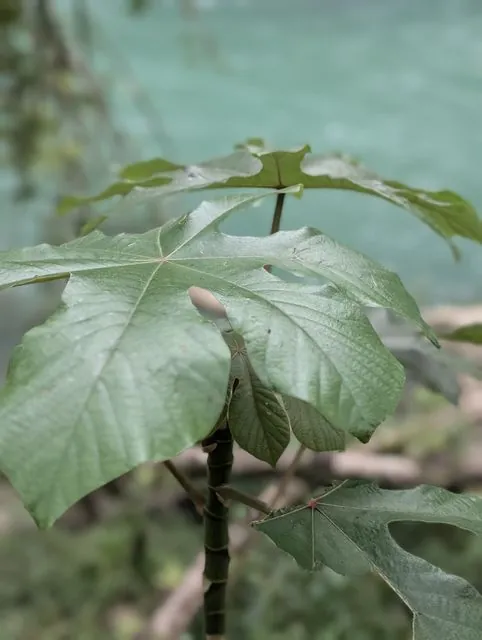
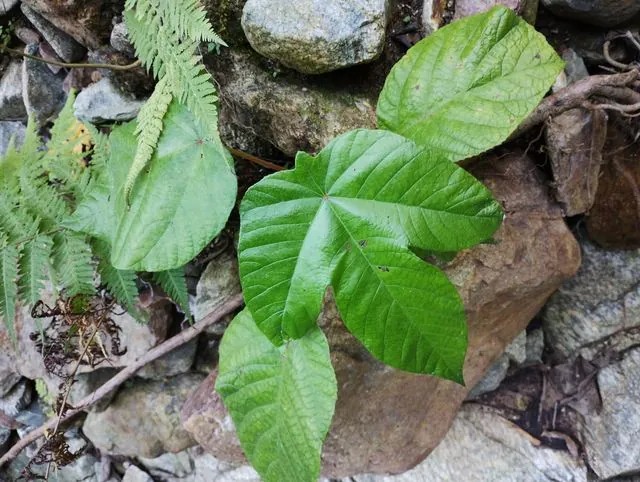
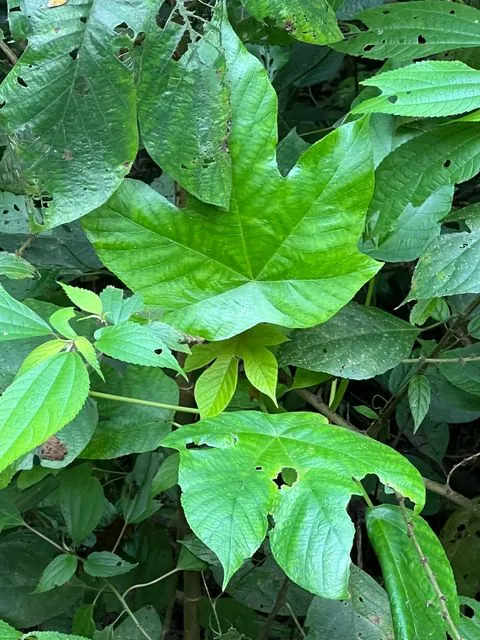
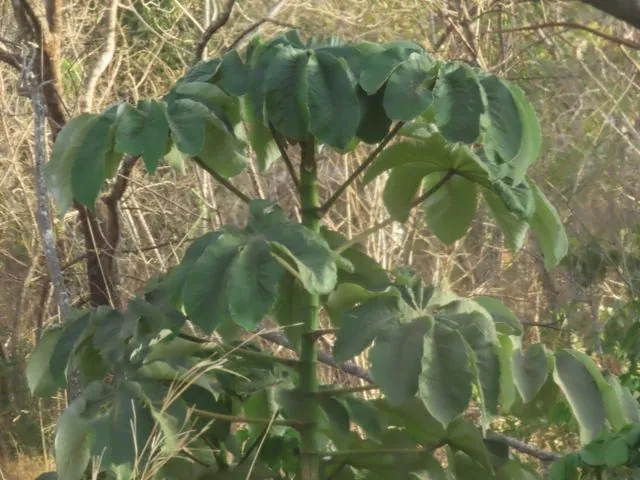
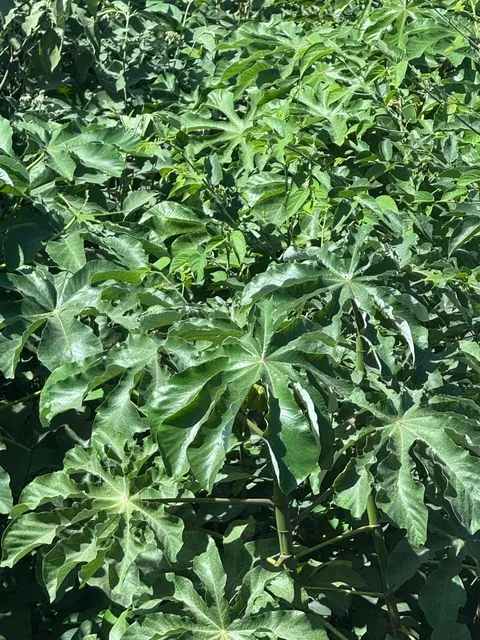
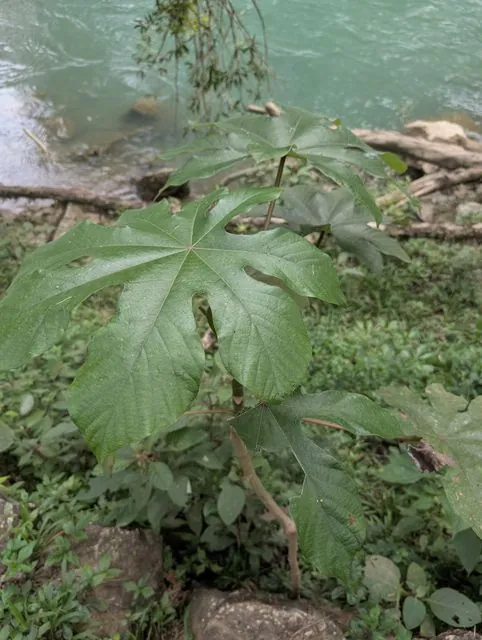
Canonical name: The scientific name without its authorship or date, for example Zea mays instead of Zea mays L. — The scientific name without its authorship or date, for example Zea mays instead of Zea mays L.
Cecropia peltata
Authorship: The author or authors credited with publishing the scientific name. It is written after the name, sometimes with the year, for example L. (Linnaeus) in Zea mays L. An author in parentheses first published the name in another genus or rank. — The author or authors credited with publishing the scientific name. It is written after the name, sometimes with the year, for example L. (Linnaeus) in Zea mays L. An author in parentheses first published the name in another genus or rank.
Kingdom: One of the broadest ranks of biological classification. It groups organisms that share very basic features, for example plants (Plantae), animals (Animalia) or fungi (Fungi). — One of the broadest ranks of biological classification. It groups organisms that share very basic features, for example plants (Plantae), animals (Animalia) or fungi (Fungi).
Plantae
Phylum: Rank below kingdom that groups organisms with a shared general body plan, for example chordates (Chordata), arthropods (Arthropoda) or vascular plants (Tracheophyta). In botany the same rank is also called division. — Rank below kingdom that groups organisms with a shared general body plan, for example chordates (Chordata), arthropods (Arthropoda) or vascular plants (Tracheophyta). In botany the same rank is also called division.
Tracheophyta
Class: Rank below phylum, for example mammals (Mammalia), birds (Aves), insects (Insecta) or monocot plants such as grasses and orchids (Liliopsida). — Rank below phylum, for example mammals (Mammalia), birds (Aves), insects (Insecta) or monocot plants such as grasses and orchids (Liliopsida).
Magnoliopsida
Order: Rank below class that groups related families, for example grasses and their relatives (Poales) or bats (Chiroptera). — Rank below class that groups related families, for example grasses and their relatives (Poales) or bats (Chiroptera).
Rosales
Family: Rank below order that groups related genera. Family names usually end in -aceae in botany (for example Poaceae, the grass family) and in -idae in zoology (for example Felidae, the cat family). — Rank below order that groups related genera. Family names usually end in -aceae in botany (for example Poaceae, the grass family) and in -idae in zoology (for example Felidae, the cat family).
Urticaceae
Genus: Rank that groups closely related species. Its name is the first word of a species' scientific name and starts with a capital letter, for example Zea in Zea mays. — Rank that groups closely related species. Its name is the first word of a species' scientific name and starts with a capital letter, for example Zea in Zea mays.
Cecropia
Specific epithet: The second word of a species' scientific name. On its own it does not name the species: it always goes with the genus, for example mays in Zea mays. — The second word of a species' scientific name. On its own it does not name the species: it always goes with the genus, for example mays in Zea mays.
peltata
Taxonomic rank: The level a name occupies in the hierarchy of biological classification, such as kingdom, family, genus, species or subspecies. — The level a name occupies in the hierarchy of biological classification, such as kingdom, family, genus, species or subspecies.
species
Reference species
Cecropia peltata
Taxonomic status: Whether the taxonomic catalogue the record comes from currently accepts this name for the organism, or treats it as a synonym of another accepted name or as doubtful. — Whether the taxonomic catalogue the record comes from currently accepts this name for the organism, or treats it as a synonym of another accepted name or as doubtful.
accepted name
Photos and conservation status
IUCN Red List category: The extinction-risk category that the International Union for Conservation of Nature (IUCN) assigns to a species on its Red List. EX Extinct: there is no reasonable doubt that the last individual has died. EW Extinct in the wild: it survives only in cultivation, in captivity or as a population far outside its past range. CR Critically endangered, EN Endangered and VU Vulnerable: the three threatened categories, from an extremely high to a high risk of extinction in the wild. NT Near threatened: close to qualifying as threatened. LC Least concern: evaluated and not threatened. DD Data deficient: there is not enough information to assess its risk. NE Not evaluated: not yet assessed against the criteria. It describes the risk of the species worldwide, not its situation in a project's area. — The extinction-risk category that the International Union for Conservation of Nature (IUCN) assigns to a species on its Red List. EX Extinct: there is no reasonable doubt that the last individual has died. EW Extinct in the wild: it survives only in cultivation, in captivity or as a population far outside its past range. CR Critically endangered, EN Endangered and VU Vulnerable: the three threatened categories, from an extremely high to a high risk of extinction in the wild. NT Near threatened: close to qualifying as threatened. LC Least concern: evaluated and not threatened. DD Data deficient: there is not enough information to assess its risk. NE Not evaluated: not yet assessed against the criteria. It describes the risk of the species worldwide, not its situation in a project's area.
Least concern (LC)
Source: IUCN Red List via GBIF, queried on 2026-10-13 10:55.
Research-grade iNaturalist observations via GBIF, CC0 or CC BY licences only, queried on 2026-10-13 10:55.
Interacciones documentadas
GloBI says it is documented somewhere in the world. Biolitica answers whether it could happen here.
A documented interaction means it was recorded somewhere in the world. It does not mean it occurs here.
Types shown: 11 of 11
is a host of
×
is eaten by
×
has as a vector
×
is dispersed by
×
interacts with (this species is the record's destination)
×
is adjacent to
×
is visited by
×
interacts with (this species is the record's origin)
×
is a parasite of
×
hasRoost
×
has as a parasite
×
Blocks that do not sit under a navigation concept heading keep the source's own term: no navigation concept has been assigned to them yet.
is a host of
137 organisms
The authority declares no effect on this species for this term: neither that it harms it nor that it benefits it. In the source ontology symbiosis covers mutualism, commensalism and parasitism alike, so this block holds attackers and allies side by side.
Organism
Reads as
Studies
Where it was documented
Actions
Phyllachora cecropiaePhyllachoraceae
is a host of
46
not compared
46 sources · 55 records
Dennis, R.W.G.. 1970. Kew Bulletin Additional Series III. Fungus Flora of Venezuela and Adjacent Countries.. Verlag von J. Cramer :531
Published in globalbioticinteractions/usda-fungus-host
Record contexts (sample): Venezuela · no date published; Ecuador · no date published
Claim type
Published relationship between two taxa
Version
GloBI 0.11
Reuse
This release publishes no reuse terms for this record.
Venezuela · no date publishedWhere it is: line:hash://sha256/021a206a1459bcca7e251c73f5bd180fc3ac342a09c499855fe42e21fc09edcf!/interactions.tsv.gz!/L3950395
Ecuador · no date publishedWhere it is: line:hash://sha256/021a206a1459bcca7e251c73f5bd180fc3ac342a09c499855fe42e21fc09edcf!/interactions.tsv.gz!/L3950397
Trinidad and Tobago · no date publishedWhere it is: line:hash://sha256/021a206a1459bcca7e251c73f5bd180fc3ac342a09c499855fe42e21fc09edcf!/interactions.tsv.gz!/L3950398
And 2 more records of this source, not listed here.
No public URL for this record
Stevenson, J.A.. 1975. Fungi of Puerto Rico and the American Virgin Islands. Contr. Reed Herb. 23:743
Published in globalbioticinteractions/usda-fungus-host
Record contexts (sample): Puerto Rico · no date published; Virgin Islands · no date published
Claim type
Published relationship between two taxa
Version
GloBI 0.11
Reuse
This release publishes no reuse terms for this record.
Puerto Rico · no date publishedWhere it is: line:hash://sha256/021a206a1459bcca7e251c73f5bd180fc3ac342a09c499855fe42e21fc09edcf!/interactions.tsv.gz!/L3940343
Virgin Islands · no date publishedWhere it is: line:hash://sha256/021a206a1459bcca7e251c73f5bd180fc3ac342a09c499855fe42e21fc09edcf!/interactions.tsv.gz!/L3940372
Puerto Rico · no date publishedWhere it is: line:hash://sha256/021a206a1459bcca7e251c73f5bd180fc3ac342a09c499855fe42e21fc09edcf!/interactions.tsv.gz!/L3942160
And 1 more record of this source, not listed here.
Published in globalbioticinteractions/usda-fungus-host
Record contexts (sample): Dominican Republic · no date published; Dominican Republic · no date published
Claim type
Published relationship between two taxa
Version
GloBI 0.11
Reuse
This release publishes no reuse terms for this record.
Dominican Republic · no date publishedWhere it is: line:hash://sha256/021a206a1459bcca7e251c73f5bd180fc3ac342a09c499855fe42e21fc09edcf!/interactions.tsv.gz!/L3946478
Dominican Republic · no date publishedWhere it is: line:hash://sha256/021a206a1459bcca7e251c73f5bd180fc3ac342a09c499855fe42e21fc09edcf!/interactions.tsv.gz!/L3947152
No public URL for this record
Minter, D.W., Rodriguez Hernandez, M., and Mena Portales, J.. 2001. Fungi of the Caribbean: an annotated checklist. PDMS Publishing :946
Published in globalbioticinteractions/usda-fungus-host
Record contexts (sample): West Indies · no date published; West Indies · no date published
Claim type
Published relationship between two taxa
Version
GloBI 0.11
Reuse
This release publishes no reuse terms for this record.
West Indies · no date publishedWhere it is: line:hash://sha256/021a206a1459bcca7e251c73f5bd180fc3ac342a09c499855fe42e21fc09edcf!/interactions.tsv.gz!/L3956387
West Indies · no date publishedWhere it is: line:hash://sha256/021a206a1459bcca7e251c73f5bd180fc3ac342a09c499855fe42e21fc09edcf!/interactions.tsv.gz!/L3956608
Context: Federal District, Valle de Puerto La Cruz, El Limon · Jan. 17, 1928 · Preserved specimen
Claim type
Published relationship between two taxa
Version
GloBI 0.11
Reuse
This release publishes no reuse terms for this record.
Federal District, Valle de Puerto La Cruz, El Limon · Jan. 17, 1928 · Preserved specimenAs published: 1928-01-17T00:00:00Z · PreservedSpecimenWhere it is: line:hash://sha256/021a206a1459bcca7e251c73f5bd180fc3ac342a09c499855fe42e21fc09edcf!/interactions.tsv.gz!/L16463685
Context: El Limon, Pr. Puerto La Cruz · Jan. 17, 1928 · Preserved specimen
Claim type
Published relationship between two taxa
Version
GloBI 0.11
Reuse
This release publishes no reuse terms for this record.
El Limon, Pr. Puerto La Cruz · Jan. 17, 1928 · Preserved specimenAs published: 1928-01-17T00:00:00Z · PreservedSpecimenWhere it is: line:hash://sha256/021a206a1459bcca7e251c73f5bd180fc3ac342a09c499855fe42e21fc09edcf!/interactions.tsv.gz!/L16834471
Context: Federal District, Valle de Puerto La Cruz, El Limon · Jan. 17, 1928 · Preserved specimen
Claim type
Published relationship between two taxa
Version
GloBI 0.11
Reuse
This release publishes no reuse terms for this record.
Federal District, Valle de Puerto La Cruz, El Limon · Jan. 17, 1928 · Preserved specimenAs published: 1928-01-17T00:00:00Z · PreservedSpecimenWhere it is: line:hash://sha256/021a206a1459bcca7e251c73f5bd180fc3ac342a09c499855fe42e21fc09edcf!/interactions.tsv.gz!/L16881171
Context: La Vega, Maimon River, near Maimon · Aug. 13, 1937 · Preserved specimen
Claim type
Published relationship between two taxa
Version
GloBI 0.11
Reuse
This release publishes no reuse terms for this record.
La Vega, Maimon River, near Maimon · Aug. 13, 1937 · Preserved specimenAs published: 1937-08-13T00:00:00Z · PreservedSpecimenWhere it is: line:hash://sha256/021a206a1459bcca7e251c73f5bd180fc3ac342a09c499855fe42e21fc09edcf!/interactions.tsv.gz!/L17266730
Context: Area de Conservacion Guanacaste, Sector Mundo Nuevo, Vado Miramonte · Nov. 12, 2012 · Material sample
Claim type
Published relationship between two taxa
Version
GloBI 0.11
Reuse
This release publishes no reuse terms for this record.
Area de Conservacion Guanacaste, Sector Mundo Nuevo, Vado Miramonte · Nov. 12, 2012 · Material sampleAs published: 2012-11-12T00:00:00Z · MATERIAL_SAMPLEWhere it is: line:hash://sha256/021a206a1459bcca7e251c73f5bd180fc3ac342a09c499855fe42e21fc09edcf!/interactions.tsv.gz!/L12824663
Context: Area de Conservacion Guanacaste, Sector Mundo Nuevo, Quebrada Tibio Perla · Nov. 22, 2012 · Material sample
Claim type
Published relationship between two taxa
Version
GloBI 0.11
Reuse
This release publishes no reuse terms for this record.
Area de Conservacion Guanacaste, Sector Mundo Nuevo, Quebrada Tibio Perla · Nov. 22, 2012 · Material sampleAs published: 2012-11-22T00:00:00Z · MATERIAL_SAMPLEWhere it is: line:hash://sha256/021a206a1459bcca7e251c73f5bd180fc3ac342a09c499855fe42e21fc09edcf!/interactions.tsv.gz!/L12824664
Context: Area de Conservacion Guanacaste, Sector Cacao, Quebrada Heliconia · Aug. 5, 2005 · Material sample
Claim type
Published relationship between two taxa
Version
GloBI 0.11
Reuse
This release publishes no reuse terms for this record.
Area de Conservacion Guanacaste, Sector Cacao, Quebrada Heliconia · Aug. 5, 2005 · Material sampleAs published: 2005-08-05T00:00:00Z · MATERIAL_SAMPLEWhere it is: line:hash://sha256/021a206a1459bcca7e251c73f5bd180fc3ac342a09c499855fe42e21fc09edcf!/interactions.tsv.gz!/L12920289
Context: Area de Conservacion Guanacaste, Sector Horizontes, Vado Esperanza · Oct. 21, 2006 · Material sample
Claim type
Published relationship between two taxa
Version
GloBI 0.11
Reuse
This release publishes no reuse terms for this record.
Area de Conservacion Guanacaste, Sector Horizontes, Vado Esperanza · Oct. 21, 2006 · Material sampleAs published: 2006-10-21T00:00:00Z · MATERIAL_SAMPLEWhere it is: line:hash://sha256/021a206a1459bcca7e251c73f5bd180fc3ac342a09c499855fe42e21fc09edcf!/interactions.tsv.gz!/L12921249
Context: Area de Conservacion Guanacaste, Sector Santa Rosa, Area Administrativa · Nov. 5, 2001 · Material sample
Claim type
Published relationship between two taxa
Version
GloBI 0.11
Reuse
This release publishes no reuse terms for this record.
Area de Conservacion Guanacaste, Sector Santa Rosa, Area Administrativa · Nov. 5, 2001 · Material sampleAs published: 2001-11-05T00:00:00Z · MATERIAL_SAMPLEWhere it is: line:hash://sha256/021a206a1459bcca7e251c73f5bd180fc3ac342a09c499855fe42e21fc09edcf!/interactions.tsv.gz!/L12929984
Context: Area de Conservacion Guanacaste, Sector Santa Rosa, Area Administrativa · Oct. 30, 2001 · Material sample
Claim type
Published relationship between two taxa
Version
GloBI 0.11
Reuse
This release publishes no reuse terms for this record.
Area de Conservacion Guanacaste, Sector Santa Rosa, Area Administrativa · Oct. 30, 2001 · Material sampleAs published: 2001-10-30T00:00:00Z · MATERIAL_SAMPLEWhere it is: line:hash://sha256/021a206a1459bcca7e251c73f5bd180fc3ac342a09c499855fe42e21fc09edcf!/interactions.tsv.gz!/L12929985
Context: Area de Conservacion Guanacaste, Sector Cacao, Quebrada Heliconia · Aug. 2, 2005 · Material sample
Claim type
Published relationship between two taxa
Version
GloBI 0.11
Reuse
This release publishes no reuse terms for this record.
Area de Conservacion Guanacaste, Sector Cacao, Quebrada Heliconia · Aug. 2, 2005 · Material sampleAs published: 2005-08-02T00:00:00Z · MATERIAL_SAMPLEWhere it is: line:hash://sha256/021a206a1459bcca7e251c73f5bd180fc3ac342a09c499855fe42e21fc09edcf!/interactions.tsv.gz!/L12929994
Context: Area de Conservacion Guanacaste, Sector Del Oro, Uncaria · Nov. 13, 2004 · Material sample
Claim type
Published relationship between two taxa
Version
GloBI 0.11
Reuse
This release publishes no reuse terms for this record.
Area de Conservacion Guanacaste, Sector Del Oro, Uncaria · Nov. 13, 2004 · Material sampleAs published: 2004-11-13T00:00:00Z · MATERIAL_SAMPLEWhere it is: line:hash://sha256/021a206a1459bcca7e251c73f5bd180fc3ac342a09c499855fe42e21fc09edcf!/interactions.tsv.gz!/L12930007
And 25 more sources, with fewer records, not listed here.
A published relationship says these two taxa were documented interacting. It does not say how often, or that it happens in this project's region.
Appendiculella tonkinensisMeliolaceae
is a host of
19
not compared
19 sources · 20 records
Stevenson, J.A.. 1975. Fungi of Puerto Rico and the American Virgin Islands. Contr. Reed Herb. 23:743
Published in globalbioticinteractions/usda-fungus-host
Record contexts (sample): Puerto Rico · no date published; Virgin Islands · no date published
Claim type
Published relationship between two taxa
Version
GloBI 0.11
Reuse
This release publishes no reuse terms for this record.
Puerto Rico · no date publishedWhere it is: line:hash://sha256/021a206a1459bcca7e251c73f5bd180fc3ac342a09c499855fe42e21fc09edcf!/interactions.tsv.gz!/L3942896
Virgin Islands · no date publishedWhere it is: line:hash://sha256/021a206a1459bcca7e251c73f5bd180fc3ac342a09c499855fe42e21fc09edcf!/interactions.tsv.gz!/L3942935
Context: road to San Jose de las Matas · Sept. 22, 1931 · Preserved specimen
Claim type
Published relationship between two taxa
Version
GloBI 0.11
Reuse
This release publishes no reuse terms for this record.
road to San Jose de las Matas · Sept. 22, 1931 · Preserved specimenAs published: 1931-09-22T00:00:00Z · PreservedSpecimenWhere it is: line:hash://sha256/021a206a1459bcca7e251c73f5bd180fc3ac342a09c499855fe42e21fc09edcf!/interactions.tsv.gz!/L16531341
Context: France Field · Aug. 3, 1924 · Preserved specimen
Claim type
Published relationship between two taxa
Version
GloBI 0.11
Reuse
This release publishes no reuse terms for this record.
France Field · Aug. 3, 1924 · Preserved specimenAs published: 1924-08-03T00:00:00Z · PreservedSpecimenWhere it is: line:hash://sha256/021a206a1459bcca7e251c73f5bd180fc3ac342a09c499855fe42e21fc09edcf!/interactions.tsv.gz!/L17384839
Context: New Limon · Aug. 4, 1924 · Preserved specimen
Claim type
Published relationship between two taxa
Version
GloBI 0.11
Reuse
This release publishes no reuse terms for this record.
New Limon · Aug. 4, 1924 · Preserved specimenAs published: 1924-08-04T00:00:00Z · PreservedSpecimenWhere it is: line:hash://sha256/021a206a1459bcca7e251c73f5bd180fc3ac342a09c499855fe42e21fc09edcf!/interactions.tsv.gz!/L17384840
Context: France Field · Aug. 3, 1924 · Preserved specimen
Claim type
Published relationship between two taxa
Version
GloBI 0.11
Reuse
This release publishes no reuse terms for this record.
France Field · Aug. 3, 1924 · Preserved specimenAs published: 1924-08-03T00:00:00Z · PreservedSpecimenWhere it is: line:hash://sha256/021a206a1459bcca7e251c73f5bd180fc3ac342a09c499855fe42e21fc09edcf!/interactions.tsv.gz!/L17384841
Context: New Limon · Aug. 4, 1924 · Preserved specimen
Claim type
Published relationship between two taxa
Version
GloBI 0.11
Reuse
This release publishes no reuse terms for this record.
New Limon · Aug. 4, 1924 · Preserved specimenAs published: 1924-08-04T00:00:00Z · PreservedSpecimenWhere it is: line:hash://sha256/021a206a1459bcca7e251c73f5bd180fc3ac342a09c499855fe42e21fc09edcf!/interactions.tsv.gz!/L17384844
Context: Area de Conservacion Guanacaste, Sector Cacao, Rancho Harold · Jan. 8, 1998 · Material sample
Claim type
Published relationship between two taxa
Version
GloBI 0.11
Reuse
This release publishes no reuse terms for this record.
Area de Conservacion Guanacaste, Sector Cacao, Rancho Harold · Jan. 8, 1998 · Material sampleAs published: 1998-01-08T00:00:00Z · MATERIAL_SAMPLEWhere it is: line:hash://sha256/021a206a1459bcca7e251c73f5bd180fc3ac342a09c499855fe42e21fc09edcf!/interactions.tsv.gz!/L12824227
Context: Area de Conservacion Guanacaste, Sector Cacao, Estacion Gongora · Nov. 17, 1996 · Material sample
Claim type
Published relationship between two taxa
Version
GloBI 0.11
Reuse
This release publishes no reuse terms for this record.
Area de Conservacion Guanacaste, Sector Cacao, Estacion Gongora · Nov. 17, 1996 · Material sampleAs published: 1996-11-17T00:00:00Z · MATERIAL_SAMPLEWhere it is: line:hash://sha256/021a206a1459bcca7e251c73f5bd180fc3ac342a09c499855fe42e21fc09edcf!/interactions.tsv.gz!/L12879784
Context: Area de Conservacion Guanacaste, Sector Cacao, Cuesta Caimito · Oct. 12, 2004 · Material sample
Claim type
Published relationship between two taxa
Version
GloBI 0.11
Reuse
This release publishes no reuse terms for this record.
Area de Conservacion Guanacaste, Sector Cacao, Cuesta Caimito · Oct. 12, 2004 · Material sampleAs published: 2004-10-12T00:00:00Z · MATERIAL_SAMPLEWhere it is: line:hash://sha256/021a206a1459bcca7e251c73f5bd180fc3ac342a09c499855fe42e21fc09edcf!/interactions.tsv.gz!/L12912703
Context: Area de Conservacion Guanacaste, Sector Del Oro, Sendero Puertas · July 25, 2004 · Material sample
Claim type
Published relationship between two taxa
Version
GloBI 0.11
Reuse
This release publishes no reuse terms for this record.
Area de Conservacion Guanacaste, Sector Del Oro, Sendero Puertas · July 25, 2004 · Material sampleAs published: 2004-07-25T00:00:00Z · MATERIAL_SAMPLEWhere it is: line:hash://sha256/021a206a1459bcca7e251c73f5bd180fc3ac342a09c499855fe42e21fc09edcf!/interactions.tsv.gz!/L12912704
Context: Area de Conservacion Guanacaste, Sector Mundo Nuevo, Quebrada Tibio Perla · Jan. 27, 2006 · Material sample
Claim type
Published relationship between two taxa
Version
GloBI 0.11
Reuse
This release publishes no reuse terms for this record.
Area de Conservacion Guanacaste, Sector Mundo Nuevo, Quebrada Tibio Perla · Jan. 27, 2006 · Material sampleAs published: 2006-01-27T00:00:00Z · MATERIAL_SAMPLEWhere it is: line:hash://sha256/021a206a1459bcca7e251c73f5bd180fc3ac342a09c499855fe42e21fc09edcf!/interactions.tsv.gz!/L12914715
Context: Area de Conservacion Guanacaste, Sector Mundo Nuevo, Mamones · Feb. 4, 2006 · Material sample
Claim type
Published relationship between two taxa
Version
GloBI 0.11
Reuse
This release publishes no reuse terms for this record.
Area de Conservacion Guanacaste, Sector Mundo Nuevo, Mamones · Feb. 4, 2006 · Material sampleAs published: 2006-02-04T00:00:00Z · MATERIAL_SAMPLEWhere it is: line:hash://sha256/021a206a1459bcca7e251c73f5bd180fc3ac342a09c499855fe42e21fc09edcf!/interactions.tsv.gz!/L12914716
Context: Area de Conservacion Guanacaste, Sector Mundo Nuevo, Vado Licania · Sept. 4, 2006 · Material sample
Claim type
Published relationship between two taxa
Version
GloBI 0.11
Reuse
This release publishes no reuse terms for this record.
Area de Conservacion Guanacaste, Sector Mundo Nuevo, Vado Licania · Sept. 4, 2006 · Material sampleAs published: 2006-09-04T00:00:00Z · MATERIAL_SAMPLEWhere it is: line:hash://sha256/021a206a1459bcca7e251c73f5bd180fc3ac342a09c499855fe42e21fc09edcf!/interactions.tsv.gz!/L12918285
Context: Area de Conservacion Guanacaste, Sector Mundo Nuevo, Vado Ficus · Oct. 24, 2006 · Material sample
Claim type
Published relationship between two taxa
Version
GloBI 0.11
Reuse
This release publishes no reuse terms for this record.
Area de Conservacion Guanacaste, Sector Mundo Nuevo, Vado Ficus · Oct. 24, 2006 · Material sampleAs published: 2006-10-24T00:00:00Z · MATERIAL_SAMPLEWhere it is: line:hash://sha256/021a206a1459bcca7e251c73f5bd180fc3ac342a09c499855fe42e21fc09edcf!/interactions.tsv.gz!/L12918504
Record contexts (sample): Mexico · no date published; Mexico · no date published
Claim type
Published relationship between two taxa
Version
GloBI 0.11
Reuse
This release publishes no reuse terms for this record.
Mexico · no date publishedWhere it is: line:hash://sha256/021a206a1459bcca7e251c73f5bd180fc3ac342a09c499855fe42e21fc09edcf!/interactions.tsv.gz!/L13355856
Mexico · no date publishedWhere it is: line:hash://sha256/021a206a1459bcca7e251c73f5bd180fc3ac342a09c499855fe42e21fc09edcf!/interactions.tsv.gz!/L13355858
Mexico · no date publishedWhere it is: line:hash://sha256/021a206a1459bcca7e251c73f5bd180fc3ac342a09c499855fe42e21fc09edcf!/interactions.tsv.gz!/L13355895
And 1 more record of this source, not listed here.
No public URL for this record
Zapata-Mesa 2017
Published in globalbioticinteractions/fricke2020
Record contexts (sample): Colombia · no date published; Colombia · no date published
Claim type
Published relationship between two taxa
Version
GloBI 0.11
Reuse
This release publishes no reuse terms for this record.
Colombia · no date publishedWhere it is: line:hash://sha256/021a206a1459bcca7e251c73f5bd180fc3ac342a09c499855fe42e21fc09edcf!/interactions.tsv.gz!/L13392389
Colombia · no date publishedWhere it is: line:hash://sha256/021a206a1459bcca7e251c73f5bd180fc3ac342a09c499855fe42e21fc09edcf!/interactions.tsv.gz!/L13392416
Colombia · no date publishedWhere it is: line:hash://sha256/021a206a1459bcca7e251c73f5bd180fc3ac342a09c499855fe42e21fc09edcf!/interactions.tsv.gz!/L13392460
No public URL for this record
Santiago 2014
Published in globalbioticinteractions/fricke2020
Record contexts (sample): Mexico · no date published; Mexico · no date published
Claim type
Published relationship between two taxa
Version
GloBI 0.11
Reuse
This release publishes no reuse terms for this record.
Mexico · no date publishedWhere it is: line:hash://sha256/021a206a1459bcca7e251c73f5bd180fc3ac342a09c499855fe42e21fc09edcf!/interactions.tsv.gz!/L13375200
Mexico · no date publishedWhere it is: line:hash://sha256/021a206a1459bcca7e251c73f5bd180fc3ac342a09c499855fe42e21fc09edcf!/interactions.tsv.gz!/L13375273
No public URL for this record
Greenhall, A.M. 1957. Food preferences by Trinidad fruit bats. Journal of Mammalogy 38: 409-410
Published in globalbioticinteractions/NeoBat_Interactions
Record contexts (sample): no place published · no date published; no place published · no date published
Claim type
Published relationship between two taxa
Version
GloBI 0.11
Reuse
This release publishes no reuse terms for this record.
no place published · no date publishedWhere it is: line:hash://sha256/021a206a1459bcca7e251c73f5bd180fc3ac342a09c499855fe42e21fc09edcf!/interactions.tsv.gz!/L24374768
no place published · no date publishedWhere it is: line:hash://sha256/021a206a1459bcca7e251c73f5bd180fc3ac342a09c499855fe42e21fc09edcf!/interactions.tsv.gz!/L24374780
No public URL for this record
Casallas-Pabon, D., N. Calvo-Roa & R. Rojas-Robles. 2017. Murcielagos dispersores de semillas en gradientes sucesionales de la Orinoquia (San Martin, Meta, Colombia). Acta Biologica Colombiana 22 (3): 348-358.
Published in globalbioticinteractions/batbase
Context: Reservas Naturales Las Unamas/Rey Zamuro · no date published
Claim type
Published relationship between two taxa
Version
GloBI 0.11
Reuse
This release publishes no reuse terms for this record.
Reservas Naturales Las Unamas/Rey Zamuro · no date publishedWhere it is: line:hash://sha256/021a206a1459bcca7e251c73f5bd180fc3ac342a09c499855fe42e21fc09edcf!/interactions.tsv.gz!/L12444470
No public URL for this record
Casallas-Pabon 2017
Published in globalbioticinteractions/fricke2020
Context: Colombia · no date published
Claim type
Published relationship between two taxa
Version
GloBI 0.11
Reuse
This release publishes no reuse terms for this record.
Colombia · no date publishedWhere it is: line:hash://sha256/021a206a1459bcca7e251c73f5bd180fc3ac342a09c499855fe42e21fc09edcf!/interactions.tsv.gz!/L13308772
No public URL for this record
Castro-Luna 2012
Published in globalbioticinteractions/fricke2020
Context: Mexico · no date published
Claim type
Published relationship between two taxa
Version
GloBI 0.11
Reuse
This release publishes no reuse terms for this record.
Mexico · no date publishedWhere it is: line:hash://sha256/021a206a1459bcca7e251c73f5bd180fc3ac342a09c499855fe42e21fc09edcf!/interactions.tsv.gz!/L13310743
No public URL for this record
Fleming 1977
Published in globalbioticinteractions/fricke2020
Context: Costa Rica · no date published
Claim type
Published relationship between two taxa
Version
GloBI 0.11
Reuse
This release publishes no reuse terms for this record.
Costa Rica · no date publishedWhere it is: line:hash://sha256/021a206a1459bcca7e251c73f5bd180fc3ac342a09c499855fe42e21fc09edcf!/interactions.tsv.gz!/L13334289
No public URL for this record
And 11 more sources, with fewer records, not listed here.
A published relationship says these two taxa were documented interacting. It does not say how often, or that it happens in this project's region.
Great Fruit-eating BatArtibeus lituratusPhyllostomidae
is eaten by
15
not compared
15 sources · 22 records
Olea-Wagner 2007
Published in globalbioticinteractions/fricke2020
Record contexts (sample): Mexico · no date published; Mexico · no date published
Claim type
Published relationship between two taxa
Version
GloBI 0.11
Reuse
This release publishes no reuse terms for this record.
Mexico · no date publishedWhere it is: line:hash://sha256/021a206a1459bcca7e251c73f5bd180fc3ac342a09c499855fe42e21fc09edcf!/interactions.tsv.gz!/L13355878
Mexico · no date publishedWhere it is: line:hash://sha256/021a206a1459bcca7e251c73f5bd180fc3ac342a09c499855fe42e21fc09edcf!/interactions.tsv.gz!/L13355896
Mexico · no date publishedWhere it is: line:hash://sha256/021a206a1459bcca7e251c73f5bd180fc3ac342a09c499855fe42e21fc09edcf!/interactions.tsv.gz!/L13355897
And 1 more record of this source, not listed here.
No public URL for this record
Zapata-Mesa 2017
Published in globalbioticinteractions/fricke2020
Record contexts (sample): Colombia · no date published; Colombia · no date published
Claim type
Published relationship between two taxa
Version
GloBI 0.11
Reuse
This release publishes no reuse terms for this record.
Colombia · no date publishedWhere it is: line:hash://sha256/021a206a1459bcca7e251c73f5bd180fc3ac342a09c499855fe42e21fc09edcf!/interactions.tsv.gz!/L13392417
Colombia · no date publishedWhere it is: line:hash://sha256/021a206a1459bcca7e251c73f5bd180fc3ac342a09c499855fe42e21fc09edcf!/interactions.tsv.gz!/L13392418
Colombia · no date publishedWhere it is: line:hash://sha256/021a206a1459bcca7e251c73f5bd180fc3ac342a09c499855fe42e21fc09edcf!/interactions.tsv.gz!/L13392452
No public URL for this record
Santiago 2014
Published in globalbioticinteractions/fricke2020
Record contexts (sample): Mexico · no date published; Mexico · no date published
Claim type
Published relationship between two taxa
Version
GloBI 0.11
Reuse
This release publishes no reuse terms for this record.
Mexico · no date publishedWhere it is: line:hash://sha256/021a206a1459bcca7e251c73f5bd180fc3ac342a09c499855fe42e21fc09edcf!/interactions.tsv.gz!/L13375222
Mexico · no date publishedWhere it is: line:hash://sha256/021a206a1459bcca7e251c73f5bd180fc3ac342a09c499855fe42e21fc09edcf!/interactions.tsv.gz!/L13375260
No public URL for this record
Greenhall, A.M. 1957. Food preferences by Trinidad fruit bats. Journal of Mammalogy 38: 409-410
Published in globalbioticinteractions/NeoBat_Interactions
Record contexts (sample): no place published · no date published; no place published · no date published
Claim type
Published relationship between two taxa
Version
GloBI 0.11
Reuse
This release publishes no reuse terms for this record.
no place published · no date publishedWhere it is: line:hash://sha256/021a206a1459bcca7e251c73f5bd180fc3ac342a09c499855fe42e21fc09edcf!/interactions.tsv.gz!/L24374794
no place published · no date publishedWhere it is: line:hash://sha256/021a206a1459bcca7e251c73f5bd180fc3ac342a09c499855fe42e21fc09edcf!/interactions.tsv.gz!/L24374817
No public URL for this record
Casallas-Pabon 2017
Published in globalbioticinteractions/fricke2020
Context: Colombia · no date published
Claim type
Published relationship between two taxa
Version
GloBI 0.11
Reuse
This release publishes no reuse terms for this record.
Colombia · no date publishedWhere it is: line:hash://sha256/021a206a1459bcca7e251c73f5bd180fc3ac342a09c499855fe42e21fc09edcf!/interactions.tsv.gz!/L13308976
No public URL for this record
Castro-Luna 2012
Published in globalbioticinteractions/fricke2020
Context: Mexico · no date published
Claim type
Published relationship between two taxa
Version
GloBI 0.11
Reuse
This release publishes no reuse terms for this record.
Mexico · no date publishedWhere it is: line:hash://sha256/021a206a1459bcca7e251c73f5bd180fc3ac342a09c499855fe42e21fc09edcf!/interactions.tsv.gz!/L13310905
No public URL for this record
Fleming 1977
Published in globalbioticinteractions/fricke2020
Context: Costa Rica · no date published
Claim type
Published relationship between two taxa
Version
GloBI 0.11
Reuse
This release publishes no reuse terms for this record.
Costa Rica · no date publishedWhere it is: line:hash://sha256/021a206a1459bcca7e251c73f5bd180fc3ac342a09c499855fe42e21fc09edcf!/interactions.tsv.gz!/L13334259
No public URL for this record
Garcia-Estrada 2012
Published in globalbioticinteractions/fricke2020
Context: Guatemala · no date published
Claim type
Published relationship between two taxa
Version
GloBI 0.11
Reuse
This release publishes no reuse terms for this record.
Guatemala · no date publishedWhere it is: line:hash://sha256/021a206a1459bcca7e251c73f5bd180fc3ac342a09c499855fe42e21fc09edcf!/interactions.tsv.gz!/L13337746
No public URL for this record
And 7 more sources, with fewer records, not listed here.
A published relationship says these two taxa were documented interacting. It does not say how often, or that it happens in this project's region.
Record contexts (sample): Mexico · no date published; Mexico · no date published
Claim type
Published relationship between two taxa
Version
GloBI 0.11
Reuse
This release publishes no reuse terms for this record.
Mexico · no date publishedWhere it is: line:hash://sha256/021a206a1459bcca7e251c73f5bd180fc3ac342a09c499855fe42e21fc09edcf!/interactions.tsv.gz!/L13375215
Mexico · no date publishedWhere it is: line:hash://sha256/021a206a1459bcca7e251c73f5bd180fc3ac342a09c499855fe42e21fc09edcf!/interactions.tsv.gz!/L13375268
No public URL for this record
Greenhall, A.M. 1957. Food preferences by Trinidad fruit bats. Journal of Mammalogy 38: 409-410
Published in globalbioticinteractions/NeoBat_Interactions
Record contexts (sample): no place published · no date published; no place published · no date published
Claim type
Published relationship between two taxa
Version
GloBI 0.11
Reuse
This release publishes no reuse terms for this record.
no place published · no date publishedWhere it is: line:hash://sha256/021a206a1459bcca7e251c73f5bd180fc3ac342a09c499855fe42e21fc09edcf!/interactions.tsv.gz!/L24374789
no place published · no date publishedWhere it is: line:hash://sha256/021a206a1459bcca7e251c73f5bd180fc3ac342a09c499855fe42e21fc09edcf!/interactions.tsv.gz!/L24374850
No public URL for this record
Castro-Luna 2012
Published in globalbioticinteractions/fricke2020
Context: Mexico · no date published
Claim type
Published relationship between two taxa
Version
GloBI 0.11
Reuse
This release publishes no reuse terms for this record.
Mexico · no date publishedWhere it is: line:hash://sha256/021a206a1459bcca7e251c73f5bd180fc3ac342a09c499855fe42e21fc09edcf!/interactions.tsv.gz!/L13310675
No public URL for this record
Fleming 1977
Published in globalbioticinteractions/fricke2020
Context: Costa Rica · no date published
Claim type
Published relationship between two taxa
Version
GloBI 0.11
Reuse
This release publishes no reuse terms for this record.
Costa Rica · no date publishedWhere it is: line:hash://sha256/021a206a1459bcca7e251c73f5bd180fc3ac342a09c499855fe42e21fc09edcf!/interactions.tsv.gz!/L13334256
No public URL for this record
Garcia-Estrada 2012
Published in globalbioticinteractions/fricke2020
Context: Guatemala · no date published
Claim type
Published relationship between two taxa
Version
GloBI 0.11
Reuse
This release publishes no reuse terms for this record.
Guatemala · no date publishedWhere it is: line:hash://sha256/021a206a1459bcca7e251c73f5bd180fc3ac342a09c499855fe42e21fc09edcf!/interactions.tsv.gz!/L13337645
No public URL for this record
Quijano-Vasquez 2017
Published in globalbioticinteractions/fricke2020
Context: El Salvador · no date published
Claim type
Published relationship between two taxa
Version
GloBI 0.11
Reuse
This release publishes no reuse terms for this record.
El Salvador · no date publishedWhere it is: line:hash://sha256/021a206a1459bcca7e251c73f5bd180fc3ac342a09c499855fe42e21fc09edcf!/interactions.tsv.gz!/L13367531
No public URL for this record
Vleut 2015
Published in globalbioticinteractions/fricke2020
Context: Mexico · no date published
Claim type
Published relationship between two taxa
Version
GloBI 0.11
Reuse
This release publishes no reuse terms for this record.
Mexico · no date publishedWhere it is: line:hash://sha256/021a206a1459bcca7e251c73f5bd180fc3ac342a09c499855fe42e21fc09edcf!/interactions.tsv.gz!/L13389910
No public URL for this record
Zapata-Mesa 2017
Published in globalbioticinteractions/fricke2020
Context: Colombia · no date published
Claim type
Published relationship between two taxa
Version
GloBI 0.11
Reuse
This release publishes no reuse terms for this record.
Colombia · no date publishedWhere it is: line:hash://sha256/021a206a1459bcca7e251c73f5bd180fc3ac342a09c499855fe42e21fc09edcf!/interactions.tsv.gz!/L13392397
No public URL for this record
And 3 more sources, with fewer records, not listed here.
A published relationship says these two taxa were documented interacting. It does not say how often, or that it happens in this project's region.
Little Yellow-shouldered BatSturnira liliumPhyllostomidae
is eaten by
9
not compared
9 sources · 13 records
Olea-Wagner 2007
Published in globalbioticinteractions/fricke2020
Record contexts (sample): Mexico · no date published; Mexico · no date published
Claim type
Published relationship between two taxa
Version
GloBI 0.11
Reuse
This release publishes no reuse terms for this record.
Mexico · no date publishedWhere it is: line:hash://sha256/021a206a1459bcca7e251c73f5bd180fc3ac342a09c499855fe42e21fc09edcf!/interactions.tsv.gz!/L13355876
Mexico · no date publishedWhere it is: line:hash://sha256/021a206a1459bcca7e251c73f5bd180fc3ac342a09c499855fe42e21fc09edcf!/interactions.tsv.gz!/L13355879
Mexico · no date publishedWhere it is: line:hash://sha256/021a206a1459bcca7e251c73f5bd180fc3ac342a09c499855fe42e21fc09edcf!/interactions.tsv.gz!/L13355885
No public URL for this record
Zapata-Mesa 2017
Published in globalbioticinteractions/fricke2020
Record contexts (sample): Colombia · no date published; Colombia · no date published
Claim type
Published relationship between two taxa
Version
GloBI 0.11
Reuse
This release publishes no reuse terms for this record.
Colombia · no date publishedWhere it is: line:hash://sha256/021a206a1459bcca7e251c73f5bd180fc3ac342a09c499855fe42e21fc09edcf!/interactions.tsv.gz!/L13392344
Colombia · no date publishedWhere it is: line:hash://sha256/021a206a1459bcca7e251c73f5bd180fc3ac342a09c499855fe42e21fc09edcf!/interactions.tsv.gz!/L13392353
Colombia · no date publishedWhere it is: line:hash://sha256/021a206a1459bcca7e251c73f5bd180fc3ac342a09c499855fe42e21fc09edcf!/interactions.tsv.gz!/L13392490
No public URL for this record
Casallas-Pabon 2017
Published in globalbioticinteractions/fricke2020
Context: Colombia · no date published
Claim type
Published relationship between two taxa
Version
GloBI 0.11
Reuse
This release publishes no reuse terms for this record.
Colombia · no date publishedWhere it is: line:hash://sha256/021a206a1459bcca7e251c73f5bd180fc3ac342a09c499855fe42e21fc09edcf!/interactions.tsv.gz!/L13309020
No public URL for this record
Castro-Luna 2012
Published in globalbioticinteractions/fricke2020
Context: Mexico · no date published
Claim type
Published relationship between two taxa
Version
GloBI 0.11
Reuse
This release publishes no reuse terms for this record.
Mexico · no date publishedWhere it is: line:hash://sha256/021a206a1459bcca7e251c73f5bd180fc3ac342a09c499855fe42e21fc09edcf!/interactions.tsv.gz!/L13310665
No public URL for this record
Fleming 1977
Published in globalbioticinteractions/fricke2020
Context: Costa Rica · no date published
Claim type
Published relationship between two taxa
Version
GloBI 0.11
Reuse
This release publishes no reuse terms for this record.
Costa Rica · no date publishedWhere it is: line:hash://sha256/021a206a1459bcca7e251c73f5bd180fc3ac342a09c499855fe42e21fc09edcf!/interactions.tsv.gz!/L13334254
No public URL for this record
Garcia-Estrada 2012
Published in globalbioticinteractions/fricke2020
Context: Guatemala · no date published
Claim type
Published relationship between two taxa
Version
GloBI 0.11
Reuse
This release publishes no reuse terms for this record.
Guatemala · no date publishedWhere it is: line:hash://sha256/021a206a1459bcca7e251c73f5bd180fc3ac342a09c499855fe42e21fc09edcf!/interactions.tsv.gz!/L13337760
No public URL for this record
Suarez-Castro 2015
Published in globalbioticinteractions/fricke2020
Context: Colombia · no date published
Claim type
Published relationship between two taxa
Version
GloBI 0.11
Reuse
This release publishes no reuse terms for this record.
Colombia · no date publishedWhere it is: line:hash://sha256/021a206a1459bcca7e251c73f5bd180fc3ac342a09c499855fe42e21fc09edcf!/interactions.tsv.gz!/L13387969
No public URL for this record
Fleming, T.H. & C.F. Williams. 1990. Phenology, seed dispersal, and recruitment in Cecropia peltata (Moraceae) in Costa Rican tropical dry forest. Journal of Tropical Ecology 6: 163-178
Published in globalbioticinteractions/NeoBat_Interactions
Context: no place published · no date published
Claim type
Published relationship between two taxa
Version
GloBI 0.11
Reuse
This release publishes no reuse terms for this record.
no place published · no date publishedWhere it is: line:hash://sha256/021a206a1459bcca7e251c73f5bd180fc3ac342a09c499855fe42e21fc09edcf!/interactions.tsv.gz!/L24374294
No public URL for this record
And 1 more source, with fewer records, not listed here.
A published relationship says these two taxa were documented interacting. It does not say how often, or that it happens in this project's region.
Goodwin, G. G. & A. M. Greenhall. 1961. A review of the bats of Trinidad and Tobago. Bulletin of the American Museum of Natural History 122: 187-301.
Published in globalbioticinteractions/batbase
Context: Trinidad and Tobago · no date published
Claim type
Published relationship between two taxa
Version
GloBI 0.11
Reuse
This release publishes no reuse terms for this record.
Trinidad and Tobago · no date publishedWhere it is: line:hash://sha256/021a206a1459bcca7e251c73f5bd180fc3ac342a09c499855fe42e21fc09edcf!/interactions.tsv.gz!/L12438990
No public URL for this record
Greenhall, A. M. 1957. Food preferences by Trinidad fruit bats. Journal of Mammalogy 38: 409-410.
Published in globalbioticinteractions/batbase
Context: Trinidad and Tobago · no date published
Claim type
Published relationship between two taxa
Version
GloBI 0.11
Reuse
This release publishes no reuse terms for this record.
Trinidad and Tobago · no date publishedWhere it is: line:hash://sha256/021a206a1459bcca7e251c73f5bd180fc3ac342a09c499855fe42e21fc09edcf!/interactions.tsv.gz!/L12439175
No public URL for this record
Heithaus, E. R. & T. H. Fleming. 1978. Foraging movements of a frugivorous bat, Carollia perspicillata (Phyllostomatidae). Ecological Monographs 48 (2): 127-143.
Published in globalbioticinteractions/batbase
Context: Parque Nacional Santa Rosa · no date published
Claim type
Published relationship between two taxa
Version
GloBI 0.11
Reuse
This release publishes no reuse terms for this record.
Parque Nacional Santa Rosa · no date publishedWhere it is: line:hash://sha256/021a206a1459bcca7e251c73f5bd180fc3ac342a09c499855fe42e21fc09edcf!/interactions.tsv.gz!/L12439341
No public URL for this record
Fleming, T. H. & C. F. Williams. 1990. Phenology, seed dispersal, and recruitment in Cecropia peltata (Moraceae) in Costa Rican tropical dry forest. Journal of Tropical Ecology 6: 163-178.
Published in globalbioticinteractions/batbase
Context: Parque Nacional Santa Rosa · no date published
Claim type
Published relationship between two taxa
Version
GloBI 0.11
Reuse
This release publishes no reuse terms for this record.
Parque Nacional Santa Rosa · no date publishedWhere it is: line:hash://sha256/021a206a1459bcca7e251c73f5bd180fc3ac342a09c499855fe42e21fc09edcf!/interactions.tsv.gz!/L12440747
No public URL for this record
Fleming, T. H. & E. R. Heithaus. 1986. Seasonal foraging behaviour of the frugivorous bat Carollia perspillata. Journal of Mammalogy 67 (4): 660-671.
Published in globalbioticinteractions/batbase
Context: Parque Nacional Santa Rosa · no date published
Claim type
Published relationship between two taxa
Version
GloBI 0.11
Reuse
This release publishes no reuse terms for this record.
Parque Nacional Santa Rosa · no date publishedWhere it is: line:hash://sha256/021a206a1459bcca7e251c73f5bd180fc3ac342a09c499855fe42e21fc09edcf!/interactions.tsv.gz!/L12440771
No public URL for this record
Fleming, T. H. 1988. The short-tailed fruit bat. The University of Chicago Press, Chicago, USA.
Published in globalbioticinteractions/batbase
Context: Parque Nacional Santa Rosa · no date published
Claim type
Published relationship between two taxa
Version
GloBI 0.11
Reuse
This release publishes no reuse terms for this record.
Parque Nacional Santa Rosa · no date publishedWhere it is: line:hash://sha256/021a206a1459bcca7e251c73f5bd180fc3ac342a09c499855fe42e21fc09edcf!/interactions.tsv.gz!/L12440821
No public URL for this record
Fleming, T. H. 1991. The relationship between body size, diet, and habitat use in frugivorous bats, genus Carollia (Phyllostomatidae). Journal of Mammalogy 72 (3): 493-501.
Published in globalbioticinteractions/batbase
Context: Parque Nacional Santa Rosa · no date published
Claim type
Published relationship between two taxa
Version
GloBI 0.11
Reuse
This release publishes no reuse terms for this record.
Parque Nacional Santa Rosa · no date publishedWhere it is: line:hash://sha256/021a206a1459bcca7e251c73f5bd180fc3ac342a09c499855fe42e21fc09edcf!/interactions.tsv.gz!/L12440883
No public URL for this record
Fleming, T. H., E. R. Heithaus & W. B. Sawyer. 1977. An experimental analysis of the food location behavior of frugivorous bats. Ecology 58: 619-627.
Published in globalbioticinteractions/batbase
Context: Parque Nacional Santa Rosa · no date published
Claim type
Published relationship between two taxa
Version
GloBI 0.11
Reuse
This release publishes no reuse terms for this record.
Parque Nacional Santa Rosa · no date publishedWhere it is: line:hash://sha256/021a206a1459bcca7e251c73f5bd180fc3ac342a09c499855fe42e21fc09edcf!/interactions.tsv.gz!/L12440911
No public URL for this record
And 3 more sources, with fewer records, not listed here.
A published relationship says these two taxa were documented interacting. It does not say how often, or that it happens in this project's region.
Goodwin, G. G. & A. M. Greenhall. 1961. A review of the bats of Trinidad and Tobago. Bulletin of the American Museum of Natural History 122: 187-301.
Published in globalbioticinteractions/batbase
Context: Trinidad and Tobago · no date published
Claim type
Published relationship between two taxa
Version
GloBI 0.11
Reuse
This release publishes no reuse terms for this record.
Trinidad and Tobago · no date publishedWhere it is: line:hash://sha256/021a206a1459bcca7e251c73f5bd180fc3ac342a09c499855fe42e21fc09edcf!/interactions.tsv.gz!/L12438896
No public URL for this record
Greenhall, A. M. 1957. Food preferences by Trinidad fruit bats. Journal of Mammalogy 38: 409-410.
Published in globalbioticinteractions/batbase
Context: Trinidad and Tobago · no date published
Claim type
Published relationship between two taxa
Version
GloBI 0.11
Reuse
This release publishes no reuse terms for this record.
Trinidad and Tobago · no date publishedWhere it is: line:hash://sha256/021a206a1459bcca7e251c73f5bd180fc3ac342a09c499855fe42e21fc09edcf!/interactions.tsv.gz!/L12439173
No public URL for this record
Kunz, T. H. & C. A. Diaz. 1995. Folivory in fruit-eating bats, with new evidence from Artibeus jamaicencis (Chiroptera: Phyllostomidae). Biotropica 27 (1): 106-120.
Published in globalbioticinteractions/batbase
Context: Aguas Buenas Cave · no date published
Claim type
Published relationship between two taxa
Version
GloBI 0.11
Reuse
This release publishes no reuse terms for this record.
Aguas Buenas Cave · no date publishedWhere it is: line:hash://sha256/021a206a1459bcca7e251c73f5bd180fc3ac342a09c499855fe42e21fc09edcf!/interactions.tsv.gz!/L12439727
No public URL for this record
Ruschi, A. 1953d. Morcêgos do estado do Espírito Santo. XVIII. Família Phyllostomidae. Descrição das espécies Artibeus jamaicensis lituratus e Vampyrops lineatus, com algumas observações. Boletim do Museu de Biologia Mello Leitão, Series Zoologia 20: 1-8.
Published in globalbioticinteractions/batbase
Context: Espírito Santo-Forest · no date published
Claim type
Published relationship between two taxa
Version
GloBI 0.11
Reuse
This release publishes no reuse terms for this record.
Espírito Santo-Forest · no date publishedWhere it is: line:hash://sha256/021a206a1459bcca7e251c73f5bd180fc3ac342a09c499855fe42e21fc09edcf!/interactions.tsv.gz!/L12440505
No public URL for this record
Fleming, T. H. & C. F. Williams. 1990. Phenology, seed dispersal, and recruitment in Cecropia peltata (Moraceae) in Costa Rican tropical dry forest. Journal of Tropical Ecology 6: 163-178.
Published in globalbioticinteractions/batbase
Context: Parque Nacional Santa Rosa · no date published
Claim type
Published relationship between two taxa
Version
GloBI 0.11
Reuse
This release publishes no reuse terms for this record.
Parque Nacional Santa Rosa · no date publishedWhere it is: line:hash://sha256/021a206a1459bcca7e251c73f5bd180fc3ac342a09c499855fe42e21fc09edcf!/interactions.tsv.gz!/L12440749
No public URL for this record
Fleming, T. H. 1988. The short-tailed fruit bat. The University of Chicago Press, Chicago, USA.
Published in globalbioticinteractions/batbase
Context: Parque Nacional Santa Rosa · no date published
Claim type
Published relationship between two taxa
Version
GloBI 0.11
Reuse
This release publishes no reuse terms for this record.
Parque Nacional Santa Rosa · no date publishedWhere it is: line:hash://sha256/021a206a1459bcca7e251c73f5bd180fc3ac342a09c499855fe42e21fc09edcf!/interactions.tsv.gz!/L12440800
No public URL for this record
Fleming, T. H., E. R. Heithaus & W. B. Sawyer. 1977. An experimental analysis of the food location behavior of frugivorous bats. Ecology 58: 619-627.
Published in globalbioticinteractions/batbase
Context: Parque Nacional Santa Rosa · no date published
Claim type
Published relationship between two taxa
Version
GloBI 0.11
Reuse
This release publishes no reuse terms for this record.
Parque Nacional Santa Rosa · no date publishedWhere it is: line:hash://sha256/021a206a1459bcca7e251c73f5bd180fc3ac342a09c499855fe42e21fc09edcf!/interactions.tsv.gz!/L12440913
No public URL for this record
Gardner, A. L. 1977. Feeding habits. In: Biology of bats of the New World family Phyllostomatidae. Part II (R. J. Baker, J. K. Jones & D. C. Carter, eds.). pp. 293-350. The Museum, Texas Tech University Press, Lubbock, USA.
Published in globalbioticinteractions/batbase
Context: Unspecified · no date published
Claim type
Published relationship between two taxa
Version
GloBI 0.11
Reuse
This release publishes no reuse terms for this record.
Unspecified · no date publishedWhere it is: line:hash://sha256/021a206a1459bcca7e251c73f5bd180fc3ac342a09c499855fe42e21fc09edcf!/interactions.tsv.gz!/L12441063
No public URL for this record
And 1 more source, with fewer records, not listed here.
A published relationship says these two taxa were documented interacting. It does not say how often, or that it happens in this project's region.
Great Fruit-eating BatArtibeus lituratusPhyllostomidae
has as a vector
7
not compared
7 sources · 7 records
Goodwin, G. G. & A. M. Greenhall. 1961. A review of the bats of Trinidad and Tobago. Bulletin of the American Museum of Natural History 122: 187-301.
Published in globalbioticinteractions/batbase
Context: Trinidad and Tobago · no date published
Claim type
Published relationship between two taxa
Version
GloBI 0.11
Reuse
This release publishes no reuse terms for this record.
Trinidad and Tobago · no date publishedWhere it is: line:hash://sha256/021a206a1459bcca7e251c73f5bd180fc3ac342a09c499855fe42e21fc09edcf!/interactions.tsv.gz!/L12438947
No public URL for this record
Greenhall, A. M. 1957. Food preferences by Trinidad fruit bats. Journal of Mammalogy 38: 409-410.
Published in globalbioticinteractions/batbase
Context: Trinidad and Tobago · no date published
Claim type
Published relationship between two taxa
Version
GloBI 0.11
Reuse
This release publishes no reuse terms for this record.
Trinidad and Tobago · no date publishedWhere it is: line:hash://sha256/021a206a1459bcca7e251c73f5bd180fc3ac342a09c499855fe42e21fc09edcf!/interactions.tsv.gz!/L12439174
No public URL for this record
Fleming, T. H. & C. F. Williams. 1990. Phenology, seed dispersal, and recruitment in Cecropia peltata (Moraceae) in Costa Rican tropical dry forest. Journal of Tropical Ecology 6: 163-178.
Published in globalbioticinteractions/batbase
Context: Parque Nacional Santa Rosa · no date published
Claim type
Published relationship between two taxa
Version
GloBI 0.11
Reuse
This release publishes no reuse terms for this record.
Parque Nacional Santa Rosa · no date publishedWhere it is: line:hash://sha256/021a206a1459bcca7e251c73f5bd180fc3ac342a09c499855fe42e21fc09edcf!/interactions.tsv.gz!/L12440750
No public URL for this record
Fleming, T. H. 1988. The short-tailed fruit bat. The University of Chicago Press, Chicago, USA.
Published in globalbioticinteractions/batbase
Context: Parque Nacional Santa Rosa · no date published
Claim type
Published relationship between two taxa
Version
GloBI 0.11
Reuse
This release publishes no reuse terms for this record.
Parque Nacional Santa Rosa · no date publishedWhere it is: line:hash://sha256/021a206a1459bcca7e251c73f5bd180fc3ac342a09c499855fe42e21fc09edcf!/interactions.tsv.gz!/L12440808
No public URL for this record
Fleming, T. H., E. R. Heithaus & W. B. Sawyer. 1977. An experimental analysis of the food location behavior of frugivorous bats. Ecology 58: 619-627.
Published in globalbioticinteractions/batbase
Context: Parque Nacional Santa Rosa · no date published
Claim type
Published relationship between two taxa
Version
GloBI 0.11
Reuse
This release publishes no reuse terms for this record.
Parque Nacional Santa Rosa · no date publishedWhere it is: line:hash://sha256/021a206a1459bcca7e251c73f5bd180fc3ac342a09c499855fe42e21fc09edcf!/interactions.tsv.gz!/L12440914
No public URL for this record
Gardner, A. L. 1977. Feeding habits. In: Biology of bats of the New World family Phyllostomatidae. Part II (R. J. Baker, J. K. Jones & D. C. Carter, eds.). pp. 293-350. The Museum, Texas Tech University Press, Lubbock, USA.
Published in globalbioticinteractions/batbase
Context: Unspecified · no date published
Claim type
Published relationship between two taxa
Version
GloBI 0.11
Reuse
This release publishes no reuse terms for this record.
Unspecified · no date publishedWhere it is: line:hash://sha256/021a206a1459bcca7e251c73f5bd180fc3ac342a09c499855fe42e21fc09edcf!/interactions.tsv.gz!/L12441165
No public URL for this record
Castro-Luna, A. A. & J. Galindo-González. 2012. Seed dispersal by phyllostomid bats in two contrasting vegetation types in a Mesoamerican reserve. Acta Chiropterologica 14 (1): 133-142.
Published in globalbioticinteractions/batbase
Context: Agua Blanca State Park · no date published
Claim type
Published relationship between two taxa
Version
GloBI 0.11
Reuse
This release publishes no reuse terms for this record.
Agua Blanca State Park · no date publishedWhere it is: line:hash://sha256/021a206a1459bcca7e251c73f5bd180fc3ac342a09c499855fe42e21fc09edcf!/interactions.tsv.gz!/L12446521
No public URL for this record
A published relationship says these two taxa were documented interacting. It does not say how often, or that it happens in this project's region.
Little Yellow-shouldered BatSturnira liliumPhyllostomidae
has as a vector
6
not compared
6 sources · 6 records
Fleming, T. H. & C. F. Williams. 1990. Phenology, seed dispersal, and recruitment in Cecropia peltata (Moraceae) in Costa Rican tropical dry forest. Journal of Tropical Ecology 6: 163-178.
Published in globalbioticinteractions/batbase
Context: Parque Nacional Santa Rosa · no date published
Claim type
Published relationship between two taxa
Version
GloBI 0.11
Reuse
This release publishes no reuse terms for this record.
Parque Nacional Santa Rosa · no date publishedWhere it is: line:hash://sha256/021a206a1459bcca7e251c73f5bd180fc3ac342a09c499855fe42e21fc09edcf!/interactions.tsv.gz!/L12440754
No public URL for this record
Fleming, T. H. 1988. The short-tailed fruit bat. The University of Chicago Press, Chicago, USA.
Published in globalbioticinteractions/batbase
Context: Parque Nacional Santa Rosa · no date published
Claim type
Published relationship between two taxa
Version
GloBI 0.11
Reuse
This release publishes no reuse terms for this record.
Parque Nacional Santa Rosa · no date publishedWhere it is: line:hash://sha256/021a206a1459bcca7e251c73f5bd180fc3ac342a09c499855fe42e21fc09edcf!/interactions.tsv.gz!/L12440864
No public URL for this record
Fleming, T. H., E. R. Heithaus & W. B. Sawyer. 1977. An experimental analysis of the food location behavior of frugivorous bats. Ecology 58: 619-627.
Published in globalbioticinteractions/batbase
Context: Parque Nacional Santa Rosa · no date published
Claim type
Published relationship between two taxa
Version
GloBI 0.11
Reuse
This release publishes no reuse terms for this record.
Parque Nacional Santa Rosa · no date publishedWhere it is: line:hash://sha256/021a206a1459bcca7e251c73f5bd180fc3ac342a09c499855fe42e21fc09edcf!/interactions.tsv.gz!/L12440912
No public URL for this record
Castro-Luna, A. A. & J. Galindo-González. 2012. Seed dispersal by phyllostomid bats in two contrasting vegetation types in a Mesoamerican reserve. Acta Chiropterologica 14 (1): 133-142.
Published in globalbioticinteractions/batbase
Context: Agua Blanca State Park · no date published
Claim type
Published relationship between two taxa
Version
GloBI 0.11
Reuse
This release publishes no reuse terms for this record.
Agua Blanca State Park · no date publishedWhere it is: line:hash://sha256/021a206a1459bcca7e251c73f5bd180fc3ac342a09c499855fe42e21fc09edcf!/interactions.tsv.gz!/L12446596
No public URL for this record
Da Silva, A. G., O. Gaona & R. A. Medellín. 2008. Diet and trophic structure in a community of fruit-eating bats in Lacandon Forest, Mexico. Journal of Mammalogy 89 (1): 43-49.
Published in globalbioticinteractions/batbase
Context: Chajul Tropical Biology Station, Selva Lacandona · no date published
Claim type
Published relationship between two taxa
Version
GloBI 0.11
Reuse
This release publishes no reuse terms for this record.
Chajul Tropical Biology Station, Selva Lacandona · no date publishedWhere it is: line:hash://sha256/021a206a1459bcca7e251c73f5bd180fc3ac342a09c499855fe42e21fc09edcf!/interactions.tsv.gz!/L12446790
No public URL for this record
Aranguren, C. I., et al. 2011. Noctilio albiventris (Noctilionidae), a potential seed disperser in disturbed tropical dry forest habitats. Acta Chiropterologica 13 (1): 189-194.
Published in globalbioticinteractions/batbase
Context: Hato Pinero- Dry Forest · no date published
Claim type
Published relationship between two taxa
Version
GloBI 0.11
Reuse
This release publishes no reuse terms for this record.
Hato Pinero- Dry Forest · no date publishedWhere it is: line:hash://sha256/021a206a1459bcca7e251c73f5bd180fc3ac342a09c499855fe42e21fc09edcf!/interactions.tsv.gz!/L12446922
No public URL for this record
A published relationship says these two taxa were documented interacting. It does not say how often, or that it happens in this project's region.
The authority declares no effect on this species for this term: neither that it harms it nor that it benefits it.
Organism
Reads as
Studies
Where it was documented
Actions
Blue DacnisDacnis cayanaThraupidae
is dispersed by
1
not compared
1 source · 1 record
Snow, B.K., Snow, D.W. 1971. The feeding ecology of tanagers and honeycreepers in Trinidad. Auk, 88: 291-322.
Published in globalbioticinteractions/web-of-life
Context: no place published · no date published
Claim type
Published relationship between two taxa
Version
GloBI 0.11
Reuse
This release publishes no reuse terms for this record.
no place published · no date publishedWhere it is: line:hash://sha256/021a206a1459bcca7e251c73f5bd180fc3ac342a09c499855fe42e21fc09edcf!/interactions.tsv.gz!/L11453659
No public URL for this record
A published relationship says these two taxa were documented interacting. It does not say how often, or that it happens in this project's region.
Bay-headed TanagerTangara gyrolaThraupidae
is dispersed by
1
not compared
1 source · 1 record
Snow, B.K., Snow, D.W. 1971. The feeding ecology of tanagers and honeycreepers in Trinidad. Auk, 88: 291-322.
Published in globalbioticinteractions/web-of-life
Context: no place published · no date published
Claim type
Published relationship between two taxa
Version
GloBI 0.11
Reuse
This release publishes no reuse terms for this record.
no place published · no date publishedWhere it is: line:hash://sha256/021a206a1459bcca7e251c73f5bd180fc3ac342a09c499855fe42e21fc09edcf!/interactions.tsv.gz!/L11453657
No public URL for this record
A published relationship says these two taxa were documented interacting. It does not say how often, or that it happens in this project's region.
White-lined TanagerTachyphonus rufusThraupidae
is dispersed by
1
not compared
1 source · 1 record
Snow, B.K., Snow, D.W. 1971. The feeding ecology of tanagers and honeycreepers in Trinidad. Auk, 88: 291-322.
Published in globalbioticinteractions/web-of-life
Context: no place published · no date published
Claim type
Published relationship between two taxa
Version
GloBI 0.11
Reuse
This release publishes no reuse terms for this record.
no place published · no date publishedWhere it is: line:hash://sha256/021a206a1459bcca7e251c73f5bd180fc3ac342a09c499855fe42e21fc09edcf!/interactions.tsv.gz!/L11453663
No public URL for this record
A published relationship says these two taxa were documented interacting. It does not say how often, or that it happens in this project's region.
Turquoise TanagerTangara mexicanaThraupidae
is dispersed by
1
not compared
1 source · 1 record
Snow, B.K., Snow, D.W. 1971. The feeding ecology of tanagers and honeycreepers in Trinidad. Auk, 88: 291-322.
Published in globalbioticinteractions/web-of-life
Context: no place published · no date published
Claim type
Published relationship between two taxa
Version
GloBI 0.11
Reuse
This release publishes no reuse terms for this record.
no place published · no date publishedWhere it is: line:hash://sha256/021a206a1459bcca7e251c73f5bd180fc3ac342a09c499855fe42e21fc09edcf!/interactions.tsv.gz!/L11453660
No public URL for this record
A published relationship says these two taxa were documented interacting. It does not say how often, or that it happens in this project's region.
Context: no place published · Dec. 7, 2023 · Human observation
Claim type
Published relationship between two taxa
Version
GloBI 0.11
Reuse
This release publishes no reuse terms for this record.
no place published · Dec. 7, 2023 · Human observationAs published: 2023-12-07T21:20:00Z · HumanObservationWhere it is: line:hash://sha256/021a206a1459bcca7e251c73f5bd180fc3ac342a09c499855fe42e21fc09edcf!/interactions.tsv.gz!/L5831177
Context: no place published · Dec. 7, 2023 · Human observation
Claim type
Published relationship between two taxa
Version
GloBI 0.11
Reuse
This release publishes no reuse terms for this record.
no place published · Dec. 7, 2023 · Human observationAs published: 2023-12-07T21:17:00Z · HumanObservationWhere it is: line:hash://sha256/021a206a1459bcca7e251c73f5bd180fc3ac342a09c499855fe42e21fc09edcf!/interactions.tsv.gz!/L5832472
A published relationship says these two taxa were documented interacting. It does not say how often, or that it happens in this project's region.
Lesser Dog-faced Fruit BatCynopterus brachyotisPteropodidae
interacts with
1
no location
1 source · 1 record
Phua and Corlett, 1989
Published in globalbioticinteractions/aziz2021
Context: Singapore · no date published
Claim type
Published relationship between two taxa
Version
GloBI 0.11
Reuse
This release publishes no reuse terms for this record.
Singapore · no date publishedWhere it is: line:hash://sha256/021a206a1459bcca7e251c73f5bd180fc3ac342a09c499855fe42e21fc09edcf!/interactions.tsv.gz!/L13004218
No public URL for this record
A published relationship says these two taxa were documented interacting. It does not say how often, or that it happens in this project's region.
Context: no place published · no date published · Preserved specimen
Claim type
Published relationship between two taxa
Version
GloBI 0.11
Reuse
This release publishes no reuse terms for this record.
no place published · no date published · Preserved specimenAs published: PreservedSpecimenWhere it is: line:hash://sha256/021a206a1459bcca7e251c73f5bd180fc3ac342a09c499855fe42e21fc09edcf!/interactions.tsv.gz!/L17768373
Context: no place published · no date published · Preserved specimen
Claim type
Published relationship between two taxa
Version
GloBI 0.11
Reuse
This release publishes no reuse terms for this record.
no place published · no date published · Preserved specimenAs published: PreservedSpecimenWhere it is: line:hash://sha256/021a206a1459bcca7e251c73f5bd180fc3ac342a09c499855fe42e21fc09edcf!/interactions.tsv.gz!/L17768374
Context: Cordillera Central, road to San José de las Matas · Sept. 22, 1931 · Preserved specimen
Claim type
Published relationship between two taxa
Version
GloBI 0.11
Reuse
This release publishes no reuse terms for this record.
Cordillera Central, road to San José de las Matas · Sept. 22, 1931 · Preserved specimenAs published: 1931-09-22T00:00:00Z · PreservedSpecimenWhere it is: line:hash://sha256/021a206a1459bcca7e251c73f5bd180fc3ac342a09c499855fe42e21fc09edcf!/interactions.tsv.gz!/L18217961
A published relationship says these two taxa were documented interacting. It does not say how often, or that it happens in this project's region.
Showing 4 of 4, by number of studies
is visited by
4 organisms
The authority declares no effect on this species for this term: neither that it harms it nor that it benefits it.
Organism
Reads as
Studies
Where it was documented
Actions
Great Fruit-eating BatArtibeus lituratusPhyllostomidae
is visited by
2
no location
2 sources · 2 records
Gardner, A. L. 1977. Feeding habits. In: Biology of bats of the New World family Phyllostomatidae. Part II (R. J. Baker, J. K. Jones & D. C. Carter, eds.). pp. 293-350. The Museum, Texas Tech University Press, Lubbock, USA.
Published in globalbioticinteractions/batbase
Context: Unspecified · no date published
Claim type
Published relationship between two taxa
Version
GloBI 0.11
Reuse
This release publishes no reuse terms for this record.
Unspecified · no date publishedWhere it is: line:hash://sha256/021a206a1459bcca7e251c73f5bd180fc3ac342a09c499855fe42e21fc09edcf!/interactions.tsv.gz!/L12441164
No public URL for this record
Dobat, K. & T. Peikert-Holle. 1985. Blüten und fledermäuse. Blutenbestäubung durch fledermäuse und flughunde (chiropterophilie). pp. 1-370. Waldemar Kramer, Frankfurt am Main, Germany.
Published in globalbioticinteractions/batbase
Context: Trinidad and Tobago · no date published
Claim type
Published relationship between two taxa
Version
GloBI 0.11
Reuse
This release publishes no reuse terms for this record.
Trinidad and Tobago · no date publishedWhere it is: line:hash://sha256/021a206a1459bcca7e251c73f5bd180fc3ac342a09c499855fe42e21fc09edcf!/interactions.tsv.gz!/L12442343
No public URL for this record
A published relationship says these two taxa were documented interacting. It does not say how often, or that it happens in this project's region.
Gardner, A. L. 1977. Feeding habits. In: Biology of bats of the New World family Phyllostomatidae. Part II (R. J. Baker, J. K. Jones & D. C. Carter, eds.). pp. 293-350. The Museum, Texas Tech University Press, Lubbock, USA.
Published in globalbioticinteractions/batbase
Context: Unspecified · no date published
Claim type
Published relationship between two taxa
Version
GloBI 0.11
Reuse
This release publishes no reuse terms for this record.
Unspecified · no date publishedWhere it is: line:hash://sha256/021a206a1459bcca7e251c73f5bd180fc3ac342a09c499855fe42e21fc09edcf!/interactions.tsv.gz!/L12441062
No public URL for this record
Dobat, K. & T. Peikert-Holle. 1985. Blüten und fledermäuse. Blutenbestäubung durch fledermäuse und flughunde (chiropterophilie). pp. 1-370. Waldemar Kramer, Frankfurt am Main, Germany.
Published in globalbioticinteractions/batbase
Context: Trinidad and Tobago · no date published
Claim type
Published relationship between two taxa
Version
GloBI 0.11
Reuse
This release publishes no reuse terms for this record.
Trinidad and Tobago · no date publishedWhere it is: line:hash://sha256/021a206a1459bcca7e251c73f5bd180fc3ac342a09c499855fe42e21fc09edcf!/interactions.tsv.gz!/L12442323
No public URL for this record
A published relationship says these two taxa were documented interacting. It does not say how often, or that it happens in this project's region.
Fruit-Eating BatsArtibeusPhyllostomidae
is visited by
1
no location
Not a modelling unit: the source publishes it at genus level.
1 source · 1 record
Dobat, K. & T. Peikert-Holle. 1985. Blüten und fledermäuse. Blutenbestäubung durch fledermäuse und flughunde (chiropterophilie). pp. 1-370. Waldemar Kramer, Frankfurt am Main, Germany.
Published in globalbioticinteractions/batbase
Context: Trinidad and Tobago · no date published
Claim type
Published relationship between two taxa
Version
GloBI 0.11
Reuse
This release publishes no reuse terms for this record.
Trinidad and Tobago · no date publishedWhere it is: line:hash://sha256/021a206a1459bcca7e251c73f5bd180fc3ac342a09c499855fe42e21fc09edcf!/interactions.tsv.gz!/L12440631
No public URL for this record
A published relationship says these two taxa were documented interacting. It does not say how often, or that it happens in this project's region.
Dobat, K. & T. Peikert-Holle. 1985. Blüten und fledermäuse. Blutenbestäubung durch fledermäuse und flughunde (chiropterophilie). pp. 1-370. Waldemar Kramer, Frankfurt am Main, Germany.
Published in globalbioticinteractions/batbase
Context: Trinidad and Tobago · no date published
Claim type
Published relationship between two taxa
Version
GloBI 0.11
Reuse
This release publishes no reuse terms for this record.
Trinidad and Tobago · no date publishedWhere it is: line:hash://sha256/021a206a1459bcca7e251c73f5bd180fc3ac342a09c499855fe42e21fc09edcf!/interactions.tsv.gz!/L12442363
No public URL for this record
A published relationship says these two taxa were documented interacting. It does not say how often, or that it happens in this project's region.
Showing 4 of 4, by number of studies
interacts with
2 organisms
The authority declares no effect on this species for this term: neither that it harms it nor that it benefits it.
Context: no place published · Dec. 7, 2023 · Human observation
Claim type
Published relationship between two taxa
Version
GloBI 0.11
Reuse
This release publishes no reuse terms for this record.
no place published · Dec. 7, 2023 · Human observationAs published: 2023-12-07T21:16:00Z · HumanObservationWhere it is: line:hash://sha256/021a206a1459bcca7e251c73f5bd180fc3ac342a09c499855fe42e21fc09edcf!/interactions.tsv.gz!/L5831180
Context: no place published · Dec. 7, 2023 · Human observation
Claim type
Published relationship between two taxa
Version
GloBI 0.11
Reuse
This release publishes no reuse terms for this record.
no place published · Dec. 7, 2023 · Human observationAs published: 2023-12-07T21:16:00Z · HumanObservationWhere it is: line:hash://sha256/021a206a1459bcca7e251c73f5bd180fc3ac342a09c499855fe42e21fc09edcf!/interactions.tsv.gz!/L5831179
Context: Area de Conservacion Guanacaste, Rincon Rainforest, Camino Rio Francia · Jan. 10, 2007 · Material sample
Claim type
Published relationship between two taxa
Version
GloBI 0.11
Reuse
This release publishes no reuse terms for this record.
Area de Conservacion Guanacaste, Rincon Rainforest, Camino Rio Francia · Jan. 10, 2007 · Material sampleAs published: 2007-01-10T00:00:00Z · MATERIAL_SAMPLEWhere it is: line:hash://sha256/021a206a1459bcca7e251c73f5bd180fc3ac342a09c499855fe42e21fc09edcf!/interactions.tsv.gz!/L12928909
Context: Area de Conservacion Guanacaste, Rincon Rainforest, Camino Rio Francia · Jan. 12, 2007 · Material sample
Claim type
Published relationship between two taxa
Version
GloBI 0.11
Reuse
This release publishes no reuse terms for this record.
Area de Conservacion Guanacaste, Rincon Rainforest, Camino Rio Francia · Jan. 12, 2007 · Material sampleAs published: 2007-01-12T00:00:00Z · MATERIAL_SAMPLEWhere it is: line:hash://sha256/021a206a1459bcca7e251c73f5bd180fc3ac342a09c499855fe42e21fc09edcf!/interactions.tsv.gz!/L12929047
Context: Area de Conservacion Guanacaste, Sector Santa Rosa, Cafetal · July 12, 2007 · Material sample
Claim type
Published relationship between two taxa
Version
GloBI 0.11
Reuse
This release publishes no reuse terms for this record.
Area de Conservacion Guanacaste, Sector Santa Rosa, Cafetal · July 12, 2007 · Material sampleAs published: 2007-07-12T00:00:00Z · MATERIAL_SAMPLEWhere it is: line:hash://sha256/021a206a1459bcca7e251c73f5bd180fc3ac342a09c499855fe42e21fc09edcf!/interactions.tsv.gz!/L12940052
A published relationship says these two taxa were documented interacting. It does not say how often, or that it happens in this project's region.
Showing 2 of 2, by number of studies
hasRoost
1 organism
No sanctioned reading for this term yet: it is shown exactly as the source publishes it.
The authority declares no effect on this species for this term: neither that it harms it nor that it benefits it.
Organism
Reads as
Studies
Where it was documented
Actions
Rhynchonycteris nasoEmballonuridae
hasRoost
2
no location
2 sources · 2 records
Bradbury, J. W., and L. H. Emmons. 1974. Social organization of some Trinidad bats. I. Emballonuridae. Zeitschriftfür Tierpsychologie, 36: 137- 183.
Published in globalbioticinteractions/bat-co-roosting-database
Context: Bush Bush Forest, Trinidad · Jan. 1, 1968
Claim type
Published relationship between two taxa
Version
GloBI 0.11
Reuse
This release publishes no reuse terms for this record.
Bush Bush Forest, Trinidad · Jan. 1, 1968As published: 1968-01-01T00:00:00ZWhere it is: line:hash://sha256/021a206a1459bcca7e251c73f5bd180fc3ac342a09c499855fe42e21fc09edcf!/interactions.tsv.gz!/L7057502
This release publishes no reuse terms for this record.
Bush Bush Forest · June 1, 1968As published: 1968-06-01T00:00:00ZWhere it is: line:hash://sha256/021a206a1459bcca7e251c73f5bd180fc3ac342a09c499855fe42e21fc09edcf!/interactions.tsv.gz!/L843237
No public URL for this record
A published relationship says these two taxa were documented interacting. It does not say how often, or that it happens in this project's region.
Showing 1 of 1, by number of studies
has as a parasite
1 organism
This term does declare that the organism harms this species.
Organism
Reads as
Studies
Where it was documented
Actions
Horismenus elanusEulophidae
has as a parasite
1
no location
1 source · 1 record
Hansso2009b via Universal Chalcidoidea Database
Published in globalbioticinteractions/natural-history-museum-london-interactions-bank
Context: no place published · no date published
Claim type
Published relationship between two taxa
Version
GloBI 0.11
Reuse
This release publishes no reuse terms for this record.
no place published · no date publishedWhere it is: line:hash://sha256/021a206a1459bcca7e251c73f5bd180fc3ac342a09c499855fe42e21fc09edcf!/interactions.tsv.gz!/L18853789
No public URL for this record
A published relationship says these two taxa were documented interacting. It does not say how often, or that it happens in this project's region.
Showing 1 of 1, by number of studies
Acompañantes documentados
This agronomic reading comes from a source reserved for internal use, so it is not shown here.
Documented uses and recommendations
Uses and recommendations that a source documents for this species beside a crop, each in its own context. They are the source's statements, not traits of the species and not Biolítica's recommendations, and none of them is a relation between two species.
Among the sources you can read, none documents a use or recommendation of this species beside a crop.