Canonical name: The scientific name without its authorship or date, for example Zea mays instead of Zea mays L. — The scientific name without its authorship or date, for example Zea mays instead of Zea mays L.
Leucaena leucocephala
Authorship: The author or authors credited with publishing the scientific name. It is written after the name, sometimes with the year, for example L. (Linnaeus) in Zea mays L. An author in parentheses first published the name in another genus or rank. — The author or authors credited with publishing the scientific name. It is written after the name, sometimes with the year, for example L. (Linnaeus) in Zea mays L. An author in parentheses first published the name in another genus or rank.
(Lam.) de Wit
Common names
Mimosa, Horse/wild tamarind, Jumbie bean, Lead tree, Leucaena, Tan Tan, Tantan Tree, White leadtree, Wild Tamarind, coffeebush, horse-tamarind, ipil-ipil, jumbie-bean, leadtree, leucaena, sneakytree, vi-vi, white popinac, Tantan, acacia, cowbush, jimbay, jumbie bean, jump-and-go, wild mimosaNames in other languages (106)Acacia, Faux-acacia, Leucaena, Ada Mimozası, Aju renni, Aromer blanc, Bonaramantsina, Chamba, Faux-Mimosa, Garote di San José, Graines de lin, Guaje blanco, Guaje colorado, Lamtoro, Leucena, Leucéna, Leucéna à têtes blanches, Leucéna à têtes blanches, Cassi, Cassie, Cassie blanc, Tamarin cheval, Zacassi, Lino criollo, Mimosa a fiori pallidi, Mimosa blanc, Mimosa, faux mimosa, Palo Maria, Sari mugu, Stuipboom, Tangantangan, Telengtungd, Tepeguaje dormilón, Tikroji baltva, Tumba Rabu, Tumba-rabu, Weißkopfmimose, Witte mimosa, acacia palida, aroma blanca, aroma mansa, aromo blanco, atiko, balori, batilís, bo chet, cassie, cassis, ekoa, false koa, faux mimosa, faux-acacia, fua pepe, ganitnityuwan tangantan, granadillo bobo, guaje, guaslim, guaxin, harilik leukeena, horse/wild tamarind, huaxin, ipil ipil, kan thin, kanthum thect, koa haole, koa-haole, kra thin, kratin, lead tree, leucaena de cabezuelas blancas, leucéna bielohlavá, liliak, lopa samoa, lusina, lyijypuu, monval, nito, pepe, reusewattel, rohbohtin, schemu, siale mohemohe, subabul, tamarindo silvestre, tangan-tangan, te kaitetua, telentund, tuhngantuhngan, uaxim, vaivai, vaivai dina, vaivai ni vavalangi, vild tamarinde, yin he huan, zarcilla, Âtiko, acacia, Левкена білоголова, Леуцена светлоголовчатая, צחר כחלחל, شجرة الرصاص البيضاء, شجيرة القهوة, ইপিল ইপিল, સુબાવળ, กระถิน, กระถินยักษ์, ตนผักกระถิน, ギンゴウカン, ギンネム, 灰金合歡, 金丝刷, 銀合歡, 银合欢, Tumbarabu
Kingdom: One of the broadest ranks of biological classification. It groups organisms that share very basic features, for example plants (Plantae), animals (Animalia) or fungi (Fungi). — One of the broadest ranks of biological classification. It groups organisms that share very basic features, for example plants (Plantae), animals (Animalia) or fungi (Fungi).
Plantae
Phylum: Rank below kingdom that groups organisms with a shared general body plan, for example chordates (Chordata), arthropods (Arthropoda) or vascular plants (Tracheophyta). In botany the same rank is also called division. — Rank below kingdom that groups organisms with a shared general body plan, for example chordates (Chordata), arthropods (Arthropoda) or vascular plants (Tracheophyta). In botany the same rank is also called division.
Tracheophyta
Class: Rank below phylum, for example mammals (Mammalia), birds (Aves), insects (Insecta) or monocot plants such as grasses and orchids (Liliopsida). — Rank below phylum, for example mammals (Mammalia), birds (Aves), insects (Insecta) or monocot plants such as grasses and orchids (Liliopsida).
Magnoliopsida
Order: Rank below class that groups related families, for example grasses and their relatives (Poales) or bats (Chiroptera). — Rank below class that groups related families, for example grasses and their relatives (Poales) or bats (Chiroptera).
Fabales
Family: Rank below order that groups related genera. Family names usually end in -aceae in botany (for example Poaceae, the grass family) and in -idae in zoology (for example Felidae, the cat family). — Rank below order that groups related genera. Family names usually end in -aceae in botany (for example Poaceae, the grass family) and in -idae in zoology (for example Felidae, the cat family).
Fabaceae
Genus: Rank that groups closely related species. Its name is the first word of a species' scientific name and starts with a capital letter, for example Zea in Zea mays. — Rank that groups closely related species. Its name is the first word of a species' scientific name and starts with a capital letter, for example Zea in Zea mays.
Leucaena
Specific epithet: The second word of a species' scientific name. On its own it does not name the species: it always goes with the genus, for example mays in Zea mays. — The second word of a species' scientific name. On its own it does not name the species: it always goes with the genus, for example mays in Zea mays.
leucocephala
Taxonomic rank: The level a name occupies in the hierarchy of biological classification, such as kingdom, family, genus, species or subspecies. — The level a name occupies in the hierarchy of biological classification, such as kingdom, family, genus, species or subspecies.
species
Reference species
Leucaena leucocephala
Taxonomic status: Whether the taxonomic catalogue the record comes from currently accepts this name for the organism, or treats it as a synonym of another accepted name or as doubtful. — Whether the taxonomic catalogue the record comes from currently accepts this name for the organism, or treats it as a synonym of another accepted name or as doubtful.
accepted name
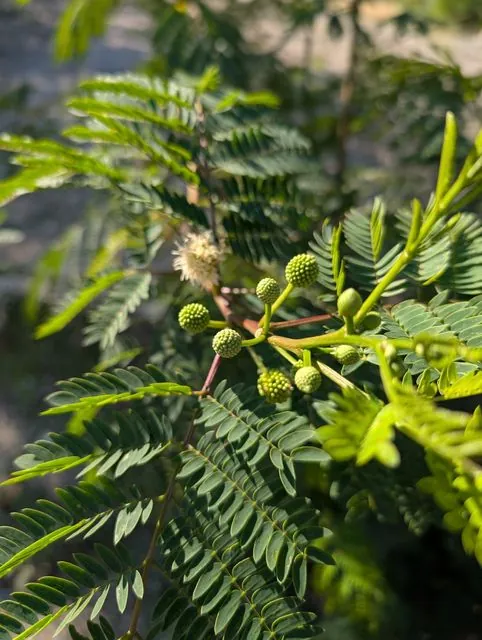
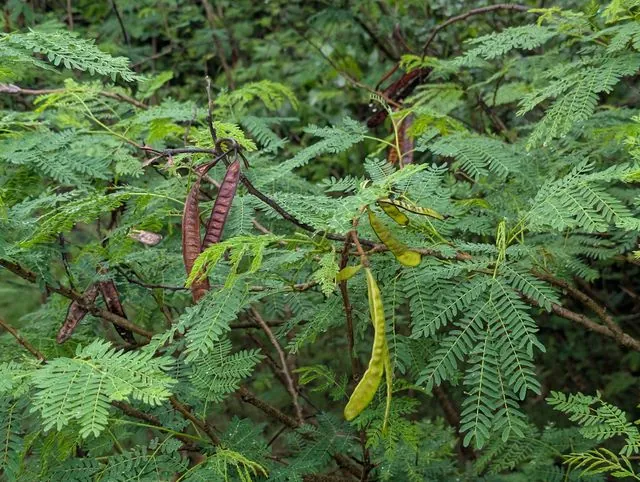
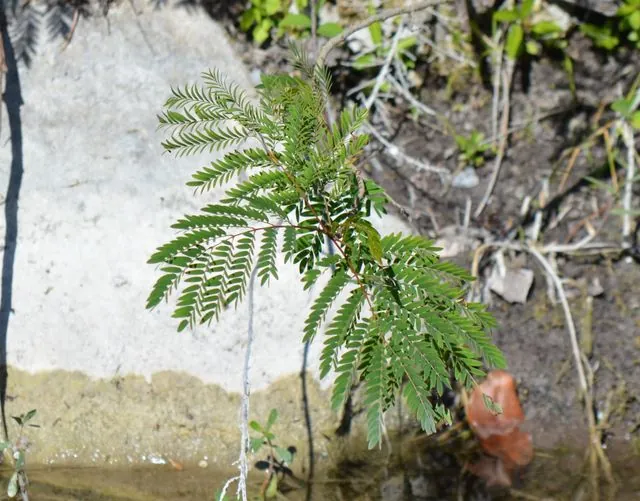
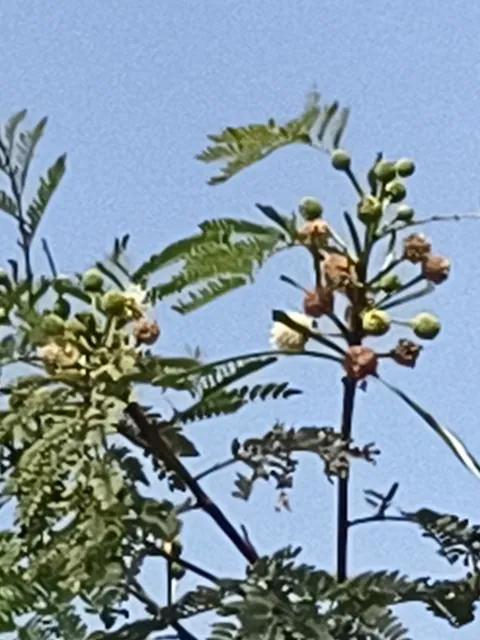
Photos and conservation status
IUCN Red List category: The extinction-risk category that the International Union for Conservation of Nature (IUCN) assigns to a species on its Red List. EX Extinct: there is no reasonable doubt that the last individual has died. EW Extinct in the wild: it survives only in cultivation, in captivity or as a population far outside its past range. CR Critically endangered, EN Endangered and VU Vulnerable: the three threatened categories, from an extremely high to a high risk of extinction in the wild. NT Near threatened: close to qualifying as threatened. LC Least concern: evaluated and not threatened. DD Data deficient: there is not enough information to assess its risk. NE Not evaluated: not yet assessed against the criteria. It describes the risk of the species worldwide, not its situation in a project's area. — The extinction-risk category that the International Union for Conservation of Nature (IUCN) assigns to a species on its Red List. EX Extinct: there is no reasonable doubt that the last individual has died. EW Extinct in the wild: it survives only in cultivation, in captivity or as a population far outside its past range. CR Critically endangered, EN Endangered and VU Vulnerable: the three threatened categories, from an extremely high to a high risk of extinction in the wild. NT Near threatened: close to qualifying as threatened. LC Least concern: evaluated and not threatened. DD Data deficient: there is not enough information to assess its risk. NE Not evaluated: not yet assessed against the criteria. It describes the risk of the species worldwide, not its situation in a project's area.
Not evaluated (NE)
Source: IUCN Red List via GBIF, queried on 2026-10-09 05:17.
Research-grade iNaturalist observations via GBIF, CC0 or CC BY licences only, queried on 2026-10-09 05:17.
Interacciones documentadas
GloBI says it is documented somewhere in the world. Biolitica answers whether it could happen here.
A documented interaction means it was recorded somewhere in the world. It does not mean it occurs here.
Types shown: 12 of 14
is a host of
×
interacts with (this species is the record's destination)
×
is eaten by
×
is visited by
×
has as a parasite
×
has as a host
×
interacts with (this species is the record's origin)
×
has its flowers visited by
×
is an arbuscular mycorrhizal host of
×
is pollinated by
×
is adjacent to
×
creates habitat for
×
2 more types with data for this species
Blocks that do not sit under a navigation concept heading keep the source's own term: no navigation concept has been assigned to them yet.
is a host of
137 organisms
The authority declares no effect on this species for this term: neither that it harms it nor that it benefits it. In the source ontology symbiosis covers mutualism, commensalism and parasitism alike, so this block holds attackers and allies side by side.
Organism
Reads as
Studies
Where it was documented
Actions
Camptomeris leucaenae
is a host of
14
not compared
14 sources · 40 records
Boa, E., and Lenn@e, J.. 1994. Diseases of Nitrogen Fixing Trees in Developing Countries. An annotated list. Natural Resources Inst., Kent, United Kingdom :82
Published in globalbioticinteractions/usda-fungus-host
Record contexts (sample): Philippines · no date published; Brazil · no date published
Claim type
Published relationship between two taxa
Version
GloBI 0.11
Reuse
This release publishes no reuse terms for this record.
Philippines · no date publishedWhere it is: line:hash://sha256/021a206a1459bcca7e251c73f5bd180fc3ac342a09c499855fe42e21fc09edcf!/interactions.tsv.gz!/L4232249
Brazil · no date publishedWhere it is: line:hash://sha256/021a206a1459bcca7e251c73f5bd180fc3ac342a09c499855fe42e21fc09edcf!/interactions.tsv.gz!/L4232761
Ecuador · no date publishedWhere it is: line:hash://sha256/021a206a1459bcca7e251c73f5bd180fc3ac342a09c499855fe42e21fc09edcf!/interactions.tsv.gz!/L4232766
And 11 more records of this source, not listed here.
No public URL for this record
Lenne, J. M.. 1990. World list of fungal diseases of tropical pasture species. Phytopathol. Pap. 31:1-162
Published in globalbioticinteractions/usda-fungus-host
Record contexts (sample): Philippines · no date published; Venezuela · no date published
Claim type
Published relationship between two taxa
Version
GloBI 0.11
Reuse
This release publishes no reuse terms for this record.
Philippines · no date publishedWhere it is: line:hash://sha256/021a206a1459bcca7e251c73f5bd180fc3ac342a09c499855fe42e21fc09edcf!/interactions.tsv.gz!/L4060413
Venezuela · no date publishedWhere it is: line:hash://sha256/021a206a1459bcca7e251c73f5bd180fc3ac342a09c499855fe42e21fc09edcf!/interactions.tsv.gz!/L4060416
Mexico · no date publishedWhere it is: line:hash://sha256/021a206a1459bcca7e251c73f5bd180fc3ac342a09c499855fe42e21fc09edcf!/interactions.tsv.gz!/L4060423
And 10 more records of this source, not listed here.
No public URL for this record
Stevenson, J.A.. 1975. Fungi of Puerto Rico and the American Virgin Islands. Contr. Reed Herb. 23:743
Published in globalbioticinteractions/usda-fungus-host
Record contexts (sample): Puerto Rico · no date published; Virgin Islands · no date published
Claim type
Published relationship between two taxa
Version
GloBI 0.11
Reuse
This release publishes no reuse terms for this record.
Puerto Rico · no date publishedWhere it is: line:hash://sha256/021a206a1459bcca7e251c73f5bd180fc3ac342a09c499855fe42e21fc09edcf!/interactions.tsv.gz!/L3942298
Virgin Islands · no date publishedWhere it is: line:hash://sha256/021a206a1459bcca7e251c73f5bd180fc3ac342a09c499855fe42e21fc09edcf!/interactions.tsv.gz!/L3942315
Context: Valle del Cibao, Santiago Prov., Santiago, Hato del Yaque Fields · Dec. 30, 1930 · Preserved specimen
Claim type
Published relationship between two taxa
Version
GloBI 0.11
Reuse
This release publishes no reuse terms for this record.
Valle del Cibao, Santiago Prov., Santiago, Hato del Yaque Fields · Dec. 30, 1930 · Preserved specimenAs published: 1930-12-30T00:00:00Z · PreservedSpecimenWhere it is: line:hash://sha256/021a206a1459bcca7e251c73f5bd180fc3ac342a09c499855fe42e21fc09edcf!/interactions.tsv.gz!/L17216249
Context: Santiago Prov., Hato del Yaque · Aug. 1, 1931 · Preserved specimen
Claim type
Published relationship between two taxa
Version
GloBI 0.11
Reuse
This release publishes no reuse terms for this record.
Santiago Prov., Hato del Yaque · Aug. 1, 1931 · Preserved specimenAs published: 1931-08-01T00:00:00Z · PreservedSpecimenWhere it is: line:hash://sha256/021a206a1459bcca7e251c73f5bd180fc3ac342a09c499855fe42e21fc09edcf!/interactions.tsv.gz!/L17216250
Context: Arica,Azapa valley · Aug. 21, 2013 · Material sample
Claim type
Published relationship between two taxa
Version
GloBI 0.11
Reuse
This release publishes no reuse terms for this record.
Arica,Azapa valley · Aug. 21, 2013 · Material sampleAs published: 2013-08-21T00:00:00Z · MATERIAL_SAMPLEWhere it is: line:hash://sha256/021a206a1459bcca7e251c73f5bd180fc3ac342a09c499855fe42e21fc09edcf!/interactions.tsv.gz!/L12894043
Context: Arica,Azapa valley · Aug. 21, 2013 · Material sample
Claim type
Published relationship between two taxa
Version
GloBI 0.11
Reuse
This release publishes no reuse terms for this record.
Arica,Azapa valley · Aug. 21, 2013 · Material sampleAs published: 2013-08-21T00:00:00Z · MATERIAL_SAMPLEWhere it is: line:hash://sha256/021a206a1459bcca7e251c73f5bd180fc3ac342a09c499855fe42e21fc09edcf!/interactions.tsv.gz!/L12894044
Context: Arica,Azapa valley · July 26, 2013 · Material sample
Claim type
Published relationship between two taxa
Version
GloBI 0.11
Reuse
This release publishes no reuse terms for this record.
Arica,Azapa valley · July 26, 2013 · Material sampleAs published: 2013-07-26T00:00:00Z · MATERIAL_SAMPLEWhere it is: line:hash://sha256/021a206a1459bcca7e251c73f5bd180fc3ac342a09c499855fe42e21fc09edcf!/interactions.tsv.gz!/L12894051
Context: Arica,Azapa valley · July 26, 2013 · Material sample
Claim type
Published relationship between two taxa
Version
GloBI 0.11
Reuse
This release publishes no reuse terms for this record.
Arica,Azapa valley · July 26, 2013 · Material sampleAs published: 2013-07-26T00:00:00Z · MATERIAL_SAMPLEWhere it is: line:hash://sha256/021a206a1459bcca7e251c73f5bd180fc3ac342a09c499855fe42e21fc09edcf!/interactions.tsv.gz!/L12894052
Context: Arica,Azapa valley · July 26, 2013 · Material sample
Claim type
Published relationship between two taxa
Version
GloBI 0.11
Reuse
This release publishes no reuse terms for this record.
Arica,Azapa valley · July 26, 2013 · Material sampleAs published: 2013-07-26T00:00:00Z · MATERIAL_SAMPLEWhere it is: line:hash://sha256/021a206a1459bcca7e251c73f5bd180fc3ac342a09c499855fe42e21fc09edcf!/interactions.tsv.gz!/L12894053
Context: Arica,Azapa valley · Nov. 13, 2013 · Material sample
Claim type
Published relationship between two taxa
Version
GloBI 0.11
Reuse
This release publishes no reuse terms for this record.
Arica,Azapa valley · Nov. 13, 2013 · Material sampleAs published: 2013-11-13T00:00:00Z · MATERIAL_SAMPLEWhere it is: line:hash://sha256/021a206a1459bcca7e251c73f5bd180fc3ac342a09c499855fe42e21fc09edcf!/interactions.tsv.gz!/L12894054
Context: Arica,Azapa valley · Oct. 26, 2013 · Material sample
Claim type
Published relationship between two taxa
Version
GloBI 0.11
Reuse
This release publishes no reuse terms for this record.
Arica,Azapa valley · Oct. 26, 2013 · Material sampleAs published: 2013-10-26T00:00:00Z · MATERIAL_SAMPLEWhere it is: line:hash://sha256/021a206a1459bcca7e251c73f5bd180fc3ac342a09c499855fe42e21fc09edcf!/interactions.tsv.gz!/L12894055
Context: Arica,Azapa valley · Oct. 26, 2013 · Material sample
Claim type
Published relationship between two taxa
Version
GloBI 0.11
Reuse
This release publishes no reuse terms for this record.
Arica,Azapa valley · Oct. 26, 2013 · Material sampleAs published: 2013-10-26T00:00:00Z · MATERIAL_SAMPLEWhere it is: line:hash://sha256/021a206a1459bcca7e251c73f5bd180fc3ac342a09c499855fe42e21fc09edcf!/interactions.tsv.gz!/L12894056
And 2 more sources, with fewer records, not listed here.
A published relationship says these two taxa were documented interacting. It does not say how often, or that it happens in this project's region.
Phellinus noxiusHymenochaetaceae
is a host of
8
no location
8 sources · 9 records
Lenne, J. M.. 1990. World list of fungal diseases of tropical pasture species. Phytopathol. Pap. 31:1-162
Published in globalbioticinteractions/usda-fungus-host
Record contexts (sample): Pacific Islands · no date published; New Guinea · no date published
Claim type
Published relationship between two taxa
Version
GloBI 0.11
Reuse
This release publishes no reuse terms for this record.
Pacific Islands · no date publishedWhere it is: line:hash://sha256/021a206a1459bcca7e251c73f5bd180fc3ac342a09c499855fe42e21fc09edcf!/interactions.tsv.gz!/L4060708
New Guinea · no date publishedWhere it is: line:hash://sha256/021a206a1459bcca7e251c73f5bd180fc3ac342a09c499855fe42e21fc09edcf!/interactions.tsv.gz!/L4060763
No public URL for this record
Shaw, D.E.. 1984. Microorganisms in Papua New Guinea. Dept. Primary Ind., Res. Bull. 33:1-344
Published in globalbioticinteractions/usda-fungus-host
Context: Papua New Guinea · no date published
Claim type
Published relationship between two taxa
Version
GloBI 0.11
Reuse
This release publishes no reuse terms for this record.
Papua New Guinea · no date publishedWhere it is: line:hash://sha256/021a206a1459bcca7e251c73f5bd180fc3ac342a09c499855fe42e21fc09edcf!/interactions.tsv.gz!/L3799205
No public URL for this record
Kobayashi, T.. 2007. Index of fungi inhabiting woody plants in Japan. Host, Distribution and Literature. Zenkoku-Noson-Kyoiku Kyokai Publishing Co., Ltd. :1227
Published in globalbioticinteractions/usda-fungus-host
Context: Japan · no date published
Claim type
Published relationship between two taxa
Version
GloBI 0.11
Reuse
This release publishes no reuse terms for this record.
Japan · no date publishedWhere it is: line:hash://sha256/021a206a1459bcca7e251c73f5bd180fc3ac342a09c499855fe42e21fc09edcf!/interactions.tsv.gz!/L3901041
No public URL for this record
Boa, E., and Lenn@e, J.. 1994. Diseases of Nitrogen Fixing Trees in Developing Countries. An annotated list. Natural Resources Inst., Kent, United Kingdom :82
Published in globalbioticinteractions/usda-fungus-host
Context: Papua New Guinea · no date published
Claim type
Published relationship between two taxa
Version
GloBI 0.11
Reuse
This release publishes no reuse terms for this record.
Papua New Guinea · no date publishedWhere it is: line:hash://sha256/021a206a1459bcca7e251c73f5bd180fc3ac342a09c499855fe42e21fc09edcf!/interactions.tsv.gz!/L4232813
No public URL for this record
Stewart, J.E., Kim, M.-S., Ota, Y., Sahashi, N., Hanna, J.W., Akiba, M., Ata, J.P., Atibalentja, N., Brooks, F., Chung, C.-L., Dann, E.K., Mohd Farid, A., Hattori, T., Lee, S.S., Otto, K., Pegg, G.S., Schlub, R.L., Shuey, L.S., Tang, A.M.C., Tsai, J.-N., Cannon, P.G., and Klopfe…
Published in globalbioticinteractions/usda-fungus-host
Context: Japan · no date published
Claim type
Published relationship between two taxa
Version
GloBI 0.11
Reuse
This release publishes no reuse terms for this record.
Japan · no date publishedWhere it is: line:hash://sha256/021a206a1459bcca7e251c73f5bd180fc3ac342a09c499855fe42e21fc09edcf!/interactions.tsv.gz!/L4367112
No public URL for this record
Ann, P.J., Chang, T.-T., and Ko, W.-H.. 2002. %Phellinus noxius% brown root rot of fruit and ornamental trees in Taiwan. Pl. Dis. 86:820-826
Published in globalbioticinteractions/usda-fungus-host
Context: Taiwan · no date published
Claim type
Published relationship between two taxa
Version
GloBI 0.11
Reuse
This release publishes no reuse terms for this record.
Taiwan · no date publishedWhere it is: line:hash://sha256/021a206a1459bcca7e251c73f5bd180fc3ac342a09c499855fe42e21fc09edcf!/interactions.tsv.gz!/L4367230
No public URL for this record
Chang, T.T., and Yang, W.W.. 1998. %Phellinus noxius% in Taiwan: distribution, host plants and the pH and texture of the rhizosphere soils of infected hosts. Mycol. Res. 102:1085-1088
Published in globalbioticinteractions/usda-fungus-host
Context: Taiwan · no date published
Claim type
Published relationship between two taxa
Version
GloBI 0.11
Reuse
This release publishes no reuse terms for this record.
Taiwan · no date publishedWhere it is: line:hash://sha256/021a206a1459bcca7e251c73f5bd180fc3ac342a09c499855fe42e21fc09edcf!/interactions.tsv.gz!/L4371812
No public URL for this record
Sahashi, N., Akiba, M., Ota, Y., Masuya, H., Hattori, T., Mukai, A., Shimada, R., Ono, T., and Sato, T.. 2015. Brown root rot caused by %Phellinus noxius% in the Ogasawara (Bonin) Islands, Southern Japan - current status of the disease and its host plants. Australasian Plant Dis…
Published in globalbioticinteractions/usda-fungus-host
Context: Japan · no date published
Claim type
Published relationship between two taxa
Version
GloBI 0.11
Reuse
This release publishes no reuse terms for this record.
Japan · no date publishedWhere it is: line:hash://sha256/021a206a1459bcca7e251c73f5bd180fc3ac342a09c499855fe42e21fc09edcf!/interactions.tsv.gz!/L4373572
No public URL for this record
A published relationship says these two taxa were documented interacting. It does not say how often, or that it happens in this project's region.
Ensifer adhaerensRhizobiaceae
is a host of
6
no location
6 sources · 6 records
http://www.ncbi.nlm.nih.gov/nuccore/122939096
Published in millerse/Wardeh-et-al.-2015
Context: no place published · no date published
Claim type
Published relationship between two taxa
Version
GloBI 0.11
Reuse
This release publishes no reuse terms for this record.
no place published · no date publishedWhere it is: line:hash://sha256/021a206a1459bcca7e251c73f5bd180fc3ac342a09c499855fe42e21fc09edcf!/interactions.tsv.gz!/L198120
This release publishes no reuse terms for this record.
no place published · no date publishedWhere it is: line:hash://sha256/021a206a1459bcca7e251c73f5bd180fc3ac342a09c499855fe42e21fc09edcf!/interactions.tsv.gz!/L225008
This release publishes no reuse terms for this record.
no place published · no date publishedWhere it is: line:hash://sha256/021a206a1459bcca7e251c73f5bd180fc3ac342a09c499855fe42e21fc09edcf!/interactions.tsv.gz!/L239735
This release publishes no reuse terms for this record.
no place published · no date publishedWhere it is: line:hash://sha256/021a206a1459bcca7e251c73f5bd180fc3ac342a09c499855fe42e21fc09edcf!/interactions.tsv.gz!/L251049
This release publishes no reuse terms for this record.
no place published · no date publishedWhere it is: line:hash://sha256/021a206a1459bcca7e251c73f5bd180fc3ac342a09c499855fe42e21fc09edcf!/interactions.tsv.gz!/L260435
This release publishes no reuse terms for this record.
no place published · no date publishedWhere it is: line:hash://sha256/021a206a1459bcca7e251c73f5bd180fc3ac342a09c499855fe42e21fc09edcf!/interactions.tsv.gz!/L270091
Context: no place published · Sept. 10, 2017 · Preserved specimen
Claim type
Published relationship between two taxa
Version
GloBI 0.11
Reuse
This release publishes no reuse terms for this record.
no place published · Sept. 10, 2017 · Preserved specimenAs published: 2017-09-10T00:00:00Z · PreservedSpecimenWhere it is: line:hash://sha256/021a206a1459bcca7e251c73f5bd180fc3ac342a09c499855fe42e21fc09edcf!/interactions.tsv.gz!/L23688832
Context: no place published · Sept. 10, 2017 · Preserved specimen
Claim type
Published relationship between two taxa
Version
GloBI 0.11
Reuse
This release publishes no reuse terms for this record.
no place published · Sept. 10, 2017 · Preserved specimenAs published: 2017-09-10T00:00:00Z · PreservedSpecimenWhere it is: line:hash://sha256/021a206a1459bcca7e251c73f5bd180fc3ac342a09c499855fe42e21fc09edcf!/interactions.tsv.gz!/L23688833
Context: no place published · Sept. 10, 2017 · Preserved specimen
Claim type
Published relationship between two taxa
Version
GloBI 0.11
Reuse
This release publishes no reuse terms for this record.
no place published · Sept. 10, 2017 · Preserved specimenAs published: 2017-09-10T00:00:00Z · PreservedSpecimenWhere it is: line:hash://sha256/021a206a1459bcca7e251c73f5bd180fc3ac342a09c499855fe42e21fc09edcf!/interactions.tsv.gz!/L23688834
Context: no place published · Sept. 10, 2017 · Preserved specimen
Claim type
Published relationship between two taxa
Version
GloBI 0.11
Reuse
This release publishes no reuse terms for this record.
no place published · Sept. 10, 2017 · Preserved specimenAs published: 2017-09-10T00:00:00Z · PreservedSpecimenWhere it is: line:hash://sha256/021a206a1459bcca7e251c73f5bd180fc3ac342a09c499855fe42e21fc09edcf!/interactions.tsv.gz!/L23688835
Context: no place published · Sept. 10, 2017 · Preserved specimen
Claim type
Published relationship between two taxa
Version
GloBI 0.11
Reuse
This release publishes no reuse terms for this record.
no place published · Sept. 10, 2017 · Preserved specimenAs published: 2017-09-10T00:00:00Z · PreservedSpecimenWhere it is: line:hash://sha256/021a206a1459bcca7e251c73f5bd180fc3ac342a09c499855fe42e21fc09edcf!/interactions.tsv.gz!/L23688836
Context: no place published · Sept. 10, 2017 · Preserved specimen
Claim type
Published relationship between two taxa
Version
GloBI 0.11
Reuse
This release publishes no reuse terms for this record.
no place published · Sept. 10, 2017 · Preserved specimenAs published: 2017-09-10T00:00:00Z · PreservedSpecimenWhere it is: line:hash://sha256/021a206a1459bcca7e251c73f5bd180fc3ac342a09c499855fe42e21fc09edcf!/interactions.tsv.gz!/L23688837
Context: no place published · Sept. 10, 2017 · Preserved specimen
Claim type
Published relationship between two taxa
Version
GloBI 0.11
Reuse
This release publishes no reuse terms for this record.
no place published · Sept. 10, 2017 · Preserved specimenAs published: 2017-09-10T00:00:00Z · PreservedSpecimenWhere it is: line:hash://sha256/021a206a1459bcca7e251c73f5bd180fc3ac342a09c499855fe42e21fc09edcf!/interactions.tsv.gz!/L23688838
Context: no place published · Sept. 10, 2017 · Preserved specimen
Claim type
Published relationship between two taxa
Version
GloBI 0.11
Reuse
This release publishes no reuse terms for this record.
no place published · Sept. 10, 2017 · Preserved specimenAs published: 2017-09-10T00:00:00Z · PreservedSpecimenWhere it is: line:hash://sha256/021a206a1459bcca7e251c73f5bd180fc3ac342a09c499855fe42e21fc09edcf!/interactions.tsv.gz!/L23688839
Context: no place published · Dec. 6, 2021 · Human observation
Claim type
Published relationship between two taxa
Version
GloBI 0.11
Reuse
This release publishes no reuse terms for this record.
no place published · Dec. 6, 2021 · Human observationAs published: 2021-12-06T16:53:00Z · HumanObservationWhere it is: line:hash://sha256/021a206a1459bcca7e251c73f5bd180fc3ac342a09c499855fe42e21fc09edcf!/interactions.tsv.gz!/L4507282
Context: no place published · Dec. 4, 2021 · Human observation
Claim type
Published relationship between two taxa
Version
GloBI 0.11
Reuse
This release publishes no reuse terms for this record.
no place published · Dec. 4, 2021 · Human observationAs published: 2021-12-04T09:01:41Z · HumanObservationWhere it is: line:hash://sha256/021a206a1459bcca7e251c73f5bd180fc3ac342a09c499855fe42e21fc09edcf!/interactions.tsv.gz!/L4510942
Context: no place published · Sept. 12, 2018 · Human observation
Claim type
Published relationship between two taxa
Version
GloBI 0.11
Reuse
This release publishes no reuse terms for this record.
no place published · Sept. 12, 2018 · Human observationAs published: 2018-09-12T23:15:00Z · HumanObservationWhere it is: line:hash://sha256/021a206a1459bcca7e251c73f5bd180fc3ac342a09c499855fe42e21fc09edcf!/interactions.tsv.gz!/L4886383
Context: no place published · Nov. 12, 2018 · Human observation
Claim type
Published relationship between two taxa
Version
GloBI 0.11
Reuse
This release publishes no reuse terms for this record.
no place published · Nov. 12, 2018 · Human observationAs published: 2018-11-12T00:14:00Z · HumanObservationWhere it is: line:hash://sha256/021a206a1459bcca7e251c73f5bd180fc3ac342a09c499855fe42e21fc09edcf!/interactions.tsv.gz!/L4928499
Context: no place published · March 28, 2023 · Human observation
Claim type
Published relationship between two taxa
Version
GloBI 0.11
Reuse
This release publishes no reuse terms for this record.
no place published · March 28, 2023 · Human observationAs published: 2023-03-28T21:26:40Z · HumanObservationWhere it is: line:hash://sha256/021a206a1459bcca7e251c73f5bd180fc3ac342a09c499855fe42e21fc09edcf!/interactions.tsv.gz!/L5343945
Context: no place published · April 5, 2023 · Human observation
Claim type
Published relationship between two taxa
Version
GloBI 0.11
Reuse
This release publishes no reuse terms for this record.
no place published · April 5, 2023 · Human observationAs published: 2023-04-05T03:46:00Z · HumanObservationWhere it is: line:hash://sha256/021a206a1459bcca7e251c73f5bd180fc3ac342a09c499855fe42e21fc09edcf!/interactions.tsv.gz!/L5354394
Context: no place published · May 16, 2025 · Human observation
Claim type
Published relationship between two taxa
Version
GloBI 0.11
Reuse
This release publishes no reuse terms for this record.
no place published · May 16, 2025 · Human observationAs published: 2025-05-16T08:06:00Z · HumanObservationWhere it is: line:hash://sha256/021a206a1459bcca7e251c73f5bd180fc3ac342a09c499855fe42e21fc09edcf!/interactions.tsv.gz!/L5547597
Context: no place published · May 16, 2025 · Human observation
Claim type
Published relationship between two taxa
Version
GloBI 0.11
Reuse
This release publishes no reuse terms for this record.
no place published · May 16, 2025 · Human observationAs published: 2025-05-16T08:15:00Z · HumanObservationWhere it is: line:hash://sha256/021a206a1459bcca7e251c73f5bd180fc3ac342a09c499855fe42e21fc09edcf!/interactions.tsv.gz!/L5547598
And 1 more source, with fewer records, not listed here.
A published relationship says these two taxa were documented interacting. It does not say how often, or that it happens in this project's region.
Tamarixia leucaenaeEulophidae
interacts with
8
no location
8 sources · 12 records
@article{105446, author = {Zuparko, R.L. and Queiroz, D.L. de and La Salle, J.}, booktitle = {Zootaxa}, journal = {Zootaxa}, month = {jun}, day = {16}, pages = {13-27}, title = {Two new species of <i>Tamarixia</i> (Hymenoptera: Eulophidae) from Chile and Australia,…
Published in globalbioticinteractions/taxonworks
Record contexts (sample): no place published · no date published; no place published · no date published
Claim type
Published relationship between two taxa
Version
GloBI 0.11
Reuse
This release publishes no reuse terms for this record.
no place published · no date publishedWhere it is: line:hash://sha256/021a206a1459bcca7e251c73f5bd180fc3ac342a09c499855fe42e21fc09edcf!/interactions.tsv.gz!/L6119845
no place published · no date publishedWhere it is: line:hash://sha256/021a206a1459bcca7e251c73f5bd180fc3ac342a09c499855fe42e21fc09edcf!/interactions.tsv.gz!/L6119855
no place published · no date publishedWhere it is: line:hash://sha256/021a206a1459bcca7e251c73f5bd180fc3ac342a09c499855fe42e21fc09edcf!/interactions.tsv.gz!/L6119899
No public URL for this record
@article{72104, author = {IIBC}, booktitle = {International Institute of Biological Control Annual Report 1991}, pages = {80pp}, publisher = {CAB International, Wallingford, U.K.}, year = {1992} }
Published in globalbioticinteractions/taxonworks
Record contexts (sample): no place published · no date published; no place published · no date published
Claim type
Published relationship between two taxa
Version
GloBI 0.11
Reuse
This release publishes no reuse terms for this record.
no place published · no date publishedWhere it is: line:hash://sha256/021a206a1459bcca7e251c73f5bd180fc3ac342a09c499855fe42e21fc09edcf!/interactions.tsv.gz!/L6061642
no place published · no date publishedWhere it is: line:hash://sha256/021a206a1459bcca7e251c73f5bd180fc3ac342a09c499855fe42e21fc09edcf!/interactions.tsv.gz!/L6061667
No public URL for this record
@article{72107, author = {IIBC}, booktitle = {International Institute of Biological Control Annual Report 1994}, pages = {97pp}, publisher = {CAB International, Wallingford, UK}, year = {1995} }
Published in globalbioticinteractions/taxonworks
Record contexts (sample): no place published · no date published; no place published · no date published
Claim type
Published relationship between two taxa
Version
GloBI 0.11
Reuse
This release publishes no reuse terms for this record.
no place published · no date publishedWhere it is: line:hash://sha256/021a206a1459bcca7e251c73f5bd180fc3ac342a09c499855fe42e21fc09edcf!/interactions.tsv.gz!/L6072456
no place published · no date publishedWhere it is: line:hash://sha256/021a206a1459bcca7e251c73f5bd180fc3ac342a09c499855fe42e21fc09edcf!/interactions.tsv.gz!/L6072494
No public URL for this record
Iibc (1995) <i>International Institute of Biological Control Annual Report 1994</i>, 97pp.
Published in urn:lsid:checklistbank.org:dataset:124661
Context: no place published · no date published
Claim type
Published relationship between two taxa
Version
GloBI 0.11
Reuse
This release publishes no reuse terms for this record.
no place published · no date publishedWhere it is: line:hash://sha256/021a206a1459bcca7e251c73f5bd180fc3ac342a09c499855fe42e21fc09edcf!/interactions.tsv.gz!/L1214451
No public URL for this record
Iibc (1992) <i>International Institute of Biological Control Annual Report 1991</i>, 80pp.
Published in urn:lsid:checklistbank.org:dataset:124661
Context: no place published · no date published
Claim type
Published relationship between two taxa
Version
GloBI 0.11
Reuse
This release publishes no reuse terms for this record.
no place published · no date publishedWhere it is: line:hash://sha256/021a206a1459bcca7e251c73f5bd180fc3ac342a09c499855fe42e21fc09edcf!/interactions.tsv.gz!/L1214594
No public URL for this record
Zuparko, R.L., Queiroz, D.L.de & La Salle, J. (2011) Two new species of <i>Tamarixia</i> (Hymenoptera: Eulophidae) from Chile and Australia, established as biological control agents of invasive psyllids (Hemiptera: Calophyidae, Triozidae) in California. <i>Zootaxa</i>, 2921,…
Published in urn:lsid:checklistbank.org:dataset:124661
Context: no place published · no date published
Claim type
Published relationship between two taxa
Version
GloBI 0.11
Reuse
This release publishes no reuse terms for this record.
no place published · no date publishedWhere it is: line:hash://sha256/021a206a1459bcca7e251c73f5bd180fc3ac342a09c499855fe42e21fc09edcf!/interactions.tsv.gz!/L1257617
No public URL for this record
Boucek, Z. (1988d) <i>Tamarixia leucaenae</i> sp.n. (Hymenoptera: Eulophidae) parasitic on the leucaena psyllid <i>Heteropsylla cubana</i> Crawford (Hemiptera) in Trinidad. <i>Bulletin of Entomological Research</i>, 78(3), 545–547.
Published in urn:lsid:checklistbank.org:dataset:124661
Context: no place published · no date published
Claim type
Published relationship between two taxa
Version
GloBI 0.11
Reuse
This release publishes no reuse terms for this record.
no place published · no date publishedWhere it is: line:hash://sha256/021a206a1459bcca7e251c73f5bd180fc3ac342a09c499855fe42e21fc09edcf!/interactions.tsv.gz!/L1257619
No public URL for this record
@article{55214, author = {Boucek, Z.}, booktitle = {Bulletin of Entomological Research}, journal = {Bulletin of Entomological Research}, month = {aug}, day = {25}, pages = {545-547}, title = {<i>Tamarixia leucaenae</i> sp.n. (Hymenoptera: Eulophidae) parasitic on t…
Published in globalbioticinteractions/taxonworks
Context: no place published · no date published
Claim type
Published relationship between two taxa
Version
GloBI 0.11
Reuse
This release publishes no reuse terms for this record.
no place published · no date publishedWhere it is: line:hash://sha256/021a206a1459bcca7e251c73f5bd180fc3ac342a09c499855fe42e21fc09edcf!/interactions.tsv.gz!/L6046288
No public URL for this record
A published relationship says these two taxa were documented interacting. It does not say how often, or that it happens in this project's region.
This term does declare that the organism harms this species.
Organism
Reads as
Studies
Where it was documented
Actions
Greater Shortnosed Fruit BatCynopterus sphinxPteropodidae
is eaten by
4
not compared
4 sources · 4 records
Kunz, T. H. & C. A. Diaz. 1995. Folivory in fruit-eating bats, with new evidence from Artibeus jamaicencis (Chiroptera: Phyllostomidae). Biotropica 27 (1): 106-120.
Published in globalbioticinteractions/batbase
Context: India [includes the Andaman, Laccadive and Nicobar island groups] · no date published
Claim type
Published relationship between two taxa
Version
GloBI 0.11
Reuse
This release publishes no reuse terms for this record.
India [includes the Andaman, Laccadive and Nicobar island groups] · no date publishedWhere it is: line:hash://sha256/021a206a1459bcca7e251c73f5bd180fc3ac342a09c499855fe42e21fc09edcf!/interactions.tsv.gz!/L12439756
No public URL for this record
Bhat, H. 1994. Observations on the food and feeding behaviour of Cynopterus sphinx Vahl (Chiroptera, Pteropodidae) at Pune, India. Mammalia 58 (3): 363-370.
Published in globalbioticinteractions/batbase
Context: Pune · no date published
Claim type
Published relationship between two taxa
Version
GloBI 0.11
Reuse
This release publishes no reuse terms for this record.
Pune · no date publishedWhere it is: line:hash://sha256/021a206a1459bcca7e251c73f5bd180fc3ac342a09c499855fe42e21fc09edcf!/interactions.tsv.gz!/L12444782
No public URL for this record
Bhat, H. R. 1994. Observations of the food and feeding behavior of Cynopterus sphinx Vahl (Chiroptera, Pteropodidae) at Pune, India. Mammalia, 58: 363-370.
Published in globalbioticinteractions/bat-co-roosting-database
Context: Pune city (18°32'N ; 73°5TE) · Jan. 1, 1986
Claim type
Published relationship between two taxa
Version
GloBI 0.11
Reuse
This release publishes no reuse terms for this record.
Pune city (18°32'N ; 73°5TE) · Jan. 1, 1986As published: 1986-01-01T00:00:00ZWhere it is: line:hash://sha256/021a206a1459bcca7e251c73f5bd180fc3ac342a09c499855fe42e21fc09edcf!/interactions.tsv.gz!/L7057115
Context: Pune city (18°32'N ; 73°5TE) · June 1, 1986
Claim type
Published relationship between two taxa
Version
GloBI 0.11
Reuse
This release publishes no reuse terms for this record.
Pune city (18°32'N ; 73°5TE) · June 1, 1986As published: 1986-06-01T00:00:00ZWhere it is: line:hash://sha256/021a206a1459bcca7e251c73f5bd180fc3ac342a09c499855fe42e21fc09edcf!/interactions.tsv.gz!/L843072
No public URL for this record
A published relationship says these two taxa were documented interacting. It does not say how often, or that it happens in this project's region.
Context: no place published · Sept. 1, 2022 · Human observation
Claim type
Published relationship between two taxa
Version
GloBI 0.11
Reuse
This release publishes no reuse terms for this record.
no place published · Sept. 1, 2022 · Human observationAs published: 2022-09-01T02:39:41Z · HumanObservationWhere it is: line:hash://sha256/021a206a1459bcca7e251c73f5bd180fc3ac342a09c499855fe42e21fc09edcf!/interactions.tsv.gz!/L5016258
Context: no place published · Sept. 4, 2022 · Human observation
Claim type
Published relationship between two taxa
Version
GloBI 0.11
Reuse
This release publishes no reuse terms for this record.
no place published · Sept. 4, 2022 · Human observationAs published: 2022-09-04T04:49:14Z · HumanObservationWhere it is: line:hash://sha256/021a206a1459bcca7e251c73f5bd180fc3ac342a09c499855fe42e21fc09edcf!/interactions.tsv.gz!/L5025558
Context: no place published · Sept. 28, 2022 · Human observation
Claim type
Published relationship between two taxa
Version
GloBI 0.11
Reuse
This release publishes no reuse terms for this record.
no place published · Sept. 28, 2022 · Human observationAs published: 2022-09-28T02:15:51Z · HumanObservationWhere it is: line:hash://sha256/021a206a1459bcca7e251c73f5bd180fc3ac342a09c499855fe42e21fc09edcf!/interactions.tsv.gz!/L5108333
Context: no place published · Oct. 2, 2022 · Human observation
Claim type
Published relationship between two taxa
Version
GloBI 0.11
Reuse
This release publishes no reuse terms for this record.
no place published · Oct. 2, 2022 · Human observationAs published: 2022-10-02T06:29:17Z · HumanObservationWhere it is: line:hash://sha256/021a206a1459bcca7e251c73f5bd180fc3ac342a09c499855fe42e21fc09edcf!/interactions.tsv.gz!/L5118219
Context: no place published · Sept. 1, 2022 · Human observation
Claim type
Published relationship between two taxa
Version
GloBI 0.11
Reuse
This release publishes no reuse terms for this record.
no place published · Sept. 1, 2022 · Human observationAs published: 2022-09-01T02:39:32Z · HumanObservationWhere it is: line:hash://sha256/021a206a1459bcca7e251c73f5bd180fc3ac342a09c499855fe42e21fc09edcf!/interactions.tsv.gz!/L5016262
Context: no place published · Sept. 4, 2022 · Human observation
Claim type
Published relationship between two taxa
Version
GloBI 0.11
Reuse
This release publishes no reuse terms for this record.
no place published · Sept. 4, 2022 · Human observationAs published: 2022-09-04T04:49:22Z · HumanObservationWhere it is: line:hash://sha256/021a206a1459bcca7e251c73f5bd180fc3ac342a09c499855fe42e21fc09edcf!/interactions.tsv.gz!/L5025560
Context: no place published · Sept. 28, 2022 · Human observation
Claim type
Published relationship between two taxa
Version
GloBI 0.11
Reuse
This release publishes no reuse terms for this record.
no place published · Sept. 28, 2022 · Human observationAs published: 2022-09-28T02:15:51Z · HumanObservationWhere it is: line:hash://sha256/021a206a1459bcca7e251c73f5bd180fc3ac342a09c499855fe42e21fc09edcf!/interactions.tsv.gz!/L5108336
Context: no place published · March 31, 2026 · Human observation
Claim type
Published relationship between two taxa
Version
GloBI 0.11
Reuse
This release publishes no reuse terms for this record.
no place published · March 31, 2026 · Human observationAs published: 2026-03-31T02:57:00Z · HumanObservationWhere it is: line:hash://sha256/021a206a1459bcca7e251c73f5bd180fc3ac342a09c499855fe42e21fc09edcf!/interactions.tsv.gz!/L5080616
Context: no place published · March 31, 2026 · Human observation
Claim type
Published relationship between two taxa
Version
GloBI 0.11
Reuse
This release publishes no reuse terms for this record.
no place published · March 31, 2026 · Human observationAs published: 2026-03-31T02:57:00Z · HumanObservationWhere it is: line:hash://sha256/021a206a1459bcca7e251c73f5bd180fc3ac342a09c499855fe42e21fc09edcf!/interactions.tsv.gz!/L5083081
The authority declares no effect on this species for this term: neither that it harms it nor that it benefits it.
Organism
Reads as
Studies
Where it was documented
Actions
European Honey BeeApis melliferaApidae
is visited by
4
not compared
4 sources · 4 records
Cortopassi-Laurindo M (1982) Divisão de recursos troficos entre abelhas sociais principalmente em Apis mellifera Linne e Trigona (Trigona) spinipes Fabricius (Apidae, Hymenoptera). Tese de doutorado.Universidade de São Paulo, São Paulo.| Cortopassi-Laurindo M, Ramalho M (1988) P…
Published in globalbioticinteractions/rcpol
Context: São Paulo · no date published
Claim type
Published relationship between two taxa
Version
GloBI 0.11
Reuse
This release publishes no reuse terms for this record.
São Paulo · no date publishedWhere it is: line:hash://sha256/021a206a1459bcca7e251c73f5bd180fc3ac342a09c499855fe42e21fc09edcf!/interactions.tsv.gz!/L2892126
No public URL for this record
Nascimento EJM (2016) Variação temporal da produção e valor nutricional do pólen usado da dieta de Apis mellifera L. em floresta estacional semidecidual. Dissertação de Mestrado. Universidade Federal do Ceará. Fortaleza, Brasil.
Published in globalbioticinteractions/rcpol
Context: Ceará · no date published
Claim type
Published relationship between two taxa
Version
GloBI 0.11
Reuse
This release publishes no reuse terms for this record.
Ceará · no date publishedWhere it is: line:hash://sha256/021a206a1459bcca7e251c73f5bd180fc3ac342a09c499855fe42e21fc09edcf!/interactions.tsv.gz!/L2892616
Context: no place published · Dec. 31, 2025 · Human observation
Claim type
Published relationship between two taxa
Version
GloBI 0.11
Reuse
This release publishes no reuse terms for this record.
no place published · Dec. 31, 2025 · Human observationAs published: 2025-12-31T10:47:00Z · HumanObservationWhere it is: line:hash://sha256/021a206a1459bcca7e251c73f5bd180fc3ac342a09c499855fe42e21fc09edcf!/interactions.tsv.gz!/L4953765
Context: no place published · Jan. 2, 2026 · Human observation
Claim type
Published relationship between two taxa
Version
GloBI 0.11
Reuse
This release publishes no reuse terms for this record.
no place published · Jan. 2, 2026 · Human observationAs published: 2026-01-02T10:26:00Z · HumanObservationWhere it is: line:hash://sha256/021a206a1459bcca7e251c73f5bd180fc3ac342a09c499855fe42e21fc09edcf!/interactions.tsv.gz!/L4953825
A published relationship says these two taxa were documented interacting. It does not say how often, or that it happens in this project's region.
Nannotrigona testaceicornis
is visited by
2
no location
2 sources · 2 records
Carvalho CAL, Marchini LC (1999) Tipos polínicos coletados por Nannotrigona testaceicornis e Tetragonisca angustula (Hymenoptera, Apidae, Meliponinae). Scientia Agricola 56(3):717-722.
Published in globalbioticinteractions/rcpol
Context: São Paulo · no date published
Claim type
Published relationship between two taxa
Version
GloBI 0.11
Reuse
This release publishes no reuse terms for this record.
São Paulo · no date publishedWhere it is: line:hash://sha256/021a206a1459bcca7e251c73f5bd180fc3ac342a09c499855fe42e21fc09edcf!/interactions.tsv.gz!/L2892106
No public URL for this record
Malagodi-Braga KS (1996) A utilização de recursos florais por Nannotrigona testaceicornis (Apidae, Meliponinae). Dissertação de mestrado. Universidade de São Paulo, São Paulo.
Published in globalbioticinteractions/rcpol
Context: São Paulo · no date published
Claim type
Published relationship between two taxa
Version
GloBI 0.11
Reuse
This release publishes no reuse terms for this record.
São Paulo · no date publishedWhere it is: line:hash://sha256/021a206a1459bcca7e251c73f5bd180fc3ac342a09c499855fe42e21fc09edcf!/interactions.tsv.gz!/L2892519
No public URL for this record
A published relationship says these two taxa were documented interacting. It does not say how often, or that it happens in this project's region.
Context: no place published · July 10, 2023 · Human observation
Claim type
Published relationship between two taxa
Version
GloBI 0.11
Reuse
This release publishes no reuse terms for this record.
no place published · July 10, 2023 · Human observationAs published: 2023-07-10T21:28:00Z · HumanObservationWhere it is: line:hash://sha256/021a206a1459bcca7e251c73f5bd180fc3ac342a09c499855fe42e21fc09edcf!/interactions.tsv.gz!/L5601660
Context: no place published · April 14, 2018 · Human observation
Claim type
Published relationship between two taxa
Version
GloBI 0.11
Reuse
This release publishes no reuse terms for this record.
no place published · April 14, 2018 · Human observationAs published: 2018-04-14T23:35:00Z · HumanObservationWhere it is: line:hash://sha256/021a206a1459bcca7e251c73f5bd180fc3ac342a09c499855fe42e21fc09edcf!/interactions.tsv.gz!/L4914373
This term does declare that the organism harms this species.
Organism
Reads as
Studies
Where it was documented
Actions
Parasitoid waspPsyllaephagus yaseeniEncyrtidae
has as a parasite
6
no location
6 sources · 6 records
TrjapiBeRu2004 via Universal Chalcidoidea Database
Published in globalbioticinteractions/natural-history-museum-london-interactions-bank
Context: no place published · no date published
Claim type
Published relationship between two taxa
Version
GloBI 0.11
Reuse
This release publishes no reuse terms for this record.
no place published · no date publishedWhere it is: line:hash://sha256/021a206a1459bcca7e251c73f5bd180fc3ac342a09c499855fe42e21fc09edcf!/interactions.tsv.gz!/L18814856
No public URL for this record
IIBC995 via Universal Chalcidoidea Database
Published in globalbioticinteractions/natural-history-museum-london-interactions-bank
Context: no place published · no date published
Claim type
Published relationship between two taxa
Version
GloBI 0.11
Reuse
This release publishes no reuse terms for this record.
no place published · no date publishedWhere it is: line:hash://sha256/021a206a1459bcca7e251c73f5bd180fc3ac342a09c499855fe42e21fc09edcf!/interactions.tsv.gz!/L18857158
No public URL for this record
IIBC992 via Universal Chalcidoidea Database
Published in globalbioticinteractions/natural-history-museum-london-interactions-bank
Context: no place published · no date published
Claim type
Published relationship between two taxa
Version
GloBI 0.11
Reuse
This release publishes no reuse terms for this record.
no place published · no date publishedWhere it is: line:hash://sha256/021a206a1459bcca7e251c73f5bd180fc3ac342a09c499855fe42e21fc09edcf!/interactions.tsv.gz!/L18861641
No public URL for this record
NakahaFu986 via Universal Chalcidoidea Database
Published in globalbioticinteractions/natural-history-museum-london-interactions-bank
Context: no place published · no date published
Claim type
Published relationship between two taxa
Version
GloBI 0.11
Reuse
This release publishes no reuse terms for this record.
no place published · no date publishedWhere it is: line:hash://sha256/021a206a1459bcca7e251c73f5bd180fc3ac342a09c499855fe42e21fc09edcf!/interactions.tsv.gz!/L18880725
No public URL for this record
MyartsMaCo2003 via Universal Chalcidoidea Database
Published in globalbioticinteractions/natural-history-museum-london-interactions-bank
Context: no place published · no date published
Claim type
Published relationship between two taxa
Version
GloBI 0.11
Reuse
This release publishes no reuse terms for this record.
no place published · no date publishedWhere it is: line:hash://sha256/021a206a1459bcca7e251c73f5bd180fc3ac342a09c499855fe42e21fc09edcf!/interactions.tsv.gz!/L18880733
No public URL for this record
GeigerGu2000 via Universal Chalcidoidea Database
Published in globalbioticinteractions/natural-history-museum-london-interactions-bank
Context: no place published · no date published
Claim type
Published relationship between two taxa
Version
GloBI 0.11
Reuse
This release publishes no reuse terms for this record.
no place published · no date publishedWhere it is: line:hash://sha256/021a206a1459bcca7e251c73f5bd180fc3ac342a09c499855fe42e21fc09edcf!/interactions.tsv.gz!/L18880858
No public URL for this record
A published relationship says these two taxa were documented interacting. It does not say how often, or that it happens in this project's region.
Tamarixia leucaenaeEulophidae
has as a parasite
4
no location
4 sources · 4 records
IIBC995 via Universal Chalcidoidea Database
Published in globalbioticinteractions/natural-history-museum-london-interactions-bank
Context: no place published · no date published
Claim type
Published relationship between two taxa
Version
GloBI 0.11
Reuse
This release publishes no reuse terms for this record.
no place published · no date publishedWhere it is: line:hash://sha256/021a206a1459bcca7e251c73f5bd180fc3ac342a09c499855fe42e21fc09edcf!/interactions.tsv.gz!/L18857159
No public URL for this record
IIBC992 via Universal Chalcidoidea Database
Published in globalbioticinteractions/natural-history-museum-london-interactions-bank
Context: no place published · no date published
Claim type
Published relationship between two taxa
Version
GloBI 0.11
Reuse
This release publishes no reuse terms for this record.
no place published · no date publishedWhere it is: line:hash://sha256/021a206a1459bcca7e251c73f5bd180fc3ac342a09c499855fe42e21fc09edcf!/interactions.tsv.gz!/L18861642
No public URL for this record
Boucek988d via Universal Chalcidoidea Database
Published in globalbioticinteractions/natural-history-museum-london-interactions-bank
Context: no place published · no date published
Claim type
Published relationship between two taxa
Version
GloBI 0.11
Reuse
This release publishes no reuse terms for this record.
no place published · no date publishedWhere it is: line:hash://sha256/021a206a1459bcca7e251c73f5bd180fc3ac342a09c499855fe42e21fc09edcf!/interactions.tsv.gz!/L18880743
No public URL for this record
ZuparkQuLa2011 via Universal Chalcidoidea Database
Published in globalbioticinteractions/natural-history-museum-london-interactions-bank
Context: no place published · no date published
Claim type
Published relationship between two taxa
Version
GloBI 0.11
Reuse
This release publishes no reuse terms for this record.
no place published · no date publishedWhere it is: line:hash://sha256/021a206a1459bcca7e251c73f5bd180fc3ac342a09c499855fe42e21fc09edcf!/interactions.tsv.gz!/L18880760
No public URL for this record
A published relationship says these two taxa were documented interacting. It does not say how often, or that it happens in this project's region.
PsyllaephagusEncyrtidae
has as a parasite
3
no location
Not a modelling unit: the source publishes it at genus level.
3 sources · 3 records
Funasa988 via Universal Chalcidoidea Database
Published in globalbioticinteractions/natural-history-museum-london-interactions-bank
Context: no place published · no date published
Claim type
Published relationship between two taxa
Version
GloBI 0.11
Reuse
This release publishes no reuse terms for this record.
no place published · no date publishedWhere it is: line:hash://sha256/021a206a1459bcca7e251c73f5bd180fc3ac342a09c499855fe42e21fc09edcf!/interactions.tsv.gz!/L18880150
No public URL for this record
Chazea987 via Universal Chalcidoidea Database
Published in globalbioticinteractions/natural-history-museum-london-interactions-bank
Context: no place published · no date published
Claim type
Published relationship between two taxa
Version
GloBI 0.11
Reuse
This release publishes no reuse terms for this record.
no place published · no date publishedWhere it is: line:hash://sha256/021a206a1459bcca7e251c73f5bd180fc3ac342a09c499855fe42e21fc09edcf!/interactions.tsv.gz!/L18880739
No public URL for this record
Joshi991 via Universal Chalcidoidea Database
Published in globalbioticinteractions/natural-history-museum-london-interactions-bank
Context: no place published · no date published
Claim type
Published relationship between two taxa
Version
GloBI 0.11
Reuse
This release publishes no reuse terms for this record.
no place published · no date publishedWhere it is: line:hash://sha256/021a206a1459bcca7e251c73f5bd180fc3ac342a09c499855fe42e21fc09edcf!/interactions.tsv.gz!/L18880856
No public URL for this record
A published relationship says these two taxa were documented interacting. It does not say how often, or that it happens in this project's region.
TrichogrammaTrichogrammatidae
has as a parasite
1
no location
Not a modelling unit: the source publishes it at genus level.
1 source · 1 record
OgolSpKe998 via Universal Chalcidoidea Database
Published in globalbioticinteractions/natural-history-museum-london-interactions-bank
Context: no place published · no date published
Claim type
Published relationship between two taxa
Version
GloBI 0.11
Reuse
This release publishes no reuse terms for this record.
no place published · no date publishedWhere it is: line:hash://sha256/021a206a1459bcca7e251c73f5bd180fc3ac342a09c499855fe42e21fc09edcf!/interactions.tsv.gz!/L18901176
No public URL for this record
A published relationship says these two taxa were documented interacting. It does not say how often, or that it happens in this project's region.
The authority declares no effect on this species for this term: neither that it harms it nor that it benefits it. In the source ontology symbiosis covers mutualism, commensalism and parasitism alike, so this block holds attackers and allies side by side.
Organism
Reads as
Studies
Where it was documented
Actions
Fusarium fujikuroiNectriaceae
has as a host
1
no location
1 source · 4 records
Mathur, S.B. Fungi recorded in seeds of forest tree species at the Danish Government Institute of Seed Pathology, Copenhagen: Institute of Seed Pathology; 1983, 12 pp.
Published in millerse/Checklist-of-Micro-Organisms-Associated-With-Tree-Seeds-in-the-World
Record contexts (sample): Philippines · no date published; Malaysia · no date published
Claim type
Published relationship between two taxa
Version
GloBI 0.11
Reuse
This release publishes no reuse terms for this record.
Philippines · no date publishedWhere it is: line:hash://sha256/021a206a1459bcca7e251c73f5bd180fc3ac342a09c499855fe42e21fc09edcf!/interactions.tsv.gz!/L158426
Malaysia · no date publishedWhere it is: line:hash://sha256/021a206a1459bcca7e251c73f5bd180fc3ac342a09c499855fe42e21fc09edcf!/interactions.tsv.gz!/L158486
Philippines · no date publishedWhere it is: line:hash://sha256/021a206a1459bcca7e251c73f5bd180fc3ac342a09c499855fe42e21fc09edcf!/refuted-interactions.tsv.gz!/L851
And 1 more record of this source, not listed here.
No public URL for this record
A published relationship says these two taxa were documented interacting. It does not say how often, or that it happens in this project's region.
Fusarium incarnatumNectriaceae
has as a host
1
no location
1 source · 2 records
Agmata, Antonia L, Seedborne organisms in some forest tree seeds in the Philippines: a preliminary survey. Sylvatrop Philippines Forest Research Journal 4(4):215-222; 1971.
Published in millerse/Checklist-of-Micro-Organisms-Associated-With-Tree-Seeds-in-the-World
Record contexts (sample): Philippines · no date published; Philippines · no date published
Claim type
Published relationship between two taxa
Version
GloBI 0.11
Reuse
This release publishes no reuse terms for this record.
Philippines · no date publishedWhere it is: line:hash://sha256/021a206a1459bcca7e251c73f5bd180fc3ac342a09c499855fe42e21fc09edcf!/interactions.tsv.gz!/L158336
Philippines · no date publishedWhere it is: line:hash://sha256/021a206a1459bcca7e251c73f5bd180fc3ac342a09c499855fe42e21fc09edcf!/refuted-interactions.tsv.gz!/L853
No public URL for this record
A published relationship says these two taxa were documented interacting. It does not say how often, or that it happens in this project's region.
watering pot shellAspergillusTrichocomaceae
has as a host
1
no location
Not a modelling unit: the source publishes it at genus level.
1 source · 2 records
Agmata, Antonia L, Seedborne organisms in some forest tree seeds in the Philippines: a preliminary survey. Sylvatrop Philippines Forest Research Journal 4(4):215-222; 1971.
Published in millerse/Checklist-of-Micro-Organisms-Associated-With-Tree-Seeds-in-the-World
Record contexts (sample): Philippines · no date published; Philippines · no date published
Claim type
Published relationship between two taxa
Version
GloBI 0.11
Reuse
This release publishes no reuse terms for this record.
Philippines · no date publishedWhere it is: line:hash://sha256/021a206a1459bcca7e251c73f5bd180fc3ac342a09c499855fe42e21fc09edcf!/interactions.tsv.gz!/L158355
Philippines · no date publishedWhere it is: line:hash://sha256/021a206a1459bcca7e251c73f5bd180fc3ac342a09c499855fe42e21fc09edcf!/refuted-interactions.tsv.gz!/L848
No public URL for this record
A published relationship says these two taxa were documented interacting. It does not say how often, or that it happens in this project's region.
Cephalosporium
has as a host
1
no location
Not a modelling unit: the source publishes it at genus level.
1 source · 2 records
Mathur, S.B. Fungi recorded in seeds of forest tree species at the Danish Government Institute of Seed Pathology, Copenhagen: Institute of Seed Pathology; 1983, 12 pp.
Published in millerse/Checklist-of-Micro-Organisms-Associated-With-Tree-Seeds-in-the-World
Record contexts (sample): Philippines · no date published; Philippines · no date published
Claim type
Published relationship between two taxa
Version
GloBI 0.11
Reuse
This release publishes no reuse terms for this record.
Philippines · no date publishedWhere it is: line:hash://sha256/021a206a1459bcca7e251c73f5bd180fc3ac342a09c499855fe42e21fc09edcf!/interactions.tsv.gz!/L158554
Philippines · no date publishedWhere it is: line:hash://sha256/021a206a1459bcca7e251c73f5bd180fc3ac342a09c499855fe42e21fc09edcf!/refuted-interactions.tsv.gz!/L849
No public URL for this record
A published relationship says these two taxa were documented interacting. It does not say how often, or that it happens in this project's region.
Context: no place published · April 15, 2018 · Human observation
Claim type
Published relationship between two taxa
Version
GloBI 0.11
Reuse
This release publishes no reuse terms for this record.
no place published · April 15, 2018 · Human observationAs published: 2018-04-15T00:18:00Z · HumanObservationWhere it is: line:hash://sha256/021a206a1459bcca7e251c73f5bd180fc3ac342a09c499855fe42e21fc09edcf!/interactions.tsv.gz!/L4914374
The authority declares no effect on this species for this term: neither that it harms it nor that it benefits it. Visiting a flower is not pollinating it. «Pollinates» is a different term and a different block, and merging the two is the measured defect that turned ~88 shared «pollinators» into birds and primates.
Organism
Reads as
Studies
Where it was documented
Actions
European Honey BeeApis melliferaApidae
has its flowers visited by
6
not compared
6 sources · 15 records
Cyrille, N., Lelièvre, Y., Dumbardon-Martial, E. et al. Wild insect flower visitor assemblages and resource use in tropical gardens: driven by floral offer, modulated by honeybees. Biodivers Conserv 35, 213 (2026). https://doi.org/10.1007/s10531-026-03395-9. Accessed at <https:/…
Published in globalbioticinteractions/cyrille2026
Record contexts (sample): Martinique · 0023-10-09T00:00:00Z; Martinique · 0023-10-09T00:00:00Z
Claim type
Published relationship between two taxa
Version
GloBI 0.11
Reuse
This release publishes no reuse terms for this record.
Martinique · 0023-10-09T00:00:00ZAs published: 0023-10-09T00:00:00ZWhere it is: line:hash://sha256/021a206a1459bcca7e251c73f5bd180fc3ac342a09c499855fe42e21fc09edcf!/interactions.tsv.gz!/L11492030
Martinique · 0023-10-09T00:00:00ZAs published: 0023-10-09T00:00:00ZWhere it is: line:hash://sha256/021a206a1459bcca7e251c73f5bd180fc3ac342a09c499855fe42e21fc09edcf!/interactions.tsv.gz!/L11492130
Martinique · 0023-10-09T00:00:00ZAs published: 0023-10-09T00:00:00ZWhere it is: line:hash://sha256/021a206a1459bcca7e251c73f5bd180fc3ac342a09c499855fe42e21fc09edcf!/interactions.tsv.gz!/L11492292
And 7 more records of this source, not listed here.
Context: no place published · April 27, 2026 · Human observation
Claim type
Published relationship between two taxa
Version
GloBI 0.11
Reuse
This release publishes no reuse terms for this record.
no place published · April 27, 2026 · Human observationAs published: 2026-04-27T12:29:00Z · HumanObservationWhere it is: line:hash://sha256/021a206a1459bcca7e251c73f5bd180fc3ac342a09c499855fe42e21fc09edcf!/interactions.tsv.gz!/L5139291
Context: no place published · Nov. 5, 2022 · Human observation
Claim type
Published relationship between two taxa
Version
GloBI 0.11
Reuse
This release publishes no reuse terms for this record.
no place published · Nov. 5, 2022 · Human observationAs published: 2022-11-05T18:41:00Z · HumanObservationWhere it is: line:hash://sha256/021a206a1459bcca7e251c73f5bd180fc3ac342a09c499855fe42e21fc09edcf!/interactions.tsv.gz!/L5194696
Context: no place published · Feb. 17, 2023 · Human observation
Claim type
Published relationship between two taxa
Version
GloBI 0.11
Reuse
This release publishes no reuse terms for this record.
no place published · Feb. 17, 2023 · Human observationAs published: 2023-02-17T11:38:00Z · HumanObservationWhere it is: line:hash://sha256/021a206a1459bcca7e251c73f5bd180fc3ac342a09c499855fe42e21fc09edcf!/interactions.tsv.gz!/L5338081
Olesen, J. M., L. I. Eskildsen, and S. Venkatasamy. 2002. Invasion of pollination networks on oceanic islands: importance of invader complexes and endemic super generalists. Diversity and Distributions 8:181-192.
Published in millerse/Plant-Pollinator-Web
Context: Mauritian Ile aux Aigrettes · no date published
Claim type
Published relationship between two taxa
Version
GloBI 0.11
Reuse
This release publishes no reuse terms for this record.
Mauritian Ile aux Aigrettes · no date publishedWhere it is: line:hash://sha256/021a206a1459bcca7e251c73f5bd180fc3ac342a09c499855fe42e21fc09edcf!/interactions.tsv.gz!/L737579
Records of organisms other than plants having flower visitors are probably errors
Published in globalbioticinteractions/refuted-biotic-interactions-by-eol
Context: no place published · no date published
Claim type
Published relationship between two taxa
Version
GloBI 0.11
Reuse
This release publishes no reuse terms for this record.
no place published · no date publishedWhere it is: line:hash://sha256/021a206a1459bcca7e251c73f5bd180fc3ac342a09c499855fe42e21fc09edcf!/refuted-interactions.tsv.gz!/L18469
No public URL for this record
A published relationship says these two taxa were documented interacting. It does not say how often, or that it happens in this project's region.
SoldierflyStratiomyidae
has its flowers visited by
2
no location
Not a modelling unit: the source publishes it at family level.
2 sources · 2 records
Olesen, J. M., L. I. Eskildsen, and S. Venkatasamy. 2002. Invasion of pollination networks on oceanic islands: importance of invader complexes and endemic super generalists. Diversity and Distributions 8:181-192.
Published in millerse/Plant-Pollinator-Web
Context: Mauritian Ile aux Aigrettes · no date published
Claim type
Published relationship between two taxa
Version
GloBI 0.11
Reuse
This release publishes no reuse terms for this record.
Mauritian Ile aux Aigrettes · no date publishedWhere it is: line:hash://sha256/021a206a1459bcca7e251c73f5bd180fc3ac342a09c499855fe42e21fc09edcf!/interactions.tsv.gz!/L737571
Records of organisms other than plants having flower visitors are probably errors
Published in globalbioticinteractions/refuted-biotic-interactions-by-eol
Context: no place published · no date published
Claim type
Published relationship between two taxa
Version
GloBI 0.11
Reuse
This release publishes no reuse terms for this record.
no place published · no date publishedWhere it is: line:hash://sha256/021a206a1459bcca7e251c73f5bd180fc3ac342a09c499855fe42e21fc09edcf!/refuted-interactions.tsv.gz!/L18518
No public URL for this record
A published relationship says these two taxa were documented interacting. It does not say how often, or that it happens in this project's region.
Ornate Day GeckoPhelsuma ornataGekkonidae
has its flowers visited by
2
no location
2 sources · 2 records
Olesen, J. M., L. I. Eskildsen, and S. Venkatasamy. 2002. Invasion of pollination networks on oceanic islands: importance of invader complexes and endemic super generalists. Diversity and Distributions 8:181-192.
Published in millerse/Plant-Pollinator-Web
Context: Mauritian Ile aux Aigrettes · no date published
Claim type
Published relationship between two taxa
Version
GloBI 0.11
Reuse
This release publishes no reuse terms for this record.
Mauritian Ile aux Aigrettes · no date publishedWhere it is: line:hash://sha256/021a206a1459bcca7e251c73f5bd180fc3ac342a09c499855fe42e21fc09edcf!/interactions.tsv.gz!/L737570
Records of organisms other than plants having flower visitors are probably errors
Published in globalbioticinteractions/refuted-biotic-interactions-by-eol
Context: no place published · no date published
Claim type
Published relationship between two taxa
Version
GloBI 0.11
Reuse
This release publishes no reuse terms for this record.
no place published · no date publishedWhere it is: line:hash://sha256/021a206a1459bcca7e251c73f5bd180fc3ac342a09c499855fe42e21fc09edcf!/refuted-interactions.tsv.gz!/L18511
No public URL for this record
A published relationship says these two taxa were documented interacting. It does not say how often, or that it happens in this project's region.
West African Slender-Stingless BeeDactylurina staudingeriApidae
has its flowers visited by
1
no location
1 source · 1 record
Michener, C.D. 2007. The Bees of the World. Second Edition. 953 pp. The Johns Hopkins University Press, Baltimore and London
Published in globalbioticinteractions/Catalogue-of-Afrotropical-Bees
Context: no place published · no date published
Claim type
Published relationship between two taxa
Version
GloBI 0.11
Reuse
This release publishes no reuse terms for this record.
no place published · no date publishedWhere it is: line:hash://sha256/021a206a1459bcca7e251c73f5bd180fc3ac342a09c499855fe42e21fc09edcf!/interactions.tsv.gz!/L12095440
No public URL for this record
A published relationship says these two taxa were documented interacting. It does not say how often, or that it happens in this project's region.
The authority declares no effect on this species for this term: neither that it harms it nor that it benefits it.
Organism
Reads as
Studies
Where it was documented
Actions
Glomus ambisporumGlomeraceae
is an arbuscular mycorrhizal host of
1
not compared
1 source · 1 record
S. Pehim Limbu, S.L. Stürmer, G. Zahn, C.A. Aguilar-Trigueros, N. Rogers, & V.B. Chaudhary, Climate-linked biogeography of mycorrhizal fungal spore traits, Proc. Natl. Acad. Sci. U.S.A. 122 (29) e2505059122, https://doi.org/10.1073/pnas.2505059122 (2025). Accessed at <https://gi…
Published in globalbioticinteractions/limbu2025
Context: no place published · no date published
Claim type
Published relationship between two taxa
Version
GloBI 0.11
Reuse
This release publishes no reuse terms for this record.
no place published · no date publishedWhere it is: line:hash://sha256/021a206a1459bcca7e251c73f5bd180fc3ac342a09c499855fe42e21fc09edcf!/interactions.tsv.gz!/L13433254
A published relationship says these two taxa were documented interacting. It does not say how often, or that it happens in this project's region.
Rhizophagus aggregatusGlomeraceae
is an arbuscular mycorrhizal host of
1
not compared
1 source · 1 record
S. Pehim Limbu, S.L. Stürmer, G. Zahn, C.A. Aguilar-Trigueros, N. Rogers, & V.B. Chaudhary, Climate-linked biogeography of mycorrhizal fungal spore traits, Proc. Natl. Acad. Sci. U.S.A. 122 (29) e2505059122, https://doi.org/10.1073/pnas.2505059122 (2025). Accessed at <https://gi…
Published in globalbioticinteractions/limbu2025
Context: no place published · no date published
Claim type
Published relationship between two taxa
Version
GloBI 0.11
Reuse
This release publishes no reuse terms for this record.
no place published · no date publishedWhere it is: line:hash://sha256/021a206a1459bcca7e251c73f5bd180fc3ac342a09c499855fe42e21fc09edcf!/interactions.tsv.gz!/L13429063
A published relationship says these two taxa were documented interacting. It does not say how often, or that it happens in this project's region.
Acaulospora colombianaAcaulosporaceae
is an arbuscular mycorrhizal host of
1
not compared
1 source · 1 record
S. Pehim Limbu, S.L. Stürmer, G. Zahn, C.A. Aguilar-Trigueros, N. Rogers, & V.B. Chaudhary, Climate-linked biogeography of mycorrhizal fungal spore traits, Proc. Natl. Acad. Sci. U.S.A. 122 (29) e2505059122, https://doi.org/10.1073/pnas.2505059122 (2025). Accessed at <https://gi…
Published in globalbioticinteractions/limbu2025
Context: no place published · no date published
Claim type
Published relationship between two taxa
Version
GloBI 0.11
Reuse
This release publishes no reuse terms for this record.
no place published · no date publishedWhere it is: line:hash://sha256/021a206a1459bcca7e251c73f5bd180fc3ac342a09c499855fe42e21fc09edcf!/interactions.tsv.gz!/L13442646
A published relationship says these two taxa were documented interacting. It does not say how often, or that it happens in this project's region.
Showing 3 of 3, by number of studies
Pollination
is pollinated by
3 organisms
This term declares that the organism benefits this species. «Visits the flowers of» is a different term and a different block: a visitor is not a pollinator, and merging the two is the measured defect that turned ~88 shared «pollinators» into birds and primates.
This release publishes no reuse terms for this record.
no place published · no date publishedWhere it is: line:hash://sha256/021a206a1459bcca7e251c73f5bd180fc3ac342a09c499855fe42e21fc09edcf!/interactions.tsv.gz!/L11410987
No public URL for this record
A published relationship says these two taxa were documented interacting. It does not say how often, or that it happens in this project's region.
This release publishes no reuse terms for this record.
no place published · no date publishedWhere it is: line:hash://sha256/021a206a1459bcca7e251c73f5bd180fc3ac342a09c499855fe42e21fc09edcf!/interactions.tsv.gz!/L11410989
No public URL for this record
A published relationship says these two taxa were documented interacting. It does not say how often, or that it happens in this project's region.
This release publishes no reuse terms for this record.
no place published · no date publishedWhere it is: line:hash://sha256/021a206a1459bcca7e251c73f5bd180fc3ac342a09c499855fe42e21fc09edcf!/interactions.tsv.gz!/L11411002
No public URL for this record
A published relationship says these two taxa were documented interacting. It does not say how often, or that it happens in this project's region.
Showing 3 of 3, by number of studies
is adjacent to
2 organisms
The authority declares no effect on this species for this term: neither that it harms it nor that it benefits it.
Published in globalbioticinteractions/inhs-insects
Context: no place published · June 30, 2016 · Preserved specimen
Claim type
Published relationship between two taxa
Version
GloBI 0.11
Reuse
This release publishes no reuse terms for this record.
no place published · June 30, 2016 · Preserved specimenAs published: 2016-06-30T00:00:00Z · PreservedSpecimenWhere it is: line:hash://sha256/021a206a1459bcca7e251c73f5bd180fc3ac342a09c499855fe42e21fc09edcf!/interactions.tsv.gz!/L13012690
No public URL for this record
79e417b0-67be-4634-8565-cea890e8341a
Published in globalbioticinteractions/inhs-insects
Context: no place published · June 30, 2016 · Preserved specimen
Claim type
Published relationship between two taxa
Version
GloBI 0.11
Reuse
This release publishes no reuse terms for this record.
no place published · June 30, 2016 · Preserved specimenAs published: 2016-06-30T00:00:00Z · PreservedSpecimenWhere it is: line:hash://sha256/021a206a1459bcca7e251c73f5bd180fc3ac342a09c499855fe42e21fc09edcf!/interactions.tsv.gz!/L13012691
No public URL for this record
25714488-016c-4975-9451-b9e922cb4370
Published in globalbioticinteractions/inhs-insects
Context: no place published · June 30, 2016 · Preserved specimen
Claim type
Published relationship between two taxa
Version
GloBI 0.11
Reuse
This release publishes no reuse terms for this record.
no place published · June 30, 2016 · Preserved specimenAs published: 2016-06-30T00:00:00Z · PreservedSpecimenWhere it is: line:hash://sha256/021a206a1459bcca7e251c73f5bd180fc3ac342a09c499855fe42e21fc09edcf!/interactions.tsv.gz!/L13012692
No public URL for this record
30dbe5b5-dcc1-4125-8ea6-082d21202e95
Published in globalbioticinteractions/inhs-insects
Context: no place published · June 30, 2016 · Preserved specimen
Claim type
Published relationship between two taxa
Version
GloBI 0.11
Reuse
This release publishes no reuse terms for this record.
no place published · June 30, 2016 · Preserved specimenAs published: 2016-06-30T00:00:00Z · PreservedSpecimenWhere it is: line:hash://sha256/021a206a1459bcca7e251c73f5bd180fc3ac342a09c499855fe42e21fc09edcf!/interactions.tsv.gz!/L13012693
No public URL for this record
41b4c6b0-5da4-458c-9cdc-78a1e1640b26
Published in globalbioticinteractions/inhs-insects
Context: no place published · June 30, 2016 · Preserved specimen
Claim type
Published relationship between two taxa
Version
GloBI 0.11
Reuse
This release publishes no reuse terms for this record.
no place published · June 30, 2016 · Preserved specimenAs published: 2016-06-30T00:00:00Z · PreservedSpecimenWhere it is: line:hash://sha256/021a206a1459bcca7e251c73f5bd180fc3ac342a09c499855fe42e21fc09edcf!/interactions.tsv.gz!/L13012694
No public URL for this record
bbd6a9ed-97af-4cb8-99a8-492a7a00228b
Published in globalbioticinteractions/inhs-insects
Context: no place published · June 30, 2016 · Preserved specimen
Claim type
Published relationship between two taxa
Version
GloBI 0.11
Reuse
This release publishes no reuse terms for this record.
no place published · June 30, 2016 · Preserved specimenAs published: 2016-06-30T00:00:00Z · PreservedSpecimenWhere it is: line:hash://sha256/021a206a1459bcca7e251c73f5bd180fc3ac342a09c499855fe42e21fc09edcf!/interactions.tsv.gz!/L13012695
No public URL for this record
95e68bc7-2271-4b60-9790-16e97fe4867f
Published in globalbioticinteractions/inhs-insects
Context: no place published · June 30, 2016 · Preserved specimen
Claim type
Published relationship between two taxa
Version
GloBI 0.11
Reuse
This release publishes no reuse terms for this record.
no place published · June 30, 2016 · Preserved specimenAs published: 2016-06-30T00:00:00Z · PreservedSpecimenWhere it is: line:hash://sha256/021a206a1459bcca7e251c73f5bd180fc3ac342a09c499855fe42e21fc09edcf!/interactions.tsv.gz!/L13012696
No public URL for this record
A published relationship says these two taxa were documented interacting. It does not say how often, or that it happens in this project's region.
pahaSicyos pachycarpusCucurbitaceae
is adjacent to
1
no location
1 source · 1 record
22b7b514-25a3-4a05-ba85-88cb381bdef8
Published in globalbioticinteractions/bpbm-ent
Context: E of Farrington Hwy., Keawaula, Waianae · Feb. 17, 1980 · Preserved specimen
Claim type
Published relationship between two taxa
Version
GloBI 0.11
Reuse
This release publishes no reuse terms for this record.
E of Farrington Hwy., Keawaula, Waianae · Feb. 17, 1980 · Preserved specimenAs published: 1980-02-17T00:00:00Z · PreservedSpecimenWhere it is: line:hash://sha256/021a206a1459bcca7e251c73f5bd180fc3ac342a09c499855fe42e21fc09edcf!/interactions.tsv.gz!/L18964231
No public URL for this record
A published relationship says these two taxa were documented interacting. It does not say how often, or that it happens in this project's region.
Showing 2 of 2, by number of studies
creates habitat for
1 organism
The authority declares no effect on this species for this term: neither that it harms it nor that it benefits it.
Context: Pirajuí, São Paulo, Brazil · no date published
Claim type
Published relationship between two taxa
Version
GloBI 0.11
Reuse
This release publishes no reuse terms for this record.
Pirajuí, São Paulo, Brazil · no date publishedWhere it is: line:hash://sha256/021a206a1459bcca7e251c73f5bd180fc3ac342a09c499855fe42e21fc09edcf!/interactions.tsv.gz!/L2268243
A published relationship says these two taxa were documented interacting. It does not say how often, or that it happens in this project's region.
Showing 1 of 1, by number of studies
Acompañantes documentados
This agronomic reading comes from a source reserved for internal use, so it is not shown here.
Documented uses and recommendations
Uses and recommendations that a source documents for this species beside a crop, each in its own context. They are the source's statements, not traits of the species and not Biolítica's recommendations, and none of them is a relation between two species.
Not grouped under a navigation concept
What the source states
Claim type
Context
Source
Actions
Árbol nativo candidato de paisaje
Recommendation of a guideRecommended
coffee · Veracruz, México
Biolítica · compilación de café de CIE-10 sha256:e376ce4d636a
1 source · 1 record
Flores-Ortiz et al. 2025
Context: coffee · Veracruz, México
Claim type
Recommendation of a guide
Version
Biolítica · compilación de café de CIE-10 sha256:e376ce4d636a
Reuse
This release publishes no reuse terms for this record.
coffee · Veracruz, MéxicoWhere it is: record:hash://sha256/e376ce4d636a2ad69fd1f35c0c597ef582332fe836e256097909ac8cc8b1081a!/Evidencias!/ID evidencia=E-0581
A guide's recommendation, in its own context. It is not a measurement and does not carry over to another crop or region.
Árbol con valoración local
Documented useAsserted
coffee · Veracruz, México
Biolítica · compilación de café de CIE-10 sha256:e376ce4d636a
1 source · 1 record
Flores-Ortiz et al. 2025
Context: coffee · Veracruz, México
Claim type
Documented use
Version
Biolítica · compilación de café de CIE-10 sha256:e376ce4d636a
Reuse
This release publishes no reuse terms for this record.
coffee · Veracruz, MéxicoWhere it is: record:hash://sha256/e376ce4d636a2ad69fd1f35c0c597ef582332fe836e256097909ac8cc8b1081a!/Evidencias!/ID evidencia=E-0622
A documented use says what the source records this species is used for, in that context. It is not a measurement and does not carry over to another crop or region.