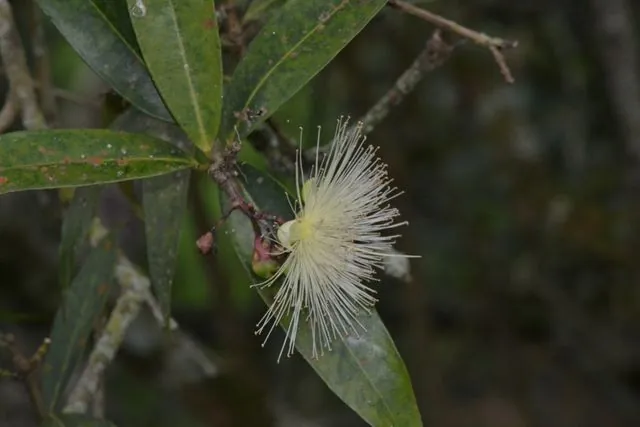
Identidad taxonómica

Scientific name
Syzygium jambos (L.) Alston
Canonical name: The scientific name without its authorship or date, for example Zea mays instead of Zea mays L.
Syzygium jambos
Authorship: The author or authors credited with publishing the scientific name. It is written after the name, sometimes with the year, for example L. (Linnaeus) in Zea mays L. An author in parentheses first published the name in another genus or rank.
(L.) Alston
Common names
Plum Rose, Malabar Plum, Jambos, Malabar Plum, Rose apple, Plum rose, Jambos, Malabar-plum, rose-apple, Rose Apple
Names in other languages (78)Djamboe aer mawar, Fekika papālangi, Guayaba pomarosa, Hřebíčkovec jambos, Jambeiro, Jambeiro-branco, Jambo, Jambo-branco, Jambosier, Jambrosade, Jambu mawar, Jamrosa, Jamrosat, Jamrosat, Jambrosade, Jamerosa, Jamrosa, Jamrose, Lý, M'bouera marachi, Mbera-Shizungou, Mapouera marachi, Pokok Jambu Mawar, Poma, Pomarrosa, Pomarroso, Pomme rose, Pomo, Rosenapfel, Rosenapfelbaum, ahi‘a papa‘a, apel en wai, czapetka jambos, fa palangi, fei’a popa’ä, fai’a, ’a’i’a taetaevao, ’a’i’a papa’ä, ’ahi’a popa’ä, ha’i’a popa’ä, fekika papalangi, goyavier parfum, haia, hehea ha‘amoa, iouen wai, jambo-amarelo, jambo-cheiroso, jambo-de-malabar, jambo-moreno, jambo-rosa, jamboes, jambosier, Pommier rose, jamrosier, kavika ni India, kavika ni vavalangi, ka‘ika, ka‘ika papa‘a, ka‘ika takataka, ka‘ika varani, kehika haoè, kehià haoè, kehià haoè, kehià kina, klinčekovec jablkový, lab-bec, manzana rosa, pau-jambre, pomme-rose, pomme-rose, ke’ika garegare, pommier rose, prunier de Malabar, rosenäpple, rusojambolaani, seasea palagi, yambo, youenwai, Розовое яблоко, Сизигиум ямбоз, תפוח הוורד, गुलाब जामुन, जाम्ब, গোলাপজাম, പനിനീർ ചാമ്പ, වැලි ජම්බු, ชมพู่, ชมพู่น้ำดอกไม้, ‘ahi’a popa’a, kehika hao’e, kehi’a hao’e, ‘ohi‘a loke, フトモモ, 蒲桃
Kingdom: One of the broadest ranks of biological classification. It groups organisms that share very basic features, for example plants (Plantae), animals (Animalia) or fungi (Fungi).
Plantae
Phylum: Rank below kingdom that groups organisms with a shared general body plan, for example chordates (Chordata), arthropods (Arthropoda) or vascular plants (Tracheophyta). In botany the same rank is also called division.
Tracheophyta
Class: Rank below phylum, for example mammals (Mammalia), birds (Aves), insects (Insecta) or monocot plants such as grasses and orchids (Liliopsida).
Magnoliopsida
Order: Rank below class that groups related families, for example grasses and their relatives (Poales) or bats (Chiroptera).
Myrtales
Family: Rank below order that groups related genera. Family names usually end in -aceae in botany (for example Poaceae, the grass family) and in -idae in zoology (for example Felidae, the cat family).
Myrtaceae
Genus: Rank that groups closely related species. Its name is the first word of a species' scientific name and starts with a capital letter, for example Zea in Zea mays.
Syzygium
Specific epithet: The second word of a species' scientific name. On its own it does not name the species: it always goes with the genus, for example mays in Zea mays.
jambos
Taxonomic rank: The level a name occupies in the hierarchy of biological classification, such as kingdom, family, genus, species or subspecies.
species
Reference species
Syzygium jambos
Taxonomic status: Whether the taxonomic catalogue the record comes from currently accepts this name for the organism, or treats it as a synonym of another accepted name or as doubtful.
accepted name

Photos and conservation status

IUCN Red List category: The extinction-risk category that the International Union for Conservation of Nature (IUCN) assigns to a species on its Red List. EX Extinct: there is no reasonable doubt that the last individual has died. EW Extinct in the wild: it survives only in cultivation, in captivity or as a population far outside its past range. CR Critically endangered, EN Endangered and VU Vulnerable: the three threatened categories, from an extremely high to a high risk of extinction in the wild. NT Near threatened: close to qualifying as threatened. LC Least concern: evaluated and not threatened. DD Data deficient: there is not enough information to assess its risk. NE Not evaluated: not yet assessed against the criteria. It describes the risk of the species worldwide, not its situation in a project's area.
Least concern (LC)
Source: IUCN Red List via GBIF, queried on 2026-10-09 09:30.
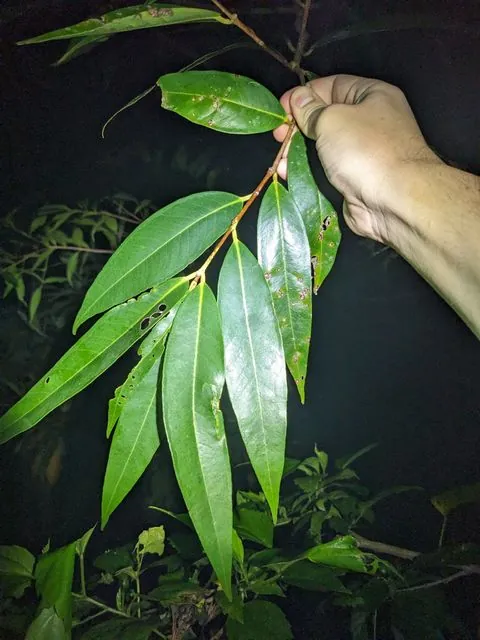
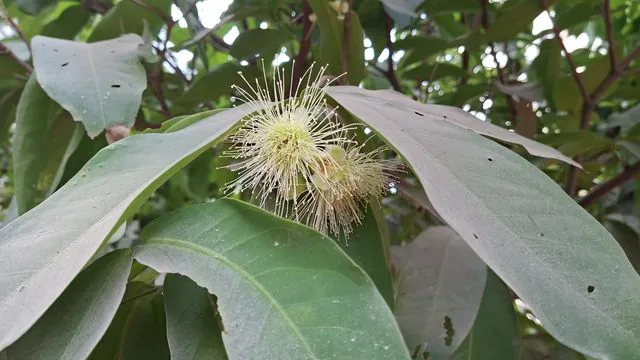
Photo of Syzygium jambos (L.) Alston
Photo: Matt B · CC BY 4.0 · View original image · Original observation
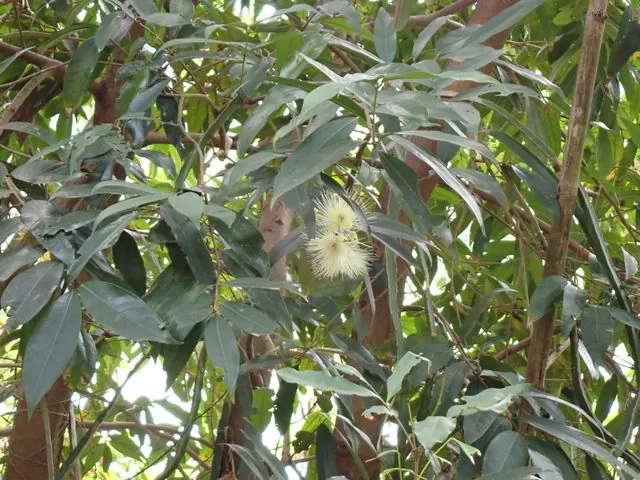
Photo of Syzygium jambos (L.) Alston
Photo: S.MORE · CC0 1.0 · View original image · Original observation
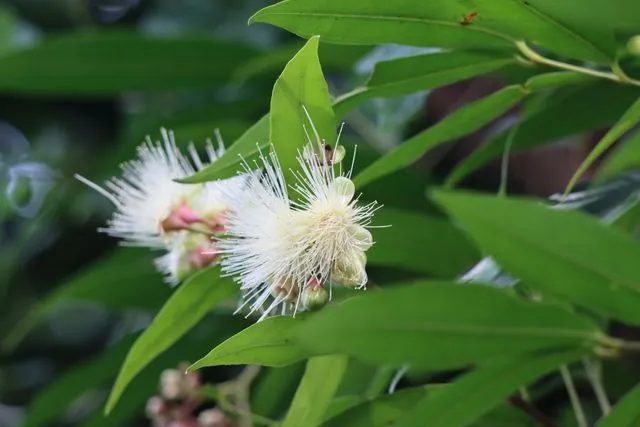
Photo of Syzygium jambos (L.) Alston
Photo: John Baur · CC BY 4.0 · View original image · Original observation
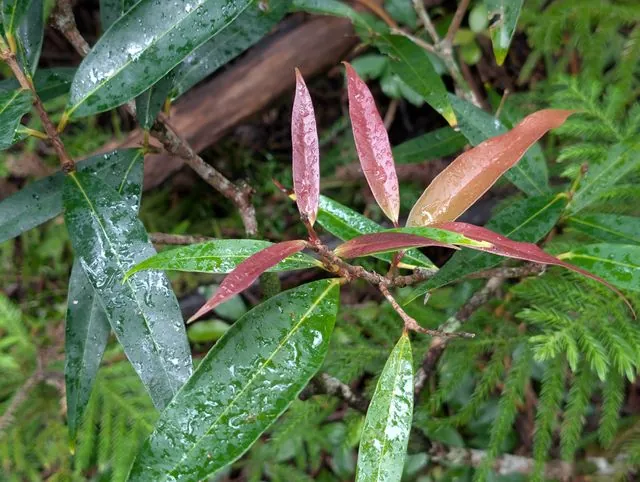
Photo of Syzygium jambos (L.) Alston
Photo: amantedarmanin · CC BY 4.0 · View original image · Original observation
Photo of Syzygium jambos (L.) Alston
Photo: Damien Wallace · CC0 1.0 · View original image · Original observation
Photo of Syzygium jambos (L.) Alston
Photo: EstebanMH · CC BY 4.0 · View original image · Original observation

Research-grade iNaturalist observations via GBIF, CC0 or CC BY licences only, queried on 2026-10-09 09:30.

Interacciones documentadas

GloBI says it is documented somewhere in the world. Biolitica answers whether it could happen here.

A documented interaction means it was recorded somewhere in the world. It does not mean it occurs here.

Types shown: 9 of 9 is a host of × is eaten by × interacts with × has its flowers visited by × is pollinated by × has as a vector × is visited by × has as a parasite × has as a pathogen ×

Blocks that do not sit under a navigation concept heading keep the source's own term: no navigation concept has been assigned to them yet.

is a host of 189 organisms

The authority declares no effect on this species for this term: neither that it harms it nor that it benefits it. In the source ontology symbiosis covers mutualism, commensalism and parasitism alike, so this block holds attackers and allies side by side.

Organism Reads as Studies Where it was documented Actions
Myrtle Rust Austropuccinia psidii Sphaerophragmiaceae is a host of 43 not compared
Phaeoxyphiella walteri Capnodiaceae is a host of 4 not compared
Antennariella elegans Capnodiaceae is a host of 3 not compared
Tripospermum Capnodiaceae is a host of 3 not compared Not a modelling unit: the source publishes it at genus level.
Showing 4 of 189, by number of studies See more of this type

is eaten by 81 organisms

This term does declare that the organism harms this species.

Organism Reads as Studies Where it was documented Actions
Great Fruit-eating Bat Artibeus lituratus Phyllostomidae is eaten by 10 not compared
Seba's Short-tailed Bat Carollia perspicillata Phyllostomidae is eaten by 4 not compared
Little Yellow-shouldered Bat Sturnira lilium Phyllostomidae is eaten by 4 not compared
Jamaica Fruit-eating Bat Artibeus jamaicensis Phyllostomidae is eaten by 4 not compared
Showing 4 of 81, by number of studies See more of this type

interacts with 23 organisms

The authority declares no effect on this species for this term: neither that it harms it nor that it benefits it.

Organism Reads as Studies Where it was documented Actions
Myrtle Rust Austropuccinia psidii Sphaerophragmiaceae interacts with 29 not compared
Lesser Dog-faced Fruit Bat Cynopterus brachyotis Pteropodidae interacts with 5 no location
Ryukyu Flying Fox Pteropus dasymallus Pteropodidae interacts with 3 no location
Greater Shortnosed Fruit Bat Cynopterus sphinx Pteropodidae interacts with 2 no location
Showing 4 of 23, by number of studies See more of this type

Flower visit

has its flowers visited by 20 organisms

The authority declares no effect on this species for this term: neither that it harms it nor that it benefits it. Visiting a flower is not pollinating it. «Pollinates» is a different term and a different block, and merging the two is the measured defect that turned ~88 shared «pollinators» into birds and primates.

Organism Reads as Studies Where it was documented Actions
Asian Hornet Vespa velutina Vespidae has its flowers visited by 2 not compared
Papilio clytia has its flowers visited by 2 not compared
Sap-feeding Beetles Nitidulidae has its flowers visited by Refuted 1 no location Not a modelling unit: the source publishes it at family level.
Macao Paper Wasp Polistes olivaceus has its flowers visited by Refuted 1 no location
Showing 4 of 20, by number of studies See more of this type

Pollination

is pollinated by 11 organisms

This term declares that the organism benefits this species. «Visits the flowers of» is a different term and a different block: a visitor is not a pollinator, and merging the two is the measured defect that turned ~88 shared «pollinators» into birds and primates.

Organism Reads as Studies Where it was documented Actions
Seychelles Sunbird Cinnyris dussumieri Nectariniidae is pollinated by 1 no location
Atrichopogon yamabukiensis Ceratopogonidae is pollinated by 1 no location
Sap-feeding Beetles Nitidulidae Nitidulidae is pollinated by 1 no location Not a modelling unit: the source publishes it at family level.
White-chested Emerald Amazilia brevirostris is pollinated by 1 not compared
Showing 4 of 11, by number of studies See more of this type

has as a vector 7 organisms

The authority declares no effect on this species for this term: neither that it harms it nor that it benefits it.

Organism Reads as Studies Where it was documented Actions
Great Fruit-eating Bat Artibeus lituratus Phyllostomidae has as a vector 6 not compared
Jamaica Fruit-eating Bat Artibeus jamaicensis Phyllostomidae has as a vector 6 not compared
Seba's Short-tailed Bat Carollia perspicillata Phyllostomidae has as a vector 2 no location
Fraternal Fruit-eating Bat Artibeus fraterculus Phyllostomidae has as a vector 2 not compared
Showing 4 of 7, by number of studies See more of this type

is visited by 7 organisms

The authority declares no effect on this species for this term: neither that it harms it nor that it benefits it.

Organism Reads as Studies Where it was documented Actions
Leach's Single-leaf Bat Monophyllus redmani Phyllostomidae is visited by 1 no location
Jamaica Fruit-eating Bat Artibeus jamaicensis Phyllostomidae is visited by 1 no location
Tailed Tailless Bat Anoura caudifer Phyllostomidae is visited by 1 not compared
Asian Hornet Vespa velutina Vespidae is visited by 1 not compared
Showing 4 of 7, by number of studies See more of this type

has as a parasite 3 organisms

This term does declare that the organism harms this species.

Organism Reads as Studies Where it was documented Actions
Syrphophagus taiwanus Encyrtidae has as a parasite 1 no location
Psyllaephagus stenopsyllae Encyrtidae has as a parasite 1 no location
Psyllaephagus taiwanus Encyrtidae has as a parasite 1 no location
Showing 3 of 3, by number of studies

has as a pathogen 2 organisms

This term does declare that the organism harms this species. It is a narrow block, and it cannot be the only one that is read: the most frequent term in the catalogue is the one above, which declares no harm, so much of what a reader would call a pest arrives there instead.

Organism Reads as Studies Where it was documented Actions
Algal Leaf Spot Cephaleuros virescens Trentepohliaceae has as a pathogen 1 not compared
Myrtle Rust Austropuccinia psidii Sphaerophragmiaceae has as a pathogen 1 not compared
Showing 2 of 2, by number of studies

Acompañantes documentados

This agronomic reading comes from a source reserved for internal use, so it is not shown here.

Documented uses and recommendations

Uses and recommendations that a source documents for this species beside a crop, each in its own context. They are the source's statements, not traits of the species and not Biolítica's recommendations, and none of them is a relation between two species.

Among the sources you can read, none documents a use or recommendation of this species beside a crop.