Canonical name: The scientific name without its authorship or date, for example Zea mays instead of Zea mays L. — The scientific name without its authorship or date, for example Zea mays instead of Zea mays L.
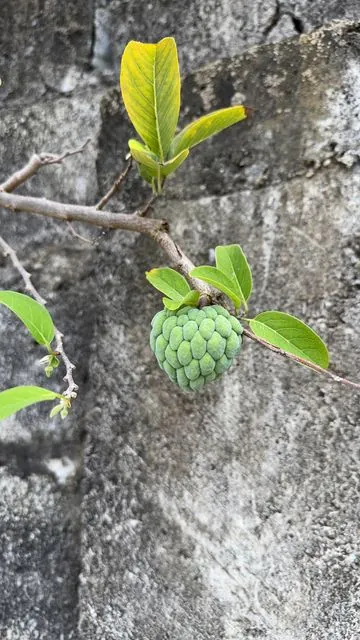
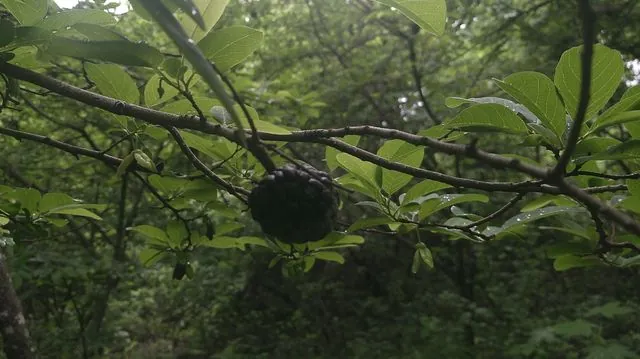
Annona squamosa
Authorship: The author or authors credited with publishing the scientific name. It is written after the name, sometimes with the year, for example L. (Linnaeus) in Zea mays L. An author in parentheses first published the name in another genus or rank. — The author or authors credited with publishing the scientific name. It is written after the name, sometimes with the year, for example L. (Linnaeus) in Zea mays L. An author in parentheses first published the name in another genus or rank.
Kingdom: One of the broadest ranks of biological classification. It groups organisms that share very basic features, for example plants (Plantae), animals (Animalia) or fungi (Fungi). — One of the broadest ranks of biological classification. It groups organisms that share very basic features, for example plants (Plantae), animals (Animalia) or fungi (Fungi).
Plantae
Phylum: Rank below kingdom that groups organisms with a shared general body plan, for example chordates (Chordata), arthropods (Arthropoda) or vascular plants (Tracheophyta). In botany the same rank is also called division. — Rank below kingdom that groups organisms with a shared general body plan, for example chordates (Chordata), arthropods (Arthropoda) or vascular plants (Tracheophyta). In botany the same rank is also called division.
Tracheophyta
Class: Rank below phylum, for example mammals (Mammalia), birds (Aves), insects (Insecta) or monocot plants such as grasses and orchids (Liliopsida). — Rank below phylum, for example mammals (Mammalia), birds (Aves), insects (Insecta) or monocot plants such as grasses and orchids (Liliopsida).
Magnoliopsida
Order: Rank below class that groups related families, for example grasses and their relatives (Poales) or bats (Chiroptera). — Rank below class that groups related families, for example grasses and their relatives (Poales) or bats (Chiroptera).
Magnoliales
Family: Rank below order that groups related genera. Family names usually end in -aceae in botany (for example Poaceae, the grass family) and in -idae in zoology (for example Felidae, the cat family). — Rank below order that groups related genera. Family names usually end in -aceae in botany (for example Poaceae, the grass family) and in -idae in zoology (for example Felidae, the cat family).
Annonaceae
Genus: Rank that groups closely related species. Its name is the first word of a species' scientific name and starts with a capital letter, for example Zea in Zea mays. — Rank that groups closely related species. Its name is the first word of a species' scientific name and starts with a capital letter, for example Zea in Zea mays.
Annona
Specific epithet: The second word of a species' scientific name. On its own it does not name the species: it always goes with the genus, for example mays in Zea mays. — The second word of a species' scientific name. On its own it does not name the species: it always goes with the genus, for example mays in Zea mays.
squamosa
Taxonomic rank: The level a name occupies in the hierarchy of biological classification, such as kingdom, family, genus, species or subspecies. — The level a name occupies in the hierarchy of biological classification, such as kingdom, family, genus, species or subspecies.
species
Reference species
Annona squamosa
Taxonomic status: Whether the taxonomic catalogue the record comes from currently accepts this name for the organism, or treats it as a synonym of another accepted name or as doubtful. — Whether the taxonomic catalogue the record comes from currently accepts this name for the organism, or treats it as a synonym of another accepted name or as doubtful.
accepted name
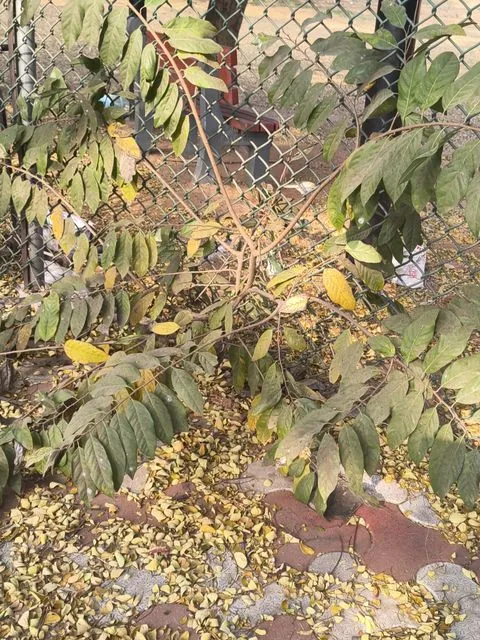
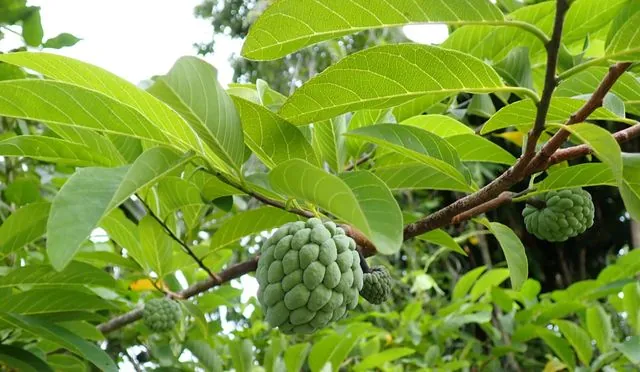
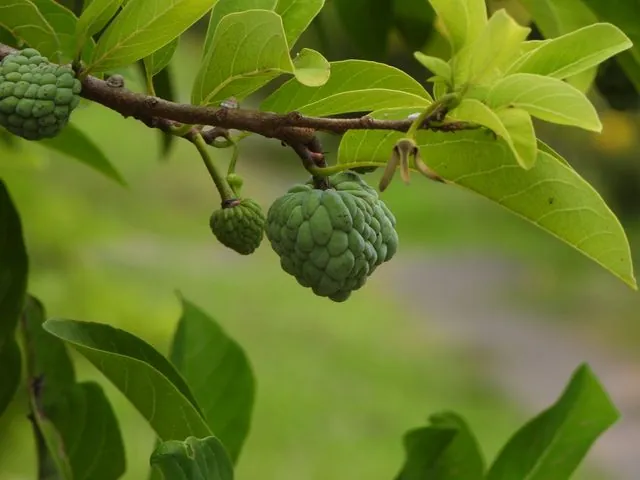
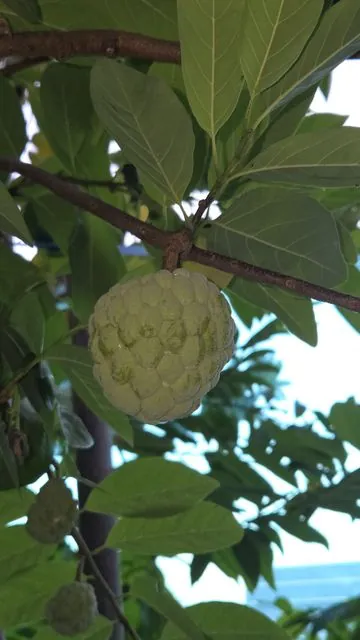
Photos and conservation status
IUCN Red List category: The extinction-risk category that the International Union for Conservation of Nature (IUCN) assigns to a species on its Red List. EX Extinct: there is no reasonable doubt that the last individual has died. EW Extinct in the wild: it survives only in cultivation, in captivity or as a population far outside its past range. CR Critically endangered, EN Endangered and VU Vulnerable: the three threatened categories, from an extremely high to a high risk of extinction in the wild. NT Near threatened: close to qualifying as threatened. LC Least concern: evaluated and not threatened. DD Data deficient: there is not enough information to assess its risk. NE Not evaluated: not yet assessed against the criteria. It describes the risk of the species worldwide, not its situation in a project's area. — The extinction-risk category that the International Union for Conservation of Nature (IUCN) assigns to a species on its Red List. EX Extinct: there is no reasonable doubt that the last individual has died. EW Extinct in the wild: it survives only in cultivation, in captivity or as a population far outside its past range. CR Critically endangered, EN Endangered and VU Vulnerable: the three threatened categories, from an extremely high to a high risk of extinction in the wild. NT Near threatened: close to qualifying as threatened. LC Least concern: evaluated and not threatened. DD Data deficient: there is not enough information to assess its risk. NE Not evaluated: not yet assessed against the criteria. It describes the risk of the species worldwide, not its situation in a project's area.
Least concern (LC)
Source: IUCN Red List via GBIF, queried on 2026-10-09 10:07.
Research-grade iNaturalist observations via GBIF, CC0 or CC BY licences only, queried on 2026-10-09 10:07.
Interacciones documentadas
GloBI says it is documented somewhere in the world. Biolitica answers whether it could happen here.
A documented interaction means it was recorded somewhere in the world. It does not mean it occurs here.
Types shown: 11 of 11
is a host of
×
is eaten by
×
interacts with (this species is the record's destination)
×
has as a parasite
×
has its flowers visited by
×
is pollinated by
×
has as a vector
×
is an arbuscular mycorrhizal host of
×
is adjacent to
×
interacts with (this species is the record's origin)
×
is a symbiont of
×
Blocks that do not sit under a navigation concept heading keep the source's own term: no navigation concept has been assigned to them yet.
is a host of
222 organisms
The authority declares no effect on this species for this term: neither that it harms it nor that it benefits it. In the source ontology symbiosis covers mutualism, commensalism and parasitism alike, so this block holds attackers and allies side by side.
Organism
Reads as
Studies
Where it was documented
Actions
Phakopsora cherimoliae
is a host of
23
not compared
23 sources · 24 records
Beenken, L.. 2014. Pucciniales on %Annona% (Annonaceae) with special focus on the genus %Phakopsora%. Mycol. Progr. 13:791-809
Published in globalbioticinteractions/usda-fungus-host
Record contexts (sample): Cuba · no date published; United States · no date published
Claim type
Published relationship between two taxa
Version
GloBI 0.11
Reuse
This release publishes no reuse terms for this record.
Cuba · no date publishedWhere it is: line:hash://sha256/021a206a1459bcca7e251c73f5bd180fc3ac342a09c499855fe42e21fc09edcf!/interactions.tsv.gz!/L4345104
United States · no date publishedWhere it is: line:hash://sha256/021a206a1459bcca7e251c73f5bd180fc3ac342a09c499855fe42e21fc09edcf!/interactions.tsv.gz!/L4345105
This release publishes no reuse terms for this record.
no place published · no date publishedWhere it is: line:hash://sha256/021a206a1459bcca7e251c73f5bd180fc3ac342a09c499855fe42e21fc09edcf!/interactions.tsv.gz!/L11268132
This release publishes no reuse terms for this record.
no place published · no date publishedWhere it is: line:hash://sha256/021a206a1459bcca7e251c73f5bd180fc3ac342a09c499855fe42e21fc09edcf!/interactions.tsv.gz!/L11268133
This release publishes no reuse terms for this record.
no place published · no date publishedWhere it is: line:hash://sha256/021a206a1459bcca7e251c73f5bd180fc3ac342a09c499855fe42e21fc09edcf!/interactions.tsv.gz!/L11268134
This release publishes no reuse terms for this record.
no place published · no date publishedWhere it is: line:hash://sha256/021a206a1459bcca7e251c73f5bd180fc3ac342a09c499855fe42e21fc09edcf!/interactions.tsv.gz!/L11268135
This release publishes no reuse terms for this record.
no place published · no date publishedWhere it is: line:hash://sha256/021a206a1459bcca7e251c73f5bd180fc3ac342a09c499855fe42e21fc09edcf!/interactions.tsv.gz!/L11268136
This release publishes no reuse terms for this record.
no place published · no date publishedWhere it is: line:hash://sha256/021a206a1459bcca7e251c73f5bd180fc3ac342a09c499855fe42e21fc09edcf!/interactions.tsv.gz!/L11268137
This release publishes no reuse terms for this record.
no place published · no date publishedWhere it is: line:hash://sha256/021a206a1459bcca7e251c73f5bd180fc3ac342a09c499855fe42e21fc09edcf!/interactions.tsv.gz!/L11268138
This release publishes no reuse terms for this record.
no place published · no date publishedWhere it is: line:hash://sha256/021a206a1459bcca7e251c73f5bd180fc3ac342a09c499855fe42e21fc09edcf!/interactions.tsv.gz!/L11268139
This release publishes no reuse terms for this record.
no place published · no date publishedWhere it is: line:hash://sha256/021a206a1459bcca7e251c73f5bd180fc3ac342a09c499855fe42e21fc09edcf!/interactions.tsv.gz!/L11268150
This release publishes no reuse terms for this record.
no place published · no date publishedWhere it is: line:hash://sha256/021a206a1459bcca7e251c73f5bd180fc3ac342a09c499855fe42e21fc09edcf!/interactions.tsv.gz!/L11268151
This release publishes no reuse terms for this record.
no place published · no date publishedWhere it is: line:hash://sha256/021a206a1459bcca7e251c73f5bd180fc3ac342a09c499855fe42e21fc09edcf!/interactions.tsv.gz!/L11268152
This release publishes no reuse terms for this record.
no place published · no date publishedWhere it is: line:hash://sha256/021a206a1459bcca7e251c73f5bd180fc3ac342a09c499855fe42e21fc09edcf!/interactions.tsv.gz!/L11268153
This release publishes no reuse terms for this record.
no place published · no date publishedWhere it is: line:hash://sha256/021a206a1459bcca7e251c73f5bd180fc3ac342a09c499855fe42e21fc09edcf!/interactions.tsv.gz!/L11268154
This release publishes no reuse terms for this record.
no place published · no date publishedWhere it is: line:hash://sha256/021a206a1459bcca7e251c73f5bd180fc3ac342a09c499855fe42e21fc09edcf!/interactions.tsv.gz!/L11268155
This release publishes no reuse terms for this record.
no place published · no date publishedWhere it is: line:hash://sha256/021a206a1459bcca7e251c73f5bd180fc3ac342a09c499855fe42e21fc09edcf!/interactions.tsv.gz!/L11268156
This release publishes no reuse terms for this record.
no place published · no date publishedWhere it is: line:hash://sha256/021a206a1459bcca7e251c73f5bd180fc3ac342a09c499855fe42e21fc09edcf!/interactions.tsv.gz!/L11268157
Stevenson, J.A.. 1975. Fungi of Puerto Rico and the American Virgin Islands. Contr. Reed Herb. 23:743
Published in globalbioticinteractions/usda-fungus-host
Record contexts (sample): Virgin Islands · no date published; Puerto Rico · no date published
Claim type
Published relationship between two taxa
Version
GloBI 0.11
Reuse
This release publishes no reuse terms for this record.
Virgin Islands · no date publishedWhere it is: line:hash://sha256/021a206a1459bcca7e251c73f5bd180fc3ac342a09c499855fe42e21fc09edcf!/interactions.tsv.gz!/L3944184
Puerto Rico · no date publishedWhere it is: line:hash://sha256/021a206a1459bcca7e251c73f5bd180fc3ac342a09c499855fe42e21fc09edcf!/interactions.tsv.gz!/L3944186
Context: Valle del Cauca, Cali · March 5, 1938 · Preserved specimen
Claim type
Published relationship between two taxa
Version
GloBI 0.11
Reuse
This release publishes no reuse terms for this record.
Valle del Cauca, Cali · March 5, 1938 · Preserved specimenAs published: 1938-03-05T00:00:00Z · PreservedSpecimenWhere it is: line:hash://sha256/021a206a1459bcca7e251c73f5bd180fc3ac342a09c499855fe42e21fc09edcf!/interactions.tsv.gz!/L17167662
This release publishes no reuse terms for this record.
no place published · no date publishedWhere it is: line:hash://sha256/021a206a1459bcca7e251c73f5bd180fc3ac342a09c499855fe42e21fc09edcf!/interactions.tsv.gz!/L205098
Alfieri Jr., S.A., Langdon, K.R., Wehlburg, C., and Kimbrough, J.W.. 1984. Index of Plant Diseases in Florida (Revised). Florida Dept. Agric. and Consumer Serv., Div. Plant Ind. Bull. 11:1-389
Published in globalbioticinteractions/usda-fungus-host
Context: United States · no date published
Claim type
Published relationship between two taxa
Version
GloBI 0.11
Reuse
This release publishes no reuse terms for this record.
United States · no date publishedWhere it is: line:hash://sha256/021a206a1459bcca7e251c73f5bd180fc3ac342a09c499855fe42e21fc09edcf!/interactions.tsv.gz!/L3681874
No public URL for this record
Mendes, M.A.S., da Silva, V.L., Dianese, J.C., and et al.. 1998. Fungos em Plants no Brasil. Embrapa-SPI/Embrapa-Cenargen, Brasilia :555
Published in globalbioticinteractions/usda-fungus-host
Context: Brazil · no date published
Claim type
Published relationship between two taxa
Version
GloBI 0.11
Reuse
This release publishes no reuse terms for this record.
Brazil · no date publishedWhere it is: line:hash://sha256/021a206a1459bcca7e251c73f5bd180fc3ac342a09c499855fe42e21fc09edcf!/interactions.tsv.gz!/L3811146
No public URL for this record
Arnold, G.R.W.. 1986. Lista de Hongos Fitopatogenos de Cuba. Ministerio de Cultura Editorial Cientifico-Tecnica :207
Published in globalbioticinteractions/usda-fungus-host
Context: Cuba · no date published
Claim type
Published relationship between two taxa
Version
GloBI 0.11
Reuse
This release publishes no reuse terms for this record.
Cuba · no date publishedWhere it is: line:hash://sha256/021a206a1459bcca7e251c73f5bd180fc3ac342a09c499855fe42e21fc09edcf!/interactions.tsv.gz!/L3813694
No public URL for this record
Zhuang, W.-Y., Ed.. 2001. Higher Fungi of Tropical China. Mycotaxon, Ltd., Ithaca, NY :485
Published in globalbioticinteractions/usda-fungus-host
Context: China · no date published
Claim type
Published relationship between two taxa
Version
GloBI 0.11
Reuse
This release publishes no reuse terms for this record.
China · no date publishedWhere it is: line:hash://sha256/021a206a1459bcca7e251c73f5bd180fc3ac342a09c499855fe42e21fc09edcf!/interactions.tsv.gz!/L4015333
No public URL for this record
Gurunath Rao, V.. 1966. An account of the market and storage diseases of fruits and vegetables in Bombay-Maharashtra India. Mycopathol. Mycol. Appl. 28:165-176
Published in globalbioticinteractions/usda-fungus-host
Context: India · no date published
Claim type
Published relationship between two taxa
Version
GloBI 0.11
Reuse
This release publishes no reuse terms for this record.
India · no date publishedWhere it is: line:hash://sha256/021a206a1459bcca7e251c73f5bd180fc3ac342a09c499855fe42e21fc09edcf!/interactions.tsv.gz!/L4181046
No public URL for this record
And 1 more source, with fewer records, not listed here.
A published relationship says these two taxa were documented interacting. It does not say how often, or that it happens in this project's region.
This term does declare that the organism harms this species.
Organism
Reads as
Studies
Where it was documented
Actions
Greater Shortnosed Fruit BatCynopterus sphinxPteropodidae
is eaten by
7
not compared
7 sources · 7 records
Elangovan, V., G. Marimuthu & T. H. Kunz. 2001. Temporal patterns of resource use by the short-nosed fruit bat, Cynopterus sphinx (Megachiroptera: Pteropodidae). Journal of Mammalogy 82 (1): 161-165.
Published in globalbioticinteractions/batbase
Context: Madurai · no date published
Claim type
Published relationship between two taxa
Version
GloBI 0.11
Reuse
This release publishes no reuse terms for this record.
Madurai · no date publishedWhere it is: line:hash://sha256/021a206a1459bcca7e251c73f5bd180fc3ac342a09c499855fe42e21fc09edcf!/interactions.tsv.gz!/L12444873
No public URL for this record
Rajan, K. E., N. G. Nair & R. Subbaraj. 1999. Seasonal food preferences of the Indian short nosed fruit bat Cynopterus sphinx (Vahl) (Chiroptera: Pteropodidae). Journal of the Bombay Natural History Society 96 (1): 24-27.
Published in globalbioticinteractions/batbase
Context: Madurai · no date published
Claim type
Published relationship between two taxa
Version
GloBI 0.11
Reuse
This release publishes no reuse terms for this record.
Madurai · no date publishedWhere it is: line:hash://sha256/021a206a1459bcca7e251c73f5bd180fc3ac342a09c499855fe42e21fc09edcf!/interactions.tsv.gz!/L12445367
No public URL for this record
Sudhakaran, M. R. & P. S. Doss. 2012. Food and foraging preferences of three pteropodid bats in southern India. Journal of Threatened Taxa 4 (1): 2295-2303.
Published in globalbioticinteractions/batbase
Context: Tamil Nadu · no date published
Claim type
Published relationship between two taxa
Version
GloBI 0.11
Reuse
This release publishes no reuse terms for this record.
Tamil Nadu · no date publishedWhere it is: line:hash://sha256/021a206a1459bcca7e251c73f5bd180fc3ac342a09c499855fe42e21fc09edcf!/interactions.tsv.gz!/L12445725
No public URL for this record
Sudhakaran 2012
Published in globalbioticinteractions/fricke2020
Context: India · no date published
Claim type
Published relationship between two taxa
Version
GloBI 0.11
Reuse
This release publishes no reuse terms for this record.
India · no date publishedWhere it is: line:hash://sha256/021a206a1459bcca7e251c73f5bd180fc3ac342a09c499855fe42e21fc09edcf!/interactions.tsv.gz!/L13388067
No public URL for this record
https://www.inaturalist.org/observations/1311708
Published in globalbioticinteractions/inaturalist
Context: no place published · Feb. 20, 2015 · Human observation
Claim type
Published relationship between two taxa
Version
GloBI 0.11
Reuse
This release publishes no reuse terms for this record.
no place published · Feb. 20, 2015 · Human observationAs published: 2015-02-20T09:16:21Z · HumanObservationWhere it is: line:hash://sha256/021a206a1459bcca7e251c73f5bd180fc3ac342a09c499855fe42e21fc09edcf!/interactions.tsv.gz!/L4483743
Context: no place published · Jan. 29, 2015 · Human observation
Claim type
Published relationship between two taxa
Version
GloBI 0.11
Reuse
This release publishes no reuse terms for this record.
no place published · Jan. 29, 2015 · Human observationAs published: 2015-01-29T12:11:11Z · HumanObservationWhere it is: line:hash://sha256/021a206a1459bcca7e251c73f5bd180fc3ac342a09c499855fe42e21fc09edcf!/interactions.tsv.gz!/L4483744
Elangovan, V., Marimuthu, G., & Kunz, T. H. (1999). Temporal patterns of individual and group foraging behaviour in the short-nosed fruit bat, Cynopterus sphinx, in south India. Journal of Tropical Ecology, 15(5), 681-687.
Published in globalbioticinteractions/bat-co-roosting-database
This release publishes no reuse terms for this record.
Madurai Kamaraj University campus (9°58'N, 78°10'E) · Jan. 1, 1996As published: 1996-01-01T00:00:00ZWhere it is: line:hash://sha256/021a206a1459bcca7e251c73f5bd180fc3ac342a09c499855fe42e21fc09edcf!/interactions.tsv.gz!/L7058382
Context: no place published · April 23, 2024 · Human observation
Claim type
Published relationship between two taxa
Version
GloBI 0.11
Reuse
This release publishes no reuse terms for this record.
no place published · April 23, 2024 · Human observationAs published: 2024-04-23T02:21:22Z · HumanObservationWhere it is: line:hash://sha256/021a206a1459bcca7e251c73f5bd180fc3ac342a09c499855fe42e21fc09edcf!/interactions.tsv.gz!/L4583530
Context: no place published · Oct. 19, 2019 · Human observation
Claim type
Published relationship between two taxa
Version
GloBI 0.11
Reuse
This release publishes no reuse terms for this record.
no place published · Oct. 19, 2019 · Human observationAs published: 2019-10-19T00:00:00Z · HumanObservationWhere it is: line:hash://sha256/021a206a1459bcca7e251c73f5bd180fc3ac342a09c499855fe42e21fc09edcf!/interactions.tsv.gz!/L5206197
Context: no place published · Feb. 11, 2020 · Human observation
Claim type
Published relationship between two taxa
Version
GloBI 0.11
Reuse
This release publishes no reuse terms for this record.
no place published · Feb. 11, 2020 · Human observationAs published: 2020-02-11T00:00:00Z · HumanObservationWhere it is: line:hash://sha256/021a206a1459bcca7e251c73f5bd180fc3ac342a09c499855fe42e21fc09edcf!/interactions.tsv.gz!/L5270569
Context: no place published · Oct. 22, 2023 · Human observation
Claim type
Published relationship between two taxa
Version
GloBI 0.11
Reuse
This release publishes no reuse terms for this record.
no place published · Oct. 22, 2023 · Human observationAs published: 2023-10-22T01:45:00Z · HumanObservationWhere it is: line:hash://sha256/021a206a1459bcca7e251c73f5bd180fc3ac342a09c499855fe42e21fc09edcf!/interactions.tsv.gz!/L5791106
Context: no place published · Nov. 5, 2023 · Human observation
Claim type
Published relationship between two taxa
Version
GloBI 0.11
Reuse
This release publishes no reuse terms for this record.
no place published · Nov. 5, 2023 · Human observationAs published: 2023-11-05T06:35:00Z · HumanObservationWhere it is: line:hash://sha256/021a206a1459bcca7e251c73f5bd180fc3ac342a09c499855fe42e21fc09edcf!/interactions.tsv.gz!/L5805112
Context: no place published · Nov. 8, 2023 · Human observation
Claim type
Published relationship between two taxa
Version
GloBI 0.11
Reuse
This release publishes no reuse terms for this record.
no place published · Nov. 8, 2023 · Human observationAs published: 2023-11-08T02:14:00Z · HumanObservationWhere it is: line:hash://sha256/021a206a1459bcca7e251c73f5bd180fc3ac342a09c499855fe42e21fc09edcf!/interactions.tsv.gz!/L5808414
Record contexts (sample): no place published · Nov. 5, 2018 · Human observation; no place published · Nov. 5, 2018 · Human observation
Claim type
Published relationship between two taxa
Version
GloBI 0.11
Reuse
This release publishes no reuse terms for this record.
no place published · Nov. 5, 2018 · Human observationAs published: 2018-11-05T17:05:28Z · HumanObservationWhere it is: line:hash://sha256/021a206a1459bcca7e251c73f5bd180fc3ac342a09c499855fe42e21fc09edcf!/interactions.tsv.gz!/L4911961
no place published · Nov. 5, 2018 · Human observationAs published: 2018-11-05T17:05:28Z · HumanObservationWhere it is: line:hash://sha256/021a206a1459bcca7e251c73f5bd180fc3ac342a09c499855fe42e21fc09edcf!/interactions.tsv.gz!/L4911962
Sudhakaran, M. R. & P. S. Doss. 2012. Food and foraging preferences of three pteropodid bats in southern India. Journal of Threatened Taxa 4 (1): 2295-2303.
Published in globalbioticinteractions/batbase
Context: Tamil Nadu · no date published
Claim type
Published relationship between two taxa
Version
GloBI 0.11
Reuse
This release publishes no reuse terms for this record.
Tamil Nadu · no date publishedWhere it is: line:hash://sha256/021a206a1459bcca7e251c73f5bd180fc3ac342a09c499855fe42e21fc09edcf!/interactions.tsv.gz!/L12445761
No public URL for this record
Sudhakaran 2012
Published in globalbioticinteractions/fricke2020
Context: India · no date published
Claim type
Published relationship between two taxa
Version
GloBI 0.11
Reuse
This release publishes no reuse terms for this record.
India · no date publishedWhere it is: line:hash://sha256/021a206a1459bcca7e251c73f5bd180fc3ac342a09c499855fe42e21fc09edcf!/interactions.tsv.gz!/L13388073
No public URL for this record
A published relationship says these two taxa were documented interacting. It does not say how often, or that it happens in this project's region.
Greenhall, A. M. 1957. Food preferences by Trinidad fruit bats. Journal of Mammalogy 38: 409-410.
Published in globalbioticinteractions/batbase
Context: Trinidad and Tobago · no date published
Claim type
Published relationship between two taxa
Version
GloBI 0.11
Reuse
This release publishes no reuse terms for this record.
Trinidad and Tobago · no date publishedWhere it is: line:hash://sha256/021a206a1459bcca7e251c73f5bd180fc3ac342a09c499855fe42e21fc09edcf!/interactions.tsv.gz!/L12439162
No public URL for this record
Greenhall, A.M. 1957. Food preferences by Trinidad fruit bats. Journal of Mammalogy 38: 409-410
Published in globalbioticinteractions/NeoBat_Interactions
Context: no place published · no date published
Claim type
Published relationship between two taxa
Version
GloBI 0.11
Reuse
This release publishes no reuse terms for this record.
no place published · no date publishedWhere it is: line:hash://sha256/021a206a1459bcca7e251c73f5bd180fc3ac342a09c499855fe42e21fc09edcf!/interactions.tsv.gz!/L24374822
No public URL for this record
Goodwin and Greenhall,1961. A review of the bats of Trinidad and Tobago. Bulletin of the American Mu-seum of Natural History, 122:187-302.
Published in globalbioticinteractions/bat-co-roosting-database
Context: no place published · no date published
Claim type
Published relationship between two taxa
Version
GloBI 0.11
Reuse
This release publishes no reuse terms for this record.
no place published · no date publishedWhere it is: line:hash://sha256/021a206a1459bcca7e251c73f5bd180fc3ac342a09c499855fe42e21fc09edcf!/interactions.tsv.gz!/L7059437
No public URL for this record
A published relationship says these two taxa were documented interacting. It does not say how often, or that it happens in this project's region.
Context: no place published · July 9, 2025 · Human observation
Claim type
Published relationship between two taxa
Version
GloBI 0.11
Reuse
This release publishes no reuse terms for this record.
no place published · July 9, 2025 · Human observationAs published: 2025-07-09T04:41:55Z · HumanObservationWhere it is: line:hash://sha256/021a206a1459bcca7e251c73f5bd180fc3ac342a09c499855fe42e21fc09edcf!/interactions.tsv.gz!/L4448262
Context: no place published · July 9, 2025 · Human observation
Claim type
Published relationship between two taxa
Version
GloBI 0.11
Reuse
This release publishes no reuse terms for this record.
no place published · July 9, 2025 · Human observationAs published: 2025-07-09T04:21:47Z · HumanObservationWhere it is: line:hash://sha256/021a206a1459bcca7e251c73f5bd180fc3ac342a09c499855fe42e21fc09edcf!/interactions.tsv.gz!/L4448270
Context: no place published · July 5, 2025 · Human observation
Claim type
Published relationship between two taxa
Version
GloBI 0.11
Reuse
This release publishes no reuse terms for this record.
no place published · July 5, 2025 · Human observationAs published: 2025-07-05T11:27:12Z · HumanObservationWhere it is: line:hash://sha256/021a206a1459bcca7e251c73f5bd180fc3ac342a09c499855fe42e21fc09edcf!/interactions.tsv.gz!/L4448984
Context: no place published · Feb. 12, 2024 · Human observation
Claim type
Published relationship between two taxa
Version
GloBI 0.11
Reuse
This release publishes no reuse terms for this record.
no place published · Feb. 12, 2024 · Human observationAs published: 2024-02-12T11:38:31Z · HumanObservationWhere it is: line:hash://sha256/021a206a1459bcca7e251c73f5bd180fc3ac342a09c499855fe42e21fc09edcf!/interactions.tsv.gz!/L4466801
Context: no place published · Feb. 24, 2024 · Human observation
Claim type
Published relationship between two taxa
Version
GloBI 0.11
Reuse
This release publishes no reuse terms for this record.
no place published · Feb. 24, 2024 · Human observationAs published: 2024-02-24T04:43:33Z · HumanObservationWhere it is: line:hash://sha256/021a206a1459bcca7e251c73f5bd180fc3ac342a09c499855fe42e21fc09edcf!/interactions.tsv.gz!/L4483415
Context: no place published · Aug. 4, 2025 · Human observation
Claim type
Published relationship between two taxa
Version
GloBI 0.11
Reuse
This release publishes no reuse terms for this record.
no place published · Aug. 4, 2025 · Human observationAs published: 2025-08-04T10:45:06Z · HumanObservationWhere it is: line:hash://sha256/021a206a1459bcca7e251c73f5bd180fc3ac342a09c499855fe42e21fc09edcf!/interactions.tsv.gz!/L4558696
Context: no place published · April 24, 2024 · Human observation
Claim type
Published relationship between two taxa
Version
GloBI 0.11
Reuse
This release publishes no reuse terms for this record.
no place published · April 24, 2024 · Human observationAs published: 2024-04-24T04:43:42Z · HumanObservationWhere it is: line:hash://sha256/021a206a1459bcca7e251c73f5bd180fc3ac342a09c499855fe42e21fc09edcf!/interactions.tsv.gz!/L4588706
Context: no place published · April 24, 2024 · Human observation
Claim type
Published relationship between two taxa
Version
GloBI 0.11
Reuse
This release publishes no reuse terms for this record.
no place published · April 24, 2024 · Human observationAs published: 2024-04-24T04:42:45Z · HumanObservationWhere it is: line:hash://sha256/021a206a1459bcca7e251c73f5bd180fc3ac342a09c499855fe42e21fc09edcf!/interactions.tsv.gz!/L4588707
Context: no place published · Jan. 25, 2024 · Human observation
Claim type
Published relationship between two taxa
Version
GloBI 0.11
Reuse
This release publishes no reuse terms for this record.
no place published · Jan. 25, 2024 · Human observationAs published: 2024-01-25T10:37:34Z · HumanObservationWhere it is: line:hash://sha256/021a206a1459bcca7e251c73f5bd180fc3ac342a09c499855fe42e21fc09edcf!/interactions.tsv.gz!/L4443884
Context: no place published · Jan. 27, 2024 · Human observation
Claim type
Published relationship between two taxa
Version
GloBI 0.11
Reuse
This release publishes no reuse terms for this record.
no place published · Jan. 27, 2024 · Human observationAs published: 2024-01-27T04:01:59Z · HumanObservationWhere it is: line:hash://sha256/021a206a1459bcca7e251c73f5bd180fc3ac342a09c499855fe42e21fc09edcf!/interactions.tsv.gz!/L4447036
Context: no place published · July 9, 2025 · Human observation
Claim type
Published relationship between two taxa
Version
GloBI 0.11
Reuse
This release publishes no reuse terms for this record.
no place published · July 9, 2025 · Human observationAs published: 2025-07-09T04:40:13Z · HumanObservationWhere it is: line:hash://sha256/021a206a1459bcca7e251c73f5bd180fc3ac342a09c499855fe42e21fc09edcf!/interactions.tsv.gz!/L4448263
Context: no place published · Feb. 9, 2024 · Human observation
Claim type
Published relationship between two taxa
Version
GloBI 0.11
Reuse
This release publishes no reuse terms for this record.
no place published · Feb. 9, 2024 · Human observationAs published: 2024-02-09T11:50:36Z · HumanObservationWhere it is: line:hash://sha256/021a206a1459bcca7e251c73f5bd180fc3ac342a09c499855fe42e21fc09edcf!/interactions.tsv.gz!/L4462060
Context: no place published · Feb. 9, 2024 · Human observation
Claim type
Published relationship between two taxa
Version
GloBI 0.11
Reuse
This release publishes no reuse terms for this record.
no place published · Feb. 9, 2024 · Human observationAs published: 2024-02-09T11:50:12Z · HumanObservationWhere it is: line:hash://sha256/021a206a1459bcca7e251c73f5bd180fc3ac342a09c499855fe42e21fc09edcf!/interactions.tsv.gz!/L4462061
Context: no place published · Feb. 12, 2024 · Human observation
Claim type
Published relationship between two taxa
Version
GloBI 0.11
Reuse
This release publishes no reuse terms for this record.
no place published · Feb. 12, 2024 · Human observationAs published: 2024-02-12T11:38:45Z · HumanObservationWhere it is: line:hash://sha256/021a206a1459bcca7e251c73f5bd180fc3ac342a09c499855fe42e21fc09edcf!/interactions.tsv.gz!/L4466799
Context: no place published · Feb. 12, 2024 · Human observation
Claim type
Published relationship between two taxa
Version
GloBI 0.11
Reuse
This release publishes no reuse terms for this record.
no place published · Feb. 12, 2024 · Human observationAs published: 2024-02-12T11:38:33Z · HumanObservationWhere it is: line:hash://sha256/021a206a1459bcca7e251c73f5bd180fc3ac342a09c499855fe42e21fc09edcf!/interactions.tsv.gz!/L4466800
Context: no place published · Feb. 16, 2024 · Human observation
Claim type
Published relationship between two taxa
Version
GloBI 0.11
Reuse
This release publishes no reuse terms for this record.
no place published · Feb. 16, 2024 · Human observationAs published: 2024-02-16T05:08:30Z · HumanObservationWhere it is: line:hash://sha256/021a206a1459bcca7e251c73f5bd180fc3ac342a09c499855fe42e21fc09edcf!/interactions.tsv.gz!/L4472644
Context: Caseta del R.V.S. La Furnia del Río Gurabo · June 20, 2020 · Preserved specimen
Claim type
Published relationship between two taxa
Version
GloBI 0.11
Reuse
This release publishes no reuse terms for this record.
Caseta del R.V.S. La Furnia del Río Gurabo · June 20, 2020 · Preserved specimenAs published: 2020-06-20T00:00:00Z · PreservedSpecimenWhere it is: line:hash://sha256/021a206a1459bcca7e251c73f5bd180fc3ac342a09c499855fe42e21fc09edcf!/interactions.tsv.gz!/L8422780
Context: Caseta del R.V.S. La Furnia del Río Gurabo · June 20, 2020 · Preserved specimen
Claim type
Published relationship between two taxa
Version
GloBI 0.11
Reuse
This release publishes no reuse terms for this record.
Caseta del R.V.S. La Furnia del Río Gurabo · June 20, 2020 · Preserved specimenAs published: 2020-06-20T00:00:00Z · PreservedSpecimenWhere it is: line:hash://sha256/021a206a1459bcca7e251c73f5bd180fc3ac342a09c499855fe42e21fc09edcf!/interactions.tsv.gz!/L8422781
Context: Caseta del R.V.S. La Furnia del Río Gurabo · June 20, 2020 · Preserved specimen
Claim type
Published relationship between two taxa
Version
GloBI 0.11
Reuse
This release publishes no reuse terms for this record.
Caseta del R.V.S. La Furnia del Río Gurabo · June 20, 2020 · Preserved specimenAs published: 2020-06-20T00:00:00Z · PreservedSpecimenWhere it is: line:hash://sha256/021a206a1459bcca7e251c73f5bd180fc3ac342a09c499855fe42e21fc09edcf!/interactions.tsv.gz!/L8422782
Context: Caseta del R.V.S. La Furnia del Río Gurabo · June 20, 2020 · Preserved specimen
Claim type
Published relationship between two taxa
Version
GloBI 0.11
Reuse
This release publishes no reuse terms for this record.
Caseta del R.V.S. La Furnia del Río Gurabo · June 20, 2020 · Preserved specimenAs published: 2020-06-20T00:00:00Z · PreservedSpecimenWhere it is: line:hash://sha256/021a206a1459bcca7e251c73f5bd180fc3ac342a09c499855fe42e21fc09edcf!/interactions.tsv.gz!/L8422783
Context: Caseta del R.V.S. La Furnia del Río Gurabo · June 20, 2020 · Preserved specimen
Claim type
Published relationship between two taxa
Version
GloBI 0.11
Reuse
This release publishes no reuse terms for this record.
Caseta del R.V.S. La Furnia del Río Gurabo · June 20, 2020 · Preserved specimenAs published: 2020-06-20T00:00:00Z · PreservedSpecimenWhere it is: line:hash://sha256/021a206a1459bcca7e251c73f5bd180fc3ac342a09c499855fe42e21fc09edcf!/interactions.tsv.gz!/L8422784
Context: Caseta del R.V.S. La Furnia del Río Gurabo · June 20, 2020 · Preserved specimen
Claim type
Published relationship between two taxa
Version
GloBI 0.11
Reuse
This release publishes no reuse terms for this record.
Caseta del R.V.S. La Furnia del Río Gurabo · June 20, 2020 · Preserved specimenAs published: 2020-06-20T00:00:00Z · PreservedSpecimenWhere it is: line:hash://sha256/021a206a1459bcca7e251c73f5bd180fc3ac342a09c499855fe42e21fc09edcf!/interactions.tsv.gz!/L8422785
Context: Caseta del R.V.S. La Furnia del Río Gurabo · June 20, 2020 · Preserved specimen
Claim type
Published relationship between two taxa
Version
GloBI 0.11
Reuse
This release publishes no reuse terms for this record.
Caseta del R.V.S. La Furnia del Río Gurabo · June 20, 2020 · Preserved specimenAs published: 2020-06-20T00:00:00Z · PreservedSpecimenWhere it is: line:hash://sha256/021a206a1459bcca7e251c73f5bd180fc3ac342a09c499855fe42e21fc09edcf!/interactions.tsv.gz!/L8422786
Context: Caseta del R.V.S. La Furnia del Río Gurabo · June 20, 2020 · Preserved specimen
Claim type
Published relationship between two taxa
Version
GloBI 0.11
Reuse
This release publishes no reuse terms for this record.
Caseta del R.V.S. La Furnia del Río Gurabo · June 20, 2020 · Preserved specimenAs published: 2020-06-20T00:00:00Z · PreservedSpecimenWhere it is: line:hash://sha256/021a206a1459bcca7e251c73f5bd180fc3ac342a09c499855fe42e21fc09edcf!/interactions.tsv.gz!/L8422787
Context: no place published · Sept. 22, 2025 · Human observation
Claim type
Published relationship between two taxa
Version
GloBI 0.11
Reuse
This release publishes no reuse terms for this record.
no place published · Sept. 22, 2025 · Human observationAs published: 2025-09-22T08:58:43Z · HumanObservationWhere it is: line:hash://sha256/021a206a1459bcca7e251c73f5bd180fc3ac342a09c499855fe42e21fc09edcf!/interactions.tsv.gz!/L4748116
Context: no place published · Jan. 4, 2026 · Human observation
Claim type
Published relationship between two taxa
Version
GloBI 0.11
Reuse
This release publishes no reuse terms for this record.
no place published · Jan. 4, 2026 · Human observationAs published: 2026-01-04T03:25:00Z · HumanObservationWhere it is: line:hash://sha256/021a206a1459bcca7e251c73f5bd180fc3ac342a09c499855fe42e21fc09edcf!/interactions.tsv.gz!/L4953513
Context: no place published · May 26, 2026 · Human observation
Claim type
Published relationship between two taxa
Version
GloBI 0.11
Reuse
This release publishes no reuse terms for this record.
no place published · May 26, 2026 · Human observationAs published: 2026-05-26T08:45:24Z · HumanObservationWhere it is: line:hash://sha256/021a206a1459bcca7e251c73f5bd180fc3ac342a09c499855fe42e21fc09edcf!/interactions.tsv.gz!/L5221707
Context: no place published · June 5, 2026 · Human observation
Claim type
Published relationship between two taxa
Version
GloBI 0.11
Reuse
This release publishes no reuse terms for this record.
no place published · June 5, 2026 · Human observationAs published: 2026-06-05T10:03:36Z · HumanObservationWhere it is: line:hash://sha256/021a206a1459bcca7e251c73f5bd180fc3ac342a09c499855fe42e21fc09edcf!/interactions.tsv.gz!/L5252924
Context: no place published · July 2, 2026 · Human observation
Claim type
Published relationship between two taxa
Version
GloBI 0.11
Reuse
This release publishes no reuse terms for this record.
no place published · July 2, 2026 · Human observationAs published: 2026-07-02T08:57:35Z · HumanObservationWhere it is: line:hash://sha256/021a206a1459bcca7e251c73f5bd180fc3ac342a09c499855fe42e21fc09edcf!/interactions.tsv.gz!/L5319871
Context: no place published · Dec. 20, 2024 · Human observation
Claim type
Published relationship between two taxa
Version
GloBI 0.11
Reuse
This release publishes no reuse terms for this record.
no place published · Dec. 20, 2024 · Human observationAs published: 2024-12-20T05:33:14Z · HumanObservationWhere it is: line:hash://sha256/021a206a1459bcca7e251c73f5bd180fc3ac342a09c499855fe42e21fc09edcf!/interactions.tsv.gz!/L5329953
Context: no place published · March 31, 2024 · Human observation
Claim type
Published relationship between two taxa
Version
GloBI 0.11
Reuse
This release publishes no reuse terms for this record.
no place published · March 31, 2024 · Human observationAs published: 2024-03-31T04:31:00Z · HumanObservationWhere it is: line:hash://sha256/021a206a1459bcca7e251c73f5bd180fc3ac342a09c499855fe42e21fc09edcf!/interactions.tsv.gz!/L5332655
Context: no place published · Nov. 25, 2023 · Human observation
Claim type
Published relationship between two taxa
Version
GloBI 0.11
Reuse
This release publishes no reuse terms for this record.
no place published · Nov. 25, 2023 · Human observationAs published: 2023-11-25T04:50:00Z · HumanObservationWhere it is: line:hash://sha256/021a206a1459bcca7e251c73f5bd180fc3ac342a09c499855fe42e21fc09edcf!/interactions.tsv.gz!/L5826228
Published in globalbioticinteractions/natural-history-museum-london-interactions-bank
Context: no place published · no date published
Claim type
Published relationship between two taxa
Version
GloBI 0.11
Reuse
This release publishes no reuse terms for this record.
no place published · no date publishedWhere it is: line:hash://sha256/021a206a1459bcca7e251c73f5bd180fc3ac342a09c499855fe42e21fc09edcf!/interactions.tsv.gz!/L18794001
No public URL for this record
Peck963 via Universal Chalcidoidea Database
Published in globalbioticinteractions/natural-history-museum-london-interactions-bank
Context: no place published · no date published
Claim type
Published relationship between two taxa
Version
GloBI 0.11
Reuse
This release publishes no reuse terms for this record.
no place published · no date publishedWhere it is: line:hash://sha256/021a206a1459bcca7e251c73f5bd180fc3ac342a09c499855fe42e21fc09edcf!/interactions.tsv.gz!/L18799409
No public URL for this record
Burks979 via Universal Chalcidoidea Database
Published in globalbioticinteractions/natural-history-museum-london-interactions-bank
Context: no place published · no date published
Claim type
Published relationship between two taxa
Version
GloBI 0.11
Reuse
This release publishes no reuse terms for this record.
no place published · no date publishedWhere it is: line:hash://sha256/021a206a1459bcca7e251c73f5bd180fc3ac342a09c499855fe42e21fc09edcf!/interactions.tsv.gz!/L18823360
No public URL for this record
NadelPe991b via Universal Chalcidoidea Database
Published in globalbioticinteractions/natural-history-museum-london-interactions-bank
Context: no place published · no date published
Claim type
Published relationship between two taxa
Version
GloBI 0.11
Reuse
This release publishes no reuse terms for this record.
no place published · no date publishedWhere it is: line:hash://sha256/021a206a1459bcca7e251c73f5bd180fc3ac342a09c499855fe42e21fc09edcf!/interactions.tsv.gz!/L18931835
No public URL for this record
HernanUrBa2010 via Universal Chalcidoidea Database
Published in globalbioticinteractions/natural-history-museum-london-interactions-bank
Context: no place published · no date published
Claim type
Published relationship between two taxa
Version
GloBI 0.11
Reuse
This release publishes no reuse terms for this record.
no place published · no date publishedWhere it is: line:hash://sha256/021a206a1459bcca7e251c73f5bd180fc3ac342a09c499855fe42e21fc09edcf!/interactions.tsv.gz!/L18931846
No public URL for this record
PenaBe995 via Universal Chalcidoidea Database
Published in globalbioticinteractions/natural-history-museum-london-interactions-bank
Context: no place published · no date published
Claim type
Published relationship between two taxa
Version
GloBI 0.11
Reuse
This release publishes no reuse terms for this record.
no place published · no date publishedWhere it is: line:hash://sha256/021a206a1459bcca7e251c73f5bd180fc3ac342a09c499855fe42e21fc09edcf!/interactions.tsv.gz!/L18931860
No public URL for this record
A published relationship says these two taxa were documented interacting. It does not say how often, or that it happens in this project's region.
Published in globalbioticinteractions/natural-history-museum-london-interactions-bank
Context: no place published · no date published
Claim type
Published relationship between two taxa
Version
GloBI 0.11
Reuse
This release publishes no reuse terms for this record.
no place published · no date publishedWhere it is: line:hash://sha256/021a206a1459bcca7e251c73f5bd180fc3ac342a09c499855fe42e21fc09edcf!/interactions.tsv.gz!/L18794003
No public URL for this record
De SanFi994 via Universal Chalcidoidea Database
Published in globalbioticinteractions/natural-history-museum-london-interactions-bank
Context: no place published · no date published
Claim type
Published relationship between two taxa
Version
GloBI 0.11
Reuse
This release publishes no reuse terms for this record.
no place published · no date publishedWhere it is: line:hash://sha256/021a206a1459bcca7e251c73f5bd180fc3ac342a09c499855fe42e21fc09edcf!/interactions.tsv.gz!/L18820578
No public URL for this record
HernanUrBa2010 via Universal Chalcidoidea Database
Published in globalbioticinteractions/natural-history-museum-london-interactions-bank
Context: no place published · no date published
Claim type
Published relationship between two taxa
Version
GloBI 0.11
Reuse
This release publishes no reuse terms for this record.
no place published · no date publishedWhere it is: line:hash://sha256/021a206a1459bcca7e251c73f5bd180fc3ac342a09c499855fe42e21fc09edcf!/interactions.tsv.gz!/L18931843
No public URL for this record
NadelPe991 via Universal Chalcidoidea Database
Published in globalbioticinteractions/natural-history-museum-london-interactions-bank
Context: no place published · no date published
Claim type
Published relationship between two taxa
Version
GloBI 0.11
Reuse
This release publishes no reuse terms for this record.
no place published · no date publishedWhere it is: line:hash://sha256/021a206a1459bcca7e251c73f5bd180fc3ac342a09c499855fe42e21fc09edcf!/interactions.tsv.gz!/L18931854
No public URL for this record
PenaBe995 via Universal Chalcidoidea Database
Published in globalbioticinteractions/natural-history-museum-london-interactions-bank
Context: no place published · no date published
Claim type
Published relationship between two taxa
Version
GloBI 0.11
Reuse
This release publishes no reuse terms for this record.
no place published · no date publishedWhere it is: line:hash://sha256/021a206a1459bcca7e251c73f5bd180fc3ac342a09c499855fe42e21fc09edcf!/interactions.tsv.gz!/L18931858
No public URL for this record
A published relationship says these two taxa were documented interacting. It does not say how often, or that it happens in this project's region.
Parasitoid waspAnagyrus dactylopiiEncyrtidae
has as a parasite
3
no location
3 sources · 3 records
NoyesHa994 via Universal Chalcidoidea Database
Published in globalbioticinteractions/natural-history-museum-london-interactions-bank
Context: no place published · no date published
Claim type
Published relationship between two taxa
Version
GloBI 0.11
Reuse
This release publishes no reuse terms for this record.
no place published · no date publishedWhere it is: line:hash://sha256/021a206a1459bcca7e251c73f5bd180fc3ac342a09c499855fe42e21fc09edcf!/interactions.tsv.gz!/L18796789
No public URL for this record
ManickRa2012b via Universal Chalcidoidea Database
Published in globalbioticinteractions/natural-history-museum-london-interactions-bank
Context: no place published · no date published
Claim type
Published relationship between two taxa
Version
GloBI 0.11
Reuse
This release publishes no reuse terms for this record.
no place published · no date publishedWhere it is: line:hash://sha256/021a206a1459bcca7e251c73f5bd180fc3ac342a09c499855fe42e21fc09edcf!/interactions.tsv.gz!/L18821360
No public URL for this record
ManiKr989b via Universal Chalcidoidea Database
Published in globalbioticinteractions/natural-history-museum-london-interactions-bank
Context: no place published · no date published
Claim type
Published relationship between two taxa
Version
GloBI 0.11
Reuse
This release publishes no reuse terms for this record.
no place published · no date publishedWhere it is: line:hash://sha256/021a206a1459bcca7e251c73f5bd180fc3ac342a09c499855fe42e21fc09edcf!/interactions.tsv.gz!/L18896808
No public URL for this record
A published relationship says these two taxa were documented interacting. It does not say how often, or that it happens in this project's region.
Tyndarichus clavicornisEncyrtidae
has as a parasite
3
no location
3 sources · 3 records
Hayat2006c via Universal Chalcidoidea Database
Published in globalbioticinteractions/natural-history-museum-london-interactions-bank
Context: no place published · no date published
Claim type
Published relationship between two taxa
Version
GloBI 0.11
Reuse
This release publishes no reuse terms for this record.
no place published · no date publishedWhere it is: line:hash://sha256/021a206a1459bcca7e251c73f5bd180fc3ac342a09c499855fe42e21fc09edcf!/interactions.tsv.gz!/L18821822
No public URL for this record
Hayat981 via Universal Chalcidoidea Database
Published in globalbioticinteractions/natural-history-museum-london-interactions-bank
Context: no place published · no date published
Claim type
Published relationship between two taxa
Version
GloBI 0.11
Reuse
This release publishes no reuse terms for this record.
no place published · no date publishedWhere it is: line:hash://sha256/021a206a1459bcca7e251c73f5bd180fc3ac342a09c499855fe42e21fc09edcf!/interactions.tsv.gz!/L18890539
No public URL for this record
ManiKr998 via Universal Chalcidoidea Database
Published in globalbioticinteractions/natural-history-museum-london-interactions-bank
Context: no place published · no date published
Claim type
Published relationship between two taxa
Version
GloBI 0.11
Reuse
This release publishes no reuse terms for this record.
no place published · no date publishedWhere it is: line:hash://sha256/021a206a1459bcca7e251c73f5bd180fc3ac342a09c499855fe42e21fc09edcf!/interactions.tsv.gz!/L18898621
No public URL for this record
A published relationship says these two taxa were documented interacting. It does not say how often, or that it happens in this project's region.
The authority declares no effect on this species for this term: neither that it harms it nor that it benefits it. Visiting a flower is not pollinating it. «Pollinates» is a different term and a different block, and merging the two is the measured defect that turned ~88 shared «pollinators» into birds and primates.
Organism
Reads as
Studies
Where it was documented
Actions
Coleoptera
has its flowers visited by
Refuted
1
no location
Not a modelling unit: the source publishes it at order level.
1 source · 2 records
Records of organisms other than plants having flower visitors are probably errors
Published in globalbioticinteractions/refuted-biotic-interactions-by-eol
Record contexts (sample): no place published · no date published; no place published · no date published
Claim type
Published relationship between two taxa
Version
GloBI 0.11
Reuse
This release publishes no reuse terms for this record.
no place published · no date publishedWhere it is: line:hash://sha256/021a206a1459bcca7e251c73f5bd180fc3ac342a09c499855fe42e21fc09edcf!/refuted-interactions.tsv.gz!/L21248
no place published · no date publishedWhere it is: line:hash://sha256/021a206a1459bcca7e251c73f5bd180fc3ac342a09c499855fe42e21fc09edcf!/refuted-interactions.tsv.gz!/L344512
No public URL for this record
A published relationship says these two taxa were documented interacting. It does not say how often, or that it happens in this project's region.
Dried Fruit BeetleCarpophilus hemipterus
has its flowers visited by
Refuted
1
no location
1 source · 1 record
Records of organisms other than plants having flower visitors are probably errors
Published in globalbioticinteractions/refuted-biotic-interactions-by-eol
Context: no place published · no date published
Claim type
Published relationship between two taxa
Version
GloBI 0.11
Reuse
This release publishes no reuse terms for this record.
no place published · no date publishedWhere it is: line:hash://sha256/021a206a1459bcca7e251c73f5bd180fc3ac342a09c499855fe42e21fc09edcf!/refuted-interactions.tsv.gz!/L19582
No public URL for this record
A published relationship says these two taxa were documented interacting. It does not say how often, or that it happens in this project's region.
Liotrigona madecassaApidae
has its flowers visited by
1
no location
1 source · 1 record
Michener, C.D. 2007. The Bees of the World. Second Edition. 953 pp. The Johns Hopkins University Press, Baltimore and London
Published in globalbioticinteractions/Catalogue-of-Afrotropical-Bees
Context: no place published · no date published
Claim type
Published relationship between two taxa
Version
GloBI 0.11
Reuse
This release publishes no reuse terms for this record.
no place published · no date publishedWhere it is: line:hash://sha256/021a206a1459bcca7e251c73f5bd180fc3ac342a09c499855fe42e21fc09edcf!/interactions.tsv.gz!/L12095758
No public URL for this record
A published relationship says these two taxa were documented interacting. It does not say how often, or that it happens in this project's region.
Carpenter And Sugar AntsCamponotusFormicidae
has its flowers visited by
Refuted
1
no location
Not a modelling unit: the source publishes it at genus level.
1 source · 1 record
Records of organisms other than plants having flower visitors are probably errors
Published in globalbioticinteractions/refuted-biotic-interactions-by-eol
Context: no place published · no date published
Claim type
Published relationship between two taxa
Version
GloBI 0.11
Reuse
This release publishes no reuse terms for this record.
no place published · no date publishedWhere it is: line:hash://sha256/021a206a1459bcca7e251c73f5bd180fc3ac342a09c499855fe42e21fc09edcf!/refuted-interactions.tsv.gz!/L19581
No public URL for this record
A published relationship says these two taxa were documented interacting. It does not say how often, or that it happens in this project's region.
This term declares that the organism benefits this species. «Visits the flowers of» is a different term and a different block: a visitor is not a pollinator, and merging the two is the measured defect that turned ~88 shared «pollinators» into birds and primates.
Organism
Reads as
Studies
Where it was documented
Actions
Dried Fruit BeetleCarpophilus hemipterusNitidulidae
is pollinated by
1
not compared
1 source · 1 record
Breno M. Freitas
Published in ibartomeus/CropPol
Context: no place published · Jan. 1, 2013
Claim type
Published relationship between two taxa
Version
GloBI 0.11
Reuse
This release publishes no reuse terms for this record.
no place published · Jan. 1, 2013As published: 2013-01-01T00:00:00ZWhere it is: line:hash://sha256/021a206a1459bcca7e251c73f5bd180fc3ac342a09c499855fe42e21fc09edcf!/interactions.tsv.gz!/L784355
A published relationship says these two taxa were documented interacting. It does not say how often, or that it happens in this project's region.
CarpophilusNitidulidae
is pollinated by
1
not compared
Not a modelling unit: the source publishes it at genus level.
1 source · 16 records
Breno M. Freitas
Published in ibartomeus/CropPol
Record contexts (sample): no place published · Jan. 1, 2013; no place published · Jan. 1, 2013
Claim type
Published relationship between two taxa
Version
GloBI 0.11
Reuse
This release publishes no reuse terms for this record.
no place published · Jan. 1, 2013As published: 2013-01-01T00:00:00ZWhere it is: line:hash://sha256/021a206a1459bcca7e251c73f5bd180fc3ac342a09c499855fe42e21fc09edcf!/interactions.tsv.gz!/L784300
no place published · Jan. 1, 2013As published: 2013-01-01T00:00:00ZWhere it is: line:hash://sha256/021a206a1459bcca7e251c73f5bd180fc3ac342a09c499855fe42e21fc09edcf!/interactions.tsv.gz!/L784302
no place published · Jan. 1, 2013As published: 2013-01-01T00:00:00ZWhere it is: line:hash://sha256/021a206a1459bcca7e251c73f5bd180fc3ac342a09c499855fe42e21fc09edcf!/interactions.tsv.gz!/L784304
And 13 more records of this source, not listed here.
A published relationship says these two taxa were documented interacting. It does not say how often, or that it happens in this project's region.
BeetleColeoptera
is pollinated by
1
no location
Not a modelling unit: the source publishes it at order level.
1 source · 1 record
African Pollinators Initiative. (2007). Crops, browse and pollinators in Africa: an initial stock-taking. Food and Agriculture Organization of the United Nations.
Published in globalbioticinteractions/kalro2023
Context: Africa · no date published
Claim type
Published relationship between two taxa
Version
GloBI 0.11
Reuse
This release publishes no reuse terms for this record.
Africa · no date publishedWhere it is: line:hash://sha256/021a206a1459bcca7e251c73f5bd180fc3ac342a09c499855fe42e21fc09edcf!/interactions.tsv.gz!/L7054570
No public URL for this record
A published relationship says these two taxa were documented interacting. It does not say how often, or that it happens in this project's region.
European Honey BeeApis melliferaApidae
is pollinated by
1
not compared
1 source · 4 records
Breno M. Freitas
Published in ibartomeus/CropPol
Record contexts (sample): no place published · Jan. 1, 2013; no place published · Jan. 1, 2013
Claim type
Published relationship between two taxa
Version
GloBI 0.11
Reuse
This release publishes no reuse terms for this record.
no place published · Jan. 1, 2013As published: 2013-01-01T00:00:00ZWhere it is: line:hash://sha256/021a206a1459bcca7e251c73f5bd180fc3ac342a09c499855fe42e21fc09edcf!/interactions.tsv.gz!/L784325
no place published · Jan. 1, 2013As published: 2013-01-01T00:00:00ZWhere it is: line:hash://sha256/021a206a1459bcca7e251c73f5bd180fc3ac342a09c499855fe42e21fc09edcf!/interactions.tsv.gz!/L784328
no place published · Jan. 1, 2013As published: 2013-01-01T00:00:00ZWhere it is: line:hash://sha256/021a206a1459bcca7e251c73f5bd180fc3ac342a09c499855fe42e21fc09edcf!/interactions.tsv.gz!/L784333
And 1 more record of this source, not listed here.
Goodwin, G. G. & A. M. Greenhall. 1961. A review of the bats of Trinidad and Tobago. Bulletin of the American Museum of Natural History 122: 187-301.
Published in globalbioticinteractions/batbase
Context: Trinidad and Tobago · no date published
Claim type
Published relationship between two taxa
Version
GloBI 0.11
Reuse
This release publishes no reuse terms for this record.
Trinidad and Tobago · no date publishedWhere it is: line:hash://sha256/021a206a1459bcca7e251c73f5bd180fc3ac342a09c499855fe42e21fc09edcf!/interactions.tsv.gz!/L12438891
No public URL for this record
Gardner, A. L. 1977. Feeding habits. In: Biology of bats of the New World family Phyllostomatidae. Part II (R. J. Baker, J. K. Jones & D. C. Carter, eds.). pp. 293-350. The Museum, Texas Tech University Press, Lubbock, USA.
Published in globalbioticinteractions/batbase
Context: Unspecified · no date published
Claim type
Published relationship between two taxa
Version
GloBI 0.11
Reuse
This release publishes no reuse terms for this record.
Unspecified · no date publishedWhere it is: line:hash://sha256/021a206a1459bcca7e251c73f5bd180fc3ac342a09c499855fe42e21fc09edcf!/interactions.tsv.gz!/L12441048
No public URL for this record
Silva-Taboada, G. 1979. Los murciélagos de Cuba. pp. 1-423. Editorial Academia, Havana, Cuba.
Published in globalbioticinteractions/batbase
Context: Cuba · no date published
Claim type
Published relationship between two taxa
Version
GloBI 0.11
Reuse
This release publishes no reuse terms for this record.
Cuba · no date publishedWhere it is: line:hash://sha256/021a206a1459bcca7e251c73f5bd180fc3ac342a09c499855fe42e21fc09edcf!/interactions.tsv.gz!/L12442856
No public URL for this record
A published relationship says these two taxa were documented interacting. It does not say how often, or that it happens in this project's region.
Great Fruit-eating BatArtibeus lituratusPhyllostomidae
has as a vector
2
no location
2 sources · 2 records
Goodwin, G. G. & A. M. Greenhall. 1961. A review of the bats of Trinidad and Tobago. Bulletin of the American Museum of Natural History 122: 187-301.
Published in globalbioticinteractions/batbase
Context: Trinidad and Tobago · no date published
Claim type
Published relationship between two taxa
Version
GloBI 0.11
Reuse
This release publishes no reuse terms for this record.
Trinidad and Tobago · no date publishedWhere it is: line:hash://sha256/021a206a1459bcca7e251c73f5bd180fc3ac342a09c499855fe42e21fc09edcf!/interactions.tsv.gz!/L12438942
No public URL for this record
Gardner, A. L. 1977. Feeding habits. In: Biology of bats of the New World family Phyllostomatidae. Part II (R. J. Baker, J. K. Jones & D. C. Carter, eds.). pp. 293-350. The Museum, Texas Tech University Press, Lubbock, USA.
Published in globalbioticinteractions/batbase
Context: Unspecified · no date published
Claim type
Published relationship between two taxa
Version
GloBI 0.11
Reuse
This release publishes no reuse terms for this record.
Unspecified · no date publishedWhere it is: line:hash://sha256/021a206a1459bcca7e251c73f5bd180fc3ac342a09c499855fe42e21fc09edcf!/interactions.tsv.gz!/L12441158
No public URL for this record
A published relationship says these two taxa were documented interacting. It does not say how often, or that it happens in this project's region.
BatChiroptera
has as a vector
1
no location
Not a modelling unit: the source publishes it at order level.
1 source · 1 record
van der Pijl, L. 1957. The dispersal of plants by bats (chiropterochory). Acta Botanica Neerlandica 6: 291-315.
Published in globalbioticinteractions/batbase
Context: Unspecified · no date published
Claim type
Published relationship between two taxa
Version
GloBI 0.11
Reuse
This release publishes no reuse terms for this record.
Unspecified · no date publishedWhere it is: line:hash://sha256/021a206a1459bcca7e251c73f5bd180fc3ac342a09c499855fe42e21fc09edcf!/interactions.tsv.gz!/L12443235
No public URL for this record
A published relationship says these two taxa were documented interacting. It does not say how often, or that it happens in this project's region.
Morgan, B.J. and Lee, P.C., 2007. Forest elephant group composition; frugivory and coastal use in the Reserve de Faune du Petit Loango; Gabon. African Journal of Ecology, 45(4), pp.519-526.
Published in globalbioticinteractions/AfricaTreeDatabase
Record contexts (sample): no place published · no date published · feces; no place published · no date published · direct observation
Claim type
Published relationship between two taxa
Version
GloBI 0.11
Reuse
This release publishes no reuse terms for this record.
no place published · no date published · fecesAs published: fecesWhere it is: line:hash://sha256/021a206a1459bcca7e251c73f5bd180fc3ac342a09c499855fe42e21fc09edcf!/interactions.tsv.gz!/L9139408
no place published · no date published · direct observationAs published: direct observationWhere it is: line:hash://sha256/021a206a1459bcca7e251c73f5bd180fc3ac342a09c499855fe42e21fc09edcf!/interactions.tsv.gz!/L9139440
No public URL for this record
A published relationship says these two taxa were documented interacting. It does not say how often, or that it happens in this project's region.
The authority declares no effect on this species for this term: neither that it harms it nor that it benefits it.
Organism
Reads as
Studies
Where it was documented
Actions
Rhizophagus aggregatusGlomeraceae
is an arbuscular mycorrhizal host of
1
not compared
1 source · 1 record
S. Pehim Limbu, S.L. Stürmer, G. Zahn, C.A. Aguilar-Trigueros, N. Rogers, & V.B. Chaudhary, Climate-linked biogeography of mycorrhizal fungal spore traits, Proc. Natl. Acad. Sci. U.S.A. 122 (29) e2505059122, https://doi.org/10.1073/pnas.2505059122 (2025). Accessed at <https://gi…
Published in globalbioticinteractions/limbu2025
Context: no place published · no date published
Claim type
Published relationship between two taxa
Version
GloBI 0.11
Reuse
This release publishes no reuse terms for this record.
no place published · no date publishedWhere it is: line:hash://sha256/021a206a1459bcca7e251c73f5bd180fc3ac342a09c499855fe42e21fc09edcf!/interactions.tsv.gz!/L13429332
A published relationship says these two taxa were documented interacting. It does not say how often, or that it happens in this project's region.
Gigaspora roseaGigasporaceae
is an arbuscular mycorrhizal host of
1
not compared
1 source · 1 record
S. Pehim Limbu, S.L. Stürmer, G. Zahn, C.A. Aguilar-Trigueros, N. Rogers, & V.B. Chaudhary, Climate-linked biogeography of mycorrhizal fungal spore traits, Proc. Natl. Acad. Sci. U.S.A. 122 (29) e2505059122, https://doi.org/10.1073/pnas.2505059122 (2025). Accessed at <https://gi…
Published in globalbioticinteractions/limbu2025
Context: no place published · no date published
Claim type
Published relationship between two taxa
Version
GloBI 0.11
Reuse
This release publishes no reuse terms for this record.
no place published · no date publishedWhere it is: line:hash://sha256/021a206a1459bcca7e251c73f5bd180fc3ac342a09c499855fe42e21fc09edcf!/interactions.tsv.gz!/L13432944
A published relationship says these two taxa were documented interacting. It does not say how often, or that it happens in this project's region.
Gigaspora giganteaGigasporaceae
is an arbuscular mycorrhizal host of
1
not compared
1 source · 1 record
S. Pehim Limbu, S.L. Stürmer, G. Zahn, C.A. Aguilar-Trigueros, N. Rogers, & V.B. Chaudhary, Climate-linked biogeography of mycorrhizal fungal spore traits, Proc. Natl. Acad. Sci. U.S.A. 122 (29) e2505059122, https://doi.org/10.1073/pnas.2505059122 (2025). Accessed at <https://gi…
Published in globalbioticinteractions/limbu2025
Context: no place published · no date published
Claim type
Published relationship between two taxa
Version
GloBI 0.11
Reuse
This release publishes no reuse terms for this record.
no place published · no date publishedWhere it is: line:hash://sha256/021a206a1459bcca7e251c73f5bd180fc3ac342a09c499855fe42e21fc09edcf!/interactions.tsv.gz!/L13433651
Context: no place published · Aug. 18, 1939 · Preserved specimen
Claim type
Published relationship between two taxa
Version
GloBI 0.11
Reuse
This release publishes no reuse terms for this record.
no place published · Aug. 18, 1939 · Preserved specimenAs published: 1939-08-18T00:00:00Z · PreservedSpecimenWhere it is: line:hash://sha256/021a206a1459bcca7e251c73f5bd180fc3ac342a09c499855fe42e21fc09edcf!/interactions.tsv.gz!/L18208448
Context: South Miami · June 2, 1930 · Preserved specimen
Claim type
Published relationship between two taxa
Version
GloBI 0.11
Reuse
This release publishes no reuse terms for this record.
South Miami · June 2, 1930 · Preserved specimenAs published: 1930-06-02T00:00:00Z · PreservedSpecimenWhere it is: line:hash://sha256/021a206a1459bcca7e251c73f5bd180fc3ac342a09c499855fe42e21fc09edcf!/interactions.tsv.gz!/L17831387
Context: no place published · July 14, 2021 · Human observation
Claim type
Published relationship between two taxa
Version
GloBI 0.11
Reuse
This release publishes no reuse terms for this record.
no place published · July 14, 2021 · Human observationAs published: 2021-07-14T12:00:00Z · HumanObservationWhere it is: line:hash://sha256/021a206a1459bcca7e251c73f5bd180fc3ac342a09c499855fe42e21fc09edcf!/interactions.tsv.gz!/L4572086
A published relationship says these two taxa were documented interacting. It does not say how often, or that it happens in this project's region.
Showing 1 of 1, by number of studies
is a symbiont of
1 organism
The authority declares no effect on this species for this term: neither that it harms it nor that it benefits it. In the source ontology symbiosis covers mutualism, commensalism and parasitism alike, so this block holds attackers and allies side by side.
Organism
Reads as
Studies
Where it was documented
Actions
Fungi Including LichensFungi
is a symbiont of
1
not compared
Not a modelling unit: the source publishes it at kingdom level.
1 source · 1 record
Howard A. 1925. The effects of grass on trees. Proceedings of the Royal Society of London Series B 97(683): 284-321.
Published in globalbioticinteractions/fred
Context: no place published · no date published
Claim type
Published relationship between two taxa
Version
GloBI 0.11
Reuse
This release publishes no reuse terms for this record.
no place published · no date publishedWhere it is: line:hash://sha256/021a206a1459bcca7e251c73f5bd180fc3ac342a09c499855fe42e21fc09edcf!/interactions.tsv.gz!/L24432996
A published relationship says these two taxa were documented interacting. It does not say how often, or that it happens in this project's region.
Showing 1 of 1, by number of studies
Acompañantes documentados
This agronomic reading comes from a source reserved for internal use, so it is not shown here.
Documented uses and recommendations
Uses and recommendations that a source documents for this species beside a crop, each in its own context. They are the source's statements, not traits of the species and not Biolítica's recommendations, and none of them is a relation between two species.
Not grouped under a navigation concept
What the source states
Claim type
Context
Source
Actions
Árbol nativo candidato de paisaje
Recommendation of a guideRecommended
coffee · Veracruz, México
Biolítica · compilación de café de CIE-10 sha256:e376ce4d636a
Biolítica · compilación de café de CIE-10 sha256:e376ce4d636a
Reuse
This release publishes no reuse terms for this record.
coffee · Veracruz, MéxicoWhere it is: record:hash://sha256/e376ce4d636a2ad69fd1f35c0c597ef582332fe836e256097909ac8cc8b1081a!/Evidencias!/ID evidencia=E-0477
coffee · Veracruz, MéxicoWhere it is: record:hash://sha256/e376ce4d636a2ad69fd1f35c0c597ef582332fe836e256097909ac8cc8b1081a!/Evidencias!/ID evidencia=E-0549