Canonical name: The scientific name without its authorship or date, for example Zea mays instead of Zea mays L. — The scientific name without its authorship or date, for example Zea mays instead of Zea mays L.
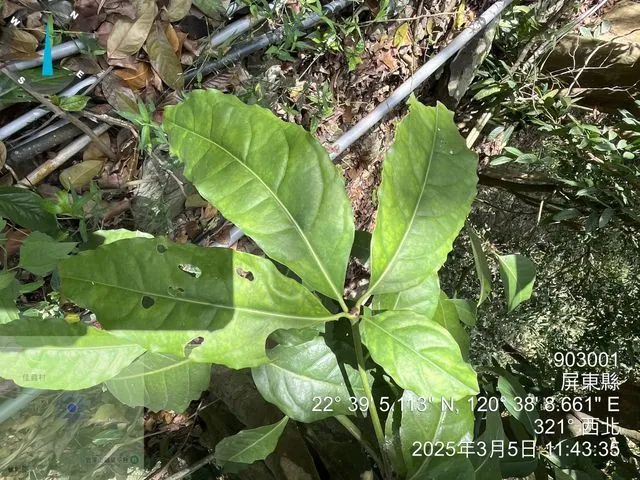
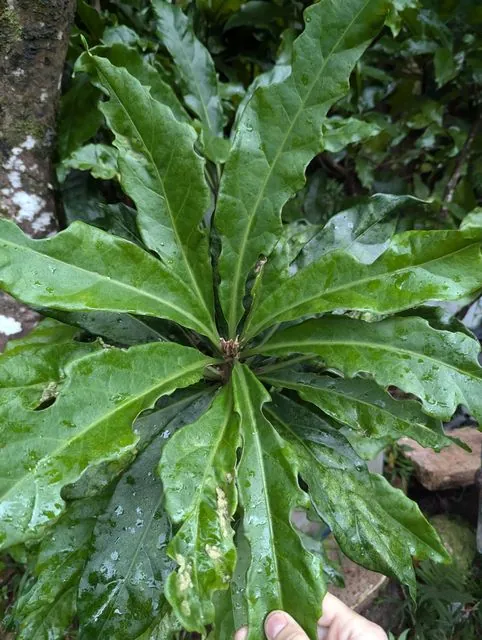
Ceodes umbellifera
Authorship: The author or authors credited with publishing the scientific name. It is written after the name, sometimes with the year, for example L. (Linnaeus) in Zea mays L. An author in parentheses first published the name in another genus or rank. — The author or authors credited with publishing the scientific name. It is written after the name, sometimes with the year, for example L. (Linnaeus) in Zea mays L. An author in parentheses first published the name in another genus or rank.
J.R.Forst. & G.Forst.
Common names
Birdcatcher Tree, Bird Lime Tree, Bird-lime Tree, Pāpala Kēpau, Umbrella CatchbirdtreeNames in other languages (6)Udeuidarbekai, ceoda okolíkatá, papala, parapara, ウドノキ, 皮孫木
Kingdom: One of the broadest ranks of biological classification. It groups organisms that share very basic features, for example plants (Plantae), animals (Animalia) or fungi (Fungi). — One of the broadest ranks of biological classification. It groups organisms that share very basic features, for example plants (Plantae), animals (Animalia) or fungi (Fungi).
Plantae
Phylum: Rank below kingdom that groups organisms with a shared general body plan, for example chordates (Chordata), arthropods (Arthropoda) or vascular plants (Tracheophyta). In botany the same rank is also called division. — Rank below kingdom that groups organisms with a shared general body plan, for example chordates (Chordata), arthropods (Arthropoda) or vascular plants (Tracheophyta). In botany the same rank is also called division.
Tracheophyta
Class: Rank below phylum, for example mammals (Mammalia), birds (Aves), insects (Insecta) or monocot plants such as grasses and orchids (Liliopsida). — Rank below phylum, for example mammals (Mammalia), birds (Aves), insects (Insecta) or monocot plants such as grasses and orchids (Liliopsida).
Magnoliopsida
Order: Rank below class that groups related families, for example grasses and their relatives (Poales) or bats (Chiroptera). — Rank below class that groups related families, for example grasses and their relatives (Poales) or bats (Chiroptera).
Caryophyllales
Family: Rank below order that groups related genera. Family names usually end in -aceae in botany (for example Poaceae, the grass family) and in -idae in zoology (for example Felidae, the cat family). — Rank below order that groups related genera. Family names usually end in -aceae in botany (for example Poaceae, the grass family) and in -idae in zoology (for example Felidae, the cat family).
Nyctaginaceae
Genus: Rank that groups closely related species. Its name is the first word of a species' scientific name and starts with a capital letter, for example Zea in Zea mays. — Rank that groups closely related species. Its name is the first word of a species' scientific name and starts with a capital letter, for example Zea in Zea mays.
Ceodes
Specific epithet: The second word of a species' scientific name. On its own it does not name the species: it always goes with the genus, for example mays in Zea mays. — The second word of a species' scientific name. On its own it does not name the species: it always goes with the genus, for example mays in Zea mays.
umbellifera
Taxonomic rank: The level a name occupies in the hierarchy of biological classification, such as kingdom, family, genus, species or subspecies. — The level a name occupies in the hierarchy of biological classification, such as kingdom, family, genus, species or subspecies.
species
Reference species
Ceodes umbellifera
Taxonomic status: Whether the taxonomic catalogue the record comes from currently accepts this name for the organism, or treats it as a synonym of another accepted name or as doubtful. — Whether the taxonomic catalogue the record comes from currently accepts this name for the organism, or treats it as a synonym of another accepted name or as doubtful.
accepted name
Photos and conservation status
IUCN Red List category: The extinction-risk category that the International Union for Conservation of Nature (IUCN) assigns to a species on its Red List. EX Extinct: there is no reasonable doubt that the last individual has died. EW Extinct in the wild: it survives only in cultivation, in captivity or as a population far outside its past range. CR Critically endangered, EN Endangered and VU Vulnerable: the three threatened categories, from an extremely high to a high risk of extinction in the wild. NT Near threatened: close to qualifying as threatened. LC Least concern: evaluated and not threatened. DD Data deficient: there is not enough information to assess its risk. NE Not evaluated: not yet assessed against the criteria. It describes the risk of the species worldwide, not its situation in a project's area. — The extinction-risk category that the International Union for Conservation of Nature (IUCN) assigns to a species on its Red List. EX Extinct: there is no reasonable doubt that the last individual has died. EW Extinct in the wild: it survives only in cultivation, in captivity or as a population far outside its past range. CR Critically endangered, EN Endangered and VU Vulnerable: the three threatened categories, from an extremely high to a high risk of extinction in the wild. NT Near threatened: close to qualifying as threatened. LC Least concern: evaluated and not threatened. DD Data deficient: there is not enough information to assess its risk. NE Not evaluated: not yet assessed against the criteria. It describes the risk of the species worldwide, not its situation in a project's area.
Least concern (LC)
Source: IUCN Red List via GBIF, queried on 2026-10-09 05:18.
Research-grade iNaturalist observations via GBIF, CC0 or CC BY licences only, queried on 2026-10-09 05:18.
Interacciones documentadas
GloBI says it is documented somewhere in the world. Biolitica answers whether it could happen here.
A documented interaction means it was recorded somewhere in the world. It does not mean it occurs here.
Types shown: 6 of 6
is a host of
×
is adjacent to
×
is pollinated by
×
is eaten by
×
hasRoost
×
interacts with
×
Blocks that do not sit under a navigation concept heading keep the source's own term: no navigation concept has been assigned to them yet.
is a host of
4 organisms
The authority declares no effect on this species for this term: neither that it harms it nor that it benefits it. In the source ontology symbiosis covers mutualism, commensalism and parasitism alike, so this block holds attackers and allies side by side.
Raabe, R.D., Conners, I.L., and Martinez, A.P.. 1981. Checklist of plant diseases in Hawaii. College of Tropical Agriculture and Human Resources, University of Hawaii. Information Text Series No. 22. Hawaii Inst. Trop. Agric. Human Resources :313
Published in globalbioticinteractions/usda-fungus-host
Context: United States · no date published
Claim type
Published relationship between two taxa
Version
GloBI 0.11
Reuse
This release publishes no reuse terms for this record.
United States · no date publishedWhere it is: line:hash://sha256/021a206a1459bcca7e251c73f5bd180fc3ac342a09c499855fe42e21fc09edcf!/interactions.tsv.gz!/L4022711
Published in globalbioticinteractions/usda-fungus-host
Context: United States · no date published
Claim type
Published relationship between two taxa
Version
GloBI 0.11
Reuse
This release publishes no reuse terms for this record.
United States · no date publishedWhere it is: line:hash://sha256/021a206a1459bcca7e251c73f5bd180fc3ac342a09c499855fe42e21fc09edcf!/interactions.tsv.gz!/L4049094
No public URL for this record
A published relationship says these two taxa were documented interacting. It does not say how often, or that it happens in this project's region.
Phytophthora sp.
is a host of
1
no location
Not a modelling unit: the source did not resolve a species — the name carries an open-nomenclature qualifier.
1 source · 1 record
Alfieri Jr., S.A., Langdon, K.R., Wehlburg, C., and Kimbrough, J.W.. 1984. Index of Plant Diseases in Florida (Revised). Florida Dept. Agric. and Consumer Serv., Div. Plant Ind. Bull. 11:1-389
Published in globalbioticinteractions/usda-fungus-host
Context: United States · no date published
Claim type
Published relationship between two taxa
Version
GloBI 0.11
Reuse
This release publishes no reuse terms for this record.
United States · no date publishedWhere it is: line:hash://sha256/021a206a1459bcca7e251c73f5bd180fc3ac342a09c499855fe42e21fc09edcf!/interactions.tsv.gz!/L3681373
No public URL for this record
A published relationship says these two taxa were documented interacting. It does not say how often, or that it happens in this project's region.
Context: Oahu · April 19, 1895 · Preserved specimen
Claim type
Published relationship between two taxa
Version
GloBI 0.11
Reuse
This release publishes no reuse terms for this record.
Oahu · April 19, 1895 · Preserved specimenAs published: 1895-04-19T00:00:00Z · PreservedSpecimenWhere it is: line:hash://sha256/021a206a1459bcca7e251c73f5bd180fc3ac342a09c499855fe42e21fc09edcf!/interactions.tsv.gz!/L17662319
A published relationship says these two taxa were documented interacting. It does not say how often, or that it happens in this project's region.
Macrophoma pisoniaeBotryosphaeriaceae
is a host of
1
no location
1 source · 1 record
Anonymous. 1979. List of plant diseases in Taiwan. Pl. Protect. Soc., Republ. of China :404
Published in globalbioticinteractions/usda-fungus-host
Context: Taiwan · no date published
Claim type
Published relationship between two taxa
Version
GloBI 0.11
Reuse
This release publishes no reuse terms for this record.
Taiwan · no date publishedWhere it is: line:hash://sha256/021a206a1459bcca7e251c73f5bd180fc3ac342a09c499855fe42e21fc09edcf!/interactions.tsv.gz!/L3996296
No public URL for this record
A published relationship says these two taxa were documented interacting. It does not say how often, or that it happens in this project's region.
Showing 4 of 4, by number of studies
is adjacent to
3 organisms
The authority declares no effect on this species for this term: neither that it harms it nor that it benefits it.
Published in globalbioticinteractions/yale-peabody
Context: Island of Oahu · April 19, 1895 · Preserved specimen
Claim type
Published relationship between two taxa
Version
GloBI 0.11
Reuse
This release publishes no reuse terms for this record.
Island of Oahu · April 19, 1895 · Preserved specimenAs published: 1895-04-19T00:00:00Z · PreservedSpecimenWhere it is: line:hash://sha256/021a206a1459bcca7e251c73f5bd180fc3ac342a09c499855fe42e21fc09edcf!/interactions.tsv.gz!/L11252183
A published relationship says these two taxa were documented interacting. It does not say how often, or that it happens in this project's region.
royal tonguefernElaphoglossum crassifoliumDryopteridaceae
is adjacent to
1
no location
1 source · 1 record
aa2defdc-78d1-439e-865a-ffd47bc64129
Published in globalbioticinteractions/bpbm-ent
Context: Kawaihau, Lihue-Koloa FR, Kuilau trail from Keahua Arboretum; Upper Opaekaa stream · April 7, 1989 · Preserved specimen
Claim type
Published relationship between two taxa
Version
GloBI 0.11
Reuse
This release publishes no reuse terms for this record.
Kawaihau, Lihue-Koloa FR, Kuilau trail from Keahua Arboretum; Upper Opaekaa stream · April 7, 1989 · Preserved specimenAs published: 1989-04-07T00:00:00Z · PreservedSpecimenWhere it is: line:hash://sha256/021a206a1459bcca7e251c73f5bd180fc3ac342a09c499855fe42e21fc09edcf!/interactions.tsv.gz!/L18976392
No public URL for this record
A published relationship says these two taxa were documented interacting. It does not say how often, or that it happens in this project's region.
Showing 3 of 3, by number of studies
Pollination
is pollinated by
3 organisms
This term declares that the organism benefits this species. «Visits the flowers of» is a different term and a different block: a visitor is not a pollinator, and merging the two is the measured defect that turned ~88 shared «pollinators» into birds and primates.
Organism
Reads as
Studies
Where it was documented
Actions
Diptera
is pollinated by
1
no location
Not a modelling unit: the source publishes it at order level.
1 source · 1 record
Ley, E., Buchmann, S., Kauffman, G., Jacobsen, O., Rager, M., Kwong, L., et al. (2015c). Hawaiian Island Province Regional Pollinator Guide (Pollinator Guide). The Pollinator Partnership/North American Pollinator Protection Campaign
Published in globalbioticinteractions/cpc-pollinators
Context: no place published · no date published
Claim type
Published relationship between two taxa
Version
GloBI 0.11
Reuse
This release publishes no reuse terms for this record.
no place published · no date publishedWhere it is: line:hash://sha256/021a206a1459bcca7e251c73f5bd180fc3ac342a09c499855fe42e21fc09edcf!/interactions.tsv.gz!/L9591125
No public URL for this record
A published relationship says these two taxa were documented interacting. It does not say how often, or that it happens in this project's region.
Butterflies & MothsLepidoptera
is pollinated by
1
no location
Not a modelling unit: the source publishes it at order level.
1 source · 1 record
Ley, E., Buchmann, S., Kauffman, G., Jacobsen, O., Rager, M., Kwong, L., et al. (2015c). Hawaiian Island Province Regional Pollinator Guide (Pollinator Guide). The Pollinator Partnership/North American Pollinator Protection Campaign
Published in globalbioticinteractions/cpc-pollinators
Context: no place published · no date published
Claim type
Published relationship between two taxa
Version
GloBI 0.11
Reuse
This release publishes no reuse terms for this record.
no place published · no date publishedWhere it is: line:hash://sha256/021a206a1459bcca7e251c73f5bd180fc3ac342a09c499855fe42e21fc09edcf!/interactions.tsv.gz!/L9591114
No public URL for this record
A published relationship says these two taxa were documented interacting. It does not say how often, or that it happens in this project's region.
Apoidea
is pollinated by
1
no location
Not a modelling unit: the source publishes it at superfamily level.
1 source · 1 record
Ley, E., Buchmann, S., Kauffman, G., Jacobsen, O., Rager, M., Kwong, L., et al. (2015c). Hawaiian Island Province Regional Pollinator Guide (Pollinator Guide). The Pollinator Partnership/North American Pollinator Protection Campaign
Published in globalbioticinteractions/cpc-pollinators
Context: no place published · no date published
Claim type
Published relationship between two taxa
Version
GloBI 0.11
Reuse
This release publishes no reuse terms for this record.
no place published · no date publishedWhere it is: line:hash://sha256/021a206a1459bcca7e251c73f5bd180fc3ac342a09c499855fe42e21fc09edcf!/interactions.tsv.gz!/L9591123
No public URL for this record
A published relationship says these two taxa were documented interacting. It does not say how often, or that it happens in this project's region.
Showing 3 of 3, by number of studies
is eaten by
1 organism
This term does declare that the organism harms this species.
Organism
Reads as
Studies
Where it was documented
Actions
Lepanus pisoniaeScarabaeidae
is eaten by
1
no location
1 source · 1 record
ABRS 2009. Australian Faunal Directory. Lepanus pisoniae. Australian Biological Resources StudyNode, Canberra. Accessed at <http://biodiversity.org.au/afd/taxa/60c87f2d-9681-4eae-9ead-9ad1023426be> on 04 Sep 2026.
Published in globalbioticinteractions/siad
Context: no place published · no date published
Claim type
Published relationship between two taxa
Version
GloBI 0.11
Reuse
This release publishes no reuse terms for this record.
no place published · no date publishedWhere it is: line:hash://sha256/021a206a1459bcca7e251c73f5bd180fc3ac342a09c499855fe42e21fc09edcf!/interactions.tsv.gz!/L18990826
A published relationship says these two taxa were documented interacting. It does not say how often, or that it happens in this project's region.
Showing 1 of 1, by number of studies
hasRoost
1 organism
No sanctioned reading for this term yet: it is shown exactly as the source publishes it.
The authority declares no effect on this species for this term: neither that it harms it nor that it benefits it.
Organism
Reads as
Studies
Where it was documented
Actions
Pacific Flying FoxPteropus tonganusPteropodidae
hasRoost
1
no location
1 source · 1 record
ACS
Published in qgroom/bat-co-roosting-database
Context: Tutuila island · Jan. 1, 1987
Claim type
Published relationship between two taxa
Version
GloBI 0.11
Reuse
This release publishes no reuse terms for this record.
Tutuila island · Jan. 1, 1987As published: 1987-01-01T00:00:00ZWhere it is: line:hash://sha256/021a206a1459bcca7e251c73f5bd180fc3ac342a09c499855fe42e21fc09edcf!/interactions.tsv.gz!/L843351
No public URL for this record
A published relationship says these two taxa were documented interacting. It does not say how often, or that it happens in this project's region.
Showing 1 of 1, by number of studies
interacts with
1 organism
The authority declares no effect on this species for this term: neither that it harms it nor that it benefits it.
Organism
Reads as
Studies
Where it was documented
Actions
Orthotylus pisoniaeMiridae
interacts with
1
not compared
1 source · 4 records
PBI: Phytophagous Insects as a Model Group for Documenting Planetary Biodiversity (Insecta: Heteroptera: Miridae: Orthotylinae, Phylinae). Version: 2016-03-08. National Science Foundation grant DBI#0316495
Published in globalbioticinteractions/arthropodEasyCaptureAMNH
Record contexts (sample): Oahu Island, Koolau Mountains, Mt. Tantalus [area, along] Pauoa Flats trail [nr. junction with Puu Ohia trail] · April 25, 2002 · Preserved…; Oahu Island, Koolau Mountains, Mt. Tantalus [area, along] Pauoa Flats trail [nr. junction with Puu Ohia trail] · April 25, 2002 · LabelObse…
Claim type
Published relationship between two taxa
Version
GloBI 0.11
Reuse
This release publishes no reuse terms for this record.
Oahu Island, Koolau Mountains, Mt. Tantalus [area, along] Pauoa Flats trail [nr. junction with Puu Ohia trail] · April 25, 2002 · Preserved specimenAs published: 2002-04-25T00:00:00Z · PreservedSpecimenWhere it is: line:hash://sha256/021a206a1459bcca7e251c73f5bd180fc3ac342a09c499855fe42e21fc09edcf!/interactions.tsv.gz!/L16407631
Oahu Island, Koolau Mountains, Mt. Tantalus [area, along] Pauoa Flats trail [nr. junction with Puu Ohia trail] · April 25, 2002 · LabelObservationAs published: 2002-04-25T00:00:00Z · LabelObservationWhere it is: line:hash://sha256/021a206a1459bcca7e251c73f5bd180fc3ac342a09c499855fe42e21fc09edcf!/interactions.tsv.gz!/L16407632
Oahu Island, Koolau Mountains, Mt. Tantalus [area, along] Pauoa Flats trail [nr. junction with Puu Ohia trail] · Oct. 18, 2000 · Preserved specimenAs published: 2000-10-18T00:00:00Z · PreservedSpecimenWhere it is: line:hash://sha256/021a206a1459bcca7e251c73f5bd180fc3ac342a09c499855fe42e21fc09edcf!/interactions.tsv.gz!/L16407633
And 1 more record of this source, not listed here.
No public URL for this record
A published relationship says these two taxa were documented interacting. It does not say how often, or that it happens in this project's region.
Showing 1 of 1, by number of studies
Acompañantes documentados
This agronomic reading comes from a source reserved for internal use, so it is not shown here.
Documented uses and recommendations
Uses and recommendations that a source documents for this species beside a crop, each in its own context. They are the source's statements, not traits of the species and not Biolítica's recommendations, and none of them is a relation between two species.
Among the sources you can read, none documents a use or recommendation of this species beside a crop.