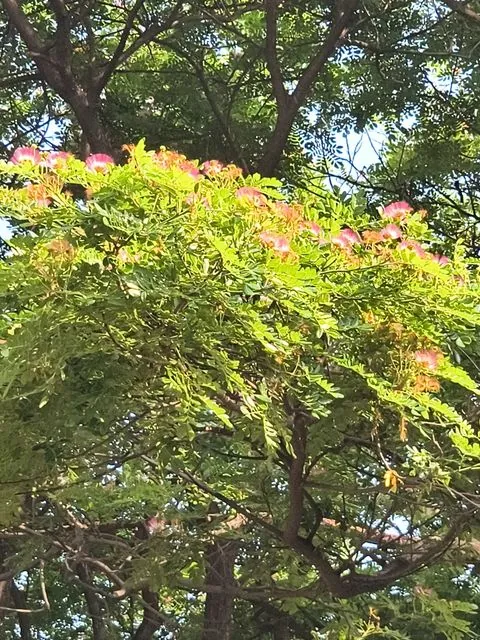
Identidad taxonómica

Scientific name
Samanea saman (Jacq.) Merr.
Canonical name: The scientific name without its authorship or date, for example Zea mays instead of Zea mays L.
Samanea saman
Authorship: The author or authors credited with publishing the scientific name. It is written after the name, sometimes with the year, for example L. (Linnaeus) in Zea mays L. An author in parentheses first published the name in another genus or rank.
(Jacq.) Merr.
Common names
French-tamarind, Monkey pod tree, Rain tree, Saman, Monkey pod, Cow tamarind, Giant thibet, Inga saman, East Indian walnut, Soar, Suar, Crow bean tree, False powder puff, French tamarind, Coco tamarind, Raintree, Rendi, cow-tamarind, monkey-pod, monkeypod
Names in other languages (45)'Ōhai, Algarrobillo, Arbre à la pluie, Bhagay mara, Campano, Chorona, Ki Hujan, Maru maru, Marumaru, rau marumaru, Mgilantze lahi, Sari bonara, Mgilantze ndrume, Munggur, Regenbaum, Regenboom, Saman, Samán, Sámánfa, Trembesi, `ohai, akasya, arbre de pluie, burdão-de-velho, cenicero, còng, gouannegoul, rain tree, regnträd, sadepuu, samana, samanea dáždnikovitá, trongkon-mames, Árbol de Lluvia, árbol de la lluvia, Альбиция Саман, Дощове дерево, शिरीश, सीरस, தூங்குமூஞ்சி (toongumoonji), నిద్ర గన్నేరు, മഴമരം, ก้ามปู, จามจุรี, アメリカネム, 雨树, 雨豆樹
Kingdom: One of the broadest ranks of biological classification. It groups organisms that share very basic features, for example plants (Plantae), animals (Animalia) or fungi (Fungi).
Plantae
Phylum: Rank below kingdom that groups organisms with a shared general body plan, for example chordates (Chordata), arthropods (Arthropoda) or vascular plants (Tracheophyta). In botany the same rank is also called division.
Tracheophyta
Class: Rank below phylum, for example mammals (Mammalia), birds (Aves), insects (Insecta) or monocot plants such as grasses and orchids (Liliopsida).
Magnoliopsida
Order: Rank below class that groups related families, for example grasses and their relatives (Poales) or bats (Chiroptera).
Fabales
Family: Rank below order that groups related genera. Family names usually end in -aceae in botany (for example Poaceae, the grass family) and in -idae in zoology (for example Felidae, the cat family).
Fabaceae
Genus: Rank that groups closely related species. Its name is the first word of a species' scientific name and starts with a capital letter, for example Zea in Zea mays.
Samanea
Specific epithet: The second word of a species' scientific name. On its own it does not name the species: it always goes with the genus, for example mays in Zea mays.
saman
Taxonomic rank: The level a name occupies in the hierarchy of biological classification, such as kingdom, family, genus, species or subspecies.
species
Reference species
Samanea saman
Taxonomic status: Whether the taxonomic catalogue the record comes from currently accepts this name for the organism, or treats it as a synonym of another accepted name or as doubtful.
accepted name

Photos and conservation status

IUCN Red List category: The extinction-risk category that the International Union for Conservation of Nature (IUCN) assigns to a species on its Red List. EX Extinct: there is no reasonable doubt that the last individual has died. EW Extinct in the wild: it survives only in cultivation, in captivity or as a population far outside its past range. CR Critically endangered, EN Endangered and VU Vulnerable: the three threatened categories, from an extremely high to a high risk of extinction in the wild. NT Near threatened: close to qualifying as threatened. LC Least concern: evaluated and not threatened. DD Data deficient: there is not enough information to assess its risk. NE Not evaluated: not yet assessed against the criteria. It describes the risk of the species worldwide, not its situation in a project's area.
Least concern (LC)
Source: IUCN Red List via GBIF, queried on 2026-10-09 06:05.
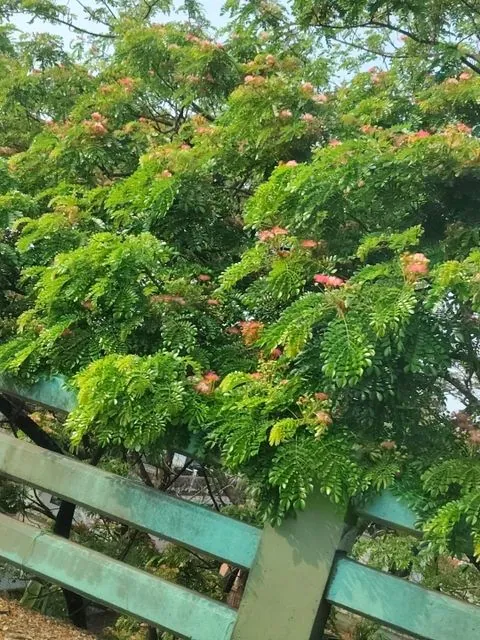
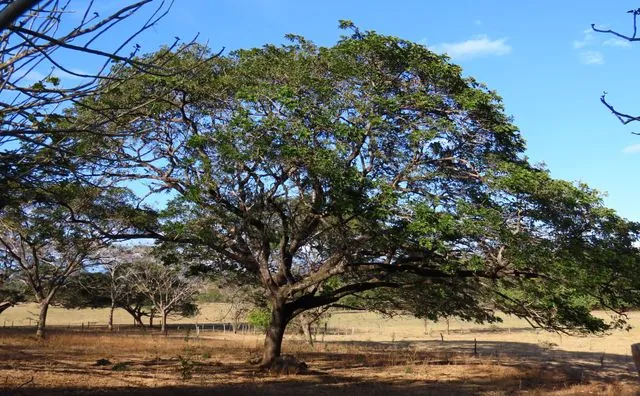
Photo of Samanea saman (Jacq.) Merr.
Photo: renjus box · CC BY 4.0 · View original image · Original observation
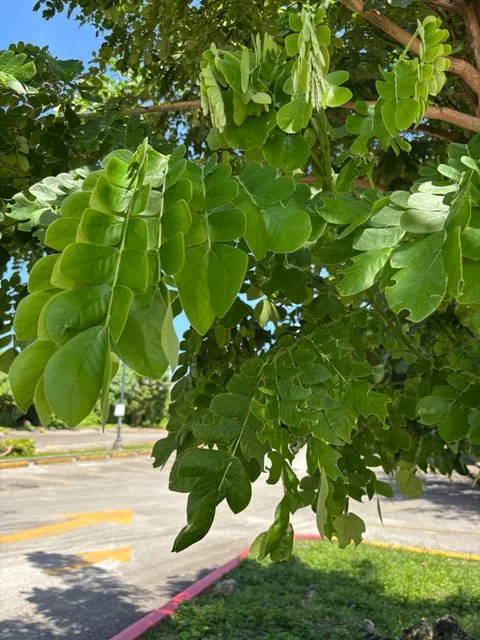
Photo of Samanea saman (Jacq.) Merr.
Photo: Mary Beth Stowe · CC BY 4.0 · View original image · Original observation
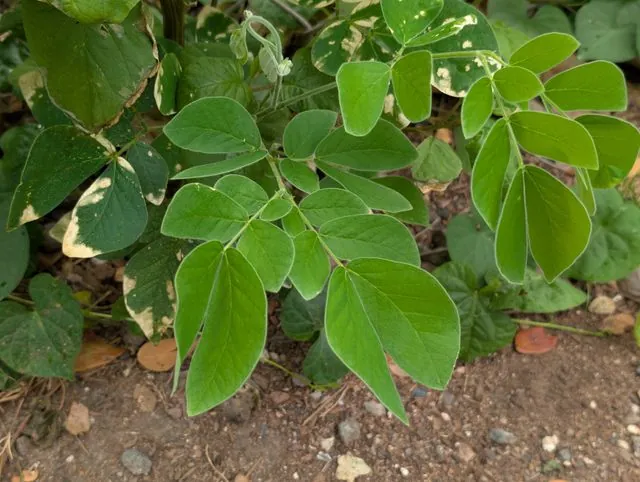
Photo of Samanea saman (Jacq.) Merr.
Photo: Gabriel · CC BY 4.0 · View original image · Original observation
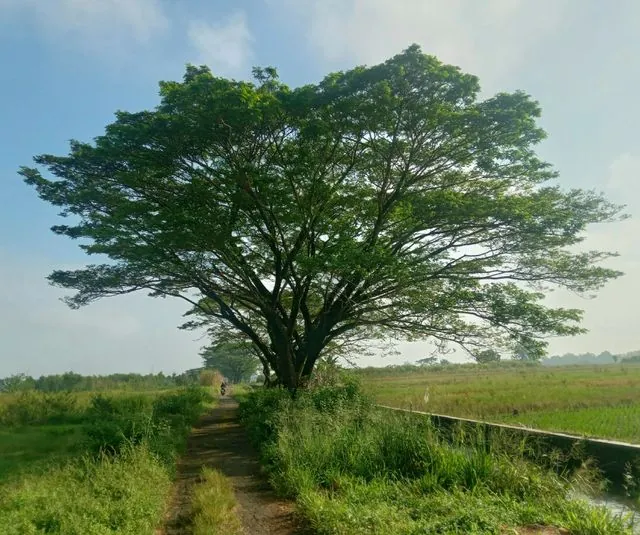
Photo of Samanea saman (Jacq.) Merr.
Photo: Damien Wallace · CC0 1.0 · View original image · Original observation
Photo of Samanea saman (Jacq.) Merr.
Photo: Satyaji Wibowo · CC BY 4.0 · View original image · Original observation
Photo of Samanea saman (Jacq.) Merr.
Photo: Raja Sekhar Chimirala · CC BY 4.0 · View original image · Original observation

Research-grade iNaturalist observations via GBIF, CC0 or CC BY licences only, queried on 2026-10-09 06:05.

Interacciones documentadas

GloBI says it is documented somewhere in the world. Biolitica answers whether it could happen here.

A documented interaction means it was recorded somewhere in the world. It does not mean it occurs here.

Types shown: 7 of 7 is a host of × is eaten by × is pollinated by × has its flowers visited by × interacts with (this species is the record's destination) × interacts with (this species is the record's origin) × has as a vector ×

Blocks that do not sit under a navigation concept heading keep the source's own term: no navigation concept has been assigned to them yet.

is a host of 54 organisms

The authority declares no effect on this species for this term: neither that it harms it nor that it benefits it. In the source ontology symbiosis covers mutualism, commensalism and parasitism alike, so this block holds attackers and allies side by side.

Organism Reads as Studies Where it was documented Actions
Polyphagous Shot Hole Borer Euwallacea fornicatus Curculionidae is a host of 4 no location
Bacillus panaciterrae Bacillaceae is a host of 3 no location
Beetle Phloeophagosoma tenuis Curculionidae is a host of 2 no location
Bradyrhizobium elkanii Bradyrhizobiaceae is a host of 2 no location
Showing 4 of 54, by number of studies See more of this type

is eaten by 22 organisms

This term does declare that the organism harms this species.

Organism Reads as Studies Where it was documented Actions
Pacific Flying Fox Pteropus tonganus Pteropodidae is eaten by 2 no location
Rose Myrtle Lappet Moth Trabala vishnou Lasiocampidae is eaten by 1 no location
Greater Shortnosed Fruit Bat Cynopterus sphinx Pteropodidae is eaten by 1 not compared
Melisomimas metallica Metarbelidae is eaten by 1 no location
Showing 4 of 22, by number of studies See more of this type

Pollination

is pollinated by 6 organisms

This term declares that the organism benefits this species. «Visits the flowers of» is a different term and a different block: a visitor is not a pollinator, and merging the two is the measured defect that turned ~88 shared «pollinators» into birds and primates.

Organism Reads as Studies Where it was documented Actions
Blue-chinned Emerald Chlorestes notata Trochilidae is pollinated by 1 not compared
Ruby-topaz Hummingbird Chrysolampis mosquitus Trochilidae is pollinated by 1 not compared
Black-throated Mango Anthracothorax nigricollis Trochilidae is pollinated by 1 not compared
Copper-rumped Hummingbird Amazilia tobaci is pollinated by 1 not compared
Showing 4 of 6, by number of studies See more of this type

Flower visit

has its flowers visited by 6 organisms

The authority declares no effect on this species for this term: neither that it harms it nor that it benefits it. Visiting a flower is not pollinating it. «Pollinates» is a different term and a different block, and merging the two is the measured defect that turned ~88 shared «pollinators» into birds and primates.

Organism Reads as Studies Where it was documented Actions
White-chested Emerald Chrysuronia brevirostris has its flowers visited by Refuted 1 no location
Black-throated Mango Anthracothorax nigricollis has its flowers visited by Refuted 1 no location
Blue-chinned Emerald Chlorestes notata has its flowers visited by Refuted 1 no location
White-necked Jacobin Florisuga mellivora has its flowers visited by Refuted 1 no location
Showing 4 of 6, by number of studies See more of this type

interacts with 3 organisms

The authority declares no effect on this species for this term: neither that it harms it nor that it benefits it.

Organism Reads as Studies Where it was documented Actions
kiawe roundheaded borer Placosternus crinicornis Cerambycidae interacts with 2 not compared
Pacific Flying Fox Pteropus tonganus Pteropodidae interacts with 2 no location
Ganoderma fulvellum interacts with 1 not compared
Showing 3 of 3, by number of studies

interacts with 3 organisms

The authority declares no effect on this species for this term: neither that it harms it nor that it benefits it.

Organism Reads as Studies Where it was documented Actions
Malva de Caballo Malachra capitata Malvaceae interacts with 1 not compared
green panic grass Urochloa maxima Poaceae interacts with 1 not compared
Donna Grass Bothriochloa pertusa Poaceae interacts with 1 not compared
Showing 3 of 3, by number of studies

has as a vector 1 organism

The authority declares no effect on this species for this term: neither that it harms it nor that it benefits it.

Organism Reads as Studies Where it was documented Actions
Ants Formicidae Formicidae has as a vector 1 no location Not a modelling unit: the source publishes it at family level.
Showing 1 of 1, by number of studies

Acompañantes documentados

This agronomic reading comes from a source reserved for internal use, so it is not shown here.

Documented uses and recommendations

Uses and recommendations that a source documents for this species beside a crop, each in its own context. They are the source's statements, not traits of the species and not Biolítica's recommendations, and none of them is a relation between two species.

Among the sources you can read, none documents a use or recommendation of this species beside a crop.