Canonical name: The scientific name without its authorship or date, for example Zea mays instead of Zea mays L. — The scientific name without its authorship or date, for example Zea mays instead of Zea mays L.
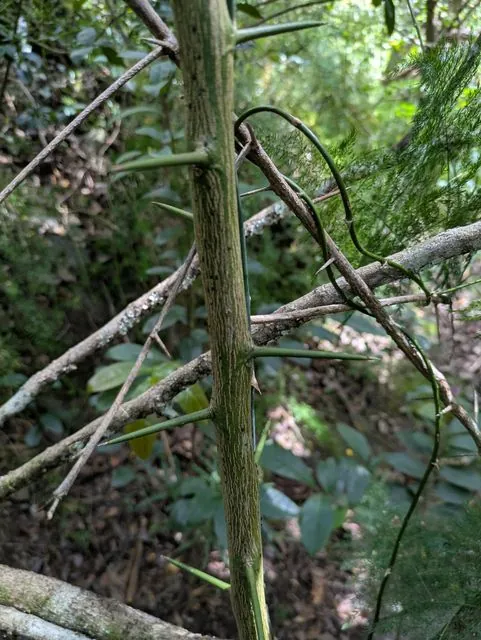
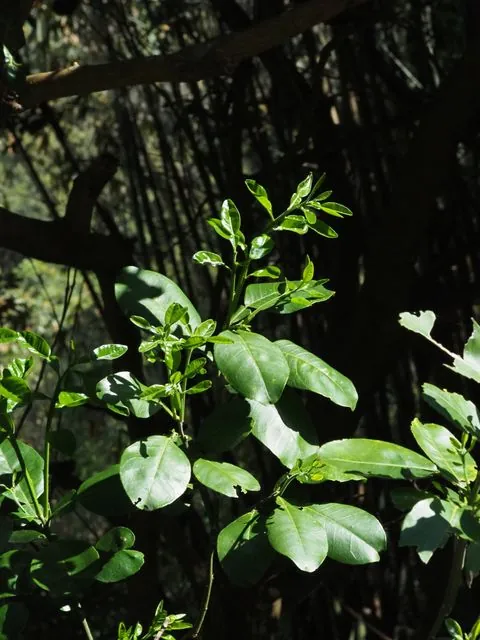
Citrus maxima
Authorship: The author or authors credited with publishing the scientific name. It is written after the name, sometimes with the year, for example L. (Linnaeus) in Zea mays L. An author in parentheses first published the name in another genus or rank. — The author or authors credited with publishing the scientific name. It is written after the name, sometimes with the year, for example L. (Linnaeus) in Zea mays L. An author in parentheses first published the name in another genus or rank.
Kingdom: One of the broadest ranks of biological classification. It groups organisms that share very basic features, for example plants (Plantae), animals (Animalia) or fungi (Fungi). — One of the broadest ranks of biological classification. It groups organisms that share very basic features, for example plants (Plantae), animals (Animalia) or fungi (Fungi).
Plantae
Phylum: Rank below kingdom that groups organisms with a shared general body plan, for example chordates (Chordata), arthropods (Arthropoda) or vascular plants (Tracheophyta). In botany the same rank is also called division. — Rank below kingdom that groups organisms with a shared general body plan, for example chordates (Chordata), arthropods (Arthropoda) or vascular plants (Tracheophyta). In botany the same rank is also called division.
Tracheophyta
Class: Rank below phylum, for example mammals (Mammalia), birds (Aves), insects (Insecta) or monocot plants such as grasses and orchids (Liliopsida). — Rank below phylum, for example mammals (Mammalia), birds (Aves), insects (Insecta) or monocot plants such as grasses and orchids (Liliopsida).
Magnoliopsida
Order: Rank below class that groups related families, for example grasses and their relatives (Poales) or bats (Chiroptera). — Rank below class that groups related families, for example grasses and their relatives (Poales) or bats (Chiroptera).
Sapindales
Family: Rank below order that groups related genera. Family names usually end in -aceae in botany (for example Poaceae, the grass family) and in -idae in zoology (for example Felidae, the cat family). — Rank below order that groups related genera. Family names usually end in -aceae in botany (for example Poaceae, the grass family) and in -idae in zoology (for example Felidae, the cat family).
Rutaceae
Genus: Rank that groups closely related species. Its name is the first word of a species' scientific name and starts with a capital letter, for example Zea in Zea mays. — Rank that groups closely related species. Its name is the first word of a species' scientific name and starts with a capital letter, for example Zea in Zea mays.
Citrus
Specific epithet: The second word of a species' scientific name. On its own it does not name the species: it always goes with the genus, for example mays in Zea mays. — The second word of a species' scientific name. On its own it does not name the species: it always goes with the genus, for example mays in Zea mays.
maxima
Taxonomic rank: The level a name occupies in the hierarchy of biological classification, such as kingdom, family, genus, species or subspecies. — The level a name occupies in the hierarchy of biological classification, such as kingdom, family, genus, species or subspecies.
species
Reference species
Citrus maxima
Taxonomic status: Whether the taxonomic catalogue the record comes from currently accepts this name for the organism, or treats it as a synonym of another accepted name or as doubtful. — Whether the taxonomic catalogue the record comes from currently accepts this name for the organism, or treats it as a synonym of another accepted name or as doubtful.
accepted name
Photos and conservation status
IUCN Red List category: The extinction-risk category that the International Union for Conservation of Nature (IUCN) assigns to a species on its Red List. EX Extinct: there is no reasonable doubt that the last individual has died. EW Extinct in the wild: it survives only in cultivation, in captivity or as a population far outside its past range. CR Critically endangered, EN Endangered and VU Vulnerable: the three threatened categories, from an extremely high to a high risk of extinction in the wild. NT Near threatened: close to qualifying as threatened. LC Least concern: evaluated and not threatened. DD Data deficient: there is not enough information to assess its risk. NE Not evaluated: not yet assessed against the criteria. It describes the risk of the species worldwide, not its situation in a project's area. — The extinction-risk category that the International Union for Conservation of Nature (IUCN) assigns to a species on its Red List. EX Extinct: there is no reasonable doubt that the last individual has died. EW Extinct in the wild: it survives only in cultivation, in captivity or as a population far outside its past range. CR Critically endangered, EN Endangered and VU Vulnerable: the three threatened categories, from an extremely high to a high risk of extinction in the wild. NT Near threatened: close to qualifying as threatened. LC Least concern: evaluated and not threatened. DD Data deficient: there is not enough information to assess its risk. NE Not evaluated: not yet assessed against the criteria. It describes the risk of the species worldwide, not its situation in a project's area.
Least concern (LC)
Source: IUCN Red List via GBIF, queried on 2026-10-12 18:02.
Research-grade iNaturalist observations via GBIF, CC0 or CC BY licences only, queried on 2026-10-12 18:02.
Interacciones documentadas
GloBI says it is documented somewhere in the world. Biolitica answers whether it could happen here.
A documented interaction means it was recorded somewhere in the world. It does not mean it occurs here.
Types shown: 10 of 10
is a host of
×
interacts with
×
is eaten by
×
has as a parasite
×
has as a pathogen
×
is adjacent to
×
has its flowers visited by
×
co-occurs ecologically with
×
is an arbuscular mycorrhizal host of
×
is visited by
×
Blocks that do not sit under a navigation concept heading keep the source's own term: no navigation concept has been assigned to them yet.
is a host of
184 organisms
The authority declares no effect on this species for this term: neither that it harms it nor that it benefits it. In the source ontology symbiosis covers mutualism, commensalism and parasitism alike, so this block holds attackers and allies side by side.
Context: Orlando · April 24, 1925 · Preserved specimen
Claim type
Published relationship between two taxa
Version
GloBI 0.11
Reuse
This release publishes no reuse terms for this record.
Orlando · April 24, 1925 · Preserved specimenAs published: 1925-04-24T00:00:00Z · PreservedSpecimenWhere it is: line:hash://sha256/021a206a1459bcca7e251c73f5bd180fc3ac342a09c499855fe42e21fc09edcf!/interactions.tsv.gz!/L17368360
Context: Rio Piedras Agricultural Experiment Station · Feb. 26, 1940 · Preserved specimen
Claim type
Published relationship between two taxa
Version
GloBI 0.11
Reuse
This release publishes no reuse terms for this record.
Rio Piedras Agricultural Experiment Station · Feb. 26, 1940 · Preserved specimenAs published: 1940-02-26T00:00:00Z · PreservedSpecimenWhere it is: line:hash://sha256/021a206a1459bcca7e251c73f5bd180fc3ac342a09c499855fe42e21fc09edcf!/interactions.tsv.gz!/L17368404
Context: Turrialba United States Rubber Station · Nov. 29, 1949 · Preserved specimen
Claim type
Published relationship between two taxa
Version
GloBI 0.11
Reuse
This release publishes no reuse terms for this record.
Turrialba United States Rubber Station · Nov. 29, 1949 · Preserved specimenAs published: 1949-11-29T00:00:00Z · PreservedSpecimenWhere it is: line:hash://sha256/021a206a1459bcca7e251c73f5bd180fc3ac342a09c499855fe42e21fc09edcf!/interactions.tsv.gz!/L17368811
Published in globalbioticinteractions/usda-fungus-host
Record contexts (sample): China · no date published; China · no date published
Claim type
Published relationship between two taxa
Version
GloBI 0.11
Reuse
This release publishes no reuse terms for this record.
China · no date publishedWhere it is: line:hash://sha256/021a206a1459bcca7e251c73f5bd180fc3ac342a09c499855fe42e21fc09edcf!/interactions.tsv.gz!/L3841962
China · no date publishedWhere it is: line:hash://sha256/021a206a1459bcca7e251c73f5bd180fc3ac342a09c499855fe42e21fc09edcf!/interactions.tsv.gz!/L3842606
No public URL for this record
Udayanga, D., Castlebury, L.A., Rossman, A.Y., and Hyde, K.D.. 2014. Species limits in %Diaporthe%: molecular re-assessment of %D. citri%, %D. cytosporella%, %D. foeniculina% and %D. rudis%. Persoonia 32:83-101
Published in globalbioticinteractions/usda-fungus-host
Record contexts (sample): United States · no date published; Puerto Rico · no date published
Claim type
Published relationship between two taxa
Version
GloBI 0.11
Reuse
This release publishes no reuse terms for this record.
United States · no date publishedWhere it is: line:hash://sha256/021a206a1459bcca7e251c73f5bd180fc3ac342a09c499855fe42e21fc09edcf!/interactions.tsv.gz!/L4315840
Puerto Rico · no date publishedWhere it is: line:hash://sha256/021a206a1459bcca7e251c73f5bd180fc3ac342a09c499855fe42e21fc09edcf!/interactions.tsv.gz!/L4315841
Context: no place published · Nov. 1, 1937 · Preserved specimen
Claim type
Published relationship between two taxa
Version
GloBI 0.11
Reuse
This release publishes no reuse terms for this record.
no place published · Nov. 1, 1937 · Preserved specimenAs published: 1937-11-01T00:00:00Z · PreservedSpecimenWhere it is: line:hash://sha256/021a206a1459bcca7e251c73f5bd180fc3ac342a09c499855fe42e21fc09edcf!/interactions.tsv.gz!/L16624563
Context: Ft. Myers · May 1, 1924 · Preserved specimen
Claim type
Published relationship between two taxa
Version
GloBI 0.11
Reuse
This release publishes no reuse terms for this record.
Ft. Myers · May 1, 1924 · Preserved specimenAs published: 1924-05-01T00:00:00Z · PreservedSpecimenWhere it is: line:hash://sha256/021a206a1459bcca7e251c73f5bd180fc3ac342a09c499855fe42e21fc09edcf!/interactions.tsv.gz!/L17124590
Context: no place published · Feb. 14, 1914 · Preserved specimen
Claim type
Published relationship between two taxa
Version
GloBI 0.11
Reuse
This release publishes no reuse terms for this record.
no place published · Feb. 14, 1914 · Preserved specimenAs published: 1914-02-14T00:00:00Z · PreservedSpecimenWhere it is: line:hash://sha256/021a206a1459bcca7e251c73f5bd180fc3ac342a09c499855fe42e21fc09edcf!/interactions.tsv.gz!/L17125086
Context: no place published · Feb. 14, 1914 · Preserved specimen
Claim type
Published relationship between two taxa
Version
GloBI 0.11
Reuse
This release publishes no reuse terms for this record.
no place published · Feb. 14, 1914 · Preserved specimenAs published: 1914-02-14T00:00:00Z · PreservedSpecimenWhere it is: line:hash://sha256/021a206a1459bcca7e251c73f5bd180fc3ac342a09c499855fe42e21fc09edcf!/interactions.tsv.gz!/L17125088
Context: Estado de Sao Paulo Limeira · Sept. 2, 1932 · Preserved specimen
Claim type
Published relationship between two taxa
Version
GloBI 0.11
Reuse
This release publishes no reuse terms for this record.
Estado de Sao Paulo Limeira · Sept. 2, 1932 · Preserved specimenAs published: 1932-09-02T00:00:00Z · PreservedSpecimenWhere it is: line:hash://sha256/021a206a1459bcca7e251c73f5bd180fc3ac342a09c499855fe42e21fc09edcf!/interactions.tsv.gz!/L17564711
Context: Rubonia · April 1, 1935 · Preserved specimen
Claim type
Published relationship between two taxa
Version
GloBI 0.11
Reuse
This release publishes no reuse terms for this record.
Rubonia · April 1, 1935 · Preserved specimenAs published: 1935-04-01T00:00:00Z · PreservedSpecimenWhere it is: line:hash://sha256/021a206a1459bcca7e251c73f5bd180fc3ac342a09c499855fe42e21fc09edcf!/interactions.tsv.gz!/L17823657
Context: no place published · Dec. 8, 1950 · Preserved specimen
Claim type
Published relationship between two taxa
Version
GloBI 0.11
Reuse
This release publishes no reuse terms for this record.
no place published · Dec. 8, 1950 · Preserved specimenAs published: 1950-12-08T00:00:00Z · PreservedSpecimenWhere it is: line:hash://sha256/021a206a1459bcca7e251c73f5bd180fc3ac342a09c499855fe42e21fc09edcf!/interactions.tsv.gz!/L17823676
Published in globalbioticinteractions/usda-fungus-host
Context: China · no date published
Claim type
Published relationship between two taxa
Version
GloBI 0.11
Reuse
This release publishes no reuse terms for this record.
China · no date publishedWhere it is: line:hash://sha256/021a206a1459bcca7e251c73f5bd180fc3ac342a09c499855fe42e21fc09edcf!/interactions.tsv.gz!/L3844782
No public URL for this record
Kobayashi, T.. 2007. Index of fungi inhabiting woody plants in Japan. Host, Distribution and Literature. Zenkoku-Noson-Kyoiku Kyokai Publishing Co., Ltd. :1227
Published in globalbioticinteractions/usda-fungus-host
Context: Japan · no date published
Claim type
Published relationship between two taxa
Version
GloBI 0.11
Reuse
This release publishes no reuse terms for this record.
Japan · no date publishedWhere it is: line:hash://sha256/021a206a1459bcca7e251c73f5bd180fc3ac342a09c499855fe42e21fc09edcf!/interactions.tsv.gz!/L3901070
No public URL for this record
Dennis, R.W.G.. 1970. Kew Bulletin Additional Series III. Fungus Flora of Venezuela and Adjacent Countries.. Verlag von J. Cramer :531
Published in globalbioticinteractions/usda-fungus-host
Context: Venezuela · no date published
Claim type
Published relationship between two taxa
Version
GloBI 0.11
Reuse
This release publishes no reuse terms for this record.
Venezuela · no date publishedWhere it is: line:hash://sha256/021a206a1459bcca7e251c73f5bd180fc3ac342a09c499855fe42e21fc09edcf!/interactions.tsv.gz!/L3948777
No public URL for this record
Mathur, R.S.. 1979. The Coelomycetes of India. Bishen Singh Mahendra Pal Singh, Delhi, India. :460
Published in globalbioticinteractions/usda-fungus-host
Context: India · no date published
Claim type
Published relationship between two taxa
Version
GloBI 0.11
Reuse
This release publishes no reuse terms for this record.
India · no date publishedWhere it is: line:hash://sha256/021a206a1459bcca7e251c73f5bd180fc3ac342a09c499855fe42e21fc09edcf!/interactions.tsv.gz!/L3985334
No public URL for this record
And 3 more sources, with fewer records, not listed here.
A published relationship says these two taxa were documented interacting. It does not say how often, or that it happens in this project's region.
Context: Bradenton · Aug. 25, 1936 · Preserved specimen
Claim type
Published relationship between two taxa
Version
GloBI 0.11
Reuse
This release publishes no reuse terms for this record.
Bradenton · Aug. 25, 1936 · Preserved specimenAs published: 1936-08-25T00:00:00Z · PreservedSpecimenWhere it is: line:hash://sha256/021a206a1459bcca7e251c73f5bd180fc3ac342a09c499855fe42e21fc09edcf!/interactions.tsv.gz!/L17834799
Context: De Soto City · Oct. 9, 1936 · Preserved specimen
Claim type
Published relationship between two taxa
Version
GloBI 0.11
Reuse
This release publishes no reuse terms for this record.
De Soto City · Oct. 9, 1936 · Preserved specimenAs published: 1936-10-09T00:00:00Z · PreservedSpecimenWhere it is: line:hash://sha256/021a206a1459bcca7e251c73f5bd180fc3ac342a09c499855fe42e21fc09edcf!/interactions.tsv.gz!/L17834816
Published in globalbioticinteractions/usda-fungus-host
Context: China · no date published
Claim type
Published relationship between two taxa
Version
GloBI 0.11
Reuse
This release publishes no reuse terms for this record.
China · no date publishedWhere it is: line:hash://sha256/021a206a1459bcca7e251c73f5bd180fc3ac342a09c499855fe42e21fc09edcf!/interactions.tsv.gz!/L3842869
No public URL for this record
French, A.M.. 1987. California plant disease host index. Part 1: Fruit and nuts. Calif. Dept. Food Agric., Sacramento :39
Published in globalbioticinteractions/usda-fungus-host
Context: United States · no date published
Claim type
Published relationship between two taxa
Version
GloBI 0.11
Reuse
This release publishes no reuse terms for this record.
United States · no date publishedWhere it is: line:hash://sha256/021a206a1459bcca7e251c73f5bd180fc3ac342a09c499855fe42e21fc09edcf!/interactions.tsv.gz!/L3888111
No public URL for this record
Anonymous. 1979. List of plant diseases in Taiwan. Pl. Protect. Soc., Republ. of China :404
Published in globalbioticinteractions/usda-fungus-host
Context: Taiwan · no date published
Claim type
Published relationship between two taxa
Version
GloBI 0.11
Reuse
This release publishes no reuse terms for this record.
Taiwan · no date publishedWhere it is: line:hash://sha256/021a206a1459bcca7e251c73f5bd180fc3ac342a09c499855fe42e21fc09edcf!/interactions.tsv.gz!/L3999134
No public URL for this record
Zhuang, W.-Y., Ed.. 2001. Higher Fungi of Tropical China. Mycotaxon, Ltd., Ithaca, NY :485
Published in globalbioticinteractions/usda-fungus-host
Context: China · no date published
Claim type
Published relationship between two taxa
Version
GloBI 0.11
Reuse
This release publishes no reuse terms for this record.
China · no date publishedWhere it is: line:hash://sha256/021a206a1459bcca7e251c73f5bd180fc3ac342a09c499855fe42e21fc09edcf!/interactions.tsv.gz!/L4014569
No public URL for this record
Turner, G.J.. 1971. Fungi and Plant Disease in Sarawak. Phytopathol. Pap. 13:1-55
Published in globalbioticinteractions/usda-fungus-host
Context: Malaysia · no date published
Claim type
Published relationship between two taxa
Version
GloBI 0.11
Reuse
This release publishes no reuse terms for this record.
Malaysia · no date publishedWhere it is: line:hash://sha256/021a206a1459bcca7e251c73f5bd180fc3ac342a09c499855fe42e21fc09edcf!/interactions.tsv.gz!/L4213431
No public URL for this record
A published relationship says these two taxa were documented interacting. It does not say how often, or that it happens in this project's region.
Context: Intercepted New York New York #104551 · Dec. 10, 1948 · Preserved specimen
Claim type
Published relationship between two taxa
Version
GloBI 0.11
Reuse
This release publishes no reuse terms for this record.
Intercepted New York New York #104551 · Dec. 10, 1948 · Preserved specimenAs published: 1948-12-10T00:00:00Z · PreservedSpecimenWhere it is: line:hash://sha256/021a206a1459bcca7e251c73f5bd180fc3ac342a09c499855fe42e21fc09edcf!/interactions.tsv.gz!/L17369116
Context: no place published · June 4, 1906 · Preserved specimen
Claim type
Published relationship between two taxa
Version
GloBI 0.11
Reuse
This release publishes no reuse terms for this record.
no place published · June 4, 1906 · Preserved specimenAs published: 1906-06-04T00:00:00Z · PreservedSpecimenWhere it is: line:hash://sha256/021a206a1459bcca7e251c73f5bd180fc3ac342a09c499855fe42e21fc09edcf!/interactions.tsv.gz!/L17369121
Context: Intercepted Hawaii #11126 · March 6, 1953 · Preserved specimen
Claim type
Published relationship between two taxa
Version
GloBI 0.11
Reuse
This release publishes no reuse terms for this record.
Intercepted Hawaii #11126 · March 6, 1953 · Preserved specimenAs published: 1953-03-06T00:00:00Z · PreservedSpecimenWhere it is: line:hash://sha256/021a206a1459bcca7e251c73f5bd180fc3ac342a09c499855fe42e21fc09edcf!/interactions.tsv.gz!/L17369123
And 17 more sources, with fewer records, not listed here.
A published relationship says these two taxa were documented interacting. It does not say how often, or that it happens in this project's region.
Parasitoid waspAphytis melinusAphelinidae
interacts with
9
no location
9 sources · 9 records
Murdoch, W.W., Luck, R.F., Walde, S.J., Reeve, J.D. & Yu, D.S. (1989) A refuge for red scale under control by <i>Aphytis</i>: structural aspects. <i>Ecology</i>, 70, 1707–1714.
Published in urn:lsid:checklistbank.org:dataset:124661
Context: no place published · no date published
Claim type
Published relationship between two taxa
Version
GloBI 0.11
Reuse
This release publishes no reuse terms for this record.
no place published · no date publishedWhere it is: line:hash://sha256/021a206a1459bcca7e251c73f5bd180fc3ac342a09c499855fe42e21fc09edcf!/interactions.tsv.gz!/L1222344
No public URL for this record
Murdoch, W.W., Swarbrick, S.L., Luck, R.F., Walde, S. & Yu, D.S. (1996) Refuge dynamics and metapopulation dynamics: an experimental test. <i>American Naturalist</i>, 147(3), 424–444.
Published in urn:lsid:checklistbank.org:dataset:124661
Context: no place published · no date published
Claim type
Published relationship between two taxa
Version
GloBI 0.11
Reuse
This release publishes no reuse terms for this record.
no place published · no date publishedWhere it is: line:hash://sha256/021a206a1459bcca7e251c73f5bd180fc3ac342a09c499855fe42e21fc09edcf!/interactions.tsv.gz!/L1222348
No public URL for this record
Tumminelli, R., Conti, D. & Saraceno, F. (1997) Red scale insect of citrus. <i>Informatore Agrario</i>, 53(11), 61–66.
Published in urn:lsid:checklistbank.org:dataset:124661
Context: no place published · no date published
Claim type
Published relationship between two taxa
Version
GloBI 0.11
Reuse
This release publishes no reuse terms for this record.
no place published · no date publishedWhere it is: line:hash://sha256/021a206a1459bcca7e251c73f5bd180fc3ac342a09c499855fe42e21fc09edcf!/interactions.tsv.gz!/L1222411
No public URL for this record
Yu, D.S., Luck, R.F. & Murdoch, W.W. (1990) Competition, resource partitioning and coexistence of an endoparasitoid <i>Encarsia perniciosi</i> and an ectoparasitoid <i>Aphytis melinus</i> of the California red scale. <i>Ecological Entomology</i>, 15(4), 469–480.
Published in urn:lsid:checklistbank.org:dataset:124661
Context: no place published · no date published
Claim type
Published relationship between two taxa
Version
GloBI 0.11
Reuse
This release publishes no reuse terms for this record.
no place published · no date publishedWhere it is: line:hash://sha256/021a206a1459bcca7e251c73f5bd180fc3ac342a09c499855fe42e21fc09edcf!/interactions.tsv.gz!/L1222439
No public URL for this record
Heimpel, G.E. & Rosenheim, J.A. (1995) Dynamic host feeding by the parasitoid <i>Aphytis melinus</i>: the balance between current and future reproduction. <i>Journal of Animal Ecology</i>, 64(2), 153–167.
Published in urn:lsid:checklistbank.org:dataset:124661
Context: no place published · no date published
Claim type
Published relationship between two taxa
Version
GloBI 0.11
Reuse
This release publishes no reuse terms for this record.
no place published · no date publishedWhere it is: line:hash://sha256/021a206a1459bcca7e251c73f5bd180fc3ac342a09c499855fe42e21fc09edcf!/interactions.tsv.gz!/L1222449
No public URL for this record
@article{82989, author = {Murdoch, W.W. and Luck, R.F. and Walde, S.J. and Reeve, J.D. and Yu, D.S.}, booktitle = {Ecology}, journal = {Ecology}, pages = {1707-1714}, title = {A refuge for red scale under control by <i>Aphytis</i>: structural aspects.}, volume = {70}…
Published in globalbioticinteractions/taxonworks
Context: no place published · no date published
Claim type
Published relationship between two taxa
Version
GloBI 0.11
Reuse
This release publishes no reuse terms for this record.
no place published · no date publishedWhere it is: line:hash://sha256/021a206a1459bcca7e251c73f5bd180fc3ac342a09c499855fe42e21fc09edcf!/interactions.tsv.gz!/L6053961
No public URL for this record
@article{104280, author = {Yu, D.S. and Luck, R.F. and Murdoch, W.W.}, booktitle = {Ecological Entomology}, journal = {Ecological Entomology}, pages = {469-480}, title = {Competition, resource partitioning and coexistence of an endoparasitoid <i>Encarsia perniciosi</i>…
Published in globalbioticinteractions/taxonworks
Context: no place published · no date published
Claim type
Published relationship between two taxa
Version
GloBI 0.11
Reuse
This release publishes no reuse terms for this record.
no place published · no date publishedWhere it is: line:hash://sha256/021a206a1459bcca7e251c73f5bd180fc3ac342a09c499855fe42e21fc09edcf!/interactions.tsv.gz!/L6056454
No public URL for this record
@article{82996, author = {Murdoch, W.W. and Swarbrick, S.L. and Luck, R.F. and Walde, S. and Yu, D.S.}, booktitle = {American Naturalist}, journal = {The American Naturalist}, pages = {424-444}, title = {Refuge dynamics and metapopulation dynamics: an experimental test…
Published in globalbioticinteractions/taxonworks
Context: no place published · no date published
Claim type
Published relationship between two taxa
Version
GloBI 0.11
Reuse
This release publishes no reuse terms for this record.
no place published · no date publishedWhere it is: line:hash://sha256/021a206a1459bcca7e251c73f5bd180fc3ac342a09c499855fe42e21fc09edcf!/interactions.tsv.gz!/L6076984
No public URL for this record
And 1 more source, with fewer records, not listed here.
A published relationship says these two taxa were documented interacting. It does not say how often, or that it happens in this project's region.
AphytisAphelinidae
interacts with
3
no location
Not a modelling unit: the source publishes it at genus level.
3 sources · 3 records
Dean, H.A. (1973) Populations of chaff scales and their parasites as affected by postbloom and summer treatment of Texas grapefruit. <i>Miscellaneous Publication, Texas Agricultural Experiment Station</i>, No 1117, 8pp.
Published in urn:lsid:checklistbank.org:dataset:124661
Context: no place published · no date published
Claim type
Published relationship between two taxa
Version
GloBI 0.11
Reuse
This release publishes no reuse terms for this record.
no place published · no date publishedWhere it is: line:hash://sha256/021a206a1459bcca7e251c73f5bd180fc3ac342a09c499855fe42e21fc09edcf!/interactions.tsv.gz!/L1222871
No public URL for this record
Dean, H.A. & Hoelscher, C.E. (1967) Chaff scale parasite complex as affected by carbaryl. <i>Journal of Economic Entomology</i>, 60(3), 729–730.
Published in urn:lsid:checklistbank.org:dataset:124661
Context: no place published · no date published
Claim type
Published relationship between two taxa
Version
GloBI 0.11
Reuse
This release publishes no reuse terms for this record.
no place published · no date publishedWhere it is: line:hash://sha256/021a206a1459bcca7e251c73f5bd180fc3ac342a09c499855fe42e21fc09edcf!/interactions.tsv.gz!/L1222876
No public URL for this record
@article{60520, author = {Dean, H.A. and Hoelscher, C.E.}, booktitle = {Journal of Economic Entomology}, journal = {Journal of Economic Entomology}, pages = {729-730}, title = {Chaff scale parasite complex as affected by carbaryl.}, volume = {60(3)}, year = {1967},…
Published in globalbioticinteractions/taxonworks
Context: no place published · no date published
Claim type
Published relationship between two taxa
Version
GloBI 0.11
Reuse
This release publishes no reuse terms for this record.
no place published · no date publishedWhere it is: line:hash://sha256/021a206a1459bcca7e251c73f5bd180fc3ac342a09c499855fe42e21fc09edcf!/interactions.tsv.gz!/L5966009
No public URL for this record
A published relationship says these two taxa were documented interacting. It does not say how often, or that it happens in this project's region.
Parasitic waspEncarsia fasciataAphelinidae
interacts with
2
no location
2 sources · 2 records
Dean, H.A. & Hoelscher, C.E. (1967) Chaff scale parasite complex as affected by carbaryl. <i>Journal of Economic Entomology</i>, 60(3), 729–730.
Published in urn:lsid:checklistbank.org:dataset:124661
Context: no place published · no date published
Claim type
Published relationship between two taxa
Version
GloBI 0.11
Reuse
This release publishes no reuse terms for this record.
no place published · no date publishedWhere it is: line:hash://sha256/021a206a1459bcca7e251c73f5bd180fc3ac342a09c499855fe42e21fc09edcf!/interactions.tsv.gz!/L1222872
No public URL for this record
@article{60520, author = {Dean, H.A. and Hoelscher, C.E.}, booktitle = {Journal of Economic Entomology}, journal = {Journal of Economic Entomology}, pages = {729-730}, title = {Chaff scale parasite complex as affected by carbaryl.}, volume = {60(3)}, year = {1967},…
Published in globalbioticinteractions/taxonworks
Context: no place published · no date published
Claim type
Published relationship between two taxa
Version
GloBI 0.11
Reuse
This release publishes no reuse terms for this record.
no place published · no date publishedWhere it is: line:hash://sha256/021a206a1459bcca7e251c73f5bd180fc3ac342a09c499855fe42e21fc09edcf!/interactions.tsv.gz!/L5966014
No public URL for this record
A published relationship says these two taxa were documented interacting. It does not say how often, or that it happens in this project's region.
This term does declare that the organism harms this species.
Organism
Reads as
Studies
Where it was documented
Actions
Asian Orchid TortrixAdoxophyes privatanaTortricidae
is eaten by
1
no location
1 source · 1 record
Edward Baker; Ian Kitching; George W Beccaloni; Amoret Whitaker; Steen Dupont; Vincent Smith; John S Noyes (2017). NHM Interactions Bank. https://doi.org/10.5519/0060767. Accessed at <https://data.nhm.ac.uk/dataset/82e807f0-6273-4f19-be0a-7f7558442a25/resource/f84ad9f1-bd0c-4811…
Published in globalbioticinteractions/natural-history-museum-london-interactions-bank
Context: no place published · no date published
Claim type
Published relationship between two taxa
Version
GloBI 0.11
Reuse
This release publishes no reuse terms for this record.
no place published · no date publishedWhere it is: line:hash://sha256/021a206a1459bcca7e251c73f5bd180fc3ac342a09c499855fe42e21fc09edcf!/interactions.tsv.gz!/L18756416
A published relationship says these two taxa were documented interacting. It does not say how often, or that it happens in this project's region.
Formosan SwallowtailPapilio thaiwanusPapilionidae
is eaten by
1
no location
1 source · 1 record
Edward Baker; Ian Kitching; George W Beccaloni; Amoret Whitaker; Steen Dupont; Vincent Smith; John S Noyes (2017). NHM Interactions Bank. https://doi.org/10.5519/0060767. Accessed at <https://data.nhm.ac.uk/dataset/82e807f0-6273-4f19-be0a-7f7558442a25/resource/f84ad9f1-bd0c-4811…
Published in globalbioticinteractions/natural-history-museum-london-interactions-bank
Context: no place published · no date published
Claim type
Published relationship between two taxa
Version
GloBI 0.11
Reuse
This release publishes no reuse terms for this record.
no place published · no date publishedWhere it is: line:hash://sha256/021a206a1459bcca7e251c73f5bd180fc3ac342a09c499855fe42e21fc09edcf!/interactions.tsv.gz!/L18738087
A published relationship says these two taxa were documented interacting. It does not say how often, or that it happens in this project's region.
MiltochristaErebidae
is eaten by
1
no location
Not a modelling unit: the source publishes it at genus level.
1 source · 1 record
Edward Baker; Ian Kitching; George W Beccaloni; Amoret Whitaker; Steen Dupont; Vincent Smith; John S Noyes (2017). NHM Interactions Bank. https://doi.org/10.5519/0060767. Accessed at <https://data.nhm.ac.uk/dataset/82e807f0-6273-4f19-be0a-7f7558442a25/resource/f84ad9f1-bd0c-4811…
Published in globalbioticinteractions/natural-history-museum-london-interactions-bank
Context: no place published · no date published
Claim type
Published relationship between two taxa
Version
GloBI 0.11
Reuse
This release publishes no reuse terms for this record.
no place published · no date publishedWhere it is: line:hash://sha256/021a206a1459bcca7e251c73f5bd180fc3ac342a09c499855fe42e21fc09edcf!/interactions.tsv.gz!/L18701229
A published relationship says these two taxa were documented interacting. It does not say how often, or that it happens in this project's region.
Common Fruit-piercing MothEudocima phaloniaErebidae
is eaten by
1
no location
1 source · 2 records
Edward Baker; Ian Kitching; George W Beccaloni; Amoret Whitaker; Steen Dupont; Vincent Smith; John S Noyes (2017). NHM Interactions Bank. https://doi.org/10.5519/0060767. Accessed at <https://data.nhm.ac.uk/dataset/82e807f0-6273-4f19-be0a-7f7558442a25/resource/f84ad9f1-bd0c-4811…
Published in globalbioticinteractions/natural-history-museum-london-interactions-bank
Record contexts (sample): no place published · no date published; no place published · no date published
Claim type
Published relationship between two taxa
Version
GloBI 0.11
Reuse
This release publishes no reuse terms for this record.
no place published · no date publishedWhere it is: line:hash://sha256/021a206a1459bcca7e251c73f5bd180fc3ac342a09c499855fe42e21fc09edcf!/interactions.tsv.gz!/L18722058
no place published · no date publishedWhere it is: line:hash://sha256/021a206a1459bcca7e251c73f5bd180fc3ac342a09c499855fe42e21fc09edcf!/interactions.tsv.gz!/L18722345
This term does declare that the organism harms this species.
Organism
Reads as
Studies
Where it was documented
Actions
Parasitoid waspAphytis melinusAphelinidae
has as a parasite
5
no location
5 sources · 5 records
MurdocLuWa989 via Universal Chalcidoidea Database
Published in globalbioticinteractions/natural-history-museum-london-interactions-bank
Context: no place published · no date published
Claim type
Published relationship between two taxa
Version
GloBI 0.11
Reuse
This release publishes no reuse terms for this record.
no place published · no date publishedWhere it is: line:hash://sha256/021a206a1459bcca7e251c73f5bd180fc3ac342a09c499855fe42e21fc09edcf!/interactions.tsv.gz!/L18903722
No public URL for this record
YuLuMu990 via Universal Chalcidoidea Database
Published in globalbioticinteractions/natural-history-museum-london-interactions-bank
Context: no place published · no date published
Claim type
Published relationship between two taxa
Version
GloBI 0.11
Reuse
This release publishes no reuse terms for this record.
no place published · no date publishedWhere it is: line:hash://sha256/021a206a1459bcca7e251c73f5bd180fc3ac342a09c499855fe42e21fc09edcf!/interactions.tsv.gz!/L18903758
No public URL for this record
TumminCoSa997 via Universal Chalcidoidea Database
Published in globalbioticinteractions/natural-history-museum-london-interactions-bank
Context: no place published · no date published
Claim type
Published relationship between two taxa
Version
GloBI 0.11
Reuse
This release publishes no reuse terms for this record.
no place published · no date publishedWhere it is: line:hash://sha256/021a206a1459bcca7e251c73f5bd180fc3ac342a09c499855fe42e21fc09edcf!/interactions.tsv.gz!/L18903865
No public URL for this record
MurdocSwLu996 via Universal Chalcidoidea Database
Published in globalbioticinteractions/natural-history-museum-london-interactions-bank
Context: no place published · no date published
Claim type
Published relationship between two taxa
Version
GloBI 0.11
Reuse
This release publishes no reuse terms for this record.
no place published · no date publishedWhere it is: line:hash://sha256/021a206a1459bcca7e251c73f5bd180fc3ac342a09c499855fe42e21fc09edcf!/interactions.tsv.gz!/L18903944
No public URL for this record
HeimpeRo995 via Universal Chalcidoidea Database
Published in globalbioticinteractions/natural-history-museum-london-interactions-bank
Context: no place published · no date published
Claim type
Published relationship between two taxa
Version
GloBI 0.11
Reuse
This release publishes no reuse terms for this record.
no place published · no date publishedWhere it is: line:hash://sha256/021a206a1459bcca7e251c73f5bd180fc3ac342a09c499855fe42e21fc09edcf!/interactions.tsv.gz!/L18923167
No public URL for this record
A published relationship says these two taxa were documented interacting. It does not say how often, or that it happens in this project's region.
AphytisAphelinidae
has as a parasite
2
no location
Not a modelling unit: the source publishes it at genus level.
2 sources · 2 records
DeanHo967 via Universal Chalcidoidea Database
Published in globalbioticinteractions/natural-history-museum-london-interactions-bank
Context: no place published · no date published
Claim type
Published relationship between two taxa
Version
GloBI 0.11
Reuse
This release publishes no reuse terms for this record.
no place published · no date publishedWhere it is: line:hash://sha256/021a206a1459bcca7e251c73f5bd180fc3ac342a09c499855fe42e21fc09edcf!/interactions.tsv.gz!/L18909376
No public URL for this record
Dean973 via Universal Chalcidoidea Database
Published in globalbioticinteractions/natural-history-museum-london-interactions-bank
Context: no place published · no date published
Claim type
Published relationship between two taxa
Version
GloBI 0.11
Reuse
This release publishes no reuse terms for this record.
no place published · no date publishedWhere it is: line:hash://sha256/021a206a1459bcca7e251c73f5bd180fc3ac342a09c499855fe42e21fc09edcf!/interactions.tsv.gz!/L18911290
No public URL for this record
A published relationship says these two taxa were documented interacting. It does not say how often, or that it happens in this project's region.
Bruchophagus fellisEurytomidae
has as a parasite
2
no location
2 sources · 2 records
BoucekBr985 via Universal Chalcidoidea Database
Published in globalbioticinteractions/natural-history-museum-london-interactions-bank
Context: no place published · no date published
Claim type
Published relationship between two taxa
Version
GloBI 0.11
Reuse
This release publishes no reuse terms for this record.
no place published · no date publishedWhere it is: line:hash://sha256/021a206a1459bcca7e251c73f5bd180fc3ac342a09c499855fe42e21fc09edcf!/interactions.tsv.gz!/L18931974
No public URL for this record
PapaceSm989 via Universal Chalcidoidea Database
Published in globalbioticinteractions/natural-history-museum-london-interactions-bank
Context: no place published · no date published
Claim type
Published relationship between two taxa
Version
GloBI 0.11
Reuse
This release publishes no reuse terms for this record.
no place published · no date publishedWhere it is: line:hash://sha256/021a206a1459bcca7e251c73f5bd180fc3ac342a09c499855fe42e21fc09edcf!/interactions.tsv.gz!/L18933081
No public URL for this record
A published relationship says these two taxa were documented interacting. It does not say how often, or that it happens in this project's region.
Parasitic waspEncarsia perniciosiAphelinidae
has as a parasite
1
no location
1 source · 1 record
YuLuMu990 via Universal Chalcidoidea Database
Published in globalbioticinteractions/natural-history-museum-london-interactions-bank
Context: no place published · no date published
Claim type
Published relationship between two taxa
Version
GloBI 0.11
Reuse
This release publishes no reuse terms for this record.
no place published · no date publishedWhere it is: line:hash://sha256/021a206a1459bcca7e251c73f5bd180fc3ac342a09c499855fe42e21fc09edcf!/interactions.tsv.gz!/L18903759
No public URL for this record
A published relationship says these two taxa were documented interacting. It does not say how often, or that it happens in this project's region.
This term does declare that the organism harms this species. It is a narrow block, and it cannot be the only one that is read: the most frequent term in the catalogue is the one above, which declares no harm, so much of what a reader would call a pest arrives there instead.
Organism
Reads as
Studies
Where it was documented
Actions
Taxillus yadorikiLoranthaceae
has as a pathogen
1
not compared
1 source · 1 record
Siang, W. N. Host Index to Non-fungous Diseases of Plants in China. Beltsville, Md.: Plant Disease Survey, Division of Mycology and Disease Survey, Bureau of Plant Industry, Soils, and Agricultural Engineering, Agricultural Research Administration, United States Department of Ag…
Published in millerse/BHL-Interactions
Context: Fukien · no date published
Claim type
Published relationship between two taxa
Version
GloBI 0.11
Reuse
This release publishes no reuse terms for this record.
Fukien · no date publishedWhere it is: line:hash://sha256/021a206a1459bcca7e251c73f5bd180fc3ac342a09c499855fe42e21fc09edcf!/interactions.tsv.gz!/L727186
A published relationship says these two taxa were documented interacting. It does not say how often, or that it happens in this project's region.
mulberry mistletoeLoranthusLoranthaceae
has as a pathogen
1
not compared
Not a modelling unit: the source publishes it at genus level.
1 source · 1 record
Siang, W. N. Host Index to Non-fungous Diseases of Plants in China. Beltsville, Md.: Plant Disease Survey, Division of Mycology and Disease Survey, Bureau of Plant Industry, Soils, and Agricultural Engineering, Agricultural Research Administration, United States Department of Ag…
Published in millerse/BHL-Interactions
Context: Kwangsi · no date published
Claim type
Published relationship between two taxa
Version
GloBI 0.11
Reuse
This release publishes no reuse terms for this record.
Kwangsi · no date publishedWhere it is: line:hash://sha256/021a206a1459bcca7e251c73f5bd180fc3ac342a09c499855fe42e21fc09edcf!/interactions.tsv.gz!/L727703
A published relationship says these two taxa were documented interacting. It does not say how often, or that it happens in this project's region.
Citrus cankerXanthomonas citri
has as a pathogen
1
not compared
1 source · 4 records
Siang, W. N. Host Index to Non-fungous Diseases of Plants in China. Beltsville, Md.: Plant Disease Survey, Division of Mycology and Disease Survey, Bureau of Plant Industry, Soils, and Agricultural Engineering, Agricultural Research Administration, United States Department of Ag…
Published in millerse/BHL-Interactions
Record contexts (sample): Southern China · no date published; Kiangsi · no date published
Claim type
Published relationship between two taxa
Version
GloBI 0.11
Reuse
This release publishes no reuse terms for this record.
Southern China · no date publishedWhere it is: line:hash://sha256/021a206a1459bcca7e251c73f5bd180fc3ac342a09c499855fe42e21fc09edcf!/interactions.tsv.gz!/L727611
Kiangsi · no date publishedWhere it is: line:hash://sha256/021a206a1459bcca7e251c73f5bd180fc3ac342a09c499855fe42e21fc09edcf!/interactions.tsv.gz!/L727616
Kwangsi · no date publishedWhere it is: line:hash://sha256/021a206a1459bcca7e251c73f5bd180fc3ac342a09c499855fe42e21fc09edcf!/interactions.tsv.gz!/L727646
And 1 more record of this source, not listed here.
Siang, W. N. Host Index to Non-fungous Diseases of Plants in China. Beltsville, Md.: Plant Disease Survey, Division of Mycology and Disease Survey, Bureau of Plant Industry, Soils, and Agricultural Engineering, Agricultural Research Administration, United States Department of Ag…
Published in millerse/BHL-Interactions
Context: Kwangtung · no date published
Claim type
Published relationship between two taxa
Version
GloBI 0.11
Reuse
This release publishes no reuse terms for this record.
Kwangtung · no date publishedWhere it is: line:hash://sha256/021a206a1459bcca7e251c73f5bd180fc3ac342a09c499855fe42e21fc09edcf!/interactions.tsv.gz!/L727349
Context: Bradenton · Aug. 25, 1936 · Preserved specimen
Claim type
Published relationship between two taxa
Version
GloBI 0.11
Reuse
This release publishes no reuse terms for this record.
Bradenton · Aug. 25, 1936 · Preserved specimenAs published: 1936-08-25T00:00:00Z · PreservedSpecimenWhere it is: line:hash://sha256/021a206a1459bcca7e251c73f5bd180fc3ac342a09c499855fe42e21fc09edcf!/interactions.tsv.gz!/L17834798
Context: De Soto City · Oct. 9, 1936 · Preserved specimen
Claim type
Published relationship between two taxa
Version
GloBI 0.11
Reuse
This release publishes no reuse terms for this record.
De Soto City · Oct. 9, 1936 · Preserved specimenAs published: 1936-10-09T00:00:00Z · PreservedSpecimenWhere it is: line:hash://sha256/021a206a1459bcca7e251c73f5bd180fc3ac342a09c499855fe42e21fc09edcf!/interactions.tsv.gz!/L17834817
Context: Bonaventure · June 22, 1937 · Preserved specimen
Claim type
Published relationship between two taxa
Version
GloBI 0.11
Reuse
This release publishes no reuse terms for this record.
Bonaventure · June 22, 1937 · Preserved specimenAs published: 1937-06-22T00:00:00Z · PreservedSpecimenWhere it is: line:hash://sha256/021a206a1459bcca7e251c73f5bd180fc3ac342a09c499855fe42e21fc09edcf!/interactions.tsv.gz!/L17834335
Context: Lake Alfred · Feb. 1, 1935 · Preserved specimen
Claim type
Published relationship between two taxa
Version
GloBI 0.11
Reuse
This release publishes no reuse terms for this record.
Lake Alfred · Feb. 1, 1935 · Preserved specimenAs published: 1935-02-01T00:00:00Z · PreservedSpecimenWhere it is: line:hash://sha256/021a206a1459bcca7e251c73f5bd180fc3ac342a09c499855fe42e21fc09edcf!/interactions.tsv.gz!/L17834338
Context: Gainesville · April 2, 1936 · Preserved specimen
Claim type
Published relationship between two taxa
Version
GloBI 0.11
Reuse
This release publishes no reuse terms for this record.
Gainesville · April 2, 1936 · Preserved specimenAs published: 1936-04-02T00:00:00Z · PreservedSpecimenWhere it is: line:hash://sha256/021a206a1459bcca7e251c73f5bd180fc3ac342a09c499855fe42e21fc09edcf!/interactions.tsv.gz!/L17835496
A published relationship says these two taxa were documented interacting. It does not say how often, or that it happens in this project's region.
Showing 4 of 4, by number of studies
Flower visit
has its flowers visited by
3 organisms
The authority declares no effect on this species for this term: neither that it harms it nor that it benefits it. Visiting a flower is not pollinating it. «Pollinates» is a different term and a different block, and merging the two is the measured defect that turned ~88 shared «pollinators» into birds and primates.
Organism
Reads as
Studies
Where it was documented
Actions
Seseria formosana
has its flowers visited by
Refuted
1
no location
1 source · 1 record
Records of organisms other than plants having flower visitors are probably errors
Published in globalbioticinteractions/refuted-biotic-interactions-by-eol
Context: no place published · no date published
Claim type
Published relationship between two taxa
Version
GloBI 0.11
Reuse
This release publishes no reuse terms for this record.
no place published · no date publishedWhere it is: line:hash://sha256/021a206a1459bcca7e251c73f5bd180fc3ac342a09c499855fe42e21fc09edcf!/refuted-interactions.tsv.gz!/L221840
No public URL for this record
A published relationship says these two taxa were documented interacting. It does not say how often, or that it happens in this project's region.
Black Tail Bumble BeeBombus melanopygus
has its flowers visited by
Refuted
1
no location
1 source · 1 record
Records of organisms other than plants having flower visitors are probably errors
Published in globalbioticinteractions/refuted-biotic-interactions-by-eol
Context: no place published · no date published
Claim type
Published relationship between two taxa
Version
GloBI 0.11
Reuse
This release publishes no reuse terms for this record.
no place published · no date publishedWhere it is: line:hash://sha256/021a206a1459bcca7e251c73f5bd180fc3ac342a09c499855fe42e21fc09edcf!/refuted-interactions.tsv.gz!/L131339
No public URL for this record
A published relationship says these two taxa were documented interacting. It does not say how often, or that it happens in this project's region.
Carpenter BeeXylocopa tabaniformis orpifex
has its flowers visited by
Refuted
1
no location
1 source · 1 record
Records of organisms other than plants having flower visitors are probably errors
Published in globalbioticinteractions/refuted-biotic-interactions-by-eol
Context: no place published · no date published
Claim type
Published relationship between two taxa
Version
GloBI 0.11
Reuse
This release publishes no reuse terms for this record.
no place published · no date publishedWhere it is: line:hash://sha256/021a206a1459bcca7e251c73f5bd180fc3ac342a09c499855fe42e21fc09edcf!/refuted-interactions.tsv.gz!/L162261
No public URL for this record
A published relationship says these two taxa were documented interacting. It does not say how often, or that it happens in this project's region.
Showing 3 of 3, by number of studies
co-occurs ecologically with
2 organisms
The authority declares no effect on this species for this term: neither that it harms it nor that it benefits it.
Organism
Reads as
Studies
Where it was documented
Actions
Gigaspora decipiensGigasporaceae
co-occurs ecologically with
1
not compared
1 source · 2 records
S. Pehim Limbu, S.L. Stürmer, G. Zahn, C.A. Aguilar-Trigueros, N. Rogers, & V.B. Chaudhary, Climate-linked biogeography of mycorrhizal fungal spore traits, Proc. Natl. Acad. Sci. U.S.A. 122 (29) e2505059122, https://doi.org/10.1073/pnas.2505059122 (2025). Accessed at <https://gi…
Published in globalbioticinteractions/limbu2025
Record contexts (sample): no place published · Jan. 1, 2012; no place published · Jan. 1, 2012
Claim type
Published relationship between two taxa
Version
GloBI 0.11
Reuse
This release publishes no reuse terms for this record.
no place published · Jan. 1, 2012As published: 2012-01-01T00:00:00ZWhere it is: line:hash://sha256/021a206a1459bcca7e251c73f5bd180fc3ac342a09c499855fe42e21fc09edcf!/interactions.tsv.gz!/L13413704
no place published · Jan. 1, 2012As published: 2012-01-01T00:00:00ZWhere it is: line:hash://sha256/021a206a1459bcca7e251c73f5bd180fc3ac342a09c499855fe42e21fc09edcf!/interactions.tsv.gz!/L13414196
A published relationship says these two taxa were documented interacting. It does not say how often, or that it happens in this project's region.
Paraglomus brasilianumParaglomeraceae
co-occurs ecologically with
1
not compared
1 source · 3 records
S. Pehim Limbu, S.L. Stürmer, G. Zahn, C.A. Aguilar-Trigueros, N. Rogers, & V.B. Chaudhary, Climate-linked biogeography of mycorrhizal fungal spore traits, Proc. Natl. Acad. Sci. U.S.A. 122 (29) e2505059122, https://doi.org/10.1073/pnas.2505059122 (2025). Accessed at <https://gi…
Published in globalbioticinteractions/limbu2025
Record contexts (sample): no place published · Jan. 1, 2012; no place published · Jan. 1, 2012
Claim type
Published relationship between two taxa
Version
GloBI 0.11
Reuse
This release publishes no reuse terms for this record.
no place published · Jan. 1, 2012As published: 2012-01-01T00:00:00ZWhere it is: line:hash://sha256/021a206a1459bcca7e251c73f5bd180fc3ac342a09c499855fe42e21fc09edcf!/interactions.tsv.gz!/L13411745
no place published · Jan. 1, 2012As published: 2012-01-01T00:00:00ZWhere it is: line:hash://sha256/021a206a1459bcca7e251c73f5bd180fc3ac342a09c499855fe42e21fc09edcf!/interactions.tsv.gz!/L13412336
no place published · Jan. 1, 2012As published: 2012-01-01T00:00:00ZWhere it is: line:hash://sha256/021a206a1459bcca7e251c73f5bd180fc3ac342a09c499855fe42e21fc09edcf!/interactions.tsv.gz!/L13412429
A published relationship says these two taxa were documented interacting. It does not say how often, or that it happens in this project's region.
Showing 2 of 2, by number of studies
is an arbuscular mycorrhizal host of
2 organisms
The authority declares no effect on this species for this term: neither that it harms it nor that it benefits it.
Organism
Reads as
Studies
Where it was documented
Actions
Paraglomus brasilianumParaglomeraceae
is an arbuscular mycorrhizal host of
1
not compared
1 source · 16 records
Song, F., Pan, Z., Bai, F., An, J., Liu, J., Guo, W., Bisseling, T., Deng, X. and Xiao, S., 2015. The Scion/Rootstock Genotypes and Habitats Affect Arbuscular Mycorrhizal Fungal Community in Citrus.
Published in globalbioticinteractions/globalamfungi
Record contexts (sample): Asia · Jan. 1, 2012; Asia · Jan. 1, 2012
Claim type
Published relationship between two taxa
Version
GloBI 0.11
Reuse
This release publishes no reuse terms for this record.
Asia · Jan. 1, 2012As published: 2012-01-01T00:00:00ZWhere it is: line:hash://sha256/021a206a1459bcca7e251c73f5bd180fc3ac342a09c499855fe42e21fc09edcf!/interactions.tsv.gz!/L15543359
Asia · Jan. 1, 2012As published: 2012-01-01T00:00:00ZWhere it is: line:hash://sha256/021a206a1459bcca7e251c73f5bd180fc3ac342a09c499855fe42e21fc09edcf!/interactions.tsv.gz!/L15543414
Asia · Jan. 1, 2012As published: 2012-01-01T00:00:00ZWhere it is: line:hash://sha256/021a206a1459bcca7e251c73f5bd180fc3ac342a09c499855fe42e21fc09edcf!/interactions.tsv.gz!/L15543416
And 13 more records of this source, not listed here.
No public URL for this record
A published relationship says these two taxa were documented interacting. It does not say how often, or that it happens in this project's region.
Gigaspora decipiensGigasporaceae
is an arbuscular mycorrhizal host of
1
not compared
1 source · 24 records
Song, F., Pan, Z., Bai, F., An, J., Liu, J., Guo, W., Bisseling, T., Deng, X. and Xiao, S., 2015. The Scion/Rootstock Genotypes and Habitats Affect Arbuscular Mycorrhizal Fungal Community in Citrus.
Published in globalbioticinteractions/globalamfungi
Record contexts (sample): Asia · Jan. 1, 2012; Asia · Jan. 1, 2012
Claim type
Published relationship between two taxa
Version
GloBI 0.11
Reuse
This release publishes no reuse terms for this record.
Asia · Jan. 1, 2012As published: 2012-01-01T00:00:00ZWhere it is: line:hash://sha256/021a206a1459bcca7e251c73f5bd180fc3ac342a09c499855fe42e21fc09edcf!/interactions.tsv.gz!/L15543572
Asia · Jan. 1, 2012As published: 2012-01-01T00:00:00ZWhere it is: line:hash://sha256/021a206a1459bcca7e251c73f5bd180fc3ac342a09c499855fe42e21fc09edcf!/interactions.tsv.gz!/L15543573
Asia · Jan. 1, 2012As published: 2012-01-01T00:00:00ZWhere it is: line:hash://sha256/021a206a1459bcca7e251c73f5bd180fc3ac342a09c499855fe42e21fc09edcf!/interactions.tsv.gz!/L15543574
And 21 more records of this source, not listed here.
No public URL for this record
A published relationship says these two taxa were documented interacting. It does not say how often, or that it happens in this project's region.
Showing 2 of 2, by number of studies
is visited by
1 organism
The authority declares no effect on this species for this term: neither that it harms it nor that it benefits it.
Organism
Reads as
Studies
Where it was documented
Actions
Bonin Flying FoxPteropus pselaphonPteropodidae
is visited by
1
not compared
1 source · 1 record
Inaba, M., et al. 2005. Food habits of Bonin flying foxes, Pteropus pselaphon, Layard 1829 on the Ogasawara (Bonin) Islands, Japan. Ogasawara Research 30: 15-23.
Published in globalbioticinteractions/batbase
Context: Chichi-jima · no date published
Claim type
Published relationship between two taxa
Version
GloBI 0.11
Reuse
This release publishes no reuse terms for this record.
Chichi-jima · no date publishedWhere it is: line:hash://sha256/021a206a1459bcca7e251c73f5bd180fc3ac342a09c499855fe42e21fc09edcf!/interactions.tsv.gz!/L12445446
No public URL for this record
A published relationship says these two taxa were documented interacting. It does not say how often, or that it happens in this project's region.
Showing 1 of 1, by number of studies
Acompañantes documentados
This agronomic reading comes from a source reserved for internal use, so it is not shown here.
Documented uses and recommendations
Uses and recommendations that a source documents for this species beside a crop, each in its own context. They are the source's statements, not traits of the species and not Biolítica's recommendations, and none of them is a relation between two species.
Among the sources you can read, none documents a use or recommendation of this species beside a crop.