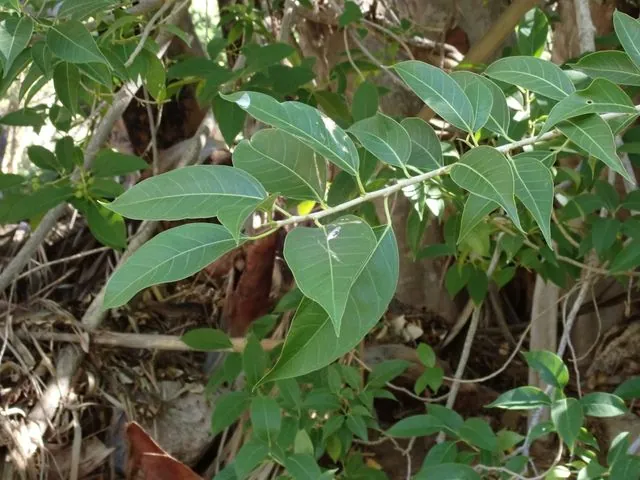
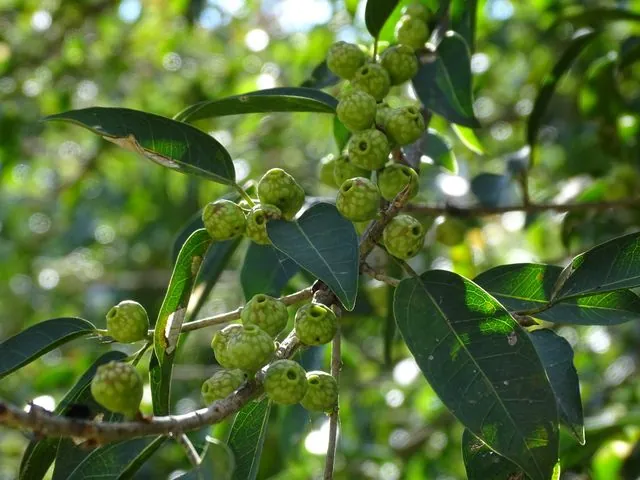
Canonical name: The scientific name without its authorship or date, for example Zea mays instead of Zea mays L. — The scientific name without its authorship or date, for example Zea mays instead of Zea mays L.
Ficus pertusa
Authorship: The author or authors credited with publishing the scientific name. It is written after the name, sometimes with the year, for example L. (Linnaeus) in Zea mays L. An author in parentheses first published the name in another genus or rank. — The author or authors credited with publishing the scientific name. It is written after the name, sometimes with the year, for example L. (Linnaeus) in Zea mays L. An author in parentheses first published the name in another genus or rank.
L.fil.
Common names
Names in other languages (18)Amatillo, Camichín, Caxinguba, Figueira, Gameleira, Guaxinduba, Higuito, Lombrigueira, Pau-de-corda, Quaxinguba, Tescalame, Uapuim, Uapuim-açu, apuí, bibosi, bibosi palomo, oleanderfikus, 孔榕
Kingdom: One of the broadest ranks of biological classification. It groups organisms that share very basic features, for example plants (Plantae), animals (Animalia) or fungi (Fungi). — One of the broadest ranks of biological classification. It groups organisms that share very basic features, for example plants (Plantae), animals (Animalia) or fungi (Fungi).
Plantae
Phylum: Rank below kingdom that groups organisms with a shared general body plan, for example chordates (Chordata), arthropods (Arthropoda) or vascular plants (Tracheophyta). In botany the same rank is also called division. — Rank below kingdom that groups organisms with a shared general body plan, for example chordates (Chordata), arthropods (Arthropoda) or vascular plants (Tracheophyta). In botany the same rank is also called division.
Tracheophyta
Class: Rank below phylum, for example mammals (Mammalia), birds (Aves), insects (Insecta) or monocot plants such as grasses and orchids (Liliopsida). — Rank below phylum, for example mammals (Mammalia), birds (Aves), insects (Insecta) or monocot plants such as grasses and orchids (Liliopsida).
Magnoliopsida
Order: Rank below class that groups related families, for example grasses and their relatives (Poales) or bats (Chiroptera). — Rank below class that groups related families, for example grasses and their relatives (Poales) or bats (Chiroptera).
Rosales
Family: Rank below order that groups related genera. Family names usually end in -aceae in botany (for example Poaceae, the grass family) and in -idae in zoology (for example Felidae, the cat family). — Rank below order that groups related genera. Family names usually end in -aceae in botany (for example Poaceae, the grass family) and in -idae in zoology (for example Felidae, the cat family).
Moraceae
Genus: Rank that groups closely related species. Its name is the first word of a species' scientific name and starts with a capital letter, for example Zea in Zea mays. — Rank that groups closely related species. Its name is the first word of a species' scientific name and starts with a capital letter, for example Zea in Zea mays.
Ficus
Specific epithet: The second word of a species' scientific name. On its own it does not name the species: it always goes with the genus, for example mays in Zea mays. — The second word of a species' scientific name. On its own it does not name the species: it always goes with the genus, for example mays in Zea mays.
pertusa
Taxonomic rank: The level a name occupies in the hierarchy of biological classification, such as kingdom, family, genus, species or subspecies. — The level a name occupies in the hierarchy of biological classification, such as kingdom, family, genus, species or subspecies.
species
Taxonomic status: Whether the taxonomic catalogue the record comes from currently accepts this name for the organism, or treats it as a synonym of another accepted name or as doubtful. — Whether the taxonomic catalogue the record comes from currently accepts this name for the organism, or treats it as a synonym of another accepted name or as doubtful.
accepted name
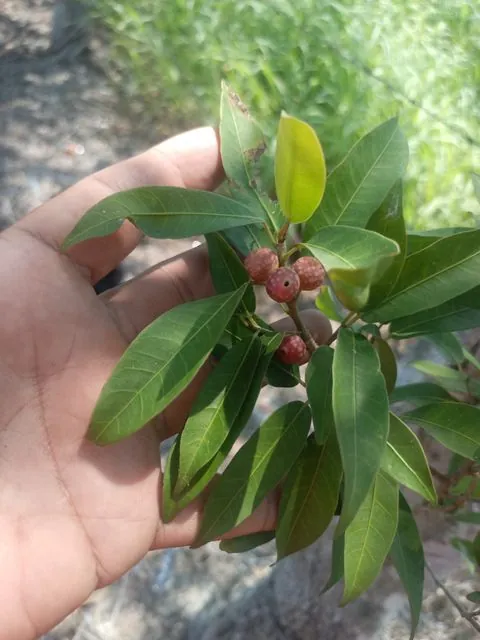
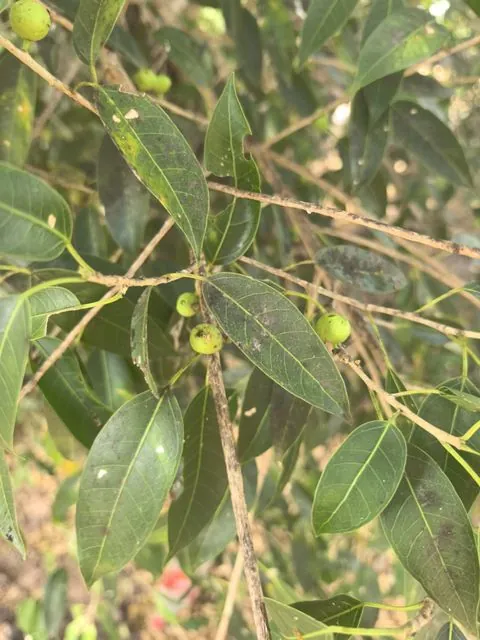
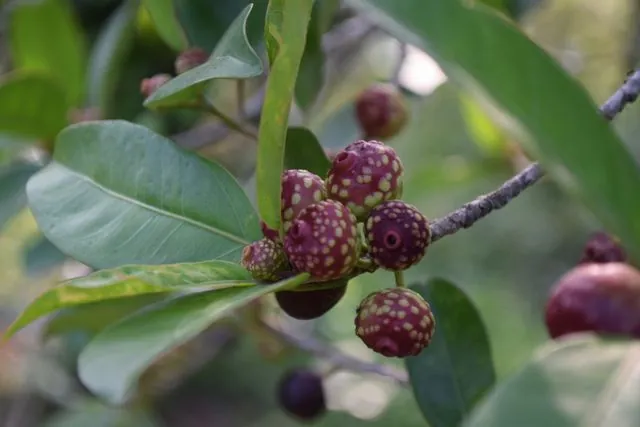
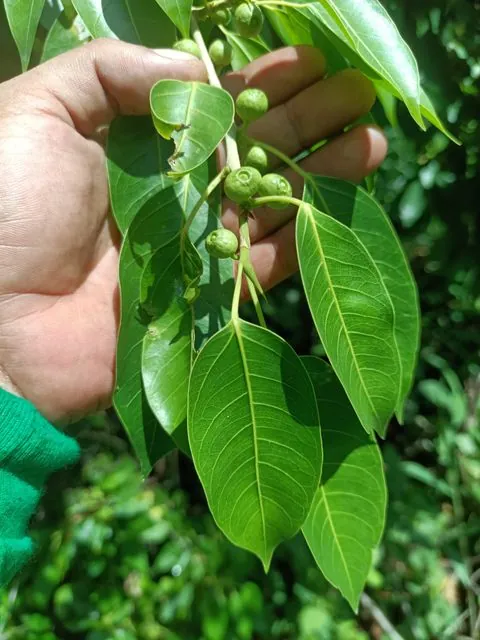
Photos and conservation status
IUCN Red List category: The extinction-risk category that the International Union for Conservation of Nature (IUCN) assigns to a species on its Red List. EX Extinct: there is no reasonable doubt that the last individual has died. EW Extinct in the wild: it survives only in cultivation, in captivity or as a population far outside its past range. CR Critically endangered, EN Endangered and VU Vulnerable: the three threatened categories, from an extremely high to a high risk of extinction in the wild. NT Near threatened: close to qualifying as threatened. LC Least concern: evaluated and not threatened. DD Data deficient: there is not enough information to assess its risk. NE Not evaluated: not yet assessed against the criteria. It describes the risk of the species worldwide, not its situation in a project's area. — The extinction-risk category that the International Union for Conservation of Nature (IUCN) assigns to a species on its Red List. EX Extinct: there is no reasonable doubt that the last individual has died. EW Extinct in the wild: it survives only in cultivation, in captivity or as a population far outside its past range. CR Critically endangered, EN Endangered and VU Vulnerable: the three threatened categories, from an extremely high to a high risk of extinction in the wild. NT Near threatened: close to qualifying as threatened. LC Least concern: evaluated and not threatened. DD Data deficient: there is not enough information to assess its risk. NE Not evaluated: not yet assessed against the criteria. It describes the risk of the species worldwide, not its situation in a project's area.
Least concern (LC)
Source: IUCN Red List via GBIF, queried on 2026-10-09 08:31.
Research-grade iNaturalist observations via GBIF, CC0 or CC BY licences only, queried on 2026-10-09 08:31.
Interacciones documentadas
GloBI says it is documented somewhere in the world. Biolitica answers whether it could happen here.
A documented interaction means it was recorded somewhere in the world. It does not mean it occurs here.
Types shown: 9 of 9
is eaten by
×
is a host of
×
has as a vector
×
has as a parasite
×
is pollinated by
×
is dispersed by
×
interacts with
×
is a mutualist of
×
is preyed upon by
×
Blocks that do not sit under a navigation concept heading keep the source's own term: no navigation concept has been assigned to them yet.
is eaten by
147 organisms
This term does declare that the organism harms this species.
This release publishes no reuse terms for this record.
Panama · no date publishedWhere it is: line:hash://sha256/021a206a1459bcca7e251c73f5bd180fc3ac342a09c499855fe42e21fc09edcf!/interactions.tsv.gz!/L13300757
No public URL for this record
Lopez & Vaughn 2004
Published in globalbioticinteractions/fricke2020
Context: Costa Rica · no date published
Claim type
Published relationship between two taxa
Version
GloBI 0.11
Reuse
This release publishes no reuse terms for this record.
Costa Rica · no date publishedWhere it is: line:hash://sha256/021a206a1459bcca7e251c73f5bd180fc3ac342a09c499855fe42e21fc09edcf!/interactions.tsv.gz!/L13301291
No public URL for this record
Garcia-Estrada 2012
Published in globalbioticinteractions/fricke2020
Context: Guatemala · no date published
Claim type
Published relationship between two taxa
Version
GloBI 0.11
Reuse
This release publishes no reuse terms for this record.
Guatemala · no date publishedWhere it is: line:hash://sha256/021a206a1459bcca7e251c73f5bd180fc3ac342a09c499855fe42e21fc09edcf!/interactions.tsv.gz!/L13337689
No public URL for this record
Palmeirim 1989
Published in globalbioticinteractions/fricke2020
Context: Costa Rica · no date published
Claim type
Published relationship between two taxa
Version
GloBI 0.11
Reuse
This release publishes no reuse terms for this record.
Costa Rica · no date publishedWhere it is: line:hash://sha256/021a206a1459bcca7e251c73f5bd180fc3ac342a09c499855fe42e21fc09edcf!/interactions.tsv.gz!/L13362959
No public URL for this record
Wendeln, M.C., J.R. Runkle & E.K.V. Kalko. 2000. Nutritional values of 14 fig species and bat feeding preferences in Panama. Biotropica 32: 489-501
Published in globalbioticinteractions/NeoBat_Interactions
Context: no place published · no date published
Claim type
Published relationship between two taxa
Version
GloBI 0.11
Reuse
This release publishes no reuse terms for this record.
no place published · no date publishedWhere it is: line:hash://sha256/021a206a1459bcca7e251c73f5bd180fc3ac342a09c499855fe42e21fc09edcf!/interactions.tsv.gz!/L24376303
No public URL for this record
A published relationship says these two taxa were documented interacting. It does not say how often, or that it happens in this project's region.
Great Fruit-eating BatArtibeus lituratusPhyllostomidae
is eaten by
5
not compared
5 sources · 5 records
Kalko BCI zero intx removed
Published in globalbioticinteractions/fricke2020
Context: Panama · no date published
Claim type
Published relationship between two taxa
Version
GloBI 0.11
Reuse
This release publishes no reuse terms for this record.
Panama · no date publishedWhere it is: line:hash://sha256/021a206a1459bcca7e251c73f5bd180fc3ac342a09c499855fe42e21fc09edcf!/interactions.tsv.gz!/L13301009
No public URL for this record
Lopez & Vaughn 2004
Published in globalbioticinteractions/fricke2020
Context: Costa Rica · no date published
Claim type
Published relationship between two taxa
Version
GloBI 0.11
Reuse
This release publishes no reuse terms for this record.
Costa Rica · no date publishedWhere it is: line:hash://sha256/021a206a1459bcca7e251c73f5bd180fc3ac342a09c499855fe42e21fc09edcf!/interactions.tsv.gz!/L13301238
No public URL for this record
Garcia-Estrada 2012
Published in globalbioticinteractions/fricke2020
Context: Guatemala · no date published
Claim type
Published relationship between two taxa
Version
GloBI 0.11
Reuse
This release publishes no reuse terms for this record.
Guatemala · no date publishedWhere it is: line:hash://sha256/021a206a1459bcca7e251c73f5bd180fc3ac342a09c499855fe42e21fc09edcf!/interactions.tsv.gz!/L13337654
No public URL for this record
Palmeirim 1989
Published in globalbioticinteractions/fricke2020
Context: Costa Rica · no date published
Claim type
Published relationship between two taxa
Version
GloBI 0.11
Reuse
This release publishes no reuse terms for this record.
Costa Rica · no date publishedWhere it is: line:hash://sha256/021a206a1459bcca7e251c73f5bd180fc3ac342a09c499855fe42e21fc09edcf!/interactions.tsv.gz!/L13362754
No public URL for this record
Wendeln, M.C., J.R. Runkle & E.K.V. Kalko. 2000. Nutritional values of 14 fig species and bat feeding preferences in Panama. Biotropica 32: 489-501
Published in globalbioticinteractions/NeoBat_Interactions
Context: no place published · no date published
Claim type
Published relationship between two taxa
Version
GloBI 0.11
Reuse
This release publishes no reuse terms for this record.
no place published · no date publishedWhere it is: line:hash://sha256/021a206a1459bcca7e251c73f5bd180fc3ac342a09c499855fe42e21fc09edcf!/interactions.tsv.gz!/L24376267
No public URL for this record
A published relationship says these two taxa were documented interacting. It does not say how often, or that it happens in this project's region.
Common Tent-making BatUroderma bilobatumPhyllostomidae
is eaten by
5
not compared
5 sources · 5 records
Kalko BCI zero intx removed
Published in globalbioticinteractions/fricke2020
Context: Panama · no date published
Claim type
Published relationship between two taxa
Version
GloBI 0.11
Reuse
This release publishes no reuse terms for this record.
Panama · no date publishedWhere it is: line:hash://sha256/021a206a1459bcca7e251c73f5bd180fc3ac342a09c499855fe42e21fc09edcf!/interactions.tsv.gz!/L13300643
No public URL for this record
Lopez & Vaughn 2004
Published in globalbioticinteractions/fricke2020
Context: Costa Rica · no date published
Claim type
Published relationship between two taxa
Version
GloBI 0.11
Reuse
This release publishes no reuse terms for this record.
Costa Rica · no date publishedWhere it is: line:hash://sha256/021a206a1459bcca7e251c73f5bd180fc3ac342a09c499855fe42e21fc09edcf!/interactions.tsv.gz!/L13301348
No public URL for this record
Giannini, N.P. & E.K.V. Kalko. 2004. Trophic structure in a large assemblage of phyllostomid bats in Panama. Oikos 105: 209-220
Published in globalbioticinteractions/NeoBat_Interactions
Context: no place published · no date published
Claim type
Published relationship between two taxa
Version
GloBI 0.11
Reuse
This release publishes no reuse terms for this record.
no place published · no date publishedWhere it is: line:hash://sha256/021a206a1459bcca7e251c73f5bd180fc3ac342a09c499855fe42e21fc09edcf!/interactions.tsv.gz!/L24374586
No public URL for this record
Lopez, J.E. & C. Vaughan. 2004. Observations on the Role of Frugivorous Bats as Seed Dispersers in Costa Rican Secondary Humid Forests. Acta Chiropterologica 6(1): 111�119
Published in globalbioticinteractions/NeoBat_Interactions
Context: no place published · no date published
Claim type
Published relationship between two taxa
Version
GloBI 0.11
Reuse
This release publishes no reuse terms for this record.
no place published · no date publishedWhere it is: line:hash://sha256/021a206a1459bcca7e251c73f5bd180fc3ac342a09c499855fe42e21fc09edcf!/interactions.tsv.gz!/L24375253
No public URL for this record
Wendeln, M.C., J.R. Runkle & E.K.V. Kalko. 2000. Nutritional values of 14 fig species and bat feeding preferences in Panama. Biotropica 32: 489-501
Published in globalbioticinteractions/NeoBat_Interactions
Context: no place published · no date published
Claim type
Published relationship between two taxa
Version
GloBI 0.11
Reuse
This release publishes no reuse terms for this record.
no place published · no date publishedWhere it is: line:hash://sha256/021a206a1459bcca7e251c73f5bd180fc3ac342a09c499855fe42e21fc09edcf!/interactions.tsv.gz!/L24376268
No public URL for this record
A published relationship says these two taxa were documented interacting. It does not say how often, or that it happens in this project's region.
This release publishes no reuse terms for this record.
Panama · no date publishedWhere it is: line:hash://sha256/021a206a1459bcca7e251c73f5bd180fc3ac342a09c499855fe42e21fc09edcf!/interactions.tsv.gz!/L13300626
No public URL for this record
Lopez & Vaughn 2004
Published in globalbioticinteractions/fricke2020
Context: Costa Rica · no date published
Claim type
Published relationship between two taxa
Version
GloBI 0.11
Reuse
This release publishes no reuse terms for this record.
Costa Rica · no date publishedWhere it is: line:hash://sha256/021a206a1459bcca7e251c73f5bd180fc3ac342a09c499855fe42e21fc09edcf!/interactions.tsv.gz!/L13301170
No public URL for this record
Palmeirim 1989
Published in globalbioticinteractions/fricke2020
Context: Costa Rica · no date published
Claim type
Published relationship between two taxa
Version
GloBI 0.11
Reuse
This release publishes no reuse terms for this record.
Costa Rica · no date publishedWhere it is: line:hash://sha256/021a206a1459bcca7e251c73f5bd180fc3ac342a09c499855fe42e21fc09edcf!/interactions.tsv.gz!/L13362938
No public URL for this record
Wendeln, M.C., J.R. Runkle & E.K.V. Kalko. 2000. Nutritional values of 14 fig species and bat feeding preferences in Panama. Biotropica 32: 489-501
Published in globalbioticinteractions/NeoBat_Interactions
Context: no place published · no date published
Claim type
Published relationship between two taxa
Version
GloBI 0.11
Reuse
This release publishes no reuse terms for this record.
no place published · no date publishedWhere it is: line:hash://sha256/021a206a1459bcca7e251c73f5bd180fc3ac342a09c499855fe42e21fc09edcf!/interactions.tsv.gz!/L24376310
No public URL for this record
A published relationship says these two taxa were documented interacting. It does not say how often, or that it happens in this project's region.
The authority declares no effect on this species for this term: neither that it harms it nor that it benefits it. In the source ontology symbiosis covers mutualism, commensalism and parasitism alike, so this block holds attackers and allies side by side.
Context: Area de Conservacion Guanacaste, Sector San Cristobal, Puente Palma · April 13, 2004 · Material sample
Claim type
Published relationship between two taxa
Version
GloBI 0.11
Reuse
This release publishes no reuse terms for this record.
Area de Conservacion Guanacaste, Sector San Cristobal, Puente Palma · April 13, 2004 · Material sampleAs published: 2004-04-13T00:00:00Z · MATERIAL_SAMPLEWhere it is: line:hash://sha256/021a206a1459bcca7e251c73f5bd180fc3ac342a09c499855fe42e21fc09edcf!/interactions.tsv.gz!/L12922605
Context: Area de Conservacion Guanacaste, Sector San Cristobal, Camino Brasilia · April 28, 2005 · Material sample
Claim type
Published relationship between two taxa
Version
GloBI 0.11
Reuse
This release publishes no reuse terms for this record.
Area de Conservacion Guanacaste, Sector San Cristobal, Camino Brasilia · April 28, 2005 · Material sampleAs published: 2005-04-28T00:00:00Z · MATERIAL_SAMPLEWhere it is: line:hash://sha256/021a206a1459bcca7e251c73f5bd180fc3ac342a09c499855fe42e21fc09edcf!/interactions.tsv.gz!/L12923143
Context: Area de Conservacion Guanacaste, Sector San Cristobal, Rio Blanco Abajo · May 5, 2005 · Material sample
Claim type
Published relationship between two taxa
Version
GloBI 0.11
Reuse
This release publishes no reuse terms for this record.
Area de Conservacion Guanacaste, Sector San Cristobal, Rio Blanco Abajo · May 5, 2005 · Material sampleAs published: 2005-05-05T00:00:00Z · MATERIAL_SAMPLEWhere it is: line:hash://sha256/021a206a1459bcca7e251c73f5bd180fc3ac342a09c499855fe42e21fc09edcf!/interactions.tsv.gz!/L12923144
Context: Area de Conservacion Guanacaste, Sector San Cristobal, Sendero Palo Alto · April 11, 2006 · Material sample
Claim type
Published relationship between two taxa
Version
GloBI 0.11
Reuse
This release publishes no reuse terms for this record.
Area de Conservacion Guanacaste, Sector San Cristobal, Sendero Palo Alto · April 11, 2006 · Material sampleAs published: 2006-04-11T00:00:00Z · MATERIAL_SAMPLEWhere it is: line:hash://sha256/021a206a1459bcca7e251c73f5bd180fc3ac342a09c499855fe42e21fc09edcf!/interactions.tsv.gz!/L12927188
Context: Area de Conservacion Guanacaste, Sector Cacao, Sendero a Maritza, 1 km NW Estacion Cacao · Nov. 15, 2010 · Material sample
Claim type
Published relationship between two taxa
Version
GloBI 0.11
Reuse
This release publishes no reuse terms for this record.
Area de Conservacion Guanacaste, Sector Cacao, Sendero a Maritza, 1 km NW Estacion Cacao · Nov. 15, 2010 · Material sampleAs published: 2010-11-15T00:00:00Z · MATERIAL_SAMPLEWhere it is: line:hash://sha256/021a206a1459bcca7e251c73f5bd180fc3ac342a09c499855fe42e21fc09edcf!/interactions.tsv.gz!/L12964239
A published relationship says these two taxa were documented interacting. It does not say how often, or that it happens in this project's region.
Pegoscapus silvestriiAgaonidae
is a host of
4
no location
4 sources · 4 records
http://www.ncbi.nlm.nih.gov/nuccore/62736836
Published in millerse/Wardeh-et-al.-2015
Context: no place published · no date published
Claim type
Published relationship between two taxa
Version
GloBI 0.11
Reuse
This release publishes no reuse terms for this record.
no place published · no date publishedWhere it is: line:hash://sha256/021a206a1459bcca7e251c73f5bd180fc3ac342a09c499855fe42e21fc09edcf!/interactions.tsv.gz!/L466661
@article{55792, author = {Bronstein, J.L.}, booktitle = {Ecology}, journal = {Ecology}, pages = {1298-1302}, title = {Mutualism, antagonism and the fig-pollinator interaction.}, volume = {69}, year = {1988}, year_suffix = {b}, issn = {0012-9658} }
Published in globalbioticinteractions/taxonworks
Context: no place published · no date published
Claim type
Published relationship between two taxa
Version
GloBI 0.11
Reuse
This release publishes no reuse terms for this record.
no place published · no date publishedWhere it is: line:hash://sha256/021a206a1459bcca7e251c73f5bd180fc3ac342a09c499855fe42e21fc09edcf!/interactions.tsv.gz!/L6047568
This release publishes no reuse terms for this record.
no place published · no date publishedWhere it is: line:hash://sha256/021a206a1459bcca7e251c73f5bd180fc3ac342a09c499855fe42e21fc09edcf!/interactions.tsv.gz!/L6048791
No public URL for this record
@article{51113, author = {Anstett, M.C. and Kjellberg, F. and Bronstein, J.L.}, booktitle = {Journal of Biogeography}, journal = {Journal of Biogeography}, pages = {459-466}, title = {Waiting for wasps: consequences for the pollination dynamics of <i>Ficus pertusa</i> …
Published in globalbioticinteractions/taxonworks
Context: no place published · no date published
Claim type
Published relationship between two taxa
Version
GloBI 0.11
Reuse
This release publishes no reuse terms for this record.
no place published · no date publishedWhere it is: line:hash://sha256/021a206a1459bcca7e251c73f5bd180fc3ac342a09c499855fe42e21fc09edcf!/interactions.tsv.gz!/L6076533
No public URL for this record
A published relationship says these two taxa were documented interacting. It does not say how often, or that it happens in this project's region.
Context: Canal de Panama, Barro Colorado Nature Monument, Barro Colorado Island, Smithsonian Tropical Research Institute · Jan. 6, 2011 · Material s…
Claim type
Published relationship between two taxa
Version
GloBI 0.11
Reuse
This release publishes no reuse terms for this record.
Canal de Panama, Barro Colorado Nature Monument, Barro Colorado Island, Smithsonian Tropical Research Institute · Jan. 6, 2011 · Material sampleAs published: 2011-01-06T00:00:00Z · MATERIAL_SAMPLEWhere it is: line:hash://sha256/021a206a1459bcca7e251c73f5bd180fc3ac342a09c499855fe42e21fc09edcf!/interactions.tsv.gz!/L12798634
Context: Canal de Panama, Barro Colorado Nature Monument, Barro Colorado Island, Smithsonian Tropical Research Institute · Jan. 6, 2011 · Material s…
Claim type
Published relationship between two taxa
Version
GloBI 0.11
Reuse
This release publishes no reuse terms for this record.
Canal de Panama, Barro Colorado Nature Monument, Barro Colorado Island, Smithsonian Tropical Research Institute · Jan. 6, 2011 · Material sampleAs published: 2011-01-06T00:00:00Z · MATERIAL_SAMPLEWhere it is: line:hash://sha256/021a206a1459bcca7e251c73f5bd180fc3ac342a09c499855fe42e21fc09edcf!/interactions.tsv.gz!/L12798635
Context: Canal de Panama, Barro Colorado Nature Monument, Barro Colorado Island, Smithsonian Tropical Research Institute · Jan. 6, 2011 · Material s…
Claim type
Published relationship between two taxa
Version
GloBI 0.11
Reuse
This release publishes no reuse terms for this record.
Canal de Panama, Barro Colorado Nature Monument, Barro Colorado Island, Smithsonian Tropical Research Institute · Jan. 6, 2011 · Material sampleAs published: 2011-01-06T00:00:00Z · MATERIAL_SAMPLEWhere it is: line:hash://sha256/021a206a1459bcca7e251c73f5bd180fc3ac342a09c499855fe42e21fc09edcf!/interactions.tsv.gz!/L12798636
Context: Area de Conservacion Guanacaste, Sector Cacao, Sendero a Maritza, 1 km NW Estacion Cacao · Oct. 14, 2010 · Material sample
Claim type
Published relationship between two taxa
Version
GloBI 0.11
Reuse
This release publishes no reuse terms for this record.
Area de Conservacion Guanacaste, Sector Cacao, Sendero a Maritza, 1 km NW Estacion Cacao · Oct. 14, 2010 · Material sampleAs published: 2010-10-14T00:00:00Z · MATERIAL_SAMPLEWhere it is: line:hash://sha256/021a206a1459bcca7e251c73f5bd180fc3ac342a09c499855fe42e21fc09edcf!/interactions.tsv.gz!/L12955618
Context: Area de Conservacion Guanacaste, Sector Cacao, Sendero a Maritza, 1 km NW Estacion Cacao · Nov. 19, 2010 · Material sample
Claim type
Published relationship between two taxa
Version
GloBI 0.11
Reuse
This release publishes no reuse terms for this record.
Area de Conservacion Guanacaste, Sector Cacao, Sendero a Maritza, 1 km NW Estacion Cacao · Nov. 19, 2010 · Material sampleAs published: 2010-11-19T00:00:00Z · MATERIAL_SAMPLEWhere it is: line:hash://sha256/021a206a1459bcca7e251c73f5bd180fc3ac342a09c499855fe42e21fc09edcf!/interactions.tsv.gz!/L12959864
Context: Area de Conservacion Guanacaste, Sector Cacao, Sendero a Maritza, 1 km NW Estacion Cacao · Nov. 29, 2010 · Material sample
Claim type
Published relationship between two taxa
Version
GloBI 0.11
Reuse
This release publishes no reuse terms for this record.
Area de Conservacion Guanacaste, Sector Cacao, Sendero a Maritza, 1 km NW Estacion Cacao · Nov. 29, 2010 · Material sampleAs published: 2010-11-29T00:00:00Z · MATERIAL_SAMPLEWhere it is: line:hash://sha256/021a206a1459bcca7e251c73f5bd180fc3ac342a09c499855fe42e21fc09edcf!/interactions.tsv.gz!/L12964268
The authority declares no effect on this species for this term: neither that it harms it nor that it benefits it.
Organism
Reads as
Studies
Where it was documented
Actions
Common Tent-making BatUroderma bilobatumPhyllostomidae
has as a vector
3
not compared
3 sources · 3 records
Giannini, N. P. & E. K. Kalko. 2004. Trophic structure in a large assemblage of phyllostomid bats in Panama. Oikos 105: 209-220.
Published in globalbioticinteractions/batbase
Context: Barro Colorado Island · no date published
Claim type
Published relationship between two taxa
Version
GloBI 0.11
Reuse
This release publishes no reuse terms for this record.
Barro Colorado Island · no date publishedWhere it is: line:hash://sha256/021a206a1459bcca7e251c73f5bd180fc3ac342a09c499855fe42e21fc09edcf!/interactions.tsv.gz!/L12438821
No public URL for this record
Shanahan, M., et al. 2001. Fig-eating by vertebrate frugivores: a global review. Biological Reviews 76: 529-572.
Published in globalbioticinteractions/batbase
Context: Unspecified · no date published
Claim type
Published relationship between two taxa
Version
GloBI 0.11
Reuse
This release publishes no reuse terms for this record.
Unspecified · no date publishedWhere it is: line:hash://sha256/021a206a1459bcca7e251c73f5bd180fc3ac342a09c499855fe42e21fc09edcf!/interactions.tsv.gz!/L12442812
No public URL for this record
Wendeln, M. C., J. R. Runkle & E. K. Kalko. 2000. Nutritional values of 14 fig species and bat feeding preferences in Panama. Biotropica 32 (3): 489-501.
Published in globalbioticinteractions/batbase
Context: Barro Colorado Island · no date published
Claim type
Published relationship between two taxa
Version
GloBI 0.11
Reuse
This release publishes no reuse terms for this record.
Barro Colorado Island · no date publishedWhere it is: line:hash://sha256/021a206a1459bcca7e251c73f5bd180fc3ac342a09c499855fe42e21fc09edcf!/interactions.tsv.gz!/L12443524
No public URL for this record
A published relationship says these two taxa were documented interacting. It does not say how often, or that it happens in this project's region.
Giannini, N. P. & E. K. Kalko. 2004. Trophic structure in a large assemblage of phyllostomid bats in Panama. Oikos 105: 209-220.
Published in globalbioticinteractions/batbase
Context: Barro Colorado Island · no date published
Claim type
Published relationship between two taxa
Version
GloBI 0.11
Reuse
This release publishes no reuse terms for this record.
Barro Colorado Island · no date publishedWhere it is: line:hash://sha256/021a206a1459bcca7e251c73f5bd180fc3ac342a09c499855fe42e21fc09edcf!/interactions.tsv.gz!/L12438778
No public URL for this record
Shanahan, M., et al. 2001. Fig-eating by vertebrate frugivores: a global review. Biological Reviews 76: 529-572.
Published in globalbioticinteractions/batbase
Context: Unspecified · no date published
Claim type
Published relationship between two taxa
Version
GloBI 0.11
Reuse
This release publishes no reuse terms for this record.
Unspecified · no date publishedWhere it is: line:hash://sha256/021a206a1459bcca7e251c73f5bd180fc3ac342a09c499855fe42e21fc09edcf!/interactions.tsv.gz!/L12442777
No public URL for this record
Wendeln, M. C., J. R. Runkle & E. K. Kalko. 2000. Nutritional values of 14 fig species and bat feeding preferences in Panama. Biotropica 32 (3): 489-501.
Published in globalbioticinteractions/batbase
Context: Barro Colorado Island · no date published
Claim type
Published relationship between two taxa
Version
GloBI 0.11
Reuse
This release publishes no reuse terms for this record.
Barro Colorado Island · no date publishedWhere it is: line:hash://sha256/021a206a1459bcca7e251c73f5bd180fc3ac342a09c499855fe42e21fc09edcf!/interactions.tsv.gz!/L12443511
No public URL for this record
A published relationship says these two taxa were documented interacting. It does not say how often, or that it happens in this project's region.
NEW WORLD LEAF-NOSED BATSPhyllostomidaePhyllostomidae
has as a vector
1
not compared
Not a modelling unit: the source publishes it at family level.
1 source · 1 record
Kalko, E. K., E. A. Herre & C. O. Handley. 1996. Relation of fig fruit characteristics to fruit eating bats in the New and Old World tropics. Journal of Biogeography 23: 565-576.
Published in globalbioticinteractions/batbase
Context: Barro Colorado Island · no date published
Claim type
Published relationship between two taxa
Version
GloBI 0.11
Reuse
This release publishes no reuse terms for this record.
Barro Colorado Island · no date publishedWhere it is: line:hash://sha256/021a206a1459bcca7e251c73f5bd180fc3ac342a09c499855fe42e21fc09edcf!/interactions.tsv.gz!/L12439706
No public URL for this record
A published relationship says these two taxa were documented interacting. It does not say how often, or that it happens in this project's region.
BatChiroptera
has as a vector
1
not compared
Not a modelling unit: the source publishes it at order level.
1 source · 1 record
Medellín, R. A. & R. A. Gaona. 1999. Seed dispersal by bats and birds in forest and disturbed habitats of Chiapas, México. Biotropica 31 (3): 478-485.
Published in globalbioticinteractions/batbase
Context: Chajul Tropical Biology Station, Selva Lacandona · no date published
Claim type
Published relationship between two taxa
Version
GloBI 0.11
Reuse
This release publishes no reuse terms for this record.
Chajul Tropical Biology Station, Selva Lacandona · no date publishedWhere it is: line:hash://sha256/021a206a1459bcca7e251c73f5bd180fc3ac342a09c499855fe42e21fc09edcf!/interactions.tsv.gz!/L12439913
No public URL for this record
A published relationship says these two taxa were documented interacting. It does not say how often, or that it happens in this project's region.
This term does declare that the organism harms this species.
Organism
Reads as
Studies
Where it was documented
Actions
Pegoscapus silvestriiAgaonidae
has as a parasite
6
no location
6 sources · 6 records
De San979b via Universal Chalcidoidea Database
Published in globalbioticinteractions/natural-history-museum-london-interactions-bank
Context: no place published · no date published
Claim type
Published relationship between two taxa
Version
GloBI 0.11
Reuse
This release publishes no reuse terms for this record.
no place published · no date publishedWhere it is: line:hash://sha256/021a206a1459bcca7e251c73f5bd180fc3ac342a09c499855fe42e21fc09edcf!/interactions.tsv.gz!/L18793872
No public URL for this record
Bronst991 via Universal Chalcidoidea Database
Published in globalbioticinteractions/natural-history-museum-london-interactions-bank
Context: no place published · no date published
Claim type
Published relationship between two taxa
Version
GloBI 0.11
Reuse
This release publishes no reuse terms for this record.
no place published · no date publishedWhere it is: line:hash://sha256/021a206a1459bcca7e251c73f5bd180fc3ac342a09c499855fe42e21fc09edcf!/interactions.tsv.gz!/L18932551
No public URL for this record
Bronst988b via Universal Chalcidoidea Database
Published in globalbioticinteractions/natural-history-museum-london-interactions-bank
Context: no place published · no date published
Claim type
Published relationship between two taxa
Version
GloBI 0.11
Reuse
This release publishes no reuse terms for this record.
no place published · no date publishedWhere it is: line:hash://sha256/021a206a1459bcca7e251c73f5bd180fc3ac342a09c499855fe42e21fc09edcf!/interactions.tsv.gz!/L18932552
No public URL for this record
Bronst988c via Universal Chalcidoidea Database
Published in globalbioticinteractions/natural-history-museum-london-interactions-bank
Context: no place published · no date published
Claim type
Published relationship between two taxa
Version
GloBI 0.11
Reuse
This release publishes no reuse terms for this record.
no place published · no date publishedWhere it is: line:hash://sha256/021a206a1459bcca7e251c73f5bd180fc3ac342a09c499855fe42e21fc09edcf!/interactions.tsv.gz!/L18932553
No public URL for this record
AnstetKjBr996 via Universal Chalcidoidea Database
Published in globalbioticinteractions/natural-history-museum-london-interactions-bank
Context: no place published · no date published
Claim type
Published relationship between two taxa
Version
GloBI 0.11
Reuse
This release publishes no reuse terms for this record.
no place published · no date publishedWhere it is: line:hash://sha256/021a206a1459bcca7e251c73f5bd180fc3ac342a09c499855fe42e21fc09edcf!/interactions.tsv.gz!/L18932554
No public URL for this record
Bronst988 via Universal Chalcidoidea Database
Published in globalbioticinteractions/natural-history-museum-london-interactions-bank
Context: no place published · no date published
Claim type
Published relationship between two taxa
Version
GloBI 0.11
Reuse
This release publishes no reuse terms for this record.
no place published · no date publishedWhere it is: line:hash://sha256/021a206a1459bcca7e251c73f5bd180fc3ac342a09c499855fe42e21fc09edcf!/interactions.tsv.gz!/L18937161
No public URL for this record
A published relationship says these two taxa were documented interacting. It does not say how often, or that it happens in this project's region.
Heterandrium fallaxPteromalidae
has as a parasite
1
no location
1 source · 1 record
Boucek993 via Universal Chalcidoidea Database
Published in globalbioticinteractions/natural-history-museum-london-interactions-bank
Context: no place published · no date published
Claim type
Published relationship between two taxa
Version
GloBI 0.11
Reuse
This release publishes no reuse terms for this record.
no place published · no date publishedWhere it is: line:hash://sha256/021a206a1459bcca7e251c73f5bd180fc3ac342a09c499855fe42e21fc09edcf!/interactions.tsv.gz!/L18937102
No public URL for this record
A published relationship says these two taxa were documented interacting. It does not say how often, or that it happens in this project's region.
Aepocerus emarginatusPteromalidae
has as a parasite
1
no location
1 source · 1 record
Boucek993 via Universal Chalcidoidea Database
Published in globalbioticinteractions/natural-history-museum-london-interactions-bank
Context: no place published · no date published
Claim type
Published relationship between two taxa
Version
GloBI 0.11
Reuse
This release publishes no reuse terms for this record.
no place published · no date publishedWhere it is: line:hash://sha256/021a206a1459bcca7e251c73f5bd180fc3ac342a09c499855fe42e21fc09edcf!/interactions.tsv.gz!/L18937101
No public URL for this record
A published relationship says these two taxa were documented interacting. It does not say how often, or that it happens in this project's region.
PegoscapusAgaonidae
has as a parasite
1
no location
Not a modelling unit: the source publishes it at genus level.
1 source · 1 record
Cruaud, A., Ronsted, N., Chantarasuwan, B., Chou, L. S., Clement, W. L., Couloux, A., … Savolainen, V. (2012). An Extreme Case of Plant-Insect Codiversification: Figs and Fig-Pollinating Wasps. Systematic Biology, 61(6), 1029–1047. doi:10.1093/sysbio/sys068
Published in globalbioticinteractions/cruaud
Context: no place published · no date published
Claim type
Published relationship between two taxa
Version
GloBI 0.11
Reuse
This release publishes no reuse terms for this record.
no place published · no date publishedWhere it is: line:hash://sha256/021a206a1459bcca7e251c73f5bd180fc3ac342a09c499855fe42e21fc09edcf!/interactions.tsv.gz!/L13258598
A published relationship says these two taxa were documented interacting. It does not say how often, or that it happens in this project's region.
Showing 4 of 4, by number of studies
Pollination
is pollinated by
2 organisms
This term declares that the organism benefits this species. «Visits the flowers of» is a different term and a different block: a visitor is not a pollinator, and merging the two is the measured defect that turned ~88 shared «pollinators» into birds and primates.
Organism
Reads as
Studies
Where it was documented
Actions
Trigona silvestrianaApidae
is pollinated by
1
not compared
1 source · 3 records
Ugo Mendes Diniz, Alexander Keller, Gunnar Brehm, Sabine Fernanda Viteri Lalama, Kilian Frühholz, Maximilian Pitz, Julia Windl, Santiago Erazo, Santiago Fernando Burneo, Marco Tschapka, Sara Diana Leonhardt; The neglected pollinators: settling moths are keystone floral visitors …
Published in globalbioticinteractions/mendes-diniz-2025
This release publishes no reuse terms for this record.
Ecuador · Nov. 4, 2023As published: 2023-11-04T00:00:00ZWhere it is: line:hash://sha256/021a206a1459bcca7e251c73f5bd180fc3ac342a09c499855fe42e21fc09edcf!/interactions.tsv.gz!/L12455715
Ecuador · Nov. 17, 2023As published: 2023-11-17T00:00:00ZWhere it is: line:hash://sha256/021a206a1459bcca7e251c73f5bd180fc3ac342a09c499855fe42e21fc09edcf!/interactions.tsv.gz!/L12456033
Ecuador · April 20, 2023As published: 2023-04-20T00:00:00ZWhere it is: line:hash://sha256/021a206a1459bcca7e251c73f5bd180fc3ac342a09c499855fe42e21fc09edcf!/interactions.tsv.gz!/L12456068
A published relationship says these two taxa were documented interacting. It does not say how often, or that it happens in this project's region.
Symphlebia tessellataErebidae
is pollinated by
1
not compared
1 source · 1 record
Ugo Mendes Diniz, Alexander Keller, Gunnar Brehm, Sabine Fernanda Viteri Lalama, Kilian Frühholz, Maximilian Pitz, Julia Windl, Santiago Erazo, Santiago Fernando Burneo, Marco Tschapka, Sara Diana Leonhardt; The neglected pollinators: settling moths are keystone floral visitors …
Published in globalbioticinteractions/mendes-diniz-2025
Context: Ecuador · May 7, 2022
Claim type
Published relationship between two taxa
Version
GloBI 0.11
Reuse
This release publishes no reuse terms for this record.
Ecuador · May 7, 2022As published: 2022-05-07T00:00:00ZWhere it is: line:hash://sha256/021a206a1459bcca7e251c73f5bd180fc3ac342a09c499855fe42e21fc09edcf!/interactions.tsv.gz!/L12455820
Wheelwright, N.T., Haber, W.A., Murray, K.G., Guindon, C. 1984. Tropical fruit-eating birds and their food plants: a survey of a Costa Rican lower montane forest. Biotropica, 16: 173-192.
Published in globalbioticinteractions/web-of-life
Context: no place published · no date published
Claim type
Published relationship between two taxa
Version
GloBI 0.11
Reuse
This release publishes no reuse terms for this record.
no place published · no date publishedWhere it is: line:hash://sha256/021a206a1459bcca7e251c73f5bd180fc3ac342a09c499855fe42e21fc09edcf!/interactions.tsv.gz!/L11455269
No public URL for this record
A published relationship says these two taxa were documented interacting. It does not say how often, or that it happens in this project's region.
Showing 1 of 1, by number of studies
interacts with
1 organism
The authority declares no effect on this species for this term: neither that it harms it nor that it benefits it.
Organism
Reads as
Studies
Where it was documented
Actions
Pegoscapus silvestriiAgaonidae
interacts with
1
no location
1 source · 1 record
@article{55791, author = {Bronstein, J.L.}, booktitle = {Ecology}, journal = {Ecology}, pages = {207-214}, title = {Limits to fruit production in a monoecius fig. Consequences of an obligate mutualism.}, volume = {69}, year = {1988}, year_suffix = {a}, issn = {…
Published in globalbioticinteractions/taxonworks
Context: no place published · no date published
Claim type
Published relationship between two taxa
Version
GloBI 0.11
Reuse
This release publishes no reuse terms for this record.
no place published · no date publishedWhere it is: line:hash://sha256/021a206a1459bcca7e251c73f5bd180fc3ac342a09c499855fe42e21fc09edcf!/interactions.tsv.gz!/L6047567
No public URL for this record
A published relationship says these two taxa were documented interacting. It does not say how often, or that it happens in this project's region.
Showing 1 of 1, by number of studies
is a mutualist of
1 organism
This term declares that the organism benefits this species.
@article{Wheelwright_1984,doi = {10.2307/2388051},url = {https://doi.org/10.2307%2F2388051},year = 1984,month = {sep},publisher = {{JSTOR}},volume = {16},number = {3},pages = {173},author = {Nathaniel T. Wheelwright and William A. Haber and K. Greg Murray and Carlos Guindon},tit…
Published in globalbioticinteractions/mangal
Context: no place published · Jan. 1, 1978 · field observations
Claim type
Published relationship between two taxa
Version
GloBI 0.11
Reuse
This release publishes no reuse terms for this record.
no place published · Jan. 1, 1978 · field observationsAs published: 1978-01-01T00:00:00Z · field observationsWhere it is: line:hash://sha256/021a206a1459bcca7e251c73f5bd180fc3ac342a09c499855fe42e21fc09edcf!/interactions.tsv.gz!/L8300798
A published relationship says these two taxa were documented interacting. It does not say how often, or that it happens in this project's region.
Showing 1 of 1, by number of studies
is preyed upon by
1 organism
This term does declare that the organism harms this species.
Organism
Reads as
Studies
Where it was documented
Actions
Paraná PacuPiaractus mesopotamicusSerrasalmidae
is preyed upon by
1
no location
1 source · 1 record
Globi
Published in globalbioticinteractions/carvajal-quintero-2026
Context: no place published · no date published
Claim type
Published relationship between two taxa
Version
GloBI 0.11
Reuse
This release publishes no reuse terms for this record.
no place published · no date publishedWhere it is: line:hash://sha256/021a206a1459bcca7e251c73f5bd180fc3ac342a09c499855fe42e21fc09edcf!/interactions.tsv.gz!/L24141526
No public URL for this record
A published relationship says these two taxa were documented interacting. It does not say how often, or that it happens in this project's region.
Showing 1 of 1, by number of studies
Acompañantes documentados
This agronomic reading comes from a source reserved for internal use, so it is not shown here.
Documented uses and recommendations
Uses and recommendations that a source documents for this species beside a crop, each in its own context. They are the source's statements, not traits of the species and not Biolítica's recommendations, and none of them is a relation between two species.
Not grouped under a navigation concept
What the source states
Claim type
Context
Source
Actions
Árbol nativo candidato de paisaje
Recommendation of a guideRecommended
coffee · Veracruz, México
Biolítica · compilación de café de CIE-10 sha256:e376ce4d636a
Biolítica · compilación de café de CIE-10 sha256:e376ce4d636a
Reuse
This release publishes no reuse terms for this record.
coffee · Veracruz, MéxicoWhere it is: record:hash://sha256/e376ce4d636a2ad69fd1f35c0c597ef582332fe836e256097909ac8cc8b1081a!/Evidencias!/ID evidencia=E-0500
coffee · Veracruz, MéxicoWhere it is: record:hash://sha256/e376ce4d636a2ad69fd1f35c0c597ef582332fe836e256097909ac8cc8b1081a!/Evidencias!/ID evidencia=E-0570