Canonical name: The scientific name without its authorship or date, for example Zea mays instead of Zea mays L. — The scientific name without its authorship or date, for example Zea mays instead of Zea mays L.
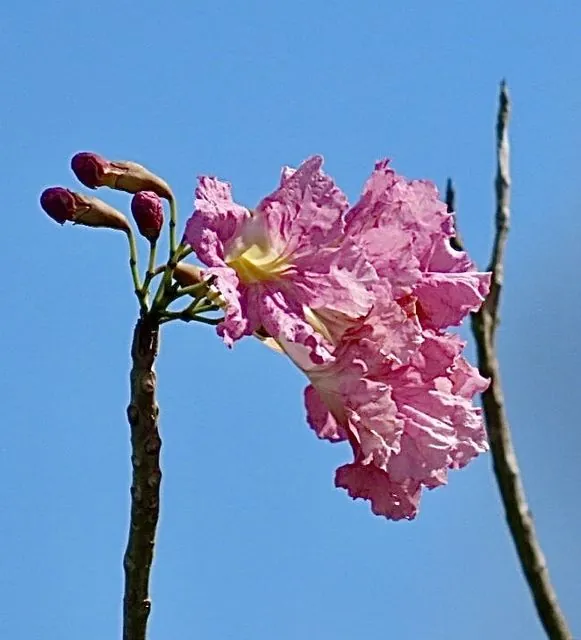
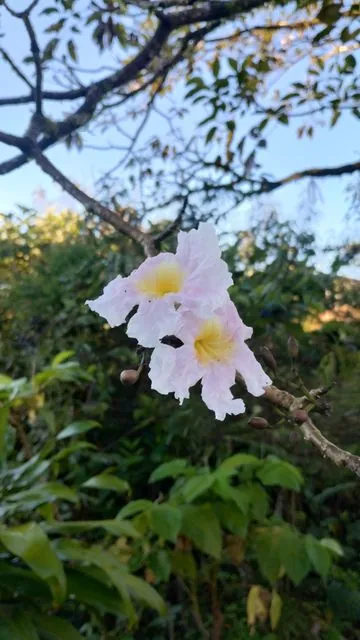
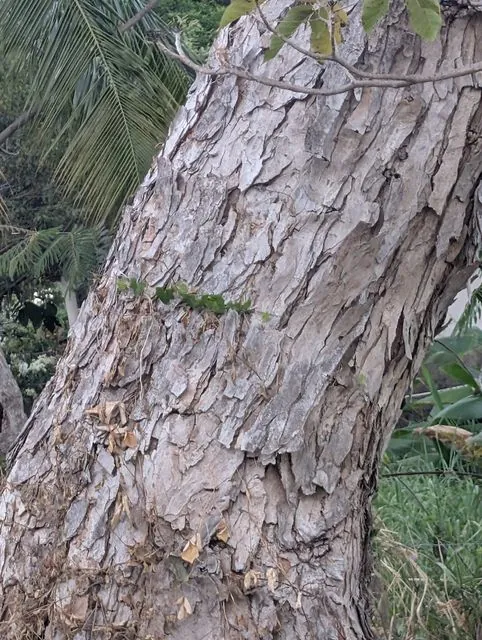
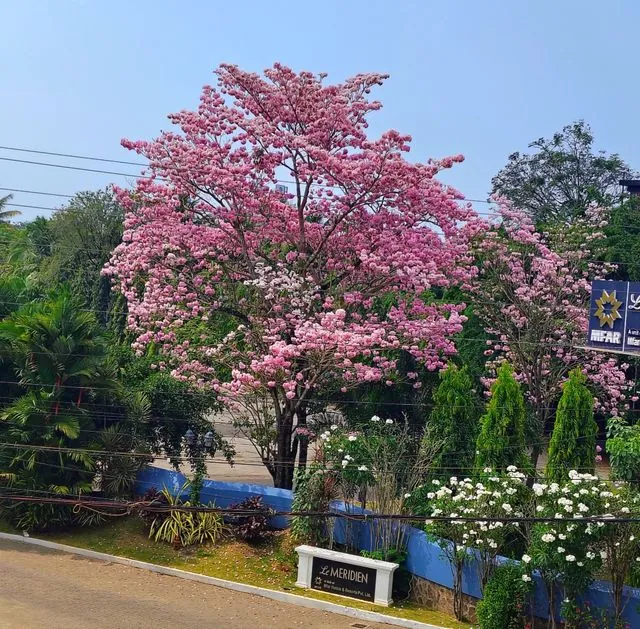
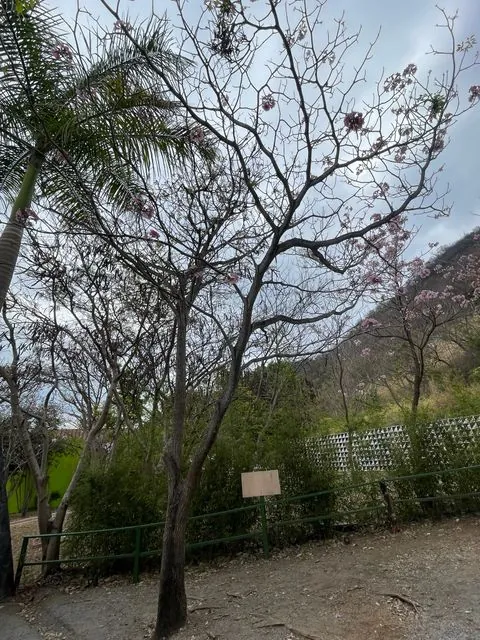
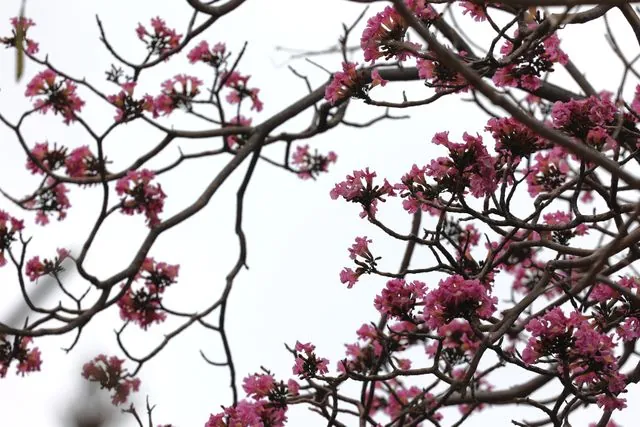
Tabebuia rosea
Authorship: The author or authors credited with publishing the scientific name. It is written after the name, sometimes with the year, for example L. (Linnaeus) in Zea mays L. An author in parentheses first published the name in another genus or rank. — The author or authors credited with publishing the scientific name. It is written after the name, sometimes with the year, for example L. (Linnaeus) in Zea mays L. An author in parentheses first published the name in another genus or rank.
Kingdom: One of the broadest ranks of biological classification. It groups organisms that share very basic features, for example plants (Plantae), animals (Animalia) or fungi (Fungi). — One of the broadest ranks of biological classification. It groups organisms that share very basic features, for example plants (Plantae), animals (Animalia) or fungi (Fungi).
Plantae
Phylum: Rank below kingdom that groups organisms with a shared general body plan, for example chordates (Chordata), arthropods (Arthropoda) or vascular plants (Tracheophyta). In botany the same rank is also called division. — Rank below kingdom that groups organisms with a shared general body plan, for example chordates (Chordata), arthropods (Arthropoda) or vascular plants (Tracheophyta). In botany the same rank is also called division.
Tracheophyta
Class: Rank below phylum, for example mammals (Mammalia), birds (Aves), insects (Insecta) or monocot plants such as grasses and orchids (Liliopsida). — Rank below phylum, for example mammals (Mammalia), birds (Aves), insects (Insecta) or monocot plants such as grasses and orchids (Liliopsida).
Magnoliopsida
Order: Rank below class that groups related families, for example grasses and their relatives (Poales) or bats (Chiroptera). — Rank below class that groups related families, for example grasses and their relatives (Poales) or bats (Chiroptera).
Lamiales
Family: Rank below order that groups related genera. Family names usually end in -aceae in botany (for example Poaceae, the grass family) and in -idae in zoology (for example Felidae, the cat family). — Rank below order that groups related genera. Family names usually end in -aceae in botany (for example Poaceae, the grass family) and in -idae in zoology (for example Felidae, the cat family).
Bignoniaceae
Genus: Rank that groups closely related species. Its name is the first word of a species' scientific name and starts with a capital letter, for example Zea in Zea mays. — Rank that groups closely related species. Its name is the first word of a species' scientific name and starts with a capital letter, for example Zea in Zea mays.
Tabebuia
Specific epithet: The second word of a species' scientific name. On its own it does not name the species: it always goes with the genus, for example mays in Zea mays. — The second word of a species' scientific name. On its own it does not name the species: it always goes with the genus, for example mays in Zea mays.
rosea
Taxonomic rank: The level a name occupies in the hierarchy of biological classification, such as kingdom, family, genus, species or subspecies. — The level a name occupies in the hierarchy of biological classification, such as kingdom, family, genus, species or subspecies.
species
Reference species
Tabebuia rosea
Taxonomic status: Whether the taxonomic catalogue the record comes from currently accepts this name for the organism, or treats it as a synonym of another accepted name or as doubtful. — Whether the taxonomic catalogue the record comes from currently accepts this name for the organism, or treats it as a synonym of another accepted name or as doubtful.
accepted name
Photos and conservation status
IUCN Red List category: The extinction-risk category that the International Union for Conservation of Nature (IUCN) assigns to a species on its Red List. EX Extinct: there is no reasonable doubt that the last individual has died. EW Extinct in the wild: it survives only in cultivation, in captivity or as a population far outside its past range. CR Critically endangered, EN Endangered and VU Vulnerable: the three threatened categories, from an extremely high to a high risk of extinction in the wild. NT Near threatened: close to qualifying as threatened. LC Least concern: evaluated and not threatened. DD Data deficient: there is not enough information to assess its risk. NE Not evaluated: not yet assessed against the criteria. It describes the risk of the species worldwide, not its situation in a project's area. — The extinction-risk category that the International Union for Conservation of Nature (IUCN) assigns to a species on its Red List. EX Extinct: there is no reasonable doubt that the last individual has died. EW Extinct in the wild: it survives only in cultivation, in captivity or as a population far outside its past range. CR Critically endangered, EN Endangered and VU Vulnerable: the three threatened categories, from an extremely high to a high risk of extinction in the wild. NT Near threatened: close to qualifying as threatened. LC Least concern: evaluated and not threatened. DD Data deficient: there is not enough information to assess its risk. NE Not evaluated: not yet assessed against the criteria. It describes the risk of the species worldwide, not its situation in a project's area.
Least concern (LC)
Source: IUCN Red List via GBIF, queried on 2026-10-09 06:58.
Research-grade iNaturalist observations via GBIF, CC0 or CC BY licences only, queried on 2026-10-09 06:58.
Interacciones documentadas
GloBI says it is documented somewhere in the world. Biolitica answers whether it could happen here.
A documented interaction means it was recorded somewhere in the world. It does not mean it occurs here.
Types shown: 6 of 6
has its flowers visited by
×
is a host of
×
interacts with
×
is eaten by
×
is visited by
×
is a symbiont of
×
Blocks that do not sit under a navigation concept heading keep the source's own term: no navigation concept has been assigned to them yet.
Flower visit
has its flowers visited by
52 organisms
The authority declares no effect on this species for this term: neither that it harms it nor that it benefits it. Visiting a flower is not pollinating it. «Pollinates» is a different term and a different block, and merging the two is the measured defect that turned ~88 shared «pollinators» into birds and primates.
Organism
Reads as
Studies
Where it was documented
Actions
Varied Oil-diggerCentris variaApidae
has its flowers visited by
5
not compared
5 sources · 23 records
Vandame R, Mérida J, Sagot P, Madrigal González D, Bedolla García B Y, González-Vanegas P A, Cultid-Medina C A, Barrios J M (2023). Potential host plant records recovered from ECOAB wild bee collection, Mexico. Version 1.10. Comisión nacional para el conocimiento y uso de la bio…
Published in globalbioticinteractions/ecoab-host-plant
Record contexts (sample): Roble · April 23, 2021 · Preserved specimen; Nuevo León · March 8, 2021 · Preserved specimen
Claim type
Published relationship between two taxa
Version
GloBI 0.11
Reuse
This release publishes no reuse terms for this record.
Roble · April 23, 2021 · Preserved specimenAs published: 2021-04-23T00:00:00Z · PreservedSpecimenWhere it is: line:hash://sha256/021a206a1459bcca7e251c73f5bd180fc3ac342a09c499855fe42e21fc09edcf!/interactions.tsv.gz!/L6876987
Nuevo León · March 8, 2021 · Preserved specimenAs published: 2021-03-08T00:00:00Z · PreservedSpecimenWhere it is: line:hash://sha256/021a206a1459bcca7e251c73f5bd180fc3ac342a09c499855fe42e21fc09edcf!/interactions.tsv.gz!/L6877147
Carr. a Villa Flores; 0,5 km del Aeropuerto internacional · March 6, 2021 · Preserved specimenAs published: 2021-03-06T00:00:00Z · PreservedSpecimenWhere it is: line:hash://sha256/021a206a1459bcca7e251c73f5bd180fc3ac342a09c499855fe42e21fc09edcf!/interactions.tsv.gz!/L6877294
And 16 more records of this source, not listed here.
A published relationship says these two taxa were documented interacting. It does not say how often, or that it happens in this project's region.
Cephalotrigona zexmeniaeApidae
has its flowers visited by
3
not compared
3 sources · 3 records
https://www.inaturalist.org/observations/5034223
Published in globalbioticinteractions/inaturalist
Context: no place published · March 21, 2016 · Human observation
Claim type
Published relationship between two taxa
Version
GloBI 0.11
Reuse
This release publishes no reuse terms for this record.
no place published · March 21, 2016 · Human observationAs published: 2016-03-21T16:30:00Z · HumanObservationWhere it is: line:hash://sha256/021a206a1459bcca7e251c73f5bd180fc3ac342a09c499855fe42e21fc09edcf!/interactions.tsv.gz!/L4600028
Context: no place published · March 21, 2016 · Human observation
Claim type
Published relationship between two taxa
Version
GloBI 0.11
Reuse
This release publishes no reuse terms for this record.
no place published · March 21, 2016 · Human observationAs published: 2016-03-21T16:28:00Z · HumanObservationWhere it is: line:hash://sha256/021a206a1459bcca7e251c73f5bd180fc3ac342a09c499855fe42e21fc09edcf!/interactions.tsv.gz!/L4600029
Context: no place published · March 21, 2016 · Human observation
Claim type
Published relationship between two taxa
Version
GloBI 0.11
Reuse
This release publishes no reuse terms for this record.
no place published · March 21, 2016 · Human observationAs published: 2016-03-21T00:00:00Z · HumanObservationWhere it is: line:hash://sha256/021a206a1459bcca7e251c73f5bd180fc3ac342a09c499855fe42e21fc09edcf!/interactions.tsv.gz!/L4600030
A published relationship says these two taxa were documented interacting. It does not say how often, or that it happens in this project's region.
Asperplebeia moureanaApidae
has its flowers visited by
2
not compared
2 sources · 2 records
Vandame R, Mérida J, Sagot P, Madrigal González D, Bedolla García B Y, González-Vanegas P A, Cultid-Medina C A, Barrios J M (2023). Potential host plant records recovered from ECOAB wild bee collection, Mexico. Version 1.10. Comisión nacional para el conocimiento y uso de la bio…
Published in globalbioticinteractions/ecoab-host-plant
Context: Ejido Nueva Costa Rica · March 12, 2009 · Preserved specimen
Claim type
Published relationship between two taxa
Version
GloBI 0.11
Reuse
This release publishes no reuse terms for this record.
Ejido Nueva Costa Rica · March 12, 2009 · Preserved specimenAs published: 2009-03-12T00:00:00Z · PreservedSpecimenWhere it is: line:hash://sha256/021a206a1459bcca7e251c73f5bd180fc3ac342a09c499855fe42e21fc09edcf!/interactions.tsv.gz!/L6882273
Records of organisms other than plants having flower visitors are probably errors
Published in globalbioticinteractions/refuted-biotic-interactions-by-eol
Context: no place published · no date published
Claim type
Published relationship between two taxa
Version
GloBI 0.11
Reuse
This release publishes no reuse terms for this record.
no place published · no date publishedWhere it is: line:hash://sha256/021a206a1459bcca7e251c73f5bd180fc3ac342a09c499855fe42e21fc09edcf!/refuted-interactions.tsv.gz!/L344314
No public URL for this record
A published relationship says these two taxa were documented interacting. It does not say how often, or that it happens in this project's region.
Context: no place published · April 22, 2026 · Human observation
Claim type
Published relationship between two taxa
Version
GloBI 0.11
Reuse
This release publishes no reuse terms for this record.
no place published · April 22, 2026 · Human observationAs published: 2026-04-22T16:35:48Z · HumanObservationWhere it is: line:hash://sha256/021a206a1459bcca7e251c73f5bd180fc3ac342a09c499855fe42e21fc09edcf!/interactions.tsv.gz!/L5120967
Context: no place published · April 9, 2021 · Human observation
Claim type
Published relationship between two taxa
Version
GloBI 0.11
Reuse
This release publishes no reuse terms for this record.
no place published · April 9, 2021 · Human observationAs published: 2021-04-09T18:56:00Z · HumanObservationWhere it is: line:hash://sha256/021a206a1459bcca7e251c73f5bd180fc3ac342a09c499855fe42e21fc09edcf!/interactions.tsv.gz!/L5737647
The authority declares no effect on this species for this term: neither that it harms it nor that it benefits it. In the source ontology symbiosis covers mutualism, commensalism and parasitism alike, so this block holds attackers and allies side by side.
Context: Canal de Panama, Barro Colorado Nature Monument, Barro Colorado Island, Smithsonian Tropical Research Institute · May 29, 2012 · Material s…
Claim type
Published relationship between two taxa
Version
GloBI 0.11
Reuse
This release publishes no reuse terms for this record.
Canal de Panama, Barro Colorado Nature Monument, Barro Colorado Island, Smithsonian Tropical Research Institute · May 29, 2012 · Material sampleAs published: 2012-05-29T00:00:00Z · MATERIAL_SAMPLEWhere it is: line:hash://sha256/021a206a1459bcca7e251c73f5bd180fc3ac342a09c499855fe42e21fc09edcf!/interactions.tsv.gz!/L12799250
Context: Area de Conservacion Guanacaste, Sector Rincon Rain Forest, Estacion Caribe · May 6, 2013 · Material sample
Claim type
Published relationship between two taxa
Version
GloBI 0.11
Reuse
This release publishes no reuse terms for this record.
Area de Conservacion Guanacaste, Sector Rincon Rain Forest, Estacion Caribe · May 6, 2013 · Material sampleAs published: 2013-05-06T00:00:00Z · MATERIAL_SAMPLEWhere it is: line:hash://sha256/021a206a1459bcca7e251c73f5bd180fc3ac342a09c499855fe42e21fc09edcf!/interactions.tsv.gz!/L12825183
Context: Area de Conservacion Guanacaste, Sector Rincon Rain Forest, Jacobo · April 8, 2012 · Material sample
Claim type
Published relationship between two taxa
Version
GloBI 0.11
Reuse
This release publishes no reuse terms for this record.
Area de Conservacion Guanacaste, Sector Rincon Rain Forest, Jacobo · April 8, 2012 · Material sampleAs published: 2012-04-08T00:00:00Z · MATERIAL_SAMPLEWhere it is: line:hash://sha256/021a206a1459bcca7e251c73f5bd180fc3ac342a09c499855fe42e21fc09edcf!/interactions.tsv.gz!/L12825185
Context: Area de Conservacion Guanacaste, Sector Rincon Rain Forest, Jacobo · March 23, 2012 · Material sample
Claim type
Published relationship between two taxa
Version
GloBI 0.11
Reuse
This release publishes no reuse terms for this record.
Area de Conservacion Guanacaste, Sector Rincon Rain Forest, Jacobo · March 23, 2012 · Material sampleAs published: 2012-03-23T00:00:00Z · MATERIAL_SAMPLEWhere it is: line:hash://sha256/021a206a1459bcca7e251c73f5bd180fc3ac342a09c499855fe42e21fc09edcf!/interactions.tsv.gz!/L12825224
Context: Area de Conservacion Guanacaste, Sector Mundo Nuevo, Vado Huacas · Jan. 12, 2012 · Material sample
Claim type
Published relationship between two taxa
Version
GloBI 0.11
Reuse
This release publishes no reuse terms for this record.
Area de Conservacion Guanacaste, Sector Mundo Nuevo, Vado Huacas · Jan. 12, 2012 · Material sampleAs published: 2012-01-12T00:00:00Z · MATERIAL_SAMPLEWhere it is: line:hash://sha256/021a206a1459bcca7e251c73f5bd180fc3ac342a09c499855fe42e21fc09edcf!/interactions.tsv.gz!/L12825232
Context: Area de Conservacion Guanacaste, Sector Mundo Nuevo, Vado Huacas · no date published · Material sample
Claim type
Published relationship between two taxa
Version
GloBI 0.11
Reuse
This release publishes no reuse terms for this record.
Area de Conservacion Guanacaste, Sector Mundo Nuevo, Vado Huacas · no date published · Material sampleAs published: MATERIAL_SAMPLEWhere it is: line:hash://sha256/021a206a1459bcca7e251c73f5bd180fc3ac342a09c499855fe42e21fc09edcf!/interactions.tsv.gz!/L12825234
Context: Area de Conservacion Guanacaste, Sector Mundo Nuevo, Vado Huacas · Jan. 16, 2012 · Material sample
Claim type
Published relationship between two taxa
Version
GloBI 0.11
Reuse
This release publishes no reuse terms for this record.
Area de Conservacion Guanacaste, Sector Mundo Nuevo, Vado Huacas · Jan. 16, 2012 · Material sampleAs published: 2012-01-16T00:00:00Z · MATERIAL_SAMPLEWhere it is: line:hash://sha256/021a206a1459bcca7e251c73f5bd180fc3ac342a09c499855fe42e21fc09edcf!/interactions.tsv.gz!/L12825235
Context: Area de Conservacion Guanacaste, Sector Mundo Nuevo, Vado Huacas · Jan. 14, 2012 · Material sample
Claim type
Published relationship between two taxa
Version
GloBI 0.11
Reuse
This release publishes no reuse terms for this record.
Area de Conservacion Guanacaste, Sector Mundo Nuevo, Vado Huacas · Jan. 14, 2012 · Material sampleAs published: 2012-01-14T00:00:00Z · MATERIAL_SAMPLEWhere it is: line:hash://sha256/021a206a1459bcca7e251c73f5bd180fc3ac342a09c499855fe42e21fc09edcf!/interactions.tsv.gz!/L12825236
Context: Canal de Panama, Barro Colorado Nature Monument, Barro Colorado Island, Smithsonian Tropical Research Institution · May 16, 2011 · Material…
Claim type
Published relationship between two taxa
Version
GloBI 0.11
Reuse
This release publishes no reuse terms for this record.
Canal de Panama, Barro Colorado Nature Monument, Barro Colorado Island, Smithsonian Tropical Research Institution · May 16, 2011 · Material sampleAs published: 2011-05-16T00:00:00Z · MATERIAL_SAMPLEWhere it is: line:hash://sha256/021a206a1459bcca7e251c73f5bd180fc3ac342a09c499855fe42e21fc09edcf!/interactions.tsv.gz!/L12982420
Context: Canal de Panama, Barro Colorado Nature Monument, Barro Colorado Island, Smithsonian Tropical Research Institution · May 21, 2012 · Material…
Claim type
Published relationship between two taxa
Version
GloBI 0.11
Reuse
This release publishes no reuse terms for this record.
Canal de Panama, Barro Colorado Nature Monument, Barro Colorado Island, Smithsonian Tropical Research Institution · May 21, 2012 · Material sampleAs published: 2012-05-21T00:00:00Z · MATERIAL_SAMPLEWhere it is: line:hash://sha256/021a206a1459bcca7e251c73f5bd180fc3ac342a09c499855fe42e21fc09edcf!/interactions.tsv.gz!/L12982438
Context: Canal de Panama, Barro Colorado Nature Monument, Barro Colorado Island, Smithsonian Tropical Research Institution · May 3, 2012 · Material …
Claim type
Published relationship between two taxa
Version
GloBI 0.11
Reuse
This release publishes no reuse terms for this record.
Canal de Panama, Barro Colorado Nature Monument, Barro Colorado Island, Smithsonian Tropical Research Institution · May 3, 2012 · Material sampleAs published: 2012-05-03T00:00:00Z · MATERIAL_SAMPLEWhere it is: line:hash://sha256/021a206a1459bcca7e251c73f5bd180fc3ac342a09c499855fe42e21fc09edcf!/interactions.tsv.gz!/L12982513
Context: Canal de Panama, Barro Colorado Nature Monument, Barro Colorado Island, Smithsonian Tropical Research Institution · May 28, 2012 · Material…
Claim type
Published relationship between two taxa
Version
GloBI 0.11
Reuse
This release publishes no reuse terms for this record.
Canal de Panama, Barro Colorado Nature Monument, Barro Colorado Island, Smithsonian Tropical Research Institution · May 28, 2012 · Material sampleAs published: 2012-05-28T00:00:00Z · MATERIAL_SAMPLEWhere it is: line:hash://sha256/021a206a1459bcca7e251c73f5bd180fc3ac342a09c499855fe42e21fc09edcf!/interactions.tsv.gz!/L12982593
Context: Canal de Panama, Barro Colorado Nature Monument, Barro Colorado Island, Smithsonian Tropical Research Institution · May 28, 2012 · Material…
Claim type
Published relationship between two taxa
Version
GloBI 0.11
Reuse
This release publishes no reuse terms for this record.
Canal de Panama, Barro Colorado Nature Monument, Barro Colorado Island, Smithsonian Tropical Research Institution · May 28, 2012 · Material sampleAs published: 2012-05-28T00:00:00Z · MATERIAL_SAMPLEWhere it is: line:hash://sha256/021a206a1459bcca7e251c73f5bd180fc3ac342a09c499855fe42e21fc09edcf!/interactions.tsv.gz!/L12982594
Chupp, C.. 1954. Monograph of the fungus genus %Cercospora%. Published by the Author, Ithaca, New York :667
Published in globalbioticinteractions/usda-fungus-host
Context: Venezuela · no date published
Claim type
Published relationship between two taxa
Version
GloBI 0.11
Reuse
This release publishes no reuse terms for this record.
Venezuela · no date publishedWhere it is: line:hash://sha256/021a206a1459bcca7e251c73f5bd180fc3ac342a09c499855fe42e21fc09edcf!/interactions.tsv.gz!/L4000297
No public URL for this record
Spaulding, P.. 1961. Foreign Diseases of Forest Trees of the World. U.S.D.A. Agric. Handb. 197:1-361
Published in globalbioticinteractions/usda-fungus-host
Context: Venezuela · no date published
Claim type
Published relationship between two taxa
Version
GloBI 0.11
Reuse
This release publishes no reuse terms for this record.
Venezuela · no date publishedWhere it is: line:hash://sha256/021a206a1459bcca7e251c73f5bd180fc3ac342a09c499855fe42e21fc09edcf!/interactions.tsv.gz!/L4110078
No public URL for this record
Kamal. 2010. Cercosporoid fungi of India. Bishen Singh Mahendra Pal Singh, Dehra Dun, India :351
Published in globalbioticinteractions/usda-fungus-host
Context: India · no date published
Claim type
Published relationship between two taxa
Version
GloBI 0.11
Reuse
This release publishes no reuse terms for this record.
India · no date publishedWhere it is: line:hash://sha256/021a206a1459bcca7e251c73f5bd180fc3ac342a09c499855fe42e21fc09edcf!/interactions.tsv.gz!/L4115614
No public URL for this record
A published relationship says these two taxa were documented interacting. It does not say how often, or that it happens in this project's region.
Context: Canal de Panama, Barro Colorado Nature Monument, Barro Colorado Island, Smithsonian Tropical Research Institute · July 23, 2012 · Material …
Claim type
Published relationship between two taxa
Version
GloBI 0.11
Reuse
This release publishes no reuse terms for this record.
Canal de Panama, Barro Colorado Nature Monument, Barro Colorado Island, Smithsonian Tropical Research Institute · July 23, 2012 · Material sampleAs published: 2012-07-23T00:00:00Z · MATERIAL_SAMPLEWhere it is: line:hash://sha256/021a206a1459bcca7e251c73f5bd180fc3ac342a09c499855fe42e21fc09edcf!/interactions.tsv.gz!/L12796772
Context: Canal de Panama, Barro Colorado Nature Monument, Barro Colorado Island, Smithsonian Tropical Research Institute · July 23, 2012 · Material …
Claim type
Published relationship between two taxa
Version
GloBI 0.11
Reuse
This release publishes no reuse terms for this record.
Canal de Panama, Barro Colorado Nature Monument, Barro Colorado Island, Smithsonian Tropical Research Institute · July 23, 2012 · Material sampleAs published: 2012-07-23T00:00:00Z · MATERIAL_SAMPLEWhere it is: line:hash://sha256/021a206a1459bcca7e251c73f5bd180fc3ac342a09c499855fe42e21fc09edcf!/interactions.tsv.gz!/L12796774
Context: Canal de Panama, Barro Colorado Nature Monument, Barro Colorado Island, Smithsonian Tropical Research Institute · July 22, 2012 · Material …
Claim type
Published relationship between two taxa
Version
GloBI 0.11
Reuse
This release publishes no reuse terms for this record.
Canal de Panama, Barro Colorado Nature Monument, Barro Colorado Island, Smithsonian Tropical Research Institute · July 22, 2012 · Material sampleAs published: 2012-07-22T00:00:00Z · MATERIAL_SAMPLEWhere it is: line:hash://sha256/021a206a1459bcca7e251c73f5bd180fc3ac342a09c499855fe42e21fc09edcf!/interactions.tsv.gz!/L12797777
Context: Canal de Panama, Barro Colorado Nature Monument, Barro Colorado Island, Smithsonian Tropical Research Institute · July 22, 2012 · Material …
Claim type
Published relationship between two taxa
Version
GloBI 0.11
Reuse
This release publishes no reuse terms for this record.
Canal de Panama, Barro Colorado Nature Monument, Barro Colorado Island, Smithsonian Tropical Research Institute · July 22, 2012 · Material sampleAs published: 2012-07-22T00:00:00Z · MATERIAL_SAMPLEWhere it is: line:hash://sha256/021a206a1459bcca7e251c73f5bd180fc3ac342a09c499855fe42e21fc09edcf!/interactions.tsv.gz!/L12797778
The authority declares no effect on this species for this term: neither that it harms it nor that it benefits it.
Organism
Reads as
Studies
Where it was documented
Actions
Panama redwoodPlatymiscium pinnatumFabaceae
interacts with
1
no location
1 source · 1 record
A. Thessen. 2014. Species associations extracted from EOL text data objects via text mining. Accessed at <https://github.com/EOL/pseudonitzchia/archive/e5838965a186fba4b7215cd0d179c4526773bad5.zip> on 04 Sep 2026.
Published in EOL/pseudonitzchia
Context: no place published · no date published
Claim type
Published relationship between two taxa
Version
GloBI 0.11
Reuse
This release publishes no reuse terms for this record.
no place published · no date publishedWhere it is: line:hash://sha256/021a206a1459bcca7e251c73f5bd180fc3ac342a09c499855fe42e21fc09edcf!/interactions.tsv.gz!/L1421454
Context: no place published · Feb. 27, 2025 · Human observation
Claim type
Published relationship between two taxa
Version
GloBI 0.11
Reuse
This release publishes no reuse terms for this record.
no place published · Feb. 27, 2025 · Human observationAs published: 2025-02-27T16:55:00Z · HumanObservationWhere it is: line:hash://sha256/021a206a1459bcca7e251c73f5bd180fc3ac342a09c499855fe42e21fc09edcf!/interactions.tsv.gz!/L5437649
A published relationship says these two taxa were documented interacting. It does not say how often, or that it happens in this project's region.
Lithurgopsis planifronsMegachilidae
interacts with
1
not compared
1 source · 2 records
Digital Bee Collections Network, 2014 (and updates). Version: 2016-03-08. National Science Foundation grant DBI 0956388
Published in globalbioticinteractions/arthropodEasyCaptureAMNH
Record contexts (sample): 14 km SW of Bagaces · Feb. 13, 1972 · Preserved specimen; 14 km SW of Bagaces · Feb. 13, 1972 · LabelObservation
Claim type
Published relationship between two taxa
Version
GloBI 0.11
Reuse
This release publishes no reuse terms for this record.
14 km SW of Bagaces · Feb. 13, 1972 · Preserved specimenAs published: 1972-02-13T00:00:00Z · PreservedSpecimenWhere it is: line:hash://sha256/021a206a1459bcca7e251c73f5bd180fc3ac342a09c499855fe42e21fc09edcf!/interactions.tsv.gz!/L16264535
14 km SW of Bagaces · Feb. 13, 1972 · LabelObservationAs published: 1972-02-13T00:00:00Z · LabelObservationWhere it is: line:hash://sha256/021a206a1459bcca7e251c73f5bd180fc3ac342a09c499855fe42e21fc09edcf!/interactions.tsv.gz!/L16264536
No public URL for this record
A published relationship says these two taxa were documented interacting. It does not say how often, or that it happens in this project's region.
Context: no place published · Dec. 16, 2025 · Human observation
Claim type
Published relationship between two taxa
Version
GloBI 0.11
Reuse
This release publishes no reuse terms for this record.
no place published · Dec. 16, 2025 · Human observationAs published: 2025-12-16T05:21:00Z · HumanObservationWhere it is: line:hash://sha256/021a206a1459bcca7e251c73f5bd180fc3ac342a09c499855fe42e21fc09edcf!/interactions.tsv.gz!/L4925630
Context: no place published · April 22, 2026 · Human observation
Claim type
Published relationship between two taxa
Version
GloBI 0.11
Reuse
This release publishes no reuse terms for this record.
no place published · April 22, 2026 · Human observationAs published: 2026-04-22T16:35:48Z · HumanObservationWhere it is: line:hash://sha256/021a206a1459bcca7e251c73f5bd180fc3ac342a09c499855fe42e21fc09edcf!/interactions.tsv.gz!/L5120968
Context: no place published · March 25, 2020 · Human observation
Claim type
Published relationship between two taxa
Version
GloBI 0.11
Reuse
This release publishes no reuse terms for this record.
no place published · March 25, 2020 · Human observationAs published: 2020-03-25T15:22:00Z · HumanObservationWhere it is: line:hash://sha256/021a206a1459bcca7e251c73f5bd180fc3ac342a09c499855fe42e21fc09edcf!/interactions.tsv.gz!/L5306751
Context: no place published · April 9, 2021 · Human observation
Claim type
Published relationship between two taxa
Version
GloBI 0.11
Reuse
This release publishes no reuse terms for this record.
no place published · April 9, 2021 · Human observationAs published: 2021-04-09T18:56:00Z · HumanObservationWhere it is: line:hash://sha256/021a206a1459bcca7e251c73f5bd180fc3ac342a09c499855fe42e21fc09edcf!/interactions.tsv.gz!/L5737646
Context: no place published · April 25, 2021 · Human observation
Claim type
Published relationship between two taxa
Version
GloBI 0.11
Reuse
This release publishes no reuse terms for this record.
no place published · April 25, 2021 · Human observationAs published: 2021-04-25T18:56:00Z · HumanObservationWhere it is: line:hash://sha256/021a206a1459bcca7e251c73f5bd180fc3ac342a09c499855fe42e21fc09edcf!/interactions.tsv.gz!/L5828357
A published relationship says these two taxa were documented interacting. It does not say how often, or that it happens in this project's region.
Cinnamon HummingbirdAmazilia rutilaTrochilidae
is eaten by
2
not compared
2 sources · 2 records
https://www.inaturalist.org/observations/10355299
Published in globalbioticinteractions/inaturalist
Context: no place published · March 20, 2018 · Human observation
Claim type
Published relationship between two taxa
Version
GloBI 0.11
Reuse
This release publishes no reuse terms for this record.
no place published · March 20, 2018 · Human observationAs published: 2018-03-20T00:00:00Z · HumanObservationWhere it is: line:hash://sha256/021a206a1459bcca7e251c73f5bd180fc3ac342a09c499855fe42e21fc09edcf!/interactions.tsv.gz!/L4746858
Context: no place published · March 28, 2020 · Human observation
Claim type
Published relationship between two taxa
Version
GloBI 0.11
Reuse
This release publishes no reuse terms for this record.
no place published · March 28, 2020 · Human observationAs published: 2020-03-28T16:47:00Z · HumanObservationWhere it is: line:hash://sha256/021a206a1459bcca7e251c73f5bd180fc3ac342a09c499855fe42e21fc09edcf!/interactions.tsv.gz!/L5309188
Context: no place published · March 16, 2025 · Human observation
Claim type
Published relationship between two taxa
Version
GloBI 0.11
Reuse
This release publishes no reuse terms for this record.
no place published · March 16, 2025 · Human observationAs published: 2025-03-16T22:11:01Z · HumanObservationWhere it is: line:hash://sha256/021a206a1459bcca7e251c73f5bd180fc3ac342a09c499855fe42e21fc09edcf!/interactions.tsv.gz!/L5437892
A published relationship says these two taxa were documented interacting. It does not say how often, or that it happens in this project's region.
Hylesia lineataSaturniidae
is eaten by
1
no location
1 source · 1 record
Edward Baker; Ian Kitching; George W Beccaloni; Amoret Whitaker; Steen Dupont; Vincent Smith; John S Noyes (2017). NHM Interactions Bank. https://doi.org/10.5519/0060767. Accessed at <https://data.nhm.ac.uk/dataset/82e807f0-6273-4f19-be0a-7f7558442a25/resource/f84ad9f1-bd0c-4811…
Published in globalbioticinteractions/natural-history-museum-london-interactions-bank
Context: no place published · no date published
Claim type
Published relationship between two taxa
Version
GloBI 0.11
Reuse
This release publishes no reuse terms for this record.
no place published · no date publishedWhere it is: line:hash://sha256/021a206a1459bcca7e251c73f5bd180fc3ac342a09c499855fe42e21fc09edcf!/interactions.tsv.gz!/L18746526
Context: no place published · March 22, 2026 · Human observation
Claim type
Published relationship between two taxa
Version
GloBI 0.11
Reuse
This release publishes no reuse terms for this record.
no place published · March 22, 2026 · Human observationAs published: 2026-03-22T14:32:00Z · HumanObservationWhere it is: line:hash://sha256/021a206a1459bcca7e251c73f5bd180fc3ac342a09c499855fe42e21fc09edcf!/interactions.tsv.gz!/L5065832
Context: no place published · May 27, 2026 · Human observation
Claim type
Published relationship between two taxa
Version
GloBI 0.11
Reuse
This release publishes no reuse terms for this record.
no place published · May 27, 2026 · Human observationAs published: 2026-05-27T15:53:00Z · HumanObservationWhere it is: line:hash://sha256/021a206a1459bcca7e251c73f5bd180fc3ac342a09c499855fe42e21fc09edcf!/interactions.tsv.gz!/L5224730
Context: no place published · April 28, 2026 · Human observation
Claim type
Published relationship between two taxa
Version
GloBI 0.11
Reuse
This release publishes no reuse terms for this record.
no place published · April 28, 2026 · Human observationAs published: 2026-04-28T00:28:00Z · HumanObservationWhere it is: line:hash://sha256/021a206a1459bcca7e251c73f5bd180fc3ac342a09c499855fe42e21fc09edcf!/interactions.tsv.gz!/L5141694
Context: no place published · May 27, 2026 · Human observation
Claim type
Published relationship between two taxa
Version
GloBI 0.11
Reuse
This release publishes no reuse terms for this record.
no place published · May 27, 2026 · Human observationAs published: 2026-05-27T15:50:00Z · HumanObservationWhere it is: line:hash://sha256/021a206a1459bcca7e251c73f5bd180fc3ac342a09c499855fe42e21fc09edcf!/interactions.tsv.gz!/L5224715
The authority declares no effect on this species for this term: neither that it harms it nor that it benefits it. In the source ontology symbiosis covers mutualism, commensalism and parasitism alike, so this block holds attackers and allies side by side.
Organism
Reads as
Studies
Where it was documented
Actions
Fungi Including LichensFungi
is a symbiont of
1
no location
Not a modelling unit: the source publishes it at kingdom level.
1 source · 2 records
Perez TM, Valverde-Barrantes O, Bravo C, Taylor CC, Fadrique B, Hogan JA, Pardo CJ, Stroud JT, Baraloto C, Feeley KJ. 2018. Botanic gardens are an untapped resource for studying the functional traits of tropical plants. Philosophical Transactions of the Royal Society B. 374: 201…
Published in globalbioticinteractions/fred
Record contexts (sample): no place published · no date published; no place published · no date published
Claim type
Published relationship between two taxa
Version
GloBI 0.11
Reuse
This release publishes no reuse terms for this record.
no place published · no date publishedWhere it is: line:hash://sha256/021a206a1459bcca7e251c73f5bd180fc3ac342a09c499855fe42e21fc09edcf!/interactions.tsv.gz!/L24446650
no place published · no date publishedWhere it is: line:hash://sha256/021a206a1459bcca7e251c73f5bd180fc3ac342a09c499855fe42e21fc09edcf!/interactions.tsv.gz!/L24446656
A published relationship says these two taxa were documented interacting. It does not say how often, or that it happens in this project's region.
Showing 1 of 1, by number of studies
Acompañantes documentados
This agronomic reading comes from a source reserved for internal use, so it is not shown here.
Documented uses and recommendations
Uses and recommendations that a source documents for this species beside a crop, each in its own context. They are the source's statements, not traits of the species and not Biolítica's recommendations, and none of them is a relation between two species.
Among the sources you can read, none documents a use or recommendation of this species beside a crop.