Canonical name: The scientific name without its authorship or date, for example Zea mays instead of Zea mays L. — The scientific name without its authorship or date, for example Zea mays instead of Zea mays L.
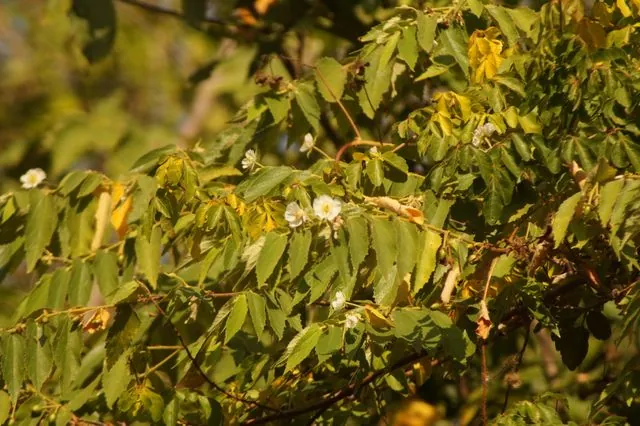
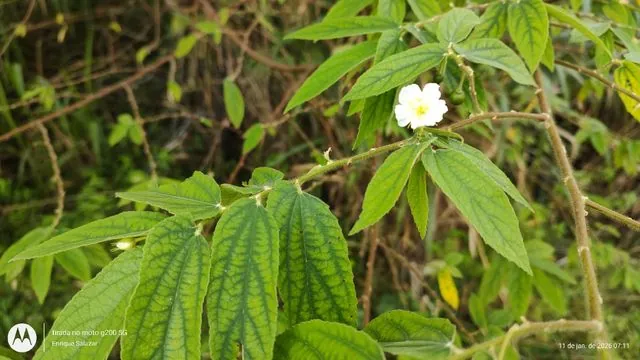
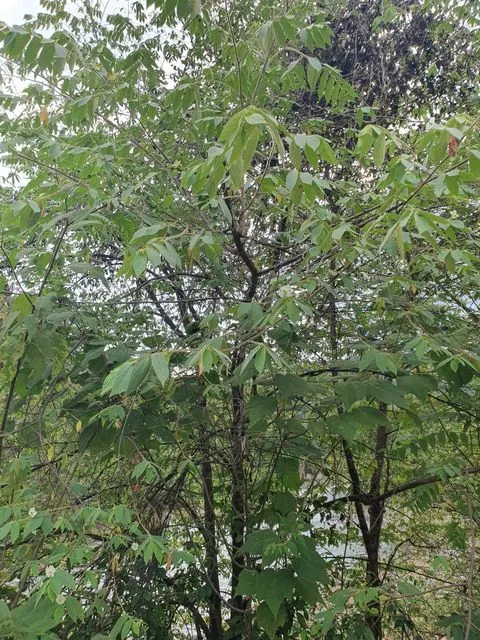
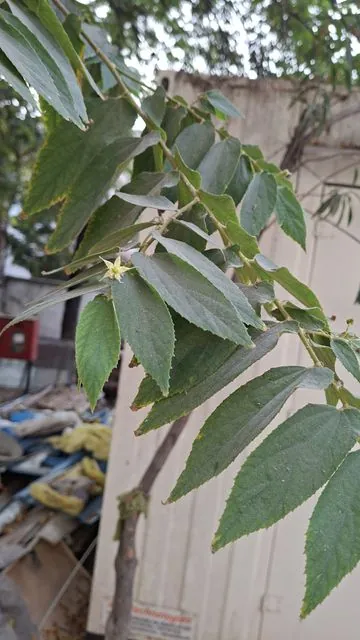
Muntingia calabura
Authorship: The author or authors credited with publishing the scientific name. It is written after the name, sometimes with the year, for example L. (Linnaeus) in Zea mays L. An author in parentheses first published the name in another genus or rank. — The author or authors credited with publishing the scientific name. It is written after the name, sometimes with the year, for example L. (Linnaeus) in Zea mays L. An author in parentheses first published the name in another genus or rank.
L.
Common names
Jamaica cherry, Jamaica-cherry, Panama-berry, Singapore Cherry, Strawberrytree, calabur tree, calabur-tree, calabura, capulin, strawberry-treeNames in other languages (46)Buah Cheri, Buah ceri, Buah seri, Budo, Cacanicua, Capulí, Capulín, Cerezo, Ceri, Chichato, Chirriador, Chitató, Comida de paloma, Frutilla, Frutillo, Guanducillo, Guácimo macho, Jamaika-Beere, Kersen, Memiso, Niguita, Niguito, Nigüito, Panama Berry, Seri, Talok, Trứng cá, bois ramier, bolaina yamanaza, cacaniqua, capulín blanco, muntingia kalaburová, nigua, panamabär, periquito, puu manini tai, puu manini, puu manini, manini, manini oneone, quả trứng cá, rozcięg, tamauã, Мунтингия калабура, גרגר פנמה, ตะขบฝรั่ง, ナンヨウザクラ, 南美假櫻桃, 文定果, 西印度櫻桃
Kingdom: One of the broadest ranks of biological classification. It groups organisms that share very basic features, for example plants (Plantae), animals (Animalia) or fungi (Fungi). — One of the broadest ranks of biological classification. It groups organisms that share very basic features, for example plants (Plantae), animals (Animalia) or fungi (Fungi).
Plantae
Phylum: Rank below kingdom that groups organisms with a shared general body plan, for example chordates (Chordata), arthropods (Arthropoda) or vascular plants (Tracheophyta). In botany the same rank is also called division. — Rank below kingdom that groups organisms with a shared general body plan, for example chordates (Chordata), arthropods (Arthropoda) or vascular plants (Tracheophyta). In botany the same rank is also called division.
Tracheophyta
Class: Rank below phylum, for example mammals (Mammalia), birds (Aves), insects (Insecta) or monocot plants such as grasses and orchids (Liliopsida). — Rank below phylum, for example mammals (Mammalia), birds (Aves), insects (Insecta) or monocot plants such as grasses and orchids (Liliopsida).
Magnoliopsida
Order: Rank below class that groups related families, for example grasses and their relatives (Poales) or bats (Chiroptera). — Rank below class that groups related families, for example grasses and their relatives (Poales) or bats (Chiroptera).
Malvales
Family: Rank below order that groups related genera. Family names usually end in -aceae in botany (for example Poaceae, the grass family) and in -idae in zoology (for example Felidae, the cat family). — Rank below order that groups related genera. Family names usually end in -aceae in botany (for example Poaceae, the grass family) and in -idae in zoology (for example Felidae, the cat family).
Muntingiaceae
Genus: Rank that groups closely related species. Its name is the first word of a species' scientific name and starts with a capital letter, for example Zea in Zea mays. — Rank that groups closely related species. Its name is the first word of a species' scientific name and starts with a capital letter, for example Zea in Zea mays.
Muntingia
Specific epithet: The second word of a species' scientific name. On its own it does not name the species: it always goes with the genus, for example mays in Zea mays. — The second word of a species' scientific name. On its own it does not name the species: it always goes with the genus, for example mays in Zea mays.
calabura
Taxonomic rank: The level a name occupies in the hierarchy of biological classification, such as kingdom, family, genus, species or subspecies. — The level a name occupies in the hierarchy of biological classification, such as kingdom, family, genus, species or subspecies.
species
Reference species
Muntingia calabura
Taxonomic status: Whether the taxonomic catalogue the record comes from currently accepts this name for the organism, or treats it as a synonym of another accepted name or as doubtful. — Whether the taxonomic catalogue the record comes from currently accepts this name for the organism, or treats it as a synonym of another accepted name or as doubtful.
accepted name
Photos and conservation status
IUCN Red List category: The extinction-risk category that the International Union for Conservation of Nature (IUCN) assigns to a species on its Red List. EX Extinct: there is no reasonable doubt that the last individual has died. EW Extinct in the wild: it survives only in cultivation, in captivity or as a population far outside its past range. CR Critically endangered, EN Endangered and VU Vulnerable: the three threatened categories, from an extremely high to a high risk of extinction in the wild. NT Near threatened: close to qualifying as threatened. LC Least concern: evaluated and not threatened. DD Data deficient: there is not enough information to assess its risk. NE Not evaluated: not yet assessed against the criteria. It describes the risk of the species worldwide, not its situation in a project's area. — The extinction-risk category that the International Union for Conservation of Nature (IUCN) assigns to a species on its Red List. EX Extinct: there is no reasonable doubt that the last individual has died. EW Extinct in the wild: it survives only in cultivation, in captivity or as a population far outside its past range. CR Critically endangered, EN Endangered and VU Vulnerable: the three threatened categories, from an extremely high to a high risk of extinction in the wild. NT Near threatened: close to qualifying as threatened. LC Least concern: evaluated and not threatened. DD Data deficient: there is not enough information to assess its risk. NE Not evaluated: not yet assessed against the criteria. It describes the risk of the species worldwide, not its situation in a project's area.
Least concern (LC)
Source: IUCN Red List via GBIF, queried on 2026-10-12 18:03.
Research-grade iNaturalist observations via GBIF, CC0 or CC BY licences only, queried on 2026-10-12 18:03.
Interacciones documentadas
GloBI says it is documented somewhere in the world. Biolitica answers whether it could happen here.
A documented interaction means it was recorded somewhere in the world. It does not mean it occurs here.
Types shown: 9 of 9
is eaten by
×
is a host of
×
has its flowers visited by
×
interacts with
×
has as a vector
×
is visited by
×
is preyed upon by
×
is adjacent to
×
has as a parasite
×
Blocks that do not sit under a navigation concept heading keep the source's own term: no navigation concept has been assigned to them yet.
is eaten by
123 organisms
This term does declare that the organism harms this species.
Record contexts (sample): no place published · no date published; no place published · no date published
Claim type
Published relationship between two taxa
Version
GloBI 0.11
Reuse
This release publishes no reuse terms for this record.
no place published · no date publishedWhere it is: line:hash://sha256/021a206a1459bcca7e251c73f5bd180fc3ac342a09c499855fe42e21fc09edcf!/interactions.tsv.gz!/L7028380
no place published · no date publishedWhere it is: line:hash://sha256/021a206a1459bcca7e251c73f5bd180fc3ac342a09c499855fe42e21fc09edcf!/interactions.tsv.gz!/L7029534
no place published · no date publishedWhere it is: line:hash://sha256/021a206a1459bcca7e251c73f5bd180fc3ac342a09c499855fe42e21fc09edcf!/interactions.tsv.gz!/L7029781
This release publishes no reuse terms for this record.
Brazil · no date publishedWhere it is: line:hash://sha256/021a206a1459bcca7e251c73f5bd180fc3ac342a09c499855fe42e21fc09edcf!/interactions.tsv.gz!/L13300439
No public URL for this record
Hayashi 1996
Published in globalbioticinteractions/fricke2020
Context: Brazil · no date published
Claim type
Published relationship between two taxa
Version
GloBI 0.11
Reuse
This release publishes no reuse terms for this record.
Brazil · no date publishedWhere it is: line:hash://sha256/021a206a1459bcca7e251c73f5bd180fc3ac342a09c499855fe42e21fc09edcf!/interactions.tsv.gz!/L13300542
No public URL for this record
Castro-Luna 2012
Published in globalbioticinteractions/fricke2020
Context: Mexico · no date published
Claim type
Published relationship between two taxa
Version
GloBI 0.11
Reuse
This release publishes no reuse terms for this record.
Mexico · no date publishedWhere it is: line:hash://sha256/021a206a1459bcca7e251c73f5bd180fc3ac342a09c499855fe42e21fc09edcf!/interactions.tsv.gz!/L13310810
No public URL for this record
Fleming 1977
Published in globalbioticinteractions/fricke2020
Context: Costa Rica · no date published
Claim type
Published relationship between two taxa
Version
GloBI 0.11
Reuse
This release publishes no reuse terms for this record.
Costa Rica · no date publishedWhere it is: line:hash://sha256/021a206a1459bcca7e251c73f5bd180fc3ac342a09c499855fe42e21fc09edcf!/interactions.tsv.gz!/L13334257
No public URL for this record
Heithaus 1975
Published in globalbioticinteractions/fricke2020
Context: Costa Rica · no date published
Claim type
Published relationship between two taxa
Version
GloBI 0.11
Reuse
This release publishes no reuse terms for this record.
Costa Rica · no date publishedWhere it is: line:hash://sha256/021a206a1459bcca7e251c73f5bd180fc3ac342a09c499855fe42e21fc09edcf!/interactions.tsv.gz!/L13340870
No public URL for this record
Junior 2010
Published in globalbioticinteractions/fricke2020
Context: Brazil · no date published
Claim type
Published relationship between two taxa
Version
GloBI 0.11
Reuse
This release publishes no reuse terms for this record.
Brazil · no date publishedWhere it is: line:hash://sha256/021a206a1459bcca7e251c73f5bd180fc3ac342a09c499855fe42e21fc09edcf!/interactions.tsv.gz!/L13344322
No public URL for this record
Novoa 2011
Published in globalbioticinteractions/fricke2020
Context: Peru · no date published
Claim type
Published relationship between two taxa
Version
GloBI 0.11
Reuse
This release publishes no reuse terms for this record.
Peru · no date publishedWhere it is: line:hash://sha256/021a206a1459bcca7e251c73f5bd180fc3ac342a09c499855fe42e21fc09edcf!/interactions.tsv.gz!/L13355425
No public URL for this record
And 9 more sources, with fewer records, not listed here.
A published relationship says these two taxa were documented interacting. It does not say how often, or that it happens in this project's region.
Context: no place published · Feb. 9, 2024 · Human observation
Claim type
Published relationship between two taxa
Version
GloBI 0.11
Reuse
This release publishes no reuse terms for this record.
no place published · Feb. 9, 2024 · Human observationAs published: 2024-02-09T05:32:43Z · HumanObservationWhere it is: line:hash://sha256/021a206a1459bcca7e251c73f5bd180fc3ac342a09c499855fe42e21fc09edcf!/interactions.tsv.gz!/L4461988
Context: no place published · Sept. 14, 2025 · Human observation
Claim type
Published relationship between two taxa
Version
GloBI 0.11
Reuse
This release publishes no reuse terms for this record.
no place published · Sept. 14, 2025 · Human observationAs published: 2025-09-14T02:32:00Z · HumanObservationWhere it is: line:hash://sha256/021a206a1459bcca7e251c73f5bd180fc3ac342a09c499855fe42e21fc09edcf!/interactions.tsv.gz!/L4721788
Context: no place published · July 19, 2022 · Human observation
Claim type
Published relationship between two taxa
Version
GloBI 0.11
Reuse
This release publishes no reuse terms for this record.
no place published · July 19, 2022 · Human observationAs published: 2022-07-19T10:03:14Z · HumanObservationWhere it is: line:hash://sha256/021a206a1459bcca7e251c73f5bd180fc3ac342a09c499855fe42e21fc09edcf!/interactions.tsv.gz!/L4870612
Context: no place published · Aug. 11, 2022 · Human observation
Claim type
Published relationship between two taxa
Version
GloBI 0.11
Reuse
This release publishes no reuse terms for this record.
no place published · Aug. 11, 2022 · Human observationAs published: 2022-08-11T01:52:34Z · HumanObservationWhere it is: line:hash://sha256/021a206a1459bcca7e251c73f5bd180fc3ac342a09c499855fe42e21fc09edcf!/interactions.tsv.gz!/L4950585
Context: no place published · March 28, 2022 · Human observation
Claim type
Published relationship between two taxa
Version
GloBI 0.11
Reuse
This release publishes no reuse terms for this record.
no place published · March 28, 2022 · Human observationAs published: 2022-03-28T07:57:54Z · HumanObservationWhere it is: line:hash://sha256/021a206a1459bcca7e251c73f5bd180fc3ac342a09c499855fe42e21fc09edcf!/interactions.tsv.gz!/L5104618
Context: no place published · April 26, 2020 · Human observation
Claim type
Published relationship between two taxa
Version
GloBI 0.11
Reuse
This release publishes no reuse terms for this record.
no place published · April 26, 2020 · Human observationAs published: 2020-04-26T12:00:20Z · HumanObservationWhere it is: line:hash://sha256/021a206a1459bcca7e251c73f5bd180fc3ac342a09c499855fe42e21fc09edcf!/interactions.tsv.gz!/L5351683
Context: no place published · Feb. 25, 2025 · Human observation
Claim type
Published relationship between two taxa
Version
GloBI 0.11
Reuse
This release publishes no reuse terms for this record.
no place published · Feb. 25, 2025 · Human observationAs published: 2025-02-25T08:35:27Z · HumanObservationWhere it is: line:hash://sha256/021a206a1459bcca7e251c73f5bd180fc3ac342a09c499855fe42e21fc09edcf!/interactions.tsv.gz!/L5413465
Context: no place published · July 16, 2023 · Human observation
Claim type
Published relationship between two taxa
Version
GloBI 0.11
Reuse
This release publishes no reuse terms for this record.
no place published · July 16, 2023 · Human observationAs published: 2023-07-16T06:23:36Z · HumanObservationWhere it is: line:hash://sha256/021a206a1459bcca7e251c73f5bd180fc3ac342a09c499855fe42e21fc09edcf!/interactions.tsv.gz!/L5591670
Record contexts (sample): no place published · no date published; no place published · no date published
Claim type
Published relationship between two taxa
Version
GloBI 0.11
Reuse
This release publishes no reuse terms for this record.
no place published · no date publishedWhere it is: line:hash://sha256/021a206a1459bcca7e251c73f5bd180fc3ac342a09c499855fe42e21fc09edcf!/interactions.tsv.gz!/L7028741
no place published · no date publishedWhere it is: line:hash://sha256/021a206a1459bcca7e251c73f5bd180fc3ac342a09c499855fe42e21fc09edcf!/interactions.tsv.gz!/L7029220
no place published · no date publishedWhere it is: line:hash://sha256/021a206a1459bcca7e251c73f5bd180fc3ac342a09c499855fe42e21fc09edcf!/interactions.tsv.gz!/L7029984
This release publishes no reuse terms for this record.
Brazil · no date publishedWhere it is: line:hash://sha256/021a206a1459bcca7e251c73f5bd180fc3ac342a09c499855fe42e21fc09edcf!/interactions.tsv.gz!/L13300454
No public URL for this record
Hayashi 1996
Published in globalbioticinteractions/fricke2020
Context: Brazil · no date published
Claim type
Published relationship between two taxa
Version
GloBI 0.11
Reuse
This release publishes no reuse terms for this record.
Brazil · no date publishedWhere it is: line:hash://sha256/021a206a1459bcca7e251c73f5bd180fc3ac342a09c499855fe42e21fc09edcf!/interactions.tsv.gz!/L13300518
No public URL for this record
Castro-Luna 2012
Published in globalbioticinteractions/fricke2020
Context: Mexico · no date published
Claim type
Published relationship between two taxa
Version
GloBI 0.11
Reuse
This release publishes no reuse terms for this record.
Mexico · no date publishedWhere it is: line:hash://sha256/021a206a1459bcca7e251c73f5bd180fc3ac342a09c499855fe42e21fc09edcf!/interactions.tsv.gz!/L13310663
No public URL for this record
Fleming 1977
Published in globalbioticinteractions/fricke2020
Context: Costa Rica · no date published
Claim type
Published relationship between two taxa
Version
GloBI 0.11
Reuse
This release publishes no reuse terms for this record.
Costa Rica · no date publishedWhere it is: line:hash://sha256/021a206a1459bcca7e251c73f5bd180fc3ac342a09c499855fe42e21fc09edcf!/interactions.tsv.gz!/L13334276
No public URL for this record
Garcia-Morales 2012
Published in globalbioticinteractions/fricke2020
Context: Mexico · no date published
Claim type
Published relationship between two taxa
Version
GloBI 0.11
Reuse
This release publishes no reuse terms for this record.
Mexico · no date publishedWhere it is: line:hash://sha256/021a206a1459bcca7e251c73f5bd180fc3ac342a09c499855fe42e21fc09edcf!/interactions.tsv.gz!/L13337854
No public URL for this record
Heithaus 1975
Published in globalbioticinteractions/fricke2020
Context: Costa Rica · no date published
Claim type
Published relationship between two taxa
Version
GloBI 0.11
Reuse
This release publishes no reuse terms for this record.
Costa Rica · no date publishedWhere it is: line:hash://sha256/021a206a1459bcca7e251c73f5bd180fc3ac342a09c499855fe42e21fc09edcf!/interactions.tsv.gz!/L13340896
No public URL for this record
Junior 2010
Published in globalbioticinteractions/fricke2020
Context: Brazil · no date published
Claim type
Published relationship between two taxa
Version
GloBI 0.11
Reuse
This release publishes no reuse terms for this record.
Brazil · no date publishedWhere it is: line:hash://sha256/021a206a1459bcca7e251c73f5bd180fc3ac342a09c499855fe42e21fc09edcf!/interactions.tsv.gz!/L13344319
No public URL for this record
And 6 more sources, with fewer records, not listed here.
A published relationship says these two taxa were documented interacting. It does not say how often, or that it happens in this project's region.
Little Yellow-shouldered BatSturnira liliumPhyllostomidae
is eaten by
13
not compared
13 sources · 14 records
doi:10.1002/ecy.1818
Published in globalbioticinteractions/bello2017
Record contexts (sample): no place published · no date published; no place published · no date published
Claim type
Published relationship between two taxa
Version
GloBI 0.11
Reuse
This release publishes no reuse terms for this record.
no place published · no date publishedWhere it is: line:hash://sha256/021a206a1459bcca7e251c73f5bd180fc3ac342a09c499855fe42e21fc09edcf!/interactions.tsv.gz!/L7028992
no place published · no date publishedWhere it is: line:hash://sha256/021a206a1459bcca7e251c73f5bd180fc3ac342a09c499855fe42e21fc09edcf!/interactions.tsv.gz!/L7029931
This release publishes no reuse terms for this record.
Brazil · no date publishedWhere it is: line:hash://sha256/021a206a1459bcca7e251c73f5bd180fc3ac342a09c499855fe42e21fc09edcf!/interactions.tsv.gz!/L13300484
No public URL for this record
Hayashi 1996
Published in globalbioticinteractions/fricke2020
Context: Brazil · no date published
Claim type
Published relationship between two taxa
Version
GloBI 0.11
Reuse
This release publishes no reuse terms for this record.
Brazil · no date publishedWhere it is: line:hash://sha256/021a206a1459bcca7e251c73f5bd180fc3ac342a09c499855fe42e21fc09edcf!/interactions.tsv.gz!/L13300545
No public URL for this record
Castro-Luna 2012
Published in globalbioticinteractions/fricke2020
Context: Mexico · no date published
Claim type
Published relationship between two taxa
Version
GloBI 0.11
Reuse
This release publishes no reuse terms for this record.
Mexico · no date publishedWhere it is: line:hash://sha256/021a206a1459bcca7e251c73f5bd180fc3ac342a09c499855fe42e21fc09edcf!/interactions.tsv.gz!/L13310721
No public URL for this record
Fleming 1977
Published in globalbioticinteractions/fricke2020
Context: Costa Rica · no date published
Claim type
Published relationship between two taxa
Version
GloBI 0.11
Reuse
This release publishes no reuse terms for this record.
Costa Rica · no date publishedWhere it is: line:hash://sha256/021a206a1459bcca7e251c73f5bd180fc3ac342a09c499855fe42e21fc09edcf!/interactions.tsv.gz!/L13334280
No public URL for this record
Garcia-Estrada 2012
Published in globalbioticinteractions/fricke2020
Context: Guatemala · no date published
Claim type
Published relationship between two taxa
Version
GloBI 0.11
Reuse
This release publishes no reuse terms for this record.
Guatemala · no date publishedWhere it is: line:hash://sha256/021a206a1459bcca7e251c73f5bd180fc3ac342a09c499855fe42e21fc09edcf!/interactions.tsv.gz!/L13337722
No public URL for this record
Garcia-Morales 2012
Published in globalbioticinteractions/fricke2020
Context: Mexico · no date published
Claim type
Published relationship between two taxa
Version
GloBI 0.11
Reuse
This release publishes no reuse terms for this record.
Mexico · no date publishedWhere it is: line:hash://sha256/021a206a1459bcca7e251c73f5bd180fc3ac342a09c499855fe42e21fc09edcf!/interactions.tsv.gz!/L13337857
No public URL for this record
Heithaus 1975
Published in globalbioticinteractions/fricke2020
Context: Costa Rica · no date published
Claim type
Published relationship between two taxa
Version
GloBI 0.11
Reuse
This release publishes no reuse terms for this record.
Costa Rica · no date publishedWhere it is: line:hash://sha256/021a206a1459bcca7e251c73f5bd180fc3ac342a09c499855fe42e21fc09edcf!/interactions.tsv.gz!/L13340892
No public URL for this record
And 5 more sources, with fewer records, not listed here.
A published relationship says these two taxa were documented interacting. It does not say how often, or that it happens in this project's region.
The authority declares no effect on this species for this term: neither that it harms it nor that it benefits it. In the source ontology symbiosis covers mutualism, commensalism and parasitism alike, so this block holds attackers and allies side by side.
Context: no place published · Oct. 14, 1961 · Preserved specimen
Claim type
Published relationship between two taxa
Version
GloBI 0.11
Reuse
This release publishes no reuse terms for this record.
no place published · Oct. 14, 1961 · Preserved specimenAs published: 1961-10-14T00:00:00Z · PreservedSpecimenWhere it is: line:hash://sha256/021a206a1459bcca7e251c73f5bd180fc3ac342a09c499855fe42e21fc09edcf!/interactions.tsv.gz!/L17211189
Context: Homestead, Dade Co. Subtropical Experiment Station · March 3, 1944 · Preserved specimen
Claim type
Published relationship between two taxa
Version
GloBI 0.11
Reuse
This release publishes no reuse terms for this record.
Homestead, Dade Co. Subtropical Experiment Station · March 3, 1944 · Preserved specimenAs published: 1944-03-03T00:00:00Z · PreservedSpecimenWhere it is: line:hash://sha256/021a206a1459bcca7e251c73f5bd180fc3ac342a09c499855fe42e21fc09edcf!/interactions.tsv.gz!/L17211190
Context: no place published · Oct. 2, 1940 · Preserved specimen
Claim type
Published relationship between two taxa
Version
GloBI 0.11
Reuse
This release publishes no reuse terms for this record.
no place published · Oct. 2, 1940 · Preserved specimenAs published: 1940-10-02T00:00:00Z · PreservedSpecimenWhere it is: line:hash://sha256/021a206a1459bcca7e251c73f5bd180fc3ac342a09c499855fe42e21fc09edcf!/interactions.tsv.gz!/L17738182
Context: no place published · Oct. 2, 1940 · Preserved specimen
Claim type
Published relationship between two taxa
Version
GloBI 0.11
Reuse
This release publishes no reuse terms for this record.
no place published · Oct. 2, 1940 · Preserved specimenAs published: 1940-10-02T00:00:00Z · PreservedSpecimenWhere it is: line:hash://sha256/021a206a1459bcca7e251c73f5bd180fc3ac342a09c499855fe42e21fc09edcf!/interactions.tsv.gz!/L17825571
Alfieri Jr., S.A., Langdon, K.R., Wehlburg, C., and Kimbrough, J.W.. 1984. Index of Plant Diseases in Florida (Revised). Florida Dept. Agric. and Consumer Serv., Div. Plant Ind. Bull. 11:1-389
Published in globalbioticinteractions/usda-fungus-host
Context: United States · no date published
Claim type
Published relationship between two taxa
Version
GloBI 0.11
Reuse
This release publishes no reuse terms for this record.
United States · no date publishedWhere it is: line:hash://sha256/021a206a1459bcca7e251c73f5bd180fc3ac342a09c499855fe42e21fc09edcf!/interactions.tsv.gz!/L3682613
No public URL for this record
And 6 more sources, with fewer records, not listed here.
A published relationship says these two taxa were documented interacting. It does not say how often, or that it happens in this project's region.
Context: Area de Conservacion Guanacaste, Sector Mundo Nuevo, Camino Pozo Tres · Aug. 20, 2009 · Material sample
Claim type
Published relationship between two taxa
Version
GloBI 0.11
Reuse
This release publishes no reuse terms for this record.
Area de Conservacion Guanacaste, Sector Mundo Nuevo, Camino Pozo Tres · Aug. 20, 2009 · Material sampleAs published: 2009-08-20T00:00:00Z · MATERIAL_SAMPLEWhere it is: line:hash://sha256/021a206a1459bcca7e251c73f5bd180fc3ac342a09c499855fe42e21fc09edcf!/interactions.tsv.gz!/L12942927
Context: Area de Conservacion Guanacaste, Sector Mundo Nuevo, Camino Pozo Tres · Aug. 19, 2009 · Material sample
Claim type
Published relationship between two taxa
Version
GloBI 0.11
Reuse
This release publishes no reuse terms for this record.
Area de Conservacion Guanacaste, Sector Mundo Nuevo, Camino Pozo Tres · Aug. 19, 2009 · Material sampleAs published: 2009-08-19T00:00:00Z · MATERIAL_SAMPLEWhere it is: line:hash://sha256/021a206a1459bcca7e251c73f5bd180fc3ac342a09c499855fe42e21fc09edcf!/interactions.tsv.gz!/L12942929
Context: Area de Conservacion Guanacaste, Sector Mundo Nuevo, Camino Pozo Tres · Aug. 23, 2009 · Material sample
Claim type
Published relationship between two taxa
Version
GloBI 0.11
Reuse
This release publishes no reuse terms for this record.
Area de Conservacion Guanacaste, Sector Mundo Nuevo, Camino Pozo Tres · Aug. 23, 2009 · Material sampleAs published: 2009-08-23T00:00:00Z · MATERIAL_SAMPLEWhere it is: line:hash://sha256/021a206a1459bcca7e251c73f5bd180fc3ac342a09c499855fe42e21fc09edcf!/interactions.tsv.gz!/L12942930
Context: Area de Conservacion Guanacaste, Sector Mundo Nuevo, Camino Pozo Tres · Aug. 21, 2009 · Material sample
Claim type
Published relationship between two taxa
Version
GloBI 0.11
Reuse
This release publishes no reuse terms for this record.
Area de Conservacion Guanacaste, Sector Mundo Nuevo, Camino Pozo Tres · Aug. 21, 2009 · Material sampleAs published: 2009-08-21T00:00:00Z · MATERIAL_SAMPLEWhere it is: line:hash://sha256/021a206a1459bcca7e251c73f5bd180fc3ac342a09c499855fe42e21fc09edcf!/interactions.tsv.gz!/L12942931
Context: Area de Conservacion Guanacaste, Sector Mundo Nuevo, Camino Pozo Tres · Aug. 20, 2009 · Material sample
Claim type
Published relationship between two taxa
Version
GloBI 0.11
Reuse
This release publishes no reuse terms for this record.
Area de Conservacion Guanacaste, Sector Mundo Nuevo, Camino Pozo Tres · Aug. 20, 2009 · Material sampleAs published: 2009-08-20T00:00:00Z · MATERIAL_SAMPLEWhere it is: line:hash://sha256/021a206a1459bcca7e251c73f5bd180fc3ac342a09c499855fe42e21fc09edcf!/interactions.tsv.gz!/L12942932
Context: Area de Conservacion Guanacaste, Sector Mundo Nuevo, Camino Pozo Tres · Aug. 23, 2009 · Material sample
Claim type
Published relationship between two taxa
Version
GloBI 0.11
Reuse
This release publishes no reuse terms for this record.
Area de Conservacion Guanacaste, Sector Mundo Nuevo, Camino Pozo Tres · Aug. 23, 2009 · Material sampleAs published: 2009-08-23T00:00:00Z · MATERIAL_SAMPLEWhere it is: line:hash://sha256/021a206a1459bcca7e251c73f5bd180fc3ac342a09c499855fe42e21fc09edcf!/interactions.tsv.gz!/L12942933
A published relationship says these two taxa were documented interacting. It does not say how often, or that it happens in this project's region.
Pseudocercospora muntingiicolaMycosphaerellaceae
is a host of
5
no location
5 sources · 5 records
Crous, P.W., and Braun, U.. 2003. %Mycosphaerella% and its anamorphs: 1. Names published in %Cercospora% and %Passalora%. Centraalbureau voor Schimmelcultures, Utrecht :571
Published in globalbioticinteractions/usda-fungus-host
Context: Taiwan · no date published
Claim type
Published relationship between two taxa
Version
GloBI 0.11
Reuse
This release publishes no reuse terms for this record.
Taiwan · no date publishedWhere it is: line:hash://sha256/021a206a1459bcca7e251c73f5bd180fc3ac342a09c499855fe42e21fc09edcf!/interactions.tsv.gz!/L3815514
No public URL for this record
Hsieh, W.-H., and Goh, T.-K.. 1990. %Cercospora% and Similar Fungi from Taiwan. Maw Chang Book Co., Taipei. :376
Published in globalbioticinteractions/usda-fungus-host
Context: Taiwan · no date published
Claim type
Published relationship between two taxa
Version
GloBI 0.11
Reuse
This release publishes no reuse terms for this record.
Taiwan · no date publishedWhere it is: line:hash://sha256/021a206a1459bcca7e251c73f5bd180fc3ac342a09c499855fe42e21fc09edcf!/interactions.tsv.gz!/L4214536
Published in globalbioticinteractions/usda-fungus-host
Context: China · no date published
Claim type
Published relationship between two taxa
Version
GloBI 0.11
Reuse
This release publishes no reuse terms for this record.
China · no date publishedWhere it is: line:hash://sha256/021a206a1459bcca7e251c73f5bd180fc3ac342a09c499855fe42e21fc09edcf!/interactions.tsv.gz!/L4224084
No public URL for this record
Yen, J.-M.. 1977. Etude sur les champignons parasites du sud-est asiatique XXVI. Les %Cercospora% de Formose. II. Bull. Soc. Mycol. France 93:145-164
Published in globalbioticinteractions/usda-fungus-host
Context: Taiwan · no date published
Claim type
Published relationship between two taxa
Version
GloBI 0.11
Reuse
This release publishes no reuse terms for this record.
Taiwan · no date publishedWhere it is: line:hash://sha256/021a206a1459bcca7e251c73f5bd180fc3ac342a09c499855fe42e21fc09edcf!/interactions.tsv.gz!/L4379213
No public URL for this record
Yen, J.-M.. 1978. Etude sur les champignons parasites du sud-est asiatique 33. Les %Cercospora% de Formose. V. Les %Pseudocercospora%. Bull. Soc. Mycol. France 94:385-389
Published in globalbioticinteractions/usda-fungus-host
Context: Taiwan · no date published
Claim type
Published relationship between two taxa
Version
GloBI 0.11
Reuse
This release publishes no reuse terms for this record.
Taiwan · no date publishedWhere it is: line:hash://sha256/021a206a1459bcca7e251c73f5bd180fc3ac342a09c499855fe42e21fc09edcf!/interactions.tsv.gz!/L4392915
No public URL for this record
A published relationship says these two taxa were documented interacting. It does not say how often, or that it happens in this project's region.
Pseudocercospora muntingiae
is a host of
4
no location
4 sources · 11 records
Crous, P.W., and Braun, U.. 2003. %Mycosphaerella% and its anamorphs: 1. Names published in %Cercospora% and %Passalora%. Centraalbureau voor Schimmelcultures, Utrecht :571
Published in globalbioticinteractions/usda-fungus-host
Record contexts (sample): United States · no date published; Guam · no date published
Claim type
Published relationship between two taxa
Version
GloBI 0.11
Reuse
This release publishes no reuse terms for this record.
United States · no date publishedWhere it is: line:hash://sha256/021a206a1459bcca7e251c73f5bd180fc3ac342a09c499855fe42e21fc09edcf!/interactions.tsv.gz!/L3816239
Guam · no date publishedWhere it is: line:hash://sha256/021a206a1459bcca7e251c73f5bd180fc3ac342a09c499855fe42e21fc09edcf!/interactions.tsv.gz!/L3816240
Cambodia · no date publishedWhere it is: line:hash://sha256/021a206a1459bcca7e251c73f5bd180fc3ac342a09c499855fe42e21fc09edcf!/interactions.tsv.gz!/L3816241
And 5 more records of this source, not listed here.
No public URL for this record
Chupp, C.. 1954. Monograph of the fungus genus %Cercospora%. Published by the Author, Ithaca, New York :667
Published in globalbioticinteractions/usda-fungus-host
Context: United States · no date published
Claim type
Published relationship between two taxa
Version
GloBI 0.11
Reuse
This release publishes no reuse terms for this record.
United States · no date publishedWhere it is: line:hash://sha256/021a206a1459bcca7e251c73f5bd180fc3ac342a09c499855fe42e21fc09edcf!/interactions.tsv.gz!/L4001162
No public URL for this record
Liu, P.S.W.. 1977. A supplement to a host list of plant diseases in Sabah, Malaysia.. Phytopathol. Pap. 21:1-49
Published in globalbioticinteractions/usda-fungus-host
Context: Malaysia · no date published
Claim type
Published relationship between two taxa
Version
GloBI 0.11
Reuse
This release publishes no reuse terms for this record.
Malaysia · no date publishedWhere it is: line:hash://sha256/021a206a1459bcca7e251c73f5bd180fc3ac342a09c499855fe42e21fc09edcf!/interactions.tsv.gz!/L4002580
No public URL for this record
Parreira, D.F., Ferreira, P.A., Durate, H.S.S., Capucho, A.S., and Zambolim, L.. 2009. First report of %Pseudocercospora muntingiae% on %Muntingia calabura% in Brazil. Australasian Plant Disease Notes 4:110-113
Published in globalbioticinteractions/usda-fungus-host
Context: Brazil · no date published
Claim type
Published relationship between two taxa
Version
GloBI 0.11
Reuse
This release publishes no reuse terms for this record.
Brazil · no date publishedWhere it is: line:hash://sha256/021a206a1459bcca7e251c73f5bd180fc3ac342a09c499855fe42e21fc09edcf!/interactions.tsv.gz!/L4343578
No public URL for this record
A published relationship says these two taxa were documented interacting. It does not say how often, or that it happens in this project's region.
The authority declares no effect on this species for this term: neither that it harms it nor that it benefits it. Visiting a flower is not pollinating it. «Pollinates» is a different term and a different block, and merging the two is the measured defect that turned ~88 shared «pollinators» into birds and primates.
Context: no place published · Feb. 9, 2024 · Human observation
Claim type
Published relationship between two taxa
Version
GloBI 0.11
Reuse
This release publishes no reuse terms for this record.
no place published · Feb. 9, 2024 · Human observationAs published: 2024-02-09T05:32:43Z · HumanObservationWhere it is: line:hash://sha256/021a206a1459bcca7e251c73f5bd180fc3ac342a09c499855fe42e21fc09edcf!/interactions.tsv.gz!/L4461987
Context: no place published · July 3, 2024 · Human observation
Claim type
Published relationship between two taxa
Version
GloBI 0.11
Reuse
This release publishes no reuse terms for this record.
no place published · July 3, 2024 · Human observationAs published: 2024-07-03T10:41:09Z · HumanObservationWhere it is: line:hash://sha256/021a206a1459bcca7e251c73f5bd180fc3ac342a09c499855fe42e21fc09edcf!/interactions.tsv.gz!/L4885766
Context: no place published · Dec. 28, 2025 · Human observation
Claim type
Published relationship between two taxa
Version
GloBI 0.11
Reuse
This release publishes no reuse terms for this record.
no place published · Dec. 28, 2025 · Human observationAs published: 2025-12-28T03:04:00Z · HumanObservationWhere it is: line:hash://sha256/021a206a1459bcca7e251c73f5bd180fc3ac342a09c499855fe42e21fc09edcf!/interactions.tsv.gz!/L4949227
Context: no place published · Oct. 9, 2022 · Human observation
Claim type
Published relationship between two taxa
Version
GloBI 0.11
Reuse
This release publishes no reuse terms for this record.
no place published · Oct. 9, 2022 · Human observationAs published: 2022-10-09T22:52:00Z · HumanObservationWhere it is: line:hash://sha256/021a206a1459bcca7e251c73f5bd180fc3ac342a09c499855fe42e21fc09edcf!/interactions.tsv.gz!/L5153974
Context: no place published · Jan. 15, 2026 · Human observation
Claim type
Published relationship between two taxa
Version
GloBI 0.11
Reuse
This release publishes no reuse terms for this record.
no place published · Jan. 15, 2026 · Human observationAs published: 2026-01-15T17:02:51Z · HumanObservationWhere it is: line:hash://sha256/021a206a1459bcca7e251c73f5bd180fc3ac342a09c499855fe42e21fc09edcf!/interactions.tsv.gz!/L4968037
Context: no place published · Jan. 15, 2026 · Human observation
Claim type
Published relationship between two taxa
Version
GloBI 0.11
Reuse
This release publishes no reuse terms for this record.
no place published · Jan. 15, 2026 · Human observationAs published: 2026-01-15T17:18:28Z · HumanObservationWhere it is: line:hash://sha256/021a206a1459bcca7e251c73f5bd180fc3ac342a09c499855fe42e21fc09edcf!/interactions.tsv.gz!/L4968038
Context: no place published · Feb. 15, 2026 · Human observation
Claim type
Published relationship between two taxa
Version
GloBI 0.11
Reuse
This release publishes no reuse terms for this record.
no place published · Feb. 15, 2026 · Human observationAs published: 2026-02-15T17:45:23Z · HumanObservationWhere it is: line:hash://sha256/021a206a1459bcca7e251c73f5bd180fc3ac342a09c499855fe42e21fc09edcf!/interactions.tsv.gz!/L5008421
Context: no place published · Jan. 24, 2026 · Human observation
Claim type
Published relationship between two taxa
Version
GloBI 0.11
Reuse
This release publishes no reuse terms for this record.
no place published · Jan. 24, 2026 · Human observationAs published: 2026-01-24T15:56:46Z · HumanObservationWhere it is: line:hash://sha256/021a206a1459bcca7e251c73f5bd180fc3ac342a09c499855fe42e21fc09edcf!/interactions.tsv.gz!/L4980178
Context: no place published · Jan. 24, 2026 · Human observation
Claim type
Published relationship between two taxa
Version
GloBI 0.11
Reuse
This release publishes no reuse terms for this record.
no place published · Jan. 24, 2026 · Human observationAs published: 2026-01-24T15:57:02Z · HumanObservationWhere it is: line:hash://sha256/021a206a1459bcca7e251c73f5bd180fc3ac342a09c499855fe42e21fc09edcf!/interactions.tsv.gz!/L4980179
Context: no place published · April 28, 2019 · Human observation
Claim type
Published relationship between two taxa
Version
GloBI 0.11
Reuse
This release publishes no reuse terms for this record.
no place published · April 28, 2019 · Human observationAs published: 2019-04-28T14:00:00Z · HumanObservationWhere it is: line:hash://sha256/021a206a1459bcca7e251c73f5bd180fc3ac342a09c499855fe42e21fc09edcf!/interactions.tsv.gz!/L4995061
Context: no place published · July 19, 2025 · Human observation
Claim type
Published relationship between two taxa
Version
GloBI 0.11
Reuse
This release publishes no reuse terms for this record.
no place published · July 19, 2025 · Human observationAs published: 2025-07-19T13:51:00Z · HumanObservationWhere it is: line:hash://sha256/021a206a1459bcca7e251c73f5bd180fc3ac342a09c499855fe42e21fc09edcf!/interactions.tsv.gz!/L4697509
Context: no place published · July 19, 2025 · Human observation
Claim type
Published relationship between two taxa
Version
GloBI 0.11
Reuse
This release publishes no reuse terms for this record.
no place published · July 19, 2025 · Human observationAs published: 2025-07-19T14:08:00Z · HumanObservationWhere it is: line:hash://sha256/021a206a1459bcca7e251c73f5bd180fc3ac342a09c499855fe42e21fc09edcf!/interactions.tsv.gz!/L4697512
Context: no place published · July 19, 2025 · Human observation
Claim type
Published relationship between two taxa
Version
GloBI 0.11
Reuse
This release publishes no reuse terms for this record.
no place published · July 19, 2025 · Human observationAs published: 2025-07-19T14:46:00Z · HumanObservationWhere it is: line:hash://sha256/021a206a1459bcca7e251c73f5bd180fc3ac342a09c499855fe42e21fc09edcf!/interactions.tsv.gz!/L4697616
The authority declares no effect on this species for this term: neither that it harms it nor that it benefits it.
Organism
Reads as
Studies
Where it was documented
Actions
Partamona peckolti
interacts with
8
no location
8 sources · 8 records
5c8f8d36-d4c7-476e-8a28-ecdda9c0f9bd
Published in globalbioticinteractions/ku-semc
Context: El Llano, 2km NW · May 23, 1981 · Preserved specimen
Claim type
Published relationship between two taxa
Version
GloBI 0.11
Reuse
This release publishes no reuse terms for this record.
El Llano, 2km NW · May 23, 1981 · Preserved specimenAs published: 1981-05-23T00:00:00Z · PreservedSpecimenWhere it is: line:hash://sha256/021a206a1459bcca7e251c73f5bd180fc3ac342a09c499855fe42e21fc09edcf!/interactions.tsv.gz!/L12268066
No public URL for this record
d2550722-4557-4d03-b2ae-64f80d6bfd8b
Published in globalbioticinteractions/ku-semc
Context: El Llano, 2km NW · May 23, 1981 · Preserved specimen
Claim type
Published relationship between two taxa
Version
GloBI 0.11
Reuse
This release publishes no reuse terms for this record.
El Llano, 2km NW · May 23, 1981 · Preserved specimenAs published: 1981-05-23T00:00:00Z · PreservedSpecimenWhere it is: line:hash://sha256/021a206a1459bcca7e251c73f5bd180fc3ac342a09c499855fe42e21fc09edcf!/interactions.tsv.gz!/L12268067
No public URL for this record
86f42689-b60d-4c0e-887d-d7352aff82b3
Published in globalbioticinteractions/ku-semc
Context: El Llano, 2km NW · May 23, 1981 · Preserved specimen
Claim type
Published relationship between two taxa
Version
GloBI 0.11
Reuse
This release publishes no reuse terms for this record.
El Llano, 2km NW · May 23, 1981 · Preserved specimenAs published: 1981-05-23T00:00:00Z · PreservedSpecimenWhere it is: line:hash://sha256/021a206a1459bcca7e251c73f5bd180fc3ac342a09c499855fe42e21fc09edcf!/interactions.tsv.gz!/L12268068
No public URL for this record
63058513-b35e-462f-9013-fd7b3ad47184
Published in globalbioticinteractions/ku-semc
Context: El Llano, 2km NW · May 23, 1981 · Preserved specimen
Claim type
Published relationship between two taxa
Version
GloBI 0.11
Reuse
This release publishes no reuse terms for this record.
El Llano, 2km NW · May 23, 1981 · Preserved specimenAs published: 1981-05-23T00:00:00Z · PreservedSpecimenWhere it is: line:hash://sha256/021a206a1459bcca7e251c73f5bd180fc3ac342a09c499855fe42e21fc09edcf!/interactions.tsv.gz!/L12268069
No public URL for this record
0c061b30-a38c-40ed-879f-6561ec756e1f
Published in globalbioticinteractions/ku-semc
Context: El Llano, 2km NW · May 23, 1981 · Preserved specimen
Claim type
Published relationship between two taxa
Version
GloBI 0.11
Reuse
This release publishes no reuse terms for this record.
El Llano, 2km NW · May 23, 1981 · Preserved specimenAs published: 1981-05-23T00:00:00Z · PreservedSpecimenWhere it is: line:hash://sha256/021a206a1459bcca7e251c73f5bd180fc3ac342a09c499855fe42e21fc09edcf!/interactions.tsv.gz!/L12268070
No public URL for this record
1e14ed57-9f1e-4d9d-b33b-1fddeec67e76
Published in globalbioticinteractions/ku-semc
Context: El Llano, 2km NW · May 23, 1981 · Preserved specimen
Claim type
Published relationship between two taxa
Version
GloBI 0.11
Reuse
This release publishes no reuse terms for this record.
El Llano, 2km NW · May 23, 1981 · Preserved specimenAs published: 1981-05-23T00:00:00Z · PreservedSpecimenWhere it is: line:hash://sha256/021a206a1459bcca7e251c73f5bd180fc3ac342a09c499855fe42e21fc09edcf!/interactions.tsv.gz!/L12268071
No public URL for this record
0f091e35-02a7-4a19-87c4-2db74b310c1e
Published in globalbioticinteractions/ku-semc
Context: El Llano, 2km NW · May 23, 1981 · Preserved specimen
Claim type
Published relationship between two taxa
Version
GloBI 0.11
Reuse
This release publishes no reuse terms for this record.
El Llano, 2km NW · May 23, 1981 · Preserved specimenAs published: 1981-05-23T00:00:00Z · PreservedSpecimenWhere it is: line:hash://sha256/021a206a1459bcca7e251c73f5bd180fc3ac342a09c499855fe42e21fc09edcf!/interactions.tsv.gz!/L12268072
No public URL for this record
e7ed7f65-199c-4f4b-b500-4f8a3706a8da
Published in globalbioticinteractions/ku-semc
Context: El Llano, 2km NW · May 23, 1981 · Preserved specimen
Claim type
Published relationship between two taxa
Version
GloBI 0.11
Reuse
This release publishes no reuse terms for this record.
El Llano, 2km NW · May 23, 1981 · Preserved specimenAs published: 1981-05-23T00:00:00Z · PreservedSpecimenWhere it is: line:hash://sha256/021a206a1459bcca7e251c73f5bd180fc3ac342a09c499855fe42e21fc09edcf!/interactions.tsv.gz!/L12268073
No public URL for this record
A published relationship says these two taxa were documented interacting. It does not say how often, or that it happens in this project's region.
Greater Shortnosed Fruit BatCynopterus sphinxPteropodidae
interacts with
5
no location
5 sources · 5 records
Sheherazade et al., 2017
Published in globalbioticinteractions/aziz2021
Context: Indonesia (Java) · no date published
Claim type
Published relationship between two taxa
Version
GloBI 0.11
Reuse
This release publishes no reuse terms for this record.
Indonesia (Java) · no date publishedWhere it is: line:hash://sha256/021a206a1459bcca7e251c73f5bd180fc3ac342a09c499855fe42e21fc09edcf!/interactions.tsv.gz!/L13004395
No public URL for this record
Bumrungsri et al., 2007
Published in globalbioticinteractions/aziz2021
Context: Thailand · no date published
Claim type
Published relationship between two taxa
Version
GloBI 0.11
Reuse
This release publishes no reuse terms for this record.
Thailand · no date publishedWhere it is: line:hash://sha256/021a206a1459bcca7e251c73f5bd180fc3ac342a09c499855fe42e21fc09edcf!/interactions.tsv.gz!/L13004533
No public URL for this record
Sudhakaran and Doss, 2012
Published in globalbioticinteractions/aziz2021
Context: India · no date published
Claim type
Published relationship between two taxa
Version
GloBI 0.11
Reuse
This release publishes no reuse terms for this record.
India · no date publishedWhere it is: line:hash://sha256/021a206a1459bcca7e251c73f5bd180fc3ac342a09c499855fe42e21fc09edcf!/interactions.tsv.gz!/L13004736
No public URL for this record
Bhat, 1994
Published in globalbioticinteractions/aziz2021
Context: India · no date published
Claim type
Published relationship between two taxa
Version
GloBI 0.11
Reuse
This release publishes no reuse terms for this record.
India · no date publishedWhere it is: line:hash://sha256/021a206a1459bcca7e251c73f5bd180fc3ac342a09c499855fe42e21fc09edcf!/interactions.tsv.gz!/L13004832
No public URL for this record
Singaravelan and Marimuthu, 2006
Published in globalbioticinteractions/aziz2021
Context: India · no date published
Claim type
Published relationship between two taxa
Version
GloBI 0.11
Reuse
This release publishes no reuse terms for this record.
India · no date publishedWhere it is: line:hash://sha256/021a206a1459bcca7e251c73f5bd180fc3ac342a09c499855fe42e21fc09edcf!/interactions.tsv.gz!/L13004863
No public URL for this record
A published relationship says these two taxa were documented interacting. It does not say how often, or that it happens in this project's region.
Lesser Dog-faced Fruit BatCynopterus brachyotisPteropodidae
interacts with
5
no location
5 sources · 6 records
Sheherazade et al., 2017
Published in globalbioticinteractions/aziz2021
Record contexts (sample): Indonesia (Java) · no date published; Indonesia (Java) · no date published
Claim type
Published relationship between two taxa
Version
GloBI 0.11
Reuse
This release publishes no reuse terms for this record.
Indonesia (Java) · no date publishedWhere it is: line:hash://sha256/021a206a1459bcca7e251c73f5bd180fc3ac342a09c499855fe42e21fc09edcf!/interactions.tsv.gz!/L13004332
Indonesia (Java) · no date publishedWhere it is: line:hash://sha256/021a206a1459bcca7e251c73f5bd180fc3ac342a09c499855fe42e21fc09edcf!/interactions.tsv.gz!/L13004357
No public URL for this record
Chan et al., 2020
Published in globalbioticinteractions/aziz2021
Context: Singapore · no date published
Claim type
Published relationship between two taxa
Version
GloBI 0.11
Reuse
This release publishes no reuse terms for this record.
Singapore · no date publishedWhere it is: line:hash://sha256/021a206a1459bcca7e251c73f5bd180fc3ac342a09c499855fe42e21fc09edcf!/interactions.tsv.gz!/L13004125
No public URL for this record
Phua and Corlett, 1989
Published in globalbioticinteractions/aziz2021
Context: Singapore · no date published
Claim type
Published relationship between two taxa
Version
GloBI 0.11
Reuse
This release publishes no reuse terms for this record.
Singapore · no date publishedWhere it is: line:hash://sha256/021a206a1459bcca7e251c73f5bd180fc3ac342a09c499855fe42e21fc09edcf!/interactions.tsv.gz!/L13004203
No public URL for this record
Tan et al., 1998
Published in globalbioticinteractions/aziz2021
Context: Malaysia (Peninsula) · no date published
Claim type
Published relationship between two taxa
Version
GloBI 0.11
Reuse
This release publishes no reuse terms for this record.
Malaysia (Peninsula) · no date publishedWhere it is: line:hash://sha256/021a206a1459bcca7e251c73f5bd180fc3ac342a09c499855fe42e21fc09edcf!/interactions.tsv.gz!/L13004276
No public URL for this record
Bumrungsri et al., 2007
Published in globalbioticinteractions/aziz2021
Context: Thailand · no date published
Claim type
Published relationship between two taxa
Version
GloBI 0.11
Reuse
This release publishes no reuse terms for this record.
Thailand · no date publishedWhere it is: line:hash://sha256/021a206a1459bcca7e251c73f5bd180fc3ac342a09c499855fe42e21fc09edcf!/interactions.tsv.gz!/L13004528
No public URL for this record
A published relationship says these two taxa were documented interacting. It does not say how often, or that it happens in this project's region.
Pteromalid waspIdioporus affinisIdioporidae
interacts with
2
no location
2 sources · 2 records
LaSalle, J., Polaszek, A., Noyes, J.S. & Zolnerowich, G. (1997) A new whitefly parasitoid (Hymenoptera: Pteromalidae: Eunotinae) with comments on its placement, an implications for classification of Chalcidoidea with particular reference to the Eriaporinae (Hymenoptera: Aphe…
Published in urn:lsid:checklistbank.org:dataset:124661
Context: no place published · no date published
Claim type
Published relationship between two taxa
Version
GloBI 0.11
Reuse
This release publishes no reuse terms for this record.
no place published · no date publishedWhere it is: line:hash://sha256/021a206a1459bcca7e251c73f5bd180fc3ac342a09c499855fe42e21fc09edcf!/interactions.tsv.gz!/L1242308
No public URL for this record
@article{76683, author = {LaSalle, J. and Polaszek, A. and Noyes, J.S. and Zolnerowich, G.}, booktitle = {Systematic Entomology}, journal = {Systematic Entomology}, month = {apr}, day = {30}, pages = {131-150}, title = {A new whitefly parasitoid (Hymenoptera: Ptero…
Published in globalbioticinteractions/taxonworks
Context: no place published · no date published
Claim type
Published relationship between two taxa
Version
GloBI 0.11
Reuse
This release publishes no reuse terms for this record.
no place published · no date publishedWhere it is: line:hash://sha256/021a206a1459bcca7e251c73f5bd180fc3ac342a09c499855fe42e21fc09edcf!/interactions.tsv.gz!/L6077284
No public URL for this record
A published relationship says these two taxa were documented interacting. It does not say how often, or that it happens in this project's region.
Heithaus, E. R. & T. H. Fleming. 1978. Foraging movements of a frugivorous bat, Carollia perspicillata (Phyllostomatidae). Ecological Monographs 48 (2): 127-143.
Published in globalbioticinteractions/batbase
Context: Parque Nacional Santa Rosa · no date published
Claim type
Published relationship between two taxa
Version
GloBI 0.11
Reuse
This release publishes no reuse terms for this record.
Parque Nacional Santa Rosa · no date publishedWhere it is: line:hash://sha256/021a206a1459bcca7e251c73f5bd180fc3ac342a09c499855fe42e21fc09edcf!/interactions.tsv.gz!/L12439343
No public URL for this record
Heithaus, E. R., T. H. Fleming & P. A. Opler. 1975. Foraging patterns and resource utilization in seven species of bats in a seasonal tropical forest. Ecology 56: 841-854.
Published in globalbioticinteractions/batbase
Context: Finca La Pacifica, Guanacaste · no date published
Claim type
Published relationship between two taxa
Version
GloBI 0.11
Reuse
This release publishes no reuse terms for this record.
Finca La Pacifica, Guanacaste · no date publishedWhere it is: line:hash://sha256/021a206a1459bcca7e251c73f5bd180fc3ac342a09c499855fe42e21fc09edcf!/interactions.tsv.gz!/L12439403
No public URL for this record
Fleming, T. H. & E. R. Heithaus. 1986. Seasonal foraging behaviour of the frugivorous bat Carollia perspillata. Journal of Mammalogy 67 (4): 660-671.
Published in globalbioticinteractions/batbase
Context: Parque Nacional Santa Rosa · no date published
Claim type
Published relationship between two taxa
Version
GloBI 0.11
Reuse
This release publishes no reuse terms for this record.
Parque Nacional Santa Rosa · no date publishedWhere it is: line:hash://sha256/021a206a1459bcca7e251c73f5bd180fc3ac342a09c499855fe42e21fc09edcf!/interactions.tsv.gz!/L12440770
No public URL for this record
Fleming, T. H. 1988. The short-tailed fruit bat. The University of Chicago Press, Chicago, USA.
Published in globalbioticinteractions/batbase
Context: Parque Nacional Santa Rosa · no date published
Claim type
Published relationship between two taxa
Version
GloBI 0.11
Reuse
This release publishes no reuse terms for this record.
Parque Nacional Santa Rosa · no date publishedWhere it is: line:hash://sha256/021a206a1459bcca7e251c73f5bd180fc3ac342a09c499855fe42e21fc09edcf!/interactions.tsv.gz!/L12440828
No public URL for this record
Fleming, T. H. 1991. The relationship between body size, diet, and habitat use in frugivorous bats, genus Carollia (Phyllostomatidae). Journal of Mammalogy 72 (3): 493-501.
Published in globalbioticinteractions/batbase
Context: Parque Nacional Santa Rosa · no date published
Claim type
Published relationship between two taxa
Version
GloBI 0.11
Reuse
This release publishes no reuse terms for this record.
Parque Nacional Santa Rosa · no date publishedWhere it is: line:hash://sha256/021a206a1459bcca7e251c73f5bd180fc3ac342a09c499855fe42e21fc09edcf!/interactions.tsv.gz!/L12440889
No public URL for this record
Fleming, T. H., et al. 1985. Phenology, seed dispersal, and colonization in Muntingia calabura, a Neotropical pioneer tree. American Journal of Botany 72 (3): 383-391.
Published in globalbioticinteractions/batbase
Context: Parque Nacional Santa Rosa · no date published
Claim type
Published relationship between two taxa
Version
GloBI 0.11
Reuse
This release publishes no reuse terms for this record.
Parque Nacional Santa Rosa · no date publishedWhere it is: line:hash://sha256/021a206a1459bcca7e251c73f5bd180fc3ac342a09c499855fe42e21fc09edcf!/interactions.tsv.gz!/L12440890
No public URL for this record
Fleming, T. H., E. R. Heithaus & W. B. Sawyer. 1977. An experimental analysis of the food location behavior of frugivorous bats. Ecology 58: 619-627.
Published in globalbioticinteractions/batbase
Context: Parque Nacional Santa Rosa · no date published
Claim type
Published relationship between two taxa
Version
GloBI 0.11
Reuse
This release publishes no reuse terms for this record.
Parque Nacional Santa Rosa · no date publishedWhere it is: line:hash://sha256/021a206a1459bcca7e251c73f5bd180fc3ac342a09c499855fe42e21fc09edcf!/interactions.tsv.gz!/L12440916
No public URL for this record
Gardner, A. L. 1977. Feeding habits. In: Biology of bats of the New World family Phyllostomatidae. Part II (R. J. Baker, J. K. Jones & D. C. Carter, eds.). pp. 293-350. The Museum, Texas Tech University Press, Lubbock, USA.
Published in globalbioticinteractions/batbase
Context: Unspecified · no date published
Claim type
Published relationship between two taxa
Version
GloBI 0.11
Reuse
This release publishes no reuse terms for this record.
Unspecified · no date publishedWhere it is: line:hash://sha256/021a206a1459bcca7e251c73f5bd180fc3ac342a09c499855fe42e21fc09edcf!/interactions.tsv.gz!/L12441264
No public URL for this record
And 2 more sources, with fewer records, not listed here.
A published relationship says these two taxa were documented interacting. It does not say how often, or that it happens in this project's region.
Heithaus, E. R., T. H. Fleming & P. A. Opler. 1975. Foraging patterns and resource utilization in seven species of bats in a seasonal tropical forest. Ecology 56: 841-854.
Published in globalbioticinteractions/batbase
Context: Finca La Pacifica, Guanacaste · no date published
Claim type
Published relationship between two taxa
Version
GloBI 0.11
Reuse
This release publishes no reuse terms for this record.
Finca La Pacifica, Guanacaste · no date publishedWhere it is: line:hash://sha256/021a206a1459bcca7e251c73f5bd180fc3ac342a09c499855fe42e21fc09edcf!/interactions.tsv.gz!/L12439428
No public URL for this record
Fleming, T. H. 1988. The short-tailed fruit bat. The University of Chicago Press, Chicago, USA.
Published in globalbioticinteractions/batbase
Context: Parque Nacional Santa Rosa · no date published
Claim type
Published relationship between two taxa
Version
GloBI 0.11
Reuse
This release publishes no reuse terms for this record.
Parque Nacional Santa Rosa · no date publishedWhere it is: line:hash://sha256/021a206a1459bcca7e251c73f5bd180fc3ac342a09c499855fe42e21fc09edcf!/interactions.tsv.gz!/L12440855
No public URL for this record
Fleming, T. H., et al. 1985. Phenology, seed dispersal, and colonization in Muntingia calabura, a Neotropical pioneer tree. American Journal of Botany 72 (3): 383-391.
Published in globalbioticinteractions/batbase
Context: Parque Nacional Santa Rosa · no date published
Claim type
Published relationship between two taxa
Version
GloBI 0.11
Reuse
This release publishes no reuse terms for this record.
Parque Nacional Santa Rosa · no date publishedWhere it is: line:hash://sha256/021a206a1459bcca7e251c73f5bd180fc3ac342a09c499855fe42e21fc09edcf!/interactions.tsv.gz!/L12440892
No public URL for this record
Fleming, T. H., E. R. Heithaus & W. B. Sawyer. 1977. An experimental analysis of the food location behavior of frugivorous bats. Ecology 58: 619-627.
Published in globalbioticinteractions/batbase
Context: Parque Nacional Santa Rosa · no date published
Claim type
Published relationship between two taxa
Version
GloBI 0.11
Reuse
This release publishes no reuse terms for this record.
Parque Nacional Santa Rosa · no date publishedWhere it is: line:hash://sha256/021a206a1459bcca7e251c73f5bd180fc3ac342a09c499855fe42e21fc09edcf!/interactions.tsv.gz!/L12440917
No public URL for this record
Gardner, A. L. 1977. Feeding habits. In: Biology of bats of the New World family Phyllostomatidae. Part II (R. J. Baker, J. K. Jones & D. C. Carter, eds.). pp. 293-350. The Museum, Texas Tech University Press, Lubbock, USA.
Published in globalbioticinteractions/batbase
Context: Costa Rica · no date published
Claim type
Published relationship between two taxa
Version
GloBI 0.11
Reuse
This release publishes no reuse terms for this record.
Costa Rica · no date publishedWhere it is: line:hash://sha256/021a206a1459bcca7e251c73f5bd180fc3ac342a09c499855fe42e21fc09edcf!/interactions.tsv.gz!/L12441407
No public URL for this record
Bonaccorso, F. J. & T. J. Gush. 1987. Feeding behaviour and foraging strategies of captive phyllostomid fruit bats: an experimental study. Journal of Animal Ecology 56: 907-920.
Published in globalbioticinteractions/batbase
Context: Parque Nacional Santa Rosa · no date published
Claim type
Published relationship between two taxa
Version
GloBI 0.11
Reuse
This release publishes no reuse terms for this record.
Parque Nacional Santa Rosa · no date publishedWhere it is: line:hash://sha256/021a206a1459bcca7e251c73f5bd180fc3ac342a09c499855fe42e21fc09edcf!/interactions.tsv.gz!/L12441664
No public URL for this record
Castro-Luna, A. A. & J. Galindo-González. 2012. Seed dispersal by phyllostomid bats in two contrasting vegetation types in a Mesoamerican reserve. Acta Chiropterologica 14 (1): 133-142.
Published in globalbioticinteractions/batbase
Context: Agua Blanca State Park · no date published
Claim type
Published relationship between two taxa
Version
GloBI 0.11
Reuse
This release publishes no reuse terms for this record.
Agua Blanca State Park · no date publishedWhere it is: line:hash://sha256/021a206a1459bcca7e251c73f5bd180fc3ac342a09c499855fe42e21fc09edcf!/interactions.tsv.gz!/L12446569
No public URL for this record
A published relationship says these two taxa were documented interacting. It does not say how often, or that it happens in this project's region.
Fleming, T. H. 1988. The short-tailed fruit bat. The University of Chicago Press, Chicago, USA.
Published in globalbioticinteractions/batbase
Context: Parque Nacional Santa Rosa · no date published
Claim type
Published relationship between two taxa
Version
GloBI 0.11
Reuse
This release publishes no reuse terms for this record.
Parque Nacional Santa Rosa · no date publishedWhere it is: line:hash://sha256/021a206a1459bcca7e251c73f5bd180fc3ac342a09c499855fe42e21fc09edcf!/interactions.tsv.gz!/L12440844
No public URL for this record
Fleming, T. H. 1991. The relationship between body size, diet, and habitat use in frugivorous bats, genus Carollia (Phyllostomatidae). Journal of Mammalogy 72 (3): 493-501.
Published in globalbioticinteractions/batbase
Context: Parque Nacional Santa Rosa · no date published
Claim type
Published relationship between two taxa
Version
GloBI 0.11
Reuse
This release publishes no reuse terms for this record.
Parque Nacional Santa Rosa · no date publishedWhere it is: line:hash://sha256/021a206a1459bcca7e251c73f5bd180fc3ac342a09c499855fe42e21fc09edcf!/interactions.tsv.gz!/L12440873
No public URL for this record
Fleming, T. H., et al. 1985. Phenology, seed dispersal, and colonization in Muntingia calabura, a Neotropical pioneer tree. American Journal of Botany 72 (3): 383-391.
Published in globalbioticinteractions/batbase
Context: Parque Nacional Santa Rosa · no date published
Claim type
Published relationship between two taxa
Version
GloBI 0.11
Reuse
This release publishes no reuse terms for this record.
Parque Nacional Santa Rosa · no date publishedWhere it is: line:hash://sha256/021a206a1459bcca7e251c73f5bd180fc3ac342a09c499855fe42e21fc09edcf!/interactions.tsv.gz!/L12440891
No public URL for this record
Bonaccorso, F. J. & T. J. Gush. 1987. Feeding behaviour and foraging strategies of captive phyllostomid fruit bats: an experimental study. Journal of Animal Ecology 56: 907-920.
Published in globalbioticinteractions/batbase
Context: Parque Nacional Santa Rosa · no date published
Claim type
Published relationship between two taxa
Version
GloBI 0.11
Reuse
This release publishes no reuse terms for this record.
Parque Nacional Santa Rosa · no date publishedWhere it is: line:hash://sha256/021a206a1459bcca7e251c73f5bd180fc3ac342a09c499855fe42e21fc09edcf!/interactions.tsv.gz!/L12441647
No public URL for this record
A published relationship says these two taxa were documented interacting. It does not say how often, or that it happens in this project's region.
Heithaus, E. R., T. H. Fleming & P. A. Opler. 1975. Foraging patterns and resource utilization in seven species of bats in a seasonal tropical forest. Ecology 56: 841-854.
Published in globalbioticinteractions/batbase
Context: Finca La Pacifica, Guanacaste · no date published
Claim type
Published relationship between two taxa
Version
GloBI 0.11
Reuse
This release publishes no reuse terms for this record.
Finca La Pacifica, Guanacaste · no date publishedWhere it is: line:hash://sha256/021a206a1459bcca7e251c73f5bd180fc3ac342a09c499855fe42e21fc09edcf!/interactions.tsv.gz!/L12439368
No public URL for this record
Gardner, A. L. 1977. Feeding habits. In: Biology of bats of the New World family Phyllostomatidae. Part II (R. J. Baker, J. K. Jones & D. C. Carter, eds.). pp. 293-350. The Museum, Texas Tech University Press, Lubbock, USA.
Published in globalbioticinteractions/batbase
Context: Mexico · no date published
Claim type
Published relationship between two taxa
Version
GloBI 0.11
Reuse
This release publishes no reuse terms for this record.
Mexico · no date publishedWhere it is: line:hash://sha256/021a206a1459bcca7e251c73f5bd180fc3ac342a09c499855fe42e21fc09edcf!/interactions.tsv.gz!/L12441115
No public URL for this record
Silva-Taboada, G. 1979. Los murciélagos de Cuba. pp. 1-423. Editorial Academia, Havana, Cuba.
Published in globalbioticinteractions/batbase
Context: Cuba · no date published
Claim type
Published relationship between two taxa
Version
GloBI 0.11
Reuse
This release publishes no reuse terms for this record.
Cuba · no date publishedWhere it is: line:hash://sha256/021a206a1459bcca7e251c73f5bd180fc3ac342a09c499855fe42e21fc09edcf!/interactions.tsv.gz!/L12442871
No public URL for this record
Vázquez-Yanes, C., et al. 1975. Observations on seed dispersal by bats in a tropical humid region in Veracruz, Mexico. Biotropica 7 (2): 73-76.
Published in globalbioticinteractions/batbase
Context: Los Tuxtlas · no date published
Claim type
Published relationship between two taxa
Version
GloBI 0.11
Reuse
This release publishes no reuse terms for this record.
Los Tuxtlas · no date publishedWhere it is: line:hash://sha256/021a206a1459bcca7e251c73f5bd180fc3ac342a09c499855fe42e21fc09edcf!/interactions.tsv.gz!/L12443432
No public URL for this record
A published relationship says these two taxa were documented interacting. It does not say how often, or that it happens in this project's region.
Context: no place published · Feb. 21, 2026 · Human observation
Claim type
Published relationship between two taxa
Version
GloBI 0.11
Reuse
This release publishes no reuse terms for this record.
no place published · Feb. 21, 2026 · Human observationAs published: 2026-02-21T22:20:00Z · HumanObservationWhere it is: line:hash://sha256/021a206a1459bcca7e251c73f5bd180fc3ac342a09c499855fe42e21fc09edcf!/interactions.tsv.gz!/L5018934
Context: no place published · Oct. 30, 2022 · Human observation
Claim type
Published relationship between two taxa
Version
GloBI 0.11
Reuse
This release publishes no reuse terms for this record.
no place published · Oct. 30, 2022 · Human observationAs published: 2022-10-30T14:01:00Z · HumanObservationWhere it is: line:hash://sha256/021a206a1459bcca7e251c73f5bd180fc3ac342a09c499855fe42e21fc09edcf!/interactions.tsv.gz!/L5187080
Context: no place published · June 5, 2026 · Human observation
Claim type
Published relationship between two taxa
Version
GloBI 0.11
Reuse
This release publishes no reuse terms for this record.
no place published · June 5, 2026 · Human observationAs published: 2026-06-05T12:12:00Z · HumanObservationWhere it is: line:hash://sha256/021a206a1459bcca7e251c73f5bd180fc3ac342a09c499855fe42e21fc09edcf!/interactions.tsv.gz!/L5254705
Context: no place published · May 28, 2026 · Human observation
Claim type
Published relationship between two taxa
Version
GloBI 0.11
Reuse
This release publishes no reuse terms for this record.
no place published · May 28, 2026 · Human observationAs published: 2026-05-28T16:24:00Z · HumanObservationWhere it is: line:hash://sha256/021a206a1459bcca7e251c73f5bd180fc3ac342a09c499855fe42e21fc09edcf!/interactions.tsv.gz!/L5273136
Context: no place published · July 16, 2023 · Human observation
Claim type
Published relationship between two taxa
Version
GloBI 0.11
Reuse
This release publishes no reuse terms for this record.
no place published · July 16, 2023 · Human observationAs published: 2023-07-16T06:23:36Z · HumanObservationWhere it is: line:hash://sha256/021a206a1459bcca7e251c73f5bd180fc3ac342a09c499855fe42e21fc09edcf!/interactions.tsv.gz!/L5591669
Context: no place published · Oct. 13, 2022 · Human observation
Claim type
Published relationship between two taxa
Version
GloBI 0.11
Reuse
This release publishes no reuse terms for this record.
no place published · Oct. 13, 2022 · Human observationAs published: 2022-10-13T04:58:00Z · HumanObservationWhere it is: line:hash://sha256/021a206a1459bcca7e251c73f5bd180fc3ac342a09c499855fe42e21fc09edcf!/interactions.tsv.gz!/L5204910
A published relationship says these two taxa were documented interacting. It does not say how often, or that it happens in this project's region.
Showing 2 of 2, by number of studies
is adjacent to
1 organism
The authority declares no effect on this species for this term: neither that it harms it nor that it benefits it.
Organism
Reads as
Studies
Where it was documented
Actions
jumping spidersCorythalia opimaSalticidae
is adjacent to
1
not compared
1 source · 1 record
http://mczbase.mcz.harvard.edu/guid/MCZ:IZ:25507
Published in globalbioticinteractions/mcz
Context: Cañas, La Pacifica · July 1, 1976 · Preserved specimen
Claim type
Published relationship between two taxa
Version
GloBI 0.11
Reuse
This release publishes no reuse terms for this record.
Cañas, La Pacifica · July 1, 1976 · Preserved specimenAs published: 1976-07-01T00:00:00Z · PreservedSpecimenWhere it is: line:hash://sha256/021a206a1459bcca7e251c73f5bd180fc3ac342a09c499855fe42e21fc09edcf!/interactions.tsv.gz!/L13071345
A published relationship says these two taxa were documented interacting. It does not say how often, or that it happens in this project's region.
Showing 1 of 1, by number of studies
has as a parasite
1 organism
This term does declare that the organism harms this species.
Organism
Reads as
Studies
Where it was documented
Actions
Pteromalid waspIdioporus affinisIdioporidae
has as a parasite
1
no location
1 source · 1 record
LaSallPoNo997 via Universal Chalcidoidea Database
Published in globalbioticinteractions/natural-history-museum-london-interactions-bank
Context: no place published · no date published
Claim type
Published relationship between two taxa
Version
GloBI 0.11
Reuse
This release publishes no reuse terms for this record.
no place published · no date publishedWhere it is: line:hash://sha256/021a206a1459bcca7e251c73f5bd180fc3ac342a09c499855fe42e21fc09edcf!/interactions.tsv.gz!/L18922321
No public URL for this record
A published relationship says these two taxa were documented interacting. It does not say how often, or that it happens in this project's region.
Showing 1 of 1, by number of studies
Acompañantes documentados
This agronomic reading comes from a source reserved for internal use, so it is not shown here.
Documented uses and recommendations
Uses and recommendations that a source documents for this species beside a crop, each in its own context. They are the source's statements, not traits of the species and not Biolítica's recommendations, and none of them is a relation between two species.
Among the sources you can read, none documents a use or recommendation of this species beside a crop.