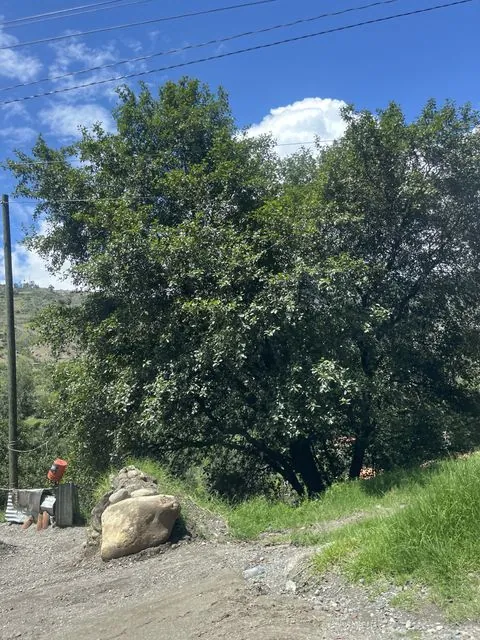
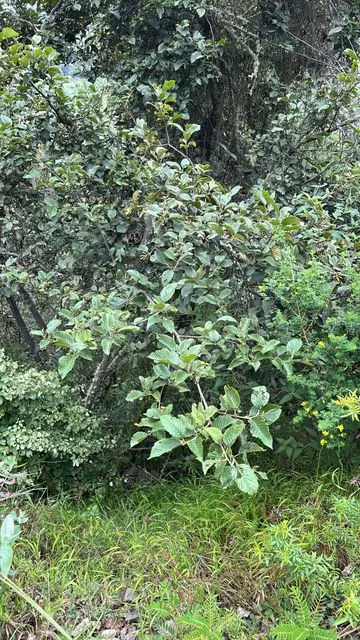
Canonical name: The scientific name without its authorship or date, for example Zea mays instead of Zea mays L. — The scientific name without its authorship or date, for example Zea mays instead of Zea mays L.
Alnus acuminata
Authorship: The author or authors credited with publishing the scientific name. It is written after the name, sometimes with the year, for example L. (Linnaeus) in Zea mays L. An author in parentheses first published the name in another genus or rank. — The author or authors credited with publishing the scientific name. It is written after the name, sometimes with the year, for example L. (Linnaeus) in Zea mays L. An author in parentheses first published the name in another genus or rank.
Kunth
Common names
Alder, Andean AlderNames in other languages (17)Aile, Aliso, Aliso Andino, Aliso del cerro, And kızılağacı, Anda alno, Jaúl, Ranbrán, Ranrán, Umeiru, Yuraq ramran, ailite, olsza spiczasta, ramoncillo, suippuleppä, tepamu, 安地斯赤楊
Kingdom: One of the broadest ranks of biological classification. It groups organisms that share very basic features, for example plants (Plantae), animals (Animalia) or fungi (Fungi). — One of the broadest ranks of biological classification. It groups organisms that share very basic features, for example plants (Plantae), animals (Animalia) or fungi (Fungi).
Plantae
Phylum: Rank below kingdom that groups organisms with a shared general body plan, for example chordates (Chordata), arthropods (Arthropoda) or vascular plants (Tracheophyta). In botany the same rank is also called division. — Rank below kingdom that groups organisms with a shared general body plan, for example chordates (Chordata), arthropods (Arthropoda) or vascular plants (Tracheophyta). In botany the same rank is also called division.
Tracheophyta
Class: Rank below phylum, for example mammals (Mammalia), birds (Aves), insects (Insecta) or monocot plants such as grasses and orchids (Liliopsida). — Rank below phylum, for example mammals (Mammalia), birds (Aves), insects (Insecta) or monocot plants such as grasses and orchids (Liliopsida).
Magnoliopsida
Order: Rank below class that groups related families, for example grasses and their relatives (Poales) or bats (Chiroptera). — Rank below class that groups related families, for example grasses and their relatives (Poales) or bats (Chiroptera).
Fagales
Family: Rank below order that groups related genera. Family names usually end in -aceae in botany (for example Poaceae, the grass family) and in -idae in zoology (for example Felidae, the cat family). — Rank below order that groups related genera. Family names usually end in -aceae in botany (for example Poaceae, the grass family) and in -idae in zoology (for example Felidae, the cat family).
Betulaceae
Genus: Rank that groups closely related species. Its name is the first word of a species' scientific name and starts with a capital letter, for example Zea in Zea mays. — Rank that groups closely related species. Its name is the first word of a species' scientific name and starts with a capital letter, for example Zea in Zea mays.
Alnus
Specific epithet: The second word of a species' scientific name. On its own it does not name the species: it always goes with the genus, for example mays in Zea mays. — The second word of a species' scientific name. On its own it does not name the species: it always goes with the genus, for example mays in Zea mays.
acuminata
Taxonomic rank: The level a name occupies in the hierarchy of biological classification, such as kingdom, family, genus, species or subspecies. — The level a name occupies in the hierarchy of biological classification, such as kingdom, family, genus, species or subspecies.
species
Reference species
Alnus acuminata
Taxonomic status: Whether the taxonomic catalogue the record comes from currently accepts this name for the organism, or treats it as a synonym of another accepted name or as doubtful. — Whether the taxonomic catalogue the record comes from currently accepts this name for the organism, or treats it as a synonym of another accepted name or as doubtful.
accepted name
Photos and conservation status
IUCN Red List category: The extinction-risk category that the International Union for Conservation of Nature (IUCN) assigns to a species on its Red List. EX Extinct: there is no reasonable doubt that the last individual has died. EW Extinct in the wild: it survives only in cultivation, in captivity or as a population far outside its past range. CR Critically endangered, EN Endangered and VU Vulnerable: the three threatened categories, from an extremely high to a high risk of extinction in the wild. NT Near threatened: close to qualifying as threatened. LC Least concern: evaluated and not threatened. DD Data deficient: there is not enough information to assess its risk. NE Not evaluated: not yet assessed against the criteria. It describes the risk of the species worldwide, not its situation in a project's area. — The extinction-risk category that the International Union for Conservation of Nature (IUCN) assigns to a species on its Red List. EX Extinct: there is no reasonable doubt that the last individual has died. EW Extinct in the wild: it survives only in cultivation, in captivity or as a population far outside its past range. CR Critically endangered, EN Endangered and VU Vulnerable: the three threatened categories, from an extremely high to a high risk of extinction in the wild. NT Near threatened: close to qualifying as threatened. LC Least concern: evaluated and not threatened. DD Data deficient: there is not enough information to assess its risk. NE Not evaluated: not yet assessed against the criteria. It describes the risk of the species worldwide, not its situation in a project's area.
Least concern (LC)
Source: IUCN Red List via GBIF, queried on 2026-10-13 05:36.
Research-grade iNaturalist observations via GBIF, CC0 or CC BY licences only, queried on 2026-10-13 05:36.
Interacciones documentadas
GloBI says it is documented somewhere in the world. Biolitica answers whether it could happen here.
A documented interaction means it was recorded somewhere in the world. It does not mean it occurs here.
Types shown: 5 of 5
is an ectomycorrhizal host of
×
is a host of
×
interacts with
×
is eaten by
×
is an arbuscular mycorrhizal host of
×
Blocks that do not sit under a navigation concept heading keep the source's own term: no navigation concept has been assigned to them yet.
is an ectomycorrhizal host of
50 organisms
The authority declares no effect on this species for this term: neither that it harms it nor that it benefits it.
Organism
Reads as
Studies
Where it was documented
Actions
mjølhinnesopparTomentellaThelephoraceae
is an ectomycorrhizal host of
19
not compared
Not a modelling unit: the source publishes it at genus level.
19 sources · 19 records
Nouhra,E., Pastor,N., Becerra,A., Areitio,E.S. and Geml,J., Greenhouse Seedlings of Alnus Showed Low Host Intrageneric Specificity and a Strong Preference for Some Tomentella. Microb. Ecol. (2014) In press. https://www.ncbi.nlm.nih.gov/nuccore/KJ140275
Published in globalbioticinteractions/maps
Context: no place published · no date published
Claim type
Published relationship between two taxa
Version
GloBI 0.11
Reuse
This release publishes no reuse terms for this record.
no place published · no date publishedWhere it is: line:hash://sha256/021a206a1459bcca7e251c73f5bd180fc3ac342a09c499855fe42e21fc09edcf!/interactions.tsv.gz!/L7271498
Nouhra,E., Pastor,N., Becerra,A., Areitio,E.S. and Geml,J., Greenhouse Seedlings of Alnus Showed Low Host Intrageneric Specificity and a Strong Preference for Some Tomentella. Microb. Ecol. (2014) In press. https://www.ncbi.nlm.nih.gov/nuccore/KJ140270
Published in globalbioticinteractions/maps
Context: no place published · no date published
Claim type
Published relationship between two taxa
Version
GloBI 0.11
Reuse
This release publishes no reuse terms for this record.
no place published · no date publishedWhere it is: line:hash://sha256/021a206a1459bcca7e251c73f5bd180fc3ac342a09c499855fe42e21fc09edcf!/interactions.tsv.gz!/L7271499
Nouhra,E., Pastor,N., Becerra,A., Areitio,E.S. and Geml,J., Greenhouse Seedlings of Alnus Showed Low Host Intrageneric Specificity and a Strong Preference for Some Tomentella. Microb. Ecol. (2014) In press. https://www.ncbi.nlm.nih.gov/nuccore/KJ140268
Published in globalbioticinteractions/maps
Context: no place published · no date published
Claim type
Published relationship between two taxa
Version
GloBI 0.11
Reuse
This release publishes no reuse terms for this record.
no place published · no date publishedWhere it is: line:hash://sha256/021a206a1459bcca7e251c73f5bd180fc3ac342a09c499855fe42e21fc09edcf!/interactions.tsv.gz!/L7271500
Nouhra,E., Pastor,N., Becerra,A., Areitio,E.S. and Geml,J., Greenhouse Seedlings of Alnus Showed Low Host Intrageneric Specificity and a Strong Preference for Some Tomentella. Microb. Ecol. (2014) In press. https://www.ncbi.nlm.nih.gov/nuccore/KJ140277
Published in globalbioticinteractions/maps
Context: no place published · no date published
Claim type
Published relationship between two taxa
Version
GloBI 0.11
Reuse
This release publishes no reuse terms for this record.
no place published · no date publishedWhere it is: line:hash://sha256/021a206a1459bcca7e251c73f5bd180fc3ac342a09c499855fe42e21fc09edcf!/interactions.tsv.gz!/L7271501
Nouhra,E., Pastor,N., Becerra,A., Areitio,E.S. and Geml,J., Greenhouse Seedlings of Alnus Showed Low Host Intrageneric Specificity and a Strong Preference for Some Tomentella. Microb. Ecol. (2014) In press. https://www.ncbi.nlm.nih.gov/nuccore/KJ140278
Published in globalbioticinteractions/maps
Context: no place published · no date published
Claim type
Published relationship between two taxa
Version
GloBI 0.11
Reuse
This release publishes no reuse terms for this record.
no place published · no date publishedWhere it is: line:hash://sha256/021a206a1459bcca7e251c73f5bd180fc3ac342a09c499855fe42e21fc09edcf!/interactions.tsv.gz!/L7271502
Nouhra,E., Pastor,N., Becerra,A., Areitio,E.S. and Geml,J., Greenhouse Seedlings of Alnus Showed Low Host Intrageneric Specificity and a Strong Preference for Some Tomentella. Microb. Ecol. (2014) In press. https://www.ncbi.nlm.nih.gov/nuccore/KJ140279
Published in globalbioticinteractions/maps
Context: no place published · no date published
Claim type
Published relationship between two taxa
Version
GloBI 0.11
Reuse
This release publishes no reuse terms for this record.
no place published · no date publishedWhere it is: line:hash://sha256/021a206a1459bcca7e251c73f5bd180fc3ac342a09c499855fe42e21fc09edcf!/interactions.tsv.gz!/L7271503
Nouhra,E., Pastor,N., Becerra,A., Areitio,E.S. and Geml,J., Greenhouse Seedlings of Alnus Showed Low Host Intrageneric Specificity and a Strong Preference for Some Tomentella. Microb. Ecol. (2014) In press. https://www.ncbi.nlm.nih.gov/nuccore/KJ140280
Published in globalbioticinteractions/maps
Context: no place published · no date published
Claim type
Published relationship between two taxa
Version
GloBI 0.11
Reuse
This release publishes no reuse terms for this record.
no place published · no date publishedWhere it is: line:hash://sha256/021a206a1459bcca7e251c73f5bd180fc3ac342a09c499855fe42e21fc09edcf!/interactions.tsv.gz!/L7271504
Nouhra,E., Pastor,N., Becerra,A., Areitio,E.S. and Geml,J., Greenhouse Seedlings of Alnus Showed Low Host Intrageneric Specificity and a Strong Preference for Some Tomentella. Microb. Ecol. (2014) In press. https://www.ncbi.nlm.nih.gov/nuccore/KJ140282
Published in globalbioticinteractions/maps
Context: no place published · no date published
Claim type
Published relationship between two taxa
Version
GloBI 0.11
Reuse
This release publishes no reuse terms for this record.
no place published · no date publishedWhere it is: line:hash://sha256/021a206a1459bcca7e251c73f5bd180fc3ac342a09c499855fe42e21fc09edcf!/interactions.tsv.gz!/L7271505
Nouhra,E., Pastor,N., Becerra,A., Areitio,E.S. and Geml,J., Greenhouse Seedlings of Alnus Showed Low Host Intrageneric Specificity and a Strong Preference for Some Tomentella. Microb. Ecol. (2014) In press. https://www.ncbi.nlm.nih.gov/nuccore/KJ140273
Published in globalbioticinteractions/maps
Context: no place published · no date published
Claim type
Published relationship between two taxa
Version
GloBI 0.11
Reuse
This release publishes no reuse terms for this record.
no place published · no date publishedWhere it is: line:hash://sha256/021a206a1459bcca7e251c73f5bd180fc3ac342a09c499855fe42e21fc09edcf!/interactions.tsv.gz!/L7271511
Nouhra,E., Pastor,N., Becerra,A., Areitio,E.S. and Geml,J., Greenhouse Seedlings of Alnus Showed Low Host Intrageneric Specificity and a Strong Preference for Some Tomentella. Microb. Ecol. (2014) In press. https://www.ncbi.nlm.nih.gov/nuccore/KJ140272
Published in globalbioticinteractions/maps
Context: no place published · no date published
Claim type
Published relationship between two taxa
Version
GloBI 0.11
Reuse
This release publishes no reuse terms for this record.
no place published · no date publishedWhere it is: line:hash://sha256/021a206a1459bcca7e251c73f5bd180fc3ac342a09c499855fe42e21fc09edcf!/interactions.tsv.gz!/L7271512
Nouhra,E., Pastor,N., Becerra,A., Areitio,E.S. and Geml,J., Greenhouse Seedlings of Alnus Showed Low Host Intrageneric Specificity and a Strong Preference for Some Tomentella. Microb. Ecol. (2014) In press. https://www.ncbi.nlm.nih.gov/nuccore/KJ140269
Published in globalbioticinteractions/maps
Context: no place published · no date published
Claim type
Published relationship between two taxa
Version
GloBI 0.11
Reuse
This release publishes no reuse terms for this record.
no place published · no date publishedWhere it is: line:hash://sha256/021a206a1459bcca7e251c73f5bd180fc3ac342a09c499855fe42e21fc09edcf!/interactions.tsv.gz!/L7271513
Polme SP, Species richness and community composition of ectomycorrhizal fungi associated with alders (Alnus spp.) in relation to biotic and abiotic variables at the global scale. Unpublished. https://www.ncbi.nlm.nih.gov/nuccore/HE979524
Published in globalbioticinteractions/maps
Context: no place published · no date published
Claim type
Published relationship between two taxa
Version
GloBI 0.11
Reuse
This release publishes no reuse terms for this record.
no place published · no date publishedWhere it is: line:hash://sha256/021a206a1459bcca7e251c73f5bd180fc3ac342a09c499855fe42e21fc09edcf!/interactions.tsv.gz!/L7286627
Polme SP, Species richness and community composition of ectomycorrhizal fungi associated with alders (Alnus spp.) in relation to biotic and abiotic variables at the global scale. Unpublished. https://www.ncbi.nlm.nih.gov/nuccore/HE979531
Published in globalbioticinteractions/maps
Context: no place published · no date published
Claim type
Published relationship between two taxa
Version
GloBI 0.11
Reuse
This release publishes no reuse terms for this record.
no place published · no date publishedWhere it is: line:hash://sha256/021a206a1459bcca7e251c73f5bd180fc3ac342a09c499855fe42e21fc09edcf!/interactions.tsv.gz!/L7286628
Polme SP, Species richness and community composition of ectomycorrhizal fungi associated with alders (Alnus spp.) in relation to biotic and abiotic variables at the global scale. Unpublished. https://www.ncbi.nlm.nih.gov/nuccore/HE979530
Published in globalbioticinteractions/maps
Context: no place published · no date published
Claim type
Published relationship between two taxa
Version
GloBI 0.11
Reuse
This release publishes no reuse terms for this record.
no place published · no date publishedWhere it is: line:hash://sha256/021a206a1459bcca7e251c73f5bd180fc3ac342a09c499855fe42e21fc09edcf!/interactions.tsv.gz!/L7286629
Polme SP, Species richness and community composition of ectomycorrhizal fungi associated with alders (Alnus spp.) in relation to biotic and abiotic variables at the global scale. Unpublished. https://www.ncbi.nlm.nih.gov/nuccore/HE979537
Published in globalbioticinteractions/maps
Context: no place published · no date published
Claim type
Published relationship between two taxa
Version
GloBI 0.11
Reuse
This release publishes no reuse terms for this record.
no place published · no date publishedWhere it is: line:hash://sha256/021a206a1459bcca7e251c73f5bd180fc3ac342a09c499855fe42e21fc09edcf!/interactions.tsv.gz!/L7286630
Polme SP, Species richness and community composition of ectomycorrhizal fungi associated with alders (Alnus spp.) in relation to biotic and abiotic variables at the global scale. Unpublished. https://www.ncbi.nlm.nih.gov/nuccore/HE979542
Published in globalbioticinteractions/maps
Context: no place published · no date published
Claim type
Published relationship between two taxa
Version
GloBI 0.11
Reuse
This release publishes no reuse terms for this record.
no place published · no date publishedWhere it is: line:hash://sha256/021a206a1459bcca7e251c73f5bd180fc3ac342a09c499855fe42e21fc09edcf!/interactions.tsv.gz!/L7286631
And 6 more sources, with fewer records, not listed here.
A published relationship says these two taxa were documented interacting. It does not say how often, or that it happens in this project's region.
AlnicolaHymenogastraceae
is an ectomycorrhizal host of
10
not compared
Not a modelling unit: the source publishes it at genus level.
10 sources · 10 records
Polme SP, Species richness and community composition of ectomycorrhizal fungi associated with alders (Alnus spp.) in relation to biotic and abiotic variables at the global scale. Unpublished. https://www.ncbi.nlm.nih.gov/nuccore/HE979515
Published in globalbioticinteractions/maps
Context: no place published · no date published
Claim type
Published relationship between two taxa
Version
GloBI 0.11
Reuse
This release publishes no reuse terms for this record.
no place published · no date publishedWhere it is: line:hash://sha256/021a206a1459bcca7e251c73f5bd180fc3ac342a09c499855fe42e21fc09edcf!/interactions.tsv.gz!/L7286590
Polme SP, Species richness and community composition of ectomycorrhizal fungi associated with alders (Alnus spp.) in relation to biotic and abiotic variables at the global scale. Unpublished. https://www.ncbi.nlm.nih.gov/nuccore/HE979520
Published in globalbioticinteractions/maps
Context: no place published · no date published
Claim type
Published relationship between two taxa
Version
GloBI 0.11
Reuse
This release publishes no reuse terms for this record.
no place published · no date publishedWhere it is: line:hash://sha256/021a206a1459bcca7e251c73f5bd180fc3ac342a09c499855fe42e21fc09edcf!/interactions.tsv.gz!/L7286591
Polme SP, Species richness and community composition of ectomycorrhizal fungi associated with alders (Alnus spp.) in relation to biotic and abiotic variables at the global scale. Unpublished. https://www.ncbi.nlm.nih.gov/nuccore/HE979529
Published in globalbioticinteractions/maps
Context: no place published · no date published
Claim type
Published relationship between two taxa
Version
GloBI 0.11
Reuse
This release publishes no reuse terms for this record.
no place published · no date publishedWhere it is: line:hash://sha256/021a206a1459bcca7e251c73f5bd180fc3ac342a09c499855fe42e21fc09edcf!/interactions.tsv.gz!/L7286592
Polme SP, Species richness and community composition of ectomycorrhizal fungi associated with alders (Alnus spp.) in relation to biotic and abiotic variables at the global scale. Unpublished. https://www.ncbi.nlm.nih.gov/nuccore/HE979533
Published in globalbioticinteractions/maps
Context: no place published · no date published
Claim type
Published relationship between two taxa
Version
GloBI 0.11
Reuse
This release publishes no reuse terms for this record.
no place published · no date publishedWhere it is: line:hash://sha256/021a206a1459bcca7e251c73f5bd180fc3ac342a09c499855fe42e21fc09edcf!/interactions.tsv.gz!/L7286593
Polme SP, Species richness and community composition of ectomycorrhizal fungi associated with alders (Alnus spp.) in relation to biotic and abiotic variables at the global scale. Unpublished. https://www.ncbi.nlm.nih.gov/nuccore/HE979539
Published in globalbioticinteractions/maps
Context: no place published · no date published
Claim type
Published relationship between two taxa
Version
GloBI 0.11
Reuse
This release publishes no reuse terms for this record.
no place published · no date publishedWhere it is: line:hash://sha256/021a206a1459bcca7e251c73f5bd180fc3ac342a09c499855fe42e21fc09edcf!/interactions.tsv.gz!/L7286594
Polme SP, Species richness and community composition of ectomycorrhizal fungi associated with alders (Alnus spp.) in relation to biotic and abiotic variables at the global scale. Unpublished. https://www.ncbi.nlm.nih.gov/nuccore/HE979084
Published in globalbioticinteractions/maps
Context: no place published · no date published
Claim type
Published relationship between two taxa
Version
GloBI 0.11
Reuse
This release publishes no reuse terms for this record.
no place published · no date publishedWhere it is: line:hash://sha256/021a206a1459bcca7e251c73f5bd180fc3ac342a09c499855fe42e21fc09edcf!/interactions.tsv.gz!/L7286595
Polme SP, Species richness and community composition of ectomycorrhizal fungi associated with alders (Alnus spp.) in relation to biotic and abiotic variables at the global scale. Unpublished. https://www.ncbi.nlm.nih.gov/nuccore/HE979091
Published in globalbioticinteractions/maps
Context: no place published · no date published
Claim type
Published relationship between two taxa
Version
GloBI 0.11
Reuse
This release publishes no reuse terms for this record.
no place published · no date publishedWhere it is: line:hash://sha256/021a206a1459bcca7e251c73f5bd180fc3ac342a09c499855fe42e21fc09edcf!/interactions.tsv.gz!/L7286596
Polme SP, Species richness and community composition of ectomycorrhizal fungi associated with alders (Alnus spp.) in relation to biotic and abiotic variables at the global scale. Unpublished. https://www.ncbi.nlm.nih.gov/nuccore/HE979068
Published in globalbioticinteractions/maps
Context: no place published · no date published
Claim type
Published relationship between two taxa
Version
GloBI 0.11
Reuse
This release publishes no reuse terms for this record.
no place published · no date publishedWhere it is: line:hash://sha256/021a206a1459bcca7e251c73f5bd180fc3ac342a09c499855fe42e21fc09edcf!/interactions.tsv.gz!/L7286597
And 2 more sources, with fewer records, not listed here.
A published relationship says these two taxa were documented interacting. It does not say how often, or that it happens in this project's region.
WebcapsCortinariusCortinariaceae
is an ectomycorrhizal host of
10
not compared
Not a modelling unit: the source publishes it at genus level.
10 sources · 10 records
Polme SP, Species richness and community composition of ectomycorrhizal fungi associated with alders (Alnus spp.) in relation to biotic and abiotic variables at the global scale. Unpublished. https://www.ncbi.nlm.nih.gov/nuccore/HE979521
Published in globalbioticinteractions/maps
Context: no place published · no date published
Claim type
Published relationship between two taxa
Version
GloBI 0.11
Reuse
This release publishes no reuse terms for this record.
no place published · no date publishedWhere it is: line:hash://sha256/021a206a1459bcca7e251c73f5bd180fc3ac342a09c499855fe42e21fc09edcf!/interactions.tsv.gz!/L7286600
Polme SP, Species richness and community composition of ectomycorrhizal fungi associated with alders (Alnus spp.) in relation to biotic and abiotic variables at the global scale. Unpublished. https://www.ncbi.nlm.nih.gov/nuccore/HE979525
Published in globalbioticinteractions/maps
Context: no place published · no date published
Claim type
Published relationship between two taxa
Version
GloBI 0.11
Reuse
This release publishes no reuse terms for this record.
no place published · no date publishedWhere it is: line:hash://sha256/021a206a1459bcca7e251c73f5bd180fc3ac342a09c499855fe42e21fc09edcf!/interactions.tsv.gz!/L7286601
Polme SP, Species richness and community composition of ectomycorrhizal fungi associated with alders (Alnus spp.) in relation to biotic and abiotic variables at the global scale. Unpublished. https://www.ncbi.nlm.nih.gov/nuccore/HE979534
Published in globalbioticinteractions/maps
Context: no place published · no date published
Claim type
Published relationship between two taxa
Version
GloBI 0.11
Reuse
This release publishes no reuse terms for this record.
no place published · no date publishedWhere it is: line:hash://sha256/021a206a1459bcca7e251c73f5bd180fc3ac342a09c499855fe42e21fc09edcf!/interactions.tsv.gz!/L7286602
Polme SP, Species richness and community composition of ectomycorrhizal fungi associated with alders (Alnus spp.) in relation to biotic and abiotic variables at the global scale. Unpublished. https://www.ncbi.nlm.nih.gov/nuccore/HE979538
Published in globalbioticinteractions/maps
Context: no place published · no date published
Claim type
Published relationship between two taxa
Version
GloBI 0.11
Reuse
This release publishes no reuse terms for this record.
no place published · no date publishedWhere it is: line:hash://sha256/021a206a1459bcca7e251c73f5bd180fc3ac342a09c499855fe42e21fc09edcf!/interactions.tsv.gz!/L7286603
Polme SP, Species richness and community composition of ectomycorrhizal fungi associated with alders (Alnus spp.) in relation to biotic and abiotic variables at the global scale. Unpublished. https://www.ncbi.nlm.nih.gov/nuccore/HE979090
Published in globalbioticinteractions/maps
Context: no place published · no date published
Claim type
Published relationship between two taxa
Version
GloBI 0.11
Reuse
This release publishes no reuse terms for this record.
no place published · no date publishedWhere it is: line:hash://sha256/021a206a1459bcca7e251c73f5bd180fc3ac342a09c499855fe42e21fc09edcf!/interactions.tsv.gz!/L7286604
Polme SP, Species richness and community composition of ectomycorrhizal fungi associated with alders (Alnus spp.) in relation to biotic and abiotic variables at the global scale. Unpublished. https://www.ncbi.nlm.nih.gov/nuccore/HE979085
Published in globalbioticinteractions/maps
Context: no place published · no date published
Claim type
Published relationship between two taxa
Version
GloBI 0.11
Reuse
This release publishes no reuse terms for this record.
no place published · no date publishedWhere it is: line:hash://sha256/021a206a1459bcca7e251c73f5bd180fc3ac342a09c499855fe42e21fc09edcf!/interactions.tsv.gz!/L7286605
Polme SP, Species richness and community composition of ectomycorrhizal fungi associated with alders (Alnus spp.) in relation to biotic and abiotic variables at the global scale. Unpublished. https://www.ncbi.nlm.nih.gov/nuccore/HE979075
Published in globalbioticinteractions/maps
Context: no place published · no date published
Claim type
Published relationship between two taxa
Version
GloBI 0.11
Reuse
This release publishes no reuse terms for this record.
no place published · no date publishedWhere it is: line:hash://sha256/021a206a1459bcca7e251c73f5bd180fc3ac342a09c499855fe42e21fc09edcf!/interactions.tsv.gz!/L7286606
Kennedy,P.G. and Garibay-Orijel,R, Ectomycorrhizal fungi in Mexican Alnus forests. Unpublished. https://www.ncbi.nlm.nih.gov/nuccore/HQ271398
Published in globalbioticinteractions/maps
Context: no place published · no date published
Claim type
Published relationship between two taxa
Version
GloBI 0.11
Reuse
This release publishes no reuse terms for this record.
no place published · no date publishedWhere it is: line:hash://sha256/021a206a1459bcca7e251c73f5bd180fc3ac342a09c499855fe42e21fc09edcf!/interactions.tsv.gz!/L7298523
The authority declares no effect on this species for this term: neither that it harms it nor that it benefits it. In the source ontology symbiosis covers mutualism, commensalism and parasitism alike, so this block holds attackers and allies side by side.
Spaulding, P.. 1961. Foreign Diseases of Forest Trees of the World. U.S.D.A. Agric. Handb. 197:1-361
Published in globalbioticinteractions/usda-fungus-host
Record contexts (sample): Guatemala · no date published; Ecuador · no date published
Claim type
Published relationship between two taxa
Version
GloBI 0.11
Reuse
This release publishes no reuse terms for this record.
Guatemala · no date publishedWhere it is: line:hash://sha256/021a206a1459bcca7e251c73f5bd180fc3ac342a09c499855fe42e21fc09edcf!/interactions.tsv.gz!/L4110502
Ecuador · no date publishedWhere it is: line:hash://sha256/021a206a1459bcca7e251c73f5bd180fc3ac342a09c499855fe42e21fc09edcf!/interactions.tsv.gz!/L4110504
Context: Mexico State km. 36 on Mexico-peubla Toll road, alt. 3100 M. · March 26, 1963 · Preserved specimen
Claim type
Published relationship between two taxa
Version
GloBI 0.11
Reuse
This release publishes no reuse terms for this record.
Mexico State km. 36 on Mexico-peubla Toll road, alt. 3100 M. · March 26, 1963 · Preserved specimenAs published: 1963-03-26T00:00:00Z · PreservedSpecimenWhere it is: line:hash://sha256/021a206a1459bcca7e251c73f5bd180fc3ac342a09c499855fe42e21fc09edcf!/interactions.tsv.gz!/L16748690
Dennis, R.W.G.. 1970. Kew Bulletin Additional Series III. Fungus Flora of Venezuela and Adjacent Countries.. Verlag von J. Cramer :531
Published in globalbioticinteractions/usda-fungus-host
Context: Ecuador · no date published
Claim type
Published relationship between two taxa
Version
GloBI 0.11
Reuse
This release publishes no reuse terms for this record.
Ecuador · no date publishedWhere it is: line:hash://sha256/021a206a1459bcca7e251c73f5bd180fc3ac342a09c499855fe42e21fc09edcf!/interactions.tsv.gz!/L3950322
No public URL for this record
Salazar-Yepes, M., Buritica, P., and Cadena-Gomez, G. . 2002. Implicaciones de los estudios sobre biodiversidad de los Uredinales (Royas) en la region cafetera colombiana. Cenicafe 53:219-238
Published in globalbioticinteractions/usda-fungus-host
Context: Colombia · no date published
Claim type
Published relationship between two taxa
Version
GloBI 0.11
Reuse
This release publishes no reuse terms for this record.
Colombia · no date publishedWhere it is: line:hash://sha256/021a206a1459bcca7e251c73f5bd180fc3ac342a09c499855fe42e21fc09edcf!/interactions.tsv.gz!/L3953561
No public URL for this record
And 2 more sources, with fewer records, not listed here.
A published relationship says these two taxa were documented interacting. It does not say how often, or that it happens in this project's region.
Context: Toralapa, Cochabamba · no date published · Preserved specimen
Claim type
Published relationship between two taxa
Version
GloBI 0.11
Reuse
This release publishes no reuse terms for this record.
Toralapa, Cochabamba · no date published · Preserved specimenAs published: PreservedSpecimenWhere it is: line:hash://sha256/021a206a1459bcca7e251c73f5bd180fc3ac342a09c499855fe42e21fc09edcf!/interactions.tsv.gz!/L16748276
Chen, M.-M.. 2002. Forest fungi phytogeography: Forest fungi phytogeography of China, North America, and Siberia and international quarantine of tree pathogens. Pacific Mushroom Research and Education Center, Sacramento, California :469
Published in globalbioticinteractions/usda-fungus-host
Context: China · no date published
Claim type
Published relationship between two taxa
Version
GloBI 0.11
Reuse
This release publishes no reuse terms for this record.
China · no date publishedWhere it is: line:hash://sha256/021a206a1459bcca7e251c73f5bd180fc3ac342a09c499855fe42e21fc09edcf!/interactions.tsv.gz!/L3910989
No public URL for this record
Arthur, J.C.. 1918. Uredinales of Guatemala based on collections by E.W.D. Holway. I. Introduction, Coleosporiaceae and Uredinaceae. Amer. J. Bot. 5:325-336
Published in globalbioticinteractions/usda-fungus-host
Context: Guatemala · no date published
Claim type
Published relationship between two taxa
Version
GloBI 0.11
Reuse
This release publishes no reuse terms for this record.
Guatemala · no date publishedWhere it is: line:hash://sha256/021a206a1459bcca7e251c73f5bd180fc3ac342a09c499855fe42e21fc09edcf!/interactions.tsv.gz!/L4326681
No public URL for this record
A published relationship says these two taxa were documented interacting. It does not say how often, or that it happens in this project's region.
A published relationship says these two taxa were documented interacting. It does not say how often, or that it happens in this project's region.
Melasmia alniRhytismataceae
is a host of
1
no location
1 source · 1 record
Chen, M.-M.. 2002. Forest fungi phytogeography: Forest fungi phytogeography of China, North America, and Siberia and international quarantine of tree pathogens. Pacific Mushroom Research and Education Center, Sacramento, California :469
Published in globalbioticinteractions/usda-fungus-host
Context: China · no date published
Claim type
Published relationship between two taxa
Version
GloBI 0.11
Reuse
This release publishes no reuse terms for this record.
China · no date publishedWhere it is: line:hash://sha256/021a206a1459bcca7e251c73f5bd180fc3ac342a09c499855fe42e21fc09edcf!/interactions.tsv.gz!/L3910609
No public URL for this record
A published relationship says these two taxa were documented interacting. It does not say how often, or that it happens in this project's region.
The authority declares no effect on this species for this term: neither that it harms it nor that it benefits it.
Organism
Reads as
Studies
Where it was documented
Actions
Phoradendron velutinumViscaceae
interacts with
2
not compared
2 sources · 2 records
https://www.inaturalist.org/observations/8554049
Published in globalbioticinteractions/inaturalist
Context: no place published · Oct. 25, 2017 · Human observation
Claim type
Published relationship between two taxa
Version
GloBI 0.11
Reuse
This release publishes no reuse terms for this record.
no place published · Oct. 25, 2017 · Human observationAs published: 2017-10-25T18:35:00Z · HumanObservationWhere it is: line:hash://sha256/021a206a1459bcca7e251c73f5bd180fc3ac342a09c499855fe42e21fc09edcf!/interactions.tsv.gz!/L4704022
Context: no place published · Dec. 7, 2017 · Human observation
Claim type
Published relationship between two taxa
Version
GloBI 0.11
Reuse
This release publishes no reuse terms for this record.
no place published · Dec. 7, 2017 · Human observationAs published: 2017-12-07T13:07:00Z · HumanObservationWhere it is: line:hash://sha256/021a206a1459bcca7e251c73f5bd180fc3ac342a09c499855fe42e21fc09edcf!/interactions.tsv.gz!/L4718359
Context: no place published · April 14, 2022 · Human observation
Claim type
Published relationship between two taxa
Version
GloBI 0.11
Reuse
This release publishes no reuse terms for this record.
no place published · April 14, 2022 · Human observationAs published: 2022-04-14T16:34:10Z · HumanObservationWhere it is: line:hash://sha256/021a206a1459bcca7e251c73f5bd180fc3ac342a09c499855fe42e21fc09edcf!/interactions.tsv.gz!/L4640502
A published relationship says these two taxa were documented interacting. It does not say how often, or that it happens in this project's region.
Echeveria nebularumCrassulaceae
interacts with
1
not compared
1 source · 1 record
https://www.inaturalist.org/observations/46094596
Published in globalbioticinteractions/inaturalist
Context: no place published · April 29, 2020 · Human observation
Claim type
Published relationship between two taxa
Version
GloBI 0.11
Reuse
This release publishes no reuse terms for this record.
no place published · April 29, 2020 · Human observationAs published: 2020-04-29T18:40:33Z · HumanObservationWhere it is: line:hash://sha256/021a206a1459bcca7e251c73f5bd180fc3ac342a09c499855fe42e21fc09edcf!/interactions.tsv.gz!/L5376881
Context: no place published · Jan. 19, 2023 · Human observation
Claim type
Published relationship between two taxa
Version
GloBI 0.11
Reuse
This release publishes no reuse terms for this record.
no place published · Jan. 19, 2023 · Human observationAs published: 2023-01-19T17:06:16Z · HumanObservationWhere it is: line:hash://sha256/021a206a1459bcca7e251c73f5bd180fc3ac342a09c499855fe42e21fc09edcf!/interactions.tsv.gz!/L5269655
A published relationship says these two taxa were documented interacting. It does not say how often, or that it happens in this project's region.
Showing 4 of 4, by number of studies
is eaten by
2 organisms
This term does declare that the organism harms this species.
Organism
Reads as
Studies
Where it was documented
Actions
Fowlerium nasoIssidae
is eaten by
2
no location
2 sources · 2 records
Gnezdilov, V.M. (2018a) To the revision of the genus <i>Thionia</i> Stål (Hemiptera, Fulgoroidea, Issidae), with description of new genera and new subtribe. <i>Zootaxa</i>, 4434(1), 158–170.
Published in urn:lsid:checklistbank.org:dataset:2317
Context: no place published · no date published
Claim type
Published relationship between two taxa
Version
GloBI 0.11
Reuse
This release publishes no reuse terms for this record.
no place published · no date publishedWhere it is: line:hash://sha256/021a206a1459bcca7e251c73f5bd180fc3ac342a09c499855fe42e21fc09edcf!/interactions.tsv.gz!/L1308748
No public URL for this record
@article{22720, author = {Gnezdilov, Vladimir Mikhailovich}, journal = {Zootaxa}, month = {jun}, day = {14}, number = {1}, pages = {158–170}, title = {To the revision of the genus <i>Thionia</i> Stål (Hemiptera, Fulgoroidea, Issidae), with description of new genera…
Published in globalbioticinteractions/taxonworks
Context: no place published · no date published
Claim type
Published relationship between two taxa
Version
GloBI 0.11
Reuse
This release publishes no reuse terms for this record.
no place published · no date publishedWhere it is: line:hash://sha256/021a206a1459bcca7e251c73f5bd180fc3ac342a09c499855fe42e21fc09edcf!/interactions.tsv.gz!/L5975657
No public URL for this record
A published relationship says these two taxa were documented interacting. It does not say how often, or that it happens in this project's region.
European Honey BeeApis melliferaApidae
is eaten by
1
not compared
1 source · 1 record
Montoya, P.M. (2011) Uso de recursos florales poliníferos por Apis mellifera (Hymenoptera:Apidae) en apiarios de la Sabana de Bogotá y alrededores. Tesis de Maestría. Universidad Nacional de Colombia, Bogotá D.C.
Published in globalbioticinteractions/delrisco2021
Context: Bogotá, Colombia · no date published
Claim type
Published relationship between two taxa
Version
GloBI 0.11
Reuse
This release publishes no reuse terms for this record.
Bogotá, Colombia · no date publishedWhere it is: line:hash://sha256/021a206a1459bcca7e251c73f5bd180fc3ac342a09c499855fe42e21fc09edcf!/interactions.tsv.gz!/L18977864
No public URL for this record
A published relationship says these two taxa were documented interacting. It does not say how often, or that it happens in this project's region.
Showing 2 of 2, by number of studies
is an arbuscular mycorrhizal host of
1 organism
The authority declares no effect on this species for this term: neither that it harms it nor that it benefits it.
Organism
Reads as
Studies
Where it was documented
Actions
RhizophagusMonotomidae
is an arbuscular mycorrhizal host of
1
no location
Not a modelling unit: the source publishes it at genus level.
1 source · 3 records
Medina, 2003. Interactions of arbuscular-mycorrhizal fungi and Bacillus Strains and their effects on plant growth. microbial rhizosphere activity (thymidine and leucine incorporation) and fungal biomass (ergosterol and chitin). Applied Soil Ecology. doi:10.1038/sdata.2016.28
Published in globalbioticinteractions/mycodb
Record contexts (sample): lab · no date published; lab · no date published
Claim type
Published relationship between two taxa
Version
GloBI 0.11
Reuse
This release publishes no reuse terms for this record.
lab · no date publishedWhere it is: line:hash://sha256/021a206a1459bcca7e251c73f5bd180fc3ac342a09c499855fe42e21fc09edcf!/interactions.tsv.gz!/L12285902
lab · no date publishedWhere it is: line:hash://sha256/021a206a1459bcca7e251c73f5bd180fc3ac342a09c499855fe42e21fc09edcf!/interactions.tsv.gz!/L12286398
lab · no date publishedWhere it is: line:hash://sha256/021a206a1459bcca7e251c73f5bd180fc3ac342a09c499855fe42e21fc09edcf!/interactions.tsv.gz!/L12286467
A published relationship says these two taxa were documented interacting. It does not say how often, or that it happens in this project's region.
Showing 1 of 1, by number of studies
Acompañantes documentados
This agronomic reading comes from a source reserved for internal use, so it is not shown here.
Documented uses and recommendations
Uses and recommendations that a source documents for this species beside a crop, each in its own context. They are the source's statements, not traits of the species and not Biolítica's recommendations, and none of them is a relation between two species.
Among the sources you can read, none documents a use or recommendation of this species beside a crop.