Canonical name: The scientific name without its authorship or date, for example Zea mays instead of Zea mays L. — The scientific name without its authorship or date, for example Zea mays instead of Zea mays L.
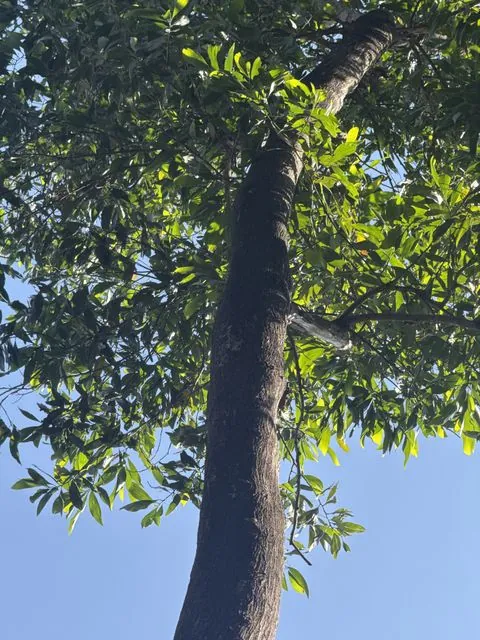
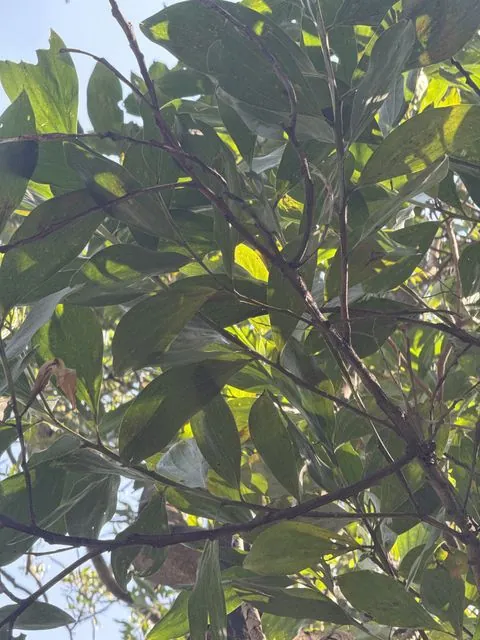
Acacia mangium
Authorship: The author or authors credited with publishing the scientific name. It is written after the name, sometimes with the year, for example L. (Linnaeus) in Zea mays L. An author in parentheses first published the name in another genus or rank. — The author or authors credited with publishing the scientific name. It is written after the name, sometimes with the year, for example L. (Linnaeus) in Zea mays L. An author in parentheses first published the name in another genus or rank.
Willd.
Common names
Brown Salwood, Big-leaved Acacia, Black Wattle, Hickory Wattle, Mangium, Sabah salwood, black-wattle, broadleaf salwood, brown-salwood, northern wattle, sally wattleNames in other languages (16)Acacia de hojas grandes, Akasia daun lebar, acácia, acácia-australiana, acácia-mangium, akacja pastewna, hickory-akacia, Акация мангиум, กระถินเทพา, 喬木染相思, 大葉相思, 直幹相思樹, 馬占相思, 马占相思, 马占相思树, Biar
Kingdom: One of the broadest ranks of biological classification. It groups organisms that share very basic features, for example plants (Plantae), animals (Animalia) or fungi (Fungi). — One of the broadest ranks of biological classification. It groups organisms that share very basic features, for example plants (Plantae), animals (Animalia) or fungi (Fungi).
Plantae
Phylum: Rank below kingdom that groups organisms with a shared general body plan, for example chordates (Chordata), arthropods (Arthropoda) or vascular plants (Tracheophyta). In botany the same rank is also called division. — Rank below kingdom that groups organisms with a shared general body plan, for example chordates (Chordata), arthropods (Arthropoda) or vascular plants (Tracheophyta). In botany the same rank is also called division.
Tracheophyta
Class: Rank below phylum, for example mammals (Mammalia), birds (Aves), insects (Insecta) or monocot plants such as grasses and orchids (Liliopsida). — Rank below phylum, for example mammals (Mammalia), birds (Aves), insects (Insecta) or monocot plants such as grasses and orchids (Liliopsida).
Magnoliopsida
Order: Rank below class that groups related families, for example grasses and their relatives (Poales) or bats (Chiroptera). — Rank below class that groups related families, for example grasses and their relatives (Poales) or bats (Chiroptera).
Fabales
Family: Rank below order that groups related genera. Family names usually end in -aceae in botany (for example Poaceae, the grass family) and in -idae in zoology (for example Felidae, the cat family). — Rank below order that groups related genera. Family names usually end in -aceae in botany (for example Poaceae, the grass family) and in -idae in zoology (for example Felidae, the cat family).
Fabaceae
Genus: Rank that groups closely related species. Its name is the first word of a species' scientific name and starts with a capital letter, for example Zea in Zea mays. — Rank that groups closely related species. Its name is the first word of a species' scientific name and starts with a capital letter, for example Zea in Zea mays.
Acacia
Specific epithet: The second word of a species' scientific name. On its own it does not name the species: it always goes with the genus, for example mays in Zea mays. — The second word of a species' scientific name. On its own it does not name the species: it always goes with the genus, for example mays in Zea mays.
mangium
Taxonomic rank: The level a name occupies in the hierarchy of biological classification, such as kingdom, family, genus, species or subspecies. — The level a name occupies in the hierarchy of biological classification, such as kingdom, family, genus, species or subspecies.
species
Reference species
Acacia mangium
Taxonomic status: Whether the taxonomic catalogue the record comes from currently accepts this name for the organism, or treats it as a synonym of another accepted name or as doubtful. — Whether the taxonomic catalogue the record comes from currently accepts this name for the organism, or treats it as a synonym of another accepted name or as doubtful.
accepted name
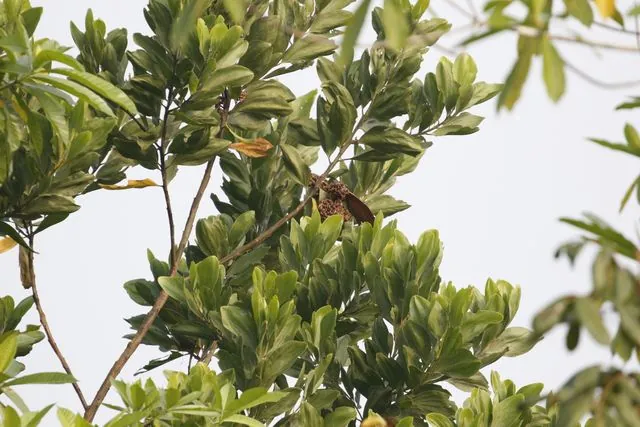
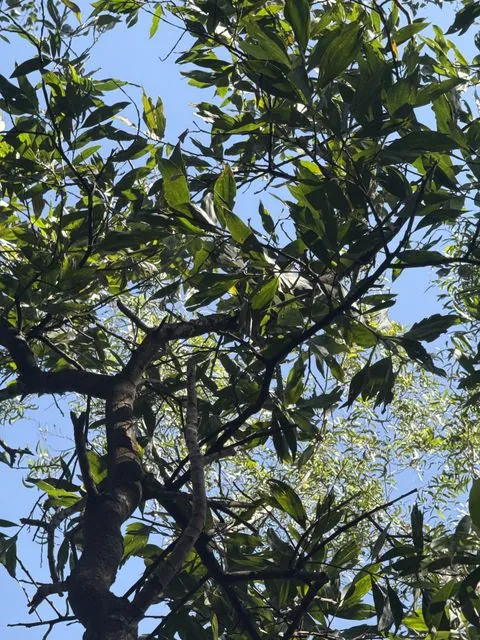
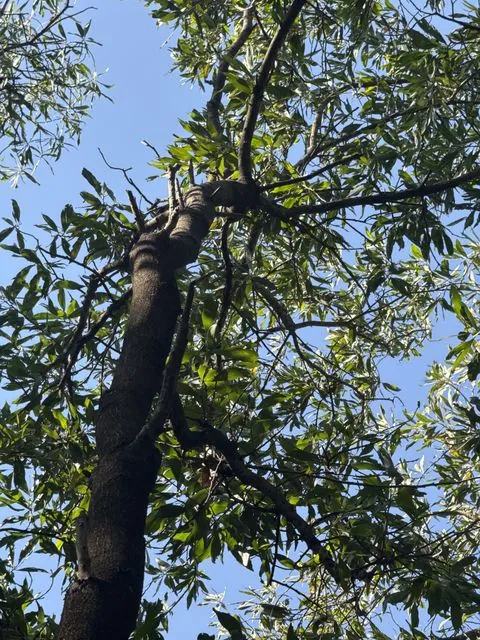
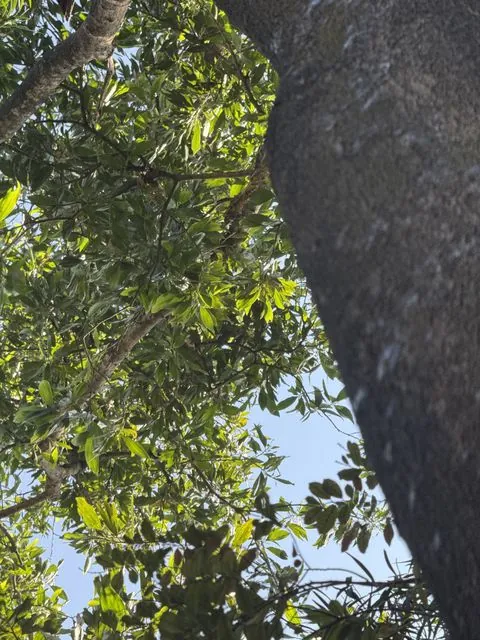
Photos and conservation status
IUCN Red List category: The extinction-risk category that the International Union for Conservation of Nature (IUCN) assigns to a species on its Red List. EX Extinct: there is no reasonable doubt that the last individual has died. EW Extinct in the wild: it survives only in cultivation, in captivity or as a population far outside its past range. CR Critically endangered, EN Endangered and VU Vulnerable: the three threatened categories, from an extremely high to a high risk of extinction in the wild. NT Near threatened: close to qualifying as threatened. LC Least concern: evaluated and not threatened. DD Data deficient: there is not enough information to assess its risk. NE Not evaluated: not yet assessed against the criteria. It describes the risk of the species worldwide, not its situation in a project's area. — The extinction-risk category that the International Union for Conservation of Nature (IUCN) assigns to a species on its Red List. EX Extinct: there is no reasonable doubt that the last individual has died. EW Extinct in the wild: it survives only in cultivation, in captivity or as a population far outside its past range. CR Critically endangered, EN Endangered and VU Vulnerable: the three threatened categories, from an extremely high to a high risk of extinction in the wild. NT Near threatened: close to qualifying as threatened. LC Least concern: evaluated and not threatened. DD Data deficient: there is not enough information to assess its risk. NE Not evaluated: not yet assessed against the criteria. It describes the risk of the species worldwide, not its situation in a project's area.
Least concern (LC)
Source: IUCN Red List via GBIF, queried on 2026-10-08 23:55.
Research-grade iNaturalist observations via GBIF, CC0 or CC BY licences only, queried on 2026-10-08 23:55.
Interacciones documentadas
GloBI says it is documented somewhere in the world. Biolitica answers whether it could happen here.
A documented interaction means it was recorded somewhere in the world. It does not mean it occurs here.
Types shown: 8 of 8
is a host of
×
is eaten by
×
is an arbuscular mycorrhizal host of
×
interacts with
×
has as a vector
×
has as a pathogen
×
is an ectomycorrhizal host of
×
is a symbiont of
×
Blocks that do not sit under a navigation concept heading keep the source's own term: no navigation concept has been assigned to them yet.
is a host of
127 organisms
The authority declares no effect on this species for this term: neither that it harms it nor that it benefits it. In the source ontology symbiosis covers mutualism, commensalism and parasitism alike, so this block holds attackers and allies side by side.
Organism
Reads as
Studies
Where it was documented
Actions
Lasiodiplodia venezuelensis
is a host of
29
no location
29 sources · 29 records
Crous, P.W., Muller, M.M., Sanchez, R.M., Giordano, L. , Virginia Bianchinotti, M., Anderson, F.E., and Groenewald, J.Z.. 2015. Resolving %Tiarosporella% spp. allied to Botryosphaeriaceae and Phacidiaceae. Phytotaxa 202(2):73-93
Published in globalbioticinteractions/usda-fungus-host
Context: Venezuela · no date published
Claim type
Published relationship between two taxa
Version
GloBI 0.11
Reuse
This release publishes no reuse terms for this record.
Venezuela · no date publishedWhere it is: line:hash://sha256/021a206a1459bcca7e251c73f5bd180fc3ac342a09c499855fe42e21fc09edcf!/interactions.tsv.gz!/L4179175
No public URL for this record
Zhao, J.P., Lu, Q., Liang, J., Decock, C., and Zhang, X.Y.. 2010. %Lasiodiplodia pseudotheobromae%, a new record of pathogenic fungus from some subtropical and tropical trees in southern China. Cryptog. Mycol. 31:431-439
Published in globalbioticinteractions/usda-fungus-host
Context: Venezuela · no date published
Claim type
Published relationship between two taxa
Version
GloBI 0.11
Reuse
This release publishes no reuse terms for this record.
Venezuela · no date publishedWhere it is: line:hash://sha256/021a206a1459bcca7e251c73f5bd180fc3ac342a09c499855fe42e21fc09edcf!/interactions.tsv.gz!/L4249062
No public URL for this record
Dissanayake, A.J., Phillips, A.J.L., Li, X.H., and Hyde, K.D.. 2016. Botryosphaeriaceae: Current status of genera and species. Mycosphere 7(7):1001-1073
Published in globalbioticinteractions/usda-fungus-host
Context: Venezuela · no date published
Claim type
Published relationship between two taxa
Version
GloBI 0.11
Reuse
This release publishes no reuse terms for this record.
Venezuela · no date publishedWhere it is: line:hash://sha256/021a206a1459bcca7e251c73f5bd180fc3ac342a09c499855fe42e21fc09edcf!/interactions.tsv.gz!/L4271341
No public URL for this record
Phillips, A.J.L., Alves, A., Pennycook, S.R., Johnston, P.R., Ramaley, A., Akulov, A., and Crous, P.W.. 2008. Resolving the phylogenetic and taxonomic status of dark-spored teleomorph genera in the Botryosphaeriaceae. Persoonia 21:29-55
Published in globalbioticinteractions/usda-fungus-host
Context: Venezuela · no date published
Claim type
Published relationship between two taxa
Version
GloBI 0.11
Reuse
This release publishes no reuse terms for this record.
Venezuela · no date publishedWhere it is: line:hash://sha256/021a206a1459bcca7e251c73f5bd180fc3ac342a09c499855fe42e21fc09edcf!/interactions.tsv.gz!/L4271638
No public URL for this record
Phillips, A.J.L., and Alves, A.. 2009. Taxonomy, phylogeny, and epitypification of %Melanops tulasnei%, the type species of %Melanops%. Fung. Diversity 38:155-166
Published in globalbioticinteractions/usda-fungus-host
Context: Venezuela · no date published
Claim type
Published relationship between two taxa
Version
GloBI 0.11
Reuse
This release publishes no reuse terms for this record.
Venezuela · no date publishedWhere it is: line:hash://sha256/021a206a1459bcca7e251c73f5bd180fc3ac342a09c499855fe42e21fc09edcf!/interactions.tsv.gz!/L4271716
No public URL for this record
Minnis, A.M., Kennedy, A.H., Grenier, D.B., Palm, M.E., and Rossman, A.Y.. 2012. Phylogeny and taxonomic revision of the %Planistromellaceae% including its coelomycetous anamorphs: contributions towards a monograph of the genus %Kellermania%. Persoonia 29:11-28
Published in globalbioticinteractions/usda-fungus-host
Context: Venezuela · no date published
Claim type
Published relationship between two taxa
Version
GloBI 0.11
Reuse
This release publishes no reuse terms for this record.
Venezuela · no date publishedWhere it is: line:hash://sha256/021a206a1459bcca7e251c73f5bd180fc3ac342a09c499855fe42e21fc09edcf!/interactions.tsv.gz!/L4271806
No public URL for this record
Li, C.Q., Liu, F.F., Li, J.Q., Liu, Q.L., and Chen, S.F.. 2018. Botryosphaeriaceae from %Eucalyptus% plantations and adjacent plants in China. Persoonia 40:63-95
Published in globalbioticinteractions/usda-fungus-host
Context: Venezuela · no date published
Claim type
Published relationship between two taxa
Version
GloBI 0.11
Reuse
This release publishes no reuse terms for this record.
Venezuela · no date publishedWhere it is: line:hash://sha256/021a206a1459bcca7e251c73f5bd180fc3ac342a09c499855fe42e21fc09edcf!/interactions.tsv.gz!/L4272138
No public URL for this record
Netto, M.S.B., Lima, W.G., Correia, K.C., Da Silva, C.F.B., Thon, M., Martins, R.B., Miller, R.N.G., Michereff, S.J., and Camara, M.P.S.. 2017. Analysis of phylogeny, distribution, and pathogenicity of Botryosphaeriaceae species associated with gummosis of %Anacardium% in Brazil…
Published in globalbioticinteractions/usda-fungus-host
Context: Venezuela · no date published
Claim type
Published relationship between two taxa
Version
GloBI 0.11
Reuse
This release publishes no reuse terms for this record.
Venezuela · no date publishedWhere it is: line:hash://sha256/021a206a1459bcca7e251c73f5bd180fc3ac342a09c499855fe42e21fc09edcf!/interactions.tsv.gz!/L4272211
No public URL for this record
And 21 more sources, with fewer records, not listed here.
A published relationship says these two taxa were documented interacting. It does not say how often, or that it happens in this project's region.
Lasiodiplodia theobromaeBotryosphaeriaceae
is a host of
17
no location
17 sources · 17 records
http://www.ncbi.nlm.nih.gov/nuccore/73624983
Published in millerse/Wardeh-et-al.-2015
Context: no place published · no date published
Claim type
Published relationship between two taxa
Version
GloBI 0.11
Reuse
This release publishes no reuse terms for this record.
no place published · no date publishedWhere it is: line:hash://sha256/021a206a1459bcca7e251c73f5bd180fc3ac342a09c499855fe42e21fc09edcf!/interactions.tsv.gz!/L214510
This release publishes no reuse terms for this record.
no place published · no date publishedWhere it is: line:hash://sha256/021a206a1459bcca7e251c73f5bd180fc3ac342a09c499855fe42e21fc09edcf!/interactions.tsv.gz!/L232306
This release publishes no reuse terms for this record.
no place published · no date publishedWhere it is: line:hash://sha256/021a206a1459bcca7e251c73f5bd180fc3ac342a09c499855fe42e21fc09edcf!/interactions.tsv.gz!/L239578
This release publishes no reuse terms for this record.
no place published · no date publishedWhere it is: line:hash://sha256/021a206a1459bcca7e251c73f5bd180fc3ac342a09c499855fe42e21fc09edcf!/interactions.tsv.gz!/L250902
This release publishes no reuse terms for this record.
no place published · no date publishedWhere it is: line:hash://sha256/021a206a1459bcca7e251c73f5bd180fc3ac342a09c499855fe42e21fc09edcf!/interactions.tsv.gz!/L260318
This release publishes no reuse terms for this record.
no place published · no date publishedWhere it is: line:hash://sha256/021a206a1459bcca7e251c73f5bd180fc3ac342a09c499855fe42e21fc09edcf!/interactions.tsv.gz!/L268459
This release publishes no reuse terms for this record.
no place published · no date publishedWhere it is: line:hash://sha256/021a206a1459bcca7e251c73f5bd180fc3ac342a09c499855fe42e21fc09edcf!/interactions.tsv.gz!/L275414
This release publishes no reuse terms for this record.
no place published · no date publishedWhere it is: line:hash://sha256/021a206a1459bcca7e251c73f5bd180fc3ac342a09c499855fe42e21fc09edcf!/interactions.tsv.gz!/L281616
And 9 more sources, with fewer records, not listed here.
A published relationship says these two taxa were documented interacting. It does not say how often, or that it happens in this project's region.
Rhizobium leucaenaeRhizobiaceae
is a host of
11
no location
11 sources · 11 records
http://www.ncbi.nlm.nih.gov/nuccore/166787841
Published in millerse/Wardeh-et-al.-2015
Context: no place published · no date published
Claim type
Published relationship between two taxa
Version
GloBI 0.11
Reuse
This release publishes no reuse terms for this record.
no place published · no date publishedWhere it is: line:hash://sha256/021a206a1459bcca7e251c73f5bd180fc3ac342a09c499855fe42e21fc09edcf!/interactions.tsv.gz!/L200243
This release publishes no reuse terms for this record.
no place published · no date publishedWhere it is: line:hash://sha256/021a206a1459bcca7e251c73f5bd180fc3ac342a09c499855fe42e21fc09edcf!/interactions.tsv.gz!/L225217
This release publishes no reuse terms for this record.
no place published · no date publishedWhere it is: line:hash://sha256/021a206a1459bcca7e251c73f5bd180fc3ac342a09c499855fe42e21fc09edcf!/interactions.tsv.gz!/L239886
This release publishes no reuse terms for this record.
no place published · no date publishedWhere it is: line:hash://sha256/021a206a1459bcca7e251c73f5bd180fc3ac342a09c499855fe42e21fc09edcf!/interactions.tsv.gz!/L251170
This release publishes no reuse terms for this record.
no place published · no date publishedWhere it is: line:hash://sha256/021a206a1459bcca7e251c73f5bd180fc3ac342a09c499855fe42e21fc09edcf!/interactions.tsv.gz!/L260507
This release publishes no reuse terms for this record.
no place published · no date publishedWhere it is: line:hash://sha256/021a206a1459bcca7e251c73f5bd180fc3ac342a09c499855fe42e21fc09edcf!/interactions.tsv.gz!/L268631
This release publishes no reuse terms for this record.
no place published · no date publishedWhere it is: line:hash://sha256/021a206a1459bcca7e251c73f5bd180fc3ac342a09c499855fe42e21fc09edcf!/interactions.tsv.gz!/L275567
This release publishes no reuse terms for this record.
no place published · no date publishedWhere it is: line:hash://sha256/021a206a1459bcca7e251c73f5bd180fc3ac342a09c499855fe42e21fc09edcf!/interactions.tsv.gz!/L281766
And 3 more sources, with fewer records, not listed here.
A published relationship says these two taxa were documented interacting. It does not say how often, or that it happens in this project's region.
Ceratocystis acaciivora
is a host of
7
no location
7 sources · 7 records
De Beer, Z.W., Duong, T.A., Barnes, I., Wingfield, B.D., and Wingfield, M.J.. 2014. Redefining %Ceratocystis% and allied genera. Stud. Mycol. 79:187-219
Published in globalbioticinteractions/usda-fungus-host
Context: Indonesia · no date published
Claim type
Published relationship between two taxa
Version
GloBI 0.11
Reuse
This release publishes no reuse terms for this record.
Indonesia · no date publishedWhere it is: line:hash://sha256/021a206a1459bcca7e251c73f5bd180fc3ac342a09c499855fe42e21fc09edcf!/interactions.tsv.gz!/L4265061
No public URL for this record
Chen, S.F., van Wyk, M., Roux, J., Wingfield, M.J., Xie, Y.J., and Zhou, X.D.. 2013. Taxonomy and pathogenicity of %Ceratocystis% species on %Eucalyptus% trees in South China, including %Ceratocystis chinaeucensis% sp. nov.. Fung. Diversity 58:267-279
Published in globalbioticinteractions/usda-fungus-host
Context: Indonesia · no date published
Claim type
Published relationship between two taxa
Version
GloBI 0.11
Reuse
This release publishes no reuse terms for this record.
Indonesia · no date publishedWhere it is: line:hash://sha256/021a206a1459bcca7e251c73f5bd180fc3ac342a09c499855fe42e21fc09edcf!/interactions.tsv.gz!/L4336921
No public URL for this record
Kamgan Nkuekam, G., Wingfield, M.J., Mohammed, C., Carnegie, A.J., Pegg, G.S., and Roux, J.. 2012. %Ceratocystis% species, including two new species associated with nitidulid beetles, on eucalypts in Australia . Antonie van Leeuwenhoek, Suppl. 101:217-241
Published in globalbioticinteractions/usda-fungus-host
Context: Indonesia · no date published
Claim type
Published relationship between two taxa
Version
GloBI 0.11
Reuse
This release publishes no reuse terms for this record.
Indonesia · no date publishedWhere it is: line:hash://sha256/021a206a1459bcca7e251c73f5bd180fc3ac342a09c499855fe42e21fc09edcf!/interactions.tsv.gz!/L4336967
No public URL for this record
Al Adawi, A.O., Barnes, I., khan, I. A., Al Subhi, A.M., Al Jahwari, A. A., Deadman, M.L., Wingfield, B.D., and Wingfield, M.J.. 2013. %Ceratocystis manginecans% associated with a serious wilt disease of two native legume trees in Oman and Pakistan. Australas. Pl. Pathol. 42:179…
Published in globalbioticinteractions/usda-fungus-host
Context: Indonesia · no date published
Claim type
Published relationship between two taxa
Version
GloBI 0.11
Reuse
This release publishes no reuse terms for this record.
Indonesia · no date publishedWhere it is: line:hash://sha256/021a206a1459bcca7e251c73f5bd180fc3ac342a09c499855fe42e21fc09edcf!/interactions.tsv.gz!/L4337014
No public URL for this record
Nkuekam, G.K., Wingfield, M.J., and Roux, J.. 2013. %Ceratocystis% species, including two new taxa, from %Eucalyptus% trees in South Africa. Australas. Pl. Pathol. 42:283-311
Published in globalbioticinteractions/usda-fungus-host
Context: Indonesia · no date published
Claim type
Published relationship between two taxa
Version
GloBI 0.11
Reuse
This release publishes no reuse terms for this record.
Indonesia · no date publishedWhere it is: line:hash://sha256/021a206a1459bcca7e251c73f5bd180fc3ac342a09c499855fe42e21fc09edcf!/interactions.tsv.gz!/L4337053
No public URL for this record
Mbenoun, M., Wingfield, M.J., Begoude Boyogueno, A.D., Wingfield, B.D., and Roux, J.. 2014. Molecular phylogenetic analyses reveal three new %Ceratocystis% species and provide evidence for geographic differentiation of the genus in Africa. Mycol. Progr. 13:219-240
Published in globalbioticinteractions/usda-fungus-host
Context: Indonesia · no date published
Claim type
Published relationship between two taxa
Version
GloBI 0.11
Reuse
This release publishes no reuse terms for this record.
Indonesia · no date publishedWhere it is: line:hash://sha256/021a206a1459bcca7e251c73f5bd180fc3ac342a09c499855fe42e21fc09edcf!/interactions.tsv.gz!/L4337124
No public URL for this record
Paul, N.C., Nam, S.-S., Kachroo, A., Kim, Y.-H., and Yang, J.-W.. 2018. Characterization and pathogenicity of sweet potato (%Ipomoea batatas%) black rot caused by %Ceratocystis fimbriata% in Korea. Eur. J. Pl. Pathol. 152(3):833-840
Published in globalbioticinteractions/usda-fungus-host
Context: Indonesia · no date published
Claim type
Published relationship between two taxa
Version
GloBI 0.11
Reuse
This release publishes no reuse terms for this record.
Indonesia · no date publishedWhere it is: line:hash://sha256/021a206a1459bcca7e251c73f5bd180fc3ac342a09c499855fe42e21fc09edcf!/interactions.tsv.gz!/L4337214
No public URL for this record
A published relationship says these two taxa were documented interacting. It does not say how often, or that it happens in this project's region.
This term does declare that the organism harms this species.
Organism
Reads as
Studies
Where it was documented
Actions
Black LooperHyposidra talacaGeometridae
is eaten by
2
no location
2 sources · 4 records
Edward Baker; Ian Kitching; George W Beccaloni; Amoret Whitaker; Steen Dupont; Vincent Smith; John S Noyes (2017). NHM Interactions Bank. https://doi.org/10.5519/0060767. Accessed at <https://data.nhm.ac.uk/dataset/82e807f0-6273-4f19-be0a-7f7558442a25/resource/f84ad9f1-bd0c-4811…
Published in globalbioticinteractions/natural-history-museum-london-interactions-bank
Record contexts (sample): no place published · no date published; no place published · no date published
Claim type
Published relationship between two taxa
Version
GloBI 0.11
Reuse
This release publishes no reuse terms for this record.
no place published · no date publishedWhere it is: line:hash://sha256/021a206a1459bcca7e251c73f5bd180fc3ac342a09c499855fe42e21fc09edcf!/interactions.tsv.gz!/L18706237
no place published · no date publishedWhere it is: line:hash://sha256/021a206a1459bcca7e251c73f5bd180fc3ac342a09c499855fe42e21fc09edcf!/interactions.tsv.gz!/L18706272
no place published · no date publishedWhere it is: line:hash://sha256/021a206a1459bcca7e251c73f5bd180fc3ac342a09c499855fe42e21fc09edcf!/interactions.tsv.gz!/L18706392
ABRS 2009. Australian Faunal Directory. Hyposidra talaca. Australian Biological Resources StudyNode, Canberra. Accessed at <http://biodiversity.org.au/afd/taxa/5192f7f8-99a4-46a6-8f79-1d2424f09cf1> on 04 Sep 2026.
Published in globalbioticinteractions/siad
Context: no place published · no date published
Claim type
Published relationship between two taxa
Version
GloBI 0.11
Reuse
This release publishes no reuse terms for this record.
no place published · no date publishedWhere it is: line:hash://sha256/021a206a1459bcca7e251c73f5bd180fc3ac342a09c499855fe42e21fc09edcf!/interactions.tsv.gz!/L18990073
A published relationship says these two taxa were documented interacting. It does not say how often, or that it happens in this project's region.
Cleora repetitaGeometridae
is eaten by
1
no location
1 source · 1 record
ABRS 2009. Australian Faunal Directory. Cleora repetita. Australian Biological Resources StudyNode, Canberra. Accessed at <http://biodiversity.org.au/afd/taxa/bc6b2934-5251-4af8-956a-802d5c744173> on 04 Sep 2026.
Published in globalbioticinteractions/siad
Context: no place published · no date published
Claim type
Published relationship between two taxa
Version
GloBI 0.11
Reuse
This release publishes no reuse terms for this record.
no place published · no date publishedWhere it is: line:hash://sha256/021a206a1459bcca7e251c73f5bd180fc3ac342a09c499855fe42e21fc09edcf!/interactions.tsv.gz!/L18986496
A published relationship says these two taxa were documented interacting. It does not say how often, or that it happens in this project's region.
Setothesea asigna
is eaten by
1
no location
1 source · 3 records
Greenwood, L.K., and Moore, N.F. 1982. The Nudaurelia B group of small RNA-containing viruses of insects: serological identification of several new isolates. J. Invertber. Pathol. 39:407-409
Published in millerse/Ecological-Database-of-the-World-s-Insect-Pathogens
Record contexts (sample): Malaysia/Sarawak/Sabah · no date published; Malaysia/Sarawak/Sabah · no date published
Claim type
Published relationship between two taxa
Version
GloBI 0.11
Reuse
This release publishes no reuse terms for this record.
Malaysia/Sarawak/Sabah · no date publishedWhere it is: line:hash://sha256/021a206a1459bcca7e251c73f5bd180fc3ac342a09c499855fe42e21fc09edcf!/interactions.tsv.gz!/L192816
Malaysia/Sarawak/Sabah · no date publishedWhere it is: line:hash://sha256/021a206a1459bcca7e251c73f5bd180fc3ac342a09c499855fe42e21fc09edcf!/interactions.tsv.gz!/L192843
Malaysia/Sarawak/Sabah · no date publishedWhere it is: line:hash://sha256/021a206a1459bcca7e251c73f5bd180fc3ac342a09c499855fe42e21fc09edcf!/interactions.tsv.gz!/L192864
No public URL for this record
A published relationship says these two taxa were documented interacting. It does not say how often, or that it happens in this project's region.
This release publishes no reuse terms for this record.
Brazil · no date publishedWhere it is: line:hash://sha256/021a206a1459bcca7e251c73f5bd180fc3ac342a09c499855fe42e21fc09edcf!/interactions.tsv.gz!/L13346396
No public URL for this record
A published relationship says these two taxa were documented interacting. It does not say how often, or that it happens in this project's region.
The authority declares no effect on this species for this term: neither that it harms it nor that it benefits it.
Organism
Reads as
Studies
Where it was documented
Actions
Acaulospora melleaAcaulosporaceae
is an arbuscular mycorrhizal host of
1
not compared
1 source · 3 records
S. Pehim Limbu, S.L. Stürmer, G. Zahn, C.A. Aguilar-Trigueros, N. Rogers, & V.B. Chaudhary, Climate-linked biogeography of mycorrhizal fungal spore traits, Proc. Natl. Acad. Sci. U.S.A. 122 (29) e2505059122, https://doi.org/10.1073/pnas.2505059122 (2025). Accessed at <https://gi…
Published in globalbioticinteractions/limbu2025
Record contexts (sample): no place published · no date published; no place published · no date published
Claim type
Published relationship between two taxa
Version
GloBI 0.11
Reuse
This release publishes no reuse terms for this record.
no place published · no date publishedWhere it is: line:hash://sha256/021a206a1459bcca7e251c73f5bd180fc3ac342a09c499855fe42e21fc09edcf!/interactions.tsv.gz!/L13440484
no place published · no date publishedWhere it is: line:hash://sha256/021a206a1459bcca7e251c73f5bd180fc3ac342a09c499855fe42e21fc09edcf!/interactions.tsv.gz!/L13440486
no place published · no date publishedWhere it is: line:hash://sha256/021a206a1459bcca7e251c73f5bd180fc3ac342a09c499855fe42e21fc09edcf!/interactions.tsv.gz!/L13440624
A published relationship says these two taxa were documented interacting. It does not say how often, or that it happens in this project's region.
Gigaspora margaritaGigasporaceae
is an arbuscular mycorrhizal host of
1
not compared
1 source · 2 records
S. Pehim Limbu, S.L. Stürmer, G. Zahn, C.A. Aguilar-Trigueros, N. Rogers, & V.B. Chaudhary, Climate-linked biogeography of mycorrhizal fungal spore traits, Proc. Natl. Acad. Sci. U.S.A. 122 (29) e2505059122, https://doi.org/10.1073/pnas.2505059122 (2025). Accessed at <https://gi…
Published in globalbioticinteractions/limbu2025
Record contexts (sample): no place published · no date published; no place published · no date published
Claim type
Published relationship between two taxa
Version
GloBI 0.11
Reuse
This release publishes no reuse terms for this record.
no place published · no date publishedWhere it is: line:hash://sha256/021a206a1459bcca7e251c73f5bd180fc3ac342a09c499855fe42e21fc09edcf!/interactions.tsv.gz!/L13432889
no place published · no date publishedWhere it is: line:hash://sha256/021a206a1459bcca7e251c73f5bd180fc3ac342a09c499855fe42e21fc09edcf!/interactions.tsv.gz!/L13433156
A published relationship says these two taxa were documented interacting. It does not say how often, or that it happens in this project's region.
Rhizophagus manihotisGlomeraceae
is an arbuscular mycorrhizal host of
1
not compared
1 source · 1 record
S. Pehim Limbu, S.L. Stürmer, G. Zahn, C.A. Aguilar-Trigueros, N. Rogers, & V.B. Chaudhary, Climate-linked biogeography of mycorrhizal fungal spore traits, Proc. Natl. Acad. Sci. U.S.A. 122 (29) e2505059122, https://doi.org/10.1073/pnas.2505059122 (2025). Accessed at <https://gi…
Published in globalbioticinteractions/limbu2025
Context: no place published · no date published
Claim type
Published relationship between two taxa
Version
GloBI 0.11
Reuse
This release publishes no reuse terms for this record.
no place published · no date publishedWhere it is: line:hash://sha256/021a206a1459bcca7e251c73f5bd180fc3ac342a09c499855fe42e21fc09edcf!/interactions.tsv.gz!/L13427781
A published relationship says these two taxa were documented interacting. It does not say how often, or that it happens in this project's region.
Scutellospora calosporaGigasporaceae
is an arbuscular mycorrhizal host of
1
not compared
1 source · 2 records
S. Pehim Limbu, S.L. Stürmer, G. Zahn, C.A. Aguilar-Trigueros, N. Rogers, & V.B. Chaudhary, Climate-linked biogeography of mycorrhizal fungal spore traits, Proc. Natl. Acad. Sci. U.S.A. 122 (29) e2505059122, https://doi.org/10.1073/pnas.2505059122 (2025). Accessed at <https://gi…
Published in globalbioticinteractions/limbu2025
Record contexts (sample): no place published · no date published; no place published · no date published
Claim type
Published relationship between two taxa
Version
GloBI 0.11
Reuse
This release publishes no reuse terms for this record.
no place published · no date publishedWhere it is: line:hash://sha256/021a206a1459bcca7e251c73f5bd180fc3ac342a09c499855fe42e21fc09edcf!/interactions.tsv.gz!/L13426367
no place published · no date publishedWhere it is: line:hash://sha256/021a206a1459bcca7e251c73f5bd180fc3ac342a09c499855fe42e21fc09edcf!/interactions.tsv.gz!/L13426773
Context: Wanling Qiongzhong · no date published · Preserved specimen
Claim type
Published relationship between two taxa
Version
GloBI 0.11
Reuse
This release publishes no reuse terms for this record.
Wanling Qiongzhong · no date published · Preserved specimenAs published: PreservedSpecimenWhere it is: line:hash://sha256/021a206a1459bcca7e251c73f5bd180fc3ac342a09c499855fe42e21fc09edcf!/interactions.tsv.gz!/L23923224
Context: Wanling Qiongzhong · no date published · Preserved specimen
Claim type
Published relationship between two taxa
Version
GloBI 0.11
Reuse
This release publishes no reuse terms for this record.
Wanling Qiongzhong · no date published · Preserved specimenAs published: PreservedSpecimenWhere it is: line:hash://sha256/021a206a1459bcca7e251c73f5bd180fc3ac342a09c499855fe42e21fc09edcf!/interactions.tsv.gz!/L23923228
A published relationship says these two taxa were documented interacting. It does not say how often, or that it happens in this project's region.
Fusarium equisetiNectriaceae
interacts with
1
no location
1 source · 1 record
A. Thessen. 2014. Species associations extracted from EOL text data objects via text mining. Accessed at <https://github.com/EOL/pseudonitzchia/archive/e5838965a186fba4b7215cd0d179c4526773bad5.zip> on 04 Sep 2026.
Published in EOL/pseudonitzchia
Context: no place published · no date published
Claim type
Published relationship between two taxa
Version
GloBI 0.11
Reuse
This release publishes no reuse terms for this record.
no place published · no date publishedWhere it is: line:hash://sha256/021a206a1459bcca7e251c73f5bd180fc3ac342a09c499855fe42e21fc09edcf!/interactions.tsv.gz!/L1416907
A published relationship says these two taxa were documented interacting. It does not say how often, or that it happens in this project's region.
Cochliobolus geniculatusPleosporaceae
interacts with
1
no location
1 source · 1 record
A. Thessen. 2014. Species associations extracted from EOL text data objects via text mining. Accessed at <https://github.com/EOL/pseudonitzchia/archive/e5838965a186fba4b7215cd0d179c4526773bad5.zip> on 04 Sep 2026.
Published in EOL/pseudonitzchia
Context: no place published · no date published
Claim type
Published relationship between two taxa
Version
GloBI 0.11
Reuse
This release publishes no reuse terms for this record.
no place published · no date publishedWhere it is: line:hash://sha256/021a206a1459bcca7e251c73f5bd180fc3ac342a09c499855fe42e21fc09edcf!/interactions.tsv.gz!/L1417033
Lima, I. P., et al. 2016. Frugivoria e dispersão de sementes por morcegos na Reserva Natural Vale, sudeste do Brasil. In: Floresta Atlântica de Tabuleiro: diversidade e endemismos na Reserva Natural Vale (S. G. Rolim & L. F. Tavares de Menezes, eds.). pp. 433-452. Editora Rupest…
Published in globalbioticinteractions/batbase
Context: Reserva Natural Vale · no date published
Claim type
Published relationship between two taxa
Version
GloBI 0.11
Reuse
This release publishes no reuse terms for this record.
Reserva Natural Vale · no date publishedWhere it is: line:hash://sha256/021a206a1459bcca7e251c73f5bd180fc3ac342a09c499855fe42e21fc09edcf!/interactions.tsv.gz!/L12452351
No public URL for this record
A published relationship says these two taxa were documented interacting. It does not say how often, or that it happens in this project's region.
birdsAves
has as a vector
1
no location
Not a modelling unit: the source publishes it at class level.
1 source · 1 record
@Book{Cooper_2013, year = {2013}, author = {Wendy Cooper and William T. Cooper}, title = {{Australian rainforest fruits}}, publisher = {CSIRO Publishing}, pages = {272}, }
Published in globalbioticinteractions/austraits
Context: no place published · no date published · literature
Claim type
Published relationship between two taxa
Version
GloBI 0.11
Reuse
This release publishes no reuse terms for this record.
no place published · no date published · literatureAs published: literatureWhere it is: line:hash://sha256/021a206a1459bcca7e251c73f5bd180fc3ac342a09c499855fe42e21fc09edcf!/interactions.tsv.gz!/L13123522
No public URL for this record
A published relationship says these two taxa were documented interacting. It does not say how often, or that it happens in this project's region.
Showing 2 of 2, by number of studies
has as a pathogen
2 organisms
This term does declare that the organism harms this species. It is a narrow block, and it cannot be the only one that is read: the most frequent term in the catalogue is the one above, which declares no harm, so much of what a reader would call a pest arrives there instead.
Organism
Reads as
Studies
Where it was documented
Actions
Pallidocercospora
has as a pathogen
1
no location
1 source · 2 records
Crous,P.W., Groenewald,J.Z., Pongpanich,K., Himaman,W., Arzanlou,M. and Wingfield,M.J.; Cryptic speciation and host specificity among Mycosphaerella spp. occurring on Australian Acacia species grown as exotics in the tropics; Stud. Mycol. 50, 457-469 (2004)
Published in globalbioticinteractions/fungaltraits
Record contexts (sample): no place published · no date published · Material sample; no place published · no date published · Material sample
Claim type
Published relationship between two taxa
Version
GloBI 0.11
Reuse
This release publishes no reuse terms for this record.
no place published · no date published · Material sampleAs published: Material SampleWhere it is: line:hash://sha256/021a206a1459bcca7e251c73f5bd180fc3ac342a09c499855fe42e21fc09edcf!/interactions.tsv.gz!/L10937148
no place published · no date published · Material sampleAs published: Material SampleWhere it is: line:hash://sha256/021a206a1459bcca7e251c73f5bd180fc3ac342a09c499855fe42e21fc09edcf!/interactions.tsv.gz!/L10937151
No public URL for this record
A published relationship says these two taxa were documented interacting. It does not say how often, or that it happens in this project's region.
PallidocercosporaMycosphaerellaceae
has as a pathogen
1
no location
Not a modelling unit: the source publishes it at genus level.
1 source · 1 record
Crous,P.W., Groenewald,J.Z., Pongpanich,K., Himaman,W., Arzanlou,M. and Wingfield,M.J.; Cryptic speciation and host specificity among Mycosphaerella spp. occurring on Australian Acacia species grown as exotics in the tropics; Stud. Mycol. 50, 457-469 (2004)
Published in globalbioticinteractions/fungaltraits
Context: no place published · no date published · Material sample
Claim type
Published relationship between two taxa
Version
GloBI 0.11
Reuse
This release publishes no reuse terms for this record.
no place published · no date published · Material sampleAs published: Material SampleWhere it is: line:hash://sha256/021a206a1459bcca7e251c73f5bd180fc3ac342a09c499855fe42e21fc09edcf!/interactions.tsv.gz!/L10937143
No public URL for this record
A published relationship says these two taxa were documented interacting. It does not say how often, or that it happens in this project's region.
Showing 2 of 2, by number of studies
is an ectomycorrhizal host of
1 organism
The authority declares no effect on this species for this term: neither that it harms it nor that it benefits it.
Organism
Reads as
Studies
Where it was documented
Actions
Pisolithus albusSclerodermataceae
is an ectomycorrhizal host of
1
not compared
1 source · 1 record
Martin F, J Diez, B Dell, and C Delaruelle, Phylogeography of the ectomycorrhizal Pisolithus species as inferred from the nuclear ribosomal DNA ITS sequences. New Phytologist 153:345-358. doi:10.1046/j.0028-646X.2001.00313.x
Published in globalbioticinteractions/maps
Context: no place published · no date published
Claim type
Published relationship between two taxa
Version
GloBI 0.11
Reuse
This release publishes no reuse terms for this record.
no place published · no date publishedWhere it is: line:hash://sha256/021a206a1459bcca7e251c73f5bd180fc3ac342a09c499855fe42e21fc09edcf!/interactions.tsv.gz!/L7319467
A published relationship says these two taxa were documented interacting. It does not say how often, or that it happens in this project's region.
Showing 1 of 1, by number of studies
is a symbiont of
1 organism
The authority declares no effect on this species for this term: neither that it harms it nor that it benefits it. In the source ontology symbiosis covers mutualism, commensalism and parasitism alike, so this block holds attackers and allies side by side.
Organism
Reads as
Studies
Where it was documented
Actions
Fungi Including LichensFungi
is a symbiont of
4
not compared
Not a modelling unit: the source publishes it at kingdom level.
4 sources · 80 records
Germon A, Guerrini IA, Bordron B, Bouillet J-P, Nouvellon Y, de Moraes Goncalves JL, Jourdan C Paula RR, Laclau J-P. 2018. Consequences of mixing Acacia mangium and Eucalyptus grandis trees on soil exploration by fine-roots down to a depth of 17 m. Plant Soil 424: 203-220.
Published in globalbioticinteractions/fred
Record contexts (sample): no place published · Jan. 1, 2013; no place published · Jan. 1, 2013
Claim type
Published relationship between two taxa
Version
GloBI 0.11
Reuse
This release publishes no reuse terms for this record.
no place published · Jan. 1, 2013As published: 2013-01-01T00:00:00ZWhere it is: line:hash://sha256/021a206a1459bcca7e251c73f5bd180fc3ac342a09c499855fe42e21fc09edcf!/interactions.tsv.gz!/L24435986
no place published · Jan. 1, 2013As published: 2013-01-01T00:00:00ZWhere it is: line:hash://sha256/021a206a1459bcca7e251c73f5bd180fc3ac342a09c499855fe42e21fc09edcf!/interactions.tsv.gz!/L24435991
no place published · Jan. 1, 2013As published: 2013-01-01T00:00:00ZWhere it is: line:hash://sha256/021a206a1459bcca7e251c73f5bd180fc3ac342a09c499855fe42e21fc09edcf!/interactions.tsv.gz!/L24435993
And 37 more records of this source, not listed here.
Bouillet JP, Laclau JP, Goncalves JLM, Moreira MZ, Trivelin PCO, Jourdan C, Silva EV, Piccolo MC, Tsai SM, Galiana A. 2008. Mixed-species plantations of Acacia mangium and Eucalyptus grandis in Brazil 2: Nitrogen accumulation in the stands and biological N2 fixation. Forest ecol…
Published in globalbioticinteractions/fred
Record contexts (sample): no place published · Jan. 1, 2004; no place published · Jan. 1, 2004
Claim type
Published relationship between two taxa
Version
GloBI 0.11
Reuse
This release publishes no reuse terms for this record.
no place published · Jan. 1, 2004As published: 2004-01-01T00:00:00ZWhere it is: line:hash://sha256/021a206a1459bcca7e251c73f5bd180fc3ac342a09c499855fe42e21fc09edcf!/interactions.tsv.gz!/L24435056
no place published · Jan. 1, 2004As published: 2004-01-01T00:00:00ZWhere it is: line:hash://sha256/021a206a1459bcca7e251c73f5bd180fc3ac342a09c499855fe42e21fc09edcf!/interactions.tsv.gz!/L24435057
no place published · Jan. 1, 2004As published: 2004-01-01T00:00:00ZWhere it is: line:hash://sha256/021a206a1459bcca7e251c73f5bd180fc3ac342a09c499855fe42e21fc09edcf!/interactions.tsv.gz!/L24435058
And 28 more records of this source, not listed here.
Ma C, Xiong Y, Li L, Guo D. 2016. Root and leaf decomposition become decoupled over time: implications for below- and above-ground relationships. Functional Ecology, early view article.
Published in globalbioticinteractions/fred
Record contexts (sample): no place published · no date published; no place published · no date published
Claim type
Published relationship between two taxa
Version
GloBI 0.11
Reuse
This release publishes no reuse terms for this record.
no place published · no date publishedWhere it is: line:hash://sha256/021a206a1459bcca7e251c73f5bd180fc3ac342a09c499855fe42e21fc09edcf!/interactions.tsv.gz!/L24424615
no place published · no date publishedWhere it is: line:hash://sha256/021a206a1459bcca7e251c73f5bd180fc3ac342a09c499855fe42e21fc09edcf!/interactions.tsv.gz!/L24424617
no place published · no date publishedWhere it is: line:hash://sha256/021a206a1459bcca7e251c73f5bd180fc3ac342a09c499855fe42e21fc09edcf!/interactions.tsv.gz!/L24424620
And 5 more records of this source, not listed here.
Syahrinudin. 2005. The potential of oil palm and forest plantations for carbon sequestration on degraded land in Indonesia.
Published in globalbioticinteractions/fred
Context: no place published · no date published
Claim type
Published relationship between two taxa
Version
GloBI 0.11
Reuse
This release publishes no reuse terms for this record.
no place published · no date publishedWhere it is: line:hash://sha256/021a206a1459bcca7e251c73f5bd180fc3ac342a09c499855fe42e21fc09edcf!/interactions.tsv.gz!/L24433783
No public URL for this record
A published relationship says these two taxa were documented interacting. It does not say how often, or that it happens in this project's region.
Showing 1 of 1, by number of studies
Acompañantes documentados
This agronomic reading comes from a source reserved for internal use, so it is not shown here.
Documented uses and recommendations
Uses and recommendations that a source documents for this species beside a crop, each in its own context. They are the source's statements, not traits of the species and not Biolítica's recommendations, and none of them is a relation between two species.
Among the sources you can read, none documents a use or recommendation of this species beside a crop.