Canonical name: The scientific name without its authorship or date, for example Zea mays instead of Zea mays L. — The scientific name without its authorship or date, for example Zea mays instead of Zea mays L.
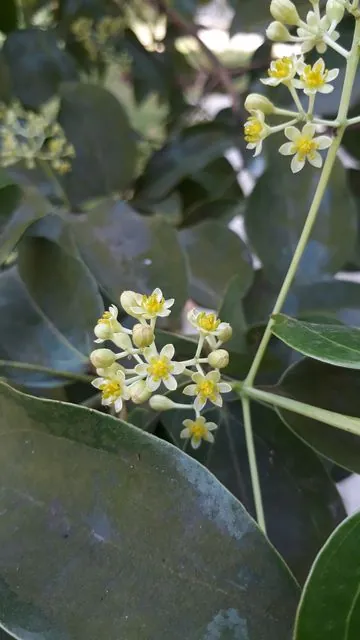
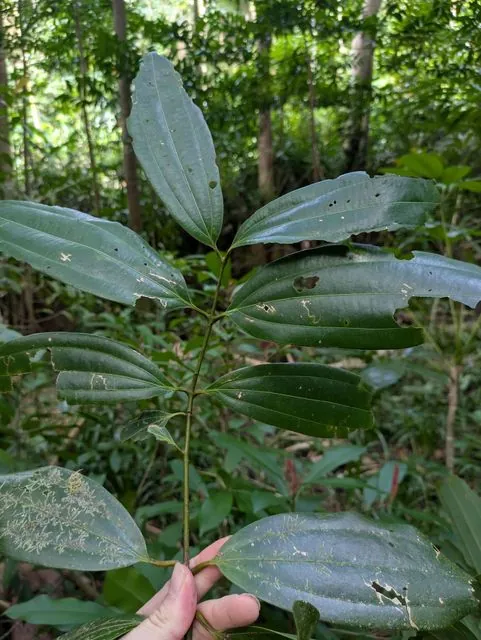
Cinnamomum verum
Authorship: The author or authors credited with publishing the scientific name. It is written after the name, sometimes with the year, for example L. (Linnaeus) in Zea mays L. An author in parentheses first published the name in another genus or rank. — The author or authors credited with publishing the scientific name. It is written after the name, sometimes with the year, for example L. (Linnaeus) in Zea mays L. An author in parentheses first published the name in another genus or rank.
J.Presl
Common names
True Cinnamon, Ceylon Cinnamon, Cinnamon, Sri Lanka Cinnamon, True cinnamon tree, Ceylon cinnamon tree, Cinnamon, Ceylon cinnamonNames in other languages (59)Canela-verdadeira, Canelier de Ceylan, Canella ceilánica, Cannelier, Cannelier, Cannelier de Ceylan, Cannella, Cannellier, Ceiloninis cinamonas, Ceylon-Zimtbaum, Ceylon-kaneel, Ceylonzimt, Ceylonzimtbaum, Cinnamomo, Echter Zimt, Kayumanis, Mdarasini, Ochodrangebard, Seylan tarçını, Tseiloni kaneelipuu, Zimtbaum, canela, canela-da-Índia, canela-de-tubo, canela-do-ceilão, caneleira-da-índia, caneleiro, canelero de Ceilán, cannelier de Ceylan, cejlonski cimetovec, ceyloninkaneli, cinamomo, cynamonowiec cejloński, echter Ceylonzimt, skořicovník pravý, tarçın, xi lan rou gui, äkta kanel, škoricovník cejlónsky, Κανέλα Κεϋλάνης, Карычнае дрэва, Корица, Коричник цейлонский, Цимет / Cimet, Դարչին, दालचिनी, இலவங்கப்பட்டை, கருவாப்பட்டை, దాల్చిన చెక్క, കറുവമരം, කුරුඳු, อบเชยเทศ, シナモン, 斯里兰卡肉桂, 琉璃草, 贴骨散, 錫蘭肉桂, 铁箍散, 锡兰肉桂, 锡兰肉桂、(斯里兰卡肉桂)
Kingdom: One of the broadest ranks of biological classification. It groups organisms that share very basic features, for example plants (Plantae), animals (Animalia) or fungi (Fungi). — One of the broadest ranks of biological classification. It groups organisms that share very basic features, for example plants (Plantae), animals (Animalia) or fungi (Fungi).
Plantae
Phylum: Rank below kingdom that groups organisms with a shared general body plan, for example chordates (Chordata), arthropods (Arthropoda) or vascular plants (Tracheophyta). In botany the same rank is also called division. — Rank below kingdom that groups organisms with a shared general body plan, for example chordates (Chordata), arthropods (Arthropoda) or vascular plants (Tracheophyta). In botany the same rank is also called division.
Tracheophyta
Class: Rank below phylum, for example mammals (Mammalia), birds (Aves), insects (Insecta) or monocot plants such as grasses and orchids (Liliopsida). — Rank below phylum, for example mammals (Mammalia), birds (Aves), insects (Insecta) or monocot plants such as grasses and orchids (Liliopsida).
Magnoliopsida
Order: Rank below class that groups related families, for example grasses and their relatives (Poales) or bats (Chiroptera). — Rank below class that groups related families, for example grasses and their relatives (Poales) or bats (Chiroptera).
Laurales
Family: Rank below order that groups related genera. Family names usually end in -aceae in botany (for example Poaceae, the grass family) and in -idae in zoology (for example Felidae, the cat family). — Rank below order that groups related genera. Family names usually end in -aceae in botany (for example Poaceae, the grass family) and in -idae in zoology (for example Felidae, the cat family).
Lauraceae
Genus: Rank that groups closely related species. Its name is the first word of a species' scientific name and starts with a capital letter, for example Zea in Zea mays. — Rank that groups closely related species. Its name is the first word of a species' scientific name and starts with a capital letter, for example Zea in Zea mays.
Cinnamomum
Specific epithet: The second word of a species' scientific name. On its own it does not name the species: it always goes with the genus, for example mays in Zea mays. — The second word of a species' scientific name. On its own it does not name the species: it always goes with the genus, for example mays in Zea mays.
verum
Taxonomic rank: The level a name occupies in the hierarchy of biological classification, such as kingdom, family, genus, species or subspecies. — The level a name occupies in the hierarchy of biological classification, such as kingdom, family, genus, species or subspecies.
species
Reference species
Cinnamomum verum
Taxonomic status: Whether the taxonomic catalogue the record comes from currently accepts this name for the organism, or treats it as a synonym of another accepted name or as doubtful. — Whether the taxonomic catalogue the record comes from currently accepts this name for the organism, or treats it as a synonym of another accepted name or as doubtful.
accepted name
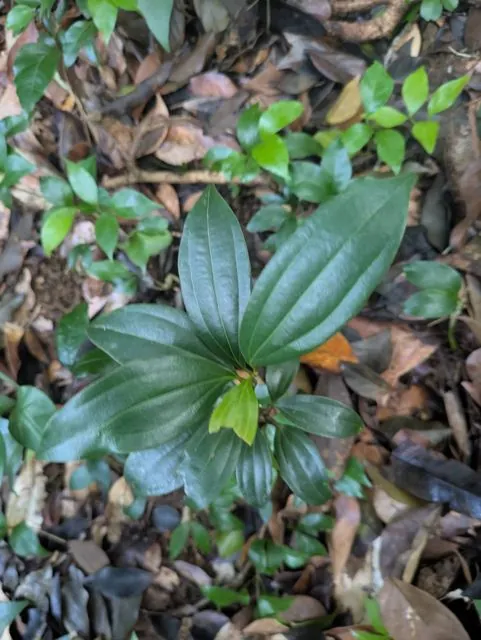
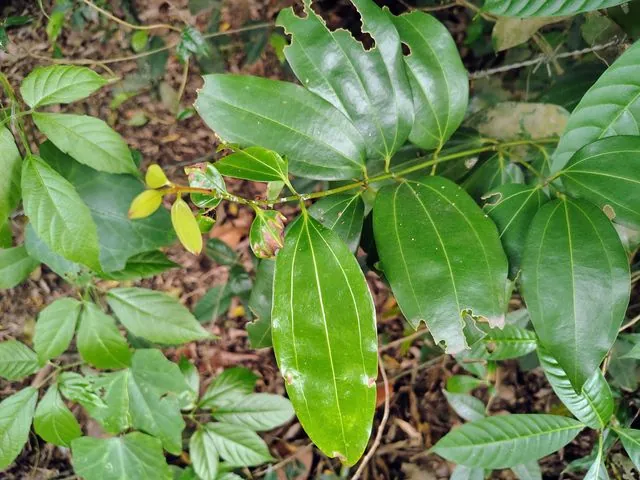
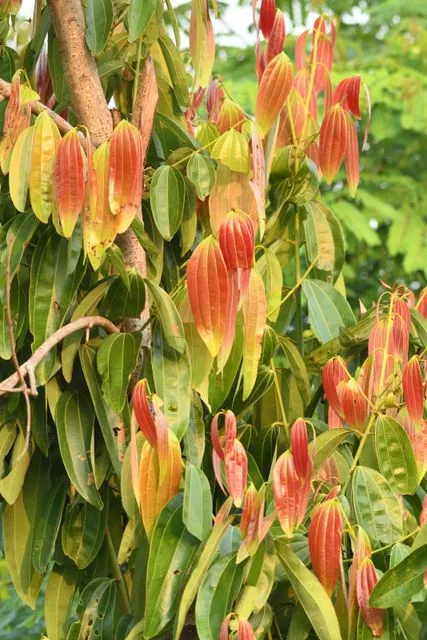
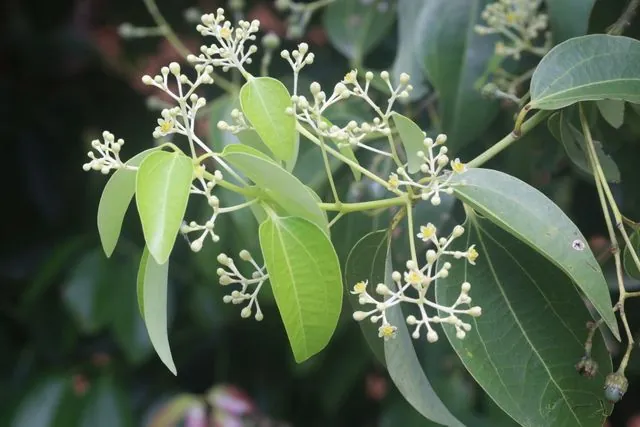
Photos and conservation status
IUCN Red List category: The extinction-risk category that the International Union for Conservation of Nature (IUCN) assigns to a species on its Red List. EX Extinct: there is no reasonable doubt that the last individual has died. EW Extinct in the wild: it survives only in cultivation, in captivity or as a population far outside its past range. CR Critically endangered, EN Endangered and VU Vulnerable: the three threatened categories, from an extremely high to a high risk of extinction in the wild. NT Near threatened: close to qualifying as threatened. LC Least concern: evaluated and not threatened. DD Data deficient: there is not enough information to assess its risk. NE Not evaluated: not yet assessed against the criteria. It describes the risk of the species worldwide, not its situation in a project's area. — The extinction-risk category that the International Union for Conservation of Nature (IUCN) assigns to a species on its Red List. EX Extinct: there is no reasonable doubt that the last individual has died. EW Extinct in the wild: it survives only in cultivation, in captivity or as a population far outside its past range. CR Critically endangered, EN Endangered and VU Vulnerable: the three threatened categories, from an extremely high to a high risk of extinction in the wild. NT Near threatened: close to qualifying as threatened. LC Least concern: evaluated and not threatened. DD Data deficient: there is not enough information to assess its risk. NE Not evaluated: not yet assessed against the criteria. It describes the risk of the species worldwide, not its situation in a project's area.
Vulnerable (VU)
Source: IUCN Red List via GBIF, queried on 2026-10-13 10:57.
Research-grade iNaturalist observations via GBIF, CC0 or CC BY licences only, queried on 2026-10-13 10:57.
Interacciones documentadas
GloBI says it is documented somewhere in the world. Biolitica answers whether it could happen here.
A documented interaction means it was recorded somewhere in the world. It does not mean it occurs here.
Types shown: 4 of 4
is a host of
×
is eaten by
×
interacts with
×
has as a parasite
×
Blocks that do not sit under a navigation concept heading keep the source's own term: no navigation concept has been assigned to them yet.
is a host of
161 organisms
The authority declares no effect on this species for this term: neither that it harms it nor that it benefits it. In the source ontology symbiosis covers mutualism, commensalism and parasitism alike, so this block holds attackers and allies side by side.
Context: Washington · April 8, 1908 · Preserved specimen
Claim type
Published relationship between two taxa
Version
GloBI 0.11
Reuse
This release publishes no reuse terms for this record.
Washington · April 8, 1908 · Preserved specimenAs published: 1908-04-08T00:00:00Z · PreservedSpecimenWhere it is: line:hash://sha256/021a206a1459bcca7e251c73f5bd180fc3ac342a09c499855fe42e21fc09edcf!/interactions.tsv.gz!/L17281074
Context: Washington · April 29, 1906 · Preserved specimen
Claim type
Published relationship between two taxa
Version
GloBI 0.11
Reuse
This release publishes no reuse terms for this record.
Washington · April 29, 1906 · Preserved specimenAs published: 1906-04-29T00:00:00Z · PreservedSpecimenWhere it is: line:hash://sha256/021a206a1459bcca7e251c73f5bd180fc3ac342a09c499855fe42e21fc09edcf!/interactions.tsv.gz!/L17281075
Context: Washington · April 27, 1907 · Preserved specimen
Claim type
Published relationship between two taxa
Version
GloBI 0.11
Reuse
This release publishes no reuse terms for this record.
Washington · April 27, 1907 · Preserved specimenAs published: 1907-04-27T00:00:00Z · PreservedSpecimenWhere it is: line:hash://sha256/021a206a1459bcca7e251c73f5bd180fc3ac342a09c499855fe42e21fc09edcf!/interactions.tsv.gz!/L17281077
Anonymous. 1960. Index of Plant Diseases in the United States. U.S.D.A. Agric. Handb. 165:1-531
Published in globalbioticinteractions/usda-fungus-host
Context: United States · no date published
Claim type
Published relationship between two taxa
Version
GloBI 0.11
Reuse
This release publishes no reuse terms for this record.
United States · no date publishedWhere it is: line:hash://sha256/021a206a1459bcca7e251c73f5bd180fc3ac342a09c499855fe42e21fc09edcf!/interactions.tsv.gz!/L3615667
No public URL for this record
Alfieri Jr., S.A., Langdon, K.R., Wehlburg, C., and Kimbrough, J.W.. 1984. Index of Plant Diseases in Florida (Revised). Florida Dept. Agric. and Consumer Serv., Div. Plant Ind. Bull. 11:1-389
Published in globalbioticinteractions/usda-fungus-host
Context: United States · no date published
Claim type
Published relationship between two taxa
Version
GloBI 0.11
Reuse
This release publishes no reuse terms for this record.
United States · no date publishedWhere it is: line:hash://sha256/021a206a1459bcca7e251c73f5bd180fc3ac342a09c499855fe42e21fc09edcf!/interactions.tsv.gz!/L3685575
No public URL for this record
Urtiaga, R.. 2004?. Indice de enfermedades en plantas de Venezuela y Cuba, Second Edition. Unknown journal or publisher :301
Published in globalbioticinteractions/usda-fungus-host
Context: Cuba · no date published
Claim type
Published relationship between two taxa
Version
GloBI 0.11
Reuse
This release publishes no reuse terms for this record.
Cuba · no date publishedWhere it is: line:hash://sha256/021a206a1459bcca7e251c73f5bd180fc3ac342a09c499855fe42e21fc09edcf!/interactions.tsv.gz!/L3980126
No public URL for this record
Ebbels, D.L., and Allen, D.J.. 1979. A supplementary and annotated list of plant diseases, pathogens and associated fungi in Tanzania.. Phytopathol. Pap. 22:1-89
Published in globalbioticinteractions/usda-fungus-host
Context: Tanzania · no date published
Claim type
Published relationship between two taxa
Version
GloBI 0.11
Reuse
This release publishes no reuse terms for this record.
Tanzania · no date publishedWhere it is: line:hash://sha256/021a206a1459bcca7e251c73f5bd180fc3ac342a09c499855fe42e21fc09edcf!/interactions.tsv.gz!/L4227272
No public URL for this record
A published relationship says these two taxa were documented interacting. It does not say how often, or that it happens in this project's region.
Context: Java, Bogor · no date published · Preserved specimen
Claim type
Published relationship between two taxa
Version
GloBI 0.11
Reuse
This release publishes no reuse terms for this record.
Java, Bogor · no date published · Preserved specimenAs published: PreservedSpecimenWhere it is: line:hash://sha256/021a206a1459bcca7e251c73f5bd180fc3ac342a09c499855fe42e21fc09edcf!/interactions.tsv.gz!/L16924430
Context: Java, Bogor · May 8, 1955 · Preserved specimen
Claim type
Published relationship between two taxa
Version
GloBI 0.11
Reuse
This release publishes no reuse terms for this record.
Java, Bogor · May 8, 1955 · Preserved specimenAs published: 1955-05-08T00:00:00Z · PreservedSpecimenWhere it is: line:hash://sha256/021a206a1459bcca7e251c73f5bd180fc3ac342a09c499855fe42e21fc09edcf!/interactions.tsv.gz!/L16924431
Context: no place published · Jan. 1, 1900 · Preserved specimen
Claim type
Published relationship between two taxa
Version
GloBI 0.11
Reuse
This release publishes no reuse terms for this record.
no place published · Jan. 1, 1900 · Preserved specimenAs published: 1900-01-01T00:00:00Z · Preserved SpecimenWhere it is: line:hash://sha256/021a206a1459bcca7e251c73f5bd180fc3ac342a09c499855fe42e21fc09edcf!/interactions.tsv.gz!/L17681394
Farr, David F.; Rossman, Amy Y.; Castlebury, Lisa A. (2021). United States National Fungus Collections Fungus-Host Dataset. Ag Data Commons. https://doi.org/10.15482/USDA.ADC/1524414. Accessed at <https://github.com/globalbioticinteractions/usda-fungus-host/archive/47a3882c0c536…
Published in globalbioticinteractions/usda-fungus-host
Context: Indonesia · no date published
Claim type
Published relationship between two taxa
Version
GloBI 0.11
Reuse
This release publishes no reuse terms for this record.
Indonesia · no date publishedWhere it is: line:hash://sha256/021a206a1459bcca7e251c73f5bd180fc3ac342a09c499855fe42e21fc09edcf!/interactions.tsv.gz!/L3669038
A published relationship says these two taxa were documented interacting. It does not say how often, or that it happens in this project's region.
Pestalotia cinnamomi
is a host of
5
no location
5 sources · 6 records
Nag Raj, T.R.. 1993. Coelomycetous anamorphs with appendage-bearing conidia. Mycologue Publications, Waterloo, Ontario :1-1101
Published in globalbioticinteractions/usda-fungus-host
Record contexts (sample): Indonesia · no date published; Sri Lanka · no date published
Claim type
Published relationship between two taxa
Version
GloBI 0.11
Reuse
This release publishes no reuse terms for this record.
Indonesia · no date publishedWhere it is: line:hash://sha256/021a206a1459bcca7e251c73f5bd180fc3ac342a09c499855fe42e21fc09edcf!/interactions.tsv.gz!/L4172813
Sri Lanka · no date publishedWhere it is: line:hash://sha256/021a206a1459bcca7e251c73f5bd180fc3ac342a09c499855fe42e21fc09edcf!/interactions.tsv.gz!/L4172815
No public URL for this record
Mathur, R.S.. 1979. The Coelomycetes of India. Bishen Singh Mahendra Pal Singh, Delhi, India. :460
Published in globalbioticinteractions/usda-fungus-host
Context: India · no date published
Claim type
Published relationship between two taxa
Version
GloBI 0.11
Reuse
This release publishes no reuse terms for this record.
India · no date publishedWhere it is: line:hash://sha256/021a206a1459bcca7e251c73f5bd180fc3ac342a09c499855fe42e21fc09edcf!/interactions.tsv.gz!/L3983497
No public URL for this record
Benjamin, C.R., and Slot, A.. 1969. Fungi of Haiti. Sydowia 23:125-163
Published in globalbioticinteractions/usda-fungus-host
Context: Haiti · no date published
Claim type
Published relationship between two taxa
Version
GloBI 0.11
Reuse
This release publishes no reuse terms for this record.
Haiti · no date publishedWhere it is: line:hash://sha256/021a206a1459bcca7e251c73f5bd180fc3ac342a09c499855fe42e21fc09edcf!/interactions.tsv.gz!/L3999665
No public URL for this record
Ciferri, R.. 1929. Micoflora Domingensis. Lista de los hongos hasta la fecha indicados en Santo Domingo. Ser. B, Bot. Estac. Agron. Moca 14:1-260
Published in globalbioticinteractions/usda-fungus-host
Context: Dominican Republic · no date published
Claim type
Published relationship between two taxa
Version
GloBI 0.11
Reuse
This release publishes no reuse terms for this record.
Dominican Republic · no date publishedWhere it is: line:hash://sha256/021a206a1459bcca7e251c73f5bd180fc3ac342a09c499855fe42e21fc09edcf!/interactions.tsv.gz!/L4044973
No public URL for this record
Guba, E.F.. 1961. Monograph of %Monochaetia% and %Pestalotia%. Harvard Univ. Press, Cambridge, MA :342
Published in globalbioticinteractions/usda-fungus-host
Context: Indonesia · no date published
Claim type
Published relationship between two taxa
Version
GloBI 0.11
Reuse
This release publishes no reuse terms for this record.
Indonesia · no date publishedWhere it is: line:hash://sha256/021a206a1459bcca7e251c73f5bd180fc3ac342a09c499855fe42e21fc09edcf!/interactions.tsv.gz!/L4224887
No public URL for this record
A published relationship says these two taxa were documented interacting. It does not say how often, or that it happens in this project's region.
Aecidium cinnamomi
is a host of
4
no location
4 sources · 4 records
Spaulding, P.. 1961. Foreign Diseases of Forest Trees of the World. U.S.D.A. Agric. Handb. 197:1-361
Published in globalbioticinteractions/usda-fungus-host
Context: Indonesia · no date published
Claim type
Published relationship between two taxa
Version
GloBI 0.11
Reuse
This release publishes no reuse terms for this record.
Indonesia · no date publishedWhere it is: line:hash://sha256/021a206a1459bcca7e251c73f5bd180fc3ac342a09c499855fe42e21fc09edcf!/interactions.tsv.gz!/L4109176
No public URL for this record
Kobayashi, T., and et al., Eds.. 1993. Diagnostic Manual for Industrial Crop Diseases in Indonesia. Dainippon Printing, Indonesia :107
Published in globalbioticinteractions/usda-fungus-host
Context: Indonesia · no date published
Claim type
Published relationship between two taxa
Version
GloBI 0.11
Reuse
This release publishes no reuse terms for this record.
Indonesia · no date publishedWhere it is: line:hash://sha256/021a206a1459bcca7e251c73f5bd180fc3ac342a09c499855fe42e21fc09edcf!/interactions.tsv.gz!/L4246871
No public URL for this record
Boedijn, K.B.. 1959. The Uredinales of Indonesia. Nova Hedwigia 1:463-496
Published in globalbioticinteractions/usda-fungus-host
Context: Indonesia · no date published
Claim type
Published relationship between two taxa
Version
GloBI 0.11
Reuse
This release publishes no reuse terms for this record.
Indonesia · no date publishedWhere it is: line:hash://sha256/021a206a1459bcca7e251c73f5bd180fc3ac342a09c499855fe42e21fc09edcf!/interactions.tsv.gz!/L4269398
No public URL for this record
Wahyuno, D., and Kakishima, M.. 2015. %Aecidium cinnamomi% (Uredinales) has an endocyclic life cycle on %Cinnamomum% spp. (Lauraceae) in Indonesia. Australasian Plant Disease Notes 10:3
Published in globalbioticinteractions/usda-fungus-host
Context: Indonesia · no date published
Claim type
Published relationship between two taxa
Version
GloBI 0.11
Reuse
This release publishes no reuse terms for this record.
Indonesia · no date publishedWhere it is: line:hash://sha256/021a206a1459bcca7e251c73f5bd180fc3ac342a09c499855fe42e21fc09edcf!/interactions.tsv.gz!/L4388878
No public URL for this record
A published relationship says these two taxa were documented interacting. It does not say how often, or that it happens in this project's region.
This term does declare that the organism harms this species.
Organism
Reads as
Studies
Where it was documented
Actions
Aetalion reticulatumAetalionidae
is eaten by
2
no location
2 sources · 2 records
Oliveira, G.C.de S. (2025) Record of <i>Cinnamomum verum</i> (Lauraceae) as a host for treehoppers (Hemiptera, Auchenorrhyncha: Aetalionidae and Membracidae). <i>Entomological Communications</i>, 7, 1–3. https://doi.org/10.37486/2675-1305.ec07021
Published in urn:lsid:checklistbank.org:dataset:2317
Context: no place published · no date published
Claim type
Published relationship between two taxa
Version
GloBI 0.11
Reuse
This release publishes no reuse terms for this record.
no place published · no date publishedWhere it is: line:hash://sha256/021a206a1459bcca7e251c73f5bd180fc3ac342a09c499855fe42e21fc09edcf!/interactions.tsv.gz!/L1309400
Oliveira, G.C.de S., Crispim, F.G.de A., Vilela, D.S. & de Souza, M.M. (2025) Honeydew of <i>Aethalion reticulatum</i> (Linnaeus, 1767) (Hemiptera: Aethalionidae) as a food resource for social wasps (Vespidae: Polistinae) in an urban area within the Atlantic Forest-Cerrado e…
Published in urn:lsid:checklistbank.org:dataset:2317
Context: no place published · no date published
Claim type
Published relationship between two taxa
Version
GloBI 0.11
Reuse
This release publishes no reuse terms for this record.
no place published · no date publishedWhere it is: line:hash://sha256/021a206a1459bcca7e251c73f5bd180fc3ac342a09c499855fe42e21fc09edcf!/interactions.tsv.gz!/L1313447
A published relationship says these two taxa were documented interacting. It does not say how often, or that it happens in this project's region.
Suana concolorLasiocampidae
is eaten by
1
no location
1 source · 1 record
Edward Baker; Ian Kitching; George W Beccaloni; Amoret Whitaker; Steen Dupont; Vincent Smith; John S Noyes (2017). NHM Interactions Bank. https://doi.org/10.5519/0060767. Accessed at <https://data.nhm.ac.uk/dataset/82e807f0-6273-4f19-be0a-7f7558442a25/resource/f84ad9f1-bd0c-4811…
Published in globalbioticinteractions/natural-history-museum-london-interactions-bank
Context: no place published · no date published
Claim type
Published relationship between two taxa
Version
GloBI 0.11
Reuse
This release publishes no reuse terms for this record.
no place published · no date publishedWhere it is: line:hash://sha256/021a206a1459bcca7e251c73f5bd180fc3ac342a09c499855fe42e21fc09edcf!/interactions.tsv.gz!/L18695847
A published relationship says these two taxa were documented interacting. It does not say how often, or that it happens in this project's region.
Dasychira albiplagaErebidae
is eaten by
1
no location
1 source · 1 record
Edward Baker; Ian Kitching; George W Beccaloni; Amoret Whitaker; Steen Dupont; Vincent Smith; John S Noyes (2017). NHM Interactions Bank. https://doi.org/10.5519/0060767. Accessed at <https://data.nhm.ac.uk/dataset/82e807f0-6273-4f19-be0a-7f7558442a25/resource/f84ad9f1-bd0c-4811…
Published in globalbioticinteractions/natural-history-museum-london-interactions-bank
Context: no place published · no date published
Claim type
Published relationship between two taxa
Version
GloBI 0.11
Reuse
This release publishes no reuse terms for this record.
no place published · no date publishedWhere it is: line:hash://sha256/021a206a1459bcca7e251c73f5bd180fc3ac342a09c499855fe42e21fc09edcf!/interactions.tsv.gz!/L18718497
A published relationship says these two taxa were documented interacting. It does not say how often, or that it happens in this project's region.
Archips seditiosaTortricidae
is eaten by
1
no location
1 source · 4 records
Edward Baker; Ian Kitching; George W Beccaloni; Amoret Whitaker; Steen Dupont; Vincent Smith; John S Noyes (2017). NHM Interactions Bank. https://doi.org/10.5519/0060767. Accessed at <https://data.nhm.ac.uk/dataset/82e807f0-6273-4f19-be0a-7f7558442a25/resource/f84ad9f1-bd0c-4811…
Published in globalbioticinteractions/natural-history-museum-london-interactions-bank
Record contexts (sample): no place published · no date published; no place published · no date published
Claim type
Published relationship between two taxa
Version
GloBI 0.11
Reuse
This release publishes no reuse terms for this record.
no place published · no date publishedWhere it is: line:hash://sha256/021a206a1459bcca7e251c73f5bd180fc3ac342a09c499855fe42e21fc09edcf!/interactions.tsv.gz!/L18756996
no place published · no date publishedWhere it is: line:hash://sha256/021a206a1459bcca7e251c73f5bd180fc3ac342a09c499855fe42e21fc09edcf!/interactions.tsv.gz!/L18757043
no place published · no date publishedWhere it is: line:hash://sha256/021a206a1459bcca7e251c73f5bd180fc3ac342a09c499855fe42e21fc09edcf!/interactions.tsv.gz!/L18757217
And 1 more record of this source, not listed here.
Context: no place published · April 30, 2025 · Human observation
Claim type
Published relationship between two taxa
Version
GloBI 0.11
Reuse
This release publishes no reuse terms for this record.
no place published · April 30, 2025 · Human observationAs published: 2025-04-30T22:06:00Z · HumanObservationWhere it is: line:hash://sha256/021a206a1459bcca7e251c73f5bd180fc3ac342a09c499855fe42e21fc09edcf!/interactions.tsv.gz!/L5646372
Context: no place published · May 7, 2025 · Human observation
Claim type
Published relationship between two taxa
Version
GloBI 0.11
Reuse
This release publishes no reuse terms for this record.
no place published · May 7, 2025 · Human observationAs published: 2025-05-07T00:23:00Z · HumanObservationWhere it is: line:hash://sha256/021a206a1459bcca7e251c73f5bd180fc3ac342a09c499855fe42e21fc09edcf!/interactions.tsv.gz!/L5646373
Context: no place published · June 20, 2025 · Human observation
Claim type
Published relationship between two taxa
Version
GloBI 0.11
Reuse
This release publishes no reuse terms for this record.
no place published · June 20, 2025 · Human observationAs published: 2025-06-20T20:21:00Z · HumanObservationWhere it is: line:hash://sha256/021a206a1459bcca7e251c73f5bd180fc3ac342a09c499855fe42e21fc09edcf!/interactions.tsv.gz!/L5646377
Published in globalbioticinteractions/arthropodEasyCaptureAMNH
Record contexts (sample): Saint Petersburg, 4950 38 Ave N., Carroll Brothers Nursery, Inc. · no date published · Preserved specimen; Saint Petersburg, 4950 38 Ave N., Carroll Brothers Nursery, Inc. · no date published · LabelObservation
Claim type
Published relationship between two taxa
Version
GloBI 0.11
Reuse
This release publishes no reuse terms for this record.
Saint Petersburg, 4950 38 Ave N., Carroll Brothers Nursery, Inc. · no date published · Preserved specimenAs published: PreservedSpecimenWhere it is: line:hash://sha256/021a206a1459bcca7e251c73f5bd180fc3ac342a09c499855fe42e21fc09edcf!/interactions.tsv.gz!/L15975222
Saint Petersburg, 4950 38 Ave N., Carroll Brothers Nursery, Inc. · no date published · LabelObservationAs published: LabelObservationWhere it is: line:hash://sha256/021a206a1459bcca7e251c73f5bd180fc3ac342a09c499855fe42e21fc09edcf!/interactions.tsv.gz!/L15975223
Saint Petersburg, 4950 38 Ave N., Carroll Brothers Nursery, Inc. · no date published · Preserved specimenAs published: PreservedSpecimenWhere it is: line:hash://sha256/021a206a1459bcca7e251c73f5bd180fc3ac342a09c499855fe42e21fc09edcf!/interactions.tsv.gz!/L15978115
And 1 more record of this source, not listed here.
Published in globalbioticinteractions/arthropodEasyCaptureAMNH
Record contexts (sample): Los Angeles, 1001 North Bundy Drive · March 24, 1951 · Preserved specimen; Los Angeles, 1001 North Bundy Drive · March 24, 1951 · LabelObservation
Claim type
Published relationship between two taxa
Version
GloBI 0.11
Reuse
This release publishes no reuse terms for this record.
Los Angeles, 1001 North Bundy Drive · March 24, 1951 · Preserved specimenAs published: 1951-03-24T00:00:00Z · PreservedSpecimenWhere it is: line:hash://sha256/021a206a1459bcca7e251c73f5bd180fc3ac342a09c499855fe42e21fc09edcf!/interactions.tsv.gz!/L15990332
Los Angeles, 1001 North Bundy Drive · March 24, 1951 · LabelObservationAs published: 1951-03-24T00:00:00Z · LabelObservationWhere it is: line:hash://sha256/021a206a1459bcca7e251c73f5bd180fc3ac342a09c499855fe42e21fc09edcf!/interactions.tsv.gz!/L15990333
Published in globalbioticinteractions/arthropodEasyCaptureAMNH
Record contexts (sample): Ang Mo Kio Ave 1 · July 25, 2002 · Preserved specimen; Ang Mo Kio Ave 1 · July 25, 2002 · LabelObservation
Claim type
Published relationship between two taxa
Version
GloBI 0.11
Reuse
This release publishes no reuse terms for this record.
Ang Mo Kio Ave 1 · July 25, 2002 · Preserved specimenAs published: 2002-07-25T00:00:00Z · PreservedSpecimenWhere it is: line:hash://sha256/021a206a1459bcca7e251c73f5bd180fc3ac342a09c499855fe42e21fc09edcf!/interactions.tsv.gz!/L15894772
Ang Mo Kio Ave 1 · July 25, 2002 · LabelObservationAs published: 2002-07-25T00:00:00Z · LabelObservationWhere it is: line:hash://sha256/021a206a1459bcca7e251c73f5bd180fc3ac342a09c499855fe42e21fc09edcf!/interactions.tsv.gz!/L15894773
This term does declare that the organism harms this species.
Organism
Reads as
Studies
Where it was documented
Actions
Platyplectrus malayensisEulophidae
has as a parasite
1
no location
1 source · 1 record
Hertin976 via Universal Chalcidoidea Database
Published in globalbioticinteractions/natural-history-museum-london-interactions-bank
Context: no place published · no date published
Claim type
Published relationship between two taxa
Version
GloBI 0.11
Reuse
This release publishes no reuse terms for this record.
no place published · no date publishedWhere it is: line:hash://sha256/021a206a1459bcca7e251c73f5bd180fc3ac342a09c499855fe42e21fc09edcf!/interactions.tsv.gz!/L18831060
No public URL for this record
A published relationship says these two taxa were documented interacting. It does not say how often, or that it happens in this project's region.
Showing 1 of 1, by number of studies
Acompañantes documentados
This agronomic reading comes from a source reserved for internal use, so it is not shown here.
Documented uses and recommendations
Uses and recommendations that a source documents for this species beside a crop, each in its own context. They are the source's statements, not traits of the species and not Biolítica's recommendations, and none of them is a relation between two species.
Among the sources you can read, none documents a use or recommendation of this species beside a crop.