Canonical name: The scientific name without its authorship or date, for example Zea mays instead of Zea mays L. — The scientific name without its authorship or date, for example Zea mays instead of Zea mays L.
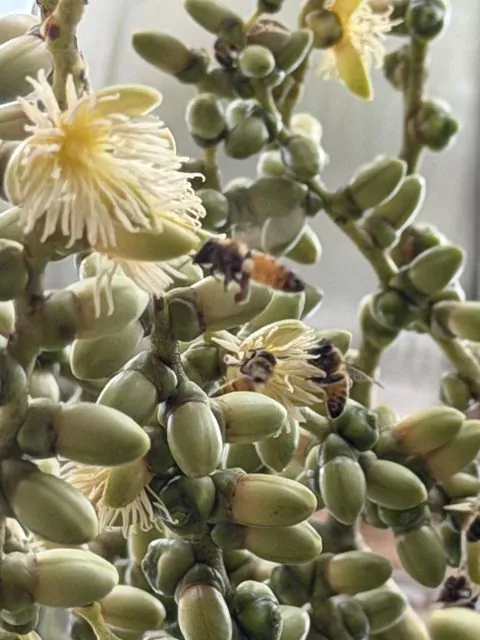
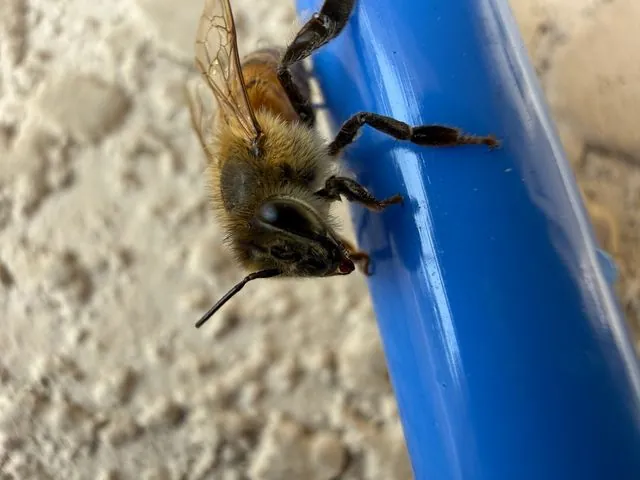
Apis mellifera
Authorship: The author or authors credited with publishing the scientific name. It is written after the name, sometimes with the year, for example L. (Linnaeus) in Zea mays L. An author in parentheses first published the name in another genus or rank. — The author or authors credited with publishing the scientific name. It is written after the name, sometimes with the year, for example L. (Linnaeus) in Zea mays L. An author in parentheses first published the name in another genus or rank.
Linnaeus, 1758
Common names
European Honey Bee, Western Honey Bee, Africanized honey bee, Domestic Honey Bee, Drone-bee, Honey Bee, Killer Bee, HoneybeeNames in other languages (93)Aamoo, Abeille domestique, Abeille domestique, Abeille européenne, Abeille mellifère, Mouche à miel, Abeille européenne, Abeille à miel, Abeja doméstica europea, Abeja melífera, Abeja melífera europea, Abelha-do-mel, Abelha-doméstica, Abelha-europeia, Abella de la Mel Europea, Abella de la mel, Abella do mel, Afrikaanse honingbij, Albină, Ape europea, Ava, Awawa baarate, Bal arısı, Bleta, Eiropas medus bite, Eirópäischer Imp, Europeisk honningbie, Europese honingbij, Europäische Honigbiene, Gwenyn Mêl Orllewinol, Heuningby, Honigbiene, Honingbij, Honningbi, Hunangsbý, Hunnegbei, Háziméh, Hönangim, Italiana, Lebah, Lebah madu, Medonosna pčela, Medonosna čebela, Medus bite, Meemesilane, Mehiläinen, Mielabelo, Nalo-meli, Naminė bitė, Nwowa, Nyawan, Nyuki-asali, Pi honi, Pszczoła miodna, Rietumu medus bite, Tawon undhuhan, Vakarinė medunešė bitė, Westelijke honingbij, Westliche Honigbiene, Zapadna medonosna pčela, abeicha, honningbie, honungsbi, seillean-dìomhain, seillean-lunndach, seillean-meala, seillean-mil, seilleanan-dìomhain, seilleanan-lunndach, seilleanan-meala, tambi, tarhamehiläinen, thuzhomid, včela medonosná, zahodna medonosna čebela, Μέλισσα, Бал аары, Бал арасы, Бджола медоносна, Европейска медоносна пчела, Занбӯри асал, Меданосная пчала, Медоносна пчела, Медоносная пчела, Մեղրատու մեղու, דבורת הדבש, زنبور عسل, نحل العسل الغربي, தேனீ, යුරෝපීය මී මැස්සා, ผึ้งพันธุ์, セイヨウミツバチ, 意大利蜂, 西方蜜蜂, 꿀벌, 양봉꿀벌
Kingdom: One of the broadest ranks of biological classification. It groups organisms that share very basic features, for example plants (Plantae), animals (Animalia) or fungi (Fungi). — One of the broadest ranks of biological classification. It groups organisms that share very basic features, for example plants (Plantae), animals (Animalia) or fungi (Fungi).
Animalia
Phylum: Rank below kingdom that groups organisms with a shared general body plan, for example chordates (Chordata), arthropods (Arthropoda) or vascular plants (Tracheophyta). In botany the same rank is also called division. — Rank below kingdom that groups organisms with a shared general body plan, for example chordates (Chordata), arthropods (Arthropoda) or vascular plants (Tracheophyta). In botany the same rank is also called division.
Arthropoda
Class: Rank below phylum, for example mammals (Mammalia), birds (Aves), insects (Insecta) or monocot plants such as grasses and orchids (Liliopsida). — Rank below phylum, for example mammals (Mammalia), birds (Aves), insects (Insecta) or monocot plants such as grasses and orchids (Liliopsida).
Insecta
Order: Rank below class that groups related families, for example grasses and their relatives (Poales) or bats (Chiroptera). — Rank below class that groups related families, for example grasses and their relatives (Poales) or bats (Chiroptera).
Hymenoptera
Family: Rank below order that groups related genera. Family names usually end in -aceae in botany (for example Poaceae, the grass family) and in -idae in zoology (for example Felidae, the cat family). — Rank below order that groups related genera. Family names usually end in -aceae in botany (for example Poaceae, the grass family) and in -idae in zoology (for example Felidae, the cat family).
Apidae
Genus: Rank that groups closely related species. Its name is the first word of a species' scientific name and starts with a capital letter, for example Zea in Zea mays. — Rank that groups closely related species. Its name is the first word of a species' scientific name and starts with a capital letter, for example Zea in Zea mays.
Apis
Specific epithet: The second word of a species' scientific name. On its own it does not name the species: it always goes with the genus, for example mays in Zea mays. — The second word of a species' scientific name. On its own it does not name the species: it always goes with the genus, for example mays in Zea mays.
mellifera
Taxonomic rank: The level a name occupies in the hierarchy of biological classification, such as kingdom, family, genus, species or subspecies. — The level a name occupies in the hierarchy of biological classification, such as kingdom, family, genus, species or subspecies.
species
Reference species
Apis mellifera
Taxonomic status: Whether the taxonomic catalogue the record comes from currently accepts this name for the organism, or treats it as a synonym of another accepted name or as doubtful. — Whether the taxonomic catalogue the record comes from currently accepts this name for the organism, or treats it as a synonym of another accepted name or as doubtful.
accepted name
Photos and conservation status
IUCN Red List category: The extinction-risk category that the International Union for Conservation of Nature (IUCN) assigns to a species on its Red List. EX Extinct: there is no reasonable doubt that the last individual has died. EW Extinct in the wild: it survives only in cultivation, in captivity or as a population far outside its past range. CR Critically endangered, EN Endangered and VU Vulnerable: the three threatened categories, from an extremely high to a high risk of extinction in the wild. NT Near threatened: close to qualifying as threatened. LC Least concern: evaluated and not threatened. DD Data deficient: there is not enough information to assess its risk. NE Not evaluated: not yet assessed against the criteria. It describes the risk of the species worldwide, not its situation in a project's area. — The extinction-risk category that the International Union for Conservation of Nature (IUCN) assigns to a species on its Red List. EX Extinct: there is no reasonable doubt that the last individual has died. EW Extinct in the wild: it survives only in cultivation, in captivity or as a population far outside its past range. CR Critically endangered, EN Endangered and VU Vulnerable: the three threatened categories, from an extremely high to a high risk of extinction in the wild. NT Near threatened: close to qualifying as threatened. LC Least concern: evaluated and not threatened. DD Data deficient: there is not enough information to assess its risk. NE Not evaluated: not yet assessed against the criteria. It describes the risk of the species worldwide, not its situation in a project's area.
Not evaluated (NE)
Source: IUCN Red List via GBIF, queried on 2026-10-13 11:21.
Research-grade iNaturalist observations via GBIF, CC0 or CC BY licences only, queried on 2026-10-13 11:21.
Interacciones documentadas
GloBI says it is documented somewhere in the world. Biolitica answers whether it could happen here.
A documented interaction means it was recorded somewhere in the world. It does not mean it occurs here.
Types shown: 12 of 20
visits the flowers of
×
interacts with (this species is the record's origin)
×
eats
×
pollinates
×
visits
×
interacts with (this species is the record's destination)
×
is preyed upon by
×
has as a host
×
is eaten by
×
is a mutualist of
×
has its flowers visited by
×
is a host of
×
8 more types with data for this species
Blocks that do not sit under a navigation concept heading keep the source's own term: no navigation concept has been assigned to them yet.
Flower visit
visits the flowers of
more than 1824 organisms
The authority declares no effect on this species for this term: neither that it harms it nor that it benefits it. Visiting a flower is not pollinating it. «Pollinates» is a different term and a different block, and merging the two is the measured defect that turned ~88 shared «pollinators» into birds and primates.
Organism
Reads as
Studies
Where it was documented
Actions
Kenya CloverTrifolium repensFabaceae
visits the flowers of
1266
not compared
1266 sources · 1878 records
G.N. Stone et al., 2017. Dataset: Insect Pollinators Archive. Natural History Museum Data Portal (data.nhm.ac.uk). NHM Portal, doi:10.5519/0062900
Published in globalbioticinteractions/dopi
Record contexts (sample): no place published · Jan. 1, 2011 · DO; no place published · Jan. 1, 2011 · DO
Claim type
Published relationship between two taxa
Version
GloBI 0.11
Reuse
This release publishes no reuse terms for this record.
no place published · Jan. 1, 2011 · DOAs published: 2011-01-01T00:00:00Z · DOWhere it is: line:hash://sha256/021a206a1459bcca7e251c73f5bd180fc3ac342a09c499855fe42e21fc09edcf!/interactions.tsv.gz!/L6441591
no place published · Jan. 1, 2011 · DOAs published: 2011-01-01T00:00:00Z · DOWhere it is: line:hash://sha256/021a206a1459bcca7e251c73f5bd180fc3ac342a09c499855fe42e21fc09edcf!/interactions.tsv.gz!/L6441611
no place published · Jan. 1, 2011 · DOAs published: 2011-01-01T00:00:00Z · DOWhere it is: line:hash://sha256/021a206a1459bcca7e251c73f5bd180fc3ac342a09c499855fe42e21fc09edcf!/interactions.tsv.gz!/L6441612
And 87 more records of this source, not listed here.
Ollerton, J., Trunschke, J. ., Havens, K. ., Landaverde-González, P. ., Keller, A. ., Gilpin, A.-M. ., Rodrigo Rech, A. ., Baronio, G. J. ., Phillips, B. J., Mackin, C. ., Stanley, D. A., Treanore, E. ., Baker, E. ., Rotheray, E. L., Erickson, E. ., Fornoff, F. ., Brearley, F. Q…
Published in globalbioticinteractions/ollerton2022
Record contexts (sample): no place published · no date published; no place published · no date published
Claim type
Published relationship between two taxa
Version
GloBI 0.11
Reuse
This release publishes no reuse terms for this record.
no place published · no date publishedWhere it is: line:hash://sha256/021a206a1459bcca7e251c73f5bd180fc3ac342a09c499855fe42e21fc09edcf!/interactions.tsv.gz!/L3393324
no place published · no date publishedWhere it is: line:hash://sha256/021a206a1459bcca7e251c73f5bd180fc3ac342a09c499855fe42e21fc09edcf!/interactions.tsv.gz!/L3393334
no place published · no date publishedWhere it is: line:hash://sha256/021a206a1459bcca7e251c73f5bd180fc3ac342a09c499855fe42e21fc09edcf!/interactions.tsv.gz!/L3393467
And 52 more records of this source, not listed here.
Record contexts (sample): no place published · Jan. 1, 2012; no place published · Jan. 1, 2012
Claim type
Published relationship between two taxa
Version
GloBI 0.11
Reuse
This release publishes no reuse terms for this record.
no place published · Jan. 1, 2012As published: 2012-01-01T00:00:00ZWhere it is: line:hash://sha256/021a206a1459bcca7e251c73f5bd180fc3ac342a09c499855fe42e21fc09edcf!/interactions.tsv.gz!/L848398
no place published · Jan. 1, 2012As published: 2012-01-01T00:00:00ZWhere it is: line:hash://sha256/021a206a1459bcca7e251c73f5bd180fc3ac342a09c499855fe42e21fc09edcf!/interactions.tsv.gz!/L848478
no place published · Jan. 1, 2012As published: 2012-01-01T00:00:00ZWhere it is: line:hash://sha256/021a206a1459bcca7e251c73f5bd180fc3ac342a09c499855fe42e21fc09edcf!/interactions.tsv.gz!/L848485
And 33 more records of this source, not listed here.
No public URL for this record
2011.
Published in zedomel/magrach2017
Record contexts (sample): no place published · Jan. 1, 2011; no place published · Jan. 1, 2011
Claim type
Published relationship between two taxa
Version
GloBI 0.11
Reuse
This release publishes no reuse terms for this record.
no place published · Jan. 1, 2011As published: 2011-01-01T00:00:00ZWhere it is: line:hash://sha256/021a206a1459bcca7e251c73f5bd180fc3ac342a09c499855fe42e21fc09edcf!/interactions.tsv.gz!/L845043
no place published · Jan. 1, 2011As published: 2011-01-01T00:00:00ZWhere it is: line:hash://sha256/021a206a1459bcca7e251c73f5bd180fc3ac342a09c499855fe42e21fc09edcf!/interactions.tsv.gz!/L845063
no place published · Jan. 1, 2011As published: 2011-01-01T00:00:00ZWhere it is: line:hash://sha256/021a206a1459bcca7e251c73f5bd180fc3ac342a09c499855fe42e21fc09edcf!/interactions.tsv.gz!/L845094
And 25 more records of this source, not listed here.
No public URL for this record
K. A. Orford et al., 2016. Modest enhancements to conventional grassland diversity improve the provision of pollination services. Journal of Applied Ecology, 53. doi:10.1111/1365-2664.12608
Published in globalbioticinteractions/dopi
Record contexts (sample): no place published · Jan. 1, 2012 · DO; no place published · Jan. 1, 2012 · DO
Claim type
Published relationship between two taxa
Version
GloBI 0.11
Reuse
This release publishes no reuse terms for this record.
no place published · Jan. 1, 2012 · DOAs published: 2012-01-01T00:00:00Z · DOWhere it is: line:hash://sha256/021a206a1459bcca7e251c73f5bd180fc3ac342a09c499855fe42e21fc09edcf!/interactions.tsv.gz!/L6457224
no place published · Jan. 1, 2012 · DOAs published: 2012-01-01T00:00:00Z · DOWhere it is: line:hash://sha256/021a206a1459bcca7e251c73f5bd180fc3ac342a09c499855fe42e21fc09edcf!/interactions.tsv.gz!/L6457252
no place published · Jan. 1, 2012 · DOAs published: 2012-01-01T00:00:00Z · DOWhere it is: line:hash://sha256/021a206a1459bcca7e251c73f5bd180fc3ac342a09c499855fe42e21fc09edcf!/interactions.tsv.gz!/L6457422
And 23 more records of this source, not listed here.
Records of organisms other than plants having flower visitors are probably errors
Published in globalbioticinteractions/refuted-biotic-interactions-by-eol
Record contexts (sample): no place published · no date published; no place published · no date published
Claim type
Published relationship between two taxa
Version
GloBI 0.11
Reuse
This release publishes no reuse terms for this record.
no place published · no date publishedWhere it is: line:hash://sha256/021a206a1459bcca7e251c73f5bd180fc3ac342a09c499855fe42e21fc09edcf!/refuted-interactions.tsv.gz!/L21935
no place published · no date publishedWhere it is: line:hash://sha256/021a206a1459bcca7e251c73f5bd180fc3ac342a09c499855fe42e21fc09edcf!/refuted-interactions.tsv.gz!/L22434
no place published · no date publishedWhere it is: line:hash://sha256/021a206a1459bcca7e251c73f5bd180fc3ac342a09c499855fe42e21fc09edcf!/refuted-interactions.tsv.gz!/L22883
And 23 more records of this source, not listed here.
No public URL for this record
Clint Otto, Russ Bryant, and Ned H. Euliss Jr., 2020, The U.S. Geological Survey Pollinator Library Dataset: U.S. Geological Survey. https://doi.org/10.5066/P9DSS3VL. Accessed at <https://www.sciencebase.gov/catalog/file/get/5f076d2082ce21d4c3fb7426?f=__disk__c5%2F05%2Fa4%2Fc505…
Published in globalbioticinteractions/usgs-pollinator-library
Record contexts (sample): North Dakota · Sept. 10, 2015; North Dakota · June 20, 2016
Claim type
Published relationship between two taxa
Version
GloBI 0.11
Reuse
This release publishes no reuse terms for this record.
North Dakota · Sept. 10, 2015As published: 2015-09-10T00:00:00ZWhere it is: line:hash://sha256/021a206a1459bcca7e251c73f5bd180fc3ac342a09c499855fe42e21fc09edcf!/interactions.tsv.gz!/L8308100
North Dakota · June 20, 2016As published: 2016-06-20T00:00:00ZWhere it is: line:hash://sha256/021a206a1459bcca7e251c73f5bd180fc3ac342a09c499855fe42e21fc09edcf!/interactions.tsv.gz!/L8312084
North Dakota · June 20, 2016As published: 2016-06-20T00:00:00ZWhere it is: line:hash://sha256/021a206a1459bcca7e251c73f5bd180fc3ac342a09c499855fe42e21fc09edcf!/interactions.tsv.gz!/L8312256
And 17 more records of this source, not listed here.
T. J. Wood et al., 2015. Pollinator-friendly management does not increase the diversity of farmland bees and wasps. Biological Conservation, 187. doi:10.1016/j.biocon.2015.04.022
Published in globalbioticinteractions/dopi
Record contexts (sample): no place published · Jan. 1, 2014 · DO; no place published · Jan. 1, 2013 · DO
Claim type
Published relationship between two taxa
Version
GloBI 0.11
Reuse
This release publishes no reuse terms for this record.
no place published · Jan. 1, 2014 · DOAs published: 2014-01-01T00:00:00Z · DOWhere it is: line:hash://sha256/021a206a1459bcca7e251c73f5bd180fc3ac342a09c499855fe42e21fc09edcf!/interactions.tsv.gz!/L6464104
no place published · Jan. 1, 2013 · DOAs published: 2013-01-01T00:00:00Z · DOWhere it is: line:hash://sha256/021a206a1459bcca7e251c73f5bd180fc3ac342a09c499855fe42e21fc09edcf!/interactions.tsv.gz!/L6464109
no place published · Jan. 1, 2014 · DOAs published: 2014-01-01T00:00:00Z · DOWhere it is: line:hash://sha256/021a206a1459bcca7e251c73f5bd180fc3ac342a09c499855fe42e21fc09edcf!/interactions.tsv.gz!/L6464199
And 14 more records of this source, not listed here.
And 1258 more sources, with fewer records, not listed here.
A published relationship says these two taxa were documented interacting. It does not say how often, or that it happens in this project's region.
goldenrodSolidagoAsteraceae
visits the flowers of
1045
not compared
Not a modelling unit: the source publishes it at genus level.
1045 sources · 1069 records
Records of organisms other than plants having flower visitors are probably errors
Published in globalbioticinteractions/refuted-biotic-interactions-by-eol
Record contexts (sample): no place published · no date published; no place published · no date published
Claim type
Published relationship between two taxa
Version
GloBI 0.11
Reuse
This release publishes no reuse terms for this record.
no place published · no date publishedWhere it is: line:hash://sha256/021a206a1459bcca7e251c73f5bd180fc3ac342a09c499855fe42e21fc09edcf!/refuted-interactions.tsv.gz!/L350385
no place published · no date publishedWhere it is: line:hash://sha256/021a206a1459bcca7e251c73f5bd180fc3ac342a09c499855fe42e21fc09edcf!/refuted-interactions.tsv.gz!/L35817
no place published · no date publishedWhere it is: line:hash://sha256/021a206a1459bcca7e251c73f5bd180fc3ac342a09c499855fe42e21fc09edcf!/refuted-interactions.tsv.gz!/L44618
And 5 more records of this source, not listed here.
No public URL for this record
https://www.inaturalist.org/observations/4155883
Published in globalbioticinteractions/inaturalist
Record contexts (sample): no place published · Sept. 20, 2016 · Human observation; no place published · Sept. 20, 2016 · Human observation
Claim type
Published relationship between two taxa
Version
GloBI 0.11
Reuse
This release publishes no reuse terms for this record.
no place published · Sept. 20, 2016 · Human observationAs published: 2016-09-20T17:32:30Z · HumanObservationWhere it is: line:hash://sha256/021a206a1459bcca7e251c73f5bd180fc3ac342a09c499855fe42e21fc09edcf!/interactions.tsv.gz!/L4579694
no place published · Sept. 20, 2016 · Human observationAs published: 2016-09-20T17:32:30Z · HumanObservationWhere it is: line:hash://sha256/021a206a1459bcca7e251c73f5bd180fc3ac342a09c499855fe42e21fc09edcf!/interactions.tsv.gz!/L4579695
no place published · Sept. 20, 2016 · Human observationAs published: 2016-09-20T17:32:30Z · HumanObservationWhere it is: line:hash://sha256/021a206a1459bcca7e251c73f5bd180fc3ac342a09c499855fe42e21fc09edcf!/interactions.tsv.gz!/L4579696
Record contexts (sample): no place published · Aug. 25, 2016 · Human observation; no place published · Aug. 25, 2016 · Human observation
Claim type
Published relationship between two taxa
Version
GloBI 0.11
Reuse
This release publishes no reuse terms for this record.
no place published · Aug. 25, 2016 · Human observationAs published: 2016-08-25T18:38:19Z · HumanObservationWhere it is: line:hash://sha256/021a206a1459bcca7e251c73f5bd180fc3ac342a09c499855fe42e21fc09edcf!/interactions.tsv.gz!/L4570743
no place published · Aug. 25, 2016 · Human observationAs published: 2016-08-25T18:38:19Z · HumanObservationWhere it is: line:hash://sha256/021a206a1459bcca7e251c73f5bd180fc3ac342a09c499855fe42e21fc09edcf!/interactions.tsv.gz!/L4570744
Record contexts (sample): no place published · Sept. 9, 2017 · Human observation; no place published · Sept. 9, 2017 · Human observation
Claim type
Published relationship between two taxa
Version
GloBI 0.11
Reuse
This release publishes no reuse terms for this record.
no place published · Sept. 9, 2017 · Human observationAs published: 2017-09-09T19:53:00Z · HumanObservationWhere it is: line:hash://sha256/021a206a1459bcca7e251c73f5bd180fc3ac342a09c499855fe42e21fc09edcf!/interactions.tsv.gz!/L4683945
no place published · Sept. 9, 2017 · Human observationAs published: 2017-09-09T19:53:00Z · HumanObservationWhere it is: line:hash://sha256/021a206a1459bcca7e251c73f5bd180fc3ac342a09c499855fe42e21fc09edcf!/interactions.tsv.gz!/L4683946
Record contexts (sample): no place published · Sept. 17, 2017 · Human observation; no place published · Sept. 17, 2017 · Human observation
Claim type
Published relationship between two taxa
Version
GloBI 0.11
Reuse
This release publishes no reuse terms for this record.
no place published · Sept. 17, 2017 · Human observationAs published: 2017-09-17T19:40:00Z · HumanObservationWhere it is: line:hash://sha256/021a206a1459bcca7e251c73f5bd180fc3ac342a09c499855fe42e21fc09edcf!/interactions.tsv.gz!/L4684237
no place published · Sept. 17, 2017 · Human observationAs published: 2017-09-17T19:40:00Z · HumanObservationWhere it is: line:hash://sha256/021a206a1459bcca7e251c73f5bd180fc3ac342a09c499855fe42e21fc09edcf!/interactions.tsv.gz!/L4684238
Record contexts (sample): no place published · Sept. 16, 2025 · Human observation; no place published · Sept. 16, 2025 · Human observation
Claim type
Published relationship between two taxa
Version
GloBI 0.11
Reuse
This release publishes no reuse terms for this record.
no place published · Sept. 16, 2025 · Human observationAs published: 2025-09-16T20:12:23Z · HumanObservationWhere it is: line:hash://sha256/021a206a1459bcca7e251c73f5bd180fc3ac342a09c499855fe42e21fc09edcf!/interactions.tsv.gz!/L4729177
no place published · Sept. 16, 2025 · Human observationAs published: 2025-09-16T20:12:23Z · HumanObservationWhere it is: line:hash://sha256/021a206a1459bcca7e251c73f5bd180fc3ac342a09c499855fe42e21fc09edcf!/interactions.tsv.gz!/L4729178
Record contexts (sample): no place published · Sept. 17, 2025 · Human observation; no place published · Sept. 17, 2025 · Human observation
Claim type
Published relationship between two taxa
Version
GloBI 0.11
Reuse
This release publishes no reuse terms for this record.
no place published · Sept. 17, 2025 · Human observationAs published: 2025-09-17T19:11:53Z · HumanObservationWhere it is: line:hash://sha256/021a206a1459bcca7e251c73f5bd180fc3ac342a09c499855fe42e21fc09edcf!/interactions.tsv.gz!/L4731770
no place published · Sept. 17, 2025 · Human observationAs published: 2025-09-17T19:11:53Z · HumanObservationWhere it is: line:hash://sha256/021a206a1459bcca7e251c73f5bd180fc3ac342a09c499855fe42e21fc09edcf!/interactions.tsv.gz!/L4731771
Record contexts (sample): no place published · Sept. 18, 2025 · Human observation; no place published · Sept. 18, 2025 · Human observation
Claim type
Published relationship between two taxa
Version
GloBI 0.11
Reuse
This release publishes no reuse terms for this record.
no place published · Sept. 18, 2025 · Human observationAs published: 2025-09-18T16:37:14Z · HumanObservationWhere it is: line:hash://sha256/021a206a1459bcca7e251c73f5bd180fc3ac342a09c499855fe42e21fc09edcf!/interactions.tsv.gz!/L4735359
no place published · Sept. 18, 2025 · Human observationAs published: 2025-09-18T16:37:14Z · HumanObservationWhere it is: line:hash://sha256/021a206a1459bcca7e251c73f5bd180fc3ac342a09c499855fe42e21fc09edcf!/interactions.tsv.gz!/L4735360
And 1037 more sources, with fewer records, not listed here.
A published relationship says these two taxa were documented interacting. It does not say how often, or that it happens in this project's region.
ogräsmaskrosorTaraxacumAsteraceae
visits the flowers of
1007
not compared
Not a modelling unit: the source publishes it at genus level.
1007 sources · 1019 records
Records of organisms other than plants having flower visitors are probably errors
Published in globalbioticinteractions/refuted-biotic-interactions-by-eol
Record contexts (sample): no place published · no date published; no place published · no date published
Claim type
Published relationship between two taxa
Version
GloBI 0.11
Reuse
This release publishes no reuse terms for this record.
no place published · no date publishedWhere it is: line:hash://sha256/021a206a1459bcca7e251c73f5bd180fc3ac342a09c499855fe42e21fc09edcf!/refuted-interactions.tsv.gz!/L22897
no place published · no date publishedWhere it is: line:hash://sha256/021a206a1459bcca7e251c73f5bd180fc3ac342a09c499855fe42e21fc09edcf!/refuted-interactions.tsv.gz!/L35605
no place published · no date publishedWhere it is: line:hash://sha256/021a206a1459bcca7e251c73f5bd180fc3ac342a09c499855fe42e21fc09edcf!/refuted-interactions.tsv.gz!/L47064
And 3 more records of this source, not listed here.
Record contexts (sample): no place published · April 28, 2024 · Human observation; no place published · April 28, 2024 · Human observation
Claim type
Published relationship between two taxa
Version
GloBI 0.11
Reuse
This release publishes no reuse terms for this record.
no place published · April 28, 2024 · Human observationAs published: 2024-04-28T17:39:13Z · HumanObservationWhere it is: line:hash://sha256/021a206a1459bcca7e251c73f5bd180fc3ac342a09c499855fe42e21fc09edcf!/interactions.tsv.gz!/L4601738
no place published · April 28, 2024 · Human observationAs published: 2024-04-28T17:39:13Z · HumanObservationWhere it is: line:hash://sha256/021a206a1459bcca7e251c73f5bd180fc3ac342a09c499855fe42e21fc09edcf!/interactions.tsv.gz!/L4601739
Record contexts (sample): no place published · May 17, 2024 · Human observation; no place published · May 17, 2024 · Human observation
Claim type
Published relationship between two taxa
Version
GloBI 0.11
Reuse
This release publishes no reuse terms for this record.
no place published · May 17, 2024 · Human observationAs published: 2024-05-17T16:29:52Z · HumanObservationWhere it is: line:hash://sha256/021a206a1459bcca7e251c73f5bd180fc3ac342a09c499855fe42e21fc09edcf!/interactions.tsv.gz!/L4655980
no place published · May 17, 2024 · Human observationAs published: 2024-05-17T16:29:52Z · HumanObservationWhere it is: line:hash://sha256/021a206a1459bcca7e251c73f5bd180fc3ac342a09c499855fe42e21fc09edcf!/interactions.tsv.gz!/L4655981
Record contexts (sample): no place published · April 30, 2024 · Human observation; no place published · April 30, 2024 · Human observation
Claim type
Published relationship between two taxa
Version
GloBI 0.11
Reuse
This release publishes no reuse terms for this record.
no place published · April 30, 2024 · Human observationAs published: 2024-04-30T21:00:31Z · HumanObservationWhere it is: line:hash://sha256/021a206a1459bcca7e251c73f5bd180fc3ac342a09c499855fe42e21fc09edcf!/interactions.tsv.gz!/L4674971
no place published · April 30, 2024 · Human observationAs published: 2024-04-30T21:00:31Z · HumanObservationWhere it is: line:hash://sha256/021a206a1459bcca7e251c73f5bd180fc3ac342a09c499855fe42e21fc09edcf!/interactions.tsv.gz!/L4674973
Record contexts (sample): no place published · May 13, 2022 · Human observation; no place published · May 13, 2022 · Human observation
Claim type
Published relationship between two taxa
Version
GloBI 0.11
Reuse
This release publishes no reuse terms for this record.
no place published · May 13, 2022 · Human observationAs published: 2022-05-13T13:02:00Z · HumanObservationWhere it is: line:hash://sha256/021a206a1459bcca7e251c73f5bd180fc3ac342a09c499855fe42e21fc09edcf!/interactions.tsv.gz!/L4696045
no place published · May 13, 2022 · Human observationAs published: 2022-05-13T13:02:00Z · HumanObservationWhere it is: line:hash://sha256/021a206a1459bcca7e251c73f5bd180fc3ac342a09c499855fe42e21fc09edcf!/interactions.tsv.gz!/L4696046
Record contexts (sample): no place published · April 28, 2024 · Human observation; no place published · April 28, 2024 · Human observation
Claim type
Published relationship between two taxa
Version
GloBI 0.11
Reuse
This release publishes no reuse terms for this record.
no place published · April 28, 2024 · Human observationAs published: 2024-04-28T15:35:11Z · HumanObservationWhere it is: line:hash://sha256/021a206a1459bcca7e251c73f5bd180fc3ac342a09c499855fe42e21fc09edcf!/interactions.tsv.gz!/L5015621
no place published · April 28, 2024 · Human observationAs published: 2024-04-28T15:35:11Z · HumanObservationWhere it is: line:hash://sha256/021a206a1459bcca7e251c73f5bd180fc3ac342a09c499855fe42e21fc09edcf!/interactions.tsv.gz!/L5015622
Record contexts (sample): no place published · May 1, 2026 · Human observation; no place published · May 1, 2026 · Human observation
Claim type
Published relationship between two taxa
Version
GloBI 0.11
Reuse
This release publishes no reuse terms for this record.
no place published · May 1, 2026 · Human observationAs published: 2026-05-01T16:12:59Z · HumanObservationWhere it is: line:hash://sha256/021a206a1459bcca7e251c73f5bd180fc3ac342a09c499855fe42e21fc09edcf!/interactions.tsv.gz!/L5152611
no place published · May 1, 2026 · Human observationAs published: 2026-05-01T16:12:59Z · HumanObservationWhere it is: line:hash://sha256/021a206a1459bcca7e251c73f5bd180fc3ac342a09c499855fe42e21fc09edcf!/interactions.tsv.gz!/L5152612
Record contexts (sample): no place published · May 5, 2020 · Human observation; no place published · May 5, 2020 · Human observation
Claim type
Published relationship between two taxa
Version
GloBI 0.11
Reuse
This release publishes no reuse terms for this record.
no place published · May 5, 2020 · Human observationAs published: 2020-05-05T08:15:00Z · HumanObservationWhere it is: line:hash://sha256/021a206a1459bcca7e251c73f5bd180fc3ac342a09c499855fe42e21fc09edcf!/interactions.tsv.gz!/L5361301
no place published · May 5, 2020 · Human observationAs published: 2020-05-05T08:15:00Z · HumanObservationWhere it is: line:hash://sha256/021a206a1459bcca7e251c73f5bd180fc3ac342a09c499855fe42e21fc09edcf!/interactions.tsv.gz!/L5361302
And 999 more sources, with fewer records, not listed here.
A published relationship says these two taxa were documented interacting. It does not say how often, or that it happens in this project's region.
BloodflowerAsclepias syriacaApocynaceae
visits the flowers of
610
not compared
610 sources · 715 records
Clint Otto, Russ Bryant, and Ned H. Euliss Jr., 2020, The U.S. Geological Survey Pollinator Library Dataset: U.S. Geological Survey. https://doi.org/10.5066/P9DSS3VL. Accessed at <https://www.sciencebase.gov/catalog/file/get/5f076d2082ce21d4c3fb7426?f=__disk__c5%2F05%2Fa4%2Fc505…
Published in globalbioticinteractions/usgs-pollinator-library
Record contexts (sample): North Dakota · July 8, 2015; North Dakota · July 8, 2015
Claim type
Published relationship between two taxa
Version
GloBI 0.11
Reuse
This release publishes no reuse terms for this record.
North Dakota · July 8, 2015As published: 2015-07-08T00:00:00ZWhere it is: line:hash://sha256/021a206a1459bcca7e251c73f5bd180fc3ac342a09c499855fe42e21fc09edcf!/interactions.tsv.gz!/L8308146
North Dakota · July 8, 2015As published: 2015-07-08T00:00:00ZWhere it is: line:hash://sha256/021a206a1459bcca7e251c73f5bd180fc3ac342a09c499855fe42e21fc09edcf!/interactions.tsv.gz!/L8308214
North Dakota · July 8, 2015As published: 2015-07-08T00:00:00ZWhere it is: line:hash://sha256/021a206a1459bcca7e251c73f5bd180fc3ac342a09c499855fe42e21fc09edcf!/interactions.tsv.gz!/L8308234
And 63 more records of this source, not listed here.
Records of organisms other than plants having flower visitors are probably errors
Published in globalbioticinteractions/refuted-biotic-interactions-by-eol
Record contexts (sample): no place published · no date published; no place published · no date published
Claim type
Published relationship between two taxa
Version
GloBI 0.11
Reuse
This release publishes no reuse terms for this record.
no place published · no date publishedWhere it is: line:hash://sha256/021a206a1459bcca7e251c73f5bd180fc3ac342a09c499855fe42e21fc09edcf!/refuted-interactions.tsv.gz!/L350368
no place published · no date publishedWhere it is: line:hash://sha256/021a206a1459bcca7e251c73f5bd180fc3ac342a09c499855fe42e21fc09edcf!/refuted-interactions.tsv.gz!/L351368
no place published · no date publishedWhere it is: line:hash://sha256/021a206a1459bcca7e251c73f5bd180fc3ac342a09c499855fe42e21fc09edcf!/refuted-interactions.tsv.gz!/L362815
And 23 more records of this source, not listed here.
No public URL for this record
Ollerton, J., Trunschke, J. ., Havens, K. ., Landaverde-González, P. ., Keller, A. ., Gilpin, A.-M. ., Rodrigo Rech, A. ., Baronio, G. J. ., Phillips, B. J., Mackin, C. ., Stanley, D. A., Treanore, E. ., Baker, E. ., Rotheray, E. L., Erickson, E. ., Fornoff, F. ., Brearley, F. Q…
Published in globalbioticinteractions/ollerton2022
Record contexts (sample): no place published · no date published; no place published · no date published
Claim type
Published relationship between two taxa
Version
GloBI 0.11
Reuse
This release publishes no reuse terms for this record.
no place published · no date publishedWhere it is: line:hash://sha256/021a206a1459bcca7e251c73f5bd180fc3ac342a09c499855fe42e21fc09edcf!/interactions.tsv.gz!/L3394349
no place published · no date publishedWhere it is: line:hash://sha256/021a206a1459bcca7e251c73f5bd180fc3ac342a09c499855fe42e21fc09edcf!/interactions.tsv.gz!/L3394750
Record contexts (sample): no place published · July 8, 2024 · Human observation; no place published · July 8, 2024 · Human observation
Claim type
Published relationship between two taxa
Version
GloBI 0.11
Reuse
This release publishes no reuse terms for this record.
no place published · July 8, 2024 · Human observationAs published: 2024-07-08T21:20:00Z · HumanObservationWhere it is: line:hash://sha256/021a206a1459bcca7e251c73f5bd180fc3ac342a09c499855fe42e21fc09edcf!/interactions.tsv.gz!/L4819424
no place published · July 8, 2024 · Human observationAs published: 2024-07-08T21:20:00Z · HumanObservationWhere it is: line:hash://sha256/021a206a1459bcca7e251c73f5bd180fc3ac342a09c499855fe42e21fc09edcf!/interactions.tsv.gz!/L4819425
Record contexts (sample): no place published · July 4, 2022 · Human observation; no place published · July 4, 2022 · Human observation
Claim type
Published relationship between two taxa
Version
GloBI 0.11
Reuse
This release publishes no reuse terms for this record.
no place published · July 4, 2022 · Human observationAs published: 2022-07-04T13:42:00Z · HumanObservationWhere it is: line:hash://sha256/021a206a1459bcca7e251c73f5bd180fc3ac342a09c499855fe42e21fc09edcf!/interactions.tsv.gz!/L4821314
no place published · July 4, 2022 · Human observationAs published: 2022-07-04T13:42:00Z · HumanObservationWhere it is: line:hash://sha256/021a206a1459bcca7e251c73f5bd180fc3ac342a09c499855fe42e21fc09edcf!/interactions.tsv.gz!/L4821315
Record contexts (sample): no place published · July 8, 2022 · Human observation; no place published · July 8, 2022 · Human observation
Claim type
Published relationship between two taxa
Version
GloBI 0.11
Reuse
This release publishes no reuse terms for this record.
no place published · July 8, 2022 · Human observationAs published: 2022-07-08T14:14:12Z · HumanObservationWhere it is: line:hash://sha256/021a206a1459bcca7e251c73f5bd180fc3ac342a09c499855fe42e21fc09edcf!/interactions.tsv.gz!/L4835146
no place published · July 8, 2022 · Human observationAs published: 2022-07-08T14:14:12Z · HumanObservationWhere it is: line:hash://sha256/021a206a1459bcca7e251c73f5bd180fc3ac342a09c499855fe42e21fc09edcf!/interactions.tsv.gz!/L4835148
Record contexts (sample): no place published · June 9, 2026 · Human observation; no place published · June 9, 2026 · Human observation
Claim type
Published relationship between two taxa
Version
GloBI 0.11
Reuse
This release publishes no reuse terms for this record.
no place published · June 9, 2026 · Human observationAs published: 2026-06-09T12:48:26Z · HumanObservationWhere it is: line:hash://sha256/021a206a1459bcca7e251c73f5bd180fc3ac342a09c499855fe42e21fc09edcf!/interactions.tsv.gz!/L5257510
no place published · June 9, 2026 · Human observationAs published: 2026-06-09T12:48:26Z · HumanObservationWhere it is: line:hash://sha256/021a206a1459bcca7e251c73f5bd180fc3ac342a09c499855fe42e21fc09edcf!/interactions.tsv.gz!/L5257511
Record contexts (sample): no place published · June 10, 2026 · Human observation; no place published · June 10, 2026 · Human observation
Claim type
Published relationship between two taxa
Version
GloBI 0.11
Reuse
This release publishes no reuse terms for this record.
no place published · June 10, 2026 · Human observationAs published: 2026-06-10T16:40:15Z · HumanObservationWhere it is: line:hash://sha256/021a206a1459bcca7e251c73f5bd180fc3ac342a09c499855fe42e21fc09edcf!/interactions.tsv.gz!/L5260051
no place published · June 10, 2026 · Human observationAs published: 2026-06-10T16:40:15Z · HumanObservationWhere it is: line:hash://sha256/021a206a1459bcca7e251c73f5bd180fc3ac342a09c499855fe42e21fc09edcf!/interactions.tsv.gz!/L5260052
The authority declares no effect on this species for this term: neither that it harms it nor that it benefits it. Visiting a flower is not pollinating it. «Pollinates» is a different term and a different block, and merging the two is the measured defect that turned ~88 shared «pollinators» into birds and primates.
Record contexts (sample): no place published · Jan. 9, 2022 · Human observation; no place published · Jan. 9, 2022 · Human observation
Claim type
Published relationship between two taxa
Version
GloBI 0.11
Reuse
This release publishes no reuse terms for this record.
no place published · Jan. 9, 2022 · Human observationAs published: 2022-01-09T21:50:00Z · HumanObservationWhere it is: line:hash://sha256/021a206a1459bcca7e251c73f5bd180fc3ac342a09c499855fe42e21fc09edcf!/interactions.tsv.gz!/L4540080
no place published · Jan. 9, 2022 · Human observationAs published: 2022-01-09T21:50:00Z · HumanObservationWhere it is: line:hash://sha256/021a206a1459bcca7e251c73f5bd180fc3ac342a09c499855fe42e21fc09edcf!/interactions.tsv.gz!/L4540083
Context: no place published · Aug. 8, 2021 · Human observation
Claim type
Published relationship between two taxa
Version
GloBI 0.11
Reuse
This release publishes no reuse terms for this record.
no place published · Aug. 8, 2021 · Human observationAs published: 2021-08-08T00:00:00Z · HumanObservationWhere it is: line:hash://sha256/021a206a1459bcca7e251c73f5bd180fc3ac342a09c499855fe42e21fc09edcf!/interactions.tsv.gz!/L4497886
Context: no place published · Aug. 8, 2021 · Human observation
Claim type
Published relationship between two taxa
Version
GloBI 0.11
Reuse
This release publishes no reuse terms for this record.
no place published · Aug. 8, 2021 · Human observationAs published: 2021-08-08T00:00:00Z · HumanObservationWhere it is: line:hash://sha256/021a206a1459bcca7e251c73f5bd180fc3ac342a09c499855fe42e21fc09edcf!/interactions.tsv.gz!/L4497924
Context: no place published · Aug. 8, 2021 · Human observation
Claim type
Published relationship between two taxa
Version
GloBI 0.11
Reuse
This release publishes no reuse terms for this record.
no place published · Aug. 8, 2021 · Human observationAs published: 2021-08-08T00:00:00Z · HumanObservationWhere it is: line:hash://sha256/021a206a1459bcca7e251c73f5bd180fc3ac342a09c499855fe42e21fc09edcf!/interactions.tsv.gz!/L4497929
Context: no place published · Aug. 8, 2021 · Human observation
Claim type
Published relationship between two taxa
Version
GloBI 0.11
Reuse
This release publishes no reuse terms for this record.
no place published · Aug. 8, 2021 · Human observationAs published: 2021-08-08T00:00:00Z · HumanObservationWhere it is: line:hash://sha256/021a206a1459bcca7e251c73f5bd180fc3ac342a09c499855fe42e21fc09edcf!/interactions.tsv.gz!/L4497932
Context: no place published · Aug. 8, 2021 · Human observation
Claim type
Published relationship between two taxa
Version
GloBI 0.11
Reuse
This release publishes no reuse terms for this record.
no place published · Aug. 8, 2021 · Human observationAs published: 2021-08-08T00:00:00Z · HumanObservationWhere it is: line:hash://sha256/021a206a1459bcca7e251c73f5bd180fc3ac342a09c499855fe42e21fc09edcf!/interactions.tsv.gz!/L4497967
Context: no place published · Aug. 8, 2021 · Human observation
Claim type
Published relationship between two taxa
Version
GloBI 0.11
Reuse
This release publishes no reuse terms for this record.
no place published · Aug. 8, 2021 · Human observationAs published: 2021-08-08T00:00:00Z · HumanObservationWhere it is: line:hash://sha256/021a206a1459bcca7e251c73f5bd180fc3ac342a09c499855fe42e21fc09edcf!/interactions.tsv.gz!/L4497977
Context: no place published · Aug. 22, 2021 · Human observation
Claim type
Published relationship between two taxa
Version
GloBI 0.11
Reuse
This release publishes no reuse terms for this record.
no place published · Aug. 22, 2021 · Human observationAs published: 2021-08-22T00:00:00Z · HumanObservationWhere it is: line:hash://sha256/021a206a1459bcca7e251c73f5bd180fc3ac342a09c499855fe42e21fc09edcf!/interactions.tsv.gz!/L4498012
Context: no place published · March 21, 2024 · Human observation
Claim type
Published relationship between two taxa
Version
GloBI 0.11
Reuse
This release publishes no reuse terms for this record.
no place published · March 21, 2024 · Human observationAs published: 2024-03-21T17:26:45Z · HumanObservationWhere it is: line:hash://sha256/021a206a1459bcca7e251c73f5bd180fc3ac342a09c499855fe42e21fc09edcf!/interactions.tsv.gz!/L4522372
Context: no place published · April 9, 2024 · Human observation
Claim type
Published relationship between two taxa
Version
GloBI 0.11
Reuse
This release publishes no reuse terms for this record.
no place published · April 9, 2024 · Human observationAs published: 2024-04-09T16:25:01Z · HumanObservationWhere it is: line:hash://sha256/021a206a1459bcca7e251c73f5bd180fc3ac342a09c499855fe42e21fc09edcf!/interactions.tsv.gz!/L4554894
Context: no place published · April 9, 2024 · Human observation
Claim type
Published relationship between two taxa
Version
GloBI 0.11
Reuse
This release publishes no reuse terms for this record.
no place published · April 9, 2024 · Human observationAs published: 2024-04-09T16:28:32Z · HumanObservationWhere it is: line:hash://sha256/021a206a1459bcca7e251c73f5bd180fc3ac342a09c499855fe42e21fc09edcf!/interactions.tsv.gz!/L4554897
Context: no place published · April 9, 2024 · Human observation
Claim type
Published relationship between two taxa
Version
GloBI 0.11
Reuse
This release publishes no reuse terms for this record.
no place published · April 9, 2024 · Human observationAs published: 2024-04-09T16:36:50Z · HumanObservationWhere it is: line:hash://sha256/021a206a1459bcca7e251c73f5bd180fc3ac342a09c499855fe42e21fc09edcf!/interactions.tsv.gz!/L4554899
Context: no place published · April 9, 2024 · Human observation
Claim type
Published relationship between two taxa
Version
GloBI 0.11
Reuse
This release publishes no reuse terms for this record.
no place published · April 9, 2024 · Human observationAs published: 2024-04-09T16:38:47Z · HumanObservationWhere it is: line:hash://sha256/021a206a1459bcca7e251c73f5bd180fc3ac342a09c499855fe42e21fc09edcf!/interactions.tsv.gz!/L4554904
Context: no place published · April 11, 2024 · Human observation
Claim type
Published relationship between two taxa
Version
GloBI 0.11
Reuse
This release publishes no reuse terms for this record.
no place published · April 11, 2024 · Human observationAs published: 2024-04-11T17:30:14Z · HumanObservationWhere it is: line:hash://sha256/021a206a1459bcca7e251c73f5bd180fc3ac342a09c499855fe42e21fc09edcf!/interactions.tsv.gz!/L4559736
Context: no place published · April 11, 2024 · Human observation
Claim type
Published relationship between two taxa
Version
GloBI 0.11
Reuse
This release publishes no reuse terms for this record.
no place published · April 11, 2024 · Human observationAs published: 2024-04-11T17:50:49Z · HumanObservationWhere it is: line:hash://sha256/021a206a1459bcca7e251c73f5bd180fc3ac342a09c499855fe42e21fc09edcf!/interactions.tsv.gz!/L4559739
Context: no place published · April 12, 2024 · Human observation
Claim type
Published relationship between two taxa
Version
GloBI 0.11
Reuse
This release publishes no reuse terms for this record.
no place published · April 12, 2024 · Human observationAs published: 2024-04-12T16:39:58Z · HumanObservationWhere it is: line:hash://sha256/021a206a1459bcca7e251c73f5bd180fc3ac342a09c499855fe42e21fc09edcf!/interactions.tsv.gz!/L4567709
Context: no place published · Nov. 9, 2024 · Human observation
Claim type
Published relationship between two taxa
Version
GloBI 0.11
Reuse
This release publishes no reuse terms for this record.
no place published · Nov. 9, 2024 · Human observationAs published: 2024-11-09T13:29:43Z · HumanObservationWhere it is: line:hash://sha256/021a206a1459bcca7e251c73f5bd180fc3ac342a09c499855fe42e21fc09edcf!/interactions.tsv.gz!/L5272006
Context: no place published · Nov. 22, 2020 · Human observation
Claim type
Published relationship between two taxa
Version
GloBI 0.11
Reuse
This release publishes no reuse terms for this record.
no place published · Nov. 22, 2020 · Human observationAs published: 2020-11-22T20:52:00Z · HumanObservationWhere it is: line:hash://sha256/021a206a1459bcca7e251c73f5bd180fc3ac342a09c499855fe42e21fc09edcf!/interactions.tsv.gz!/L5691212
Context: no place published · Jan. 17, 2021 · Human observation
Claim type
Published relationship between two taxa
Version
GloBI 0.11
Reuse
This release publishes no reuse terms for this record.
no place published · Jan. 17, 2021 · Human observationAs published: 2021-01-17T18:01:00Z · HumanObservationWhere it is: line:hash://sha256/021a206a1459bcca7e251c73f5bd180fc3ac342a09c499855fe42e21fc09edcf!/interactions.tsv.gz!/L5787275
Context: no place published · March 14, 2021 · Human observation
Claim type
Published relationship between two taxa
Version
GloBI 0.11
Reuse
This release publishes no reuse terms for this record.
no place published · March 14, 2021 · Human observationAs published: 2021-03-14T17:42:00Z · HumanObservationWhere it is: line:hash://sha256/021a206a1459bcca7e251c73f5bd180fc3ac342a09c499855fe42e21fc09edcf!/interactions.tsv.gz!/L5788445
Context: no place published · Aug. 8, 2021 · Human observation
Claim type
Published relationship between two taxa
Version
GloBI 0.11
Reuse
This release publishes no reuse terms for this record.
no place published · Aug. 8, 2021 · Human observationAs published: 2021-08-08T00:00:00Z · HumanObservationWhere it is: line:hash://sha256/021a206a1459bcca7e251c73f5bd180fc3ac342a09c499855fe42e21fc09edcf!/interactions.tsv.gz!/L4497970
Context: no place published · Aug. 22, 2021 · Human observation
Claim type
Published relationship between two taxa
Version
GloBI 0.11
Reuse
This release publishes no reuse terms for this record.
no place published · Aug. 22, 2021 · Human observationAs published: 2021-08-22T00:00:00Z · HumanObservationWhere it is: line:hash://sha256/021a206a1459bcca7e251c73f5bd180fc3ac342a09c499855fe42e21fc09edcf!/interactions.tsv.gz!/L4498000
Context: no place published · April 9, 2022 · Human observation
Claim type
Published relationship between two taxa
Version
GloBI 0.11
Reuse
This release publishes no reuse terms for this record.
no place published · April 9, 2022 · Human observationAs published: 2022-04-09T01:57:00Z · HumanObservationWhere it is: line:hash://sha256/021a206a1459bcca7e251c73f5bd180fc3ac342a09c499855fe42e21fc09edcf!/interactions.tsv.gz!/L4676209
Context: no place published · Feb. 24, 2024 · Human observation
Claim type
Published relationship between two taxa
Version
GloBI 0.11
Reuse
This release publishes no reuse terms for this record.
no place published · Feb. 24, 2024 · Human observationAs published: 2024-02-24T18:22:00Z · HumanObservationWhere it is: line:hash://sha256/021a206a1459bcca7e251c73f5bd180fc3ac342a09c499855fe42e21fc09edcf!/interactions.tsv.gz!/L4483795
Context: no place published · Feb. 7, 2018 · Human observation
Claim type
Published relationship between two taxa
Version
GloBI 0.11
Reuse
This release publishes no reuse terms for this record.
no place published · Feb. 7, 2018 · Human observationAs published: 2018-02-07T20:23:00Z · HumanObservationWhere it is: line:hash://sha256/021a206a1459bcca7e251c73f5bd180fc3ac342a09c499855fe42e21fc09edcf!/interactions.tsv.gz!/L4733369
Context: no place published · Feb. 7, 2018 · Human observation
Claim type
Published relationship between two taxa
Version
GloBI 0.11
Reuse
This release publishes no reuse terms for this record.
no place published · Feb. 7, 2018 · Human observationAs published: 2018-02-07T19:17:00Z · HumanObservationWhere it is: line:hash://sha256/021a206a1459bcca7e251c73f5bd180fc3ac342a09c499855fe42e21fc09edcf!/interactions.tsv.gz!/L4733372
Context: no place published · Feb. 18, 2017 · Human observation
Claim type
Published relationship between two taxa
Version
GloBI 0.11
Reuse
This release publishes no reuse terms for this record.
no place published · Feb. 18, 2017 · Human observationAs published: 2017-02-18T18:27:00Z · HumanObservationWhere it is: line:hash://sha256/021a206a1459bcca7e251c73f5bd180fc3ac342a09c499855fe42e21fc09edcf!/interactions.tsv.gz!/L4934016
Context: no place published · April 2, 2026 · Human observation
Claim type
Published relationship between two taxa
Version
GloBI 0.11
Reuse
This release publishes no reuse terms for this record.
no place published · April 2, 2026 · Human observationAs published: 2026-04-02T11:06:00Z · HumanObservationWhere it is: line:hash://sha256/021a206a1459bcca7e251c73f5bd180fc3ac342a09c499855fe42e21fc09edcf!/interactions.tsv.gz!/L5080883
Context: no place published · April 9, 2020 · Human observation
Claim type
Published relationship between two taxa
Version
GloBI 0.11
Reuse
This release publishes no reuse terms for this record.
no place published · April 9, 2020 · Human observationAs published: 2020-04-09T14:03:30Z · HumanObservationWhere it is: line:hash://sha256/021a206a1459bcca7e251c73f5bd180fc3ac342a09c499855fe42e21fc09edcf!/interactions.tsv.gz!/L5328501
Context: no place published · April 28, 2025 · Human observation
Claim type
Published relationship between two taxa
Version
GloBI 0.11
Reuse
This release publishes no reuse terms for this record.
no place published · April 28, 2025 · Human observationAs published: 2025-04-28T07:12:00Z · HumanObservationWhere it is: line:hash://sha256/021a206a1459bcca7e251c73f5bd180fc3ac342a09c499855fe42e21fc09edcf!/interactions.tsv.gz!/L5504529
Context: no place published · April 28, 2025 · Human observation
Claim type
Published relationship between two taxa
Version
GloBI 0.11
Reuse
This release publishes no reuse terms for this record.
no place published · April 28, 2025 · Human observationAs published: 2025-04-28T07:14:40Z · HumanObservationWhere it is: line:hash://sha256/021a206a1459bcca7e251c73f5bd180fc3ac342a09c499855fe42e21fc09edcf!/interactions.tsv.gz!/L5504531
Context: no place published · April 22, 2024 · Human observation
Claim type
Published relationship between two taxa
Version
GloBI 0.11
Reuse
This release publishes no reuse terms for this record.
no place published · April 22, 2024 · Human observationAs published: 2024-04-22T17:24:08Z · HumanObservationWhere it is: line:hash://sha256/021a206a1459bcca7e251c73f5bd180fc3ac342a09c499855fe42e21fc09edcf!/interactions.tsv.gz!/L4583370
Context: no place published · April 20, 2022 · Human observation
Claim type
Published relationship between two taxa
Version
GloBI 0.11
Reuse
This release publishes no reuse terms for this record.
no place published · April 20, 2022 · Human observationAs published: 2022-04-20T19:10:53Z · HumanObservationWhere it is: line:hash://sha256/021a206a1459bcca7e251c73f5bd180fc3ac342a09c499855fe42e21fc09edcf!/interactions.tsv.gz!/L4647402
Context: no place published · May 18, 2019 · Human observation
Claim type
Published relationship between two taxa
Version
GloBI 0.11
Reuse
This release publishes no reuse terms for this record.
no place published · May 18, 2019 · Human observationAs published: 2019-05-18T14:47:00Z · HumanObservationWhere it is: line:hash://sha256/021a206a1459bcca7e251c73f5bd180fc3ac342a09c499855fe42e21fc09edcf!/interactions.tsv.gz!/L5014455
Context: no place published · April 17, 2023 · Human observation
Claim type
Published relationship between two taxa
Version
GloBI 0.11
Reuse
This release publishes no reuse terms for this record.
no place published · April 17, 2023 · Human observationAs published: 2023-04-17T01:00:59Z · HumanObservationWhere it is: line:hash://sha256/021a206a1459bcca7e251c73f5bd180fc3ac342a09c499855fe42e21fc09edcf!/interactions.tsv.gz!/L5373214
Context: no place published · March 13, 2016 · Human observation
Claim type
Published relationship between two taxa
Version
GloBI 0.11
Reuse
This release publishes no reuse terms for this record.
no place published · March 13, 2016 · Human observationAs published: 2016-03-13T14:31:00Z · HumanObservationWhere it is: line:hash://sha256/021a206a1459bcca7e251c73f5bd180fc3ac342a09c499855fe42e21fc09edcf!/interactions.tsv.gz!/L5696590
Context: no place published · March 13, 2016 · Human observation
Claim type
Published relationship between two taxa
Version
GloBI 0.11
Reuse
This release publishes no reuse terms for this record.
no place published · March 13, 2016 · Human observationAs published: 2016-03-13T14:31:00Z · HumanObservationWhere it is: line:hash://sha256/021a206a1459bcca7e251c73f5bd180fc3ac342a09c499855fe42e21fc09edcf!/interactions.tsv.gz!/L5698294
Context: Dave Slaybaugh Piney Apple · April 25, 2011 · Preserved specimen
Claim type
Published relationship between two taxa
Version
GloBI 0.11
Reuse
This release publishes no reuse terms for this record.
Dave Slaybaugh Piney Apple · April 25, 2011 · Preserved specimenAs published: 2011-04-25T00:00:00Z · PreservedSpecimenWhere it is: line:hash://sha256/021a206a1459bcca7e251c73f5bd180fc3ac342a09c499855fe42e21fc09edcf!/interactions.tsv.gz!/L7158953
And 2268 more sources, with fewer records, not listed here.
A published relationship says these two taxa were documented interacting. It does not say how often, or that it happens in this project's region.
tamariskTamarixTamaricaceae
interacts with
1120
not compared
Not a modelling unit: the source publishes it at genus level.
1120 sources · 2240 records
urn:catalog:USDA-ARS:BBSL:BBSL385176
Published in globalbioticinteractions/usgs-bison
Record contexts (sample): no place published · June 20, 2000 · Preserved specimen; no place published · June 20, 2000 · Preserved specimen
Claim type
Published relationship between two taxa
Version
GloBI 0.11
Reuse
This release publishes no reuse terms for this record.
no place published · June 20, 2000 · Preserved specimenAs published: 2000-06-20T00:00:00Z · preservedspecimenWhere it is: line:hash://sha256/021a206a1459bcca7e251c73f5bd180fc3ac342a09c499855fe42e21fc09edcf!/interactions.tsv.gz!/L3526889
no place published · June 20, 2000 · Preserved specimenAs published: 2000-06-20T00:00:00Z · preservedspecimenWhere it is: line:hash://sha256/021a206a1459bcca7e251c73f5bd180fc3ac342a09c499855fe42e21fc09edcf!/interactions.tsv.gz!/L6733737
No public URL for this record
urn:catalog:USDA-ARS:BBSL:BBSL442211
Published in globalbioticinteractions/usgs-bison
Record contexts (sample): no place published · June 12, 2002 · Preserved specimen; no place published · June 12, 2002 · Preserved specimen
Claim type
Published relationship between two taxa
Version
GloBI 0.11
Reuse
This release publishes no reuse terms for this record.
no place published · June 12, 2002 · Preserved specimenAs published: 2002-06-12T00:00:00Z · preservedspecimenWhere it is: line:hash://sha256/021a206a1459bcca7e251c73f5bd180fc3ac342a09c499855fe42e21fc09edcf!/interactions.tsv.gz!/L3526985
no place published · June 12, 2002 · Preserved specimenAs published: 2002-06-12T00:00:00Z · preservedspecimenWhere it is: line:hash://sha256/021a206a1459bcca7e251c73f5bd180fc3ac342a09c499855fe42e21fc09edcf!/interactions.tsv.gz!/L6733833
No public URL for this record
urn:catalog:USDA-ARS:BBSL:BBSL460162
Published in globalbioticinteractions/usgs-bison
Record contexts (sample): no place published · May 17, 2002 · Preserved specimen; no place published · May 17, 2002 · Preserved specimen
Claim type
Published relationship between two taxa
Version
GloBI 0.11
Reuse
This release publishes no reuse terms for this record.
no place published · May 17, 2002 · Preserved specimenAs published: 2002-05-17T00:00:00Z · preservedspecimenWhere it is: line:hash://sha256/021a206a1459bcca7e251c73f5bd180fc3ac342a09c499855fe42e21fc09edcf!/interactions.tsv.gz!/L3527172
no place published · May 17, 2002 · Preserved specimenAs published: 2002-05-17T00:00:00Z · preservedspecimenWhere it is: line:hash://sha256/021a206a1459bcca7e251c73f5bd180fc3ac342a09c499855fe42e21fc09edcf!/interactions.tsv.gz!/L6734020
No public URL for this record
urn:catalog:USDA-ARS:BBSL:BBSL442175
Published in globalbioticinteractions/usgs-bison
Record contexts (sample): no place published · June 25, 2002 · Preserved specimen; no place published · June 25, 2002 · Preserved specimen
Claim type
Published relationship between two taxa
Version
GloBI 0.11
Reuse
This release publishes no reuse terms for this record.
no place published · June 25, 2002 · Preserved specimenAs published: 2002-06-25T00:00:00Z · preservedspecimenWhere it is: line:hash://sha256/021a206a1459bcca7e251c73f5bd180fc3ac342a09c499855fe42e21fc09edcf!/interactions.tsv.gz!/L3527268
no place published · June 25, 2002 · Preserved specimenAs published: 2002-06-25T00:00:00Z · preservedspecimenWhere it is: line:hash://sha256/021a206a1459bcca7e251c73f5bd180fc3ac342a09c499855fe42e21fc09edcf!/interactions.tsv.gz!/L6734116
No public URL for this record
urn:catalog:USDA-ARS:BBSL:BBSL442189
Published in globalbioticinteractions/usgs-bison
Record contexts (sample): no place published · June 25, 2002 · Preserved specimen; no place published · June 25, 2002 · Preserved specimen
Claim type
Published relationship between two taxa
Version
GloBI 0.11
Reuse
This release publishes no reuse terms for this record.
no place published · June 25, 2002 · Preserved specimenAs published: 2002-06-25T00:00:00Z · preservedspecimenWhere it is: line:hash://sha256/021a206a1459bcca7e251c73f5bd180fc3ac342a09c499855fe42e21fc09edcf!/interactions.tsv.gz!/L3527529
no place published · June 25, 2002 · Preserved specimenAs published: 2002-06-25T00:00:00Z · preservedspecimenWhere it is: line:hash://sha256/021a206a1459bcca7e251c73f5bd180fc3ac342a09c499855fe42e21fc09edcf!/interactions.tsv.gz!/L6734377
No public URL for this record
urn:catalog:USDA-ARS:BBSL:BBSL442181
Published in globalbioticinteractions/usgs-bison
Record contexts (sample): no place published · June 25, 2002 · Preserved specimen; no place published · June 25, 2002 · Preserved specimen
Claim type
Published relationship between two taxa
Version
GloBI 0.11
Reuse
This release publishes no reuse terms for this record.
no place published · June 25, 2002 · Preserved specimenAs published: 2002-06-25T00:00:00Z · preservedspecimenWhere it is: line:hash://sha256/021a206a1459bcca7e251c73f5bd180fc3ac342a09c499855fe42e21fc09edcf!/interactions.tsv.gz!/L3527530
no place published · June 25, 2002 · Preserved specimenAs published: 2002-06-25T00:00:00Z · preservedspecimenWhere it is: line:hash://sha256/021a206a1459bcca7e251c73f5bd180fc3ac342a09c499855fe42e21fc09edcf!/interactions.tsv.gz!/L6734378
No public URL for this record
urn:catalog:USDA-ARS:BBSL:BBSL442296
Published in globalbioticinteractions/usgs-bison
Record contexts (sample): no place published · June 25, 2002 · Preserved specimen; no place published · June 25, 2002 · Preserved specimen
Claim type
Published relationship between two taxa
Version
GloBI 0.11
Reuse
This release publishes no reuse terms for this record.
no place published · June 25, 2002 · Preserved specimenAs published: 2002-06-25T00:00:00Z · preservedspecimenWhere it is: line:hash://sha256/021a206a1459bcca7e251c73f5bd180fc3ac342a09c499855fe42e21fc09edcf!/interactions.tsv.gz!/L3527629
no place published · June 25, 2002 · Preserved specimenAs published: 2002-06-25T00:00:00Z · preservedspecimenWhere it is: line:hash://sha256/021a206a1459bcca7e251c73f5bd180fc3ac342a09c499855fe42e21fc09edcf!/interactions.tsv.gz!/L6734477
No public URL for this record
urn:catalog:USDA-ARS:BBSL:BBSL454456
Published in globalbioticinteractions/usgs-bison
Record contexts (sample): no place published · June 11, 2002 · Preserved specimen; no place published · June 11, 2002 · Preserved specimen
Claim type
Published relationship between two taxa
Version
GloBI 0.11
Reuse
This release publishes no reuse terms for this record.
no place published · June 11, 2002 · Preserved specimenAs published: 2002-06-11T00:00:00Z · preservedspecimenWhere it is: line:hash://sha256/021a206a1459bcca7e251c73f5bd180fc3ac342a09c499855fe42e21fc09edcf!/interactions.tsv.gz!/L3527648
no place published · June 11, 2002 · Preserved specimenAs published: 2002-06-11T00:00:00Z · preservedspecimenWhere it is: line:hash://sha256/021a206a1459bcca7e251c73f5bd180fc3ac342a09c499855fe42e21fc09edcf!/interactions.tsv.gz!/L6734496
No public URL for this record
And 1112 more sources, with fewer records, not listed here.
A published relationship says these two taxa were documented interacting. It does not say how often, or that it happens in this project's region.
White MelilotMelilotus albusFabaceae
interacts with
450
not compared
450 sources · 822 records
urn:catalog:USDA-ARS:BBSL:BBSL435819
Published in globalbioticinteractions/usgs-bison
Record contexts (sample): no place published · Aug. 7, 2002 · Preserved specimen; no place published · Aug. 7, 2002 · Preserved specimen
Claim type
Published relationship between two taxa
Version
GloBI 0.11
Reuse
This release publishes no reuse terms for this record.
no place published · Aug. 7, 2002 · Preserved specimenAs published: 2002-08-07T00:00:00Z · preservedspecimenWhere it is: line:hash://sha256/021a206a1459bcca7e251c73f5bd180fc3ac342a09c499855fe42e21fc09edcf!/interactions.tsv.gz!/L3534957
no place published · Aug. 7, 2002 · Preserved specimenAs published: 2002-08-07T00:00:00Z · preservedspecimenWhere it is: line:hash://sha256/021a206a1459bcca7e251c73f5bd180fc3ac342a09c499855fe42e21fc09edcf!/interactions.tsv.gz!/L6741805
No public URL for this record
urn:catalog:USDA-ARS:BBSL:BBSL445418
Published in globalbioticinteractions/usgs-bison
Record contexts (sample): no place published · July 17, 2002 · Preserved specimen; no place published · July 17, 2002 · Preserved specimen
Claim type
Published relationship between two taxa
Version
GloBI 0.11
Reuse
This release publishes no reuse terms for this record.
no place published · July 17, 2002 · Preserved specimenAs published: 2002-07-17T00:00:00Z · preservedspecimenWhere it is: line:hash://sha256/021a206a1459bcca7e251c73f5bd180fc3ac342a09c499855fe42e21fc09edcf!/interactions.tsv.gz!/L3534959
no place published · July 17, 2002 · Preserved specimenAs published: 2002-07-17T00:00:00Z · preservedspecimenWhere it is: line:hash://sha256/021a206a1459bcca7e251c73f5bd180fc3ac342a09c499855fe42e21fc09edcf!/interactions.tsv.gz!/L6741807
No public URL for this record
urn:catalog:USDA-ARS:BBSL:BBSL445419
Published in globalbioticinteractions/usgs-bison
Record contexts (sample): no place published · July 17, 2002 · Preserved specimen; no place published · July 17, 2002 · Preserved specimen
Claim type
Published relationship between two taxa
Version
GloBI 0.11
Reuse
This release publishes no reuse terms for this record.
no place published · July 17, 2002 · Preserved specimenAs published: 2002-07-17T00:00:00Z · preservedspecimenWhere it is: line:hash://sha256/021a206a1459bcca7e251c73f5bd180fc3ac342a09c499855fe42e21fc09edcf!/interactions.tsv.gz!/L3534963
no place published · July 17, 2002 · Preserved specimenAs published: 2002-07-17T00:00:00Z · preservedspecimenWhere it is: line:hash://sha256/021a206a1459bcca7e251c73f5bd180fc3ac342a09c499855fe42e21fc09edcf!/interactions.tsv.gz!/L6741811
No public URL for this record
urn:catalog:USDA-ARS:BBSL:BBSL457907
Published in globalbioticinteractions/usgs-bison
Record contexts (sample): no place published · Aug. 4, 2002 · Preserved specimen; no place published · Aug. 4, 2002 · Preserved specimen
Claim type
Published relationship between two taxa
Version
GloBI 0.11
Reuse
This release publishes no reuse terms for this record.
no place published · Aug. 4, 2002 · Preserved specimenAs published: 2002-08-04T00:00:00Z · preservedspecimenWhere it is: line:hash://sha256/021a206a1459bcca7e251c73f5bd180fc3ac342a09c499855fe42e21fc09edcf!/interactions.tsv.gz!/L3537968
no place published · Aug. 4, 2002 · Preserved specimenAs published: 2002-08-04T00:00:00Z · preservedspecimenWhere it is: line:hash://sha256/021a206a1459bcca7e251c73f5bd180fc3ac342a09c499855fe42e21fc09edcf!/interactions.tsv.gz!/L6744816
No public URL for this record
urn:catalog:USDA-ARS:BBSL:BBSL435820
Published in globalbioticinteractions/usgs-bison
Record contexts (sample): no place published · Aug. 7, 2002 · Preserved specimen; no place published · Aug. 7, 2002 · Preserved specimen
Claim type
Published relationship between two taxa
Version
GloBI 0.11
Reuse
This release publishes no reuse terms for this record.
no place published · Aug. 7, 2002 · Preserved specimenAs published: 2002-08-07T00:00:00Z · preservedspecimenWhere it is: line:hash://sha256/021a206a1459bcca7e251c73f5bd180fc3ac342a09c499855fe42e21fc09edcf!/interactions.tsv.gz!/L3540130
no place published · Aug. 7, 2002 · Preserved specimenAs published: 2002-08-07T00:00:00Z · preservedspecimenWhere it is: line:hash://sha256/021a206a1459bcca7e251c73f5bd180fc3ac342a09c499855fe42e21fc09edcf!/interactions.tsv.gz!/L6746978
No public URL for this record
urn:catalog:USDA-ARS:BBSL:BBSL445421
Published in globalbioticinteractions/usgs-bison
Record contexts (sample): no place published · July 17, 2002 · Preserved specimen; no place published · July 17, 2002 · Preserved specimen
Claim type
Published relationship between two taxa
Version
GloBI 0.11
Reuse
This release publishes no reuse terms for this record.
no place published · July 17, 2002 · Preserved specimenAs published: 2002-07-17T00:00:00Z · preservedspecimenWhere it is: line:hash://sha256/021a206a1459bcca7e251c73f5bd180fc3ac342a09c499855fe42e21fc09edcf!/interactions.tsv.gz!/L3540134
no place published · July 17, 2002 · Preserved specimenAs published: 2002-07-17T00:00:00Z · preservedspecimenWhere it is: line:hash://sha256/021a206a1459bcca7e251c73f5bd180fc3ac342a09c499855fe42e21fc09edcf!/interactions.tsv.gz!/L6746982
No public URL for this record
urn:catalog:USDA-ARS:BBSL:BBSL435821
Published in globalbioticinteractions/usgs-bison
Record contexts (sample): no place published · Aug. 7, 2002 · Preserved specimen; no place published · Aug. 7, 2002 · Preserved specimen
Claim type
Published relationship between two taxa
Version
GloBI 0.11
Reuse
This release publishes no reuse terms for this record.
no place published · Aug. 7, 2002 · Preserved specimenAs published: 2002-08-07T00:00:00Z · preservedspecimenWhere it is: line:hash://sha256/021a206a1459bcca7e251c73f5bd180fc3ac342a09c499855fe42e21fc09edcf!/interactions.tsv.gz!/L3544897
no place published · Aug. 7, 2002 · Preserved specimenAs published: 2002-08-07T00:00:00Z · preservedspecimenWhere it is: line:hash://sha256/021a206a1459bcca7e251c73f5bd180fc3ac342a09c499855fe42e21fc09edcf!/interactions.tsv.gz!/L6751745
No public URL for this record
urn:catalog:USDA-ARS:BBSL:BBSL445423
Published in globalbioticinteractions/usgs-bison
Record contexts (sample): no place published · July 17, 2002 · Preserved specimen; no place published · July 17, 2002 · Preserved specimen
Claim type
Published relationship between two taxa
Version
GloBI 0.11
Reuse
This release publishes no reuse terms for this record.
no place published · July 17, 2002 · Preserved specimenAs published: 2002-07-17T00:00:00Z · preservedspecimenWhere it is: line:hash://sha256/021a206a1459bcca7e251c73f5bd180fc3ac342a09c499855fe42e21fc09edcf!/interactions.tsv.gz!/L3545538
no place published · July 17, 2002 · Preserved specimenAs published: 2002-07-17T00:00:00Z · preservedspecimenWhere it is: line:hash://sha256/021a206a1459bcca7e251c73f5bd180fc3ac342a09c499855fe42e21fc09edcf!/interactions.tsv.gz!/L6752386
No public URL for this record
And 442 more sources, with fewer records, not listed here.
A published relationship says these two taxa were documented interacting. It does not say how often, or that it happens in this project's region.
This term declares that the organism benefits this species.
Organism
Reads as
Studies
Where it was documented
Actions
RosemarySalvia rosmarinus
eats
643
not compared
643 sources · 644 records
https://www.inaturalist.org/observations/39498124
Published in globalbioticinteractions/inaturalist
Record contexts (sample): no place published · March 3, 2020 · Human observation; no place published · March 3, 2020 · Human observation
Claim type
Published relationship between two taxa
Version
GloBI 0.11
Reuse
This release publishes no reuse terms for this record.
no place published · March 3, 2020 · Human observationAs published: 2020-03-03T10:30:53Z · HumanObservationWhere it is: line:hash://sha256/021a206a1459bcca7e251c73f5bd180fc3ac342a09c499855fe42e21fc09edcf!/interactions.tsv.gz!/L5286375
no place published · March 3, 2020 · Human observationAs published: 2020-03-03T10:30:53Z · HumanObservationWhere it is: line:hash://sha256/021a206a1459bcca7e251c73f5bd180fc3ac342a09c499855fe42e21fc09edcf!/interactions.tsv.gz!/L5286376
Context: no place published · Oct. 19, 2021 · Human observation
Claim type
Published relationship between two taxa
Version
GloBI 0.11
Reuse
This release publishes no reuse terms for this record.
no place published · Oct. 19, 2021 · Human observationAs published: 2021-10-19T20:42:18Z · HumanObservationWhere it is: line:hash://sha256/021a206a1459bcca7e251c73f5bd180fc3ac342a09c499855fe42e21fc09edcf!/interactions.tsv.gz!/L4441473
Context: no place published · Jan. 25, 2024 · Human observation
Claim type
Published relationship between two taxa
Version
GloBI 0.11
Reuse
This release publishes no reuse terms for this record.
no place published · Jan. 25, 2024 · Human observationAs published: 2024-01-25T20:07:29Z · HumanObservationWhere it is: line:hash://sha256/021a206a1459bcca7e251c73f5bd180fc3ac342a09c499855fe42e21fc09edcf!/interactions.tsv.gz!/L4443827
Context: no place published · Feb. 20, 2013 · Human observation
Claim type
Published relationship between two taxa
Version
GloBI 0.11
Reuse
This release publishes no reuse terms for this record.
no place published · Feb. 20, 2013 · Human observationAs published: 2013-02-20T22:36:40Z · HumanObservationWhere it is: line:hash://sha256/021a206a1459bcca7e251c73f5bd180fc3ac342a09c499855fe42e21fc09edcf!/interactions.tsv.gz!/L4444080
Context: no place published · Oct. 22, 2021 · Human observation
Claim type
Published relationship between two taxa
Version
GloBI 0.11
Reuse
This release publishes no reuse terms for this record.
no place published · Oct. 22, 2021 · Human observationAs published: 2021-10-22T00:46:56Z · HumanObservationWhere it is: line:hash://sha256/021a206a1459bcca7e251c73f5bd180fc3ac342a09c499855fe42e21fc09edcf!/interactions.tsv.gz!/L4446123
Context: no place published · Oct. 22, 2021 · Human observation
Claim type
Published relationship between two taxa
Version
GloBI 0.11
Reuse
This release publishes no reuse terms for this record.
no place published · Oct. 22, 2021 · Human observationAs published: 2021-10-22T00:46:56Z · HumanObservationWhere it is: line:hash://sha256/021a206a1459bcca7e251c73f5bd180fc3ac342a09c499855fe42e21fc09edcf!/interactions.tsv.gz!/L4446124
Context: no place published · Jan. 27, 2024 · Human observation
Claim type
Published relationship between two taxa
Version
GloBI 0.11
Reuse
This release publishes no reuse terms for this record.
no place published · Jan. 27, 2024 · Human observationAs published: 2024-01-27T23:02:00Z · HumanObservationWhere it is: line:hash://sha256/021a206a1459bcca7e251c73f5bd180fc3ac342a09c499855fe42e21fc09edcf!/interactions.tsv.gz!/L4447183
Context: no place published · Jan. 27, 2024 · Human observation
Claim type
Published relationship between two taxa
Version
GloBI 0.11
Reuse
This release publishes no reuse terms for this record.
no place published · Jan. 27, 2024 · Human observationAs published: 2024-01-27T19:59:36Z · HumanObservationWhere it is: line:hash://sha256/021a206a1459bcca7e251c73f5bd180fc3ac342a09c499855fe42e21fc09edcf!/interactions.tsv.gz!/L4447253
Record contexts (sample): no place published · Feb. 28, 2026 · Human observation; no place published · Feb. 28, 2026 · Human observation
Claim type
Published relationship between two taxa
Version
GloBI 0.11
Reuse
This release publishes no reuse terms for this record.
no place published · Feb. 28, 2026 · Human observationAs published: 2026-02-28T18:51:00Z · HumanObservationWhere it is: line:hash://sha256/021a206a1459bcca7e251c73f5bd180fc3ac342a09c499855fe42e21fc09edcf!/interactions.tsv.gz!/L5023906
no place published · Feb. 28, 2026 · Human observationAs published: 2026-02-28T18:51:00Z · HumanObservationWhere it is: line:hash://sha256/021a206a1459bcca7e251c73f5bd180fc3ac342a09c499855fe42e21fc09edcf!/interactions.tsv.gz!/L5023908
Record contexts (sample): no place published · Sept. 16, 2020 · Human observation; no place published · Sept. 16, 2020 · Human observation
Claim type
Published relationship between two taxa
Version
GloBI 0.11
Reuse
This release publishes no reuse terms for this record.
no place published · Sept. 16, 2020 · Human observationAs published: 2020-09-16T15:41:22Z · HumanObservationWhere it is: line:hash://sha256/021a206a1459bcca7e251c73f5bd180fc3ac342a09c499855fe42e21fc09edcf!/interactions.tsv.gz!/L5605847
no place published · Sept. 16, 2020 · Human observationAs published: 2020-09-16T15:41:22Z · HumanObservationWhere it is: line:hash://sha256/021a206a1459bcca7e251c73f5bd180fc3ac342a09c499855fe42e21fc09edcf!/interactions.tsv.gz!/L5605848
This release publishes no reuse terms for this record.
no place published · no date publishedWhere it is: line:hash://sha256/021a206a1459bcca7e251c73f5bd180fc3ac342a09c499855fe42e21fc09edcf!/interactions.tsv.gz!/L15721925
No public URL for this record
Jordon Tourville (Expert)
Published in globalbioticinteractions/hale2024
Context: no place published · no date published
Claim type
Published relationship between two taxa
Version
GloBI 0.11
Reuse
This release publishes no reuse terms for this record.
no place published · no date publishedWhere it is: line:hash://sha256/021a206a1459bcca7e251c73f5bd180fc3ac342a09c499855fe42e21fc09edcf!/interactions.tsv.gz!/L15736663
No public URL for this record
Montoya, P.M. (2011) Uso de recursos florales poliníferos por Apis mellifera (Hymenoptera:Apidae) en apiarios de la Sabana de Bogotá y alrededores. Tesis de Maestría. Universidad Nacional de Colombia, Bogotá D.C.
Published in globalbioticinteractions/delrisco2021
Context: Bogotá, Colombia · no date published
Claim type
Published relationship between two taxa
Version
GloBI 0.11
Reuse
This release publishes no reuse terms for this record.
Bogotá, Colombia · no date publishedWhere it is: line:hash://sha256/021a206a1459bcca7e251c73f5bd180fc3ac342a09c499855fe42e21fc09edcf!/interactions.tsv.gz!/L18977862
No public URL for this record
https://www.inaturalist.org/observations/72229
Published in globalbioticinteractions/inaturalist
Context: no place published · April 26, 2012 · Human observation
Claim type
Published relationship between two taxa
Version
GloBI 0.11
Reuse
This release publishes no reuse terms for this record.
no place published · April 26, 2012 · Human observationAs published: 2012-04-26T00:00:00Z · HumanObservationWhere it is: line:hash://sha256/021a206a1459bcca7e251c73f5bd180fc3ac342a09c499855fe42e21fc09edcf!/interactions.tsv.gz!/L4438773
Context: no place published · May 19, 2012 · Human observation
Claim type
Published relationship between two taxa
Version
GloBI 0.11
Reuse
This release publishes no reuse terms for this record.
no place published · May 19, 2012 · Human observationAs published: 2012-05-19T00:00:00Z · HumanObservationWhere it is: line:hash://sha256/021a206a1459bcca7e251c73f5bd180fc3ac342a09c499855fe42e21fc09edcf!/interactions.tsv.gz!/L4438823
Context: no place published · July 7, 2025 · Human observation
Claim type
Published relationship between two taxa
Version
GloBI 0.11
Reuse
This release publishes no reuse terms for this record.
no place published · July 7, 2025 · Human observationAs published: 2025-07-07T20:46:36Z · HumanObservationWhere it is: line:hash://sha256/021a206a1459bcca7e251c73f5bd180fc3ac342a09c499855fe42e21fc09edcf!/interactions.tsv.gz!/L4443175
And 501 more sources, with fewer records, not listed here.
A published relationship says these two taxa were documented interacting. It does not say how often, or that it happens in this project's region.
LavenderLavandulaLamiaceae
eats
323
not compared
Not a modelling unit: the source publishes it at genus level.
323 sources · 324 records
https://www.inaturalist.org/observations/44156067
Published in globalbioticinteractions/inaturalist
Record contexts (sample): no place published · April 25, 2020 · Human observation; no place published · April 25, 2020 · Human observation
Claim type
Published relationship between two taxa
Version
GloBI 0.11
Reuse
This release publishes no reuse terms for this record.
no place published · April 25, 2020 · Human observationAs published: 2020-04-25T22:15:19Z · HumanObservationWhere it is: line:hash://sha256/021a206a1459bcca7e251c73f5bd180fc3ac342a09c499855fe42e21fc09edcf!/interactions.tsv.gz!/L5349505
no place published · April 25, 2020 · Human observationAs published: 2020-04-25T22:15:19Z · HumanObservationWhere it is: line:hash://sha256/021a206a1459bcca7e251c73f5bd180fc3ac342a09c499855fe42e21fc09edcf!/interactions.tsv.gz!/L5349506
Context: no place published · Oct. 21, 2021 · Human observation
Claim type
Published relationship between two taxa
Version
GloBI 0.11
Reuse
This release publishes no reuse terms for this record.
no place published · Oct. 21, 2021 · Human observationAs published: 2021-10-21T20:32:55Z · HumanObservationWhere it is: line:hash://sha256/021a206a1459bcca7e251c73f5bd180fc3ac342a09c499855fe42e21fc09edcf!/interactions.tsv.gz!/L4442472
Context: no place published · Feb. 20, 2024 · Human observation
Claim type
Published relationship between two taxa
Version
GloBI 0.11
Reuse
This release publishes no reuse terms for this record.
no place published · Feb. 20, 2024 · Human observationAs published: 2024-02-20T20:48:00Z · HumanObservationWhere it is: line:hash://sha256/021a206a1459bcca7e251c73f5bd180fc3ac342a09c499855fe42e21fc09edcf!/interactions.tsv.gz!/L4477054
Context: no place published · Nov. 15, 2021 · Human observation
Claim type
Published relationship between two taxa
Version
GloBI 0.11
Reuse
This release publishes no reuse terms for this record.
no place published · Nov. 15, 2021 · Human observationAs published: 2021-11-15T15:08:02Z · HumanObservationWhere it is: line:hash://sha256/021a206a1459bcca7e251c73f5bd180fc3ac342a09c499855fe42e21fc09edcf!/interactions.tsv.gz!/L4485211
Context: no place published · Nov. 23, 2021 · Human observation
Claim type
Published relationship between two taxa
Version
GloBI 0.11
Reuse
This release publishes no reuse terms for this record.
no place published · Nov. 23, 2021 · Human observationAs published: 2021-11-23T21:05:59Z · HumanObservationWhere it is: line:hash://sha256/021a206a1459bcca7e251c73f5bd180fc3ac342a09c499855fe42e21fc09edcf!/interactions.tsv.gz!/L4494356
Context: no place published · Nov. 15, 2021 · Human observation
Claim type
Published relationship between two taxa
Version
GloBI 0.11
Reuse
This release publishes no reuse terms for this record.
no place published · Nov. 15, 2021 · Human observationAs published: 2021-11-15T16:00:00Z · HumanObservationWhere it is: line:hash://sha256/021a206a1459bcca7e251c73f5bd180fc3ac342a09c499855fe42e21fc09edcf!/interactions.tsv.gz!/L4501324
Context: no place published · Dec. 5, 2021 · Human observation
Claim type
Published relationship between two taxa
Version
GloBI 0.11
Reuse
This release publishes no reuse terms for this record.
no place published · Dec. 5, 2021 · Human observationAs published: 2021-12-05T22:55:23Z · HumanObservationWhere it is: line:hash://sha256/021a206a1459bcca7e251c73f5bd180fc3ac342a09c499855fe42e21fc09edcf!/interactions.tsv.gz!/L4507084
Context: no place published · Aug. 27, 2015 · Human observation
Claim type
Published relationship between two taxa
Version
GloBI 0.11
Reuse
This release publishes no reuse terms for this record.
no place published · Aug. 27, 2015 · Human observationAs published: 2015-08-27T19:30:51Z · HumanObservationWhere it is: line:hash://sha256/021a206a1459bcca7e251c73f5bd180fc3ac342a09c499855fe42e21fc09edcf!/interactions.tsv.gz!/L4508338
And 315 more sources, with fewer records, not listed here.
A published relationship says these two taxa were documented interacting. It does not say how often, or that it happens in this project's region.
sageSalviaLamiaceae
eats
269
not compared
Not a modelling unit: the source publishes it at genus level.
269 sources · 269 records
https://www.inaturalist.org/observations/99478640
Published in globalbioticinteractions/inaturalist
Context: no place published · Oct. 26, 2021 · Human observation
Claim type
Published relationship between two taxa
Version
GloBI 0.11
Reuse
This release publishes no reuse terms for this record.
no place published · Oct. 26, 2021 · Human observationAs published: 2021-10-26T18:23:53Z · HumanObservationWhere it is: line:hash://sha256/021a206a1459bcca7e251c73f5bd180fc3ac342a09c499855fe42e21fc09edcf!/interactions.tsv.gz!/L4454030
Context: no place published · Oct. 28, 2021 · Human observation
Claim type
Published relationship between two taxa
Version
GloBI 0.11
Reuse
This release publishes no reuse terms for this record.
no place published · Oct. 28, 2021 · Human observationAs published: 2021-10-28T18:38:49Z · HumanObservationWhere it is: line:hash://sha256/021a206a1459bcca7e251c73f5bd180fc3ac342a09c499855fe42e21fc09edcf!/interactions.tsv.gz!/L4457491
Context: no place published · Oct. 28, 2021 · Human observation
Claim type
Published relationship between two taxa
Version
GloBI 0.11
Reuse
This release publishes no reuse terms for this record.
no place published · Oct. 28, 2021 · Human observationAs published: 2021-10-28T22:49:56Z · HumanObservationWhere it is: line:hash://sha256/021a206a1459bcca7e251c73f5bd180fc3ac342a09c499855fe42e21fc09edcf!/interactions.tsv.gz!/L4457682
Context: no place published · Oct. 28, 2021 · Human observation
Claim type
Published relationship between two taxa
Version
GloBI 0.11
Reuse
This release publishes no reuse terms for this record.
no place published · Oct. 28, 2021 · Human observationAs published: 2021-10-28T18:38:49Z · HumanObservationWhere it is: line:hash://sha256/021a206a1459bcca7e251c73f5bd180fc3ac342a09c499855fe42e21fc09edcf!/interactions.tsv.gz!/L4457684
Context: no place published · Oct. 31, 2021 · Human observation
Claim type
Published relationship between two taxa
Version
GloBI 0.11
Reuse
This release publishes no reuse terms for this record.
no place published · Oct. 31, 2021 · Human observationAs published: 2021-10-31T20:24:54Z · HumanObservationWhere it is: line:hash://sha256/021a206a1459bcca7e251c73f5bd180fc3ac342a09c499855fe42e21fc09edcf!/interactions.tsv.gz!/L4461168
Context: no place published · Nov. 5, 2021 · Human observation
Claim type
Published relationship between two taxa
Version
GloBI 0.11
Reuse
This release publishes no reuse terms for this record.
no place published · Nov. 5, 2021 · Human observationAs published: 2021-11-05T21:15:09Z · HumanObservationWhere it is: line:hash://sha256/021a206a1459bcca7e251c73f5bd180fc3ac342a09c499855fe42e21fc09edcf!/interactions.tsv.gz!/L4471689
Context: no place published · Nov. 13, 2021 · Human observation
Claim type
Published relationship between two taxa
Version
GloBI 0.11
Reuse
This release publishes no reuse terms for this record.
no place published · Nov. 13, 2021 · Human observationAs published: 2021-11-13T13:55:06Z · HumanObservationWhere it is: line:hash://sha256/021a206a1459bcca7e251c73f5bd180fc3ac342a09c499855fe42e21fc09edcf!/interactions.tsv.gz!/L4481805
Context: no place published · Nov. 13, 2021 · Human observation
Claim type
Published relationship between two taxa
Version
GloBI 0.11
Reuse
This release publishes no reuse terms for this record.
no place published · Nov. 13, 2021 · Human observationAs published: 2021-11-13T12:58:14Z · HumanObservationWhere it is: line:hash://sha256/021a206a1459bcca7e251c73f5bd180fc3ac342a09c499855fe42e21fc09edcf!/interactions.tsv.gz!/L4481827
The authority declares no effect on this species for this term: neither that it harms it nor that it benefits it. «Visits the flowers of» is a different term and a different block: a visitor is not a pollinator, and merging the two is the measured defect that turned ~88 shared «pollinators» into birds and primates.
Organism
Reads as
Studies
Where it was documented
Actions
Kenya CloverTrifolium repensFabaceae
pollinates
19
not compared
19 sources · 6820 records
Lanuza et al. (2025), EuPPollNet: A European Database of Plant-Pollinator Networks. Global Ecol Biogeogr, 34: e70000. https://doi.org/10.1111/geb.70000. Accessed at <https://github.com/JoseBSL/EuPPollNet/archive/31716d21d5aad8c27c1d91dd0620149ef42e8836.zip> on 04 Sep 2026.
Published in JoseBSL/EuPPollNet
Record contexts (sample): Popova Šapka · June 8, 2014 · Transect; Nesměř · July 21, 2013 · Transect
Claim type
Published relationship between two taxa
Version
GloBI 0.11
Reuse
This release publishes no reuse terms for this record.
Popova Šapka · June 8, 2014 · TransectAs published: 2014-06-08T00:00:00Z · TransectWhere it is: line:hash://sha256/021a206a1459bcca7e251c73f5bd180fc3ac342a09c499855fe42e21fc09edcf!/interactions.tsv.gz!/L1523271
Nesměř · July 21, 2013 · TransectAs published: 2013-07-21T00:00:00Z · TransectWhere it is: line:hash://sha256/021a206a1459bcca7e251c73f5bd180fc3ac342a09c499855fe42e21fc09edcf!/interactions.tsv.gz!/L1523445
Popova Šapka · June 8, 2014 · TransectAs published: 2014-06-08T00:00:00Z · TransectWhere it is: line:hash://sha256/021a206a1459bcca7e251c73f5bd180fc3ac342a09c499855fe42e21fc09edcf!/interactions.tsv.gz!/L1523680
And 4998 more records of this source, not listed here.
Record contexts (sample): no place published · June 4, 2008; no place published · June 4, 2008
Claim type
Published relationship between two taxa
Version
GloBI 0.11
Reuse
This release publishes no reuse terms for this record.
no place published · June 4, 2008As published: 2008-06-04T00:00:00ZWhere it is: line:hash://sha256/021a206a1459bcca7e251c73f5bd180fc3ac342a09c499855fe42e21fc09edcf!/interactions.tsv.gz!/L3187092
no place published · June 4, 2008As published: 2008-06-04T00:00:00ZWhere it is: line:hash://sha256/021a206a1459bcca7e251c73f5bd180fc3ac342a09c499855fe42e21fc09edcf!/interactions.tsv.gz!/L3187103
no place published · June 4, 2008As published: 2008-06-04T00:00:00ZWhere it is: line:hash://sha256/021a206a1459bcca7e251c73f5bd180fc3ac342a09c499855fe42e21fc09edcf!/interactions.tsv.gz!/L3187121
And 951 more records of this source, not listed here.
No public URL for this record
Guzman, Laura Melissa; Kelly, Tyler; Elle, Elizabeth, 2022, "A dataset for pollinator diversity and their interactions with plants in the Pacific NorthWest", https://doi.org/10.5683/SP3/WTEZNH, Borealis, V1. Accessed at <https://github.com/globalbioticinteractions/guzman2022/arc…
Record contexts (sample): Borgo Valsugana · June 26, 2019 · Focal_observation; Borgo Valsugana · June 26, 2019 · Focal_observation
Claim type
Published relationship between two taxa
Version
GloBI 0.11
Reuse
This release publishes no reuse terms for this record.
Borgo Valsugana · June 26, 2019 · Focal_observationAs published: 2019-06-26T00:00:00Z · Focal_observationWhere it is: line:hash://sha256/021a206a1459bcca7e251c73f5bd180fc3ac342a09c499855fe42e21fc09edcf!/interactions.tsv.gz!/L1997621
Borgo Valsugana · June 26, 2019 · Focal_observationAs published: 2019-06-26T00:00:00Z · Focal_observationWhere it is: line:hash://sha256/021a206a1459bcca7e251c73f5bd180fc3ac342a09c499855fe42e21fc09edcf!/interactions.tsv.gz!/L1997717
Borgo Valsugana · June 26, 2019 · Focal_observationAs published: 2019-06-26T00:00:00Z · Focal_observationWhere it is: line:hash://sha256/021a206a1459bcca7e251c73f5bd180fc3ac342a09c499855fe42e21fc09edcf!/interactions.tsv.gz!/L1997736
And 155 more records of this source, not listed here.
Record contexts (sample): Jarnoltowek · June 25, 2018 · Transect; Jarnoltowek · June 25, 2018 · Transect
Claim type
Published relationship between two taxa
Version
GloBI 0.11
Reuse
This release publishes no reuse terms for this record.
Jarnoltowek · June 25, 2018 · TransectAs published: 2018-06-25T00:00:00Z · TransectWhere it is: line:hash://sha256/021a206a1459bcca7e251c73f5bd180fc3ac342a09c499855fe42e21fc09edcf!/interactions.tsv.gz!/L2110037
Jarnoltowek · June 25, 2018 · TransectAs published: 2018-06-25T00:00:00Z · TransectWhere it is: line:hash://sha256/021a206a1459bcca7e251c73f5bd180fc3ac342a09c499855fe42e21fc09edcf!/interactions.tsv.gz!/L2110045
Jarnoltowek · June 25, 2018 · TransectAs published: 2018-06-25T00:00:00Z · TransectWhere it is: line:hash://sha256/021a206a1459bcca7e251c73f5bd180fc3ac342a09c499855fe42e21fc09edcf!/interactions.tsv.gz!/L2110060
And 140 more records of this source, not listed here.
Record contexts (sample): NA · July 16, 2013 · Transect; NA · July 16, 2013 · Transect
Claim type
Published relationship between two taxa
Version
GloBI 0.11
Reuse
This release publishes no reuse terms for this record.
NA · July 16, 2013 · TransectAs published: 2013-07-16T00:00:00Z · TransectWhere it is: line:hash://sha256/021a206a1459bcca7e251c73f5bd180fc3ac342a09c499855fe42e21fc09edcf!/interactions.tsv.gz!/L2081871
NA · July 16, 2013 · TransectAs published: 2013-07-16T00:00:00Z · TransectWhere it is: line:hash://sha256/021a206a1459bcca7e251c73f5bd180fc3ac342a09c499855fe42e21fc09edcf!/interactions.tsv.gz!/L2081907
NA · July 16, 2013 · TransectAs published: 2013-07-16T00:00:00Z · TransectWhere it is: line:hash://sha256/021a206a1459bcca7e251c73f5bd180fc3ac342a09c499855fe42e21fc09edcf!/interactions.tsv.gz!/L2081943
And 137 more records of this source, not listed here.
Record contexts (sample): Pergine Valsugana · June 18, 2018 · Focal_observation; Pergine Valsugana · June 18, 2018 · Focal_observation
Claim type
Published relationship between two taxa
Version
GloBI 0.11
Reuse
This release publishes no reuse terms for this record.
Pergine Valsugana · June 18, 2018 · Focal_observationAs published: 2018-06-18T00:00:00Z · Focal_observationWhere it is: line:hash://sha256/021a206a1459bcca7e251c73f5bd180fc3ac342a09c499855fe42e21fc09edcf!/interactions.tsv.gz!/L1987798
Pergine Valsugana · June 18, 2018 · Focal_observationAs published: 2018-06-18T00:00:00Z · Focal_observationWhere it is: line:hash://sha256/021a206a1459bcca7e251c73f5bd180fc3ac342a09c499855fe42e21fc09edcf!/interactions.tsv.gz!/L1988055
Pergine Valsugana · June 18, 2018 · Focal_observationAs published: 2018-06-18T00:00:00Z · Focal_observationWhere it is: line:hash://sha256/021a206a1459bcca7e251c73f5bd180fc3ac342a09c499855fe42e21fc09edcf!/interactions.tsv.gz!/L1988130
And 116 more records of this source, not listed here.
Record contexts (sample): NA · July 19, 2011 · Transect; NA · July 25, 2012 · Transect
Claim type
Published relationship between two taxa
Version
GloBI 0.11
Reuse
This release publishes no reuse terms for this record.
NA · July 19, 2011 · TransectAs published: 2011-07-19T00:00:00Z · TransectWhere it is: line:hash://sha256/021a206a1459bcca7e251c73f5bd180fc3ac342a09c499855fe42e21fc09edcf!/interactions.tsv.gz!/L2062972
NA · July 25, 2012 · TransectAs published: 2012-07-25T00:00:00Z · TransectWhere it is: line:hash://sha256/021a206a1459bcca7e251c73f5bd180fc3ac342a09c499855fe42e21fc09edcf!/interactions.tsv.gz!/L2063023
NA · June 22, 2011 · TransectAs published: 2011-06-22T00:00:00Z · TransectWhere it is: line:hash://sha256/021a206a1459bcca7e251c73f5bd180fc3ac342a09c499855fe42e21fc09edcf!/interactions.tsv.gz!/L2063036
And 65 more records of this source, not listed here.
And 11 more sources, with fewer records, not listed here.
A published relationship says these two taxa were documented interacting. It does not say how often, or that it happens in this project's region.
Common Bird's-foot-trefoilLotus corniculatusFabaceae
pollinates
17
not compared
17 sources · 1573 records
Lanuza et al. (2025), EuPPollNet: A European Database of Plant-Pollinator Networks. Global Ecol Biogeogr, 34: e70000. https://doi.org/10.1111/geb.70000. Accessed at <https://github.com/JoseBSL/EuPPollNet/archive/31716d21d5aad8c27c1d91dd0620149ef42e8836.zip> on 04 Sep 2026.
This release publishes no reuse terms for this record.
Predel · Sept. 2, 2014 · TransectAs published: 2014-09-02T00:00:00Z · TransectWhere it is: line:hash://sha256/021a206a1459bcca7e251c73f5bd180fc3ac342a09c499855fe42e21fc09edcf!/interactions.tsv.gz!/L1523076
Predel · Sept. 2, 2014 · TransectAs published: 2014-09-02T00:00:00Z · TransectWhere it is: line:hash://sha256/021a206a1459bcca7e251c73f5bd180fc3ac342a09c499855fe42e21fc09edcf!/interactions.tsv.gz!/L1523197
Coltesti · July 15, 2018 · TransectAs published: 2018-07-15T00:00:00Z · TransectWhere it is: line:hash://sha256/021a206a1459bcca7e251c73f5bd180fc3ac342a09c499855fe42e21fc09edcf!/interactions.tsv.gz!/L1535788
And 972 more records of this source, not listed here.
Record contexts (sample): Pergine Valsugana · June 18, 2018 · Focal_observation; Scurelle · June 10, 2018 · Focal_observation
Claim type
Published relationship between two taxa
Version
GloBI 0.11
Reuse
This release publishes no reuse terms for this record.
Pergine Valsugana · June 18, 2018 · Focal_observationAs published: 2018-06-18T00:00:00Z · Focal_observationWhere it is: line:hash://sha256/021a206a1459bcca7e251c73f5bd180fc3ac342a09c499855fe42e21fc09edcf!/interactions.tsv.gz!/L1988211
Scurelle · June 10, 2018 · Focal_observationAs published: 2018-06-10T00:00:00Z · Focal_observationWhere it is: line:hash://sha256/021a206a1459bcca7e251c73f5bd180fc3ac342a09c499855fe42e21fc09edcf!/interactions.tsv.gz!/L1989381
Scurelle · June 10, 2018 · Focal_observationAs published: 2018-06-10T00:00:00Z · Focal_observationWhere it is: line:hash://sha256/021a206a1459bcca7e251c73f5bd180fc3ac342a09c499855fe42e21fc09edcf!/interactions.tsv.gz!/L1989483
And 182 more records of this source, not listed here.
Record contexts (sample): Valli del Pasubio · July 16, 2019 · Focal_observation; Valli del Pasubio · July 16, 2019 · Focal_observation
Claim type
Published relationship between two taxa
Version
GloBI 0.11
Reuse
This release publishes no reuse terms for this record.
Valli del Pasubio · July 16, 2019 · Focal_observationAs published: 2019-07-16T00:00:00Z · Focal_observationWhere it is: line:hash://sha256/021a206a1459bcca7e251c73f5bd180fc3ac342a09c499855fe42e21fc09edcf!/interactions.tsv.gz!/L1998435
Valli del Pasubio · July 16, 2019 · Focal_observationAs published: 2019-07-16T00:00:00Z · Focal_observationWhere it is: line:hash://sha256/021a206a1459bcca7e251c73f5bd180fc3ac342a09c499855fe42e21fc09edcf!/interactions.tsv.gz!/L1998536
Scurelle · June 25, 2019 · Focal_observationAs published: 2019-06-25T00:00:00Z · Focal_observationWhere it is: line:hash://sha256/021a206a1459bcca7e251c73f5bd180fc3ac342a09c499855fe42e21fc09edcf!/interactions.tsv.gz!/L1998659
And 175 more records of this source, not listed here.
Guzman, Laura Melissa; Kelly, Tyler; Elle, Elizabeth, 2022, "A dataset for pollinator diversity and their interactions with plants in the Pacific NorthWest", https://doi.org/10.5683/SP3/WTEZNH, Borealis, V1. Accessed at <https://github.com/globalbioticinteractions/guzman2022/arc…
Published in globalbioticinteractions/guzman2022
Record contexts (sample): Lower Seymour Conservation Reserve (restored), North Vancouver · Jan. 1, 2013; Tynehead Regional Park (restored), Surrey · Jan. 1, 2013
Claim type
Published relationship between two taxa
Version
GloBI 0.11
Reuse
This release publishes no reuse terms for this record.
Lower Seymour Conservation Reserve (restored), North Vancouver · Jan. 1, 2013As published: 2013-01-01T00:00:00ZWhere it is: line:hash://sha256/021a206a1459bcca7e251c73f5bd180fc3ac342a09c499855fe42e21fc09edcf!/interactions.tsv.gz!/L11324514
Tynehead Regional Park (restored), Surrey · Jan. 1, 2013As published: 2013-01-01T00:00:00ZWhere it is: line:hash://sha256/021a206a1459bcca7e251c73f5bd180fc3ac342a09c499855fe42e21fc09edcf!/interactions.tsv.gz!/L11324521
Lower Seymour Conservation Reserve (control), North Vancouver · Jan. 1, 2013As published: 2013-01-01T00:00:00ZWhere it is: line:hash://sha256/021a206a1459bcca7e251c73f5bd180fc3ac342a09c499855fe42e21fc09edcf!/interactions.tsv.gz!/L11324547
And 125 more records of this source, not listed here.
Record contexts (sample): no place published · Aug. 14, 2012; no place published · Aug. 10, 2008
Claim type
Published relationship between two taxa
Version
GloBI 0.11
Reuse
This release publishes no reuse terms for this record.
no place published · Aug. 14, 2012As published: 2012-08-14T00:00:00ZWhere it is: line:hash://sha256/021a206a1459bcca7e251c73f5bd180fc3ac342a09c499855fe42e21fc09edcf!/interactions.tsv.gz!/L3195785
no place published · Aug. 10, 2008As published: 2008-08-10T00:00:00ZWhere it is: line:hash://sha256/021a206a1459bcca7e251c73f5bd180fc3ac342a09c499855fe42e21fc09edcf!/interactions.tsv.gz!/L3196456
no place published · Aug. 9, 2008As published: 2008-08-09T00:00:00ZWhere it is: line:hash://sha256/021a206a1459bcca7e251c73f5bd180fc3ac342a09c499855fe42e21fc09edcf!/interactions.tsv.gz!/L3201226
And 27 more records of this source, not listed here.
No public URL for this record
doi:10.1111/1365-2664.12907
Published in JoseBSL/EuPPollNet
Record contexts (sample): NA · July 16, 2013 · Transect; NA · June 13, 2013 · Transect
Claim type
Published relationship between two taxa
Version
GloBI 0.11
Reuse
This release publishes no reuse terms for this record.
NA · July 16, 2013 · TransectAs published: 2013-07-16T00:00:00Z · TransectWhere it is: line:hash://sha256/021a206a1459bcca7e251c73f5bd180fc3ac342a09c499855fe42e21fc09edcf!/interactions.tsv.gz!/L2082687
NA · June 13, 2013 · TransectAs published: 2013-06-13T00:00:00Z · TransectWhere it is: line:hash://sha256/021a206a1459bcca7e251c73f5bd180fc3ac342a09c499855fe42e21fc09edcf!/interactions.tsv.gz!/L2082881
NA · June 13, 2013 · TransectAs published: 2013-06-13T00:00:00Z · TransectWhere it is: line:hash://sha256/021a206a1459bcca7e251c73f5bd180fc3ac342a09c499855fe42e21fc09edcf!/interactions.tsv.gz!/L2082921
And 23 more records of this source, not listed here.
Record contexts (sample): Strani · June 17, 2019 · Transect; Strani · June 17, 2019 · Transect
Claim type
Published relationship between two taxa
Version
GloBI 0.11
Reuse
This release publishes no reuse terms for this record.
Strani · June 17, 2019 · TransectAs published: 2019-06-17T00:00:00Z · TransectWhere it is: line:hash://sha256/021a206a1459bcca7e251c73f5bd180fc3ac342a09c499855fe42e21fc09edcf!/interactions.tsv.gz!/L2132905
Strani · June 17, 2019 · TransectAs published: 2019-06-17T00:00:00Z · TransectWhere it is: line:hash://sha256/021a206a1459bcca7e251c73f5bd180fc3ac342a09c499855fe42e21fc09edcf!/interactions.tsv.gz!/L2133072
Strani · June 17, 2019 · TransectAs published: 2019-06-17T00:00:00Z · TransectWhere it is: line:hash://sha256/021a206a1459bcca7e251c73f5bd180fc3ac342a09c499855fe42e21fc09edcf!/interactions.tsv.gz!/L2133077
And 18 more records of this source, not listed here.
Record contexts (sample): NA · June 5, 2010 · Plot; NA · July 1, 2010 · Plot
Claim type
Published relationship between two taxa
Version
GloBI 0.11
Reuse
This release publishes no reuse terms for this record.
NA · June 5, 2010 · PlotAs published: 2010-06-05T00:00:00Z · PlotWhere it is: line:hash://sha256/021a206a1459bcca7e251c73f5bd180fc3ac342a09c499855fe42e21fc09edcf!/interactions.tsv.gz!/L2056030
NA · July 1, 2010 · PlotAs published: 2010-07-01T00:00:00Z · PlotWhere it is: line:hash://sha256/021a206a1459bcca7e251c73f5bd180fc3ac342a09c499855fe42e21fc09edcf!/interactions.tsv.gz!/L2056431
NA · July 21, 2010 · PlotAs published: 2010-07-21T00:00:00Z · PlotWhere it is: line:hash://sha256/021a206a1459bcca7e251c73f5bd180fc3ac342a09c499855fe42e21fc09edcf!/interactions.tsv.gz!/L2058090
And 6 more records of this source, not listed here.
And 9 more sources, with fewer records, not listed here.
A published relationship says these two taxa were documented interacting. It does not say how often, or that it happens in this project's region.
BloodflowerAsclepias syriacaApocynaceae
pollinates
15
not compared
15 sources · 15 records
D. Yanega unpublished
Published in globalbioticinteractions/pollinators-of-apocynaceae-database
Context: no place published · no date published
Claim type
Published relationship between two taxa
Version
GloBI 0.11
Reuse
This release publishes no reuse terms for this record.
no place published · no date publishedWhere it is: line:hash://sha256/021a206a1459bcca7e251c73f5bd180fc3ac342a09c499855fe42e21fc09edcf!/interactions.tsv.gz!/L12534445
No public URL for this record
Betz et al.1994
Published in globalbioticinteractions/pollinators-of-apocynaceae-database
Context: no place published · no date published
Claim type
Published relationship between two taxa
Version
GloBI 0.11
Reuse
This release publishes no reuse terms for this record.
no place published · no date publishedWhere it is: line:hash://sha256/021a206a1459bcca7e251c73f5bd180fc3ac342a09c499855fe42e21fc09edcf!/interactions.tsv.gz!/L12534517
No public URL for this record
Kephart 1979
Published in globalbioticinteractions/pollinators-of-apocynaceae-database
Context: no place published · no date published
Claim type
Published relationship between two taxa
Version
GloBI 0.11
Reuse
This release publishes no reuse terms for this record.
no place published · no date publishedWhere it is: line:hash://sha256/021a206a1459bcca7e251c73f5bd180fc3ac342a09c499855fe42e21fc09edcf!/interactions.tsv.gz!/L12534620
No public URL for this record
Macior 1965
Published in globalbioticinteractions/pollinators-of-apocynaceae-database
Context: no place published · no date published
Claim type
Published relationship between two taxa
Version
GloBI 0.11
Reuse
This release publishes no reuse terms for this record.
no place published · no date publishedWhere it is: line:hash://sha256/021a206a1459bcca7e251c73f5bd180fc3ac342a09c499855fe42e21fc09edcf!/interactions.tsv.gz!/L12535351
No public URL for this record
Bhowmik & Bandeen 1978
Published in globalbioticinteractions/pollinators-of-apocynaceae-database
Context: no place published · no date published
Claim type
Published relationship between two taxa
Version
GloBI 0.11
Reuse
This release publishes no reuse terms for this record.
no place published · no date publishedWhere it is: line:hash://sha256/021a206a1459bcca7e251c73f5bd180fc3ac342a09c499855fe42e21fc09edcf!/interactions.tsv.gz!/L12535585
No public URL for this record
Southwick 1983
Published in globalbioticinteractions/pollinators-of-apocynaceae-database
Context: no place published · no date published
Claim type
Published relationship between two taxa
Version
GloBI 0.11
Reuse
This release publishes no reuse terms for this record.
no place published · no date publishedWhere it is: line:hash://sha256/021a206a1459bcca7e251c73f5bd180fc3ac342a09c499855fe42e21fc09edcf!/interactions.tsv.gz!/L12535597
No public URL for this record
Willson & Bertin 1979
Published in globalbioticinteractions/pollinators-of-apocynaceae-database
Context: no place published · no date published
Claim type
Published relationship between two taxa
Version
GloBI 0.11
Reuse
This release publishes no reuse terms for this record.
no place published · no date publishedWhere it is: line:hash://sha256/021a206a1459bcca7e251c73f5bd180fc3ac342a09c499855fe42e21fc09edcf!/interactions.tsv.gz!/L12535610
No public URL for this record
Willson & Price 1977
Published in globalbioticinteractions/pollinators-of-apocynaceae-database
Context: no place published · no date published
Claim type
Published relationship between two taxa
Version
GloBI 0.11
Reuse
This release publishes no reuse terms for this record.
no place published · no date publishedWhere it is: line:hash://sha256/021a206a1459bcca7e251c73f5bd180fc3ac342a09c499855fe42e21fc09edcf!/interactions.tsv.gz!/L12535618
No public URL for this record
And 7 more sources, with fewer records, not listed here.
A published relationship says these two taxa were documented interacting. It does not say how often, or that it happens in this project's region.
Creeping ThistleCirsium arvenseAsteraceae
pollinates
12
not compared
12 sources · 1660 records
Lanuza et al. (2025), EuPPollNet: A European Database of Plant-Pollinator Networks. Global Ecol Biogeogr, 34: e70000. https://doi.org/10.1111/geb.70000. Accessed at <https://github.com/JoseBSL/EuPPollNet/archive/31716d21d5aad8c27c1d91dd0620149ef42e8836.zip> on 04 Sep 2026.
Published in JoseBSL/EuPPollNet
Record contexts (sample): Tilkerode · July 15, 2021 · Transect; Greifenhagen · July 10, 2021 · Transect
Claim type
Published relationship between two taxa
Version
GloBI 0.11
Reuse
This release publishes no reuse terms for this record.
Tilkerode · July 15, 2021 · TransectAs published: 2021-07-15T00:00:00Z · TransectWhere it is: line:hash://sha256/021a206a1459bcca7e251c73f5bd180fc3ac342a09c499855fe42e21fc09edcf!/interactions.tsv.gz!/L1542698
Greifenhagen · July 10, 2021 · TransectAs published: 2021-07-10T00:00:00Z · TransectWhere it is: line:hash://sha256/021a206a1459bcca7e251c73f5bd180fc3ac342a09c499855fe42e21fc09edcf!/interactions.tsv.gz!/L1542765
Harzgerode · July 22, 2021 · TransectAs published: 2021-07-22T00:00:00Z · TransectWhere it is: line:hash://sha256/021a206a1459bcca7e251c73f5bd180fc3ac342a09c499855fe42e21fc09edcf!/interactions.tsv.gz!/L1544186
And 1099 more records of this source, not listed here.
Record contexts (sample): Bassano del Grappa · June 13, 2019 · Focal_observation; Bassano del Grappa · June 13, 2019 · Focal_observation
Claim type
Published relationship between two taxa
Version
GloBI 0.11
Reuse
This release publishes no reuse terms for this record.
Bassano del Grappa · June 13, 2019 · Focal_observationAs published: 2019-06-13T00:00:00Z · Focal_observationWhere it is: line:hash://sha256/021a206a1459bcca7e251c73f5bd180fc3ac342a09c499855fe42e21fc09edcf!/interactions.tsv.gz!/L2001621
Bassano del Grappa · June 13, 2019 · Focal_observationAs published: 2019-06-13T00:00:00Z · Focal_observationWhere it is: line:hash://sha256/021a206a1459bcca7e251c73f5bd180fc3ac342a09c499855fe42e21fc09edcf!/interactions.tsv.gz!/L2001622
Bassano del Grappa · June 13, 2019 · Focal_observationAs published: 2019-06-13T00:00:00Z · Focal_observationWhere it is: line:hash://sha256/021a206a1459bcca7e251c73f5bd180fc3ac342a09c499855fe42e21fc09edcf!/interactions.tsv.gz!/L2001624
And 399 more records of this source, not listed here.
Record contexts (sample): Pergine Valsugana · July 26, 2018 · Focal_observation; Pergine Valsugana · July 10, 2018 · Focal_observation
Claim type
Published relationship between two taxa
Version
GloBI 0.11
Reuse
This release publishes no reuse terms for this record.
Pergine Valsugana · July 26, 2018 · Focal_observationAs published: 2018-07-26T00:00:00Z · Focal_observationWhere it is: line:hash://sha256/021a206a1459bcca7e251c73f5bd180fc3ac342a09c499855fe42e21fc09edcf!/interactions.tsv.gz!/L1988580
Pergine Valsugana · July 10, 2018 · Focal_observationAs published: 2018-07-10T00:00:00Z · Focal_observationWhere it is: line:hash://sha256/021a206a1459bcca7e251c73f5bd180fc3ac342a09c499855fe42e21fc09edcf!/interactions.tsv.gz!/L1988589
Pergine Valsugana · June 29, 2018 · Focal_observationAs published: 2018-06-29T00:00:00Z · Focal_observationWhere it is: line:hash://sha256/021a206a1459bcca7e251c73f5bd180fc3ac342a09c499855fe42e21fc09edcf!/interactions.tsv.gz!/L1988597
And 85 more records of this source, not listed here.
Record contexts (sample): East Leinster (Ireland) · July 9, 2018 · Transect; East Leinster (Ireland) · July 8, 2018 · Transect
Claim type
Published relationship between two taxa
Version
GloBI 0.11
Reuse
This release publishes no reuse terms for this record.
East Leinster (Ireland) · July 9, 2018 · TransectAs published: 2018-07-09T00:00:00Z · TransectWhere it is: line:hash://sha256/021a206a1459bcca7e251c73f5bd180fc3ac342a09c499855fe42e21fc09edcf!/interactions.tsv.gz!/L2102482
East Leinster (Ireland) · July 8, 2018 · TransectAs published: 2018-07-08T00:00:00Z · TransectWhere it is: line:hash://sha256/021a206a1459bcca7e251c73f5bd180fc3ac342a09c499855fe42e21fc09edcf!/interactions.tsv.gz!/L2102646
East Leinster (Ireland) · July 5, 2018 · TransectAs published: 2018-07-05T00:00:00Z · TransectWhere it is: line:hash://sha256/021a206a1459bcca7e251c73f5bd180fc3ac342a09c499855fe42e21fc09edcf!/interactions.tsv.gz!/L2102656
And 27 more records of this source, not listed here.
Record contexts (sample): Farms in south-east Ireland · Aug. 4, 2009 · Transect; Farms in south-east Ireland · July 29, 2009 · Transect
Claim type
Published relationship between two taxa
Version
GloBI 0.11
Reuse
This release publishes no reuse terms for this record.
Farms in south-east Ireland · Aug. 4, 2009 · TransectAs published: 2009-08-04T00:00:00Z · TransectWhere it is: line:hash://sha256/021a206a1459bcca7e251c73f5bd180fc3ac342a09c499855fe42e21fc09edcf!/interactions.tsv.gz!/L2099954
Farms in south-east Ireland · July 29, 2009 · TransectAs published: 2009-07-29T00:00:00Z · TransectWhere it is: line:hash://sha256/021a206a1459bcca7e251c73f5bd180fc3ac342a09c499855fe42e21fc09edcf!/interactions.tsv.gz!/L2099991
Farms in south-east Ireland · Aug. 11, 2009 · TransectAs published: 2009-08-11T00:00:00Z · TransectWhere it is: line:hash://sha256/021a206a1459bcca7e251c73f5bd180fc3ac342a09c499855fe42e21fc09edcf!/interactions.tsv.gz!/L2100065
And 12 more records of this source, not listed here.
Record contexts (sample): NA · Aug. 1, 2012 · Transect; NA · Aug. 2, 2013 · Transect
Claim type
Published relationship between two taxa
Version
GloBI 0.11
Reuse
This release publishes no reuse terms for this record.
NA · Aug. 1, 2012 · TransectAs published: 2012-08-01T00:00:00Z · TransectWhere it is: line:hash://sha256/021a206a1459bcca7e251c73f5bd180fc3ac342a09c499855fe42e21fc09edcf!/interactions.tsv.gz!/L2062275
NA · Aug. 2, 2013 · TransectAs published: 2013-08-02T00:00:00Z · TransectWhere it is: line:hash://sha256/021a206a1459bcca7e251c73f5bd180fc3ac342a09c499855fe42e21fc09edcf!/interactions.tsv.gz!/L2062376
NA · July 20, 2011 · TransectAs published: 2011-07-20T00:00:00Z · TransectWhere it is: line:hash://sha256/021a206a1459bcca7e251c73f5bd180fc3ac342a09c499855fe42e21fc09edcf!/interactions.tsv.gz!/L2063286
And 6 more records of this source, not listed here.
Record contexts (sample): Chize · Aug. 6, 2015 · Transect; Chize · July 29, 2015 · Transect
Claim type
Published relationship between two taxa
Version
GloBI 0.11
Reuse
This release publishes no reuse terms for this record.
Chize · Aug. 6, 2015 · TransectAs published: 2015-08-06T00:00:00Z · TransectWhere it is: line:hash://sha256/021a206a1459bcca7e251c73f5bd180fc3ac342a09c499855fe42e21fc09edcf!/interactions.tsv.gz!/L2010023
Chize · July 29, 2015 · TransectAs published: 2015-07-29T00:00:00Z · TransectWhere it is: line:hash://sha256/021a206a1459bcca7e251c73f5bd180fc3ac342a09c499855fe42e21fc09edcf!/interactions.tsv.gz!/L2010117
Chize · July 29, 2015 · TransectAs published: 2015-07-29T00:00:00Z · TransectWhere it is: line:hash://sha256/021a206a1459bcca7e251c73f5bd180fc3ac342a09c499855fe42e21fc09edcf!/interactions.tsv.gz!/L2010129
And 4 more records of this source, not listed here.
Guzman, Laura Melissa; Kelly, Tyler; Elle, Elizabeth, 2022, "A dataset for pollinator diversity and their interactions with plants in the Pacific NorthWest", https://doi.org/10.5683/SP3/WTEZNH, Borealis, V1. Accessed at <https://github.com/globalbioticinteractions/guzman2022/arc…
Published in globalbioticinteractions/guzman2022
Record contexts (sample): Pacific Spirit Park (MOA,restored), Vancouver · Jan. 1, 2013; Centennial Beach (restored), Tsawwassen · Jan. 1, 2013
Claim type
Published relationship between two taxa
Version
GloBI 0.11
Reuse
This release publishes no reuse terms for this record.
Pacific Spirit Park (MOA,restored), Vancouver · Jan. 1, 2013As published: 2013-01-01T00:00:00ZWhere it is: line:hash://sha256/021a206a1459bcca7e251c73f5bd180fc3ac342a09c499855fe42e21fc09edcf!/interactions.tsv.gz!/L11324568
Centennial Beach (restored), Tsawwassen · Jan. 1, 2013As published: 2013-01-01T00:00:00ZWhere it is: line:hash://sha256/021a206a1459bcca7e251c73f5bd180fc3ac342a09c499855fe42e21fc09edcf!/interactions.tsv.gz!/L11325141
Boundary Bay Regional Park (restored), Tsawwassen · Jan. 1, 2013As published: 2013-01-01T00:00:00ZWhere it is: line:hash://sha256/021a206a1459bcca7e251c73f5bd180fc3ac342a09c499855fe42e21fc09edcf!/interactions.tsv.gz!/L11326371
The authority declares no effect on this species for this term: neither that it harms it nor that it benefits it.
Organism
Reads as
Studies
Where it was documented
Actions
ogräsmaskrosorTaraxacumAsteraceae
visits
358
not compared
Not a modelling unit: the source publishes it at genus level.
358 sources · 358 records
Fitzpatrick Ú., Murray T., Brown, M. & Paxton, R. (2003-2006) The conservation of Irish bees. TCD-QUB research project.
Published in globalbioticinteractions/bees-of-ireland
Context: Donegal Airport · April 13, 2004 · Human observation
Claim type
Published relationship between two taxa
Version
GloBI 0.11
Reuse
This release publishes no reuse terms for this record.
Donegal Airport · April 13, 2004 · Human observationAs published: 2004-04-13T00:00:00Z · HumanObservationWhere it is: line:hash://sha256/021a206a1459bcca7e251c73f5bd180fc3ac342a09c499855fe42e21fc09edcf!/interactions.tsv.gz!/L11048646
Context: no place published · May 2, 2025 · Human observation
Claim type
Published relationship between two taxa
Version
GloBI 0.11
Reuse
This release publishes no reuse terms for this record.
no place published · May 2, 2025 · Human observationAs published: 2025-05-02T18:48:00Z · HumanObservationWhere it is: line:hash://sha256/021a206a1459bcca7e251c73f5bd180fc3ac342a09c499855fe42e21fc09edcf!/interactions.tsv.gz!/L4445765
Context: no place published · June 26, 2021 · Human observation
Claim type
Published relationship between two taxa
Version
GloBI 0.11
Reuse
This release publishes no reuse terms for this record.
no place published · June 26, 2021 · Human observationAs published: 2021-06-26T14:53:00Z · HumanObservationWhere it is: line:hash://sha256/021a206a1459bcca7e251c73f5bd180fc3ac342a09c499855fe42e21fc09edcf!/interactions.tsv.gz!/L4503933
Context: no place published · July 21, 2025 · Human observation
Claim type
Published relationship between two taxa
Version
GloBI 0.11
Reuse
This release publishes no reuse terms for this record.
no place published · July 21, 2025 · Human observationAs published: 2025-07-21T18:24:00Z · HumanObservationWhere it is: line:hash://sha256/021a206a1459bcca7e251c73f5bd180fc3ac342a09c499855fe42e21fc09edcf!/interactions.tsv.gz!/L4505939
Context: no place published · March 28, 2024 · Human observation
Claim type
Published relationship between two taxa
Version
GloBI 0.11
Reuse
This release publishes no reuse terms for this record.
no place published · March 28, 2024 · Human observationAs published: 2024-03-28T12:32:28Z · HumanObservationWhere it is: line:hash://sha256/021a206a1459bcca7e251c73f5bd180fc3ac342a09c499855fe42e21fc09edcf!/interactions.tsv.gz!/L4533748
Context: no place published · March 22, 2024 · Human observation
Claim type
Published relationship between two taxa
Version
GloBI 0.11
Reuse
This release publishes no reuse terms for this record.
no place published · March 22, 2024 · Human observationAs published: 2024-03-22T13:34:00Z · HumanObservationWhere it is: line:hash://sha256/021a206a1459bcca7e251c73f5bd180fc3ac342a09c499855fe42e21fc09edcf!/interactions.tsv.gz!/L4533789
Context: no place published · March 30, 2024 · Human observation
Claim type
Published relationship between two taxa
Version
GloBI 0.11
Reuse
This release publishes no reuse terms for this record.
no place published · March 30, 2024 · Human observationAs published: 2024-03-30T14:14:48Z · HumanObservationWhere it is: line:hash://sha256/021a206a1459bcca7e251c73f5bd180fc3ac342a09c499855fe42e21fc09edcf!/interactions.tsv.gz!/L4536524
Context: no place published · March 30, 2024 · Human observation
Claim type
Published relationship between two taxa
Version
GloBI 0.11
Reuse
This release publishes no reuse terms for this record.
no place published · March 30, 2024 · Human observationAs published: 2024-03-30T16:46:00Z · HumanObservationWhere it is: line:hash://sha256/021a206a1459bcca7e251c73f5bd180fc3ac342a09c499855fe42e21fc09edcf!/interactions.tsv.gz!/L4541733
Context: no place published · April 26, 2024 · Human observation
Claim type
Published relationship between two taxa
Version
GloBI 0.11
Reuse
This release publishes no reuse terms for this record.
no place published · April 26, 2024 · Human observationAs published: 2024-04-26T10:07:47Z · HumanObservationWhere it is: line:hash://sha256/021a206a1459bcca7e251c73f5bd180fc3ac342a09c499855fe42e21fc09edcf!/interactions.tsv.gz!/L4591711
Context: no place published · April 26, 2024 · Human observation
Claim type
Published relationship between two taxa
Version
GloBI 0.11
Reuse
This release publishes no reuse terms for this record.
no place published · April 26, 2024 · Human observationAs published: 2024-04-26T12:40:25Z · HumanObservationWhere it is: line:hash://sha256/021a206a1459bcca7e251c73f5bd180fc3ac342a09c499855fe42e21fc09edcf!/interactions.tsv.gz!/L4591755
Context: no place published · April 26, 2024 · Human observation
Claim type
Published relationship between two taxa
Version
GloBI 0.11
Reuse
This release publishes no reuse terms for this record.
no place published · April 26, 2024 · Human observationAs published: 2024-04-26T12:47:17Z · HumanObservationWhere it is: line:hash://sha256/021a206a1459bcca7e251c73f5bd180fc3ac342a09c499855fe42e21fc09edcf!/interactions.tsv.gz!/L4591757
Context: no place published · April 26, 2024 · Human observation
Claim type
Published relationship between two taxa
Version
GloBI 0.11
Reuse
This release publishes no reuse terms for this record.
no place published · April 26, 2024 · Human observationAs published: 2024-04-26T12:35:54Z · HumanObservationWhere it is: line:hash://sha256/021a206a1459bcca7e251c73f5bd180fc3ac342a09c499855fe42e21fc09edcf!/interactions.tsv.gz!/L4591793
Context: no place published · April 27, 2024 · Human observation
Claim type
Published relationship between two taxa
Version
GloBI 0.11
Reuse
This release publishes no reuse terms for this record.
no place published · April 27, 2024 · Human observationAs published: 2024-04-27T15:14:15Z · HumanObservationWhere it is: line:hash://sha256/021a206a1459bcca7e251c73f5bd180fc3ac342a09c499855fe42e21fc09edcf!/interactions.tsv.gz!/L4595659
Context: no place published · April 28, 2024 · Human observation
Claim type
Published relationship between two taxa
Version
GloBI 0.11
Reuse
This release publishes no reuse terms for this record.
no place published · April 28, 2024 · Human observationAs published: 2024-04-28T11:16:29Z · HumanObservationWhere it is: line:hash://sha256/021a206a1459bcca7e251c73f5bd180fc3ac342a09c499855fe42e21fc09edcf!/interactions.tsv.gz!/L4599697
Context: no place published · April 29, 2024 · Human observation
Claim type
Published relationship between two taxa
Version
GloBI 0.11
Reuse
This release publishes no reuse terms for this record.
no place published · April 29, 2024 · Human observationAs published: 2024-04-29T13:11:22Z · HumanObservationWhere it is: line:hash://sha256/021a206a1459bcca7e251c73f5bd180fc3ac342a09c499855fe42e21fc09edcf!/interactions.tsv.gz!/L4604660
Context: no place published · April 29, 2024 · Human observation
Claim type
Published relationship between two taxa
Version
GloBI 0.11
Reuse
This release publishes no reuse terms for this record.
no place published · April 29, 2024 · Human observationAs published: 2024-04-29T11:36:00Z · HumanObservationWhere it is: line:hash://sha256/021a206a1459bcca7e251c73f5bd180fc3ac342a09c499855fe42e21fc09edcf!/interactions.tsv.gz!/L4604666
Context: no place published · Sept. 11, 2021 · Human observation
Claim type
Published relationship between two taxa
Version
GloBI 0.11
Reuse
This release publishes no reuse terms for this record.
no place published · Sept. 11, 2021 · Human observationAs published: 2021-09-11T19:13:00Z · HumanObservationWhere it is: line:hash://sha256/021a206a1459bcca7e251c73f5bd180fc3ac342a09c499855fe42e21fc09edcf!/interactions.tsv.gz!/L4521097
Context: no place published · Sept. 11, 2021 · Human observation
Claim type
Published relationship between two taxa
Version
GloBI 0.11
Reuse
This release publishes no reuse terms for this record.
no place published · Sept. 11, 2021 · Human observationAs published: 2021-09-11T19:08:00Z · HumanObservationWhere it is: line:hash://sha256/021a206a1459bcca7e251c73f5bd180fc3ac342a09c499855fe42e21fc09edcf!/interactions.tsv.gz!/L4521119
Context: no place published · Sept. 17, 2021 · Human observation
Claim type
Published relationship between two taxa
Version
GloBI 0.11
Reuse
This release publishes no reuse terms for this record.
no place published · Sept. 17, 2021 · Human observationAs published: 2021-09-17T18:57:00Z · HumanObservationWhere it is: line:hash://sha256/021a206a1459bcca7e251c73f5bd180fc3ac342a09c499855fe42e21fc09edcf!/interactions.tsv.gz!/L4521533
Context: no place published · Aug. 22, 2015 · Human observation
Claim type
Published relationship between two taxa
Version
GloBI 0.11
Reuse
This release publishes no reuse terms for this record.
no place published · Aug. 22, 2015 · Human observationAs published: 2015-08-22T00:00:00Z · HumanObservationWhere it is: line:hash://sha256/021a206a1459bcca7e251c73f5bd180fc3ac342a09c499855fe42e21fc09edcf!/interactions.tsv.gz!/L4525095
Context: no place published · Aug. 22, 2015 · Human observation
Claim type
Published relationship between two taxa
Version
GloBI 0.11
Reuse
This release publishes no reuse terms for this record.
no place published · Aug. 22, 2015 · Human observationAs published: 2015-08-22T00:00:00Z · HumanObservationWhere it is: line:hash://sha256/021a206a1459bcca7e251c73f5bd180fc3ac342a09c499855fe42e21fc09edcf!/interactions.tsv.gz!/L4525114
Context: no place published · Aug. 3, 2025 · Human observation
Claim type
Published relationship between two taxa
Version
GloBI 0.11
Reuse
This release publishes no reuse terms for this record.
no place published · Aug. 3, 2025 · Human observationAs published: 2025-08-03T22:09:08Z · HumanObservationWhere it is: line:hash://sha256/021a206a1459bcca7e251c73f5bd180fc3ac342a09c499855fe42e21fc09edcf!/interactions.tsv.gz!/L4556017
Context: no place published · Aug. 21, 2025 · Human observation
Claim type
Published relationship between two taxa
Version
GloBI 0.11
Reuse
This release publishes no reuse terms for this record.
no place published · Aug. 21, 2025 · Human observationAs published: 2025-08-21T00:00:00Z · HumanObservationWhere it is: line:hash://sha256/021a206a1459bcca7e251c73f5bd180fc3ac342a09c499855fe42e21fc09edcf!/interactions.tsv.gz!/L4619770
Context: no place published · Sept. 24, 2016 · Human observation
Claim type
Published relationship between two taxa
Version
GloBI 0.11
Reuse
This release publishes no reuse terms for this record.
no place published · Sept. 24, 2016 · Human observationAs published: 2016-09-24T18:03:00Z · HumanObservationWhere it is: line:hash://sha256/021a206a1459bcca7e251c73f5bd180fc3ac342a09c499855fe42e21fc09edcf!/interactions.tsv.gz!/L4623922
Context: no place published · July 3, 2025 · Human observation
Claim type
Published relationship between two taxa
Version
GloBI 0.11
Reuse
This release publishes no reuse terms for this record.
no place published · July 3, 2025 · Human observationAs published: 2025-07-03T18:42:15Z · HumanObservationWhere it is: line:hash://sha256/021a206a1459bcca7e251c73f5bd180fc3ac342a09c499855fe42e21fc09edcf!/interactions.tsv.gz!/L4435877
Context: no place published · July 3, 2025 · Human observation
Claim type
Published relationship between two taxa
Version
GloBI 0.11
Reuse
This release publishes no reuse terms for this record.
no place published · July 3, 2025 · Human observationAs published: 2025-07-03T18:42:31Z · HumanObservationWhere it is: line:hash://sha256/021a206a1459bcca7e251c73f5bd180fc3ac342a09c499855fe42e21fc09edcf!/interactions.tsv.gz!/L4435878
Context: no place published · July 3, 2025 · Human observation
Claim type
Published relationship between two taxa
Version
GloBI 0.11
Reuse
This release publishes no reuse terms for this record.
no place published · July 3, 2025 · Human observationAs published: 2025-07-03T18:44:18Z · HumanObservationWhere it is: line:hash://sha256/021a206a1459bcca7e251c73f5bd180fc3ac342a09c499855fe42e21fc09edcf!/interactions.tsv.gz!/L4435891
Context: no place published · July 3, 2025 · Human observation
Claim type
Published relationship between two taxa
Version
GloBI 0.11
Reuse
This release publishes no reuse terms for this record.
no place published · July 3, 2025 · Human observationAs published: 2025-07-03T18:44:20Z · HumanObservationWhere it is: line:hash://sha256/021a206a1459bcca7e251c73f5bd180fc3ac342a09c499855fe42e21fc09edcf!/interactions.tsv.gz!/L4435892
Context: no place published · July 3, 2025 · Human observation
Claim type
Published relationship between two taxa
Version
GloBI 0.11
Reuse
This release publishes no reuse terms for this record.
no place published · July 3, 2025 · Human observationAs published: 2025-07-03T18:44:47Z · HumanObservationWhere it is: line:hash://sha256/021a206a1459bcca7e251c73f5bd180fc3ac342a09c499855fe42e21fc09edcf!/interactions.tsv.gz!/L4435896
Context: no place published · July 3, 2025 · Human observation
Claim type
Published relationship between two taxa
Version
GloBI 0.11
Reuse
This release publishes no reuse terms for this record.
no place published · July 3, 2025 · Human observationAs published: 2025-07-03T18:45:23Z · HumanObservationWhere it is: line:hash://sha256/021a206a1459bcca7e251c73f5bd180fc3ac342a09c499855fe42e21fc09edcf!/interactions.tsv.gz!/L4435901
Context: no place published · July 9, 2025 · Human observation
Claim type
Published relationship between two taxa
Version
GloBI 0.11
Reuse
This release publishes no reuse terms for this record.
no place published · July 9, 2025 · Human observationAs published: 2025-07-09T18:48:04Z · HumanObservationWhere it is: line:hash://sha256/021a206a1459bcca7e251c73f5bd180fc3ac342a09c499855fe42e21fc09edcf!/interactions.tsv.gz!/L4454362
Context: no place published · Sept. 2, 2021 · Human observation
Claim type
Published relationship between two taxa
Version
GloBI 0.11
Reuse
This release publishes no reuse terms for this record.
no place published · Sept. 2, 2021 · Human observationAs published: 2021-09-02T15:52:00Z · HumanObservationWhere it is: line:hash://sha256/021a206a1459bcca7e251c73f5bd180fc3ac342a09c499855fe42e21fc09edcf!/interactions.tsv.gz!/L4478760
Record contexts (sample): no place published · April 19, 2025 · Human observation; no place published · April 19, 2025 · Human observation
Claim type
Published relationship between two taxa
Version
GloBI 0.11
Reuse
This release publishes no reuse terms for this record.
no place published · April 19, 2025 · Human observationAs published: 2025-04-19T16:23:32Z · HumanObservationWhere it is: line:hash://sha256/021a206a1459bcca7e251c73f5bd180fc3ac342a09c499855fe42e21fc09edcf!/interactions.tsv.gz!/L5486016
no place published · April 19, 2025 · Human observationAs published: 2025-04-19T16:23:32Z · HumanObservationWhere it is: line:hash://sha256/021a206a1459bcca7e251c73f5bd180fc3ac342a09c499855fe42e21fc09edcf!/interactions.tsv.gz!/L5486018
Record contexts (sample): no place published · Dec. 29, 2020 · Human observation; no place published · Dec. 29, 2020 · Human observation
Claim type
Published relationship between two taxa
Version
GloBI 0.11
Reuse
This release publishes no reuse terms for this record.
no place published · Dec. 29, 2020 · Human observationAs published: 2020-12-29T22:34:00Z · HumanObservationWhere it is: line:hash://sha256/021a206a1459bcca7e251c73f5bd180fc3ac342a09c499855fe42e21fc09edcf!/interactions.tsv.gz!/L5686712
no place published · Dec. 29, 2020 · Human observationAs published: 2020-12-29T22:34:00Z · HumanObservationWhere it is: line:hash://sha256/021a206a1459bcca7e251c73f5bd180fc3ac342a09c499855fe42e21fc09edcf!/interactions.tsv.gz!/L5686714
A. Thessen. 2014. Species associations extracted from EOL text data objects via text mining. Accessed at <https://github.com/EOL/pseudonitzchia/archive/e5838965a186fba4b7215cd0d179c4526773bad5.zip> on 04 Sep 2026.
Published in EOL/pseudonitzchia
Context: no place published · no date published
Claim type
Published relationship between two taxa
Version
GloBI 0.11
Reuse
This release publishes no reuse terms for this record.
no place published · no date publishedWhere it is: line:hash://sha256/021a206a1459bcca7e251c73f5bd180fc3ac342a09c499855fe42e21fc09edcf!/interactions.tsv.gz!/L1388386
Context: no place published · Nov. 26, 2021 · Human observation
Claim type
Published relationship between two taxa
Version
GloBI 0.11
Reuse
This release publishes no reuse terms for this record.
no place published · Nov. 26, 2021 · Human observationAs published: 2021-11-26T18:40:00Z · HumanObservationWhere it is: line:hash://sha256/021a206a1459bcca7e251c73f5bd180fc3ac342a09c499855fe42e21fc09edcf!/interactions.tsv.gz!/L4497517
Context: no place published · July 22, 2025 · Human observation
Claim type
Published relationship between two taxa
Version
GloBI 0.11
Reuse
This release publishes no reuse terms for this record.
no place published · July 22, 2025 · Human observationAs published: 2025-07-22T14:45:39Z · HumanObservationWhere it is: line:hash://sha256/021a206a1459bcca7e251c73f5bd180fc3ac342a09c499855fe42e21fc09edcf!/interactions.tsv.gz!/L4508105
Context: no place published · March 3, 2022 · Human observation
Claim type
Published relationship between two taxa
Version
GloBI 0.11
Reuse
This release publishes no reuse terms for this record.
no place published · March 3, 2022 · Human observationAs published: 2022-03-03T01:14:00Z · HumanObservationWhere it is: line:hash://sha256/021a206a1459bcca7e251c73f5bd180fc3ac342a09c499855fe42e21fc09edcf!/interactions.tsv.gz!/L4598295
Context: no place published · May 25, 2016 · Human observation
Claim type
Published relationship between two taxa
Version
GloBI 0.11
Reuse
This release publishes no reuse terms for this record.
no place published · May 25, 2016 · Human observationAs published: 2016-05-25T15:49:00Z · HumanObservationWhere it is: line:hash://sha256/021a206a1459bcca7e251c73f5bd180fc3ac342a09c499855fe42e21fc09edcf!/interactions.tsv.gz!/L4615240
Context: no place published · Sept. 1, 2025 · Human observation
Claim type
Published relationship between two taxa
Version
GloBI 0.11
Reuse
This release publishes no reuse terms for this record.
no place published · Sept. 1, 2025 · Human observationAs published: 2025-09-01T20:50:00Z · HumanObservationWhere it is: line:hash://sha256/021a206a1459bcca7e251c73f5bd180fc3ac342a09c499855fe42e21fc09edcf!/interactions.tsv.gz!/L4672135
And 43 more sources, with fewer records, not listed here.
A published relationship says these two taxa were documented interacting. It does not say how often, or that it happens in this project's region.
Asian HornetVespa velutinaVespidae
interacts with
51
not compared
51 sources · 51 records
https://www.inaturalist.org/observations/99427283
Published in globalbioticinteractions/inaturalist
Context: no place published · Oct. 25, 2021 · Human observation
Claim type
Published relationship between two taxa
Version
GloBI 0.11
Reuse
This release publishes no reuse terms for this record.
no place published · Oct. 25, 2021 · Human observationAs published: 2021-10-25T15:25:00Z · HumanObservationWhere it is: line:hash://sha256/021a206a1459bcca7e251c73f5bd180fc3ac342a09c499855fe42e21fc09edcf!/interactions.tsv.gz!/L4453815
Context: no place published · Oct. 27, 2021 · Human observation
Claim type
Published relationship between two taxa
Version
GloBI 0.11
Reuse
This release publishes no reuse terms for this record.
no place published · Oct. 27, 2021 · Human observationAs published: 2021-10-27T12:27:00Z · HumanObservationWhere it is: line:hash://sha256/021a206a1459bcca7e251c73f5bd180fc3ac342a09c499855fe42e21fc09edcf!/interactions.tsv.gz!/L4457213
Context: no place published · Nov. 21, 2021 · Human observation
Claim type
Published relationship between two taxa
Version
GloBI 0.11
Reuse
This release publishes no reuse terms for this record.
no place published · Nov. 21, 2021 · Human observationAs published: 2021-11-21T13:15:00Z · HumanObservationWhere it is: line:hash://sha256/021a206a1459bcca7e251c73f5bd180fc3ac342a09c499855fe42e21fc09edcf!/interactions.tsv.gz!/L4491859
Context: no place published · April 17, 2022 · Human observation
Claim type
Published relationship between two taxa
Version
GloBI 0.11
Reuse
This release publishes no reuse terms for this record.
no place published · April 17, 2022 · Human observationAs published: 2022-04-17T10:25:00Z · HumanObservationWhere it is: line:hash://sha256/021a206a1459bcca7e251c73f5bd180fc3ac342a09c499855fe42e21fc09edcf!/interactions.tsv.gz!/L4642384
Context: no place published · May 1, 2022 · Human observation
Claim type
Published relationship between two taxa
Version
GloBI 0.11
Reuse
This release publishes no reuse terms for this record.
no place published · May 1, 2022 · Human observationAs published: 2022-05-01T12:00:00Z · HumanObservationWhere it is: line:hash://sha256/021a206a1459bcca7e251c73f5bd180fc3ac342a09c499855fe42e21fc09edcf!/interactions.tsv.gz!/L4670438
Context: no place published · May 12, 2022 · Human observation
Claim type
Published relationship between two taxa
Version
GloBI 0.11
Reuse
This release publishes no reuse terms for this record.
no place published · May 12, 2022 · Human observationAs published: 2022-05-12T15:30:00Z · HumanObservationWhere it is: line:hash://sha256/021a206a1459bcca7e251c73f5bd180fc3ac342a09c499855fe42e21fc09edcf!/interactions.tsv.gz!/L4697925
Context: no place published · May 8, 2021 · Human observation
Claim type
Published relationship between two taxa
Version
GloBI 0.11
Reuse
This release publishes no reuse terms for this record.
no place published · May 8, 2021 · Human observationAs published: 2021-05-08T04:36:00Z · HumanObservationWhere it is: line:hash://sha256/021a206a1459bcca7e251c73f5bd180fc3ac342a09c499855fe42e21fc09edcf!/interactions.tsv.gz!/L4738026
Context: no place published · Sept. 18, 2021 · Human observation
Claim type
Published relationship between two taxa
Version
GloBI 0.11
Reuse
This release publishes no reuse terms for this record.
no place published · Sept. 18, 2021 · Human observationAs published: 2021-09-18T07:57:00Z · HumanObservationWhere it is: line:hash://sha256/021a206a1459bcca7e251c73f5bd180fc3ac342a09c499855fe42e21fc09edcf!/interactions.tsv.gz!/L4738027
And 43 more sources, with fewer records, not listed here.
A published relationship says these two taxa were documented interacting. It does not say how often, or that it happens in this project's region.
Goldenrod Crab SpiderMisumena vatiaThomisidae
interacts with
11
not compared
11 sources · 11 records
https://www.inaturalist.org/observations/10824518
Published in globalbioticinteractions/inaturalist
Context: no place published · Aug. 20, 2009 · Human observation
Claim type
Published relationship between two taxa
Version
GloBI 0.11
Reuse
This release publishes no reuse terms for this record.
no place published · Aug. 20, 2009 · Human observationAs published: 2009-08-20T13:05:47Z · HumanObservationWhere it is: line:hash://sha256/021a206a1459bcca7e251c73f5bd180fc3ac342a09c499855fe42e21fc09edcf!/interactions.tsv.gz!/L4756982
Context: no place published · June 16, 2022 · Human observation
Claim type
Published relationship between two taxa
Version
GloBI 0.11
Reuse
This release publishes no reuse terms for this record.
no place published · June 16, 2022 · Human observationAs published: 2022-06-16T19:31:00Z · HumanObservationWhere it is: line:hash://sha256/021a206a1459bcca7e251c73f5bd180fc3ac342a09c499855fe42e21fc09edcf!/interactions.tsv.gz!/L4772019
Context: no place published · July 6, 2024 · Human observation
Claim type
Published relationship between two taxa
Version
GloBI 0.11
Reuse
This release publishes no reuse terms for this record.
no place published · July 6, 2024 · Human observationAs published: 2024-07-06T00:08:08Z · HumanObservationWhere it is: line:hash://sha256/021a206a1459bcca7e251c73f5bd180fc3ac342a09c499855fe42e21fc09edcf!/interactions.tsv.gz!/L4835260
Context: no place published · July 3, 2019 · Human observation
Claim type
Published relationship between two taxa
Version
GloBI 0.11
Reuse
This release publishes no reuse terms for this record.
no place published · July 3, 2019 · Human observationAs published: 2019-07-03T14:39:46Z · HumanObservationWhere it is: line:hash://sha256/021a206a1459bcca7e251c73f5bd180fc3ac342a09c499855fe42e21fc09edcf!/interactions.tsv.gz!/L5122324
Context: no place published · May 5, 2020 · Human observation
Claim type
Published relationship between two taxa
Version
GloBI 0.11
Reuse
This release publishes no reuse terms for this record.
no place published · May 5, 2020 · Human observationAs published: 2020-05-05T01:16:00Z · HumanObservationWhere it is: line:hash://sha256/021a206a1459bcca7e251c73f5bd180fc3ac342a09c499855fe42e21fc09edcf!/interactions.tsv.gz!/L5359427
Context: no place published · June 29, 2020 · Human observation
Claim type
Published relationship between two taxa
Version
GloBI 0.11
Reuse
This release publishes no reuse terms for this record.
no place published · June 29, 2020 · Human observationAs published: 2020-06-29T22:49:50Z · HumanObservationWhere it is: line:hash://sha256/021a206a1459bcca7e251c73f5bd180fc3ac342a09c499855fe42e21fc09edcf!/interactions.tsv.gz!/L5461488
Context: no place published · July 14, 2023 · Human observation
Claim type
Published relationship between two taxa
Version
GloBI 0.11
Reuse
This release publishes no reuse terms for this record.
no place published · July 14, 2023 · Human observationAs published: 2023-07-14T17:31:48Z · HumanObservationWhere it is: line:hash://sha256/021a206a1459bcca7e251c73f5bd180fc3ac342a09c499855fe42e21fc09edcf!/interactions.tsv.gz!/L5586079
Context: no place published · May 23, 2021 · Human observation
Claim type
Published relationship between two taxa
Version
GloBI 0.11
Reuse
This release publishes no reuse terms for this record.
no place published · May 23, 2021 · Human observationAs published: 2021-05-23T17:50:00Z · HumanObservationWhere it is: line:hash://sha256/021a206a1459bcca7e251c73f5bd180fc3ac342a09c499855fe42e21fc09edcf!/interactions.tsv.gz!/L5775103
And 3 more sources, with fewer records, not listed here.
A published relationship says these two taxa were documented interacting. It does not say how often, or that it happens in this project's region.
Kenya CloverTrifolium repensFabaceae
interacts with
10
not compared
10 sources · 10 records
A. Thessen. 2014. Species associations extracted from EOL text data objects via text mining. Accessed at <https://github.com/EOL/pseudonitzchia/archive/e5838965a186fba4b7215cd0d179c4526773bad5.zip> on 04 Sep 2026.
Published in EOL/pseudonitzchia
Context: no place published · no date published
Claim type
Published relationship between two taxa
Version
GloBI 0.11
Reuse
This release publishes no reuse terms for this record.
no place published · no date publishedWhere it is: line:hash://sha256/021a206a1459bcca7e251c73f5bd180fc3ac342a09c499855fe42e21fc09edcf!/interactions.tsv.gz!/L1387911
Context: no place published · Nov. 1, 2014 · Human observation
Claim type
Published relationship between two taxa
Version
GloBI 0.11
Reuse
This release publishes no reuse terms for this record.
no place published · Nov. 1, 2014 · Human observationAs published: 2014-11-01T00:00:00Z · HumanObservationWhere it is: line:hash://sha256/021a206a1459bcca7e251c73f5bd180fc3ac342a09c499855fe42e21fc09edcf!/interactions.tsv.gz!/L4473960
Context: no place published · Dec. 25, 2015 · Human observation
Claim type
Published relationship between two taxa
Version
GloBI 0.11
Reuse
This release publishes no reuse terms for this record.
no place published · Dec. 25, 2015 · Human observationAs published: 2015-12-25T00:00:00Z · HumanObservationWhere it is: line:hash://sha256/021a206a1459bcca7e251c73f5bd180fc3ac342a09c499855fe42e21fc09edcf!/interactions.tsv.gz!/L4525218
Context: no place published · June 28, 2021 · Human observation
Claim type
Published relationship between two taxa
Version
GloBI 0.11
Reuse
This release publishes no reuse terms for this record.
no place published · June 28, 2021 · Human observationAs published: 2021-06-28T20:28:00Z · HumanObservationWhere it is: line:hash://sha256/021a206a1459bcca7e251c73f5bd180fc3ac342a09c499855fe42e21fc09edcf!/interactions.tsv.gz!/L4591775
Context: no place published · April 3, 2017 · Human observation
Claim type
Published relationship between two taxa
Version
GloBI 0.11
Reuse
This release publishes no reuse terms for this record.
no place published · April 3, 2017 · Human observationAs published: 2017-04-03T21:13:00Z · HumanObservationWhere it is: line:hash://sha256/021a206a1459bcca7e251c73f5bd180fc3ac342a09c499855fe42e21fc09edcf!/interactions.tsv.gz!/L4611547
Context: no place published · June 16, 2024 · Human observation
Claim type
Published relationship between two taxa
Version
GloBI 0.11
Reuse
This release publishes no reuse terms for this record.
no place published · June 16, 2024 · Human observationAs published: 2024-06-16T21:36:00Z · HumanObservationWhere it is: line:hash://sha256/021a206a1459bcca7e251c73f5bd180fc3ac342a09c499855fe42e21fc09edcf!/interactions.tsv.gz!/L4759593
Context: no place published · May 16, 2018 · Human observation
Claim type
Published relationship between two taxa
Version
GloBI 0.11
Reuse
This release publishes no reuse terms for this record.
no place published · May 16, 2018 · Human observationAs published: 2018-05-16T20:32:51Z · HumanObservationWhere it is: line:hash://sha256/021a206a1459bcca7e251c73f5bd180fc3ac342a09c499855fe42e21fc09edcf!/interactions.tsv.gz!/L4782882
Context: no place published · April 30, 2026 · Human observation
Claim type
Published relationship between two taxa
Version
GloBI 0.11
Reuse
This release publishes no reuse terms for this record.
no place published · April 30, 2026 · Human observationAs published: 2026-04-30T22:15:57Z · HumanObservationWhere it is: line:hash://sha256/021a206a1459bcca7e251c73f5bd180fc3ac342a09c499855fe42e21fc09edcf!/interactions.tsv.gz!/L5168256
Record contexts (sample): no place published · May 7, 2024 · Human observation; no place published · May 7, 2024 · Human observation
Claim type
Published relationship between two taxa
Version
GloBI 0.11
Reuse
This release publishes no reuse terms for this record.
no place published · May 7, 2024 · Human observationAs published: 2024-05-07T12:12:00Z · HumanObservationWhere it is: line:hash://sha256/021a206a1459bcca7e251c73f5bd180fc3ac342a09c499855fe42e21fc09edcf!/interactions.tsv.gz!/L4629829
no place published · May 7, 2024 · Human observationAs published: 2024-05-07T12:12:00Z · HumanObservationWhere it is: line:hash://sha256/021a206a1459bcca7e251c73f5bd180fc3ac342a09c499855fe42e21fc09edcf!/interactions.tsv.gz!/L4629830
Record contexts (sample): no place published · June 17, 2025 · Human observation; no place published · June 17, 2025 · Human observation
Claim type
Published relationship between two taxa
Version
GloBI 0.11
Reuse
This release publishes no reuse terms for this record.
no place published · June 17, 2025 · Human observationAs published: 2025-06-17T18:50:00Z · HumanObservationWhere it is: line:hash://sha256/021a206a1459bcca7e251c73f5bd180fc3ac342a09c499855fe42e21fc09edcf!/interactions.tsv.gz!/L4962810
no place published · June 17, 2025 · Human observationAs published: 2025-06-17T18:50:00Z · HumanObservationWhere it is: line:hash://sha256/021a206a1459bcca7e251c73f5bd180fc3ac342a09c499855fe42e21fc09edcf!/interactions.tsv.gz!/L4962811
Record contexts (sample): no place published · Aug. 11, 2022 · Human observation; no place published · Aug. 11, 2022 · Human observation
Claim type
Published relationship between two taxa
Version
GloBI 0.11
Reuse
This release publishes no reuse terms for this record.
no place published · Aug. 11, 2022 · Human observationAs published: 2022-08-11T13:30:00Z · HumanObservationWhere it is: line:hash://sha256/021a206a1459bcca7e251c73f5bd180fc3ac342a09c499855fe42e21fc09edcf!/interactions.tsv.gz!/L5138953
no place published · Aug. 11, 2022 · Human observationAs published: 2022-08-11T13:30:00Z · HumanObservationWhere it is: line:hash://sha256/021a206a1459bcca7e251c73f5bd180fc3ac342a09c499855fe42e21fc09edcf!/interactions.tsv.gz!/L5138954
Record contexts (sample): no place published · July 1, 2024 · Human observation; no place published · July 1, 2024 · Human observation
Claim type
Published relationship between two taxa
Version
GloBI 0.11
Reuse
This release publishes no reuse terms for this record.
no place published · July 1, 2024 · Human observationAs published: 2024-07-01T18:14:00Z · HumanObservationWhere it is: line:hash://sha256/021a206a1459bcca7e251c73f5bd180fc3ac342a09c499855fe42e21fc09edcf!/interactions.tsv.gz!/L5546399
no place published · July 1, 2024 · Human observationAs published: 2024-07-01T18:14:00Z · HumanObservationWhere it is: line:hash://sha256/021a206a1459bcca7e251c73f5bd180fc3ac342a09c499855fe42e21fc09edcf!/interactions.tsv.gz!/L5546400
Record contexts (sample): no place published · July 4, 2019 · Human observation; no place published · July 4, 2019 · Human observation
Claim type
Published relationship between two taxa
Version
GloBI 0.11
Reuse
This release publishes no reuse terms for this record.
no place published · July 4, 2019 · Human observationAs published: 2019-07-04T15:44:00Z · HumanObservationWhere it is: line:hash://sha256/021a206a1459bcca7e251c73f5bd180fc3ac342a09c499855fe42e21fc09edcf!/interactions.tsv.gz!/L5754720
no place published · July 4, 2019 · Human observationAs published: 2019-07-04T15:44:00Z · HumanObservationWhere it is: line:hash://sha256/021a206a1459bcca7e251c73f5bd180fc3ac342a09c499855fe42e21fc09edcf!/interactions.tsv.gz!/L5754721
Context: no place published · June 14, 2011 · Human observation
Claim type
Published relationship between two taxa
Version
GloBI 0.11
Reuse
This release publishes no reuse terms for this record.
no place published · June 14, 2011 · Human observationAs published: 2011-06-14T00:00:00Z · HumanObservationWhere it is: line:hash://sha256/021a206a1459bcca7e251c73f5bd180fc3ac342a09c499855fe42e21fc09edcf!/interactions.tsv.gz!/L4438278
Context: no place published · July 15, 2013 · Human observation
Claim type
Published relationship between two taxa
Version
GloBI 0.11
Reuse
This release publishes no reuse terms for this record.
no place published · July 15, 2013 · Human observationAs published: 2013-07-15T19:38:06Z · HumanObservationWhere it is: line:hash://sha256/021a206a1459bcca7e251c73f5bd180fc3ac342a09c499855fe42e21fc09edcf!/interactions.tsv.gz!/L4445147
Context: no place published · July 15, 2013 · Human observation
Claim type
Published relationship between two taxa
Version
GloBI 0.11
Reuse
This release publishes no reuse terms for this record.
no place published · July 15, 2013 · Human observationAs published: 2013-07-15T19:38:06Z · HumanObservationWhere it is: line:hash://sha256/021a206a1459bcca7e251c73f5bd180fc3ac342a09c499855fe42e21fc09edcf!/interactions.tsv.gz!/L4445148
And 107 more sources, with fewer records, not listed here.
A published relationship says these two taxa were documented interacting. It does not say how often, or that it happens in this project's region.
green lynx spiderPeucetia viridansOxyopidae
is preyed upon by
57
not compared
57 sources · 57 records
https://www.inaturalist.org/observations/918051
Published in globalbioticinteractions/inaturalist
Context: no place published · Oct. 10, 2014 · Human observation
Claim type
Published relationship between two taxa
Version
GloBI 0.11
Reuse
This release publishes no reuse terms for this record.
no place published · Oct. 10, 2014 · Human observationAs published: 2014-10-10T18:57:54Z · HumanObservationWhere it is: line:hash://sha256/021a206a1459bcca7e251c73f5bd180fc3ac342a09c499855fe42e21fc09edcf!/interactions.tsv.gz!/L4469236
Context: no place published · Aug. 5, 2014 · Human observation
Claim type
Published relationship between two taxa
Version
GloBI 0.11
Reuse
This release publishes no reuse terms for this record.
no place published · Aug. 5, 2014 · Human observationAs published: 2014-08-05T00:00:00Z · HumanObservationWhere it is: line:hash://sha256/021a206a1459bcca7e251c73f5bd180fc3ac342a09c499855fe42e21fc09edcf!/interactions.tsv.gz!/L4489925
Context: no place published · Aug. 10, 2025 · Human observation
Claim type
Published relationship between two taxa
Version
GloBI 0.11
Reuse
This release publishes no reuse terms for this record.
no place published · Aug. 10, 2025 · Human observationAs published: 2025-08-10T17:10:53Z · HumanObservationWhere it is: line:hash://sha256/021a206a1459bcca7e251c73f5bd180fc3ac342a09c499855fe42e21fc09edcf!/interactions.tsv.gz!/L4581337
Context: no place published · Aug. 20, 2025 · Human observation
Claim type
Published relationship between two taxa
Version
GloBI 0.11
Reuse
This release publishes no reuse terms for this record.
no place published · Aug. 20, 2025 · Human observationAs published: 2025-08-20T19:41:00Z · HumanObservationWhere it is: line:hash://sha256/021a206a1459bcca7e251c73f5bd180fc3ac342a09c499855fe42e21fc09edcf!/interactions.tsv.gz!/L4616123
Context: no place published · Sept. 6, 2025 · Human observation
Claim type
Published relationship between two taxa
Version
GloBI 0.11
Reuse
This release publishes no reuse terms for this record.
no place published · Sept. 6, 2025 · Human observationAs published: 2025-09-06T18:42:00Z · HumanObservationWhere it is: line:hash://sha256/021a206a1459bcca7e251c73f5bd180fc3ac342a09c499855fe42e21fc09edcf!/interactions.tsv.gz!/L4678742
Context: no place published · Sept. 11, 2025 · Human observation
Claim type
Published relationship between two taxa
Version
GloBI 0.11
Reuse
This release publishes no reuse terms for this record.
no place published · Sept. 11, 2025 · Human observationAs published: 2025-09-11T21:02:00Z · HumanObservationWhere it is: line:hash://sha256/021a206a1459bcca7e251c73f5bd180fc3ac342a09c499855fe42e21fc09edcf!/interactions.tsv.gz!/L4704840
Context: no place published · Sept. 12, 2025 · Human observation
Claim type
Published relationship between two taxa
Version
GloBI 0.11
Reuse
This release publishes no reuse terms for this record.
no place published · Sept. 12, 2025 · Human observationAs published: 2025-09-12T17:31:00Z · HumanObservationWhere it is: line:hash://sha256/021a206a1459bcca7e251c73f5bd180fc3ac342a09c499855fe42e21fc09edcf!/interactions.tsv.gz!/L4710259
Context: no place published · Sept. 13, 2025 · Human observation
Claim type
Published relationship between two taxa
Version
GloBI 0.11
Reuse
This release publishes no reuse terms for this record.
no place published · Sept. 13, 2025 · Human observationAs published: 2025-09-13T19:12:11Z · HumanObservationWhere it is: line:hash://sha256/021a206a1459bcca7e251c73f5bd180fc3ac342a09c499855fe42e21fc09edcf!/interactions.tsv.gz!/L4713707
And 49 more sources, with fewer records, not listed here.
A published relationship says these two taxa were documented interacting. It does not say how often, or that it happens in this project's region.
Bee WolfPhilanthus triangulumCrabronidae
is preyed upon by
46
not compared
46 sources · 48 records
https://www.inaturalist.org/observations/73652549
Published in globalbioticinteractions/inaturalist
Record contexts (sample): no place published · July 10, 2020 · Human observation; no place published · July 10, 2020 · Human observation
Claim type
Published relationship between two taxa
Version
GloBI 0.11
Reuse
This release publishes no reuse terms for this record.
no place published · July 10, 2020 · Human observationAs published: 2020-07-10T15:39:00Z · HumanObservationWhere it is: line:hash://sha256/021a206a1459bcca7e251c73f5bd180fc3ac342a09c499855fe42e21fc09edcf!/interactions.tsv.gz!/L5736921
no place published · July 10, 2020 · Human observationAs published: 2020-07-10T15:39:00Z · HumanObservationWhere it is: line:hash://sha256/021a206a1459bcca7e251c73f5bd180fc3ac342a09c499855fe42e21fc09edcf!/interactions.tsv.gz!/L5736922
Record contexts (sample): no place published · July 21, 2021 · Human observation; no place published · July 21, 2021 · Human observation
Claim type
Published relationship between two taxa
Version
GloBI 0.11
Reuse
This release publishes no reuse terms for this record.
no place published · July 21, 2021 · Human observationAs published: 2021-07-21T07:10:47Z · HumanObservationWhere it is: line:hash://sha256/021a206a1459bcca7e251c73f5bd180fc3ac342a09c499855fe42e21fc09edcf!/interactions.tsv.gz!/L5845801
no place published · July 21, 2021 · Human observationAs published: 2021-07-21T07:10:47Z · HumanObservationWhere it is: line:hash://sha256/021a206a1459bcca7e251c73f5bd180fc3ac342a09c499855fe42e21fc09edcf!/interactions.tsv.gz!/L5845802
Context: no place published · Feb. 10, 2022 · Human observation
Claim type
Published relationship between two taxa
Version
GloBI 0.11
Reuse
This release publishes no reuse terms for this record.
no place published · Feb. 10, 2022 · Human observationAs published: 2022-02-10T11:41:37Z · HumanObservationWhere it is: line:hash://sha256/021a206a1459bcca7e251c73f5bd180fc3ac342a09c499855fe42e21fc09edcf!/interactions.tsv.gz!/L4567256
Context: no place published · Aug. 27, 2021 · Human observation
Claim type
Published relationship between two taxa
Version
GloBI 0.11
Reuse
This release publishes no reuse terms for this record.
no place published · Aug. 27, 2021 · Human observationAs published: 2021-08-27T11:41:00Z · HumanObservationWhere it is: line:hash://sha256/021a206a1459bcca7e251c73f5bd180fc3ac342a09c499855fe42e21fc09edcf!/interactions.tsv.gz!/L4571837
Context: no place published · Oct. 18, 2021 · Human observation
Claim type
Published relationship between two taxa
Version
GloBI 0.11
Reuse
This release publishes no reuse terms for this record.
no place published · Oct. 18, 2021 · Human observationAs published: 2021-10-18T10:12:47Z · HumanObservationWhere it is: line:hash://sha256/021a206a1459bcca7e251c73f5bd180fc3ac342a09c499855fe42e21fc09edcf!/interactions.tsv.gz!/L4597939
Context: no place published · Aug. 19, 2024 · Human observation
Claim type
Published relationship between two taxa
Version
GloBI 0.11
Reuse
This release publishes no reuse terms for this record.
no place published · Aug. 19, 2024 · Human observationAs published: 2024-08-19T11:45:00Z · HumanObservationWhere it is: line:hash://sha256/021a206a1459bcca7e251c73f5bd180fc3ac342a09c499855fe42e21fc09edcf!/interactions.tsv.gz!/L4619059
Context: no place published · Aug. 27, 2025 · Human observation
Claim type
Published relationship between two taxa
Version
GloBI 0.11
Reuse
This release publishes no reuse terms for this record.
no place published · Aug. 27, 2025 · Human observationAs published: 2025-08-27T12:01:20Z · HumanObservationWhere it is: line:hash://sha256/021a206a1459bcca7e251c73f5bd180fc3ac342a09c499855fe42e21fc09edcf!/interactions.tsv.gz!/L4638893
Context: no place published · Sept. 7, 2016 · Human observation
Claim type
Published relationship between two taxa
Version
GloBI 0.11
Reuse
This release publishes no reuse terms for this record.
no place published · Sept. 7, 2016 · Human observationAs published: 2016-09-07T09:16:00Z · HumanObservationWhere it is: line:hash://sha256/021a206a1459bcca7e251c73f5bd180fc3ac342a09c499855fe42e21fc09edcf!/interactions.tsv.gz!/L4712410
And 38 more sources, with fewer records, not listed here.
A published relationship says these two taxa were documented interacting. It does not say how often, or that it happens in this project's region.
Blinkende krabspinSynema globosumThomisidae
is preyed upon by
44
not compared
44 sources · 44 records
https://www.inaturalist.org/observations/3381055
Published in globalbioticinteractions/inaturalist
Context: no place published · June 4, 2016 · Human observation
Claim type
Published relationship between two taxa
Version
GloBI 0.11
Reuse
This release publishes no reuse terms for this record.
no place published · June 4, 2016 · Human observationAs published: 2016-06-04T00:00:00Z · HumanObservationWhere it is: line:hash://sha256/021a206a1459bcca7e251c73f5bd180fc3ac342a09c499855fe42e21fc09edcf!/interactions.tsv.gz!/L4545091
Context: no place published · April 10, 2024 · Human observation
Claim type
Published relationship between two taxa
Version
GloBI 0.11
Reuse
This release publishes no reuse terms for this record.
no place published · April 10, 2024 · Human observationAs published: 2024-04-10T13:12:00Z · HumanObservationWhere it is: line:hash://sha256/021a206a1459bcca7e251c73f5bd180fc3ac342a09c499855fe42e21fc09edcf!/interactions.tsv.gz!/L4558219
Context: no place published · April 15, 2024 · Human observation
Claim type
Published relationship between two taxa
Version
GloBI 0.11
Reuse
This release publishes no reuse terms for this record.
no place published · April 15, 2024 · Human observationAs published: 2024-04-15T14:40:53Z · HumanObservationWhere it is: line:hash://sha256/021a206a1459bcca7e251c73f5bd180fc3ac342a09c499855fe42e21fc09edcf!/interactions.tsv.gz!/L4568152
Context: no place published · May 2, 2014 · Human observation
Claim type
Published relationship between two taxa
Version
GloBI 0.11
Reuse
This release publishes no reuse terms for this record.
no place published · May 2, 2014 · Human observationAs published: 2014-05-02T13:54:00Z · HumanObservationWhere it is: line:hash://sha256/021a206a1459bcca7e251c73f5bd180fc3ac342a09c499855fe42e21fc09edcf!/interactions.tsv.gz!/L4570738
Context: no place published · April 19, 2024 · Human observation
Claim type
Published relationship between two taxa
Version
GloBI 0.11
Reuse
This release publishes no reuse terms for this record.
no place published · April 19, 2024 · Human observationAs published: 2024-04-19T16:06:13Z · HumanObservationWhere it is: line:hash://sha256/021a206a1459bcca7e251c73f5bd180fc3ac342a09c499855fe42e21fc09edcf!/interactions.tsv.gz!/L4576368
Context: no place published · May 12, 2024 · Human observation
Claim type
Published relationship between two taxa
Version
GloBI 0.11
Reuse
This release publishes no reuse terms for this record.
no place published · May 12, 2024 · Human observationAs published: 2024-05-12T06:01:00Z · HumanObservationWhere it is: line:hash://sha256/021a206a1459bcca7e251c73f5bd180fc3ac342a09c499855fe42e21fc09edcf!/interactions.tsv.gz!/L4658887
Context: no place published · May 12, 2024 · Human observation
Claim type
Published relationship between two taxa
Version
GloBI 0.11
Reuse
This release publishes no reuse terms for this record.
no place published · May 12, 2024 · Human observationAs published: 2024-05-12T06:12:00Z · HumanObservationWhere it is: line:hash://sha256/021a206a1459bcca7e251c73f5bd180fc3ac342a09c499855fe42e21fc09edcf!/interactions.tsv.gz!/L4660871
Context: no place published · May 9, 2022 · Human observation
Claim type
Published relationship between two taxa
Version
GloBI 0.11
Reuse
This release publishes no reuse terms for this record.
no place published · May 9, 2022 · Human observationAs published: 2022-05-09T09:40:46Z · HumanObservationWhere it is: line:hash://sha256/021a206a1459bcca7e251c73f5bd180fc3ac342a09c499855fe42e21fc09edcf!/interactions.tsv.gz!/L4689899
The authority declares no effect on this species for this term: neither that it harms it nor that it benefits it. In the source ontology symbiosis covers mutualism, commensalism and parasitism alike, so this block holds attackers and allies side by side.
Context: no place published · July 4, 2025 · Human observation
Claim type
Published relationship between two taxa
Version
GloBI 0.11
Reuse
This release publishes no reuse terms for this record.
no place published · July 4, 2025 · Human observationAs published: 2025-07-04T08:53:00Z · HumanObservationWhere it is: line:hash://sha256/021a206a1459bcca7e251c73f5bd180fc3ac342a09c499855fe42e21fc09edcf!/interactions.tsv.gz!/L4442801
Context: no place published · Sept. 26, 2025 · Human observation
Claim type
Published relationship between two taxa
Version
GloBI 0.11
Reuse
This release publishes no reuse terms for this record.
no place published · Sept. 26, 2025 · Human observationAs published: 2025-09-26T09:41:00Z · HumanObservationWhere it is: line:hash://sha256/021a206a1459bcca7e251c73f5bd180fc3ac342a09c499855fe42e21fc09edcf!/interactions.tsv.gz!/L4761640
Context: no place published · Aug. 28, 2020 · Human observation
Claim type
Published relationship between two taxa
Version
GloBI 0.11
Reuse
This release publishes no reuse terms for this record.
no place published · Aug. 28, 2020 · Human observationAs published: 2020-08-28T07:14:00Z · HumanObservationWhere it is: line:hash://sha256/021a206a1459bcca7e251c73f5bd180fc3ac342a09c499855fe42e21fc09edcf!/interactions.tsv.gz!/L4818892
Context: no place published · June 26, 2026 · Human observation
Claim type
Published relationship between two taxa
Version
GloBI 0.11
Reuse
This release publishes no reuse terms for this record.
no place published · June 26, 2026 · Human observationAs published: 2026-06-26T09:13:00Z · HumanObservationWhere it is: line:hash://sha256/021a206a1459bcca7e251c73f5bd180fc3ac342a09c499855fe42e21fc09edcf!/interactions.tsv.gz!/L5408441
Context: no place published · July 17, 2023 · Human observation
Claim type
Published relationship between two taxa
Version
GloBI 0.11
Reuse
This release publishes no reuse terms for this record.
no place published · July 17, 2023 · Human observationAs published: 2023-07-17T15:28:00Z · HumanObservationWhere it is: line:hash://sha256/021a206a1459bcca7e251c73f5bd180fc3ac342a09c499855fe42e21fc09edcf!/interactions.tsv.gz!/L5595380
Context: no place published · Sept. 1, 2025 · Human observation
Claim type
Published relationship between two taxa
Version
GloBI 0.11
Reuse
This release publishes no reuse terms for this record.
no place published · Sept. 1, 2025 · Human observationAs published: 2025-09-01T00:29:55Z · HumanObservationWhere it is: line:hash://sha256/021a206a1459bcca7e251c73f5bd180fc3ac342a09c499855fe42e21fc09edcf!/interactions.tsv.gz!/L4656677
Context: no place published · March 11, 2019 · Human observation
Claim type
Published relationship between two taxa
Version
GloBI 0.11
Reuse
This release publishes no reuse terms for this record.
no place published · March 11, 2019 · Human observationAs published: 2019-03-11T19:19:06Z · HumanObservationWhere it is: line:hash://sha256/021a206a1459bcca7e251c73f5bd180fc3ac342a09c499855fe42e21fc09edcf!/interactions.tsv.gz!/L4958494
Context: no place published · March 14, 2019 · Human observation
Claim type
Published relationship between two taxa
Version
GloBI 0.11
Reuse
This release publishes no reuse terms for this record.
no place published · March 14, 2019 · Human observationAs published: 2019-03-14T22:52:25Z · HumanObservationWhere it is: line:hash://sha256/021a206a1459bcca7e251c73f5bd180fc3ac342a09c499855fe42e21fc09edcf!/interactions.tsv.gz!/L4961602
Context: no place published · March 19, 2019 · Human observation
Claim type
Published relationship between two taxa
Version
GloBI 0.11
Reuse
This release publishes no reuse terms for this record.
no place published · March 19, 2019 · Human observationAs published: 2019-03-19T19:06:34Z · HumanObservationWhere it is: line:hash://sha256/021a206a1459bcca7e251c73f5bd180fc3ac342a09c499855fe42e21fc09edcf!/interactions.tsv.gz!/L4962834
Context: no place published · Feb. 20, 2026 · Human observation
Claim type
Published relationship between two taxa
Version
GloBI 0.11
Reuse
This release publishes no reuse terms for this record.
no place published · Feb. 20, 2026 · Human observationAs published: 2026-02-20T09:38:00Z · HumanObservationWhere it is: line:hash://sha256/021a206a1459bcca7e251c73f5bd180fc3ac342a09c499855fe42e21fc09edcf!/interactions.tsv.gz!/L5040593
Context: no place published · Jan. 25, 2019 · Human observation
Claim type
Published relationship between two taxa
Version
GloBI 0.11
Reuse
This release publishes no reuse terms for this record.
no place published · Jan. 25, 2019 · Human observationAs published: 2019-01-25T09:23:00Z · HumanObservationWhere it is: line:hash://sha256/021a206a1459bcca7e251c73f5bd180fc3ac342a09c499855fe42e21fc09edcf!/interactions.tsv.gz!/L5335532
Context: no place published · March 28, 2025 · Human observation
Claim type
Published relationship between two taxa
Version
GloBI 0.11
Reuse
This release publishes no reuse terms for this record.
no place published · March 28, 2025 · Human observationAs published: 2025-03-28T07:34:00Z · HumanObservationWhere it is: line:hash://sha256/021a206a1459bcca7e251c73f5bd180fc3ac342a09c499855fe42e21fc09edcf!/interactions.tsv.gz!/L5463350
Context: no place published · Dec. 18, 2023 · Human observation
Claim type
Published relationship between two taxa
Version
GloBI 0.11
Reuse
This release publishes no reuse terms for this record.
no place published · Dec. 18, 2023 · Human observationAs published: 2023-12-18T13:43:00Z · HumanObservationWhere it is: line:hash://sha256/021a206a1459bcca7e251c73f5bd180fc3ac342a09c499855fe42e21fc09edcf!/interactions.tsv.gz!/L5844077
Context: no place published · Aug. 12, 2024 · Human observation
Claim type
Published relationship between two taxa
Version
GloBI 0.11
Reuse
This release publishes no reuse terms for this record.
no place published · Aug. 12, 2024 · Human observationAs published: 2024-08-12T20:53:09Z · HumanObservationWhere it is: line:hash://sha256/021a206a1459bcca7e251c73f5bd180fc3ac342a09c499855fe42e21fc09edcf!/interactions.tsv.gz!/L4994509
Context: no place published · Aug. 12, 2024 · Human observation
Claim type
Published relationship between two taxa
Version
GloBI 0.11
Reuse
This release publishes no reuse terms for this record.
no place published · Aug. 12, 2024 · Human observationAs published: 2024-08-12T20:53:55Z · HumanObservationWhere it is: line:hash://sha256/021a206a1459bcca7e251c73f5bd180fc3ac342a09c499855fe42e21fc09edcf!/interactions.tsv.gz!/L4994510
Context: no place published · May 29, 2019 · Human observation
Claim type
Published relationship between two taxa
Version
GloBI 0.11
Reuse
This release publishes no reuse terms for this record.
no place published · May 29, 2019 · Human observationAs published: 2019-05-29T19:30:08Z · HumanObservationWhere it is: line:hash://sha256/021a206a1459bcca7e251c73f5bd180fc3ac342a09c499855fe42e21fc09edcf!/interactions.tsv.gz!/L5024156
This term does declare that the organism harms this species.
Organism
Reads as
Studies
Where it was documented
Actions
green lynx spiderPeucetia viridansOxyopidae
is eaten by
27
not compared
27 sources · 27 records
https://www.inaturalist.org/observations/98818246
Published in globalbioticinteractions/inaturalist
Context: no place published · Oct. 20, 2021 · Human observation
Claim type
Published relationship between two taxa
Version
GloBI 0.11
Reuse
This release publishes no reuse terms for this record.
no place published · Oct. 20, 2021 · Human observationAs published: 2021-10-20T19:43:12Z · HumanObservationWhere it is: line:hash://sha256/021a206a1459bcca7e251c73f5bd180fc3ac342a09c499855fe42e21fc09edcf!/interactions.tsv.gz!/L4442009
Context: no place published · Sept. 18, 2016 · Human observation
Claim type
Published relationship between two taxa
Version
GloBI 0.11
Reuse
This release publishes no reuse terms for this record.
no place published · Sept. 18, 2016 · Human observationAs published: 2016-09-18T21:48:00Z · HumanObservationWhere it is: line:hash://sha256/021a206a1459bcca7e251c73f5bd180fc3ac342a09c499855fe42e21fc09edcf!/interactions.tsv.gz!/L4579589
Context: no place published · July 31, 2017 · Human observation
Claim type
Published relationship between two taxa
Version
GloBI 0.11
Reuse
This release publishes no reuse terms for this record.
no place published · July 31, 2017 · Human observationAs published: 2017-07-31T01:54:21Z · HumanObservationWhere it is: line:hash://sha256/021a206a1459bcca7e251c73f5bd180fc3ac342a09c499855fe42e21fc09edcf!/interactions.tsv.gz!/L4658354
Context: no place published · Aug. 28, 2025 · Human observation
Claim type
Published relationship between two taxa
Version
GloBI 0.11
Reuse
This release publishes no reuse terms for this record.
no place published · Aug. 28, 2025 · Human observationAs published: 2025-08-28T15:56:00Z · HumanObservationWhere it is: line:hash://sha256/021a206a1459bcca7e251c73f5bd180fc3ac342a09c499855fe42e21fc09edcf!/interactions.tsv.gz!/L4660362
Context: no place published · Aug. 21, 2017 · Human observation
Claim type
Published relationship between two taxa
Version
GloBI 0.11
Reuse
This release publishes no reuse terms for this record.
no place published · Aug. 21, 2017 · Human observationAs published: 2017-08-21T02:07:00Z · HumanObservationWhere it is: line:hash://sha256/021a206a1459bcca7e251c73f5bd180fc3ac342a09c499855fe42e21fc09edcf!/interactions.tsv.gz!/L4668378
Context: no place published · Aug. 19, 2017 · Human observation
Claim type
Published relationship between two taxa
Version
GloBI 0.11
Reuse
This release publishes no reuse terms for this record.
no place published · Aug. 19, 2017 · Human observationAs published: 2017-08-19T16:48:00Z · HumanObservationWhere it is: line:hash://sha256/021a206a1459bcca7e251c73f5bd180fc3ac342a09c499855fe42e21fc09edcf!/interactions.tsv.gz!/L4668431
Context: no place published · Aug. 28, 2017 · Human observation
Claim type
Published relationship between two taxa
Version
GloBI 0.11
Reuse
This release publishes no reuse terms for this record.
no place published · Aug. 28, 2017 · Human observationAs published: 2017-08-28T23:10:00Z · HumanObservationWhere it is: line:hash://sha256/021a206a1459bcca7e251c73f5bd180fc3ac342a09c499855fe42e21fc09edcf!/interactions.tsv.gz!/L4673533
Context: no place published · Aug. 28, 2017 · Human observation
Claim type
Published relationship between two taxa
Version
GloBI 0.11
Reuse
This release publishes no reuse terms for this record.
no place published · Aug. 28, 2017 · Human observationAs published: 2017-08-28T23:15:00Z · HumanObservationWhere it is: line:hash://sha256/021a206a1459bcca7e251c73f5bd180fc3ac342a09c499855fe42e21fc09edcf!/interactions.tsv.gz!/L4673534
And 19 more sources, with fewer records, not listed here.
A published relationship says these two taxa were documented interacting. It does not say how often, or that it happens in this project's region.
Goldenrod Crab SpiderMisumena vatiaThomisidae
is eaten by
23
not compared
23 sources · 23 records
Sasha Bishop (Expert)
Published in globalbioticinteractions/hale2024
Context: no place published · no date published
Claim type
Published relationship between two taxa
Version
GloBI 0.11
Reuse
This release publishes no reuse terms for this record.
no place published · no date publishedWhere it is: line:hash://sha256/021a206a1459bcca7e251c73f5bd180fc3ac342a09c499855fe42e21fc09edcf!/interactions.tsv.gz!/L15719007
No public URL for this record
Meagan Simons (Expert)
Published in globalbioticinteractions/hale2024
Context: no place published · no date published
Claim type
Published relationship between two taxa
Version
GloBI 0.11
Reuse
This release publishes no reuse terms for this record.
no place published · no date publishedWhere it is: line:hash://sha256/021a206a1459bcca7e251c73f5bd180fc3ac342a09c499855fe42e21fc09edcf!/interactions.tsv.gz!/L15719371
No public URL for this record
https://www.inaturalist.org/observations/1602975
Published in globalbioticinteractions/inaturalist
Context: no place published · June 7, 2015 · Human observation
Claim type
Published relationship between two taxa
Version
GloBI 0.11
Reuse
This release publishes no reuse terms for this record.
no place published · June 7, 2015 · Human observationAs published: 2015-06-07T09:48:56Z · HumanObservationWhere it is: line:hash://sha256/021a206a1459bcca7e251c73f5bd180fc3ac342a09c499855fe42e21fc09edcf!/interactions.tsv.gz!/L4495543
Context: no place published · May 12, 2024 · Human observation
Claim type
Published relationship between two taxa
Version
GloBI 0.11
Reuse
This release publishes no reuse terms for this record.
no place published · May 12, 2024 · Human observationAs published: 2024-05-12T18:04:59Z · HumanObservationWhere it is: line:hash://sha256/021a206a1459bcca7e251c73f5bd180fc3ac342a09c499855fe42e21fc09edcf!/interactions.tsv.gz!/L4643284
Context: no place published · July 11, 2024 · Human observation
Claim type
Published relationship between two taxa
Version
GloBI 0.11
Reuse
This release publishes no reuse terms for this record.
no place published · July 11, 2024 · Human observationAs published: 2024-07-11T12:46:00Z · HumanObservationWhere it is: line:hash://sha256/021a206a1459bcca7e251c73f5bd180fc3ac342a09c499855fe42e21fc09edcf!/interactions.tsv.gz!/L4859261
Context: no place published · May 12, 2019 · Human observation
Claim type
Published relationship between two taxa
Version
GloBI 0.11
Reuse
This release publishes no reuse terms for this record.
no place published · May 12, 2019 · Human observationAs published: 2019-05-12T13:57:04Z · HumanObservationWhere it is: line:hash://sha256/021a206a1459bcca7e251c73f5bd180fc3ac342a09c499855fe42e21fc09edcf!/interactions.tsv.gz!/L5012662
Context: no place published · July 2, 2019 · Human observation
Claim type
Published relationship between two taxa
Version
GloBI 0.11
Reuse
This release publishes no reuse terms for this record.
no place published · July 2, 2019 · Human observationAs published: 2019-07-02T04:39:20Z · HumanObservationWhere it is: line:hash://sha256/021a206a1459bcca7e251c73f5bd180fc3ac342a09c499855fe42e21fc09edcf!/interactions.tsv.gz!/L5061192
Context: no place published · July 31, 2019 · Human observation
Claim type
Published relationship between two taxa
Version
GloBI 0.11
Reuse
This release publishes no reuse terms for this record.
no place published · July 31, 2019 · Human observationAs published: 2019-07-31T13:52:00Z · HumanObservationWhere it is: line:hash://sha256/021a206a1459bcca7e251c73f5bd180fc3ac342a09c499855fe42e21fc09edcf!/interactions.tsv.gz!/L5099166
And 15 more sources, with fewer records, not listed here.
A published relationship says these two taxa were documented interacting. It does not say how often, or that it happens in this project's region.
Asian HornetVespa velutinaVespidae
is eaten by
19
not compared
19 sources · 838 records
Rome Q, Perrard A, Muller F, Fontaine C, Quilès A, Zuccon D, Villemant C. 2021. Not just honeybees: predatory habits of Vespa velutina (Hymenoptera: Vespidae) in France. Annales De La Societe Entomologique De France 57: 1-11. doi:10.1080/00379271.2020.1867005
Published in qgroom/Vespa-velutina
Record contexts (sample): south-west of France · Oct. 14, 2008; south-west of France · Sept. 19, 2009
Claim type
Published relationship between two taxa
Version
GloBI 0.11
Reuse
This release publishes no reuse terms for this record.
south-west of France · Oct. 14, 2008As published: 2008-10-14T00:00:00ZWhere it is: line:hash://sha256/021a206a1459bcca7e251c73f5bd180fc3ac342a09c499855fe42e21fc09edcf!/interactions.tsv.gz!/L838373
south-west of France · Sept. 19, 2009As published: 2009-09-19T00:00:00ZWhere it is: line:hash://sha256/021a206a1459bcca7e251c73f5bd180fc3ac342a09c499855fe42e21fc09edcf!/interactions.tsv.gz!/L839681
south-west of France · Oct. 29, 2009As published: 2009-10-29T00:00:00ZWhere it is: line:hash://sha256/021a206a1459bcca7e251c73f5bd180fc3ac342a09c499855fe42e21fc09edcf!/interactions.tsv.gz!/L839682
And 817 more records of this source, not listed here.
Context: no place published · Oct. 9, 2018 · Human observation
Claim type
Published relationship between two taxa
Version
GloBI 0.11
Reuse
This release publishes no reuse terms for this record.
no place published · Oct. 9, 2018 · Human observationAs published: 2018-10-09T08:11:04Z · HumanObservationWhere it is: line:hash://sha256/021a206a1459bcca7e251c73f5bd180fc3ac342a09c499855fe42e21fc09edcf!/interactions.tsv.gz!/L4895351
Context: no place published · Oct. 22, 2018 · Human observation
Claim type
Published relationship between two taxa
Version
GloBI 0.11
Reuse
This release publishes no reuse terms for this record.
no place published · Oct. 22, 2018 · Human observationAs published: 2018-10-22T07:42:43Z · HumanObservationWhere it is: line:hash://sha256/021a206a1459bcca7e251c73f5bd180fc3ac342a09c499855fe42e21fc09edcf!/interactions.tsv.gz!/L4901510
Context: no place published · Aug. 15, 2018 · Human observation
Claim type
Published relationship between two taxa
Version
GloBI 0.11
Reuse
This release publishes no reuse terms for this record.
no place published · Aug. 15, 2018 · Human observationAs published: 2018-08-15T00:00:00Z · HumanObservationWhere it is: line:hash://sha256/021a206a1459bcca7e251c73f5bd180fc3ac342a09c499855fe42e21fc09edcf!/interactions.tsv.gz!/L4915243
Context: no place published · Sept. 11, 2018 · Human observation
Claim type
Published relationship between two taxa
Version
GloBI 0.11
Reuse
This release publishes no reuse terms for this record.
no place published · Sept. 11, 2018 · Human observationAs published: 2018-09-11T00:00:00Z · HumanObservationWhere it is: line:hash://sha256/021a206a1459bcca7e251c73f5bd180fc3ac342a09c499855fe42e21fc09edcf!/interactions.tsv.gz!/L4915247
Context: no place published · Oct. 12, 2018 · Human observation
Claim type
Published relationship between two taxa
Version
GloBI 0.11
Reuse
This release publishes no reuse terms for this record.
no place published · Oct. 12, 2018 · Human observationAs published: 2018-10-12T00:00:00Z · HumanObservationWhere it is: line:hash://sha256/021a206a1459bcca7e251c73f5bd180fc3ac342a09c499855fe42e21fc09edcf!/interactions.tsv.gz!/L4915252
Context: no place published · Aug. 24, 2019 · Human observation
Claim type
Published relationship between two taxa
Version
GloBI 0.11
Reuse
This release publishes no reuse terms for this record.
no place published · Aug. 24, 2019 · Human observationAs published: 2019-08-24T16:06:00Z · HumanObservationWhere it is: line:hash://sha256/021a206a1459bcca7e251c73f5bd180fc3ac342a09c499855fe42e21fc09edcf!/interactions.tsv.gz!/L5135257
Context: no place published · Sept. 22, 2019 · Human observation
Claim type
Published relationship between two taxa
Version
GloBI 0.11
Reuse
This release publishes no reuse terms for this record.
no place published · Sept. 22, 2019 · Human observationAs published: 2019-09-22T13:19:00Z · HumanObservationWhere it is: line:hash://sha256/021a206a1459bcca7e251c73f5bd180fc3ac342a09c499855fe42e21fc09edcf!/interactions.tsv.gz!/L5179587
And 11 more sources, with fewer records, not listed here.
A published relationship says these two taxa were documented interacting. It does not say how often, or that it happens in this project's region.
Flower SpiderThomisus onustusThomisidae
is eaten by
15
not compared
15 sources · 15 records
https://www.inaturalist.org/observations/817794
Published in globalbioticinteractions/inaturalist
Context: no place published · June 9, 2014 · Human observation
Claim type
Published relationship between two taxa
Version
GloBI 0.11
Reuse
This release publishes no reuse terms for this record.
no place published · June 9, 2014 · Human observationAs published: 2014-06-09T00:00:00Z · HumanObservationWhere it is: line:hash://sha256/021a206a1459bcca7e251c73f5bd180fc3ac342a09c499855fe42e21fc09edcf!/interactions.tsv.gz!/L4464497
Context: no place published · Aug. 27, 2015 · Human observation
Claim type
Published relationship between two taxa
Version
GloBI 0.11
Reuse
This release publishes no reuse terms for this record.
no place published · Aug. 27, 2015 · Human observationAs published: 2015-08-27T16:17:49Z · HumanObservationWhere it is: line:hash://sha256/021a206a1459bcca7e251c73f5bd180fc3ac342a09c499855fe42e21fc09edcf!/interactions.tsv.gz!/L4508354
Context: no place published · April 13, 2017 · Human observation
Claim type
Published relationship between two taxa
Version
GloBI 0.11
Reuse
This release publishes no reuse terms for this record.
no place published · April 13, 2017 · Human observationAs published: 2017-04-13T11:25:00Z · HumanObservationWhere it is: line:hash://sha256/021a206a1459bcca7e251c73f5bd180fc3ac342a09c499855fe42e21fc09edcf!/interactions.tsv.gz!/L4661891
Context: no place published · July 31, 2016 · Human observation
Claim type
Published relationship between two taxa
Version
GloBI 0.11
Reuse
This release publishes no reuse terms for this record.
no place published · July 31, 2016 · Human observationAs published: 2016-07-31T12:01:00Z · HumanObservationWhere it is: line:hash://sha256/021a206a1459bcca7e251c73f5bd180fc3ac342a09c499855fe42e21fc09edcf!/interactions.tsv.gz!/L4665459
Context: no place published · May 12, 2022 · Human observation
Claim type
Published relationship between two taxa
Version
GloBI 0.11
Reuse
This release publishes no reuse terms for this record.
no place published · May 12, 2022 · Human observationAs published: 2022-05-12T07:07:00Z · HumanObservationWhere it is: line:hash://sha256/021a206a1459bcca7e251c73f5bd180fc3ac342a09c499855fe42e21fc09edcf!/interactions.tsv.gz!/L4693196
Context: no place published · May 12, 2022 · Human observation
Claim type
Published relationship between two taxa
Version
GloBI 0.11
Reuse
This release publishes no reuse terms for this record.
no place published · May 12, 2022 · Human observationAs published: 2022-05-12T07:07:00Z · HumanObservationWhere it is: line:hash://sha256/021a206a1459bcca7e251c73f5bd180fc3ac342a09c499855fe42e21fc09edcf!/interactions.tsv.gz!/L4693208
Context: no place published · May 13, 2022 · Human observation
Claim type
Published relationship between two taxa
Version
GloBI 0.11
Reuse
This release publishes no reuse terms for this record.
no place published · May 13, 2022 · Human observationAs published: 2022-05-13T16:24:00Z · HumanObservationWhere it is: line:hash://sha256/021a206a1459bcca7e251c73f5bd180fc3ac342a09c499855fe42e21fc09edcf!/interactions.tsv.gz!/L4696162
Context: no place published · May 27, 2022 · Human observation
Claim type
Published relationship between two taxa
Version
GloBI 0.11
Reuse
This release publishes no reuse terms for this record.
no place published · May 27, 2022 · Human observationAs published: 2022-05-27T06:03:00Z · HumanObservationWhere it is: line:hash://sha256/021a206a1459bcca7e251c73f5bd180fc3ac342a09c499855fe42e21fc09edcf!/interactions.tsv.gz!/L4723239
This term declares that the organism benefits this species.
Organism
Reads as
Studies
Where it was documented
Actions
Boar ThistleGalactites tomentosaAsteraceae
is a mutualist of
2
not compared
2 sources · 5 records
@article{bartomeus_contrasting_2008, title = {Contrasting effects of invasive plants in plant-pollinator networks}, volume = {155}, issn = {1432-1939}, url = {https://doi.org/…
Published in globalbioticinteractions/mangal
Record contexts (sample): no place published · April 11, 2005 · Observation; no place published · April 26, 2005 · Observation
Claim type
Published relationship between two taxa
Version
GloBI 0.11
Reuse
This release publishes no reuse terms for this record.
no place published · April 11, 2005 · ObservationAs published: 2005-04-11T00:00:00Z · observationWhere it is: line:hash://sha256/021a206a1459bcca7e251c73f5bd180fc3ac342a09c499855fe42e21fc09edcf!/interactions.tsv.gz!/L8170402
no place published · April 26, 2005 · ObservationAs published: 2005-04-26T00:00:00Z · observationWhere it is: line:hash://sha256/021a206a1459bcca7e251c73f5bd180fc3ac342a09c499855fe42e21fc09edcf!/interactions.tsv.gz!/L8170423
no place published · April 11, 2005 · ObservationAs published: 2005-04-11T00:00:00Z · observationWhere it is: line:hash://sha256/021a206a1459bcca7e251c73f5bd180fc3ac342a09c499855fe42e21fc09edcf!/interactions.tsv.gz!/L8171288
And 1 more record of this source, not listed here.
Context: no place published · no date published · null
Claim type
Published relationship between two taxa
Version
GloBI 0.11
Reuse
This release publishes no reuse terms for this record.
no place published · no date published · nullAs published: nullWhere it is: line:hash://sha256/021a206a1459bcca7e251c73f5bd180fc3ac342a09c499855fe42e21fc09edcf!/interactions.tsv.gz!/L8222124
No public URL for this record
A published relationship says these two taxa were documented interacting. It does not say how often, or that it happens in this project's region.
Strawberry guavaPsidium cattleianumMyrtaceae
is a mutualist of
2
not compared
2 sources · 4 records
@article{Kaiser_Bunbury_2014, doi = {10.1890/14-0024.1}, url = {https://doi.org/10.1890%2F14-0024.1}, year = 2014, month = {dec}, publisher = {Wiley}, volume = {95}, number = {12}, pages = {3314--3324}, author = {Christopher N. Kaiser-Bunbury and Diego P. V{'{a}}zquez and Martin…
Published in globalbioticinteractions/mangal
Record contexts (sample): no place published · Sept. 1, 2007 · field observation; no place published · Sept. 1, 2007 · field observation
Claim type
Published relationship between two taxa
Version
GloBI 0.11
Reuse
This release publishes no reuse terms for this record.
no place published · Sept. 1, 2007 · field observationAs published: 2007-09-01T00:00:00Z · field observationWhere it is: line:hash://sha256/021a206a1459bcca7e251c73f5bd180fc3ac342a09c499855fe42e21fc09edcf!/interactions.tsv.gz!/L8301418
no place published · Sept. 1, 2007 · field observationAs published: 2007-09-01T00:00:00Z · field observationWhere it is: line:hash://sha256/021a206a1459bcca7e251c73f5bd180fc3ac342a09c499855fe42e21fc09edcf!/interactions.tsv.gz!/L8301440
no place published · Sept. 1, 2007 · field observationAs published: 2007-09-01T00:00:00Z · field observationWhere it is: line:hash://sha256/021a206a1459bcca7e251c73f5bd180fc3ac342a09c499855fe42e21fc09edcf!/interactions.tsv.gz!/L8301659
@article{Kaiser_Bunbury_2010, doi = {10.1111/j.1461-0248.2009.01437.x}, url = {https://doi.org/10.1111%2Fj.1461-0248.2009.01437.x}, year = 2010, month = {apr}, publisher = {Wiley}, volume = {13}, number = {4}, pages = {442--452}, author = {Christopher N. Kaiser-Bunbury and Stefa…
Published in globalbioticinteractions/mangal
Context: no place published · Sept. 1, 2003 · field observation
Claim type
Published relationship between two taxa
Version
GloBI 0.11
Reuse
This release publishes no reuse terms for this record.
no place published · Sept. 1, 2003 · field observationAs published: 2003-09-01T00:00:00Z · field observationWhere it is: line:hash://sha256/021a206a1459bcca7e251c73f5bd180fc3ac342a09c499855fe42e21fc09edcf!/interactions.tsv.gz!/L8268416
A published relationship says these two taxa were documented interacting. It does not say how often, or that it happens in this project's region.
CheesewoodPittosporum senaciaPittosporaceae
is a mutualist of
2
not compared
2 sources · 6 records
@article{Kaiser_Bunbury_2010, doi = {10.1111/j.1461-0248.2009.01437.x}, url = {https://doi.org/10.1111%2Fj.1461-0248.2009.01437.x}, year = 2010, month = {apr}, publisher = {Wiley}, volume = {13}, number = {4}, pages = {442--452}, author = {Christopher N. Kaiser-Bunbury and Stefa…
Published in globalbioticinteractions/mangal
Record contexts (sample): no place published · Sept. 1, 2003 · field observation; no place published · Sept. 1, 2003 · field observation
Claim type
Published relationship between two taxa
Version
GloBI 0.11
Reuse
This release publishes no reuse terms for this record.
no place published · Sept. 1, 2003 · field observationAs published: 2003-09-01T00:00:00Z · field observationWhere it is: line:hash://sha256/021a206a1459bcca7e251c73f5bd180fc3ac342a09c499855fe42e21fc09edcf!/interactions.tsv.gz!/L8268209
no place published · Sept. 1, 2003 · field observationAs published: 2003-09-01T00:00:00Z · field observationWhere it is: line:hash://sha256/021a206a1459bcca7e251c73f5bd180fc3ac342a09c499855fe42e21fc09edcf!/interactions.tsv.gz!/L8268244
no place published · Sept. 1, 2003 · field observationAs published: 2003-09-01T00:00:00Z · field observationWhere it is: line:hash://sha256/021a206a1459bcca7e251c73f5bd180fc3ac342a09c499855fe42e21fc09edcf!/interactions.tsv.gz!/L8269615
And 1 more record of this source, not listed here.
@article{Kaiser_Bunbury_2014, doi = {10.1890/14-0024.1}, url = {https://doi.org/10.1890%2F14-0024.1}, year = 2014, month = {dec}, publisher = {Wiley}, volume = {95}, number = {12}, pages = {3314--3324}, author = {Christopher N. Kaiser-Bunbury and Diego P. V{'{a}}zquez and Martin…
Published in globalbioticinteractions/mangal
Record contexts (sample): no place published · Sept. 1, 2007 · field observation; no place published · Sept. 1, 2007 · field observation
Claim type
Published relationship between two taxa
Version
GloBI 0.11
Reuse
This release publishes no reuse terms for this record.
no place published · Sept. 1, 2007 · field observationAs published: 2007-09-01T00:00:00Z · field observationWhere it is: line:hash://sha256/021a206a1459bcca7e251c73f5bd180fc3ac342a09c499855fe42e21fc09edcf!/interactions.tsv.gz!/L8301286
no place published · Sept. 1, 2007 · field observationAs published: 2007-09-01T00:00:00Z · field observationWhere it is: line:hash://sha256/021a206a1459bcca7e251c73f5bd180fc3ac342a09c499855fe42e21fc09edcf!/interactions.tsv.gz!/L8301550
A published relationship says these two taxa were documented interacting. It does not say how often, or that it happens in this project's region.
Croton fothergillifoliusEuphorbiaceae
is a mutualist of
1
not compared
1 source · 4 records
@article{Kaiser_Bunbury_2010, doi = {10.1111/j.1461-0248.2009.01437.x}, url = {https://doi.org/10.1111%2Fj.1461-0248.2009.01437.x}, year = 2010, month = {apr}, publisher = {Wiley}, volume = {13}, number = {4}, pages = {442--452}, author = {Christopher N. Kaiser-Bunbury and Stefa…
Published in globalbioticinteractions/mangal
Record contexts (sample): no place published · Sept. 1, 2003 · field observation; no place published · Sept. 1, 2003 · field observation
Claim type
Published relationship between two taxa
Version
GloBI 0.11
Reuse
This release publishes no reuse terms for this record.
no place published · Sept. 1, 2003 · field observationAs published: 2003-09-01T00:00:00Z · field observationWhere it is: line:hash://sha256/021a206a1459bcca7e251c73f5bd180fc3ac342a09c499855fe42e21fc09edcf!/interactions.tsv.gz!/L8268363
no place published · Sept. 1, 2003 · field observationAs published: 2003-09-01T00:00:00Z · field observationWhere it is: line:hash://sha256/021a206a1459bcca7e251c73f5bd180fc3ac342a09c499855fe42e21fc09edcf!/interactions.tsv.gz!/L8268928
no place published · Sept. 1, 2003 · field observationAs published: 2003-09-01T00:00:00Z · field observationWhere it is: line:hash://sha256/021a206a1459bcca7e251c73f5bd180fc3ac342a09c499855fe42e21fc09edcf!/interactions.tsv.gz!/L8269513
And 1 more record of this source, not listed here.
The authority declares no effect on this species for this term: neither that it harms it nor that it benefits it. In the source ontology symbiosis covers mutualism, commensalism and parasitism alike, so this block holds attackers and allies side by side.
Published in globalbioticinteractions/ncbi-orthomyxoviridae
Context: Israel · Dec. 1, 2016
Claim type
Published relationship between two taxa
Version
GloBI 0.11
Reuse
This release publishes no reuse terms for this record.
Israel · Dec. 1, 2016As published: 2016-12-01T00:00:00ZWhere it is: line:hash://sha256/021a206a1459bcca7e251c73f5bd180fc3ac342a09c499855fe42e21fc09edcf!/interactions.tsv.gz!/L10163701
Published in globalbioticinteractions/ncbi-orthomyxoviridae
Context: Israel · Dec. 1, 2016
Claim type
Published relationship between two taxa
Version
GloBI 0.11
Reuse
This release publishes no reuse terms for this record.
Israel · Dec. 1, 2016As published: 2016-12-01T00:00:00ZWhere it is: line:hash://sha256/021a206a1459bcca7e251c73f5bd180fc3ac342a09c499855fe42e21fc09edcf!/interactions.tsv.gz!/L10163702
No public URL for this record
Varroa orthomyxovirus-1 isolate IL segment 3 polymerase subunit PA gene, complete cds
Published in globalbioticinteractions/ncbi-orthomyxoviridae
Context: Israel · Dec. 1, 2016
Claim type
Published relationship between two taxa
Version
GloBI 0.11
Reuse
This release publishes no reuse terms for this record.
Israel · Dec. 1, 2016As published: 2016-12-01T00:00:00ZWhere it is: line:hash://sha256/021a206a1459bcca7e251c73f5bd180fc3ac342a09c499855fe42e21fc09edcf!/interactions.tsv.gz!/L10163703
No public URL for this record
Varroa orthomyxovirus-1 isolate IL segment 4 glycoprotein gene, complete cds
Published in globalbioticinteractions/ncbi-orthomyxoviridae
Context: Israel · Dec. 1, 2016
Claim type
Published relationship between two taxa
Version
GloBI 0.11
Reuse
This release publishes no reuse terms for this record.
Israel · Dec. 1, 2016As published: 2016-12-01T00:00:00ZWhere it is: line:hash://sha256/021a206a1459bcca7e251c73f5bd180fc3ac342a09c499855fe42e21fc09edcf!/interactions.tsv.gz!/L10163704
No public URL for this record
Varroa orthomyxovirus-1 isolate IL segment 5 nucleoprotein gene, complete cds
Published in globalbioticinteractions/ncbi-orthomyxoviridae
Context: Israel · Dec. 1, 2016
Claim type
Published relationship between two taxa
Version
GloBI 0.11
Reuse
This release publishes no reuse terms for this record.
Israel · Dec. 1, 2016As published: 2016-12-01T00:00:00ZWhere it is: line:hash://sha256/021a206a1459bcca7e251c73f5bd180fc3ac342a09c499855fe42e21fc09edcf!/interactions.tsv.gz!/L10163705
No public URL for this record
Varroa orthomyxovirus-1 isolate IL segment 6 M protein gene, complete cds
Published in globalbioticinteractions/ncbi-orthomyxoviridae
Context: Israel · Dec. 1, 2016
Claim type
Published relationship between two taxa
Version
GloBI 0.11
Reuse
This release publishes no reuse terms for this record.
Israel · Dec. 1, 2016As published: 2016-12-01T00:00:00ZWhere it is: line:hash://sha256/021a206a1459bcca7e251c73f5bd180fc3ac342a09c499855fe42e21fc09edcf!/interactions.tsv.gz!/L10163706
Published in globalbioticinteractions/ncbi-orthomyxoviridae
Context: China: Henan · Jan. 1, 2017
Claim type
Published relationship between two taxa
Version
GloBI 0.11
Reuse
This release publishes no reuse terms for this record.
China: Henan · Jan. 1, 2017As published: 2017-01-01T00:00:00ZWhere it is: line:hash://sha256/021a206a1459bcca7e251c73f5bd180fc3ac342a09c499855fe42e21fc09edcf!/interactions.tsv.gz!/L10175864
No public URL for this record
And 94 more sources, with fewer records, not listed here.
A published relationship says these two taxa were documented interacting. It does not say how often, or that it happens in this project's region.
Deformed wing virusIflaviridae
is a host of
100
not compared
100 sources · 100 records
http://www.ncbi.nlm.nih.gov/nuccore/71273715
Published in millerse/Wardeh-et-al.-2015
Context: no place published · no date published
Claim type
Published relationship between two taxa
Version
GloBI 0.11
Reuse
This release publishes no reuse terms for this record.
no place published · no date publishedWhere it is: line:hash://sha256/021a206a1459bcca7e251c73f5bd180fc3ac342a09c499855fe42e21fc09edcf!/interactions.tsv.gz!/L214389
This release publishes no reuse terms for this record.
no place published · no date publishedWhere it is: line:hash://sha256/021a206a1459bcca7e251c73f5bd180fc3ac342a09c499855fe42e21fc09edcf!/interactions.tsv.gz!/L232245
This release publishes no reuse terms for this record.
no place published · no date publishedWhere it is: line:hash://sha256/021a206a1459bcca7e251c73f5bd180fc3ac342a09c499855fe42e21fc09edcf!/interactions.tsv.gz!/L245091
This release publishes no reuse terms for this record.
no place published · no date publishedWhere it is: line:hash://sha256/021a206a1459bcca7e251c73f5bd180fc3ac342a09c499855fe42e21fc09edcf!/interactions.tsv.gz!/L249895
This release publishes no reuse terms for this record.
no place published · no date publishedWhere it is: line:hash://sha256/021a206a1459bcca7e251c73f5bd180fc3ac342a09c499855fe42e21fc09edcf!/interactions.tsv.gz!/L259562
This release publishes no reuse terms for this record.
no place published · no date publishedWhere it is: line:hash://sha256/021a206a1459bcca7e251c73f5bd180fc3ac342a09c499855fe42e21fc09edcf!/interactions.tsv.gz!/L268479
This release publishes no reuse terms for this record.
no place published · no date publishedWhere it is: line:hash://sha256/021a206a1459bcca7e251c73f5bd180fc3ac342a09c499855fe42e21fc09edcf!/interactions.tsv.gz!/L275434
This release publishes no reuse terms for this record.
no place published · no date publishedWhere it is: line:hash://sha256/021a206a1459bcca7e251c73f5bd180fc3ac342a09c499855fe42e21fc09edcf!/interactions.tsv.gz!/L281688
And 92 more sources, with fewer records, not listed here.
A published relationship says these two taxa were documented interacting. It does not say how often, or that it happens in this project's region.
Nosema ceranaeNosematidae
is a host of
100
not compared
100 sources · 100 records
http://www.ncbi.nlm.nih.gov/nuccore/82698819
Published in millerse/Wardeh-et-al.-2015
Context: no place published · no date published
Claim type
Published relationship between two taxa
Version
GloBI 0.11
Reuse
This release publishes no reuse terms for this record.
no place published · no date publishedWhere it is: line:hash://sha256/021a206a1459bcca7e251c73f5bd180fc3ac342a09c499855fe42e21fc09edcf!/interactions.tsv.gz!/L214941
This release publishes no reuse terms for this record.
no place published · no date publishedWhere it is: line:hash://sha256/021a206a1459bcca7e251c73f5bd180fc3ac342a09c499855fe42e21fc09edcf!/interactions.tsv.gz!/L232593
This release publishes no reuse terms for this record.
no place published · no date publishedWhere it is: line:hash://sha256/021a206a1459bcca7e251c73f5bd180fc3ac342a09c499855fe42e21fc09edcf!/interactions.tsv.gz!/L245106
This release publishes no reuse terms for this record.
no place published · no date publishedWhere it is: line:hash://sha256/021a206a1459bcca7e251c73f5bd180fc3ac342a09c499855fe42e21fc09edcf!/interactions.tsv.gz!/L255271
This release publishes no reuse terms for this record.
no place published · no date publishedWhere it is: line:hash://sha256/021a206a1459bcca7e251c73f5bd180fc3ac342a09c499855fe42e21fc09edcf!/interactions.tsv.gz!/L263971
This release publishes no reuse terms for this record.
no place published · no date publishedWhere it is: line:hash://sha256/021a206a1459bcca7e251c73f5bd180fc3ac342a09c499855fe42e21fc09edcf!/interactions.tsv.gz!/L271688
This release publishes no reuse terms for this record.
no place published · no date publishedWhere it is: line:hash://sha256/021a206a1459bcca7e251c73f5bd180fc3ac342a09c499855fe42e21fc09edcf!/interactions.tsv.gz!/L274720
This release publishes no reuse terms for this record.
no place published · no date publishedWhere it is: line:hash://sha256/021a206a1459bcca7e251c73f5bd180fc3ac342a09c499855fe42e21fc09edcf!/interactions.tsv.gz!/L281276
And 92 more sources, with fewer records, not listed here.
A published relationship says these two taxa were documented interacting. It does not say how often, or that it happens in this project's region.
American FoulbroodPaenibacillus larvaePaenibacillaceae
is a host of
100
not compared
100 sources · 100 records
http://www.ncbi.nlm.nih.gov/nuccore/223954105
Published in millerse/Wardeh-et-al.-2015
Context: no place published · no date published
Claim type
Published relationship between two taxa
Version
GloBI 0.11
Reuse
This release publishes no reuse terms for this record.
no place published · no date publishedWhere it is: line:hash://sha256/021a206a1459bcca7e251c73f5bd180fc3ac342a09c499855fe42e21fc09edcf!/interactions.tsv.gz!/L202680
This release publishes no reuse terms for this record.
no place published · no date publishedWhere it is: line:hash://sha256/021a206a1459bcca7e251c73f5bd180fc3ac342a09c499855fe42e21fc09edcf!/interactions.tsv.gz!/L225658
This release publishes no reuse terms for this record.
no place published · no date publishedWhere it is: line:hash://sha256/021a206a1459bcca7e251c73f5bd180fc3ac342a09c499855fe42e21fc09edcf!/interactions.tsv.gz!/L240172
This release publishes no reuse terms for this record.
no place published · no date publishedWhere it is: line:hash://sha256/021a206a1459bcca7e251c73f5bd180fc3ac342a09c499855fe42e21fc09edcf!/interactions.tsv.gz!/L251383
This release publishes no reuse terms for this record.
no place published · no date publishedWhere it is: line:hash://sha256/021a206a1459bcca7e251c73f5bd180fc3ac342a09c499855fe42e21fc09edcf!/interactions.tsv.gz!/L260670
This release publishes no reuse terms for this record.
no place published · no date publishedWhere it is: line:hash://sha256/021a206a1459bcca7e251c73f5bd180fc3ac342a09c499855fe42e21fc09edcf!/interactions.tsv.gz!/L268784
This release publishes no reuse terms for this record.
no place published · no date publishedWhere it is: line:hash://sha256/021a206a1459bcca7e251c73f5bd180fc3ac342a09c499855fe42e21fc09edcf!/interactions.tsv.gz!/L275708
This release publishes no reuse terms for this record.
no place published · no date publishedWhere it is: line:hash://sha256/021a206a1459bcca7e251c73f5bd180fc3ac342a09c499855fe42e21fc09edcf!/interactions.tsv.gz!/L281878
This agronomic reading comes from a source reserved for internal use, so it is not shown here.
Documented uses and recommendations
Uses and recommendations that a source documents for this species beside a crop, each in its own context. They are the source's statements, not traits of the species and not Biolítica's recommendations, and none of them is a relation between two species.
Among the sources you can read, none documents a use or recommendation of this species beside a crop.