Canonical name: The scientific name without its authorship or date, for example Zea mays instead of Zea mays L. — The scientific name without its authorship or date, for example Zea mays instead of Zea mays L.
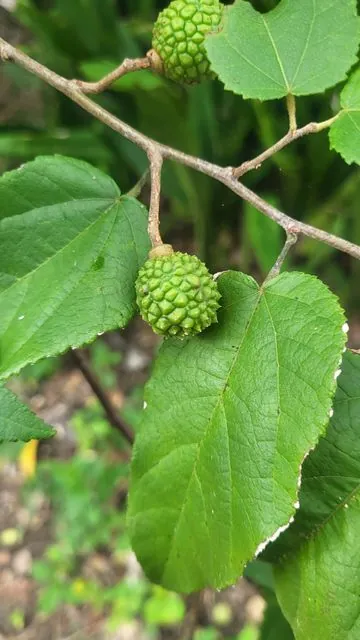
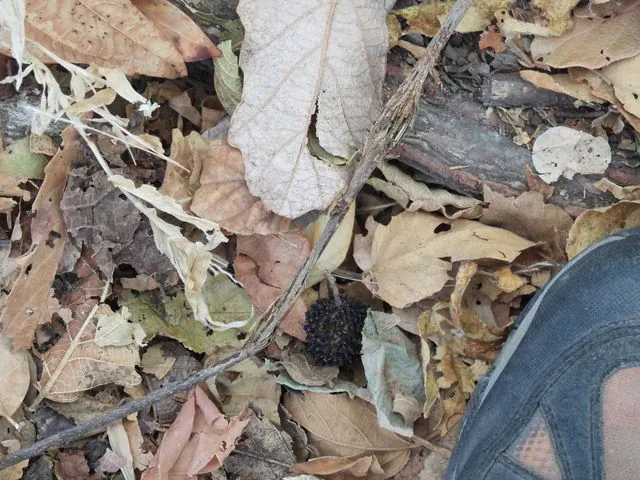
Guazuma ulmifolia
Authorship: The author or authors credited with publishing the scientific name. It is written after the name, sometimes with the year, for example L. (Linnaeus) in Zea mays L. An author in parentheses first published the name in another genus or rank. — The author or authors credited with publishing the scientific name. It is written after the name, sometimes with the year, for example L. (Linnaeus) in Zea mays L. An author in parentheses first published the name in another genus or rank.
Lam.
Common names
Bastardcedar, West Indian-elm, bastard-cedarNames in other languages (50)Algodón de ceibo, Araticum-bravo, A’jijati, Bellota de cuaulote, Bois de hêtre vert, Hêtre gris, Chico-magro, Embira, Embireira, Embiru, Envireira, Fruta-de-macaco, Guacima; Bastard cedar, Guamaca, Guasmo, Guaxima-macho, Guaxima-torcida, Guazume à feuilles d'orme, Bibi jacot, Bois d'orme, Bubrome, Cidre de la Jamaïque, Orme d'Amérique, Guácima, Guácimo, Guácimo ternero, Guásimo, Jati Belanda, Mutamba, Mutamba-verdadeira, Mutambo, Pau-de-bicho, Pau-de-pomba, Pojó, West Indian elm, ajiya, ajya, aquich, bois d'orme, bois de l'orme, bolaina negra, bwa-lòm, cabeza de negro, cabeça-de-negro, cabeça-de-negro, mutamba, caulote, guazuma brestolistá, guásima, majahua, parandesiqua, periquiteira, pishoy, tzuyui, vácima, Гуазума вязолистная, உத்திராக்சம்
Kingdom: One of the broadest ranks of biological classification. It groups organisms that share very basic features, for example plants (Plantae), animals (Animalia) or fungi (Fungi). — One of the broadest ranks of biological classification. It groups organisms that share very basic features, for example plants (Plantae), animals (Animalia) or fungi (Fungi).
Plantae
Phylum: Rank below kingdom that groups organisms with a shared general body plan, for example chordates (Chordata), arthropods (Arthropoda) or vascular plants (Tracheophyta). In botany the same rank is also called division. — Rank below kingdom that groups organisms with a shared general body plan, for example chordates (Chordata), arthropods (Arthropoda) or vascular plants (Tracheophyta). In botany the same rank is also called division.
Tracheophyta
Class: Rank below phylum, for example mammals (Mammalia), birds (Aves), insects (Insecta) or monocot plants such as grasses and orchids (Liliopsida). — Rank below phylum, for example mammals (Mammalia), birds (Aves), insects (Insecta) or monocot plants such as grasses and orchids (Liliopsida).
Magnoliopsida
Order: Rank below class that groups related families, for example grasses and their relatives (Poales) or bats (Chiroptera). — Rank below class that groups related families, for example grasses and their relatives (Poales) or bats (Chiroptera).
Malvales
Family: Rank below order that groups related genera. Family names usually end in -aceae in botany (for example Poaceae, the grass family) and in -idae in zoology (for example Felidae, the cat family). — Rank below order that groups related genera. Family names usually end in -aceae in botany (for example Poaceae, the grass family) and in -idae in zoology (for example Felidae, the cat family).
Malvaceae
Genus: Rank that groups closely related species. Its name is the first word of a species' scientific name and starts with a capital letter, for example Zea in Zea mays. — Rank that groups closely related species. Its name is the first word of a species' scientific name and starts with a capital letter, for example Zea in Zea mays.
Guazuma
Specific epithet: The second word of a species' scientific name. On its own it does not name the species: it always goes with the genus, for example mays in Zea mays. — The second word of a species' scientific name. On its own it does not name the species: it always goes with the genus, for example mays in Zea mays.
ulmifolia
Taxonomic rank: The level a name occupies in the hierarchy of biological classification, such as kingdom, family, genus, species or subspecies. — The level a name occupies in the hierarchy of biological classification, such as kingdom, family, genus, species or subspecies.
species
Reference species
Guazuma ulmifolia
Taxonomic status: Whether the taxonomic catalogue the record comes from currently accepts this name for the organism, or treats it as a synonym of another accepted name or as doubtful. — Whether the taxonomic catalogue the record comes from currently accepts this name for the organism, or treats it as a synonym of another accepted name or as doubtful.
accepted name
Photos and conservation status
IUCN Red List category: The extinction-risk category that the International Union for Conservation of Nature (IUCN) assigns to a species on its Red List. EX Extinct: there is no reasonable doubt that the last individual has died. EW Extinct in the wild: it survives only in cultivation, in captivity or as a population far outside its past range. CR Critically endangered, EN Endangered and VU Vulnerable: the three threatened categories, from an extremely high to a high risk of extinction in the wild. NT Near threatened: close to qualifying as threatened. LC Least concern: evaluated and not threatened. DD Data deficient: there is not enough information to assess its risk. NE Not evaluated: not yet assessed against the criteria. It describes the risk of the species worldwide, not its situation in a project's area. — The extinction-risk category that the International Union for Conservation of Nature (IUCN) assigns to a species on its Red List. EX Extinct: there is no reasonable doubt that the last individual has died. EW Extinct in the wild: it survives only in cultivation, in captivity or as a population far outside its past range. CR Critically endangered, EN Endangered and VU Vulnerable: the three threatened categories, from an extremely high to a high risk of extinction in the wild. NT Near threatened: close to qualifying as threatened. LC Least concern: evaluated and not threatened. DD Data deficient: there is not enough information to assess its risk. NE Not evaluated: not yet assessed against the criteria. It describes the risk of the species worldwide, not its situation in a project's area.
Least concern (LC)
Source: IUCN Red List via GBIF, queried on 2026-10-09 06:24.
Research-grade iNaturalist observations via GBIF, CC0 or CC BY licences only, queried on 2026-10-09 06:24.
Interacciones documentadas
GloBI says it is documented somewhere in the world. Biolitica answers whether it could happen here.
A documented interaction means it was recorded somewhere in the world. It does not mean it occurs here.
Types shown: 4 of 4
is a host of
×
is adjacent to
×
is eaten by
×
interacts with
×
Blocks that do not sit under a navigation concept heading keep the source's own term: no navigation concept has been assigned to them yet.
is a host of
32 organisms
The authority declares no effect on this species for this term: neither that it harms it nor that it benefits it. In the source ontology symbiosis covers mutualism, commensalism and parasitism alike, so this block holds attackers and allies side by side.
Organism
Reads as
Studies
Where it was documented
Actions
Pseudocercospora guazumaeMycosphaerellaceae
is a host of
3
not compared
3 sources · 4 records
Urtiaga, R.. 1986. Indice de enfermedades en plantas de Venezuela y Cuba. Impresos en Impresos Nuevo Siglo. S.R.L., Barquisimeto, Venezuela :202
Published in globalbioticinteractions/usda-fungus-host
Record contexts (sample): Venezuela · no date published; Cuba · no date published
Claim type
Published relationship between two taxa
Version
GloBI 0.11
Reuse
This release publishes no reuse terms for this record.
Venezuela · no date publishedWhere it is: line:hash://sha256/021a206a1459bcca7e251c73f5bd180fc3ac342a09c499855fe42e21fc09edcf!/interactions.tsv.gz!/L3988272
Cuba · no date publishedWhere it is: line:hash://sha256/021a206a1459bcca7e251c73f5bd180fc3ac342a09c499855fe42e21fc09edcf!/interactions.tsv.gz!/L3988273
Context: Bajabonica · March 23, 1926 · Preserved specimen
Claim type
Published relationship between two taxa
Version
GloBI 0.11
Reuse
This release publishes no reuse terms for this record.
Bajabonica · March 23, 1926 · Preserved specimenAs published: 1926-03-23T00:00:00Z · PreservedSpecimenWhere it is: line:hash://sha256/021a206a1459bcca7e251c73f5bd180fc3ac342a09c499855fe42e21fc09edcf!/interactions.tsv.gz!/L17737963
Arnold, G.R.W.. 1986. Lista de Hongos Fitopatogenos de Cuba. Ministerio de Cultura Editorial Cientifico-Tecnica :207
Published in globalbioticinteractions/usda-fungus-host
Context: Cuba · no date published
Claim type
Published relationship between two taxa
Version
GloBI 0.11
Reuse
This release publishes no reuse terms for this record.
Cuba · no date publishedWhere it is: line:hash://sha256/021a206a1459bcca7e251c73f5bd180fc3ac342a09c499855fe42e21fc09edcf!/interactions.tsv.gz!/L3813112
No public URL for this record
A published relationship says these two taxa were documented interacting. It does not say how often, or that it happens in this project's region.
Pantospora guazumaeMycosphaerellaceae
is a host of
2
no location
2 sources · 2 records
Arnold, G.R.W.. 1986. Lista de Hongos Fitopatogenos de Cuba. Ministerio de Cultura Editorial Cientifico-Tecnica :207
Published in globalbioticinteractions/usda-fungus-host
Context: Cuba · no date published
Claim type
Published relationship between two taxa
Version
GloBI 0.11
Reuse
This release publishes no reuse terms for this record.
Cuba · no date publishedWhere it is: line:hash://sha256/021a206a1459bcca7e251c73f5bd180fc3ac342a09c499855fe42e21fc09edcf!/interactions.tsv.gz!/L3813056
No public URL for this record
Urtiaga, R.. 1986. Indice de enfermedades en plantas de Venezuela y Cuba. Impresos en Impresos Nuevo Siglo. S.R.L., Barquisimeto, Venezuela :202
Published in globalbioticinteractions/usda-fungus-host
Context: Cuba · no date published
Claim type
Published relationship between two taxa
Version
GloBI 0.11
Reuse
This release publishes no reuse terms for this record.
Cuba · no date publishedWhere it is: line:hash://sha256/021a206a1459bcca7e251c73f5bd180fc3ac342a09c499855fe42e21fc09edcf!/interactions.tsv.gz!/L3988261
No public URL for this record
A published relationship says these two taxa were documented interacting. It does not say how often, or that it happens in this project's region.
Capnodium sp.Capnodiaceae
is a host of
2
no location
Not a modelling unit: the source did not resolve a species — the name carries an open-nomenclature qualifier.
2 sources · 3 records
Urtiaga, R.. 1986. Indice de enfermedades en plantas de Venezuela y Cuba. Impresos en Impresos Nuevo Siglo. S.R.L., Barquisimeto, Venezuela :202
Published in globalbioticinteractions/usda-fungus-host
Record contexts (sample): Cuba · no date published; Venezuela · no date published
Claim type
Published relationship between two taxa
Version
GloBI 0.11
Reuse
This release publishes no reuse terms for this record.
Cuba · no date publishedWhere it is: line:hash://sha256/021a206a1459bcca7e251c73f5bd180fc3ac342a09c499855fe42e21fc09edcf!/interactions.tsv.gz!/L3988274
Venezuela · no date publishedWhere it is: line:hash://sha256/021a206a1459bcca7e251c73f5bd180fc3ac342a09c499855fe42e21fc09edcf!/interactions.tsv.gz!/L3988275
No public URL for this record
Arnold, G.R.W.. 1986. Lista de Hongos Fitopatogenos de Cuba. Ministerio de Cultura Editorial Cientifico-Tecnica :207
Published in globalbioticinteractions/usda-fungus-host
Context: Cuba · no date published
Claim type
Published relationship between two taxa
Version
GloBI 0.11
Reuse
This release publishes no reuse terms for this record.
Cuba · no date publishedWhere it is: line:hash://sha256/021a206a1459bcca7e251c73f5bd180fc3ac342a09c499855fe42e21fc09edcf!/interactions.tsv.gz!/L3813110
No public URL for this record
A published relationship says these two taxa were documented interacting. It does not say how often, or that it happens in this project's region.
Arnold, G.R.W.. 1986. Lista de Hongos Fitopatogenos de Cuba. Ministerio de Cultura Editorial Cientifico-Tecnica :207
Published in globalbioticinteractions/usda-fungus-host
Context: Cuba · no date published
Claim type
Published relationship between two taxa
Version
GloBI 0.11
Reuse
This release publishes no reuse terms for this record.
Cuba · no date publishedWhere it is: line:hash://sha256/021a206a1459bcca7e251c73f5bd180fc3ac342a09c499855fe42e21fc09edcf!/interactions.tsv.gz!/L3813063
No public URL for this record
Urtiaga, R.. 1986. Indice de enfermedades en plantas de Venezuela y Cuba. Impresos en Impresos Nuevo Siglo. S.R.L., Barquisimeto, Venezuela :202
Published in globalbioticinteractions/usda-fungus-host
Context: Cuba · no date published
Claim type
Published relationship between two taxa
Version
GloBI 0.11
Reuse
This release publishes no reuse terms for this record.
Cuba · no date publishedWhere it is: line:hash://sha256/021a206a1459bcca7e251c73f5bd180fc3ac342a09c499855fe42e21fc09edcf!/interactions.tsv.gz!/L3988260
No public URL for this record
A published relationship says these two taxa were documented interacting. It does not say how often, or that it happens in this project's region.
Context: Rio Cuchujaqui, Guirocoba Crossing, Alamos area · Sept. 11, 1994 · Preserved specimen
Claim type
Published relationship between two taxa
Version
GloBI 0.11
Reuse
This release publishes no reuse terms for this record.
Rio Cuchujaqui, Guirocoba Crossing, Alamos area · Sept. 11, 1994 · Preserved specimenAs published: 1994-09-11T00:00:00Z · PreservedSpecimenWhere it is: line:hash://sha256/021a206a1459bcca7e251c73f5bd180fc3ac342a09c499855fe42e21fc09edcf!/interactions.tsv.gz!/L16687467
Context: About 5 km (by air) E-NE of San Antonio de las Ibarra, Arroyo Las Rastras; 26^52'15"N, 109^06'10"W; 180 m elev. · Dec. 9, 1993 · Preserved …
Claim type
Published relationship between two taxa
Version
GloBI 0.11
Reuse
This release publishes no reuse terms for this record.
About 5 km (by air) E-NE of San Antonio de las Ibarra, Arroyo Las Rastras; 26^52'15"N, 109^06'10"W; 180 m elev. · Dec. 9, 1993 · Preserved specimenAs published: 1993-12-09T00:00:00Z · PreservedSpecimenWhere it is: line:hash://sha256/021a206a1459bcca7e251c73f5bd180fc3ac342a09c499855fe42e21fc09edcf!/interactions.tsv.gz!/L16687487
Context: near junction of Arroyo Alamos and Rio Cuchujaqui, 9km (by air) SE of Alamos; tropical deciduous forest; 26^57'40"N 108^52"W; 260, elev. · …
Claim type
Published relationship between two taxa
Version
GloBI 0.11
Reuse
This release publishes no reuse terms for this record.
near junction of Arroyo Alamos and Rio Cuchujaqui, 9km (by air) SE of Alamos; tropical deciduous forest; 26^57'40"N 108^52"W; 260, elev. · Nov. 27, 1993 · Preserved specimenAs published: 1993-11-27T00:00:00Z · PreservedSpecimenWhere it is: line:hash://sha256/021a206a1459bcca7e251c73f5bd180fc3ac342a09c499855fe42e21fc09edcf!/interactions.tsv.gz!/L16687495
Context: Guirocoba crossing of the Rio Cuchujaqui, 12.3 km (by air) S-SE of Alamos; tropical deciduous forest; 26^56'15"N 108^53'W; 260 m elev. · Ma…
Claim type
Published relationship between two taxa
Version
GloBI 0.11
Reuse
This release publishes no reuse terms for this record.
Guirocoba crossing of the Rio Cuchujaqui, 12.3 km (by air) S-SE of Alamos; tropical deciduous forest; 26^56'15"N 108^53'W; 260 m elev. · March 16, 1994 · Preserved specimenAs published: 1994-03-16T00:00:00Z · PreservedSpecimenWhere it is: line:hash://sha256/021a206a1459bcca7e251c73f5bd180fc3ac342a09c499855fe42e21fc09edcf!/interactions.tsv.gz!/L16687513
Context: El Guayabo crossing of the Rio Cuchujaqui, 2.6 km northeast of Sabinito Sur, 14 km. (by air) east-southeast of Alamos; tropical deciduous f…
Claim type
Published relationship between two taxa
Version
GloBI 0.11
Reuse
This release publishes no reuse terms for this record.
El Guayabo crossing of the Rio Cuchujaqui, 2.6 km northeast of Sabinito Sur, 14 km. (by air) east-southeast of Alamos; tropical deciduous forest on slopes, Taxodium-Salix gallery forest along stream; 27^00'05"N 108^47'08"W; 350 m elevation. · March 14, 1994 · Preserved specimenAs published: 1994-03-14T00:00:00Z · PreservedSpecimenWhere it is: line:hash://sha256/021a206a1459bcca7e251c73f5bd180fc3ac342a09c499855fe42e21fc09edcf!/interactions.tsv.gz!/L16687907
Context: Sierra de Alamos, ca. 2 km southwest of Alamos along trail to La Huerta; 27^00'N 108^57'30"W; 770m elevation · March 12, 1994 · Preserved s…
Claim type
Published relationship between two taxa
Version
GloBI 0.11
Reuse
This release publishes no reuse terms for this record.
Sierra de Alamos, ca. 2 km southwest of Alamos along trail to La Huerta; 27^00'N 108^57'30"W; 770m elevation · March 12, 1994 · Preserved specimenAs published: 1994-03-12T00:00:00Z · PreservedSpecimenWhere it is: line:hash://sha256/021a206a1459bcca7e251c73f5bd180fc3ac342a09c499855fe42e21fc09edcf!/interactions.tsv.gz!/L16687909
Context: El Guayabo crossing of the Rio Cuchujaqui, 2.6 km NE of Sabinito Sur, 14 km (by air) E-SE of Alamos; tropical deciduous forest on slopes, S…
Claim type
Published relationship between two taxa
Version
GloBI 0.11
Reuse
This release publishes no reuse terms for this record.
El Guayabo crossing of the Rio Cuchujaqui, 2.6 km NE of Sabinito Sur, 14 km (by air) E-SE of Alamos; tropical deciduous forest on slopes, Salix-Salix gallery forest along stream; 27^00'05"N 108^47'08"W; 350 m elev. · March 14, 1994 · Preserved specimenAs published: 1994-03-14T00:00:00Z · PreservedSpecimenWhere it is: line:hash://sha256/021a206a1459bcca7e251c73f5bd180fc3ac342a09c499855fe42e21fc09edcf!/interactions.tsv.gz!/L16687460
Context: Sierra de Alamos, ca. 2 km SW of Alamos along trail to LA Huerta; 27^00'N 108^57'30"W; 770 m elev. · March 12, 1994 · Preserved specimen
Claim type
Published relationship between two taxa
Version
GloBI 0.11
Reuse
This release publishes no reuse terms for this record.
Sierra de Alamos, ca. 2 km SW of Alamos along trail to LA Huerta; 27^00'N 108^57'30"W; 770 m elev. · March 12, 1994 · Preserved specimenAs published: 1994-03-12T00:00:00Z · PreservedSpecimenWhere it is: line:hash://sha256/021a206a1459bcca7e251c73f5bd180fc3ac342a09c499855fe42e21fc09edcf!/interactions.tsv.gz!/L16687489
Context: Guirocoba crossing of the Rio Cuchujaqui, 12.3 km (by air) S-SE of Alamos; tropical deciduous forest; 26^56'15"N 108^53'W; 260 m elev. · Ma…
Claim type
Published relationship between two taxa
Version
GloBI 0.11
Reuse
This release publishes no reuse terms for this record.
Guirocoba crossing of the Rio Cuchujaqui, 12.3 km (by air) S-SE of Alamos; tropical deciduous forest; 26^56'15"N 108^53'W; 260 m elev. · March 16, 1994 · Preserved specimenAs published: 1994-03-16T00:00:00Z · PreservedSpecimenWhere it is: line:hash://sha256/021a206a1459bcca7e251c73f5bd180fc3ac342a09c499855fe42e21fc09edcf!/interactions.tsv.gz!/L16687490
Context: El Guayabo crossing of the Rio Cuchujaqui, 2.6 km NE of Sabinito Sur, 14 km (by air) E-SE of Alamos; tropical deciduous forest on slopes, T…
Claim type
Published relationship between two taxa
Version
GloBI 0.11
Reuse
This release publishes no reuse terms for this record.
El Guayabo crossing of the Rio Cuchujaqui, 2.6 km NE of Sabinito Sur, 14 km (by air) E-SE of Alamos; tropical deciduous forest on slopes, Taxodium-Salix gallery forest along stream; 27^00'05"N 108^47'08"W; 350 m elev. · March 14, 1994 · Preserved specimenAs published: 1994-03-14T00:00:00Z · PreservedSpecimenWhere it is: line:hash://sha256/021a206a1459bcca7e251c73f5bd180fc3ac342a09c499855fe42e21fc09edcf!/interactions.tsv.gz!/L16687494
Context: La Luna, Alamos Area · Dec. 31, 1994 · Preserved specimen
Claim type
Published relationship between two taxa
Version
GloBI 0.11
Reuse
This release publishes no reuse terms for this record.
La Luna, Alamos Area · Dec. 31, 1994 · Preserved specimenAs published: 1994-12-31T00:00:00Z · PreservedSpecimenWhere it is: line:hash://sha256/021a206a1459bcca7e251c73f5bd180fc3ac342a09c499855fe42e21fc09edcf!/interactions.tsv.gz!/L16688021
This term does declare that the organism harms this species.
Organism
Reads as
Studies
Where it was documented
Actions
Orchard Flag-BearerDiceroprocta bulgaraCicadidae
is eaten by
1
no location
1 source · 1 record
Sánchez-García, J.A., Velázquez-Monreal, J.J., Guzmán-Vásquez, H.M., Jarquín-López, R., Ortíz-López, J.A., Manzanilla Ramírez, M.Á., Ovando-Cruz, M., Aquino-Bolaños, T. & Sanborn, A.F. (2019) New host records and biological notes for <i>Diceroprocta bulgara</i> (Distant) in …
Published in urn:lsid:checklistbank.org:dataset:2317
Context: no place published · no date published
Claim type
Published relationship between two taxa
Version
GloBI 0.11
Reuse
This release publishes no reuse terms for this record.
no place published · no date publishedWhere it is: line:hash://sha256/021a206a1459bcca7e251c73f5bd180fc3ac342a09c499855fe42e21fc09edcf!/interactions.tsv.gz!/L1310072
No public URL for this record
A published relationship says these two taxa were documented interacting. It does not say how often, or that it happens in this project's region.
Greater Shortnosed Fruit BatCynopterus sphinxPteropodidae
is eaten by
1
not compared
1 source · 1 record
Sudhakaran, M. R. & P. S. Doss. 2012. Food and foraging preferences of three pteropodid bats in southern India. Journal of Threatened Taxa 4 (1): 2295-2303.
Published in globalbioticinteractions/batbase
Context: Tamil Nadu · no date published
Claim type
Published relationship between two taxa
Version
GloBI 0.11
Reuse
This release publishes no reuse terms for this record.
Tamil Nadu · no date publishedWhere it is: line:hash://sha256/021a206a1459bcca7e251c73f5bd180fc3ac342a09c499855fe42e21fc09edcf!/interactions.tsv.gz!/L12445756
No public URL for this record
A published relationship says these two taxa were documented interacting. It does not say how often, or that it happens in this project's region.
Sudhakaran, M. R. & P. S. Doss. 2012. Food and foraging preferences of three pteropodid bats in southern India. Journal of Threatened Taxa 4 (1): 2295-2303.
Published in globalbioticinteractions/batbase
Context: Tamil Nadu · no date published
Claim type
Published relationship between two taxa
Version
GloBI 0.11
Reuse
This release publishes no reuse terms for this record.
Tamil Nadu · no date publishedWhere it is: line:hash://sha256/021a206a1459bcca7e251c73f5bd180fc3ac342a09c499855fe42e21fc09edcf!/interactions.tsv.gz!/L12445784
No public URL for this record
A published relationship says these two taxa were documented interacting. It does not say how often, or that it happens in this project's region.
HominoidsHomo sapiensHominidae
is eaten by
1
no location
1 source · 1 record
Fabricia Sousa Paz, Carlos Eduardo Pinto, Rafael Melo de Brito, Vera Lucia Imperatriz-Fonseca, Tereza Cristina Giannini, Edible Fruit Plant Species in the Amazon Forest Rely Mostly on Bees and Beetles as Pollinators, Journal of Economic Entomology, Volume 114, Issue 2, April 202…
Published in globalbioticinteractions/paz2021
Context: no place published · no date published
Claim type
Published relationship between two taxa
Version
GloBI 0.11
Reuse
This release publishes no reuse terms for this record.
no place published · no date publishedWhere it is: line:hash://sha256/021a206a1459bcca7e251c73f5bd180fc3ac342a09c499855fe42e21fc09edcf!/interactions.tsv.gz!/L13007862
A published relationship says these two taxa were documented interacting. It does not say how often, or that it happens in this project's region.
Showing 4 of 4, by number of studies
interacts with
4 organisms
The authority declares no effect on this species for this term: neither that it harms it nor that it benefits it.
Organism
Reads as
Studies
Where it was documented
Actions
Encarsia altamiraAphelinidae
interacts with
2
no location
2 sources · 3 records
@article{83319, author = {Myartseva, S.N. and Ruiz-Cancino, E. and Coronado-Blanco, J.M.}, booktitle = {Acta Zoologica Mexicana (Nueva Serie)}, pages = {109-112}, title = {Species of <i>Encarsia</i> Förster (Hymenoptera: Aphelinidae) parasitoids of the whitefly <i>Aleuro…
Published in globalbioticinteractions/taxonworks
Record contexts (sample): no place published · no date published; no place published · no date published
Claim type
Published relationship between two taxa
Version
GloBI 0.11
Reuse
This release publishes no reuse terms for this record.
no place published · no date publishedWhere it is: line:hash://sha256/021a206a1459bcca7e251c73f5bd180fc3ac342a09c499855fe42e21fc09edcf!/interactions.tsv.gz!/L6127582
no place published · no date publishedWhere it is: line:hash://sha256/021a206a1459bcca7e251c73f5bd180fc3ac342a09c499855fe42e21fc09edcf!/interactions.tsv.gz!/L6127593
No public URL for this record
Myartseva, S.N., Ruiz-Cancino, E. & Coronado-Blanco, J.M. (2015) Species of <i>Encarsia</i> Förster (Hymenoptera: Aphelinidae) parasitoids of the whitefly <i>Aleurothrixus chivelensis</i> (Sampson & Drews) (Hemiptera: Aleyrodidae) in Tamaulipas, Mexico. <i>Acta Zoologica…
Published in urn:lsid:checklistbank.org:dataset:124661
Context: no place published · no date published
Claim type
Published relationship between two taxa
Version
GloBI 0.11
Reuse
This release publishes no reuse terms for this record.
no place published · no date publishedWhere it is: line:hash://sha256/021a206a1459bcca7e251c73f5bd180fc3ac342a09c499855fe42e21fc09edcf!/interactions.tsv.gz!/L1239019
No public URL for this record
A published relationship says these two taxa were documented interacting. It does not say how often, or that it happens in this project's region.
Encarsia americana
interacts with
1
no location
1 source · 3 records
@article{83319, author = {Myartseva, S.N. and Ruiz-Cancino, E. and Coronado-Blanco, J.M.}, booktitle = {Acta Zoologica Mexicana (Nueva Serie)}, pages = {109-112}, title = {Species of <i>Encarsia</i> Förster (Hymenoptera: Aphelinidae) parasitoids of the whitefly <i>Aleuro…
Published in globalbioticinteractions/taxonworks
Record contexts (sample): no place published · no date published; no place published · no date published
Claim type
Published relationship between two taxa
Version
GloBI 0.11
Reuse
This release publishes no reuse terms for this record.
no place published · no date publishedWhere it is: line:hash://sha256/021a206a1459bcca7e251c73f5bd180fc3ac342a09c499855fe42e21fc09edcf!/interactions.tsv.gz!/L6127576
no place published · no date publishedWhere it is: line:hash://sha256/021a206a1459bcca7e251c73f5bd180fc3ac342a09c499855fe42e21fc09edcf!/interactions.tsv.gz!/L6127577
no place published · no date publishedWhere it is: line:hash://sha256/021a206a1459bcca7e251c73f5bd180fc3ac342a09c499855fe42e21fc09edcf!/interactions.tsv.gz!/L6127585
No public URL for this record
A published relationship says these two taxa were documented interacting. It does not say how often, or that it happens in this project's region.
Encarsia dimaiAphelinidae
interacts with
1
no location
1 source · 1 record
Myartseva, S.N., Ruiz-Cancino, E. & Coronado-Blanco, J.M. (2015) Species of <i>Encarsia</i> Förster (Hymenoptera: Aphelinidae) parasitoids of the whitefly <i>Aleurothrixus chivelensis</i> (Sampson & Drews) (Hemiptera: Aleyrodidae) in Tamaulipas, Mexico. <i>Acta Zoologica…
Published in urn:lsid:checklistbank.org:dataset:124661
Context: no place published · no date published
Claim type
Published relationship between two taxa
Version
GloBI 0.11
Reuse
This release publishes no reuse terms for this record.
no place published · no date publishedWhere it is: line:hash://sha256/021a206a1459bcca7e251c73f5bd180fc3ac342a09c499855fe42e21fc09edcf!/interactions.tsv.gz!/L1239021
No public URL for this record
A published relationship says these two taxa were documented interacting. It does not say how often, or that it happens in this project's region.
A published relationship says these two taxa were documented interacting. It does not say how often, or that it happens in this project's region.
Showing 4 of 4, by number of studies
Acompañantes documentados
This agronomic reading comes from a source reserved for internal use, so it is not shown here.
Documented uses and recommendations
Uses and recommendations that a source documents for this species beside a crop, each in its own context. They are the source's statements, not traits of the species and not Biolítica's recommendations, and none of them is a relation between two species.
Not grouped under a navigation concept
What the source states
Claim type
Context
Source
Actions
Árbol nativo candidato de paisaje
Recommendation of a guideRecommended
coffee · Veracruz, México
Biolítica · compilación de café de CIE-10 sha256:e376ce4d636a
1 source · 1 record
Flores-Ortiz et al. 2025
Context: coffee · Veracruz, México
Claim type
Recommendation of a guide
Version
Biolítica · compilación de café de CIE-10 sha256:e376ce4d636a
Reuse
This release publishes no reuse terms for this record.
coffee · Veracruz, MéxicoWhere it is: record:hash://sha256/e376ce4d636a2ad69fd1f35c0c597ef582332fe836e256097909ac8cc8b1081a!/Evidencias!/ID evidencia=E-0502