Canonical name: The scientific name without its authorship or date, for example Zea mays instead of Zea mays L. — The scientific name without its authorship or date, for example Zea mays instead of Zea mays L.
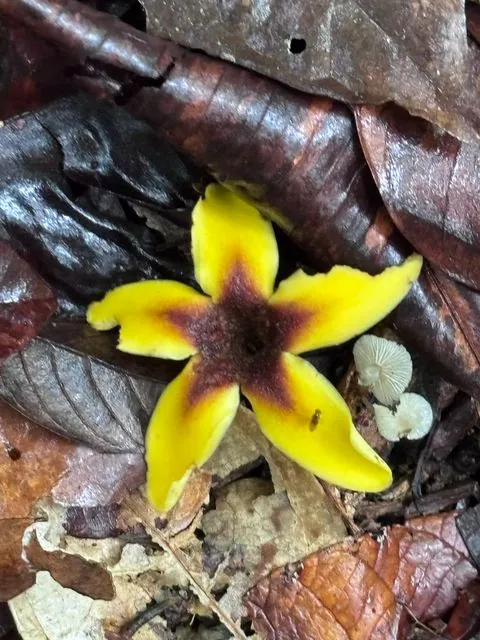
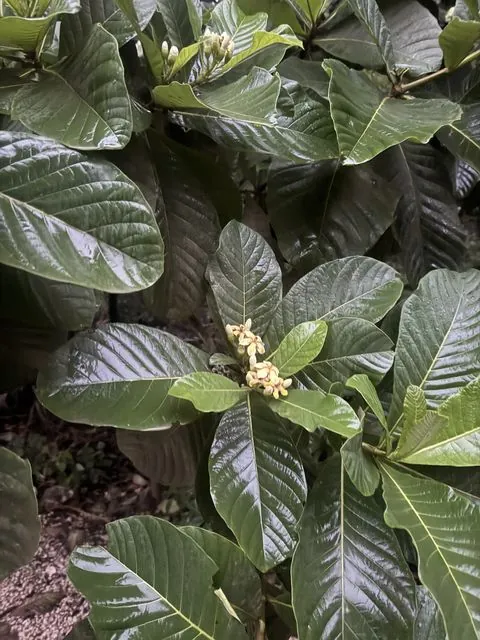
Genipa americana
Authorship: The author or authors credited with publishing the scientific name. It is written after the name, sometimes with the year, for example L. (Linnaeus) in Zea mays L. An author in parentheses first published the name in another genus or rank. — The author or authors credited with publishing the scientific name. It is written after the name, sometimes with the year, for example L. (Linnaeus) in Zea mays L. An author in parentheses first published the name in another genus or rank.
L.
Common names
Genipap, Genipap Tree, Jagua, Marmalade, Marmalade box, genip, genip tree, marmalade-boxNames in other languages (36)Airo toa, Bi, Bi-nané, Caporán, Genipa, Genipapa, Genipapo, Guaitil, Guatil, Génipayer, Huëe, Jagua de comar, Jagua dulce, Janapabeiro, Janipaba, Janipapeiro, Janipapo, Jenipapeiro, Jenipapinho, Jenipapo, Jenipá, Jénipa, Mali, Shiño, Sua, Teta de vieja, Wituk, caruto, confiture de singe, genipa americká, génipa, huito, irayol, tapuhupa, yagua, 美洲格尼帕樹
Kingdom: One of the broadest ranks of biological classification. It groups organisms that share very basic features, for example plants (Plantae), animals (Animalia) or fungi (Fungi). — One of the broadest ranks of biological classification. It groups organisms that share very basic features, for example plants (Plantae), animals (Animalia) or fungi (Fungi).
Plantae
Phylum: Rank below kingdom that groups organisms with a shared general body plan, for example chordates (Chordata), arthropods (Arthropoda) or vascular plants (Tracheophyta). In botany the same rank is also called division. — Rank below kingdom that groups organisms with a shared general body plan, for example chordates (Chordata), arthropods (Arthropoda) or vascular plants (Tracheophyta). In botany the same rank is also called division.
Tracheophyta
Class: Rank below phylum, for example mammals (Mammalia), birds (Aves), insects (Insecta) or monocot plants such as grasses and orchids (Liliopsida). — Rank below phylum, for example mammals (Mammalia), birds (Aves), insects (Insecta) or monocot plants such as grasses and orchids (Liliopsida).
Magnoliopsida
Order: Rank below class that groups related families, for example grasses and their relatives (Poales) or bats (Chiroptera). — Rank below class that groups related families, for example grasses and their relatives (Poales) or bats (Chiroptera).
Gentianales
Family: Rank below order that groups related genera. Family names usually end in -aceae in botany (for example Poaceae, the grass family) and in -idae in zoology (for example Felidae, the cat family). — Rank below order that groups related genera. Family names usually end in -aceae in botany (for example Poaceae, the grass family) and in -idae in zoology (for example Felidae, the cat family).
Rubiaceae
Genus: Rank that groups closely related species. Its name is the first word of a species' scientific name and starts with a capital letter, for example Zea in Zea mays. — Rank that groups closely related species. Its name is the first word of a species' scientific name and starts with a capital letter, for example Zea in Zea mays.
Genipa
Specific epithet: The second word of a species' scientific name. On its own it does not name the species: it always goes with the genus, for example mays in Zea mays. — The second word of a species' scientific name. On its own it does not name the species: it always goes with the genus, for example mays in Zea mays.
americana
Taxonomic rank: The level a name occupies in the hierarchy of biological classification, such as kingdom, family, genus, species or subspecies. — The level a name occupies in the hierarchy of biological classification, such as kingdom, family, genus, species or subspecies.
species
Reference species
Genipa americana
Taxonomic status: Whether the taxonomic catalogue the record comes from currently accepts this name for the organism, or treats it as a synonym of another accepted name or as doubtful. — Whether the taxonomic catalogue the record comes from currently accepts this name for the organism, or treats it as a synonym of another accepted name or as doubtful.
accepted name
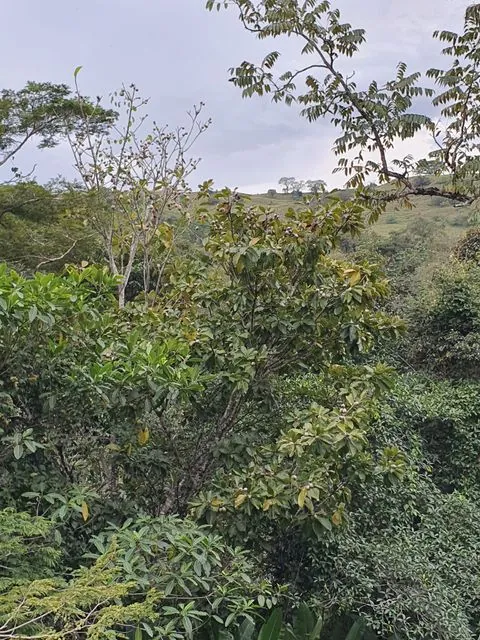
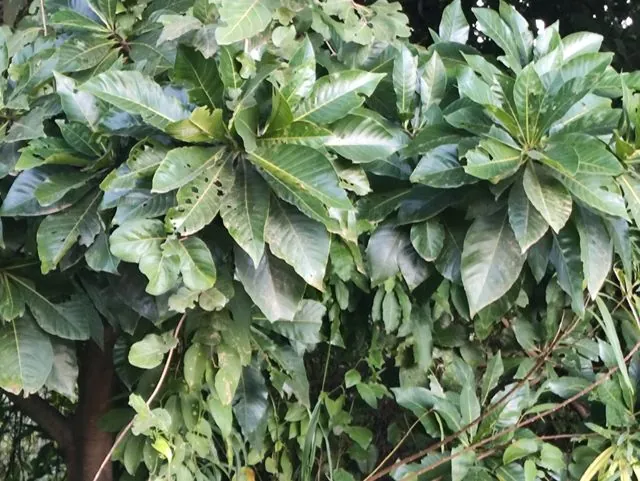
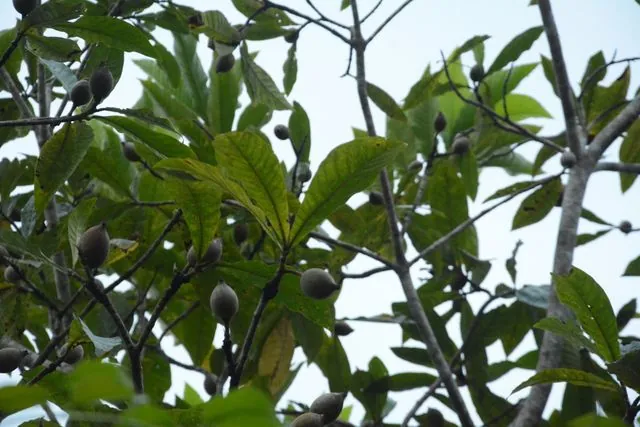
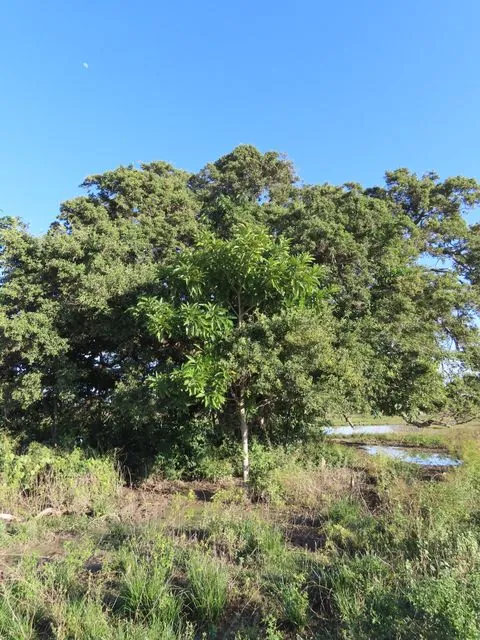
Photos and conservation status
IUCN Red List category: The extinction-risk category that the International Union for Conservation of Nature (IUCN) assigns to a species on its Red List. EX Extinct: there is no reasonable doubt that the last individual has died. EW Extinct in the wild: it survives only in cultivation, in captivity or as a population far outside its past range. CR Critically endangered, EN Endangered and VU Vulnerable: the three threatened categories, from an extremely high to a high risk of extinction in the wild. NT Near threatened: close to qualifying as threatened. LC Least concern: evaluated and not threatened. DD Data deficient: there is not enough information to assess its risk. NE Not evaluated: not yet assessed against the criteria. It describes the risk of the species worldwide, not its situation in a project's area. — The extinction-risk category that the International Union for Conservation of Nature (IUCN) assigns to a species on its Red List. EX Extinct: there is no reasonable doubt that the last individual has died. EW Extinct in the wild: it survives only in cultivation, in captivity or as a population far outside its past range. CR Critically endangered, EN Endangered and VU Vulnerable: the three threatened categories, from an extremely high to a high risk of extinction in the wild. NT Near threatened: close to qualifying as threatened. LC Least concern: evaluated and not threatened. DD Data deficient: there is not enough information to assess its risk. NE Not evaluated: not yet assessed against the criteria. It describes the risk of the species worldwide, not its situation in a project's area.
Least concern (LC)
Source: IUCN Red List via GBIF, queried on 2026-10-09 08:30.
Research-grade iNaturalist observations via GBIF, CC0 or CC BY licences only, queried on 2026-10-09 08:30.
Interacciones documentadas
GloBI says it is documented somewhere in the world. Biolitica answers whether it could happen here.
A documented interaction means it was recorded somewhere in the world. It does not mean it occurs here.
Types shown: 10 of 10
is eaten by
×
is a host of
×
interacts with
×
is an arbuscular mycorrhizal host of
×
is a symbiont of
×
is pollinated by
×
is adjacent to
×
has as a parasite
×
is preyed upon by
×
is visited by
×
Blocks that do not sit under a navigation concept heading keep the source's own term: no navigation concept has been assigned to them yet.
is eaten by
61 organisms
This term does declare that the organism harms this species.
Organism
Reads as
Studies
Where it was documented
Actions
Toco ToucanRamphastos tocoRamphastidae
is eaten by
2
not compared
2 sources · 2 records
Donatti 2011
Published in globalbioticinteractions/fricke2020
Context: Brazil · no date published
Claim type
Published relationship between two taxa
Version
GloBI 0.11
Reuse
This release publishes no reuse terms for this record.
Brazil · no date publishedWhere it is: line:hash://sha256/021a206a1459bcca7e251c73f5bd180fc3ac342a09c499855fe42e21fc09edcf!/interactions.tsv.gz!/L13325115
No public URL for this record
doi:10.1002/ecy.1818
Published in globalbioticinteractions/bello2017
Context: no place published · no date published
Claim type
Published relationship between two taxa
Version
GloBI 0.11
Reuse
This release publishes no reuse terms for this record.
no place published · no date publishedWhere it is: line:hash://sha256/021a206a1459bcca7e251c73f5bd180fc3ac342a09c499855fe42e21fc09edcf!/interactions.tsv.gz!/L7030540
A published relationship says these two taxa were documented interacting. It does not say how often, or that it happens in this project's region.
Lowland TapirTapirus terrestrisTapiridae
is eaten by
2
not compared
2 sources · 6 records
doi:10.1002/ecy.1818
Published in globalbioticinteractions/bello2017
Record contexts (sample): no place published · no date published; no place published · no date published
Claim type
Published relationship between two taxa
Version
GloBI 0.11
Reuse
This release publishes no reuse terms for this record.
no place published · no date publishedWhere it is: line:hash://sha256/021a206a1459bcca7e251c73f5bd180fc3ac342a09c499855fe42e21fc09edcf!/interactions.tsv.gz!/L7030122
no place published · no date publishedWhere it is: line:hash://sha256/021a206a1459bcca7e251c73f5bd180fc3ac342a09c499855fe42e21fc09edcf!/interactions.tsv.gz!/L7030381
no place published · no date publishedWhere it is: line:hash://sha256/021a206a1459bcca7e251c73f5bd180fc3ac342a09c499855fe42e21fc09edcf!/interactions.tsv.gz!/L7030418
And 2 more records of this source, not listed here.
This release publishes no reuse terms for this record.
Brazil · no date publishedWhere it is: line:hash://sha256/021a206a1459bcca7e251c73f5bd180fc3ac342a09c499855fe42e21fc09edcf!/interactions.tsv.gz!/L13324780
No public URL for this record
A published relationship says these two taxa were documented interacting. It does not say how often, or that it happens in this project's region.
Chaco ChachalacaOrtalis canicollisCracidae
is eaten by
2
not compared
2 sources · 2 records
Donatti 2011
Published in globalbioticinteractions/fricke2020
Context: Brazil · no date published
Claim type
Published relationship between two taxa
Version
GloBI 0.11
Reuse
This release publishes no reuse terms for this record.
Brazil · no date publishedWhere it is: line:hash://sha256/021a206a1459bcca7e251c73f5bd180fc3ac342a09c499855fe42e21fc09edcf!/interactions.tsv.gz!/L13324444
No public URL for this record
doi:10.1002/ecy.1818
Published in globalbioticinteractions/bello2017
Context: no place published · no date published
Claim type
Published relationship between two taxa
Version
GloBI 0.11
Reuse
This release publishes no reuse terms for this record.
no place published · no date publishedWhere it is: line:hash://sha256/021a206a1459bcca7e251c73f5bd180fc3ac342a09c499855fe42e21fc09edcf!/interactions.tsv.gz!/L7030862
A published relationship says these two taxa were documented interacting. It does not say how often, or that it happens in this project's region.
Feral PigSus scrofaSuidae
is eaten by
2
not compared
2 sources · 2 records
Donatti 2011
Published in globalbioticinteractions/fricke2020
Context: Brazil · no date published
Claim type
Published relationship between two taxa
Version
GloBI 0.11
Reuse
This release publishes no reuse terms for this record.
Brazil · no date publishedWhere it is: line:hash://sha256/021a206a1459bcca7e251c73f5bd180fc3ac342a09c499855fe42e21fc09edcf!/interactions.tsv.gz!/L13324421
No public URL for this record
doi:10.1002/ecy.1818
Published in globalbioticinteractions/bello2017
Context: no place published · no date published
Claim type
Published relationship between two taxa
Version
GloBI 0.11
Reuse
This release publishes no reuse terms for this record.
no place published · no date publishedWhere it is: line:hash://sha256/021a206a1459bcca7e251c73f5bd180fc3ac342a09c499855fe42e21fc09edcf!/interactions.tsv.gz!/L7031075
The authority declares no effect on this species for this term: neither that it harms it nor that it benefits it. In the source ontology symbiosis covers mutualism, commensalism and parasitism alike, so this block holds attackers and allies side by side.
Context: Area de Conservacion Guanacaste, Sector Santa Elena, Porton Perros · Aug. 15, 2000 · Material sample
Claim type
Published relationship between two taxa
Version
GloBI 0.11
Reuse
This release publishes no reuse terms for this record.
Area de Conservacion Guanacaste, Sector Santa Elena, Porton Perros · Aug. 15, 2000 · Material sampleAs published: 2000-08-15T00:00:00Z · MATERIAL_SAMPLEWhere it is: line:hash://sha256/021a206a1459bcca7e251c73f5bd180fc3ac342a09c499855fe42e21fc09edcf!/interactions.tsv.gz!/L12926372
Context: Area de Conservacion Guanacaste, Sector Santa Elena, Porton Perros · Aug. 18, 2000 · Material sample
Claim type
Published relationship between two taxa
Version
GloBI 0.11
Reuse
This release publishes no reuse terms for this record.
Area de Conservacion Guanacaste, Sector Santa Elena, Porton Perros · Aug. 18, 2000 · Material sampleAs published: 2000-08-18T00:00:00Z · MATERIAL_SAMPLEWhere it is: line:hash://sha256/021a206a1459bcca7e251c73f5bd180fc3ac342a09c499855fe42e21fc09edcf!/interactions.tsv.gz!/L12926373
Context: Area de Conservacion Guanacaste, Sector Santa Elena, Porton Perros · Aug. 20, 2000 · Material sample
Claim type
Published relationship between two taxa
Version
GloBI 0.11
Reuse
This release publishes no reuse terms for this record.
Area de Conservacion Guanacaste, Sector Santa Elena, Porton Perros · Aug. 20, 2000 · Material sampleAs published: 2000-08-20T00:00:00Z · MATERIAL_SAMPLEWhere it is: line:hash://sha256/021a206a1459bcca7e251c73f5bd180fc3ac342a09c499855fe42e21fc09edcf!/interactions.tsv.gz!/L12926374
Context: Area de Conservacion Guanacaste, Sector Orosi, Sendero Orosi · Aug. 28, 2001 · Material sample
Claim type
Published relationship between two taxa
Version
GloBI 0.11
Reuse
This release publishes no reuse terms for this record.
Area de Conservacion Guanacaste, Sector Orosi, Sendero Orosi · Aug. 28, 2001 · Material sampleAs published: 2001-08-28T00:00:00Z · MATERIAL_SAMPLEWhere it is: line:hash://sha256/021a206a1459bcca7e251c73f5bd180fc3ac342a09c499855fe42e21fc09edcf!/interactions.tsv.gz!/L12926375
Context: Area de Conservacion Guanacaste, Sector Orosi, Sendero Orosi · Aug. 24, 2001 · Material sample
Claim type
Published relationship between two taxa
Version
GloBI 0.11
Reuse
This release publishes no reuse terms for this record.
Area de Conservacion Guanacaste, Sector Orosi, Sendero Orosi · Aug. 24, 2001 · Material sampleAs published: 2001-08-24T00:00:00Z · MATERIAL_SAMPLEWhere it is: line:hash://sha256/021a206a1459bcca7e251c73f5bd180fc3ac342a09c499855fe42e21fc09edcf!/interactions.tsv.gz!/L12926376
Context: Area de Conservacion Guanacaste, Sector Del Oro, Quebrada Raiz · Nov. 17, 2001 · Material sample
Claim type
Published relationship between two taxa
Version
GloBI 0.11
Reuse
This release publishes no reuse terms for this record.
Area de Conservacion Guanacaste, Sector Del Oro, Quebrada Raiz · Nov. 17, 2001 · Material sampleAs published: 2001-11-17T00:00:00Z · MATERIAL_SAMPLEWhere it is: line:hash://sha256/021a206a1459bcca7e251c73f5bd180fc3ac342a09c499855fe42e21fc09edcf!/interactions.tsv.gz!/L12926377
Context: Area de Conservacion Guanacaste, Sector Del Oro, Quebrada Raiz · Nov. 13, 2001 · Material sample
Claim type
Published relationship between two taxa
Version
GloBI 0.11
Reuse
This release publishes no reuse terms for this record.
Area de Conservacion Guanacaste, Sector Del Oro, Quebrada Raiz · Nov. 13, 2001 · Material sampleAs published: 2001-11-13T00:00:00Z · MATERIAL_SAMPLEWhere it is: line:hash://sha256/021a206a1459bcca7e251c73f5bd180fc3ac342a09c499855fe42e21fc09edcf!/interactions.tsv.gz!/L12926378
Context: Area de Conservacion Guanacaste, Sector Santa Elena, Porton Perros · Aug. 20, 2000 · Material sample
Claim type
Published relationship between two taxa
Version
GloBI 0.11
Reuse
This release publishes no reuse terms for this record.
Area de Conservacion Guanacaste, Sector Santa Elena, Porton Perros · Aug. 20, 2000 · Material sampleAs published: 2000-08-20T00:00:00Z · MATERIAL_SAMPLEWhere it is: line:hash://sha256/021a206a1459bcca7e251c73f5bd180fc3ac342a09c499855fe42e21fc09edcf!/interactions.tsv.gz!/L12926379
Context: Sao Goncalo, Rio Grande · Sept. 3, 1938 · Preserved specimen
Claim type
Published relationship between two taxa
Version
GloBI 0.11
Reuse
This release publishes no reuse terms for this record.
Sao Goncalo, Rio Grande · Sept. 3, 1938 · Preserved specimenAs published: 1938-09-03T00:00:00Z · PreservedSpecimenWhere it is: line:hash://sha256/021a206a1459bcca7e251c73f5bd180fc3ac342a09c499855fe42e21fc09edcf!/interactions.tsv.gz!/L17370955
Context: Cantareira, Sao Paulo · March 29, 1935 · Preserved specimen
Claim type
Published relationship between two taxa
Version
GloBI 0.11
Reuse
This release publishes no reuse terms for this record.
Cantareira, Sao Paulo · March 29, 1935 · Preserved specimenAs published: 1935-03-29T00:00:00Z · PreservedSpecimenWhere it is: line:hash://sha256/021a206a1459bcca7e251c73f5bd180fc3ac342a09c499855fe42e21fc09edcf!/interactions.tsv.gz!/L17370956
Context: Cantareira, Sao Paulo · May 26, 1936 · Preserved specimen
Claim type
Published relationship between two taxa
Version
GloBI 0.11
Reuse
This release publishes no reuse terms for this record.
Cantareira, Sao Paulo · May 26, 1936 · Preserved specimenAs published: 1936-05-26T00:00:00Z · PreservedSpecimenWhere it is: line:hash://sha256/021a206a1459bcca7e251c73f5bd180fc3ac342a09c499855fe42e21fc09edcf!/interactions.tsv.gz!/L17370957
Context: Cantareira, Sao Paulo · March 29, 1935 · Preserved specimen
Claim type
Published relationship between two taxa
Version
GloBI 0.11
Reuse
This release publishes no reuse terms for this record.
Cantareira, Sao Paulo · March 29, 1935 · Preserved specimenAs published: 1935-03-29T00:00:00Z · PreservedSpecimenWhere it is: line:hash://sha256/021a206a1459bcca7e251c73f5bd180fc3ac342a09c499855fe42e21fc09edcf!/interactions.tsv.gz!/L17370958
Context: Estado de Sao Paulo Cantareira · March 29, 1935 · Preserved specimen
Claim type
Published relationship between two taxa
Version
GloBI 0.11
Reuse
This release publishes no reuse terms for this record.
Estado de Sao Paulo Cantareira · March 29, 1935 · Preserved specimenAs published: 1935-03-29T00:00:00Z · PreservedSpecimenWhere it is: line:hash://sha256/021a206a1459bcca7e251c73f5bd180fc3ac342a09c499855fe42e21fc09edcf!/interactions.tsv.gz!/L17564727
Context: Estado de Sao Paulo Cantareira · May 26, 1936 · Preserved specimen
Claim type
Published relationship between two taxa
Version
GloBI 0.11
Reuse
This release publishes no reuse terms for this record.
Estado de Sao Paulo Cantareira · May 26, 1936 · Preserved specimenAs published: 1936-05-26T00:00:00Z · PreservedSpecimenWhere it is: line:hash://sha256/021a206a1459bcca7e251c73f5bd180fc3ac342a09c499855fe42e21fc09edcf!/interactions.tsv.gz!/L17564728
Context: no place published · no date published · Preserved specimen
Claim type
Published relationship between two taxa
Version
GloBI 0.11
Reuse
This release publishes no reuse terms for this record.
no place published · no date published · Preserved specimenAs published: PreservedSpecimenWhere it is: line:hash://sha256/021a206a1459bcca7e251c73f5bd180fc3ac342a09c499855fe42e21fc09edcf!/interactions.tsv.gz!/L17782244
And 5 more sources, with fewer records, not listed here.
A published relationship says these two taxa were documented interacting. It does not say how often, or that it happens in this project's region.
Asterina genipaeAsterinaceae
is a host of
7
not compared
7 sources · 8 records
Stevenson, J.A.. 1975. Fungi of Puerto Rico and the American Virgin Islands. Contr. Reed Herb. 23:743
Published in globalbioticinteractions/usda-fungus-host
Record contexts (sample): Virgin Islands · no date published; Puerto Rico · no date published
Claim type
Published relationship between two taxa
Version
GloBI 0.11
Reuse
This release publishes no reuse terms for this record.
Virgin Islands · no date publishedWhere it is: line:hash://sha256/021a206a1459bcca7e251c73f5bd180fc3ac342a09c499855fe42e21fc09edcf!/interactions.tsv.gz!/L3942658
Puerto Rico · no date publishedWhere it is: line:hash://sha256/021a206a1459bcca7e251c73f5bd180fc3ac342a09c499855fe42e21fc09edcf!/interactions.tsv.gz!/L3942659
Context: Mayaguez · May 24, 1913 · Preserved specimen
Claim type
Published relationship between two taxa
Version
GloBI 0.11
Reuse
This release publishes no reuse terms for this record.
Mayaguez · May 24, 1913 · Preserved specimenAs published: 1913-05-24T00:00:00Z · PreservedSpecimenWhere it is: line:hash://sha256/021a206a1459bcca7e251c73f5bd180fc3ac342a09c499855fe42e21fc09edcf!/interactions.tsv.gz!/L17375712
Context: Mayaguez · May 24, 1913 · Preserved specimen
Claim type
Published relationship between two taxa
Version
GloBI 0.11
Reuse
This release publishes no reuse terms for this record.
Mayaguez · May 24, 1913 · Preserved specimenAs published: 1913-05-24T00:00:00Z · PreservedSpecimenWhere it is: line:hash://sha256/021a206a1459bcca7e251c73f5bd180fc3ac342a09c499855fe42e21fc09edcf!/interactions.tsv.gz!/L17375713
Context: Mayaguez · March 24, 1913 · Preserved specimen
Claim type
Published relationship between two taxa
Version
GloBI 0.11
Reuse
This release publishes no reuse terms for this record.
Mayaguez · March 24, 1913 · Preserved specimenAs published: 1913-03-24T00:00:00Z · PreservedSpecimenWhere it is: line:hash://sha256/021a206a1459bcca7e251c73f5bd180fc3ac342a09c499855fe42e21fc09edcf!/interactions.tsv.gz!/L17375714
Context: Mayaguez · May 24, 1913 · Preserved specimen
Claim type
Published relationship between two taxa
Version
GloBI 0.11
Reuse
This release publishes no reuse terms for this record.
Mayaguez · May 24, 1913 · Preserved specimenAs published: 1913-05-24T00:00:00Z · PreservedSpecimenWhere it is: line:hash://sha256/021a206a1459bcca7e251c73f5bd180fc3ac342a09c499855fe42e21fc09edcf!/interactions.tsv.gz!/L17375715
Published in globalbioticinteractions/usda-fungus-host
Context: Dominican Republic · no date published
Claim type
Published relationship between two taxa
Version
GloBI 0.11
Reuse
This release publishes no reuse terms for this record.
Dominican Republic · no date publishedWhere it is: line:hash://sha256/021a206a1459bcca7e251c73f5bd180fc3ac342a09c499855fe42e21fc09edcf!/interactions.tsv.gz!/L3947186
No public URL for this record
Hosagoudar, V.B., and Abraham, T.K.. 2000. A list of %Asterina% Lev. species based on the literature. J. Econ. Taxon. Bot. 24:557-587
Published in globalbioticinteractions/usda-fungus-host
Context: Puerto Rico · no date published
Claim type
Published relationship between two taxa
Version
GloBI 0.11
Reuse
This release publishes no reuse terms for this record.
Puerto Rico · no date publishedWhere it is: line:hash://sha256/021a206a1459bcca7e251c73f5bd180fc3ac342a09c499855fe42e21fc09edcf!/interactions.tsv.gz!/L4286806
No public URL for this record
A published relationship says these two taxa were documented interacting. It does not say how often, or that it happens in this project's region.
The authority declares no effect on this species for this term: neither that it harms it nor that it benefits it.
Organism
Reads as
Studies
Where it was documented
Actions
EpicharisApidae
interacts with
97
no location
Not a modelling unit: the source publishes it at genus level.
97 sources · 97 records
11284a18-5f6c-4efc-a0df-2cdf9b343c6c
Published in globalbioticinteractions/ku-semc
Context: Curundu · May 19, 1981 · Preserved specimen
Claim type
Published relationship between two taxa
Version
GloBI 0.11
Reuse
This release publishes no reuse terms for this record.
Curundu · May 19, 1981 · Preserved specimenAs published: 1981-05-19T00:00:00Z · PreservedSpecimenWhere it is: line:hash://sha256/021a206a1459bcca7e251c73f5bd180fc3ac342a09c499855fe42e21fc09edcf!/interactions.tsv.gz!/L12262738
No public URL for this record
a2a5bc63-6f51-4970-baed-e2def43480bf
Published in globalbioticinteractions/ku-semc
Context: Curundu · May 19, 1981 · Preserved specimen
Claim type
Published relationship between two taxa
Version
GloBI 0.11
Reuse
This release publishes no reuse terms for this record.
Curundu · May 19, 1981 · Preserved specimenAs published: 1981-05-19T00:00:00Z · PreservedSpecimenWhere it is: line:hash://sha256/021a206a1459bcca7e251c73f5bd180fc3ac342a09c499855fe42e21fc09edcf!/interactions.tsv.gz!/L12262739
No public URL for this record
808e9219-31be-4db7-b590-18246af864b9
Published in globalbioticinteractions/ku-semc
Context: Curundu · May 19, 1981 · Preserved specimen
Claim type
Published relationship between two taxa
Version
GloBI 0.11
Reuse
This release publishes no reuse terms for this record.
Curundu · May 19, 1981 · Preserved specimenAs published: 1981-05-19T00:00:00Z · PreservedSpecimenWhere it is: line:hash://sha256/021a206a1459bcca7e251c73f5bd180fc3ac342a09c499855fe42e21fc09edcf!/interactions.tsv.gz!/L12262740
No public URL for this record
dbd70379-28c8-4793-b91b-e9139a2d4812
Published in globalbioticinteractions/ku-semc
Context: Curundu · May 19, 1981 · Preserved specimen
Claim type
Published relationship between two taxa
Version
GloBI 0.11
Reuse
This release publishes no reuse terms for this record.
Curundu · May 19, 1981 · Preserved specimenAs published: 1981-05-19T00:00:00Z · PreservedSpecimenWhere it is: line:hash://sha256/021a206a1459bcca7e251c73f5bd180fc3ac342a09c499855fe42e21fc09edcf!/interactions.tsv.gz!/L12262741
No public URL for this record
000efb31-420d-44fa-9c81-199fcb56edda
Published in globalbioticinteractions/ku-semc
Context: Curundu · May 19, 1981 · Preserved specimen
Claim type
Published relationship between two taxa
Version
GloBI 0.11
Reuse
This release publishes no reuse terms for this record.
Curundu · May 19, 1981 · Preserved specimenAs published: 1981-05-19T00:00:00Z · PreservedSpecimenWhere it is: line:hash://sha256/021a206a1459bcca7e251c73f5bd180fc3ac342a09c499855fe42e21fc09edcf!/interactions.tsv.gz!/L12262742
No public URL for this record
34ac9b27-4d7f-405d-a366-ce58e2cdb1d9
Published in globalbioticinteractions/ku-semc
Context: Curundu · May 19, 1981 · Preserved specimen
Claim type
Published relationship between two taxa
Version
GloBI 0.11
Reuse
This release publishes no reuse terms for this record.
Curundu · May 19, 1981 · Preserved specimenAs published: 1981-05-19T00:00:00Z · PreservedSpecimenWhere it is: line:hash://sha256/021a206a1459bcca7e251c73f5bd180fc3ac342a09c499855fe42e21fc09edcf!/interactions.tsv.gz!/L12262743
No public URL for this record
7e526fb5-b481-4a0a-a3aa-1e252292b25b
Published in globalbioticinteractions/ku-semc
Context: Curundu · May 19, 1981 · Preserved specimen
Claim type
Published relationship between two taxa
Version
GloBI 0.11
Reuse
This release publishes no reuse terms for this record.
Curundu · May 19, 1981 · Preserved specimenAs published: 1981-05-19T00:00:00Z · PreservedSpecimenWhere it is: line:hash://sha256/021a206a1459bcca7e251c73f5bd180fc3ac342a09c499855fe42e21fc09edcf!/interactions.tsv.gz!/L12262744
No public URL for this record
79eaee74-0301-4c36-a6a0-1af53ddc1d37
Published in globalbioticinteractions/ku-semc
Context: Curundu · May 19, 1981 · Preserved specimen
Claim type
Published relationship between two taxa
Version
GloBI 0.11
Reuse
This release publishes no reuse terms for this record.
Curundu · May 19, 1981 · Preserved specimenAs published: 1981-05-19T00:00:00Z · PreservedSpecimenWhere it is: line:hash://sha256/021a206a1459bcca7e251c73f5bd180fc3ac342a09c499855fe42e21fc09edcf!/interactions.tsv.gz!/L12262745
No public URL for this record
And 89 more sources, with fewer records, not listed here.
A published relationship says these two taxa were documented interacting. It does not say how often, or that it happens in this project's region.
Centris BeesCentrisApidae
interacts with
89
no location
Not a modelling unit: the source publishes it at genus level.
89 sources · 89 records
9eb89bfb-d105-4568-b7f9-306fa2b82aef
Published in globalbioticinteractions/ku-semc
Context: Curundu · May 18, 1981 · Preserved specimen
Claim type
Published relationship between two taxa
Version
GloBI 0.11
Reuse
This release publishes no reuse terms for this record.
Curundu · May 18, 1981 · Preserved specimenAs published: 1981-05-18T00:00:00Z · PreservedSpecimenWhere it is: line:hash://sha256/021a206a1459bcca7e251c73f5bd180fc3ac342a09c499855fe42e21fc09edcf!/interactions.tsv.gz!/L12260423
No public URL for this record
a308afbc-7319-49e7-80fa-3d5c2e85e131
Published in globalbioticinteractions/ku-semc
Context: Curundu · May 18, 1981 · Preserved specimen
Claim type
Published relationship between two taxa
Version
GloBI 0.11
Reuse
This release publishes no reuse terms for this record.
Curundu · May 18, 1981 · Preserved specimenAs published: 1981-05-18T00:00:00Z · PreservedSpecimenWhere it is: line:hash://sha256/021a206a1459bcca7e251c73f5bd180fc3ac342a09c499855fe42e21fc09edcf!/interactions.tsv.gz!/L12260424
No public URL for this record
5338bcf7-c676-43c3-8587-79e157f678e9
Published in globalbioticinteractions/ku-semc
Context: Curundu · May 18, 1981 · Preserved specimen
Claim type
Published relationship between two taxa
Version
GloBI 0.11
Reuse
This release publishes no reuse terms for this record.
Curundu · May 18, 1981 · Preserved specimenAs published: 1981-05-18T00:00:00Z · PreservedSpecimenWhere it is: line:hash://sha256/021a206a1459bcca7e251c73f5bd180fc3ac342a09c499855fe42e21fc09edcf!/interactions.tsv.gz!/L12260425
No public URL for this record
895d95d8-065e-414f-a0d5-ac540b36b1f3
Published in globalbioticinteractions/ku-semc
Context: Curundu · May 19, 1981 · Preserved specimen
Claim type
Published relationship between two taxa
Version
GloBI 0.11
Reuse
This release publishes no reuse terms for this record.
Curundu · May 19, 1981 · Preserved specimenAs published: 1981-05-19T00:00:00Z · PreservedSpecimenWhere it is: line:hash://sha256/021a206a1459bcca7e251c73f5bd180fc3ac342a09c499855fe42e21fc09edcf!/interactions.tsv.gz!/L12260426
No public URL for this record
e968afa1-7bb2-4649-ac10-68b839824e07
Published in globalbioticinteractions/ku-semc
Context: Curundu · May 19, 1981 · Preserved specimen
Claim type
Published relationship between two taxa
Version
GloBI 0.11
Reuse
This release publishes no reuse terms for this record.
Curundu · May 19, 1981 · Preserved specimenAs published: 1981-05-19T00:00:00Z · PreservedSpecimenWhere it is: line:hash://sha256/021a206a1459bcca7e251c73f5bd180fc3ac342a09c499855fe42e21fc09edcf!/interactions.tsv.gz!/L12260427
No public URL for this record
75834bf5-259a-4d7c-8bfd-162cab6994aa
Published in globalbioticinteractions/ku-semc
Context: Curundu · May 19, 1981 · Preserved specimen
Claim type
Published relationship between two taxa
Version
GloBI 0.11
Reuse
This release publishes no reuse terms for this record.
Curundu · May 19, 1981 · Preserved specimenAs published: 1981-05-19T00:00:00Z · PreservedSpecimenWhere it is: line:hash://sha256/021a206a1459bcca7e251c73f5bd180fc3ac342a09c499855fe42e21fc09edcf!/interactions.tsv.gz!/L12260428
No public URL for this record
a2caf1ba-7323-4e65-8ffd-4004cbd1f544
Published in globalbioticinteractions/ku-semc
Context: Curundu · May 19, 1981 · Preserved specimen
Claim type
Published relationship between two taxa
Version
GloBI 0.11
Reuse
This release publishes no reuse terms for this record.
Curundu · May 19, 1981 · Preserved specimenAs published: 1981-05-19T00:00:00Z · PreservedSpecimenWhere it is: line:hash://sha256/021a206a1459bcca7e251c73f5bd180fc3ac342a09c499855fe42e21fc09edcf!/interactions.tsv.gz!/L12260429
No public URL for this record
87970286-9d54-461c-aa85-a05a62c708c6
Published in globalbioticinteractions/ku-semc
Context: Curundu · May 19, 1981 · Preserved specimen
Claim type
Published relationship between two taxa
Version
GloBI 0.11
Reuse
This release publishes no reuse terms for this record.
Curundu · May 19, 1981 · Preserved specimenAs published: 1981-05-19T00:00:00Z · PreservedSpecimenWhere it is: line:hash://sha256/021a206a1459bcca7e251c73f5bd180fc3ac342a09c499855fe42e21fc09edcf!/interactions.tsv.gz!/L12260430
No public URL for this record
And 81 more sources, with fewer records, not listed here.
A published relationship says these two taxa were documented interacting. It does not say how often, or that it happens in this project's region.
Centris flavifronsApidae
interacts with
32
no location
32 sources · 32 records
59edd8ab-b1f1-49de-8ebb-9b1d8492d888
Published in globalbioticinteractions/ku-semc
Context: Curundu · May 18, 1981 · Preserved specimen
Claim type
Published relationship between two taxa
Version
GloBI 0.11
Reuse
This release publishes no reuse terms for this record.
Curundu · May 18, 1981 · Preserved specimenAs published: 1981-05-18T00:00:00Z · PreservedSpecimenWhere it is: line:hash://sha256/021a206a1459bcca7e251c73f5bd180fc3ac342a09c499855fe42e21fc09edcf!/interactions.tsv.gz!/L12259655
No public URL for this record
35e5253a-37e1-4f50-bab2-c74ec5e5d709
Published in globalbioticinteractions/ku-semc
Context: Curundu · May 18, 1981 · Preserved specimen
Claim type
Published relationship between two taxa
Version
GloBI 0.11
Reuse
This release publishes no reuse terms for this record.
Curundu · May 18, 1981 · Preserved specimenAs published: 1981-05-18T00:00:00Z · PreservedSpecimenWhere it is: line:hash://sha256/021a206a1459bcca7e251c73f5bd180fc3ac342a09c499855fe42e21fc09edcf!/interactions.tsv.gz!/L12259656
No public URL for this record
94bc0bae-1c9c-49fe-bd12-23124c5233aa
Published in globalbioticinteractions/ku-semc
Context: Curundu · May 18, 1981 · Preserved specimen
Claim type
Published relationship between two taxa
Version
GloBI 0.11
Reuse
This release publishes no reuse terms for this record.
Curundu · May 18, 1981 · Preserved specimenAs published: 1981-05-18T00:00:00Z · PreservedSpecimenWhere it is: line:hash://sha256/021a206a1459bcca7e251c73f5bd180fc3ac342a09c499855fe42e21fc09edcf!/interactions.tsv.gz!/L12259657
No public URL for this record
26851337-6484-4b1e-a4cc-257a91ba2654
Published in globalbioticinteractions/ku-semc
Context: Curundu · May 19, 1981 · Preserved specimen
Claim type
Published relationship between two taxa
Version
GloBI 0.11
Reuse
This release publishes no reuse terms for this record.
Curundu · May 19, 1981 · Preserved specimenAs published: 1981-05-19T00:00:00Z · PreservedSpecimenWhere it is: line:hash://sha256/021a206a1459bcca7e251c73f5bd180fc3ac342a09c499855fe42e21fc09edcf!/interactions.tsv.gz!/L12259658
No public URL for this record
36f7fb4e-f13c-491f-aac8-d0c914a1f804
Published in globalbioticinteractions/ku-semc
Context: Curundu · May 19, 1981 · Preserved specimen
Claim type
Published relationship between two taxa
Version
GloBI 0.11
Reuse
This release publishes no reuse terms for this record.
Curundu · May 19, 1981 · Preserved specimenAs published: 1981-05-19T00:00:00Z · PreservedSpecimenWhere it is: line:hash://sha256/021a206a1459bcca7e251c73f5bd180fc3ac342a09c499855fe42e21fc09edcf!/interactions.tsv.gz!/L12259659
No public URL for this record
693c918a-349d-4e86-a8ab-a8511749a1ef
Published in globalbioticinteractions/ku-semc
Context: Curundu · May 19, 1981 · Preserved specimen
Claim type
Published relationship between two taxa
Version
GloBI 0.11
Reuse
This release publishes no reuse terms for this record.
Curundu · May 19, 1981 · Preserved specimenAs published: 1981-05-19T00:00:00Z · PreservedSpecimenWhere it is: line:hash://sha256/021a206a1459bcca7e251c73f5bd180fc3ac342a09c499855fe42e21fc09edcf!/interactions.tsv.gz!/L12259660
No public URL for this record
86889b0c-dc16-44f5-a947-c9ff71eda007
Published in globalbioticinteractions/ku-semc
Context: Curundu · May 19, 1981 · Preserved specimen
Claim type
Published relationship between two taxa
Version
GloBI 0.11
Reuse
This release publishes no reuse terms for this record.
Curundu · May 19, 1981 · Preserved specimenAs published: 1981-05-19T00:00:00Z · PreservedSpecimenWhere it is: line:hash://sha256/021a206a1459bcca7e251c73f5bd180fc3ac342a09c499855fe42e21fc09edcf!/interactions.tsv.gz!/L12259661
No public URL for this record
3f920a72-39b7-4780-b29a-bf2f595d40e8
Published in globalbioticinteractions/ku-semc
Context: Curundu · May 19, 1981 · Preserved specimen
Claim type
Published relationship between two taxa
Version
GloBI 0.11
Reuse
This release publishes no reuse terms for this record.
Curundu · May 19, 1981 · Preserved specimenAs published: 1981-05-19T00:00:00Z · PreservedSpecimenWhere it is: line:hash://sha256/021a206a1459bcca7e251c73f5bd180fc3ac342a09c499855fe42e21fc09edcf!/interactions.tsv.gz!/L12259662
No public URL for this record
And 24 more sources, with fewer records, not listed here.
A published relationship says these two taxa were documented interacting. It does not say how often, or that it happens in this project's region.
Euglossa tridentataApidae
interacts with
15
no location
15 sources · 15 records
49c01fc9-1ed6-11e3-bfac-90b11c41863e
Published in globalbioticinteractions/ku-semc
Context: Curundu · May 19, 1981 · Preserved specimen
Claim type
Published relationship between two taxa
Version
GloBI 0.11
Reuse
This release publishes no reuse terms for this record.
Curundu · May 19, 1981 · Preserved specimenAs published: 1981-05-19T00:00:00Z · PreservedSpecimenWhere it is: line:hash://sha256/021a206a1459bcca7e251c73f5bd180fc3ac342a09c499855fe42e21fc09edcf!/interactions.tsv.gz!/L12246309
No public URL for this record
49c02113-1ed6-11e3-bfac-90b11c41863e
Published in globalbioticinteractions/ku-semc
Context: Curundu · May 19, 1981 · Preserved specimen
Claim type
Published relationship between two taxa
Version
GloBI 0.11
Reuse
This release publishes no reuse terms for this record.
Curundu · May 19, 1981 · Preserved specimenAs published: 1981-05-19T00:00:00Z · PreservedSpecimenWhere it is: line:hash://sha256/021a206a1459bcca7e251c73f5bd180fc3ac342a09c499855fe42e21fc09edcf!/interactions.tsv.gz!/L12246310
No public URL for this record
49c0225d-1ed6-11e3-bfac-90b11c41863e
Published in globalbioticinteractions/ku-semc
Context: Curundu · May 19, 1981 · Preserved specimen
Claim type
Published relationship between two taxa
Version
GloBI 0.11
Reuse
This release publishes no reuse terms for this record.
Curundu · May 19, 1981 · Preserved specimenAs published: 1981-05-19T00:00:00Z · PreservedSpecimenWhere it is: line:hash://sha256/021a206a1459bcca7e251c73f5bd180fc3ac342a09c499855fe42e21fc09edcf!/interactions.tsv.gz!/L12246311
No public URL for this record
49c023a0-1ed6-11e3-bfac-90b11c41863e
Published in globalbioticinteractions/ku-semc
Context: Curundu · May 19, 1981 · Preserved specimen
Claim type
Published relationship between two taxa
Version
GloBI 0.11
Reuse
This release publishes no reuse terms for this record.
Curundu · May 19, 1981 · Preserved specimenAs published: 1981-05-19T00:00:00Z · PreservedSpecimenWhere it is: line:hash://sha256/021a206a1459bcca7e251c73f5bd180fc3ac342a09c499855fe42e21fc09edcf!/interactions.tsv.gz!/L12246312
No public URL for this record
49c024e4-1ed6-11e3-bfac-90b11c41863e
Published in globalbioticinteractions/ku-semc
Context: Curundu · May 19, 1981 · Preserved specimen
Claim type
Published relationship between two taxa
Version
GloBI 0.11
Reuse
This release publishes no reuse terms for this record.
Curundu · May 19, 1981 · Preserved specimenAs published: 1981-05-19T00:00:00Z · PreservedSpecimenWhere it is: line:hash://sha256/021a206a1459bcca7e251c73f5bd180fc3ac342a09c499855fe42e21fc09edcf!/interactions.tsv.gz!/L12246313
No public URL for this record
49c02628-1ed6-11e3-bfac-90b11c41863e
Published in globalbioticinteractions/ku-semc
Context: Curundu · May 19, 1981 · Preserved specimen
Claim type
Published relationship between two taxa
Version
GloBI 0.11
Reuse
This release publishes no reuse terms for this record.
Curundu · May 19, 1981 · Preserved specimenAs published: 1981-05-19T00:00:00Z · PreservedSpecimenWhere it is: line:hash://sha256/021a206a1459bcca7e251c73f5bd180fc3ac342a09c499855fe42e21fc09edcf!/interactions.tsv.gz!/L12246314
No public URL for this record
49c0276b-1ed6-11e3-bfac-90b11c41863e
Published in globalbioticinteractions/ku-semc
Context: Curundu · May 19, 1981 · Preserved specimen
Claim type
Published relationship between two taxa
Version
GloBI 0.11
Reuse
This release publishes no reuse terms for this record.
Curundu · May 19, 1981 · Preserved specimenAs published: 1981-05-19T00:00:00Z · PreservedSpecimenWhere it is: line:hash://sha256/021a206a1459bcca7e251c73f5bd180fc3ac342a09c499855fe42e21fc09edcf!/interactions.tsv.gz!/L12246315
No public URL for this record
49c02c86-1ed6-11e3-bfac-90b11c41863e
Published in globalbioticinteractions/ku-semc
Context: Curundu · May 19, 1981 · Preserved specimen
Claim type
Published relationship between two taxa
Version
GloBI 0.11
Reuse
This release publishes no reuse terms for this record.
Curundu · May 19, 1981 · Preserved specimenAs published: 1981-05-19T00:00:00Z · PreservedSpecimenWhere it is: line:hash://sha256/021a206a1459bcca7e251c73f5bd180fc3ac342a09c499855fe42e21fc09edcf!/interactions.tsv.gz!/L12246316
No public URL for this record
And 7 more sources, with fewer records, not listed here.
A published relationship says these two taxa were documented interacting. It does not say how often, or that it happens in this project's region.
The authority declares no effect on this species for this term: neither that it harms it nor that it benefits it.
Organism
Reads as
Studies
Where it was documented
Actions
Rhizophagus clarusGlomeraceae
is an arbuscular mycorrhizal host of
1
not compared
1 source · 1 record
S. Pehim Limbu, S.L. Stürmer, G. Zahn, C.A. Aguilar-Trigueros, N. Rogers, & V.B. Chaudhary, Climate-linked biogeography of mycorrhizal fungal spore traits, Proc. Natl. Acad. Sci. U.S.A. 122 (29) e2505059122, https://doi.org/10.1073/pnas.2505059122 (2025). Accessed at <https://gi…
Published in globalbioticinteractions/limbu2025
Context: no place published · no date published
Claim type
Published relationship between two taxa
Version
GloBI 0.11
Reuse
This release publishes no reuse terms for this record.
no place published · no date publishedWhere it is: line:hash://sha256/021a206a1459bcca7e251c73f5bd180fc3ac342a09c499855fe42e21fc09edcf!/interactions.tsv.gz!/L13428819
A published relationship says these two taxa were documented interacting. It does not say how often, or that it happens in this project's region.
Racocetra fulgidaGigasporaceae
is an arbuscular mycorrhizal host of
1
not compared
1 source · 1 record
S. Pehim Limbu, S.L. Stürmer, G. Zahn, C.A. Aguilar-Trigueros, N. Rogers, & V.B. Chaudhary, Climate-linked biogeography of mycorrhizal fungal spore traits, Proc. Natl. Acad. Sci. U.S.A. 122 (29) e2505059122, https://doi.org/10.1073/pnas.2505059122 (2025). Accessed at <https://gi…
Published in globalbioticinteractions/limbu2025
Context: no place published · no date published
Claim type
Published relationship between two taxa
Version
GloBI 0.11
Reuse
This release publishes no reuse terms for this record.
no place published · no date publishedWhere it is: line:hash://sha256/021a206a1459bcca7e251c73f5bd180fc3ac342a09c499855fe42e21fc09edcf!/interactions.tsv.gz!/L13430459
A published relationship says these two taxa were documented interacting. It does not say how often, or that it happens in this project's region.
Gigaspora margaritaGigasporaceae
is an arbuscular mycorrhizal host of
1
not compared
1 source · 1 record
S. Pehim Limbu, S.L. Stürmer, G. Zahn, C.A. Aguilar-Trigueros, N. Rogers, & V.B. Chaudhary, Climate-linked biogeography of mycorrhizal fungal spore traits, Proc. Natl. Acad. Sci. U.S.A. 122 (29) e2505059122, https://doi.org/10.1073/pnas.2505059122 (2025). Accessed at <https://gi…
Published in globalbioticinteractions/limbu2025
Context: no place published · no date published
Claim type
Published relationship between two taxa
Version
GloBI 0.11
Reuse
This release publishes no reuse terms for this record.
no place published · no date publishedWhere it is: line:hash://sha256/021a206a1459bcca7e251c73f5bd180fc3ac342a09c499855fe42e21fc09edcf!/interactions.tsv.gz!/L13433368
A published relationship says these two taxa were documented interacting. It does not say how often, or that it happens in this project's region.
Dentiscutata erythropusGigasporaceae
is an arbuscular mycorrhizal host of
1
not compared
1 source · 1 record
S. Pehim Limbu, S.L. Stürmer, G. Zahn, C.A. Aguilar-Trigueros, N. Rogers, & V.B. Chaudhary, Climate-linked biogeography of mycorrhizal fungal spore traits, Proc. Natl. Acad. Sci. U.S.A. 122 (29) e2505059122, https://doi.org/10.1073/pnas.2505059122 (2025). Accessed at <https://gi…
Published in globalbioticinteractions/limbu2025
Context: no place published · no date published
Claim type
Published relationship between two taxa
Version
GloBI 0.11
Reuse
This release publishes no reuse terms for this record.
no place published · no date publishedWhere it is: line:hash://sha256/021a206a1459bcca7e251c73f5bd180fc3ac342a09c499855fe42e21fc09edcf!/interactions.tsv.gz!/L13438562
The authority declares no effect on this species for this term: neither that it harms it nor that it benefits it. In the source ontology symbiosis covers mutualism, commensalism and parasitism alike, so this block holds attackers and allies side by side.
Organism
Reads as
Studies
Where it was documented
Actions
Lactarius imperceptusRussulaceae
is a symbiont of
1
not compared
1 source · 1 record
Schroeder, J.W., Martin, J.T., Angulo, D.F., Arias-Del Razo, I., Barbosa, J.M., Perea, R., Sebastián-González, E. and Dirzo, R., 2019. Host plant phylogeny and abundance predict root-associated fungal community composition and diversity of mutualists and pathogens.. Journal of E…
Published in globalbioticinteractions/globalfungi
Context: Los Tuxtlas Tropical Biology Station, Veracruz · no date published
Claim type
Published relationship between two taxa
Version
GloBI 0.11
Reuse
This release publishes no reuse terms for this record.
Los Tuxtlas Tropical Biology Station, Veracruz · no date publishedWhere it is: line:hash://sha256/021a206a1459bcca7e251c73f5bd180fc3ac342a09c499855fe42e21fc09edcf!/interactions.tsv.gz!/L19794735
A published relationship says these two taxa were documented interacting. It does not say how often, or that it happens in this project's region.
Mycoleptodiscus sp.Muyocopronaceae
is a symbiont of
1
not compared
Not a modelling unit: the source did not resolve a species — the name carries an open-nomenclature qualifier.
1 source · 2 records
Schroeder, J.W., Martin, J.T., Angulo, D.F., Arias-Del Razo, I., Barbosa, J.M., Perea, R., Sebastián-González, E. and Dirzo, R., 2019. Host plant phylogeny and abundance predict root-associated fungal community composition and diversity of mutualists and pathogens.. Journal of E…
Published in globalbioticinteractions/globalfungi
Record contexts (sample): Los Tuxtlas Tropical Biology Station, Veracruz · no date published; Los Tuxtlas Tropical Biology Station, Veracruz · no date published
Claim type
Published relationship between two taxa
Version
GloBI 0.11
Reuse
This release publishes no reuse terms for this record.
Los Tuxtlas Tropical Biology Station, Veracruz · no date publishedWhere it is: line:hash://sha256/021a206a1459bcca7e251c73f5bd180fc3ac342a09c499855fe42e21fc09edcf!/interactions.tsv.gz!/L19795022
Los Tuxtlas Tropical Biology Station, Veracruz · no date publishedWhere it is: line:hash://sha256/021a206a1459bcca7e251c73f5bd180fc3ac342a09c499855fe42e21fc09edcf!/interactions.tsv.gz!/L19795283
A published relationship says these two taxa were documented interacting. It does not say how often, or that it happens in this project's region.
Herpotrichiellaceae sp.Herpotrichiellaceae
is a symbiont of
1
not compared
Not a modelling unit: the source did not resolve a species — the name carries an open-nomenclature qualifier.
1 source · 1 record
Schroeder, J.W., Martin, J.T., Angulo, D.F., Arias-Del Razo, I., Barbosa, J.M., Perea, R., Sebastián-González, E. and Dirzo, R., 2019. Host plant phylogeny and abundance predict root-associated fungal community composition and diversity of mutualists and pathogens.. Journal of E…
Published in globalbioticinteractions/globalfungi
Context: Los Tuxtlas Tropical Biology Station, Veracruz · no date published
Claim type
Published relationship between two taxa
Version
GloBI 0.11
Reuse
This release publishes no reuse terms for this record.
Los Tuxtlas Tropical Biology Station, Veracruz · no date publishedWhere it is: line:hash://sha256/021a206a1459bcca7e251c73f5bd180fc3ac342a09c499855fe42e21fc09edcf!/interactions.tsv.gz!/L19790713
A published relationship says these two taxa were documented interacting. It does not say how often, or that it happens in this project's region.
Xylobotryum andinum
is a symbiont of
1
not compared
1 source · 1 record
Schroeder, J.W., Martin, J.T., Angulo, D.F., Arias-Del Razo, I., Barbosa, J.M., Perea, R., Sebastián-González, E. and Dirzo, R., 2019. Host plant phylogeny and abundance predict root-associated fungal community composition and diversity of mutualists and pathogens.. Journal of E…
Published in globalbioticinteractions/globalfungi
Context: Los Tuxtlas Tropical Biology Station, Veracruz · no date published
Claim type
Published relationship between two taxa
Version
GloBI 0.11
Reuse
This release publishes no reuse terms for this record.
Los Tuxtlas Tropical Biology Station, Veracruz · no date publishedWhere it is: line:hash://sha256/021a206a1459bcca7e251c73f5bd180fc3ac342a09c499855fe42e21fc09edcf!/interactions.tsv.gz!/L19792786
This term declares that the organism benefits this species. «Visits the flowers of» is a different term and a different block: a visitor is not a pollinator, and merging the two is the measured defect that turned ~88 shared «pollinators» into birds and primates.
P. A. Cotton (1998). Coevolution in an Amazonian hummingbird-plant community. IBIS, 140, 639-646.
Published in globalbioticinteractions/web-of-life
Context: no place published · no date published
Claim type
Published relationship between two taxa
Version
GloBI 0.11
Reuse
This release publishes no reuse terms for this record.
no place published · no date publishedWhere it is: line:hash://sha256/021a206a1459bcca7e251c73f5bd180fc3ac342a09c499855fe42e21fc09edcf!/interactions.tsv.gz!/L11452288
No public URL for this record
A published relationship says these two taxa were documented interacting. It does not say how often, or that it happens in this project's region.
P. A. Cotton (1998). Coevolution in an Amazonian hummingbird-plant community. IBIS, 140, 639-646.
Published in globalbioticinteractions/web-of-life
Context: no place published · no date published
Claim type
Published relationship between two taxa
Version
GloBI 0.11
Reuse
This release publishes no reuse terms for this record.
no place published · no date publishedWhere it is: line:hash://sha256/021a206a1459bcca7e251c73f5bd180fc3ac342a09c499855fe42e21fc09edcf!/interactions.tsv.gz!/L11452258
No public URL for this record
A published relationship says these two taxa were documented interacting. It does not say how often, or that it happens in this project's region.
Glittering-throated EmeraldAmazilia fimbriata
is pollinated by
1
not compared
1 source · 1 record
P. A. Cotton (1998). Coevolution in an Amazonian hummingbird-plant community. IBIS, 140, 639-646.
Published in globalbioticinteractions/web-of-life
Context: no place published · no date published
Claim type
Published relationship between two taxa
Version
GloBI 0.11
Reuse
This release publishes no reuse terms for this record.
no place published · no date publishedWhere it is: line:hash://sha256/021a206a1459bcca7e251c73f5bd180fc3ac342a09c499855fe42e21fc09edcf!/interactions.tsv.gz!/L11452204
No public URL for this record
A published relationship says these two taxa were documented interacting. It does not say how often, or that it happens in this project's region.
P. A. Cotton (1998). Coevolution in an Amazonian hummingbird-plant community. IBIS, 140, 639-646.
Published in globalbioticinteractions/web-of-life
Context: no place published · no date published
Claim type
Published relationship between two taxa
Version
GloBI 0.11
Reuse
This release publishes no reuse terms for this record.
no place published · no date publishedWhere it is: line:hash://sha256/021a206a1459bcca7e251c73f5bd180fc3ac342a09c499855fe42e21fc09edcf!/interactions.tsv.gz!/L11452267
No public URL for this record
A published relationship says these two taxa were documented interacting. It does not say how often, or that it happens in this project's region.
Showing 4 of 4, by number of studies
is adjacent to
2 organisms
The authority declares no effect on this species for this term: neither that it harms it nor that it benefits it.
Context: Fundo Peduario Masaguaral, ca. 45 km south-southwest of Calabozo, Estado Guarico · July 27, 1980 · Preserved specimen
Claim type
Published relationship between two taxa
Version
GloBI 0.11
Reuse
This release publishes no reuse terms for this record.
Fundo Peduario Masaguaral, ca. 45 km south-southwest of Calabozo, Estado Guarico · July 27, 1980 · Preserved specimenAs published: 1980-07-27T00:00:00Z · PreservedSpecimenWhere it is: line:hash://sha256/021a206a1459bcca7e251c73f5bd180fc3ac342a09c499855fe42e21fc09edcf!/interactions.tsv.gz!/L17713801
Context: Cantareira. · May 26, 1936 · Preserved specimen
Claim type
Published relationship between two taxa
Version
GloBI 0.11
Reuse
This release publishes no reuse terms for this record.
Cantareira. · May 26, 1936 · Preserved specimenAs published: 1936-05-26T00:00:00Z · PreservedSpecimenWhere it is: line:hash://sha256/021a206a1459bcca7e251c73f5bd180fc3ac342a09c499855fe42e21fc09edcf!/interactions.tsv.gz!/L17984266
A published relationship says these two taxa were documented interacting. It does not say how often, or that it happens in this project's region.
Showing 2 of 2, by number of studies
has as a parasite
1 organism
This term does declare that the organism harms this species.
Organism
Reads as
Studies
Where it was documented
Actions
Prodecatoma moreiraiEurytomidae
has as a parasite
1
no location
1 source · 1 record
De San980b via Universal Chalcidoidea Database
Published in globalbioticinteractions/natural-history-museum-london-interactions-bank
Context: no place published · no date published
Claim type
Published relationship between two taxa
Version
GloBI 0.11
Reuse
This release publishes no reuse terms for this record.
no place published · no date publishedWhere it is: line:hash://sha256/021a206a1459bcca7e251c73f5bd180fc3ac342a09c499855fe42e21fc09edcf!/interactions.tsv.gz!/L18798423
No public URL for this record
A published relationship says these two taxa were documented interacting. It does not say how often, or that it happens in this project's region.
Showing 1 of 1, by number of studies
is preyed upon by
1 organism
This term does declare that the organism harms this species.
Organism
Reads as
Studies
Where it was documented
Actions
Paraná PacuPiaractus mesopotamicusSerrasalmidae
is preyed upon by
1
no location
1 source · 1 record
Globi
Published in globalbioticinteractions/carvajal-quintero-2026
Context: no place published · no date published
Claim type
Published relationship between two taxa
Version
GloBI 0.11
Reuse
This release publishes no reuse terms for this record.
no place published · no date publishedWhere it is: line:hash://sha256/021a206a1459bcca7e251c73f5bd180fc3ac342a09c499855fe42e21fc09edcf!/interactions.tsv.gz!/L24101583
No public URL for this record
A published relationship says these two taxa were documented interacting. It does not say how often, or that it happens in this project's region.
Showing 1 of 1, by number of studies
is visited by
1 organism
The authority declares no effect on this species for this term: neither that it harms it nor that it benefits it.
Organism
Reads as
Studies
Where it was documented
Actions
Frieseomelitta variaApidae
is visited by
1
no location
1 source · 1 record
Aleixo KP, Faria LB, Garófalo CA, Imperatriz-Fonseca VL, Silva CI (2013) Pollen collected and foraging activities of Frieseomelitta varia (Lepeletier) (Hymenoptera: Apidae) in an urban landscape. Sociobiology 6(3):266-276.
Published in globalbioticinteractions/rcpol
Context: São Paulo · no date published
Claim type
Published relationship between two taxa
Version
GloBI 0.11
Reuse
This release publishes no reuse terms for this record.
São Paulo · no date publishedWhere it is: line:hash://sha256/021a206a1459bcca7e251c73f5bd180fc3ac342a09c499855fe42e21fc09edcf!/interactions.tsv.gz!/L2891968
No public URL for this record
A published relationship says these two taxa were documented interacting. It does not say how often, or that it happens in this project's region.
Showing 1 of 1, by number of studies
Acompañantes documentados
This agronomic reading comes from a source reserved for internal use, so it is not shown here.
Documented uses and recommendations
Uses and recommendations that a source documents for this species beside a crop, each in its own context. They are the source's statements, not traits of the species and not Biolítica's recommendations, and none of them is a relation between two species.
Among the sources you can read, none documents a use or recommendation of this species beside a crop.