Canonical name: The scientific name without its authorship or date, for example Zea mays instead of Zea mays L. — The scientific name without its authorship or date, for example Zea mays instead of Zea mays L.
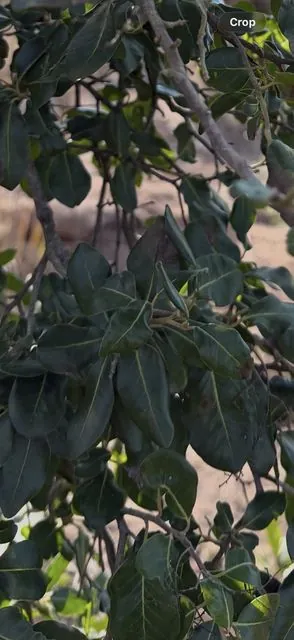
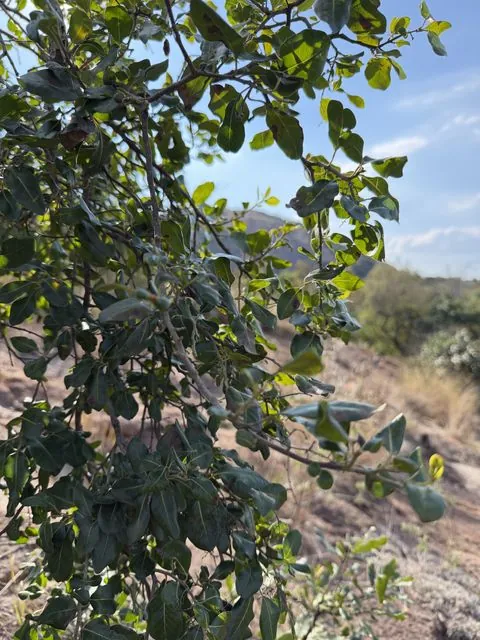
Apodytes dimidiata
Authorship: The author or authors credited with publishing the scientific name. It is written after the name, sometimes with the year, for example L. (Linnaeus) in Zea mays L. An author in parentheses first published the name in another genus or rank. — The author or authors credited with publishing the scientific name. It is written after the name, sometimes with the year, for example L. (Linnaeus) in Zea mays L. An author in parentheses first published the name in another genus or rank.
E.Mey. ex Arn.
Common names
Names in other languages (8)Apodyte dimidié, Apodyte dimidié, Peau gris, Bois bleu, Faux bois bleu, Bako mdzuani (mena ou malandi), Bako mdzuani (mkoundrou ou moeou), Mourimourou, Bird's-eye Tree, Hazombato, Hazonanana, White Pear
Kingdom: One of the broadest ranks of biological classification. It groups organisms that share very basic features, for example plants (Plantae), animals (Animalia) or fungi (Fungi). — One of the broadest ranks of biological classification. It groups organisms that share very basic features, for example plants (Plantae), animals (Animalia) or fungi (Fungi).
Plantae
Phylum: Rank below kingdom that groups organisms with a shared general body plan, for example chordates (Chordata), arthropods (Arthropoda) or vascular plants (Tracheophyta). In botany the same rank is also called division. — Rank below kingdom that groups organisms with a shared general body plan, for example chordates (Chordata), arthropods (Arthropoda) or vascular plants (Tracheophyta). In botany the same rank is also called division.
Tracheophyta
Class: Rank below phylum, for example mammals (Mammalia), birds (Aves), insects (Insecta) or monocot plants such as grasses and orchids (Liliopsida). — Rank below phylum, for example mammals (Mammalia), birds (Aves), insects (Insecta) or monocot plants such as grasses and orchids (Liliopsida).
Magnoliopsida
Order: Rank below class that groups related families, for example grasses and their relatives (Poales) or bats (Chiroptera). — Rank below class that groups related families, for example grasses and their relatives (Poales) or bats (Chiroptera).
Metteniusales
Family: Rank below order that groups related genera. Family names usually end in -aceae in botany (for example Poaceae, the grass family) and in -idae in zoology (for example Felidae, the cat family). — Rank below order that groups related genera. Family names usually end in -aceae in botany (for example Poaceae, the grass family) and in -idae in zoology (for example Felidae, the cat family).
Metteniusaceae
Genus: Rank that groups closely related species. Its name is the first word of a species' scientific name and starts with a capital letter, for example Zea in Zea mays. — Rank that groups closely related species. Its name is the first word of a species' scientific name and starts with a capital letter, for example Zea in Zea mays.
Apodytes
Specific epithet: The second word of a species' scientific name. On its own it does not name the species: it always goes with the genus, for example mays in Zea mays. — The second word of a species' scientific name. On its own it does not name the species: it always goes with the genus, for example mays in Zea mays.
dimidiata
Taxonomic rank: The level a name occupies in the hierarchy of biological classification, such as kingdom, family, genus, species or subspecies. — The level a name occupies in the hierarchy of biological classification, such as kingdom, family, genus, species or subspecies.
species
Taxonomic status: Whether the taxonomic catalogue the record comes from currently accepts this name for the organism, or treats it as a synonym of another accepted name or as doubtful. — Whether the taxonomic catalogue the record comes from currently accepts this name for the organism, or treats it as a synonym of another accepted name or as doubtful.
accepted name
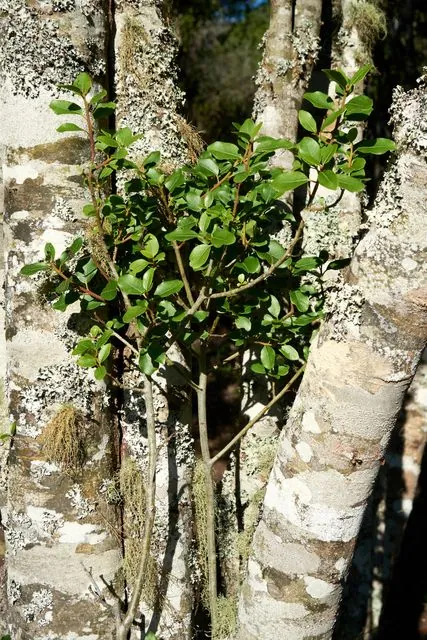
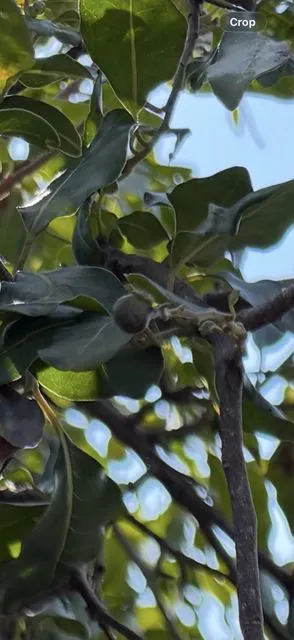
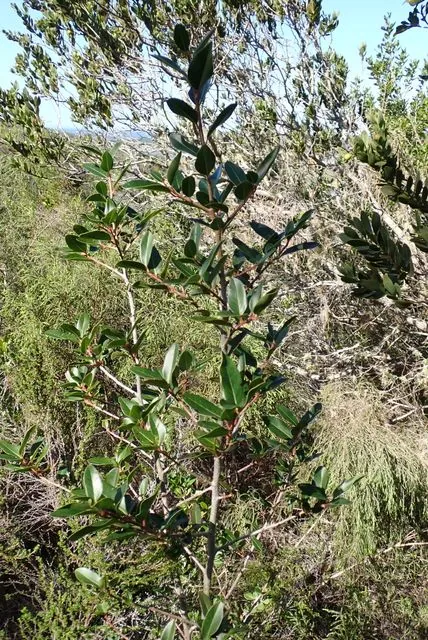
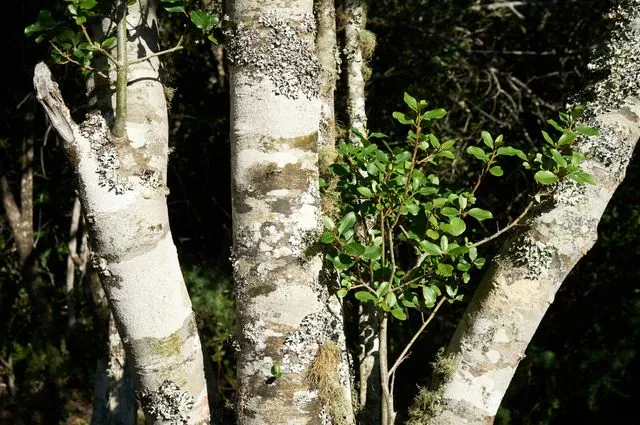
Photos and conservation status
IUCN Red List category: The extinction-risk category that the International Union for Conservation of Nature (IUCN) assigns to a species on its Red List. EX Extinct: there is no reasonable doubt that the last individual has died. EW Extinct in the wild: it survives only in cultivation, in captivity or as a population far outside its past range. CR Critically endangered, EN Endangered and VU Vulnerable: the three threatened categories, from an extremely high to a high risk of extinction in the wild. NT Near threatened: close to qualifying as threatened. LC Least concern: evaluated and not threatened. DD Data deficient: there is not enough information to assess its risk. NE Not evaluated: not yet assessed against the criteria. It describes the risk of the species worldwide, not its situation in a project's area. — The extinction-risk category that the International Union for Conservation of Nature (IUCN) assigns to a species on its Red List. EX Extinct: there is no reasonable doubt that the last individual has died. EW Extinct in the wild: it survives only in cultivation, in captivity or as a population far outside its past range. CR Critically endangered, EN Endangered and VU Vulnerable: the three threatened categories, from an extremely high to a high risk of extinction in the wild. NT Near threatened: close to qualifying as threatened. LC Least concern: evaluated and not threatened. DD Data deficient: there is not enough information to assess its risk. NE Not evaluated: not yet assessed against the criteria. It describes the risk of the species worldwide, not its situation in a project's area.
Least concern (LC)
Source: IUCN Red List via GBIF, queried on 2026-10-13 10:50.
This release publishes no reuse terms for this record.
Madagascar · no date publishedWhere it is: line:hash://sha256/021a206a1459bcca7e251c73f5bd180fc3ac342a09c499855fe42e21fc09edcf!/interactions.tsv.gz!/L13308219
No public URL for this record
Falcon 2018
Published in globalbioticinteractions/fricke2020
Context: Seychelles · no date published
Claim type
Published relationship between two taxa
Version
GloBI 0.11
Reuse
This release publishes no reuse terms for this record.
Seychelles · no date publishedWhere it is: line:hash://sha256/021a206a1459bcca7e251c73f5bd180fc3ac342a09c499855fe42e21fc09edcf!/interactions.tsv.gz!/L13333837
No public URL for this record
A published relationship says these two taxa were documented interacting. It does not say how often, or that it happens in this project's region.
This release publishes no reuse terms for this record.
Madagascar · no date publishedWhere it is: line:hash://sha256/021a206a1459bcca7e251c73f5bd180fc3ac342a09c499855fe42e21fc09edcf!/interactions.tsv.gz!/L13308316
No public URL for this record
Falcon 2018
Published in globalbioticinteractions/fricke2020
Context: Seychelles · no date published
Claim type
Published relationship between two taxa
Version
GloBI 0.11
Reuse
This release publishes no reuse terms for this record.
Seychelles · no date publishedWhere it is: line:hash://sha256/021a206a1459bcca7e251c73f5bd180fc3ac342a09c499855fe42e21fc09edcf!/interactions.tsv.gz!/L13334064
No public URL for this record
A published relationship says these two taxa were documented interacting. It does not say how often, or that it happens in this project's region.
Blue MonkeyCercopithecus mitisCercopithecidae
is eaten by
2
not compared
2 sources · 2 records
Engel 2000
Published in globalbioticinteractions/fricke2020
Context: Kenya · no date published
Claim type
Published relationship between two taxa
Version
GloBI 0.11
Reuse
This release publishes no reuse terms for this record.
Kenya · no date publishedWhere it is: line:hash://sha256/021a206a1459bcca7e251c73f5bd180fc3ac342a09c499855fe42e21fc09edcf!/interactions.tsv.gz!/L13332805
No public URL for this record
Rudran, Rasanayagam. Socio Ecology of the Blue Monkeys (Cercopithecus Mitis Stuhlmanni) of the Kibale Forest, Uganda. Smithsonian Contributions to Zoology, 1977, 1-88.
Published in millerse/Smithsonian-Repository-Interactions
Context: Kibale Forest, Uganda · no date published
Claim type
Published relationship between two taxa
Version
GloBI 0.11
Reuse
This release publishes no reuse terms for this record.
Kibale Forest, Uganda · no date publishedWhere it is: line:hash://sha256/021a206a1459bcca7e251c73f5bd180fc3ac342a09c499855fe42e21fc09edcf!/interactions.tsv.gz!/L22487
A published relationship says these two taxa were documented interacting. It does not say how often, or that it happens in this project's region.
brown land crabCardisoma carnifex
is eaten by
1
not compared
1 source · 1 record
Falcon 2018
Published in globalbioticinteractions/fricke2020
Context: Seychelles · no date published
Claim type
Published relationship between two taxa
Version
GloBI 0.11
Reuse
This release publishes no reuse terms for this record.
Seychelles · no date publishedWhere it is: line:hash://sha256/021a206a1459bcca7e251c73f5bd180fc3ac342a09c499855fe42e21fc09edcf!/interactions.tsv.gz!/L13333997
No public URL for this record
A published relationship says these two taxa were documented interacting. It does not say how often, or that it happens in this project's region.
The authority declares no effect on this species for this term: neither that it harms it nor that it benefits it. In the source ontology symbiosis covers mutualism, commensalism and parasitism alike, so this block holds attackers and allies side by side.
Organism
Reads as
Studies
Where it was documented
Actions
Calycicoccus merweiEriococcidae
is a host of
15
not compared
15 sources · 15 records
https://www.inaturalist.org/observations/99108901
Published in globalbioticinteractions/inaturalist
Context: no place published · Oct. 22, 2021 · Human observation
Claim type
Published relationship between two taxa
Version
GloBI 0.11
Reuse
This release publishes no reuse terms for this record.
no place published · Oct. 22, 2021 · Human observationAs published: 2021-10-22T14:12:00Z · HumanObservationWhere it is: line:hash://sha256/021a206a1459bcca7e251c73f5bd180fc3ac342a09c499855fe42e21fc09edcf!/interactions.tsv.gz!/L4446813
Context: no place published · Sept. 6, 2025 · Human observation
Claim type
Published relationship between two taxa
Version
GloBI 0.11
Reuse
This release publishes no reuse terms for this record.
no place published · Sept. 6, 2025 · Human observationAs published: 2025-09-06T11:25:00Z · HumanObservationWhere it is: line:hash://sha256/021a206a1459bcca7e251c73f5bd180fc3ac342a09c499855fe42e21fc09edcf!/interactions.tsv.gz!/L4686858
Context: no place published · Oct. 29, 2017 · Human observation
Claim type
Published relationship between two taxa
Version
GloBI 0.11
Reuse
This release publishes no reuse terms for this record.
no place published · Oct. 29, 2017 · Human observationAs published: 2017-10-29T05:57:00Z · HumanObservationWhere it is: line:hash://sha256/021a206a1459bcca7e251c73f5bd180fc3ac342a09c499855fe42e21fc09edcf!/interactions.tsv.gz!/L4707033
Context: no place published · Jan. 31, 2015 · Human observation
Claim type
Published relationship between two taxa
Version
GloBI 0.11
Reuse
This release publishes no reuse terms for this record.
no place published · Jan. 31, 2015 · Human observationAs published: 2015-01-31T00:00:00Z · HumanObservationWhere it is: line:hash://sha256/021a206a1459bcca7e251c73f5bd180fc3ac342a09c499855fe42e21fc09edcf!/interactions.tsv.gz!/L4760378
Context: no place published · Feb. 18, 2017 · Human observation
Claim type
Published relationship between two taxa
Version
GloBI 0.11
Reuse
This release publishes no reuse terms for this record.
no place published · Feb. 18, 2017 · Human observationAs published: 2017-02-18T00:00:00Z · HumanObservationWhere it is: line:hash://sha256/021a206a1459bcca7e251c73f5bd180fc3ac342a09c499855fe42e21fc09edcf!/interactions.tsv.gz!/L4763275
Context: no place published · March 5, 2017 · Human observation
Claim type
Published relationship between two taxa
Version
GloBI 0.11
Reuse
This release publishes no reuse terms for this record.
no place published · March 5, 2017 · Human observationAs published: 2017-03-05T00:00:00Z · HumanObservationWhere it is: line:hash://sha256/021a206a1459bcca7e251c73f5bd180fc3ac342a09c499855fe42e21fc09edcf!/interactions.tsv.gz!/L4763351
Context: no place published · Aug. 3, 2019 · Human observation
Claim type
Published relationship between two taxa
Version
GloBI 0.11
Reuse
This release publishes no reuse terms for this record.
no place published · Aug. 3, 2019 · Human observationAs published: 2019-08-03T10:05:00Z · HumanObservationWhere it is: line:hash://sha256/021a206a1459bcca7e251c73f5bd180fc3ac342a09c499855fe42e21fc09edcf!/interactions.tsv.gz!/L5136899
Context: no place published · Oct. 28, 2022 · Human observation
Claim type
Published relationship between two taxa
Version
GloBI 0.11
Reuse
This release publishes no reuse terms for this record.
no place published · Oct. 28, 2022 · Human observationAs published: 2022-10-28T14:06:00Z · HumanObservationWhere it is: line:hash://sha256/021a206a1459bcca7e251c73f5bd180fc3ac342a09c499855fe42e21fc09edcf!/interactions.tsv.gz!/L5179427
And 7 more sources, with fewer records, not listed here.
A published relationship says these two taxa were documented interacting. It does not say how often, or that it happens in this project's region.
Meliola campylotricha
is a host of
2
no location
2 sources · 2 records
Doidge, E.M.. 1950. The South African fungi and lichens to the end of 1945. Bothalia 5:1-1094
Published in globalbioticinteractions/usda-fungus-host
Context: Southern Africa · no date published
Claim type
Published relationship between two taxa
Version
GloBI 0.11
Reuse
This release publishes no reuse terms for this record.
Southern Africa · no date publishedWhere it is: line:hash://sha256/021a206a1459bcca7e251c73f5bd180fc3ac342a09c499855fe42e21fc09edcf!/interactions.tsv.gz!/L3770473
No public URL for this record
Hansford, C.G.. 1947. New tropical fungi - II. Proc. Linn. Soc. London 159:21-42
Published in globalbioticinteractions/usda-fungus-host
Context: Congo, Democratic Republic of the · no date published
Claim type
Published relationship between two taxa
Version
GloBI 0.11
Reuse
This release publishes no reuse terms for this record.
Congo, Democratic Republic of the · no date publishedWhere it is: line:hash://sha256/021a206a1459bcca7e251c73f5bd180fc3ac342a09c499855fe42e21fc09edcf!/interactions.tsv.gz!/L4379574
No public URL for this record
A published relationship says these two taxa were documented interacting. It does not say how often, or that it happens in this project's region.
Veniliodes pantherariaGeometridae
is a host of
1
no location
1 source · 1 record
Gaden S. Robinson; Phillip R. Ackery; Ian Kitching; George W Beccaloni; Luis M. Hernández (2023). HOSTS (from HOSTS - a Database of the World's Lepidopteran Hostplants) [Data set resource]. Natural History Museum. https://data.nhm.ac.uk/dataset/hosts/resource/877f387a-36a3-486c-…
Published in globalbioticinteractions/HOSTS
Context: Southern Africa · no date published
Claim type
Published relationship between two taxa
Version
GloBI 0.11
Reuse
This release publishes no reuse terms for this record.
Southern Africa · no date publishedWhere it is: line:hash://sha256/021a206a1459bcca7e251c73f5bd180fc3ac342a09c499855fe42e21fc09edcf!/interactions.tsv.gz!/L6692378
A published relationship says these two taxa were documented interacting. It does not say how often, or that it happens in this project's region.
Oleander Hawk-mothDaphnis neriiSphingidae
is a host of
1
no location
1 source · 1 record
Gaden S. Robinson; Phillip R. Ackery; Ian Kitching; George W Beccaloni; Luis M. Hernández (2023). HOSTS (from HOSTS - a Database of the World's Lepidopteran Hostplants) [Data set resource]. Natural History Museum. https://data.nhm.ac.uk/dataset/hosts/resource/877f387a-36a3-486c-…
Published in globalbioticinteractions/HOSTS
Context: East Africa · no date published
Claim type
Published relationship between two taxa
Version
GloBI 0.11
Reuse
This release publishes no reuse terms for this record.
East Africa · no date publishedWhere it is: line:hash://sha256/021a206a1459bcca7e251c73f5bd180fc3ac342a09c499855fe42e21fc09edcf!/interactions.tsv.gz!/L6591695
The authority declares no effect on this species for this term: neither that it harms it nor that it benefits it.
Organism
Reads as
Studies
Where it was documented
Actions
Common BulbulPycnonotus barbatusPycnonotidae
is dispersed by
1
not compared
1 source · 1 record
Frost, P.G.H. 1980. Fruit-frugivore interactions in a South African coastal dune forest. Pages 1179-1184 in: R. Noring (ed.). Acta XVII Congresus Internationalis Ornithologici, Deutsches Ornithologische Gessenshaft, Berlin.
Published in globalbioticinteractions/web-of-life
Context: no place published · no date published
Claim type
Published relationship between two taxa
Version
GloBI 0.11
Reuse
This release publishes no reuse terms for this record.
no place published · no date publishedWhere it is: line:hash://sha256/021a206a1459bcca7e251c73f5bd180fc3ac342a09c499855fe42e21fc09edcf!/interactions.tsv.gz!/L11453379
No public URL for this record
A published relationship says these two taxa were documented interacting. It does not say how often, or that it happens in this project's region.
Frost, P.G.H. 1980. Fruit-frugivore interactions in a South African coastal dune forest. Pages 1179-1184 in: R. Noring (ed.). Acta XVII Congresus Internationalis Ornithologici, Deutsches Ornithologische Gessenshaft, Berlin.
Published in globalbioticinteractions/web-of-life
Context: no place published · no date published
Claim type
Published relationship between two taxa
Version
GloBI 0.11
Reuse
This release publishes no reuse terms for this record.
no place published · no date publishedWhere it is: line:hash://sha256/021a206a1459bcca7e251c73f5bd180fc3ac342a09c499855fe42e21fc09edcf!/interactions.tsv.gz!/L11453382
No public URL for this record
A published relationship says these two taxa were documented interacting. It does not say how often, or that it happens in this project's region.
Flathead ChubPlatygobio gracilisCyprinidae
is dispersed by
1
not compared
1 source · 1 record
Frost, P.G.H. 1980. Fruit-frugivore interactions in a South African coastal dune forest. Pages 1179-1184 in: R. Noring (ed.). Acta XVII Congresus Internationalis Ornithologici, Deutsches Ornithologische Gessenshaft, Berlin.
Published in globalbioticinteractions/web-of-life
Context: no place published · no date published
Claim type
Published relationship between two taxa
Version
GloBI 0.11
Reuse
This release publishes no reuse terms for this record.
no place published · no date publishedWhere it is: line:hash://sha256/021a206a1459bcca7e251c73f5bd180fc3ac342a09c499855fe42e21fc09edcf!/interactions.tsv.gz!/L11453384
No public URL for this record
A published relationship says these two taxa were documented interacting. It does not say how often, or that it happens in this project's region.
Orange River White-eyeZosterops pallidusZosteropidae
is dispersed by
1
not compared
1 source · 1 record
Frost, P.G.H. 1980. Fruit-frugivore interactions in a South African coastal dune forest. Pages 1179-1184 in: R. Noring (ed.). Acta XVII Congresus Internationalis Ornithologici, Deutsches Ornithologische Gessenshaft, Berlin.
Published in globalbioticinteractions/web-of-life
Context: no place published · no date published
Claim type
Published relationship between two taxa
Version
GloBI 0.11
Reuse
This release publishes no reuse terms for this record.
no place published · no date publishedWhere it is: line:hash://sha256/021a206a1459bcca7e251c73f5bd180fc3ac342a09c499855fe42e21fc09edcf!/interactions.tsv.gz!/L11453381
No public URL for this record
A published relationship says these two taxa were documented interacting. It does not say how often, or that it happens in this project's region.
The authority declares no effect on this species for this term: neither that it harms it nor that it benefits it.
Organism
Reads as
Studies
Where it was documented
Actions
Flathead ChubPlatygobio gracilisCyprinidae
is ecologically related to
1
not compared
1 source · 1 record
elberling NA
Published in globalbioticinteractions/mangal
Context: no place published · Jan. 1, 1980 · null
Claim type
Published relationship between two taxa
Version
GloBI 0.11
Reuse
This release publishes no reuse terms for this record.
no place published · Jan. 1, 1980 · nullAs published: 1980-01-01T00:00:00Z · nullWhere it is: line:hash://sha256/021a206a1459bcca7e251c73f5bd180fc3ac342a09c499855fe42e21fc09edcf!/interactions.tsv.gz!/L8222653
No public URL for this record
A published relationship says these two taxa were documented interacting. It does not say how often, or that it happens in this project's region.
Orange River White-eyeZosterops pallidusZosteropidae
is ecologically related to
1
not compared
1 source · 1 record
elberling NA
Published in globalbioticinteractions/mangal
Context: no place published · Jan. 1, 1980 · null
Claim type
Published relationship between two taxa
Version
GloBI 0.11
Reuse
This release publishes no reuse terms for this record.
no place published · Jan. 1, 1980 · nullAs published: 1980-01-01T00:00:00Z · nullWhere it is: line:hash://sha256/021a206a1459bcca7e251c73f5bd180fc3ac342a09c499855fe42e21fc09edcf!/interactions.tsv.gz!/L8222657
No public URL for this record
A published relationship says these two taxa were documented interacting. It does not say how often, or that it happens in this project's region.
Showing 2 of 2, by number of studies
has as a vector
2 organisms
The authority declares no effect on this species for this term: neither that it harms it nor that it benefits it.
De Boer, W.F. and Ntumi, C.P. and Correia, A.U. and Mafuca, J.M., 2000. Diet and distribution of elephant in the Maputo Elephant Reserve; Mozambique. African Journal of Ecology, 38(3), pp.188-201.
Published in globalbioticinteractions/AfricaTreeDatabase
Context: no place published · no date published · direct observation
Claim type
Published relationship between two taxa
Version
GloBI 0.11
Reuse
This release publishes no reuse terms for this record.
no place published · no date published · direct observationAs published: direct observationWhere it is: line:hash://sha256/021a206a1459bcca7e251c73f5bd180fc3ac342a09c499855fe42e21fc09edcf!/interactions.tsv.gz!/L9138455
No public URL for this record
A published relationship says these two taxa were documented interacting. It does not say how often, or that it happens in this project's region.
Ring-tailed LemurLemur cattaLemuridae
has as a vector
1
no location
1 source · 1 record
Simmen, B. and Hladik, A. and Ramasiarisoa, P., 2003. Food intake and dietary overlap in native Lemur catta and Propithecus verreauxi and introduced Eulemur fulvus at Berenty; southern Madagascar. International Journal of Primatology, 24(5), pp.949-968.
Published in globalbioticinteractions/AfricaTreeDatabase
Context: no place published · no date published · direct observation
Claim type
Published relationship between two taxa
Version
GloBI 0.11
Reuse
This release publishes no reuse terms for this record.
no place published · no date published · direct observationAs published: direct observationWhere it is: line:hash://sha256/021a206a1459bcca7e251c73f5bd180fc3ac342a09c499855fe42e21fc09edcf!/interactions.tsv.gz!/L9139988
No public URL for this record
A published relationship says these two taxa were documented interacting. It does not say how often, or that it happens in this project's region.
Showing 2 of 2, by number of studies
is adjacent to
1 organism
The authority declares no effect on this species for this term: neither that it harms it nor that it benefits it.
This release publishes no reuse terms for this record.
Aldabra, Île Polymnie · Nov. 10, 1973 · Preserved specimenAs published: 1973-11-10T00:00:00Z · PreservedSpecimenWhere it is: line:hash://sha256/021a206a1459bcca7e251c73f5bd180fc3ac342a09c499855fe42e21fc09edcf!/interactions.tsv.gz!/L12413207
No public URL for this record
A published relationship says these two taxa were documented interacting. It does not say how often, or that it happens in this project's region.
Showing 1 of 1, by number of studies
is a symbiont of
1 organism
The authority declares no effect on this species for this term: neither that it harms it nor that it benefits it. In the source ontology symbiosis covers mutualism, commensalism and parasitism alike, so this block holds attackers and allies side by side.
Organism
Reads as
Studies
Where it was documented
Actions
Fungi Including LichensFungi
is a symbiont of
1
not compared
Not a modelling unit: the source publishes it at kingdom level.
1 source · 1 record
Assefa D, Godbold DL, Belay B, Abiya A, Rewald B. 2018. Fine root morphology, biochemistry and litter quality indices of fast- and slow-growing woody species in Ethiopian highland forest. Ecosystems 21: 482-494.
Published in globalbioticinteractions/fred
Context: no place published · Jan. 1, 2014
Claim type
Published relationship between two taxa
Version
GloBI 0.11
Reuse
This release publishes no reuse terms for this record.
no place published · Jan. 1, 2014As published: 2014-01-01T00:00:00ZWhere it is: line:hash://sha256/021a206a1459bcca7e251c73f5bd180fc3ac342a09c499855fe42e21fc09edcf!/interactions.tsv.gz!/L24436110
A published relationship says these two taxa were documented interacting. It does not say how often, or that it happens in this project's region.
Showing 1 of 1, by number of studies
Acompañantes documentados
This agronomic reading comes from a source reserved for internal use, so it is not shown here.
Documented uses and recommendations
Uses and recommendations that a source documents for this species beside a crop, each in its own context. They are the source's statements, not traits of the species and not Biolítica's recommendations, and none of them is a relation between two species.
Among the sources you can read, none documents a use or recommendation of this species beside a crop.