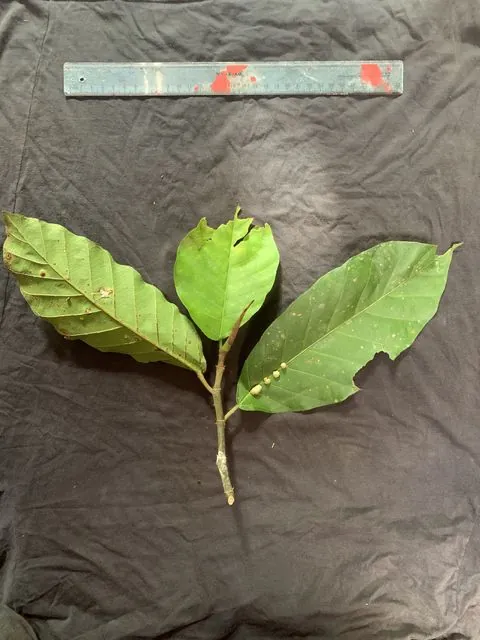
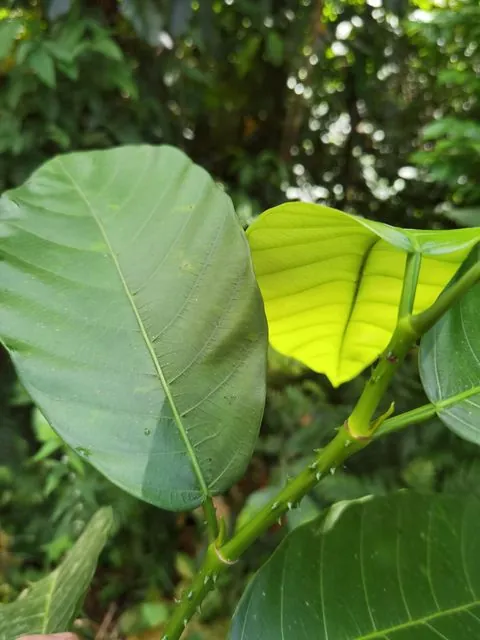
Canonical name: The scientific name without its authorship or date, for example Zea mays instead of Zea mays L. — The scientific name without its authorship or date, for example Zea mays instead of Zea mays L.
Poulsenia armata
Authorship: The author or authors credited with publishing the scientific name. It is written after the name, sometimes with the year, for example L. (Linnaeus) in Zea mays L. An author in parentheses first published the name in another genus or rank. — The author or authors credited with publishing the scientific name. It is written after the name, sometimes with the year, for example L. (Linnaeus) in Zea mays L. An author in parentheses first published the name in another genus or rank.
(Miq.) Standl.
Common names
YanchamaNames in other languages (19)Ancato, Bigta, Ccarapacha, Damagua, Datsí, Huaica’co, Ila chama, Kaa tyashki chi, Majagua, Mastate, Nonjapa ccarapacha, Otobeyemo, Palo de majagua, Tamajawa, Tsaka wallis, Tyashki chi jaki, carne de pescado, chanchama, poulsenia ozbrojená
Kingdom: One of the broadest ranks of biological classification. It groups organisms that share very basic features, for example plants (Plantae), animals (Animalia) or fungi (Fungi). — One of the broadest ranks of biological classification. It groups organisms that share very basic features, for example plants (Plantae), animals (Animalia) or fungi (Fungi).
Plantae
Phylum: Rank below kingdom that groups organisms with a shared general body plan, for example chordates (Chordata), arthropods (Arthropoda) or vascular plants (Tracheophyta). In botany the same rank is also called division. — Rank below kingdom that groups organisms with a shared general body plan, for example chordates (Chordata), arthropods (Arthropoda) or vascular plants (Tracheophyta). In botany the same rank is also called division.
Tracheophyta
Class: Rank below phylum, for example mammals (Mammalia), birds (Aves), insects (Insecta) or monocot plants such as grasses and orchids (Liliopsida). — Rank below phylum, for example mammals (Mammalia), birds (Aves), insects (Insecta) or monocot plants such as grasses and orchids (Liliopsida).
Magnoliopsida
Order: Rank below class that groups related families, for example grasses and their relatives (Poales) or bats (Chiroptera). — Rank below class that groups related families, for example grasses and their relatives (Poales) or bats (Chiroptera).
Rosales
Family: Rank below order that groups related genera. Family names usually end in -aceae in botany (for example Poaceae, the grass family) and in -idae in zoology (for example Felidae, the cat family). — Rank below order that groups related genera. Family names usually end in -aceae in botany (for example Poaceae, the grass family) and in -idae in zoology (for example Felidae, the cat family).
Moraceae
Genus: Rank that groups closely related species. Its name is the first word of a species' scientific name and starts with a capital letter, for example Zea in Zea mays. — Rank that groups closely related species. Its name is the first word of a species' scientific name and starts with a capital letter, for example Zea in Zea mays.
Poulsenia
Specific epithet: The second word of a species' scientific name. On its own it does not name the species: it always goes with the genus, for example mays in Zea mays. — The second word of a species' scientific name. On its own it does not name the species: it always goes with the genus, for example mays in Zea mays.
armata
Taxonomic rank: The level a name occupies in the hierarchy of biological classification, such as kingdom, family, genus, species or subspecies. — The level a name occupies in the hierarchy of biological classification, such as kingdom, family, genus, species or subspecies.
species
Reference species
Poulsenia armata
Taxonomic status: Whether the taxonomic catalogue the record comes from currently accepts this name for the organism, or treats it as a synonym of another accepted name or as doubtful. — Whether the taxonomic catalogue the record comes from currently accepts this name for the organism, or treats it as a synonym of another accepted name or as doubtful.
accepted name
Photos and conservation status
IUCN Red List category: The extinction-risk category that the International Union for Conservation of Nature (IUCN) assigns to a species on its Red List. EX Extinct: there is no reasonable doubt that the last individual has died. EW Extinct in the wild: it survives only in cultivation, in captivity or as a population far outside its past range. CR Critically endangered, EN Endangered and VU Vulnerable: the three threatened categories, from an extremely high to a high risk of extinction in the wild. NT Near threatened: close to qualifying as threatened. LC Least concern: evaluated and not threatened. DD Data deficient: there is not enough information to assess its risk. NE Not evaluated: not yet assessed against the criteria. It describes the risk of the species worldwide, not its situation in a project's area. — The extinction-risk category that the International Union for Conservation of Nature (IUCN) assigns to a species on its Red List. EX Extinct: there is no reasonable doubt that the last individual has died. EW Extinct in the wild: it survives only in cultivation, in captivity or as a population far outside its past range. CR Critically endangered, EN Endangered and VU Vulnerable: the three threatened categories, from an extremely high to a high risk of extinction in the wild. NT Near threatened: close to qualifying as threatened. LC Least concern: evaluated and not threatened. DD Data deficient: there is not enough information to assess its risk. NE Not evaluated: not yet assessed against the criteria. It describes the risk of the species worldwide, not its situation in a project's area.
Least concern (LC)
Source: IUCN Red List via GBIF, queried on 2026-10-09 08:53.
Research-grade iNaturalist observations via GBIF, CC0 or CC BY licences only, queried on 2026-10-09 08:53.
Interacciones documentadas
GloBI says it is documented somewhere in the world. Biolitica answers whether it could happen here.
A documented interaction means it was recorded somewhere in the world. It does not mean it occurs here.
Types shown: 9 of 9
is a symbiont of
×
is eaten by
×
has as a vector
×
is a host of
×
is an arbuscular mycorrhizal host of
×
interacts with
×
has as a parasite
×
is pollinated by
×
is preyed upon by
×
Blocks that do not sit under a navigation concept heading keep the source's own term: no navigation concept has been assigned to them yet.
is a symbiont of
130 organisms
The authority declares no effect on this species for this term: neither that it harms it nor that it benefits it. In the source ontology symbiosis covers mutualism, commensalism and parasitism alike, so this block holds attackers and allies side by side.
Organism
Reads as
Studies
Where it was documented
Actions
Hypoxylon investiensHypoxylaceae
is a symbiont of
1
not compared
1 source · 1 record
Schroeder, J.W., Martin, J.T., Angulo, D.F., Arias-Del Razo, I., Barbosa, J.M., Perea, R., Sebastián-González, E. and Dirzo, R., 2019. Host plant phylogeny and abundance predict root-associated fungal community composition and diversity of mutualists and pathogens.. Journal of E…
Published in globalbioticinteractions/globalfungi
Context: Los Tuxtlas Tropical Biology Station, Veracruz · no date published
Claim type
Published relationship between two taxa
Version
GloBI 0.11
Reuse
This release publishes no reuse terms for this record.
Los Tuxtlas Tropical Biology Station, Veracruz · no date publishedWhere it is: line:hash://sha256/021a206a1459bcca7e251c73f5bd180fc3ac342a09c499855fe42e21fc09edcf!/interactions.tsv.gz!/L19795787
A published relationship says these two taxa were documented interacting. It does not say how often, or that it happens in this project's region.
OliveoniaceaeOliveoniaceae
is a symbiont of
1
not compared
Not a modelling unit: the source publishes it at family level.
1 source · 1 record
Schroeder, J.W., Martin, J.T., Angulo, D.F., Arias-Del Razo, I., Barbosa, J.M., Perea, R., Sebastián-González, E. and Dirzo, R., 2019. Host plant phylogeny and abundance predict root-associated fungal community composition and diversity of mutualists and pathogens.. Journal of E…
Published in globalbioticinteractions/globalfungi
Context: Los Tuxtlas Tropical Biology Station, Veracruz · no date published
Claim type
Published relationship between two taxa
Version
GloBI 0.11
Reuse
This release publishes no reuse terms for this record.
Los Tuxtlas Tropical Biology Station, Veracruz · no date publishedWhere it is: line:hash://sha256/021a206a1459bcca7e251c73f5bd180fc3ac342a09c499855fe42e21fc09edcf!/interactions.tsv.gz!/L19794646
A published relationship says these two taxa were documented interacting. It does not say how often, or that it happens in this project's region.
Fusarium solaniNectriaceae
is a symbiont of
1
not compared
1 source · 1 record
Schroeder, J.W., Martin, J.T., Angulo, D.F., Arias-Del Razo, I., Barbosa, J.M., Perea, R., Sebastián-González, E. and Dirzo, R., 2019. Host plant phylogeny and abundance predict root-associated fungal community composition and diversity of mutualists and pathogens.. Journal of E…
Published in globalbioticinteractions/globalfungi
Context: Los Tuxtlas Tropical Biology Station, Veracruz · no date published
Claim type
Published relationship between two taxa
Version
GloBI 0.11
Reuse
This release publishes no reuse terms for this record.
Los Tuxtlas Tropical Biology Station, Veracruz · no date publishedWhere it is: line:hash://sha256/021a206a1459bcca7e251c73f5bd180fc3ac342a09c499855fe42e21fc09edcf!/interactions.tsv.gz!/L19795984
A published relationship says these two taxa were documented interacting. It does not say how often, or that it happens in this project's region.
NeopaxillusCrepidotaceae
is a symbiont of
1
not compared
Not a modelling unit: the source publishes it at genus level.
1 source · 1 record
Schroeder, J.W., Martin, J.T., Angulo, D.F., Arias-Del Razo, I., Barbosa, J.M., Perea, R., Sebastián-González, E. and Dirzo, R., 2019. Host plant phylogeny and abundance predict root-associated fungal community composition and diversity of mutualists and pathogens.. Journal of E…
Published in globalbioticinteractions/globalfungi
Context: Los Tuxtlas Tropical Biology Station, Veracruz · no date published
Claim type
Published relationship between two taxa
Version
GloBI 0.11
Reuse
This release publishes no reuse terms for this record.
Los Tuxtlas Tropical Biology Station, Veracruz · no date publishedWhere it is: line:hash://sha256/021a206a1459bcca7e251c73f5bd180fc3ac342a09c499855fe42e21fc09edcf!/interactions.tsv.gz!/L19797300
Florez-Montero GL, Muylaert RL, Nogueira MR, Geiselman C, Santana SE, Stevens RD, Tschapka M, Rodrigues FA, Mello MAR, 2022. NeoBat Interactions: A data set of bat–plant interactions in the Neotropics.
Published in globalbioticinteractions/neofrugivory
Record contexts (sample): Neotropics · no date published; Neotropics · no date published
Claim type
Published relationship between two taxa
Version
GloBI 0.11
Reuse
This release publishes no reuse terms for this record.
Neotropics · no date publishedWhere it is: line:hash://sha256/021a206a1459bcca7e251c73f5bd180fc3ac342a09c499855fe42e21fc09edcf!/interactions.tsv.gz!/L3084610
Neotropics · no date publishedWhere it is: line:hash://sha256/021a206a1459bcca7e251c73f5bd180fc3ac342a09c499855fe42e21fc09edcf!/interactions.tsv.gz!/L3084646
Neotropics · no date publishedWhere it is: line:hash://sha256/021a206a1459bcca7e251c73f5bd180fc3ac342a09c499855fe42e21fc09edcf!/interactions.tsv.gz!/L3084864
No public URL for this record
Kalko BCI zero intx removed
Published in globalbioticinteractions/fricke2020
Context: Panama · no date published
Claim type
Published relationship between two taxa
Version
GloBI 0.11
Reuse
This release publishes no reuse terms for this record.
Panama · no date publishedWhere it is: line:hash://sha256/021a206a1459bcca7e251c73f5bd180fc3ac342a09c499855fe42e21fc09edcf!/interactions.tsv.gz!/L13300873
No public URL for this record
Castro-Luna 2012
Published in globalbioticinteractions/fricke2020
Context: Mexico · no date published
Claim type
Published relationship between two taxa
Version
GloBI 0.11
Reuse
This release publishes no reuse terms for this record.
Mexico · no date publishedWhere it is: line:hash://sha256/021a206a1459bcca7e251c73f5bd180fc3ac342a09c499855fe42e21fc09edcf!/interactions.tsv.gz!/L13310729
No public URL for this record
Moreno-Mosquera 2011
Published in globalbioticinteractions/fricke2020
Context: Colombia · no date published
Claim type
Published relationship between two taxa
Version
GloBI 0.11
Reuse
This release publishes no reuse terms for this record.
Colombia · no date publishedWhere it is: line:hash://sha256/021a206a1459bcca7e251c73f5bd180fc3ac342a09c499855fe42e21fc09edcf!/interactions.tsv.gz!/L13354509
No public URL for this record
Estrada, A., R. Coates-Estrada, C. V�squez-Yanes & A. Orozco-Segovia. 1984. Comparison of frugivory by howling monkeys (Alouatta palliata) and bats (Artibeus jamaicensis) in the tropical rain forest of Lost Tuxtlas, Mexico. American Journal of Primatology 7: 3-13
Published in globalbioticinteractions/NeoBat_Interactions
Context: no place published · no date published
Claim type
Published relationship between two taxa
Version
GloBI 0.11
Reuse
This release publishes no reuse terms for this record.
no place published · no date publishedWhere it is: line:hash://sha256/021a206a1459bcca7e251c73f5bd180fc3ac342a09c499855fe42e21fc09edcf!/interactions.tsv.gz!/L24374225
No public URL for this record
Giannini, N.P. & E.K.V. Kalko. 2004. Trophic structure in a large assemblage of phyllostomid bats in Panama. Oikos 105: 209-220
Published in globalbioticinteractions/NeoBat_Interactions
Context: no place published · no date published
Claim type
Published relationship between two taxa
Version
GloBI 0.11
Reuse
This release publishes no reuse terms for this record.
no place published · no date publishedWhere it is: line:hash://sha256/021a206a1459bcca7e251c73f5bd180fc3ac342a09c499855fe42e21fc09edcf!/interactions.tsv.gz!/L24374506
No public URL for this record
Handley, C.O., Jr., A.L. Gardner & D.E. Wilson. 1991. Food habits. In: C.O. Handley, Jr., D.E. Wilson & A.L. Gardner (eds) Demography and natural history of the common fruit bat Artibeus jamaicensis on Barro Colorado Island, Panam�. Smithsonian Institute Press.
Published in globalbioticinteractions/NeoBat_Interactions
Context: no place published · no date published
Claim type
Published relationship between two taxa
Version
GloBI 0.11
Reuse
This release publishes no reuse terms for this record.
no place published · no date publishedWhere it is: line:hash://sha256/021a206a1459bcca7e251c73f5bd180fc3ac342a09c499855fe42e21fc09edcf!/interactions.tsv.gz!/L24374876
No public URL for this record
A published relationship says these two taxa were documented interacting. It does not say how often, or that it happens in this project's region.
Pygmy Fruit-eating BatArtibeus phaeotis
is eaten by
4
not compared
4 sources · 4 records
Kalko BCI zero intx removed
Published in globalbioticinteractions/fricke2020
Context: Panama · no date published
Claim type
Published relationship between two taxa
Version
GloBI 0.11
Reuse
This release publishes no reuse terms for this record.
Panama · no date publishedWhere it is: line:hash://sha256/021a206a1459bcca7e251c73f5bd180fc3ac342a09c499855fe42e21fc09edcf!/interactions.tsv.gz!/L13300588
No public URL for this record
Castro-Luna 2012
Published in globalbioticinteractions/fricke2020
Context: Mexico · no date published
Claim type
Published relationship between two taxa
Version
GloBI 0.11
Reuse
This release publishes no reuse terms for this record.
Mexico · no date publishedWhere it is: line:hash://sha256/021a206a1459bcca7e251c73f5bd180fc3ac342a09c499855fe42e21fc09edcf!/interactions.tsv.gz!/L13310770
No public URL for this record
Moreno-Mosquera 2011
Published in globalbioticinteractions/fricke2020
Context: Colombia · no date published
Claim type
Published relationship between two taxa
Version
GloBI 0.11
Reuse
This release publishes no reuse terms for this record.
Colombia · no date publishedWhere it is: line:hash://sha256/021a206a1459bcca7e251c73f5bd180fc3ac342a09c499855fe42e21fc09edcf!/interactions.tsv.gz!/L13354475
No public URL for this record
Giannini, N.P. & E.K.V. Kalko. 2004. Trophic structure in a large assemblage of phyllostomid bats in Panama. Oikos 105: 209-220
Published in globalbioticinteractions/NeoBat_Interactions
Context: no place published · no date published
Claim type
Published relationship between two taxa
Version
GloBI 0.11
Reuse
This release publishes no reuse terms for this record.
no place published · no date publishedWhere it is: line:hash://sha256/021a206a1459bcca7e251c73f5bd180fc3ac342a09c499855fe42e21fc09edcf!/interactions.tsv.gz!/L24374409
No public URL for this record
A published relationship says these two taxa were documented interacting. It does not say how often, or that it happens in this project's region.
This release publishes no reuse terms for this record.
Panama · no date publishedWhere it is: line:hash://sha256/021a206a1459bcca7e251c73f5bd180fc3ac342a09c499855fe42e21fc09edcf!/interactions.tsv.gz!/L13300718
No public URL for this record
Castro-Luna 2012
Published in globalbioticinteractions/fricke2020
Context: Mexico · no date published
Claim type
Published relationship between two taxa
Version
GloBI 0.11
Reuse
This release publishes no reuse terms for this record.
Mexico · no date publishedWhere it is: line:hash://sha256/021a206a1459bcca7e251c73f5bd180fc3ac342a09c499855fe42e21fc09edcf!/interactions.tsv.gz!/L13310853
No public URL for this record
Moreno-Mosquera 2011
Published in globalbioticinteractions/fricke2020
Context: Colombia · no date published
Claim type
Published relationship between two taxa
Version
GloBI 0.11
Reuse
This release publishes no reuse terms for this record.
Colombia · no date publishedWhere it is: line:hash://sha256/021a206a1459bcca7e251c73f5bd180fc3ac342a09c499855fe42e21fc09edcf!/interactions.tsv.gz!/L13354563
No public URL for this record
A published relationship says these two taxa were documented interacting. It does not say how often, or that it happens in this project's region.
Great Fruit-eating BatArtibeus lituratusPhyllostomidae
is eaten by
3
not compared
3 sources · 3 records
Kalko BCI zero intx removed
Published in globalbioticinteractions/fricke2020
Context: Panama · no date published
Claim type
Published relationship between two taxa
Version
GloBI 0.11
Reuse
This release publishes no reuse terms for this record.
Panama · no date publishedWhere it is: line:hash://sha256/021a206a1459bcca7e251c73f5bd180fc3ac342a09c499855fe42e21fc09edcf!/interactions.tsv.gz!/L13301078
No public URL for this record
Castro-Luna 2012
Published in globalbioticinteractions/fricke2020
Context: Mexico · no date published
Claim type
Published relationship between two taxa
Version
GloBI 0.11
Reuse
This release publishes no reuse terms for this record.
Mexico · no date publishedWhere it is: line:hash://sha256/021a206a1459bcca7e251c73f5bd180fc3ac342a09c499855fe42e21fc09edcf!/interactions.tsv.gz!/L13310705
No public URL for this record
Moreno-Mosquera 2011
Published in globalbioticinteractions/fricke2020
Context: Colombia · no date published
Claim type
Published relationship between two taxa
Version
GloBI 0.11
Reuse
This release publishes no reuse terms for this record.
Colombia · no date publishedWhere it is: line:hash://sha256/021a206a1459bcca7e251c73f5bd180fc3ac342a09c499855fe42e21fc09edcf!/interactions.tsv.gz!/L13354490
No public URL for this record
A published relationship says these two taxa were documented interacting. It does not say how often, or that it happens in this project's region.
Giannini, N. P. & E. K. Kalko. 2004. Trophic structure in a large assemblage of phyllostomid bats in Panama. Oikos 105: 209-220.
Published in globalbioticinteractions/batbase
Context: Barro Colorado Island · no date published
Claim type
Published relationship between two taxa
Version
GloBI 0.11
Reuse
This release publishes no reuse terms for this record.
Barro Colorado Island · no date publishedWhere it is: line:hash://sha256/021a206a1459bcca7e251c73f5bd180fc3ac342a09c499855fe42e21fc09edcf!/interactions.tsv.gz!/L12438689
No public URL for this record
Handley, C. O. & E. G. Leigh. 1991. Diet and food supply. In: Demography and natural history of the common fruit bat Artibeus jamaicensis on Barro Colorado Island, Panamá (C. O. Handley, D. E. Wilson & A. L. Gardner, eds.). pp. 147-149. Smithsonian Institute Press, Washington, D…
Published in globalbioticinteractions/batbase
Context: Barro Colorado Island · no date published
Claim type
Published relationship between two taxa
Version
GloBI 0.11
Reuse
This release publishes no reuse terms for this record.
Barro Colorado Island · no date publishedWhere it is: line:hash://sha256/021a206a1459bcca7e251c73f5bd180fc3ac342a09c499855fe42e21fc09edcf!/interactions.tsv.gz!/L12439329
No public URL for this record
Orozco-Segovia, A. & C. Vázquez-Yanes. 1982. Plants and fruit bat interactions in a tropical rain forest area, southeastern Mexico. Brenesia 19/20: 137-149.
Published in globalbioticinteractions/batbase
Context: Los Tuxtlas · no date published
Claim type
Published relationship between two taxa
Version
GloBI 0.11
Reuse
This release publishes no reuse terms for this record.
Los Tuxtlas · no date publishedWhere it is: line:hash://sha256/021a206a1459bcca7e251c73f5bd180fc3ac342a09c499855fe42e21fc09edcf!/interactions.tsv.gz!/L12440068
No public URL for this record
Orozco-Segovia, A., et al. 1985. Interacciones entre una población de murciélagos de la especie Artibeus jamaicensis y la vegetación delárea circundante, en la región de Los Tuxlas, Veracruz. In: Investigaciones sobre la regeneracion de selvas altas en Veracruz, Mexico (A. Gomez…
Published in globalbioticinteractions/batbase
Context: Los Tuxtlas · no date published
Claim type
Published relationship between two taxa
Version
GloBI 0.11
Reuse
This release publishes no reuse terms for this record.
Los Tuxtlas · no date publishedWhere it is: line:hash://sha256/021a206a1459bcca7e251c73f5bd180fc3ac342a09c499855fe42e21fc09edcf!/interactions.tsv.gz!/L12440098
No public URL for this record
Estrada, A., et al. 1984. Comparison of frugivory by howling monkeys (Alouatta palliata) and bats (Artibeus jamaicensis) in the tropical rain forest of Lost Tuxtlas, Mexico. American Journal of Primatology 7: 3-13.
Published in globalbioticinteractions/batbase
Context: Los Tuxtlas Biological Station · no date published
Claim type
Published relationship between two taxa
Version
GloBI 0.11
Reuse
This release publishes no reuse terms for this record.
Los Tuxtlas Biological Station · no date publishedWhere it is: line:hash://sha256/021a206a1459bcca7e251c73f5bd180fc3ac342a09c499855fe42e21fc09edcf!/interactions.tsv.gz!/L12440693
No public URL for this record
Gardner, A. L. 1977. Feeding habits. In: Biology of bats of the New World family Phyllostomatidae. Part II (R. J. Baker, J. K. Jones & D. C. Carter, eds.). pp. 293-350. The Museum, Texas Tech University Press, Lubbock, USA.
Published in globalbioticinteractions/batbase
Context: Mexico · no date published
Claim type
Published relationship between two taxa
Version
GloBI 0.11
Reuse
This release publishes no reuse terms for this record.
Mexico · no date publishedWhere it is: line:hash://sha256/021a206a1459bcca7e251c73f5bd180fc3ac342a09c499855fe42e21fc09edcf!/interactions.tsv.gz!/L12441129
No public URL for this record
Vázquez-Yanes, C., et al. 1975. Observations on seed dispersal by bats in a tropical humid region in Veracruz, Mexico. Biotropica 7 (2): 73-76.
Published in globalbioticinteractions/batbase
Context: Los Tuxtlas · no date published
Claim type
Published relationship between two taxa
Version
GloBI 0.11
Reuse
This release publishes no reuse terms for this record.
Los Tuxtlas · no date publishedWhere it is: line:hash://sha256/021a206a1459bcca7e251c73f5bd180fc3ac342a09c499855fe42e21fc09edcf!/interactions.tsv.gz!/L12443419
No public URL for this record
Castro-Luna, A. A. & J. Galindo-González. 2012. Seed dispersal by phyllostomid bats in two contrasting vegetation types in a Mesoamerican reserve. Acta Chiropterologica 14 (1): 133-142.
Published in globalbioticinteractions/batbase
Context: Agua Blanca State Park · no date published
Claim type
Published relationship between two taxa
Version
GloBI 0.11
Reuse
This release publishes no reuse terms for this record.
Agua Blanca State Park · no date publishedWhere it is: line:hash://sha256/021a206a1459bcca7e251c73f5bd180fc3ac342a09c499855fe42e21fc09edcf!/interactions.tsv.gz!/L12446515
No public URL for this record
A published relationship says these two taxa were documented interacting. It does not say how often, or that it happens in this project's region.
Giannini, N. P. & E. K. Kalko. 2004. Trophic structure in a large assemblage of phyllostomid bats in Panama. Oikos 105: 209-220.
Published in globalbioticinteractions/batbase
Context: Barro Colorado Island · no date published
Claim type
Published relationship between two taxa
Version
GloBI 0.11
Reuse
This release publishes no reuse terms for this record.
Barro Colorado Island · no date publishedWhere it is: line:hash://sha256/021a206a1459bcca7e251c73f5bd180fc3ac342a09c499855fe42e21fc09edcf!/interactions.tsv.gz!/L12438725
No public URL for this record
Handley, C. O. & E. G. Leigh. 1991. Diet and food supply. In: Demography and natural history of the common fruit bat Artibeus jamaicensis on Barro Colorado Island, Panamá (C. O. Handley, D. E. Wilson & A. L. Gardner, eds.). pp. 147-149. Smithsonian Institute Press, Washington, D…
Published in globalbioticinteractions/batbase
Context: Barro Colorado Island · no date published
Claim type
Published relationship between two taxa
Version
GloBI 0.11
Reuse
This release publishes no reuse terms for this record.
Barro Colorado Island · no date publishedWhere it is: line:hash://sha256/021a206a1459bcca7e251c73f5bd180fc3ac342a09c499855fe42e21fc09edcf!/interactions.tsv.gz!/L12439328
No public URL for this record
A published relationship says these two taxa were documented interacting. It does not say how often, or that it happens in this project's region.
Pygmy Fruit-eating BatArtibeus phaeotis
has as a vector
2
not compared
2 sources · 2 records
Giannini, N. P. & E. K. Kalko. 2004. Trophic structure in a large assemblage of phyllostomid bats in Panama. Oikos 105: 209-220.
Published in globalbioticinteractions/batbase
Context: Barro Colorado Island · no date published
Claim type
Published relationship between two taxa
Version
GloBI 0.11
Reuse
This release publishes no reuse terms for this record.
Barro Colorado Island · no date publishedWhere it is: line:hash://sha256/021a206a1459bcca7e251c73f5bd180fc3ac342a09c499855fe42e21fc09edcf!/interactions.tsv.gz!/L12438715
No public URL for this record
Handley, C. O. & E. G. Leigh. 1991. Diet and food supply. In: Demography and natural history of the common fruit bat Artibeus jamaicensis on Barro Colorado Island, Panamá (C. O. Handley, D. E. Wilson & A. L. Gardner, eds.). pp. 147-149. Smithsonian Institute Press, Washington, D…
Published in globalbioticinteractions/batbase
Context: Barro Colorado Island · no date published
Claim type
Published relationship between two taxa
Version
GloBI 0.11
Reuse
This release publishes no reuse terms for this record.
Barro Colorado Island · no date publishedWhere it is: line:hash://sha256/021a206a1459bcca7e251c73f5bd180fc3ac342a09c499855fe42e21fc09edcf!/interactions.tsv.gz!/L12439327
No public URL for this record
A published relationship says these two taxa were documented interacting. It does not say how often, or that it happens in this project's region.
Chiroderma salviniPhyllostomidae
has as a vector
1
not compared
1 source · 1 record
Moreno-Mosquera, E. A. 2011. Papel de los murciélagos frugívoros como dispersores de semillas en la Reserva Forestal Natural de Yotoco, municipio de Yotoco, Colombia. M.S. Thesis. Universidad Nacional de Colombia, Bogota, Colombia.
Published in globalbioticinteractions/batbase
Context: Reserva Forestal Natural de Yotoco · no date published
Claim type
Published relationship between two taxa
Version
GloBI 0.11
Reuse
This release publishes no reuse terms for this record.
Reserva Forestal Natural de Yotoco · no date publishedWhere it is: line:hash://sha256/021a206a1459bcca7e251c73f5bd180fc3ac342a09c499855fe42e21fc09edcf!/interactions.tsv.gz!/L12452941
No public URL for this record
A published relationship says these two taxa were documented interacting. It does not say how often, or that it happens in this project's region.
The authority declares no effect on this species for this term: neither that it harms it nor that it benefits it. In the source ontology symbiosis covers mutualism, commensalism and parasitism alike, so this block holds attackers and allies side by side.
Context: Canal de Panama, Barro Colorado Nature Monument, Barro Colorado Island, Smithsonian Tropical Research Institute · June 26, 2013 · Material …
Claim type
Published relationship between two taxa
Version
GloBI 0.11
Reuse
This release publishes no reuse terms for this record.
Canal de Panama, Barro Colorado Nature Monument, Barro Colorado Island, Smithsonian Tropical Research Institute · June 26, 2013 · Material sampleAs published: 2013-06-26T00:00:00Z · MATERIAL_SAMPLEWhere it is: line:hash://sha256/021a206a1459bcca7e251c73f5bd180fc3ac342a09c499855fe42e21fc09edcf!/interactions.tsv.gz!/L12797253
Context: Canal de Panama, Barro Colorado Nature Monument, Barro Colorado Island, Smithsonian Tropical Research Institute · June 26, 2013 · Material …
Claim type
Published relationship between two taxa
Version
GloBI 0.11
Reuse
This release publishes no reuse terms for this record.
Canal de Panama, Barro Colorado Nature Monument, Barro Colorado Island, Smithsonian Tropical Research Institute · June 26, 2013 · Material sampleAs published: 2013-06-26T00:00:00Z · MATERIAL_SAMPLEWhere it is: line:hash://sha256/021a206a1459bcca7e251c73f5bd180fc3ac342a09c499855fe42e21fc09edcf!/interactions.tsv.gz!/L12797254
Context: Canal de Panama, Barro Colorado Nature Monument, Barro Colorado Island, Smithsonian Tropical Research Institute · June 26, 2013 · Material …
Claim type
Published relationship between two taxa
Version
GloBI 0.11
Reuse
This release publishes no reuse terms for this record.
Canal de Panama, Barro Colorado Nature Monument, Barro Colorado Island, Smithsonian Tropical Research Institute · June 26, 2013 · Material sampleAs published: 2013-06-26T00:00:00Z · MATERIAL_SAMPLEWhere it is: line:hash://sha256/021a206a1459bcca7e251c73f5bd180fc3ac342a09c499855fe42e21fc09edcf!/interactions.tsv.gz!/L12797255
Context: Canal de Panama, Barro Colorado Nature Monument, Barro Colorado Island, Smithsonian Tropical Research Institute · June 25, 2013 · Material …
Claim type
Published relationship between two taxa
Version
GloBI 0.11
Reuse
This release publishes no reuse terms for this record.
Canal de Panama, Barro Colorado Nature Monument, Barro Colorado Island, Smithsonian Tropical Research Institute · June 25, 2013 · Material sampleAs published: 2013-06-25T00:00:00Z · MATERIAL_SAMPLEWhere it is: line:hash://sha256/021a206a1459bcca7e251c73f5bd180fc3ac342a09c499855fe42e21fc09edcf!/interactions.tsv.gz!/L12798362
Context: Canal de Panama, Barro Colorado Nature Monument, Barro Colorado Island, Smithsonian Tropical Research Institute · June 25, 2013 · Material …
Claim type
Published relationship between two taxa
Version
GloBI 0.11
Reuse
This release publishes no reuse terms for this record.
Canal de Panama, Barro Colorado Nature Monument, Barro Colorado Island, Smithsonian Tropical Research Institute · June 25, 2013 · Material sampleAs published: 2013-06-25T00:00:00Z · MATERIAL_SAMPLEWhere it is: line:hash://sha256/021a206a1459bcca7e251c73f5bd180fc3ac342a09c499855fe42e21fc09edcf!/interactions.tsv.gz!/L12798363
Context: Canal de Panama, Barro Colorado Nature Monument, Barro Colorado Island, Smithsonian Tropical Research Institute · June 25, 2013 · Material …
Claim type
Published relationship between two taxa
Version
GloBI 0.11
Reuse
This release publishes no reuse terms for this record.
Canal de Panama, Barro Colorado Nature Monument, Barro Colorado Island, Smithsonian Tropical Research Institute · June 25, 2013 · Material sampleAs published: 2013-06-25T00:00:00Z · MATERIAL_SAMPLEWhere it is: line:hash://sha256/021a206a1459bcca7e251c73f5bd180fc3ac342a09c499855fe42e21fc09edcf!/interactions.tsv.gz!/L12798364
Context: Canal de Panama, Barro Colorado Nature Monument, Barro Colorado Island, Smithsonian Tropical Research Institute · June 25, 2013 · Material …
Claim type
Published relationship between two taxa
Version
GloBI 0.11
Reuse
This release publishes no reuse terms for this record.
Canal de Panama, Barro Colorado Nature Monument, Barro Colorado Island, Smithsonian Tropical Research Institute · June 25, 2013 · Material sampleAs published: 2013-06-25T00:00:00Z · MATERIAL_SAMPLEWhere it is: line:hash://sha256/021a206a1459bcca7e251c73f5bd180fc3ac342a09c499855fe42e21fc09edcf!/interactions.tsv.gz!/L12798366
Context: Canal de Panama, Barro Colorado Nature Monument, Barro Colorado Island, Smithsonian Tropical Research Institute · Nov. 13, 2012 · Material …
Claim type
Published relationship between two taxa
Version
GloBI 0.11
Reuse
This release publishes no reuse terms for this record.
Canal de Panama, Barro Colorado Nature Monument, Barro Colorado Island, Smithsonian Tropical Research Institute · Nov. 13, 2012 · Material sampleAs published: 2012-11-13T00:00:00Z · MATERIAL_SAMPLEWhere it is: line:hash://sha256/021a206a1459bcca7e251c73f5bd180fc3ac342a09c499855fe42e21fc09edcf!/interactions.tsv.gz!/L12797586
Context: Canal de Panama, Barro Colorado Nature Monument, Barro Colorado Island, Smithsonian Tropical Research Institute · Nov. 13, 2012 · Material …
Claim type
Published relationship between two taxa
Version
GloBI 0.11
Reuse
This release publishes no reuse terms for this record.
Canal de Panama, Barro Colorado Nature Monument, Barro Colorado Island, Smithsonian Tropical Research Institute · Nov. 13, 2012 · Material sampleAs published: 2012-11-13T00:00:00Z · MATERIAL_SAMPLEWhere it is: line:hash://sha256/021a206a1459bcca7e251c73f5bd180fc3ac342a09c499855fe42e21fc09edcf!/interactions.tsv.gz!/L12797587
Bills, G.F., Rossman, A.Y., and Polishook, J.D.. 1994. Rediscovery of %Albosynnema elegans% and %Solheimia costaspora%. Sydowia 46:1-11
Published in globalbioticinteractions/usda-fungus-host
Context: Costa Rica · no date published
Claim type
Published relationship between two taxa
Version
GloBI 0.11
Reuse
This release publishes no reuse terms for this record.
Costa Rica · no date publishedWhere it is: line:hash://sha256/021a206a1459bcca7e251c73f5bd180fc3ac342a09c499855fe42e21fc09edcf!/interactions.tsv.gz!/L4393750
No public URL for this record
A published relationship says these two taxa were documented interacting. It does not say how often, or that it happens in this project's region.
Context: Canal de Panama, Barro Colorado Nature Monument, Barro Colorado Island, Smithsonian Tropical Research Institute · June 27, 2012 · Material …
Claim type
Published relationship between two taxa
Version
GloBI 0.11
Reuse
This release publishes no reuse terms for this record.
Canal de Panama, Barro Colorado Nature Monument, Barro Colorado Island, Smithsonian Tropical Research Institute · June 27, 2012 · Material sampleAs published: 2012-06-27T00:00:00Z · MATERIAL_SAMPLEWhere it is: line:hash://sha256/021a206a1459bcca7e251c73f5bd180fc3ac342a09c499855fe42e21fc09edcf!/interactions.tsv.gz!/L12796969
The authority declares no effect on this species for this term: neither that it harms it nor that it benefits it.
Organism
Reads as
Studies
Where it was documented
Actions
Funneliformis geosporusGlomeraceae
is an arbuscular mycorrhizal host of
1
not compared
1 source · 1 record
S. Pehim Limbu, S.L. Stürmer, G. Zahn, C.A. Aguilar-Trigueros, N. Rogers, & V.B. Chaudhary, Climate-linked biogeography of mycorrhizal fungal spore traits, Proc. Natl. Acad. Sci. U.S.A. 122 (29) e2505059122, https://doi.org/10.1073/pnas.2505059122 (2025). Accessed at <https://gi…
Published in globalbioticinteractions/limbu2025
Context: no place published · no date published
Claim type
Published relationship between two taxa
Version
GloBI 0.11
Reuse
This release publishes no reuse terms for this record.
no place published · no date publishedWhere it is: line:hash://sha256/021a206a1459bcca7e251c73f5bd180fc3ac342a09c499855fe42e21fc09edcf!/interactions.tsv.gz!/L13435368
A published relationship says these two taxa were documented interacting. It does not say how often, or that it happens in this project's region.
Acaulospora scrobiculataAcaulosporaceae
is an arbuscular mycorrhizal host of
1
not compared
1 source · 1 record
S. Pehim Limbu, S.L. Stürmer, G. Zahn, C.A. Aguilar-Trigueros, N. Rogers, & V.B. Chaudhary, Climate-linked biogeography of mycorrhizal fungal spore traits, Proc. Natl. Acad. Sci. U.S.A. 122 (29) e2505059122, https://doi.org/10.1073/pnas.2505059122 (2025). Accessed at <https://gi…
Published in globalbioticinteractions/limbu2025
Context: no place published · no date published
Claim type
Published relationship between two taxa
Version
GloBI 0.11
Reuse
This release publishes no reuse terms for this record.
no place published · no date publishedWhere it is: line:hash://sha256/021a206a1459bcca7e251c73f5bd180fc3ac342a09c499855fe42e21fc09edcf!/interactions.tsv.gz!/L13439748
A published relationship says these two taxa were documented interacting. It does not say how often, or that it happens in this project's region.
Septoglomus constrictum
is an arbuscular mycorrhizal host of
1
not compared
1 source · 1 record
S. Pehim Limbu, S.L. Stürmer, G. Zahn, C.A. Aguilar-Trigueros, N. Rogers, & V.B. Chaudhary, Climate-linked biogeography of mycorrhizal fungal spore traits, Proc. Natl. Acad. Sci. U.S.A. 122 (29) e2505059122, https://doi.org/10.1073/pnas.2505059122 (2025). Accessed at <https://gi…
Published in globalbioticinteractions/limbu2025
Context: no place published · no date published
Claim type
Published relationship between two taxa
Version
GloBI 0.11
Reuse
This release publishes no reuse terms for this record.
no place published · no date publishedWhere it is: line:hash://sha256/021a206a1459bcca7e251c73f5bd180fc3ac342a09c499855fe42e21fc09edcf!/interactions.tsv.gz!/L13425363
A published relationship says these two taxa were documented interacting. It does not say how often, or that it happens in this project's region.
Acaulospora spinosaAcaulosporaceae
is an arbuscular mycorrhizal host of
1
not compared
1 source · 1 record
S. Pehim Limbu, S.L. Stürmer, G. Zahn, C.A. Aguilar-Trigueros, N. Rogers, & V.B. Chaudhary, Climate-linked biogeography of mycorrhizal fungal spore traits, Proc. Natl. Acad. Sci. U.S.A. 122 (29) e2505059122, https://doi.org/10.1073/pnas.2505059122 (2025). Accessed at <https://gi…
Published in globalbioticinteractions/limbu2025
Context: no place published · no date published
Claim type
Published relationship between two taxa
Version
GloBI 0.11
Reuse
This release publishes no reuse terms for this record.
no place published · no date publishedWhere it is: line:hash://sha256/021a206a1459bcca7e251c73f5bd180fc3ac342a09c499855fe42e21fc09edcf!/interactions.tsv.gz!/L13439431
A published relationship says these two taxa were documented interacting. It does not say how often, or that it happens in this project's region.
Showing 4 of 4, by number of studies
interacts with
2 organisms
The authority declares no effect on this species for this term: neither that it harms it nor that it benefits it.
Organism
Reads as
Studies
Where it was documented
Actions
Chrysonotomyia galbina
interacts with
1
no location
1 source · 1 record
Paniagua, M., Hansson, C. & Medianero, E. (2009) Entedoninae (Hymenoptera: Eulophidae) associated with gall-inducing insects (Diptera: Cecidomyiidae) in Panama. <i>Zootaxa</i>, 2237, 43–58.
Published in urn:lsid:checklistbank.org:dataset:124661
Context: no place published · no date published
Claim type
Published relationship between two taxa
Version
GloBI 0.11
Reuse
This release publishes no reuse terms for this record.
no place published · no date publishedWhere it is: line:hash://sha256/021a206a1459bcca7e251c73f5bd180fc3ac342a09c499855fe42e21fc09edcf!/interactions.tsv.gz!/L1194102
No public URL for this record
A published relationship says these two taxa were documented interacting. It does not say how often, or that it happens in this project's region.
Chrysonotomyia galbinaEulophidae
interacts with
1
no location
1 source · 2 records
@article{86117, author = {Paniagua, M. and Hansson, C. and Medianero, E.}, booktitle = {Zootaxa}, journal = {Zootaxa}, pages = {43-58}, title = {Entedoninae (Hymenoptera: Eulophidae) associated with gall-inducing insects (Diptera: Cecidomyiidae) in Panama.}, volume =…
Published in globalbioticinteractions/taxonworks
Record contexts (sample): no place published · no date published; no place published · no date published
Claim type
Published relationship between two taxa
Version
GloBI 0.11
Reuse
This release publishes no reuse terms for this record.
no place published · no date publishedWhere it is: line:hash://sha256/021a206a1459bcca7e251c73f5bd180fc3ac342a09c499855fe42e21fc09edcf!/interactions.tsv.gz!/L6116703
no place published · no date publishedWhere it is: line:hash://sha256/021a206a1459bcca7e251c73f5bd180fc3ac342a09c499855fe42e21fc09edcf!/interactions.tsv.gz!/L6116740
No public URL for this record
A published relationship says these two taxa were documented interacting. It does not say how often, or that it happens in this project's region.
Showing 2 of 2, by number of studies
has as a parasite
1 organism
This term does declare that the organism harms this species.
Organism
Reads as
Studies
Where it was documented
Actions
Chrysonotomyia galbinaEulophidae
has as a parasite
1
no location
1 source · 1 record
PaniagHaMe2009 via Universal Chalcidoidea Database
Published in globalbioticinteractions/natural-history-museum-london-interactions-bank
Context: no place published · no date published
Claim type
Published relationship between two taxa
Version
GloBI 0.11
Reuse
This release publishes no reuse terms for this record.
no place published · no date publishedWhere it is: line:hash://sha256/021a206a1459bcca7e251c73f5bd180fc3ac342a09c499855fe42e21fc09edcf!/interactions.tsv.gz!/L18912290
No public URL for this record
A published relationship says these two taxa were documented interacting. It does not say how often, or that it happens in this project's region.
Showing 1 of 1, by number of studies
Pollination
is pollinated by
1 organism
This term declares that the organism benefits this species. «Visits the flowers of» is a different term and a different block: a visitor is not a pollinator, and merging the two is the measured defect that turned ~88 shared «pollinators» into birds and primates.
Organism
Reads as
Studies
Where it was documented
Actions
Trigona cilipesApidae
is pollinated by
1
not compared
1 source · 1 record
Ugo Mendes Diniz, Alexander Keller, Gunnar Brehm, Sabine Fernanda Viteri Lalama, Kilian Frühholz, Maximilian Pitz, Julia Windl, Santiago Erazo, Santiago Fernando Burneo, Marco Tschapka, Sara Diana Leonhardt; The neglected pollinators: settling moths are keystone floral visitors …
Published in globalbioticinteractions/mendes-diniz-2025
Context: Ecuador · Oct. 25, 2023
Claim type
Published relationship between two taxa
Version
GloBI 0.11
Reuse
This release publishes no reuse terms for this record.
Ecuador · Oct. 25, 2023As published: 2023-10-25T00:00:00ZWhere it is: line:hash://sha256/021a206a1459bcca7e251c73f5bd180fc3ac342a09c499855fe42e21fc09edcf!/interactions.tsv.gz!/L12455921
A published relationship says these two taxa were documented interacting. It does not say how often, or that it happens in this project's region.
Showing 1 of 1, by number of studies
is preyed upon by
1 organism
This term does declare that the organism harms this species.
Organism
Reads as
Studies
Where it was documented
Actions
AnchonusCurculionidae
is preyed upon by
1
no location
Not a modelling unit: the source publishes it at genus level.
1 source · 1 record
Gripenberg, S. et al., 2019. A highly resolved food web for insect seed predators in a species‐rich tropical forest F. Jordan, ed. Ecology Letters, 22(10), pp.1638–1649. Available at: https://doi.org/10.1111/ele.13359. Accessed at <https://github.com/globalbioticinteractions/BCI…
Published in globalbioticinteractions/BCI_Seed_Predator
Context: no place published · no date published
Claim type
Published relationship between two taxa
Version
GloBI 0.11
Reuse
This release publishes no reuse terms for this record.
no place published · no date publishedWhere it is: line:hash://sha256/021a206a1459bcca7e251c73f5bd180fc3ac342a09c499855fe42e21fc09edcf!/interactions.tsv.gz!/L2892758
A published relationship says these two taxa were documented interacting. It does not say how often, or that it happens in this project's region.
Showing 1 of 1, by number of studies
Acompañantes documentados
This agronomic reading comes from a source reserved for internal use, so it is not shown here.
Documented uses and recommendations
Uses and recommendations that a source documents for this species beside a crop, each in its own context. They are the source's statements, not traits of the species and not Biolítica's recommendations, and none of them is a relation between two species.
Among the sources you can read, none documents a use or recommendation of this species beside a crop.