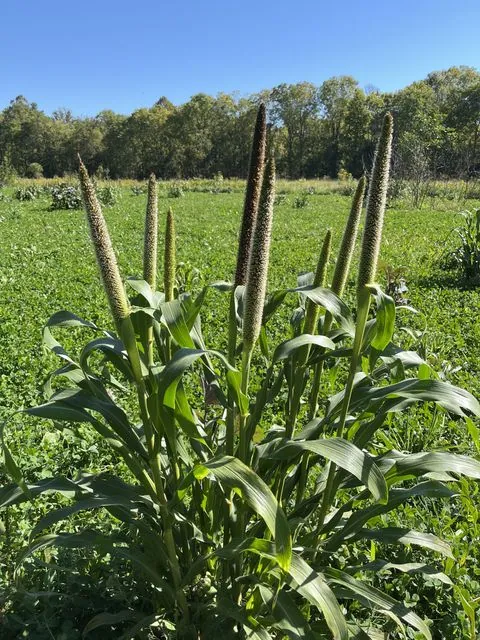
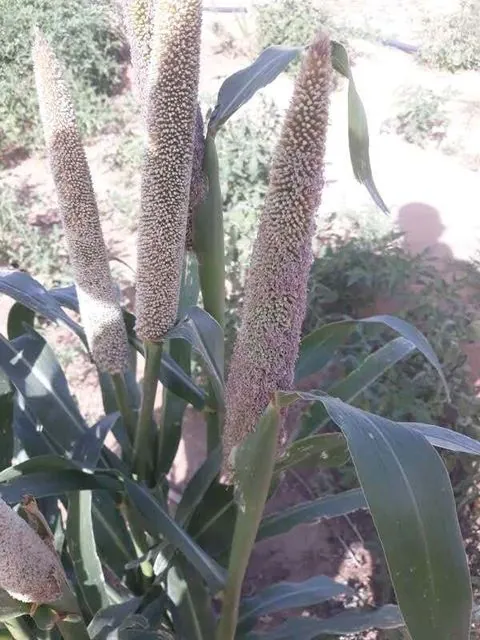
Canonical name: The scientific name without its authorship or date, for example Zea mays instead of Zea mays L. — The scientific name without its authorship or date, for example Zea mays instead of Zea mays L.
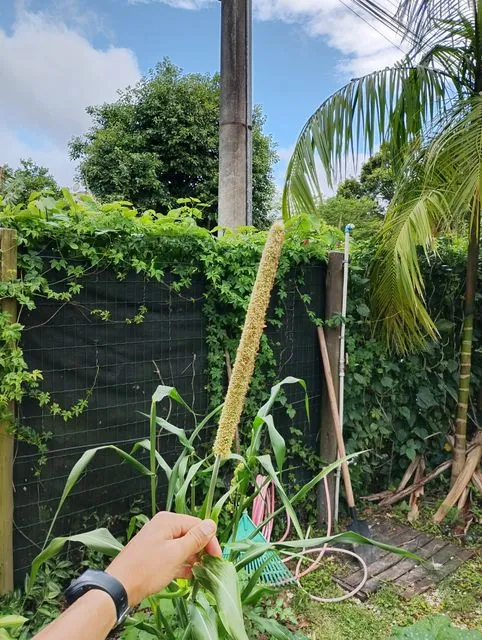
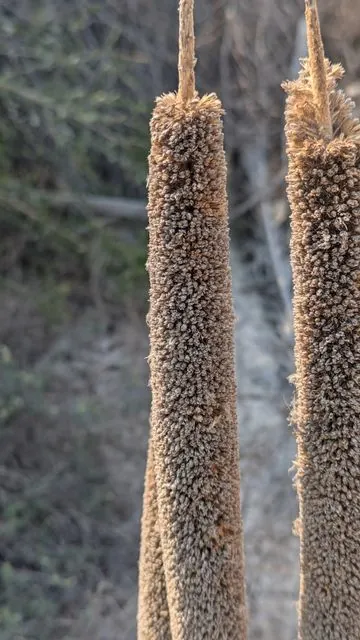
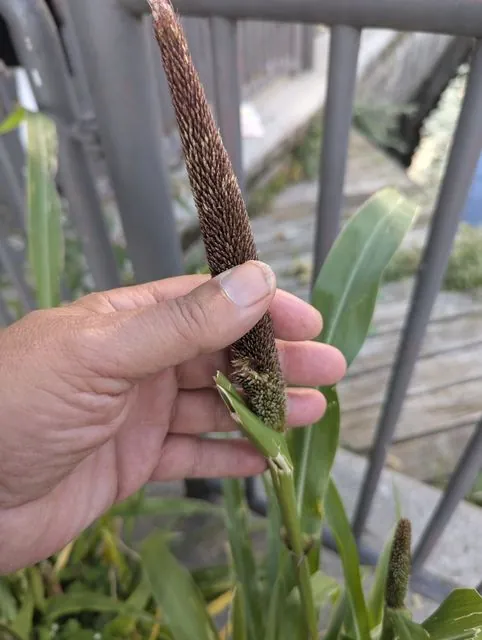
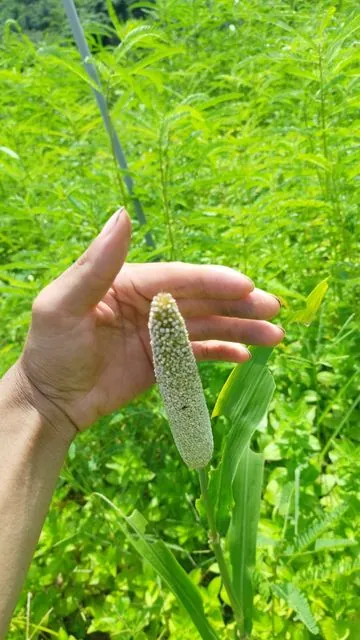
Cenchrus americanus
Authorship: The author or authors credited with publishing the scientific name. It is written after the name, sometimes with the year, for example L. (Linnaeus) in Zea mays L. An author in parentheses first published the name in another genus or rank. — The author or authors credited with publishing the scientific name. It is written after the name, sometimes with the year, for example L. (Linnaeus) in Zea mays L. An author in parentheses first published the name in another genus or rank.
(L.) Morrone
Common names
African Millet, American fountaingrass, Babala, Bullrush Millet, Indian millet, Kaffir Millet, Mhunga, Pearl Millet, Poko Grass, Pussy Grass, bajra, bulrush millet, cattail millet, horse millet, pearl-milletNames in other languages (50)Cenchrus d'Amérique, Cenchrus en épi, Pennisétum glauque, Cola de zorra, Gawri, Gero, Hint darısı, Mahel, Melsvoji soruolė, Mexoeira, Negerhirse, Parelgierst, Perlhirse, babalagras, bajira, bajri, capim-italiano, capim-tinga, cumbu, dochan klasnatý, dukhn, geelrode naaldaar, helmisulkahirssi, kaffermannakoring, mahangu, manna, mannakoring, mashangu, miglio perlato, mijo negro, mijo perla, mil, mil africain, milhete, milheto, millet perle, millet à chandelles, ostroklas sivý, petit mil, pärlhirs, sajje, yu gu, Мяшэй шызы, Перистощетинник американский, دخن أفريقي, دخن اللؤلؤ, دخن هندي, கம்பு, సజ్జలు, トウジンキビ, トウジンビエ, 珍珠粟
Kingdom: One of the broadest ranks of biological classification. It groups organisms that share very basic features, for example plants (Plantae), animals (Animalia) or fungi (Fungi). — One of the broadest ranks of biological classification. It groups organisms that share very basic features, for example plants (Plantae), animals (Animalia) or fungi (Fungi).
Plantae
Phylum: Rank below kingdom that groups organisms with a shared general body plan, for example chordates (Chordata), arthropods (Arthropoda) or vascular plants (Tracheophyta). In botany the same rank is also called division. — Rank below kingdom that groups organisms with a shared general body plan, for example chordates (Chordata), arthropods (Arthropoda) or vascular plants (Tracheophyta). In botany the same rank is also called division.
Tracheophyta
Class: Rank below phylum, for example mammals (Mammalia), birds (Aves), insects (Insecta) or monocot plants such as grasses and orchids (Liliopsida). — Rank below phylum, for example mammals (Mammalia), birds (Aves), insects (Insecta) or monocot plants such as grasses and orchids (Liliopsida).
Liliopsida
Order: Rank below class that groups related families, for example grasses and their relatives (Poales) or bats (Chiroptera). — Rank below class that groups related families, for example grasses and their relatives (Poales) or bats (Chiroptera).
Poales
Family: Rank below order that groups related genera. Family names usually end in -aceae in botany (for example Poaceae, the grass family) and in -idae in zoology (for example Felidae, the cat family). — Rank below order that groups related genera. Family names usually end in -aceae in botany (for example Poaceae, the grass family) and in -idae in zoology (for example Felidae, the cat family).
Poaceae
Genus: Rank that groups closely related species. Its name is the first word of a species' scientific name and starts with a capital letter, for example Zea in Zea mays. — Rank that groups closely related species. Its name is the first word of a species' scientific name and starts with a capital letter, for example Zea in Zea mays.
Cenchrus
Specific epithet: The second word of a species' scientific name. On its own it does not name the species: it always goes with the genus, for example mays in Zea mays. — The second word of a species' scientific name. On its own it does not name the species: it always goes with the genus, for example mays in Zea mays.
americanus
Taxonomic rank: The level a name occupies in the hierarchy of biological classification, such as kingdom, family, genus, species or subspecies. — The level a name occupies in the hierarchy of biological classification, such as kingdom, family, genus, species or subspecies.
species
Reference species
Cenchrus americanus
Taxonomic status: Whether the taxonomic catalogue the record comes from currently accepts this name for the organism, or treats it as a synonym of another accepted name or as doubtful. — Whether the taxonomic catalogue the record comes from currently accepts this name for the organism, or treats it as a synonym of another accepted name or as doubtful.
accepted name
Photos and conservation status
IUCN Red List category: The extinction-risk category that the International Union for Conservation of Nature (IUCN) assigns to a species on its Red List. EX Extinct: there is no reasonable doubt that the last individual has died. EW Extinct in the wild: it survives only in cultivation, in captivity or as a population far outside its past range. CR Critically endangered, EN Endangered and VU Vulnerable: the three threatened categories, from an extremely high to a high risk of extinction in the wild. NT Near threatened: close to qualifying as threatened. LC Least concern: evaluated and not threatened. DD Data deficient: there is not enough information to assess its risk. NE Not evaluated: not yet assessed against the criteria. It describes the risk of the species worldwide, not its situation in a project's area. — The extinction-risk category that the International Union for Conservation of Nature (IUCN) assigns to a species on its Red List. EX Extinct: there is no reasonable doubt that the last individual has died. EW Extinct in the wild: it survives only in cultivation, in captivity or as a population far outside its past range. CR Critically endangered, EN Endangered and VU Vulnerable: the three threatened categories, from an extremely high to a high risk of extinction in the wild. NT Near threatened: close to qualifying as threatened. LC Least concern: evaluated and not threatened. DD Data deficient: there is not enough information to assess its risk. NE Not evaluated: not yet assessed against the criteria. It describes the risk of the species worldwide, not its situation in a project's area.
Not evaluated (NE)
Source: IUCN Red List via GBIF, queried on 2026-10-12 18:11.
Research-grade iNaturalist observations via GBIF, CC0 or CC BY licences only, queried on 2026-10-12 18:11.
Interacciones documentadas
GloBI says it is documented somewhere in the world. Biolitica answers whether it could happen here.
A documented interaction means it was recorded somewhere in the world. It does not mean it occurs here.
Types shown: 8 of 8
is a host of
×
is eaten by
×
interacts with (this species is the record's origin)
×
interacts with (this species is the record's destination)
×
is adjacent to
×
is an arbuscular mycorrhizal host of (this species is the record's origin)
×
has as a pathogen
×
is an arbuscular mycorrhizal host of (this species is the record's destination)
×
Blocks that do not sit under a navigation concept heading keep the source's own term: no navigation concept has been assigned to them yet.
is a host of
280 organisms
The authority declares no effect on this species for this term: neither that it harms it nor that it benefits it. In the source ontology symbiosis covers mutualism, commensalism and parasitism alike, so this block holds attackers and allies side by side.
Organism
Reads as
Studies
Where it was documented
Actions
Macalpinomyces neglectusUstilaginaceae
is a host of
677
not compared
677 sources · 741 records
Zundel, G.L.. 1953. The Ustilaginales of the World. Contr. Dept. Bot. Pennsylvania State Coll. School Agric. 176:1-410
Published in globalbioticinteractions/usda-fungus-host
Record contexts (sample): Poland · no date published; Czechoslovakia · no date published
Claim type
Published relationship between two taxa
Version
GloBI 0.11
Reuse
This release publishes no reuse terms for this record.
Poland · no date publishedWhere it is: line:hash://sha256/021a206a1459bcca7e251c73f5bd180fc3ac342a09c499855fe42e21fc09edcf!/interactions.tsv.gz!/L3963628
Czechoslovakia · no date publishedWhere it is: line:hash://sha256/021a206a1459bcca7e251c73f5bd180fc3ac342a09c499855fe42e21fc09edcf!/interactions.tsv.gz!/L3963642
France · no date publishedWhere it is: line:hash://sha256/021a206a1459bcca7e251c73f5bd180fc3ac342a09c499855fe42e21fc09edcf!/interactions.tsv.gz!/L3963653
And 37 more records of this source, not listed here.
No public URL for this record
Fischer, G.W.. 1953. Manual of the North American Smut Fungi. Ronald Press Company, New York :343
Published in globalbioticinteractions/usda-fungus-host
Record contexts (sample): United States · no date published; United States · no date published
Claim type
Published relationship between two taxa
Version
GloBI 0.11
Reuse
This release publishes no reuse terms for this record.
United States · no date publishedWhere it is: line:hash://sha256/021a206a1459bcca7e251c73f5bd180fc3ac342a09c499855fe42e21fc09edcf!/interactions.tsv.gz!/L3757956
United States · no date publishedWhere it is: line:hash://sha256/021a206a1459bcca7e251c73f5bd180fc3ac342a09c499855fe42e21fc09edcf!/interactions.tsv.gz!/L3757957
United States · no date publishedWhere it is: line:hash://sha256/021a206a1459bcca7e251c73f5bd180fc3ac342a09c499855fe42e21fc09edcf!/interactions.tsv.gz!/L3757959
And 22 more records of this source, not listed here.
No public URL for this record
Guo, L.. 1988. The genera %Ustilago% and %Liroa% in China. Mycosystema 1:211-240
Published in globalbioticinteractions/usda-fungus-host
Record contexts (sample): Austria · no date published; China · no date published
Claim type
Published relationship between two taxa
Version
GloBI 0.11
Reuse
This release publishes no reuse terms for this record.
Austria · no date publishedWhere it is: line:hash://sha256/021a206a1459bcca7e251c73f5bd180fc3ac342a09c499855fe42e21fc09edcf!/interactions.tsv.gz!/L4179511
China · no date publishedWhere it is: line:hash://sha256/021a206a1459bcca7e251c73f5bd180fc3ac342a09c499855fe42e21fc09edcf!/interactions.tsv.gz!/L4179512
Context: Transsilvania, pr. urbem Odorhei · Aug. 30, 1956 · Preserved specimen
Claim type
Published relationship between two taxa
Version
GloBI 0.11
Reuse
This release publishes no reuse terms for this record.
Transsilvania, pr. urbem Odorhei · Aug. 30, 1956 · Preserved specimenAs published: 1956-08-30T00:00:00Z · PreservedSpecimenWhere it is: line:hash://sha256/021a206a1459bcca7e251c73f5bd180fc3ac342a09c499855fe42e21fc09edcf!/interactions.tsv.gz!/L16464161
Context: Lower Austria, Pyhra near St. Poelten · Aug. 1, 1888 · Preserved specimen
Claim type
Published relationship between two taxa
Version
GloBI 0.11
Reuse
This release publishes no reuse terms for this record.
Lower Austria, Pyhra near St. Poelten · Aug. 1, 1888 · Preserved specimenAs published: 1888-08-01T00:00:00Z · PreservedSpecimenWhere it is: line:hash://sha256/021a206a1459bcca7e251c73f5bd180fc3ac342a09c499855fe42e21fc09edcf!/interactions.tsv.gz!/L16840483
And 249 more sources, with fewer records, not listed here.
A published relationship says these two taxa were documented interacting. It does not say how often, or that it happens in this project's region.
Sclerospora graminicolaPeronosporaceae
is a host of
65
not compared
65 sources · 87 records
Lenne, J. M.. 1990. World list of fungal diseases of tropical pasture species. Phytopathol. Pap. 31:1-162
Published in globalbioticinteractions/usda-fungus-host
Record contexts (sample): Zimbabwe · no date published; India · no date published
Claim type
Published relationship between two taxa
Version
GloBI 0.11
Reuse
This release publishes no reuse terms for this record.
Zimbabwe · no date publishedWhere it is: line:hash://sha256/021a206a1459bcca7e251c73f5bd180fc3ac342a09c499855fe42e21fc09edcf!/interactions.tsv.gz!/L4058496
India · no date publishedWhere it is: line:hash://sha256/021a206a1459bcca7e251c73f5bd180fc3ac342a09c499855fe42e21fc09edcf!/interactions.tsv.gz!/L4059264
Zambia · no date publishedWhere it is: line:hash://sha256/021a206a1459bcca7e251c73f5bd180fc3ac342a09c499855fe42e21fc09edcf!/interactions.tsv.gz!/L4059272
And 11 more records of this source, not listed here.
No public URL for this record
Sprague, R.. 1950. Diseases of Cereals and Grasses in North America. Ronald Press Company, New York :538
Published in globalbioticinteractions/usda-fungus-host
Record contexts (sample): United States · no date published; United States · no date published
Claim type
Published relationship between two taxa
Version
GloBI 0.11
Reuse
This release publishes no reuse terms for this record.
United States · no date publishedWhere it is: line:hash://sha256/021a206a1459bcca7e251c73f5bd180fc3ac342a09c499855fe42e21fc09edcf!/interactions.tsv.gz!/L3745111
United States · no date publishedWhere it is: line:hash://sha256/021a206a1459bcca7e251c73f5bd180fc3ac342a09c499855fe42e21fc09edcf!/interactions.tsv.gz!/L3745121
United States · no date publishedWhere it is: line:hash://sha256/021a206a1459bcca7e251c73f5bd180fc3ac342a09c499855fe42e21fc09edcf!/interactions.tsv.gz!/L3745143
And 1 more record of this source, not listed here.
No public URL for this record
Anonymous. 1960. Index of Plant Diseases in the United States. U.S.D.A. Agric. Handb. 165:1-531
Published in globalbioticinteractions/usda-fungus-host
Record contexts (sample): United States · no date published; United States · no date published
Claim type
Published relationship between two taxa
Version
GloBI 0.11
Reuse
This release publishes no reuse terms for this record.
United States · no date publishedWhere it is: line:hash://sha256/021a206a1459bcca7e251c73f5bd180fc3ac342a09c499855fe42e21fc09edcf!/interactions.tsv.gz!/L3631972
United States · no date publishedWhere it is: line:hash://sha256/021a206a1459bcca7e251c73f5bd180fc3ac342a09c499855fe42e21fc09edcf!/interactions.tsv.gz!/L3631984
United States · no date publishedWhere it is: line:hash://sha256/021a206a1459bcca7e251c73f5bd180fc3ac342a09c499855fe42e21fc09edcf!/interactions.tsv.gz!/L3632006
No public URL for this record
Ramakrishnan, T.S.. 1971. Diseases of Millets.. Indian Council of Agricultural Research, New Delhi :152
Published in globalbioticinteractions/usda-fungus-host
Record contexts (sample): India · no date published; South Africa · no date published
Claim type
Published relationship between two taxa
Version
GloBI 0.11
Reuse
This release publishes no reuse terms for this record.
India · no date publishedWhere it is: line:hash://sha256/021a206a1459bcca7e251c73f5bd180fc3ac342a09c499855fe42e21fc09edcf!/interactions.tsv.gz!/L4149466
South Africa · no date publishedWhere it is: line:hash://sha256/021a206a1459bcca7e251c73f5bd180fc3ac342a09c499855fe42e21fc09edcf!/interactions.tsv.gz!/L4149467
East Africa · no date publishedWhere it is: line:hash://sha256/021a206a1459bcca7e251c73f5bd180fc3ac342a09c499855fe42e21fc09edcf!/interactions.tsv.gz!/L4149468
No public URL for this record
Doidge, E.M.. 1950. The South African fungi and lichens to the end of 1945. Bothalia 5:1-1094
Published in globalbioticinteractions/usda-fungus-host
Record contexts (sample): Southern Africa · no date published; Southern Africa · no date published
Claim type
Published relationship between two taxa
Version
GloBI 0.11
Reuse
This release publishes no reuse terms for this record.
Southern Africa · no date publishedWhere it is: line:hash://sha256/021a206a1459bcca7e251c73f5bd180fc3ac342a09c499855fe42e21fc09edcf!/interactions.tsv.gz!/L3772239
Southern Africa · no date publishedWhere it is: line:hash://sha256/021a206a1459bcca7e251c73f5bd180fc3ac342a09c499855fe42e21fc09edcf!/interactions.tsv.gz!/L3772277
No public URL for this record
Richardson, M.J.. 1990. An Annotated List of Seed-Borne Diseases. Fourth Edition. International Seed Testing Association, Zurich :387+
Published in globalbioticinteractions/usda-fungus-host
Record contexts (sample): India · no date published; Egypt · no date published
Claim type
Published relationship between two taxa
Version
GloBI 0.11
Reuse
This release publishes no reuse terms for this record.
India · no date publishedWhere it is: line:hash://sha256/021a206a1459bcca7e251c73f5bd180fc3ac342a09c499855fe42e21fc09edcf!/interactions.tsv.gz!/L3920066
Egypt · no date publishedWhere it is: line:hash://sha256/021a206a1459bcca7e251c73f5bd180fc3ac342a09c499855fe42e21fc09edcf!/interactions.tsv.gz!/L3920260
Lenne, J. M.. 1990. World list of fungal diseases of tropical pasture species. Phytopathol. Pap. 31:1-162
Published in globalbioticinteractions/usda-fungus-host
Record contexts (sample): Nigeria · no date published; Uganda · no date published
Claim type
Published relationship between two taxa
Version
GloBI 0.11
Reuse
This release publishes no reuse terms for this record.
Nigeria · no date publishedWhere it is: line:hash://sha256/021a206a1459bcca7e251c73f5bd180fc3ac342a09c499855fe42e21fc09edcf!/interactions.tsv.gz!/L4054942
Uganda · no date publishedWhere it is: line:hash://sha256/021a206a1459bcca7e251c73f5bd180fc3ac342a09c499855fe42e21fc09edcf!/interactions.tsv.gz!/L4057475
Sierra Leone · no date publishedWhere it is: line:hash://sha256/021a206a1459bcca7e251c73f5bd180fc3ac342a09c499855fe42e21fc09edcf!/interactions.tsv.gz!/L4058286
And 17 more records of this source, not listed here.
No public URL for this record
Zambettakis, C.. 1971. Recherches sur les Ustilaginales d'Afrique.. Bull. Soc. Mycol. France 86:305-692
Published in globalbioticinteractions/usda-fungus-host
Record contexts (sample): Sierra Leone · no date published; Nigeria · no date published
Claim type
Published relationship between two taxa
Version
GloBI 0.11
Reuse
This release publishes no reuse terms for this record.
Sierra Leone · no date publishedWhere it is: line:hash://sha256/021a206a1459bcca7e251c73f5bd180fc3ac342a09c499855fe42e21fc09edcf!/interactions.tsv.gz!/L4184332
Nigeria · no date publishedWhere it is: line:hash://sha256/021a206a1459bcca7e251c73f5bd180fc3ac342a09c499855fe42e21fc09edcf!/interactions.tsv.gz!/L4184436
Ghana · no date publishedWhere it is: line:hash://sha256/021a206a1459bcca7e251c73f5bd180fc3ac342a09c499855fe42e21fc09edcf!/interactions.tsv.gz!/L4184444
And 7 more records of this source, not listed here.
No public URL for this record
Ramakrishnan, T.S.. 1971. Diseases of Millets.. Indian Council of Agricultural Research, New Delhi :152
Published in globalbioticinteractions/usda-fungus-host
Record contexts (sample): Africa · no date published; India · no date published
Claim type
Published relationship between two taxa
Version
GloBI 0.11
Reuse
This release publishes no reuse terms for this record.
Africa · no date publishedWhere it is: line:hash://sha256/021a206a1459bcca7e251c73f5bd180fc3ac342a09c499855fe42e21fc09edcf!/interactions.tsv.gz!/L4149459
India · no date publishedWhere it is: line:hash://sha256/021a206a1459bcca7e251c73f5bd180fc3ac342a09c499855fe42e21fc09edcf!/interactions.tsv.gz!/L4149460
Africa · no date publishedWhere it is: line:hash://sha256/021a206a1459bcca7e251c73f5bd180fc3ac342a09c499855fe42e21fc09edcf!/interactions.tsv.gz!/L4149473
And 2 more records of this source, not listed here.
No public URL for this record
Zundel, G.L.. 1953. The Ustilaginales of the World. Contr. Dept. Bot. Pennsylvania State Coll. School Agric. 176:1-410
Published in globalbioticinteractions/usda-fungus-host
Record contexts (sample): Sierra Leone · no date published; Africa · no date published
Claim type
Published relationship between two taxa
Version
GloBI 0.11
Reuse
This release publishes no reuse terms for this record.
Sierra Leone · no date publishedWhere it is: line:hash://sha256/021a206a1459bcca7e251c73f5bd180fc3ac342a09c499855fe42e21fc09edcf!/interactions.tsv.gz!/L3959607
Africa · no date publishedWhere it is: line:hash://sha256/021a206a1459bcca7e251c73f5bd180fc3ac342a09c499855fe42e21fc09edcf!/interactions.tsv.gz!/L3959608
India · no date publishedWhere it is: line:hash://sha256/021a206a1459bcca7e251c73f5bd180fc3ac342a09c499855fe42e21fc09edcf!/interactions.tsv.gz!/L3961153
No public URL for this record
Doidge, E.M.. 1950. The South African fungi and lichens to the end of 1945. Bothalia 5:1-1094
Published in globalbioticinteractions/usda-fungus-host
Record contexts (sample): Southern Africa · no date published; Southern Africa · no date published
Claim type
Published relationship between two taxa
Version
GloBI 0.11
Reuse
This release publishes no reuse terms for this record.
Southern Africa · no date publishedWhere it is: line:hash://sha256/021a206a1459bcca7e251c73f5bd180fc3ac342a09c499855fe42e21fc09edcf!/interactions.tsv.gz!/L3772216
Southern Africa · no date publishedWhere it is: line:hash://sha256/021a206a1459bcca7e251c73f5bd180fc3ac342a09c499855fe42e21fc09edcf!/interactions.tsv.gz!/L3772347
No public URL for this record
Vanky, K.. 1994. European Smut Fungi. Gustav Fischer Verlag, Stuttgart :570
Published in globalbioticinteractions/usda-fungus-host
Record contexts (sample): Senegal · no date published; India · no date published
Claim type
Published relationship between two taxa
Version
GloBI 0.11
Reuse
This release publishes no reuse terms for this record.
Senegal · no date publishedWhere it is: line:hash://sha256/021a206a1459bcca7e251c73f5bd180fc3ac342a09c499855fe42e21fc09edcf!/interactions.tsv.gz!/L4148634
India · no date publishedWhere it is: line:hash://sha256/021a206a1459bcca7e251c73f5bd180fc3ac342a09c499855fe42e21fc09edcf!/interactions.tsv.gz!/L4148641
Context: pr. urbem Bathurst · Dec. 15, 1973 · Preserved specimen
Claim type
Published relationship between two taxa
Version
GloBI 0.11
Reuse
This release publishes no reuse terms for this record.
pr. urbem Bathurst · Dec. 15, 1973 · Preserved specimenAs published: 1973-12-15T00:00:00Z · PreservedSpecimenWhere it is: line:hash://sha256/021a206a1459bcca7e251c73f5bd180fc3ac342a09c499855fe42e21fc09edcf!/interactions.tsv.gz!/L16464272
This term does declare that the organism harms this species.
Organism
Reads as
Studies
Where it was documented
Actions
Macrosteles indrinusCicadellidae
is eaten by
2
no location
2 sources · 2 records
Kwon, Y.J. & Kwon, J.H. (2022) <i>Classification of the leafhopper genus <i>Macrosteles</i> Fieber and allied genera of the world (Hemiptera: Cicadellidae)</i>. National Institute of Biological Resources, Incheon, Korea, 372 pp.
Published in urn:lsid:checklistbank.org:dataset:2317
Context: no place published · no date published
Claim type
Published relationship between two taxa
Version
GloBI 0.11
Reuse
This release publishes no reuse terms for this record.
no place published · no date publishedWhere it is: line:hash://sha256/021a206a1459bcca7e251c73f5bd180fc3ac342a09c499855fe42e21fc09edcf!/interactions.tsv.gz!/L1298843
No public URL for this record
@book{126826, author = {Kwon, Yong Jung and Kwon, Jin-Hyung}, month = {jun}, day = {30}, pages = {372}, publisher = {National Institute of Biological Resources}, title = {Classification of the leafhopper genus <i>Macrosteles</i> Fieber and allied genera of the world …
Published in globalbioticinteractions/taxonworks
Context: no place published · no date published
Claim type
Published relationship between two taxa
Version
GloBI 0.11
Reuse
This release publishes no reuse terms for this record.
no place published · no date publishedWhere it is: line:hash://sha256/021a206a1459bcca7e251c73f5bd180fc3ac342a09c499855fe42e21fc09edcf!/interactions.tsv.gz!/L5980282
No public URL for this record
A published relationship says these two taxa were documented interacting. It does not say how often, or that it happens in this project's region.
Indian Sugarcane GrasshopperPyrilla perpusillaLophopidae
is eaten by
2
no location
2 sources · 2 records
Sharma, T. & Shera, P.S. (2021) Biological anomalies in the sugarcane leafhopper, <i>Pyrilla perpusilla</i> (Walker) due to parasitism by <i>Fulgoraecia melanoleuca</i> (Fletcher) (Lepidoptera: Epipyropidae). <i>Egyptian Journal of Biological Pest Control</i>, 31, 1–8. https…
Published in urn:lsid:checklistbank.org:dataset:2317
Context: no place published · no date published
Claim type
Published relationship between two taxa
Version
GloBI 0.11
Reuse
This release publishes no reuse terms for this record.
no place published · no date publishedWhere it is: line:hash://sha256/021a206a1459bcca7e251c73f5bd180fc3ac342a09c499855fe42e21fc09edcf!/interactions.tsv.gz!/L1305924
@article{122172, author = {Sharma, Tarun and Shera, P.S.}, journal = {Egyptian Journal of Biological Pest Control}, month = {oct}, day = {27}, pages = {1-8}, publisher = {Springer Science and Business Media LLC}, title = {Biological anomalies in the sugarcane leafh…
Published in globalbioticinteractions/taxonworks
Context: no place published · no date published
Claim type
Published relationship between two taxa
Version
GloBI 0.11
Reuse
This release publishes no reuse terms for this record.
no place published · no date publishedWhere it is: line:hash://sha256/021a206a1459bcca7e251c73f5bd180fc3ac342a09c499855fe42e21fc09edcf!/interactions.tsv.gz!/L5979315
A published relationship says these two taxa were documented interacting. It does not say how often, or that it happens in this project's region.
Amrasca biguttulaCicadellidae
is eaten by
2
no location
2 sources · 2 records
@article{40205, author = {Sohi, Amrik Singh and Dworakowska, Irena}, journal = {Oriental Insects}, pages = {159-213}, title = {A review of Typhlocybinae (Homoptera: Cicadellidae) from India.}, volume = {17}, year = {1983}, year_suffix = {a}, note = {2018-11-13 23…
Published in globalbioticinteractions/taxonworks
Context: no place published · no date published
Claim type
Published relationship between two taxa
Version
GloBI 0.11
Reuse
This release publishes no reuse terms for this record.
no place published · no date publishedWhere it is: line:hash://sha256/021a206a1459bcca7e251c73f5bd180fc3ac342a09c499855fe42e21fc09edcf!/interactions.tsv.gz!/L5949083
No public URL for this record
@article{40199, author = {Sohi, Amrik Singh}, journal = {Proceedings of the 1st International Workshop on Leafhoppers and Planthoppers of Economic Importance. Commonwealth Institute of Entomology, London, 4-7 Oct. 1982. London. P. 49-74.}, title = {The oriental Typhlocybin…
Published in globalbioticinteractions/taxonworks
Context: no place published · no date published
Claim type
Published relationship between two taxa
Version
GloBI 0.11
Reuse
This release publishes no reuse terms for this record.
no place published · no date publishedWhere it is: line:hash://sha256/021a206a1459bcca7e251c73f5bd180fc3ac342a09c499855fe42e21fc09edcf!/interactions.tsv.gz!/L5949348
No public URL for this record
A published relationship says these two taxa were documented interacting. It does not say how often, or that it happens in this project's region.
Leptodelphax maculigerDelphacidae
is eaten by
2
no location
2 sources · 2 records
de Remes Lenicov, A.M.M., Mariani, R., Almada, M.S., Saluso, A. & Szwarc, D.E. (2025) The exotic delphacid <i>Leptodelphax maculigera</i> (Hemiptera: Fulgoroidea) in Argentina: taxonomy and biological aspects. <i>Revista de la Sociedad Entomológica Argentina</i>, 84(02), 1–1…
Published in urn:lsid:checklistbank.org:dataset:2317
Context: no place published · no date published
Claim type
Published relationship between two taxa
Version
GloBI 0.11
Reuse
This release publishes no reuse terms for this record.
no place published · no date publishedWhere it is: line:hash://sha256/021a206a1459bcca7e251c73f5bd180fc3ac342a09c499855fe42e21fc09edcf!/interactions.tsv.gz!/L1311323
Leavengood, J.M., Jr., Bartlett, C.R. & Ivanov, K. (2025) First record of the African species <i>Leptodelphax maculigera</i> (Stål, 1859) (Hemiptera: Delphacidae) in Paraguay. <i>Proceedings of the Entomological Society of Washington</i>, 127(1), 121–127. https://doi.org/10.…
Published in urn:lsid:checklistbank.org:dataset:2317
Context: no place published · no date published
Claim type
Published relationship between two taxa
Version
GloBI 0.11
Reuse
This release publishes no reuse terms for this record.
no place published · no date publishedWhere it is: line:hash://sha256/021a206a1459bcca7e251c73f5bd180fc3ac342a09c499855fe42e21fc09edcf!/interactions.tsv.gz!/L1311327
The authority declares no effect on this species for this term: neither that it harms it nor that it benefits it.
Organism
Reads as
Studies
Where it was documented
Actions
FlatsedgesCyperusCyperaceae
interacts with
2
no location
Not a modelling unit: the source publishes it at genus level.
2 sources · 2 records
42632b94-fc8c-11e7-91f4-23bcc7a1d67f
Published in globalbioticinteractions/usgs-bison
Context: 2.3 mi W of the jct of US 66 and US 69 and SH 10, then 2.1 mi S on section road, then 0.3 mi W on section road · 0007-01-01T00:00:00Z · Pre…
Claim type
Published relationship between two taxa
Version
GloBI 0.11
Reuse
This release publishes no reuse terms for this record.
2.3 mi W of the jct of US 66 and US 69 and SH 10, then 2.1 mi S on section road, then 0.3 mi W on section road · 0007-01-01T00:00:00Z · Preserved specimenAs published: 0007-01-01T00:00:00Z · PreservedSpecimenWhere it is: line:hash://sha256/021a206a1459bcca7e251c73f5bd180fc3ac342a09c499855fe42e21fc09edcf!/interactions.tsv.gz!/L6850911
No public URL for this record
42630484-fc8c-11e7-b6af-93a0a7a269cc
Published in globalbioticinteractions/usgs-bison
Context: 2.3 mi W of the jct of US 66 and US 69 and SH 10, then 2.1 mi S on section road, then 0.3 mi W on section road · 0007-01-01T00:00:00Z · Pre…
Claim type
Published relationship between two taxa
Version
GloBI 0.11
Reuse
This release publishes no reuse terms for this record.
2.3 mi W of the jct of US 66 and US 69 and SH 10, then 2.1 mi S on section road, then 0.3 mi W on section road · 0007-01-01T00:00:00Z · Preserved specimenAs published: 0007-01-01T00:00:00Z · PreservedSpecimenWhere it is: line:hash://sha256/021a206a1459bcca7e251c73f5bd180fc3ac342a09c499855fe42e21fc09edcf!/interactions.tsv.gz!/L6850913
No public URL for this record
A published relationship says these two taxa were documented interacting. It does not say how often, or that it happens in this project's region.
ElmUlmusTingidae
interacts with
2
no location
Not a modelling unit: the source publishes it at genus level.
2 sources · 2 records
32436e86-fc8c-11e7-81a9-0fb478d54da0
Published in globalbioticinteractions/usgs-bison
Context: Tahlequah; Illinois River, 4 mi E of Tahlequah · 0010-01-01T00:00:00Z · Preserved specimen
Claim type
Published relationship between two taxa
Version
GloBI 0.11
Reuse
This release publishes no reuse terms for this record.
Tahlequah; Illinois River, 4 mi E of Tahlequah · 0010-01-01T00:00:00Z · Preserved specimenAs published: 0010-01-01T00:00:00Z · PreservedSpecimenWhere it is: line:hash://sha256/021a206a1459bcca7e251c73f5bd180fc3ac342a09c499855fe42e21fc09edcf!/interactions.tsv.gz!/L6850908
No public URL for this record
32436e86-fc8c-11e7-85b0-1f4a0598f2c4
Published in globalbioticinteractions/usgs-bison
Context: 2.1 mi S of the juction of SH 10 and SH 10C, then 1.1 mi E on section road, then 0.9 mi S on section road · 0007-01-01T00:00:00Z · Preserve…
Claim type
Published relationship between two taxa
Version
GloBI 0.11
Reuse
This release publishes no reuse terms for this record.
2.1 mi S of the juction of SH 10 and SH 10C, then 1.1 mi E on section road, then 0.9 mi S on section road · 0007-01-01T00:00:00Z · Preserved specimenAs published: 0007-01-01T00:00:00Z · PreservedSpecimenWhere it is: line:hash://sha256/021a206a1459bcca7e251c73f5bd180fc3ac342a09c499855fe42e21fc09edcf!/interactions.tsv.gz!/L6850916
No public URL for this record
A published relationship says these two taxa were documented interacting. It does not say how often, or that it happens in this project's region.
LudwigiaGraphoceratidae
interacts with
2
no location
Not a modelling unit: the source publishes it at genus level.
2 sources · 2 records
42632b94-fc8c-11e7-91f4-23bcc7a1d67f
Published in globalbioticinteractions/usgs-bison
Context: 2.3 mi W of the jct of US 66 and US 69 and SH 10, then 2.1 mi S on section road, then 0.3 mi W on section road · 0007-01-01T00:00:00Z · Pre…
Claim type
Published relationship between two taxa
Version
GloBI 0.11
Reuse
This release publishes no reuse terms for this record.
2.3 mi W of the jct of US 66 and US 69 and SH 10, then 2.1 mi S on section road, then 0.3 mi W on section road · 0007-01-01T00:00:00Z · Preserved specimenAs published: 0007-01-01T00:00:00Z · PreservedSpecimenWhere it is: line:hash://sha256/021a206a1459bcca7e251c73f5bd180fc3ac342a09c499855fe42e21fc09edcf!/interactions.tsv.gz!/L6850912
No public URL for this record
42630484-fc8c-11e7-b6af-93a0a7a269cc
Published in globalbioticinteractions/usgs-bison
Context: 2.3 mi W of the jct of US 66 and US 69 and SH 10, then 2.1 mi S on section road, then 0.3 mi W on section road · 0007-01-01T00:00:00Z · Pre…
Claim type
Published relationship between two taxa
Version
GloBI 0.11
Reuse
This release publishes no reuse terms for this record.
2.3 mi W of the jct of US 66 and US 69 and SH 10, then 2.1 mi S on section road, then 0.3 mi W on section road · 0007-01-01T00:00:00Z · Preserved specimenAs published: 0007-01-01T00:00:00Z · PreservedSpecimenWhere it is: line:hash://sha256/021a206a1459bcca7e251c73f5bd180fc3ac342a09c499855fe42e21fc09edcf!/interactions.tsv.gz!/L6850914
No public URL for this record
A published relationship says these two taxa were documented interacting. It does not say how often, or that it happens in this project's region.
Field BindweedConvolvulus arvensisConvolvulaceae
interacts with
2
no location
2 sources · 2 records
426352a4-fc8c-11e7-aae7-7396a3cc7d4e
Published in globalbioticinteractions/usgs-bison
Context: Vance AFB; near S end of Runway 35C, Vance AFB · 0008-01-01T00:00:00Z · Preserved specimen
Claim type
Published relationship between two taxa
Version
GloBI 0.11
Reuse
This release publishes no reuse terms for this record.
Vance AFB; near S end of Runway 35C, Vance AFB · 0008-01-01T00:00:00Z · Preserved specimenAs published: 0008-01-01T00:00:00Z · PreservedSpecimenWhere it is: line:hash://sha256/021a206a1459bcca7e251c73f5bd180fc3ac342a09c499855fe42e21fc09edcf!/interactions.tsv.gz!/L6850928
Context: London · Sept. 1, 1912 · Preserved specimen
Claim type
Published relationship between two taxa
Version
GloBI 0.11
Reuse
This release publishes no reuse terms for this record.
London · Sept. 1, 1912 · Preserved specimenAs published: 1912-09-01T00:00:00Z · PreservedSpecimenWhere it is: line:hash://sha256/021a206a1459bcca7e251c73f5bd180fc3ac342a09c499855fe42e21fc09edcf!/interactions.tsv.gz!/L16937162
Context: St. Louis · no date published · Preserved specimen
Claim type
Published relationship between two taxa
Version
GloBI 0.11
Reuse
This release publishes no reuse terms for this record.
St. Louis · no date published · Preserved specimenAs published: PreservedSpecimenWhere it is: line:hash://sha256/021a206a1459bcca7e251c73f5bd180fc3ac342a09c499855fe42e21fc09edcf!/interactions.tsv.gz!/L16937239
Context: Coimbatore ? near · no date published · Preserved specimen
Claim type
Published relationship between two taxa
Version
GloBI 0.11
Reuse
This release publishes no reuse terms for this record.
Coimbatore ? near · no date published · Preserved specimenAs published: PreservedSpecimenWhere it is: line:hash://sha256/021a206a1459bcca7e251c73f5bd180fc3ac342a09c499855fe42e21fc09edcf!/interactions.tsv.gz!/L16864051
Context: Kabanga, S. Prov. 8 miles E. of · March 20, 1958 · Preserved specimen
Claim type
Published relationship between two taxa
Version
GloBI 0.11
Reuse
This release publishes no reuse terms for this record.
Kabanga, S. Prov. 8 miles E. of · March 20, 1958 · Preserved specimenAs published: 1958-03-20T00:00:00Z · PreservedSpecimenWhere it is: line:hash://sha256/021a206a1459bcca7e251c73f5bd180fc3ac342a09c499855fe42e21fc09edcf!/interactions.tsv.gz!/L16864074
Context: Ithaca, Prof. AtkinsonÍs Farm · March 17, 1905 · Preserved specimen
Claim type
Published relationship between two taxa
Version
GloBI 0.11
Reuse
This release publishes no reuse terms for this record.
Ithaca, Prof. AtkinsonÍs Farm · March 17, 1905 · Preserved specimenAs published: 1905-03-17T00:00:00Z · PreservedSpecimenWhere it is: line:hash://sha256/021a206a1459bcca7e251c73f5bd180fc3ac342a09c499855fe42e21fc09edcf!/interactions.tsv.gz!/L17755183
Context: Ithaca, Prof. AtkinsonÍs Farm · March 17, 1905 · Preserved specimen
Claim type
Published relationship between two taxa
Version
GloBI 0.11
Reuse
This release publishes no reuse terms for this record.
Ithaca, Prof. AtkinsonÍs Farm · March 17, 1905 · Preserved specimenAs published: 1905-03-17T00:00:00Z · PreservedSpecimenWhere it is: line:hash://sha256/021a206a1459bcca7e251c73f5bd180fc3ac342a09c499855fe42e21fc09edcf!/interactions.tsv.gz!/L17755184
Context: Ithaca, Prof. AtkinsonÍs Farm · March 17, 1905 · Preserved specimen
Claim type
Published relationship between two taxa
Version
GloBI 0.11
Reuse
This release publishes no reuse terms for this record.
Ithaca, Prof. AtkinsonÍs Farm · March 17, 1905 · Preserved specimenAs published: 1905-03-17T00:00:00Z · PreservedSpecimenWhere it is: line:hash://sha256/021a206a1459bcca7e251c73f5bd180fc3ac342a09c499855fe42e21fc09edcf!/interactions.tsv.gz!/L17755185
Context: Knoxboro · Aug. 25, 1904 · Preserved specimen
Claim type
Published relationship between two taxa
Version
GloBI 0.11
Reuse
This release publishes no reuse terms for this record.
Knoxboro · Aug. 25, 1904 · Preserved specimenAs published: 1904-08-25T00:00:00Z · PreservedSpecimenWhere it is: line:hash://sha256/021a206a1459bcca7e251c73f5bd180fc3ac342a09c499855fe42e21fc09edcf!/interactions.tsv.gz!/L17754940
Context: Knoxboro · Aug. 25, 1904 · Preserved specimen
Claim type
Published relationship between two taxa
Version
GloBI 0.11
Reuse
This release publishes no reuse terms for this record.
Knoxboro · Aug. 25, 1904 · Preserved specimenAs published: 1904-08-25T00:00:00Z · PreservedSpecimenWhere it is: line:hash://sha256/021a206a1459bcca7e251c73f5bd180fc3ac342a09c499855fe42e21fc09edcf!/interactions.tsv.gz!/L17754941
Context: Ithaca, C. U. Farm · Aug. 29, 1906 · Preserved specimen
Claim type
Published relationship between two taxa
Version
GloBI 0.11
Reuse
This release publishes no reuse terms for this record.
Ithaca, C. U. Farm · Aug. 29, 1906 · Preserved specimenAs published: 1906-08-29T00:00:00Z · PreservedSpecimenWhere it is: line:hash://sha256/021a206a1459bcca7e251c73f5bd180fc3ac342a09c499855fe42e21fc09edcf!/interactions.tsv.gz!/L17755825
The authority declares no effect on this species for this term: neither that it harms it nor that it benefits it.
Organism
Reads as
Studies
Where it was documented
Actions
Macalpinomyces neglectusUstilaginaceae
is adjacent to
99
not compared
99 sources · 99 records
803b871a-6d2e-4a19-8fa9-23d6879d6d0d
Published in globalbioticinteractions/fmnh
Context: Near Iberville · Sept. 10, 1951 · Preserved specimen
Claim type
Published relationship between two taxa
Version
GloBI 0.11
Reuse
This release publishes no reuse terms for this record.
Near Iberville · Sept. 10, 1951 · Preserved specimenAs published: 1951-09-10T00:00:00Z · PreservedSpecimenWhere it is: line:hash://sha256/021a206a1459bcca7e251c73f5bd180fc3ac342a09c499855fe42e21fc09edcf!/interactions.tsv.gz!/L12295361
No public URL for this record
1c02248f-4968-4fcc-8b12-1561a8de6bd3
Published in globalbioticinteractions/fmnh
Context: Cornell University · Oct. 1, 1903 · Preserved specimen
Claim type
Published relationship between two taxa
Version
GloBI 0.11
Reuse
This release publishes no reuse terms for this record.
Cornell University · Oct. 1, 1903 · Preserved specimenAs published: 1903-10-01T00:00:00Z · PreservedSpecimenWhere it is: line:hash://sha256/021a206a1459bcca7e251c73f5bd180fc3ac342a09c499855fe42e21fc09edcf!/interactions.tsv.gz!/L12304166
No public URL for this record
61f152d2-ca11-423c-9622-0046afa2ae79
Published in globalbioticinteractions/fmnh
Context: no place published · Aug. 15, 1920 · Preserved specimen
Claim type
Published relationship between two taxa
Version
GloBI 0.11
Reuse
This release publishes no reuse terms for this record.
no place published · Aug. 15, 1920 · Preserved specimenAs published: 1920-08-15T00:00:00Z · PreservedSpecimenWhere it is: line:hash://sha256/021a206a1459bcca7e251c73f5bd180fc3ac342a09c499855fe42e21fc09edcf!/interactions.tsv.gz!/L12305859
This release publishes no reuse terms for this record.
Michigan Agricultural College [MSU] · Sept. 6, 1890 · Preserved specimenAs published: 1890-09-06T00:00:00Z · PreservedSpecimenWhere it is: line:hash://sha256/021a206a1459bcca7e251c73f5bd180fc3ac342a09c499855fe42e21fc09edcf!/interactions.tsv.gz!/L12314745
No public URL for this record
512fb2db-7eb6-485a-9480-52c98859cabb
Published in globalbioticinteractions/fmnh
Context: Lewis · Aug. 18, 1920 · Preserved specimen
Claim type
Published relationship between two taxa
Version
GloBI 0.11
Reuse
This release publishes no reuse terms for this record.
Lewis · Aug. 18, 1920 · Preserved specimenAs published: 1920-08-18T00:00:00Z · PreservedSpecimenWhere it is: line:hash://sha256/021a206a1459bcca7e251c73f5bd180fc3ac342a09c499855fe42e21fc09edcf!/interactions.tsv.gz!/L12314918
No public URL for this record
4272457a-6e65-4460-bfbe-55b623a415f9
Published in globalbioticinteractions/fmnh
Context: no place published · Aug. 23, 1888 · Preserved specimen
Claim type
Published relationship between two taxa
Version
GloBI 0.11
Reuse
This release publishes no reuse terms for this record.
no place published · Aug. 23, 1888 · Preserved specimenAs published: 1888-08-23T00:00:00Z · PreservedSpecimenWhere it is: line:hash://sha256/021a206a1459bcca7e251c73f5bd180fc3ac342a09c499855fe42e21fc09edcf!/interactions.tsv.gz!/L12318041
No public URL for this record
d3d4337e-dbeb-444c-82c6-9ac16b6d9235
Published in globalbioticinteractions/fmnh
Context: no place published · Sept. 1, 1889 · Preserved specimen
Claim type
Published relationship between two taxa
Version
GloBI 0.11
Reuse
This release publishes no reuse terms for this record.
no place published · Sept. 1, 1889 · Preserved specimenAs published: 1889-09-01T00:00:00Z · PreservedSpecimenWhere it is: line:hash://sha256/021a206a1459bcca7e251c73f5bd180fc3ac342a09c499855fe42e21fc09edcf!/interactions.tsv.gz!/L12318335
No public URL for this record
f10735d3-e5c0-4e4b-aad8-91b9260ba248
Published in globalbioticinteractions/fmnh
Context: no place published · Sept. 1, 1889 · Preserved specimen
Claim type
Published relationship between two taxa
Version
GloBI 0.11
Reuse
This release publishes no reuse terms for this record.
no place published · Sept. 1, 1889 · Preserved specimenAs published: 1889-09-01T00:00:00Z · PreservedSpecimenWhere it is: line:hash://sha256/021a206a1459bcca7e251c73f5bd180fc3ac342a09c499855fe42e21fc09edcf!/interactions.tsv.gz!/L12318336
No public URL for this record
And 91 more sources, with fewer records, not listed here.
A published relationship says these two taxa were documented interacting. It does not say how often, or that it happens in this project's region.
Context: S. of Black Earth · Aug. 10, 1933 · Preserved specimen
Claim type
Published relationship between two taxa
Version
GloBI 0.11
Reuse
This release publishes no reuse terms for this record.
S. of Black Earth · Aug. 10, 1933 · Preserved specimenAs published: 1933-08-10T00:00:00Z · PreservedSpecimenWhere it is: line:hash://sha256/021a206a1459bcca7e251c73f5bd180fc3ac342a09c499855fe42e21fc09edcf!/interactions.tsv.gz!/L16703904
Context: Madison · Aug. 17, 1942 · Preserved specimen
Claim type
Published relationship between two taxa
Version
GloBI 0.11
Reuse
This release publishes no reuse terms for this record.
Madison · Aug. 17, 1942 · Preserved specimenAs published: 1942-08-17T00:00:00Z · PreservedSpecimenWhere it is: line:hash://sha256/021a206a1459bcca7e251c73f5bd180fc3ac342a09c499855fe42e21fc09edcf!/interactions.tsv.gz!/L17816065
Context: Madison. · Aug. 17, 1942 · Preserved specimen
Claim type
Published relationship between two taxa
Version
GloBI 0.11
Reuse
This release publishes no reuse terms for this record.
Madison. · Aug. 17, 1942 · Preserved specimenAs published: 1942-08-17T00:00:00Z · PreservedSpecimenWhere it is: line:hash://sha256/021a206a1459bcca7e251c73f5bd180fc3ac342a09c499855fe42e21fc09edcf!/interactions.tsv.gz!/L17987616
Context: Madison · Aug. 17, 1942 · Preserved specimen
Claim type
Published relationship between two taxa
Version
GloBI 0.11
Reuse
This release publishes no reuse terms for this record.
Madison · Aug. 17, 1942 · Preserved specimenAs published: 1942-08-17T00:00:00Z · PreservedSpecimenWhere it is: line:hash://sha256/021a206a1459bcca7e251c73f5bd180fc3ac342a09c499855fe42e21fc09edcf!/interactions.tsv.gz!/L18305017
Context: Univ. of Wis. Arboretum, Madison, Wis. · Aug. 29, 1943 · Preserved specimen
Claim type
Published relationship between two taxa
Version
GloBI 0.11
Reuse
This release publishes no reuse terms for this record.
Univ. of Wis. Arboretum, Madison, Wis. · Aug. 29, 1943 · Preserved specimenAs published: 1943-08-29T00:00:00Z · PreservedSpecimenWhere it is: line:hash://sha256/021a206a1459bcca7e251c73f5bd180fc3ac342a09c499855fe42e21fc09edcf!/interactions.tsv.gz!/L18324302
Context: South of Black Earth · Aug. 10, 1933 · Preserved specimen
Claim type
Published relationship between two taxa
Version
GloBI 0.11
Reuse
This release publishes no reuse terms for this record.
South of Black Earth · Aug. 10, 1933 · Preserved specimenAs published: 1933-08-10T00:00:00Z · PreservedSpecimenWhere it is: line:hash://sha256/021a206a1459bcca7e251c73f5bd180fc3ac342a09c499855fe42e21fc09edcf!/interactions.tsv.gz!/L18327826
Context: Univ. of Wis. Arboretum, Madison, Wis. · Aug. 17, 1942 · Preserved specimen
Claim type
Published relationship between two taxa
Version
GloBI 0.11
Reuse
This release publishes no reuse terms for this record.
Univ. of Wis. Arboretum, Madison, Wis. · Aug. 17, 1942 · Preserved specimenAs published: 1942-08-17T00:00:00Z · PreservedSpecimenWhere it is: line:hash://sha256/021a206a1459bcca7e251c73f5bd180fc3ac342a09c499855fe42e21fc09edcf!/interactions.tsv.gz!/L18328009
Context: Canton · Oct. 1, 1881 · Preserved specimen
Claim type
Published relationship between two taxa
Version
GloBI 0.11
Reuse
This release publishes no reuse terms for this record.
Canton · Oct. 1, 1881 · Preserved specimenAs published: 1881-10-01T00:00:00Z · PreservedSpecimenWhere it is: line:hash://sha256/021a206a1459bcca7e251c73f5bd180fc3ac342a09c499855fe42e21fc09edcf!/interactions.tsv.gz!/L17872127
Context: Union · Sept. 1, 1881 · Preserved specimen
Claim type
Published relationship between two taxa
Version
GloBI 0.11
Reuse
This release publishes no reuse terms for this record.
Union · Sept. 1, 1881 · Preserved specimenAs published: 1881-09-01T00:00:00Z · PreservedSpecimenWhere it is: line:hash://sha256/021a206a1459bcca7e251c73f5bd180fc3ac342a09c499855fe42e21fc09edcf!/interactions.tsv.gz!/L17872128
Context: Urbana · Sept. 22, 1890 · Preserved specimen
Claim type
Published relationship between two taxa
Version
GloBI 0.11
Reuse
This release publishes no reuse terms for this record.
Urbana · Sept. 22, 1890 · Preserved specimenAs published: 1890-09-22T00:00:00Z · PreservedSpecimenWhere it is: line:hash://sha256/021a206a1459bcca7e251c73f5bd180fc3ac342a09c499855fe42e21fc09edcf!/interactions.tsv.gz!/L17872129
A published relationship says these two taxa were documented interacting. It does not say how often, or that it happens in this project's region.
Ustilago panici-glauciUstilaginaceae
is adjacent to
3
not compared
3 sources · 3 records
70af9c01-60a7-4187-be86-36dbae28cd2e
Published in globalbioticinteractions/fmnh
Context: no place published · Sept. 1, 1888 · Preserved specimen
Claim type
Published relationship between two taxa
Version
GloBI 0.11
Reuse
This release publishes no reuse terms for this record.
no place published · Sept. 1, 1888 · Preserved specimenAs published: 1888-09-01T00:00:00Z · PreservedSpecimenWhere it is: line:hash://sha256/021a206a1459bcca7e251c73f5bd180fc3ac342a09c499855fe42e21fc09edcf!/interactions.tsv.gz!/L12295251
No public URL for this record
66136261-6342-4988-b556-3ac6ff4b4ad1
Published in globalbioticinteractions/fmnh
Context: Merano [Meran] · Aug. 28, 1911 · Preserved specimen
Claim type
Published relationship between two taxa
Version
GloBI 0.11
Reuse
This release publishes no reuse terms for this record.
Merano [Meran] · Aug. 28, 1911 · Preserved specimenAs published: 1911-08-28T00:00:00Z · PreservedSpecimenWhere it is: line:hash://sha256/021a206a1459bcca7e251c73f5bd180fc3ac342a09c499855fe42e21fc09edcf!/interactions.tsv.gz!/L12306269
No public URL for this record
614315f0-ef58-42ba-99f0-6afca4746834
Published in globalbioticinteractions/fmnh
Context: no place published · Oct. 4, 1903 · Preserved specimen
Claim type
Published relationship between two taxa
Version
GloBI 0.11
Reuse
This release publishes no reuse terms for this record.
no place published · Oct. 4, 1903 · Preserved specimenAs published: 1903-10-04T00:00:00Z · PreservedSpecimenWhere it is: line:hash://sha256/021a206a1459bcca7e251c73f5bd180fc3ac342a09c499855fe42e21fc09edcf!/interactions.tsv.gz!/L12318198
No public URL for this record
A published relationship says these two taxa were documented interacting. It does not say how often, or that it happens in this project's region.
The authority declares no effect on this species for this term: neither that it harms it nor that it benefits it.
Organism
Reads as
Studies
Where it was documented
Actions
ScutellosporaGigasporaceae
is an arbuscular mycorrhizal host of
1
not compared
Not a modelling unit: the source publishes it at genus level.
1 source · 42 records
Dieng,A., Duponnois,R., Ndoye,I. and Baudoin,E., Cultivation of Jatropha curcas L. leads to pronounced mycorrhizal community differences. Soil Biology and Biochemistry (2015) 89:1-11. doi:10.1016/j.soilbio.2015.06.019
Published in globalbioticinteractions/maps
Record contexts (sample): Senegal · no date published; Senegal · no date published
Claim type
Published relationship between two taxa
Version
GloBI 0.11
Reuse
This release publishes no reuse terms for this record.
Senegal · no date publishedWhere it is: line:hash://sha256/021a206a1459bcca7e251c73f5bd180fc3ac342a09c499855fe42e21fc09edcf!/interactions.tsv.gz!/L7252816
Senegal · no date publishedWhere it is: line:hash://sha256/021a206a1459bcca7e251c73f5bd180fc3ac342a09c499855fe42e21fc09edcf!/interactions.tsv.gz!/L7252817
Senegal · no date publishedWhere it is: line:hash://sha256/021a206a1459bcca7e251c73f5bd180fc3ac342a09c499855fe42e21fc09edcf!/interactions.tsv.gz!/L7252818
And 39 more records of this source, not listed here.
A published relationship says these two taxa were documented interacting. It does not say how often, or that it happens in this project's region.
GlomusGlomeraceae
is an arbuscular mycorrhizal host of
1
not compared
1 source · 151 records
Dieng,A., Duponnois,R., Ndoye,I. and Baudoin,E., Cultivation of Jatropha curcas L. leads to pronounced mycorrhizal community differences. Soil Biology and Biochemistry (2015) 89:1-11. doi:10.1016/j.soilbio.2015.06.019
Published in globalbioticinteractions/maps
Record contexts (sample): Senegal · no date published; Senegal · no date published
Claim type
Published relationship between two taxa
Version
GloBI 0.11
Reuse
This release publishes no reuse terms for this record.
Senegal · no date publishedWhere it is: line:hash://sha256/021a206a1459bcca7e251c73f5bd180fc3ac342a09c499855fe42e21fc09edcf!/interactions.tsv.gz!/L7252841
Senegal · no date publishedWhere it is: line:hash://sha256/021a206a1459bcca7e251c73f5bd180fc3ac342a09c499855fe42e21fc09edcf!/interactions.tsv.gz!/L7252842
Senegal · no date publishedWhere it is: line:hash://sha256/021a206a1459bcca7e251c73f5bd180fc3ac342a09c499855fe42e21fc09edcf!/interactions.tsv.gz!/L7252843
And 148 more records of this source, not listed here.
A published relationship says these two taxa were documented interacting. It does not say how often, or that it happens in this project's region.
Showing 2 of 2, by number of studies
has as a pathogen
2 organisms
This term does declare that the organism harms this species. It is a narrow block, and it cannot be the only one that is read: the most frequent term in the catalogue is the one above, which declares no harm, so much of what a reader would call a pest arrives there instead.
Organism
Reads as
Studies
Where it was documented
Actions
Macalpinomyces neglectusUstilaginaceae
has as a pathogen
1
not compared
1 source · 1 record
Host and pathogen indices to the diseases observed on grasses in certain western states during 1941 By: Fischer, George William. Plant Disease Survey, Division of Mycology and Disease Survey, Bureau of Plant Industry, Agricultural Research Administration, United States Departmen…
Published in millerse/BHL-Interactions
Context: northern Utah · no date published
Claim type
Published relationship between two taxa
Version
GloBI 0.11
Reuse
This release publishes no reuse terms for this record.
northern Utah · no date publishedWhere it is: line:hash://sha256/021a206a1459bcca7e251c73f5bd180fc3ac342a09c499855fe42e21fc09edcf!/interactions.tsv.gz!/L725778
A published relationship says these two taxa were documented interacting. It does not say how often, or that it happens in this project's region.
Bipolaris sorokinianaPleosporaceae
has as a pathogen
1
not compared
1 source · 2 records
Host and pathogen indices to the diseases observed on grasses in certain western states during 1941 By: Fischer, George William. Plant Disease Survey, Division of Mycology and Disease Survey, Bureau of Plant Industry, Agricultural Research Administration, United States Departmen…
Published in millerse/BHL-Interactions
Record contexts (sample): Buxton, North Dakota · no date published; Fargo, North Dakota · no date published
Claim type
Published relationship between two taxa
Version
GloBI 0.11
Reuse
This release publishes no reuse terms for this record.
Buxton, North Dakota · no date publishedWhere it is: line:hash://sha256/021a206a1459bcca7e251c73f5bd180fc3ac342a09c499855fe42e21fc09edcf!/interactions.tsv.gz!/L725772
Fargo, North Dakota · no date publishedWhere it is: line:hash://sha256/021a206a1459bcca7e251c73f5bd180fc3ac342a09c499855fe42e21fc09edcf!/interactions.tsv.gz!/L725781
A published relationship says these two taxa were documented interacting. It does not say how often, or that it happens in this project's region.
Showing 2 of 2, by number of studies
is an arbuscular mycorrhizal host of
1 organism
The authority declares no effect on this species for this term: neither that it harms it nor that it benefits it.
Organism
Reads as
Studies
Where it was documented
Actions
Ambispora leptotichaAmbisporaceae
is an arbuscular mycorrhizal host of
1
no location
1 source · 1 record
Schenck and Smith (1982)
Published in globalbioticinteractions/souza2025
Context: California, Georgia and Florida, USA · no date published
Claim type
Published relationship between two taxa
Version
GloBI 0.11
Reuse
This release publishes no reuse terms for this record.
California, Georgia and Florida, USA · no date publishedWhere it is: line:hash://sha256/021a206a1459bcca7e251c73f5bd180fc3ac342a09c499855fe42e21fc09edcf!/interactions.tsv.gz!/L6356800
No public URL for this record
A published relationship says these two taxa were documented interacting. It does not say how often, or that it happens in this project's region.
Showing 1 of 1, by number of studies
Acompañantes documentados
This agronomic reading comes from a source reserved for internal use, so it is not shown here.
Documented uses and recommendations
Uses and recommendations that a source documents for this species beside a crop, each in its own context. They are the source's statements, not traits of the species and not Biolítica's recommendations, and none of them is a relation between two species.
Among the sources you can read, none documents a use or recommendation of this species beside a crop.