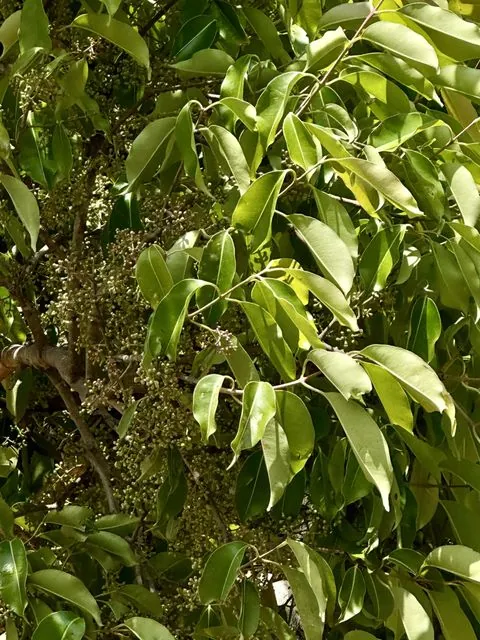
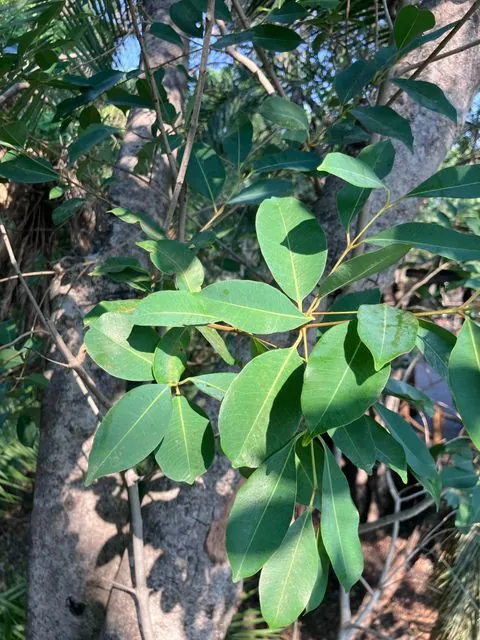
Canonical name: The scientific name without its authorship or date, for example Zea mays instead of Zea mays L. — The scientific name without its authorship or date, for example Zea mays instead of Zea mays L.
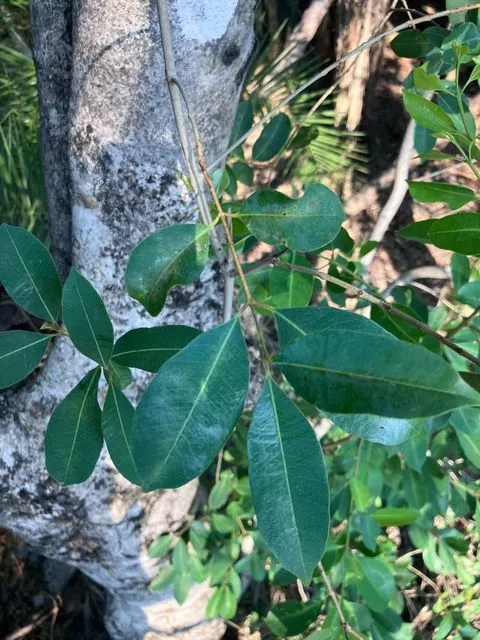
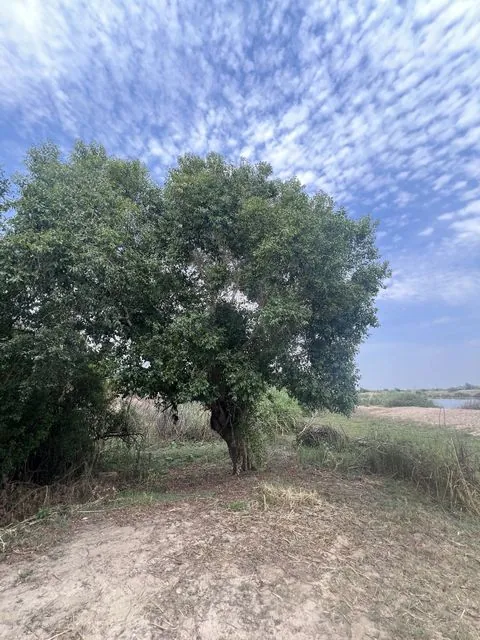
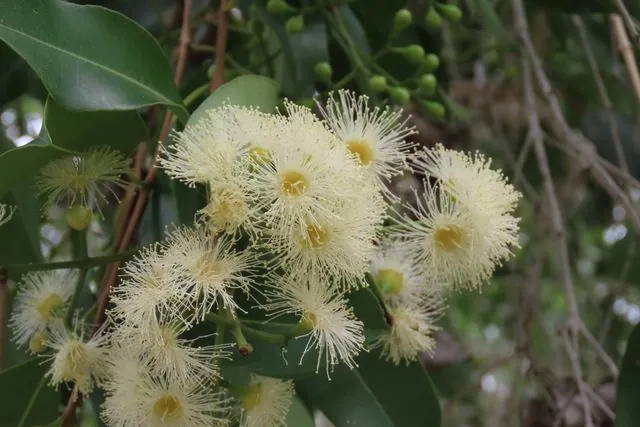
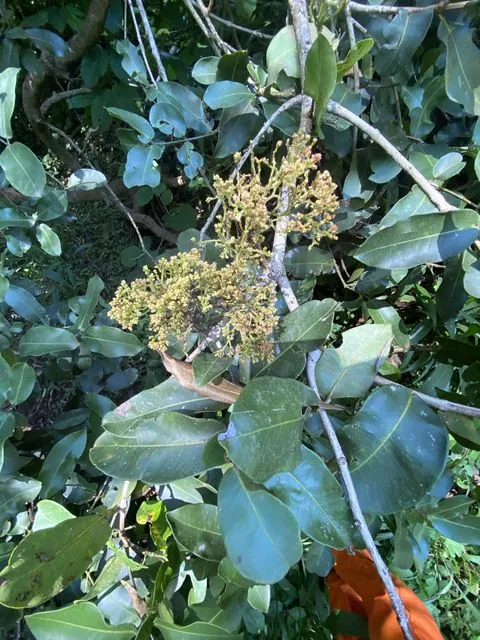
Syzygium guineense
Authorship: The author or authors credited with publishing the scientific name. It is written after the name, sometimes with the year, for example L. (Linnaeus) in Zea mays L. An author in parentheses first published the name in another genus or rank. — The author or authors credited with publishing the scientific name. It is written after the name, sometimes with the year, for example L. (Linnaeus) in Zea mays L. An author in parentheses first published the name in another genus or rank.
(Willd.) DC.
Common names
Bushveld Waterberry, Waterberry, water-pear, white umdoniNames in other languages (13)Ga̱fwuo, Malmo, Soaravo lahi, Wasserbirne, Water Pear, czapetka gwinejska, guineanjambolaani, mosane, muthwa, umdomiwamanzi, waterpeer, Сизигиум гвинейский, 非洲西莓
Kingdom: One of the broadest ranks of biological classification. It groups organisms that share very basic features, for example plants (Plantae), animals (Animalia) or fungi (Fungi). — One of the broadest ranks of biological classification. It groups organisms that share very basic features, for example plants (Plantae), animals (Animalia) or fungi (Fungi).
Plantae
Phylum: Rank below kingdom that groups organisms with a shared general body plan, for example chordates (Chordata), arthropods (Arthropoda) or vascular plants (Tracheophyta). In botany the same rank is also called division. — Rank below kingdom that groups organisms with a shared general body plan, for example chordates (Chordata), arthropods (Arthropoda) or vascular plants (Tracheophyta). In botany the same rank is also called division.
Tracheophyta
Class: Rank below phylum, for example mammals (Mammalia), birds (Aves), insects (Insecta) or monocot plants such as grasses and orchids (Liliopsida). — Rank below phylum, for example mammals (Mammalia), birds (Aves), insects (Insecta) or monocot plants such as grasses and orchids (Liliopsida).
Magnoliopsida
Order: Rank below class that groups related families, for example grasses and their relatives (Poales) or bats (Chiroptera). — Rank below class that groups related families, for example grasses and their relatives (Poales) or bats (Chiroptera).
Myrtales
Family: Rank below order that groups related genera. Family names usually end in -aceae in botany (for example Poaceae, the grass family) and in -idae in zoology (for example Felidae, the cat family). — Rank below order that groups related genera. Family names usually end in -aceae in botany (for example Poaceae, the grass family) and in -idae in zoology (for example Felidae, the cat family).
Myrtaceae
Genus: Rank that groups closely related species. Its name is the first word of a species' scientific name and starts with a capital letter, for example Zea in Zea mays. — Rank that groups closely related species. Its name is the first word of a species' scientific name and starts with a capital letter, for example Zea in Zea mays.
Syzygium
Specific epithet: The second word of a species' scientific name. On its own it does not name the species: it always goes with the genus, for example mays in Zea mays. — The second word of a species' scientific name. On its own it does not name the species: it always goes with the genus, for example mays in Zea mays.
guineense
Taxonomic rank: The level a name occupies in the hierarchy of biological classification, such as kingdom, family, genus, species or subspecies. — The level a name occupies in the hierarchy of biological classification, such as kingdom, family, genus, species or subspecies.
species
Reference species
Syzygium guineense
Taxonomic status: Whether the taxonomic catalogue the record comes from currently accepts this name for the organism, or treats it as a synonym of another accepted name or as doubtful. — Whether the taxonomic catalogue the record comes from currently accepts this name for the organism, or treats it as a synonym of another accepted name or as doubtful.
accepted name
Photos and conservation status
IUCN Red List category: The extinction-risk category that the International Union for Conservation of Nature (IUCN) assigns to a species on its Red List. EX Extinct: there is no reasonable doubt that the last individual has died. EW Extinct in the wild: it survives only in cultivation, in captivity or as a population far outside its past range. CR Critically endangered, EN Endangered and VU Vulnerable: the three threatened categories, from an extremely high to a high risk of extinction in the wild. NT Near threatened: close to qualifying as threatened. LC Least concern: evaluated and not threatened. DD Data deficient: there is not enough information to assess its risk. NE Not evaluated: not yet assessed against the criteria. It describes the risk of the species worldwide, not its situation in a project's area. — The extinction-risk category that the International Union for Conservation of Nature (IUCN) assigns to a species on its Red List. EX Extinct: there is no reasonable doubt that the last individual has died. EW Extinct in the wild: it survives only in cultivation, in captivity or as a population far outside its past range. CR Critically endangered, EN Endangered and VU Vulnerable: the three threatened categories, from an extremely high to a high risk of extinction in the wild. NT Near threatened: close to qualifying as threatened. LC Least concern: evaluated and not threatened. DD Data deficient: there is not enough information to assess its risk. NE Not evaluated: not yet assessed against the criteria. It describes the risk of the species worldwide, not its situation in a project's area.
Least concern (LC)
Source: IUCN Red List via GBIF, queried on 2026-10-13 11:17.
Research-grade iNaturalist observations via GBIF, CC0 or CC BY licences only, queried on 2026-10-13 11:17.
Interacciones documentadas
GloBI says it is documented somewhere in the world. Biolitica answers whether it could happen here.
A documented interaction means it was recorded somewhere in the world. It does not mean it occurs here.
Types shown: 6 of 6
is a symbiont of
×
is eaten by
×
is a host of
×
has as a vector
×
interacts with
×
is adjacent to
×
Blocks that do not sit under a navigation concept heading keep the source's own term: no navigation concept has been assigned to them yet.
is a symbiont of
122 organisms
The authority declares no effect on this species for this term: neither that it harms it nor that it benefits it. In the source ontology symbiosis covers mutualism, commensalism and parasitism alike, so this block holds attackers and allies side by side.
Organism
Reads as
Studies
Where it was documented
Actions
Mortierella fluviae
is a symbiont of
1
not compared
1 source · 1 record
Franić, I., Prospero, S., Adamson, K., Allan, E., Attorre, F., Auger-Rozenberg, M.A., Augustin, S., Avtzis, D., Baert, W., Barta, M. and Bauters, K., 2022. Worldwide diversity of endophytic fungi and insects associated with dormant tree twigs.. Scientific Data. doi:10.1038/s4159…
Published in globalbioticinteractions/globalfungi
Context: Pretoria · no date published
Claim type
Published relationship between two taxa
Version
GloBI 0.11
Reuse
This release publishes no reuse terms for this record.
Pretoria · no date publishedWhere it is: line:hash://sha256/021a206a1459bcca7e251c73f5bd180fc3ac342a09c499855fe42e21fc09edcf!/interactions.tsv.gz!/L20016303
A published relationship says these two taxa were documented interacting. It does not say how often, or that it happens in this project's region.
Dothiora infuscansBotryosphaeriaceae
is a symbiont of
1
not compared
1 source · 1 record
Franić, I., Prospero, S., Adamson, K., Allan, E., Attorre, F., Auger-Rozenberg, M.A., Augustin, S., Avtzis, D., Baert, W., Barta, M. and Bauters, K., 2022. Worldwide diversity of endophytic fungi and insects associated with dormant tree twigs.. Scientific Data. doi:10.1038/s4159…
Published in globalbioticinteractions/globalfungi
Context: Pretoria · no date published
Claim type
Published relationship between two taxa
Version
GloBI 0.11
Reuse
This release publishes no reuse terms for this record.
Pretoria · no date publishedWhere it is: line:hash://sha256/021a206a1459bcca7e251c73f5bd180fc3ac342a09c499855fe42e21fc09edcf!/interactions.tsv.gz!/L20008698
A published relationship says these two taxa were documented interacting. It does not say how often, or that it happens in this project's region.
Dipodascaceae sp.Dipodascaceae
is a symbiont of
1
not compared
Not a modelling unit: the source did not resolve a species — the name carries an open-nomenclature qualifier.
1 source · 1 record
Franić, I., Prospero, S., Adamson, K., Allan, E., Attorre, F., Auger-Rozenberg, M.A., Augustin, S., Avtzis, D., Baert, W., Barta, M. and Bauters, K., 2022. Worldwide diversity of endophytic fungi and insects associated with dormant tree twigs.. Scientific Data. doi:10.1038/s4159…
Published in globalbioticinteractions/globalfungi
Context: Pretoria · no date published
Claim type
Published relationship between two taxa
Version
GloBI 0.11
Reuse
This release publishes no reuse terms for this record.
Pretoria · no date publishedWhere it is: line:hash://sha256/021a206a1459bcca7e251c73f5bd180fc3ac342a09c499855fe42e21fc09edcf!/interactions.tsv.gz!/L20002236
A published relationship says these two taxa were documented interacting. It does not say how often, or that it happens in this project's region.
Gezellig mestvaasjeSordaria fimicolaSordariaceae
is a symbiont of
1
not compared
1 source · 1 record
Franić, I., Prospero, S., Adamson, K., Allan, E., Attorre, F., Auger-Rozenberg, M.A., Augustin, S., Avtzis, D., Baert, W., Barta, M. and Bauters, K., 2022. Worldwide diversity of endophytic fungi and insects associated with dormant tree twigs.. Scientific Data. doi:10.1038/s4159…
Published in globalbioticinteractions/globalfungi
Context: Lushoto · no date published
Claim type
Published relationship between two taxa
Version
GloBI 0.11
Reuse
This release publishes no reuse terms for this record.
Lushoto · no date publishedWhere it is: line:hash://sha256/021a206a1459bcca7e251c73f5bd180fc3ac342a09c499855fe42e21fc09edcf!/interactions.tsv.gz!/L20005728
Context: no place published · Dec. 11, 2013 · Human observation
Claim type
Published relationship between two taxa
Version
GloBI 0.11
Reuse
This release publishes no reuse terms for this record.
no place published · Dec. 11, 2013 · Human observationAs published: 2013-12-11T00:00:00Z · HumanObservationWhere it is: line:hash://sha256/021a206a1459bcca7e251c73f5bd180fc3ac342a09c499855fe42e21fc09edcf!/interactions.tsv.gz!/L4452889
Context: no place published · Dec. 6, 2014 · Human observation
Claim type
Published relationship between two taxa
Version
GloBI 0.11
Reuse
This release publishes no reuse terms for this record.
no place published · Dec. 6, 2014 · Human observationAs published: 2014-12-06T00:00:00Z · HumanObservationWhere it is: line:hash://sha256/021a206a1459bcca7e251c73f5bd180fc3ac342a09c499855fe42e21fc09edcf!/interactions.tsv.gz!/L4479695
Context: no place published · Dec. 6, 2014 · Human observation
Claim type
Published relationship between two taxa
Version
GloBI 0.11
Reuse
This release publishes no reuse terms for this record.
no place published · Dec. 6, 2014 · Human observationAs published: 2014-12-06T00:00:00Z · HumanObservationWhere it is: line:hash://sha256/021a206a1459bcca7e251c73f5bd180fc3ac342a09c499855fe42e21fc09edcf!/interactions.tsv.gz!/L4479697
Context: no place published · Dec. 7, 2014 · Human observation
Claim type
Published relationship between two taxa
Version
GloBI 0.11
Reuse
This release publishes no reuse terms for this record.
no place published · Dec. 7, 2014 · Human observationAs published: 2014-12-07T00:00:00Z · HumanObservationWhere it is: line:hash://sha256/021a206a1459bcca7e251c73f5bd180fc3ac342a09c499855fe42e21fc09edcf!/interactions.tsv.gz!/L4479706
A published relationship says these two taxa were documented interacting. It does not say how often, or that it happens in this project's region.
African Green-pigeonTreron calvusColumbidae
is eaten by
2
not compared
2 sources · 2 records
Dowsett-Lemaire 1988
Published in globalbioticinteractions/fricke2020
Context: Malawi · no date published
Claim type
Published relationship between two taxa
Version
GloBI 0.11
Reuse
This release publishes no reuse terms for this record.
Malawi · no date publishedWhere it is: line:hash://sha256/021a206a1459bcca7e251c73f5bd180fc3ac342a09c499855fe42e21fc09edcf!/interactions.tsv.gz!/L13327829
No public URL for this record
Hovestadt 1997
Published in globalbioticinteractions/fricke2020
Context: Côte d'Ivoire · no date published
Claim type
Published relationship between two taxa
Version
GloBI 0.11
Reuse
This release publishes no reuse terms for this record.
Côte d'Ivoire · no date publishedWhere it is: line:hash://sha256/021a206a1459bcca7e251c73f5bd180fc3ac342a09c499855fe42e21fc09edcf!/interactions.tsv.gz!/L13342380
No public URL for this record
A published relationship says these two taxa were documented interacting. It does not say how often, or that it happens in this project's region.
This release publishes no reuse terms for this record.
Malawi · no date publishedWhere it is: line:hash://sha256/021a206a1459bcca7e251c73f5bd180fc3ac342a09c499855fe42e21fc09edcf!/interactions.tsv.gz!/L13326947
No public URL for this record
Hovestadt 1997
Published in globalbioticinteractions/fricke2020
Context: Côte d'Ivoire · no date published
Claim type
Published relationship between two taxa
Version
GloBI 0.11
Reuse
This release publishes no reuse terms for this record.
Côte d'Ivoire · no date publishedWhere it is: line:hash://sha256/021a206a1459bcca7e251c73f5bd180fc3ac342a09c499855fe42e21fc09edcf!/interactions.tsv.gz!/L13342766
No public URL for this record
A published relationship says these two taxa were documented interacting. It does not say how often, or that it happens in this project's region.
Olive BaboonPapio anubisCercopithecidae
is eaten by
2
not compared
2 sources · 2 records
Hovestadt 1997
Published in globalbioticinteractions/fricke2020
Context: Côte d'Ivoire · no date published
Claim type
Published relationship between two taxa
Version
GloBI 0.11
Reuse
This release publishes no reuse terms for this record.
Côte d'Ivoire · no date publishedWhere it is: line:hash://sha256/021a206a1459bcca7e251c73f5bd180fc3ac342a09c499855fe42e21fc09edcf!/interactions.tsv.gz!/L13342920
No public URL for this record
Kunz, B.K. and Linsenmair, K.E., 2010. Fruit Traits in Baboon Diet A Comparison with Plant Species Characteristics in West Africa. Biotropica, 42(3), pp.363-371.
Published in globalbioticinteractions/AfricaTreeDatabase
Context: no place published · no date published · direct observation
Claim type
Published relationship between two taxa
Version
GloBI 0.11
Reuse
This release publishes no reuse terms for this record.
no place published · no date published · direct observationAs published: direct observationWhere it is: line:hash://sha256/021a206a1459bcca7e251c73f5bd180fc3ac342a09c499855fe42e21fc09edcf!/interactions.tsv.gz!/L9143756
No public URL for this record
A published relationship says these two taxa were documented interacting. It does not say how often, or that it happens in this project's region.
The authority declares no effect on this species for this term: neither that it harms it nor that it benefits it. In the source ontology symbiosis covers mutualism, commensalism and parasitism alike, so this block holds attackers and allies side by side.
Organism
Reads as
Studies
Where it was documented
Actions
Ctenarytaina fomenaeAphalaridae
is a host of
14
not compared
14 sources · 14 records
https://www.inaturalist.org/observations/31112200
Published in globalbioticinteractions/inaturalist
Context: no place published · Aug. 19, 2019 · Human observation
Claim type
Published relationship between two taxa
Version
GloBI 0.11
Reuse
This release publishes no reuse terms for this record.
no place published · Aug. 19, 2019 · Human observationAs published: 2019-08-19T09:29:00Z · HumanObservationWhere it is: line:hash://sha256/021a206a1459bcca7e251c73f5bd180fc3ac342a09c499855fe42e21fc09edcf!/interactions.tsv.gz!/L5126119
Context: no place published · Nov. 8, 2022 · Human observation
Claim type
Published relationship between two taxa
Version
GloBI 0.11
Reuse
This release publishes no reuse terms for this record.
no place published · Nov. 8, 2022 · Human observationAs published: 2022-11-08T22:00:00Z · HumanObservationWhere it is: line:hash://sha256/021a206a1459bcca7e251c73f5bd180fc3ac342a09c499855fe42e21fc09edcf!/interactions.tsv.gz!/L5348748
Context: no place published · June 15, 2024 · Human observation
Claim type
Published relationship between two taxa
Version
GloBI 0.11
Reuse
This release publishes no reuse terms for this record.
no place published · June 15, 2024 · Human observationAs published: 2024-06-15T11:55:18Z · HumanObservationWhere it is: line:hash://sha256/021a206a1459bcca7e251c73f5bd180fc3ac342a09c499855fe42e21fc09edcf!/interactions.tsv.gz!/L5348845
Context: no place published · March 14, 2024 · Human observation
Claim type
Published relationship between two taxa
Version
GloBI 0.11
Reuse
This release publishes no reuse terms for this record.
no place published · March 14, 2024 · Human observationAs published: 2024-03-14T11:28:00Z · HumanObservationWhere it is: line:hash://sha256/021a206a1459bcca7e251c73f5bd180fc3ac342a09c499855fe42e21fc09edcf!/interactions.tsv.gz!/L5355314
Context: no place published · Dec. 14, 2024 · Human observation
Claim type
Published relationship between two taxa
Version
GloBI 0.11
Reuse
This release publishes no reuse terms for this record.
no place published · Dec. 14, 2024 · Human observationAs published: 2024-12-14T12:44:00Z · HumanObservationWhere it is: line:hash://sha256/021a206a1459bcca7e251c73f5bd180fc3ac342a09c499855fe42e21fc09edcf!/interactions.tsv.gz!/L5383894
Context: no place published · June 29, 2024 · Human observation
Claim type
Published relationship between two taxa
Version
GloBI 0.11
Reuse
This release publishes no reuse terms for this record.
no place published · June 29, 2024 · Human observationAs published: 2024-06-29T10:00:57Z · HumanObservationWhere it is: line:hash://sha256/021a206a1459bcca7e251c73f5bd180fc3ac342a09c499855fe42e21fc09edcf!/interactions.tsv.gz!/L5392683
Context: no place published · March 14, 2025 · Human observation
Claim type
Published relationship between two taxa
Version
GloBI 0.11
Reuse
This release publishes no reuse terms for this record.
no place published · March 14, 2025 · Human observationAs published: 2025-03-14T07:05:11Z · HumanObservationWhere it is: line:hash://sha256/021a206a1459bcca7e251c73f5bd180fc3ac342a09c499855fe42e21fc09edcf!/interactions.tsv.gz!/L5435119
Context: no place published · July 16, 2023 · Human observation
Claim type
Published relationship between two taxa
Version
GloBI 0.11
Reuse
This release publishes no reuse terms for this record.
no place published · July 16, 2023 · Human observationAs published: 2023-07-16T13:54:41Z · HumanObservationWhere it is: line:hash://sha256/021a206a1459bcca7e251c73f5bd180fc3ac342a09c499855fe42e21fc09edcf!/interactions.tsv.gz!/L5435120
Context: Uoccia, near Omo Bottega River · Jan. 25, 1939 · Preserved specimen
Claim type
Published relationship between two taxa
Version
GloBI 0.11
Reuse
This release publishes no reuse terms for this record.
Uoccia, near Omo Bottega River · Jan. 25, 1939 · Preserved specimenAs published: 1939-01-25T00:00:00Z · PreservedSpecimenWhere it is: line:hash://sha256/021a206a1459bcca7e251c73f5bd180fc3ac342a09c499855fe42e21fc09edcf!/interactions.tsv.gz!/L17175472
Context: Uoccia, near Omo Bottega River · Jan. 25, 1939 · Preserved specimen
Claim type
Published relationship between two taxa
Version
GloBI 0.11
Reuse
This release publishes no reuse terms for this record.
Uoccia, near Omo Bottega River · Jan. 25, 1939 · Preserved specimenAs published: 1939-01-25T00:00:00Z · PreservedSpecimenWhere it is: line:hash://sha256/021a206a1459bcca7e251c73f5bd180fc3ac342a09c499855fe42e21fc09edcf!/interactions.tsv.gz!/L17175473
Castellani, E., and Ciferri, R.. 1950. Mycoflora Erythraea, Somala et Aethipica Suppl. 1. Atti Ist. Bot. Lab. Crittog. Univ. Pavia :52
Published in globalbioticinteractions/usda-fungus-host
Context: Ethiopia · no date published
Claim type
Published relationship between two taxa
Version
GloBI 0.11
Reuse
This release publishes no reuse terms for this record.
Ethiopia · no date publishedWhere it is: line:hash://sha256/021a206a1459bcca7e251c73f5bd180fc3ac342a09c499855fe42e21fc09edcf!/interactions.tsv.gz!/L4184034
No public URL for this record
Spooner, B.M., and Kirk, P.M.. 1982. Taxonomic notes on %Excipularia% and %Scolicosporium%. Trans. Brit. Mycol. Soc. 78:247-257
Published in globalbioticinteractions/usda-fungus-host
Context: Africa · no date published
Claim type
Published relationship between two taxa
Version
GloBI 0.11
Reuse
This release publishes no reuse terms for this record.
Africa · no date publishedWhere it is: line:hash://sha256/021a206a1459bcca7e251c73f5bd180fc3ac342a09c499855fe42e21fc09edcf!/interactions.tsv.gz!/L4331951
No public URL for this record
Ciccarone, A.. 1951. Primo contributo alla conoscenza dei micromiceti dell' Africa orientale. Mycopathol. Mycol. Appl. 5:208-235
Published in globalbioticinteractions/usda-fungus-host
Context: East Africa · no date published
Claim type
Published relationship between two taxa
Version
GloBI 0.11
Reuse
This release publishes no reuse terms for this record.
East Africa · no date publishedWhere it is: line:hash://sha256/021a206a1459bcca7e251c73f5bd180fc3ac342a09c499855fe42e21fc09edcf!/interactions.tsv.gz!/L4385491
No public URL for this record
Sutton, B.C., and Crous, P.W.. 1997. %Lecanostictopsis% gen. nov., and related leaf-spotting fungi on %Syzygium% species.. Mycol. Res. 101:215-225
Published in globalbioticinteractions/usda-fungus-host
Context: Ethiopia · no date published
Claim type
Published relationship between two taxa
Version
GloBI 0.11
Reuse
This release publishes no reuse terms for this record.
Ethiopia · no date publishedWhere it is: line:hash://sha256/021a206a1459bcca7e251c73f5bd180fc3ac342a09c499855fe42e21fc09edcf!/interactions.tsv.gz!/L4385609
No public URL for this record
A published relationship says these two taxa were documented interacting. It does not say how often, or that it happens in this project's region.
Chrysoporthe austroafricanaCryphonectriaceae
is a host of
5
no location
5 sources · 6 records
Vermeulen, M., Gryzenhout, M., Wingfield, M.J., and Roux, J.. 2011. New records of the Cryphonectriaceae fom southern Africa including %Latruncellus aurorae% gen. sp. nov.. Mycologia 103(3):554-569
Published in globalbioticinteractions/usda-fungus-host
Record contexts (sample): Namibia · no date published; South Africa · no date published
Claim type
Published relationship between two taxa
Version
GloBI 0.11
Reuse
This release publishes no reuse terms for this record.
Namibia · no date publishedWhere it is: line:hash://sha256/021a206a1459bcca7e251c73f5bd180fc3ac342a09c499855fe42e21fc09edcf!/interactions.tsv.gz!/L4416205
South Africa · no date publishedWhere it is: line:hash://sha256/021a206a1459bcca7e251c73f5bd180fc3ac342a09c499855fe42e21fc09edcf!/interactions.tsv.gz!/L4416206
No public URL for this record
Gryzenhout, M. , Wingfield, B.D., and Wingfield, M.J.. 2009. Taxonomy, Phylogeny, and Ecology of Bark-Inhabiting and Tree-Pathogenic Fungi in the Cryphonectriaceae. APS Press, St. Paul, Minnesota :119
Published in globalbioticinteractions/usda-fungus-host
Context: South Africa · no date published
Claim type
Published relationship between two taxa
Version
GloBI 0.11
Reuse
This release publishes no reuse terms for this record.
South Africa · no date publishedWhere it is: line:hash://sha256/021a206a1459bcca7e251c73f5bd180fc3ac342a09c499855fe42e21fc09edcf!/interactions.tsv.gz!/L4233373
No public URL for this record
Mausse-Sitoe, S.N.D., Rodas, C.A., Wingfield, M.J., Chen, S.F., and Roux, J.. 2016. Endophytic Cryphonectriaceae on native Myrtales: Possible origin of Chrysoporthe canker on plantation-grown %Eucalyptus%. Fung. Biol. 120:827-835
Published in globalbioticinteractions/usda-fungus-host
Context: Mozambique · no date published
Claim type
Published relationship between two taxa
Version
GloBI 0.11
Reuse
This release publishes no reuse terms for this record.
Mozambique · no date publishedWhere it is: line:hash://sha256/021a206a1459bcca7e251c73f5bd180fc3ac342a09c499855fe42e21fc09edcf!/interactions.tsv.gz!/L4407592
No public URL for this record
Heath, R. , Gryzenhout, M. , Roux, J., and Wingfield, M.J. 2005. Discovery of the canker pathogen %Chrysoporthe austroafricana% on native %Syzygium% spp. in South Africa.. Pl. Dis. 90:433-438
Published in globalbioticinteractions/usda-fungus-host
Context: South Africa · no date published
Claim type
Published relationship between two taxa
Version
GloBI 0.11
Reuse
This release publishes no reuse terms for this record.
South Africa · no date publishedWhere it is: line:hash://sha256/021a206a1459bcca7e251c73f5bd180fc3ac342a09c499855fe42e21fc09edcf!/interactions.tsv.gz!/L4416162
No public URL for this record
Chungu, D., Gryzenhout, M. , Muimba-Kankolongo, A., Wingfield, M.J., and Roux, J.. 2010. Taxonomy and pathogenicity of two novel %Chrysoporthe% species from %Eucalyptus grandis% and %Syzygium guineense% in Zambia. Mycol. Progr. 9:379-393
Published in globalbioticinteractions/usda-fungus-host
Context: Zambia · no date published
Claim type
Published relationship between two taxa
Version
GloBI 0.11
Reuse
This release publishes no reuse terms for this record.
Zambia · no date publishedWhere it is: line:hash://sha256/021a206a1459bcca7e251c73f5bd180fc3ac342a09c499855fe42e21fc09edcf!/interactions.tsv.gz!/L4416212
No public URL for this record
A published relationship says these two taxa were documented interacting. It does not say how often, or that it happens in this project's region.
Celoporthe fontana
is a host of
5
no location
5 sources · 5 records
Ferreira, M.A., de Oliveira, M.E.S., Silva, G.A., Mathioni, S.M., and Mafia, R.G.. 2019. %Capillaureum caryovora% gen. sp. nov. (Cryphonectriaceae) pathogenic to pequi (%Caryocar brasiliense%) in Brazil. Mycol. Progr. 18(3):385-403
Published in globalbioticinteractions/usda-fungus-host
Context: Zambia · no date published
Claim type
Published relationship between two taxa
Version
GloBI 0.11
Reuse
This release publishes no reuse terms for this record.
Zambia · no date publishedWhere it is: line:hash://sha256/021a206a1459bcca7e251c73f5bd180fc3ac342a09c499855fe42e21fc09edcf!/interactions.tsv.gz!/L4142513
No public URL for this record
Chen, S.F., Liu, Q.L., Li, G.Q., Wingfield, M.J., and Roux, J.. 2018. A new genus of Cryphonectriaceae isolated from %Lagerstroemia speciosa% in southern China. Pl. Pathol. 67(1):107-123
Published in globalbioticinteractions/usda-fungus-host
Context: Zambia · no date published
Claim type
Published relationship between two taxa
Version
GloBI 0.11
Reuse
This release publishes no reuse terms for this record.
Zambia · no date publishedWhere it is: line:hash://sha256/021a206a1459bcca7e251c73f5bd180fc3ac342a09c499855fe42e21fc09edcf!/interactions.tsv.gz!/L4297162
No public URL for this record
Mausse-Sitoe, S.N.D., Rodas, C.A., Wingfield, M.J., Chen, S.F., and Roux, J.. 2016. Endophytic Cryphonectriaceae on native Myrtales: Possible origin of Chrysoporthe canker on plantation-grown %Eucalyptus%. Fung. Biol. 120:827-835
Published in globalbioticinteractions/usda-fungus-host
Context: Zambia · no date published
Claim type
Published relationship between two taxa
Version
GloBI 0.11
Reuse
This release publishes no reuse terms for this record.
Zambia · no date publishedWhere it is: line:hash://sha256/021a206a1459bcca7e251c73f5bd180fc3ac342a09c499855fe42e21fc09edcf!/interactions.tsv.gz!/L4407583
No public URL for this record
Ali, D.B., Marincowitz, S., Wingfield, M.J., Roux, J., Crous, P.W., and McTaggart, A.R.. 2018. Novel Cryphonectriaceae from La Reunion and South Africa, and their pathogenicity on %Eucalyptus%. Mycol. Progr. 17(8):953-966
Published in globalbioticinteractions/usda-fungus-host
Context: Zambia · no date published
Claim type
Published relationship between two taxa
Version
GloBI 0.11
Reuse
This release publishes no reuse terms for this record.
Zambia · no date publishedWhere it is: line:hash://sha256/021a206a1459bcca7e251c73f5bd180fc3ac342a09c499855fe42e21fc09edcf!/interactions.tsv.gz!/L4409082
No public URL for this record
Wang, W., Liu, Q.L., Li, G.Q., Liu, F.F., and Chen, S.F.. 2018. Phylogeny and pathogenicity of %Celoporthe% species from plantation %Eucalyptus% in Southern China. Pl. Dis. 102(10):1915-1927
Published in globalbioticinteractions/usda-fungus-host
Context: Zambia · no date published
Claim type
Published relationship between two taxa
Version
GloBI 0.11
Reuse
This release publishes no reuse terms for this record.
Zambia · no date publishedWhere it is: line:hash://sha256/021a206a1459bcca7e251c73f5bd180fc3ac342a09c499855fe42e21fc09edcf!/interactions.tsv.gz!/L4417013
No public URL for this record
A published relationship says these two taxa were documented interacting. It does not say how often, or that it happens in this project's region.
The authority declares no effect on this species for this term: neither that it harms it nor that it benefits it.
Organism
Reads as
Studies
Where it was documented
Actions
Pan troglodytesHominidae
has as a vector
3
no location
3 sources · 3 records
Wakibara, J.V., 2005. Abundance and dispersion of some chimpanzee-dispersed fruiting plants at Mahale; Tanzania. African Journal of Ecology, 43(2), pp.107-113.
Published in globalbioticinteractions/AfricaTreeDatabase
Context: no place published · no date published · sapplings
Claim type
Published relationship between two taxa
Version
GloBI 0.11
Reuse
This release publishes no reuse terms for this record.
no place published · no date published · sapplingsAs published: sapplingsWhere it is: line:hash://sha256/021a206a1459bcca7e251c73f5bd180fc3ac342a09c499855fe42e21fc09edcf!/interactions.tsv.gz!/L9139345
No public URL for this record
Head, J.S. and Boesch, C. and Makaga, L. and Robbins, M.M., 2011. Sympatric Chimpanzees Pan troglodytes troglodytes and Gorillas Gorilla gorilla gorilla in Loango National Park; Gabon Dietary Composition; Seasonality; and Intersite Comparisons. International Journal of Primatolo…
Published in globalbioticinteractions/AfricaTreeDatabase
Context: no place published · no date published · direct observation
Claim type
Published relationship between two taxa
Version
GloBI 0.11
Reuse
This release publishes no reuse terms for this record.
no place published · no date published · direct observationAs published: direct observationWhere it is: line:hash://sha256/021a206a1459bcca7e251c73f5bd180fc3ac342a09c499855fe42e21fc09edcf!/interactions.tsv.gz!/L9140116
No public URL for this record
Gross-Camp, Nicole, Beth A. Kaplin, 2005. Chimpanzee (Pan troglodytes) Seed Dispersal in an Afromotane Forest: Microhabitat Influences on the Postdispersal Fate of Large Seeds. Biotropica, 37(4), pp.599-605.
Published in globalbioticinteractions/AfricaTreeDatabase
Context: no place published · no date published · direct observation
Claim type
Published relationship between two taxa
Version
GloBI 0.11
Reuse
This release publishes no reuse terms for this record.
no place published · no date published · direct observationAs published: direct observationWhere it is: line:hash://sha256/021a206a1459bcca7e251c73f5bd180fc3ac342a09c499855fe42e21fc09edcf!/interactions.tsv.gz!/L9143627
No public URL for this record
A published relationship says these two taxa were documented interacting. It does not say how often, or that it happens in this project's region.
Brown ParrotPoicephalus meyeriPsittacidae
has as a vector
1
no location
1 source · 1 record
Boyes, R.S. and Perrin, M.R., 2010. Do Meyers Parrots Poicephalus meyeri benefit pollination and seed dispersal of plants in the Okavango Delta; Botswana. African Journal of Ecology, 48(3), pp.769-782.
Published in globalbioticinteractions/AfricaTreeDatabase
Context: no place published · no date published · direct observation
Claim type
Published relationship between two taxa
Version
GloBI 0.11
Reuse
This release publishes no reuse terms for this record.
no place published · no date published · direct observationAs published: direct observationWhere it is: line:hash://sha256/021a206a1459bcca7e251c73f5bd180fc3ac342a09c499855fe42e21fc09edcf!/interactions.tsv.gz!/L9139528
No public URL for this record
A published relationship says these two taxa were documented interacting. It does not say how often, or that it happens in this project's region.
Agmen, F.L. and Chapman, H.M. and Bawuro, M., 2010. Seed dispersal by tantalus monkeys Chlorocebus tantalus tantalus in a Nigerian montane forest. African Journal of Ecology, 48(4), pp.1123-1128.
Published in globalbioticinteractions/AfricaTreeDatabase
Record contexts (sample): no place published · no date published · direct observation; no place published · no date published · feces
Claim type
Published relationship between two taxa
Version
GloBI 0.11
Reuse
This release publishes no reuse terms for this record.
no place published · no date published · direct observationAs published: direct observationWhere it is: line:hash://sha256/021a206a1459bcca7e251c73f5bd180fc3ac342a09c499855fe42e21fc09edcf!/interactions.tsv.gz!/L9139491
no place published · no date published · fecesAs published: fecesWhere it is: line:hash://sha256/021a206a1459bcca7e251c73f5bd180fc3ac342a09c499855fe42e21fc09edcf!/interactions.tsv.gz!/L9139492
No public URL for this record
A published relationship says these two taxa were documented interacting. It does not say how often, or that it happens in this project's region.
Robbins, M.M. and McNeilage, A., 2003. Home range and frugivory patterns of mountain gorillas in Bwindi Impenetrable National Park; Uganda. International Journal of Primatology, 24(3), pp.467-491.
Published in globalbioticinteractions/AfricaTreeDatabase
Context: no place published · no date published · direct observation
Claim type
Published relationship between two taxa
Version
GloBI 0.11
Reuse
This release publishes no reuse terms for this record.
no place published · no date published · direct observationAs published: direct observationWhere it is: line:hash://sha256/021a206a1459bcca7e251c73f5bd180fc3ac342a09c499855fe42e21fc09edcf!/interactions.tsv.gz!/L9139924
No public URL for this record
A published relationship says these two taxa were documented interacting. It does not say how often, or that it happens in this project's region.
This release publishes no reuse terms for this record.
Kenya · no date publishedWhere it is: line:hash://sha256/021a206a1459bcca7e251c73f5bd180fc3ac342a09c499855fe42e21fc09edcf!/interactions.tsv.gz!/L13005239
No public URL for this record
Richter and Cumming, 2006
Published in globalbioticinteractions/aziz2021
Context: Zambia · no date published
Claim type
Published relationship between two taxa
Version
GloBI 0.11
Reuse
This release publishes no reuse terms for this record.
Zambia · no date publishedWhere it is: line:hash://sha256/021a206a1459bcca7e251c73f5bd180fc3ac342a09c499855fe42e21fc09edcf!/interactions.tsv.gz!/L13005251
No public URL for this record
A published relationship says these two taxa were documented interacting. It does not say how often, or that it happens in this project's region.
Michener, C.D. 2007. The Bees of the World. Second Edition. 953 pp. The Johns Hopkins University Press, Baltimore and London
Published in globalbioticinteractions/Catalogue-of-Afrotropical-Bees
Record contexts (sample): no place published · no date published; no place published · no date published
Claim type
Published relationship between two taxa
Version
GloBI 0.11
Reuse
This release publishes no reuse terms for this record.
no place published · no date publishedWhere it is: line:hash://sha256/021a206a1459bcca7e251c73f5bd180fc3ac342a09c499855fe42e21fc09edcf!/interactions.tsv.gz!/L12093190
no place published · no date publishedWhere it is: line:hash://sha256/021a206a1459bcca7e251c73f5bd180fc3ac342a09c499855fe42e21fc09edcf!/interactions.tsv.gz!/L12097884
No public URL for this record
A published relationship says these two taxa were documented interacting. It does not say how often, or that it happens in this project's region.
Bocande's Stingless BeeMeliponula bocandeiApidae
interacts with
1
no location
1 source · 2 records
Michener, C.D. 2007. The Bees of the World. Second Edition. 953 pp. The Johns Hopkins University Press, Baltimore and London
Published in globalbioticinteractions/Catalogue-of-Afrotropical-Bees
Record contexts (sample): no place published · no date published; no place published · no date published
Claim type
Published relationship between two taxa
Version
GloBI 0.11
Reuse
This release publishes no reuse terms for this record.
no place published · no date publishedWhere it is: line:hash://sha256/021a206a1459bcca7e251c73f5bd180fc3ac342a09c499855fe42e21fc09edcf!/interactions.tsv.gz!/L12093326
no place published · no date publishedWhere it is: line:hash://sha256/021a206a1459bcca7e251c73f5bd180fc3ac342a09c499855fe42e21fc09edcf!/interactions.tsv.gz!/L12097264
No public URL for this record
A published relationship says these two taxa were documented interacting. It does not say how often, or that it happens in this project's region.
Axestotrigona ferrugineaApidae
interacts with
1
no location
1 source · 2 records
Michener, C.D. 2007. The Bees of the World. Second Edition. 953 pp. The Johns Hopkins University Press, Baltimore and London
Published in globalbioticinteractions/Catalogue-of-Afrotropical-Bees
Record contexts (sample): no place published · no date published; no place published · no date published
Claim type
Published relationship between two taxa
Version
GloBI 0.11
Reuse
This release publishes no reuse terms for this record.
no place published · no date publishedWhere it is: line:hash://sha256/021a206a1459bcca7e251c73f5bd180fc3ac342a09c499855fe42e21fc09edcf!/interactions.tsv.gz!/L12094057
no place published · no date publishedWhere it is: line:hash://sha256/021a206a1459bcca7e251c73f5bd180fc3ac342a09c499855fe42e21fc09edcf!/interactions.tsv.gz!/L12098318
No public URL for this record
A published relationship says these two taxa were documented interacting. It does not say how often, or that it happens in this project's region.
Showing 4 of 4, by number of studies
is adjacent to
1 organism
The authority declares no effect on this species for this term: neither that it harms it nor that it benefits it.
Context: Mazowe Dam · 0007-08-01T00:00:00Z · Preserved specimen
Claim type
Published relationship between two taxa
Version
GloBI 0.11
Reuse
This release publishes no reuse terms for this record.
Mazowe Dam · 0007-08-01T00:00:00Z · Preserved specimenAs published: 0007-08-01T00:00:00Z · PreservedSpecimenWhere it is: line:hash://sha256/021a206a1459bcca7e251c73f5bd180fc3ac342a09c499855fe42e21fc09edcf!/interactions.tsv.gz!/L23863350
Context: Mazowe Dam · 0014-07-01T00:00:00Z · Preserved specimen
Claim type
Published relationship between two taxa
Version
GloBI 0.11
Reuse
This release publishes no reuse terms for this record.
Mazowe Dam · 0014-07-01T00:00:00Z · Preserved specimenAs published: 0014-07-01T00:00:00Z · PreservedSpecimenWhere it is: line:hash://sha256/021a206a1459bcca7e251c73f5bd180fc3ac342a09c499855fe42e21fc09edcf!/interactions.tsv.gz!/L23863674
A published relationship says these two taxa were documented interacting. It does not say how often, or that it happens in this project's region.
Showing 1 of 1, by number of studies
Acompañantes documentados
This agronomic reading comes from a source reserved for internal use, so it is not shown here.
Documented uses and recommendations
Uses and recommendations that a source documents for this species beside a crop, each in its own context. They are the source's statements, not traits of the species and not Biolítica's recommendations, and none of them is a relation between two species.
Among the sources you can read, none documents a use or recommendation of this species beside a crop.