Canonical name: The scientific name without its authorship or date, for example Zea mays instead of Zea mays L. — The scientific name without its authorship or date, for example Zea mays instead of Zea mays L.
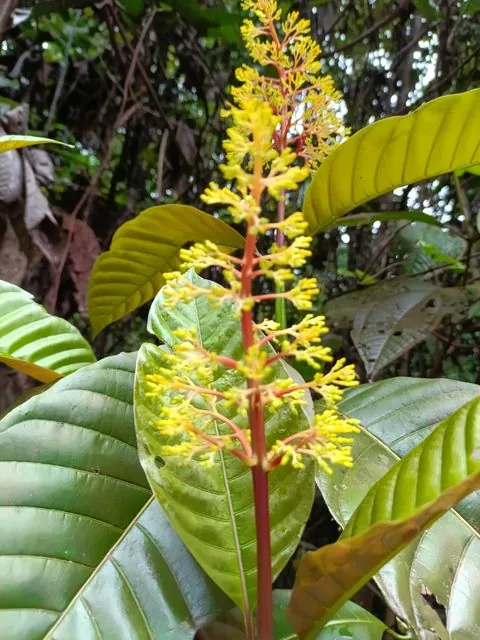
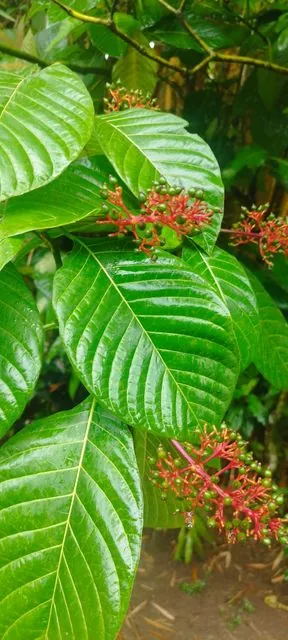
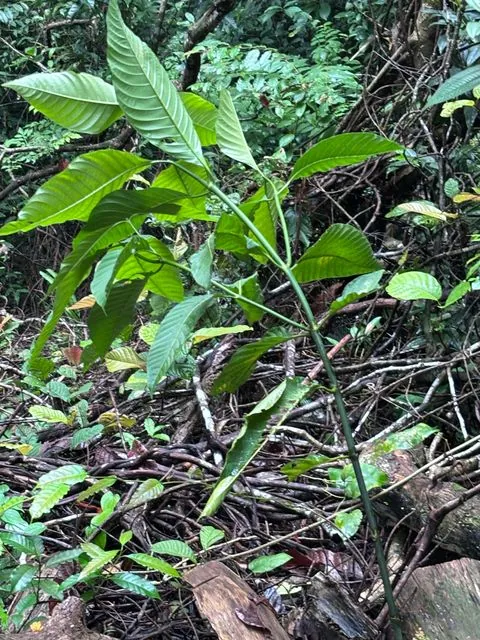
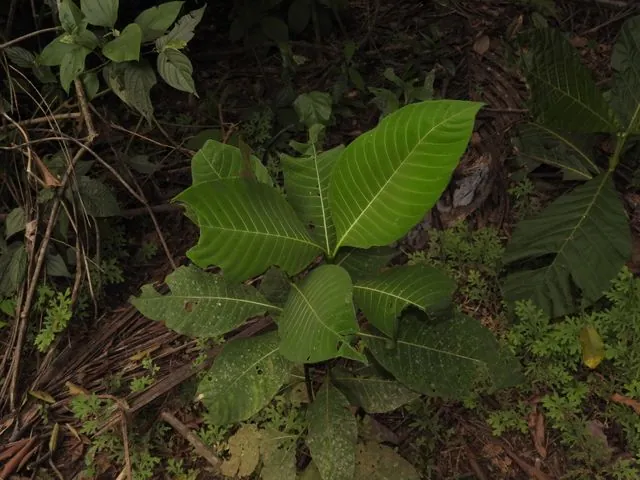
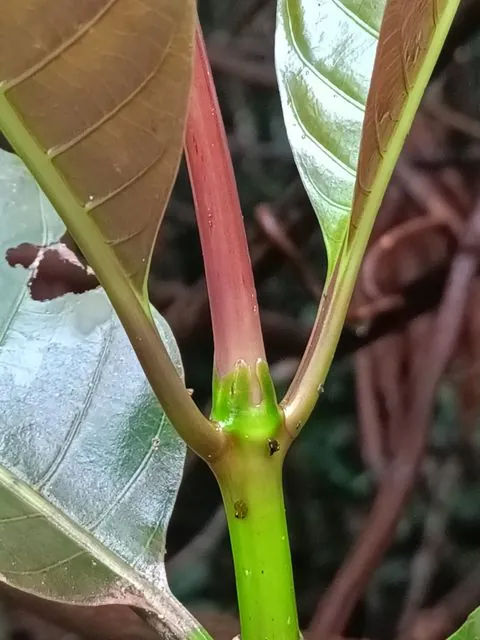
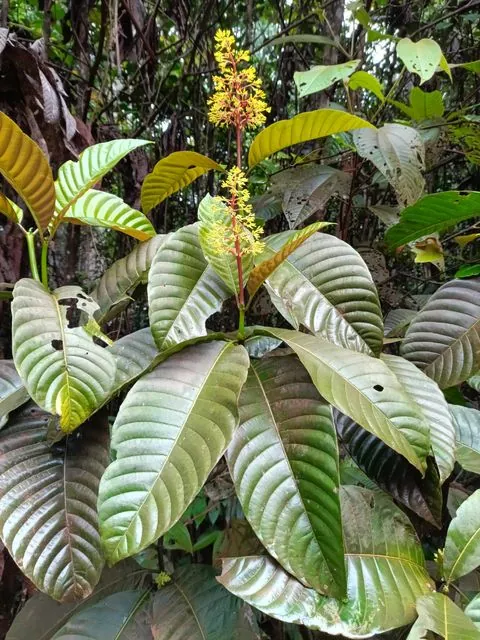
Palicourea guianensis
Authorship: The author or authors credited with publishing the scientific name. It is written after the name, sometimes with the year, for example L. (Linnaeus) in Zea mays L. An author in parentheses first published the name in another genus or rank. — The author or authors credited with publishing the scientific name. It is written after the name, sometimes with the year, for example L. (Linnaeus) in Zea mays L. An author in parentheses first published the name in another genus or rank.
Aubl.
Common names
Showy CappelNames in other languages (12)Ahoquey blanco, Aoquey Blanco, Balsamo real, Tafetan (Dominican Republic), Tafetan (Puerto Rico), audik-amana, audika-retni, ayee wato, ayuwato, bwa-fizi, erva-de-rato, maipuli elepalɨ, maipyuli kiyelapole, matula, padula, patula, palikúrea guyanská, tewitulũ u, tewitulũ wate’e, tewitutũ wate’e
Kingdom: One of the broadest ranks of biological classification. It groups organisms that share very basic features, for example plants (Plantae), animals (Animalia) or fungi (Fungi). — One of the broadest ranks of biological classification. It groups organisms that share very basic features, for example plants (Plantae), animals (Animalia) or fungi (Fungi).
Plantae
Phylum: Rank below kingdom that groups organisms with a shared general body plan, for example chordates (Chordata), arthropods (Arthropoda) or vascular plants (Tracheophyta). In botany the same rank is also called division. — Rank below kingdom that groups organisms with a shared general body plan, for example chordates (Chordata), arthropods (Arthropoda) or vascular plants (Tracheophyta). In botany the same rank is also called division.
Tracheophyta
Class: Rank below phylum, for example mammals (Mammalia), birds (Aves), insects (Insecta) or monocot plants such as grasses and orchids (Liliopsida). — Rank below phylum, for example mammals (Mammalia), birds (Aves), insects (Insecta) or monocot plants such as grasses and orchids (Liliopsida).
Magnoliopsida
Order: Rank below class that groups related families, for example grasses and their relatives (Poales) or bats (Chiroptera). — Rank below class that groups related families, for example grasses and their relatives (Poales) or bats (Chiroptera).
Gentianales
Family: Rank below order that groups related genera. Family names usually end in -aceae in botany (for example Poaceae, the grass family) and in -idae in zoology (for example Felidae, the cat family). — Rank below order that groups related genera. Family names usually end in -aceae in botany (for example Poaceae, the grass family) and in -idae in zoology (for example Felidae, the cat family).
Rubiaceae
Genus: Rank that groups closely related species. Its name is the first word of a species' scientific name and starts with a capital letter, for example Zea in Zea mays. — Rank that groups closely related species. Its name is the first word of a species' scientific name and starts with a capital letter, for example Zea in Zea mays.
Palicourea
Specific epithet: The second word of a species' scientific name. On its own it does not name the species: it always goes with the genus, for example mays in Zea mays. — The second word of a species' scientific name. On its own it does not name the species: it always goes with the genus, for example mays in Zea mays.
guianensis
Taxonomic rank: The level a name occupies in the hierarchy of biological classification, such as kingdom, family, genus, species or subspecies. — The level a name occupies in the hierarchy of biological classification, such as kingdom, family, genus, species or subspecies.
species
Reference species
Palicourea guianensis
Taxonomic status: Whether the taxonomic catalogue the record comes from currently accepts this name for the organism, or treats it as a synonym of another accepted name or as doubtful. — Whether the taxonomic catalogue the record comes from currently accepts this name for the organism, or treats it as a synonym of another accepted name or as doubtful.
accepted name
Photos and conservation status
IUCN Red List category: The extinction-risk category that the International Union for Conservation of Nature (IUCN) assigns to a species on its Red List. EX Extinct: there is no reasonable doubt that the last individual has died. EW Extinct in the wild: it survives only in cultivation, in captivity or as a population far outside its past range. CR Critically endangered, EN Endangered and VU Vulnerable: the three threatened categories, from an extremely high to a high risk of extinction in the wild. NT Near threatened: close to qualifying as threatened. LC Least concern: evaluated and not threatened. DD Data deficient: there is not enough information to assess its risk. NE Not evaluated: not yet assessed against the criteria. It describes the risk of the species worldwide, not its situation in a project's area. — The extinction-risk category that the International Union for Conservation of Nature (IUCN) assigns to a species on its Red List. EX Extinct: there is no reasonable doubt that the last individual has died. EW Extinct in the wild: it survives only in cultivation, in captivity or as a population far outside its past range. CR Critically endangered, EN Endangered and VU Vulnerable: the three threatened categories, from an extremely high to a high risk of extinction in the wild. NT Near threatened: close to qualifying as threatened. LC Least concern: evaluated and not threatened. DD Data deficient: there is not enough information to assess its risk. NE Not evaluated: not yet assessed against the criteria. It describes the risk of the species worldwide, not its situation in a project's area.
Least concern (LC)
Source: IUCN Red List via GBIF, queried on 2026-10-09 10:23.
Research-grade iNaturalist observations via GBIF, CC0 or CC BY licences only, queried on 2026-10-09 10:23.
Interacciones documentadas
GloBI says it is documented somewhere in the world. Biolitica answers whether it could happen here.
A documented interaction means it was recorded somewhere in the world. It does not mean it occurs here.
Types shown: 6 of 6
is eaten by
×
is a host of
×
is visited by
×
is dispersed by
×
interacts with
×
is pollinated by
×
Blocks that do not sit under a navigation concept heading keep the source's own term: no navigation concept has been assigned to them yet.
is eaten by
44 organisms
This term does declare that the organism harms this species.
Organism
Reads as
Studies
Where it was documented
Actions
Condensella filamentaCicadellidae
is eaten by
2
no location
2 sources · 2 records
Cao, Y.-H. & Dietrich, C.H. (2021) <i>Identification of potential host plants of sap-sucking insects (Hemiptera: Cicadellidae) using anchored hybrid by-catch data</i>. 12(11), 964. https://doi.org/10.3390/insects12110964
Published in urn:lsid:checklistbank.org:dataset:2317
Context: no place published · no date published
Claim type
Published relationship between two taxa
Version
GloBI 0.11
Reuse
This release publishes no reuse terms for this record.
no place published · no date publishedWhere it is: line:hash://sha256/021a206a1459bcca7e251c73f5bd180fc3ac342a09c499855fe42e21fc09edcf!/interactions.tsv.gz!/L1305885
@article{122167, author = {Cao, Yang-Hui and Dietrich, Christopher Hallock}, month = {oct}, day = {23}, number = {11}, pages = {964}, publisher = {MDPI AG}, title = {Identification of potential host plants of sap-sucking insects (Hemiptera: Cicadellidae) using anch…
Published in globalbioticinteractions/taxonworks
Context: no place published · no date published
Claim type
Published relationship between two taxa
Version
GloBI 0.11
Reuse
This release publishes no reuse terms for this record.
no place published · no date publishedWhere it is: line:hash://sha256/021a206a1459bcca7e251c73f5bd180fc3ac342a09c499855fe42e21fc09edcf!/interactions.tsv.gz!/L5979199
Cao, Y.-H. & Dietrich, C.H. (2021) <i>Identification of potential host plants of sap-sucking insects (Hemiptera: Cicadellidae) using anchored hybrid by-catch data</i>. 12(11), 964. https://doi.org/10.3390/insects12110964
Published in urn:lsid:checklistbank.org:dataset:2317
Context: no place published · no date published
Claim type
Published relationship between two taxa
Version
GloBI 0.11
Reuse
This release publishes no reuse terms for this record.
no place published · no date publishedWhere it is: line:hash://sha256/021a206a1459bcca7e251c73f5bd180fc3ac342a09c499855fe42e21fc09edcf!/interactions.tsv.gz!/L1305889
@article{122167, author = {Cao, Yang-Hui and Dietrich, Christopher Hallock}, month = {oct}, day = {23}, number = {11}, pages = {964}, publisher = {MDPI AG}, title = {Identification of potential host plants of sap-sucking insects (Hemiptera: Cicadellidae) using anch…
Published in globalbioticinteractions/taxonworks
Context: no place published · no date published
Claim type
Published relationship between two taxa
Version
GloBI 0.11
Reuse
This release publishes no reuse terms for this record.
no place published · no date publishedWhere it is: line:hash://sha256/021a206a1459bcca7e251c73f5bd180fc3ac342a09c499855fe42e21fc09edcf!/interactions.tsv.gz!/L5979191
A published relationship says these two taxa were documented interacting. It does not say how often, or that it happens in this project's region.
Deltolidia discolorCicadellidae
is eaten by
2
no location
2 sources · 3 records
@article{122167, author = {Cao, Yang-Hui and Dietrich, Christopher Hallock}, month = {oct}, day = {23}, number = {11}, pages = {964}, publisher = {MDPI AG}, title = {Identification of potential host plants of sap-sucking insects (Hemiptera: Cicadellidae) using anch…
Published in globalbioticinteractions/taxonworks
Record contexts (sample): no place published · no date published; no place published · no date published
Claim type
Published relationship between two taxa
Version
GloBI 0.11
Reuse
This release publishes no reuse terms for this record.
no place published · no date publishedWhere it is: line:hash://sha256/021a206a1459bcca7e251c73f5bd180fc3ac342a09c499855fe42e21fc09edcf!/interactions.tsv.gz!/L5979186
no place published · no date publishedWhere it is: line:hash://sha256/021a206a1459bcca7e251c73f5bd180fc3ac342a09c499855fe42e21fc09edcf!/interactions.tsv.gz!/L5979218
Cao, Y.-H. & Dietrich, C.H. (2021) <i>Identification of potential host plants of sap-sucking insects (Hemiptera: Cicadellidae) using anchored hybrid by-catch data</i>. 12(11), 964. https://doi.org/10.3390/insects12110964
Published in urn:lsid:checklistbank.org:dataset:2317
Context: no place published · no date published
Claim type
Published relationship between two taxa
Version
GloBI 0.11
Reuse
This release publishes no reuse terms for this record.
no place published · no date publishedWhere it is: line:hash://sha256/021a206a1459bcca7e251c73f5bd180fc3ac342a09c499855fe42e21fc09edcf!/interactions.tsv.gz!/L1305858
A published relationship says these two taxa were documented interacting. It does not say how often, or that it happens in this project's region.
Yellow-throated VireoVireo flavifronsVireonidae
is eaten by
2
not compared
2 sources · 2 records
M_SD_004
Published in globalbioticinteractions/fricke2020
Context: Puerto Rico · no date published
Claim type
Published relationship between two taxa
Version
GloBI 0.11
Reuse
This release publishes no reuse terms for this record.
Puerto Rico · no date publishedWhere it is: line:hash://sha256/021a206a1459bcca7e251c73f5bd180fc3ac342a09c499855fe42e21fc09edcf!/interactions.tsv.gz!/L13265070
No public URL for this record
Wolfe 2014
Published in globalbioticinteractions/fricke2020
Context: Costa Rica · no date published
Claim type
Published relationship between two taxa
Version
GloBI 0.11
Reuse
This release publishes no reuse terms for this record.
Costa Rica · no date publishedWhere it is: line:hash://sha256/021a206a1459bcca7e251c73f5bd180fc3ac342a09c499855fe42e21fc09edcf!/interactions.tsv.gz!/L13390755
No public URL for this record
A published relationship says these two taxa were documented interacting. It does not say how often, or that it happens in this project's region.
The authority declares no effect on this species for this term: neither that it harms it nor that it benefits it. In the source ontology symbiosis covers mutualism, commensalism and parasitism alike, so this block holds attackers and allies side by side.
Context: Area de Conservacion Guanacaste, Sector Rincon Rain Forest, Quebrada Bambu · Nov. 23, 2012 · Material sample
Claim type
Published relationship between two taxa
Version
GloBI 0.11
Reuse
This release publishes no reuse terms for this record.
Area de Conservacion Guanacaste, Sector Rincon Rain Forest, Quebrada Bambu · Nov. 23, 2012 · Material sampleAs published: 2012-11-23T00:00:00Z · MATERIAL_SAMPLEWhere it is: line:hash://sha256/021a206a1459bcca7e251c73f5bd180fc3ac342a09c499855fe42e21fc09edcf!/interactions.tsv.gz!/L12824004
Context: Area de Conservacion Guanacaste, Sector Rincon Rain Forest, Palomo · Feb. 24, 2012 · Material sample
Claim type
Published relationship between two taxa
Version
GloBI 0.11
Reuse
This release publishes no reuse terms for this record.
Area de Conservacion Guanacaste, Sector Rincon Rain Forest, Palomo · Feb. 24, 2012 · Material sampleAs published: 2012-02-24T00:00:00Z · MATERIAL_SAMPLEWhere it is: line:hash://sha256/021a206a1459bcca7e251c73f5bd180fc3ac342a09c499855fe42e21fc09edcf!/interactions.tsv.gz!/L12824452
Context: Area de Conservacion Guanacaste, Rincon Rainforest, Estacion Caribe · Sept. 14, 2005 · Material sample
Claim type
Published relationship between two taxa
Version
GloBI 0.11
Reuse
This release publishes no reuse terms for this record.
Area de Conservacion Guanacaste, Rincon Rainforest, Estacion Caribe · Sept. 14, 2005 · Material sampleAs published: 2005-09-14T00:00:00Z · MATERIAL_SAMPLEWhere it is: line:hash://sha256/021a206a1459bcca7e251c73f5bd180fc3ac342a09c499855fe42e21fc09edcf!/interactions.tsv.gz!/L12920356
Context: Area de Conservacion Guanacaste, Rincon Rainforest, Caverna · Aug. 3, 2006 · Material sample
Claim type
Published relationship between two taxa
Version
GloBI 0.11
Reuse
This release publishes no reuse terms for this record.
Area de Conservacion Guanacaste, Rincon Rainforest, Caverna · Aug. 3, 2006 · Material sampleAs published: 2006-08-03T00:00:00Z · MATERIAL_SAMPLEWhere it is: line:hash://sha256/021a206a1459bcca7e251c73f5bd180fc3ac342a09c499855fe42e21fc09edcf!/interactions.tsv.gz!/L12921308
Context: Area de Conservacion Guanacaste, Brasilia, Gallinazo · March 6, 2009 · Material sample
Claim type
Published relationship between two taxa
Version
GloBI 0.11
Reuse
This release publishes no reuse terms for this record.
Area de Conservacion Guanacaste, Brasilia, Gallinazo · March 6, 2009 · Material sampleAs published: 2009-03-06T00:00:00Z · MATERIAL_SAMPLEWhere it is: line:hash://sha256/021a206a1459bcca7e251c73f5bd180fc3ac342a09c499855fe42e21fc09edcf!/interactions.tsv.gz!/L12938291
Context: Area de Conservacion Guanacaste, Rincon Rainforest, San Lucas · Aug. 5, 2009 · Material sample
Claim type
Published relationship between two taxa
Version
GloBI 0.11
Reuse
This release publishes no reuse terms for this record.
Area de Conservacion Guanacaste, Rincon Rainforest, San Lucas · Aug. 5, 2009 · Material sampleAs published: 2009-08-05T00:00:00Z · MATERIAL_SAMPLEWhere it is: line:hash://sha256/021a206a1459bcca7e251c73f5bd180fc3ac342a09c499855fe42e21fc09edcf!/interactions.tsv.gz!/L12940224
Context: Area de Conservacion Guanacaste, Llanura, Estacion Llanura · June 28, 2009 · Material sample
Claim type
Published relationship between two taxa
Version
GloBI 0.11
Reuse
This release publishes no reuse terms for this record.
Area de Conservacion Guanacaste, Llanura, Estacion Llanura · June 28, 2009 · Material sampleAs published: 2009-06-28T00:00:00Z · MATERIAL_SAMPLEWhere it is: line:hash://sha256/021a206a1459bcca7e251c73f5bd180fc3ac342a09c499855fe42e21fc09edcf!/interactions.tsv.gz!/L12940225
Context: Area de Conservacion Guanacaste, Sector Rincon Rain Forest, San Lucas · Feb. 25, 2010 · Material sample
Claim type
Published relationship between two taxa
Version
GloBI 0.11
Reuse
This release publishes no reuse terms for this record.
Area de Conservacion Guanacaste, Sector Rincon Rain Forest, San Lucas · Feb. 25, 2010 · Material sampleAs published: 2010-02-25T00:00:00Z · MATERIAL_SAMPLEWhere it is: line:hash://sha256/021a206a1459bcca7e251c73f5bd180fc3ac342a09c499855fe42e21fc09edcf!/interactions.tsv.gz!/L12945131
Context: no place published · no date published · Material sample
Claim type
Published relationship between two taxa
Version
GloBI 0.11
Reuse
This release publishes no reuse terms for this record.
no place published · no date published · Material sampleAs published: MATERIAL_SAMPLEWhere it is: line:hash://sha256/021a206a1459bcca7e251c73f5bd180fc3ac342a09c499855fe42e21fc09edcf!/interactions.tsv.gz!/L12816432
Context: Area de Conservacion Guanacaste, Sector Rincon Rain Forest, Estacion Botarrama · Aug. 25, 2013 · Material sample
Claim type
Published relationship between two taxa
Version
GloBI 0.11
Reuse
This release publishes no reuse terms for this record.
Area de Conservacion Guanacaste, Sector Rincon Rain Forest, Estacion Botarrama · Aug. 25, 2013 · Material sampleAs published: 2013-08-25T00:00:00Z · MATERIAL_SAMPLEWhere it is: line:hash://sha256/021a206a1459bcca7e251c73f5bd180fc3ac342a09c499855fe42e21fc09edcf!/interactions.tsv.gz!/L12824761
Context: Area de Conservacion Guanacaste, Sector Rincon Rain Forest, Finca Esmeralda · July 12, 2013 · Material sample
Claim type
Published relationship between two taxa
Version
GloBI 0.11
Reuse
This release publishes no reuse terms for this record.
Area de Conservacion Guanacaste, Sector Rincon Rain Forest, Finca Esmeralda · July 12, 2013 · Material sampleAs published: 2013-07-12T00:00:00Z · MATERIAL_SAMPLEWhere it is: line:hash://sha256/021a206a1459bcca7e251c73f5bd180fc3ac342a09c499855fe42e21fc09edcf!/interactions.tsv.gz!/L12824826
Context: Area de Conservacion Guanacaste, Sector Rincon Rain Forest, Casa Keyner · July 13, 2014 · Material sample
Claim type
Published relationship between two taxa
Version
GloBI 0.11
Reuse
This release publishes no reuse terms for this record.
Area de Conservacion Guanacaste, Sector Rincon Rain Forest, Casa Keyner · July 13, 2014 · Material sampleAs published: 2014-07-13T00:00:00Z · MATERIAL_SAMPLEWhere it is: line:hash://sha256/021a206a1459bcca7e251c73f5bd180fc3ac342a09c499855fe42e21fc09edcf!/interactions.tsv.gz!/L12960110
Context: Area de Conservacion Guanacaste, Sector Rincon Rain Forest, Casa Keyner · July 13, 2014 · Material sample
Claim type
Published relationship between two taxa
Version
GloBI 0.11
Reuse
This release publishes no reuse terms for this record.
Area de Conservacion Guanacaste, Sector Rincon Rain Forest, Casa Keyner · July 13, 2014 · Material sampleAs published: 2014-07-13T00:00:00Z · MATERIAL_SAMPLEWhere it is: line:hash://sha256/021a206a1459bcca7e251c73f5bd180fc3ac342a09c499855fe42e21fc09edcf!/interactions.tsv.gz!/L12960133
A published relationship says these two taxa were documented interacting. It does not say how often, or that it happens in this project's region.
Puccinia fallaxPucciniaceae
is a host of
3
no location
3 sources · 3 records
Hennen, J.F., Figueiredo, M.B., de Carvalho, A.A., Jr., and Hennen, P.G.. 2005. Catalogue of the species of plant rust fungi (Uredinales) of Brazil. Jardim Bot. do Rio de Janeiro :490
Published in globalbioticinteractions/usda-fungus-host
Context: Brazil · no date published
Claim type
Published relationship between two taxa
Version
GloBI 0.11
Reuse
This release publishes no reuse terms for this record.
Brazil · no date publishedWhere it is: line:hash://sha256/021a206a1459bcca7e251c73f5bd180fc3ac342a09c499855fe42e21fc09edcf!/interactions.tsv.gz!/L3676044
No public URL for this record
Mendes, M.A.S., da Silva, V.L., Dianese, J.C., and et al.. 1998. Fungos em Plants no Brasil. Embrapa-SPI/Embrapa-Cenargen, Brasilia :555
Published in globalbioticinteractions/usda-fungus-host
Context: Brazil · no date published
Claim type
Published relationship between two taxa
Version
GloBI 0.11
Reuse
This release publishes no reuse terms for this record.
Brazil · no date publishedWhere it is: line:hash://sha256/021a206a1459bcca7e251c73f5bd180fc3ac342a09c499855fe42e21fc09edcf!/interactions.tsv.gz!/L3809921
No public URL for this record
Hennen, J.F., Hennen, M.M., and Figueiredo, M.B.. 1982. [Index of the rust fungi (Uredinales) of Brazil]. Arch. Inst. Biol. (Sao Paulo), Suppl. 1 49:1-201
Published in globalbioticinteractions/usda-fungus-host
Context: Brazil · no date published
Claim type
Published relationship between two taxa
Version
GloBI 0.11
Reuse
This release publishes no reuse terms for this record.
Brazil · no date publishedWhere it is: line:hash://sha256/021a206a1459bcca7e251c73f5bd180fc3ac342a09c499855fe42e21fc09edcf!/interactions.tsv.gz!/L3934592
No public URL for this record
A published relationship says these two taxa were documented interacting. It does not say how often, or that it happens in this project's region.
Puccinia palicoureaePucciniaceae
is a host of
2
no location
2 sources · 2 records
Hennen, J.F., Figueiredo, M.B., de Carvalho, A.A., Jr., and Hennen, P.G.. 2005. Catalogue of the species of plant rust fungi (Uredinales) of Brazil. Jardim Bot. do Rio de Janeiro :490
Published in globalbioticinteractions/usda-fungus-host
Context: Brazil · no date published
Claim type
Published relationship between two taxa
Version
GloBI 0.11
Reuse
This release publishes no reuse terms for this record.
Brazil · no date publishedWhere it is: line:hash://sha256/021a206a1459bcca7e251c73f5bd180fc3ac342a09c499855fe42e21fc09edcf!/interactions.tsv.gz!/L3674611
No public URL for this record
Berndt, R.. 2012. First catalogue of the rust fungi of French Guiana, northern South America. Mycol. Progr. 12:193-211
Published in globalbioticinteractions/usda-fungus-host
Context: French Guiana · no date published
Claim type
Published relationship between two taxa
Version
GloBI 0.11
Reuse
This release publishes no reuse terms for this record.
French Guiana · no date publishedWhere it is: line:hash://sha256/021a206a1459bcca7e251c73f5bd180fc3ac342a09c499855fe42e21fc09edcf!/interactions.tsv.gz!/L4065378
No public URL for this record
A published relationship says these two taxa were documented interacting. It does not say how often, or that it happens in this project's region.
Context: no place published · Feb. 22, 2025 · Human observation
Claim type
Published relationship between two taxa
Version
GloBI 0.11
Reuse
This release publishes no reuse terms for this record.
no place published · Feb. 22, 2025 · Human observationAs published: 2025-02-22T07:30:00Z · HumanObservationWhere it is: line:hash://sha256/021a206a1459bcca7e251c73f5bd180fc3ac342a09c499855fe42e21fc09edcf!/interactions.tsv.gz!/L5415765
Context: no place published · Feb. 9, 2025 · Human observation
Claim type
Published relationship between two taxa
Version
GloBI 0.11
Reuse
This release publishes no reuse terms for this record.
no place published · Feb. 9, 2025 · Human observationAs published: 2025-02-09T14:36:00Z · HumanObservationWhere it is: line:hash://sha256/021a206a1459bcca7e251c73f5bd180fc3ac342a09c499855fe42e21fc09edcf!/interactions.tsv.gz!/L5394961
A published relationship says these two taxa were documented interacting. It does not say how often, or that it happens in this project's region.
Showing 2 of 2, by number of studies
is dispersed by
1 organism
The authority declares no effect on this species for this term: neither that it harms it nor that it benefits it.
Organism
Reads as
Studies
Where it was documented
Actions
Puerto Rican TanagersNesospingusNesospingidae
is dispersed by
1
not compared
Not a modelling unit: the source publishes it at genus level.
1 source · 1 record
Carlo et al. (2003) Avian fruit preferences across a Puerto Rican forested landscape: pattern consistency and implications for seed removal. Oecologia 134: 119-131
Published in globalbioticinteractions/web-of-life
Context: no place published · no date published
Claim type
Published relationship between two taxa
Version
GloBI 0.11
Reuse
This release publishes no reuse terms for this record.
no place published · no date publishedWhere it is: line:hash://sha256/021a206a1459bcca7e251c73f5bd180fc3ac342a09c499855fe42e21fc09edcf!/interactions.tsv.gz!/L11453012
No public URL for this record
A published relationship says these two taxa were documented interacting. It does not say how often, or that it happens in this project's region.
Showing 1 of 1, by number of studies
interacts with
1 organism
The authority declares no effect on this species for this term: neither that it harms it nor that it benefits it.
Context: Kartabo · July 22, 1922 · Preserved specimen
Claim type
Published relationship between two taxa
Version
GloBI 0.11
Reuse
This release publishes no reuse terms for this record.
Kartabo · July 22, 1922 · Preserved specimenAs published: 1922-07-22T00:00:00Z · PreservedSpecimenWhere it is: line:hash://sha256/021a206a1459bcca7e251c73f5bd180fc3ac342a09c499855fe42e21fc09edcf!/interactions.tsv.gz!/L17381799
A published relationship says these two taxa were documented interacting. It does not say how often, or that it happens in this project's region.
Showing 1 of 1, by number of studies
Pollination
is pollinated by
1 organism
This term declares that the organism benefits this species. «Visits the flowers of» is a different term and a different block: a visitor is not a pollinator, and merging the two is the measured defect that turned ~88 shared «pollinators» into birds and primates.
Iamara-Nogueira, J., Targhetta, N., Allain, G., Gambarini, A., Pinto, A. R., Rui, A. M., Araújo, A. C., Lopes, A., Pereira-Silva, B., de Camargo, B. B., Machado, C. G., Missagia, C., Scultori, C., Boscolo, D., Fischer, E., Araújo-Oliveira, E. S., Gava, H., Paulino-Neto, H. F., M…
Published in globalbioticinteractions/ATLANTIC_POLLINATION
Context: no place published · no date published
Claim type
Published relationship between two taxa
Version
GloBI 0.11
Reuse
This release publishes no reuse terms for this record.
no place published · no date publishedWhere it is: line:hash://sha256/021a206a1459bcca7e251c73f5bd180fc3ac342a09c499855fe42e21fc09edcf!/interactions.tsv.gz!/L13026855
A published relationship says these two taxa were documented interacting. It does not say how often, or that it happens in this project's region.
Showing 1 of 1, by number of studies
Acompañantes documentados
This agronomic reading comes from a source reserved for internal use, so it is not shown here.
Documented uses and recommendations
Uses and recommendations that a source documents for this species beside a crop, each in its own context. They are the source's statements, not traits of the species and not Biolítica's recommendations, and none of them is a relation between two species.
Among the sources you can read, none documents a use or recommendation of this species beside a crop.