Identidad taxonómica

Scientific name
Hypothenemus hampei (Ferrari, 1867)
Canonical name: The scientific name without its authorship or date, for example Zea mays instead of Zea mays L.
Hypothenemus hampei
Authorship: The author or authors credited with publishing the scientific name. It is written after the name, sometimes with the year, for example L. (Linnaeus) in Zea mays L. An author in parentheses first published the name in another genus or rank.
(Ferrari, 1867)
Common names
Coffee berry borer, coffee berry beetle, coffee berry beetle borer
Names in other languages (9)Barrenador del café, Broca del café, Gorgojo o broca del café, Koffiebessen-boeboek, Taladro de cerezas del cafeto, 咖啡小蠹虫, 咖啡果小蠹, 咖啡褐小蠹, 浆果小蠹虫
Kingdom: One of the broadest ranks of biological classification. It groups organisms that share very basic features, for example plants (Plantae), animals (Animalia) or fungi (Fungi).
Animalia
Phylum: Rank below kingdom that groups organisms with a shared general body plan, for example chordates (Chordata), arthropods (Arthropoda) or vascular plants (Tracheophyta). In botany the same rank is also called division.
Arthropoda
Class: Rank below phylum, for example mammals (Mammalia), birds (Aves), insects (Insecta) or monocot plants such as grasses and orchids (Liliopsida).
Insecta
Order: Rank below class that groups related families, for example grasses and their relatives (Poales) or bats (Chiroptera).
Coleoptera
Family: Rank below order that groups related genera. Family names usually end in -aceae in botany (for example Poaceae, the grass family) and in -idae in zoology (for example Felidae, the cat family).
Curculionidae
Genus: Rank that groups closely related species. Its name is the first word of a species' scientific name and starts with a capital letter, for example Zea in Zea mays.
Hypothenemus
Specific epithet: The second word of a species' scientific name. On its own it does not name the species: it always goes with the genus, for example mays in Zea mays.
hampei
Taxonomic rank: The level a name occupies in the hierarchy of biological classification, such as kingdom, family, genus, species or subspecies.
species
Reference species
Hypothenemus hampei
Taxonomic status: Whether the taxonomic catalogue the record comes from currently accepts this name for the organism, or treats it as a synonym of another accepted name or as doubtful.
accepted name

Photos and conservation status

IUCN Red List category: The extinction-risk category that the International Union for Conservation of Nature (IUCN) assigns to a species on its Red List. EX Extinct: there is no reasonable doubt that the last individual has died. EW Extinct in the wild: it survives only in cultivation, in captivity or as a population far outside its past range. CR Critically endangered, EN Endangered and VU Vulnerable: the three threatened categories, from an extremely high to a high risk of extinction in the wild. NT Near threatened: close to qualifying as threatened. LC Least concern: evaluated and not threatened. DD Data deficient: there is not enough information to assess its risk. NE Not evaluated: not yet assessed against the criteria. It describes the risk of the species worldwide, not its situation in a project's area.
Not evaluated (NE)
Source: IUCN Red List via GBIF, queried on 2026-10-12 18:04.
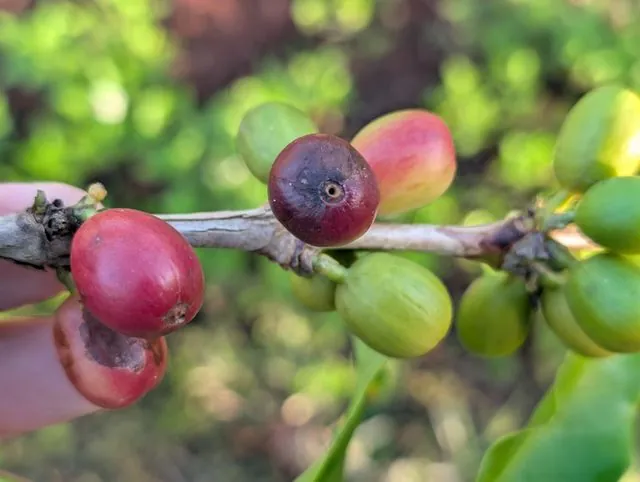
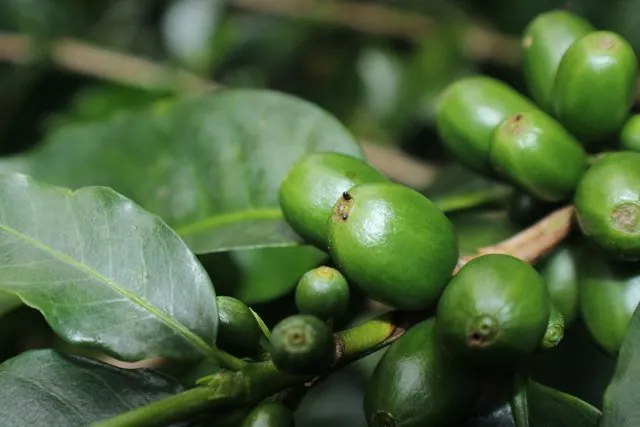
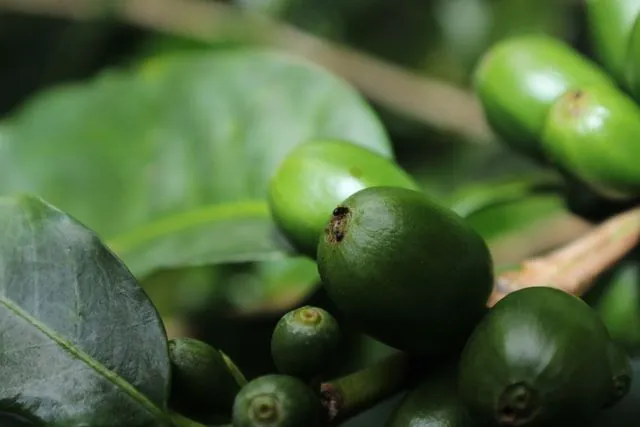
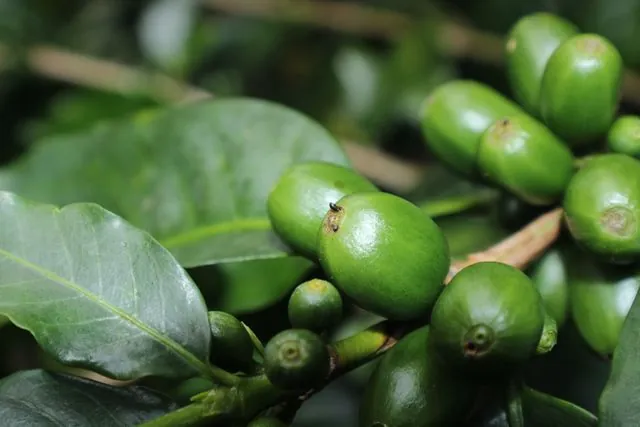
Photo of Hypothenemus hampei (Ferrari, 1867)
Photo: Damien Wallace · CC0 1.0 · View original image · Original observation
Photo of Hypothenemus hampei (Ferrari, 1867)
Photo: Martin Alfredo Murillo · CC BY 4.0 · View original image · Original observation
Photo of Hypothenemus hampei (Ferrari, 1867)
Photo: Martin Alfredo Murillo · CC BY 4.0 · View original image · Original observation
Photo of Hypothenemus hampei (Ferrari, 1867)
Photo: Martin Alfredo Murillo · CC BY 4.0 · View original image · Original observation

Research-grade iNaturalist observations via GBIF, CC0 or CC BY licences only, queried on 2026-10-12 18:04.

Interacciones documentadas

GloBI says it is documented somewhere in the world. Biolitica answers whether it could happen here.

A documented interaction means it was recorded somewhere in the world. It does not mean it occurs here.

Types shown: 9 of 9 is a host of × has as a pathogen × is eaten by × interacts with (this species is the record's origin) × has as a parasite × eats × interacts with (this species is the record's destination) × co-occurs ecologically with × has as a host ×

Blocks that do not sit under a navigation concept heading keep the source's own term: no navigation concept has been assigned to them yet.

is a host of 9 organisms

The authority declares no effect on this species for this term: neither that it harms it nor that it benefits it. In the source ontology symbiosis covers mutualism, commensalism and parasitism alike, so this block holds attackers and allies side by side.

Organism Reads as Studies Where it was documented Actions
Phymastichus coffea Eulophidae is a host of 37 no location
Icing sugar fungus Beauveria bassiana Cordycipitaceae is a host of 17 no location
Icing sugar fungus Beauveria bassiana Cordycipitaceae is a host of 4 no location
Cordyceps javanica Cordycipitaceae is a host of 2 no location
Showing 4 of 9, by number of studies See more of this type

has as a pathogen 5 organisms

This term does declare that the organism harms this species. It is a narrow block, and it cannot be the only one that is read: the most frequent term in the catalogue is the one above, which declares no harm, so much of what a reader would call a pest arrives there instead.

Organism Reads as Studies Where it was documented Actions
Paecilomyces farinosus has as a pathogen 1 no location
Icing sugar fungus Beauveria bassiana Cordycipitaceae has as a pathogen 1 no location
Purpureocillium lilacinum Ophiocordycipitaceae has as a pathogen 1 no location
Candidiasis Candida has as a pathogen 1 no location Not a modelling unit: the source publishes it at genus level.
Showing 4 of 5, by number of studies See more of this type

is eaten by 4 organisms

This term does declare that the organism harms this species.

Organism Reads as Studies Where it was documented Actions
Northern Parula Setophaga americana Parulidae is eaten by 1 not compared
Prairie Warbler Setophaga discolor Parulidae is eaten by 1 not compared
American Redstart Setophaga ruticilla Parulidae is eaten by 1 not compared
Black-throated Blue Warbler Setophaga caerulescens Parulidae is eaten by 1 not compared
Showing 4 of 4, by number of studies

interacts with 4 organisms

The authority declares no effect on this species for this term: neither that it harms it nor that it benefits it.

Organism Reads as Studies Where it was documented Actions
Exomalopsis similis Apidae interacts with 7 no location
Coffee Coffea Rubiaceae interacts with 5 no location Not a modelling unit: the source publishes it at genus level.
Robusta Coffee Coffea canephora Rubiaceae interacts with 2 no location
Arabica Coffee Coffea arabica Rubiaceae interacts with 1 not compared
Showing 4 of 4, by number of studies

has as a parasite 3 organisms

This term does declare that the organism harms this species.

Organism Reads as Studies Where it was documented Actions
Phymastichus coffea Eulophidae has as a parasite 23 no location
Pachycrepoideus schedli Pteromalidae has as a parasite 1 no location
Metaparasitylenchus hypothenemi Allantonematidae has as a parasite 1 no location
Showing 3 of 3, by number of studies

eats 2 organisms

This term declares that the organism benefits this species.

Organism Reads as Studies Where it was documented Actions
Liberian Coffee Coffea liberica Rubiaceae eats 2 no location
Arabica Coffee Coffea arabica Rubiaceae eats 1 not compared
Showing 2 of 2, by number of studies

interacts with 2 organisms

The authority declares no effect on this species for this term: neither that it harms it nor that it benefits it.

Organism Reads as Studies Where it was documented Actions
Cucumber Fusarium Fusarium oxysporum Nectriaceae interacts with 1 no location
sädslemmögel Fusarium avenaceum Nectriaceae interacts with 1 no location
Showing 2 of 2, by number of studies

co-occurs ecologically with 1 organism

The authority declares no effect on this species for this term: neither that it harms it nor that it benefits it.

Organism Reads as Studies Where it was documented Actions
Arabica Coffee Coffea arabica Rubiaceae co-occurs ecologically with 1 not compared
Showing 1 of 1, by number of studies

has as a host 1 organism

The authority declares no effect on this species for this term: neither that it harms it nor that it benefits it. In the source ontology symbiosis covers mutualism, commensalism and parasitism alike, so this block holds attackers and allies side by side.

Organism Reads as Studies Where it was documented Actions
Arabica Coffee Coffea arabica Rubiaceae has as a host 6 no location
Showing 1 of 1, by number of studies

Acompañantes documentados

This agronomic reading comes from a source reserved for internal use, so it is not shown here.

Documented uses and recommendations

Uses and recommendations that a source documents for this species beside a crop, each in its own context. They are the source's statements, not traits of the species and not Biolítica's recommendations, and none of them is a relation between two species.

Among the sources you can read, none documents a use or recommendation of this species beside a crop.